Live Love Laugh Learn … Create the possibilities

Category: Early childhood education

  • readilearn: Teaching about living things in early childhood classrooms – turtles

    readilearn: Teaching about living things in early childhood classrooms – turtles

    Teaching about living things has an important place in early childhood classrooms. In the science curriculum in their first few years of school, children learn

    • What is a living thing
    • Needs of living things
    • Features of living things
    • Life stages of living things

    I have previously written about keeping and observing minibeasts in the classroom, learning about life on a farm, learning about living things – sea turtles, and observing animals in the local environment. In addition to the teaching ideas suggested in the blog posts, there are many resources in the science collection to assist you with your work.

    Let's find out abut sea turtles is an interactive digital non-fiction texts about sea turtles, for children in their first three years of school

    This week, in celebration of World Turtle Day on 23 May and World Environment Day coming up on 5 June, I have uploaded new resources to support learning about sea turtles and the existing non-fiction digital text Let’s find out about Sea Turtles.

    Continue reading: readilearn: Teaching about living things in early childhood classrooms – turtles

  • readilearn: Meet the author-illustrator team for Turtle Love – Renee Hills and Anna Jacobson

    readilearn: Meet the author-illustrator team for Turtle Love – Renee Hills and Anna Jacobson

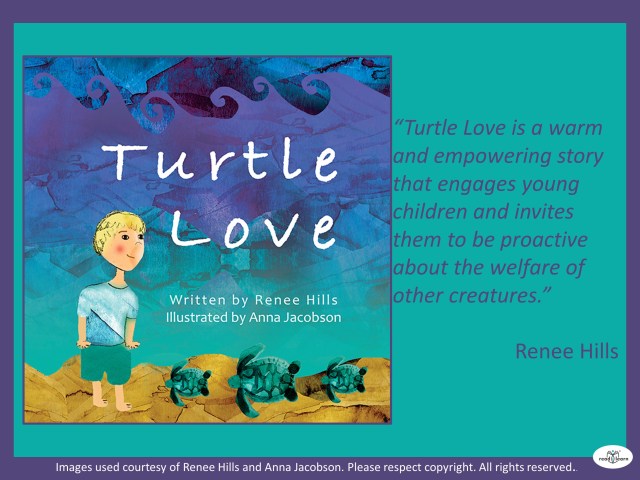
    Do you love turtles? I find these magnificent creatures of the sea fascinating. Although I already owned a collection of picture books about turtles, I couldn’t resist supporting local author Renee Hills publish her first picture book Turtle Love, illustrated by Anna Jacobson, through Pozible at the end of last year. I was delighted when I received my very own copy of this beautiful picture book with its warm and empowering story that engages young children and invites them to be proactive about the welfare of other creatures.”

    Synopsis

    Turtle Love is about Jacob Gordon Lachlan Brown who lives on perhaps the most interesting and beautiful beach in the world. The flatback turtles agree. They come every summer to lay their eggs. But life is becoming more difficult for the turtles because the big ships that load coal are stirring up sediment and this affects the seagrass that the turtles eat.  And this beautiful beach is where they MUST come to nest. Why don’t the flatback turtles go somewhere else? What can Jacob do to help them?

    The text explores themes including the impact of man-made coastal developments on the habitat of other species; how to advocate for threatened creatures and the right of all living beings to have a safe place to nest and live. As a bonus, the book contains a story within a story, a mythical explanation for the beautiful coloured rock landform on the beach where the turtles nest.

    About the author

    Renee Hills has been writing ever since she won a prize for an essay about the future when she was a country North Queensland kid. After graduating and working briefly as a teacher, Renee honed her writing skills as a print journalist, editor, and self- publisher.

    Continue reading: readilearn: Meet the author-illustrator team for Turtle Love – Renee Hills and Anna Jacobson

  • readilearn: Teaching phonics and letter-sound relationships in early childhood classrooms – Readilearn

    readilearn: Teaching phonics and letter-sound relationships in early childhood classrooms – Readilearn

    Teaching phonics and letter-sound relationships is an important part of literacy education in early childhood classrooms. To be fluent readers and writers we need to understand the relationship that exists between the letters and sounds of our language. This knowledge is what enables us to extract meaning from texts we read and ensure that others can interpret the intended meaning in words we write.

    The process of expressing thoughts in writing can be laboured for young children as they stretch out words to identify individual sounds and the letters we use to represent them. From the initial stages of making arbitrary marks upon the page, children develop into proficient writers through recognisable stages of approximation. Readable writing is dependent upon the effective use of letters to represent sound.

    Reading is not so dependent as there are other cues and strategies that readers can employ to interpret a writer’s message. Young children garner information about texts they read from supporting illustrations, prior knowledge of the subject matter and text type (for example, narrative or non-fiction) and understanding of how language works. This information supports their reading which is guided by words they recognise by sight as well as their knowledge of letter-sound relationships.

    When teaching children to read, it is important to ensure children learn to use effective strategies that access all available cues. Over-dependence on any one cuing system leads to a break-down in the process. While the teaching of phonics has an important place in early childhood classrooms, I have resisted making resources for teaching phonics in isolation for two main reasons.

    Two reasons against making resources to teach phonics in isolation
    #1

    I believe reading is best learned and taught by reading. Knowledge of letters and sounds can be learned while reading meaningful and enjoyable texts. Teaching and learning can occur in literacy lessons, lessons in any subject, or whenever an opportunity to interact with print exists, which is frequent in our print-rich environment.

    I have previously written about some strategies I consider beneficial for teaching reading and will no doubt write more in the future. You can read some of those posts here:

    What’s in a name? Teaching phonics, syllabification, and more!

    Engage Learners with pizza-themed cross-curricular teaching and learning resources

    Continue reading: readilearn: Teaching phonics and letter-sound relationships in early childhood classrooms

  • More than just lines on a page

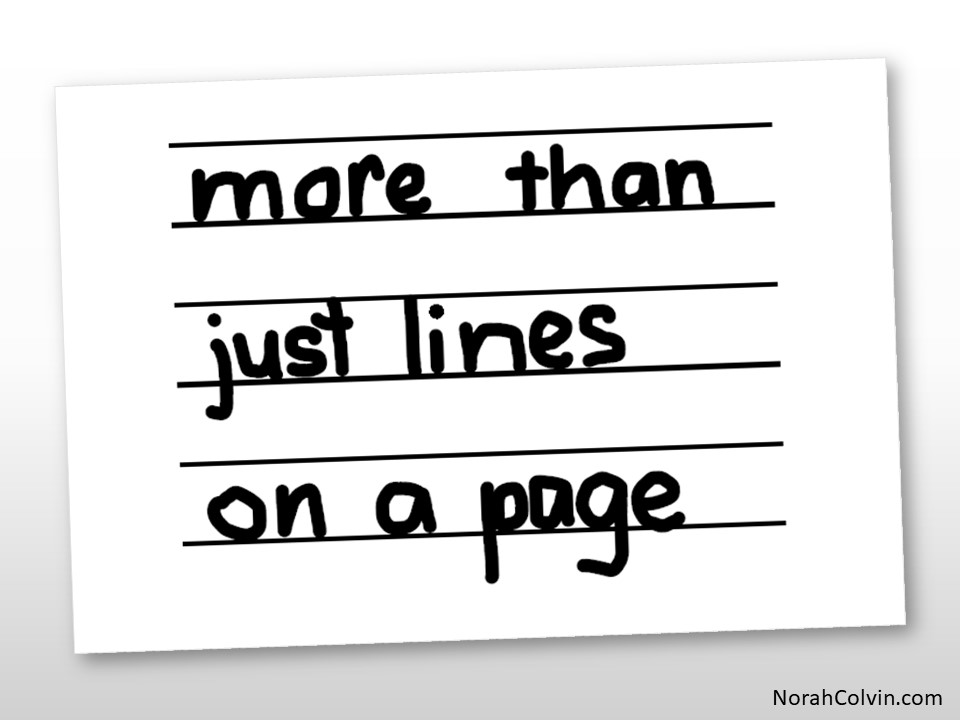
    More than just lines on a page

    This week at the Carrot Ranch, Charli Mills has challenged writers to In 99 words (no more, no less) use a line in your story. You can think of the variation of the word meaning, or you can think of visual references. Go where the prompt leads.

    As an educator of young children, with a special interest in literacy development, I shouldn’t have needed to think for long. Although, there being so many possible ways of interpreting the prompt, I did. I finally decided on the lines that we as writers and artists make on the page, the meaning we assign to them, and the meaning others extract from them.

    Children begin their journey into literacy by assigning meaning to marks they make upon the page and by realising that marks made by others also carry meaning. As their ability to both express and decipher develops, they come to realise that a text or image is more than the sum of the individual lines of which it consists. Communication deepens by interpreting and understanding the meaning conveyed below and between the marks.

    The ability to both imply and infer meaning extends to the interpretation of facial expressions, body language and changes in the environment. We can accept what we see at face value or make a judgement about what may be implied or intended. While the messages are often considered obvious, misinterpretation is possible.

    In response to Charli’s prompt, I’ve played with interpreting other lines. I hope you like it.

    Reading between the lines - signs in the sand www.NorahColvin.com

    Reading between the lines

    Four lines of footprints stretched along the shore. A line, mostly unbroken, edged one side; the other, a sequence of dots. The smaller prints danced lightly. The larger dragged heavily with one foot sideways. Criss-crosses of triple-pronged seagulls’ prints failed to obscure, unlike the smudge of ocean’s wet kisses. Tiny crabs scuttled their own story tracks through weeds, shells and stones coughed up by the sea. Beyond a collapsed castle, the footprints continued. In the distance—rocks. So far?  He accelerated. Didn’t they know the tide had turned?  Caught in the moment, they’d missed the signs. Lucky he didn’t.

    Thank you blog post

    Thank you for reading. I appreciate your feedback. Please share your thoughts.

  • readilearn: How to make STEM learning a part of every day

    readilearn: How to make STEM learning a part of every day

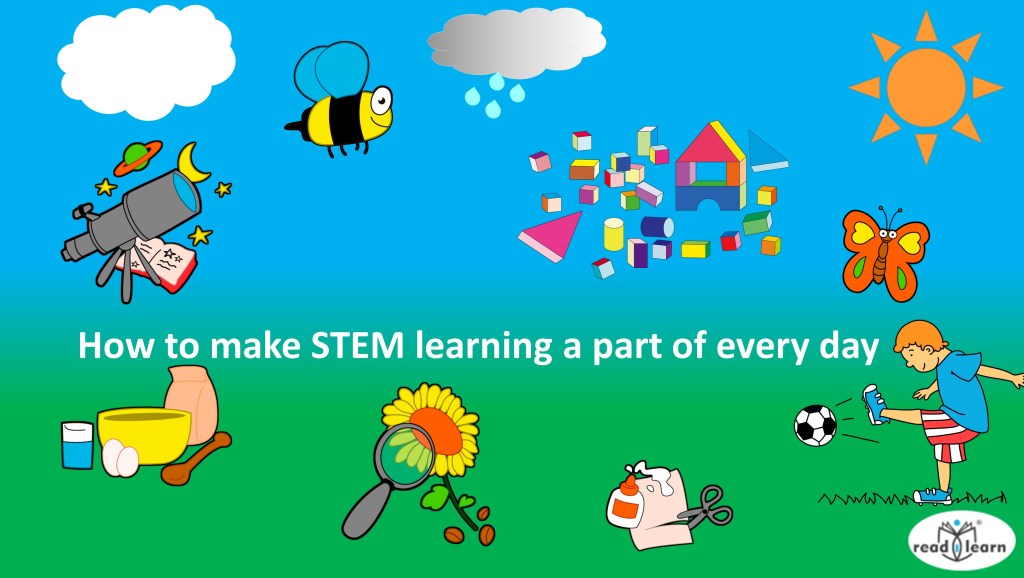
    Making STEM learning a part of every day is easy if one is mindful of the opportunities that arise. In a previous guest post, Narinda Sandry explained STEMtastic: making it easy — in every classroom, for every child and teacher.

    Last month I shared with you an excellent article from The Conversation by Kym Simoncini of the University of Canberra about Five things parents can do every day to help develop STEM skills from a young age.

    There is a thirst for information about STEM in the wider community, and articles such as these generate a lot of interest. In response, I have compiled some suggestions to help parents Incorporate STEM learning into everyday activities – suggestions for parents. The handout, located in Classroom ManagementFor parents, is available for teachers to distribute free to parents

    Incorporate STEM learning into everyday activities

    Continue reading: readilearn: How to make STEM learning a part of every day

  • Learning fun with Mother’s Day activities in early childhood classrooms – Readilearn

    Learning fun with Mother’s Day activities in early childhood classrooms – Readilearn

    Mother’s Day is celebrated on the second Sunday in May in many countries, including Australia, the United States, and Canada. As the day approaches, teachers often look for easy-to-make gifts for children to give to mothers or other carers.  In this post, I share inexpensive suggestions that are easily incorporated into your class literacy and art programs.

    Before beginning to work on gifts for mothers, it is important to have some knowledge of children’s backgrounds so you can treat with sensitivity the diversity of family situations that may be represented in your classroom and adjust the program accordingly. For example, when you are already part-way through an activity, it is no good finding out from an upset child that his mother has passed.

    It is best to find out this information at least a few weeks before commencing the activities to allow time for consultation with families if necessary. An easy way of doing this is to ask the children to draw a picture of the people who live at their house. Children can then show and discuss their pictures and their families, including those who have two homes and two families.

    Your school librarian will be able to suggest picture books to read about diverse families, or you can find some on this list.

    You could introduce the activity by saying something like, “Mother’s Day is a day on which

    Continue reading: readilearn: Learning fun with Mother’s Day activities in early childhood classrooms – Readilearn

  • Into the forest

    Into the forest

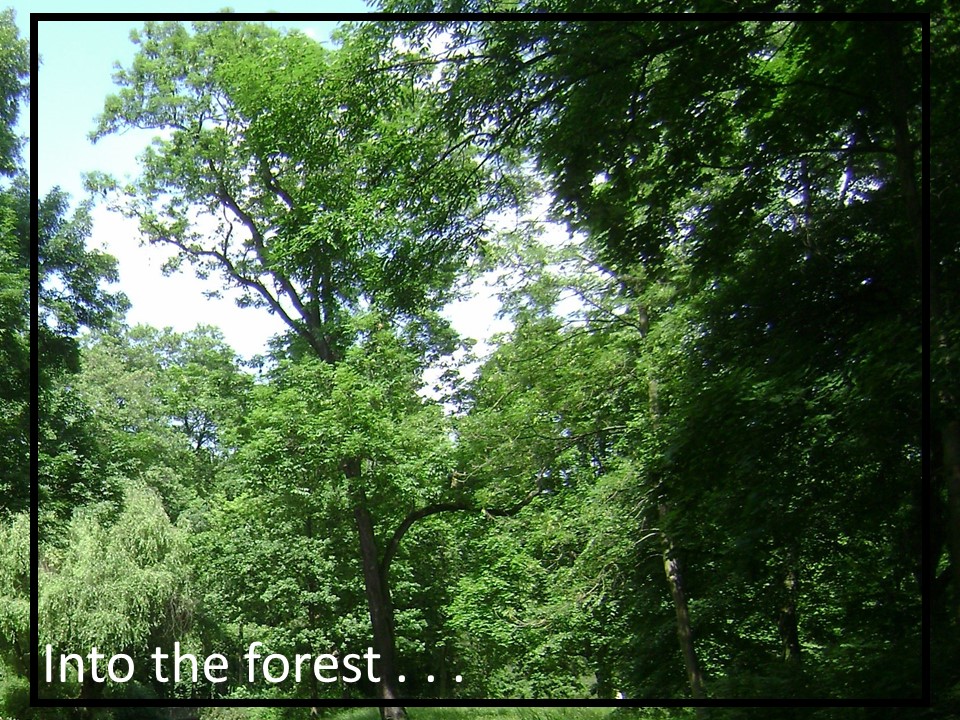
    Since its beginning in 1970, every 22 April is celebrated as Earth Day, a day for appreciating the beauty of our Earth and mobilising ourselves to protect it. Earth Day is credited with starting the environmental movement and is the largest worldwide environment event.

    This year focuses on single-use plastic with the aim to End Plastic Pollution. The goals of the Earth Day Network “include ending single-use plastics, promoting alternatives to fossil fuel-based materials, promoting 100 percent recycling of plastics, corporate and government accountability and changing human behavior concerning plastics.”

    While governments introduce regulations about the use of plastics, it is up to each of us to monitor and reduce our own usage.
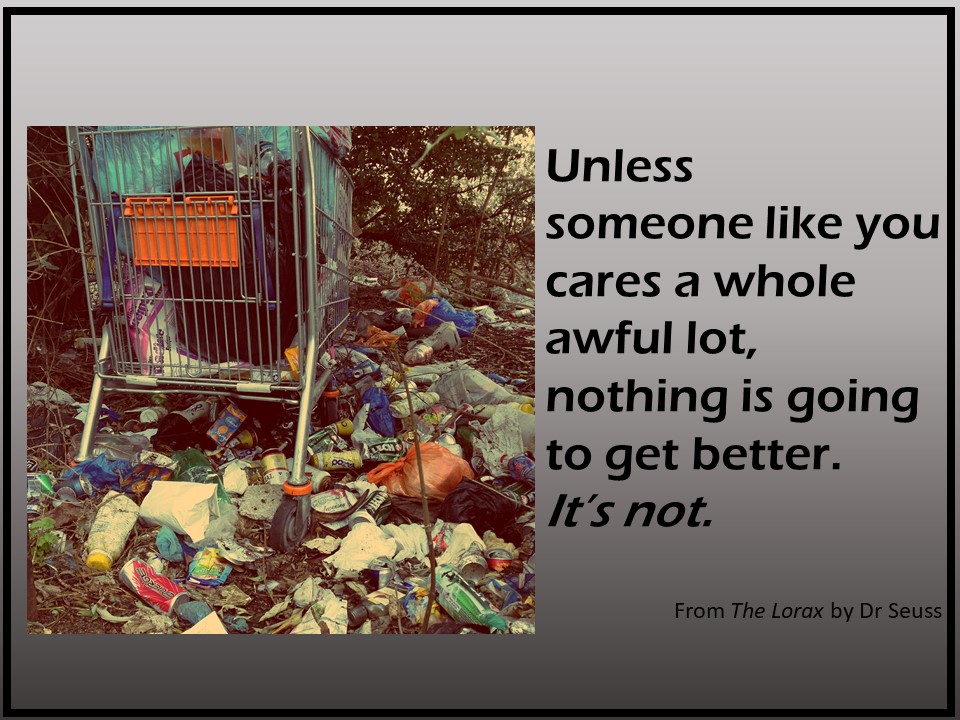
    Unless quote from The Lorax by Dr. Seuss

    Other Earth Day campaigns include combating climate change, greening schools and cities, and protecting forests, anything to help create a greener, more sustainable future.

    Five of my favourite picture books that include these themes are:

    The Lorax by Dr Seuss

    The Lorax by Dr. Seuss demonstrates the effects of pollution and destruction of the environment and highlights the important role of each person in protecting the environment.

    Window by Jeannie Baker deals with the effect of progress on wilderness areas as towns and cities are built. (All book by Jeannie Baker carry strong environmental messages.)
    Leaf Litter by Rachel Tonkin helps children appreciate the smaller parts of our world and the way they are all interconnected.
    The Curious Garden by Peter Brown is about a boy who greens a dead part of the city.

    One Less Fish Kim Michelle Toft

    One Less Fish by Kim Michelle Toft deals with dangers to marine life and suggests what can be done to improve the marine environment.

    These are just a few of the many wonderful books available. Please let me know your favourite in the comments.

    By the way, did you notice that each of these books is written and illustrated by an author-illustrator?

    At the Carrot Ranch, Charli Mills celebrated Earth Day this year with a little forest bathing or Shinrin Yoku. Developed in Japan in the 1980s, Shinrin Yoku is about “fostering deeper relationships and positive experiences with forested areas”. Charli challenged writers to In 99 words (no more, no less) write a story about forest bathing. You can use the Japanese term, Shinrin Yoku, or you can make up your own ideas about the phrase. Go where the prompt leads.

    A few weeks ago, in response to another prompt, I wrote this story about Crow and Mouse.
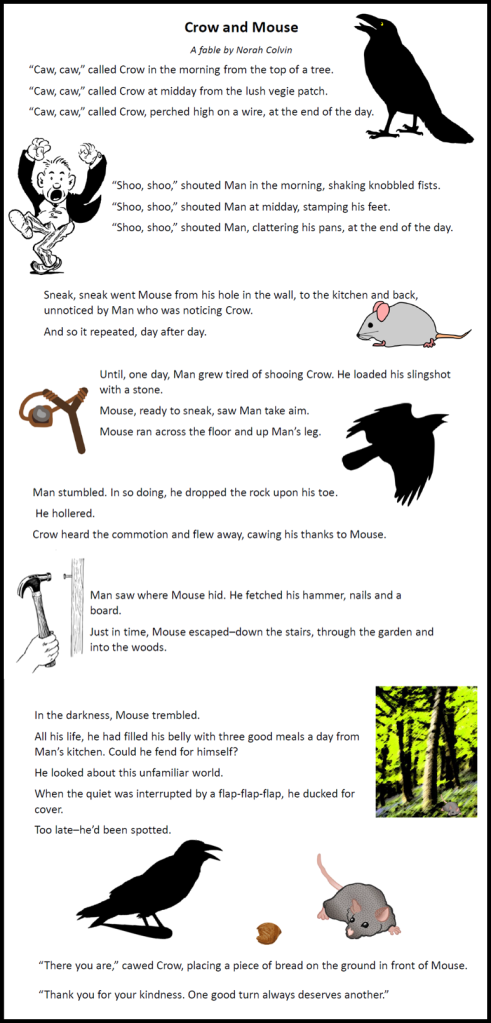
    a fable about crow and mouse in which mouse helps crow and crow helps mouse

    I presented the story to my local critique group and received some useful suggestions. One was to have Mouse explore the forest on his own in an attempt to fend for himself, rather than rely on Crow for food. I thought this fitted in nicely with the aim of Shinrin Yoku, and it is to that suggestion I have responded. I’ve changed the setting, for this prompt, from woods to forest. I haven’t quite managed to tell all I wanted in 99 words, which is usual for me, but I hope you like it.

    We pick up the story from “In the darkness, Mouse trembled.”

    Forest Feast

    Unfamiliar sights, sounds and smells assailed his senses. He dived into a pile of leaves.

    “Would you mind!” squealed Skink.

    “Sorry,” said Mouse, backing into Frog.

    “Hey! This is my cockroach,” said Frog.

    “Ewww!” said mouse. “Who eats cockroaches?”

    Mouse’s belly rumbled.

    Skink was eating a slug. Frog had a cockroach. Nothing for Mouse anywhere.

    “Try mushroom,” suggested Frog.

    Mouse hesitated, then began nibbling.

    Flapping overhead sent Skink and Frog for cover. Mouse, oblivious, had been spotted.

    Crow alighted and placed a gift of bread at Mouse’s feet.

    “Thank you,” said Mouse. “I like bread, but I love mushroom!”

    Thank you blog post

    Thank you for reading. I appreciate your feedback. Please share your thoughts.


  • Introducing Andrew King author of the Engibear series – Readilearn

    Introducing Andrew King author of the Engibear series – Readilearn

    Today, I have great pleasure in introducing you to Dr Andrew King from Brisbane Australia. Andrew is an engineer, teacher, and writer of the popular Engibears series of picture books, designed to introduce children to engineering through friendly characters and story. Each book focusses on a particular aspect of engineering and, through examples and accompanying activities, is designed to encourage children to try engineering — to “Dream, Design and Develop”.

    Dream, Design and Develop

    Engibears have been part of Andrew’s family for many years. They were created while Andrew played and shared stories with his children.

    Andrew thinks he is very lucky to be working with Benjamin Johnston, a Sydney-based architect and illustrator. Ben’s fantastic illustrations have brought Engibears and Munnagong, the city in which they live, to life.

    Andrew is passionate about the role that Science, Technology, Engineering and Maths (the STEM subjects) will play in our sustainable future and equally passionate about the importance of STEM education. He regularly talks to students about engineering, and facilitates student-centred engineering activities and programs.

    His kids think he enjoys building shelves in his spare time. However, Andrew really enjoys spending time with his family, playing bass guitar, walking his dogs and trying to play golf.

    The Engibear series includes three books; Engibear’s Dream, Engibear’s Bridge and Engilina’s Trains. In the most recent, Engilina’s Trains, Engilina, Engibear and Bearbot are back to build transport for the future – a new maglev train that will run from Munnagong to Billaburra as fast as a plane. During the project, they discover an old steam engine which leads them on an interesting journey and creates an unexpected link to the past. It’s an interesting story of trains, teamwork, technology and time.

    Now let’s meet Andrew. Welcome to readilearn, Andrew. We are looking forward to getting to know a little more about you and your books.

    Thanks for inviting me.

    Andrew, when did you know you wanted to be a writer?

    Continue reading: readilearn: Introducing Andrew King author of the Engibear series – Readilearn

  • readilearn: What parents can do to prepare their children for school

    readilearn: What parents can do to prepare their children for school

    Parents often approach teachers wanting to know what they should teach their children or how to prepare their children for school—should they teach them the letter names or sounds or how far should they teach them to count?

    However, for most teachers, these are not of highest priority.

    What teachers value most is an ability to:

    • engage in conversation about experiences and ideas
    • get along with others and make friends
    • identify and organise personal belongings

    and to have:

    • an interest in books
    • a curiosity about the world, and
    • a willingness to have a go and try new things.

    The best way parents can prepare their children for school is by spending time with them, talking with them, playing games with them, reading stories to them and encouraging their curiosity by providing them with opportunities to question, learn and explore.

    It is important for parents to see themselves as their children’s first and most important teachers. When their children start school, it is not time for them to relinquish their responsibility. Instead, it is important for them to work in partnership with teachers to ensure the best chance of success for their children.

    Last week I shared an article, originally published in The Conversation, in which Kym Simoncini provided parents with suggestions for developing young children’s interest in STEM (science, technology, engineering and mathematics.)

    This week, I share a letter to parents of children beginning school, congratulating them on their contribution and requesting their ongoing support.

    Dear Parents,

    Congratulations on teaching your child to speak!

    Continue reading: What parents can do to prepare their children for school? – Readilearn

  • How sun smart are you?

    How sun smart are you?

    My home state of Queensland is the melanoma capital of the world. Melanoma is a form of skin cancer primarily caused by exposure to the sun’s UV rays. If not detected and treated early, it can quickly spread and often cause fatalities. In Australia, it is the fourth most commonly diagnosed form of cancer, and over one thousand deaths result from melanoma each year.

    When I was a child, we didn’t know of the dangers of the sun and spent hours in the sun playing to our heart’s content. Although it was painful, we thought nothing of going home after a day at the beach with our backs as red as a beetroot, knowing that in a couple of days our siblings would be peeling huge chunks of skin from our backs.

    Nowadays, there is plenty of information about sun safety and an abundance of products for protection from the sun. We are educated about the dangers of too much sun in the media. In the 80s there was a “Slip! Slop! Slap!” promotion – to slip on a shirt, slop on sunscreen and slap on a hat.

    The slogan was later updated to include Seek (shade) and Slide (on sunglasses).

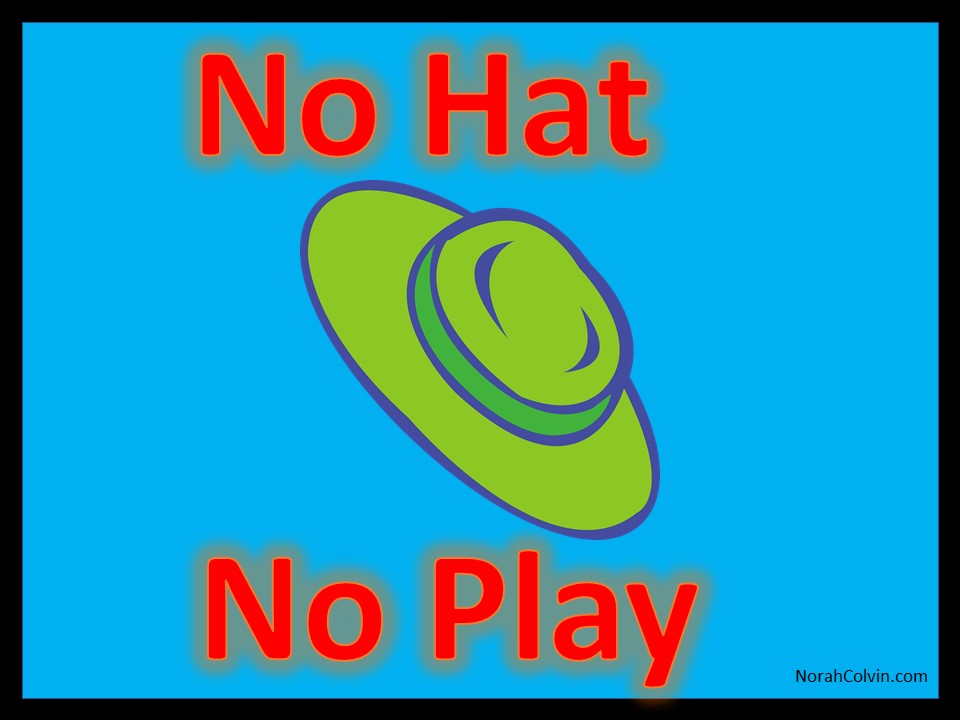
    We teach children in school about sun safety as part of our Health and Physical Education programs and insist they wear a hat in the playground through our “No hat No play” policies.

    no hat no play is a rule employed by many school in Australia to ensure children are sun safe when playing at lunchtime

    While the Cancer Council believes the campaign to have been very effective in changing behaviour and reducing the incidence of sun cancer, many are still not heeding the advice.

    In fact, as soon as the days become warm (as if they ever aren’t in this Sunshine State), people are told, that it’s a great day for the beach or the pool. No one warns about staying in the shade in the hottest part of the day or covering up for sun protection.

    When Bec was little, a friend watched me apply a generous amount of sunscreen to her exposed skin. The friend asked if I was concerned about Vitamin D and if sunscreen would prevent her getting her daily dose. I had not previously given it a thought and, being in the pre-internet days (would you believe there were days before the internet?) I asked who I thought to be the most reliable source of information — the pharmacist. He scoffed at me for entertaining such a ridiculous thought. How could anyone in Australia not get enough Vitamin D?

    Many years later, Bec did suffer a deficiency of Vitamin D and was “prescribed” a short walk in the sun each day.

    Having done more than sufficient damage to my skin in younger days, I now tend to be an indoors girl and avoid being outdoors in the heat, for which I have little tolerance and less interest. I apply sunscreen as part of my morning routine and wear a hat whenever I’m out and about for more than a few minutes. I seek the shade whenever possible and closely follow the recommendation to

    Slip, Slop, Slap, Seek, Slide.

    I’ve been thinking of the importance of sun safety and being sun smart in response to the flash fiction prompt at the Carrot Ranch this week in which Charli Mills challenged writers to In 99 words (no more, no less) write a silly sun story. Up north, “sun silly” is the energetic and playful response to returning sunlight. It could also be an April Fool’s jest, a silly story, or a reaction to spring fever. Be silly and write playfully! Go where the prompt leads.

    a photograph of a glorious spring day in Queensland with clear blue skies and wattle in bloom

    In Queensland, we tend to have sun all year round. Our mid-winter June days are often glorious with the most amazing blue skies. It may be cool indoors but always warm in the sun.

    In my last teaching position, my classroom opened onto a grassy area and, particularly on the cooler days, we could pop out for a few minutes to warm up in the sun between lessons. Sometimes the children had fun trying to catch their shadows.

    I turned to fun with shadow play for my story. I hope you like it.

    Running in the Sunshine, Dancing in Shadows

    Dad was working and didn’t look up.

    “Can we play outside?” the children asked.

    “It’s very hot,” said Dad. “Wait until it cools down.”

    “We’ll stay in the shade.”

    “We’ve got sunscreen on.”

    “I’ve got my hat.”

    “And sunglasses.”

    “There won’t be much shade,” said Dad.

    “There is a little bit.”

    “Can we?”

    The deadline loomed.

    “Well, stay in the shade,” he conceded.

    When finished, Dad sought the children.

    “What are you doing?” he asked.

    “Dancing in each other’s shadows,” they laughed.

    “But you’re in the sun.”

    “We have to be. We don’t have shadows without the sun, silly.”

    Thank you blog post

    Thank you for reading. I appreciate your feedback. Please share your thoughts.