Live Love Laugh Learn … Create the possibilities

Category: Early childhood education

  • School Days, Reminiscences of Marsha Ingrao

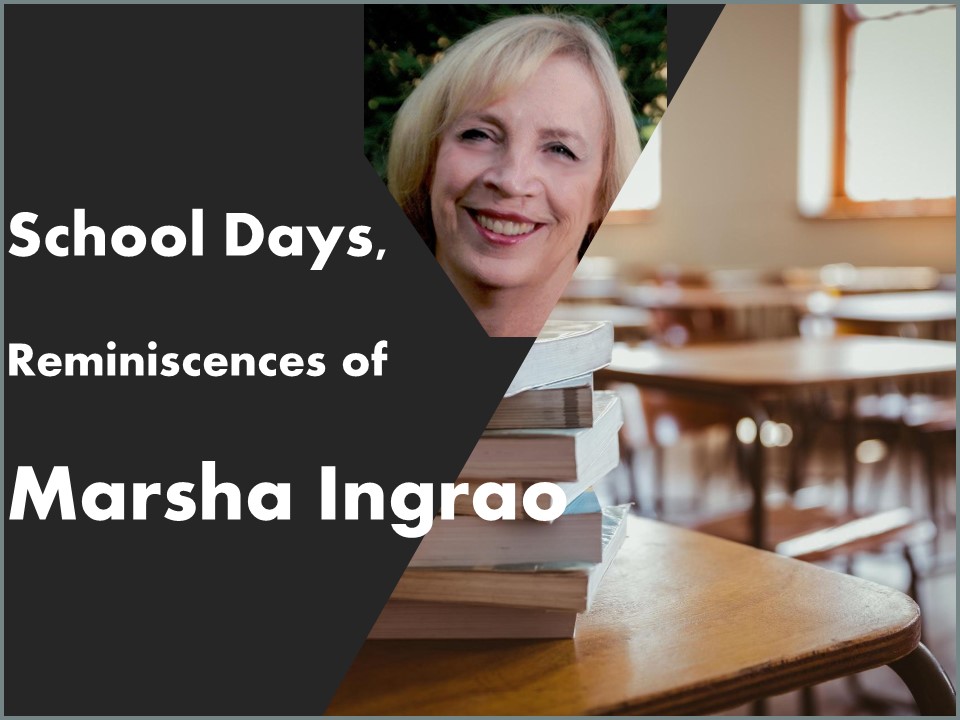
    School Days, Reminiscences of Marsha Ingrao

    Welcome to the School Days, Reminiscences series in which my champion bloggers and authors share reminiscences of their school days. It’s my small way of thanking them for their support and of letting you know about their services and publications.

    This week, I am pleased to introduce Marsha Ingrao, author, blogger, teacher. Marsha and I hit it off as soon as we met, somewhere in the blogosphere. I think our shared backgrounds in and beliefs about education helped cement our friendship. I was delighted when Marsha contributed a guest post on readilearn about Writing in the lower primary classroom, a topic we are both passionate about, last year. I was also honoured when she entrusted me with reading a draft of her WIP Girls on Fire, which I’m looking forward to seeing in print one day.

    Before we begin the interview, I’ve invited Marsha to tell you a little of herself:

    Marsha Ingrao and her books

    My career in education spanned twenty-five years, first as a classroom teacher, then as a math consultant for Migrant Education, and finally the County Office of Education in the area of history-social science.

    Publications include various poems in anthologies, curriculum written as part of my consultant duties, and two published books, Images of America:  Woodlake by Arcadia Publishing and So You Think You Can Blog? by Lulu Press.

    Fiction is still on my bucket list. Two manuscripts I have completed, but not published are:

    • Girls on Fire, a fiction novel about three women in their 50s and 60s who are looking for new love and a change in life.
    • Winning Jenny’s Smile, a middle school fiction about Jenny’s first months in a new school.

    For the past seven years, I have sporadically kept three blogs, TC History Gal Productions about local history, Traveling and Blogging Near and Far, and Always Write about hobby blogging, writing and photography. I manage social media for several non-profits and am an active volunteer in Kiwanis. 

    Welcome, Marsha.

    Now let’s talk school. First, could you tell us where you attended school?

    I attended five schools in Indianapolis, Indiana through my junior year of high school, then moved with my mother and brother to Portland, Oregon to finish high school at Madison High. I attended one year of college at Portland State University and finally finished my education with a master’s degree and administrative credential over twenty years and two states later from Fresno Pacific University.

    Did you attend a government, private or independent school?

    Except for the short stint to finish my master’s degree my schooling was all public.

    What is the highest level of education you achieved?

    Master’s Degree

    What work or profession did you choose after school and was there anything in school that influenced this choice?

    My career choices, except for education, were as scattered as my education primarily based on how long it took me to finish my degree and my financial constraints in finishing. My mother taught school, and that was my eventual goal as well.

    What is your earliest memory of school?

    Kindergarten was my first experience at school. My grandmother and mother had already taught me most of the things they teach now in kindergarten, but we played in school and having such wonderful play setups and being with so many children was new to me.

    What memories do you have of learning to read?

    I remember Dr. Seuss and Dick and Jane. We did not learn phonetically at first that I remember, but somewhere along the line, someone introduced phonetics. By that time, I read voraciously.

    What memories do you have of learning to write?

    Marsha Ingrao on writing

    Learning to write pained me. I couldn’t see well and probably was dyslexic with a graphic disability, so I didn’t learn to write in cursive, which was wildly important in those days, until I reached the fourth grade. I remember my third-grade teacher took my new fountain pen away because I couldn’t write. Grrr

    My fifth-grade teacher praised my poetry and my father called me Hemist Earningway. I entered writing contests in magazines. Sadly, they responded that I was too young to show any promising talent. That squelched my professional writing career.

    What do you remember about math classes?

    I skipped half of second grade, so my mother prepared me over the summer by teaching me multiplication. When I started third grade, we had timed tests in subtraction. I was number one in music memory tests, but a failure at subtraction timed tests. My father was a design engineer and tried to teach me to use a slide rule when I started algebra in ninth grade. I did not do well in either algebra or learning from my father. Geometry was a bust, but I enjoyed and did well in math after the first two years of high school. I also got contact lenses.

    What was your favourite subject?

    Marsha Ingrao enjoyed learning about the States and other countries

    I liked to research, not that I was thorough compared to the kinds of research students can do today. In fifth and sixth grades we did reports on states and countries. Those were my favorite assignments in grade school. I loved the mathematics of grammar and for some strange reason loved diagramming sentences in junior high school. English was my favorite subject. That’s when I joined the journalism club.

    What did you like best about school?

    Marsha Ingrao liked music and art classes best at school

    I loved music and art classes and was thrilled to learn techniques to draw because seeing something and trying to recreate it on paper baffled my brain as much as using a slide rule. I adored reading but hated giving oral book reports.

    What did you like least about school?

    The bus ride to get there took forty-five minutes when we moved to the suburbs. It wasted time and eliminated after school commitments since my mother didn’t drive until I was in junior high or high school.

    How do you think schools have changed since your school days?

    This is a great question, Norah. The biggest changes, I think, have been instigated by the Civil Rights movement and technology. The opportunities afforded by computers and the internet for research and to write without constraints of visual or mechanical handicaps are like carrying water during a hike in the desert. The emphasis on equity and collaboration rather than competition prepares students for a working environment. Students in our community receive Chromebooks and free internet they can use at home. When we attended school, public schools didn’t even furnish paper, pens, and pencils. Buying a fountain pen was a third-grade status symbol.

    What do you think schools (in general) do well?

    In spite of what the public say about schools, the graduating students I interview have so many opportunities to succeed and far exceed my expectations of what a graduate should be able to do. They have so many choices both in and out of school. Boys and girls can participate equally in sports, theatre, mock trials, history, math, reading, writing, and science competitions. There are academies set up for agriculture, science, math, or the arts where students can specialize if they choose. Our schools also add the requirement of community service.

    How do you think schools could be improved?

    Marsha Ingrao says how schools could be improved

    These questions made me think about how much schools have improved. We complain that kids can’t write, and indeed, texting has changed the way kids think. Capitalizing the word I is not important to them but is to educators. Communicating quickly is something kids have taken to a new level. What they don’t know how to do is think beyond the immediate. Just because they can communicate doesn’t mean that they do it well. Schools need to challenge students to step back to imagine the bigger picture and consider the consequences of their actions. This is why teaching social studies and humanities is essential.
    thank you for your participation

    Thank you for sharing your reminiscences of school and thoughts about education in general, Marsha. It’s been wonderful to have you here. I learned so much I didn’t already know about you. I especially love that your father called you Hemist Earningway and hope that writing is an earning way for you. However, I am very disappointed in the response of magazines that had such a negative impact on your ambitions and potential.

    Find out more about Marsha Ingrao on her blogs

    TC History Gal Productions

    Traveling and Blogging Near and Far

     Always Write

    Connect with her on social media

    FB Page

    Twitter: @MarshaIngrao

    Pinterest

    Instagram

    Purchase a copy of Images of America:  Woodlake by Arcadia Publishing

    or receive a free copy of So You Think You Can Blog? by Lulu Press.


    If you missed previous reminiscences, check them out here:

    Charli Mills

    Sally Cronin

    Anne Goodwin

    Geoff Le Pard

    Hugh Roberts

    Debby Gies

    Pauline King

    JulesPaige

    D. Avery

    Christy Birmingham

    Miriam Hurdle

    Robbie Cheadle

    Look for future interviews in this series to be posted on Sunday evenings AEST.
    Coming soon:

    Ritu Bhathal

    Joy Lennick

    Darlene Foster

    Susan Scott

    Mabel Kwong

    Sherri Matthews

    Chelsea Owens

    Pete Springer

    with more to follow.

    Thank you blog post

    Thank you for reading. I appreciate your comments. Please share your thoughts.


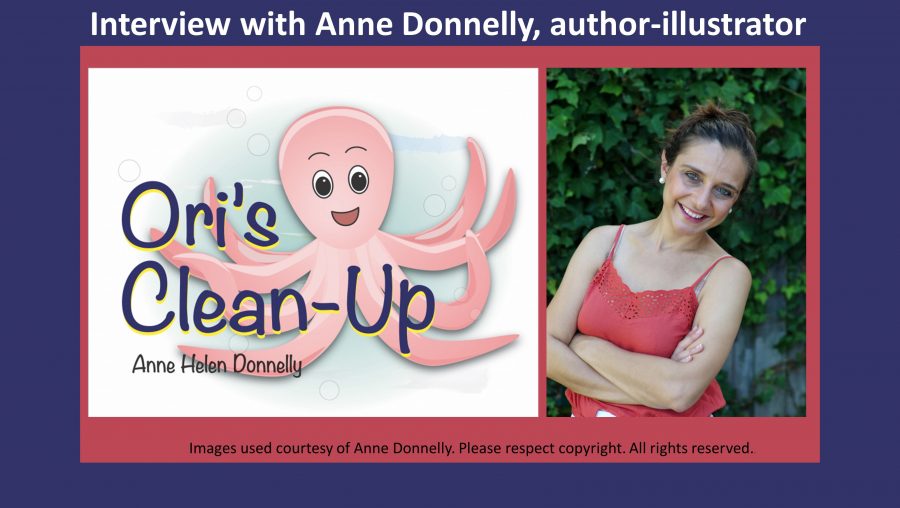
  • Interview with Anne Donnelly, author-illustrator – readilearn

    Interview with Anne Donnelly, author-illustrator – readilearn

    With tomorrow 8 June World Oceans Day and World Environment Day just a few days ago on 5 June, there is no better time than now to introduce you to Anne Donnelly and her delightful picture book Ori’s Clean-up.

    The aim of World Oceans Day is to celebrate, protect and conserve the world’s oceans. The 2019 theme Together we can protect and restore our ocean focuses on preventing plastic pollution.  With its environmental theme incorporating recycling and re-using, Anne’s book is a perfect fit.

    About Anne Donnelly

    Anne lives in Sydney with her husband, her two children and their new puppy that chews everything! She loves to be creative in all sorts of ways. She loves to read, write, craft and is a very animated storyteller. As a little girl, she used to draw on the underside of the kitchen table and all the way up the stairs, on each step, much to her parent’s shock.

    She has released three books in the Ori Octopus series; Ori the Octopus and Ori’s Christmas in 2017. And now she is especially excited about her latest book Ori’s Clean-Up as it combines two of her passions; children’s literacy and care of our environment. This book has been endorsed by Clean Up Australia and is being stocked at various zoos, national parks, museums, visitor centres, aquariums and holiday destinations all over the country.

    About Ori’s Clean-Up

    Ori the Octopus and his friends have left their rubbish everywhere. They tidy up, but it doesn’t work. To keep their home clean and healthy, they need to do something different, something better.

    The Interview

     Hi, Anne. Welcome to readilearn.

     Thanks for inviting me.

    Anne, you tell your stories with words and pictures. When did you know you wanted to be a storyteller and share your stories with others?

    Continue reading: Interview with Anne Donnelly, author-illustrator – readilearn

  • School Days, Reminiscences of Robbie Cheadle

    School Days, Reminiscences of Robbie Cheadle

    Welcome to the School Days, Reminiscences series in which my champion bloggers and authors share reminiscences of their school days. It’s my small way of thanking them for their support and of letting you know about their services and publications.

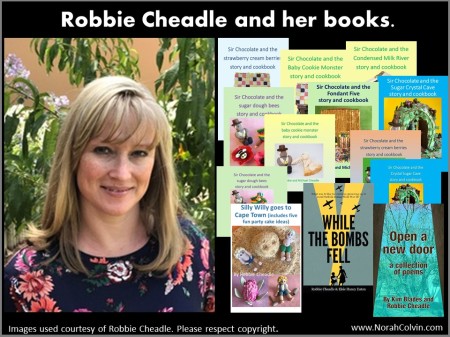
    This week, I am pleased to introduce Robbie Cheadle, author, poet and blogger. I’m not sure when or where I first met Robbie, but I know was captivated by her delightfully unique Sir Chocolate series of picture books which she illustrates with amazing fondant figurines. I was also intrigued to know that these books were jointly written with her and her son Michael, starting from when he was ten years old. There are now six books in the Sir Chocolate series and, since then, Robbie has published a memoir of her mother’s war-time childhood, co-written a book of poems, and had others of her poems and short stories featured in anthologies.

    Robbie Cheadle and her books

    Before we begin the interview, I asked Robbie to tell you a little of herself:

    Robbie, short for Roberta, is an author with six published children’s picture books in the Sir Chocolate books series for children aged 2 to 9 years old (co-authored with her son, Michael Cheadle), one published middle grade book in the Silly Willy series and one published preteen/young adult fictionalised biography about her mother’s life as a young girl growing up in an English town in Suffolk during World War II called While the Bombs Fell (co-authored with her mother, Elsie Hancy Eaton). All of Robbie’s children’s book are written under Robbie Cheadle and are published by TSL Publications. 

    Robbie has recently branched into adult horror and supernatural writing and, in order to clearly differential her children’s books from her adult writing, these will be published under Roberta Eaton Cheadle. Robbie has two short stories in the horror/supernatural genre included in Dark Visions, a collection of 34 short stories by 27 different authors and edited by award winning author, Dan Alatorre. These short stories are published under Robbie Cheadle.

    Robbie has also recently published a poetry collection, Open a new door, together with fellow South African poet, Kim Blades.

    Welcome, Robbie.

    Let’s talk school. First, could you tell us where you attended school?

    I went to fourteen different schools as we moved around a lot. My first school was Craighall Convent in Johannesburg. The school I learned the most at was a bilingual school in George in the Western Cape. I was only there for six weeks but I learned the basics of Afrikaans (second language in South Africa) which I had missed out on before.

    Did you attend a government, private or independent school?

    I attended a mixture of schools. I attended a couple of private schools when I was in primary school including two convents. I went to public schools when we lived in George for the first time and when we lived in Cape Town. I attended a public high school in Johannesburg.

    What is the highest level of education you achieved?

    I have a degree and an honours degree in Accounting as well as my board examinations to become a chartered accountant. I was keen to do an economics degree a few years ago when I wrote my publications on direct foreign investment into Africa but I couldn’t find anything suitable. I reverted to self-study and analysis instead and this research is in my publications.

    What work or profession did you choose after school and was there anything in school that influenced this choice?

    Immediately after school I went to a secretarial college for a year where I learned typing, shorthand and the other skills of a professional secretary. I then worked for a few years and saved money which I used to pay for some of my university education. I attended a correspondence university and worked shifts in a video shop to earn money while I did my first degree. I applied for, and was accepted, for an internship at KPMG in Johannesburg when I finished my degree. KPMG paid for my studies for my honours degree and I studied part time in the evenings and during public holidays and weekends. It was hard but I managed to do it and I passed all my examinations first time around, even my honours degree where I had to pass all nine examinations in one sitting.

    What is your earliest memory of school?

    Robbie Cheadle as a school girl in the news

    I remember having my photograph taken for the national newspaper on the first day of school. My friend’s father was a photographer for the newspaper and he used me as his “First day of school” photograph that year.

    I also remember being left out when the girls (aged 7 years old) when to mass and practiced for their first Holy Communion. I recall being sad that I didn’t have a long white dress and candle. I only took my Holy Communion when I was 12 years old and we were living in George.

    What memories do you have of learning to read?

    I remember being fascinated with books and reading. I can recall sounding out the words by myself and the triumph of reading Little Bear all by myself. Once I got the hang of reading, I just went from strength to strength. I got books for every birthday and Christmas and belonged to the library. When I was 9 years old and we lived in Cape Town, I used to cycle to the library twice a week and take out 7 books at a time to read (4 library cards were mine and 3 were my sister, Cath’s, but she let me use them.)

    What memories do you have of learning to write?

    I remember writing my name in my books and I always inverted by b’s, d’s and p’s. I had a bit of remedial help and this was corrected when I was 8 years old. My old books still have the inscription Roderta Eaton.

    What do you remember about math classes?

    I have very little memory of maths class other than I was able to do reasonably well without much effort which left me lots of time to read. I remember my high school maths teacher writing a remark on my report that said: “Generally speaking, Robbie is generally speaking.” I have always remembered that comment. I had one teacher that told my mom that I had layers like an onion which you needed to peel back to find the real me. My mother was also told by a teacher that I practiced “silent insubordination.”

    Robbie Cheadle discusses what she liked best about school

    What was your favourite subject?

    I enjoyed English firstly and then History. Accounting and Maths were both relatively easy for me and I hated Afrikaans with a passion. My second ever Afrikaans teacher embarrassed me in front of the whole class and I would never bother with learning this language after that.

    What did you like best about school?

    I have two lovely memories of school, one, was creating a play with my friends to perform for the class when I was 8 years old. I loved organizing the cast and teaching them their roles. I have always enjoyed project management and organizing. The other memory I cherish was being chosen to be Mary in the Nativity Play when I was 12-years old. I was simply thrilled.

    What did you like least about school?

    I can’t think of anything I really didn’t like about school; it just was something I did every day for 12 years. I have always been a loner and would always chose books over people. We moved a lot, so I learned not to get too close to other children, it was easier to uproot myself that way. I am still quite good at accepting change and I don’t retain long-term physical friendships. I prefer my virtual friends who are constant and always there.

    How do you think schools have changed since your school days?

    Unfortunately, the quality of the public education in South Africa for underprivileged children has not improved much since 1994. Lots of children start learning English late in their school career (at the age of 10 or 11 years old) and it is difficult for them to cope with being taught in English.

    There is still a huge shortage of school basics in many rural schools and children are still being taught under trees and in classes with few desks and chairs and even fewer learning materials. There are often no proper toilets for the children to use.

    I belong to charities which donate books and stationery to underprivileged schools. A lot is done to help by the private business sector and individuals.

    My sons both attend private schools and the college my older son attends is exemplary in its out-reach programme. It supports a disadvantaged college in a rural area and has a programme to train teachers from disadvantaged backgrounds. It also has a programme to help disadvantaged children with potential to achieve at school. This is run in the afternoons and the teaching staff freely give of the own time and skills. It is a sad that the public education is poor because our world is evolving into one where higher-level skills are becoming vital to get and retain jobs. English and maths skills are essential.

    What do you think schools (in general) do well?

    I can only answer this question from the point of view of my own sons. Both of their schools have outcomes-based education programmes and this works so well. Their curriculums are marvelous and I often find myself thinking how much I would have enjoyed their schooling when I was a girl. My older son’s school has programmes to give accelerated learning opportunities to boys who find learning easier and support programmes for boys that find some areas of learning more difficult. They just do such wonderful things, read fantastic books and have marvelous learning opportunities. Of course, as with all things in life, you have to grasp opportunities or else they pass you by.

    How do you think schools could be improved?

    The most important thing in our government schools is to get good teachers. Teachers that aren’t masters in their subject will struggle to teach others, particularly, children that can’t learn in one specific way but need the information presented in another way. The children also need a safe learning environment, which often isn’t the case, and basic learning materials.

    thank you for your participation

    Thank you for sharing your reminiscences of school and thoughts about education in general, Robbie. It was interesting to hear the comparisons between your own schooling and that of your son’s current schooling. I was interested to hear your response to learning Afrikaans and was surprised at how late English was taught. The photographs of you from the newspaper are very cute and to be treasured.

    Find out more about Robbie Cheadle on her blogs

    Bake and Write

    Robbie’s inspiration

    And her Goodreads author page:


    Connect with her on social media

    Facebook @SirChocolateBooks

    Roberta Writes

    Twitter @bakeandwrite

    @robertaeaton17

    Robbie’s books can be purchased from

    Amazon

    Or

    TSL Publications

    If you missed previous reminiscences, check them out here:

    Charli Mills

    Sally Cronin

    Anne Goodwin

    Geoff Le Pard

    Hugh Roberts

    Debby Gies

    Pauline King

    JulesPaige

    D. Avery

    Christy Birmingham

    Miriam Hurdle

    Look for future interviews in this series to be posted on Sunday evenings AEST.

    Coming soon:

    Marsha Ingrao

    Ritu Bhathal

    Joy Lennick

    Susan Scott

    Mabel Kwong

    Sherri Matthews

    Chelsea Owens

    Pete Springer

    with more to follow.

    Thank you blog post

    Thank you for reading. I appreciate your comments. Please share your thoughts.
     

  • School Days, Reminiscences of Miriam Hurdle

    School Days, Reminiscences of Miriam Hurdle

    Welcome to the School Days, Reminiscences series in which my champion bloggers and authors share reminiscences of their school days. It’s my small way of thanking them for their support and of letting you know about their services and publications.

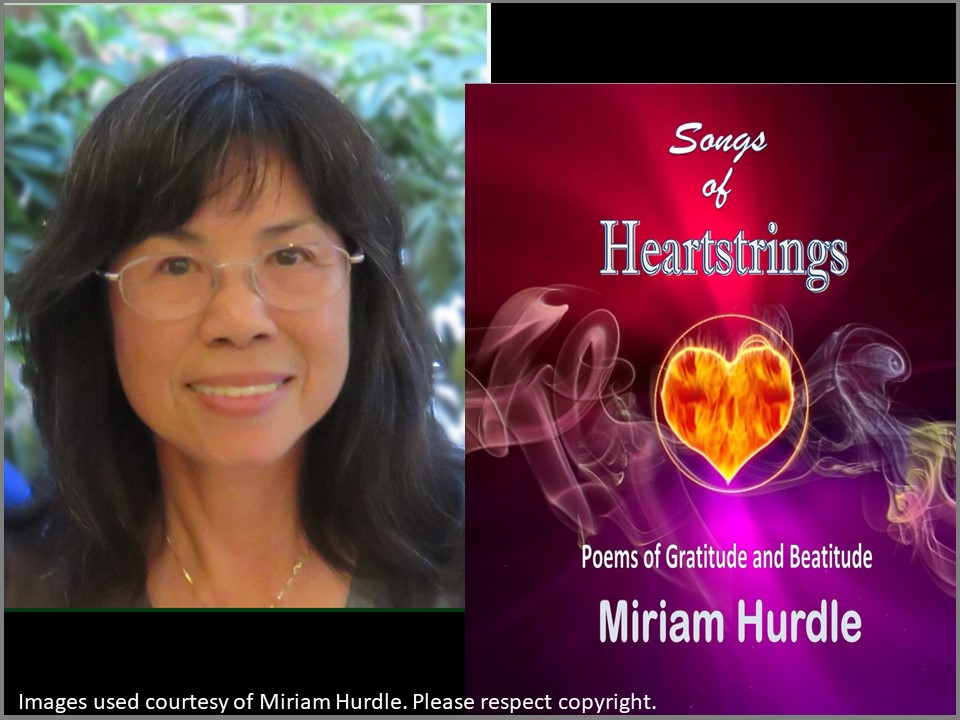
    Miriam Hurdle, poet

    This week, I am pleased to introduce Miriam Hurdle, poet, blogger, flash fiction writer, photographer, ex-teacher and educator. She blogs at the Showers of Blessings and recently published a book of poems entitled Songs of Heartstrings: Poems of Gratitude and Beatitude.

    I first met Miriam at the Carrot Ranch when she rode up and joined in the flash fiction challenges. Since then, we’ve met up in many different places around the blogosphere. Considering she’s been blogging even longer than I; I’m surprised we hadn’t met earlier. We share our thoughts on education and grandchildren, and in fact on anything to do with making our journeys through life the best we can. It is always a pleasure to converse with Miriam.

    Before we begin the interview, I invite Miriam to tell you a little of herself:

    Miriam Hurdle is a multi-genre writer. She writes poetry, flash fiction, short stories and memoir.

    Music has rooted in her life. Being a soloist as a teenager led her to taking voice lessons and to have ongoing singing engagements. She continues to sing soprano in choral groups. Lyrics have a major influence in the natural flow of her melodic writing. She writes memoir in the form of poetry.

    She took photos when the films were black and white. Photography is still her enjoyable hobby. Drawing and painting were fun activities as a child. She resumed drawing and watercolor painting several years ago. In her poetry collection, she includes photos and paintings to illustrate the poems.

    She earned a Doctor of Education from the University of La Verne in California. After two years of rehabilitation counseling, fifteen years of public-school teaching and ten years in school district administration, she retired and enjoys life with her husband in southern California. She makes frequent visits to her daughter, son-in-law and granddaughter in Oregon.

    Welcome, Miriam.

    Let’s talk school. First, could you tell us where you attended school?

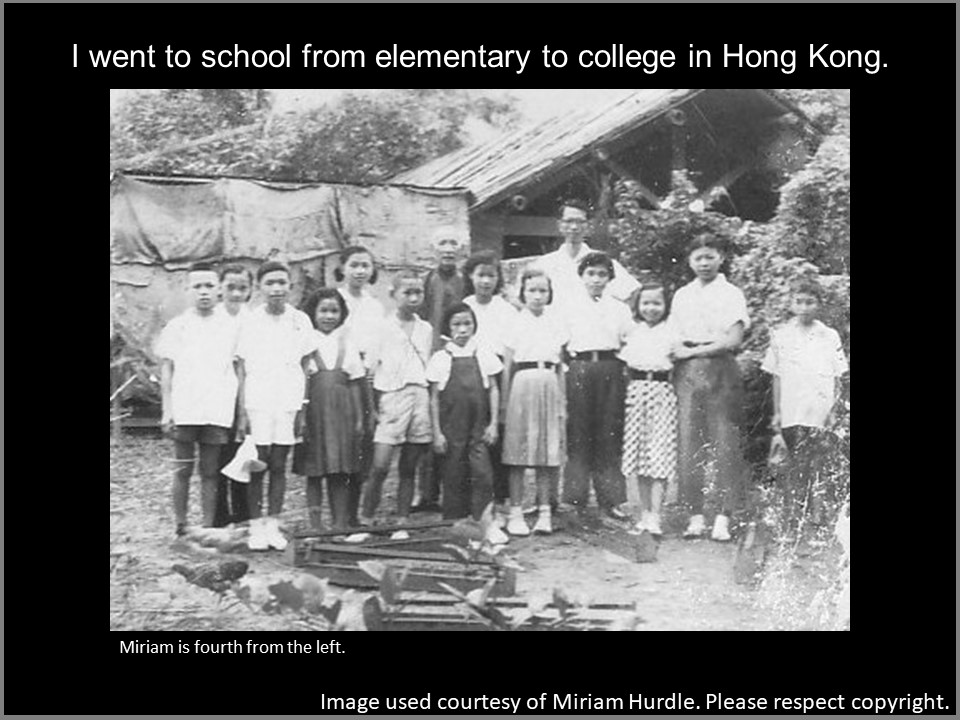
    Miriam Hurdle school photo

    I went to school from elementary to college in Hong Kong.

    Did you attend a government, private or independent school?

    In Hong Kong, there are public schools, government subsidized schools, and private schools. I attended two elementary schools sponsored by organizations and they were tuition free schools. One was a Buddhist organization sponsored school, and we had to take a Buddhism class. I remember the nun chanting in class.

    What is the highest level of education you achieved?

    After I graduated from the college in Hong Kong, I worked for five years, then came to the United States for my graduate studies. I got three master’s degrees – in Religious Education, Counseling, and Educational Administration and a Doctor in Education.

    What work or profession did you choose after school and was there anything in school that influenced this choice?

    I love music since I was a kid. I sang solos in churches as a teenager. As a result, I took voice lessons and had more singing engagement. It would be my first choice to become a professional musician or teach music, but I could only afford to do music as an enjoyment, not a profession.

    When I was in college, I volunteered in Far East Broadcasting Company in several programs. I did singing and recorded children’s stories. When I finished college, FEBC wanted to hire me full time, but the job didn’t pay too much.

    Many girls chose to be teachers or nurses back in those days. I accepted a teaching job. I taught Chinese as a Second Language for three years in the Baptist University of Hong Kong. I was also a Director of Children’s Department for two years at Asian Outreach where I wrote four children’s books.

    In the U.S. I worked as a Rehabilitation Counselor for two years, taught preschool for two years, taught elementary school for fifteen years, and worked as a school district administration for ten years.

    What is your earliest memory of school?

    My earliest memory was when I won the Abacus Competition in first grade. The second-grade teacher taught abacus. He came to our classroom to present me the award. Another wonderful memory was that my first-grade teacher Mrs. Leung said I was bright. The thought of being bright influenced my whole life.

    When I studied counseling and child development, I learned that positive reinforcement encourages desirable behavior. In fact, it is also true with adults. Instead of pointing fingers or saying, “don’t do this, don’t do that,” we can praise and encourage desirable behavior or responses.

    What memories do you have of learning to read?

    We did a lot of memorization in reading. We had to recite the reading lessons in early elementary school. My dad helped with my homework and had me memorized the lessons every week. I learned everything in the current lesson before the teacher taught a new lesson. At the fourth grade, I read my dad’s newspapers. My dad and I traded sections to read. I read the horrible news describing the details of crime scenes, read adult fantasy, comic strips and the Sunday children’s section.

    My favorite literature was Aesop’s Fables. I also remember learning English grammar such as the regular tenses as walk, walking, walked, walked; and the irregular tenses as go, going, went, gone.

    What memories do you have of learning to write?

    There was not a lot of creative writing in the lower grades in elementary school. We did a lot of copying the reading lessons. I guess by copying; we remember writing in a proper sentence structure. In upper grade, I learned how to write a story with an opening, the middle, the climax and the conclusion. I remember how I paced my writing and made sure the climax was at the three fourth of the paper. We had a subject in Letter Writing and learned to write different letters.

    I learned to write both Chinese and English calligraphy. For Chinese, we wrote in vertical and right to left progression. For English, we wrote alphabet and spellings. I like calligraphy and I still write in calligraphy style in my handwriting. I bought a calligraphic set to address my daughter’s wedding invitations.

    What do you remember about math classes?

    We learned math the traditional way and learned the mental math. I did addition and subtraction well with an abacus. Doing multiplication and subtraction on the abacus is harder so I don’t remember how to do them. I won the Abacus Competition in the first grade.

    What was your favorite subject?

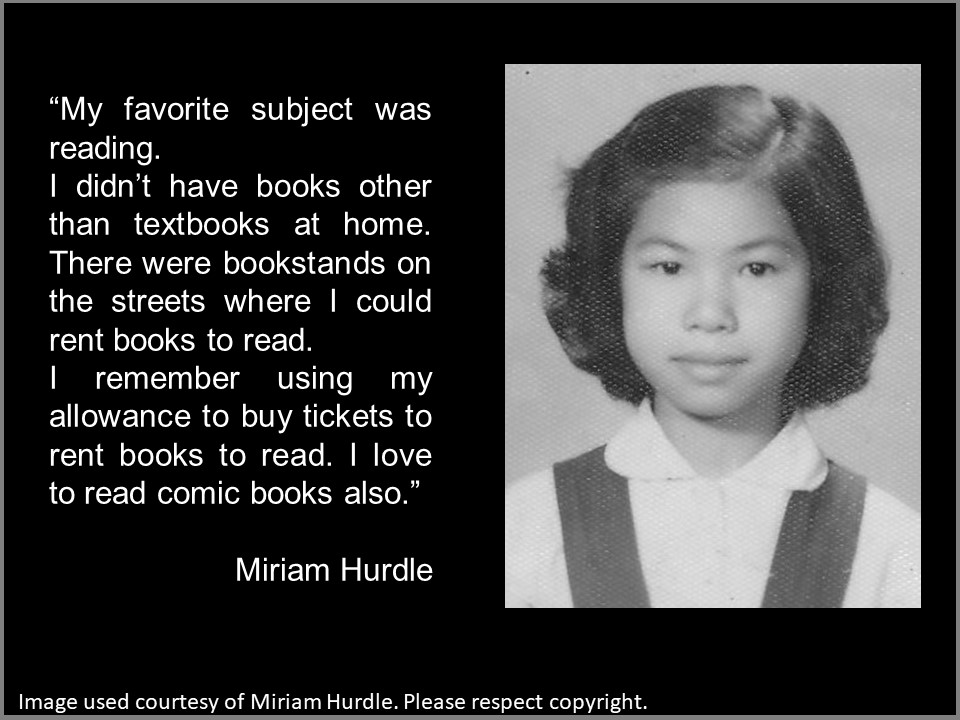
    Miriam Hurdle's favourite subject at school was reading

    My favorite subject was reading. I didn’t have books other than textbooks at home. There were bookstands on the streets where I could rent books to read. I remember using my allowance to buy tickets to rent books to read. I love to read comic books also.

    What did you like best about school?

    I like to be with my friends. My best friend Shirley at the fourth grade was my teacher Mrs. Cheung’s daughter. Mrs. Cheung was also a music teacher for the upper grades. We had a singing contest. I entered the competition and got fourth place. Shirley got second place. Shirley played the piano. I went to her house on the weekends and listened to her play for hours.

    I keep in touch with Shirley. When we traveled to London, she and her husband took us sightseeing for five days.

    What did you like least about school?

    I can’t think of anything I didn’t like. There were forty students in each class. We received two report cards a year; they showed our ranking among the class. I got second to ninth places from first to sixth grade. It broke my heart when I got the ninth place. I can’t remember what happened, but it wasn’t because of any subject.

    How do you think schools have changed since your school days?

    I think the elementary schools in Hong Kong still do a lot of memorization rather than creative learning. My sister and her husband sent their two children to Canadian system International School, and they eventually migrated to Canada. After they got the Canadian citizenship, because of my brother-in-law’s health issue, they went back to Hong Kong and keep the dual citizenship.

    What do you think schools (in general) do well?

    Since I left Hong Kong forty years ago, I can’t comment about the schools there anymore. But I taught in California thirty years ago, I can comment on the schools in California.

    Class size–Kindergarten is 20 students, first to third grades is 25 or fewer students, and fourth to sixth grades is up to 35 students average.

    Schools get special funding for English learners to get extra help to learn at their current English levels to catch up with the levels of their classes.

    There is special funding to help students from the low-income family because statistic shows that these students have low academic levels.

    Many families can afford to send their children to go to preschool. For low-income families, they can send their children to the Headstart program to prepare for the kindergarten.

    There are breakfast and lunch served at schools. Low-income families receive free meals for their children. Other children have meals for reduced or full fees. Students can bring their lunches to school also.

    How do you think schools could be improved?

    At elementary school, there is not enough time of the day to teach all the subject to prepare the students for Junior High or High school. Schools end at 2:30 p.m. for lower grade and 2:45 p.m. for upper grade. For lower grades, teachers teach reading and math in the morning. After lunch, they may teach social studies and physical education. There is no time to teach science. Since the State test at the end of the year doesn’t test science, the teachers give up on teaching that subject.

    For upper grade, teachers teach reading and math in their homeroom. Some of them team teach social studies and science so the teacher could do the preparation and teach for more than one class. Students can benefit more learning if the school days are longer.

    thank you for your participation

    Thank you for sharing your reminiscences of school and thoughts about education in general, Miriam. It’s been wonderful to have you here. I learned so much about you. I am impressed by your doctorate degree, curious about whether you learned English at school, fascinated by the thought of renting books and envious of your singing ability.

    Find out more about Miriam Hurdle

    Visit her website: https://theshowersofblessings.com

    Or her Amazon Author Page: https://www.amazon.com/Miriam-Hurdle/e/B07K2MCSVW?ref=dbs_p_ebk_r00_abau_000000

    Connect with her on social media

    Twitter: https://twitter.com/mhurdle112

    Facebook: https://www.facebook.com/miriam.hurdle.1

    Purchase Songs of Heartstrings from

    Amazon Universal Link: http://smarturl.it/SongsofHeartstrings

    Amazon UK Link: http://www.amazon.co.uk/dp/B07K1S47W9 

    Amazon.com Link: http://www.amazon.com/dp/B07K1S47W9 


    If you missed previous reminiscences, check them out here:

    Charli Mills

    Sally Cronin

    Anne Goodwin

    Geoff Le Pard

    Hugh Roberts

    Debby Gies

    Pauline King

    JulesPaige

    D. Avery

    Christy Birmingham

    Look for future interviews in this series to be posted on Sunday evenings AEST.

    Coming soon:

    Robbie Cheadle

    Marsha Ingrao

    Susan Scott

    Mabel Kwong

    Sherri Matthews

    with more to follow.

    Thank you blog post

    Thank you for reading. I appreciate your comments. Please share your thoughts.


  • National Reconciliation Week in the classroom – readilearn

    National Reconciliation Week in the classroom – readilearn

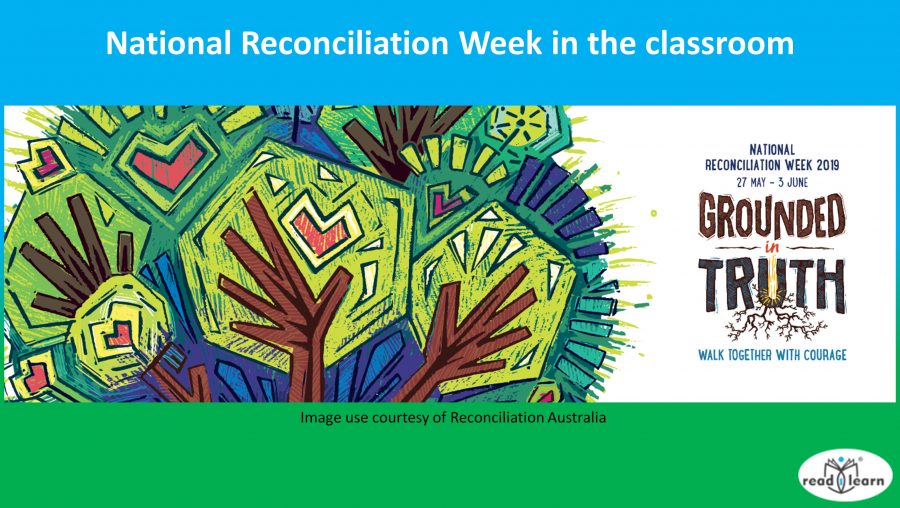
    Next week, from 27 May until 3 June is National Reconciliation Week. It follows National Sorry Day which is observed on 26 May each year.  The theme for National Reconciliation Week this year is “Grounded in Truth. Walk Together with Courage.”

    With Aboriginal and Torres Strait Islander histories and cultures one of the cross-curricular priorities of the Australian Curriculum, this is a perfect time to ensure enough is being done to provide “the opportunity for all young Australians to gain a deeper understanding and appreciation of Aboriginal and Torres Strait Islander histories and cultures, deep knowledge traditions and holistic world views.”

    Teachers are supported in delivering the curriculum with a richness of information on the National Reconciliation Week website and teaching resources on the Reconciliation Australia Narragunnawali website. Narrangunnawali is a comprehensive resource with much to explore and implement, including RAPS (Reconciliation Action Plans), Professional Learning, Curriculum Resources and Awards.

    Narragunnawali: Reconciliation in Schools and Early Learning

     Additional resources

    Little J and Big Cuz, an animated series for early years children (K – 2). The series is about Little J, who’s five, and Big Cuz, who’s nine. They


    Continue reading: National Reconciliation Week in the classroom – readilearn

  • What lives in trees?

    What lives in trees?

    Carrot Ranch flash fiction challenge - trees

    This week at the Carrot Ranch, Charli Mills challenged writers to In 99 words (no more, no less) write a story that goes in search of trees. It can be one particular tree, a grove, woods, or forest. What makes the tree worth seeking? Go where the prompt leads!

    This week, we’re observing a science lesson with a group of 5 – 6-year-olds in search of knowledge about life in trees.

    What lives in trees?

    The teacher displayed photographs of trees.

    “We’ve been learning about where animals live. Today, we’ll list animals that live in trees.”

    Hands shot up, bursting to contribute.

    The teacher wrote:

    possums, koalas, beetles, snakes, birds …

    Amir’s English was developing but his classmates were puzzled when he said what sounded like ‘goat’.

    “Repeat,” encouraged the teacher.

    “Goat.”

    When asked, Amir drew a tree with a recognisable goat standing in it.

    “Not story,” smiled the teacher. “Real.”

    Amir nodded and pointed to the laptop. “Google.”

    A quick search confirmed it.

    Everyone cheered. Amir added to their knowledge tree that day.

    ……….

    Many of you who have travelled may have seen the tree goats of Morocco. However, I wasn’t aware of them until, a couple of weeks ago, a photo popped up on my desktop. Intrigued, I had to find out more. A search for the goated tree began.

    I discovered that the photo wasn’t fake, as I had first thought. The tree is the Argania tree from which we get Argan oil, and the goats like to eat its fruit.

    Although more hygienic methods are now often employed, the oil used to be pressed from the seeds which were passed in the goats’ poop after the fruit had been eaten. I’m certain that 5 and 6-year-old children would love this titbit of information.

    If you are interested, here are some links to help you learn more about the tree goats:

    The Tree Goats of Morocco

    The Story Behind Bizarre Tree-Climbing Goats of Morocco

    Moroccan argan oil: the ‘gold’ that grows on trees

    However, it seems, as with so many things, some people thought they could make extra money from tourists wanting to photograph goats in trees. Sadly, it is not only the goats that suffer from these unkind practices. The trees suffer too and, according to one article I read, “are in danger and the forest is listed by UNESCO as an International Biosphere Reserve.”

    Iconic ‘tree-climbing’ goats of Morocco revealed to be a scam

    Thank you blog post

    Thank you for reading. I appreciate your feedback. Please share your thoughts.


  • Are you ready for National Simultaneous Storytime? – readilearn

    Are you ready for National Simultaneous Storytime? – readilearn

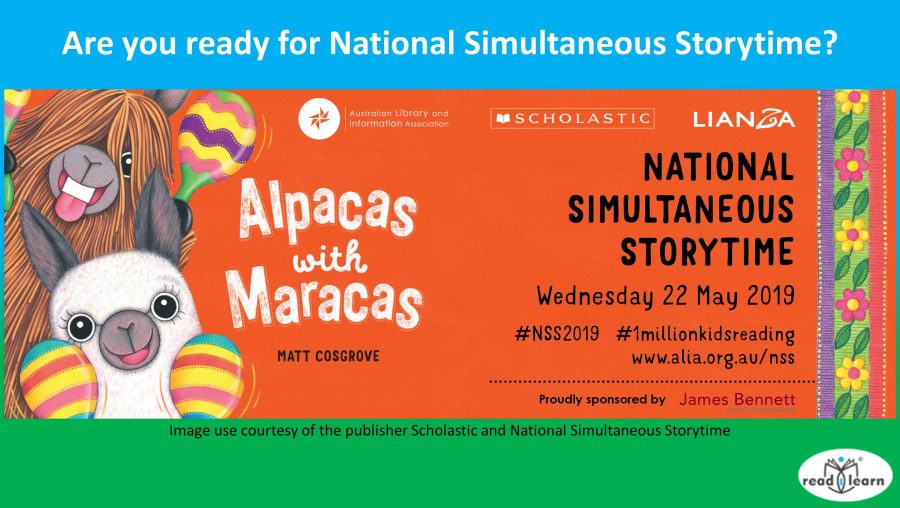
    It’s time to celebrate National Simultaneous Storytime. Held every year since 2001 and organised by the Australian Library and Information Association (ALIA), National Simultaneous Storytime (NSS) encourages everyone in Australia to read the same picture book at the same time.

    This year’s event takes place next

    Wednesday 22 May at 11 am AEST.

    The picture book to be read is

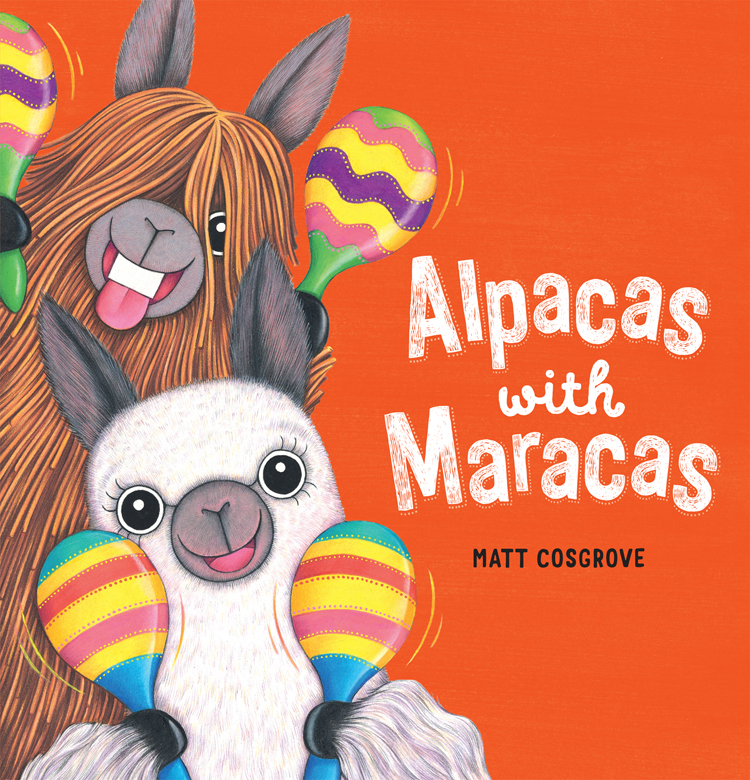
    Alpacas with Maracas by Matt Cosgrove.

    As outlined on the website, the purpose of the event is to:

    • promote the value of reading and literacy,
    • promote the value and fun of books,
    • promote an Australian writer and publisher,
    • promote storytime activities in public libraries and communities around the country,
    • and provide opportunities to involve parents, grandparents, the media and others to participate in and enjoy the occasion.

    Participating in such an event will help children to see themselves as part of a larger community of readers and understand that reading is not something confined to their classroom but enjoyed by others everywhere.

    Everyone can participate — libraries, schools, childcare centres, bookshops families, grandparents, individuals.

    Registration for NSS is free and, if you register prior to Monday 20 May, you will receive downloadable material to support your event, including a free downloadable PDF version of the book to use during your NSS event.

    Free teaching ideas

    In addition to all the great teaching ideas available on the NSS website, other teaching ideas and resources are available from

    Continue reading: Are you ready for National Simultaneous Storytime? – readilearn

  • Can you fool the tooth fairy?

    Can you fool the tooth fairy?

    This week at the Carrot Ranch, Charli Mills discussed important things in life including attitudes to aging. She challenged writers to In 99 words (no more, no less) write a story about growing older. It can be humorous, dark or poignant. It can be true or total fiction. It can be fine wine or an old fossil. Go where the prompt leads!

    Carrot Ranch flash fiction challenge - ageing

    Most of my work as a teacher has been with children who are experiencing one of the earliest physical signs of growing older — losing their baby teeth and growing adult teeth. The loss of these teeth is usually accompanied by great excitement, especially with the expectation that the tooth may be replaced with a coin by the tooth fairy.

    lost tooth - Artie Feb 13 16

    I previously wrote about the world’s diversity of traditions dealing with the loss of children’s baby teeth in A tooth for a tooth. That post also contains a flash story involving some gappy children’s smiles that help to cross barriers.

    When I was growing up, many of my grandparents’ generation had false teeth or dentures that they left in a glass of water by their bedside when they were sleeping. With improved dental hygiene over the years, those numbers are now decreasing. This aspect of growing older — losing teeth whether at six or sixty-six — made me wonder if the tooth fairy might be fooled by false teeth and whether a creative child may have once tried to raise money that way.

    Great-Grandmama’s Teeth

    The sound like freight trains roaring through a tunnel assured Billy Great-Grandmama was asleep. He turned the doorknob ever so slowly, pushed the door gently and slipped into the darkened room. A chink of light bounced off the glass at the bedside. He daren’t breathe as he tiptoed over. Three quick whistles and he froze. The cavern with wibbly wobbly edges stretched wide. Would she wake? No, but better be quick. He lowered his fingers into the glass and withdrew his prize. All that was left was to fool the fairies and he’d buy his Mum that birthday cake.

    Thank you blog post

    Thank you for reading. I appreciate your feedback. Please share your thoughts.

  • School Days, Reminiscences of D. Avery

    School Days, Reminiscences of D. Avery

    Welcome to the School Days, Reminiscences series in which my champion bloggers and authors share reminiscences of their school days. It’s my small way of thanking them for their support and of letting you know about their services and publications.

    This week, I am delighted to introduce D. Avery, poet, writer, blogger. I met D. when she rode up to the Carrot Ranch, dismounted and took a lead role around the campfire with her humorous tales and witty conversation. I also try not to miss her posts on ShiftnShake where she shares poetry, flash fiction and short stories sprinkled with philosophical pearls of wisdom and creates characters as like and unlike any you may chance to meet. Whatever the topic, there’s sure to be beauty in her words, wisdom in her ideas and smiles to lighten your day.

    Books by D. Avery

    I have read and enjoyed all three of D.’s books and was both honoured and delighted when she quoted me on the back cover of After Ever. This is what I wrote:

    An interesting and eclectic collection of short stories and even shorter flash stories, this collection has something for everyone. Whether the situation be mundane or mystical, tragic or cheerful, D. Avery records events matter-of-factly, telling how it is or was, and leaves it to the reader to choose how to respond. After Ever is great for reading in bites or as an entire feast.

    I thought I’d reviewed all three of D.’s books on Amazon, but all I could find was my review of For the Girls:

    After receiving her own pre-Christmas un-gift of a cancer diagnosis, D. Avery unwrapped how the diagnosis affected her personal journey and view on life. Written from her own need and for others facing similar situations, D. Avery explores through poetry, the emotions that fluctuate in intensity from the moment of diagnosis until, hopefully, remission is declared. Anyone who has endured the pain of diagnosis or suffered alongside another who has, will find something with which to identify. None of us are ever free of the fear, but hope has a stronger pull. These poems are food for the soul.

    Before we begin the interview, I’ll allow D. Avery to tell you a little of herself:

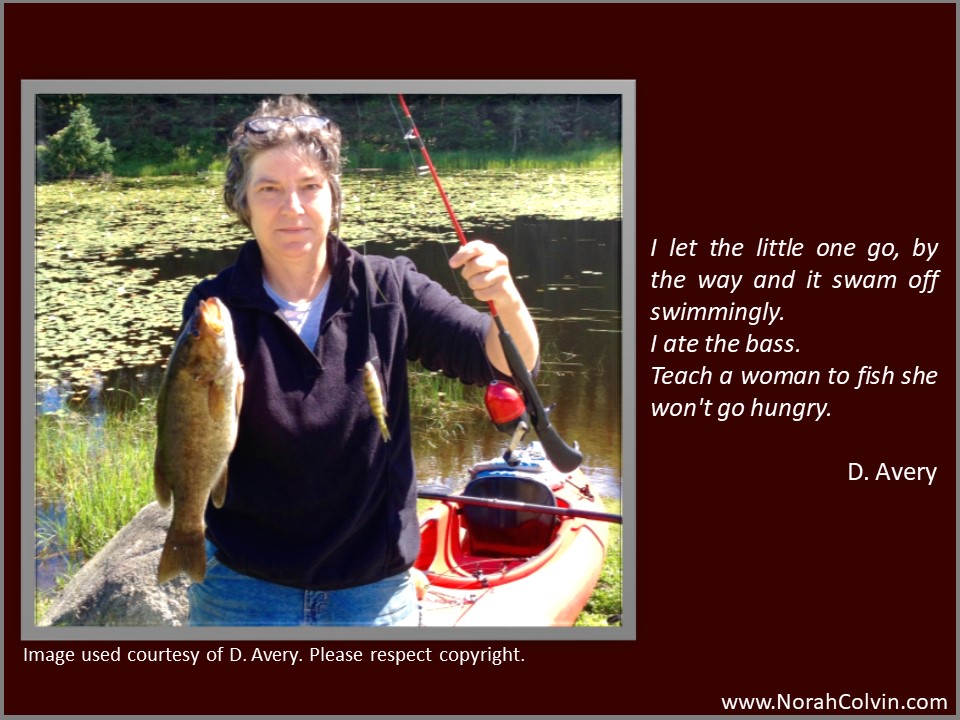
    D. Avery, writer, fisherwoman

    Born and raised in rural New England, D. Avery is never quite out of the woods, though she has been in other fields. She has been a veggie vendor, landscape gardener, and a teacher.

    Cursed with a compulsion for wordplay and a growing addiction to writing, D. Avery blogs at Shiftnshake, where she pours flash fiction and shots of poetry for online sampling. D. Avery tweets ‪‪@daveryshiftn‪‪ and is a Rough Writer at Carrot Ranch. She is the author of two books of poems, Chicken Shift and For the Girls. Her latest release,  After Ever; Little Stories for Grown Children,  is a collection of flash and short fiction.

    Welcome, D. Now let’s talk school. First of all, could you tell us where you attended school?

    I attended public school, my first three years at a K-12 school in Skagway, Alaska, then third through sixth grade in a four room graded school in Vermont, before attending a 7-12 regional school that serves a number of small towns.

    What is the highest level of education you achieved? What work or profession did you choose after school and was there anything in school that influenced this choice?

    I experienced a year of small private liberal arts college in Ohio and that was enough of that. After a year off from school I completed a two-year program at the Stockbridge School of Agriculture at UMass Amherst, earning an Associate’s Degree in Science, Commercial Floriculture. This course of study had practical and immediate application for me, and served me well. I spent the off season from greenhouse work and landscape gardening subbing and volunteering in the elementary school and after a few years I decided to answer the call and get my teaching certificate. I got my Masters of Education at Antioch New England Graduate School and switched careers, becoming a fourth grade classroom teacher and more recently a sixth grade math teacher.

    What is your earliest memory of school?

    I have lots of early memories. I do think back on how cool it was to be in a small K-12 school that was the center of a small (and isolated) community. The entire school, K-12, took part in a Christmas pageant every year for the town to see. Likewise Field Day had everyone involved and the high school kids might be on the team of a kindergartner or would somehow be helping out.

    What memories do you have of learning to read?

    I was reading before attending school, something I picked up at home. We were read to, and there was plenty of print around. One day while looking through a comic I realized I knew the words. It was pretty exciting. I went through the stack of comics and numerous picture books. By second grade I had read all my brothers’ Hardy Boys books. And we had quite a stack of Classics Illustrated, classic novels condensed into comic book form; I started in on those at this time. When we moved back to VT I read every Vermont heroes and histories books on those dusty shelves of that old graded school. There was a collection of William O’Steele books too, historical fiction for kids, pioneers headed west. Of course there were the Little House books. Then they instituted the Dorothy Canfield Fisher program and our school library got built up with more modern young adult novels. I still enjoyed the historical fiction the most though.

    What memories do you have of learning to write?

    D. Avery was always confident as a writer

    Norah, you might remember when I gave some detail about being taught to form my letters in school. It was kind of fun so here’s a LINK. But school did get better after that. My second grade teacher did a great job of integrating reading and writing. I became a writer the day that my writing was hanging in the hall and some of those high school kids were reading it and even complimented me for it. Throughout my school years some of my writing got some attention and publication. I had encouraging teachers and still remember the Poets in Schools program. I was always fairly confident as a writer, using it to baffle them with bullshit if I couldn’t dazzle them with brilliance.

    What do you remember about math classes?

    D. Avery: maths should be accessible and meaningful

    I could neither baffle nor dazzle with math. Math was never taught very well, I realize now, and I did not like it. It was a lot of rote drill-and-kill work.

    Fortunately, my great grandmother got me straightened out with times tables in one briefing so that helped.

    I managed, barely, but never “got” math until a course at ANE Graduate School. Since then I have taken a number of courses. Now I truly enjoy math and have enjoyed demystifying the subject for students third through sixth grades.

    I don’t remember ever having fun in math class, but my own math students have had fun. Math students need to see patterns and to make connections, to keep math accessible and meaningful.

    I also realize that the best math practice I ever had, and what really built number sense, was not from school at any level but from my summer work as a teenager on a truck farm where there was no cash register or calculator. My mental math got quite good. Working there and earlier helping my dad out with different projects also built my math skills.

    What was your favourite subject?

    D. Avery: it's the people who make a subject more interesting and more accessible

    I have always enjoyed history and social studies, and those were probably my favorite subjects in high school. But I also enjoyed Latin and English (reading and writing). I also was very fortunate to have had some remarkable people as my teachers. That’s what one remembers as much as anything; it’s the people who make a subject more interesting and accessible.

    What did you like best about school? 

    D. Avery, what did you like best about school

    I liked learning. I found most of my subjects interesting. There were some excellent teachers and also an excellent library. School had books and magazines to be read, it was a place to pursue ideas and interests. It was a path to possibilities. And school was where my audience was, it’s where I performed and entertained. But I did manage to learn in spite of myself.

    What did you like least about school?

    I liked being with friends at school, but people are also what I liked least in school. Kids are always having to navigate the social waters and to find their own balance between conformity and individuality. It’s stressful. I was always grateful and glad to be home at the end of the day, where I could have quiet alone time in the woods.

    I feel bad for the kids today who, because of their devices, are never able to be alone and to decompress. I feel bad for people who do not have the outside time and space. I know it was vital for my time in school to have good work and play experiences out of school and time to get re-centered. People now are never alone and never lonelier. I still require lots of alone time.

    How do you think schools have changed since your school days?

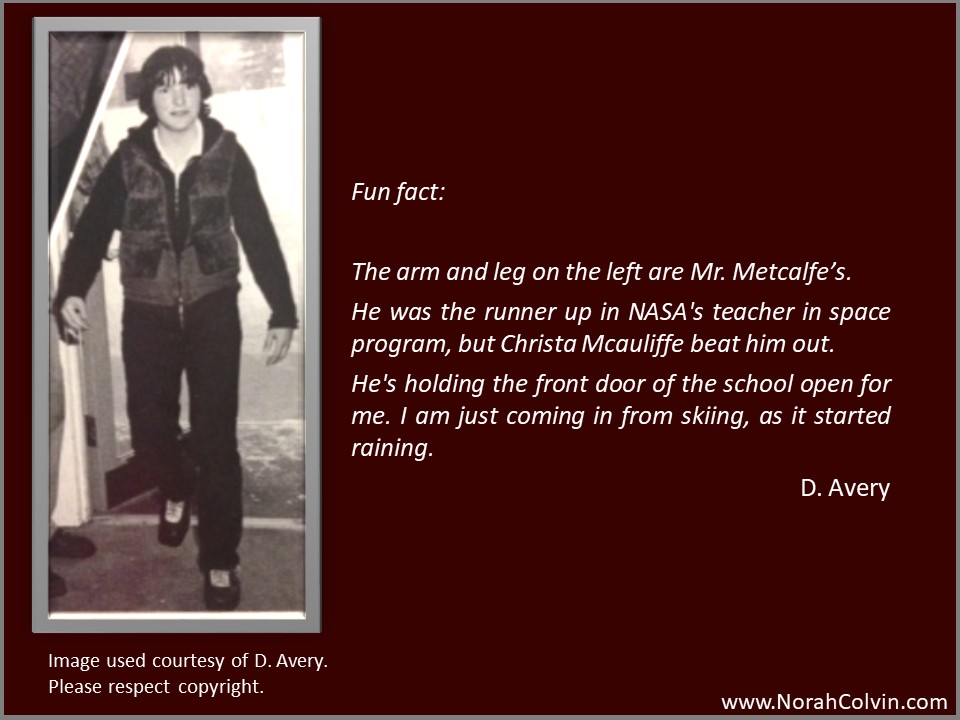
    School girl D. Avery coming in from skiing

    With the pervasiveness of computers and social media parents have an extra responsibility, an extra worry now, and most don’t fully comprehend the depths of that. Technology has made teaching and learning more difficult; it has distanced people from nature, from each other, from generational wisdom- from their selves. “Knowledge” at our fingertips is not lasting; internet access in many ways erodes curiosity and problem solving skills, critical reading and thinking skills, and the stamina required for meaningful learning.

    I know arguments could be made in defence of technology, but I rarely see a healthy balance. Gaming addictions, cyber-bullying, plagiarism and general distractions are some of the issues that impact teaching and learning nowadays. That maybe didn’t really speak about schools, but these phones are a huge change in our society and so our schools.

    What do you think schools (in general) do well?

    Schools have changed, but they are still staffed with people, most often good caring people who are educated in their subject area and also in pedagogy and in best practices based on research. Educators take into account how students best learn, and how to engage them in that enterprise.

    More than ever before, schools look out for and provide services for a student’s mental health, their social/emotional wellbeing. A person with trauma or health issues is not the best learner, and schools are learning to take a more holistic approach to all students.

    How do you think schools could be improved?

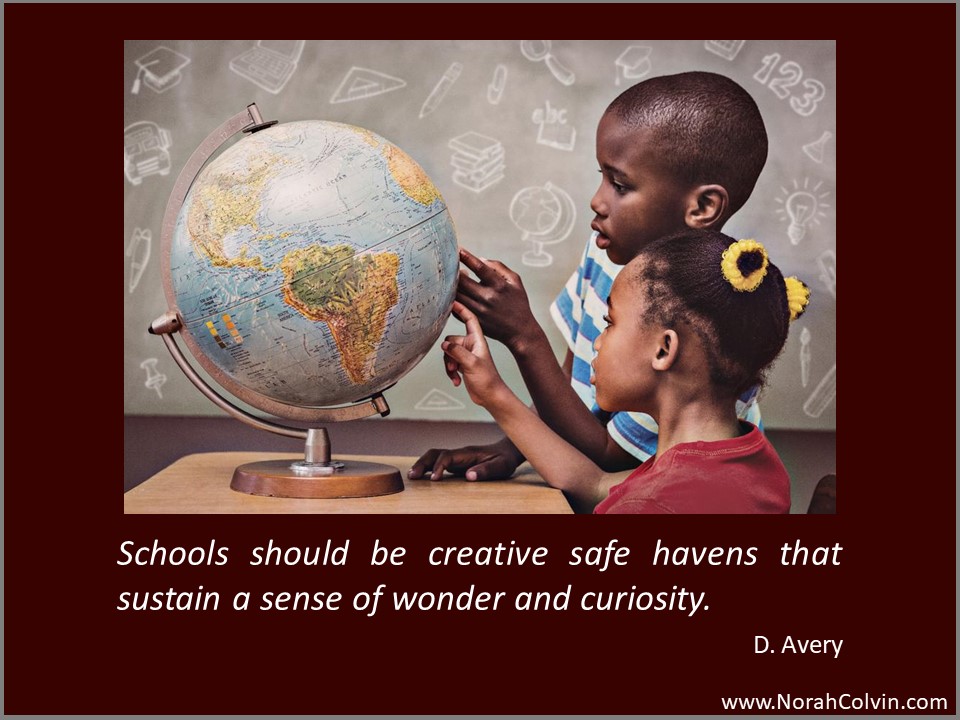
    D. Avery "Schools should be creative safe havens"

    Our schools don’t always seem to measure up, but what is the measure? Not everyone is measuring up to standardized tests, but if we really want to close achievement gaps, if we really want to leave no children behind then we need to reform much more than our schools.

    While I think we should first focus on out of school factors, within school we have to do more than give lip service to Gardner’s Multiple Intelligences. Which means schools need to not succumb to the testing culture; schools need to be less programmatic and prescriptive. Curricula should encourage empathy and build flexible and adaptive skills and strategies required for individuals to pursue their own interests and inclinations. Schools should be creative safe havens that sustain a sense of wonder and curiosity.

    thank you for your participation

    D., thank you for sharing your reminiscences of school and thoughts about education in general. I would have liked to take your responses to the last three questions and make them all quotes. You express it all so perfectly.  It’s been a delight to have you here. I learned so much from and about you. I enjoyed learning about your own school days and totally agree with what you have to say about education in general.


    Find out more about D. Avery

    from her website ShiftnShake

    Connect with her on social media

    Twitter: @daveryshiftn

    Purchase your own copy of her books from

    Amazon

    If you missed previous reminiscences, check them out here:

    Charli Mills

    Sally Cronin

    Anne Goodwin

    Geoff Le Pard

    Hugh Roberts

    Debby Gies

    Pauline King

    JulesPaige

    Look for future interviews in this series to be posted on Sunday evenings AEST.

    Coming soon:

    Christy Birmingham

    Miriam Hurdle

    Susan Scott

    with more to follow.

    Thank you blog post

    Thank you for reading. I appreciate your comments. Please share your thoughts.

  • Review: Song Bird Great Barrier Reef Rescue by Karen Tyrrell – readilearn

    Review: Song Bird Great Barrier Reef Rescue by Karen Tyrrell – readilearn

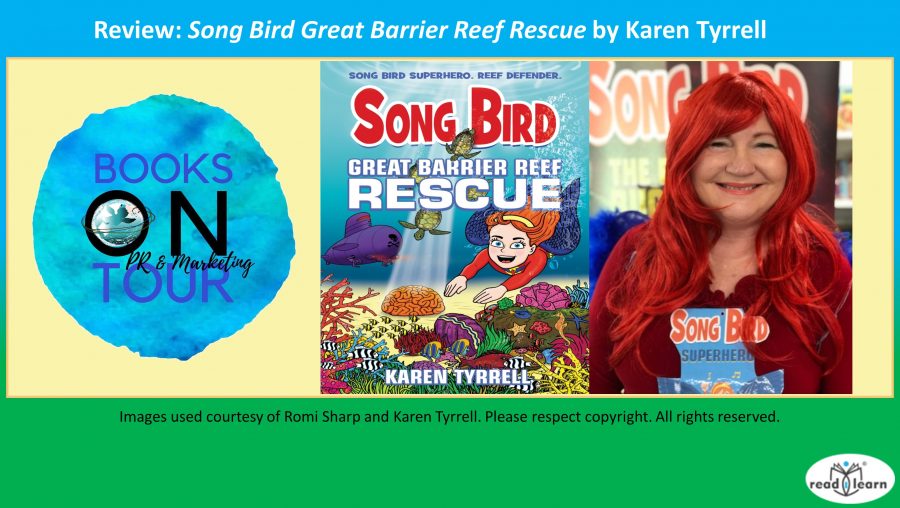
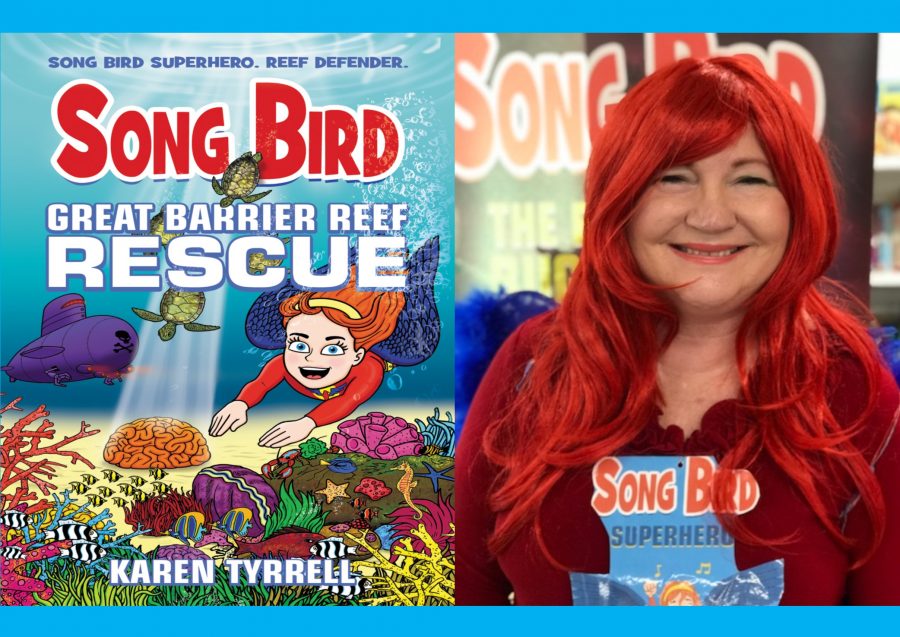
    Welcome to my review of the latest in the Song Bird Series by Karen Tyrell: Great Barrier Reef Rescue. My review is part of the Tour conducted by Romi Sharp and Books On Tour PR & Marketing. You can find a list of other tour participants at the end of the post.

    The book: Song Bird Great Barrier Reef Rescue

    The author: Karen Tyrrell

    The publisher: digital future press

    The launch: May 2019

    Suited to ages: 7 – 12

    The dedication: Song Bird: Great Barrier Reef Rescue is dedicated to those who deeply care about the reef: its corals and endangered marine animals.
    ‘The Great Barrier Reef is in grave danger. It’s time to step up.’ — David Attenborough

    The blurb:

    Rosie aka Song Bird, superhero must save the Great Barrier Reef.

    Something weird is happening on Green Turtle Island. Marine creatures have been dying, and now her friends are disappearing.

    Rosie travels through a time portal to unlock a secret.

    Can Song Bird rescue the Great Barrier Reef before it’s too late?

    My review: (which can also be found on Goodreads, Amazon Australia and Amazon US)

    In her fourth exciting adventure, Rosie Bird aka Song Bird Superhero defends the Great Barrier Reef against her arch enemy Destructo whose evil plan involves destroying Song Bird along with the Reef.

    Continue reading: Review: Song Bird Great Barrier Reef Rescue by Karen Tyrrell – readilearn