Live Love Laugh Learn … Create the possibilities

Category: Creativity

  • A celebration of Australian picture books #6 — Jackie French

    If-you-want-intelligent children

    This post is the sixth in a series celebrating picture books by Australian authors. If you missed earlier posts, please follow these links to the introduction, Mem Fox, Kim Michelle Toft, Narelle Oliver and Jeannie Baker.

    In this post I reintroduce you to Jackie French, prolific and well-known Australian author and advocate for literacy and the environment. She is currently the Australian Children’s Laureate with the task of promoting the importance and transformational power of reading, creativity and story in the lives of young Australians. In January she received an Australian of the Year Award for her contribution to literacy. Jackie’s words from her acceptance speech “If you want intelligent children, give them a book” resonated with me.

    You can listen to Jackie’s acceptance speech in its entirety here:

    These are some of my favourite quotes from the speech:

    Failure-is-not-an-option

    A-book-can-change-the

    There-is-no-such-thing

    Jackie has written over 140 books and won more than 60 awards. I am not going to share all of Jackie’s books here; just a few of her picture books that I own. This complete(ish) list of her books indicates the range of genres in which Jackie writes. Although in Standing on the Shoulders of Giants by Mark Rifidi Jackie describes it differently. She says,

    “People assume I write in different genres. From my point of view I don’t. Whether it’s history, ecology, or the fiction I’m writing about now, it’s all grounded in the way of life here and the landscape here.”

    (Jackie lives a self-sufficient life in the Araluen valley on the edge of the Deua wilderness area.)
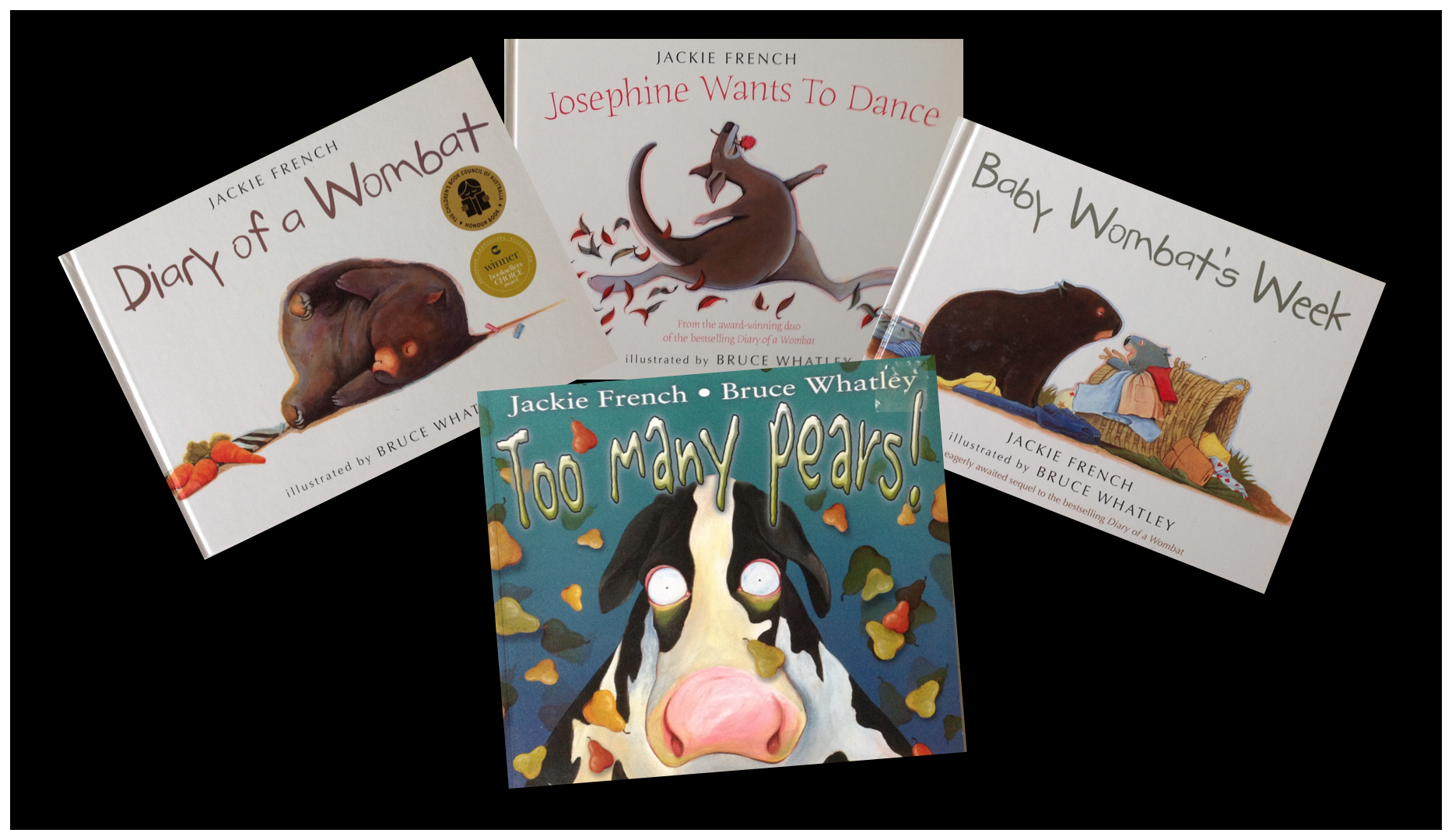
    jackie french's books

    These are the four of Jackie’s picture books that I currently own. I have read others and given others away as gifts. While these four are illustrated by Bruce Whatley, Bruce is not the only illustrator of her work.

    2015-09-19 11.19.08

    Diary of a Wombat is probably Jackie’s best known and most popular picture book. This is what Jackie says about it, as recorded in Standing on the Shoulders of Giants:

    Diary of a Wombat isn’t fiction … (it) is pretty much a week in the life of Mothball, who is one of the wombats that got fed last night” 

    The seeming simplicity of the text coupled with Bruce Whatley’s gorgeous illustrations make this book a joy to read, over and over.

    In the book Mothball sleeps, eats, scratches, eats, sleeps, and easily trains humans to be “quite good pets”.

    You can listen to Jackie read it here.
    2015-09-19 11.16.36

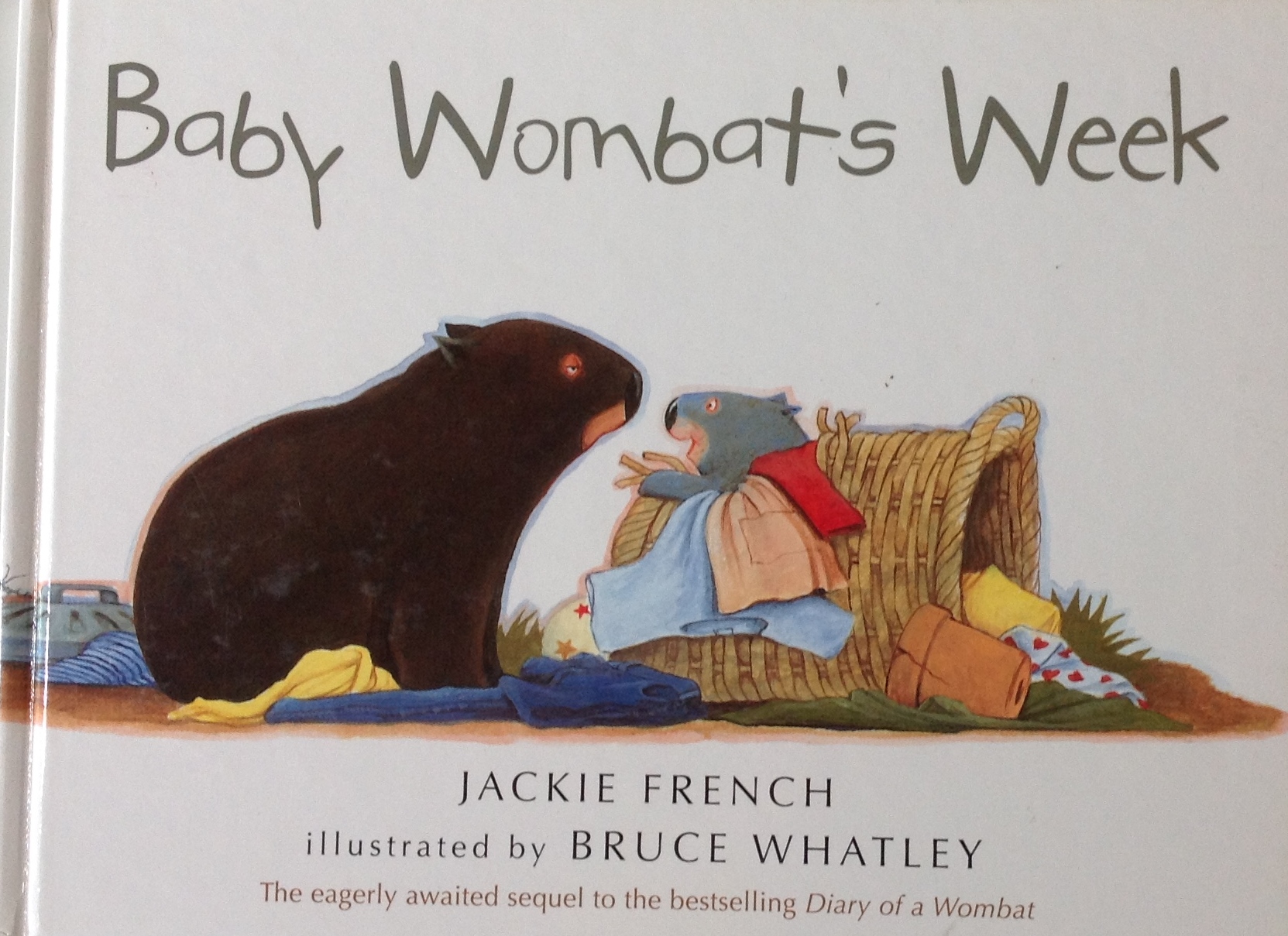
    A sequel to the Diary, Baby Wombat’s Week is pretty much a week in the life of Mothball’s baby. It is just as delightful and humorous as the original story with new adventures and escapades; but still lots of sleeping and eating.

    There are two other books in the series: Wombat Goes to School and Christmas Wombat. The Secret World of Wombats is a non-fiction text exploring “everything you ever wanted to know about wombats.”
    2015-09-19 11.15.56

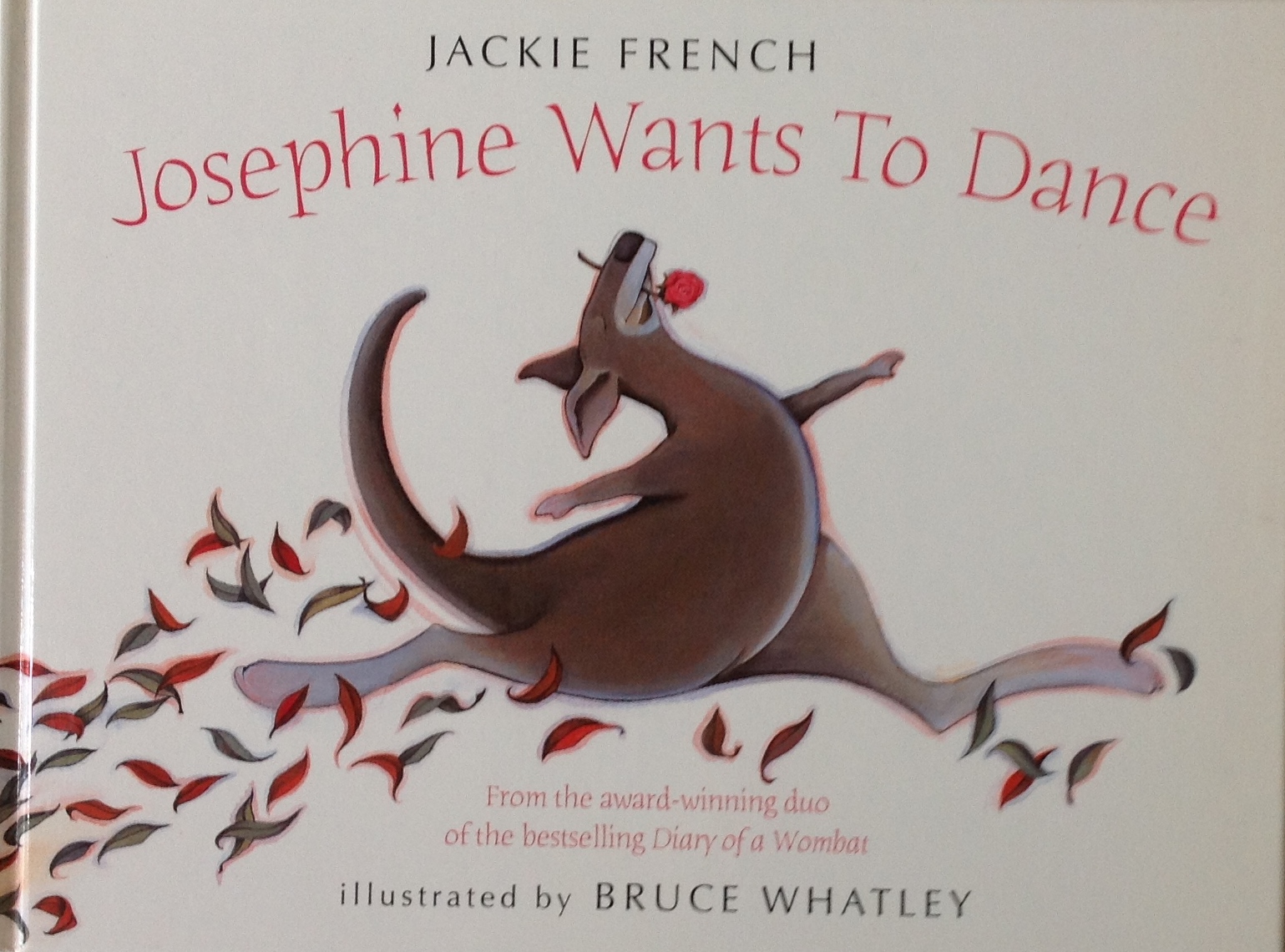
    Josephine Wants to Dance is a delightful story of a kangaroo who loved to dance but dreamed of dancing another way. One day the ballet came to town and Josephine decided that was how she wanted to dance. Though others discouraged her, Josephine was determined to give it a try. It is a lovely story of believing in yourself and following your dreams.
    2015-09-19 11.18.32

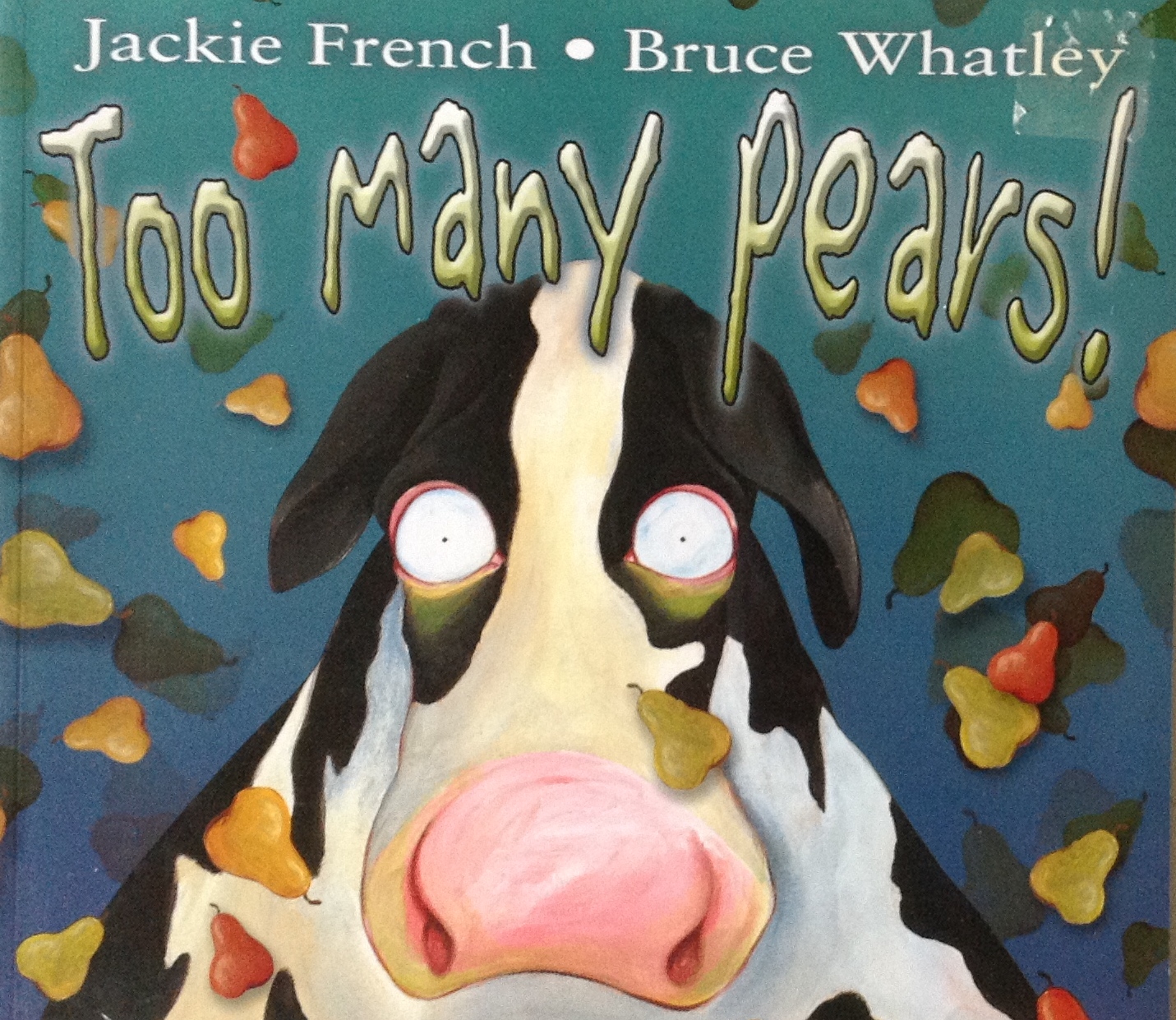
    Too Many Pears is another delightful and humorous story with illustrations that add interest and humour. (It reminds me a little of the battle Charli Mills had with gophers in her vegetable patch.)

    Pamela, a cow, loves pears. She loves them straight from the tree, in pies, with ice cream … any way she can get them. Amy and her family have to figure out a way of stopping Pamela from eating all their pears. They do. But then Pamela spies the apples!

    I am happy to recommend each of these books. They will not disappoint. Jackie’s text coupled with Bruce’s perfectly matched illustrations continue to delight during repeated readings.

    Jackie’s website too is a treasure trove of interesting stuff. On her Kids’ Facts and Info for School Projects page she shares her writing process and a lot of other information that would be of interest to writers as well as to kids. She also has a page of Writing  Tips and Advice and a page about How to Get Kids Reading, topics close to my heart.

    In addition to illustrating Jackie’s books, Bruce Whatley writes and illustrates books of his own as well as those of other authors. In a recent post I talked about drawing on the right side of your brain. In this video Bruce challenges everyone to have a go at drawing with their left hand. Is that engaging the right side of your brain?

    I am very grateful to Sarah Brentyn, who blogs at Lemon Shark, for alerting me to Standing on the Shoulders of Giants by Mark Rifidi just in time for this post. Thank you Sarah and Mark. I’m certain I will be having more to say about Mark’s book in future posts. It is a great resource celebrating the work of 20 Australian picture book authors and illustrators.

    In the final paragraph of her biography chapter in Mark’s book, Jackie says,

    “The one thing you show readers by writing about history is not to be afraid of change. Tomorrow always is going to be different from yesterday. It always has been. But human beings are extraordinarily good survivors, superb adapters. We are very good at creating a sort of world that we want. Books are perhaps the most effective tool to help us find it.”

    I like her thinking!

    Thank you

    Thank you for reading. I appreciate your feedback. Please share your thoughts about any aspect of this post.


  • Curiosity, dead chooks, science and the S.T.E.M. push

    Curiosity, questioning and science are recurring themes on my blog. How could a post entitled “Curiosity, dead chooks, science and the  S.T.E.M. push” not appeal to me? While I don’t think I’ve written about dead chooks, yet, when I was six I was the best chicken catcher in the family and I definitely saw a few chooks running around with their heads chopped off!
    In this post Sheryl Gwyther talks about the awakening of her scientific questioning at age four when seeing a similar a spectacle. The transcript of a talk delivered to other authors “Children are born scientists … It’s called curiosity” (my words exactly!) is included in the post. Sheryl urges authors to include science in their writing for children and suggests three rules for doing so:
    Never be didactic
    Entertain
    Create characters that children can connect with
    While she doesn’t say it in so many words, I think the message of keeping the science accurate is implied. (I have questioned the inaccuracy in The Very Hungry Caterpillar in previous posts.)
    Sheryl’s closing paragraphs motivate and inspire writers. She says,
    “We have the opportunity, the passion and hopefully, the commitment to reach out to young Australian children through stories about the wonder of science, and the responsibility for their future custody of this planet.
    Great stories, cleverly laced with scientific understanding not didactic waffle.
    Great stories to make them feel and think, and question.
    Great stories – for the sake of their future on this planet.”

    Some of the authors from my celebration of Australian picture book series are doing just that:
    Kim Michelle Toft
    Narelle Oliver
    Jeannie Baker
    Please read Sheryl’s post in its entirety. She offers much good advice and inspiration. You can find out more about Sheryl by following these links:
    Sheryl Gwyther SCBWI Assistant Regional Advisor Queensland Public Profile
    Author webpage
    Author blog
    Twitter

    Thank you

    Thank you for reading. I appreciate your feedback. Please share your thoughts.

  • A Celebration of Australian picture books #5 — Jeannie Baker

    Jeannie Baker - planet changing

    This post is the fifth in a series celebrating picture books by Australian authors. If you missed earlier posts, please follow these links to the introduction, Mem Fox, Kim Michelle Toft and Narelle Oliver.

    In this post I introduce you to Jeannie Baker, a collage artist and author. Jeannie was born in the UK but has lived most of her adult life in Australia, and most of her books, though having universal themes, are set in Australia.

    2015-09-19 11.09.45

    Jeannie had already published a number of books prior to 1992 when I first became aware of her work through “Window”, winner of the Australian Picture Book of the Year Award.

    Window tells, in beautifully detailed collage, of the transformation of a landscape from natural bush to city-scape. The changes are observed through a window by a boy as he celebrates alternate birthdays from birth to 24 years. Like many of Jeannie’s books, “Window” carries a strong environmental message. In her note at the end of the book, she says,

    “Our planet is changing before our eyes. However, by understanding and changing the way we personally affect the environment, we can make a difference.”

    The intricate details in this textless picture book provide many opportunities for discussion. Children and adults are enticed to study and compare the changes that take place in each successive picture. The carefully constructed collages give a sense of being able to almost step into the scene and experience the sights, sounds and smells of each landscape.

    Jeannie Baker - time

    I was fortunate to attend an exhibition of Jeannie’s artwork for “Window” as it toured the country in 1992. What surprised me most was the size of the collages. With all their detail I had expected them to be quite large; but they weren’t. They are miniature, much smaller than a page of the picture book on which they appear. The collection and arrangement of a mix of natural and artificial materials is amazing. Jeannie describes the process of constructing her collages here.

    2015-09-19 11.11.04

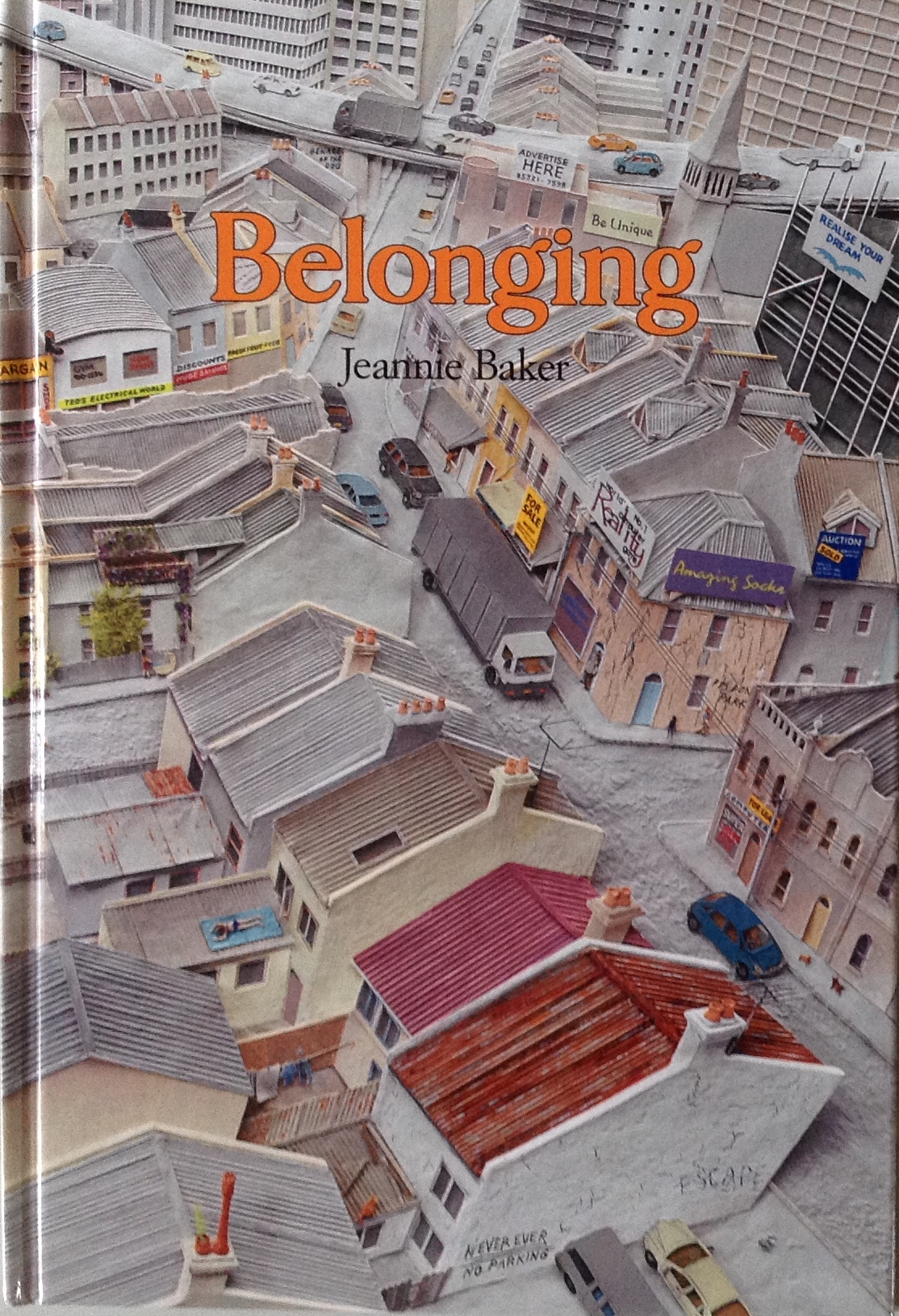
    In 2004 Jeannie published a companion book to “Window” called “Belonging, which, in 2005, also received a number of awards, including one from the Wilderness Society. This textless picture book tells a story of a changing landscape over a number of years as a city is transformed with plants and welcoming spaces for children and families. In a note at the end of this book, Jeannie says,

    “It takes time … But by understanding the land on which we live and by caring for it we can choose between just having a place to live or belonging to a living home.”

    2015-09-19 11.10.25

    One Hungry Spideris the third of Jeannie’s books I own. Unlike “Window” andBelonging, the illustrations in this one are accompanied by text. One Hungry Spideris a counting book, but a counting book with a difference: it includes information about the spider. For example when one of seven ladybirds gets caught in the web we find out that “the spider took no notice (because) spiders don’t like the taste of ladybirds.” And when nine wasps fly by the spider left the web and hid because wasps catch spiders. Additional details about the spider are provided at the back of the book. Once again the illustrations throughout the book are magnificent.

    Surprisingly I own only these three of Jeannie’s books. However I am familiar with others. At school I had access to many of her titles in big book format (approximately 50 x 40 cm) which were perfect for sharing with a class of children.

    4 of Jeannie Baker's books

    These are other favourites:

    Where the Forest Meets the Sea”, “The Hidden Forest”, “Mirrorand The Story of Rosy Dock”.

    Are you familiar with Jeannie’s work? If so, which ones and what do you think of them?

    Please check out these and other titles of Jeannie’s if you have a chance. Their illustrations will intrigue you and their positive messages will inspire you.

    As a writer, I found inspiration in Jeannie’s response to the question,

    “Of all the books you have made, which is your favourite?”

    She answered,

    “When a book is finally finished, I find it hard to think about it anymore …I want to fill my
    head with something totally different, with a new book.  My favourite book is the
    ‘new’ book I’m working on, still working out and trying to make better than the books I
    made before it!”

    I think that indicates a strong growth mindset and Jeannie’s joy in the “continual challenges this medium gives … to invent techniques and explore and experiment with materials and their textures.”

    Jeannie Baker - favourite book

    It affirms the quest for improvement and a reason to embrace the challenges we both set for ourselves and meet along the way.

    Thank you

    Thank you for reading. I appreciate your feedback. Please share your thoughts.

  • A celebration of Australian picture books #4 — Narelle Oliver

    This post is the fourth in a series celebrating picture books by Australian authors. If you missed earlier posts, please follow these links to the introduction, Mem Fox and Kim Michelle Toft.

    Narelle Oliver

    In this post I introduce you to Narelle Oliver, a Brisbane-based author and illustrator. There is much to explore on Narelle’s site, including: information about her writing process and tips for would-be picture book authors; the research involved in creating her books, many of which are about nature; and illustration techniques that involve the use of linocut printing and rubbing, and other assorted media.

    Narelle conducts workshops for children and adults. She visits schools to share with children the wonder of her books and talks to them about her writing and illustrating processes. When she visited “my” school she brought along first thoughts and illustrations for, and a dummy book of, The Very Blue Thingamajig, plus a soft toy prototype – and we all wanted one! She also brought a fox from the museum and talked about illustrating Fox and fine feathers. She read to the children, involved them in activities and gave them an experience of linocut printing. It was fascinating for both children and teachers.

    Narelle talks about her workshops and sessions in this video.

    While you can find a complete list of Narelle’s books here, I will share those I have on my bookshelf (in no particular order).

    2015-09-19 11.14.10

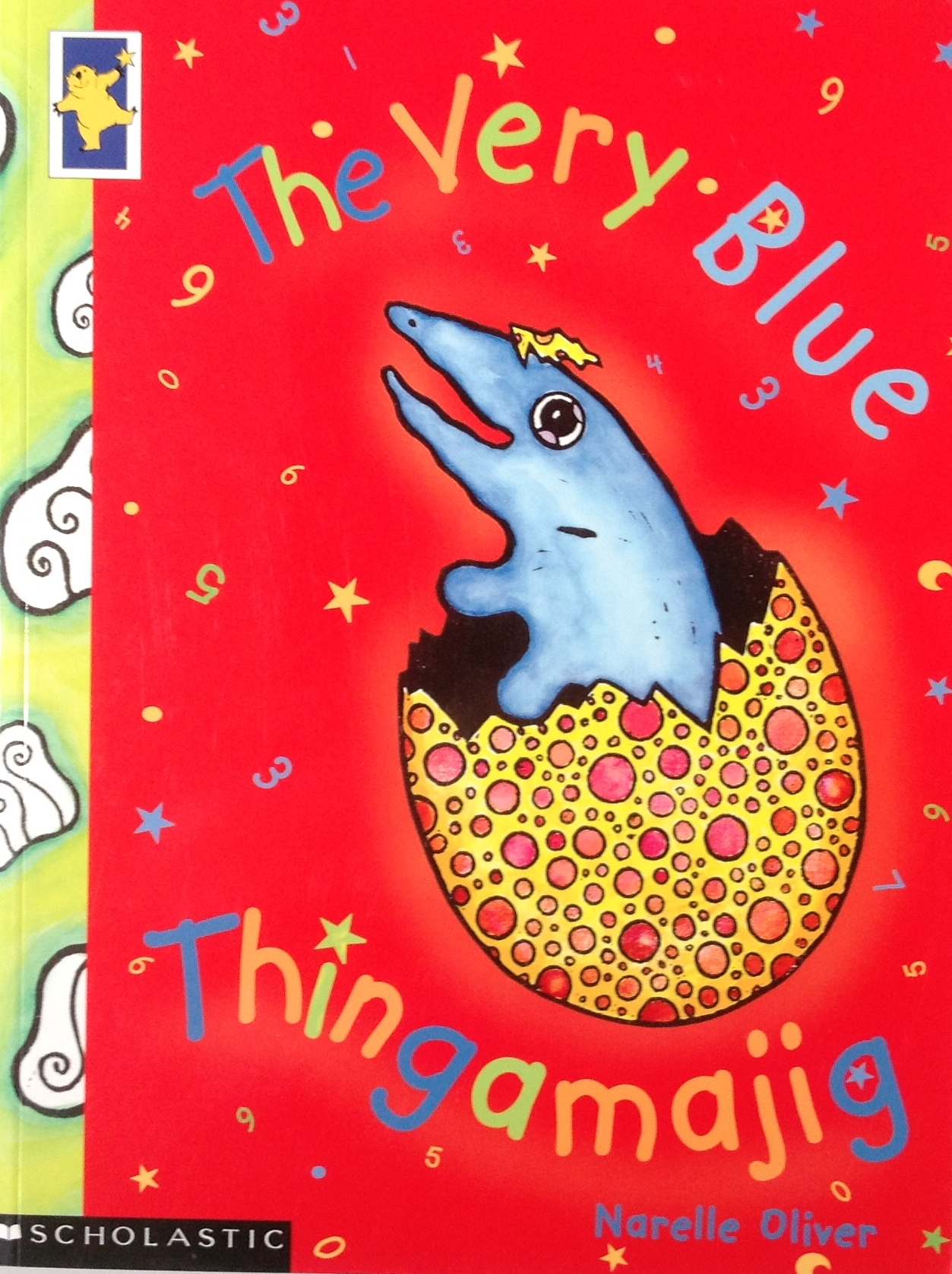
    The Very Blue Thingamajig is as story about difference and acceptance told in a fun way involving mathematical concepts of patterns, counting and days of the week. The colourful illustrations made using hand-coloured linocuts are appealing, and children love to find the little bird who provides a secondary story throughout the book. On Narelle’s fun page you can colour and decorate your own thingamajig.

    2015-09-19 11.11.44

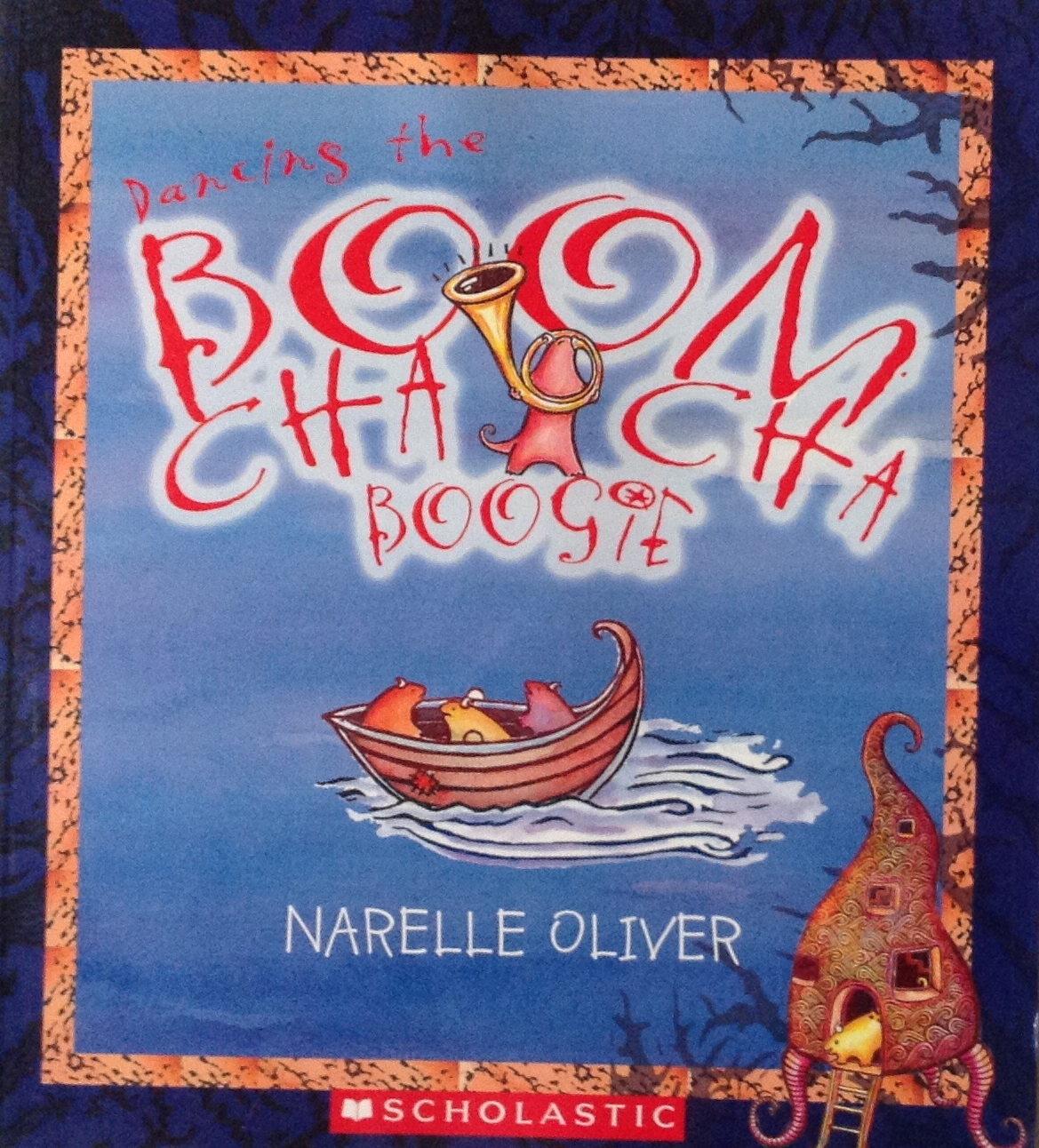
    Dancing the Boom Cha Cha Boogie is a gorgeous tale of three little murmels who are washed out to sea in an arkel and arrive on a foreign shore where they are not welcomed by the resident snigs. They are imprisoned until when, the arkel is repaired, they are to leave. At night a young snig releases the murmels who teach the snig to have fun. In the end the murmels are accepted and stay happily in Snigdom with the snigs, learning from and enjoying each other’s company. This book is illustrated with hand-coloured linocuts.

    2015-09-19 11.13.26

    Fox and fine feathers is a story of friendship, of looking out for each other and keeping each other safe. The attention to detail in these linocut illustrations coloured with pencils and pastels is amazing and accurately depicts the five creatures and the forest setting. Narelle has supported the story with information about the birds, their habitat and the dangers imposed by the feral fox, which is now a serious threat, along with other feral animals, to native species in Australia.

    2015-09-19 11.12.23

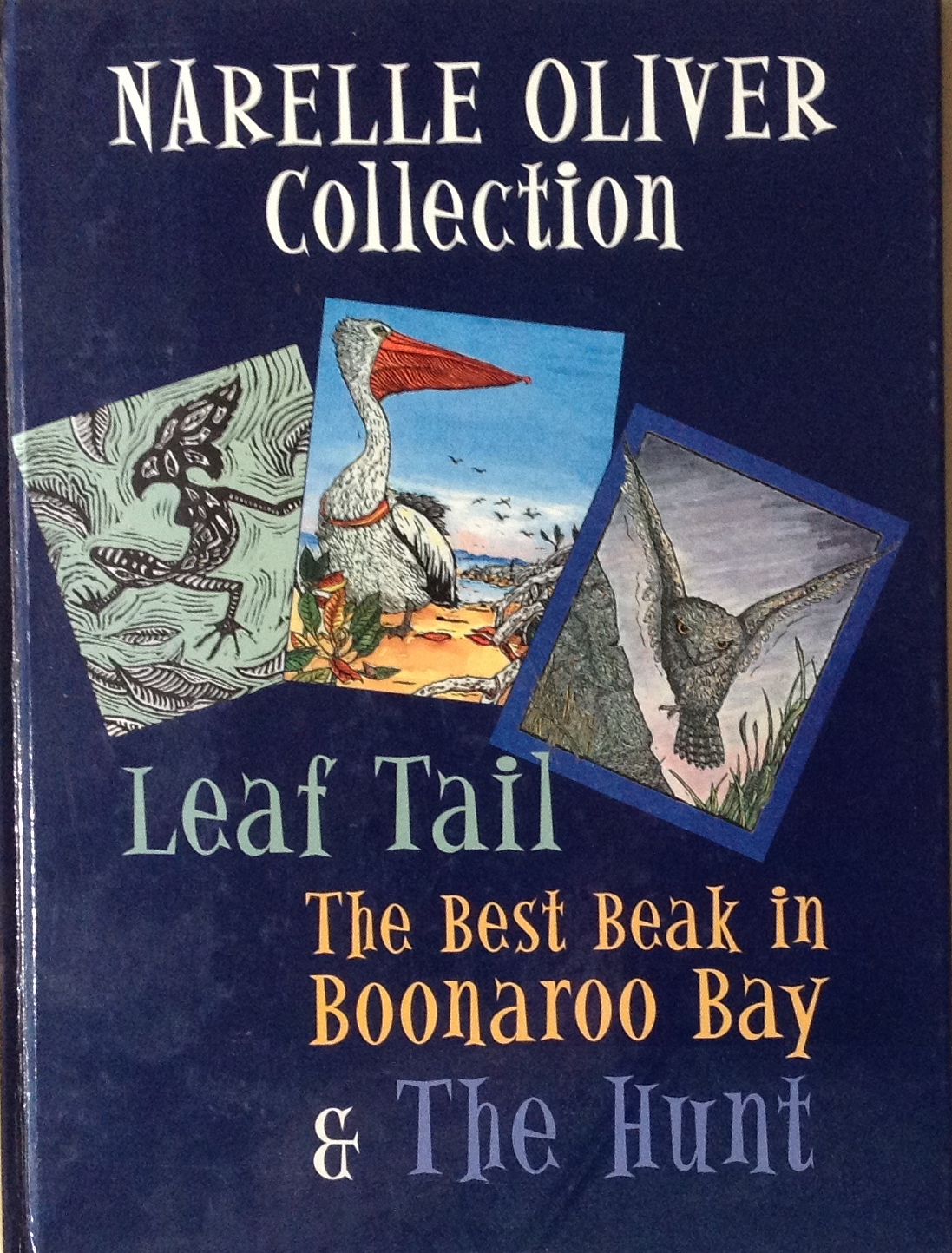
    Narelle Oliver Collection of three stories: Leaf Tail, The Best Beak in Boonaroo Bay and The Hunt.

    • Leaf Tail, Narelle’s first picture book, illustrated by beautiful linocuts, tells the story of a leaf tail gecko and the importance of camouflage to survival in the Queensland forest.
    • The Best Beak in Boonaroo Bay, also illustrated with hand-coloured linocuts, tells of a squabble between five different birds, each professing its own beak to be the best. Finally clever pelican holds a contest that enables the birds to see that each beak is best in its own way. As well as a delightful story about wildlife, it also provides a springboard into discussions about, and appreciation of, differences.
    • The Hunt is another beautifully illustrated wildlife story of camouflage and survival. The story is supported with information about its setting and the workings of animal camouflage and disguise. There are also black and white drawings showing where to find the animals camouflaged in each illustration. It is fun to see if all the animals can be found without referring to the guide.

    2015-09-19 11.15.11

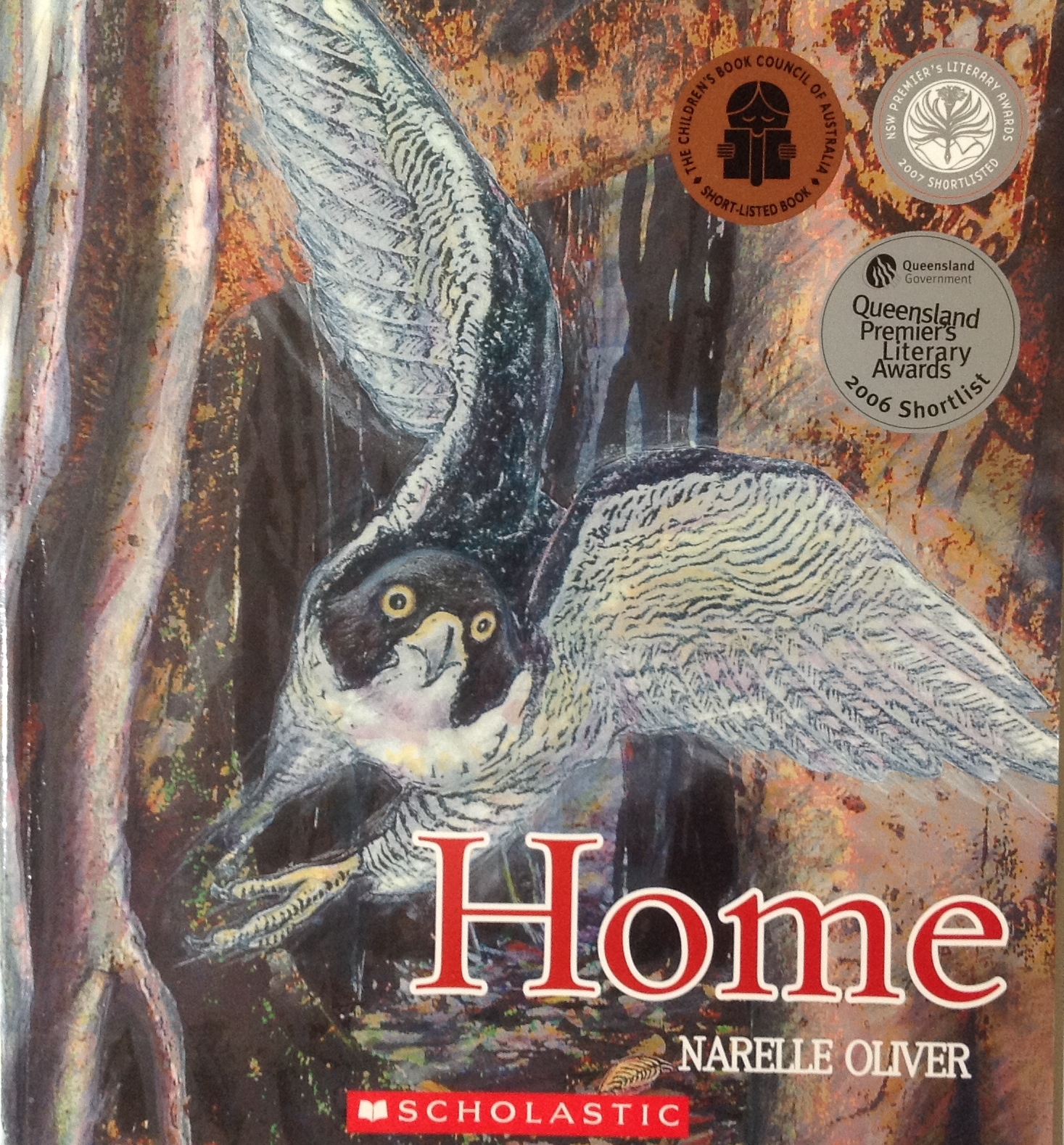
    Home, referred to in a previous post Home or away, is perhaps a favourite if only because it is based on a true story of a pair of peregrine falcons that nested at the top of a 27-storey building in the city of Brisbane. The birds, named Frodo and Frieda, fascinated a city and, for a while, had their own reality show “Frodocam”. The story, beautifully illustrated using a combination of media including linocut rubbings, collage, photographs, pencil, pastels and watercolours, tells of the adaptation of wildlife to new landscapes and environments.

    Each of these books can be appreciated for its story or used as a springboard for discussion. The illustrations appeal to adults and children alike for the attention to detail and accurate representation of wildlife. The addition of supporting information encourages an appreciation for wildlife and their habitats and develops an awareness of the need for their protection. They would be a wonderful addition to any book collection and be much appreciated as gifts.

    Thank you

    Thank you for reading. I appreciate your feedback. Please share your thoughts.

  • Well I declare

    This week at the Carrot Ranch Charli Mills is making declarations. Specifically she is declaring herself an author, making it clear what her writerly intentions are. I also have declared my writerly intentions. In previous posts, here, here and here, I shared my goal of establishing a website with early childhood teaching resources of my creation.

    In her post Charli expresses it this way: success for her is publishing books. She wants to write books for readers who want to read them. Not only that, she wants to market her books “well enough to eat more than hand-picked dandelions from (her) yard”.

    www.morguefile.com
    http://www.morguefile.com

    Change books to early childhood teaching resources and, for me it’s the same. I want to publish teaching resources that teachers want to use, that enhance their teaching and improve children’s learning. I’d also like to do well enough to not be reduced to eating dandelions from my backyard.

    Some writers consider “educational writing” less worthy and lacking in creativity. “Oh educational writing,” said one disparagingly, “that’s so prescriptive,” and quickly moved on to discuss others’ more literary pursuits.  

    I know some educational writing can be prescriptive. I have done some of that formulaic writing myself. However the resources I am creating do not conform to a formula, are not worksheets to be completed by students sitting quietly in rows.

    I am developing a variety of resource types, some with interactivity, to help develop understanding and skills in a meaningful context. Many encourage critical thinking, problem solving and purposeful applications. Many are built around my own original stories and poems as well as non-fiction texts.

    I have chosen this path in order to support teachers with ready to use teaching episodes and parents with suggestions for nurturing their child’s development. Prescriptive? Far from it. And please don’t prejudge my educational writing against the stereotype of formulaic worksheets and textbooks which are far too abundant and easily accessible on the internet and in bookstores.

    Guiding parents in play sessions for parents and children.
    Guiding parents in play sessions for parents and children.

    From the declaration of writing goals to a declaration of another kind, repeated often on my blog: my appreciation of all things early childhood, especially literacy and picture books, and the importance of reading to and with children on a daily basis.

    The years from birth to eight, especially those before formal schooling begins, are crucial to a child’s development and have an enormous impact on future happiness and success.  It is during these years that basic skills and language are developed along with attitudes to self and relationships.

    noisy nora

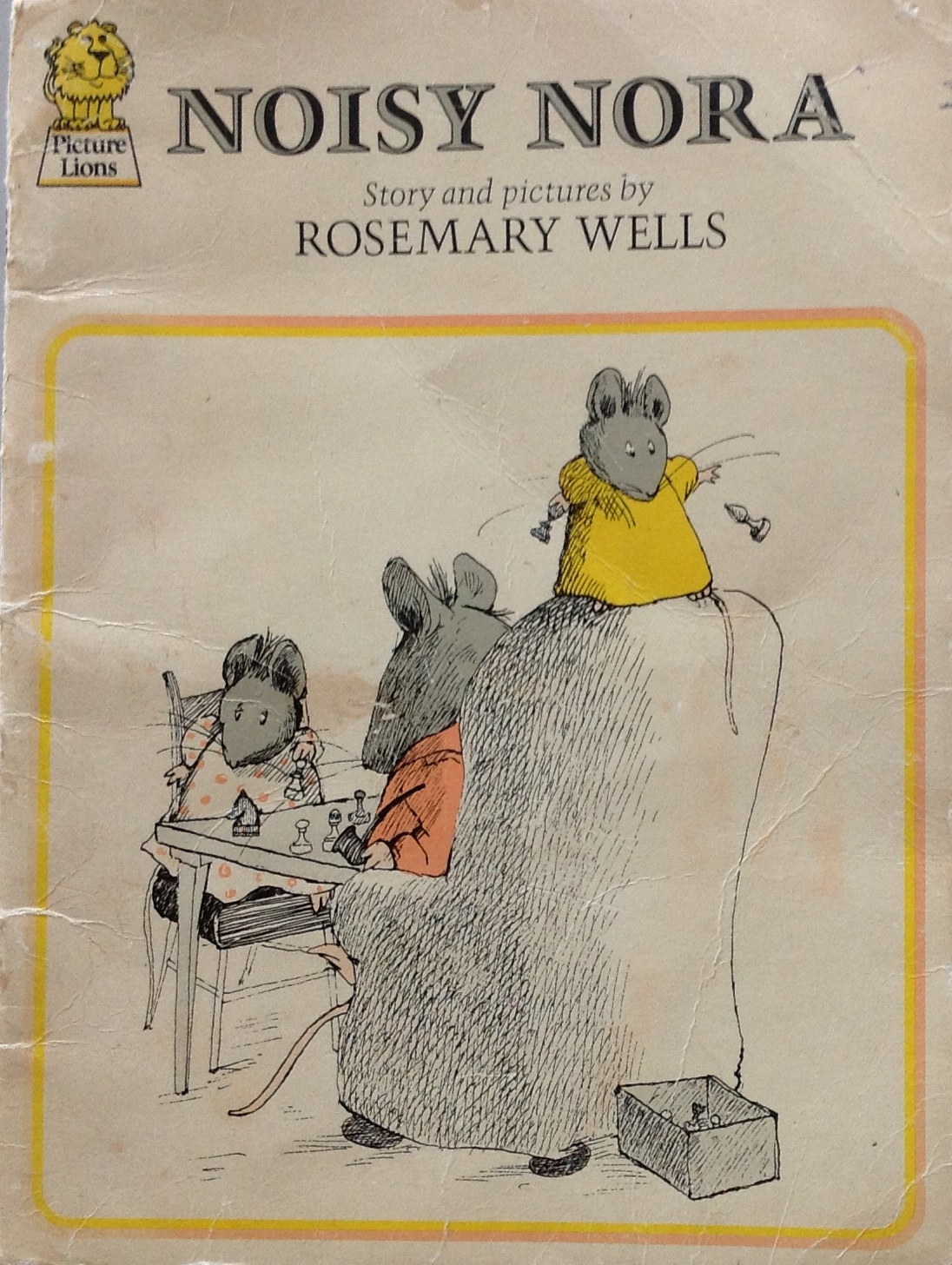
    The picture book Noisy Nora by Rosemary Wells is a delightful book about a middle child who fails to get the attention of her parents who are busy with the older and younger siblings. Finally Nora declares that she is leaving and never coming back. With Nora gone the house becomes unusually quiet and the family go looking for her. At last she declares herself back again as she clatters out of the broom closet.

    (This information from Wikipedia explains why my cover differs from the one in the Amazon store.)

    I took Nora’s declaration as the basis for my response to Charli’s flash challenge to In 99 words (no more, no less) declare an intention in a story. Is it one person, a character speaking up or speaking out? Is it a group or a nation? Create a tension before or after the declaration. It can be private or public, big or small. Does it have power to those who state it or hear? What does it change?

    While I wrote it with Marnie in mind, it could be about any number of others in oppressive situations and seems particularly appropriate to those trapped by the horrors of domestic violence which is at the forefront of our news at the moment. Unlike Nora, who declared she was leaving and never coming back but didn’t really leave, Marnie definitely won’t be coming back.

    from "Noisy Nora" by Rosemary Wells
    from “Noisy Nora” by Rosemary Wells

    Leaving

    It was time. No more would they treat her this way. No more would she accept the cruelty of their world. She was more than this, more than they made her believe. With cash from a secret job stashed in her pockets, a few clothes in a backpack, and hope in her heart, she left. No need to follow a bag through the window. No need to wait for night’s darkness. No. She navigated past their stupor of beer, smoke and flickering screens; paused at the door to declare, “I’m leaving,” then closed off that life as she left.

    Thank you

    Thank you for reading. I appreciate your feedback. Please share your thoughts about any aspect of this post or flash fiction.


  • Noticing and Wondering: Kicking off and supporting enquiry

    I have written previous posts about the importance of nurturing the ability to wonder in young children and in ourselves, for example here, here and here. It is always a delight, then, to come across a post that expresses ideas similar to, but extending, my own.
    This post by Aaron Eden on Edunautics, Exploring a World of Learning questions whether there could be any skills more important than noticing and wondering. He says that in school students are generally told to think and wonder about what someone else (the teacher, the curriculum writer, the policy maker) thinks is important.
    Eden argues for the importance of learning to learn; of learning to identify what is important and of understanding how to learn it. He promotes developing an environment of questioning and suggests ways of extending students’ learning through participation in genuine inquiry based upon their own wondering and questioning. His suggestions help make the process more explicit, and therefore possible, for teachers to implement.

    Thank you
    Thank you for reading. I appreciate your feedback. Please share your thoughts.

  • Between the lines

    Morguefile http://mrg.bz/omEd2M
    Morguefile http://mrg.bz/omEd2M

    For a few months I had been aware of the new colouring books for adults craze that is sweeping the world but had chosen to ignore it. That is, until I read a blog post by Alana Munro stating that “According to Psychologists, Colouring is the Best Alternative to Meditation” and I thought I’d add my two cents worth.

    I had already been urged by some writing, publishing and marketing entrepreneurs to quickly create a colouring book and cash in on this new lucrative market. Apparently it’s easy to create a book using royalty free creative images found online and publish the books on Amazon where they have their own genre.  People are buying them by the dozens. The books are also displayed prominently in bookstores, and promoted on social media.  What is there to lose?

    As a teacher and parent I have never been in favour of colouring books for children. I know some argue that colouring does have a (small) place. Children may develop fine motor skills when colouring between the lines, and colouring is sometimes integrated with other things such as graphing, mapping, and colour-by-number activities.

    © Norah Colvin
    © Norah Colvin

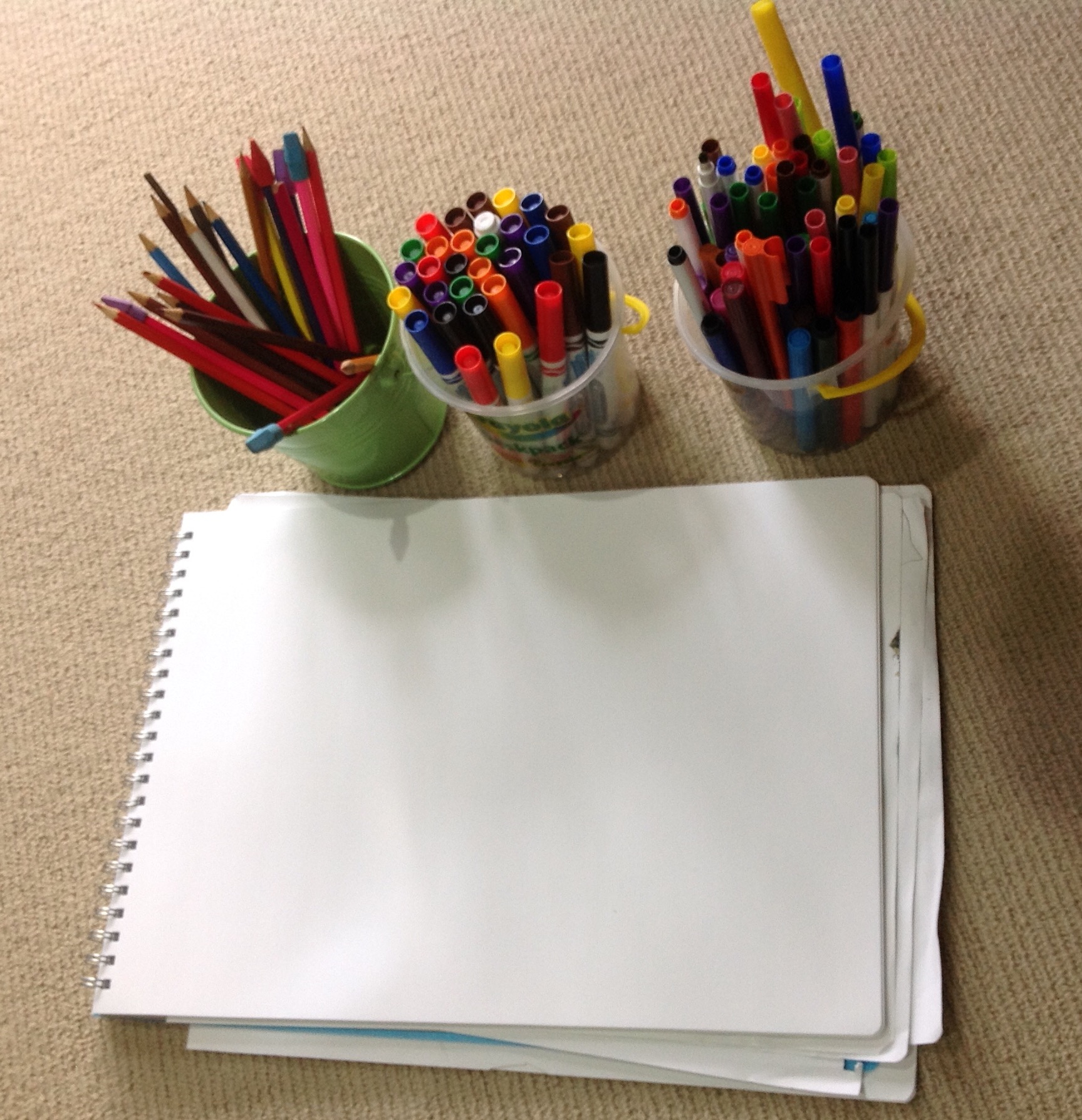
    But I have rarely given a colouring book as a gift. I would rather give a blank art book and a variety of pencils and pens for children to create images from their own imaginings. Their fine motor skills and their creativity will develop perfectly well that way and it may help to avoid the feelings of inadequacy that can develop from spending too much time colouring the works of others.

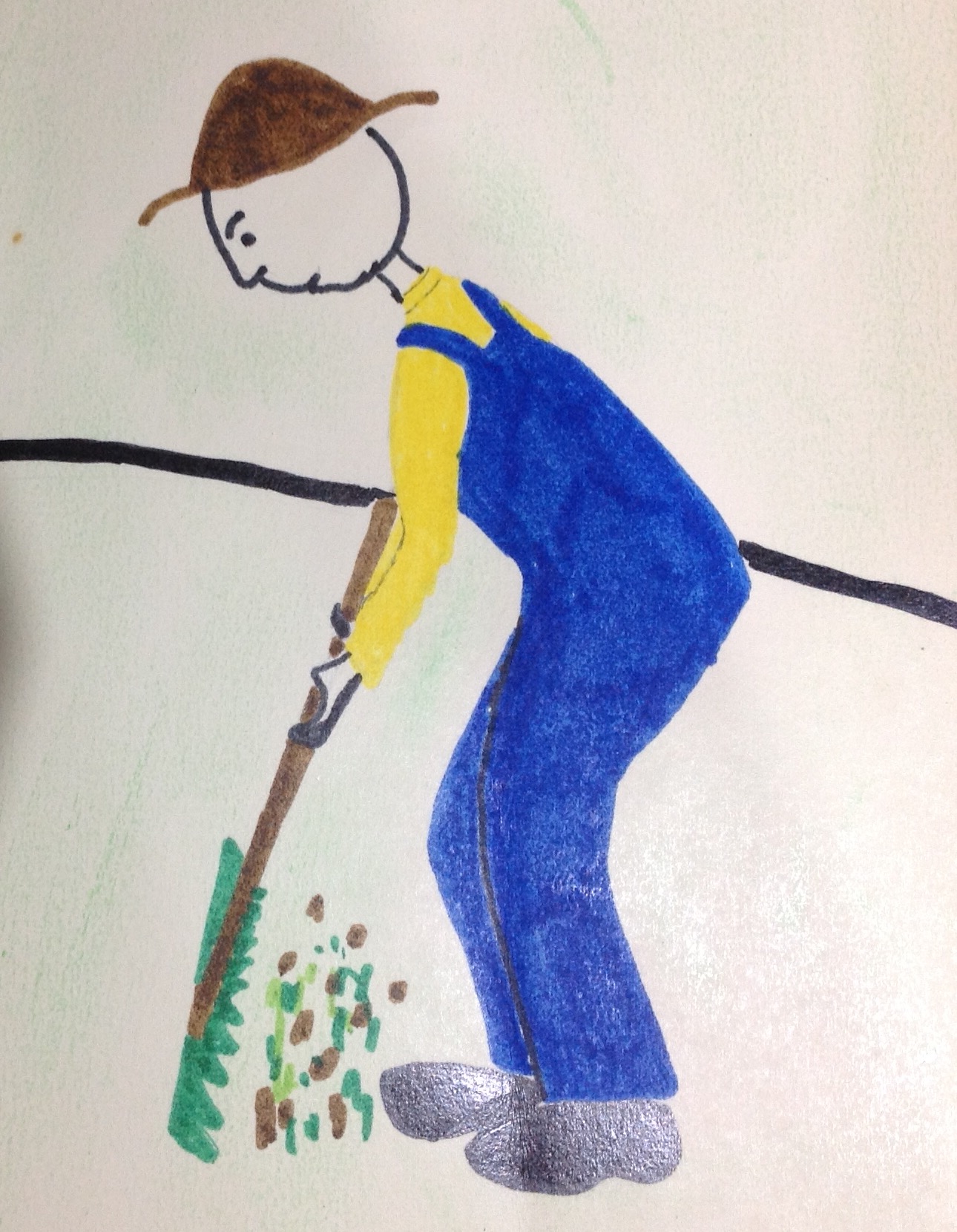
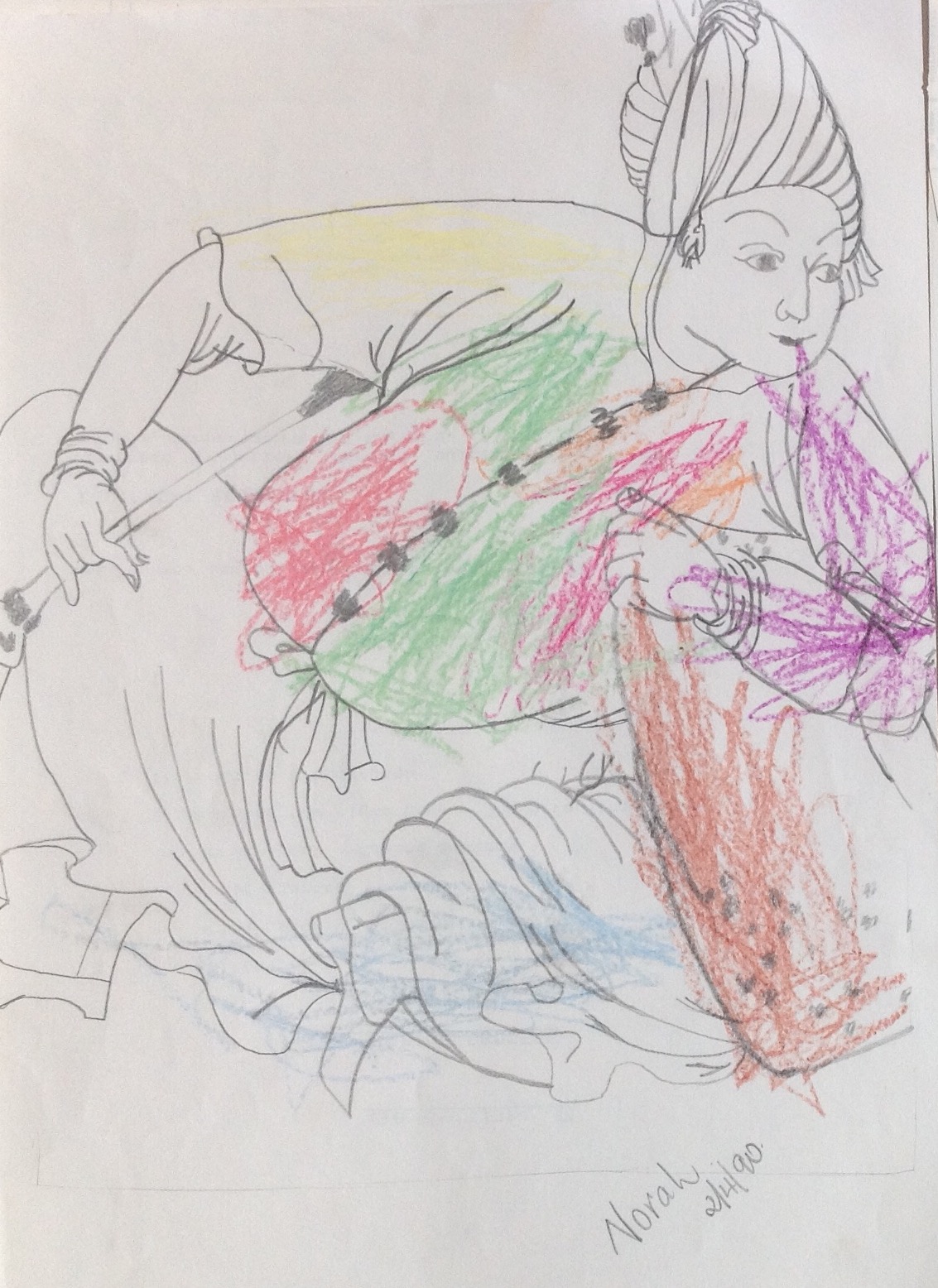
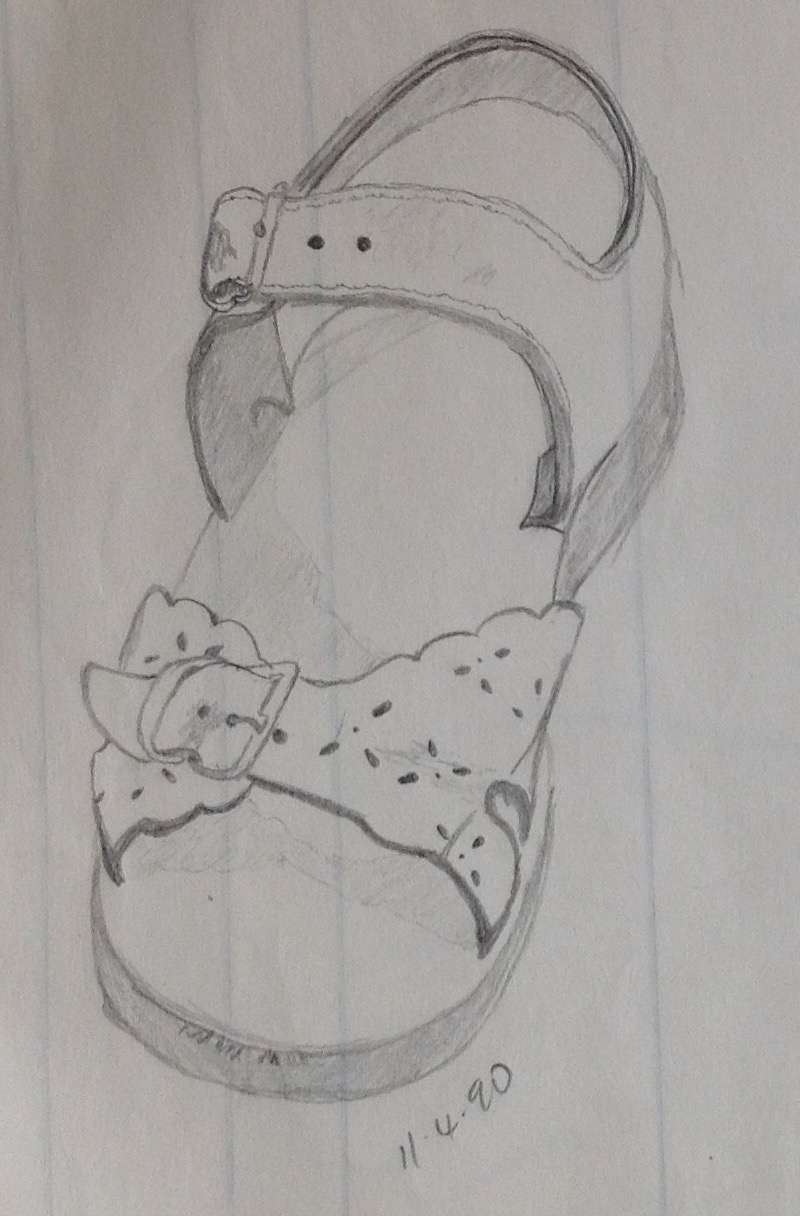
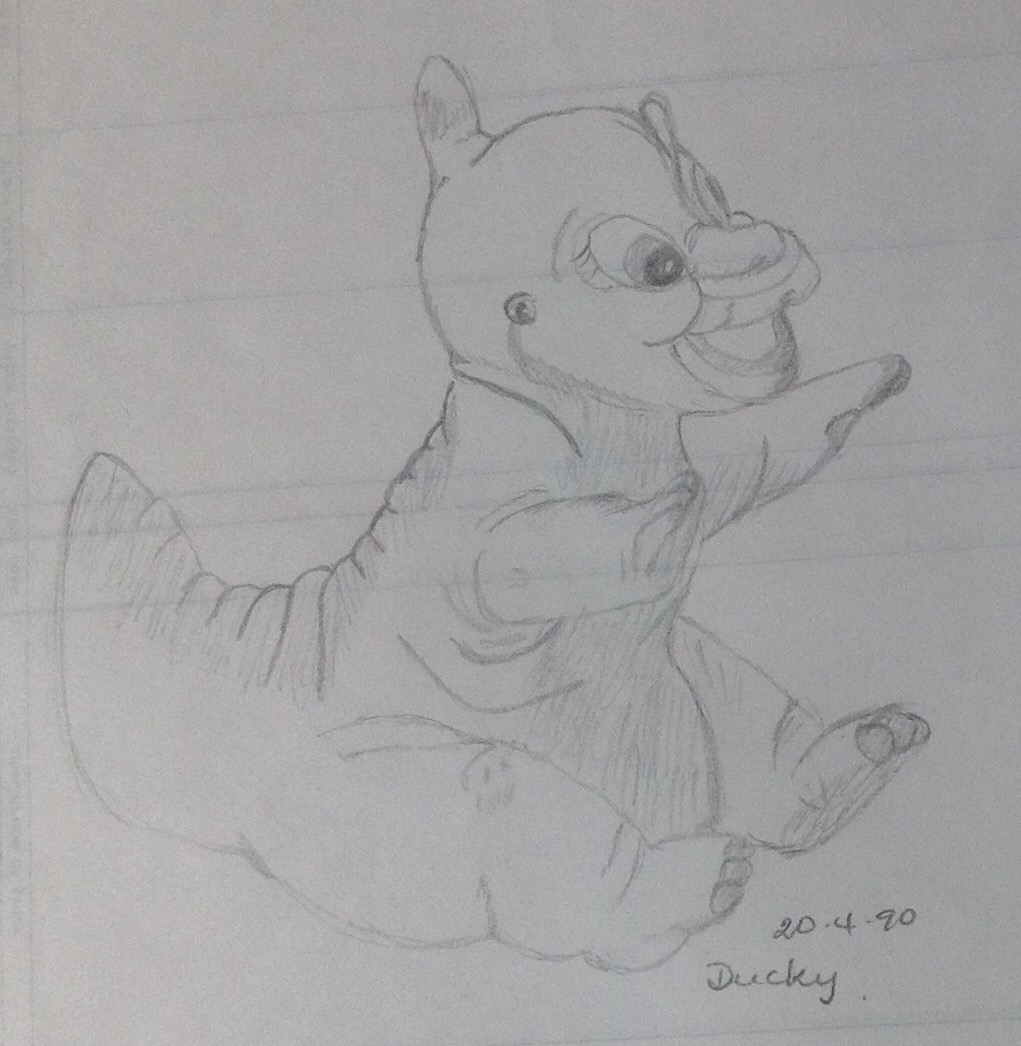
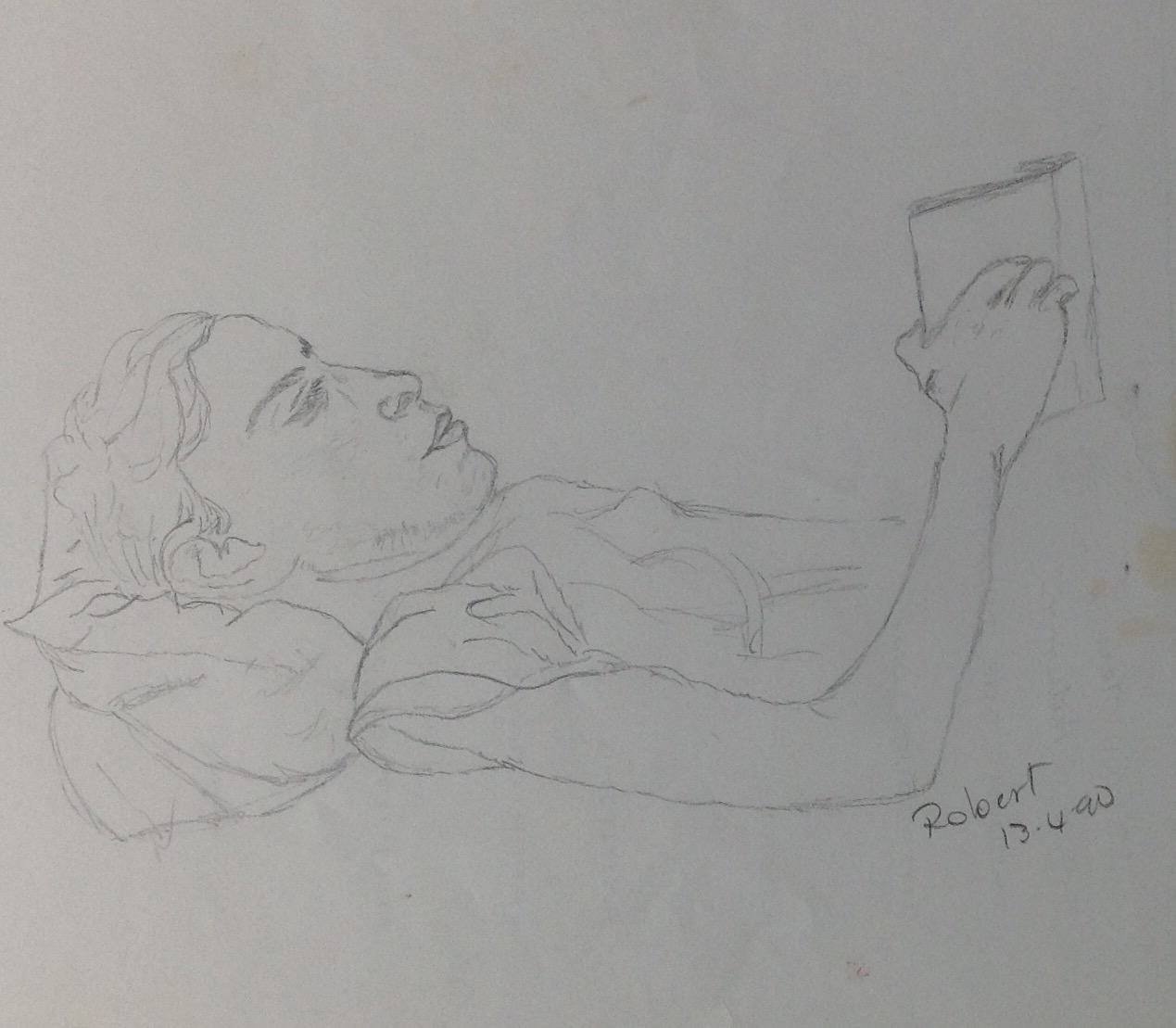
    That’s not to say that learning some of the artist’s techniques is a bad thing. Twenty-five years ago I did a short “Drawing on the Right Side of Your Brain” course, based on the work of Betty Edwards. I didn’t consider myself an artist, and still don’t, preferring to write than to draw. But being interested in learning and anything to do with the brain, I decided to see what I could do. I was amazed at the results. Unfortunately, I don’t have many pre-course drawings to share with you, just this one of a gardener, but please take my word for it that I showed little promise.

    © Norah Colvin
    © Norah Colvin

    In the course I learned the importance of drawing what the eye sees, not what the mind thinks it sees; for example we might think of the roundness of the rim of a cup, but what we actually see is an ellipse. The importance of seeing accurately is true whether drawing an actual or imagined object or scene.

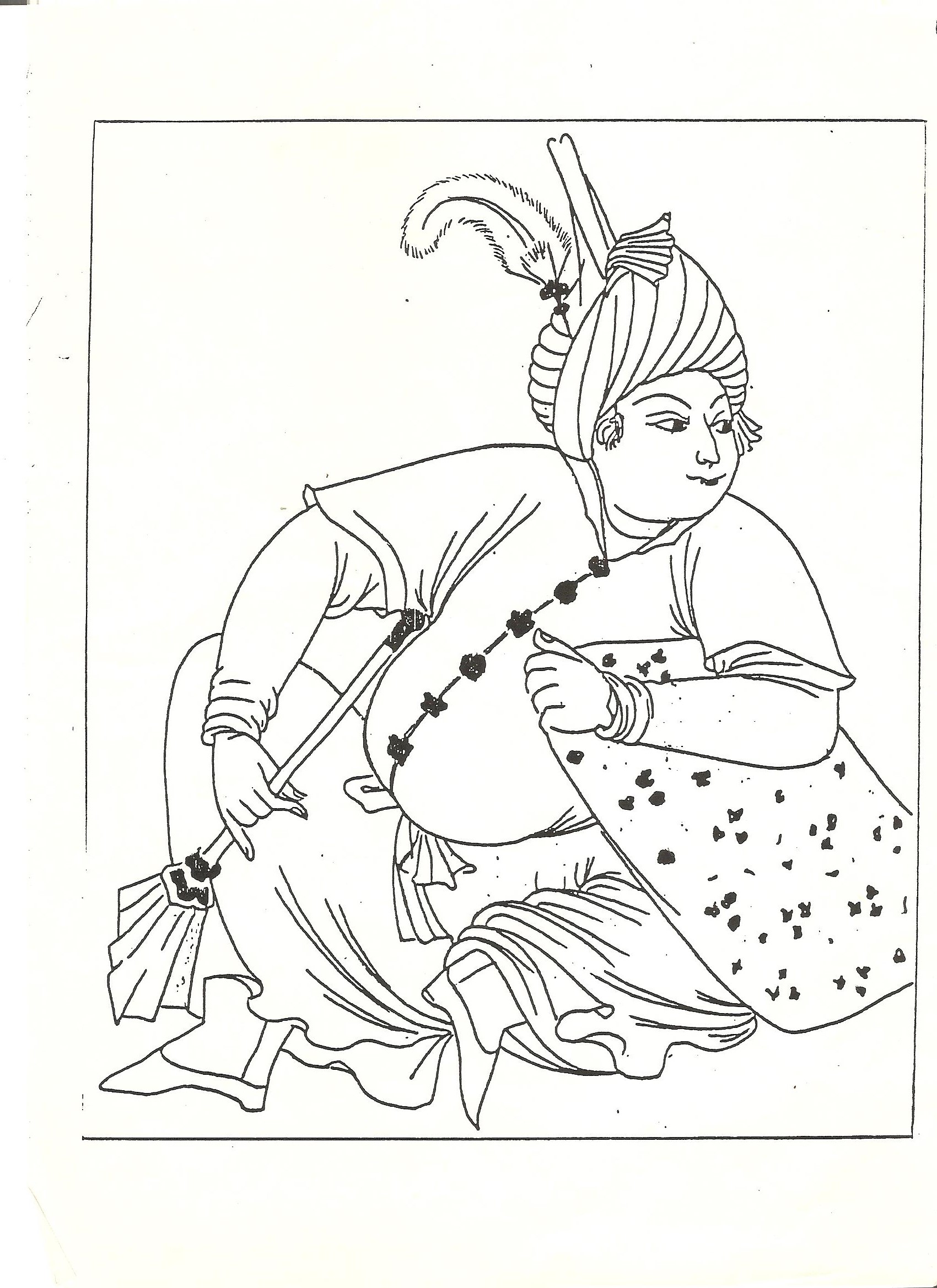
    In the first lesson we were given this picture to copy.

    original

    I admit that I didn’t have high expectations as I began. We were told to turn the picture upside down and to start copying from one corner. In doing this we focussed only on each of the lines, drawing just what we could see. We were not to turn the picture the right way up until we had finished. There was to be no interference from what we thought we were drawing to what we were actually drawing. Everyone in the class was amazed with their results.

    This is mine:

    © Norah Colvin
    © Norah Colvin

    And thank you to Bec, who was three at the time, for deciding it needed some colour!

    For a short while I engaged in a flurry of drawing activities, but soon abandoned them to other more pressing or preferred activities. I had proved to myself it was possible. That was sufficient. Now someone just needs to come with a singing on the right side of the brain course for me!

    These are some of the drawings I did at that time, each from observation of a real, not imagined object:

    © Norah Colvin
    © Norah Colvin
    © Norah Colvin
    © Norah Colvin
    © Norah Colvin
    © Norah Colvin
    © Norah Colvin
    © Norah Colvin

    In my pre-service teaching days I was cautioned to not use simple drawings on the board, for example a stick person or a smiley face sun, for the children to copy as it may limit their drawing ability. It was always a concern of mine. I didn’t want to limit anyone’s ability!

    After doing the drawing course I bought a copy of Drawing on the Right Side of the Brain for Children and used its recommendations in art lessons. In his article about How to Teach Drawing to Children Marvin Bartel warns against showing children how to draw and emphasises the need for close observation, and practice, practice, practice. I agree with his advice to not add one’s own changes or lines to a child’s drawing.

    In recent years I came across some fabulous picture books by Mo Willems.

    © Norah Colvin
    © Norah Colvin

    At first I didn’t find the books appealing with their simple black outlined drawings and minimal use of colour. It was only after a colleague’s repeated exhortations that I gave in and reluctantly read one. Halfway into the book The Pigeon Finds a Hot Dog!” I was a fan! With what appears to be a few simple lines, Mo creates a great variety of expressions and moods, telling stories that children can identify with and that have them (and their teachers) holding their sides with laughter.

    In the app Don’t Let the Pigeon Run This App Mo encourages children to add their voices, making the story their own. He also includes videos of how to draw the characters. The app is as much fun as the books. There are many videos by others on youtube sharing how to draw Mo’s characters, but none is better than Mo himself.

    Here is a PDF of his instructions for drawing the pigeon:

    Mo Williams pigeon_draw01

    and a video of Mo talking about how he creates his characters. Sorry, Mo, I underestimated you at first.

    So while I accept that colouring books may have benefits for mental health for adults who choose that activity and understand that colouring can induce a meditative state and be very relaxing, I think a blank piece of paper and a variety of pencils and pens would have the same effect and, who knows, you might unleash the artist within. I certainly don’t consider their use in the best interests of children’s development and creativity.

    What do you think of colouring books for children and adults? Is colouring a recreational pursuit for you? Have you bought your first colouring book for grown-ups yet?

    Thank you

    Thank you for reading. I appreciate your feedback. Please share your thoughts.


  • What is failure?

    rough-writers-web-comp

    Regular readers of my blog know that for the last eighteen months I have been participating in the flash fiction challenges set by Charli Mills at the Carrot Ranch. Each week Charli posts a prompt and invites readers to submit a response in exactly 99 words. I have participated since the first prompt and have missed only a few, maybe one or two.

    I enjoy the way the prompt stretches both my thinking and my writing. I appreciate the opportunity to engage in fiction as a diversion from the mainly expository writing (and reading) I do; and to engage in a supportive and encouraging group of Rough Writers.

    Since education is the focus of my blog I have given myself the added challenge of targeting an aspect of education in my response to Charli’s prompt. Mostly I have succeeded, though sometimes the posts may be a bit convoluted and the links rather tenuous, but nevertheless, I have been mostly pleased with my ability to find a link.

    This time I didn’t think I was going to do it. While I grappled for a suitable link, none was forthcoming and I thought it was going to be an F, a no-show, this time.

    F

    You see, this week Charli is talking about the destruction caused by forest fires and other catastrophic weather events. Though Australia suffers its share of natural disasters, I am fortunate that I have never been more than inconvenienced by them. I haven’t suffered the loss of family, property and livelihood that others have; nor have I worked in a school where loss was experienced on a large scale. You could say I have lived a sheltered life, and I am grateful for it.

    So without a personal experience to share, my next thoughts were to the curriculum. But I am an early childhood teacher, and young children don’t learn about catastrophic events unless they have a personal experience of them. The Australian Curriculum introduces learning about natural disasters in year six.

    Another dead end. The F was looming. Would it engulf me?

    warszawianka, tango face crying https://openclipart.org/detail/30295/tango-face-crying
    warszawianka, tango face crying https://openclipart.org/detail/30295/tango-face-crying

    Then inspiration! I remembered watching a video in which the possibility of an F being the new A was mooted.  I’m sure you’ve all heard about 60 being the new 40, for example; generally put forward by the 60s rather than the 40s I conjecture. But this was a new twist.

    The article on Mind/Shift How we will learn entitled When Educators Make Space For Play and Passion, Students Develop Purpose introduced me to a Harvard education specialist named Tony Wagner who, like Ken Robinson, advocates for a reinvention of the education system.

    In the video Wagner says that “What the world cares about is not what you know, but what you can do with what you know.” Content is now available through a quick internet search. We don’t need to have instant recall of numerous facts.

    Instead of content, Wagner lists a set of core competencies he considers important. He says that to be lifelong learners and active and informed citizens, the following abilities are required:

    1. To ask questions through critical thinking and problem solving
    2. To work collaboratively
    3. To be flexible and adaptable
    4. To show initiative and be entrepreneurial
    5. To communicate effectively in both oral and written modalities
    6. To access and analyse information
    7. To be curious and imaginative

    I agree that each of these attributes is important. I think I have mentioned many of them in previous posts.

    Wagner goes on to say that what is needed is innovation: the ability to generate new and better ideas that can be used to solve the problems facing us today. He questions whether America’s reputation as a leader in innovation is as a result of or despite the education system. He then asks the audience to identify what the following four people have in common.

    Bill Gates (Microsoft)

    Edwin Land (Polaroid camera)

    Mark Zuckerberg (Facebook)

    Bonnie Raitt (folk singer)

    Did you, like the audience, think them to be dropouts? Wagner identified them as not just dropouts; they were Harvard College dropouts! Steve Jobs (Apple) and Michael Dell (Dell computers) were dropouts.

    This fact about innovative dropouts inspired Wagner to investigate conditions that encourage the development of innovators. He interviewed many young innovators, asking if there had been an influential teacher or mentor in their lives. While not many could name one, those identified were outliers, engaging students in teamwork and interdisciplinary work involving problem solving and risk taking.

    Wagner also interviewed people from innovative organisations such as IDEO, whose motto he quoted: “Fail early and fail often.” (“That’s because there is no innovation without trial and error.”) It was from a think tank at Stanford that the idea that an “F is the new A” came.

    F is the new A

    There are iterations, not failure, Wagner says, and he questions the way parents and teachers try to protect children from making mistakes saying that real self-confidence was only to be gained from learning that you could recover and learn from mistakes.

    Tony Wagner - iterations

    So perhaps in thinking about failure, I haven’t really failed. I’m learning. It is only to be hoped that the failures in fire management that Charli talks about in her post lead to improved management practices in the future.

    For my response to Charli’s prompt, to  in 99 words (no more, no less) write a story about the need for help in an extreme weather event, I have chosen a weaker BOTS (based on a true story) from my childhood. The link may be tenuous but hopefully not entirely non-existent. I hope you enjoy it.

    Storm

    A big storm was coming. Two older ones were put in charge of two younger ones. They sat at the fence, watching. Soon other neighbourhood kids gathered, sharing storm stories, waiting.

    Green clouds swirled as dark clouds played leapfrog races above. The children watched the storm rush closer; mesmerised by its beauty, mindful of its power.

    Soon the winds whipped up, chasing the other kids home. The older two called to the younger, but they were nowhere to be seen. Mortified they hurried inside to alert their parents.

    What relief. They were already in, telling of the storm’s approach.

    Thank you

    Thank you for reading. I appreciate your feedback. Please share your thoughts about any aspect of this post or flash fiction.

  • Sugar and Snails: On friendship, fact and fiction

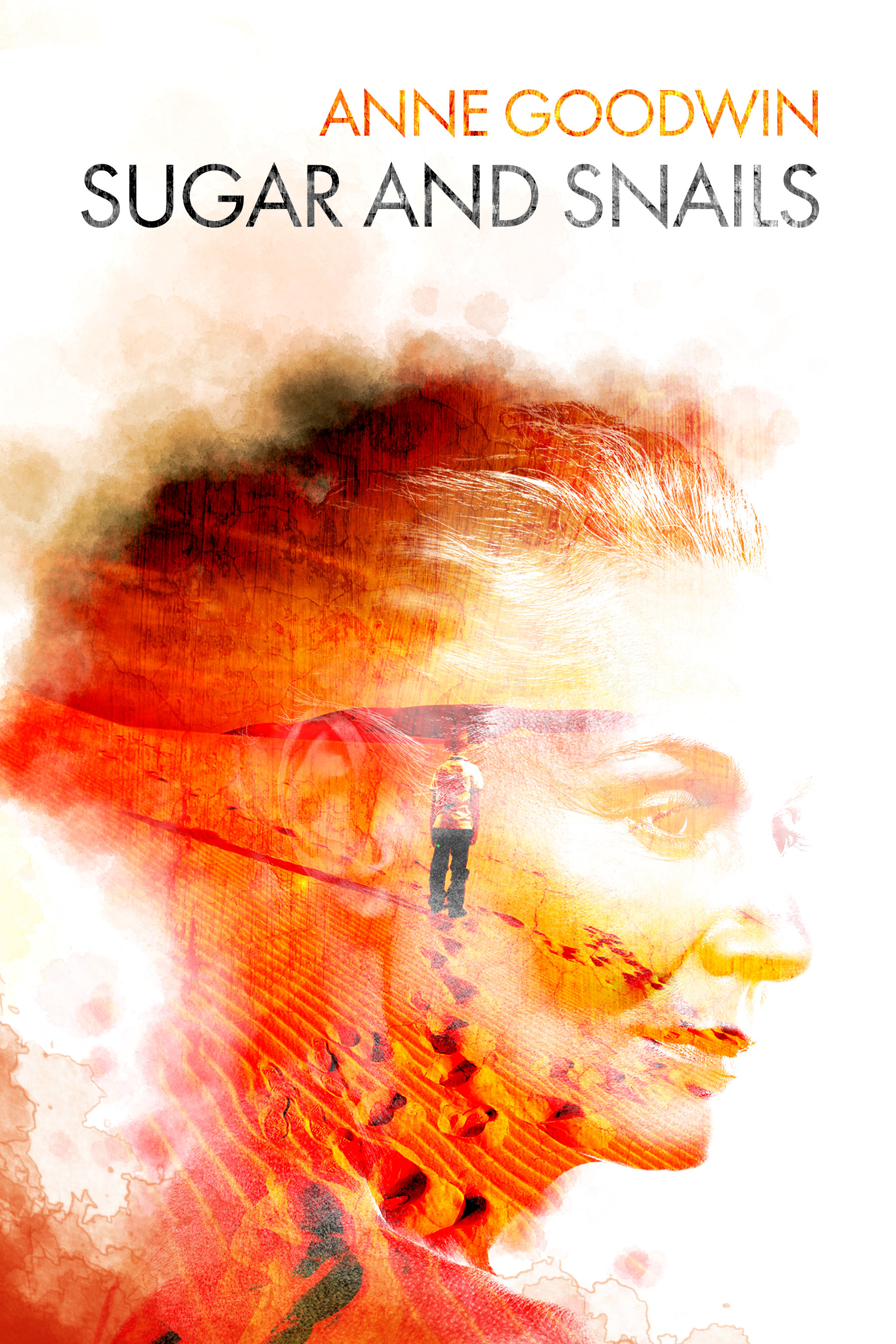
    sugar-and-snails cover

    In this post I am very excited to introduce Anne Goodwin sharing tidbits from her debut novel Sugar and Snails, published just last week by Inspired Quill. It is already receiving rave reviews and I am happy to add my voice to those in praise of it.

    Anne and I have been friends for the best part of two years. I can’t quite remember just how we met but I do remember it was on Twitter and that we hit it off almost immediately. I followed up one of our Twitter conversations with a post and we haven’t looked back. We have enjoyed many wonderful discussions on each of our blogs, and the blogs of others. With Anne’s background in psychology and mine in education there is considerable opportunity for a meeting, as well as divergence, of minds.  I learn from her, I think, as much as she learns from me. Or should that be the other way round?

    On her blog Annecdotal Anne shares reviews of novels she has read and her thoughts about and understanding of the writing process. I have read some of Anne’s recommendations, including “The Examined Life” by Stephen Grosz, which stimulated a great discussion on my blog, including a first guest post by Anne.

    Anne is also a fabulous teller of short stories with over sixty published either online or in print. I must confess I have not yet read all of Anne’s stories but have thoroughly enjoyed each I have read. I think she has a gift for a surprise ending, though she does not employ the technique in every story.  Her style is easy to read with a natural flow of language. Her portrayal of characters shows a depth of understanding that may be attributed to her background in psychology, but the variety of settings and topics displays a much broader understanding of the human condition in different environments and from different cultural backgrounds.

    It is my great pleasure to hand this post over to Anne.

    Anne

    Anne Goodwin: On friendship, fact and fiction

    The year I turned fifty, I wanted to do something special, but a party really wasn’t my thing. Instead, I celebrated with a long distance walk: 190 miles across northern England from the west coast to the east. As the route begins only a few miles from where I grew up, I took the opportunity to meet up with a bunch of old school friends the evening before I set off.

    About a dozen of us got together for a meal in the pub we used to frequent after school. I’d kept in sporadic touch with a few of the women over the years, but some I hadn’t seen since I was fifteen. Although there was some lively conversation, I spent a lot of the time sitting staring, overwhelmed by how I could detect within these middle-aged faces the teenagers they’d once been, and the pleasure of being back among them.

    After hiking across three national parks, meeting up with various friends and family along the way, I reached my destination at Robin Hood’s Bay, exhausted and exuberant. Back home, with a couple of days free before returning to work, I began writing the novel that was to become Sugar and Snails.

    Like many writers, I’m an introvert. I relish my time alone. I need to be able to withdraw into the privacy of my own mind to reboot. But friendship is important to me as well. Those two and a bit weeks of reconnecting with old friends served as a reminder of that, and also that, in the right form, sociability can revitalise me too. It felt so important I dedicated my novel to the coast-to-coasters and old school friends.

    Yet it wasn’t until very recently that I realised that my novel was itself a celebration of friendship. Of course I’d given my main character friends but, in my head, I didn’t distinguish them from other people who drive the plot forward: a troubled student; her difficult boss; the social worker who found her a place at boarding school at fifteen. Maybe, because Diana herself doesn’t fully trust her friends, I wasn’t able to appreciate them either.

    Two of her friends are crucial to the story and, although they never meet, they are brought together strongly in Diana’s mind early on. Attending a dinner party to mark the forty-fifth birthday of her best friend, Venus Najibullah, Diana is asked to pop upstairs to tell Venus’s daughter a bedtime story. In response to the seven-year-old’s insistence on a story about “when you were a little girl going on adventures”, Diana finds herself lost in the memories of Geraldine Finch “the girl who ruled my childhood”.

    As with many childhood friendships, Diana recalls an intense connection with Geraldine as the pair absorbed themselves in dressing up for role-play games. But as they approached their teens, Geraldine proved fickle, neglecting her playmate in favour of other friends, unless there was something she wanted. The friendship ends abruptly in what appears to be a betrayal, followed by Diana’s departure for boarding school a few months later. But it would be premature to regard this strand of the novel as about the dark side of female friendship. From the vantage point of adulthood, Diana might come to view this childhood friendship differently, just as the reader might gain a different perspective on learning more about the character of Diana.

    Meeting for the first time aged eighteen, Diana is somewhat intimidated by Venus until she discovers they have something in common:

    On my first Sunday night at university, I was en route from the bathroom to my study-bedroom in the student halls, clutching a damp towel and my quilted wash-bag to my chest like a shield. My gaze levelled at my fluffy primrose slippers peeping out from under the hem of my stripy galabeyah as I shuffled along the corridor. I didn’t notice the other girl until I’d almost bashed into her: tall, with a cascade of ebony hair and skin the colour of butterscotch.

    I made to move on, but the girl blocked my path, looking down her long nose at me from beneath heavy eyebrows: “You do realise that’s a man’s galabeyah you’re wearing?” Her voice was as haughty as the girls’ at Dorothea Beale, with an exotic lilt that brought to mind the rhythms of Cairo.

    No doubt I blushed. At boarding school I’d kept it hidden in my trunk. But university promised another chance and, besides, who was going to be able to tell the difference between a traditional Arab shift and an ordinary nightgown? Who, apart from this arrogant girl who was scrutinising me like I was an exhibit in the Egyptian Museum?

    I glanced down at the loose cotton gown I’d picked out with my dad at the Khan el Khalili three years before. “That’s what I like about it,” I told the girl. “A dress that’s meant for a man.”

    A wide smile softened her features. “Fair enough, although I prefer a dash of frill myself.” It was only then that I recognised her floor-length lilac robe as another galabeyah, trimmed with lace around the neckline, with pearl buttons where mine fastened with bobbles of cord. “I’m Venus Najibullah, by the way. Come back to my room and I’ll make you a coffee and you can tell me how an English girl came by such a thing already.”

    Yet, although they become close friends, and remain so for years, Diana can’t tell Venus the full story of her trip to Cairo, fearing rejection if she does. She’s become so accustomed to presenting a false self to the world, she genuinely wouldn’t know how to share the secret of her past. Over the course of the novel, she has to take a risk to discover whether she can trust Venus with a more authentic version of who she is.

    When Norah first offered me a guest slot on her blog, I thought I’d write something more closely tied in to the theme of learning. Yet when she showed me the draft of her lovely introduction, I knew this was the right way to go. To both give and receive friendship is something best learnt through experience but, to do so, we have to be prepared to take the risk of being rebuffed.

    Norah is a prime example of the wonderful new friends I’ve found through writing, and I’ve been especially touched by the support I’ve received from friends, old and new, online and off-line, as I publish my debut novel. Tonight I’ll be at the second of my book launch parties along with a few blog/Twitter friends I’ll be meeting in person for the first time. Norah can’t be there, but I’ll be conscious of her presence in spirit, as well as that of other dear friends from across the continents. A few of those “old school friends” to whom I have dedicated my novel will be there, however, closing the circle of friendship that is a central theme both of my novel and my journey to write it.

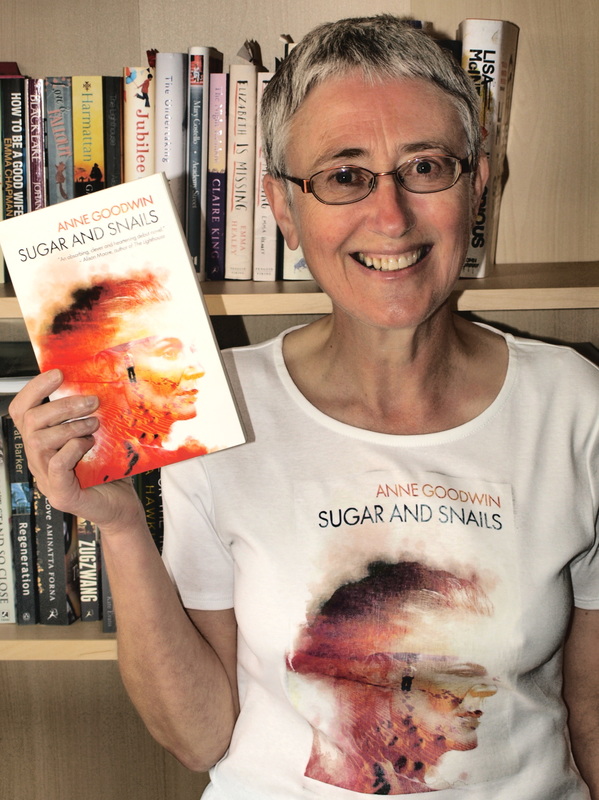
    Anne Goodwin author photo

    Anne Goodwin writes fiction, short and long, and blogs about reading and writing, with a peppering of psychology. Her debut novel, Sugar and Snails, was published last week by Inspired Quill. Catch up on her website: annethology or on Twitter @Annecdotist.

    blog tour week2


    Thank you, Anne, for sharing your thoughts. I am delighted  to join in the excitement of your publication celebrations. I have thoroughly enjoyed reading Sugar and Snails and am happy to recommend it to others.

    Thank you

    Thank you for reading. I appreciate your feedback. Please share your thoughts.


  • Can you dig it?

    This week at the Carrot Ranch Charli Mills is talking about dirt and has challenged writers to In 99 words (no more, no less) write a story about dirt.

    In her post Charli says that,

    writing is like gardening - Charli Mills

    and talks about sowing compassion to make our world a “worthier place to live”.

    These are wonderful ways of thinking about dirt and good reminders of the importance of the earth beneath our feet, which is often taken for granted, even ignored, unless one is a farmer, a gardener, perhaps a miner, or possibly a child.

    Morguefile  http://mrg.bz/omEd2M
    Morguefile http://mrg.bz/omEd2M

    Children are often admonished about playing in the dirt, as if washing off a little soil  was the greatest difficulty. In our towns and cities we cover the soil with concrete and leave few patches of bare earth where children have an opportunity to dig.

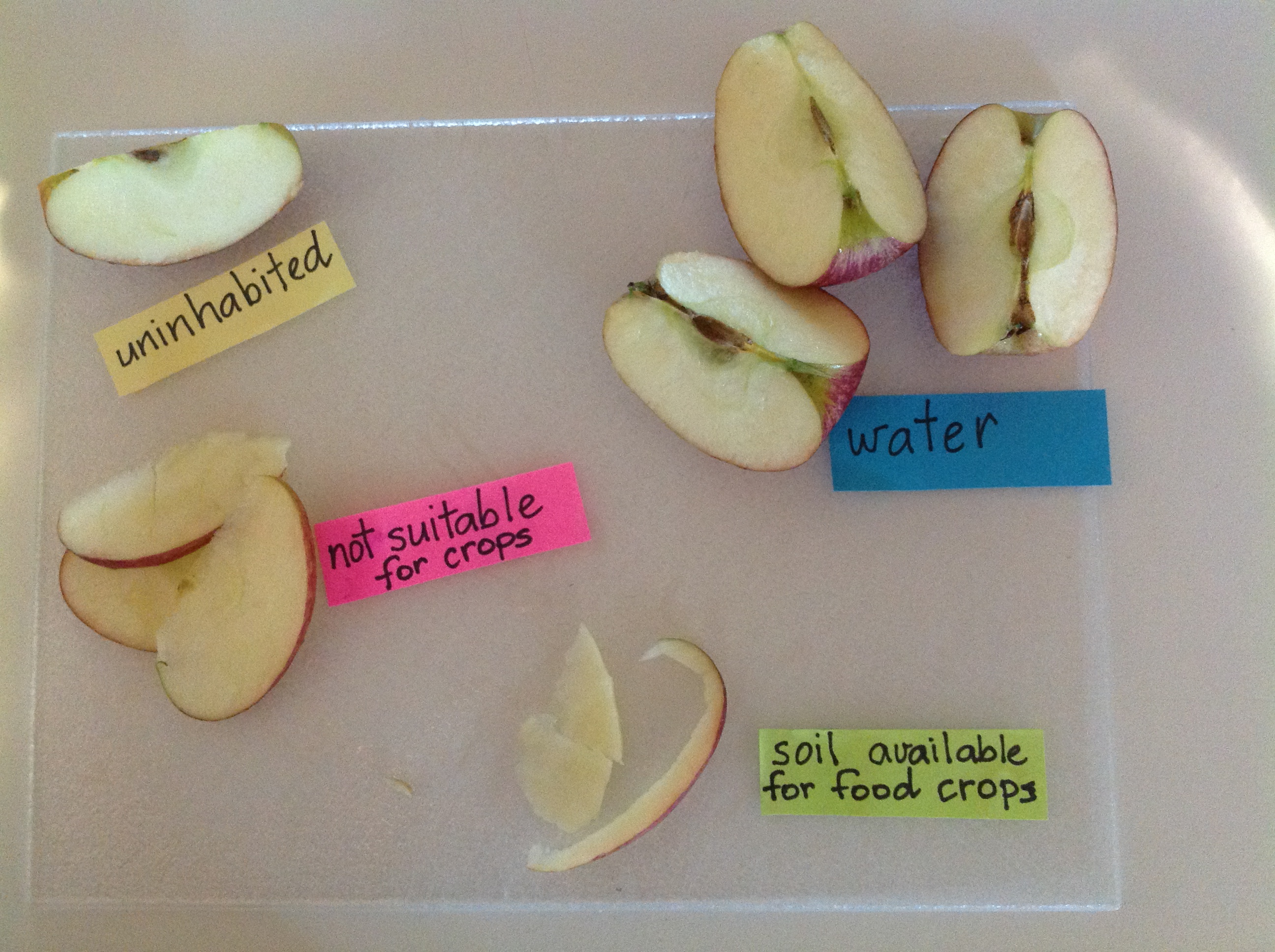
    Soil, though an essential resource of our Earth, is often overlooked. Ask a young child what living things need and they may say “water, air, food, sunshine and shelter”. Soil won’t rate a mention. But without it we wouldn’t have a thing to stand on! Nor would we have our other essentials: air, food and shelter – all dependent on the soil for their production.  The importance of soil and of conserving becomes even more evident with the realisation of how little of the Earth’s surface is available for producing food.

    © Norah Colvin
    © Norah Colvin If Earth was an apple . . .

    Another great gift from the soil is knowledge. Much of what we know of Earth’s history and human history has been revealed by the soil as successive layers have been exposed or excavated; uncovering secrets of the past and enabling a much richer understanding of earlier times.

    dinosaurs at museum Jan 91
    © Norah Colvin

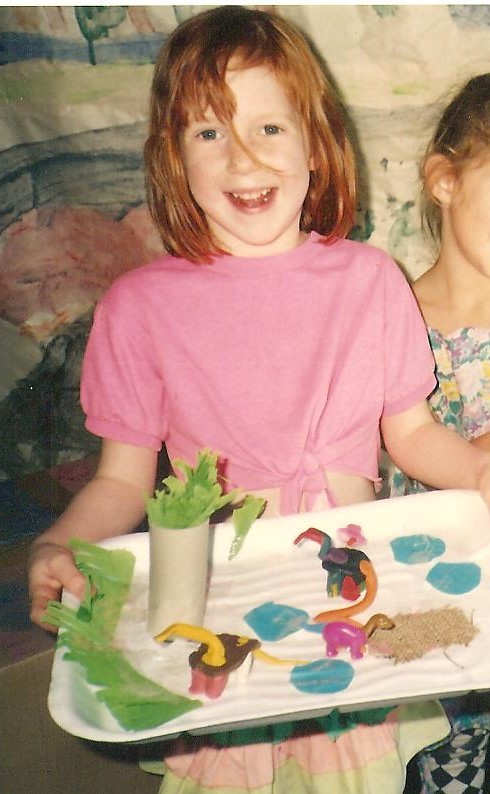
    Our knowledge of dinosaurs has all been revealed from the earth with the first discoveries and identifications made only a few hundred years ago.  And there is still much more to be discovered. My children and grandchildren, along with many other children and adults, are fascinated by dinosaurs. How exciting it would be to make a new dinosaur discovery, find hidden treasures or unlock secrets of the past!

    © Norah Colvin
    © Norah Colvin

    It is possible that many more dinosaur, and other, discoveries are yet to be made. The world’s only known evidence of a dinosaur stampede was found in Australia just a little over fifty years ago.  Even more recently a gardener in the UK found a dinosaur bone in his backyard! In the US, if you find a dinosaur fossil in your backyard it’s yours to keep!

    According to this video, finding dinosaur fossils is quite easy:

    The excitement of making new discoveries  and finding answers to questions is motivation for many.

    In his book Good Ideas: How to Be Your Child’s (and Your Own) Best Teacher Michael Rosen relates a story told by David Attenborough. He says that, as a child, David took an interest in bones and if he was out walking and found some he would take them home and ask his father (a GP so would probably know) about them.

    But his father didn’t just tell him. Wanting his son to be curious and interested in finding things out for himself, he responded, for example: “I wonder if we can work it out . . .” They would then look through books about zoology and anatomy and try to identify the bone’s origin.

    Knowing that it is through the comparison of found bones with bones of familiar creatures that scientists have been able to work out much of what we now know about dinosaurs and other extinct creatures makes such an activity even more exciting and inspirational.

    Rosen goes on to share an experience from his own school days. When a teacher confessed to students that he didn’t understand Comus by Milton, which had been set for study, the class and teacher spent the year together figuring out its meaning. Rosen compares the effectiveness of this approach to many others, stating that study techniques, “didn’t teach me how to find things that I really wanted to learn about. It didn’t take me down interesting side-alleys where I would find things that I didn’t know I would be interested in until I found them.” But he says what he learned from exploring Comus was “something that’s more to do with feeling than knowledge or learning: it was a confidence that I could investigate and discover things for myself. It’s ironic, isn’t it, that I got that feeling from someone who quite genuinely didn’t understand something?

    A sense of wonder and curiosity, and a desire and willingness to find out for oneself answers to one’s own questions is fundamental to learning. Digging in the dirt occasionally can’t do that much harm. You never know what new discovery you may make!

    Moini, A treasure chest with lots of twinkling gold coins, https://openclipart.org/detail/188617/treasure-chest
    Moini, A treasure chest with lots of twinkling gold coins, https://openclipart.org/detail/188617/treasure-chest

    The thought of just such a discovery is what inspired my response to Charli’s challenge:

    Digging for gold

    Her spade crunched against the obstinate soil. Then tap, tap, tap, another thin layer loosened. She scooped up the soil and tossed it onto the pile growing steadily beside the excavation site. With expectant eyes and gentle fingertips she scanned each new surface. Then again: tap, tap, tap — toss; tap, tap, tap —toss!

    She pushed back her hat to wipe her sweaty brow, leaving a smudge of dirt as evidence. She glanced skyward. The sun was high. She’d been digging for hours. She must find something soon. What would it be? Pirate’s treasure or dinosaur bones . . .?


    Thank you

    Thank you for reading. I appreciate your feedback. Please share your thoughts about any aspect of this post or flash fiction.