Live Love Laugh Learn … Create the possibilities

Category: Creativity

  • You’re not allowed!

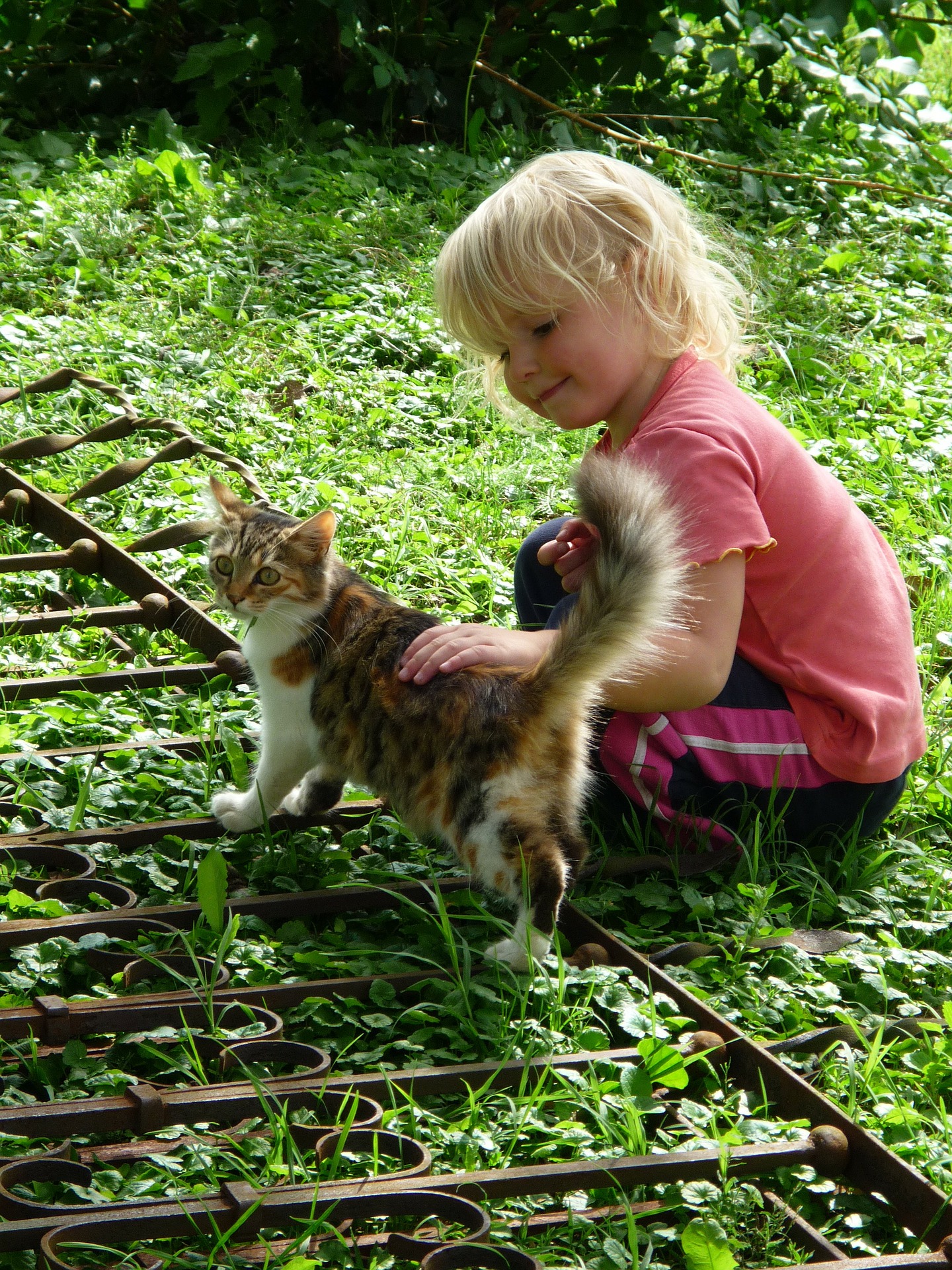
    child-1439468_1920

    How many of these did you hear when you were a child?

    • You’re too small
    • You’re too big
    • You’re too young
    • You’re too old
    • It’s too far
    • It costs too much
    • It’s too dangerous
    • Girls don’t do that
    • Boys don’t do that
    • It’s too …

    Sometimes it was difficult to find an activity that, like Baby Bear’s bed, was just right. Oftentimes it was only ‘just right’ in the eyes someone wielding the power; and not always in the eyes of the one wishing to have, do, go, or be. Setting limits is often easier than chasing possibilities.
    starr-cline-creativity

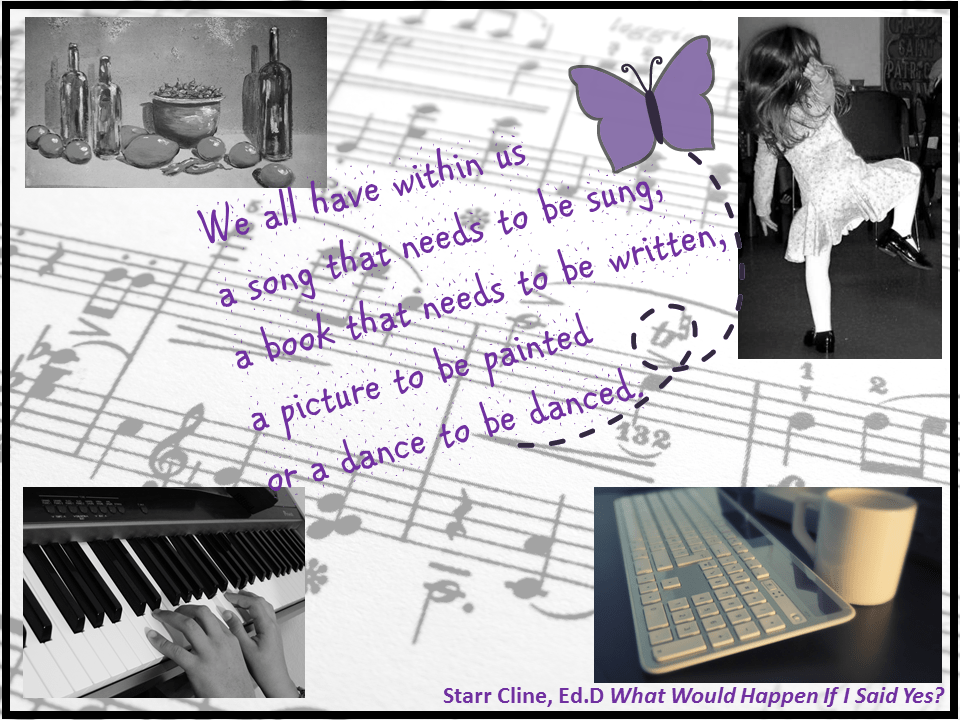
    Many years ago I read What Would Happen If I Said Yes?… A Guide to Creativity for Parents and Teachers by Starr Cline.  Cline writes about creativity, emotional intelligence, giftedness, intelligences, diversity, and the power of “Yes”. On her website, she makes this statement:

    “After years of observation and research, I have drawn the following conclusions:

    • Everyone has the ability to create.
    • The external environment is critical in the development of one’s potential, whether it be in mathematics, language, the arts, etc.
    • Individuals may have one or more areas in which they excel
    • IQ scores do not reflect specific talents or abilities
    • Creativity begins diminishing at about third grade”

    I’m inclined to agree, and feel especially sad about the last point she makes.

    What Would Happen If I Said Yes? challenged me to think about ways in which I could parent (and teach) more positively and encourage, rather than inhibit, creativity; encourage a willingness to try new things; and to avoid placing unnecessary limitations upon others and myself. I can’t say I was entirely successful, but I did make some gains.

    In the book, Cline suggests that you “STOP every time you are about to say no. THINK about what might happen if you said yes!”  Consider the worst scenario that could occur if you said yes, and whether it would be really that bad, or even likely.

    She says to consider why you may say No.

    “Is it because …

    You don’t want to be bothered

    It wasn’t your idea

    It’s a habit

    Someone treated you that way

    It makes you feel powerful”

    She reminds that the messages saying “No” often sends are:

    “Your idea is stupid

    You are stupid

    You’re not capable

    You’re not worth it.”

    In the long term, are these negative messages more important than a temporary inconvenience, or than the benefits that would accrue from positive responses?

    But don’t get me wrong. Cline doesn’t suggest you just say “Yes” to everything. She says that sometimes you may need to come up with a creative way of saying no. She provides many ways of doing so in her book, which I recommend as a great read for both parents and teachers.

    Even as adults we can find ourselves in situations where certain things are not allowed and rules are imposed, such as in the workplace or in clubs and other organisations.

    Sometimes the things we are not allowed to do are self-imposed limits; we may not allow ourselves to do things because:

    • It’s scary
    • It’s unfamiliar
    • We feel uncomfortable
    • We don’t know anybody there
    • It costs too much

    camping-1289930_1920

    Sometimes, as I explained about my attitude to camping in a previous post Around the campfire, we make choices and find ways of justifying our decisions, at least to ourselves if not to anyone else. There are many reasons I choose to avoid camping, many other things I’d prefer to do, and I don’t often consider myself to be missing out.

    Although I can appreciate camping’s appeal to others, it was only when I read a late comment by Bruce Mitchell that I began to consider some of the wonders, including Antarctica, I had missed. Maybe I’ll be more adventurous next time round!

    This week at the Carrot Ranch Charli Mills has challenged writers to In 99 words (no more, no less) write a story about something or someone not allowed

    In her post, Charli speaks of many injustices, including the rules that say who is and is not allowed to vote in elections in the United States. The rules affect many, for many different reasons (or petty excuses based on power) and tend to be divisive rather than inclusive.

    charli-mills-gift

    Charli says that,

    “The greatest gift you can give is to allow another. Allow someone else to listen to their favorite music. Allow someone else to tell you their story. Allow someone to connect to you even if you feel harried. Smile back, nod, acknowledge, empathize. Be loving. Some among us have denials you can’t see stamped upon their countenances because of circumstances.”

    While deciding what we will or will not allow our children to do may seem trivial in comparison, surely bringing up our younger generations to be confident, independent, responsible, and accepting of others, allowing them to join in; creating an inclusive society, is something to strive towards. Perhaps if we allow our children, they will allow others.

    For my response to Charli’s flash, I’ve gone back to childhood. Where else? I hope you enjoy it.

    Not allowed

    She knew they were in there. She heard their chatter. Her knocks began timidly, then louder. The room hushed. There was rustling, then padding feet. She waited. The door opened a peek. Her loving sister’s smiling face appeared, then contorted unrecognisably.

    “You’re not allowed!” the monster screeched, and slammed the door.

    She froze – obliterated, erased, smashed to smithereens. She was nowhere, nothing. Why? What had she done?

    She could only shrug when Mum asked why she wasn’t playing with her sister.

    Later, at dinner, she viewed her sister’s sweet smiles cautiously. Was she real? When would the monster reappear?

    thank-you-1200x757

    Thank you for reading. I appreciate your feedback. Please share your thoughts.

  • Introducing author and poet – June Perkins – Readilearn

    This week on the readilearn blog I am talking to June Perkins about her wonderful collection of poems for children Magic Fish Dreaming. With the beautiful illustrations by Helene Magisson, this collection is a delight for the ears, the eyes, and the spirit. Read about June’s inspiration for the poems, and use them as inspiration for poems of your own, or use them to inspire poetry writing in your students.

    Read June’s story at readilearn: Introducing author and poet – June Perkins – Readilearn

  • The end

    © Norah Colvin
    © Norah Colvin

    I have always loved working with beginning writers, rejoicing with them, and sharing their excitement, as they make meaningful marks on paper for the first time.

    Their stories may be just a few writing-like squiggles, one word, one sentence, or one event in length; but the stories in their heads are much more, with elaborate settings, characters and events. Their ability to create stories, for a long time outstrips their ability to express them in written words.

    It is the role of the teacher to acknowledge the effort and, armed with an understanding of the writing process, knowledge of how writing develops, and awareness of each writer’s learning journey and needs, support the learning.

    As soon as they can, many of these beginning writers add the words “The end” to their stories. It gives them a sense of accomplishment, of completion, of a job finished with nothing more to be done.

    But don’t all writers enjoy that sense of accomplishment, of completion, of a job finished?

    However, the reality is that there is usually much more to be done: revisions and rewrites, edits and proofreads, and feedback from readers to consider. The end of the story is only the beginning of the publishing process.

    It is the process of writing that children must also learn. They need to know that not every piece must carry the perfection required of publication. Unrealistic expectations can quickly demolish a child’s willingness to have a go. Appropriate and timely feedback and encouragement is important to the development of beginning writers.

    love of writing

    Providing them with real audiences for their writing provides a purpose and incentive to engage in the process of revision, rewriting, editing and proofreading. Of course, the publication expectations of beginning writers are not as rigorous as for older or professional writers.

    There are many ways of providing young children with readers; including:

    • class books of stories and poems (not unlike the flash fiction compilations of our stories)
    • books made for siblings or children in earlier grades
    • letters written to parents, grandparents, children at other schools
    • blogging, now widely accepted and implemented
    • journal writing

    If all drafts of writing are kept in a folder or portfolio, a favourite can be chosen for improvement and publication. I wrote about this in a previous post: Writing to order. Conferences between the teacher and individual writers are important when choosing a piece and deciding on preparations required for publication.

    The initial conference would be about the content; specifically what the writer wanted to convey, the intended audience, and how the writer wanted the audience to feel.

    When the writer was happy with the message, usually after revisions, edits, and possible rewrites, discussions would focus on choice of words and sentence structures.

    The final conference would target surface features such as spelling and punctuation.

    No red pen is ever used by the teacher to mark a child’s work. All changes are made by the child in pencil. The purpose of conferencing is to help children develop independence in their own writing process. The number of conferences and revisions required would be tailored to an individual writer’s development.

    In order to respond to what has been achieved, it is necessary to understand the individual’s development, and to ascertain whether this piece of writing is reflective of that. Consideration must be given to all aspects of development displayed in the work; for example:

    • is the message clear?
    • is the piece complete?
    • what words are spelled correctly?
    • what language structures are incorporated?
    • does it sounds bookish?
    • does it have elements of figurative or poetic language?

    There is always something new to celebrate in each piece of writing.

    In the end, what is important is to encourage children to write, to wonder, and imagine. The process for young writers is not much different from that of all writers, and their egos are just as tender. We want their engagement with writing to have happy endings.

    This week at the Carrot Ranch Charli Mills wrote that

    “Every good story has a beginning, middle and end. It might be the end of the world as we know it, what comes next?”

    She challenged writers to In 99 words (no more, no less) write a story that pivots around an unexpected ending.”

    The end of my story, I hope, implies a new beginning; and a better one than that of the original I penned. (I’ll let you know at the conclusion.)

    Pretty Princess

    Once upon a time there was a princess, pretty in pink and smothered in cottonwool. In constant preparation for the life arranged for her, there were few opportunities to think outside her royal expectations and obligations: Stand straight. Point your toes. Smile sweetly; and on, and on.

    But think she did: Why does the moon shine? What makes the rain fall? How does the grass grow? Why can’t I: play outside? straighten my hair? eat with my fingers? go to school with other kids?

    One day she said, “That’s it. I’m going.”

    And she did. The end.

    In the original the parents said she’d only leave over their dead bodies. She said that could be arranged!

    “And she did. The end.”

    thank-you-1200x757

    Thank you for reading. I appreciate your feedback. Please share your thoughts.


  • Monkey mischief

    ape-450151_1280

    Did you ever get up to mischief when you were a child? I believe I did. Or so I was told.

    Mischief includes exploring, checking things out to see how they work, and generally doing stuff that inconveniences parents. Being a kid, in other words; and isn’t it a child’s main purpose in life: to inconvenience parents? Just kidding, but sometimes it can seem like that. Especially when parents are in a hurry or have other things to do and a child has other ideas in mind.

    Although it may seem naughty, wilful, or defiant; young children really just want to find out about the world.

    childrens-questions

    Sometimes they investigate things: what will happen if I turn this knob, open this door, push this button; how does this taste or smell; how does this feel?

    girl-340769_1920

    Other times they are finding out about reactions: what will the cat do if I pull its tail; what will the fish do if I tip it out?

    children-909275_1920

    Human reactions and relationships are also an area of intense study: how will Mum react if I take her keys; what will Dad do if I push this button; what will sister do if I take her toy?

    Allowing children to explore, investigate, and experiment, while ensuring they, and no others, are in no serious physical danger, encourages their curiosity, their understanding of the world, and their innate drive to learn.

    volume-949241_1920

    While it can be annoying to have a child repeatedly adjust the volume of the sound system, for example, it may be better to ignore it and allow the child to discover the effect of the action. Usually once a phenomenon has been explored and understood, it will no longer fascinate, and the child will move on to something else.

    Unless there is a reaction from the parent. Any reaction may encourage repetition, not so much for additional learning from the action itself, but for the interaction with the parent.

    The phrase “You little monkey” is sometimes uttered when a child is engaged in some of this mischievous behaviour. It generally recognizes the harmlessness of the situation and acknowledges that the child is exploring or playing, often with the purpose of gaining attention or engaging a parent in a game.

    The classic picture book Caps for Sale by Esphyr Slobodkina is a story about mischievous monkeys.  A peddler carries the caps he has for sale, one on top of the other, on top of his own cap on his head. When he takes a nap under a tree, a troop of monkeys take all the caps, except his own, and refuse to give them back. Instead of following his instructions, they copy him. When, in frustration, the peddler throws his cap on the ground, the monkeys do the same and he is able to retrieve his caps and continue on his way.

    lauri-and-the-peddlers-bed-900x476

    (Another lovely story about a peddler, but without monkeys, is The Peddler’s Bed by Lauri Fortino which I wrote about here.)

    ten-giggly-gorillas-coverten-giggly-gorillas-page-1

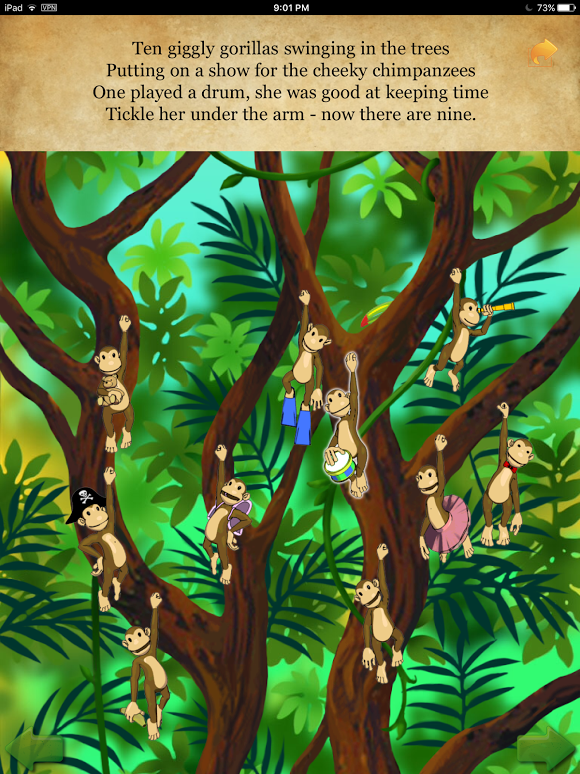
    One of the first picture book apps I bought for my grandchildren was Ten Giggly Gorillas  by Graham Nunn. It’s a cute counting back story that ends happily when the last little gorilla falls and is reunited with all her friends. It’s a wonderful first app for little ones with an easy swipe action to select each gorilla, and a great story to read for beginner readers. (Apologies – gorillas aren’t monkeys, but I like the app!)

    I’m thinking about monkeys because of the flash fiction prompt set by Charli Mills at the Carrot Ranch this week. Charli is talking about flying monkeys; monkeys that were used to test supersonic ejection seats in the desert of Utah in the 1950s. She has challenged writers to In 99 words (no more, no less) write a story using flying monkeys as a device or phrase.

    This is my response. I haven’t quite got the flying monkey as a device or phrase, but I hope you like it anyway.

     Monkey mischief

    A no-show nanny, insistent emails, and bills to pay: the verandah seems the best solution. He can ride his trike or play with toys; with the iPad backup if necessary.

    It’ll be fine, won’t take long.

    Then

    Incident #1: Laptop flat

    Easy: Power cord

    #2: Cord short, stretched high

    Solution: Be watchful – won’t take long

    #3: Trike stuck, wails

    Extricate it

    #4: Again!

    Ignore attention-seeking, almost done

    #5: Demands iPad monkeys

    “Soon!”

    #6: Snatches credit card, laughs, runs, daring

    “You little monkey!”

    #7 Monkey trips. Card flies, disappears between boards.

    Wails.

    “It’s okay, Mummy.”

    Grimaces: It’ll be fine

    thank-you-1200x757

    Thank you for reading. I appreciate your feedback. Please share your thoughts.


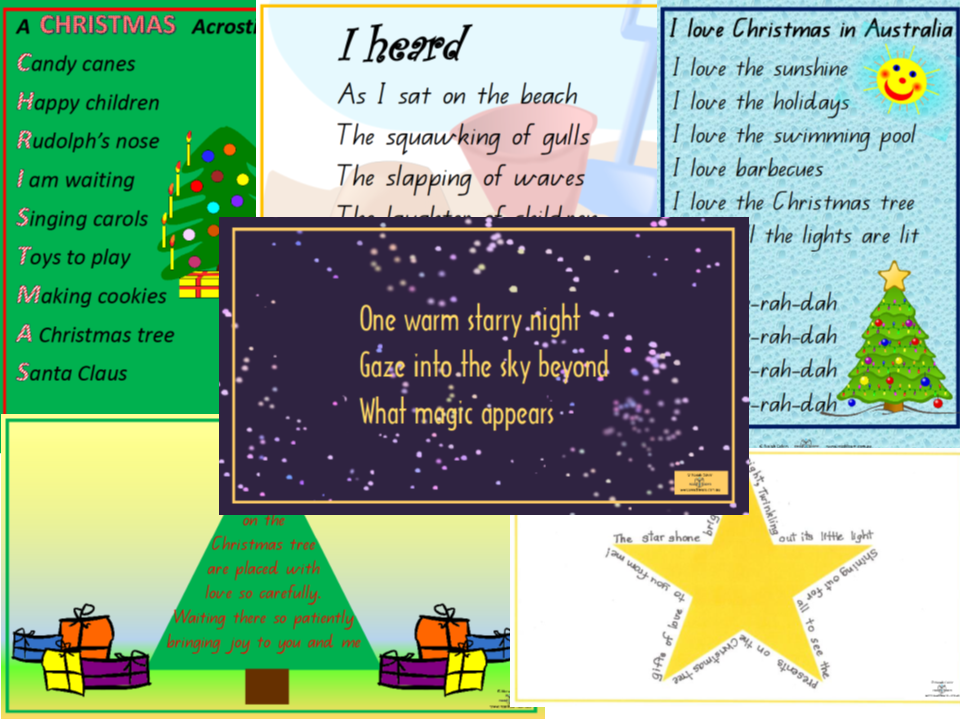
  • 5 forms of poetry to write with children – Readilearn

    I love to write poems. Children do too.

    Giving young children a simple structure or a repetitive pattern to start from gets them thinking about words, how they sound, what they mean, the number of syllables and letters. All the while they are having fun, playing with words and sounds, and learning about language.

    Five easy poems to write with children are:

    • Acrostic poems
    • Sound poems
    • Haiku
    • “I love” poems, and
    • Shape poems

    Acrostic poems are one of the easiest. They don’t need to rhyme or follow a set rhythmic pattern.

    Click to continue reading: 5 forms of poetry to write with children – Readilearn


    Thank you for reading. I appreciate your feedback. Please share your thoughts.
  • It’s not what you see

    1-2

    This week at the Carrot Ranch, Charli Mills is talking about the effect of changing a lens on how things are viewed. She says,

     “No matter what lens we apply, there is something to be seen in each of us that is worthy.

    Perhaps if we focus differently, we might actually achieve peace.”

    This is true too of children. Sadly, I think too often children are seen for what they are not yet, rather than appreciated for what they are. Childhood is all too fleeting, and with the current focus on assessment and teaching-to-the-test in many educational systems, it is becoming almost non-existent. Recess and free-play times are being eroded to cram in more cramming time.

    I recently read an article in the Washington Post that told of children in a US school having to walk laps during a 20-minute recess. The supposed intention was to get the children active. However, most children would be naturally active if allowed the freedom to run and play. The benefits of free-play activities for health, well-being, and social development would be far greater than that of walking laps.

    file1051239031460

    This practice contrasts with one described in an article in the Sydney Morning Herald. Children in Finland have fifteen minutes of mandatory outdoor play every hour, whatever the weather. “Fresh air, nature and regular physical activity breaks are considered engines of learning.”

    Each of these practices recognises the importance of activity, but each has a different way of providing for it, and only one is effective. I wonder why those with the power to make positive changes in education, fail to see the damage being done by didactic and test-driven practices that rob children of any love for or joy in learning. It seems to matter little what lens is used, they are unable to focus clearly on what matters most.

    In this TEDx talk, Nancy Carlsson-Paige explains what happens When Education Goes Wrong: Taking the Creativity and Play out of Learning.

    Towards the end of the talk, beginning at 12:45, Nancy says,

     “The difference between understanding concepts and reciting facts is very important for us to understand right now, because it captures the essence of what is happening in education today. There is a gross misunderstanding of what education is that has swept across the country, and the unfortunate belief is that you can direct teach, and you can measure and you can quantify learning; but the truth is, it is only the most superficial and the most mechanical aspects of learning that can be reduced to numbers. Unfortunately, this mistaken idea about the nature of education has pushed down to our youngest children. “

    She says that when we “drill and grill” kids, we not only lose the power of the learning experience, we lose all the amazing capacities that children bring to us in education:

    • initiative
    • creativity
    • the ability to define and solve their own problems
    • originality of thought
    • invention of new ideas
    • perseverance
    • cooperation.

    She says that when we take those capacities out, we take away the love of and joy in learning, not only from the children but from teachers too.

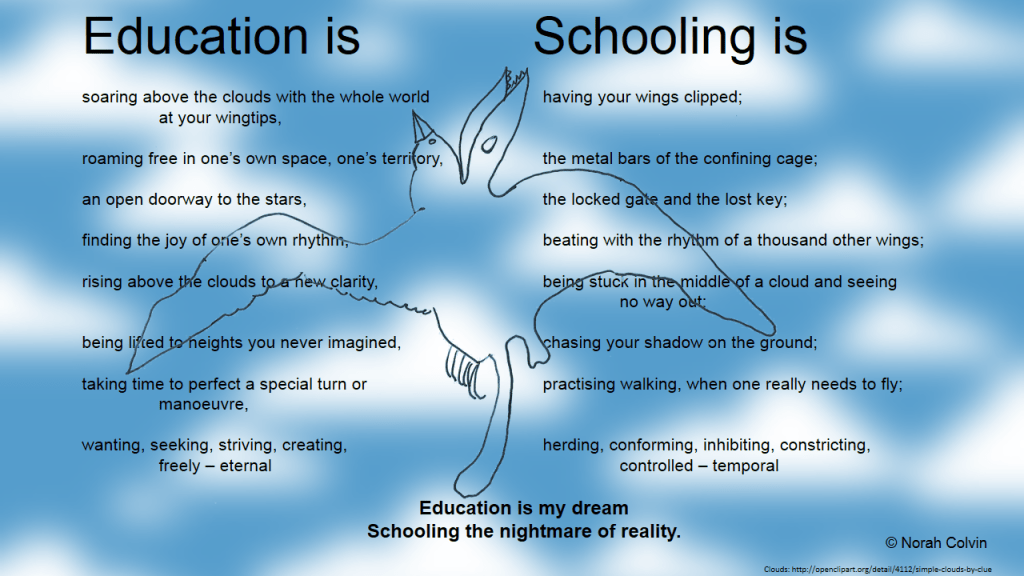
    These are themes that are familiar to regular readers of my blog, and the most influential when I decided to leave the classroom. More than thirty years ago I wrote a poem to describe the differences between what often is, and what could be.

    © Norah Colvin
    © Norah Colvin

    Sadly, I cannot say that nothing has changed. It has. The differences have become more stark.

    Here is my response to Charli’s prompt to: In 99 words (no more, no less) write a story using a lens. It can be literal, like looking at the world through rose-colored lenses or the need for spectacles.

    pink-sunglasses-clipart-1

    Unfortunately, I couldn’t find my rose-coloured glasses.

    What you see

    They saw him for what he wasn’t and what he lacked, not for what he was and what he could be. Their ill-fitting garments failed to clothe, and their unpalatable diet failed to nourish. If only they’d zoomed in upon his potential. Instead the wide-angled lens showed a panorama of disadvantage: an excuse for failure to fulfil his needs or enable his possibilities. A lens in proper focus may have seen a burning curiosity, a rich imagination, a wisdom older than time, and a heart in harmony with the universe. Instead they considered the negatives not worthy of development.

    Thank you

    Thank you for reading. I appreciate your feedback. Please share your thoughts.
  • #Sugar and Snails BirthdayBlog Tour – The legacy of a Catholic childhood

    www.openclipart.org
    http://www.openclipart.org

    I have been friends with Anne Goodwin who blogs at Annecdotal for almost as long as I have been blogging. While there are many differences in our experiences, there is the right balance of agreement and divergence for friendly and robust discussion to occur. Anne regularly contributes to the conversations on my blog through her thoughtful comments.

    Anne has also visited as a guest blogger twice before. The first was a discussion of The Examined Life by Stephen Grosz. In the second she wrote about the treatment of friendship in her debut novel Sugar and Snails. This post celebrates that novel’s first birthday! Congratulations, Anne. I wish you much success with this and future writing.

    sugar-and-snails cover

    In this post, Anne discusses the legacy of a Catholic childhood. I hope you will join me in welcoming Anne to my blog.

    The legacy of a Catholic childhood

    It was our last evening in Rome, and we’d grown weary of churches, even when they hosted a Caravaggio painting or a Bellini sculpture. But it seemed a shame to leave without a peek inside the church we’d passed almost every day that week on the way to some museum or other attraction. So while my husband walked back to our rented apartment for a pre-dinner cocktail, I pushed through the heavy door.

    Just inside, I hesitated. I hadn’t expected there’d be a service in progress. I was mesmerised: the golden light; the scent of incense, the mournful melody of human voices accompanied by an organ. I registered this, not so much with my eyes and nose and ears, but in my gut. In another country, in a less magnificent church, this had been my childhood.

    Ignoring the disapproving gaze of the usher, I passed through the rope barrier holding back the tourists, to take my place among the congregation. I no longer shared their faith, but I felt entitled to share the ritual.

    My childhood, at Catholic schools, was passed within a bubble. It was something of a culture-shock to discover, at university, that the majority of people I encountered belonged to other religions, or none. Later still, more at ease in the secular world, it was always interesting when friends and colleagues outed themselves as former Catholics. Then there’d be that nod of recognition, a shared heritage marking our psyche more indelibly than the ashen cross the priest would thumb on our foreheads at the beginning of Lent.

    I believe that we are strongly shaped by the past, so what is the legacy of a Catholic childhood? Some have found solace in the beauty of the liturgy and the sense of community while others have had their personalities destroyed through unimpeded clerical abuse. Many, like me, would place themselves somewhere in the middle, regarding Catholicism not as something to celebrate but to recover from.

    The threat of eternal damnation incites fear, or disbelief, and neither is conducive to developing a person’s moral compass. Telling a child what she must believe, rather than letting her discover it, doesn’t facilitate an enquiring mind. While it might seem comforting to be able to believe there’s a God who will always take care of you, you’ve a more secure base if you’ve been brought up by parents who are responsive to your earthly needs. There seems to be a very fine line between putting your faith in magical solutions and the “delusions” of the psychotic mind. And the veneration of suffering and a tortuous death through crucifixion is decidedly odd. As for sex, the risky business of discovering a new kind of intimacy in adolescence is further distorted by the taint of shame.

    sugar-and-snails cover

    When it came to writing my debut novel, Sugar and Snails, it made sense to give my main character a Catholic childhood. Uncomfortable in her skin from childhood, Diana finds no salvation in the church. She recalls morbid childhood games and, aged about eleven, being taken on pilgrimage to Lourdes for a miracle cure for a problem no-one will name. As an adolescent in the 1970s, her knowledge of menstruation comes from the bizarre instruction manual, My Dear Daughter, an exercise in obfuscation of North-Korean proportions, which her mother surreptitiously places on her bed along with a packet of bulky sanitary towels. Although it would be unfair to blame it entirely on Catholicism, she doesn’t have sex until the age of twenty-five and then it’s so dreadful she is celibate for the next twenty years.

    Yet I didn’t want to stuff my novel with my own issues. Firstly, because I don’t think that makes for a good read; secondly, I didn’t want to alienate potential readers, especially not the old school friends to whom my novel is partly dedicated, most of whom have stayed loyal to their childhood beliefs. Fortunately, my novel’s first year of feedback suggests I’ve managed on both counts.

    In preparing this post, I realised that less than half the Catholic scenes from earlier drafts survived to the final version. While there are solid structural reasons for these deletions, it also strikes me that, in the almost seven years I’ve been writing this novel, I’ve become less angry about the past. Perhaps it’s because I’ve worked through it or maybe simply because, as in that church in Rome, I’ve been able to reclaim the good bits. No, I don’t go to church, but I do sing with a marvellous mixed-voice choir. While we have an eclectic repertoire, it’s the sacred works – Verdi’s Requiem, Handel’s Messiah and the like – that really make me tingle inside. For more on the music that shaped my novel, see my forthcoming post on the undercover soundtrack.

    birthday blog tour final

    Please check out some other stops and posts on the Birthday Blog Tour.

    Anne Goodwin’s debut novel, Sugar and Snails, about a woman who has kept her past identity a secret for thirty years, was published in July 2015 by Inspired Quill and longlisted for the 2016 Polari First Book Prize. Her second novel, Underneath, about a man who keeps a woman captive in his cellar, is scheduled for publication in May 2017. Anne is also a book blogger and author of over 60 published short stories. Catch up with Anne on her website: annethology or on Twitter @Annecdotist.

    In honour of its first birthday, Sugar and Snails is available in Kindle format at only £0.99 / $0.99 until 31 July 2016.

    Amazon UK 

    Amazon.com

    Thank you

    Thank you for reading. I appreciate your feedback. Please share your thoughts.

  • A bunny breakfast

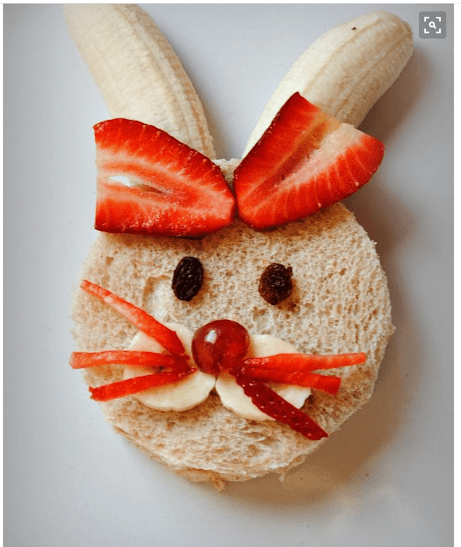
    Kimmie's rabbit

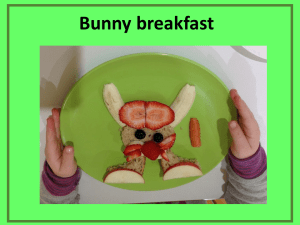
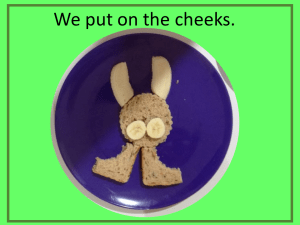
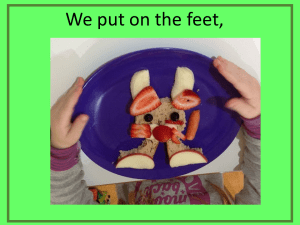
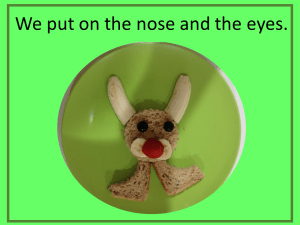
    A little while ago Kimmie, who blogs at Stuck in Scared, posted this lovely picture of a creative breakfast she made for her Littlie on Easter Sunday. It is not only visually appealing, it is delicious and nutritious.

    When my grandchildren visited for a sleepover recently, I thought they’d enjoy making their own for breakfast. We discussed it the evening before and they were excited to do so, adding their own suggestions and insisting that the ingredients be listed. G2 decided to write the list and I helped her decide, or simply told her, what letters were required.

    This is our version.

    Slide1

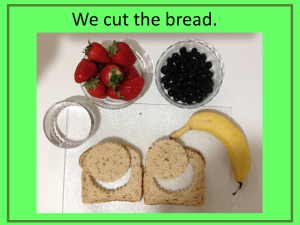
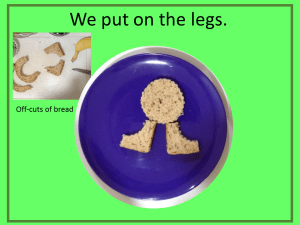
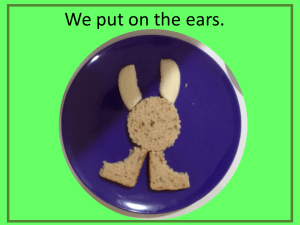
    This is what we did. (I did the cutting. G2 did the decorating. G1 played with his dinosaurs. Both children ate!)

    Slide2

    Slide3

    Slide4

    Slide5

    Slide6

    Slide7

    Slide8

    Slide9

    Slide10


    Slide11

    Slide12

    Slide13

    Slide14

    Such a simple but enjoyable activity with a nutritious reward at the end.

    Thank you Kimmie for the inspiration!

    Thank you

    Thank you for reading. I hope it didn’t make you feel too hungry! I appreciate your feedback. Please share your thoughts.

  • Let them loose

    johnny_automatic_playing_dress_up

    It is a wonderful thing to see children engaging in imaginative creative play. Let them loose with an assortment of bits and pieces and it’s amazing to see what they can construct, both physically with the equipment and in the ways they interact with their constructions, creating imaginative worlds and stories.

    A fabric offcut might be a cape, a veil, an apron, a dress, the sail of ship, a red carpet, or the curtain for a puppet theatre.

    A cardboard box might be a car, a home for a pet, a high-rise building, an explorer’s ship or a magician’s table.

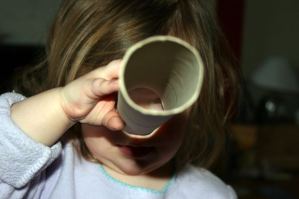
    A cardboard tube might be a ship’s funnel, a car’s garage, a railway tunnel, a fairy wand, or a telescope for gazing at the far-off stars and planets.

    www.morguefile.com
    http://www.morguefile.com

    Anything can create magic in a child’s imagination. Sometimes the cheapest things can offer the most value. You only have to watch a young child discard the expensive toy and spend hours playing with the wrapping and packaging materials to see this.

    Of course there is value in construction sets and other toys that allow children to imagine and create. However, a cardboard box decorated by the child can be as effective an oven as a fancy store bought one. And while most construction sets come with suggestions of what to build, it is best to put the instructions away and let the children discover for themselves what they can create, and how to incorporate the materials into their play.

    While learning to read and follow instructions is an important skill, making only what someone else has already created stifles the imagination and can even suppress the willingness to try, especially if the instructions and constructions are too difficult for the child, and sometimes even the adult, to follow.

    I expect young children to have ready access to a variety of materials, as well as opportunities to use them to support their play, both at home and in educational settings they attend. It is something I take for granted as being fundamental to early childhood development. It’s always been, and hopefully will always be.

    I was surprised, therefore, when I recently came across an unfamiliar term and theory for describing this type of play.

    Loose Parts Theory, according to articles like this one, was first proposed by architect Simon Nicholson. He believed that it is the loose parts in our environment, such as those that can be “moved, carried, combined, redesigned, lined up, and taken apart and put back together in multiple ways”, that stimulate creativity.  The term was unfamiliar, but not the thinking.

    It took me a little while to find the source of this theory but I finally found a paper written by Nicholson through this post by Kate on An Everyday Story.

    I find use of the term Loose Parts interesting. It is appropriate. However, the creative, imaginative play it describes was occurring long before anyone thought to apply such a term to it. If I suggested that it could be a “trendy” term to describe what has always been, I’d be showing just how much of a slow learner I am. Nicholson proposed the term in 1972!

    What do you think of Loose Parts Theory? Have you heard the term before? Did you engage in loose parts play when you were a child, or have you observed children playing imaginatively and creatively with loose parts?

    Thank you

    Thank you for reading. I appreciate your feedback. Please share your thoughts.
  • Sharing circles

    http://www.morguefile.com/
    http://www.morguefile.com/

    On Tuesdays I have regularly published a post and response to the flash fiction challenge set by Charli Mills at the Carrot Ranch. Today I am breaking with tradition as I wrote the prompt this week and included my flash with it.

    In that post I mentioned classroom sharing circles where everyone comes together to share their work, thoughts and ideas, not unlike the sharing of stories and ideas at the Carrot Ranch. In the classroom everyone in the circle is equal, with equal opportunity to see and hear, and to be seen and heard. The focus is lifted from the teacher and shared equally among class members, creating a democracy.

    In this post I describe some of the sharing circles I used in my classroom and show how these processes are not all that dissimilar from our own blogging circles.
    reading

    D.E.A.R. (Drop Everything and Read) is a daily quiet reading session lasting about 15 minutes. In these sessions everyone, including the teacher, chooses a book and finds a comfortable space for reading. Some children sit at desks, some on cushions in the reading corner, others prop themselves up against the wall, and others lie on the floor.

    The one rule is:

    • Everybody reads without interruption.

    This means:

    • Nobody talks
    • Everybody chooses enough reading material for the session
    • No outside interruptions are permitted (unless it’s an emergency)

    It is essential for the teacher to engage in personal reading, along with the children, to show that reading is valued and to provide a model of “expert reader” behaviour. Inviting other school personnel to join the session is also valuable. It is particularly important for children, who may not see adults engaged in regular sustained recreational reading at home, to see adults enjoying reading.

    I always concluded my D.E.A.R. sessions with a Reader’s circle. Children would bring their books to the circle and share what they had read. While there wasn’t time for every child to share every day, I ensured each child had an opportunity of doing so at least once a week. Children would:

    • Tell the book’s title and author
    • What it was about
    • What they liked about it, and
    • Read a small section to the class

    I loved the way children would look to each other’s book responses to guide their own selection, often asking others to help them find a book that had previously been talked about. We do the same in sharing and reading book reviews on our blogs.

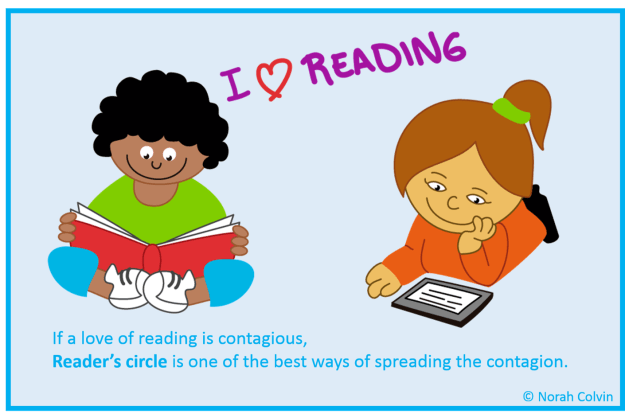
    If a love of reading is contagious, Reader’s circle is one of the best ways of spreading the contagion.

    love of reading

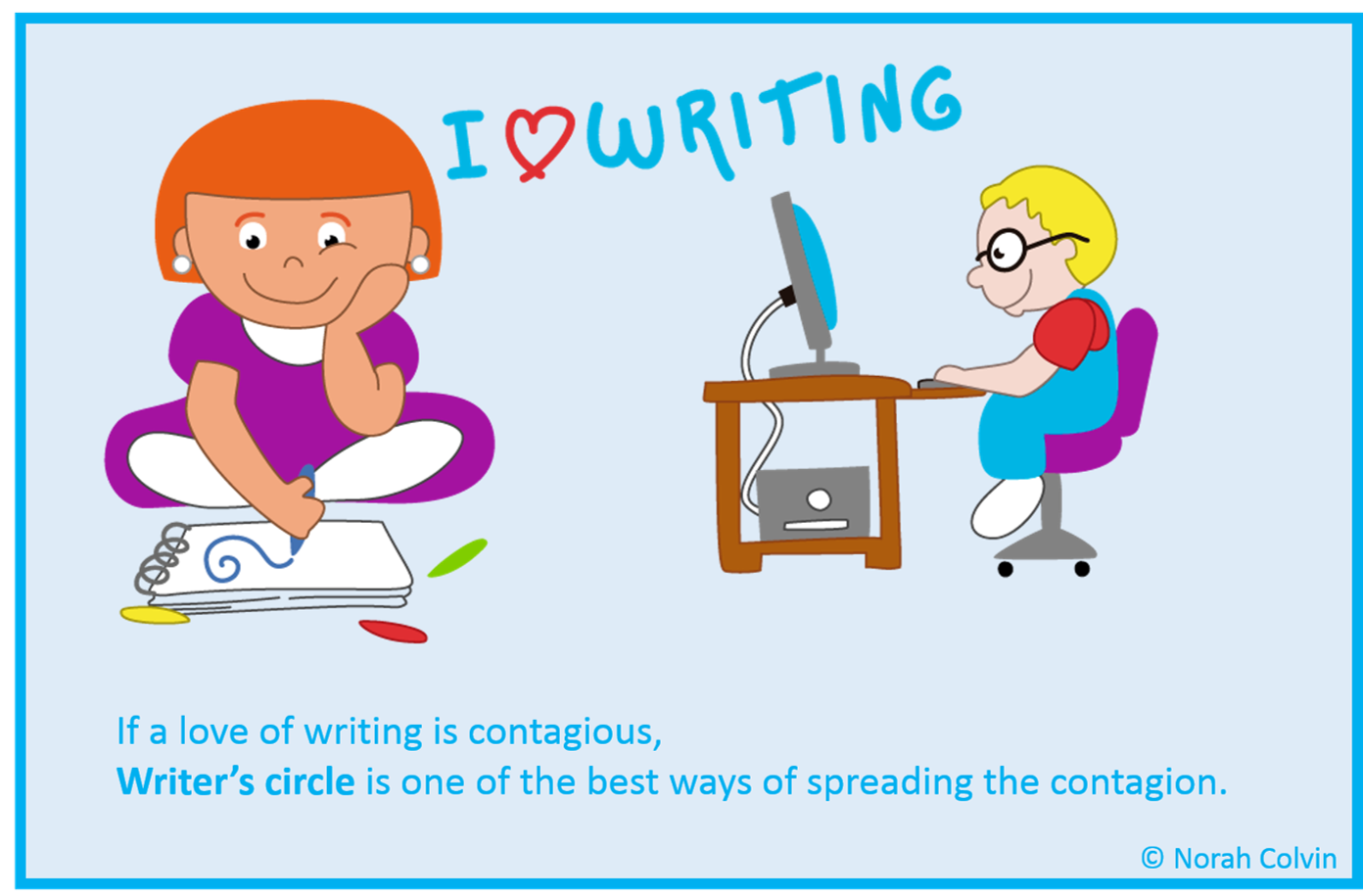
    A love of writing can be equally contagious. One of the things children enjoyed most about writing, other than the actual writing, was sharing it with others. Children would have opportunities to discuss and read their writing to each other in pairs and small groups as well as in the Writer’s circle.

    Sometimes we would have a pre-writing circle to share ideas and inspiration. It was rare that anyone would leave the circle without an idea. Surprisingly perhaps, it was even rarer that two would write about the same thing. Bouncing ideas off each other seemed to encourage a diversity, rather than similarity, of ideas. I guess the responses to Charli’s flash fiction prompt demonstrate the same principle.

    Post-writing circles provided opportunities to discuss what had been written and to read sections to others. Writers might share what they liked about their writing, or what they were having trouble with. Others might ask questions for clarification, to understand character motivations, or to find out what will happen next. Sometimes, with the writer’s permission, I would use a piece of writing to discuss an aspect of the writing process that would have application for many. If any children were reluctant to read their own writing, I would be more than happy to read it with them.

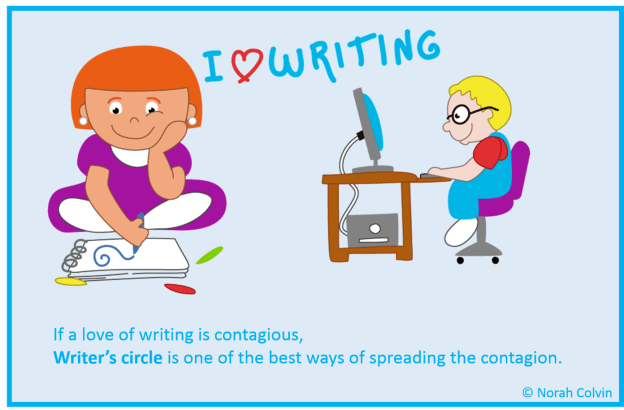
    If a love of writing is contagious, Writer’s circle is one of the best ways of spreading the contagion.

    love of writing

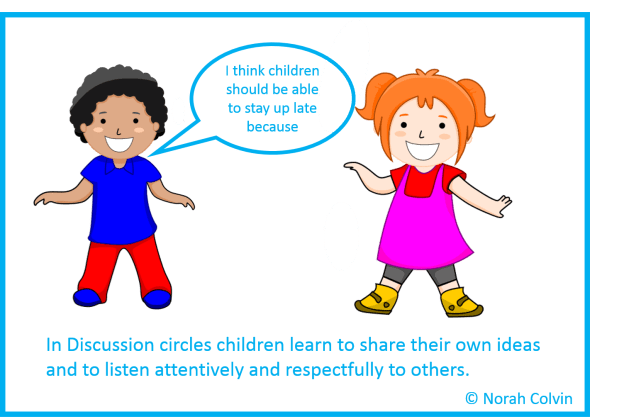
    Discussion circles could occur at any time, in any subject on any topic where a sharing of ideas was required. I had a lovely smiley face ball that children would sometimes pass around, or across the circle, to each other, to indicate whose turn it was to talk. This ensured that everyone had an opportunity to share their ideas and thoughts, as well as to hear the ideas and thoughts of others. Topics could be as diverse as:

    • “I feel happy when …”
    • “When I lose a tooth …”
    • “On the holidays, I …”
    • “I think children should be able to … because …”

    discussion circles

    Each of these sharing circles gives children a voice, demonstrating that they, their thoughts, their ideas and their opinions are accepted and valued. Each encourages children to listen attentively and respectfully to others by providing a supportive environment in which they can test out ideas, then reflect and reassess in response to the reactions of others.

    These discussions are not unlike those we engage in on our blogs; sharing books and articles read, and videos watched, along with our ideas and opinions and, most of all, our writing.

    Thank you

    Thank you for the opportunity of sharing mine. I appreciate your feedback. Please share your thoughts.