Live Love Laugh Learn … Create the possibilities

Category: Creativity

  • Is the ‘right way’ always the best way?

    Giving children opportunities to question, to be creative, and to problem solve are high on my priorities. Children need to be given the time and opportunity to figure out things for themselves. While it is sometimes easier just to tell or show them what to do, or even do it for them, it is generally better for their development, to let them have a go at finding a method or solution. Please note: I am not talking about dangerous things here like playing with fire, testing to see how fierce that dog really is, or driving a car.

    If children are constantly told there is a right way of doing things, they will stop exploring, discovering, and inventing their own or new ways of doing things. This is an issue because, if we always do what we’ve always done, we’ll never progress. There is generally no harm in, but much to learn from, each successive attempt.

    Opportunities to explore, discover, and use intuition are also important to the development of mathematical thinking. When children are developing understanding of number, they often invent their own strategies for working with numbers. Sometimes, as attested in this paper by Heirdsfield, Cooper and Irons, the strategies used display more advanced thinking, and are more efficient, than those taught as ‘the’ correct way of solving a problem using pencil and paper.

    I have noticed a change in the speed and agility with which my seven-year-old grandson works with numbers now that he has learned there are certain ways of; for example, adding two numbers. He tends to second-guess himself as he attempts to mentally calculate using the pencil and paper method he has been taught, rather than other more effective strategies he had previously invented and used. Perhaps you have noticed something similar.

    Provocations, such as these 3 Fun Inquiry Maths Activities for the Last Week of School by Steph Groshell on Education Rickshaw,  are great to get children thinking about different ways of solving real problems.
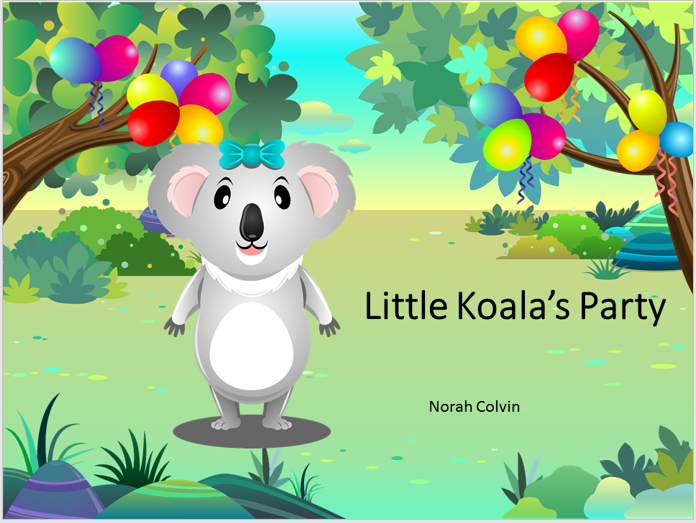
    Little Koala’s Party – a story for problem solving in the readilearn mathematics resources also encourages mathematical thinking and planning. Children help Little Koala organise a party for her family and friends, deciding who will be invited, the number of guests, and what’s on the menu. The suggestion is made that children plan a party of their own and they are asked to consider how they would go about it. The discussion and sharing of ideas, rather than the imposition of one ‘right’ way, is the important thing in developing mathematical thinking.

    Now it might seem a stretch to tie this in with a piece of flash fiction, but I hope you’ll be able to follow my thinking through the mist and into the light.

    This week at the Carrot Ranch, D. Avery took the reins from Charli Mills and challenged writers to in In 99 words (no more, no less) write a story that symbolically, mythically, mystically, or realistically involves dawn, as a noun or verb. Write about the dawn of time or the time of dawn, or the dawning of an idea. As always, go where the prompt leads.

    The right way

    Father and Son sat side by side. Father cracked his knuckles and sighed repeatedly while Son sharpened his pencils, each pencil, and arranged them meticulously according to undisclosed criteria.

    “Come on. Just get it done. Then you can play.”

    “I’m thinking.”

    “Think faster.”

    “I know it’s 96.”

    “Well write it down.”

    “Sir says I have to do the working out.”

    “Then do it.”

    “I don’t know how.”

    “Like this. See.”

    “That’s not how we do it. Sir says…”

    “Then do what Sir says.”

    Slowly it dawned on Dad: Sir’s way may not be the best way for all.
    Thank you for reading. I appreciate your feedback. Please share your thoughts.


  • Introducing author-illustrator Gregg Dreise – Readilearn

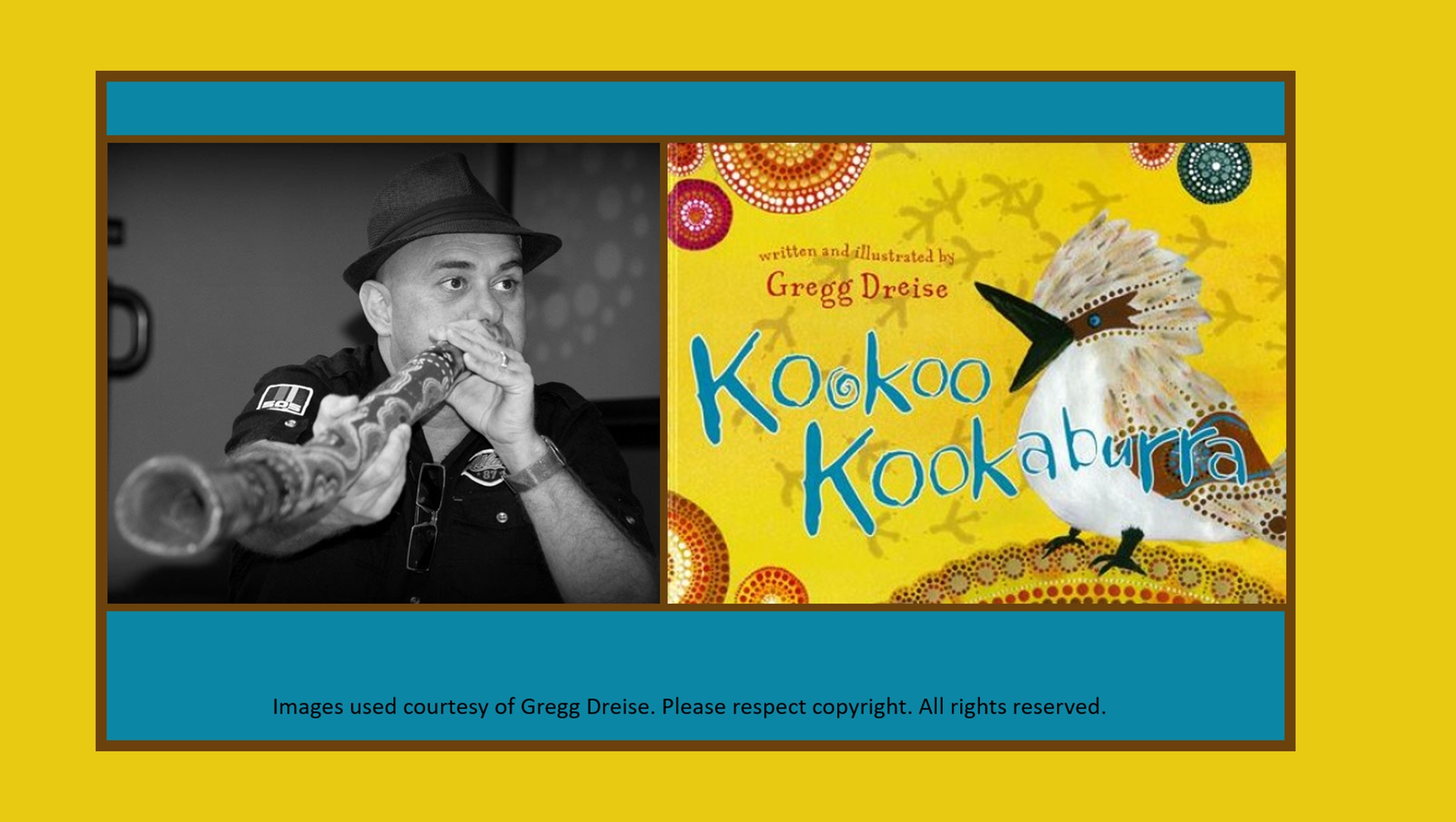
    This month it is my pleasure to introduce you to Gregg Dreise, gifted artist, storyteller and musician. Gregg is a descendant of the Kamilaroi and Yuwalayaay people of south-west Queensland and north-west New South Wales. He is a proud ex-student of St George State School. When he visits schools and is involved in festivals, he features the didgeridoo and guitar in his performances.

    Gregg is author and illustrator of three award-winning books Silly Birds, Kookoo Kookaburra  and Mad Magpie. A fourth book Why are you Smiling is to be released soon. All four stories are about teaching morals. They address friendship, kindness, tempers and bullying.

    Gregg also illustrated Di Irving’s retelling of the classic story Tiddalik the Frog, and Elaine Ousten’s second megafauna picture book Megal the Massive Megalania.

    In this post, I am talking with Gregg about his award-winning book, Kookoo Kookaburra.

    Oh, here he is now!

    Yarma – hello, I’m Gregg Dreise the author and sillystrator of Kookoo Kookaburra. This is a story about


    Continue reading: Introducing author-illustrator Gregg Dreise – Readilearn

  • A long shot

    I love the opportunity of finding out something I didn’t know before, and because there is so much  that I don’t know, the opportunities seem to arise quite frequently. Perhaps if I’d taken more advantage of them in earlier years, there’d be less for me to know now, and I’d be more help on a trivia team.

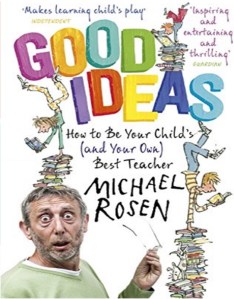
    Curiosity is an essential ingredient to learning and it is important for parents and teachers to encourage it in children, as well as themselves. Providing children with the opportunity of asking questions and helping them find out about what they want to know helps keep curiosity alive. Michael Rosen’s book Good Ideas: How to be Your Child’s (and Your Own) Best Teacher has many wonderful suggestions for doing just that. I wrote about that before here and here.

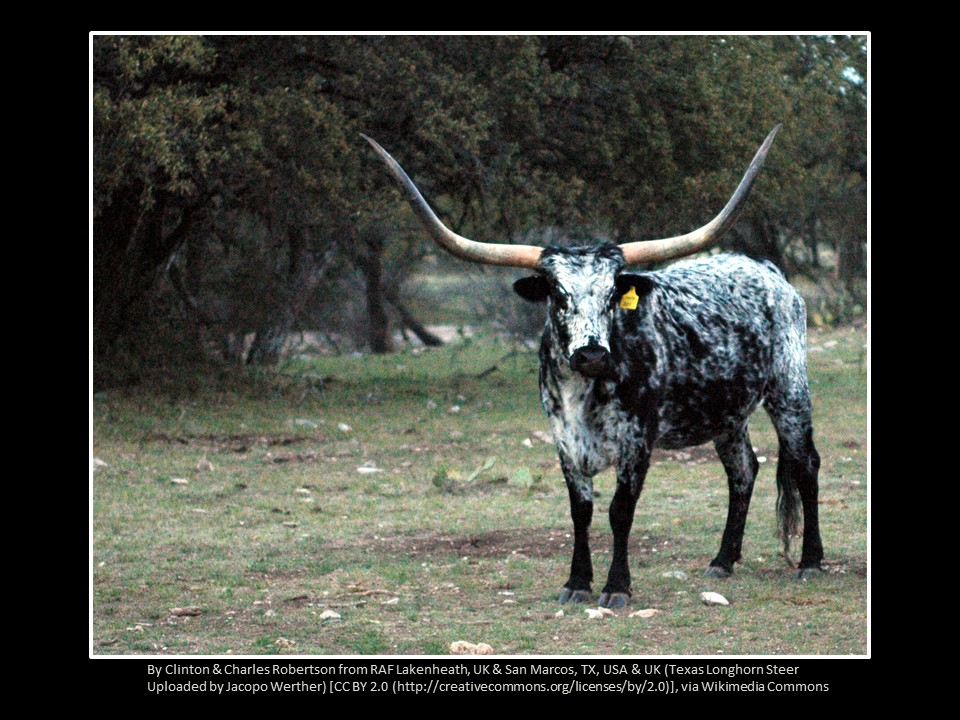
    Over the past few weeks, I have felt increasingly challenged by the flash fiction prompts dished out by Charli Mills at the Carrot Ranch. This week she had me (almost) completely stumped with her challenge to In 99 words (no more, no less) write a (story) that includes the word longhorn. Charli’s in Kansas at the moment, and her reference is to longhorn cattle, a breed not familiar to most Australians. I was aware of a longhorn beetle, but knew little about them too.

    Observing photographs of longhorn cattle, these were my thoughts:

    • Aren’t those horns heavy? How do they hold their heads up?
    • Wouldn’t the horns be dangerous – to the horn owner, as well as to others?
    • What would happen if the animals tried to move through scrub? They could get caught between trees, or knock their horns off.
    • What is the purpose of the long horns?
    • Imagine giving birth to something with horns like that!
    • Are they bred for beef or diary?

    How could I write anything without doing a little research?

    Fortunately, research is no longer as difficult as it was when I was a child. Press a few buttons on the computer, and a world of information awaits. My first stop was Wikipedia, but I investigated other sites too, including The Longhorn Cattle Society and Texas Longhorns. Here’s some of what I discovered in answer to my questions:

    • Longhorns are the descendants of the first cattle to arrive in the Americas with Christopher Columbus and Spanish colonists. Many escaped or were set free on the plains and were mostly feral for about two hundred years.
    • Horns form part of the skull and are difficult to weigh on a live animal. As the horns may continue to grow for several years, there are some differences, and steer horns are usually longer (and presumably heavier) that those of bulls and cows.
    • Horns start to grow at about three weeks. Phew – after birth! In fact, The Longhorn Cattle Society states that the cows are great breeders and have few calving problems.
    • Although the cattle may appear dangerous with their large horns, they are actually quite docile. However, they may experience damage to their horns if they are kept in confined spaces.
    • According to Texas Longhorns, the horns are considered non-functional. I can’t imagine walking around with something that appears so heavy and unwieldy on my head, just for adornment!
    • The cattle have many advantages, just some of which include ease of breeding, longevity and disease resistance. They produce lean meat and cheese has been produced from their milk.
    • There are some Longhorns in Australia, even an association for Texas Longhorns.

    In my explorations, I was surprised to find this article which tells of an Australian Longhorn JR that earned a position in the 2013 Guinness Book of Records for the longest horns.

    JR was pipped at the post in 2014 by Lazy J’s Bluegrass with horns measuring 297.8 cm (117.25 in)

    Watch Bluegrass here.

    The owner says his horns probably weigh about 200 to 300 lbs (90 to 136 kg)!

    I hope you enjoyed finding out about longhorn cattle as much as I did. Or maybe you already knew. When I read that many of the cattle had escaped or been released onto the plains by early settlers, I was reminded of the cow experience on the farm when I was a child.

    Holy Cow! It’s a long shot

    The enclosure was built, the hay delivered, the trough filled. We children watched from the rails, as Dad and Mum manoeuvred Cow #1 into the yard.

    Everyone clambered to be first to milk her.

    “We can all milk her – in the morning,” assured Dad.

    But in the morning, the cow was gone. The gate lay crumpled on the ground.

    A stronger gate contained Cow #2, but she squeezed under the fence.

    More repairs must secure Cow #3? She jumped over to flee.

    Defeated, Mum replenished her powdered supply, and we kids never learned to milk.

    Should’ve got a longhorn?

    For a fun picture book (also based on a true story) about a cow, without any horns, check out A Particular Cow written by Mem Fox and illustrated by Terry Denton. It’s hilarious!

    Thank you for reading. I appreciate your feedback. Please share your thoughts.
  • Thinking mathematically – Readilearn

    Mathematical thinking involves more than just being able to count and recite number facts. The ability to solve mathematical problems requires us to think flexibly and creatively with numbers. We need to see that there are multiple ways of interpreting a situation and reaching a solution. It is never too early to get children thinking.

    An easy way to get started is to give children a variety of objects to count. Rather than always counting groups of similar objects; for example, counters, bottle caps, or teddy bears, it is important for children to realise that collections for counting

    Continue reading: Thinking mathematically – Readilearn

  • Stone fruit salad

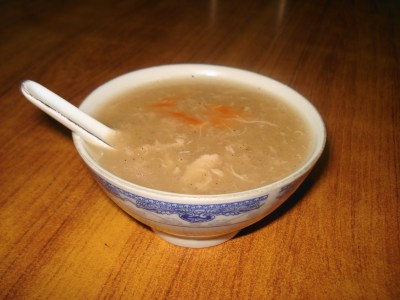
    Soup, especially chicken soup is one of those foods considered good for the soul, mind, and body, and often suggested to speed recovery after an illness. There may be more to the belief than simple folklore. It’s healing properties are what inspired the popular series of Chicken Soup for the Soul books. As Jack Canfield and Mark Victor Hansen saidthey wanted it to soothe and provide comfort, just like their grandmothers’ cooking.

    I was reminded of this when Charli Mills at the Carrot Ranch dished up her flash fiction prompt this week, challenging writers to In 99 words (no more, no less) write a story about comfort food.

    How could I go past soup? But what soup? Chicken soup? Pumpkin soup? Tomato soup? No, stone soup.

    I’m sure you are familiar with at least one of the versions of the story Stone Soup. Basically, some hungry travellers come to a village. They cannot afford to buy food and, although they ask, the townspeople refuse to share with them. Undaunted, the travellers heat up a pot of hot water with a stone in it. They explain to the curious villagers that their “soup” would taste better with the addition of certain ingredients. Intrigued, the villagers happily provide the ingredients. When the soup is ready, the stone is removed and the travellers share the delicious and nutritious soup with the villagers.

    With its messages about sharing, working together, and improving things by combined participation, it is a great story to read to and discuss with young children. It could be used to introduce a class cooking activity, such as making soup or stew, to which each child contributes an ingredient.

    Although English can be confusing with its multi-meaning words and phrases that have little apparent connection to the individual words used, I think children would understand the story and realise that the stone was not eaten but removed from the soup once it had served its purpose.

    Wouldn’t they?

    I wondered how it might be interpreted if children were asked to contribute a piece of fruit to a class fruit salad.

    Fruit salad

    Billy barely paused to say, “Hi, Mum,” as he tossed her a piece of paper and kept going.

    The back door slammed, startling Baby. ‘In one door and out the other,” Mum said, as Dad appeared. “What’s he up to?”

    Dad watched from the window as Billy took pebbles from the garden, inspected them carefully, then arranged them in neat piles.

    “Strange,” said Dad. “I don’t know. He seems to be looking for something. Said they’re making fruit salad at school tomorrow.”

    Mum read the note he’d tossed at her, then smiled.

    “He’s to take stone fruit,” she said.


    I guess if Billy contributes a stone, and the other children contribute fruit, they’ll have a delicious, nutritious, and refreshing snack to comfort them on a warm summer’s day. What do you think?

    Thank you for reading. I appreciate your feedback. Please share your thoughts.


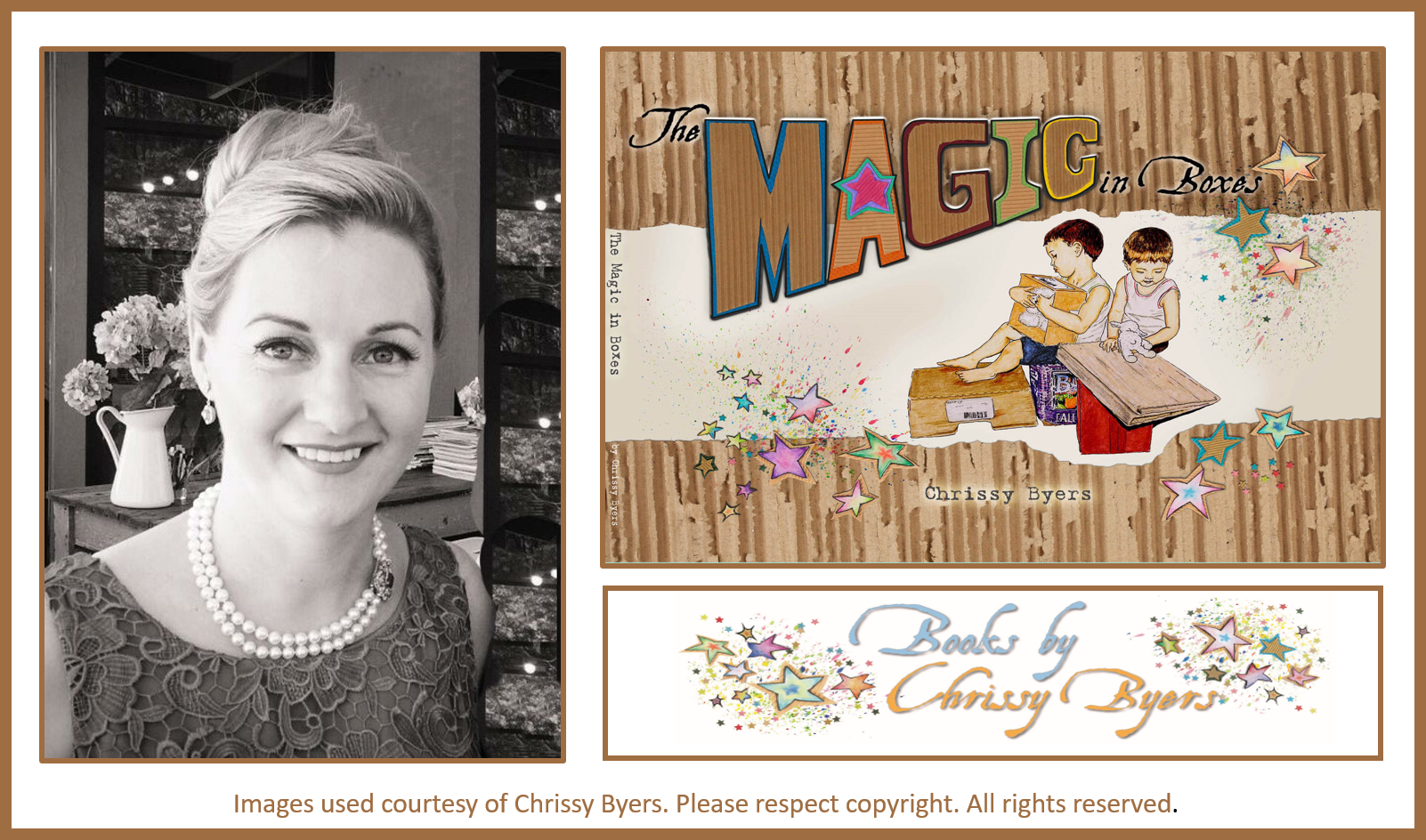
  • Meet author-illustrator Chrissy Byers – Readilearn

    This month it is my pleasure to introduce you to Chrissy Byers – author, illustrator, and early childhood educator. It was only after many years in the classroom and becoming a parent herself that Chrissy was able to fulfil her lifelong dream of being an author and illustrator. With the success of her first book The Magic in Boxes, and another on its way, Chrissy shows us that dreams can come true.

    Chrissy, what was your motivation for writing this book?

    As an experienced early years class teacher, I had noticed that, with the rise in technology there was a decline in the amount of time children spent engaging in imaginative play.  I was compelled to write and illustrate a children’s book which would remind parents, and inspire children, to see the magic in everyday household junk.

    Unlike a traditional children’s book, I felt that the recount genre would suit my intentions better than a narrative.  I saw this as being an additional bonus for primary teachers, as there are very few examples of recount picture books.

    The repetitive text elements encourage pre-reading children to join in a shared reading experience.  It also provides opportunity to incorporate hand gestures when reading, which helps focus young minds and occupy little hands during carpet time.  The rhyming couplets assist in reading prediction and keep the beat of a fast-moving text.

    Do you think of yourself more as a writer or an illustrator?

    Continue reading: Meet author-illustrator Chrissy Byers – Readilearn

  • Easter holiday wishes – Readilearn


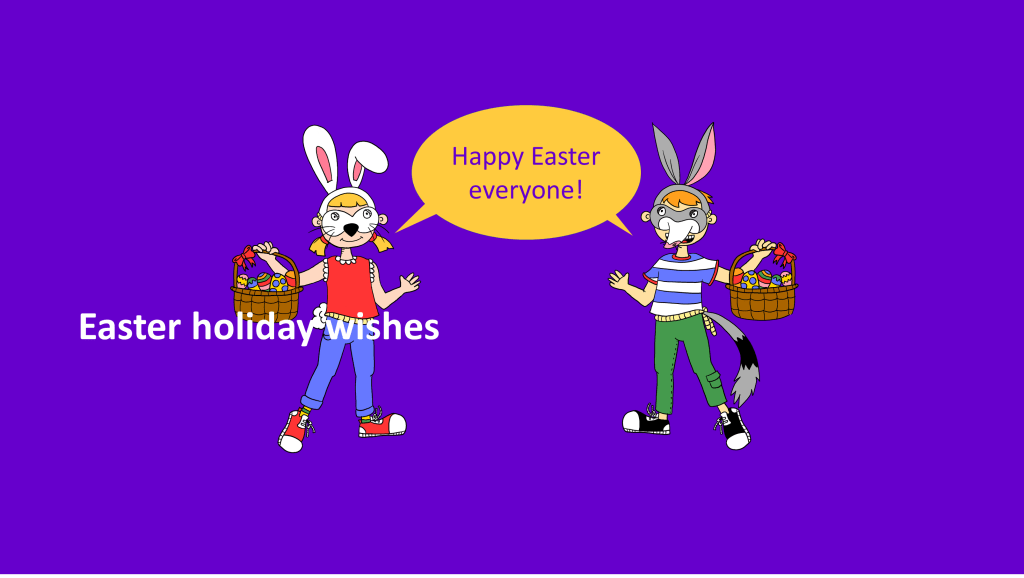
    This week I have uploaded two new resources which are just as suitable for Easter holiday fun at home as they are for learning in the classroom.

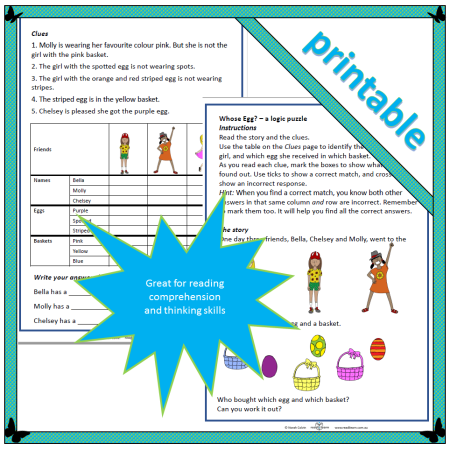
    Whose egg? A logic puzzle can be used with the whole class to introduce children to the steps involved in completing logic puzzles; or as an independent or buddy activity if children already know how to complete logic puzzles on their own.

    Three friends, three eggs, and three baskets. But which friend has which egg and which basket?

    Children read the story scenario and the clues, then use the information to deduce which friend bought which egg in which basket.

    Great for reading comprehension and creative thinking; and for collaboration in a paired activity!

    Continue reading: Easter holiday wishes – Readilearn

  • But why?

    Just like scientists, children are curious, constantly asking questions, wanting to know why or how. Parents and teachers don’t always know the answers. In fact, there may not even be an answer – yet. The need to know is strong and “just because” won’t do. Coupled with creativity, thinking up new ideas and possibilities, curiosity has taken us beyond the imagination of myths and legends to knowing and understanding.

    This week at the Carrot Ranch, Charli Mills has challenged writers to “In 99 words (no more, no less) write about a creation myth. You can write your own, use one in a story or create tension (or comparability) between science and culture on the topic of creation.” As usual, she tells us to “Go where the prompt leads.”

    Every culture has its own creation stories, told from the beginning of time when humans first walked the earth. Through stories, people attempted to explain their own existence and that of everything observable.

    With only the skies for night-time entertainment, people found stories in the stars. As Duane W. Hamacher says in Kindred skies: ancient Greeks and Aboriginal Australians saw constellations in common in the Conversation, What we don’t yet know is why different cultures have such similar views about constellations. Does it relate to particular ways we humans perceive the world around us? Is it due to our similar origins? Or is it something else? The quest for answers continues.

    As with stories told of the stars, there are some threads common to many creation myths, including stories of the first man and woman, stories explaining the existence of the animals and why they behave the way they do. I have read quite a few stories of floods, which I guess is understandable as these events occur worldwide.

    What I love about the creation myths is that they testify to the innate curiosity and creativity of humans; the need to know and the sense of wonder combined with imagination and storytelling.

    It is important to keep this sense of wonder and curiosity alive in children, and adults, also. Just a few days ago, as reported by Ray Norris in the Conversation, Exoplanet discovery by an amateur astronomer shows the power of citizen science. He says this discovery will help us understand the formation of our own Earth. It’s also a step towards establishing whether we are alone in the universe, or whether there are other planets populated by other civilisations.”

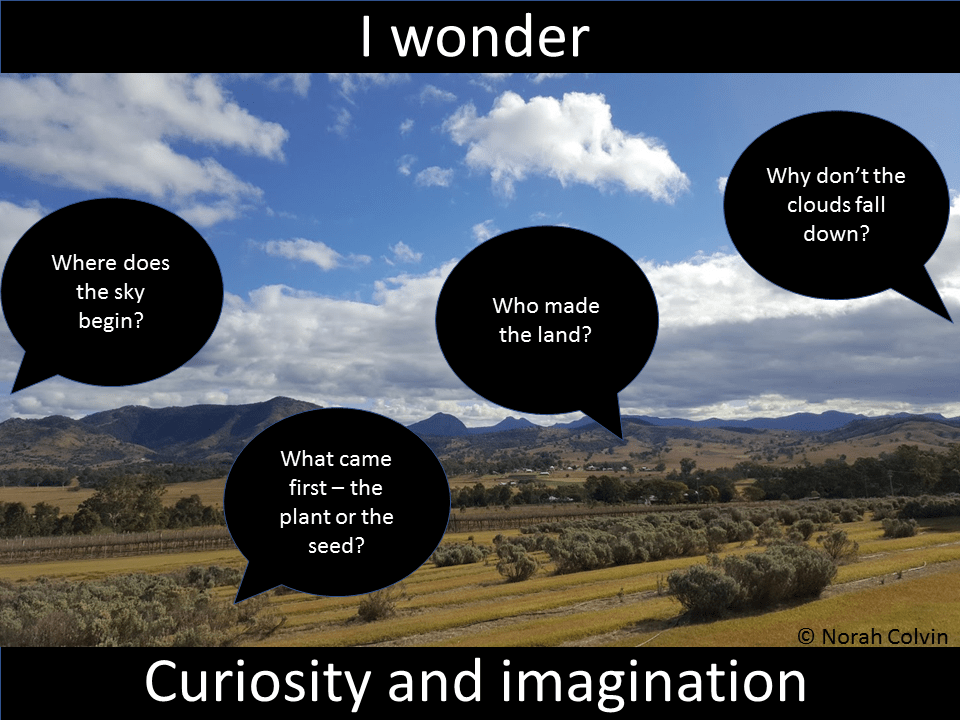
    I think of questions asked by my granddaughter; for example, “Who came first, the mother or the baby?”, “If there’s gravity, why don’t the clouds fall down?”  or “Where does the sky begin?”

    It is interesting now in this age of technology, almost everything we want to know is just a tap of a few keys or buttons away.

    The other day I visited a nature reserve with my two grandchildren. (We went especially to see three baby bilbies which had recently emerged from their mother’s pouch, but saw other things too.)

    We were looking at some black swans, which are native to Western Australia. GD informed me that white swans are not native to Australia. When I admitted that I’d never thought about that, she said, “Look it up. Look it up now. You’ve got your phone in your hand. Just look it up.” She was insistent and I did as told. She was right, of course.

    How different this experience is from that of the first humans. Young children expect to be given answers based upon science or collective knowledge, not stories. But we still do not have answers to everything.  As Duane W. Hamacher says, “The quest for answers continues.”

    In response to Charli’s challenge, I have not written a creation story. However, I have included the same ingredients that contributed to their creation: wondering, questioning, and imagination.

    Unanswered questions

    “What are you doing?”

    “Pulling out weeds.”

    “Why?”

    “So the carrots have more room.”

    “Why?”

    “So they can grow big and juicy.”

    “Why?”

    “So they are good to eat for our dinner.”

    “Why?”

    “To keep us healthy?”

    “I want to be healthy.”

    “It’s good to be healthy.”

    “I don’t want to die.”

    “You won’t die. Not for a long time.”

    “How do you know?”

    Silence. How does anyone know?

    “Silas died.”

    “Who?”

    “Silas.”

    “Who is Silas?”

    “Was. Silas was my friend.”

    “I don’t remember Silas.”

    “He was my imaginary friend.”

    “Oh. How did he die?”

    “I killed him.”

    “Why?”


    Perhaps there are some things for which we may never know the answers; for example, Can imaginary friends die?

    Thank you for reading. I appreciate your feedback. Please share your thoughts.


  • Are you ready to learn? A shout out for readilearn – Readilearn

    About six months ago, not long after the launch of readilearn, I was invited by Dr Gulara Vincent to talk a little about it on her wonderful blog through which she provides support for writers as they find their inner voice. I thought you might be interested in finding out a little more about how readilearn came to be. Although I share the interview here, please click through to meet Gulara and read the interview on her blog.

    Hi Norah, Welcome to my blog.

    Thank you for inviting me. I am delighted to be here.

    Norah, congratulations on the recent launch of your website. Tell us a little about readilearn.

    Thank you. I am very excited about my new website. readilearn is a collection of early childhood teaching resources that I have written. Many of the resources I used, trialled if you like, in my own classroom. I had always thought about sharing them with others but, when I was teaching full time, didn’t have the time to present them professionally or even think about marketing them.

    Norah, what makes your resources different? Why would people choose readilearn resources?

    Continue reading at: Are you ready to learn? A shout out for readilearn – Readilearn

  • Is anybody watching?

    This week at the Carrot Ranch Charli Mills challenged writers to consider audience, and to In 99 words (no more, no less) write about an audience. It can be broad or small, and gathered for any reason. How does your character react to an audience? Is the audience itself a character.

    I have always considered audience important for children’s writing. Too often in school, writing is done simply for the teacher, to complete an exercise. It is read and marked (corrected) without any real concern for the writer and the writer’s purpose. That’s if, in fact, there was a purpose other than to complete the task set by the teacher.

    However, it is possible to give children in school a sense of audience. They can write for the class as an audience, “publishing” their work to place in the book corner for independent self-selected reading. They can write for parents or other relatives and friends to mark special occasions such as Mother’s Day and Father’s Day, Christmas and Easter. They can write for younger siblings or buddies. Letters can be written to residents in nursing homes, characters in books, the principal, politicians, and the local newspaper. Diaries can be written and shared with teachers. Audiences can be found everywhere.

    But an audience is not essential for every piece of writing. Sometimes we write just for ourselves. Sometimes even we are not an audience for our writing; when it is simply the act of writing, of expressing our thoughts that is important. Express, understand, release.  That can be all there is.

    While I think this is less so for young children, as they move towards double figures they may like to have a private lockable diary in which to confide. As you would wish your privacy to be respected, so should theirs. This is not true for their online communication though.

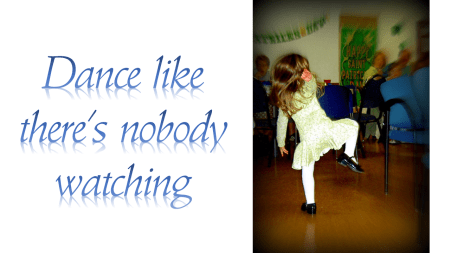
    There is the lovely saying  that includes the words “Dance like there’s nobody watching” and “Sing like there’s nobody listening”. The words are meant to be encouraging: “It doesn’t matter if you suck at it, just do it anyway.” I wonder why it doesn’t include the words:  “Write like there’s nobody reading.” Would you? Do you?

    Recently I admired and envied my 5-year-old granddaughter’s uninhibited self-expression as she sang and danced her way through the shopping centre. She didn’t care if anyone was watching or not. She was in the moment, in flow, sharing her joy in simply being. This is not a characteristic unique to my granddaughter. I have observed the same exuberance in other children.

    Most often the children’s behaviour draws smiles from passing adults; but what would the reaction be if it were an adult singing and dancing through the shopping centre? The occurrence, at least with such enthusiasm, is much less common. Breaking into song and dance may seem normal in musicals but doesn’t generally happen in real life.

    How would you respond? Would you smile, ignore, or hasten away?

    I was fascinated by some videos I came across when I Googled “Dance like nobody’s watching”. Here’s one:

    Children seem to vacillate through stages of “Watch me!” and “Don’t look at me!”, from pride to embarrassment.

    I think it is that embarrassment that kicks in with writing, as it does with most other things. We learn to compare ourselves with others, and generally find ourselves lacking,  If only we realised those “more confident” others probably feel the same.

    Or we might be reluctant to share out of fear of what others may think? Elizabeth Gilbert makes a good point in her book Big Magic: Creative Living Beyond Fear. She says,

    “Recognizing that people’s reactions don’t belong to you is the only sane way to create. If people enjoy what you’ve created, terrific. If people ignore what you’ve created, too bad. If people misunderstand what you’ve created, don’t sweat it. And what if people absolutely hate what you’ve created? What if people attack you with savage vitriol, and insult your intelligence, and malign your motives, and drag your good name through the mud? Just smile sweetly and suggest – as politely as you possibly can – that they go make their own fucking art. Then stubbornly continue making yours.” 

    Gilbert says that we shouldn’t take “art” too seriously and quotes Tom Waits who once told her:

     “You know, artists—we take it so seriously. And we get so freaked out about it, and we think that what we’re doing is so deadly important. But really, as a songwriter, the only thing I do is make jewelry for the inside of people’s minds. That’s it.”


    I shared Elizabeth Gilbert’s TED Talk Your elusive creative genius in a previous post Whose idea is it anyway? over three years ago, but it is worth sharing again. With over 12 million views, I know I’m not the only one to find it worthy.


    So, I’ve gone from audience to creativity. But what is creativity for, if not for audience? If your writing or artwork is not created to share with an audience; is the lack of an audience still uppermost in your mind as you create? Audience or no audience, self or other, how does it influence the process and product? Can you sing or dance without an audience, at least of self?

    For my flash story, I’m going back to the carefree days of childhood when life was fun and there was not a care in the world, and you danced and sang, whether anyone was watching or not. Really?

    The joy of childhood

    The cool grass teased her toes and the breeze tugged at her skirt, begging her to dance. She flung wide her arms to embrace the world as she lifted her face to the skies.  They smiled approval and she began to sway. Her fingertips tingled with expectation as her gentle hum intensified, summoning the music of the spheres to play for her. And play they did. She twirled and swirled to their rhythm singing her own melody in perfect harmony. Suddenly she was done. She clapped her hands to silence the orchestra and went back to her sandpit friends.

    Thank you for being my audience. I appreciate your feedback. Please share your thoughts.