Live Love Laugh Learn … Create the possibilities

Category: Blogging

  • Breathe – a sense of wonder!

    Life is short – enjoy every moment!

    I have been privileged to spend time with young children throughout my adult life: my own, children I have taught, and now my grandchildren. Spending time with young children is one of the best ways of maintaining a sense of wonder and awe in the everyday. Opportunities abound, if one is willing to see the world afresh through their eyes,

    to notice:

    • the softness of petals in a newly opened flower
    • the collection of pollen on a bee’s legs as it rests within the flower
    • the snail’s silver trail on the pavement

    to question:

    • where the puddle goes after the rain
    • how the toothpaste gets into the tube
    • how aeroplanes stay in the air

     to wonder:

    • why the sky is blue
    • where clouds come from
    • why tigers have stripes and kangaroos hop
    • what came first: the chicken or the egg

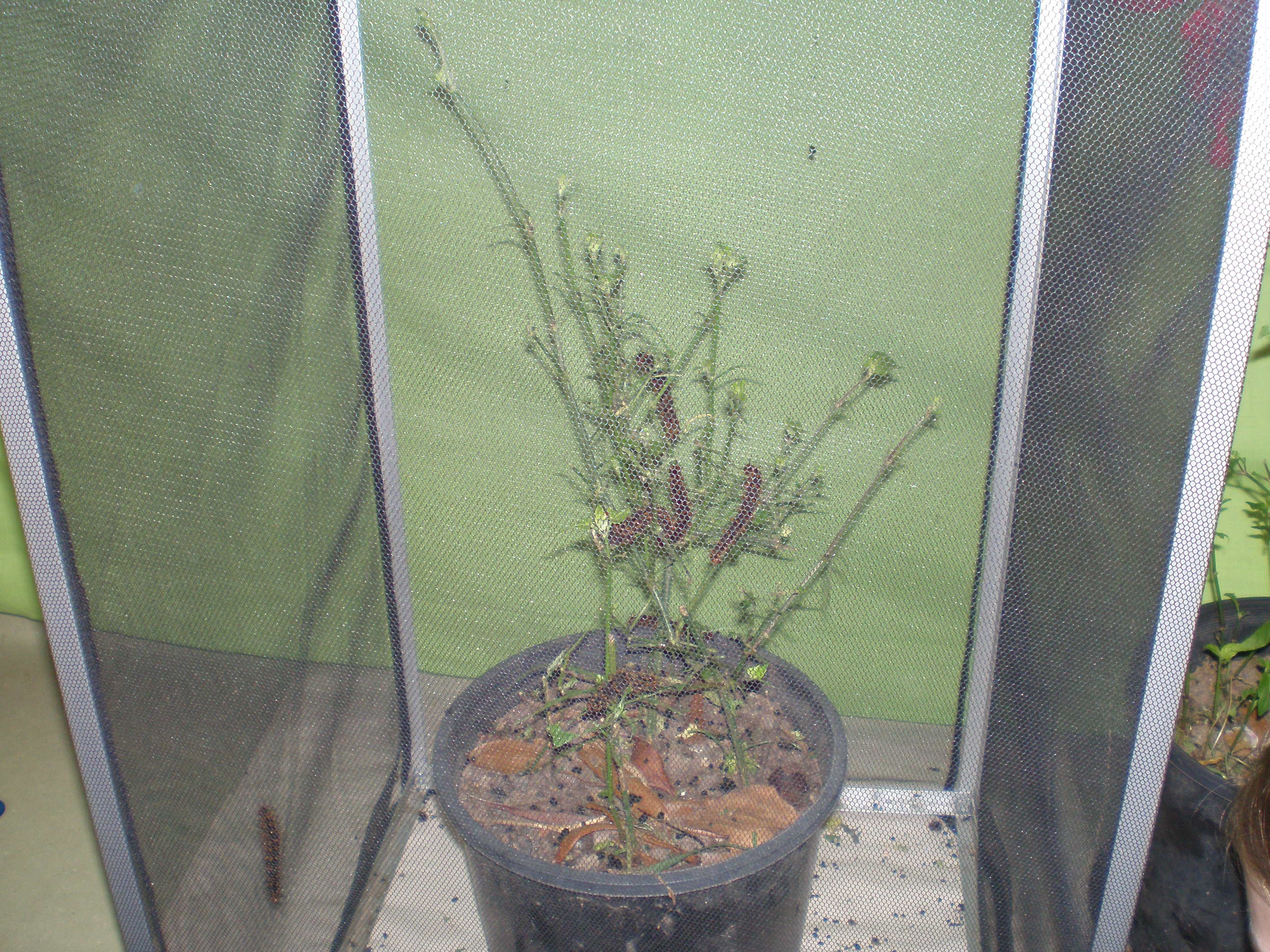
    One of my favourite ways of bringing the wonders of nature into the classroom is through observations of a live butterfly kit. We would watch the tiny caterpillars hatch, eat voraciously as they grew larger and larger, and then pupate before emerging triumphantly as beautiful butterflies.
    © Norah Colvin
    © Norah Colvin

    There are many opportunities to notice, to question and to wonder:

    • What will happen if the caterpillars eat all the leaves?
    • How big will the caterpillars grow?
    • How long will it take for the caterpillar to change into a butterfly?
    • How does the caterpillar breathe?
    • Does the caterpillar know it is going to be a butterfly?
    • Does the butterfly remember being a caterpillar?
    • What happens to the caterpillar in the chrysalis?
    • Why do they poo so much?

    We got to know that when a caterpillar was ready to pupate, it made a ‘j’ shape, hanging from under a leaf or branch, or from the top of the butterfly house. It would stay that way for a number of hours. Children (and teacher) would sneak over from time to time to see if anything was happening.

    As soon as the caterpillar started wriggling, we would quietly rush over to watch as it shed its last skin to become a pupa. It is an amazing spectacle, one that is not often seen “in the wild”. In fact it is a very quick process, and unless someone just happened to be watching at the time, we would miss it. Although we didn’t see every caterpillar pupate, we saw enough to appreciate and wonder.

    Equally as exciting was watching a butterfly emerge from the chrysalis. As the time was approaching the chrysalis would become transparent and we could see the shape and colour of the butterfly’s wings through the chrysalis. Watching the butterfly push open the chrysalis and emerge with crumpled wings was amazing. Oftentimes the butterflies would emerge in the mornings before the children arrived. But sometimes they waited, and we all watched as the butterflies pumped up their wings and spread them to dry in readiness for flying.

    When the butterflies’ wings were dry and they were almost ready to fly we would remove them from the house. If we timed it just right, we could hold them on our fingers, transferring carefully from fingertip to fingertip without touching the wings. When they were ready to fly, we would go outside and release them. The children loved to look for the butterflies at lunch time and learned that observation was the best way to appreciate them.

    varied eggfly
    Varied eggfly © NorahColvin

    The children’s interest and excitement was shared with anyone who visited the classroom: administrators, other teachers and children, siblings and parents.  I tend to think that the children’s sense of wonder may have ignited a spark in others too.

    This week at the Carrot Ranch Charli Mills challenged writers to In 99 words (no more, no less) write a story about a breathless moment. Write about life.

    Watching the short stages of a butterfly’s life is a good way to get children thinking about life, its beauty and its frailty, its dangers and its strength.  Watching the transformations that take place can certainly take one’s breath away. It is this that has inspired my response to Charli’s challenge.  I hope you enjoy it.

    Breaths - life is not measured

    Eclosion

    I heard the scurry of footsteps. Then he was in the doorway; eyes ablaze, breathless.

    “Come … quick … Miss,” he said, punctuating each word with puffs and pants.

    Before I had moved, there were others behind him, imploring me to come.

    With quickened pace I followed, hoping that I, that all, would be in time.

    Others were there already, clustered around. I peered over their heads, expectantly, holding my breath in a vain attempt to make time stand still.

    “Ahh!” we breathed in unison and awe as we watched the butterfly emerge from its now transparent shell.

    Thank you

    Thank you for reading. I appreciate your feedback. Please share your thoughts about any aspect of this post or flash fiction.


  • Life is like . . . a game of Snakes and Ladders

    http://www.morguefile.com/
    http://www.morguefile.com/

    Well, maybe not the whole of life; that would be rather two dimensional; but certainly parts of life. I’m feeling a little that way at the moment about my website plans. No sooner do I seem to find a ladder to climb up, than I encounter a huge snake, and down I go again. At the moment I seem to be stuck in a three-steps-forward three-steps-back dance.

    © Norah Colvin
    © Norah Colvin

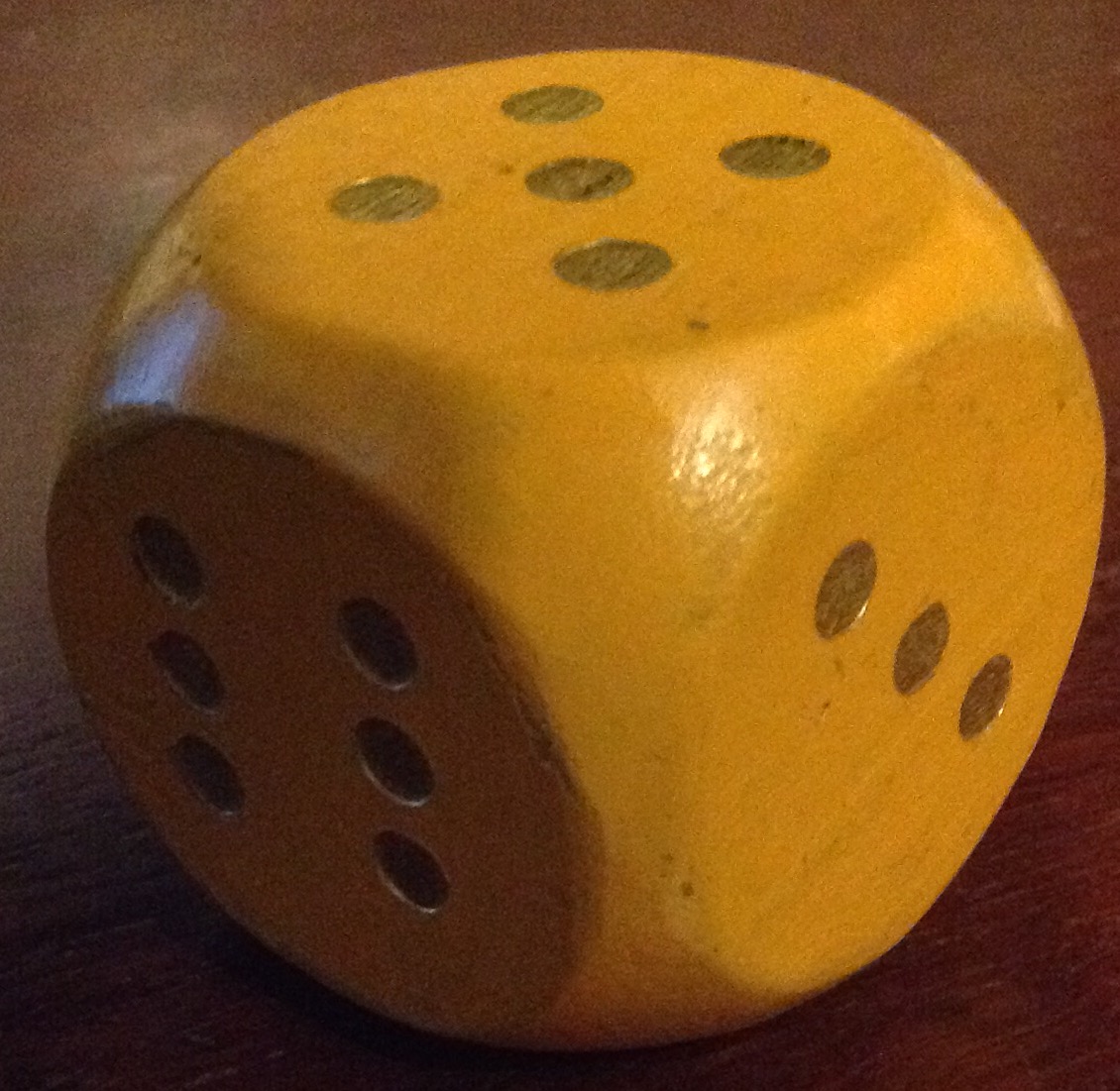
    I won’t say that everything one needs in life can be learned from playing Snakes and Ladders, but there are certainly some good lessons to learn from playing games. I mentioned some previously in Are you game? written in response to a flash fiction challenge set by Charli Mills at the Carrot Ranch; and observed them recently when playing Snakes and Ladders with my five year old grandson:

    dice

    • Getting along and taking turns
    • Acceptance – accept the roll and respond accordingly: don’t try to pretend it wasn’t a “proper” roll (e.g. dropped); or attempt to change the count by skipping or counting twice on a square
    • Resilience ­– stay strong and focused and don’t crumple with repeated setbacks: okay, so you’ve been swallowed by this same snake three times now; next time you just might overcome it
    • Persistence – keep going: you might roll a succession of small numbers but each moves you closer to the goal
    • Humour and fun – always look for the light side: it is just a game after all, it’s not the winning that matters, it’s how you play it. (On the board that we played, one of the ladders ended on the same square as a snake’s head! What could we do but laugh!)
    © Norah Colvin
    © Norah Colvin

    I guess those are lessons I need to apply to my website “game”: I have made some good progress preparing resources; I have had some work illustrated; and I approached a web designer for a quote. The ladders seemed to be lining up just right.

    Then I landed on another snake!

    In a comment on a previous post Anne Goodwin, who blogs at Annecdotal and is author of the soon-to-be-released Sugar and Snails, suggested that I be mindful of my Unique Selling Point (USP).

    I think my USP is probably the same as what I consider my Point of Difference (POD): resources that are interactive. Unfortunately, judging by the quote I received, the POD snake has an extreme appetite.

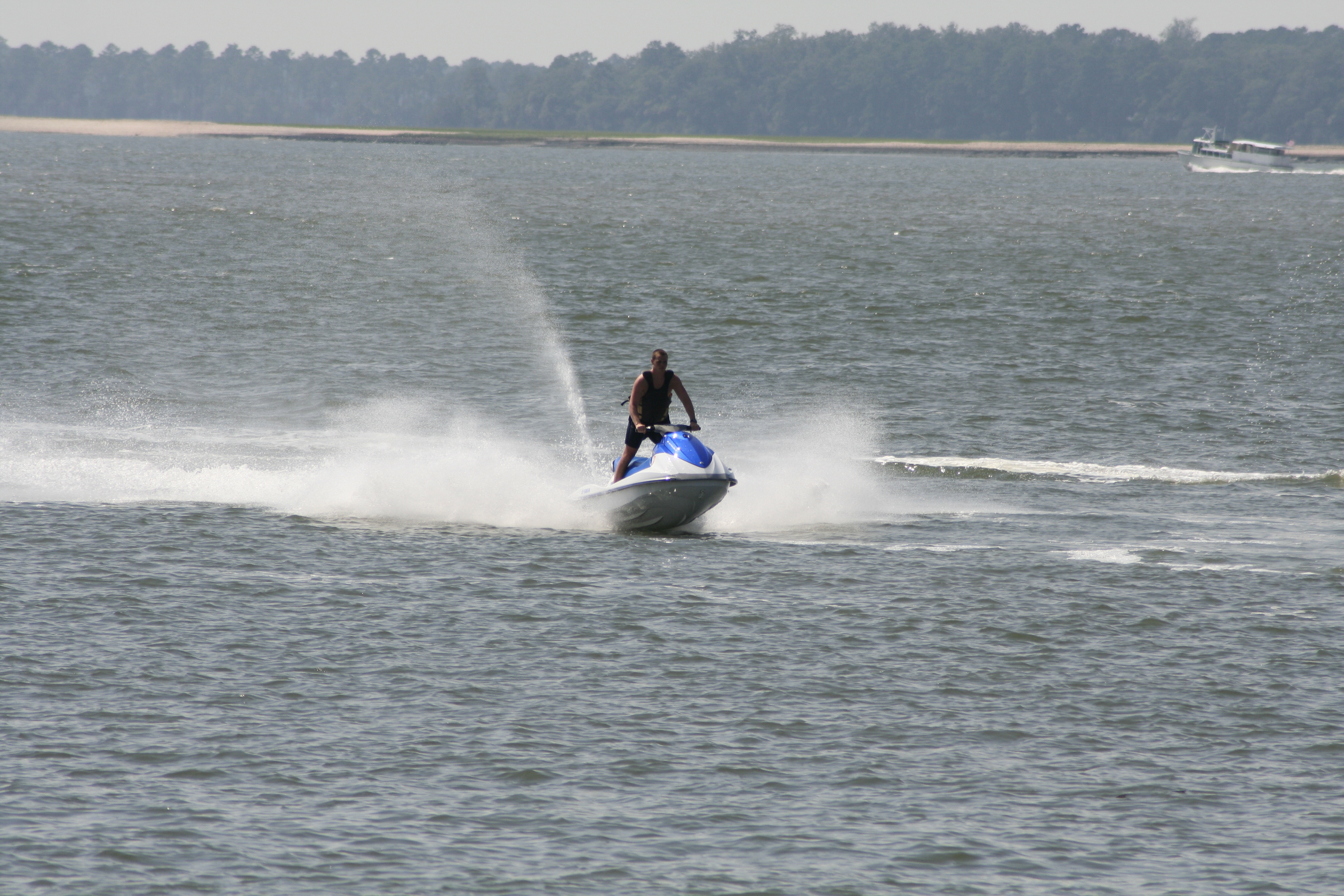
    In a post about his self publication journey Geoff Le Pard, author of Dead Flies and Sherry Trifle who blogs at TanGental, stated that he wanted to spend as little “real” money as possible. I know that I need to spend some to achieve my goals, and as a way justifying the expense to myself, if not to anyone else, I decided to consider it a “retirement jetski”.

    My retirement jetski
    My retirement jetski

    However an initial quote indicates that the interactive component of resources could end up costing as much as a Bugatti or a Lamborghini!

    http://www.morguefile.com/
    http://www.morguefile.com/

    Okay, I am exaggerating – a little.

    But I think I’ve slid down the back of that long snake and need to do a little recalculation as recommended a short while ago Charli Mills. I will let you know how I go extricating myself from the loop.

    Snakes and ladders – Opportunities for learning

    In the meanwhile, here are some suggestions for parents to make the most of learning opportunities while playing Snakes and Ladders with their children over the long summer holidays. We don’t want the progress that children have made during the term to be swallowed up by those snakes as was suggested as a distinct possibility by Sarah Brentyn in her post Harry Potter or Sidewalk Chalk? on her blog Lemon Shark. While I provided some suggestions for preventing that slide in a previous post, these suggestions are specifically for

    Making the most of “teachable moments” while playing snakes and ladders:

    On each turn, ask children to:

    • identify the number rolled on the dice and move their tokens the corresponding number of squares, counting them out. Ensure they do not count the square they are on.
    • tell the number they land on.

    Other opportunities for discussion:

    • Who is coming first? What number are they on? What number are you on? How many do you (they) need to catch up? Could you (they) catch up with the next throw? Why/Why not?
    • How many do you need to throw to land on a snake, on a ladder? Do you want to land on a snake or a ladder? Why or why not? If you land on a snake (or a ladder), will the number be higher or lower than where you are now?
    • What number do you not want to roll if you don’t want to land on a snake?
    • What number do you need to roll to land on a ladder?
    • How many do you need to win?

    Ask the children what they notice about the way the numbers are arranged. How does it differ from a usual 100 board? ( On a Snakes and Ladders board, 100 is at the top and the numbers “snake” back and forth across the board. On a 100 counting board, 100 is at the bottom and each row of ten numbers goes from left to right.)

    100 flowers outline
    100 counting board © Norah Colvin

    Ask the children why the numbers may be arranged differently (eg 100 has to be at the top so you can go up the ladders, numbers go back and forth so you can just keep going).

    But most of all, just have fun!

    Thank you

    Thank you for reading. I appreciate your feedback. Please share your thoughts.


  • Experiential learning – what’s good and what’s hot

    farm

    I am a proponent of learning by experience, of learning through one’s own explorations and making one’s own discoveries. In early childhood centres it is sometimes called ‘hands on’ learning. The recommendation is to provide opportunities for children to learn by doing rather than simply by listening to someone tell about it or by reading information in a book. For example, experiencing the sights, smells and sounds of a farm create an enriched understanding of farm life that is not possible simply from looking at pictures of farm animals in a caption book. Activities like mixing and making with modelling dough, or building and creating with construction sets provide opportunities for developing numerous skills and understandings.

    That’s not to say that experiential learning is best in every situation or that learning from the explanations of others, including reading information in a book, is less worthy. Indeed there is a place for each and it is important to get the balance, timing and application right. You would not need to view many posts on my blog (for example here and here) to realise that I am a proponent of reading also and believe that instilling a love of reading is one of the greatest gifts a parent can give a child.

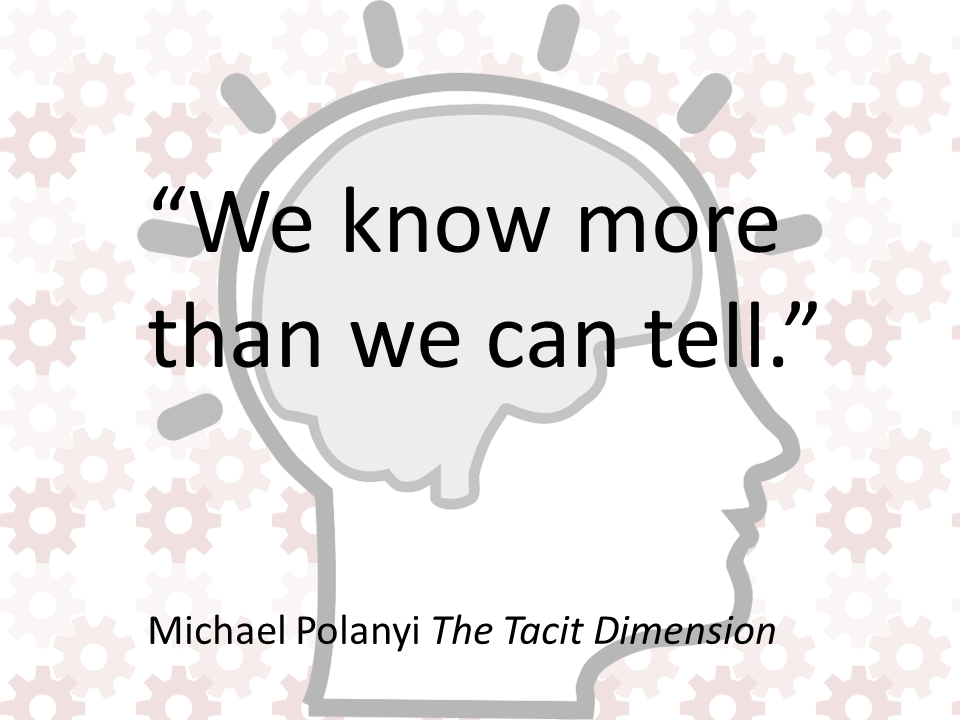
    In their book A New Culture of Learning: Cultivating the Imagination for a World of Constant Change, Douglas Thomas and John Seely Brown discuss the differences between explicit knowledge and tacit knowledge.  This chart shows my understanding of some of the differences.

    Explicit and tacit learning


    Michael Polanyi  The Tacit Dimension

    I think it would be undisputed that there is knowledge best learned through explicit instruction and other best learned through experience. I am sure you can think of many examples in your own life, like riding a bicycle, learning a foreign language or playing a musical instrument.

    netalloy, glossy flame https://openclipart.org/detail/91951/glossy-flame
    netalloy, glossy flame https://openclipart.org/detail/91951/glossy-flame

    But what about teaching young children about heat? It is not far into the life of any young child that they are cautioned about the heat of an oven or stove, heater or barbecue plate. But what is “hot” if you have never experienced it?

    Thomas and Brown say that “when a parent first tells a child not to touch a flame because it is hot, the child will almost always put out her hand and get burned” because the child has only been given the explicit part of the information, the part that could be articulated: that “Fire is hot”. When the child is burned much more information is learned by the body: that it hurts and is unpleasant. The child is then able to make connections with other similar “hot” things and situations.

    I think neither of the authors nor any parent would suggest a child be burned “for educational purposes” but the power of experience can be seen in this example. Perhaps it also helps to explain why young children need constant reminders to stay away, or precautions need to be taken to protect them, from hot things. Without the burning sensation they have not formed a true understanding.

    thomas and brown - learning

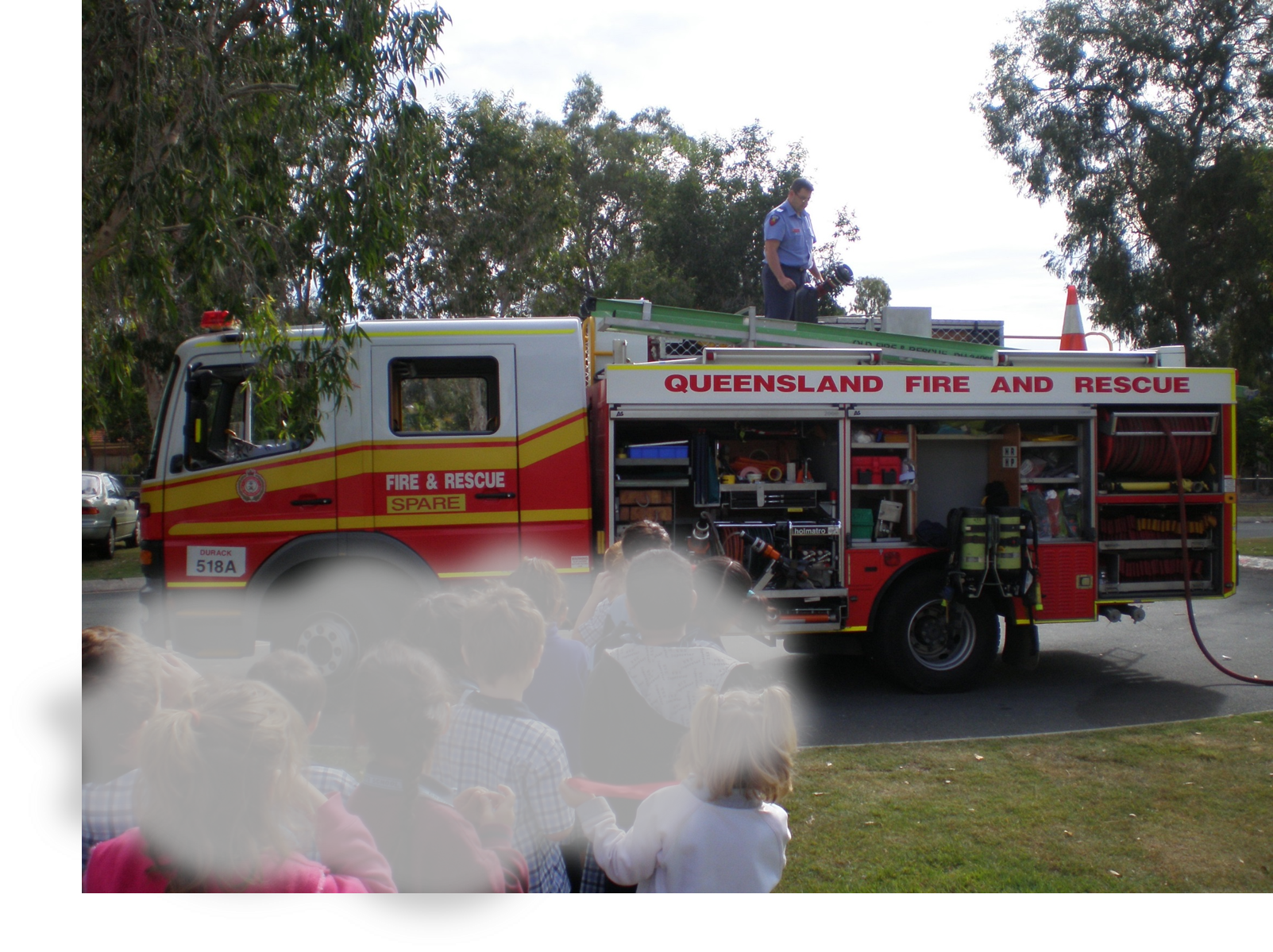
    At my previous school our year one classes were always visited by the local fire fighters who talked about fire safety, explaining the difference between “good” fires (like birthday candles, barbecues and campfires) and “bad” fires, while warning that even good fires could quickly become bad  if not monitored correctly.

    They talked about the need for smoke alarms in the home and the importance of having escape routes and meeting places planned and practised. They ensured students knew their full name and address and the procedure for calling emergency (000 in Australia) if the need should arise. These are things that all young children should know.

    firetruck

    The children were always excited about the firefighters’ visit as they got to look at the firetruck close up, maybe even sit in it or, if they were lucky, see how high they could spray water with the large hose. The tacit knowledge learned through this type of experience, combined with explicit knowledge provides a context that allows children to learn the realities of fire danger and the importance of safety. It wasn’t unusual for the crew to receive a call and rush away during one of their visits, adding further to the overall experience for the children.

    rg1924, unexpected frog in my tea    https://openclipart.org/detail/21079/unexpected-frog-in-my-tea
    rg1924, unexpected frog in my tea https://openclipart.org/detail/21079/unexpected-frog-in-my-tea

    Thinking about heat and education, and the hold that explicit knowledge and its testing has on current practice makes me think of the story about a frog in a pot of hot water.

    The story says that if you were to put a frog into a pot of hot water, it would jump out immediately; but that if you were to put the frog into a pot of cold water which is warmed slowly, the gradual increase in temperature wouldn’t be noticed and the frog would be boiled alive.

    Perhaps this is why some educational practices are accepted without question. People have become so used to them, with small incremental changes seeming insignificant and unworthy of comment. However the cumulative effects over time can be enormous. By the time they are realised, making amends would require so great a change, possibly a total restructuring, that it would defy plausibility.

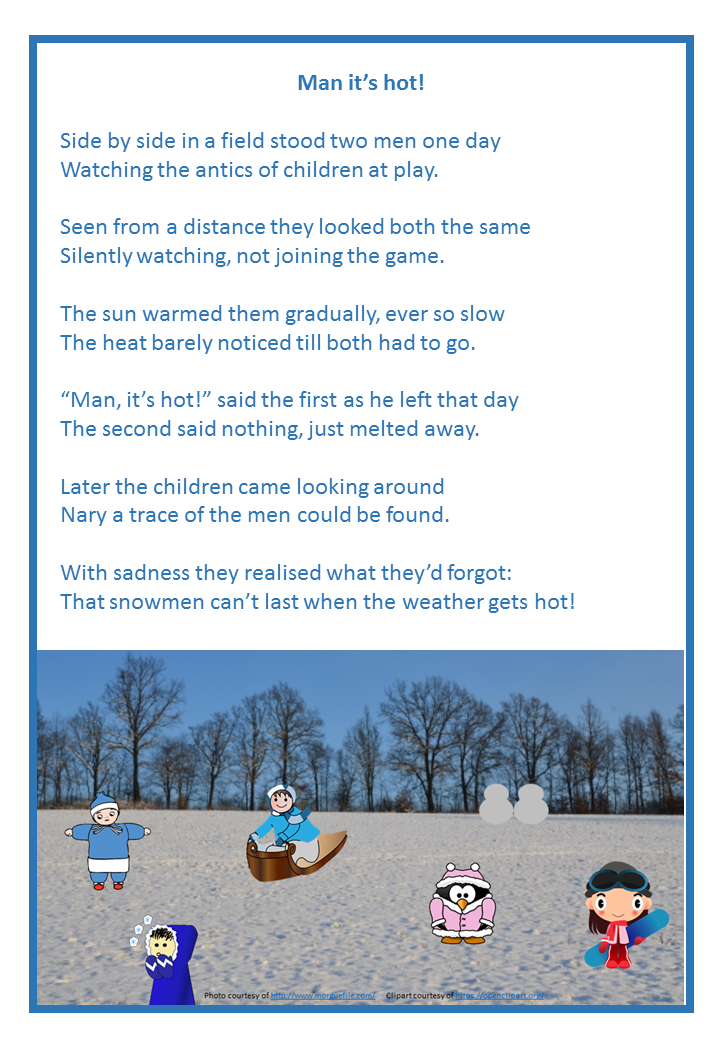
    It is this thinking that has led to me my flash response to the challenge set by Charli Mills at the Carrot Ranch this week to In 99 words (no more, no less) write a story that includes the phrase, “Man, it’s a hot one.” I hope my contribution is a little more environmentally friendly and suitable for young children than boiling frogs.

    Man it's hot

    Thank you

    Thank you for reading. I appreciate your feedback. Please share your thoughts about any aspect of this post or flash fiction.


  • Are you game?

    This week at the Carrot Ranch Charli Mills is talking about childhood games and has challenged writers to In 99 words (no more, no less) write a story that involves a children’s game or rhyme. I think she chose this topic just for me. Thank you, Charli.

    I love games and am a strong believer in the use of games to enhance learning. I have memories of playing games that span my lifetime, from early childhood until the present, and have visions of playing games far into the future.

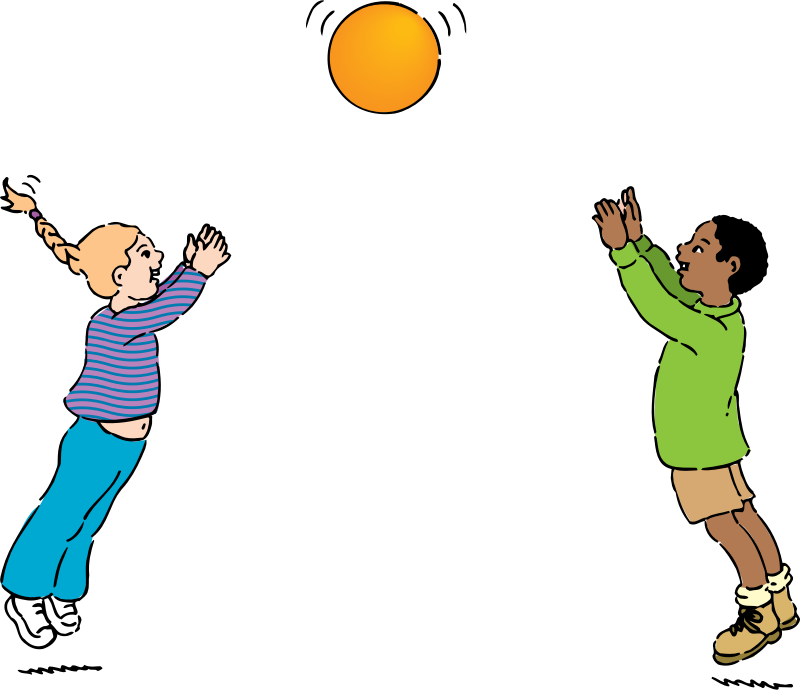
    Johnny Automatic, cartoon of a girl and boy playing with a ball https://openclipart.org/detail/721/playing-ball
    Johnny Automatic, cartoon of a girl and boy playing with a ball https://openclipart.org/detail/721/playing-ball

    One of my earliest memories of an organised game was of “Drop the hanky” played at a birthday party. I was about five years old at the time. I think that perhaps, until this event, I had only ever played imaginative games with my brothers and sisters. I was obviously not familiar with the rules or the ethos of the game. I’ll let my flash (non-) fiction explain.

    Plum pudding

    We sat in the circle chanting,

    “I wrote a letter to my love and on the way I dropped it.”

    “It” skipped around the outside, waving a handkerchief.

    “One of you has picked it up and put it in your pocket.

    Not you. Not you. Not y-o-u!”

    Suddenly “It” was running and children were scrabbling behind them.

    “Run,” they called.

    Then “It” was beside me.

    “Plum pudding!” they all screamed hysterically.

    The adult pointed to the centre of the circle. “We’ll have you for dessert,” he grinned.

    I cried, wondering what it would be like to be eaten alive!

    © Norah Colvin 2015
    © Norah Colvin 2015

    Obviously I was traumatised for the memory to be so vivid and almost nightmare-like since the memory ends abruptly with the fear. Obviously I wasn’t eaten for dessert, I survived the trauma and, to complete the fictional narrative, I guess you could say “I lived happily ever after.”

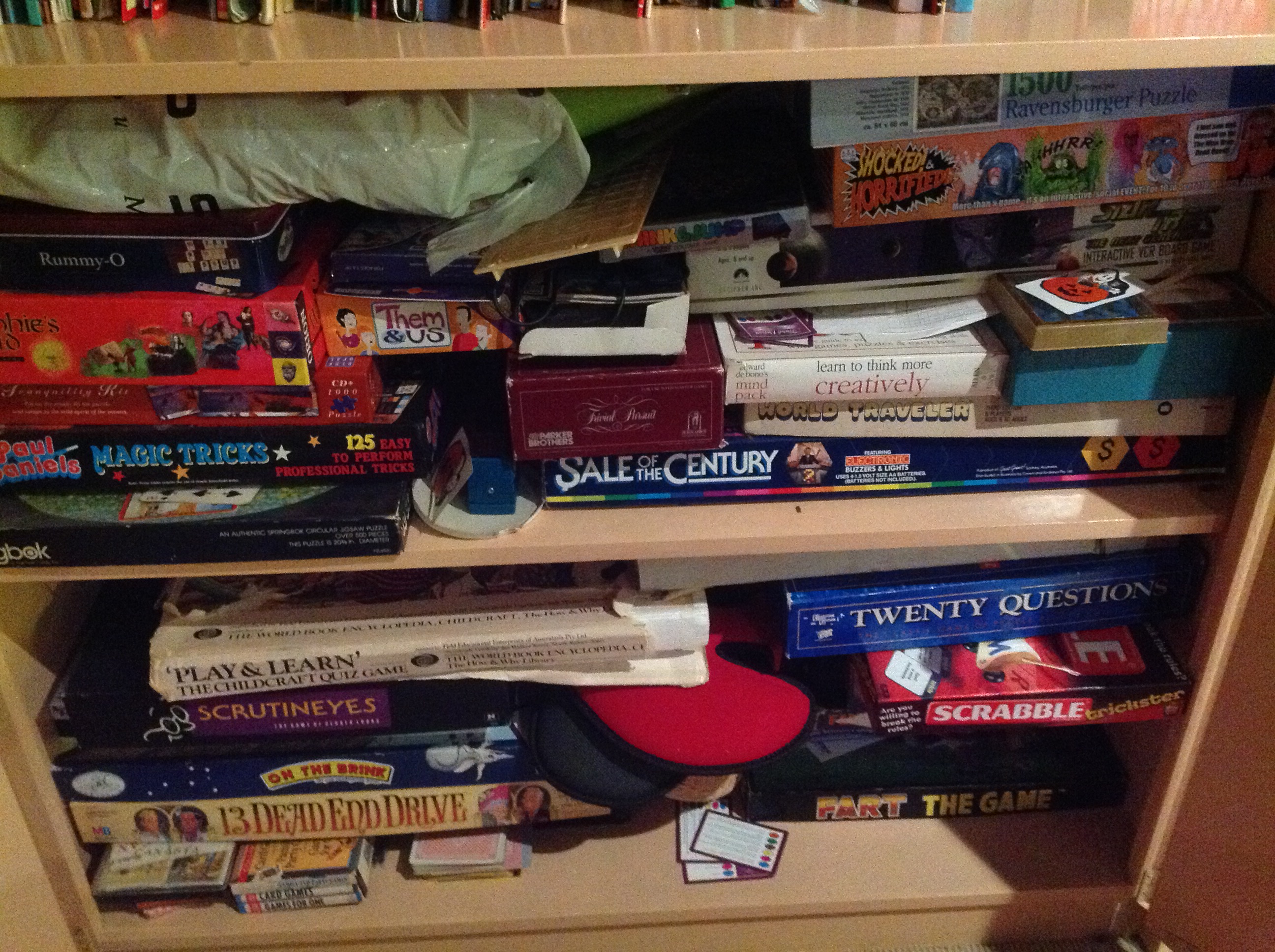
    But games don’t need to be traumatic. Games are better when they are fun; and I have many more memories of having fun with games than I do of being traumatised by them. Some of my “best” memories are of the laughs shared playing games like “Balderdash” and “Billionaire” when we (hub, son, daughter and partners) set aside traditional holidays for playing games together as a family. My house may have shelves laden with books, but they also have cupboards bursting with games.

    © Norah Colvin
    © Norah Colvin

    We didn’t always play purchased games. Sometimes we made up our own. It takes some skill in problem solving to think up a new game that will be fun to play with just the right amounts of challenge and competition, and an equal chance of “winning”, if there is a winner. Games without a winner, played for the fun of playing, are just as enjoyable.

    I have always included games in my class program. As well as being fun, if carefully chosen they can also progress learning. Games can be played at the beginning and conclusion of sessions; at transition times to reenergise, refocus and refresh; and as part of the teaching/learning program with whole class, small group or individual participation for targeting practice of particular concepts.

    One obvious benefit of playing games is the development of social skills such as:

    • Sharing
    • Taking turns
    • Cooperation
    • Dealing with competition
    • Accepting a loss
    • Accepting a win graciously

    In their book “A New Culture of Learning: Cultivating the Imagination for a World of Constant Change”, Douglas Thomas and John Seely Brown talk about ““arc of life” learning, which comprises the activities in our daily lives that keep us learning, growing and exploring.” They say, “Play, questioning, and — perhaps most important — imagination lie at the very heart of arc-of-life learning.”

    Throughout the book they talk about the importance of collaboration in engaging online in multi-player games and say that When understood properly . . . games may in fact be one of the best models for learning and knowing in the twenty-first century . . . Because if a game is good, you never play the same way twice.

    monopoly

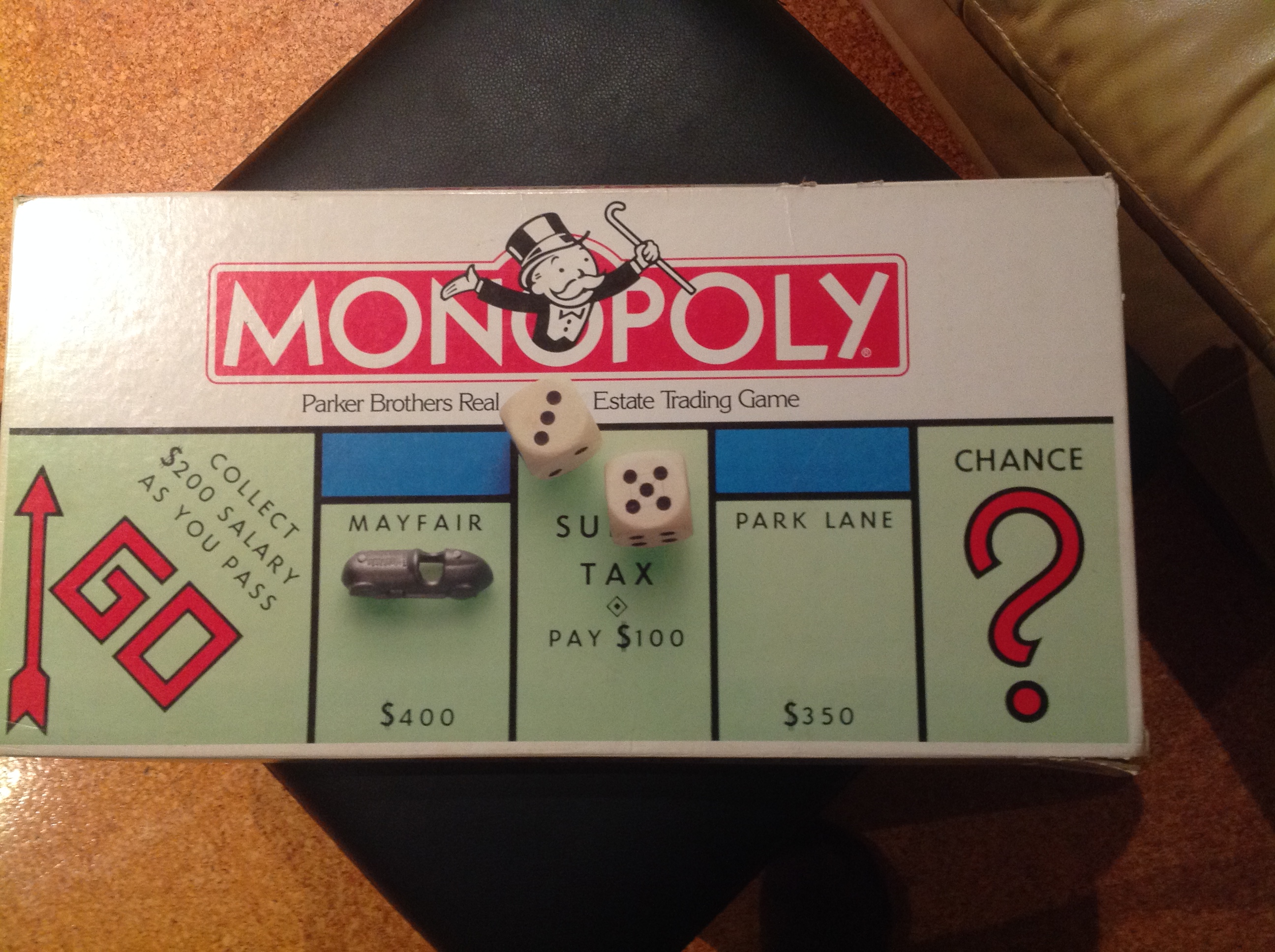
    Robert Kiyosaki in his book “Why “A” Students Work for “C” Students and Why “B” Students Work for the Government” talks about the importance of learning through games and explains how he learned, and was inspired to learn more, about finance from playing “Monopoly”. He says that Games are better teachers than teachers.” While I prefer to not agree with that statement in its entirety (I don’t even like playing Monopoly), I could understand his reasons for making it.

    Rarely a day would go by that at least one game wasn’t played in my classroom. We would play games in literacy groups that required children to read and think critically. We would play games in maths groups to practice skills in fun ways or to solve problems cooperatively. We would play games in science to try out ideas or research information. Some of the games involved physical as well as mental activity. Some were played with the entire class, and some on their own.

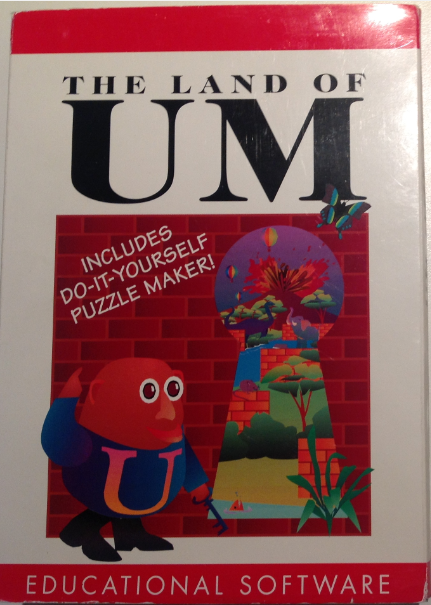
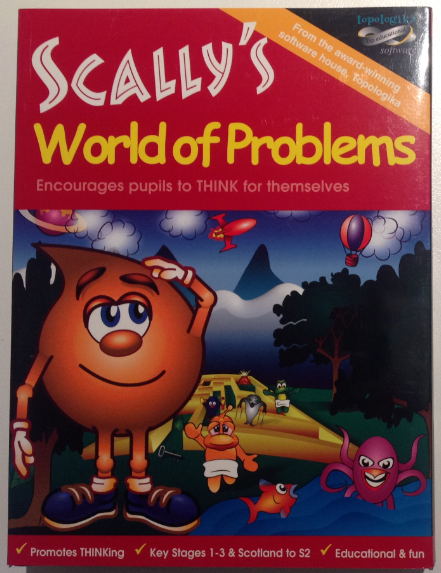
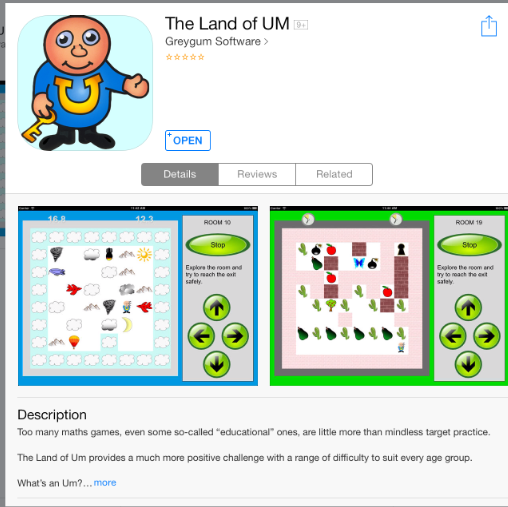
    One game we used in maths groups as well as an activity in the last few minutes of the day was a problem solving game that I was involved with from its inception, The Land of Um or, as it is known in the UK, Scally’s World of Problems. (Also available as an app.)

    http://www.greygum.com.au/nebula/index.php/the-land-of-um

    Scally


    When I was asked for an idea for a program, I suggested something that required children to explore to find out “what happens if” and “how things work”, much as they learn from their exploration of the “real world”. I also suggested that what they learn be consistent and apply at the next level. From that small seed and through the collaboration and synergy of a small group of creative people the “Land of Um” was born.

    Because, in my recollections anyway, it was “my” idea, I am very proud of “Um” and enthusiastic about its potential to encourage children to develop the thinking skills involved in solving problems.

    Um app

    In my class the children worked enthusiastically and collaboratively in small groups on an interactive whiteboard, taking turns to control the “Um” while working together to find the solution to each puzzle. As the level of difficulty increased the children needed to plan ahead, to visualise steps and predict what would happen and the effects of different actions. At each new level and in each new world, while the basics remained consistent, there was always something different to learn and explore. The children never tired of the using the program and were always eager to be the one to suggest the solution to the next problem. It was/is a joy to know that I had a part to play in the design of this program that has so many benefits to learners, not least of which is the fun of working together to solve problems.

    How significant are games in your life? What special memories do you have?

    If you are interested, there are many more stories about games to read on Charli’s blog.

    Thank you

    Thank you for reading. I appreciate your feedback. Please share your thoughts on any aspect of this post or flash fiction.


  • Five Photos Five Stories — Day five

    Back to Day one (books) and introduction to the challenge

    Back to Day two (writing)

    Back to Day three (Break out)

    Back to Day four (My retirement jetski)

    Happy birthday to me!

    I had a wonderful day today. It was both my birthday and my final day of work for Education Queensland, my on-again off-again employer for more than half of the forty+ years since I began my teaching career.

    My work colleagues spoiled me with kind words and wishes and generous gifts. We celebrated with lunch yesterday and morning tea today and shared stories, laughs and wishes for each other for the future. They made me a beautiful photo book filled with their thoughts and wishes. I think it is my new favourite book and will remain so for a very long time.

    It was quite overwhelming to have such a demonstration of appreciation for my contribution to the team, especially when my intention was just to flutter out quietly as if carried on butterfly wings. They are a wonderful group of people and I was very fortunate to have the opportunity of working with them. They definitely belong to S.M.A.G. and I showed my appreciation for them by having some magnets made up to tell them so.

    For morning tea I took along a marble mudcake in remembrance of the marble cakes my mother used to make for my birthdays. I intended to post a photo of the cake but got carried away chatting and totally forgot until it was almost all gone.

    However I have something more special to share.

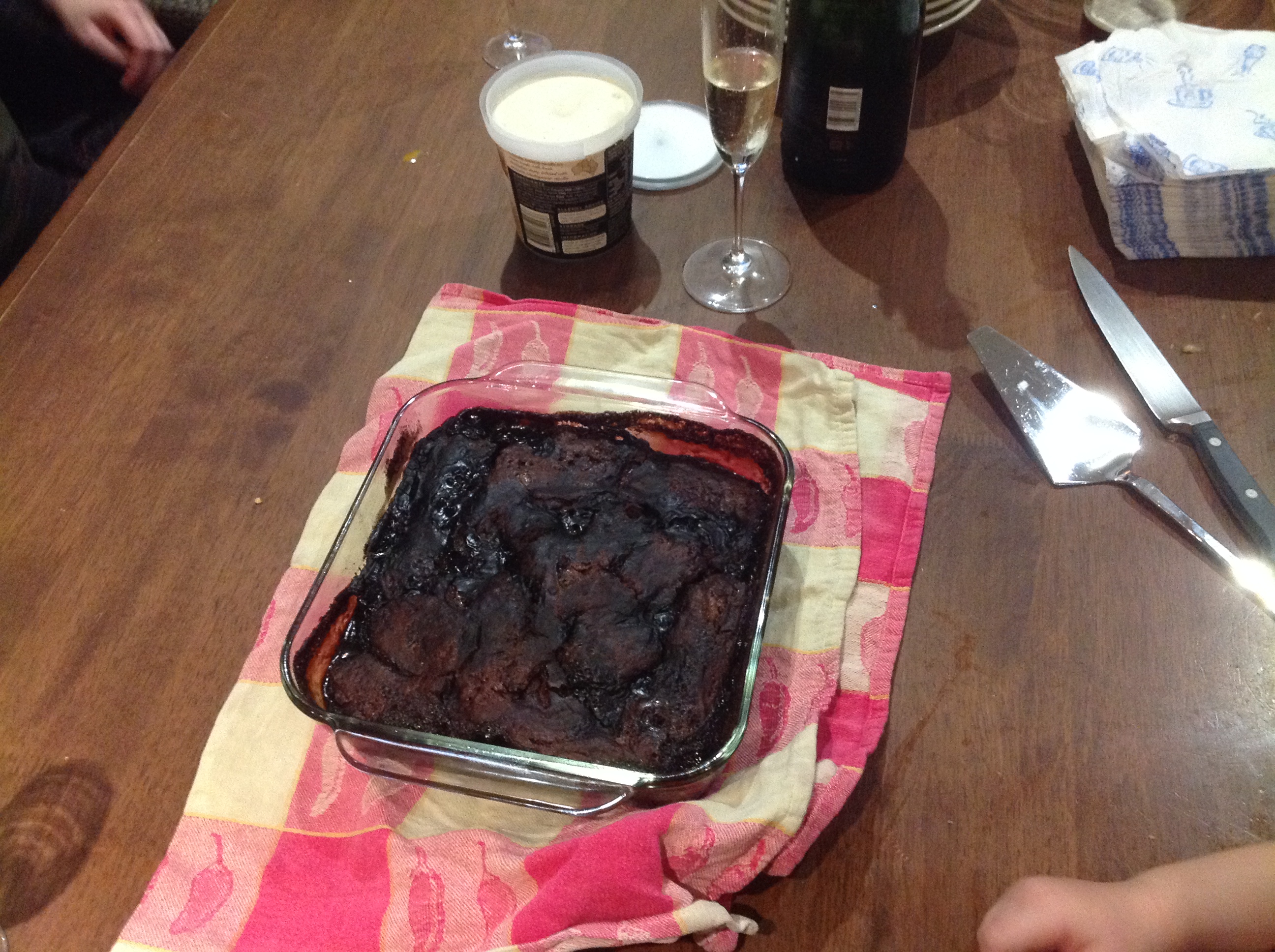
    I had dinner with my family at the home of my son and his partner and children. Bec and Glenn were there, and Bob, and my sister Ruth. We had Thai take away, one of my favourites. But what was very special was that Rob and the children made a chocolate self-saucing pudding for dessert. It is Rob’s speciality. I’m sorry there’s not enough to share, but I assure you it was delicious!

    Rob's self-saucing pudding 18 June 2015
    Rob’s self-saucing pudding 18 June 2015

    Of course my family spoiled me too with wonderful gifts and birthday wishes.

    This is my last post in a series of five in response to a challenge by Geoff Le Pard. Thank you, Geoff. I enjoyed the challenge though I wrote more than I thought I would.

    My week has been extremely busy with things to organise for my last week in this job as well as respond to this challenge so I have not kept up with reading posts and responding to comments on mine. Hopefully I’ll be able to remedy that real soon. Thank you for your patience.

    I invite my sister Ruth Irwin to participate in this challenge. Ruth is just getting started with blogging, inspired by the flash fiction challenges by Charli Mills at the Carrot Ranch, and may find photos easier than text at this stage with just a phone for posting.

    The rules of the Five Photos, Five Stories Challenge are:

    1) Post a photo each day for five consecutive days.
    2) Attach a story to the photo. It can be fiction, non-fiction, poetry, or a short paragraph. It’s entirely up to the individual.
    3) Nominate another blogger to carry on the challenge. Your nominee is free to accept or decline the invitation. This is fun, not a command performance!

    Thank you


    Thank you for reading. I appreciate your feedback. Please share your thoughts.


  • Five Photos Five Stories — Day four

    Back to Day one (books) and introduction to the challenge

    Back to Day two (writing)

    Back to Day three (Break out)

    My retirement jetski

    My retirement jetski
    My retirement jetski

    Geoff Le Pard threw me a challenge to post five photos and five stories over five days. He is probably just as surprised as I am that I took him up on it, especially as this week is particularly busy and significant.

    Tomorrow I finally break up with a relationship that has been on-again-off-again for over forty years. Tomorrow is my last day working for Education Queensland. While I then become “officially” retired, some of you may know that I am not very fond of that “R” word and prefer to think of my life as taking a redirection.

    In a couple of weeks’ time I commence another part-time job at the University of Queensland with the exact number of hours for me to remain “officially” retired, but nominally “working part-time”. The remainder of the week I will continue to write and work towards fulfilling my goal of establishing an online store of educational resources. This is where the jetski comes in.

    There are many expenses involved with preparing content for the website including getting work illustrated, having the website designed and, hopefully, if I can figure out a way, having interactivity added to some resources. Deciding how much cost is acceptable is difficult when there is no guarantee of ever getting any return, and often the time I spend tapping away on my computer keyboard when I could be doing other things comes into question.

    The fact is I love tapping away on my computer keyboard writing works of my choosing, and the expenses involved are necessary in order to make my “creations” available to others through a website. If I were to choose a jetski, a sports car or an around the world cruise as a retirement gift for myself, as many do, and spend hours each day riding the waves or the roads, no one would question my choice of activity or the cost of the initial purchase or ongoing maintenance. They would be pleased that I was having fun, enjoying my later years. Well, for the moment at least, writing is my pleasure and I (try to) justify the expense by calling it my “jetski”.

    As my work targets an early childhood market, illustrations are an essential accompaniment to my work. When I first registered my business and domain name, my (graphic designer) niece designed my logo and beautiful banner, which you see at the top of my blog, and produced illustrations for some stories. Recently I have had other illustrations done by artists from 99designs so I am starting to make headway in that direction.

    Kari Jones (ArtbyJonz), who did the S.M.A.G. badge has produced illustrations for two stories. Here is a sneak peek at one illustration from each:

    ArtbyJonz ©Norah Colvin 2015
    ArtbyJonz ©Norah Colvin 2015
    ArtbyJonz ©Norah Colvin 2015
    ArtbyJonz ©Norah Colvin 2015


    and sneak peeks of illustrations for stories by Sketcherlady, Goetia and Tyohermawan, to whom I awarded the first contest.

    sketcherlady ©Norah Colvin 2015
    sketcherlady ©Norah Colvin 2015
    Goetia ©Norah Colvin 2015
    Goetia ©Norah Colvin 2015
    tyohermawan ©Norah Colvin 2015
    tyohermawan ©Norah Colvin 2015

    I have been very happy working with each of these designers. They have all been very helpful and accommodating and worked hard to produce illustrations to match my requests. I am happy to recommend any of them if you are looking at getting some work illustrated.

    The next step is to speak with a web designer. I must say I’m a bit fearful of the cost, but hey, it’s my jetski.

    What seems to be more problematic at the moment is adding interactivity to some resources. PowerPoint has some facility but not enough. I looked at another program recently which promised any interactivity I could imagine. But unfortunately the program designers had not imagined what I had! I discussed some of my requirements with a friend who is learning to code and he thought it would even be difficult to code what I want. Since these open-ended interactions are to be a point of difference for me, if I can’t have them, I may need to trade-in my jetski on something completely different. Maybe a novel? (That must be pretty easy, eh Geoff?) I’m not sure I’m ready for that. If you have any suggestions about adding interactivity to resources I’d love to receive them please.

    I nominate my lovely fellow local Queensland bloggers to take up this Five Photos Five Stories challenge should they so wish:

    Irene Waters who writes memoir and blogs at Reflections and Nightmares and already shares many beautiful photos and stories;

    Desley Jane, a girl with a camera who blogs at Musings of a Frequent Flying Scientist; and

    Marigold Dicer who blogs at Versus Blurb but who has popped off the scene temporarily while she completes what used to be called “prac” teaching when I went to college.

    Please be aware that your participation is completely voluntary. I know each of you already post frequent photo stories. However if you choose to participate, I hope you enjoy the challenge as much as I have. 🙂

    The “rules” of the Five Photos, Five Stories Challenge are:

    1) Post a photo each day for five consecutive days.
    2) Attach a story to the photo. It can be fiction, non-fiction, poetry, or a short paragraph. It’s entirely up to the individual.
    3) Nominate another blogger to carry on the challenge. Your nominee is free to accept or decline the invitation. This is fun, not a command performance!

    Thank you

    Thank you for reading. I appreciate your feedback. Please share your thoughts.


  • Five Photos Five Stories — Day three

    Back to Day one (books) and introduction to the challenge

    Back to Day two (writing)

    Break out!

    With this post I am going to “kill two birds with one stone” (though why I would want to kill any birds is beyond me).

    I am posting a Day three photo and story in response to the challenge set by Geoff Le Pard, and responding to the flash fiction prompt set by Charli Mills at the Carrot Ranch to In 99 words (no more, no less) write a story about an animal rescue.


    My children had pet-deprived childhoods. It could hardly have been any other way. Both their parents also had pet-deprived childhoods. I know all the theory about pets helping to develop responsibility, caring for others and compassion and I’m all for it. But with that responsibility comes restriction, and I’m not all for that. For me, a pet-free childhood led to a pet-free adulthood. I’m not certain that I am any less responsible, caring or compassionate as a result.

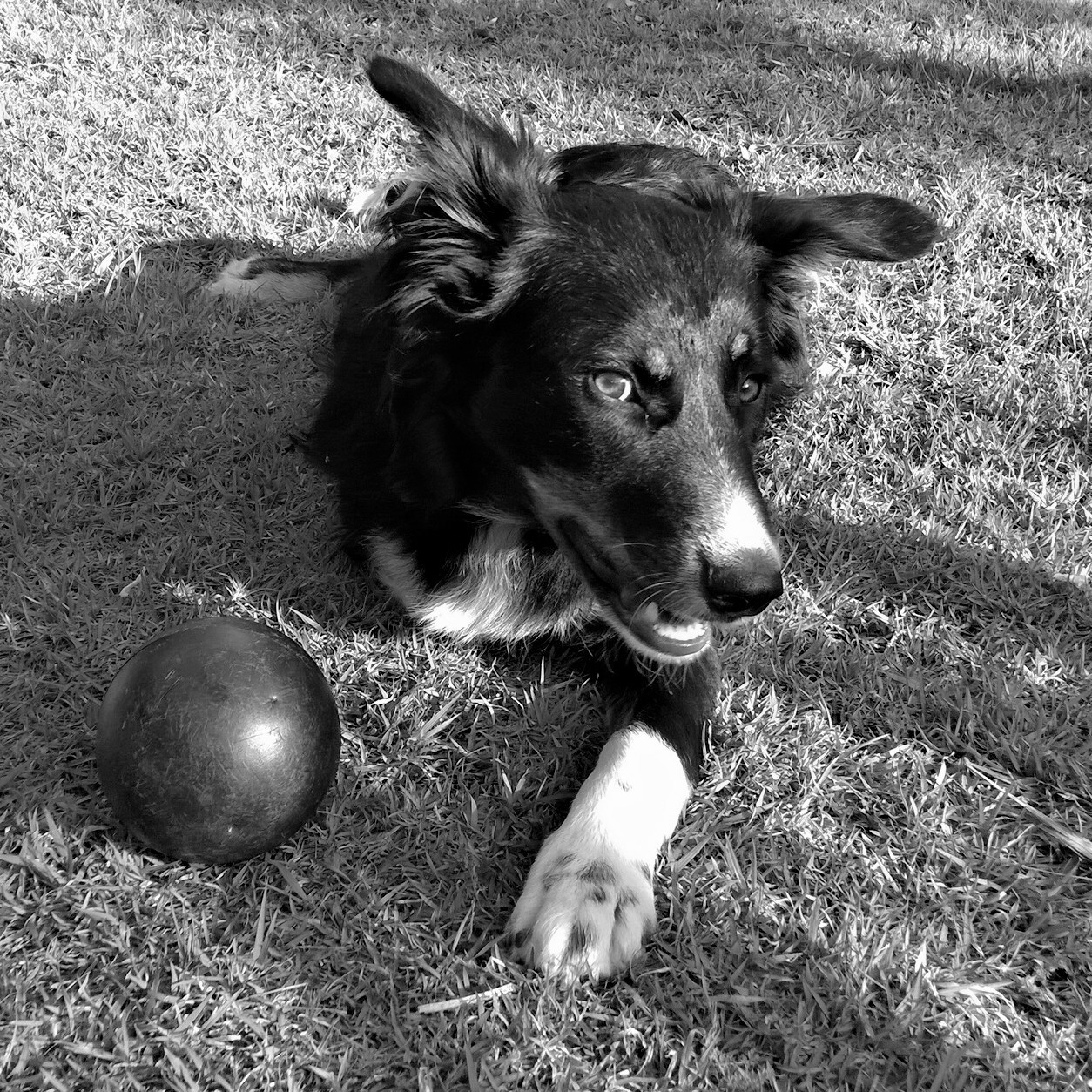
    While Rob may have had the occasional goldfish or Siamese fighting fish and Bec may have had guinea pigs, mice and rats at different times they never got over the deprivation of not having a real pet, of not having a puppy. As soon as the opportunity arose, they each adopted their own puppy. This is a photo of Bec’s puppy.

    My flash fiction deals with a situation in which a rescue is required. I realise that once again I have gone dark rather than light. Apologies. I hope you enjoy it.

    Break out

    Your wide-open eyes fix on me through bars, imploring and accusing at the same time.

    Why am I here? Don’t leave me! I don’t – want – to be here! I want – to go – home!

    My heart tightens in a vice-like squeeze. My palms sweat and hands tremble.

    I meet your stare with overwhelming hopelessness and helplessness.

    I didn’t know . . . I thought . . . I never meant . . . I thought it would help. 

    They close the door, turn the key and lead you away.

    “Damn those rules!” I scream silently, futilely planning your rescue.

    ***

    Today I nominate the lovely compassionate Bec who blogs intermittently at There’s No Food and engages in discussions with challenging suggestions and new ideas in comments on my blog while working diligently towards completing a PhD in Environmental Management.

    ! also nominate the wonderful awe-inspiring multi-tasking Charli Mills to take up the challenge if she so wishes. As well as being a very talented writer and generous supporter of my blog, she also posts beautiful photo stories on a second blog Elmira Pond Spotter.

    The rules of the Five Photos, Five Stories Challenge are:

    1) Post a photo each day for five consecutive days.
    2) Attach a story to the photo. It can be fiction, non-fiction, poetry, or a short paragraph. It’s entirely up to the individual.
    3) Nominate another blogger to carry on the challenge. Your nominee is free to accept or decline the invitation. This is fun, not a command performance!

    Thank you

    Thank you for reading. I appreciate your feedback. Please share your thoughts about any aspect of this post or flash fiction.


  • Five Photos Five Stories – Day two

    Back to Day one and introduction

    What am I?

    One may wonder why I have responded to Geoff Le Pard‘s challenge almost immediately when there are other invitations that have lain opened but unanswered for longer than I like to admit. For example, some months ago Anne Goodwin tagged me in a writing process blog hop. She shared the what, how and why of her writing process and invited me to share mine. She applied no pressure or time constraints and neither nudged me to comply nor chastised me for not having done so.  Not quite as long ago Sherri Matthews tagged me in a work space blog hop. She shared beautiful images and descriptions of her delightful Summerhouse writing space and invited me to share mine. Sarah Brentyn then shared some questions for writers that I hinted I might answer, but haven’t yet.

    Why the procrastination?

    1. I’m still figuring out what kind of writer I am and how to describe my process.
    2. My writing space isn’t all that exciting. It’s a just a laptop sitting on a desktop that is cluttered with books and other paraphernalia waiting to be organised or dealt with, and surrounded by shelves filled with more of the same; not a bad analogy to my writing process perhaps.
    3. I’ve been working in other quadrants, dealing with ‘easier’ stuff as it arises.

    As with Geoff’s challenge, responses to these blog hops are not compulsory and there is no set time-frame but I do wish to, and do intend to, answer them. Thank you Anne, Sherri and Sarah for your patience. I will get there. Eventually.

    My writing space 14 May 2015
    My writing space 14 May 2015

    My procrastination is in part due to the way I view myself as a writer.

    I find it difficult to define the “type” of writer I am. That I am a writer is true. But what kind? I wonder if I am a writer without a label, without a box?

    Perhaps if you can help me answer this I’ll be more confident about joining in conversations about writing.

    I am not a novelist, not a poet, not a biographer or an auto-biographer, not a picture book writer . . . I am an educational writer, incorporating something of each genre.

    I remember doing a psychometric test at some past time. The results suggested that a desire to be everything to everybody would be my undoing. Perhaps that is also an issue with my writing?

    Sometimes when asked by other writers what type of writing I do, for want of another label I refer to myself as an educational writer. I immediately feel a shrinking away as if educational writing isn’t ‘real’ writing and I’m perhaps not a “real” writer.

    “Oh educational writing,” they judge, “that’s so prescriptive. It’s not creative.”

    Sure I have done my share of prescriptive writing. The “writing” for which I have been employed for the past three years is definitely prescriptive – more cross the “t”s and dot the “i”s without a modicum of creativity; and as my list of publications shows, I have written workbooks for other publishers, “prostituting” myself one kind-hearted friend suggested. But there are worse ways to earn a living, right?

    I don’t consider my self-initiated educational writing as prescriptive. Most of what I write is designed to encourage thinking, problem solving, creativity, interest in a variety of topics, or develop literacy and numeracy skills, but definitely not in a structured, skills-oriented, prescriptive approach. I write fiction, non-fiction and poetry; and open ended materials that encourage children to question. I love to add a touch of humour where possible and mostly aim for engaging materials that motivate thinking and learning.
    My current writing schedule involves writing content for this blog and for an in-progress online store of early childhood educational resources.

    So, what sort of writer am I?

    There is one I know I am not. I am not a songwriter.

    I nominate Anne Goodwin, Sherri Matthews and Sarah Brentyn to take up this Five Photos Five Stories challenge if and when they so choose. But they need to be aware that I require no more of them than they have expected of me!

    The “rules” of the Five Photos, Five Stories Challenge are:

    1) Post a photo each day for five consecutive days.
    2) Attach a story to the photo. It can be fiction, non-fiction, poetry, or a short paragraph. It’s entirely up to the individual.
    3) Nominate another blogger to carry on the challenge. Your nominee is free to accept or decline the invitation. This is fun, not a command performance!

    Thank you

    Thank you for reading. I appreciate your feedback. Please share your thoughts about any aspect of this post.

  • Five Photos Five Stories – Day one

    For the love of books

    This week I was surprised to be nominated by, writer extraordinaire, Geoff Le Pard in a Five Photos Five Stories challenge. Geoff blogs at TanGental where he shares numerous and beautiful photos of his garden, family, travels and adventures. He writes an eclectic assortment of prose and poetry, memoir and fiction, with content both challenging and humorous. He also posts at the speed of light with at least one post each day. I can understand why the challenge would appeal to Geoff.

    I’m not like that. I tend to stick to my routine of two posts each week and write mainly expository text about education with a response to a flash fiction prompt by Charli Mills thrown in. I rarely write explanations of or stories about photos and mostly use photos to support and add interest to the page. Why would Geoff nominate me?

    Well it seems Geoff must have known something about me that I didn’t, as I have decided to throw caution to the wind and join in the challenge.

    The rules of the Five Photos, Five Stories Challenge are:

    1) Post a photo each day for five consecutive days.
    2) Attach a story to the photo. It can be fiction, non-fiction, poetry, or a short paragraph. It’s entirely up to the individual.
    3) Nominate another blogger to carry on the challenge. Your nominee is free to accept or decline the invitation. This is fun, not a command performance!

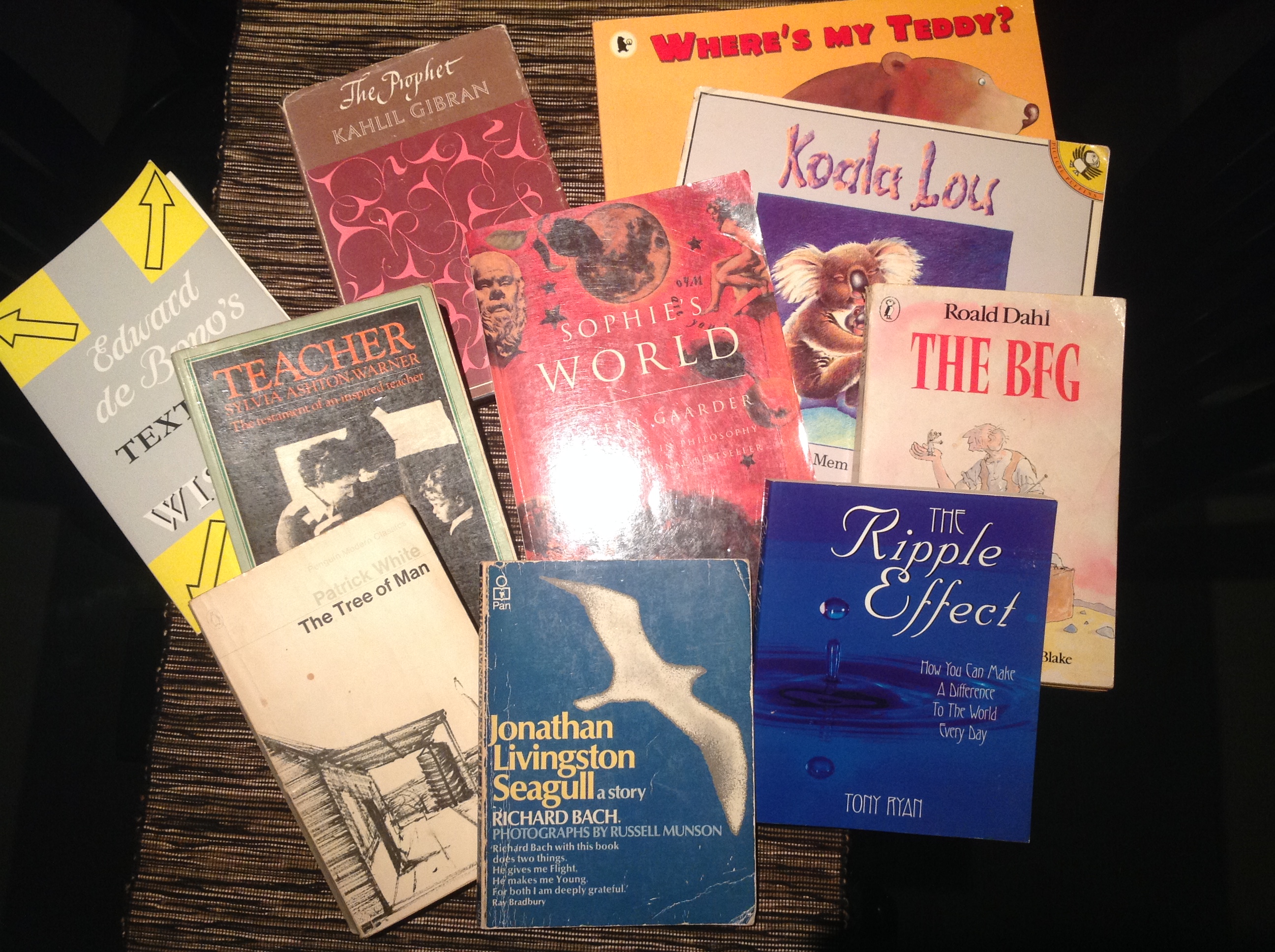
    For my first photo I have chosen, and you won’t be surprised, books:

    books

    These are just a few of my favourites. As you can see I have chosen a range including picture books and chapter books for children and both fiction and non-fiction titles for adults. There are others that should have been there but I could not fit my entire collection into one photo!

    Books have always been an important part of my life and I think a love of reading is one of life’s greatest pleasures. My love of books and reading is one of the reasons, if not THE reason I feel so passionately about education and the teaching of literacy. Sharing a learner’s excitement at becoming literate is both an honour and a joy. I have been privileged to share that excitement with many children during my teaching career, and of course with my own two children who both learned to read well before starting school.

    I have written about the importance of reading many times before, including here, here, and here.

    For this post, and for this photo, I will share ten totally random recollections of books and reading from my younger years.

    I remember:

    • books as gifts for Christmas and birthdays
    • an expedition to the council library, a six-kilometre walk there and back, each Saturday afternoon for an armful of books to read during the week
    • being deaf to the world when totally absorbed in a book for hours on end (particularly so when there were jobs to be done)
    • the eagerness of wanting to get to the end of a book and the sadness and reaching the last page
    • the excitement of finding the next book in a series or by a favourite author
    • marvelling at words and phrases for the imagery or feelings they evoked
    • enjoying an author’s style and trying to emulate it by writing and writing and writing, and wishing to one day be an author too
    • the smell of new books
    • tracing the embossed lettering on the hardcover when the jacket was removed
    • being fiercely protective of my books and having a great dislike of seeing them torn or marked
    • the joy of ownership

    And now I nominate the lovely Michelle James who blogs at Book Chat to take up this challenge if she so wishes. Her love of books is at least as great as my own!

    Thank you


    Thank you for reading. I appreciate your feedback. Please share your thoughts about any aspect of this post.

  • Revisiting The Very Hungry Caterpillar

    Recently, in a post introducing the idea of S.M.A.G. (Society of Mutual Admiration and Gratitude), I reflected upon my blogging journey and the gradual growth of readership and development of a S.M.A.G. over time. With this reflection came the realisation that many have missed earlier posts. That realisation, along with a comment by Sarah Brentyn, prompted me to share a few of my favourites.

    The Very Hungry Caterpillar

    The first posts I will revisit are from a series about using Eric Carle’s picture book The Very Hungry Caterpillar for educational purposes in an early childhood setting.

    The series of four posts;

    • explores benefits of reading picture books to children
    • questions the place of factual information in fictional texts, and
    • suggests the importance of teaching critical literacy from a young age.

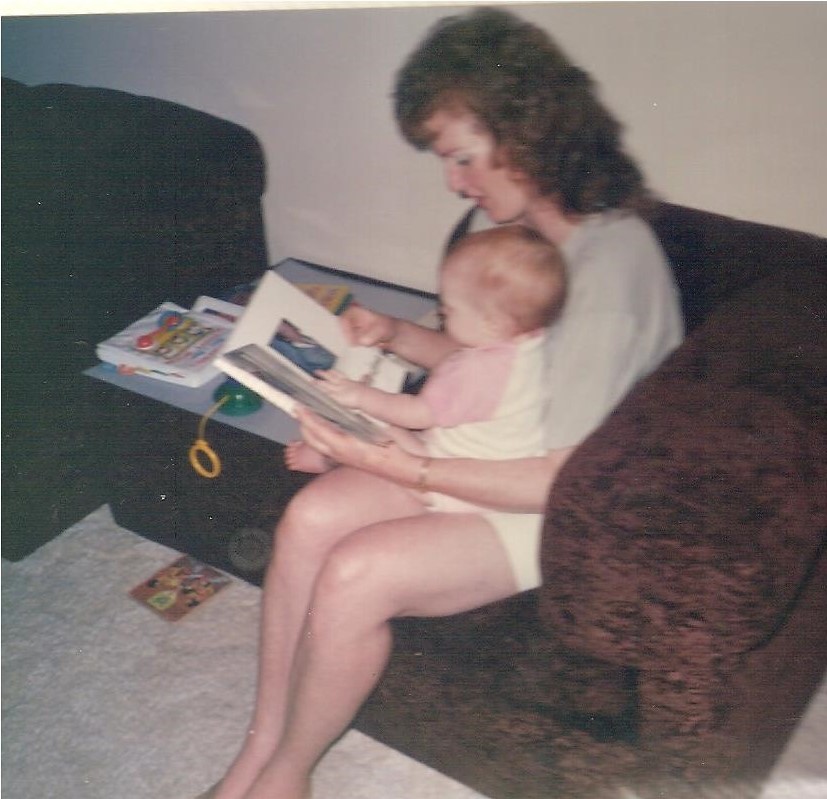
    Nor and Bec reading

    I will provide a brief overview of each post. I would be delighted to have you  follow the links to read the posts in full.

    Searching for meaning in a picture book — Part A

    In this post I explained that sharing picture books with children has many benefits, including:

    At home:

    • It can help strengthen the parent-child bond, becoming a special time of togetherness and of sharing stories and ideas.
    • It has a very positive effect upon their learning, helping them develop language, knowledge of print and books, and exposes them to new ideas and concepts.

    8-12-2013 7-38-33 PM

    In early childhood classrooms, The Very Hungry Caterpillar provides opportunities for work in many subject areas including:

    • Literature appreciation
    • Reading
    • Maths
    • Visual arts, and
    • Philosophical inquiry, but not Science (as I will explain later)


    Searching for purpose in a picture book – Part B

    In this post I discuss some purposes for using picture books and raise some questions about their content.

    A sampling of purposes:

    • encourages a love of reading and books
    • develops vocabulary and knowledge of language
    • provides a link between the language of home and the language used in the wider community and in education
    • supports beginning readers
    • inspires imagination
    • provides opportunities to discuss feelings, emotions, ideas, responses
    • develops feelings of empathy, identification, recognition, hope
    • instils an appreciation of art

    spiderswirl2

    Some questions:

    Do fictional picture books have a role, and do picture book authors have a responsibility, in imparting factual information in their books?

    Does it matter:

    • that, although lions don’t live in jungles, they are often referred to as “King of the jungle” and appears in that setting in many stories?
    • if animals that don’t co-exist, for example penguins and polar bears, appear in stories together?
    • if the portrayal of animals in stories is not anatomically correct, for example spiders shown with legs joined to their abdomens rather than cephalothoraxes?

    Do errors such as these influence children’s understanding of the world?

    How should adults handle the misinformation when sharing books with children?


    Searching for truth in a picture book – Part C

    In this post I refer specifically to inaccuracies in The Very Hungry Caterpillar and the pervasiveness of the misconceptions, if not totally attributable to the book, then at least in part. I suggest how acknowledging the inaccuracy can help develop critical literacy.

    In his book Eric Carle writes that

    “He (the caterpillar) built a small house, called a cocoon, around himself. He stayed inside for more than two weeks. Then he nibbled a hole in the cocoon, pushed his way out and . . . he was a beautiful butterfly!”

    Monarch butterfly

    However, as this (hopefully correct) information from the Australian Museum shows, butterflies do not spin cocoons around themselves. Moths do. Some butterflies and skippers do form a silken shelter, but not a cocoon as in Carle’s picture book.

    Unfortunately many articles found in an internet search share the same misinformation. I wonder how many adults grew up believing what Carle shared through his picture books. Even teachers have been surprised to learn that butterfly caterpillars do not spin cocoons.
    In the original post I share some lovely videos related to butterfly and moth metamorphosis. It is worth taking a peek at them.

    Does it matter if children (and adults) think that butterflies hatch out of cocoons? Eric Carle didn’t seem to think so. Do you?

    Finding power in a picture book – the main event

    In this post I argue that The Very Hungry Caterpillar has no place in a science lesson because of the misinformation contained therein: caterpillars do not eat many different foods and butterflies do not come out of cocoons.

    ryanlerch_thinkingboy_outline

    The greatest value of the book is as a tool for teaching critical literacy; for teaching children that just because something is in print, doesn’t make it true. It is also important to realise that misinformation is not restricted to picture books, and that they need to question all sources of information for the author’s credentials and purpose in writing.

    I suggest that teachers and parents:

    • point out inaccuracies and inconsistencies
    • encourage children to evaluate what they are reading and hearing against what they already know
    • support children to verify the source of the information and to check it against other more authoritative/reliable sources
    • help children to recognise that every author has a purpose and to identify that purpose
    • invite children to ask questions about what they are reading and to interrogate the content
    • encourage them to question, question, question.

    Eric Carle says “If we can accept giants tied down by dwarfs, genies in bottles, and knights who attack windmills, why can’t a caterpillar (sic) come out of a cocoon?”


    What do you think? Do picture book authors have a responsibility to be accurate? Is a butterfly coming out of a cocoon in the same realm as giants tied down by dwarfs? Would we accept a child hatching out of an egg? What parts of a story should be based in reality and which parts can be imagined?

     “Why can’t a butterfly come out of a cocoon?” asks Eric.

    Well, Eric, they just don’t.

    Thank you

    Thank you for reading. I appreciate your feedback. Please share your thoughts about any of issues I have raised in these posts.