Live Love Laugh Learn … Create the possibilities

Category: Alternative / non-traditional education

  • School Days, Reminiscences of Charli Mills

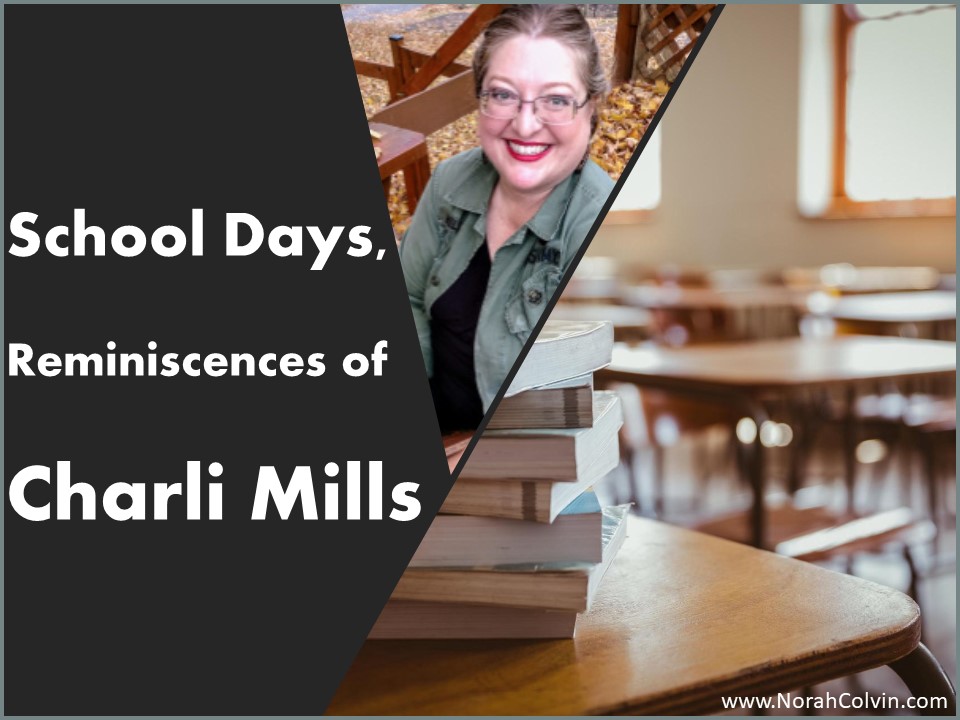
    School Days, Reminiscences of Charli Mills

    Welcome to the School Days, Reminiscences series in which my champion bloggers and authors share reminiscences of their school days. It’s my small way of thanking them for their support and of letting you know about their services and publications.

    First to share her reminiscences is Charli Mills, lead buckaroo at the Carrot Ranch where she challenges writers with a weekly flash fiction prompt and an annual flash fiction rodeo. She believes in the power of literary art to change lives and that it should be accessible to everyone. She encourages writers to find their voice in a supportive environment where everyone is welcome.

    I have known Charli for almost as long as I have been blogging and was among the first to participate in her flash fiction challenges when they began five years ago this month. I have rarely missed a week since. Charli’s support and encouragement of my writing and my work has been unfaltering, even when she was experiencing her own tough times, and I am extremely grateful for it. I don’t know how well I may have maintained my yet mindset without her.

    Before we begin the interview, I’ll allow Charli to tell you a little of herself:

    Charli Mills, a born buckaroo, is the award-winning goat-tying champion of a forgotten 1970s rodeo. Now she wrangles words. Married to a former US Army Ranger, Charli is “true grit” although shorter than John Wayne. She writes about the veteran spouse experience and gives voice to women and others marginalized in history, especially on frontiers. In 2014 she founded an imaginary place called Carrot Ranch where real literary artists could gather where she hosts a weekly 99-word challenge. She’s pursuing her MFA with SNHU, writing novels, and leading workshops to help writers with professional development.

    Welcome, Charli.

    Now let’s talk school. First of all, could you tell us where you attended school?

    Sacred Heart Catholic School (Hollister, California), Sunnyside Elementary (Hollister, California), Diamond Valley School (Woodfords, California), Douglas High School (Minden, Nevada), and Carroll College (Helena, MT).

    Did you attend a government, private or independent school?

    Sacred Heart was a private Catholic school, and so was Carroll College. I achieved kindergarten at one and a BA at the other. The other three were public schools. Diamond Valley was located next to the Woodfords Community of the Washoe Tribe. Our county was too small in population to warrant its own high school and the mountains cut us off from the nearest California option at Lake Tahoe so we were bussed into Nevada to Douglas High School, which was a horrible experience as we faced much prejudice as the “Alpine kids” even though not all of us were Native American.

    What is the highest level of education you achieved?

    To date, I’ve earned a Bachelor of Arts degree in English –Writing. However, I’m in the application process to pursue a Masters of Fine Art in Creative Writing.

    What work or profession did you choose after school and was there anything in school that influenced this choice?

    At Diamond Valley, in 7th-grade, Mr. Price made us write a spelling story once a week using the “prompt” of words from our spelling list. My stories were long and he encouraged me to write them longer. Then he asked me to read my stories aloud to the class every week, and I have loved reading my writing ever since. In high school, I struggled unless writing was involved. Ms. Bateman hit me hard with editing, but also taught me how to improve. She invited me to be on the newspaper team and I was the youngest member. By my senior year, I was co-editor. After high school I waited tables, worked road construction, and wrote for a daily newspaper, dreaming of going to college to be an archeologist and an author. Ten years later, I enrolled in a writing degree when my three young children started school. I often joked that I went back to kindergarten with them. My freelance writing took off while I was still in college. I never did become an archeologist and I worked 20 years in marketing before pursuing my author dreams, but my first novel will feature a character who is an archeologist. It’s all connected to my days at Diamond Valley School, and the skills I honed at Carroll College.

    What is your earliest memory of school?

    My earliest memory of school is being in trouble. I was highly imaginative and evidently, the nuns did not appreciate my drawings in textbooks. We lived on a ranch outside of Hollister California and my mother worked in town. She’d drop me off at a sitter’s and I’d walk to school every morning with the daughter who was in kindergarten, too. She never got in trouble. I recall wondering why I was so different and why the nuns didn’t like my freedom of expression. At Carroll College, I took an art appreciation class and wrote a paper on my theory of Greek influences on modern pornography. I worried I was going to get in trouble again for expressing my ideas, but the Jesuits loved it. I thought about sending that paper to Sister Margaret at Sacred Heart, explaining that I turned out fine, using my imagination.  Not sure she would agree!

    What memories do you have of learning to read?

    Books captivated me! I wanted to crack the code and would sit and pretend read. The nuns said I couldn’t read so the next grade placed me in remedial reading until the teacher caught me “pretend” reading a chapter book. She realized I wasn’t pretending. How I learned to read mystifies me. I couldn’t grasp the components, but I could read. Math was similar. I had the answers but struggled to show the work. Spelling escapes me but writing flows. Learning was always a frustration in school, yet I was always curious and even now I love to learn.

    What memories do you have of learning to write?

    Again, learning the actual mechanics of writing was frustrating, but any time teachers let me be creative or pursue curiosity, I could write volumes. Like reading, I just wrote. It wasn’t until high school when Ms. Bateman got a hold of me and drilled grammar into my head, and explained editing as a process. But I also felt it shut down my creativity. I didn’t learn until later how creativity serves as a bridge between my right and left brain. Once I understood that, I’ve made it a point to allow creativity to thrive in my work and writing.

    What do you remember about math classes?

    Pain and suffering! I never found a saving grace in math because I never found a way to be creative with numbers. In fact, creativity with numbers is frowned upon.

    What was your favourite subject?

    I loved history because it was full of stories. I’ve been a natural born story-catcher and history seemed to be a part of that. Where I lived was part of the old Comstock Lode and emigrant trails, and I attended school with Washoe students, learning their lore and history. My aunt used to take me relic hunting, and I had a huge collection of arrowheads, trade beads and square nails. I could spot a relic from on top of my horse. I learned to read the human imprint on the land, and when I was 17, I met a state archeologist who legitimized my ability and he coached me to record 11 archeological sites in my hometown area. So, in school, I loved history most.

    What did you like best about school?

    Charli Mills like skiing best at school

    Skiing. In the winter, we skied once a week at the ski resort near our school for winter PE. It was the best! I don’t know of any other school that ever had such a perk. I remember waking up so excited on ski days. The resort was huge and when we were young, six and seven years old, we were sent to the bunny hills and taught to alpine ski. By the time we were pre-teens we were skiing black diamond routes. I remember #4 best. I loved #4! We’d take the #1 chairlift up, and ski over to the #2 chairlift. At the top of #2, we’d ski down a long, steep and remote mountainside where chairlifts #3 and #4 sat perpendicular to each other. After we skied down #3, we’d take the longest lift at the resort, #4 all the way to the top of a mountain so isolated and remote, it boggles my mind today that we got to do this as school kids. Here’s a link to Kirkwood today: https://www.kirkwood.com/the-mountain/about-the-mountain/trail-map.aspx. When we skied, there were only six chairlifts, but you can see how far away #4 was from the lodge. Funny story – by the time I was in 7th-grade and was writing spelling stories, my good friend Gerald shared his dad’s Ian Fleming novels with me. I went from Little House on the Prairie to James Bond! Gerald was my skiing buddy and we used to make the #4 loop together. We’d pretend we were British spies! Ah, it was good to have someone to share an imagination with. I doubt anyone else who answers this question will ever say skiing.

    What did you like least about school?

    Mean people. Kids and adults can be cruel and I don’t fully understand why – is it cultural? Is it human nature? The level of cruelty could be stunning at times. I think this is what taught me empathy. Bullies taught me to care about others. If I wasn’t the one being bullied, I found I couldn’t tolerate others being bullied either.

    How do you think schools have changed since your school days?

    For one thing, I don’t think students are turned loose on ski hills anymore! I think there’s more respect for cultural diversity than when I went to school. Obviously, technology has changed. Diamond Valley is still a small remote school, but it now has an alternative high school, which is a good change. I think bullying is better dealt with now and parents are more involved, perhaps too involved. In the US, the crisis of school shootings is unfathomable to me. Even with all my bad experiences of being bullied and witnessing it, no one was armed. But that mean spirit was always there and now it has access to guns and that is terrifying. Hopefully, education continues to be important as technology changes our societal landscapes, and through education, we can resolve this shameful American blight on our school system. Maybe we need to focus less on gun control and getting more to the heart of abuses of power in our nation. We need to heal from institutions of slavery and Native American genocide. We need less division and more dignity.

    What do you think schools (in general) do well?

    I think schools provide inroads to learning that are valuable to becoming productive and happy human beings. Schools are amazing, really. They have been a part of what is America at its worst and what is America at its best. Schools do well to create environments where real learning takes place.

    How do you think schools could be improved?

    Most importantly, schools need to be safe. Early on, we need to give children the gifts of education and not the burdens. I think citizens should be involved in their public schools even if they don’t have children. How can we be part of the improvement? I don’t have the answers, but I’m willing to be a part of solutions. I support EveryTown for Gun Safety, and until we deal with the hardest cultural issues in our nation, it doesn’t matter if our schools achieve awards or graduate students who score well on tests.
    thank you for your participation

    Thank you for sharing your reminiscences of school and thoughts about education in general, Charli. It’s been wonderful to have you here. I learned so much I didn’t already know about you.

    Find out more about Charli Mills

    at the Carrot Ranch: https://carrotranch.com/

    and on her Amazon Author Page: https://www.amazon.com/Charli-Mills/e/B078FV6JGB

    Connect with her on social media

    Facebook Page: https://www.facebook.com/CarrotRanch/

    Twitter: https://twitter.com/charli_mills
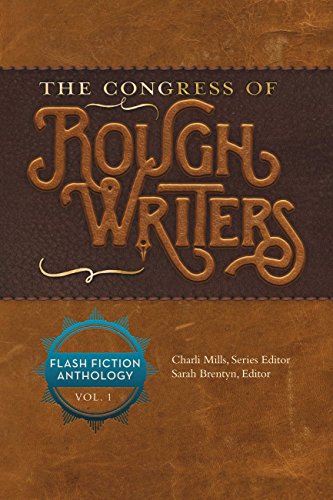
    The Congress of Rough Writers Flash Fiction Anthology Vol 1

    Purchase your own copy of

    The Congress of the Rough Writers Flash Fiction Anthology Vol 1

    via the Carrot Ranch bookstore: https://store.bookbaby.com/book/The-Congress-of-Rough-Writers

    Participate in a

    Carrot Ranch Writing Refuge (Keep updated at the Ranch)

    Look for future interviews in this series to be posted on Sunday evenings AEST.

    Coming soon:

    Sally Cronin

    Anne Goodwin

    Geoff LePard

    Debby Gies

    Hugh Roberts

    D. Avery

    with more to follow.

    Thank you blog post

    Thank you for reading. I appreciate your comments. Please share your thoughts.

  • Smorgasbord Posts from Your Archives. The Accidental Home Schooler by Norah Colvin

    I’m so delighted to share this post on Sally Cronin’s lovely Smorgasbord – Variety is the spice of life blog. It allowed me to see my thoughts from a completely different angle. Please pop over to read and let me know what you think.

  • Smorgasbord Posts From Your Archives – What You Don’t Know by Norah Colvin

    I have the very great honour of being featured among the lovely Smorgasbord Posts from Your Archives series on Sally’s Cronin‘s blog. Sally has graciously shared one of my earlier posts What you don’t know.
    Thank you, Sally, I am delighted to be featured on your blog.

  • Shine a light

    The flash fiction prompt set by Charli Mills at the Carrot Ranch this week challenges writers to In 99 words (no more, no less) write about a beacon. It can be from a lighthouse or other source. Use the word literally or figuratively and go where the prompt leads you.

    Charli writes about our fear of change, fear of the unknown, and of the need for guides “to bring us in to a new harbor, a light to show us the rocky shoals.” She suggests that “Perhaps blogging, writing, are mediums of light that shine a path to bridge cultural differences.” but also acknowledges that, “Instead of looking for a way, some people have backed out of the water and barricaded themselves on the beach.

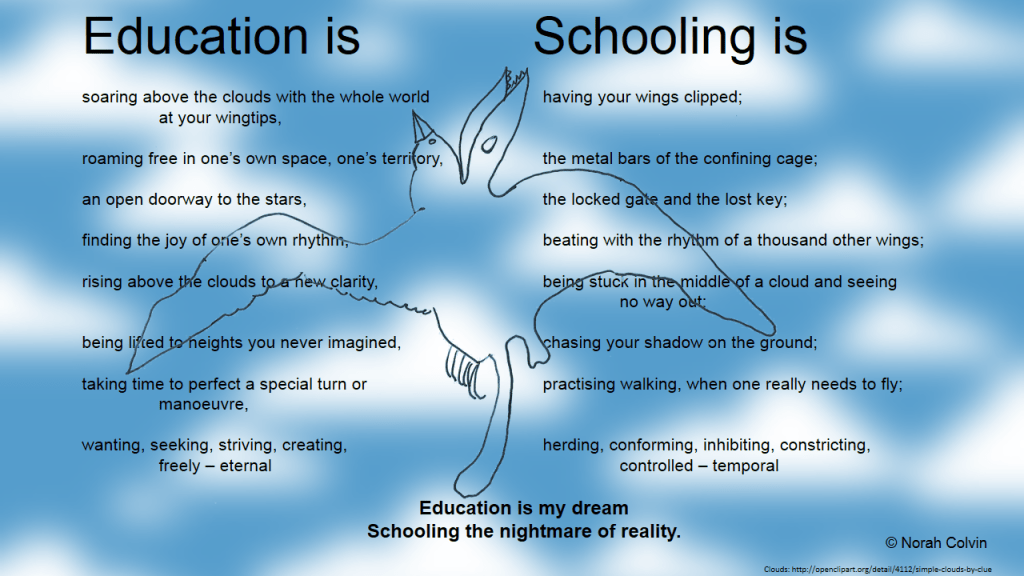
    I see education as the way that will bring us to a “new harbour”, the light that will “shine a path to bridge cultural differences”. Sadly, as I say in my poem about education, there is far too much emphasis on schooling and not enough on education, too much desire to keep the masses down by the insistence on conformity and ignorance rather than the encouragement of creativity.

    © Norah Colvin

    I was well-schooled as a child, but have spent my adulthood exploring what it means to be educated and promoting the benefits of a learner-centred education as opposed to other-directed schooling. I read of a book about “teaching backward”, beginning with what the student needs to know and working backwards. (Needs as determined by others, not the student.) I’d rather teach forwards, beginning with what the student wants to know and going from there.

    When my earliest teaching experiences fell short of my expectations, I searched for the beacons to guide my way out of the murkiness in which I found myself. I devoured books by John Holt, A. S. Neill, Ivan Illich, Paolo Freire, and others, with ideas about education and schooling that were as challenging as they were exciting. I read of innovative educators such as John Dewey, Maria Montessori, and Rudolf Steiner.

    The ideas challenged what I’d been taught but blended comfortably what I had learned through observation of children, including my own young child, and relating it to my own experiences. The pieces began to fit.

    At about the same time, I undertook further studies in literacy learning and was fortunate to work with a team of inspired educators led by Brian Cambourne, whose work and guidance placed the piece that helped the puzzle take shape, and guided my learning journey.

    Beacons, or shining lights, that guide and inspire us, are as essential to our growth as sunlight is for plants. Educators such as those mentioned, and more recently, Ken Robinson, Rita Pierson, and many others, are such beacons. We are constantly told of the success of the Finnish school system and I wonder why it is that those holding the power in other school systems fail to see their light. We need at least one to rise above the fog of number crunching and data collecting to see the bright lights shining on the hill.

    Is it fear, as Charli suggests, that keeps them out of the water? I watched the movie Monsters Inc on the weekend. It seems to deal with the issue of controlling the masses with falsehoods and fear quite well. It is also a great laugh – one of the most entertaining movies I’ve seen for a while. If you haven’t seen it yet, I recommend it.

    I’ve attempted a similar situation with my response to Charli’s challenge. I hope it works.

    Let there be light

    Eyes squinted in the dim light under low ceilings. Immobilised by never-ending paperwork, the menials dared not look up. Flickering numbers on data scoreboards mesmerised supervisors. Inconsistencies meant remonstrations, even punishment, from above. Heads down, keep working, don’t ask questions. The system worked fine, until … Maxwell nodded off. His pencil fell, tapped first, then rolled away. Startled, Maxwell went after it. The room stilled. Sliding too fast, he slammed into the wall, activating a button that illuminated a set of stairs leading up. Everyone gasped. Maxwell hesitated, took one step, then another. Nothing happened. He continued. Everyone followed.

    Thank you for reading. I appreciate your feedback. Please share your thoughts.


  • Away with the fairies

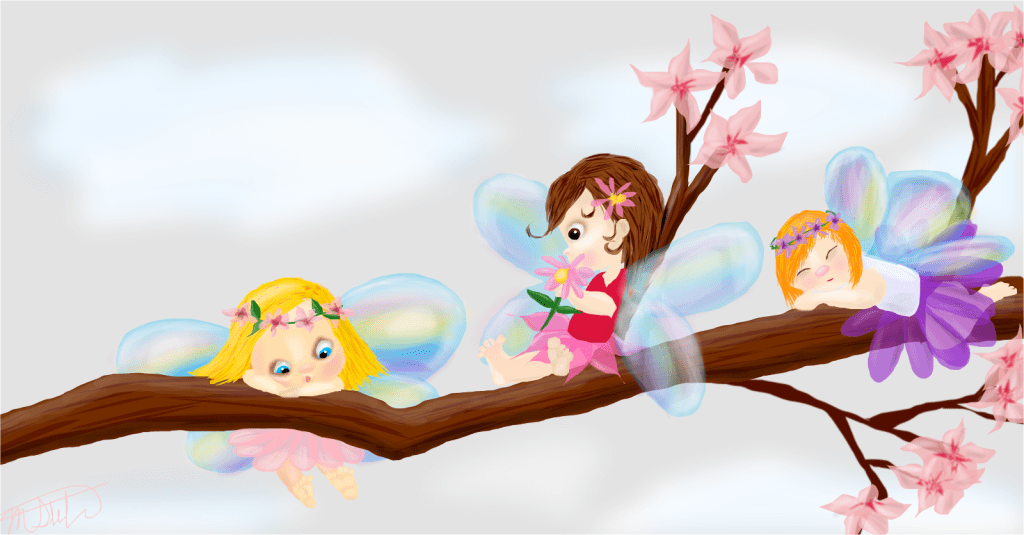
    © 2014 Shelly ʕ•ᴥ•ʔ https://www.sketchport.com/drawing/6517152420986880/fairies. Licensed under CC-BY.

    Are you a daydreamer? Were you accused of daydreaming at school? Many of us were. With minds that are easily distracted and work that is less than exciting, it is easy for thoughts to drift away into other realms. It can take anything, or nothing, and it is often difficult to back-track from where we find ourselves, along the path of thoughts to what initiated the journey. It can be no more tangible that the dream that escapes upon waking.

    While daydreaming can be pleasant and good for relaxation and creativity, it is often frowned upon in students meant to be concentrating on what they are to learn. Children would probably find it easier to attend if the work was tailored to their needs, initiated by their interests, and involved them as participants rather than recipients. The fifteen minutes of play per hour that Finnish children enjoy would also help, I’m sure, in giving time for minds to be, not corralled into predetermined channels.

    In this Conversation on Daydreaming with Jerome L. Singer in Scientific American by Scott Barry Kaufman on 10 December, 2013, Singer says, I think that teachers need to recognize that often, the daydreaming is because some of the kids are bored”.

    Whether through boredom or not, daydreaming can sometimes lead to breakthroughs in solving problems, creativity and productivity as described in this CNN article by Brigid Schulte For a more productive life, daydream. Brigid lists a number of daydreamers; including:

    • J K Rowling
    • Mark Twain
    • Richard Feynman
    • Archimedes
    • Newton

    Other famous daydreamers include:

    • Einstein
    • Edison
    • J. R. R. Tolkien
    • Boy George
    • Richard Branson

    Here are a few other quotes about the importance of daydreaming:

    Keith Richards is reported as saying that “Satisfaction”, the Rolling Stones’ most famous hit, came to him in a dream, and

    Paul McCartney says the same thing about the Beatles’ hit “Yesterday”.

    Neil Gaiman: “You get ideas from daydreaming. You get ideas from being bored. You get ideas all the time. The only difference between writers and other people is we notice when we’re doing it.”

    George Lucas: “I’m not much of a math and science guy. I spent most of my time in school daydreaming and managed to turn it into a living.”

    Professor Elizabeth Blackburn, the first Australian-born female Nobel Laureate, attributes her success as a molecular biologist, in part, to daydreaming.  She is reported by the Sydney Morning Herald to have said, ‘I think you need time to daydream, to let your imagination take you where it can … because I’ve noticed [that] among the creative, successful scientists who’ve really advanced things, that was a part of their life.’

    While speaking to students at Questacon in Canberra after receiving her prize, she joked, ”Your parents and your teachers are going to kill me if they hear you say, ‘she told us just to daydream.’

    So why is it, if the importance of daydreaming is recognised by successful creatives, thinkers, scientists, and business people, that it is still frowned upon in school? Why do we still insist that children sit at desks, repeating mundane tasks in order to pass tests that have little bearing on their future success or on the future of our species and the planet?

    In a previous post I wrote about John Dewey’s dreamof the teacher as a guide helping children formulate questions and devise solutions. Dewey saw the pupil’s own experience, not information imparted by the teacher, as the critical path to understanding. Dewey also contended that democracy must be the main value in each school just as it is in any free society.” According to Pasi Sahlberg in Finnish Lessons, What can the world learn from educational change in Finland? schools in Finland have dreamed their own dream by building upon Dewey’s.

    Of course, on a much smaller scale, I have my own dream of a better way of educating our children.

    This week at the Carrot Ranch, Charli Mills dreamed a dream and challenged writers to In 99 words (no more, no less) write a story that involves a dream. This action could have happened while awake, such as daydreaming, or make up a dream when asleep. Go where the prompt leads as it could be a nightmare or just fond memories or ambition.

    This is my response. I hope you enjoy it.

    Off with the fairies

    Each year the school reports told the same story:

    He’s off with the fairies.

    Poor concentration.

    Needs to pay more attention.

    Daydreamer.

    Doesn’t listen in class.

    Must try harder.

    Needs a better grasp on reality.

    Will never amount to anything.

    Meanwhile, he filled oodles of notebooks with doodles and stories.

    When school was done he closed the book on their chapter, and created his own reality with a best-selling fantasy series, making more from the movie rights than all his teachers combined.

    Why couldn’t they see beneath the negativity of their comments to read the prediction in their words?


    Of course, not all daydreamers become successful, and not all children have a negative schooling experience. For a much more appreciated and positive set of comments, read this post by Elizabeth on Autism Mom Saying Goodbye to Elementary School.

    Thank you for reading. I appreciate your feedback. Please share your thoughts.

  • Are you coming or going?

    © Norah Colvin

    My mother used to sometimes say that she didn’t know whether she was coming or going, meaning that she was a bit frazzled with too much to do and too little time. With a small house filled ten children, is it any wonder?

    Sometimes when asked “How are you going?” meaning “How are you going in life?” or simply, “How are you?” people respond, “Getting there”. Sometimes I wonder where they are getting, and wonder if they know too.

    But does it matter? Is it important to know where we are getting? Is not there joy in the journey itself? What if the “there” turns out to be totally unexpected, a surprise? I have no idea where I’ll be after the door on this life’s journey closes. I hope it’s a pleasant surprise, but I’m more inclined to think it will be no surprise at all. This convinces me that it is important to enjoy the journey whether we’re coming or going or anywhere in between.

    One of the purposes of education is to support people along their life’s journey, regardless of where they came from or where they are going.  I previously wrote about some issues affecting itinerant families in This too will pass. Saying goodbye to friends, if indeed there has been time to establish friendships can be difficult; so too the establishment of new friendships at each next place.

    Robbie Cheadle, who blogs at Robbie’s Inspiration, recently shared her experiences in a comment on the readilearn blog. She said, “I changed schools 14 times during my primary school years and it was very hard. I was always the new girl and always having to start over. It does teach you to get on with people and to be resilient.” Robbie obviously learned to do so, but it doesn’t happen that way for all.

    Sherri Matthews, another friend from the S.M.A.G. community, who blogs at A View from my Summerhouse recently shared her excitement at the publication of her essay Promise of a Rose Garden in Lady by the River: Stories of Perseverance, “a collection of  personal stories about facing everyday challenges”. This is a wonderful book and I have no hesitation in recommending it to you.

    In her moving story, Sherri describes “having her heart ripped out” at ten years of age when she realises that the goodbyes exchanged between herself and her father as she left for school were more permanent than she expected. She says she kept her feelings inside, telling no one how she felt about her mother leaving her father. She says, “I cried alone at night, missing my dad so much that I thought my heart would break”.

    These two experiences alone demonstrate that we may never know just what the children in our classrooms are experiencing. They may keep their feelings inside, not wanting to share. This is particularly so when the time that could be used for getting to know each other is pushed out to accommodate more drill and practice and standardised testing.

    No child’s situation is the same as any other. There is no standard experience that puts everyone in the same spot on the graph at the same time. We need to make the effort to get to know individuals and to tailor the situation to their needs. This means providing opportunities for them to share their experiences, discuss their feelings, and follow their interests.

    Of course, children should never be pressured to share more than they are comfortable with, but an open, welcoming, supportive classroom will provide them with a refuge from other issues that may confront them. I seem to keep returning to this point: the importance of a warm, welcoming, supportive classroom. I’m like a broken record, stuck in that groove. But it is the relationships that are vital and of greatest influence to a child’s ability to learn.

    There are many simple activities which can be incorporated into the school day to help build community. I’ve talked before about the way I used to do the roll, with each child standing in turn to greet classmates. How much more effective it may have been had children said “good morning” in their mother tongue, teaching others the greeting, and receiving it in response. Children enjoy learning words from other languages.  What a great celebration of diversity this would be.

    It was these thoughts that went around and around in my head this week when Charli Mills of the Carrot Ranch challenged writers to In 99 words (no more, no less) write a hello or a goodbye. You can pick any greeting that grabs you from howdy to fare thee well. It will be interesting to see how the collection intertwines the opposite greetings. Charli herself has experienced a series of hellos and goodbyes in recent times, with another goodbye imminent.

    For my goodbye story, I have taken another turn and gone full circle. I hope you like it.

    Round and round

    He felt tall, grown up, sitting in the saddle, holding the reins, feet in the stirrups.

    Mum was watching.

    “Hold tight,” she whispered. “Love you.”

    He smiled.  Then they were off. He turned, letting go quickly to wave one hand.

    “Goodbye,” he called. His lip quivered. How soon before he’d see her again? He turned, but she’d disappeared.

    Suddenly she was in front of him.

    “Hello,” she called.

    “Hello,” he smiled.

    Again, she was gone. “Goodbye,” he heard; then “Hello again!” He giggled.

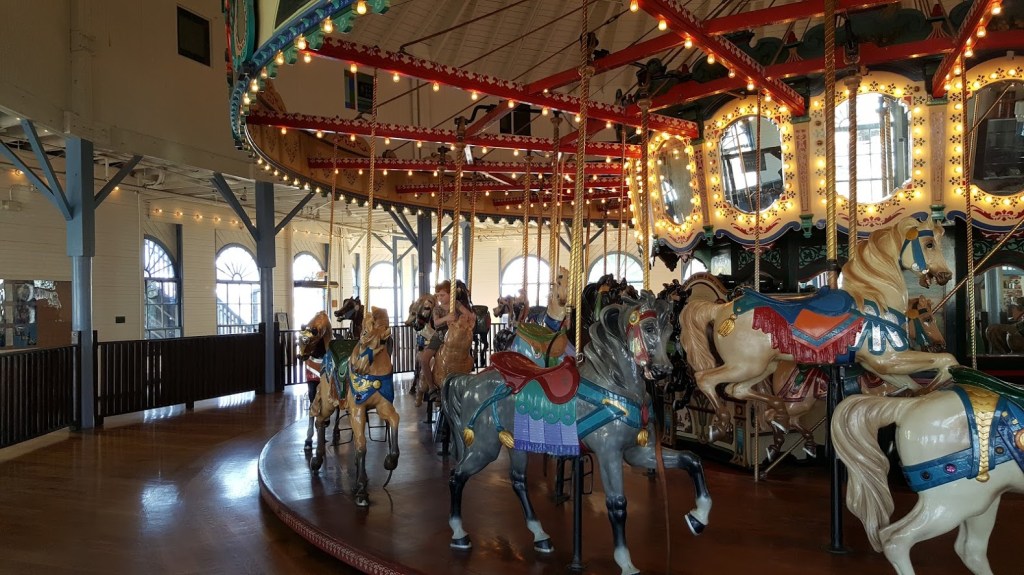
    “Going around in circles,” she thought. “Life’s like a carousel. You’ve got to enjoy the ride.”

    Thank you for reading. I appreciate your feedback. Please share your thoughts.

  • What do you create?

    symbol

    I am a fan of creativity. I like to develop my own creativity, and I like to encourage the development of creativity in others.

    One thing I always loved about teaching was the opportunity it gave me to be creative: writing stories, units of work, and lessons plans to interest and excite the children about learning. It is this love that drives me to write my blog posts each week, and to create new early childhood teaching resources for readilearn nearly every week.

    Just as exciting was the opportunity to support the development of children’s thinking, imagination, and creativity. I am more in favour of treating children as individuals, than as one of a homogeneous group from which any difference is considered an aberration.  After all, imagination and creative thinking are what inspire and drive improvement, innovation and progress.

    I affirm my belief in the power of creativity in my tagline: ‘Create the possibilities . . .’, a tagline I previously used for an independent school I was establishing.

    create-the-possibilities

    Preceding both was my first independent undertaking: Create-A-Way.  Create-A-Way provided a richer educational and social setting for my young daughter than what was generally available, allowed me to share my educational philosophy and knowledge, and provided the same rich learning opportunities for other children and their parents. The development of imagination and creativity was a focus.

    Guiding parents in play sessions for parents and children.
    Guiding parents in play sessions for parents and children.

    One of the things I love most about responding to the weekly flash fiction challenges set by Charli Mills at the Carrot Ranch is the additional opportunity to engage in something creative and to hone my writing skills. The supportive environment of a welcoming community makes it a safe and enjoyable experience. There is something affirming about belonging to a community of other creatives, online or in -person.

    karen

    On Saturday I, along with a whole bunch of other women creatives, attended an excellent Book Marketing Masterclass conducted by authorpreneur Karen Tyrrell. (I am looking forward to interviewing Karen for the Author Spotlight series on readilearn in March.) The class was attended by writers of a variety of genres; including memoir, romance, science fiction, fantasy, YA, and picture books.

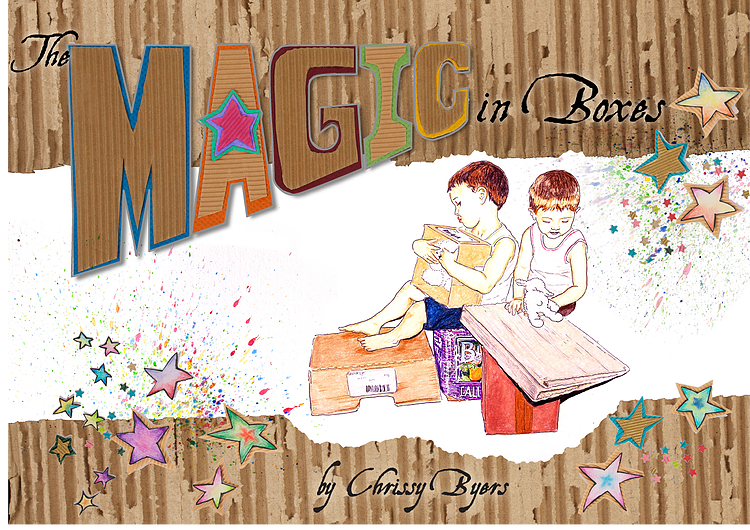
    One of the attendees Chrissy Byers has created a lovely picture book The Magic in Boxes which “aims to capture the imagination of young readers and inspire creative play.”

    the-magic-of-boxes

    Not only does the book suggest ways of stimulating creativity using recycled materials such as cardboard boxes, the book is made from recycled paper. I think that’s pretty awesome. It’s a beautiful book with a wonderful aim.

    lemons and grapefruit

    For a little more on creativity; in a previous post, Are you a lemon or a grapefruit? I shared ten articles about creativity. They are still relevant and worthy of a read if you haven’t yet done so.

    I also shared one of my favourite TED talks by Sir Ken Robinson How schools kill creativity. If yours is not yet one of the over 41 million views, I urge you to watch it. As well as sharing a very important message, Ken is hugely entertaining.

    I hope I have convinced you of the importance and power of creativity. I thank Charli and her flash fiction prompt for the opportunity of revisiting some of my favourite articles and talks about creativity. This week her challenge is to “In 99 words (no more, no less) write a story using the theme, “women create.” It can be art, sewing, ideas, babies. What is at the heart of women as creators? Go where the prompt takes you.”

    I’m a woman, and I create, and education is in my heart.

    In response to Charli’s challenge, I thought I’d get a little dirty. I hope you like it.

    Prize pies

    “Life’s not on a plate. It’s what you create.”

    Two little girls in their Sunday best

    Snuck outside when they should have been at rest;

    Splashed in the puddles, laughed in the rain,

    Shared mud pies and murky champagne.


    Two young girls with flour in their hair

    Climbed on the bench from the back of a chair;

    Opened up the cupboards, emptied out the shelves,

    Less in the bowl and more on themselves.


    Two young women watching TV

    Decide master chefs are what they will be;

    Enter the contest, invent new pies,

    Wow the judges and win the prize.

    thank-you-1200x757

    Thank you for reading. I appreciate your feedback. Please share your thoughts.


  • It’s not what you see

    1-2

    This week at the Carrot Ranch, Charli Mills is talking about the effect of changing a lens on how things are viewed. She says,

     “No matter what lens we apply, there is something to be seen in each of us that is worthy.

    Perhaps if we focus differently, we might actually achieve peace.”

    This is true too of children. Sadly, I think too often children are seen for what they are not yet, rather than appreciated for what they are. Childhood is all too fleeting, and with the current focus on assessment and teaching-to-the-test in many educational systems, it is becoming almost non-existent. Recess and free-play times are being eroded to cram in more cramming time.

    I recently read an article in the Washington Post that told of children in a US school having to walk laps during a 20-minute recess. The supposed intention was to get the children active. However, most children would be naturally active if allowed the freedom to run and play. The benefits of free-play activities for health, well-being, and social development would be far greater than that of walking laps.

    file1051239031460

    This practice contrasts with one described in an article in the Sydney Morning Herald. Children in Finland have fifteen minutes of mandatory outdoor play every hour, whatever the weather. “Fresh air, nature and regular physical activity breaks are considered engines of learning.”

    Each of these practices recognises the importance of activity, but each has a different way of providing for it, and only one is effective. I wonder why those with the power to make positive changes in education, fail to see the damage being done by didactic and test-driven practices that rob children of any love for or joy in learning. It seems to matter little what lens is used, they are unable to focus clearly on what matters most.

    In this TEDx talk, Nancy Carlsson-Paige explains what happens When Education Goes Wrong: Taking the Creativity and Play out of Learning.

    Towards the end of the talk, beginning at 12:45, Nancy says,

     “The difference between understanding concepts and reciting facts is very important for us to understand right now, because it captures the essence of what is happening in education today. There is a gross misunderstanding of what education is that has swept across the country, and the unfortunate belief is that you can direct teach, and you can measure and you can quantify learning; but the truth is, it is only the most superficial and the most mechanical aspects of learning that can be reduced to numbers. Unfortunately, this mistaken idea about the nature of education has pushed down to our youngest children. “

    She says that when we “drill and grill” kids, we not only lose the power of the learning experience, we lose all the amazing capacities that children bring to us in education:

    • initiative
    • creativity
    • the ability to define and solve their own problems
    • originality of thought
    • invention of new ideas
    • perseverance
    • cooperation.

    She says that when we take those capacities out, we take away the love of and joy in learning, not only from the children but from teachers too.

    These are themes that are familiar to regular readers of my blog, and the most influential when I decided to leave the classroom. More than thirty years ago I wrote a poem to describe the differences between what often is, and what could be.

    © Norah Colvin
    © Norah Colvin

    Sadly, I cannot say that nothing has changed. It has. The differences have become more stark.

    Here is my response to Charli’s prompt to: In 99 words (no more, no less) write a story using a lens. It can be literal, like looking at the world through rose-colored lenses or the need for spectacles.

    pink-sunglasses-clipart-1

    Unfortunately, I couldn’t find my rose-coloured glasses.

    What you see

    They saw him for what he wasn’t and what he lacked, not for what he was and what he could be. Their ill-fitting garments failed to clothe, and their unpalatable diet failed to nourish. If only they’d zoomed in upon his potential. Instead the wide-angled lens showed a panorama of disadvantage: an excuse for failure to fulfil his needs or enable his possibilities. A lens in proper focus may have seen a burning curiosity, a rich imagination, a wisdom older than time, and a heart in harmony with the universe. Instead they considered the negatives not worthy of development.

    Thank you

    Thank you for reading. I appreciate your feedback. Please share your thoughts.

  • Where will the children play?

    This week at the Carrot Ranch Charli Mills is talking about playgrounds. I love playgrounds. Who doesn’t? They are a familiar part of life. Most neighbourhoods have at least one park or playground where children can go to play.

    Playgrounds are great places for children to:

    • Meet other children
    • Learn to socialize, through sharing of equipment and taking turns
    • Develop physical skills such as coordination, balance, strength
    • Develop confidence and persistence, and a willingness to have a go and try out new things
    • Play imaginatively, on one’s own or collaboratively
    • Be outdoors in the fresh air and in nature
    • Be active

    Charli suggested we think about empty playgrounds. I thought about the differences between modern playgrounds and the playgrounds of my childhood.

    So many pieces of play equipment that were common and popular in “my day” are no more. They disappeared over the years, due to changing attitudes to safety and responsibility. So much of the playground equipment I played on as a child would not be allowed in a playground today.

    Alanspeak, A slide for children to play on https://openclipart.org/detail/191139/childrens-slide
    Alanspeak, A slide for children to play on https://openclipart.org/detail/191139/childrens-slide

    It got me thinking about the history of playgrounds and playground equipment, and I was surprised to find that playgrounds are a fairly recent invention, little more than 150 years old. This article about playgrounds on Wikipedia states that playgrounds originated in Germany and were attached to schools. The first “purpose built public-access playground was built in a park in Manchester England in 1859.” The first in the USA appeared in San Francisco in 1887.

    Other articles such as How We Came to Play: The History of Playgrounds, Evolution of American playgrounds, History of playgrounds and The history of playgrounds – past, present and future provide an interesting overview of the changing landscape of playgrounds over the years.

    I was pleased to find that the philosophies of both Froebel and Dewey had been influential in the early days of playground design. I wrote about Froebel, the father of kindergarten, and provided links to information about his works in a previous post Let them Play! My thoughts about education and pedagogy were heavily influenced by the philosophy of progressive educator John Dewey. I previously shared some of his ideas, though not specifically related to play, in  John Dewey’s Dream.

    GDJ, Playful stick figures https://openclipart.org/detail/230070/playful-stick-figure-kids
    GDJ, Playful stick figures https://openclipart.org/detail/230070/playful-stick-figure-kids

    Of course I couldn’t write about playgrounds without including something about school playgrounds. I hope that all schools have somewhere for children to run and play at break times. I recently read This is why Finland has the best schools and was impressed to find that

    ‘schoolchildren in Finland have a mandatory 15-minute outdoor free-play break every hour of every day. Fresh air, nature and regular physical activity breaks are considered engines of learning. According to one Finnish maxim, “There is no bad weather. Only inadequate clothing.””

    The benefits to health, happiness and learning must be enormous.

    Play at break time can be the highlight of a child’s day. Children may love the opportunity to run and play with their friends in a relatively unstructured, but safe environment. However, it is not so for all children. Some children dislike the freedom, the space, the lack of structure, the noise. Some don’t know how to make friends or how to play.

    While it is great for children to have unstructured play time. It is also important to have equipment to support their play, be it imaginative, social, or physical. I have seen many disagreements occur when children have nothing to play with and no ideas for creating games of their own. It seems that many of the games we used to play, before the invention of video games and (cough cough) television, have been lost to subsequent generations. One day I will compile a list!

    For now I will leave you with my response to the flash fiction challenge set by Charli at Carrot Ranch Communications. She challenged writers to

    In 99 words (no more, no less) write a story about an empty playground. Is it abandoned or are the children in school? What is it about the emptiness that might hint of deeper social issues. It can be a modern story, apocalyptic or historical. Go where the prompt leads.

    I didn’t find it as easy as I thought I might.

    From empty playground

    She stopped abruptly as her scattered thoughts aligned to focus on the playground gate. As if restrained by an invisible chain, she was motionless. Beyond the gate children called to each other; but never her. She was not welcome, never included. Their taunts stabbed at her emptiness, twisting as they penetrated deep into the chasm within. She’d wait until they’d gone.

    Suddenly a child was there, eying her quizzically; then a mother, appraising her, uncertain.

    “Miss. Miss. Are you all right?”

    “Y-yes,” she said, straightening herself. “J-just reminiscing.” How could a life once empty, be now so full?

    Self-determination.

    Thank you

    Thank you for reading. I appreciate your feedback. Please share your thoughts.

  • Why school this way?


    reading

    Any material being read, or listened to, will connect with individuals differently, depending on their prior knowledge and interests. An idea might spark curiosity in one, that another would dismiss as inconsequential. Sometimes a reader will pick at a thread that hadn’t been intentionally placed for further investigation. Oftentimes, authors don’t get to benefit from readers’ feedback, and may not be inspired to conduct further research for themselves.

    But bloggers do!

    Or bloggers with wonderful readers who participate in discussions and share their ideas! I am always grateful to you my readers for your encouragement to keep on learning. You are constantly challenging my assumptions, offering alternate views, and inspiring me to seek more information. I love it.

    The-best-questions-are

    While I emphasize the importance of maintaining a sense of wonder, and of encouraging children to ask questions, I’m not always good at asking those questions myself. I learned that lesson well;  so am appreciative when others stimulate questions.

    During this past week there have been a couple of robust conversations here: one about audiobooks and cheating; and another about common curricula. The conversations branched into fields as different as science fiction and history. Thank you to those who joined in.

    In This too will pass I mentioned that each state in Australia had its own set of curricula. This places an extra burden on children changing schools, particularly interstate. The mention of our new National Curriculum made Charli Mills curious about how US education evolved. She assumed it was fairly uniform across the states, with the school year developed around farming so that children could help out in the fields.

    old school room

    I thought that our Western systems of schooling had originated with industrialisation. However, Charli responded saying that industrialisation had had little influence on education in the West (of the States). So of course I was compelled to check my assumptions!

    A Google search brought me to this document Industrialization and Public Education: Social Cohesion and Social Stratification which does seem to verify a relationship between industrialisation and schooling. (But one of the most interesting things to me is the cost of a chapter, and of the entire book this first page comes from. Have a look!)

    money bag

    I also found an abstract of Chapter 2 Long-Term Trends in Schooling: The Rise and Decline (?) of Public Education in the United States, from another book, that seems to support Charli’s understanding of the homogeneity of education in the United States. I haven’t read it yet, but it could be informative.

    I couldn’t let the topic of schooling and industrialisation go without sharing a talk by one of my favourite educators Sir Ken Robinson. This is a shorter animated version of a longer talk, which I’ve also included if you are interested in listening to the original.

    This is the animated abridged version:

    This is the original:

    Now, I have to wonder, in light of the discussion about cheating mentioned earlier, would watching the shortened version qualify as having watched the talk, or would it be considered cheating?

    Thank you

    Thank you for reading. I appreciate your feedback. Please share your thoughts.