This week, it is my pleasure to introduce you to Jacqui Halpin – author, founding member of Write Links (a local group of published and unpublished authors and illustrators of children’s books), a former nurse and tuckshop convenor.
Jacqui grew up in Brisbane where she still lives with her husband, one of her three adult children, and a cat called Loki. While writing and editing, Jacqui likes to sip tea from fine china and eat copious amounts of chocolate. She says she should never be allowed in a bookshop with a credit card in her possession.
Jacqui writes picture books and short stories, some of which appear in anthologies by Stringybark Publishing and Creative Kids’ Tales. She co-wrote and independently published her elderly father’s memoir, A Long Way from Misery.
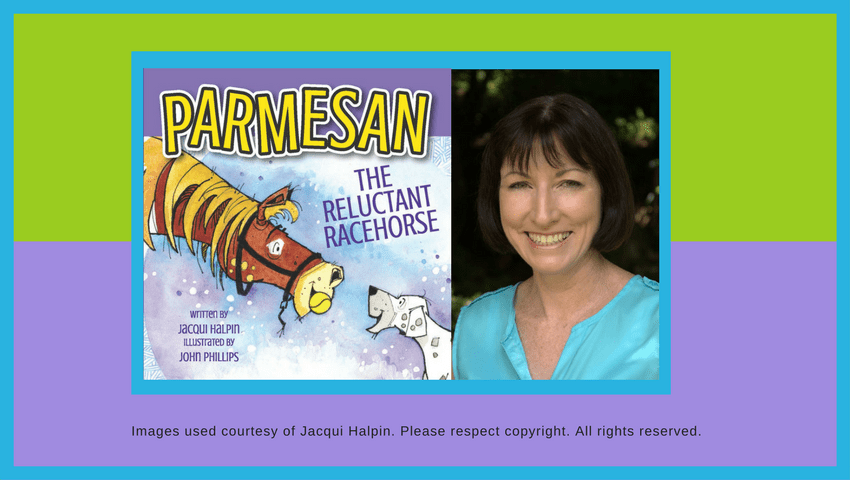
Today Jacqui is talking with us about her first picture book Parmesan The Reluctant Racehorse, humorously illustrated by John Phillips and published by Little Pink Dog Books in October 2017. Jacqui’s second picture book, Where’s Lucky?, based on an orphaned swamp wallaby joey at a wildlife shelter, will be published in mid-2019.
Parmesan is a delightful story of a thoroughbred racehorse who should be winning races and earning lots of money for his owner. However, Parmesan thinks he’s a dog. Instead of training with the other horses, he’s off with his doggy friends doing doggy things like playing fetch. His owner is not happy. If Parmesan isn’t ready to run in the Spring Carnival, he’s getting rid of him. Parmesan’s trainer is worried. He knows Parmesan won’t be ready, but as they arrive at the Spring Carnival, he thinks of a brilliant way to get Parmesan to run around the track. Parmesan’s triumph proves you can be a winner and stay true to who you are.
Welcome to readilearn, Jacqui, we are looking forward to getting to know you better.
Thanks for inviting me.
Jacqui, when did you know you wanted to be a writer?
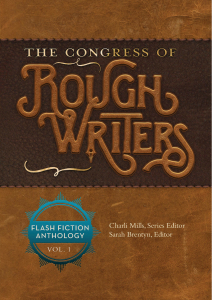
Today my very own printed copy of the Congress of Rough writers’ Flash Fiction Anthology Vol 1, edited by Charli Mills, arrived in the post. How exciting! Have you got yours yet?
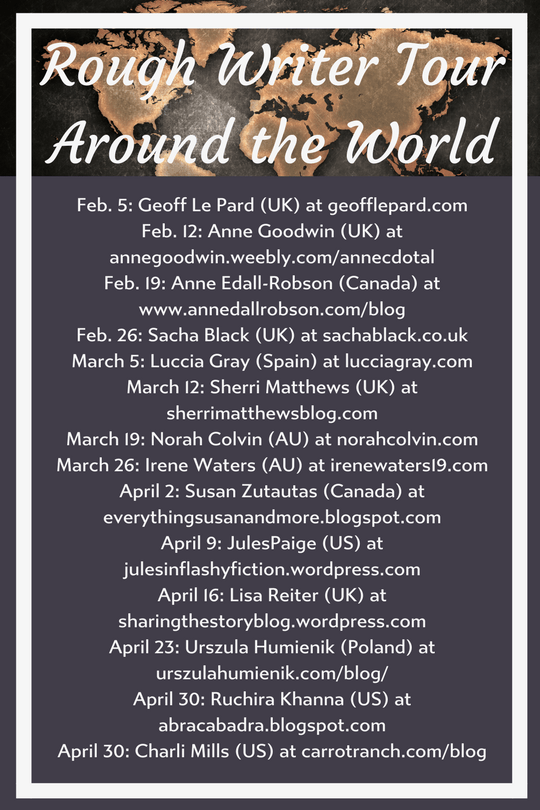
Anne Goodwin gives you all the details for purchasing in her contribution to the Rough Writer Tour Around the World.
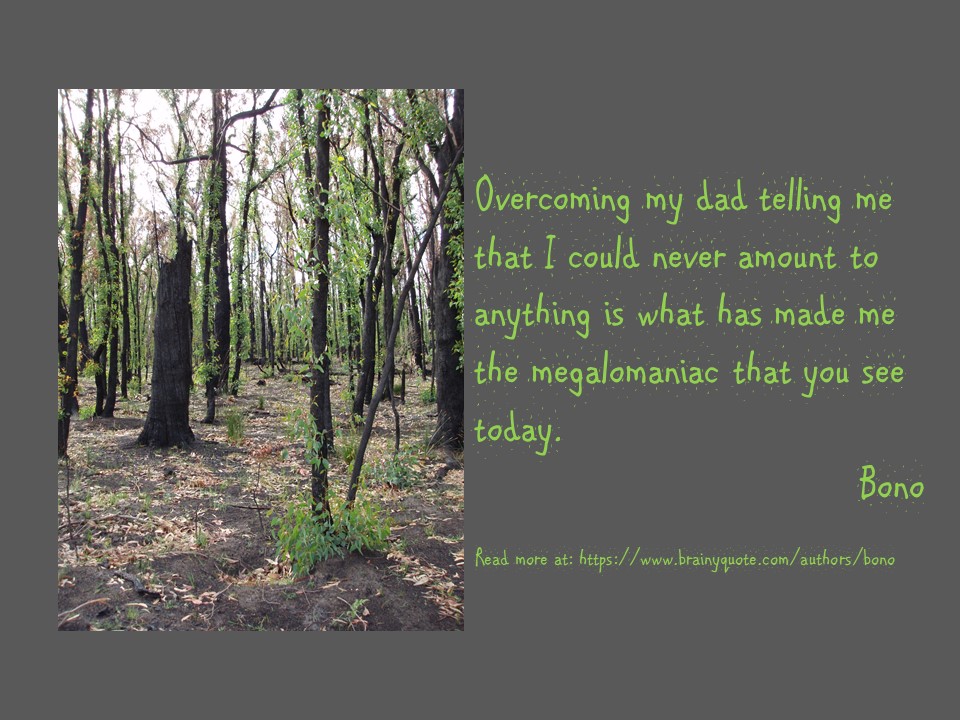
This week at theCarrot Ranch, Charli Mills wrote about fireweed. She describes it thus:
“the purple and pink flower that grows like a tall spear in a tribe of flower warriors. After a forest fire, mining reclamation, road grading or any kind of soil disturbance, fireweed grows back first from seeds born of despair. It’s a phoenix flower, a soil nourisher, a defier of the odds when life is bleakest.”
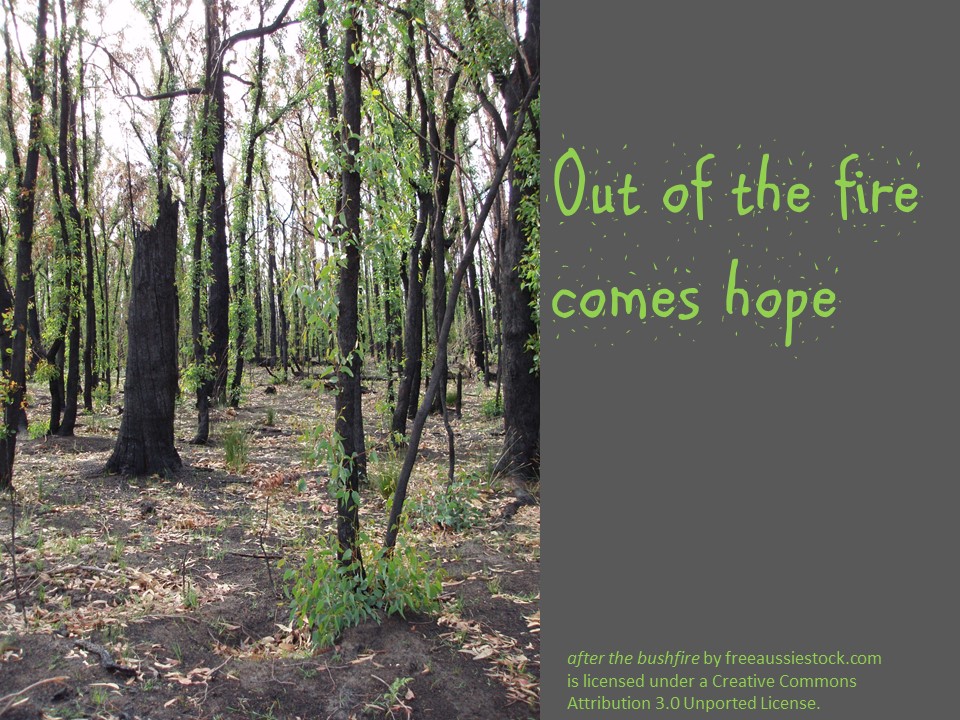
I don’t know of Charli’s fireweed, but I do know that Australia is home to a great variety of plants that are dependent on fire for regeneration. While large tracts of land destroyed by bushfires is devastating, a return to traditional land management practices of the indigenous peoples may see an improved system.
There is an oft-repeated quote by German philosopher, Friedrich Nietzsche.
“What doesn’t kill you, makes you stronger.”
While that may be true of Charli’s fireweed and much of Australia’s flora, I’m never convinced of the applicability of the saying to every situation, or of its power to lift one up when feeling personally devastated. What does not kill may require a good dose of determination and strength for it not to annihilate the spirit.
“Understanding is the first step to acceptance, and only with acceptance can there be recovery.”
The addition of these words of J.K. Rowling to those of Friedrich Nietzsche, for me, complete the thought. Without acceptance there is denial and an inability to move on, with acceptance we can begin to repair and renew.
Intermittently, over the past four years while I have been responding to Charli’s flash challenges, I have written about Marnie, an abused child who was able, with determination and support of caring others, to overcome the impact of her dysfunctional upbringing and make a better life for herself.
Just as we look for green shoots of hope in the blackness of a bushfire’s destruction, we must look for signs of hope and renewal in those who have suffered.
While at times the negatives of children “burnt” by dysfunctional home lives, poverty, poor nutrition, lack of mental stimulation, and other factors that appear to obliterate potential can seem overwhelming and insurmountable, it is important to see within every child that seed of unlimited possibility and hope that needs to be nurtured.
Marnie’s teacher Miss R. saw it in her. In one story, “Miss R. handed her a rose from the vase saying, “You are that rose. You may be surrounded by thorns, but the beauty of the rose is inside you. Remember that always. A rose by any other name would smell as sweet.”
Perhaps it would be just as apt to describe her as fireweed, “a defier of the odds when life is bleakest”. This is where Charli’s challenge took me this time:
Burning with hope
Miss R. avoided the staffroom’s negativity, popping in, like today, only if necessary. When she glanced over instinctively on hearing her name, regret flooded immediately.
“Annette, we were just talking about you and that weed–from that noxious family–you know, Marnie-“
She bristled, failing to withhold the words that exploded, singeing all with their ferocity.
“Just look at yourselves. If Marnie’s a weed, she’s fireweed. Better than you will ever be. She’ll beat her odds and succeed, despite your belittling words and unhelpful opinions.”
She left the silenced room, believing in her heart that her words were true.
Thank you for reading. I appreciate your feedback. Please share your thoughts.
Learning lists of sight words is an activity familiar to beginning readers, their parents and teachers. There’s no denying the importance of being able to recognise words by sight, and the aid it is to reading fluency and comprehension. Yes, comprehension. Due to the constraints of short-term memory, it is difficult to think about meaning, when working memory is employed in attempts to figure out individual words.
Many lists of basic sight words are available, but there is a consistency to the words included and their number, generally varying between one and two hundred. Many of the words do not have a regular letter-sound correspondence and cannot be “sounded out” using knowledge of phonics. They are also words that have meaning only in context and cannot be “pictured”. The words make up a high percentage of those appearing in texts for beginning readers and so are often referred to as high frequency words.
Children are often given lists of words to take home and learn with the assistance of parents. Not all parents know how to encourage children to learn the words and it can be a battle if children struggle to remember them. If you are sending children home with words to learn, it is important to provide parents with strategies as well as what they need; for example:
Provide the words on strips or in small booklets with the word written on one side and a short sentence with a picture on the other for checking.
Provide one set of words. Spread the words face up on the table. Ask the child to find the word; for example, put. This is easier at first as other letter/sound cues can be used. Later, as the child is
I am so excited to be in the company of many wonderful writers in this first anthology of flash fiction by Rough Writers at the Carrot Ranch. Geoff Le Pard is one of those writers and kicks off the promotional Around the World Blog tour. Hop on board to meet others of the talented writers and find out to purchase your own copy of the book.
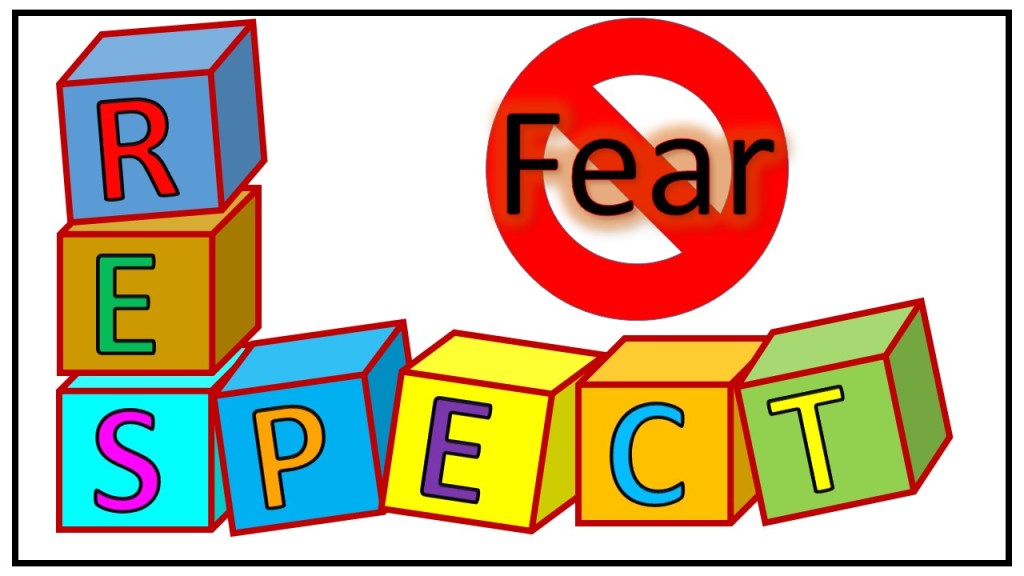
As an early childhood educator, I believe that children need to be respected. It is only through being shown respect, that children learn to respect. It is not learned through fear. Sure, fear may generate what appears to be respect – compliance, conformity, obedience. But inside, feelings of discontent may simmer until, at some future time they manifest in a variety of unpleasant ways.
Children also need to respect, and not fear, each other. I frequently write about the need to develop a welcoming and supportive classroom in which children feel valued and respected. They need to understand the diversity that exists in our world and learn to accept, appreciate, respect and embrace it. Fear is often the result of the unknown, so by getting to know each other better, that opportunity for fear, at least, can be erased.
In a previous post Watching ink dry, I wrote a story about a child being singled out and humiliated for an inability to keep between the lines in a handwriting lesson. An interesting discussion developed in the comments about nuns–teaching nuns, which surprised me. You see, although that particular situation wasn’t one I personally experienced, I did have in mind one of my teachers, who happened to be a nun, as I wrote, but I made no mention of it. I really didn’t think the attitude I portrayed was reserved for nuns during my childhood.
Within a few days of publishing the post, I visited the optometrist where the assistant, without prompting of any kind, (I have no idea how we got onto the subject) told me about nuns who repeatedly humiliated her at school. I then told her about my story, but not my real experiences which were quite similar to hers. I added this to the discussion, and so the conversation grew, prompting Charli Mills from the Carrot Ranch to entertain the thought of “Nun” as a flash fiction prompt.
But it was too late for me to consider the fear, or perhaps to feel the fear and resist doing it anyway. I’d already started recording my black and white view, coloured from years under the rule of those nuns in their black and white habits (literally and figuratively).
One memorable event occurred when, handing out history test results, the teacher (a nun) distributed everyone’s but mine. She then made a big show of trying to find it while telling the class what a dreadful result it was, and that she must have put it aside out of disappointment. Though I am quite tall, she did her best to make me feel small.
Funnily enough, when I experienced a similar situation at a writers’ critique session over the weekend–one of the writers had everyone’s story but mine–I was able to accept his apology and not relive the earlier trauma, even though it was brought to mind.
Perhaps I’m more like the nuns of my childhood than I’d like to acknowledge. Perhaps I find forgiveness no easier than they. So, apologies to all the lovely nuns, whom I am sure must exist, this poem is not for you. It is a reflection of my black and white reflections on my black and white experiences. I’m not sure that I expect you to enjoy this one.
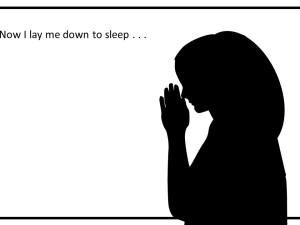
The nun’s prayer
Now I lay me down to sleep,
I pray the Lord my soul to keep.
I have no need for counting sheep,
I count the girls that I made weep.
Lord, I ask Thee, help me please
To do my job with greater ease–
Bless them even when they sneeze,
And keep their skirts below their knees.
I know the task should be not hard
And I should never drop my guard
But if they’re ever marred or scarred,
It puts a mark upon my card.
And while she dreamed her cunning schemes,
Her girls were strangling silent screams.
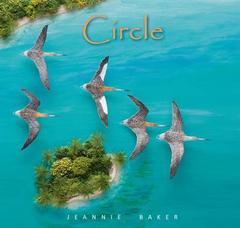
To finish on a more positive note, which is more my way, on her Big Sister Blogs this week, Maria Parenti-Baldey shared a post of wishes creatives have for children. Those wishes are opposite to those of the nun in my disrespectful poem. One of my favourite quotes is that by Jeannie Baker whose books I have previously written about here and here and here.
According to Maria,
Jeannie Baker wished for every ‘single’ child ‘to love and be loved’. For children to have a supportive home, a peaceful environment and ‘to be creative and not be criticised’. To go to school with time to ‘exercise their curiosity… use their imagination’ and find and make things. Jeannie wanted children to think for themselves, play outside and engage with nature with feelings of awe and wonder. Some children experience a fear of nature – ‘Nature deficit syndrome’. ‘What one fears, one destroys. What one loves, one defends.’
I thought it was a perfect quote to round out my post. I wholeheartedly agree with her wishes–they match my dream.
Please pop over to Maria’s post to read what other creatives; including, Leigh Hobbs, Gus Gordan, Mark Wilson, Anna Fienberg, Kyle Hughes-Odgers and Deborah Abela, wish for children. Great wishes, every one.
Thank you for reading, I appreciate your feedback. Please share your thoughts.
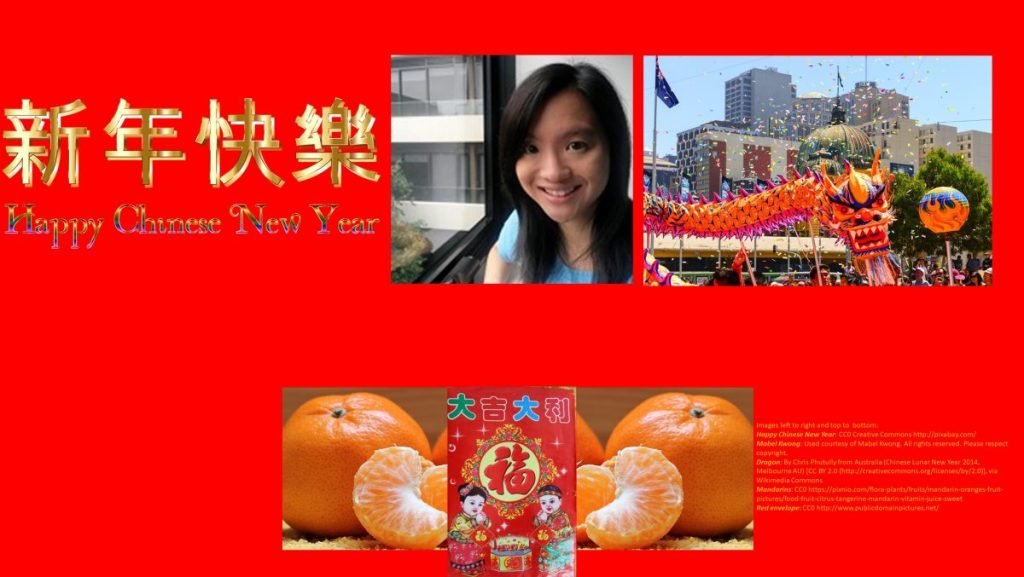
Chinese New Year is an important Chinese festival celebrated around the world, not only in Asian countries, but in many countries where there is a large population of Chinese people or their descendants, including Australia. Maybe it is celebrated where you are too.
This week I have the great pleasure of introducing you to Mabel Kwong, a writer and Chinese Australian. Mabel explores and writes about the topics of multiculturalism, cultural diversity and identities. She feels that the more you get to know others of different backgrounds and each other’s cultures, the more you learn to see things from different perspectives. In her spare time, she is a keen photographer and video gamer.
In this post Mabel shares with us some background information about the Chinese New Year as well as her personal experience of Chinese New Year celebrations when she was growing up in Malaysia and Singapore.
Mabel has written the post in such a way that it could be read to a class of children. Indeed, we have worked together to prepare it as such, and it is now available as an estory, free to everyone—there is no need even to register—in Chinese New Year Cultural Studies resources.
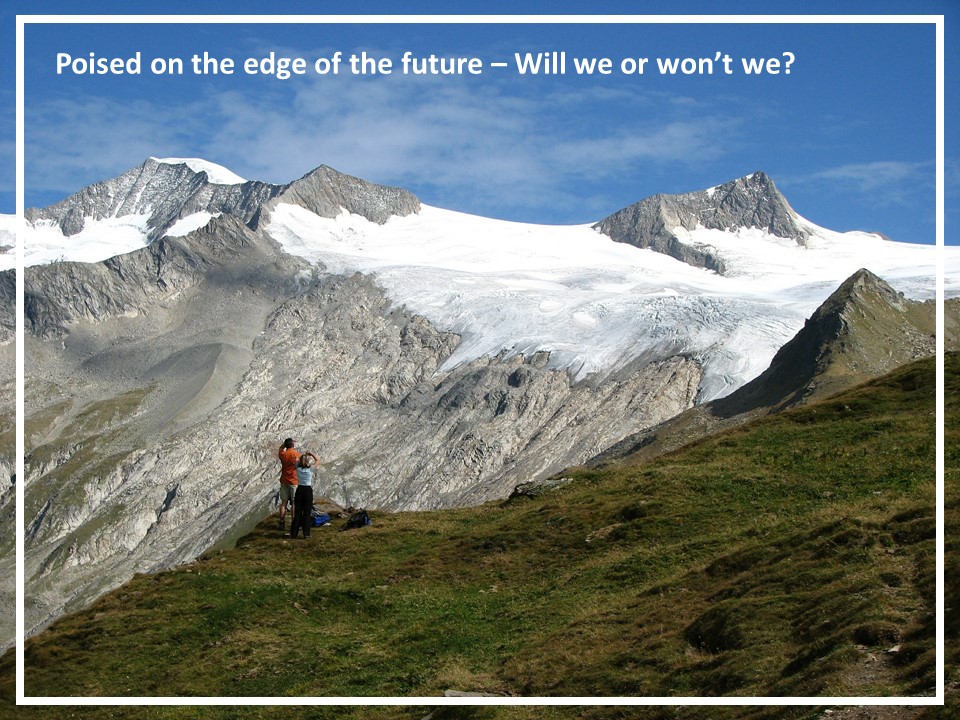
Every morning we wake up to a new day and step into the future. The past is gone, in memories of yesterday and soon to be forgotten. How we approach each day–with excitement, fear, anticipation, dread, joy or boredom, lulled by repetitious acceptance devoid of creativity–is our choice. We can accept the mundane or jump into the unknown, feet first.
I jumped straight in and wrote my 99-word response in one go. Normally I mull it over for days, struggling to find threads of meaning to tie together post and story.
Last week in response to Charli’s “boots” prompt, I wrote about Grandma’s sparkly storytelling boots. I was pleased so many of you confirmed it was a great idea for a story. I had already decided to work on it and submit it to my critique group this week. You could say, I jumped into that abyss–boots first. Wearing grandma’s sparkly boots, I’m sure to fly.
It’s funny when you write a post that connects with people in unexpected ways. I was surprised, delighted, honoured and extremely grateful this week when three of my favourite bloggers, whose work I admire shared my post on their blogs:
Jennie Fitzkee–an inspiring early childhood teacher who, like me, expounds the benefits of respect for children, story reading and telling–blogs at A Teacher’s Reflections. If you haven’t visited her blog yet, I recommend you do. Every post delights.
Dayne Sislen–an illustrator of children’s picture books who shares information about illustrating books and also writes about the importance of reading to children–blogs at Dayne Sislen Illustration. Her love of children’s picture books and illustration is obvious. In her post last week How to extend the attention span of your children, Dayne discussed the importance of reading to children. It was a wonderful match for mine about storytelling. You can find out more about Dayne on her blog or website.
Charles French–who I came to know through Jennie reposting his series of inspiring quotes–blogs at Charles French Words Reading and Writing. How delightful to know that he also enjoyed my post enough to share with his readers. This is just one of his posts of quotations that spoke to me: Quotations on teaching. 😊 I suggest you pop over to visit Charles as well to share in his words of wisdom.
Those of you who write YA or adults novels, memoir or non-fiction, may wonder what we early childhood teachers and writers and illustrators of children’s picture books have that could be of interest to you. Let me tell you, we have everything. We have the key. We are the ones who create the readers of tomorrow, the future readers of your books. We turn the children onto reading as we take their hands and lead them to the edge of tomorrow when they leap into the unknown worlds of books.
In case you haven’t yet read my response to Charli’s “edge” prompt, this is it. It doesn’t necessarily have anything to do with my previous statement but starting anything new can push us to the edge and we don’t really know just what will happen until we give it a try. I wish you all many joyous flights.
The edge
She stood at the edge of the abyss and wondered what would happen should she jump – would she fly, or would she plummet to the bottom and rest, fractured and alone, forgotten and abandoned, with all the others who dared to try but failed. It was fear that held her back, chained her to the ledge. But there was nowhere else to go. She’d tried all other paths. This was all that remained. Could she stay there forever. Would there be a point? What if she fell? But what if she flew? She inhaled, closed her eyes, and jumped…
Thank you for reading. I appreciate your feedback. Please share your thoughts.
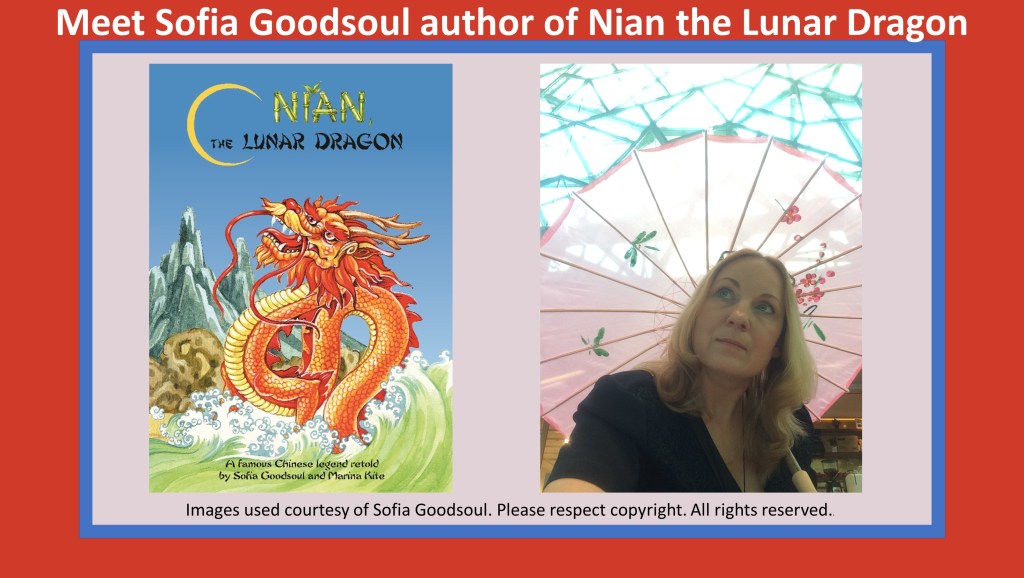
This week I am very excited to be interviewing Australian author Sofia Goodsoul about her picture book Nian the Lunar Dragon, illustrated by Marina Kite. With Multicultural Children’s Book Day coming up on 27 January (see previous post I am Australian) and Chinese New Year on 16 February, the time is just right.
Before we begin the interview, let me provide you with a little information about Sofia.
Sofia Goodsoul is an author, emergency kindergarten teacher and indie-publisher. Her poetry writing has grown from a hobby into a great passion. Now she can’t live a day without writing poems, riddles and stories for young children. The children give themes and inspiration for her books.
Sofia lives in Melbourne with her family and pets. She loves going to Zumba classes and taking long walks with her husband and family dog Mack. Sofia dedicates all her spare time to her writing and publishing career.
Nian the Lunar Dragon, an entertaining and beautifully illustrated rhyming narrative for young readers, is Sofia’s second picture book in collaboration with Marina Kite. The book is about the legend behind the traditions and celebrations of Chinese New Year, sometimes called Lunar New Year. According to the lunar calendar, Chinese New Year commences with the new moon at the beginning of spring.
A long time ago, the dragon named Nian lived in the deep ocean to the east of China. Nian was a strong and ferocious dragon, which no creature could defeat. Once a year, Nian climbed ashore to hunt for cattle and human prey. The people of the nearby villages and towns lived in terror, and each New Year’s Eve they had to leave their homes to save themselves. One day, a monk came to the village. He knew a well-kept secret about how to scare Nian away and free the Chinese people from the danger and their fear.
Welcome to readilearn, Sofia. We are looking forward to getting to know you a little better.
Thanks for inviting me!
Sofia, when did you know you wanted to be a writer?
I don’t remember capturing that specific moment, but my grandmother was a children’s book illustrator and I often stayed with her
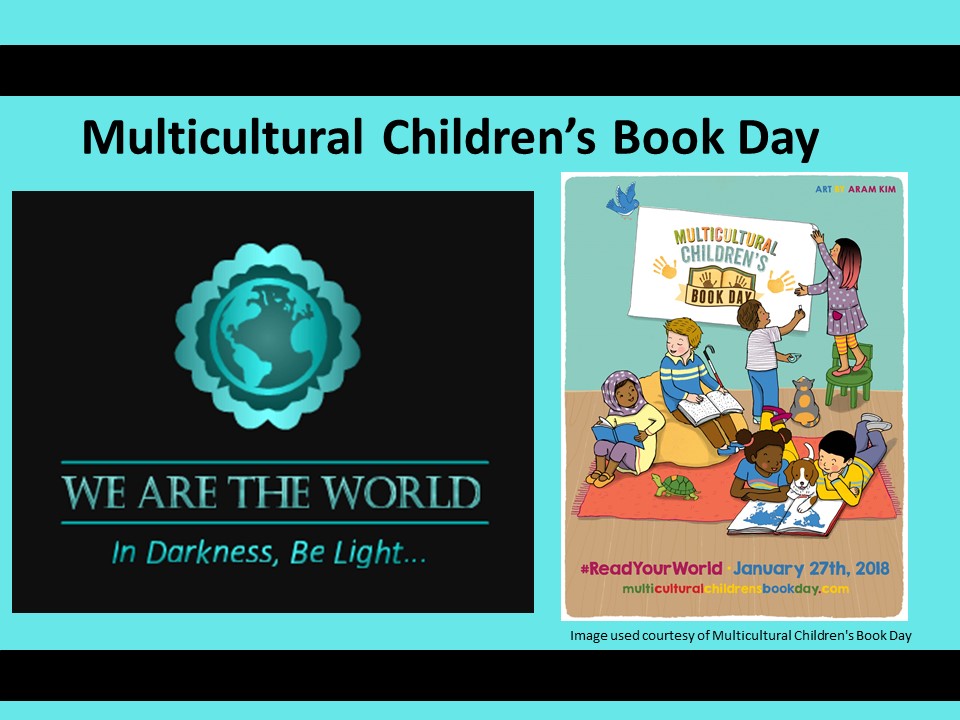
On the last Friday of each month We Are the World Blogfest invites bloggers to join together in promoting positive news. With this the first for 2018, it’s a good time to think about joining in. If you would like to do so, please check out the rules and links below.
A statement of mission from the We are the World Blogfest website:
“There are many an oasis of love and light out there, stories that show compassion and the resilience of the human spirit. Sharing these stories increases our awareness of hope in our increasingly dark world.”
This month I am sharing an inspiring story that, while it may not be “News”, was certainly news to me and maybe is news to you too. I hope it fits the criteria for sharing.
“not only raise awareness for the kid’s books that celebrate diversity, but to get more of these of books into classrooms and libraries.”
There is certainly a need for more understanding, acceptance, empathy and compassion in the world, and it is very pleasing to see projects such as this being promoted. I’m sure you’ll agree that education of our children is a great place to start.
Used courtesy of Multicultural Children’s Book Day
Multicultural Children’s Book Day was initiated by Valarie Budayr from Jump Into a Book and Mia Wenjen from Pragmatic Mom, and is celebrated for the fifth time this year on 27 January with a #ReadYourWorld Twitter party!
(Note: There is also a great way for authors and publishers to help out by donating their books with multicultural themes.)
I hope you see how both these organisations are working towards making our world a more positive place for all of us.
Here are the guidelines for #WATWB:
1. Keep your post to Below 500 words, as much as possible.
2. Link to a human news story on your blog, one that shows love, humanity, and brotherhood. Paste in an excerpt and tell us why it touched you. The Link is important, because it actually makes us look through news to find the positive ones to post.
3. No story is too big or small, as long as it Goes Beyond religion and politics, into the core of humanity.
4. Place the WE ARE THE WORLD badge or banner on your Post and your Sidebar. Some of you have already done so, this is just a gentle reminder for the others.
Help us spread the word on social media. Feel free to tweet, share using the #WATWB hashtag to help us trend!
Tweets, Facebook shares, Pins, Instagram, G+ shares using the #WATWB hashtag through the month most welcome. We’ll try and follow and share all those who post on the #WATWB hashtag, and we encourage you to do the same.



















 Norah Colvin