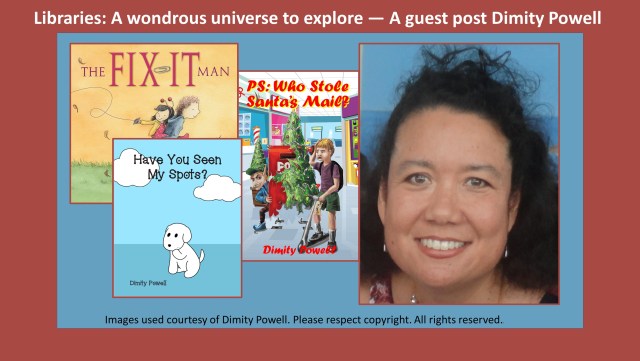
This week I am delighted to introduce you to award-winning children’s author Dimity Powell.
Dimity likes to fill every spare moment with words. She writes and reviews stories exclusively for kids and is the Managing Editor for Kids’ Book Review. Her word webs appear in anthologies, school magazines, junior novels, as creative digital content, and picture books including The Fix-It Man (2017) and At The End of Holyrood Lane (2018).
She is a seasoned presenter both in Australia and overseas, an accredited Write Like An Author facilitator and a Books in Homes Role Model Volunteer in Australia.
Dimity believes picture books are soul food, to be consumed at least 10 times a week. If these aren’t available, she’ll settle for ice-cream. She lives just around the corner from Bat Man on the Gold Coast although she still prefers hanging out in libraries than with superheroes.
In this post, Dimity shares her love of libraries and explains why it is important to ensure every child has access to a library at school and every reader a local library.
Do you celebrate your birthday? I do. I love to mark each one. I don’t even mind that the numbers are getting big now, though not quite as big as my grandchildren tease (he says 150, she says 954). I wouldn’t mind a few additional years to accomplish even more, or at least try. But I know I am lucky to have had so many. Not everyone is as fortunate. And we never know how many days or years we will get. For this reason, I think we must enjoy every day and treat it as a gift. That’s why today is called the present, after all.
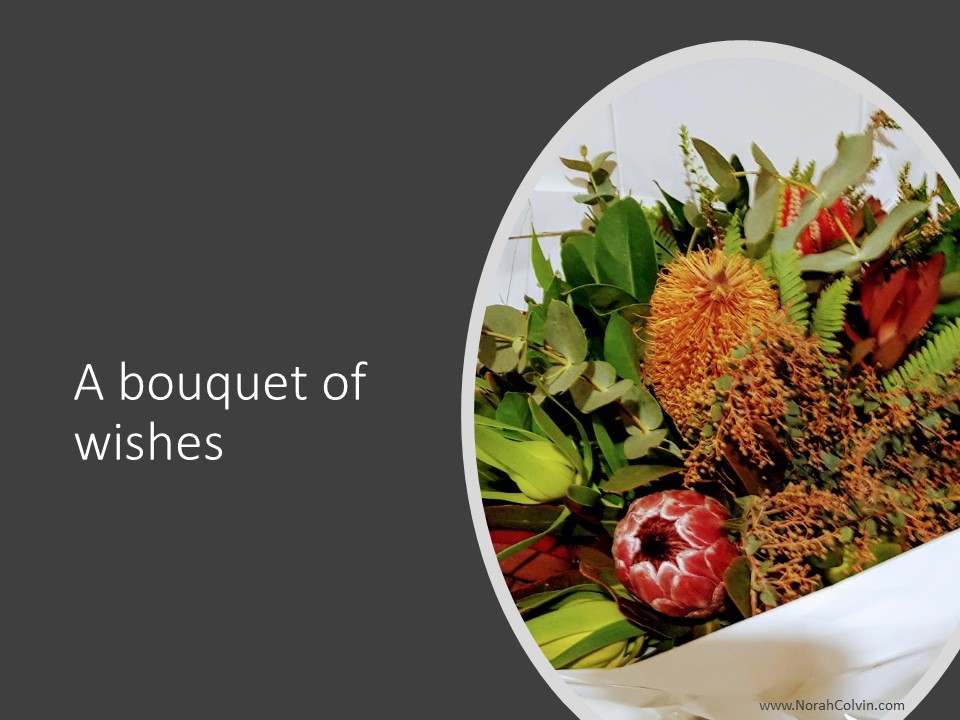
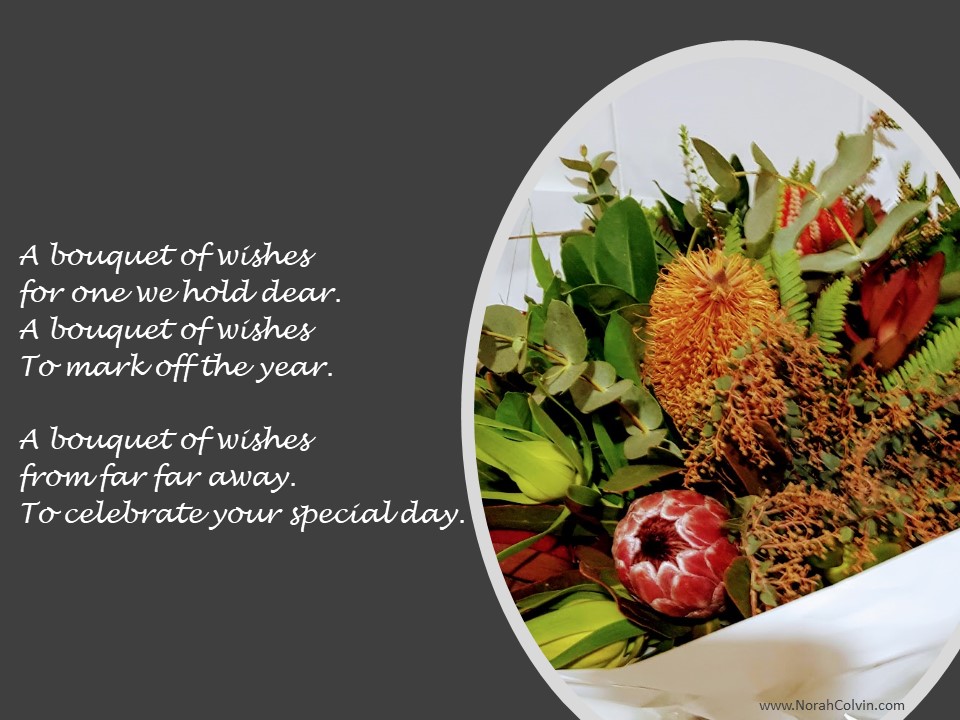
You could say that the prompt was beautifully timed to coincide with my birthday, although I hadn’t considered the connection and was struggling for a response until I received these beautiful flowers from my daughter and her partner.
It made me think of all the times in our lives when bouquets of flowers are given and received: to share love in both joyous and sorrowful times, or to simply say, “I’m thinking of you.” We are often urged to, regardless of the occasion, “Say it with flowers”. Flowers, chocolate and wine are always well-received. (I was going to say “go down well”, but I thought you might think I eat the flowers too. I don’t.)
I tried to “find” a story of a young boy gathering wildflowers for his teacher on the way to school, but he wasn’t willing to cooperate. Instead, I’ve gone for a BOTS, except for the ending. I hope you enjoy it.
A Special Bouquet
As expected, they found her in her garden with a bouquet of fresh-picked flowers: daisies, forget-me-nots, peonies, zinnias, sprays of bleeding hearts and honeysuckle, a bottlebrush or two, a bunch of gumnuts and some greenery—to make each colour shine.
Her garden was her sanctuary, her confidante, her joy. She said families were like gardens, with beauty in variety. Every special day—birth, birthday, wedding, or funeral—she arranged a meaningful bouquet. In ninety-five years, she’d seen lives come and go. The last of nine, no doubt now who’d be next. How could she know this was her day?
Thank you for reading. I appreciate your feedback. Please share your thoughts.
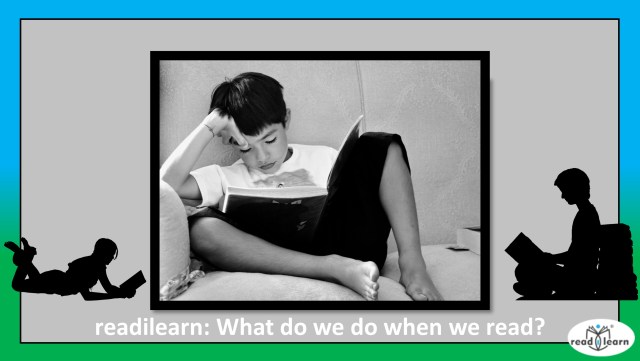
The ability to read is one of the most valuable skills we can acquire. It is a tool for thinking, learning and entertainment. Reading opens doors and minds; it gives us the ability to unlock the secrets of the universe and release our imaginations. It is a skill that many of us take for granted, but without it the world would seem a more unfriendly place.
No wonder learning to read is a vital part of each and every school day!
Like everything else —the more you read, the better you get!
Reading is more than just saying all the words on the page in order. Reading is a process of getting meaning from print. Effective readers use their knowledge of the world and of language in their quest to make meaning from the words on the page. Reading takes place when the reader understands the message of the writer.
Strategies used by effective readers
Effective readers use a combination of three cuing systems to predict and check what the author has written. The use of these systems is obvious in the miscues (rather than “mistakes”) that readers make.
The most important cuing system is knowledge of the topic. If you know lots about dinosaurs, you can read those big difficult-looking words and understand what they mean. If you know nothing of legal jargon then even sounding out those big difficult-looking words won’t help you understand.
The second system is knowledge of language and grammar. We expect the words to flow with meaning and not be a jumble of nonsense.
The first two systems combine to predict the words on the page. We then check with the print to ensure our expectations were correct.
For example, if the story is about a cowboy you may expect that he would jump on his pony, but when you look at the print, you find he actually jumped on his horse.
Effective readers may say ‘pony’ instead of horse, but they definitely wouldn’t say ‘house’ (which looks similar) as it just wouldn’t make sense!
Children love to create artworks using pencils, crayons, paints and anything they can stick to a surface using glue. With access to a variety of materials, they can be absorbed for hours creating their masterpieces.
While they might select from the materials offered, I found the one thing that few children could resist was glitter—and the more of it, the better.
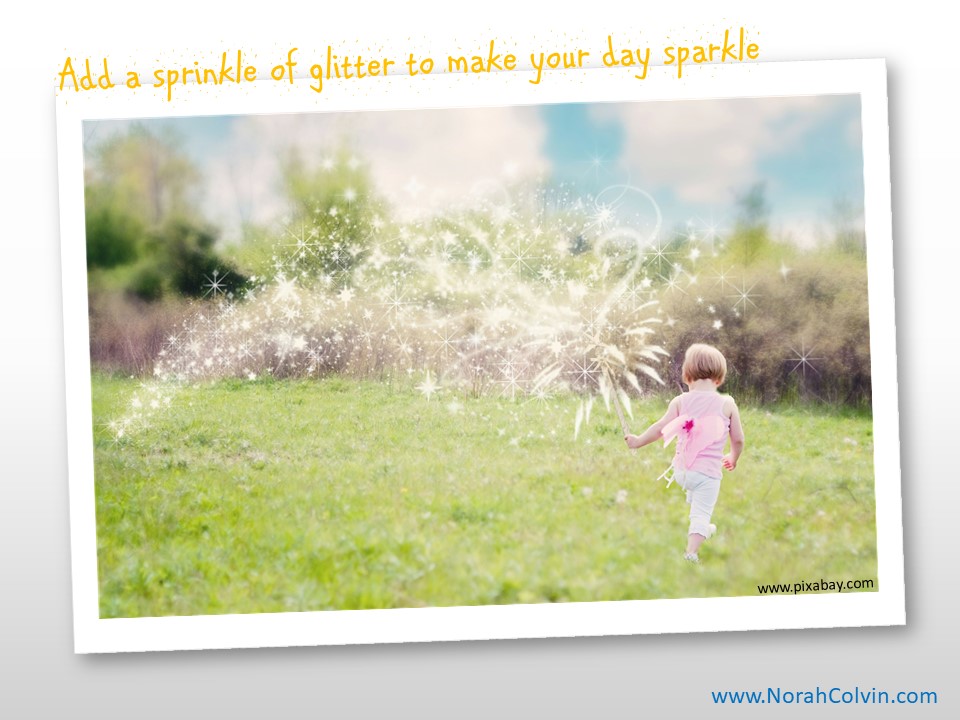
There is nothing like glitter to add a bit of sparkle to the day. The only trouble is, glitter is so light and so small, that it goes everywhere—on the artwork, on the table, on the chair and on the floor. It sticks to the hands and is smeared on the face and takes forever to remove from the hair. But everyone loves it nonetheless, and it adds a little brightness to the day.
Smiles are like glitter in that they also spread easily and brighten the day. However, they are not nearly so messy, cost nothing, and require no cleaning up at all.
I think smiles are the glitter we should add to the artwork that is everyday life. And if there’s one thing about smiles, the more you give, the more you receive. Smiles come from a bottomless well, from a source that never dries up. A sprinkle of smiles will make anyone’s day sparkle, and who knows what difference a smile can make to another’s life.
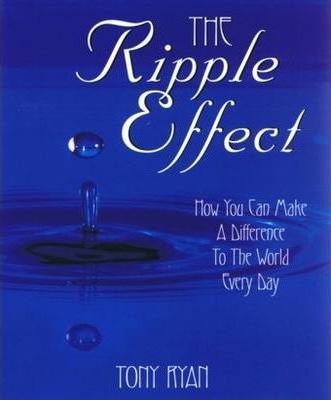
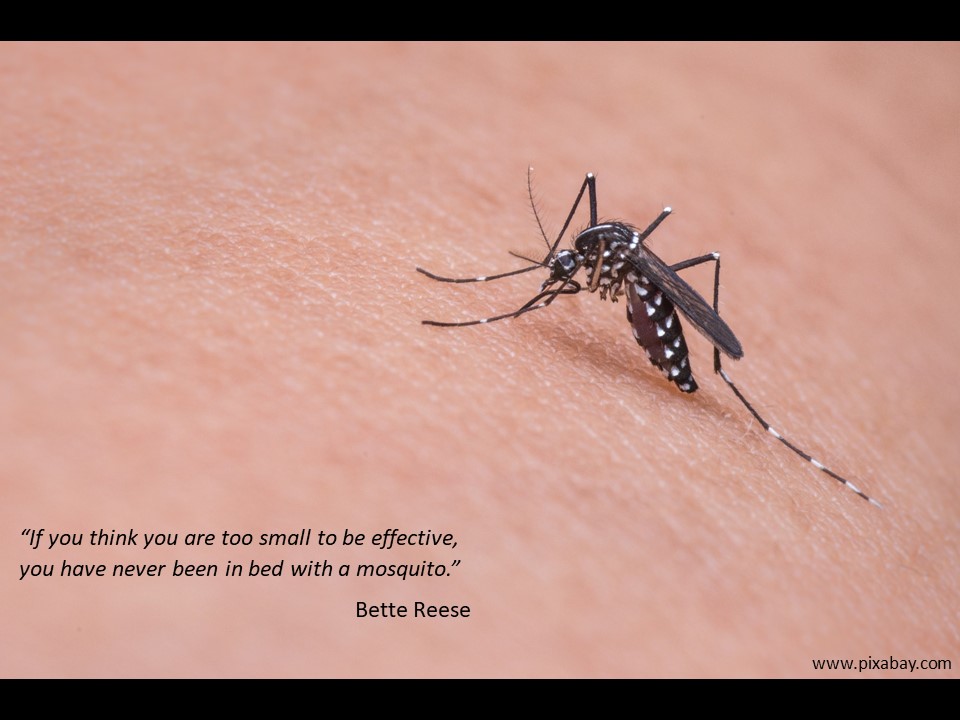
I often think of The Ripple Effect, written by Tony Ryan, and its inspirational stories. I especially enjoy this quote by Bette Reese included in the book: “If you think you are too small to be effective, you have never been in bed with a mosquito.”
One of Tony’s stories describes the following scenario:
“As you enter the freeway, you discover that the traffic is heavier than usual, and is moving quite slowly. You then notice that the young driver in the car beside you is trying to enter your lane, because her exit is coming up. No-one is letting her in, and she is becoming tense and upset.”
Tony then describes the turning point in her day:
“You stop, and wave her in front of you with a flourish and a smile.”
and the ripple effect:
“she returns your smile, acknowledges your thoughtful action, and drives on
her tension dissipates, and she arrives at her company office feeling buoyed by your little effort
as the main receptionist, she is the first to greet the hundreds of people who enter the office each day
with her positive greeting, she decides to brighten up the life of every person she meets throughout that day
because of her efforts, many others in the business district are inspired to focus on their own positive efforts.”
Like glitter, we can never know how far the effects of our smiles might travel. There can never be too many smiles in any one day, especially in a classroom filled with children.
I’d only come across the word “glisten” before in the Christmas carol, Walking in a Winter Wonderland.
But Charli’s prompt reminded me of an incident in my childhood that had absolutely nothing to do with glitter or glisten (I don’t even remember glitter in my childhood) but loads to do with smiles. I’ve rewritten the incident to include glitter and other alternative facts. I hope it gives you a smile.
Glitter smiles glisten
Relentless rain meant no beach for the country cousins. They spent eternity on the verandah, making artworks, playing games, and bickering.
On the last day, when Mum said to clear space for their mattresses, they fought over who’d do what. Toys and games ended up in a haphazard tower with the glitter bucket balanced on top.
When Dad bent for goodnight kisses, he stumbled and demolished the tower. Glitter went everywhere—including all over Dad. The children gasped.
“Your hair glistens, Dad,” smiled the littlest.
Dad smiled too, then everybody laughed.
Dad wore a hat to work that week.
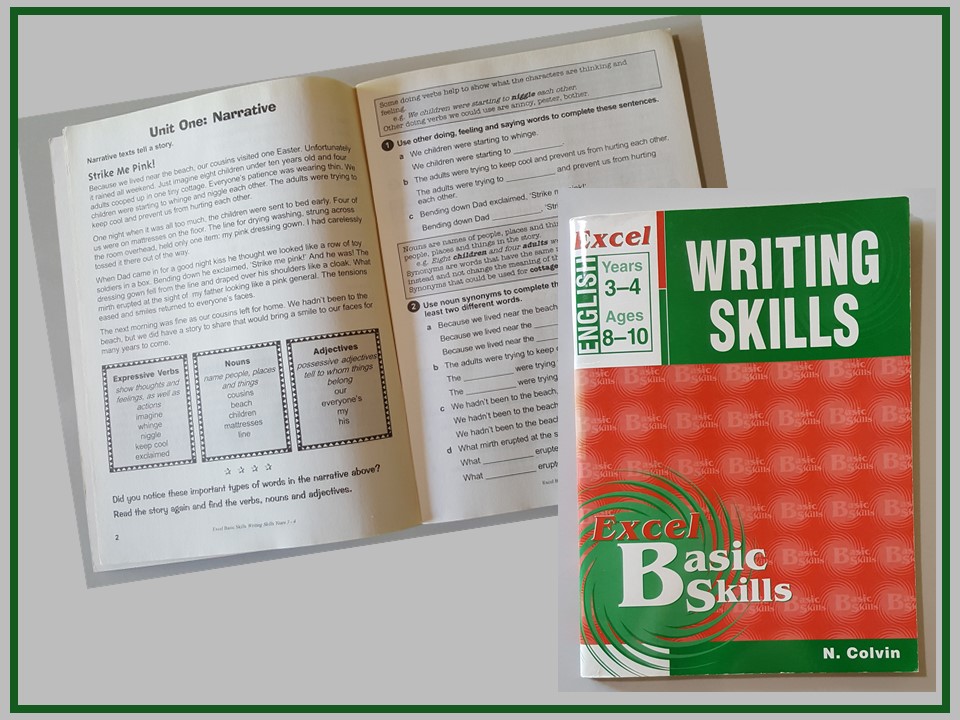
I previously wrote about this incident for inclusion in a Writing Skills Homework Book published by Pascal Press. Workbooks such as this are very different from the teaching resources I now share on readilearn, but: it was paid work.
This version is closer to the truth.
Strike Me Pink!
Because we lived near the beach, our cousins visited one Easter. Unfortunately, it rained all weekend. Just imagine eight children under ten years old and four adults cooped up in one tiny cottage. Everyone’s patience was wearing thin. We children were starting to whinge and niggle each other. The adults were trying to keep cool and prevent us from hurting each other.
One night when it was all too much, the children were sent to bed early. Four of us were on mattresses on the floor. The line for drying washing, strung across the room overhead, held only one item: my pink dressing gown. I had carelessly tossed it there out of the way.
When Dad came in for a goodnight kiss he thought we looked like a row of toy soldiers in a box. Bending down he exclaimed, “Strike me pink!” And he was! The dressing gown fell from the line and draped over his shoulders like a cloak. What mirth erupted at the sight of my father looking like a pink general. The tensions eased and smiles returned to everyone’s faces.
The next morning was fine as our cousins left for home. We hadn’t been to the beach, but we did have a story to share that would bring a smile to our faces for many years to come.
Note: I don’t know how many others used the term, but my Dad often said, “Strike me pink” to express surprise.
Thank you for reading. I appreciate your feedback. Please share your thoughts.
For many of us, reading has become such a natural and intuitive process that we rarely stop to marvel at the way we are able to make meaning from print or to question how one learns to read.
Although we know that we once weren’t readers, few can remember how we actually made the transition from being a non-reader to being able to read and have been doing it for so long now that it seems we always could.
Some adult readers have recollections of various instructional methods that were used in school and attempt to engage their own learner readers in similar tasks.
The recognition that some of the instructional methods did, and still do, equip readers with some tools for reading, does not imply that the use of these methods was the catalyst for learning to read. While they may have contributed to the development of reading, there are other influencing factors.
Many children learn to read despite the instructional methods, and many others don’t read using them and, in fact, remain non-readers because of them.
What is reading?
Reading is more than simply translating letters and words to sound. Reading involves thinking. It is a process of getting meaning from print.
A warrior is defined as a brave and experienced fighter, a soldier perhaps. While most of us will never be called upon to face the enemy on a battlefield, many will struggle to overcome obstacles of different kinds in their personal lives.
From a young age, children must be encouraged to find their inner strength, to overcome challenges large and small, to be resilient when faced with setbacks, to be confident to try again and to persist even when the going gets tough.
This is as true for boys as it is for girls, but sometimes it feels easier to encourage boys to be adventurous and girls to be sweet and demure. That this is changing is a good thing.
In response to Charli’s prompt, I looked for a warrior a little closer to home. I hope you like it.
Gertrude the Invincible
With flaming hair streaming and eyes blazing, Gertrude stood at the apex surveying the land, her land. With one hand on a hip and the other raised high, she hurled her words into the wind.
“I did it. I am the conqueror. You,” she pointed expansively with her spear, “are now my subjects. You do my bidding.”
The minions bowed before her.
“I am in-vinc-i-ble!”
“Gertie! Pick up your toys and come inside now. It’s dinner-time,” called Dad from the door.
Gertie complied. Even warriors need to eat. There’d be more conquests and enemies for Gertrude to vanquish tomorrow.
Note: Gertrude is a German name meaning spear and strength. As long as she is encouraged, I think this Gertrude will have little difficulty living up to her name (minus the spear).
Thank you for reading. I appreciate your feedback. Please share your thoughts.
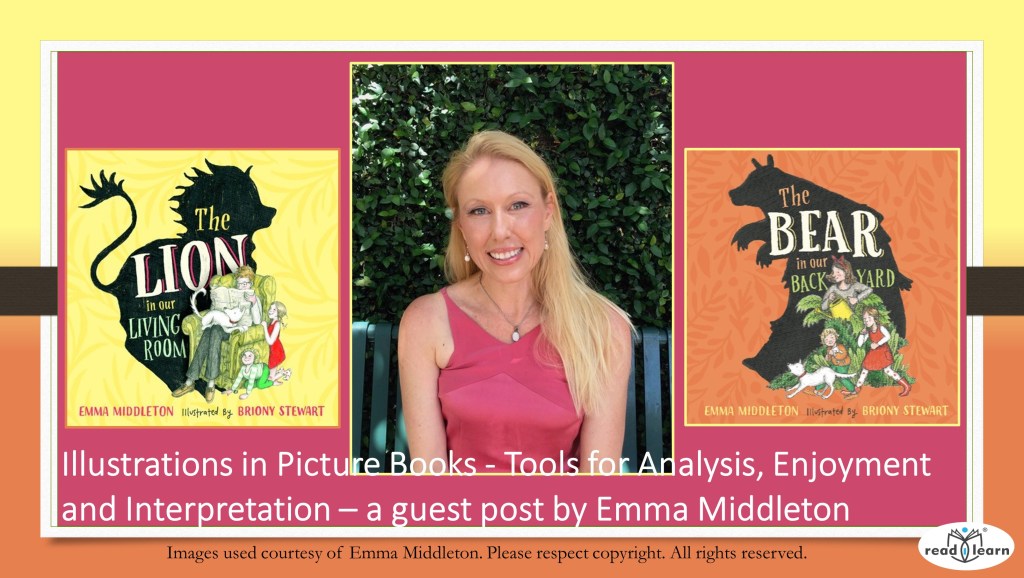
This week I have great pleasure in introducing you to Emma Middleton who is here to discuss illustrations in picture books as tools for analysis, enjoyment and interpretation.
Emma is a picture book author, illustrator, children’s performer and former ballerina who lives near Noosa, Queensland. After a career in performing arts, during which time she danced for the Vienna Ballet, she returned to Australia to direct and teach at The Brighton Dance Academy.
Emma retired from teaching dance to follow her passion for picture books by creating stories that will enhance a child’s sense of wonder, delight and unlimited possibility. Emma is the author of companion picture books The Lion in our Living Room and The Bear in our Backyard.
Welcome to readilearn, Emma. Over to you.
Illustrations in picture books can be an excellent tool for developing children’s analytical and interpretative skills, as well as enhancing their enjoyment of art. Picture book advocate Megan Daley says, ‘Picture books are works of art which should adorn the walls of art galleries and libraries.’
For young children, illustrated books open the door to understanding story. Illustrations provide young readers with an immediate vision of the characters, setting, and mood of the story. Children instantly respond to characters from their visual appeal. We all know and love many picture book characters from their image alone.
On the last Friday of each month We Are the World Blogfest invites bloggers to join together in promoting positive news. If you would like to join in, please check out the rules and links below.
“There are many an oasis of love and light out there, stories that show compassion and the resilience of the human spirit. Sharing these stories increases our awareness of hope in our increasingly dark world.”
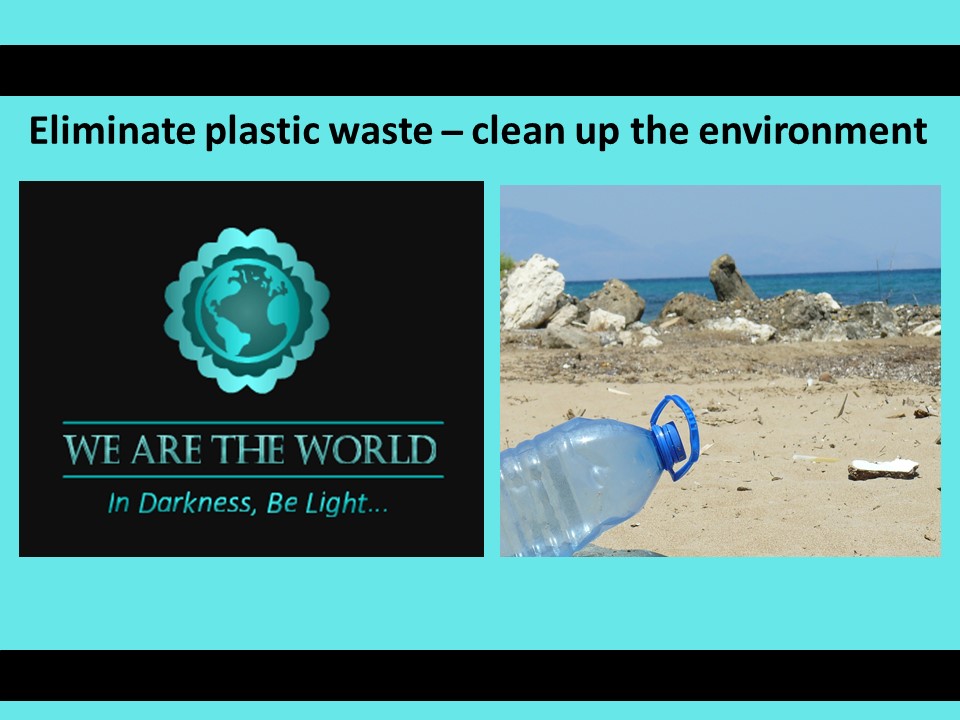
It seems the world is finally taking note of the damage we are doing to our environment with plastic pollution. Governments, communities and individuals all over the world are taking steps to reduce and clean up the waste that is already causing havoc to our Earth and its inhabitants.
This month with World Turtle Day just gone, and World Environment Day coming up on 5 June, there is no shortage of stories to share. I settled on this one about fishermen in Kerala (situated along India’s southern coast) who, for the past ten months, have been Fishing for plastic from the sea.
So far 25 tonnes of plastic rubbish have been removed from the sea. Most of the plastic is recycled into making roads. I think that’s a mighty fine effort in helping to make our environment clean by beating plastic waste.
1. Keep your post to Below 500 words, as much as possible.
2. Link to a human news story on your blog, one that shows love, humanity, and brotherhood. Paste in an excerpt and tell us why it touched you. The Link is important, because it actually makes us look through news to find the positive ones to post.
3. No story is too big or small, as long as it Goes Beyond religion and politics, into the core of humanity.
4. Place the WE ARE THE WORLD badge or banner on your Post and your Sidebar. Some of you have already done so, this is just a gentle reminder for the others.
Help us spread the word on social media. Feel free to tweet, share using the #WATWB hashtag to help us trend!
Tweets, Facebook shares, Pins, Instagram, G+ shares using the #WATWB hashtag through the month most welcome. We’ll try and follow and share all those who post on the #WATWB hashtag, and we encourage you to do the same.
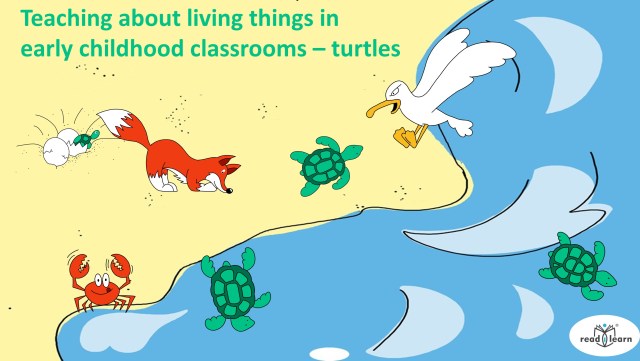
Teaching about living things has an important place in early childhood classrooms. In the science curriculum in their first few years of school, children learn
In my response, I’m adding a little more to Marnie’s story. As soon as she could, Marnie disappeared from her abusive family. It was years after her parents had died that the authorities found her. Though she’d travelled back to view the house in which she’d spent her early years, it held no fond memories and she instructed the solicitors to sell. In doing so she thought she’d closed the door on that chapter of her life.
This event occurs some months later and suggests that perhaps property values, as beauty is, are often in the eyes of the beholder.
Property values
The letter lay unopened for weeks. She had no more interest in its contents than she had in the house. She’d finished with all that when she told them to sell. Why were they contacting her now?
When a second envelope arrived bearing the same logo she thought to bin them both, but hesitated, and opened the first.
A cheque? She squinted at the numbers, then held it to the light. She counted the zeros, again. Really? How could a property that held so little value for her hold so much for someone else?
The second letter explained — developers.
Thank you for reading. I appreciate your feedback. Please share your thoughts.


















 Norah Colvin