Live Love Laugh Learn … Create the possibilities

Tag: Writing

  • Marnie Stories and AI

    Marnie Stories and AI

    If you followed my blog over the years when I was posting regularly, you may remember the Marnie stories that I wrote in response to Flash Fiction prompts by Charli Mills at the Carrot Ranch. Depending upon the prompts, the 99-word stories provided a snippet of Marnie at various times of her life, from childhood to adulthood. They weren’t written in chronological order of her life, and I hadn’t already written anything of greater length from which I drew them. The stories were simply responses to the prompts as they occurred, and I used them to help develop her character. If you are interested, I collected the stories on their own page, Marnie.

    Recently, a writer friend told me about using AI (ChatGPT) for assistance with her writing, for ideas when stuck, for sequencing events, for suggesting alternate endings. She explained that you could ask ChatGPT anything and it would help. I was surprised. I wouldn’t have thought of using it in that way. I wouldn’t have thought of her using it that way. I wouldn’t have expected her to share so openly that she found it so beneficial. However, as she continued to explain, I was impressed at her resourcefulness and came to understand how useful it could be as an assistant.

    Since writing the Marnie stories, I’d often thought of using them as the basis for writing a longer story about Marnie but hadn’t got around to doing anything with them. I wondered if ChatGPT might help me get started and was amazed at the result.

    I began by asking if it would be able to put different snippets of text about one main character and other characters in time order.

    The response was:

    “Sure! Please share the snippets of text you have. I’ll organize them in chronological (time) order based on the events involving the main character and other characters.”

    So, I inserted all the texts (5620 words) in the order in which I’d written them, and the response was almost instant:

    “Thanks for sharing all the text — there’s a rich and deeply emotional narrative here. I’ve now organized the snippets into chronological order, based on Marnie’s life journey. Some events overlap or reflect back in time, so I’ve placed them where they seem to fit best narratively and psychologically.”

    This was followed by a list of all the snippets (flash fiction stories) under the headings:

    Early Childhood – Home Life and Abuse (5 stories)

    Early School Years – Introduction to School, Bullying, Trauma (20 stories)

    Turning Points – Friendship, Courage, Escape (7 stories)

    Escape, Reinvention, Adulthood (7 stories)

    Resolution – Closure, Reflection, Healing (5 stories)

    Side Scenes/Thematic Parallels (2 stories)

    Needless to say, I was pretty impressed with the speed of response and the organisation of the stories.

    I was then asked: “Would you like this ordered version exported into a document (PDF/Word)? Or do you want me to analyze themes, character arcs, or tone across the timeline?”

    I asked for it to be analyzed for consistency of character, themes and storyline.

    The response was:

    “Absolutely. Your collection of vignettes weaves a deeply emotional and coherent narrative. Here’s a detailed analysis of character consistency, thematic unity, and storyline progression, with specific observations about how these elements succeed — and a few small areas you might refine or clarify if you wish to polish it even further.”

    I was delighted with the ChatGPT conclusion about Marnie’s character:

    “Marnie is written with exceptional psychological realism and emotional depth. Her development follows a believable arc from traumatized child to resilient adult. Across dozens of fragments, her behaviors, reactions, and internal thoughts consistently reflect:

    • Complex trauma symptoms: dissociation, hyper-vigilance, self-blame, learned helplessness, retreating to small enclosed spaces.
    • Moments of growth: brief smiles, curiosity, creativity, cautious trust.
    • Innate sensitivity and intelligence, masked by educational delays, confusion, or misunderstanding of expectations.
    • Symbolism in the unicorn: a through-line in her identity — innocence, escape, comfort — even when mocked or confiscated.

    Her arc feels deeply earned, from sucking her thumb under the desk to boldly walking away from her past, and finally extending kindness to others.

    Success: Marnie remains emotionally and psychologically coherent at every age, even as her voice matures.”

    In fact, across all the characters, themes and story elements, I was excited about what ChatGPT was giving me. The overall response was positive, but there were also suggestions for improvement.

    🔹 Overall Evaluation

    🌟 Strengths:

    • Deep psychological insight.
    • Lyrical but grounded language.
    • Emotional authenticity.
    • Clear voice for each character.
    • Motifs like unicorns, mud, colour, silence, and locked doors are effective and memorable.

    🛠 Possible Refinements (only if aiming for publication-level polish):

    • Slight reduction of duplicate imagery (multiple unicorn-tripping incidents).
    • Make sure developmental language matches Marnie’s age, especially in early internal monologues.
    • Brucie’s arc could either be extended or left open intentionally — just make it a conscious choice.”

    Now that I have this first evaluation with suggestions for refinement, I feel empowered to continue working on Marnie and her story. Whether human readers would feel as positive, I don’t know, but at least now I’m ready to give it a go.

    My main purpose in writing this post is to encourage you, if you haven’t done so yet, to give ChatGPT a try if you’re stuck on an idea or need a prompt to get started. If you’ve also experienced success in using it, I’d love to hear how.

  • Two new books by Norah Colvin for Library For All

    Two new books by Norah Colvin for Library For All

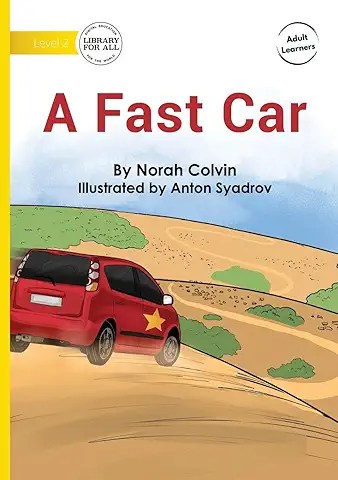
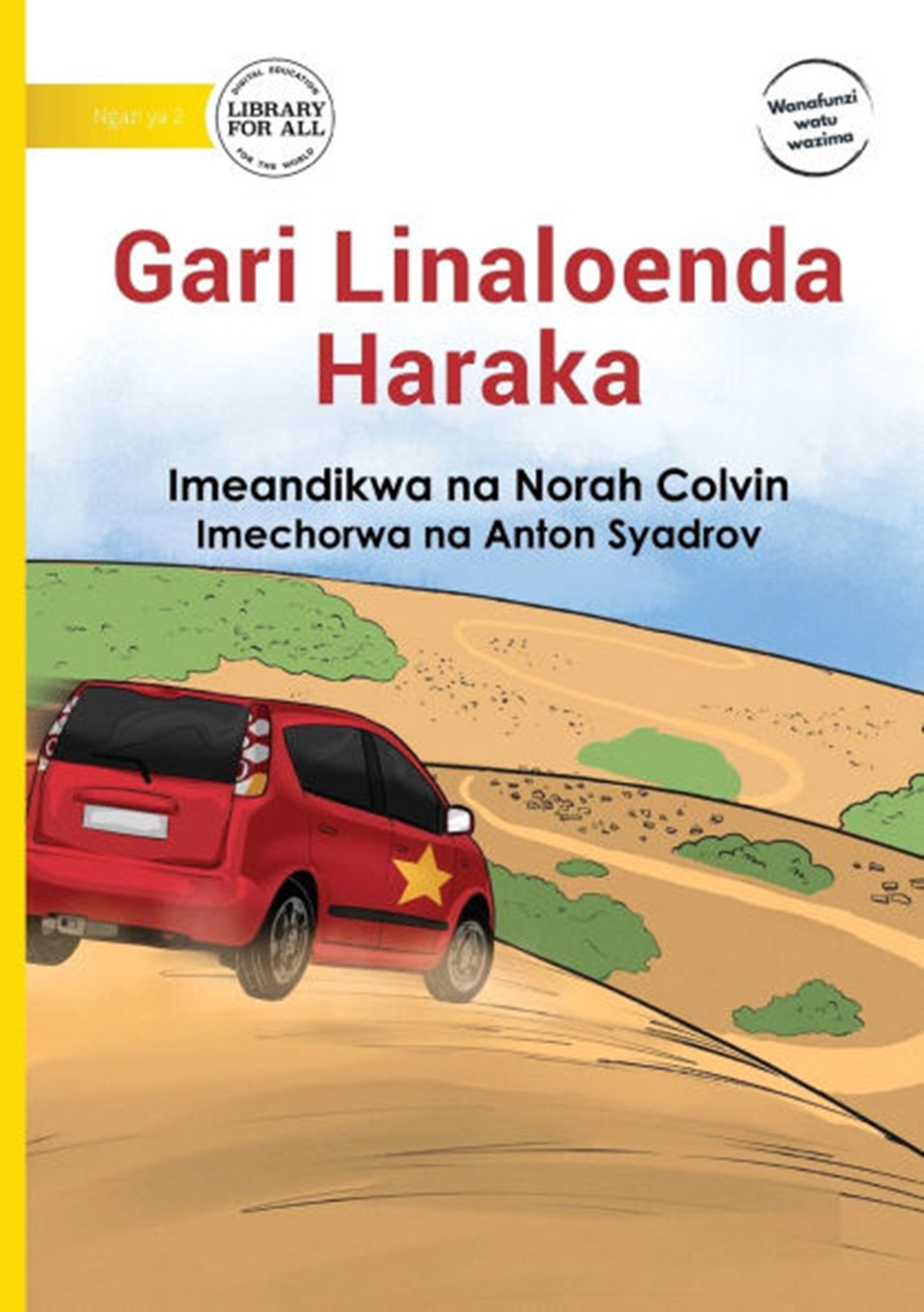
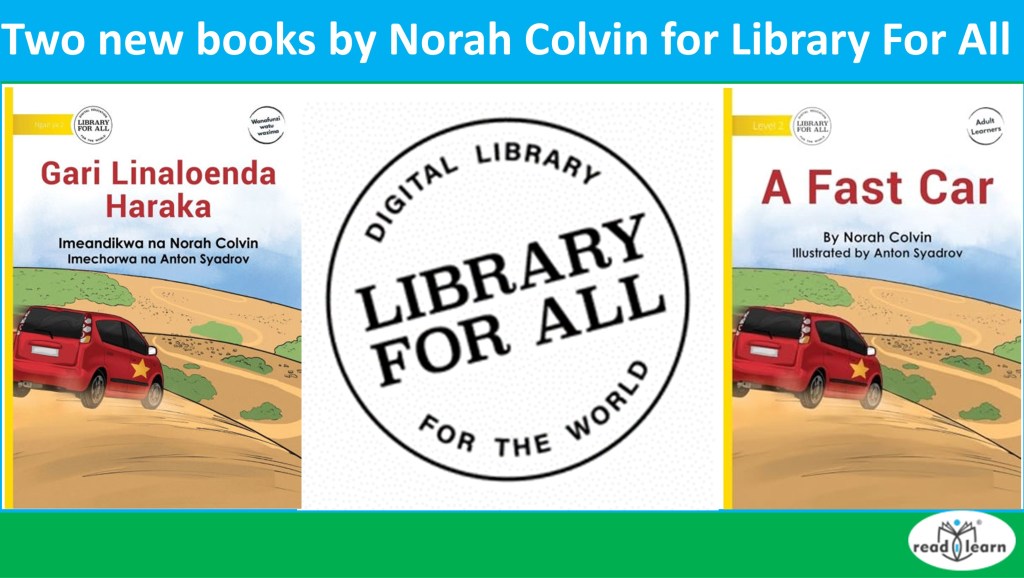
    Earlier this month I was excited to receive copies of two new Library For All publications in the mail, especially when they were books written by me! The books are two versions of the same text, one in English, A Fast Car, and the other in Swahili Gari Linaloenda Haraka.

    I have now contributed over twenty books to the Library For All collection, with five published in languages other than English, including Gari Linaloenda Haraka (A Fast Car in Swahili), I maamaeka iaa? (Where Do I live? in the language of Kiribati) and Ami-nia Jardin Arkuiris (Our Rainbow Garden in Tetum, the language of Timor-Leste). Where Do I Live? and What Do They Give Us? are also published in Burmese and Vietnamese. Of course, I am delighted to be able to contribute to the wonderful work of Library For All in this way and support the development of literacy worldwide.

    About Library For All

    From their website:

    “We believe everyone should have access to stories that reflect their world—and see the potential in new ones. Alongside our local and global partners, we develop, publish and deliver culturally relevant books for children and young readers, breaking barriers where access to learning resources is limited.”

    “We’re passionate about building partnerships to ensure knowledge accessible to all, equally.

    From offline locations in Papua New Guinea, to remote communities in Ethiopia and crisis areas in Ukraine, Library For All is already supporting more than 560,000 children on their learning journey.

    One study revealed that children reading with us could recognise 71% more words than their peers.”

    Tetum, an Austronesian language spoken on the island of Timor that is an official language of

    Accessing the Library For All collection

    While the entire collection of digital books is available to download free from Library For All through a free app, the purchase of printed books from the collection helps to support the work of Library For All. You can find all the books and access the apps for both Android and Apple in their website shop here.

    My books can be found on my Amazon Author page.

    Enjoy exploring the Library For All collection.

    Best wishes,

    Norah

  • Happy Christmas 2024

    Happy Christmas 2024

    I have been silent on my blog for an entire year. It both surprises me and doesn’t surprise me at the same time. I knew I had done very little writing this year, but I didn’t realise I had done none!

    I have struggled this year to find any head or heart space for writing. I just felt empty. Sadly, I couldn’t rally the energy to sustain any meaningful reading either. So, as well as neglecting my own blog, I have neglected yours too. It’s not that I didn’t think of you or didn’t have the wish (I did). I just didn’t have the will. I apologise and hope that you will forgive me. I hope to slowly make my way back to some writing and reading next year. In the meantime, I wish you

    A Very Happy Christmas

    and

    Health and Happiness throughout 2025.

    Best wishes,

    Norah x

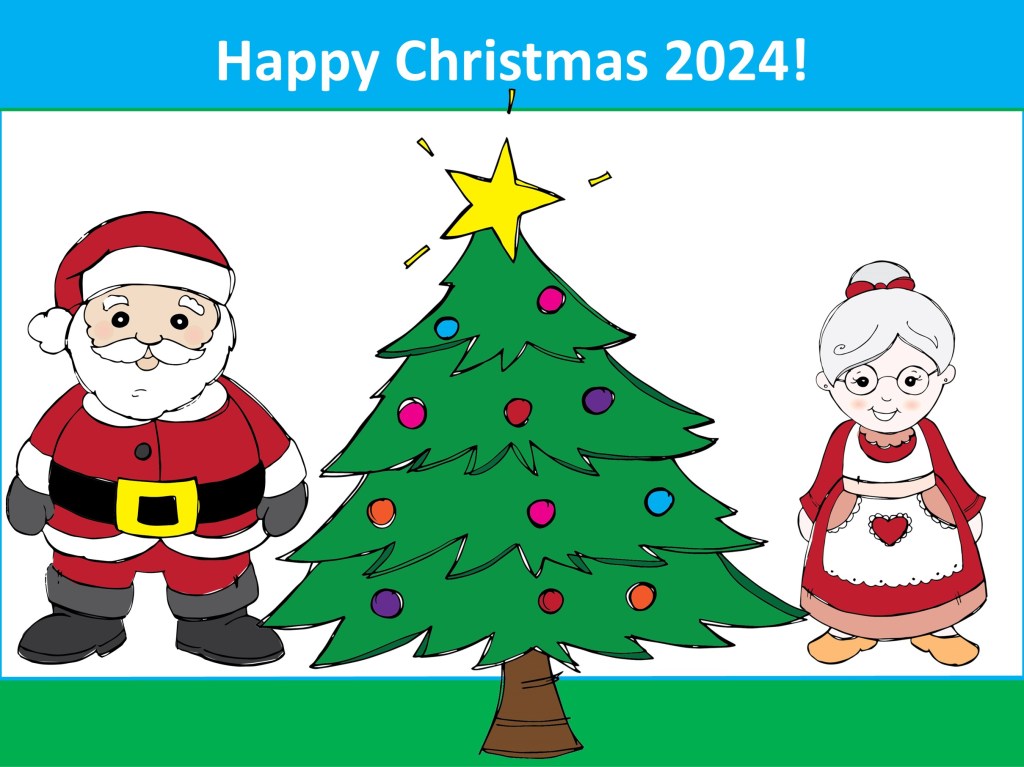
    Here is a Christmas story for the children.

  • Literary Artist #99WordStories

    Literary Artist #99WordStories

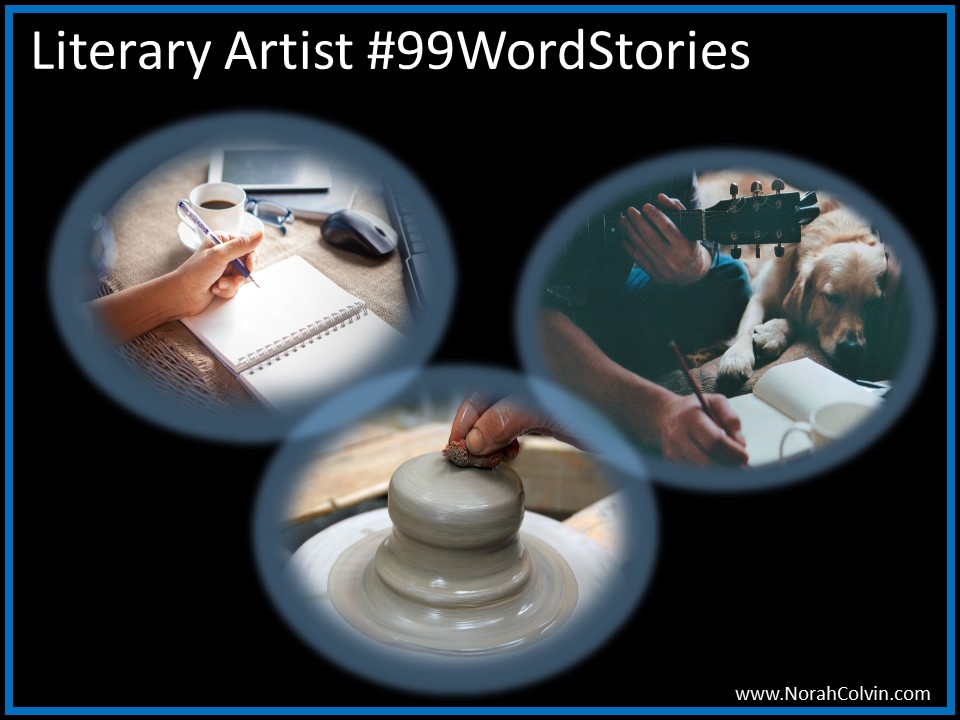
    This week at the Carrot Ranch, Charli Mills challenged writers to In 99 words (no more, no less), write a story about what it means to be a literary artist. You can pull from your own experience, re-imagine the idea, or embody something else in a character. Be playful, go deep, and let your story flow. Go where the prompt leads!

    This is my response. I hope you enjoy it.

    If only …

    In her mind she was a literary artist, painting exquisite word pictures and enthralling plots, her titles on everyone’s lips. When it didn’t eventuate, she blamed busyness and writer’s block. She could have, if only.

    He dreamed of being a musical artist, composing melodies to make hearts sing, first choice of orchestras everywhere. When it didn’t emerge, he cited family responsibilities. He could have, if only.

    They pictured themself as a visual artist, creating magnificent sculptures commissioned by international celebrities. When it didn’t evolve, they howled discrimination and poor upbringing. They could have, if only.

    Might have, if only.

    Thank you blog post

    Thank you for reading. I appreciate your feedback. Please share your thoughts.

    Note: The collection of stories made in response to the previous prompt A Smear of Jam, including mine, can be read at the Carrot Ranch.

  • What’s an apostrophe for? – #readilearn

    What’s an apostrophe for? – #readilearn

    It’s not uncommon to see apostrophes used incorrectly, even in professional writing. But apostrophes don’t have to be difficult. They really have just two uses — for contractions and to show possession. Apostrophes aren’t confusing or tricky when the rules are understood.

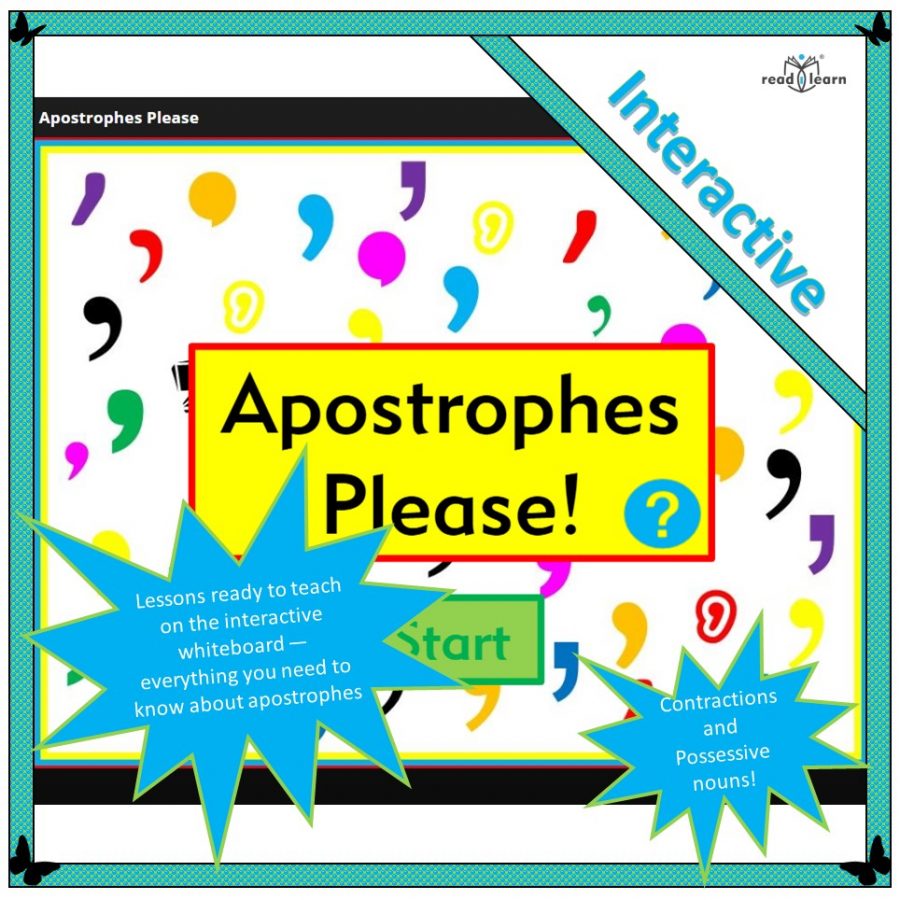
    To support your teaching of this punctuation mark and to encourage writers to get their writing right, I have produced an interactive resource that explains, demonstrates and provides practice in its correct use. It is called Apostrophes Please!

    About Apostrophes Please!

    Apostrophes Please! is an interactive resource, ready for use on the interactive whiteboard. It consists of enough material for a series of lessons teaching the correct use of apostrophes in both contractions and possessive nouns.

    Like other readilearn resources, Apostrophes Please! recognises the value of teacher input and the importance of teacher-student discussion. It is not designed for children to use independently. It relies simply on effective teaching.

    The resource provides flexibility for the teacher to choose activities which are relevant to student needs and teaching focus. All lessons and activities encourage explanation, stimulate discussion and provide opportunities for children to practise, explain and demonstrate what they have learned. There are nineteen interactive slides and over thirty slides in all.

    Organisation of Apostrophes Please!

    Contractions and possessive nouns are introduced separately.

    Apostrophes Please! Contractions menu
    Apostrophes Please Possession menu

    Both sections include three subsections, each consisting of a number of slides:

    • Learn — explanatory teaching slides introduce how apostrophes are used
    • Practice — interactive activities provide opportunities for teachers and students to discuss, demonstrate and explain how apostrophes are used
    • Check — a review of the use of apostrophes provides additional opportunities for practice, discussion and explanation to consolidate learning.

    Continue reading: What’s an apostrophe for? – readilearn

  • For the Love of Books – #readilearn

    For the Love of Books – #readilearn

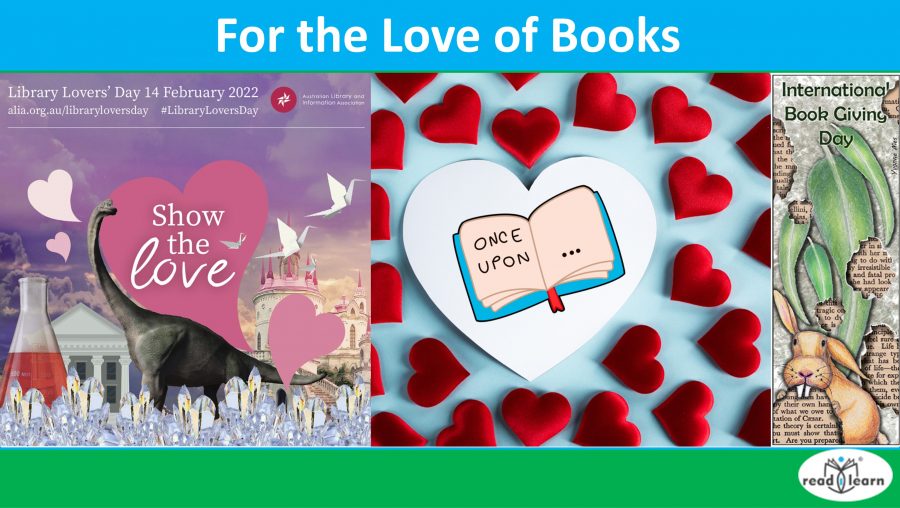
    Next Monday 14 February is a day with much to celebrate. As well as Valentine’s Day, it’s Library Lovers’ Day and International Book Giving Day.

    It’s not difficult for me to talk about love and books in the same sentence as I have loved books for as long as I can remember. Although my reading habits have changed over the years, I have always been an avid reader and was a dedicated borrower of books from the library as I was growing up.

    As an adult, I tend/ed to purchase rather than borrow for my own reading and could never pass a book shop without purchasing something for me, a family member or friend, and a picture book or three for my classroom collection. Books borrowed from the school library filled out the classroom library.

    A birthday, Christmas or other occasion never passed without giving and receiving books. So, being able to combine the celebration of love, books and an appreciation for libraries is a treat. Nothing could be easier. Simply take someone you love to the library and gift them a book.

    About Valentine’s Day

    Valentine’s Day probably needs no introduction. In many parts of the world, it is a day for celebrating love and romance. Gifts of chocolates, flowers and verses in cards are often given.

    Of course, in the classroom, our discussions aren’t about romantic love, but that doesn’t mean we can’t think about those important people in our lives whom we do love.

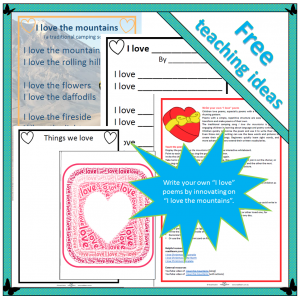
    Children can write their own “I love” poem by innovating on the traditional camping song I love the mountains.

    Continue reading: For the Love of Books – readilearn

  • Grandpa’s Tool Shed #flashfiction

    Grandpa’s Tool Shed #flashfiction

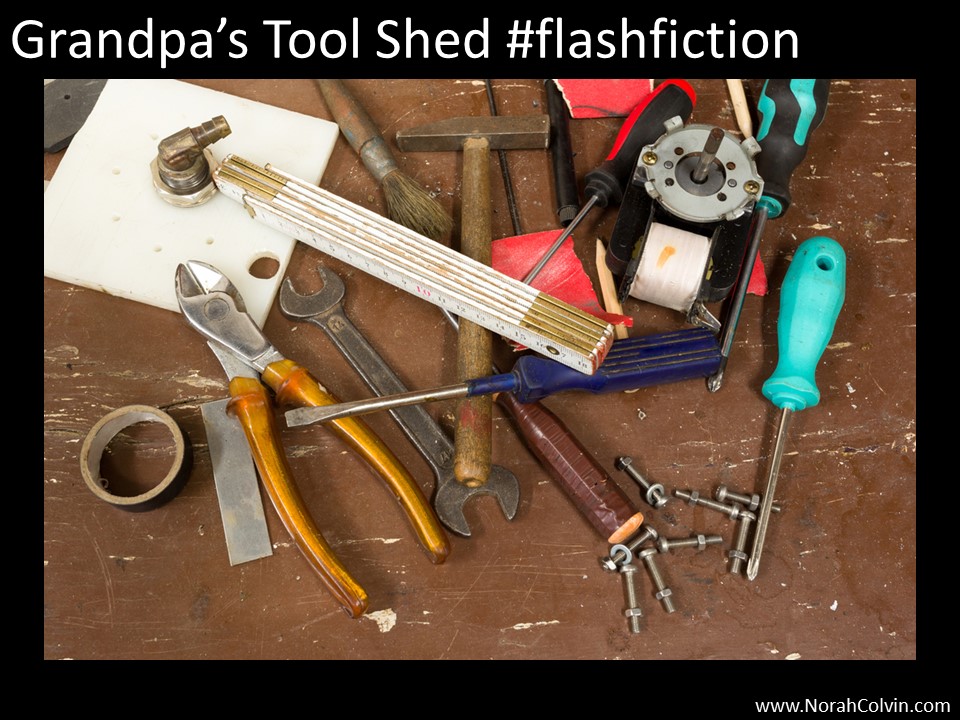
    This week at the Carrot Ranch, Charli Mills challenged writers to In 99 words (no more, no less), write about tools. Whose tools are they and how do they fit into the story? What kind of tools? Go where the prompt leads!

    Charli, of course wrote about writer’s tools and provided a multitude of links to great resources for learning about them. She also wrote about tools for dealing with snow, but I can only imagine using them. My experience with snow is very limited.

    I drew upon my memories of childhood for my response. I hope you like it.

    Grandpa’s Tool Shed

    Jacob worked tirelessly alongside Grandpa. He loved the sweet scent of sawdust curls and the heady smell of fresh paint. He loved that ash from Grandpa’s cigarette fell unchecked into the shavings. He especially liked using Grandpa’s real tools. The plastic bench at Kindy was only a toy.

    Jacob’s visits decreased but Grandpa never forgot. He left the house, the shed and all his tools to Jacob. Standing in the dark empty shed, Jacob tried to conjure the smells of Grandpa. There was nothing else to do. He rolled up his sleeves and started planing sawdust curls — in memory.

    Thank you blog post

    Thank you for reading. I appreciate your feedback. Please share your thoughts.

  • Handouts for Parents to Support Children’s Learning – #readilearn

    Handouts for Parents to Support Children’s Learning – #readilearn

    Here at readilearn we recognise that not all learning takes place in school. We know that learning can occur anywhere at any time and continues throughout life. It can be planned or incidental. It can be fun and joyful. It can even cause frustration at times. In fact, some frustration may encourage the learner to push further and try harder to find a solution. That is especially so when the frustration occurs in a purposeful activity in which the learner is engaged and feels a need to solve. Unsuccessful attempts don’t mean failure. They mean it’s time to try again. We see this in situations from a child learning to walk or ride a bike to scientists finding a cure for disease. What we most need to do to develop a love of learning is inspire curiosity and creativity and avoid ringbarking either through confinement.

    As the end of the school year in Australia approaches, most teachers and parents are looking forward to the holidays as much as the students are. The last couple of years have been tough with changes to teaching and learning circumstances and the increased involvement of parents in monitoring their children’s school learning at home. While parents may have become more familiar with teaching methods used in the classroom, it is important for them to realise that learning can still occur during the holidays without the formality of classroom exercises.

    The most important things parents can do for children, right from birth and through their developing years and beyond, is to talk with them, play with them and read to them — every day. The same can be said for teachers.

    I previously shared this wonderful TEDtalk by 7-year-old Molly Wright in a post about The Importance of the Early Years. But it is inspiring and watching it gives me joy and I thought watching it might also give you joy. It is definitely worth sharing with parents to encourage and affirm positive interactions with their children.

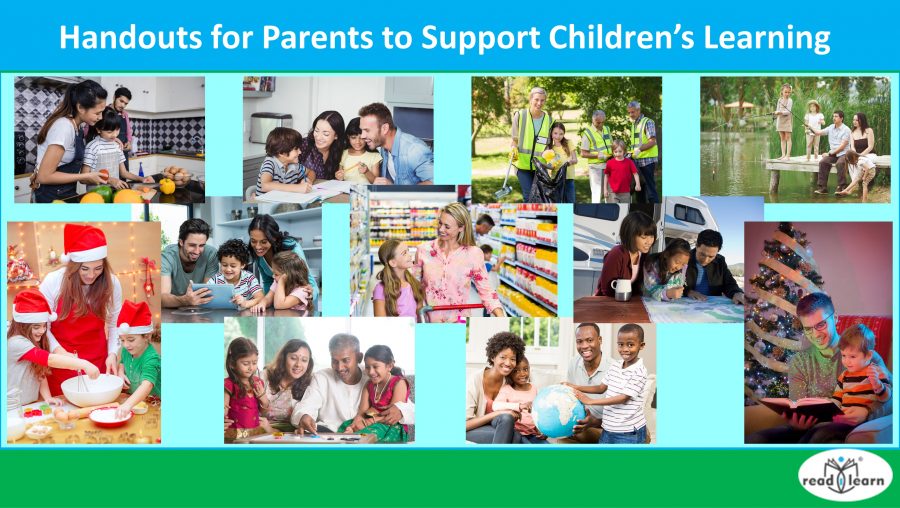
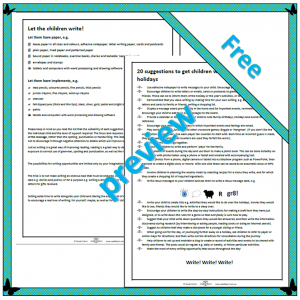
    We also have some handouts of suggestions which you are welcome to copy and send home to parents. You can find them in the Classroom Management — For Parents collection. They are all free resources and suggest ways of increasing the learning in everyday situations, mostly by being aware of the opportunities that arise incidentally throughout the day.

    21 suggestions for maintaining reading momentum during the holidays

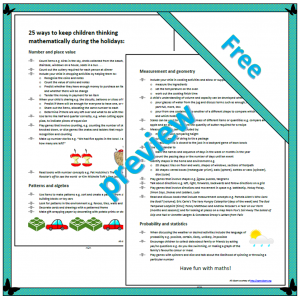
    25 ways to keep the children thinking mathematically during the holidays

    Continue reading: Handouts for Parents to Support Children’s Learning – readilearn

  • Priorhouse Interview

    Priorhouse Interview

    A few weeks ago, I was delighted to be interviewed by Yvette Prior on her Priorhouse blog.

    I have known Yvette for a few years now and always enjoy reading her posts that share photography, art, humour and wisdom.

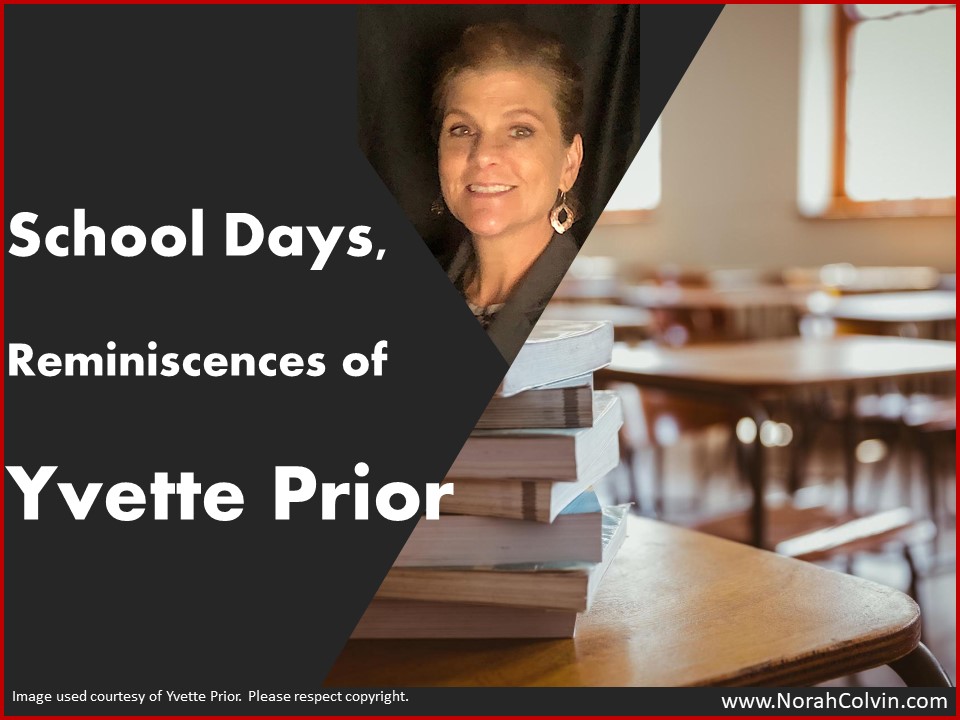
    School Days Reminiscences of Yvette Prior

    A couple of years ago, Yvette participated in my School Days, Reminiscences series. You can read her post here. You can also find out about her books at the end of that post or on her website here.

    Yvette has a wonderful way of presenting interviews on her blog. If you are interested in reading our conversation and finding out a little more about me, please pop over to Yvette’s blog to read : Norah Colvin @ Readilearn (Priorhouse Interview)

  • Candy Kitchen #flashfiction

    Candy Kitchen #flashfiction

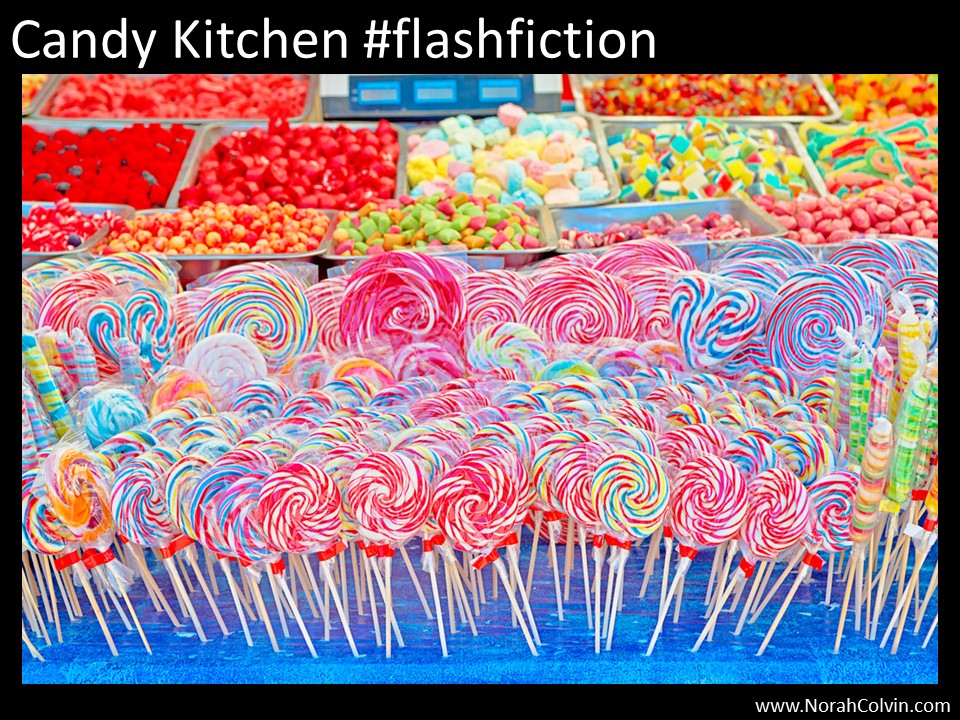
    This week at the Carrot Ranch, Charli Mills challenged writers to In 99 words (no more, no less), write a story that features a candy kitchen. You can interpret the phrase creatively or stick to the traditional. Is it sweet? Ironic? Any genre will do. Go where the prompt leads!

    My thoughts about a candy kitchen went straight to Roald Dahl’s book Willy Wonka and the Chocolate Factory. What an incredible candy kitchen that was. And then there was the song The Candy Man performed by Sammy Davis Jr.

    Who wouldn’t want to be a kid in a candy store, or better yet, a kid in a candy kitchen?

    I thought of the busy kitchen of my childhood, with my mother making sweets for Christmas treats. There were rum balls and peanut brittle, chocolate bark and caramel fudge, coconut ice and marshmallow, and who knows what other sweet delights. I don’t remember them all. But I do remember one more recent Christmas when the choice of sweets became a philosophical rather than taste decision.

    This is a fictionalised version of the incident. I hope you enjoy it.

    Marshmallow Waves

    The cooks bustled about my kitchen making sweets to gift.

    “I love homemade gifts,” she said.

    “Especially when we get to share,” he said, sampling largish crumbs of fudge and coconut ice.

    “Marshmallow is amazing,” she said. It mixes up so light and fluffy,”

    “What’s in it?”

    “Sugar, water and gelatine.”

    “What’s gelatine?” he asked.

    I dared not tell the vegetarians, but he searched for information on his phone.

    “We can’t eat that,” he spluttered. “Gelatine’s made from animal bones!”

    The marshmallow mix, so light and fluffy, was binned. Not even a taste for me, although I’m not vegetarian.

    Thank you blog post

    Thank you for reading. I appreciate your feedback. Please share your thoughts.