Live Love Laugh Learn … Create the possibilities

Tag: Teaching Resources

  • Christmas classroom activities that focus on learning – Readilearn

    Christmas classroom activities that focus on learning – Readilearn

    As Christmas draws near, keeping children focussed on their lessons can be a challenge for teachers. But it’s not impossible. It is not necessary to fill every moment with Christmas themed activities, but a few interspersed throughout the day can be motivating and lift everyone’s spirits. Activities that promote children’s learning should always take precedence over time fillers.

    To assist teachers keep the focus on learning while children would rather be thinking of Christmas and holidays, I have prepared a range of lessons and suggestions for use in different subject areas. Many of the lessons and suggestions integrate learning across curriculum areas. All readilearn Christmas themed activities can be found under the Cultural Studies tab in the subcategory Christmas.

    Focus on the children

    A great place to start is always with the children and their family’s traditions.

    Begin with a survey to find out which children in the class do and do not celebrate Christmas. While you will already have an idea of which children do, it can be an interesting way to begin the discussion of different cultural traditions celebrated by children in your class.

    The main ingredient in any of these discussions should always be respect, and it is important to find ways of making classroom activities inclusive.

    How many school days until Christmas?

    Advent Calendars that count down the twenty-five December days until Christmas are great for families to use in the home but not so suitable for school. What about counting down the school days until Christmas? Twenty-five school days would mean starting at least five weeks before school finishes, which might be a bit soon, so choose another number which suits your program. Fifteen (three weeks) could be a good number. (Note: If, for inclusivity, you didn’t wish to count down to Christmas, you could count down to the holidays.)

    A countdown calendar

    Schedule opportunities for the children to present information about their family traditions as part of the countdown.

    Continue reading: Christmas classroom activities that focus on learning – Readilearn

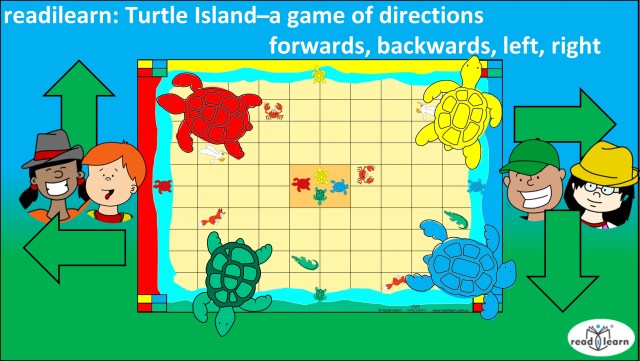
  • readilearn: Turtle Island – a game of directions: forwards, backwards, left, right

    readilearn: Turtle Island – a game of directions: forwards, backwards, left, right

    The ability to give and follow directions according to one’s location is an important skill and one that we frequently use in everyday life. Some of the first directions we use are forwards, backwards, left and right. Often when we teach children these directions, everyone is facing the same way and move in unison.

    Understanding that the directions are relative to the way you are facing, and may be different for someone facing another way, can be tricky to develop. Many of us early childhood teachers experience difficulty identifying our own left and right after years of facing children as we teach them their left and right.

    I have always considered games to be a great tool for learning. They not only provide a fun way of learning concepts, but they also provide opportunities for children to interact with each other and learn the social skills of getting along at the same time. Games help build positive attitudes toward school, learning and each other. They often incorporate learning across the curriculum and can be used in groups, with buddies or with an adult support person.

    This week, I have uploaded a new printable board game which involves children in following directions. For the next few weeks, the game will be available free to everyone, whether a registered readilearn user or not. Why? Because I need your help, please.

    Continue reading: readilearn: Turtle Island – a game of directions: forwards, backwards, left, right

  • Reading the Iron Man to spark imagination, inspire writing and motivate making – Readilearn

    Reading the Iron Man to spark imagination, inspire writing and motivate making – Readilearn

    One of my favourite read-aloud books is The Iron Man by Ted Hughes. The influence of poetry is obvious in this compelling modern fairy tale that begins as it might end.

    When I introduce this book to children, I conceal it so they cannot see from which part of it I am reading. I tell them the title of the book and ask them to tell me whether I am reading from the beginning, the middle or the end of the book.

    I then read, mostly without interruption though I do explain that ‘brink’ is the very edge, the first two pages that describe the Iron Man and how he stepped off the top of a cliff into nothingness and crashed into pieces on the rocks below.

    The children listen in awe, fascinated by the size of the Iron Man, incredulous that he would step off the cliff, mesmerised by the telling of each part breaking off and crashing, bumping, clanging to lie scattered on the rocky beach.

    They invariably tell me it is the end of the story. How could it be otherwise? When I tell them it is just the beginning, they are amazed and excitedly discuss how the story might continue. This could lead to writing if the children are keen, but there are other opportunities further into the story.

    When this initial discussion has run its course, I go back to the beginning and read it again, stopping to encourage further discussion and to spark the children’s imaginations.

    allow their imaginations to contemplate possibilities

    Continue reading: Reading the Iron Man to spark imagination, inspire writing and motivate making – Readilearn

  • readilearn: Engaging mathematics learning with Halloween themed resources

    readilearn: Engaging mathematics learning with Halloween themed resources

    In just a couple of weeks, people in many parts of the world will be celebrating Halloween. Even in Australia, where the festival has only recently begun to take hold, merchandise now fills our (mainly discount) stores, and children look forward to a night of fun, knocking on doors and collecting treats from family and friends.

    The festival dates back two thousand years to its origins in what is now Ireland, England and France. Irish immigrants took the festival to America in the 1800s. Halloween arrived in Australia with immigrants and through its portrayal in movies and on television. Always looking for an excuse to party, Australians are ready to join in.

    Originally, the festival celebrated the end of summer harvests and marked the beginning of the long dark northern winters. The festivities have evolved over the centuries with changes to focus and traditions.

    I have always thought that adding a bit of fun to the school day helps the learning go down. If the children are going to be distracted by thoughts of their Halloween costumes and what booty they might score in an evening of trick or treating, why not harness those distractions and channel them into learning?

    To combine fun with learning, this week I have uploaded three new interactive Halloween themed maths resources for use on the interactive whiteboard. The resources help to develop number concepts up to ten and are available to subscribers. As do other readilearn resources, they acknowledge that it is the richness of discussion occurring between teacher and children that helps to consolidate children’s learning.

    Continue reading: readilearn: Engaging mathematics learning with Halloween themed resources

  • readilearn: Books on Wednesday — The Forever Kid by Elizabeth Cummings

    readilearn: Books on Wednesday — The Forever Kid by Elizabeth Cummings

    This week I have great pleasure in introducing Elizabeth Cummings author of The Forever Kid. This post is but one of several celebrating Elizabeth’s beautiful picture book in Romi Sharp’s Books on Tour. Please read to the end of the post for details of other posts celebrating Elizabeth’s work.

    About Elizabeth Cummings

    Elizabeth Mary Cummings is a British author based in Australia. She writes, advocates for and speaks about storytelling and health matters for families and youth. She is a qualified Primary School teacher and has worked in many schools in the UK, New Zealand and Australia. She is a member of the American Psychology Association and studied psychology and business studies at The University of Edinburgh in Scotland before training to be a Primary School teacher and travelling around the world with her family.

    The topics in Elizabeth’s books are of both local and global significance. Elizabeth travels globally to talk about family and mental health matters as well as creative writing.

    About The Forever Kid

    The Forever Kid, a sensitively written picture book about life after the death of a sibling, is a culmination of four years’ work.  Beautifully illustrated by Cheri Hughes, it is published in Australia by Big Sky Publishing.

    Synopsis

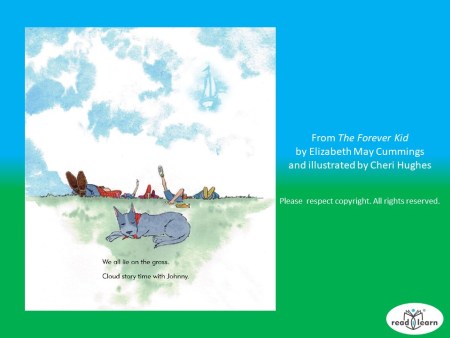
    It is Johnny’s birthday and, although Johnny is no longer with them, his family gather to celebrate. Johnny’s brother explains to the reader how much Johnny meant to every member of the family and how the family feel closest to him when they remember him on his birthday. The story finishes with the family lying together on the grass telling each other cloud stories, just like they used to with Johnny.

    Continue reading: readilearn: Books on Wednesday — The Forever Kid by Elizabeth Cummings

  • readilearn: Smiles unite our world

    readilearn: Smiles unite our world

    Today is a day to celebrate. It is both World Teachers’ Day and World Smile Day. What a great combination. In addition, these special days also coincide with World Space Week which is celebrated from 4 – 10 October.

    World Teachers’ Day

    World Teachers’ Day celebrates the contribution that teachers make to education around the world.

    This year’s event marks the 70th anniversary of the Universal Declaration of Human Rights (1948) in which education is recognised as “a key fundamental right and establishes an entitlement to free compulsory education, ensuring inclusive and equitable access for all children”.

    This year’s theme is “The right to education means the right to a qualified teacher.”

    According to UNESCO, “One of the main challenge [sic] to this right worldwide is the continued shortage of teachers. There are an estimated 264 million children and youth still out of school globally, and according to the UNESCO Institute of Statistics, the world needs to recruit almost 69 million new teachers to reach the 2030 education goal of universal primary and secondary education. This ‘teacher gap’ is more pronounced among vulnerable populations – girls, children with disabilities, refugee and migrant children, and poor children living in rural or remote areas.”

    If you wish to support organisations that provide education for people in need, this list on informED might be a good place to find one. I’m sure there are many more and perhaps some closer to home. The focus of The Smith Family, one of the organisations I support, is on helping disadvantaged Australian children get the most out of their education so they can improve their futures.

    Having spent almost all my life in education in a variety of roles; including student, teacher, teacher support and educational writer, I know how hard teachers work and the importance of the contribution they make to each life they touch. I also know that sometimes they work in situations that cause them much stress, in which they don’t feel valued, and are unsupported. Sadly, more and more experienced teachers are leaving the classroom for these and other reasons, which will only make it more difficult to reach the 2030 goal of universal education.

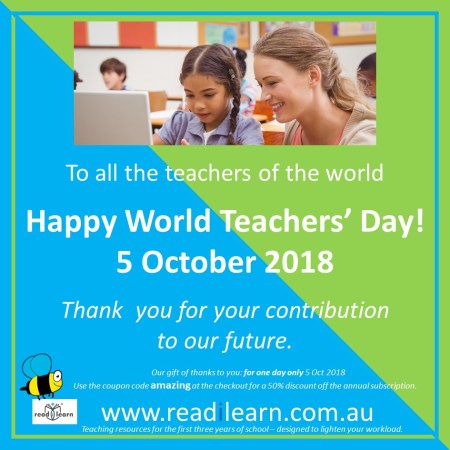
    Happy World Teachers' Day discount subscription

    Continue reading: readilearn: Smiles unite our world

  • readilearn: freemium lower primary teaching resources with lessons ready to teach

    readilearn: freemium lower primary teaching resources with lessons ready to teach

    In this post, I explain what readilearn is and how it works. There is more to readilearn than just this blog. In fact, this blog is just one small part of it.

    readilearn is a collection of digital teaching resources designed for use with children from about five to seven years of age in their first three years of school. They are equally suited to the homeschool situation and for use with ESL students.

    A freemium website, readilearn provides free support and resources for teachers in a variety of ways. However, some resources are exclusive to subscribers. The small annual subscription of just AU$25 reduces teachers’ workloads with lessons ready to teach and recognises and adds little to the expenditure many already occur in purchasing resources for their classrooms.

    Resources are available across curriculum areas. Many provide contexts for integrating learning in fun and meaningful ways.

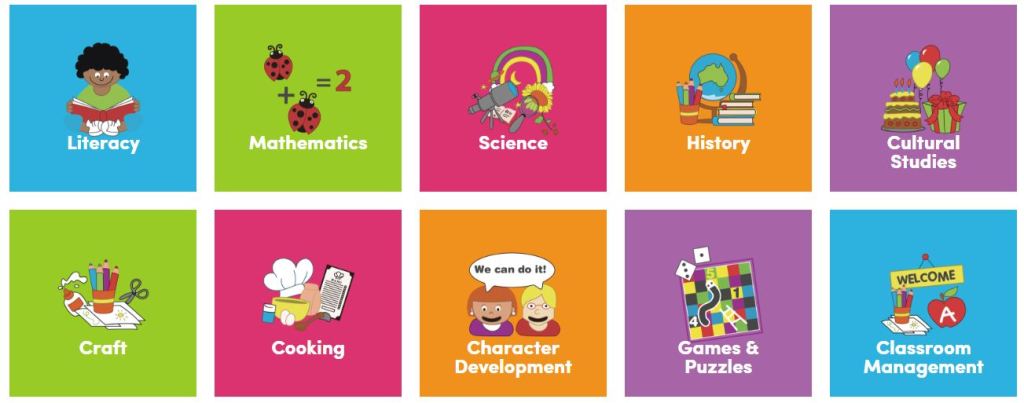
    readilearn categories and subject or curriculum areas

    readilearn resources support teachers teaching and children learning by providing opportunities for discussions that promote thinking, collaboration and learning across the curriculum. Open-ended discussions encourage children to learn from each other as well as the teacher and to participate at their own level.

    Resources include
    • original digital stories (estories)
    • interactive teaching episodes
    • open-ended problem-solving activities
    • readilessons (lessons ready to teach)
    • printable activities
    • teaching suggestions
    • notes for parents
    • and more.
    Free from readilearn

    Continue reading: readilearn: freemium lower primary teaching resources with lessons ready to teach

  • readilearn: Introducing Robbie Cheadle author and illustrator of the Sir Chocolate Book series

    readilearn: Introducing Robbie Cheadle author and illustrator of the Sir Chocolate Book series

    This week I have great pleasure in introducing you to Robbie Cheadle author and illustrator of the Sir Chocolate Book series.

    What most appeals to me about the Sir Chocolate Books is Robbie’s amazing fondant illustrations. I am also impressed that her twelve-year-old son Michael co-authors the books with her, and has been since he was ten. Perhaps your children will also find this aspect interesting.

    About the books

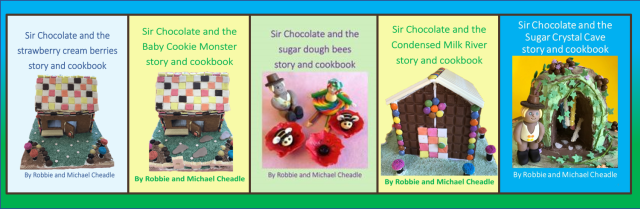
    Sir Chocolate and Lady Sweet live in Chocolate Land where everything can be eaten. In each story, told in rhyme, Sir Chocolate and Lady Sweet have a new adventure or problem to solve. Robbie also includes recipes from the story in each book.

    To date, there are five books in the Sir Chocolate Book series.

    About Robbie

    Robbie Cheadle was born in London. Her father died when she was three months old, and she and her mother emigrated to South Africa where they lived in Johannesburg, George and Cape Town. While growing up, Robbie attended fourteen different schools. This gave her many opportunities to develop social skills and meet new people as she was often “the new girl”.

    Robbie is a qualified Chartered Accountant and writes in that field about equities and investments in South Africa.

    While Michael co-authors the books with her, Robbie’s other son Gregory (aged 14) assists Robbie and Michael with filming and editing their YouTube videos and editing their books. The books are very much a family affair.

    For other books written by Robbie, see the end of the blog post.

    The interview

    Welcome to readilearn, Robbie.

    Thank you for inviting me.

     Robbie, the number of books in the Sir Chocolate book series is continually growing with five books now available. What gave you the idea for this series?

    Continue reading: readilearn: Introducing Robbie Cheadle author and illustrator of the Sir Chocolate Book series

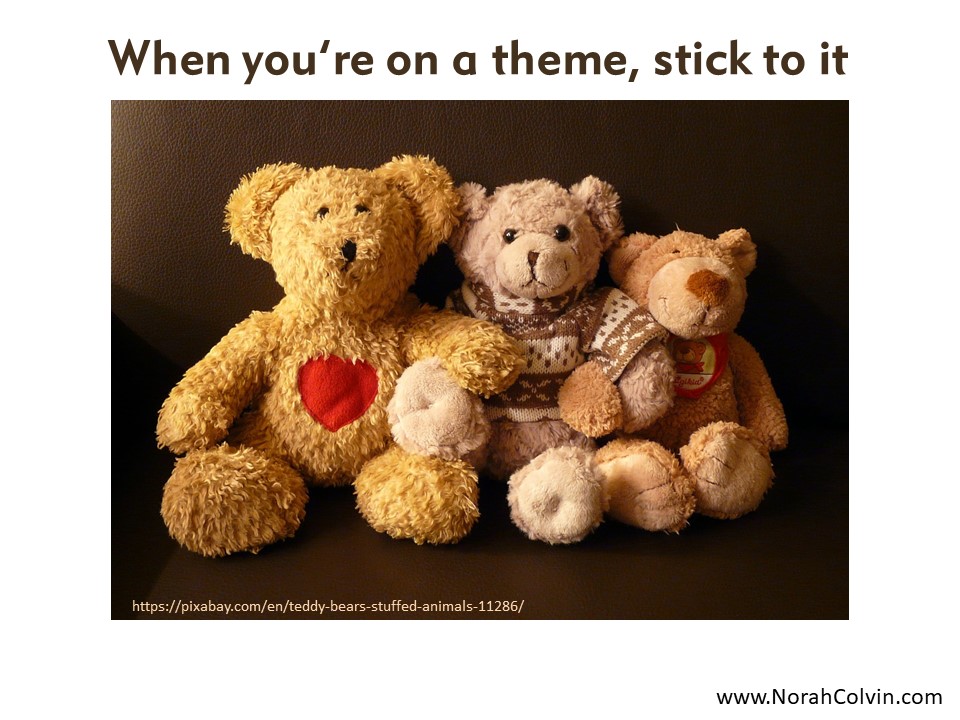
  • When you’re on a theme, stick to it

    When you’re on a theme, stick to it

    Education is my theme. It’s my passion. Sometimes I think I should get another interest, but I’m stuck with this one. Sometimes I get stuck with a theme within a theme too. That’s happening at the moment.
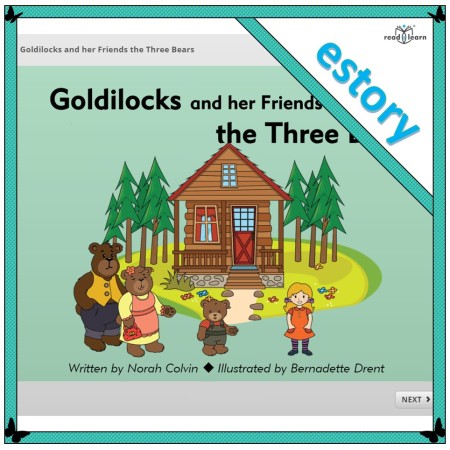
    Goldilocks and her Friends the Three Bears interactive innovation

    A couple of weeks ago, I uploaded an innovation on the traditional story of Goldilocks to readilearn, a collection of teaching resources for the first three years of school. I also added some suggestions for using the resource to teach reading and writing, including sight words in context. I have other supporting resources in progress to be added to the collection soon.

    While my story Goldilocks and her Friends the Three Bears is not really a fractured fairy tale, it’s simply a retelling with an alternative ending; I’ve also been thinking of fractured fairy tales for my Carrot Ranch Rodeo Contest coming up next month. (Look for further details to be published at the Ranch this week.)

    So stuck on this theme am I, that I wrote a 297 (3 x 99) word story as a response to Charli’s Tuff prompt “Papa’s Bar”. While this Free-Write contest is now closed (writers have only twenty-four hours to respond to the prompt), there will be four more chances to enter the TUFFest Ride event with the next one scheduled for September 19. Be sure to look out for it if you want to be in it.

    Note: I’m not sure where or what the Papa’s bar is that Charli alluded to, but I am sure that it’s not what I wrote my story about. In Australia, when we play tiggy, that you might know as tag or tig, or some other name, we might allocate a certain spot as ‘bar’. This means that you are safe and cannot be tagged when on or touching that spot. Sometimes, players will attempt to allocate a spot as bar just as they arrive at it in order to avoid being tagged.

    While I have no thoughts that I may win any of the TUFF contests, it is fun having a go. This is what I wrote in response to the Papa’s Bar prompt. I hope you enjoy it.

    bears sleeping

    Papa’s Bar

    Out in the woods lived a family of bears; Papa Bear, Mama Bear and baby bears five. All summer long, Papa Bear toiled, ensuring his family were contentedly fuelled, ready to sleep through the winter’s long dark. They filled up their bellies with berries hung low, with fish in abundance in streams flowing clear, and hives’ full bounty of gold. Mama and babies had no need to complain, every meal Papa made, a sumptuous feast.  When autumn arrived, and food became scarce, Papa Bear said, ‘Now’s time for bed. Close your eyes little ones, dream sweet dreams until spring.’

    The babies were restless, not ready for sleep.

    ‘We need a story,’ a little one said. ‘Tell us about life when you were a cub. What did you eat? Where did you play?’

    ‘Just one story — then sleep.’

    ‘We need a drink first,’ said the cubs.

    ‘Okay, but lickety-split.’

    They had just settled back when another voice said, ‘I’m hungry.’

    ‘Me too,’ chimed the others.

    ‘Can’t be,’ said Papa Bear. ‘No food until spring.’

    ‘Awh,’ they chorused.

    ‘I could make some porridge,’ yawned Mama Bear.

    ‘Yay! Porridge!’ said the baby bears.

    ‘But then you must sleep,’ said Papa Bear.

    But they didn’t. Before his story was through, Papa Bear was snoring with Mama Bear nestled beside him.

    ‘Let’s play tag,’ smirked one.

    ‘I’m It,’ said another.

    They took turns to run and catch, and through it all, the parent bears slept.

    At last, the littlest bear yawned. No more running and catching, he was ready for sleep. He scrambled over Papa Bear, escaping the tagger’s clutches with a warning, ‘Can’t get me. Papa’s bar.’

    His eyes closed and then, one by one, they snuggled into a big bear hug, murmuring ‘Papa’s bar’ as they drifted off to sleep.
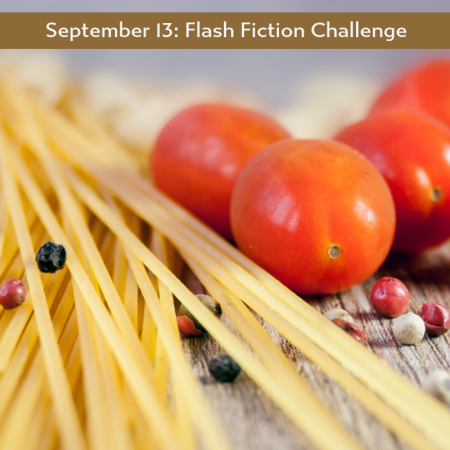
    Pasta prompt for Carrot Ranch Flash fiction prompt by Charli Mills

    When Charli Mills of the Carrot Ranch posted this week’s flash fiction prompt, challenging writers to In 99 words (no more, no less) write a story that includes pasta. It can be spaghetti, macaroni and cheese, or any variety. It can be a meal or a work of art. Go where the prompt leads, how could I not get the bears in on the act again.

    This is my response. I hope you enjoy it too.

    Pasta for Breakfast

    Papa Bear pushed back his chair. “Not this muck again.”

    Mama Bear stopped mid-ladle. “It’s Baby Bear’s favourite. I— I thought it was yours too.”

    Baby Bear’s lip quivered.

    “Pfft! Sometimes a bear needs real food.” He grabbed his hat. “I’m going for a walk.”

    “Papa!” Baby Bear went after him.

    Mama Bear dumped the porridge, pot and all, into the bin, grabbed her hat and followed.

    “Where are we going?” asked Baby Bear.

    “Somewhere nice for breakfast. It is spring after all.”

    Papa Bear paused outside BreakFasta Pasta, then went in.

    Mama Bear smiled; pasta was her favourite.

    Thank you blog post

    Thank you for reading. I appreciate your feedback. Please share your thoughts.

  • readilearn: Celebrating reading and writing on International Literacy Day

    readilearn: Celebrating reading and writing on International Literacy Day

    Tomorrow is International Literacy Day. It has been celebrated on 8 September for over fifty years. The purpose of the day is to remind the international community of the importance of literacy and to eradicate illiteracy around the world. It values literacy education for young people the world over. This year’s theme is Literacy and skills development and focuses on the integration of literacy with other skills to enhance people’s lives and employment opportunities.

    In our early childhood classrooms, the focus is always on the development of literacy. A strong foundation in both reading and writing enables children to be more successful learners at school and independent learners out of school. It provides them with skills essential to full participation in and contribution to our world. While we may not be ostensibly training them for future employment, the literacy skills they learn in early childhood form the foundation upon which that learning develops.

    The idea of integrating literacy development with other skills is not unfamiliar to early childhood classrooms. The most effective approaches focus on teaching skills in meaningful contexts rather than in isolation.

    In celebration of International Literacy Day this year, I have uploaded some new resources to the literacy collection. As with other readilearn literacy resources, the focus is on teaching literacy skills in context.

    Continue reading: readilearn: Celebrating reading and writing on International Literacy Day