Live Love Laugh Learn … Create the possibilities

Tag: Teaching Resources

  • Teaching apostrophes with lessons ready to teach – readilearn

    Teaching apostrophes with lessons ready to teach – readilearn

    Do your children have difficulty spelling contractions or using apostrophes for possession correctly? If so, you are not alone. Many, and not only young children, do.

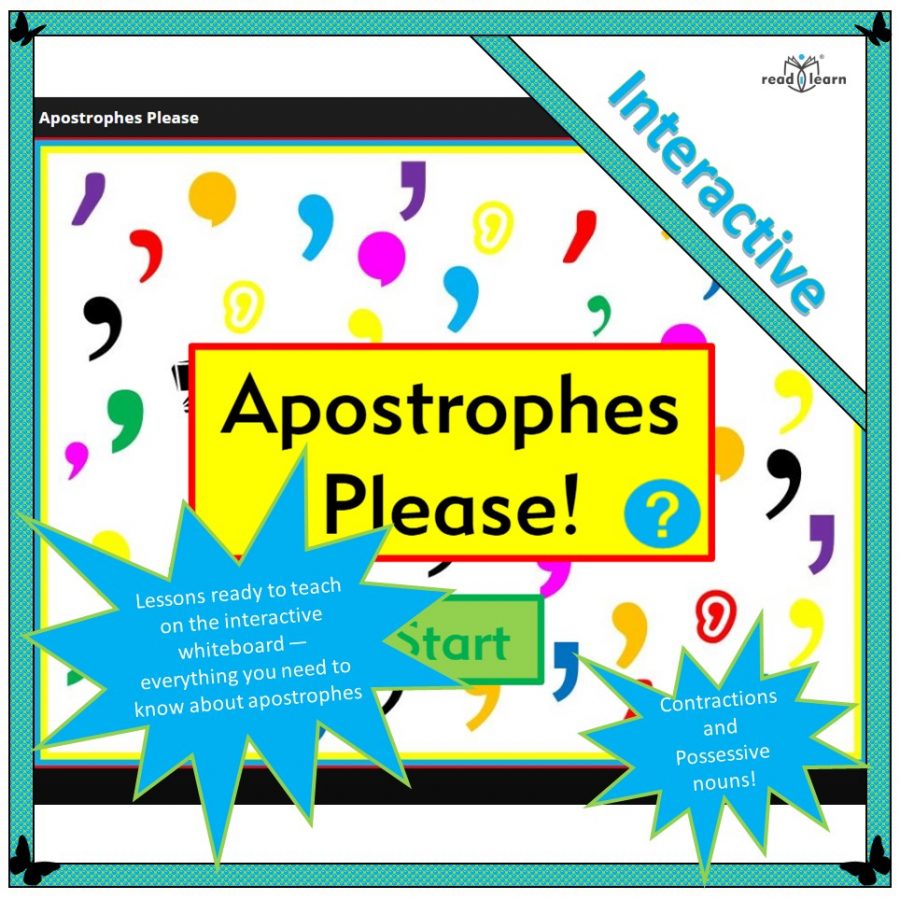
    To support your teaching of this punctuation mark that many find tricky, I have produced an interactive resource that explains, demonstrates and provides practice in its correct use.

    I have called the resource Apostrophes Please! to encourage young writers to get their writing right.
    About Apostrophes Please!

    Apostrophes Please! is an interactive resource, ready for use on the interactive whiteboard. It consists of enough material for a series of lessons teaching the correct use of apostrophes in both contractions and possessive nouns.

    Like other readilearn resources, Apostrophes Please! recognises the value of teacher input and the importance of teacher-student discussion. It is not designed for children to use independently. While the activities have interactive features, there are no bells, whistles and gimmicks. It relies simply on effective teaching.

    The resource provides flexibility for the teacher to choose activities which are relevant to student needs and teaching focus. All lessons and activities encourage explanation, stimulate discussion and provide opportunities for children to practise, explain and demonstrate what they have learned. There are nineteen interactive slides and over thirty slides in all.

    Organisation of Apostrophes Please!

    Contractions and possessive nouns are introduced separately.

    Continue reading: Teaching apostrophes with lessons ready to teach – readilearn

  • Wishing you a Happy Easter Holiday – readilearn

    Wishing you a Happy Easter Holiday – readilearn

    Wishing you a Happy Easter Holiday!

    It’s Easter time again and I wish you and your loved ones a very happy holiday, however you celebrate it.

    I’ve been brought down by the flu and haven’t uploaded as many new resources for you as I’d hoped. However, there are many Easter-themed resources already available on readilearn and, now that you can purchase them individually, access is even easier.

    Previous posts provide many suggestions to keep the learning in fun Easter lessons and activities, including:

    Learning literacy and mathematics with Easter classroom activities

    Easter holiday wishes (2017)

    Delivery – just in time for Easter

    Favourite Easter-themed lessons

    interactive mathematics lessons for the first three years of school

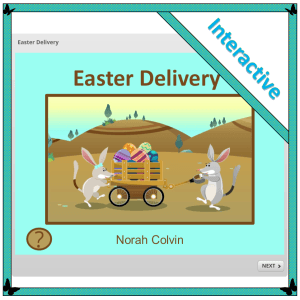
    One of my favourite lessons is Easter Delivery: a fun story I wrote and produced as an interactive lesson to support the development of mathematical understanding of number combinations to ten.

    This video tells you about it.

    Continue reading: Wishing you a Happy Easter Holiday – readilearn

  • Why Kindergartners Must Learn Technology – readilearn

    Why Kindergartners Must Learn Technology – readilearn

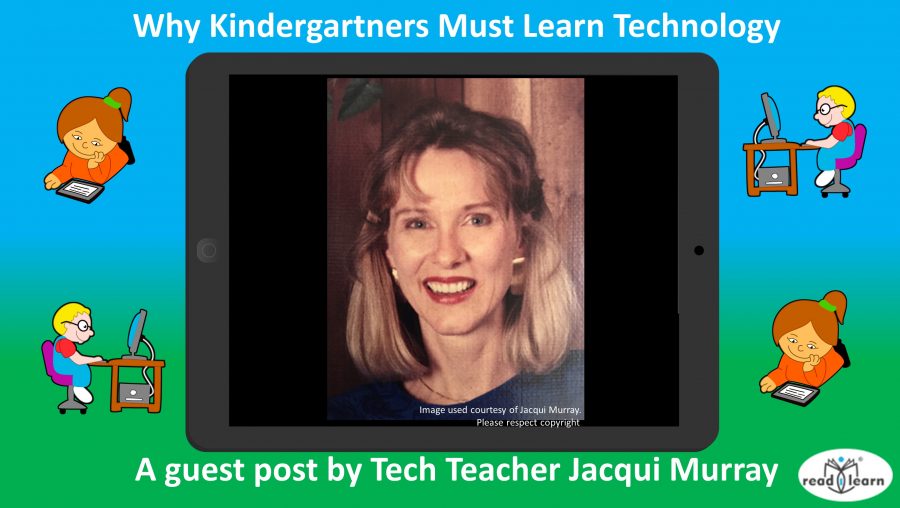
    Today I am delighted to introduce you to Jacqui Murray, the Tech Teacher, who is able to answer all your questions about using technology in schools.

    Jacqui’s blog Ask a Tech Teacher is very informative. It is packed with helpful advice for both teachers and parents on children’s use of technology and the suitability of tools and software for use in different situations and with different age groups, especially in the classroom. If I need to know anything about technology, Jacqui’s blog is an excellent resource.

    As Jacqui is often asked questions about teaching Kindergartners to Tech, a topic that is dear to her, this is the topic of discussion in this post. Please feel free to ask Jacqui any additional questions you may have in the comment section at the end!

    Note: Jacqui is based in the US and the kindergarteners she refers to are 5-to-6-year-olds.

     Welcome to readilearn, Jacqui. Over to you.

    When I started teaching technology almost twenty years ago, I taught K-8, three classes in each grade every week. I was buried under lesson plans, grades, and parent meetings. I remember suggesting to my principal that he ease my schedule by eliminating tech for kindergartners. They wouldn’t miss anything if I started them in first or second grade.

    And back then, that was true.

    Even a decade ago, technology was an extra class in student schedules where now, it is a life skill. Today, my teacher colleagues tell me kids arrive at school already comfortable in the use of iPads and smartphones, doing movements like swipe, squeeze, and flick better than most adults. Many teachers, even administrators, use that as the reason why technology training isn’t needed for them, arguing, “They’re digital natives.”

    Continue reading: Why Kindergartners Must Learn Technology – Readilearn

  • Teachers! Save time and money with readilearn K–2 teaching resources – Readilearn

    Teachers! Save time and money with readilearn K–2 teaching resources – Readilearn

    Teachers! Save time and money with readilearn K–2 teaching resources

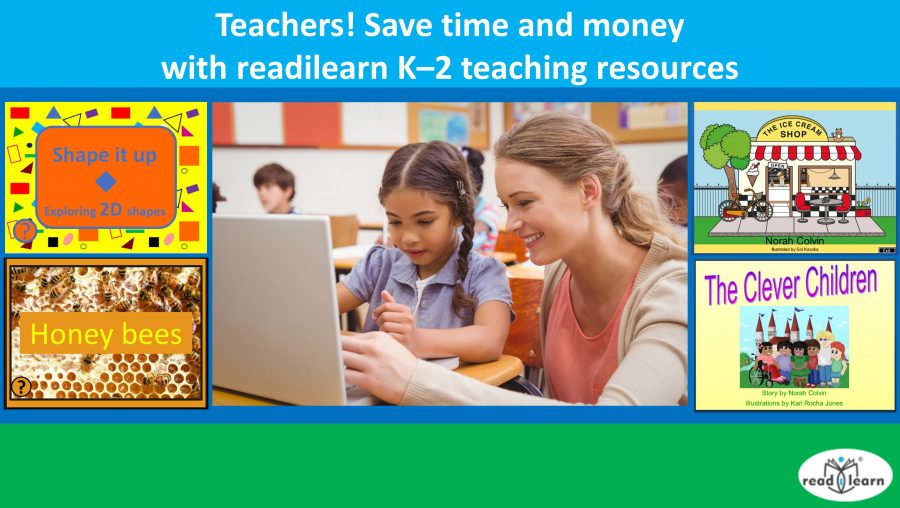
    readilearn teaching resources for the first three years of school save teachers time and money with lessons ready to teach. More than just worksheets to keep kids busy, readilearn lessons and activities are designed to progress children’s learning.

    Now available to purchase individually

    Over the past few weeks, we have been working to make it easier for you to access readilearn teaching resources.  All readilearn resources are now priced for individual purchase, many with a $0.00 price tag. While a subscription is still the best value for money, being able to purchase resources individually means you can purchase what you want when you want to use it.

    Resources across the curriculum

    Resources are available across curriculum areas and include lessons in character development such as confidence and friendship skills. Many integrate learning from different subjects. Child-focused, engaging and connecting with experiences familiar to children, the resources develop language and thinking skills alongside learning in other subject areas.

    Easy to use

    Browse through the resources. When you see a lesson that’s just right for you and your class, add it to the cart and continue shopping or proceed to the checkout. Complete your details and, as a registered user, a record of your purchases will always be available on your accounts page.


    Continue reading: Teachers! Save time and money with readilearn K–2 teaching resources – Readilearn

  • Announcing: It’s Time for Change – readilearn

    Announcing: It’s Time for Change – readilearn

    Over the coming weeks, we are making improvements to the readilearn site.

    During the changeover period, until mid-to-late March, we will not be adding new resources to the collection or publishing blog posts.

    Access as usual

    If you are already a readilearn subscriber or have registered to access the free teaching resources, you will still be able to log in and access resources during and after the changeover, as usual.

    Changes

    1. Individual prices

    Once the changes take effect, readilearn resources will be available as individually priced items.

    Note: If you are already a readilearn subscriber, your access to all readilearn resources will be uninterrupted while ever your subscription is current. The individual pricing will not affect your ability to access resources.

    1. Cost of subscription

    Continue reading: Announcing: It’s Time for Change – readilearn

  • Teaching place value to young children – readilearn

    Teaching place value to young children – readilearn

    Teaching place value is a vital part of mathematics programs in lower primary classrooms. This post outlines lessons and activities to teach place value.

    Teaching place value is a vital part of mathematics programs in lower primary classrooms. It is essential that children develop a firm understanding of place value right from the start to avoid later confusion and maths anxiety.

    Sadly, many children and adults confess to having an aversion to mathematics. My belief is that the aversion is often learned from ineffective teaching methods. For this reason, there is a strong focus on number in readilearn resources with lessons and activities that provide opportunities to develop understanding in fun and meaningful ways.

    It starts with understanding number

    Before we begin to teach place value, we must ensure that children have a strong sense of number. Understanding number is more than simply being able to rote count or recognise numerals. While even very young children may learn to memorise and recite the sequence of numbers from one to ten, they don’t always understand what the words mean.

    Rushing children through to abstract processes before they have developed a strong foundation creates confusion. It sets them up for frustration, fear, failure, and a dislike of maths.

    This can be avoided by encouraging an “I can do it. I get this. Maths is fun” attitude.

    To develop an understanding of number, children require many and varied experiences using concrete materials in many different situations.

    One-to-one correspondence

    Continue reading: Teaching place value to young children – readilearn

  • What can you do with a puzzle? – Readilearn

    What can you do with a puzzle? – Readilearn

    Puzzles are a fun way to encourage thinking and problem solving as well as mathematical and language skills. The celebration of National Puzzle Day on 29 January is a great excuse to introduce some puzzles into the classroom. The day may be American in origin, but there’s no reason the rest of us can’t join in the fun too.

    I have always enjoyed puzzles; both the fun of figuring something out or solving a problem and the satisfaction in having done so.  My favourite types of puzzles include (in no particular order):

    • Jigsaw
    • Sudoku
    • Crosswords
    • Logic puzzles
    • Block puzzles
    • Word puzzles
    • Lateral thinking puzzles

    Puzzles aren’t just those that come in a box, a book or online. Life presents us with puzzles and problems with regular frequency. Most days we will be faced with something that will stretch our thinking in divergent, convergent or lateral ways. It is good to provide children with opportunities to think too. Brief interludes of puzzle solving throughout the day can add fun, energise and refocus.

    A variety of puzzles and resources to develop children’s thinking are available in the readilearn collection. Some are interactive lessons ready to teach on the interactive whiteboard. Others are printable for offline use. All provide opportunities for learning in context with the greatest benefit coming from the discussions with the teacher and other students.

    Check out this previous post for other thoughts about Logical thinking and problem solving.

    Learning with readilearn puzzles

    Sorting puzzles

    Continue reading: What can you do with a puzzle? – Readilearn

  • Establishing a writing classroom – Readilearn

    Establishing a writing classroom – Readilearn

    Establishing a writing classroom, one in which children want to write, develop confidence in writing and develop the skills to write with accuracy and clarity, begins from the first day of school.

    Characteristics of a writing classroom

    Nine characteristics of a writing classroom are:

    • purposeful writing occurs throughout the day in all areas of the curriculum,
    • the process of writing is modelled,
    • children’s writing is scaffolded,
    • children write in response to set tasks,
    • children write about topics and in genres of their own choice,
    • the message is paramount,
    • writing conventions; such as spelling, punctuation and grammar, are learned by writing,
    • children’s writing is celebrated, and
    • children enjoy writing.

    If children are provided only with writing tasks and topics set by the teacher, they may view writing simply as a task to perform, something to please the teacher, rather than as a vehicle for self-expression or for sharing imaginative and creative thoughts and stories or information.

    Opportunities for writing occur throughout the day and should include:

    Continue reading: Establishing a writing classroom – Readilearn

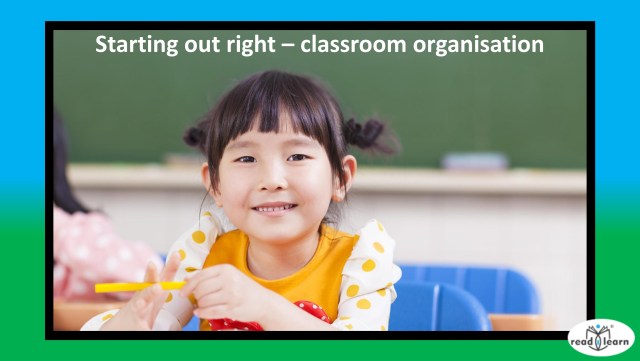
  • Starting out right – classroom organisation – Readilearn

    Starting out right – classroom organisation – Readilearn

    The importance of starting out right with classroom organisation

    Starting the year out right requires preparation and the establishment of classroom organisation routines that will assist the first and subsequent days run smoothly.

    An organised classroom contributes to a supportive classroom environment which, from day one, builds a strong foundation of positive relationships and attitudes to school and learning.

    Beginning the year as you wish it to continue with a welcoming organised classroom helps children and families feel valued and comfortable in a warm and predictable environment.

    Teaching resources support classroom organisation and management

    Many existing readilearn resources assist teachers of the first three years of school organise their classrooms to be welcoming and supportive.

    A new interactive resource extends the collection.


    an interactive attendance chart to show who is at school today


    Continue reading: Starting out right – classroom organisation – Readilearn

  • Holiday activities maintain school learning – Readilearn

    Holiday activities maintain school learning – Readilearn

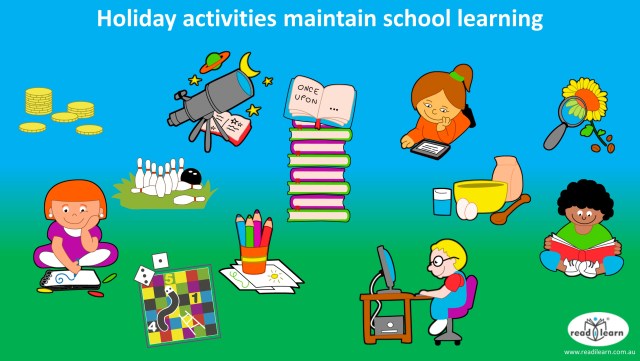
    Parents often ask teachers for suggestions of holiday activities that will maintain learning before children return to school. While we neither expect nor want children to spend hours at a desk engaged in school-type lessons, there is plenty that parents can do with their children to keep them curious and motivated to learn. This post includes suggestions teachers can provide to parents.

    Some of the best things parents can do to maintain children’s learning are: 

    • Encourage their questions and help them find, rather than simply provide, the answers.
    • Engage children in experiments to discover what happens. Don’t rely exclusively on books or internet searches.
    • Take them on outings and adventures to natural as well as constructed points of interest; such as rainforests, beaches, national parks, marine parks, libraries, museums and art galleries.
    • Talk with them about anything and everything including feelings, dreams, goals, desires for the future, fears, how things work and what happens if.
    • Read to them, with them and beside them. Show them you value reading for a range of purposes including for information and enjoyment.
    • Play games with them—indoor and outdoor games, board games and games you create or construct.
    • Most of all, spend time being with them, enjoying their company, getting to know them, in the present moment. Childhood is fleeting and each moment, precious.

    Free handouts of holiday activities that maintain school learning 

    There are three free handouts of holiday suggestions available for teachers to distribute to parents, or indeed for parents to access for themselves.

    Continue reading: Holiday activities maintain school learning – Readilearn