Live Love Laugh Learn … Create the possibilities

Tag: Teaching Resources

  • Making choices

    http://www.morguefile.com/archive/display/227510
    http://www.morguefile.com/archive/display/227510

    In my most recent post I discussed my goals and the steps I was taking towards, and away from achieving them. Writing that post, and receiving your wonderful comments, advice and suggestions, provided me the opportunity of really assessing how I spend my time and of deciding where to from here; at least until I meet the next juncture anyway.
    https://openclipart.org/detail/117199/Friendship
    https://openclipart.org/detail/117199/Friendship

    My most important realisation is that

    I love the writing community that welcomed me so warmly and of which I feel very much a part:

    • The friendship and sharing
    • The open communication and exchange of ideas
    • The feedback and encouragement
    • The writing practice
    • The opportunity to be doing something with my time – it does a good job of keeping me off the streets!

    The impact that being a part of this community may have on my ability to reach other goals may never be known. But for now it meets other needs in many wonderful ways that I am not prepared to forgo just yet. I may need to reassess the content of my posts in view of my writerly, as opposed to teacherly, audience; but since you have all accepted and responded so well to them thus far, maybe not. I can’t think what else I know about anyway!

    However, I must prioritise my other work as well.

    To do this I have refined my record of comments:

    • to include the twenty bloggers I engage with most frequently (reduced from the approximately thirty I showed on the infographics in that previous post, and seventy plus I had in the table when I began the record!)
    • by arranging the bloggers alphabetically to make them easier to locate and record
    • to match the Monday to Sunday week used in WordPress stats (I was using Sunday to Saturday previously)
    ytknick, email icon https://openclipart.org/detail/17371/email
    ytknick, email icon https://openclipart.org/detail/17371/email

    While I have not unfollowed any bloggers, I have requested to not be notified of new posts of bloggers who have not engaged with me. This will reduce the number of emails I receive and therefore the time taken in dealing with the burgeoning inbox. I won’t be distracted by their content; and, if I have any spare time, I can always check out their posts in my reader.

    Reducing the number of emails I receive each day is one of the things I am looking most forward to! It has always been a bugbear.

    I have also decided that I will not actively seek new blogs to follow at this stage but will continue to maintain existing relationships. However if someone new engages with me, I will be more than happy to respond.

    These changes should help me devote more time to other projects.

    Moini, Painter penguin https://openclipart.org/image/800px/svg_to_png/174634/painter_penguin.png
    Moini, Painter penguin https://openclipart.org/image/800px/svg_to_png/174634/painter_penguin.png

    I have already written a lot of teaching resources. Unfortunately I am no more of an artist than I am a singer and, since my resources are mainly for use in early childhood settings, most of them need to be illustrated. My niece has illustrated some for me but she has her own life and busy work schedule as well so I need to look further afield.

    Last week I decided to take action.

    I signed up to 99 designs and ran a contest to see if it was possible to get some illustrations for one of my stories. It has been a steep learning curve and very interesting; even a bit harrowing at times. Many artists submitted work in the contest and I have narrowed it down to four finalists. I am running a poll to get some advice on the illustrations. I’d appreciate your thoughts if you have time to check it out.
    monsterbraingames, golden trophy with glaze (remix)  https://openclipart.org/detail/202115/golden-trophy-with-glaze-remix
    monsterbraingames, golden trophy with glaze (remix) https://openclipart.org/detail/202115/golden-trophy-with-glaze-remix

    I feel a bit uncomfortable with all the work the artists have done, in the hope of winning the contest (these are 99designs’ terms), but it seems to be the way it is done so I guess they are aware of and expect it. I am already looking towards future contests and getting more work illustrated. I may also look at other options, so if you have other suggestions I’d be pleased to hear them.

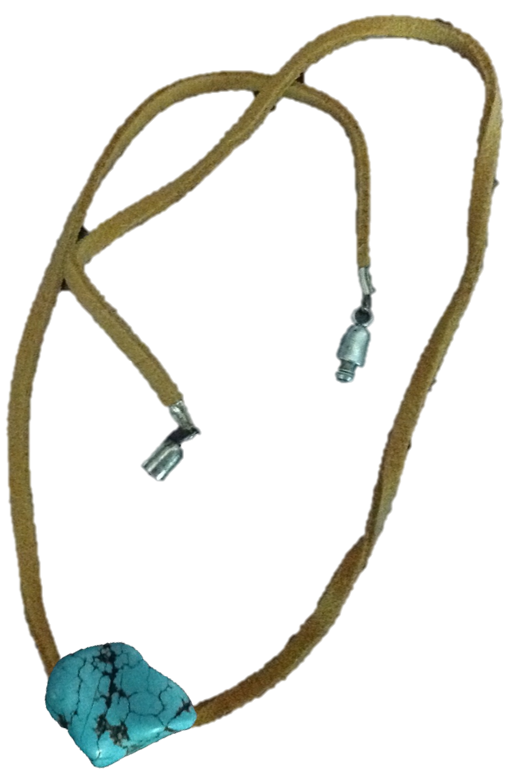
    I’ve been trying to think of a segue from there into my flash fiction response to the challenge set by Charli Mills at the Carrot Ranch this week. Charli’s prompt is to In 99 words (no more, no less) include a juxtaposition between the ordinary and natural worlds. Now that I look at it again, I’m not so sure my response quite fits, so perhaps that is fitting in itself. It seemed like a good idea at the time: matching the turquoise stone to the colour of Marnie’s eyes, which I didn’t even include!
    turquoie necklace

    Here it is anyway, the next little revelation of Marnie’s story that continues on from this one:

    Juxtaposition

    She paused her dusting, as often she did, scanning the fading faces. Her gaze lingered, as always, on one. She gave it an extra rub as if to wipe away a tear, erase the pain.

    She lifted the postcard wedged into the frame to read the words she knew so well but wished had more to tell: “Thank you, Miss. Remember me.”

    “Where are you? How are you doing?” she’d never stopped wondering, hoping.

    She fingered the smoothness of the turquoise stone, its partner given long ago . . .

    A quiet knock on the door interrupted her thoughts.

    Thank you

    Thank you for reading. I appreciate your feedback. Please share your thoughts about any aspect of this post or flash fiction.


  • Counting on the holidays!

    algebra

    When the topic “Maths” is mentioned in conversation among adults, including teachers, many of them moan, “I hate maths. It’s too abstract. I could never understand it. I can’t see the point in it.”

    I think it is a sad situation that many such adults were turned off maths in school by teachers who didn’t introduce them to the beauty of maths, who didn’t teach maths in the context of real-life purposes and whose pedagogical kit bag was entirely filled with worksheets of meaningless and endless algorithms to complete.

    I am one of those adults too. In my final years of high school I had a “teacher” who could do the math but couldn’t teach the math; couldn’t explain the why or the how, or any of the steps required to achieve understanding. Maths became an impenetrable forest of meaningless algorithms, formulae and theorems.

    As both a parent and teacher of young children, I was determined to not be an instrument of math torture. Granted this may be easier with young children than it is with older students, but I’m sure there are still ways of making maths fun and meaningful in high school classrooms.

    The suggestions in this article provide parents of young children with ways of finding maths in everyday contexts and incorporating mathematical learning effortlessly into holiday activities. Of course, the activities are of benefit at any time, not just during the holidays!

    If you don’t have young children to inspire, or inspire you, please move on to the end of the article for some suggestions to excite your own interest in maths!

    Although the word “counting” appears in the title, it is important to remember that maths is not just counting.

    The strands of maths as described by The Australian Curriculum include:

    • Number and place value
    • Patterns and algebra
    • Measurement and geometry
    • Probability and statistics

    My list includes just a few suggestions for each of those strands to get you started. Need I say there is an infinite number of possibilities?

    25 ways to keep children thinking mathematically during the holidays:

    Number and place value

    1. Count items e.g. birds in the sky, shells collected from the beach, people for lunch, steps in a staircase, windows on a house, seats in a bus . . .
    2. Count out the cutlery required for each person at dinner
    3. Include your child in shopping activities by helping them to:
      • Recognise the coins and notes
      • Count the value of coins and notes
      • Predict whether they have enough money to purchase an item, and whether there will be change
      • Tender the money in payment for an item
    4. When your child is sharing e.g. the biscuits, balloons or slices of fruit, ask them to:
      • Predict if there will be enough for everyone to have one, or more than one each
      • Share out the items, allocating the same number to each
      • Determine if there are any left over and what to do with them
    5. Use terms like half and quarter correctly, e.g. when cutting apples, oranges, sandwiches, pizza, to indicate pieces of equal size
    6. Play games that involve counting, e.g. counting the number of skips, balls in hoops, pins knocked down or dice games like snakes and ladders that require adding as well as number recognition and counting
    7. Make up number stories e.g. “We had five apples in the bowl. I ate one, and you ate one, how many are left?” “
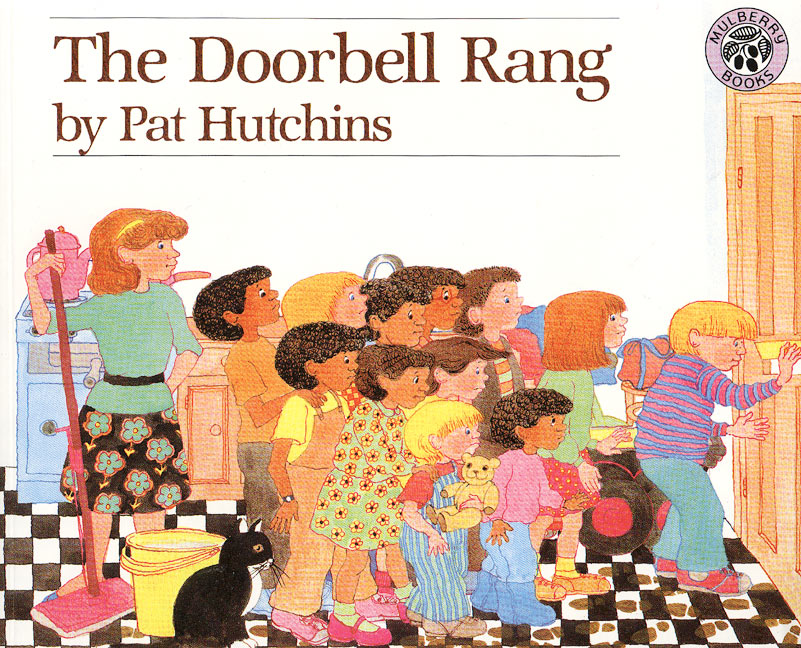
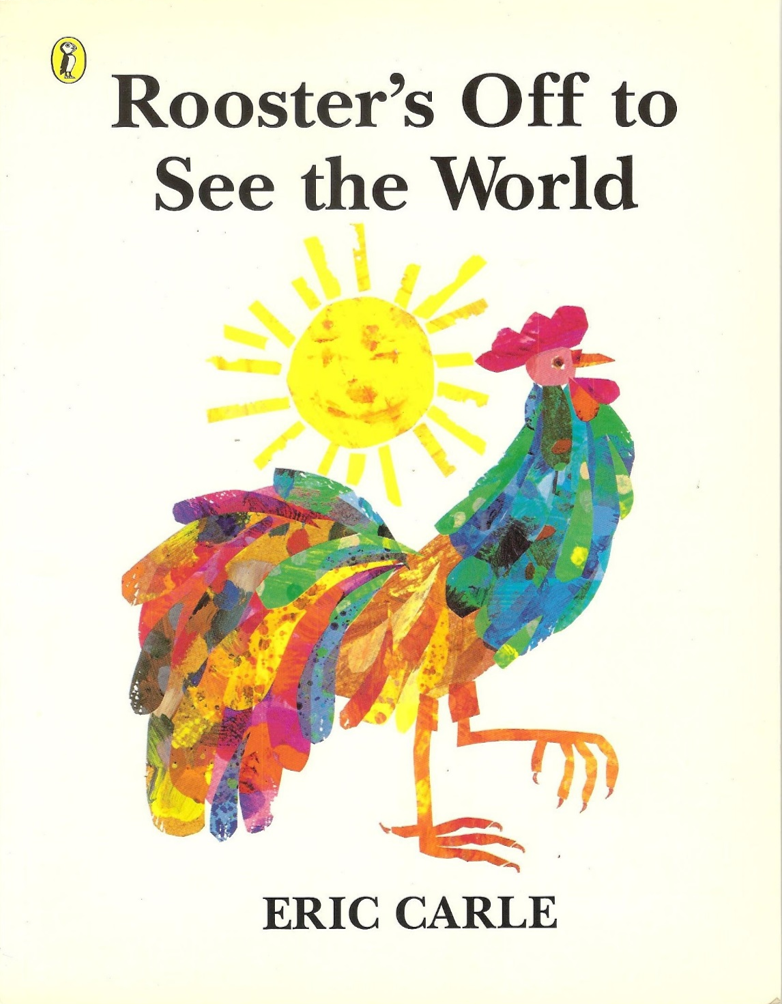
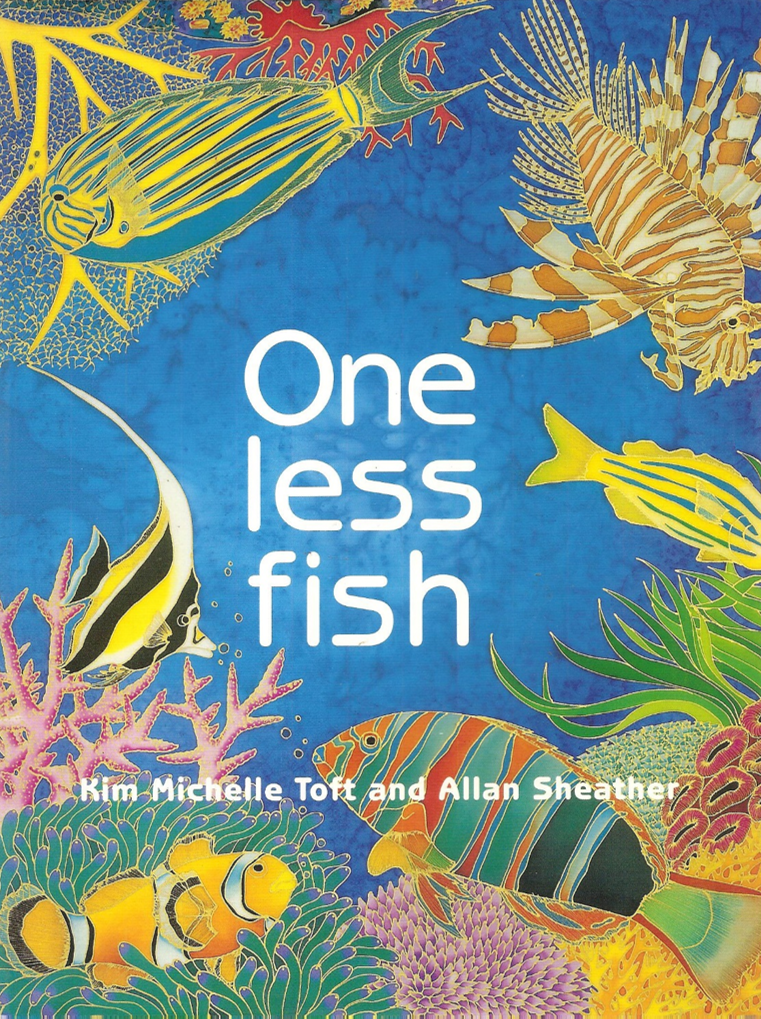
    8. Read books with number concepts e.g. Pat Hutchins The Doorbell Rang, Eric Carle Rooster’s off to see the world  or Kim Michelle Toft One Less Fish

    doorbell rang

    Rooster's off to see world

    One less fish

    Patterns and algebra

    1. Use items to make patterns e.g. sort and create a pattern from shells collected at the beach, building blocks or toy cars
    2. Look for patterns in the environment e.g. fences, tiles, walls and window, zebra crossings
    3. Decorate cards and drawings with a patterned frame
    4. Make gift wrapping paper by decorating with potato prints or stamp patterns

    Measurement and geometry

    1. Include your child in cooking activities and allow or support them to:
    • measure the ingredientscooking-man
    • set the temperature on the oven
    • work out the cooking finish time

    2.  A child’s understanding of volume and capacity can be developed when they:

    • pour glasses of water from the jug and discuss terms such as enough, full, empty, half or part full, more, less
    • pour from one container into another of a different shape to compare which holds more and which holds less

    3.  Scales can be used to compare the mass of different items or quantities e.g. compare an apple and an orange, measure the mass of butter required for a recipe

    4.  Measuring length can be included by:

    • measuring and comparing height
    • cutting a length of string to tie a package
    • measuring who is closest to the jack in a backyard game of lawn bowls

    5.  Use the calendar to

    • Learn the names and sequence of days in the week or months in the year
    • count the passing days or the number of days until an event

    6.  Identify shapes in the home and environment e.g.

    • 2D shapes: tiles on floor and walls, shapes of windows, sections of footpath
    • 3D shapes: cereal boxes (rectangular prism), balls (sphere), bottles or cans (cylinder), dice (cube)

    7.  Play games that involve shapes e.g. jigsaw puzzles, tangrams

    8.  Talk about directions e.g. left, right, forwards, backwards and follow directions on a grid

    9.  Play games that involve directions and movement in space e.g. battleship, Hokey Pokey, Simon Says, snakes and ladders, ludo

    10.  Read and discuss books that include measurement concepts e.g. Pamela Allen: Who Sank the Boat? (volume); Eric Carle: The Very Hungry Caterpillar (days of the week) and The Bad Tempered Ladybird (time); Penny Matthews and Andrew McLean A Year on our Farm (months and seasons); and for looking at places on a map Mem Fox Sail Away The ballad of Skip and Nell or Annette Langen & Constanza Droop Letters from Felix

    who sank the boat

    The Very Hungry Caterpillar

    A year on our farm

    sail awayLetters from Felix

    Probability and statistics

    spite_sun_rain

    1. When discussing the weather or desired activities include the language of probability e.g. possible, certain, likely, unlikely, impossible
    2. Encourage children to collect data about family or friends by asking yes/no questions e.g. do you like swimming, or making a graph of the family’s favourite colour or meal.
    3. Play games with spinners and dice and talk about the likelihood of spinning or throwing a particular number

    This list is really just a beginning. I’m sure you will add many more suggestions of your own.

    For your convenience, the list is available to download FREE in my TEACHERSpayTEACHERS store.

    As promised I will leave you with a few suggestions to spark your own interest in and love of maths. Be sure to check them out:

    These are must listen TED talks by Arthur Benjamin:

    The magic of Fibonacci numbers

    and A performance of “Mathemagic”

     And a fascinating one for the Christmas season “The 12 days of Pascal’s triangular Christmas” by Michael Rose on The Conversation.

    If you want to delve a bit deeper, here are some interesting reads to get you started:

    Charles Seife Zero: The Biography of a Dangerous Idea

    Mario Livio The Golden Ratio: The Story of PHI, The World’s Most Astonishing Number

    Rozsa Peter Playing with Infinity: Mathematical Explorations and Excursions

    I listened to the biography of zero on audiobooks this year. It was a fascinating listen.

    What do you think of maths? Do you love it or hate it?

    I hope you enjoy your adventures in maths! A world of possibilities awaits!