 Recently, on the recommendation of my friend Rosie, I listened to a TED Talk by Michael Sandel “Why we shouldn’t trust markets with our civic life”.
Rosie and I often suggest Talks to each other and then share thoughts and comments about them.
This Talk, like most of those on TED, raises some very interesting, thought provoking and challenging ideas and issues. The issue of most importance to me in each of these Talks may not be the issue of most importance to Rosie, nor to any other listener. The understandings, beliefs and personal positions, (ideological, philosophical and ethical), that each person has will not only influence what they hear but how they interpret, organise and prioritise what they hear and what they take away from the Talk, whether intended by the speaker or not.
In this Talk, Michael raises the issue of motivating students to learn, a challenge experienced in many schools. He invited the audience to consider whether cash rewards should be used as incentives for students to perform well on tests or to read books.
The reaction from the audience was mixed with fewer in favour of offering the rewards than against. When asked why cash incentives should not be used to encourage students to work harder or read more books, a participant stated that the students should be reading for intrinsic motivation, for an intrinsic desire to learn, and that a cash reward would take the intrinsic incentive away.
 However: If a child is a reluctant reader or reads only when required, does that child have any intrinsic motivation for reading? If not with cash rewards, how can we inculcate an intrinsic motivation to read? What is or has happened in this child’s experience that an intrinsic motivation to read has already been killed? (I will offer some thoughts on these issues in a future post.)
The argument for and against the use of rewards in schools, as well as homes, to encourage children to perform or behave in a particular way has waged for as long as I can remember and, I’m sure, even longer than that.

Should children receive a sticker, a star or an award for that? Shouldn’t they just do what we want of them for the sheer joy of it / because it will do them good / because it’s the right thing to do? Shouldn’t they be intrinsically motivated and have no need of extrinsic rewards?
It all sounds very good, doesn’t it? And maybe it works when a child is intrinsically motivated through a genuine interest, or maybe when children are happy to comply and perform expected tasks either through a need to please others or their own developing sense of how things should be.
But what of the child who does not have this intrinsic motivation, no need to please or any ability to see a personal purpose in expected tasks or behaviours?
One of the Talk participants suggested that results of offering a cash reward for reading books could be measured by a count of the books read while the reward was being offered, followed by a count of the books read after the payment ceased. Results of the experiment found that students, when offered cash rewards, read more books, but they also read shorter books.
And why should we expect any more of children than we do of adults?

How many adults perform their work tasks for the sheer joy of it, powered by intrinsic motivation? Only the lucky few, I would guess, who are able to combine passion with employment, or who have sufficient resources to maintain the lifestyle they desire. Isn’t the extrinsic reward a major motivator for much of what we do? I dare say the performance of most adult workers would not measure highly after payment ceased!

Okay. I know it’s not quite the same. The children are not in need of the cash rewards as they are supported by adults who receive cash rewards. Nevertheless, without that extrinsic reward, in most cases, that work would cease, regardless of whether the cash is actually required for survival or not.
However I am always drawn back to an attempt at reconciling intrinsic motivation with compulsory schooling.
 Intrinsic motivation is usually related to something of one’s own choice through interest, challenge or purpose. The motivation comes from within, not from the promise of any external reward.
So how does this work for children in school?
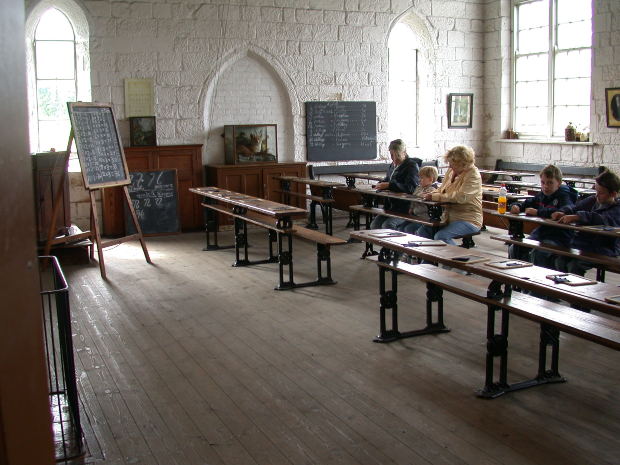
Not only is school attendance compulsory throughout most of their childhood years, children have few choices in school. They generally attend a school chosen by someone else, are taught by a teacher allocated by someone else, and expected to make friends with a group (class) allocated by someone else.
 They line up, eat, talk, play and toilet on the ring of a bell and are expected to perform academic feats on command. When they progress from one year to the next, they often suffer the disruption of new class group arrangements, decided by somebody else for questionable reasons. What would be so harmful about a child going through all the years of schooling with the same group of friends?
Why then do we think that students should be intrinsically motivated to do something about which and in which they have very little choice and are most often powerless?
Learning for the love of it, for the sheer fun and joy of it is a marvellous goal. And I believe children are innately intrinsically motivated to learn.
How different would schools be if we began with the intrinsic motivation of each child and wrapped the leaning around that? How much more powerful would the learning be? What would that school look like?
Is that what we call a child-centred approach? An approach that values the interests and needs of each learner. An approach that starts where the child is and supports them to find the paths that take them where they want to be. An approach that values their individual styles and timeframes while providing just the right amount of challenge to stretch them beyond where they thought they were able to go. That piques their interest in a vast array of topics and supports their learning of skills to achieve their desires.
But often the lip service given to a child-centred approach in a traditional school, with all its constraints, still smacks of ‘You’ll do what I say but you’ll think that you have a choice’.
What slap in the face it is to tell someone that they must do this, when to do it and how to do it; and then tell them they must do it because they want to do it!
However there are teachers who passionately believe in a child-centred approach and in harnessing the power of intrinsic motivation. They work tirelessly and creatively, powered by their own intrinsic motivation, to employ a vast array of strategies designed to make a child’s opportunities for learning within the confines of an imposed curriculum of a traditional school motivating for each learner while targeting their individual needs.

Here are some strategies that teachers use in a child-centred approach:
- Make connections with the children’s lives
– discussing their experiences
– valuing their contributions
– involving parents
– informing parents of classroom learning and experiences
- Incorporate children’s interests
– using negotiated topics and tasks
– employing a variety of activities
- Offer children some autonomy
– using negotiated topics and tasks
– employing a variety of activities
– providing opportunities for independent and self-directed learning
- Make learning fun, meaningful and explicit
– using games, songs and hands-on participatory activity
– explaining how classroom learning connects to purposes in life
– providing clear and easy-to-follow procedures
– providing opportunities for finding solutions to real problems
– allowing explorations in creativity and innovation
- Provide opportunities for cooperation and collaboration
– working with a partner or in groups
– allowing opportunities for discussion
- Support and extend learning
– harnessing spontaneous opportunities for optimising learning
– providing opportunities for practice and clarification
– challenging learners to stretch their imaginations and abilities
- Add joy and laughter through happiness and humour every day
These strategies may not tap into the intrinsic motivation of each student all of the time. However a supportive environment in which children are provided some choice of activities, opportunities to learn at a pace suited to their needs, and an understanding of the point of it all, will provide learners with the desire and skills to harness their intrinsic motivation for learning of their own choosing beyond the classroom.
What do you think?
















 Norah Colvin