Live Love Laugh Learn … Create the possibilities

Tag: schooling

  • Are you ready to embrace the future?

    http://openclipart.org http://goo.gl/XApwuV
    http://openclipart.org http://goo.gl/XApwuV


    The flash fiction challenge posed by Charli Mills at the Carrot Ranch this week deals with the future. What a perfect prompt for a teacher, for is not education firmly focused on the future?

    We educate ourselves so that we will know more, be more skilled, or be able to do more in the future than in the past; we may learn new skills that keep us up-to-date with the changing demands of society or technology; or we may seek to improve our employability or income possibilities.

    We educate our children so that they will be independent and contributing members of society, able to participate in the world of the future, and having the knowledge and skills to enable them to achieve their goals.

    We educate for the future, but we are unable to predict the future, so the challenge to making decisions about education is difficult and highly-charged, attracting many different opinions and suggestions for solutions.

    Forbes Magazine featured an article in 2012 which queried the purpose of education.

    A 2013 TED conversation about the purpose of education, related to a talk by Ken Robinson, Changing education paradigms, attracted many and varied comments.

    In 2014 Tony Ryan hosted an online seminar about Future-proofing Kids. Tony says,

    “Many of the children alive today in Western societies will still be around in the 22nd Century. How can we possibly predict what they will experience between now and then? And if we can’t do that, then how do we best prepare them for whatever is up ahead?”

    I think of greatest importance in preparation for life, all of which will be in the future, except for the present moment, is the development of attitudes and character traits including:

    •  Confidence
    • Persistence
    • Resourcefulness
    • Resilience
    • Able to seek solutions to problems
    • Openness to new ideas and possibilities
    • Creativity
    • Divergent thinking
    • Questioning
    • Optimism

    In addition to the character traits, a certain level of skill is required in both literacy and numeracy, and especially an ability to locate and critically evaluate information.

    The title of Tony Ryan’s seminar, Future-proofing Kids, to me belies the value of the content Tony shares. To me ‘future-proofing’ indicates that the future is something to be protected from, like water proofing protects us from water; something perhaps of which to be scared. But Tony’s seminar is far more optimistic and future-oriented than that.

    We don’t know what the future will bring, but we never have. We can plan for it, we can hope and dream and set goals; but we can make no guarantees. Prophesies have never accurately foretold the future. I’m thinking of George Orwell’s Nineteen Eighty-Four or the more recent Y2K Bug.  I’m thinking of all the teachers who told their students they would never amount to anything, like Thomas Edison’s teachers who said he was “too stupid to learn anything”.

    peole_laptop

    In the early 1980s I was told at a conference that by the year 2000 computers would do so many of our menial tasks that we would have an enormous amount of free time and wouldn’t know what to do with ourselves! How inaccurate was that prediction! The menial tasks have only increased in number and instead of computers being a tool to simplify our lives, in teaching anyway, they are now an unrelenting, ever-increasing and demanding master requiring the completion of data bases and spreadsheets, the creation of graphs and statistics, reducing life to a series of expected numbers and standards

    The potential employment opportunities of today’s young women could not even be imagined when I was growing up and making my work choices. My apparent choices were teacher, nurse or office worker, and ultimately mum. Because I had chosen an academic path after year 8 and hadn’t learned shorthand and typing, office worker was eliminated. If I had chosen the commercial, shorthand and typing, path my choices would have been even further restricted.

    My generation was the one that began shuffling the female role in society. Had I been born just a few years earlier, I would have worked until I married; after which I would have stayed home and looked after the children. Many female teachers were required to resign when they married. Pregnancies were hidden under loose and voluminous clothing, and the whole process was considered an illness. Unmarried mothers were considered an embarrassment and ‘sinful’ and most had their babies removed and that part of their history hidden.

    Women of my era were able to return to the workforce, but it was not encouraged before the youngest child had started school. At that time child care was not readily available and often grandmothers, who had not returned to the workforce after marriage, looked after the children for mothers who worked, often part-time and for low wages.

    The current generation of women have far more career opportunities but are also expected to stay in the workforce, often required to return to work when their babies are only a few weeks old in order to maintain security of employment. Many now work through pregnancy, almost until the birth of their baby.

    Pregnant women no longer try to hide under voluminous layers of clothing but, partly with thanks to Demi Moore and Annie Leibovitz in 1991, take pride in showing off their changing shape. The term ‘unmarried mother’ is almost an anachronism in today’s Western world. There is no shame in having a child, whether married or living with someone or not; and babies are not forcibly removed from their mothers.

    I am no more able to predict the future than I am to make sense of the injustices and horrors of the past.  However I think part of the purpose of education must be to help individuals grow so that they are able to stride towards the future with arms outstretched saying, “Give me what you’ve got!” while at the same time with a listening ear and an open heart asking, “What can I do to help?”

    What do you think?

    I welcome your feedback. Please share your thoughts about any aspect of the article or my flash fiction piece:

    Ready

    I’m off now,” she said.

    “Have you got everything?” asked Mum.

    Yes Mum.”

    “Are you sure you haven’t forgotten anything?”

    I’m sure.”

    Mum looked around. There must be something she’d missed.

    “What about . . .?”

    No, Mum. I’ve got everything.”

    “Okay. If you’re sure.”

    “Bye Mum!”

    ”Bye.”

    She walked through the door and down the stairs.

    Mum watched, anxious. What could she have forgotten?

    “Wait!”

    She turned, puzzled.

    Mum leapt down the stairs.

    “What?”

    Mum hugged her tightly, whispering softly, “I love you very, very much. Always have and always will.”

    “I know. Love you too Mum.”


  • Four fabulous female educators

    In a previous post I wrote about 3 inspiring educators. In no way did I wish to indicate that the number of inspiring educators was limited to those three or that all inspiring educators are male. The list of inspiring educators is far greater than that and includes both male and female representatives.

    The purpose of this post is to both honour, and share the wisdom of, other educators who have positively impacted my life and thinking as an educator and the lives and education of many others. The list doesn’t end here. There will be more to follow.

    Maria Montessori (1870 – 1952)

    Maria Montessori’s name is known worldwide as the founder of the Montessori Schools. However her influence is not restricted to those schools. Many educational practices implemented, especially in the early childhood setting were influenced by Maria Montessori.

    Maria resisted the gender-stereotyping conservative views of Italy where she lived in the late nineteenth century. She developed her interest in maths and sciences, especially biology, and became the first female doctor in Italy.

    As a doctor Maria worked with children from poor and working class families. She developed the belief that every child had an intrinsic intelligence. She studied child development and education extensively and developed methods of implementing her theories. She traveled Europe sharing her ideas and advocating women’s and children’s rights. Her success with disabled students led to implementation of her methods with ‘normal’ children.

    Montessori’s methods put the child’s interests at the front of the program. The teacher was to ‘follow the lead’ of the child.

    Practices now seen as standard that were initiated or influenced by Maria Montessori:

    • incorporation of children’s interests, putting their interests first
    • recognising the development of the individual and making education appropriate to it
    • use of child-sized furniture and shelving
    • practical activities such as sweeping and cleaning up
    • environmental activities such as gardening
    • health and hygiene practices, such as washing hands, sharing morning tea, cooking
    • indoor/outdoor areas that children move about freely
    • opportunities to work independently
    • respecting the child as an individual

    She valued independence and saw it as the aim of education, with the teacher as observer/guide of children’s development.

    This video explains  a little of her work.

    Sylvia Ashton-Warner (1908 – 1984)

    Sylvia Ashton-Warner is a New Zealand writer, poet and teacher whose educational work I became familiar with in the 1980s through her books Teacher and Spinster, the latter of which was also made into a movie.

    Sylvia, who in the interview below states emphatically that she is not a teacher, that she hates teaching and can’t stand education, has been very influential on teachers around the world.

    i was unable to embed the video. Click on the image to go to the original site.
    i was unable to embed the video. Click on the image to go to the original site.

    Sylvia says,

    “There’s a formula for all my teaching. It’s quite simple. I supply the conditions where life can come in the door . . . where both our teacher and our child can be themselves.”

    Children-and-even-adults - Sylvia Ashton-Warner

    Working with Maori children from poor and dysfunctional families and using organic reading, she developed what is called the ‘Key Vocabulary’; those words holding most meaning and interest to the child. The child asks for a word, the teacher writes it on a card. The child reads the word and copies it to write. The words requested are usually nouns and hold a lot of meaning for the child.

    I implemented her ‘Key Vocabulary’ for many years and found it to be a successful tool for developing readers and writers.


    Marie Clay (1926 – 2007)

    Marie Clay is another New Zealand educator best known for her work with literacy education and the Reading Recovery program which was developed to support students whose reading skills were delayed. She believed that early intervention was the key to improving literacy skills.

    I first came across her work in her book Reading: The Patterning of Complex Behaviour in 1979. Her 1983 publication Record of Oral Language provided teachers with methods of observing and recording children’s development in literacy.

    The Reading Recovery program, based on Marie Clay’s work and developed in the early 1980s, provides one-on-one support for students who are experiencing difficulty with reading in the first years of school. The teachers undergo training which develops their understanding of the reading process and how to support a student’s development. The training is more intensive and thorough with methods specific to this purpose, than generalised teacher education. However knowledge of her research, innovations and methodologies are also of benefit to generalist teachers and have been incorporated into many teacher education programs.

    I was very disappointed, as were many other classroom teachers, when this successful program was discontinued in our region earlier this century.

    Barbara Arrowsmith-Young (1951 – )

    I first heard about Barbara Arrowsmith-Young in Norman Doidge’s book The Brain that Changes Itself.

    I couldn’t put this book down. My thinking about the brain and learning was being challenged but excited at the prospect of overcoming learning problems experienced by many students.

    For years I watched helplessly as scores of struggling learners were pummelled with repetition of the same boring and meaningless methods that created (or at least contributed to) their problems in the first place; of seeing them humiliated by having to repeat a year at school, or being considered ‘dumb’ because they couldn’t do what the other kids could do. Now here was a book that suggested this need not be so. If only those making the decisions and delivering the programs could be influenced.

    One of the most memorable stories from the book was that of Barbara Arrowsmith-Young. Barbara suffered from severe learning disabilities throughout her childhood and early adult years. Every known method of compensating for the disabilities was tried without success. Barbara felt humiliated and a failure.

    Her life changed dramatically when she heard about neuroplasticity of the brain (the ability of the brain to change in physiology and functionality) and created exercises for her brain, teaching herself to do things she had never done before.

    Her story is an inspiring one of courage, strength, and persistence. Barbara has changed her life. After turning her life around, Barbara has developed programs for others with disabilities to engage with. She started the  Arrowsmith School in  Toronto in 1978. The Arrowsmith Program is now used in schools in the US and Australia as well as Canada.

    Barbara’s “vision is of a world that we create in which no child has to live with the ongoing struggle and pain of a learning disability. . . that cognitive exercises become just a normal part of curriculum. . . that school becomes a place that we go to strengthen our brains to become really efficient and effective learners engaged in a learning process where not only, as learners, can we dare to dream, but we can realize our dream . . . This is the perfect marriage between neuroscience and education.”

    You can read her story in The Woman Who Changed her Brain, and listen to her speak in this video:

    She travels the world sharing her message so you may even have an opportunity of meeting her in person. I saw her last year at the Brisbane Writers’ Festival. Magic!


    You may have noticed some unifying threads with each of these educators:

    A focus on the child, the child’s interests and life

    A recognition of the child’s ability to learn

    An optimism in the child’s ability to learn, for success and the future

    All educators worked with students from disadvantaged backgrounds or with disabilities or both; and all achieved success.


    I welcome your feedback. Please share your thoughts about any aspect of this article.


  • 3 Inspiring educators

    3 Inspiring educators

    Like every other teacher, I want to make a difference in the world.

    The thought that I could make a positive difference to the life of another is both empowering and inspiring.

    To do so, I seek out others making a positive difference and pay it forward, hoping that the ripple effect will carry it far and wide.

    flag on twitter

    Three inspiring educators who have positively influenced me are:

    Brian Cambourne

    Brian is an amazing literacy educator from whom I had the extreme good fortune of learning many years ago. I have written about him before here and here.

    Brian’s work focused on the conditions necessary for literacy development. His influence has spread beyond the classroom with the application of the conditions to learning in the workforce demonstrated.

    Tony Ryan

    Tony is an amazing educator who does his best to be the change he wants to see in the world. He talks about future-proofing and using innovative thinking to solve problems of both local and global importance.

    Anyone who believes ‘that education is the most important profession on the planet’ and does everything in his power to support teachers to be outstanding, as does Tony; must be pretty good in my books.

    One of Tony’s books The Ripple Effect is particularly apt for mention in this post. Tony says,

    “you must believe in your personal power to create ripples that spread out and change the world. In fact, if it is not you who is going to do it, then who else do you think is likely to make the effort? Remember that every change on this planet begins with a human being somewhere, somehow. It may as well be you.”

    This year Tony has started a new project called The Earth Movers Foundation which ‘helps young teenagers to create solutions to local and global issues. And they get to choose their own project. No adults will be telling them what project to do. They decide for themselves.’ Sounds pretty good to me.

    Ken Robinson

    Ken is another amazing educator. I fell in love with his ideas when I listened to his TED talk Do schools kill creativity? which I have also shared before here.

    The statement on his website declares that

    “Imagination is the source of all human achievement”.

    I could not argue with that.

    Ken introduces this short video The writing spirit which presents quotes from artists, thinkers, writers, innovators and snippets of interviews with writers. Just incidentally, and exciting for me, Richard Bach is included. Richard is the author of Jonathan Livingston Seagull, one of my favourite books for its inspirational message.

    It is more than likely that these educators have no idea how they have influenced my life (and others as a result).

    How wonderful might it be to know of the positive influence you have had on someone, and to have the opportunity of letting others know that they have positively impacted your life?

    This is the purpose of The Butterfly Light Award which was bestowed upon me my Lisa Reiter, a lovely lady who is herself inspirational for her courage and her positive attitude which she shares with others through her blog Sharing the story. Thank you, Lisa. I am honoured and accept with pleasure.

    As with any award, it comes with conditions:

    1. You should write an acceptance post, making sure you link back to the blogger who awarded you and thank them. You MAY NOT lump this award in with a batch of other awards.

    Thank you Lisa Reiter!

    1. You must individually name and re-award to a minimum of 1 and a maximum of 9999999 bloggers. You must let them know either personally with a comment on their blog OR a pingback.

    As I have been writing about educators, I am going to stick with that theme. A quick visit to these blogs will explain why I have selected them.

    Ruth Mancini

    The Nerdy Book Club

    Two Writing Teachers

    Raising a literate human

    3.  You should link back to Belinda’s blog either to http://idiotwriting.wordpress.com/about/ or http://idiotwriting.wordpress.com/2014/03/13/i-love-charismatic-geeks/

    Done!

    1. You must write a short paragraph entitled either “How I’m Spreading Light” OR “How I’m A Positive Influence” (what Lisa calls ‘the squirmy bit’).

    Done! See beginning of article.

    5. Display Belinda’s lovely “Butterfly Light Award” badge on your blog.

    Thank you, Belinda. It’s a pleasure! We can never have too many butterflies!

    butterfly-light-award

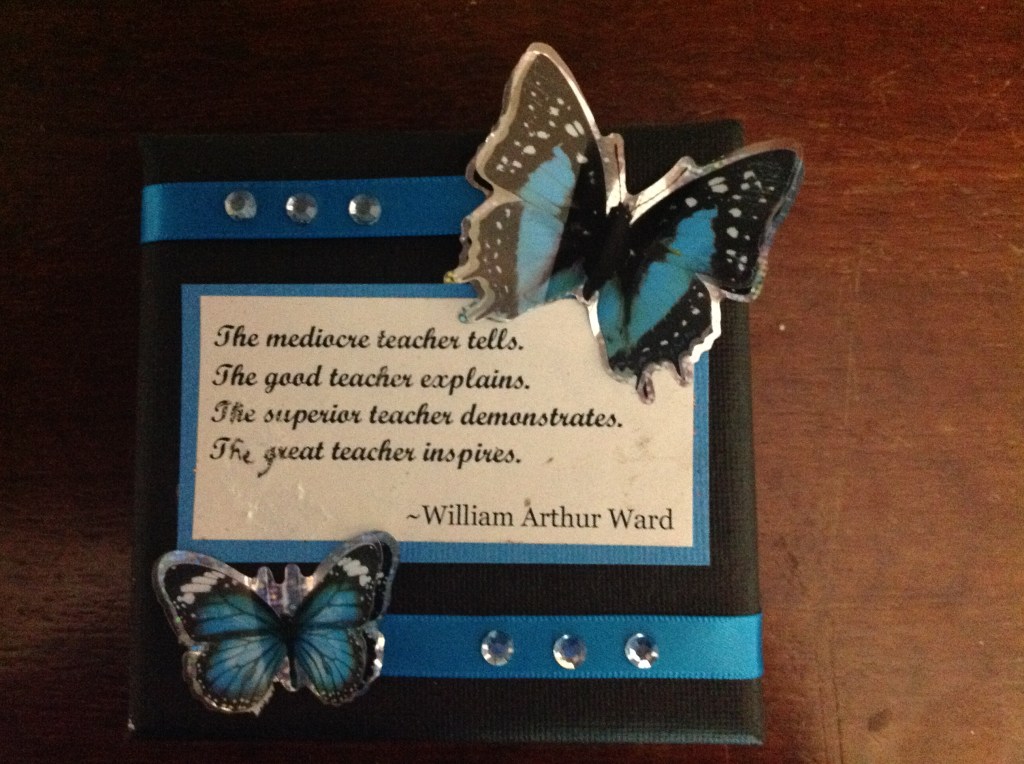
    Note: The beautiful framed quote, pictured at the top of this post, was made for me by a wonderful lady, the mother of two of my students. They all share my love of butterflies! I thank them for sharing their appreciation of my positive influence.

    I welcome your feedback. Please share your thoughts about any aspect of the article.

  • What do you have in mind?

    This week Two Writing Teachers posted a wonderful article by Stacey Shubitz (one of the Two Writing Teachers) about A Picture Book that Pushes the Growth Mindset.

    This post coincided beautifully with the flash fiction prompt posted by Charli Mills at Carrot Ranch Communications. Charli’s challenge is to:

     In 99 words (no more, no less) write a story about getting stronger.

    This is a perfect prompt for a teacher as a major focus of our work is in developing children’s strengths:

    Strengths as in abilities; strength as in self-esteem and self-confidence; strength as in willingness to face setbacks and try, try again; strength as in keeping on going even when the going gets tough.

    The picture book discussed in the article by Stacey Shubitz is The Most Magnificent Thing by Ashley Spires. Stacey suggests that the book is a great opener for discussions with children about the importance of a growth mindset.

    According to Stacey, an understanding of ‘the power of having a growth mindset’ has been enabled by the work of Carol Dweck, a Stanford psychologist. It is grounded in a belief that

    Someone can accomplish a lot more through hard work and dedication, rather than by relying on their smarts alone.

    I agree with Stacey that

    ‘Educators know the benefits of having a growth mindset, rather than having a fixed one. We learn from trial and error. There is value in failure.’

    I will not quote Stacey’s article in its entirety, but suggest you pop over and read it for yourself. (If you do, and leave a comment prior to June 27th, you may win yourself a copy of The Most Magnificent Thing, if you live in the USA or Canada.)

    Stacey says that “The girl in the story tries over ten times to build something and get it right. Through hard work and some help from her trust sidekick, her pug, she eventually succeeds.” As well as a starting point for discussing the growth mindset, Stacey suggests eight features of the book which are useful for teaching writing. The article also includes a brief, but informative, interview with the author/illustrator Ashley Spires.

    In response to Stacey’s question about using The Most Magnificent Thing for discussing a growth mindset, Ashley responds:

    ‘The character is a perfectly capable girl with a great idea and the skill to make it, but she has to try, try and try again in order to succeed. Most kids (I was one of them) think that if it’s not perfect the first time, then they should move on to something that comes to them more easily. Working hard to succeed is what true success is.”

    <p><a href=”http://vimeo.com/89499612″>The Most Magnificent Thing Book Trailer</a> from <a href=”http://vimeo.com/kidscanpress”>Kids Can Press</a> on <a href=”https://vimeo.com”>Vimeo</a&gt;.</p>

    My flash fiction, told through the jottings of a classroom teacher over time, shows a growth mindset emerging from one that was previously crushed.

    Progress

    Day one

    Timid. Needed help getting things out of bag to put in drawer. Sat towards back of group. Drew knees up under chin. Hunched over. Sucked thumb. Twisted long tangled hair under nose. Rocked.

    Day twenty-six

    Responded in roll call! Sat with ‘friend’. Legs crossed. Back straight. Smiled – briefly. Someone looked! Screamed, “Stop looking at me!” Dissolved in tears. Again. Retreated under desk. Again.

    Day fifty-two

    Initiated conversation!! Hair combed!! Nose not running!! Brought toy for show and tell. Responded with one- or two-word answers. Small, dirty, pink unicorn. B laughed. Erupted, but went to desk, not under!


    I welcome your feedback. Please share your thoughts about any aspect of the article or my flash fiction piece.

  • But I want it now! How long can you wait? The importance of emotional intelligence

    marshmallow 5

    In my previous post Life: a choose your own adventure – how do you choose I discussed the difficulties we may experience in prioritising options and choices, and the need to be self-regulatory in performing tasks and achieving goals.

    The discussion reminded me of the marshmallow test I had heard about from Daniel Goleman in his book “Emotional Intelligence”.

    The marshmallow test was a study conducted in the 1960s by Walter Mischel .

    As described by Daniel Goleman, In this experiment four-year-olds from the Stanford University pre-school were brought to a room and sat in a chair in front of a juicy marshmallow on a table. The experimenter then told them they could eat it now, or get two if they were willing to wait until the experimenter came back from running an errand.

    You can watch a video demonstrating the experiment here:

    Some children could not wait and ate the marshmallow as soon as the examiner left the room. Others toyed with the idea of waiting, but were unable to resist the temptation. Others were able to wait and scored two marshmallows when the examiner returned.

    While this study revealed certain aspects of childhood behaviour, follow-up studies into the behaviour of these children when young adults and graduating from high school revealed that Those who waited, compared to those who grabbed, were more popular with their peers, had less trouble delaying gratification, and scored far higher on achievement tests.”

    A further study, conducted 40 years later, as reported by Sylvia R. Karasu writing for Psychology Today, found that the ability to resist temptation is fairly stable over the lifecycle and predictive of behaviors 40 years later!

    Goleman talks about the important role of parents in supporting children to develop the ability to control impulses and choose behaviour. As children learn to internalise and choose the ‘no’ imposed by others, they learn to regulate impulsive behaviour. He calls it the ‘free won’t’, the capacity to squelch an impulse.”

    Karasu supports this by saying that “The researchers also suggested that a family environment where self-imposed delay” is “encouraged and modeled” may give children “a distinct advantage” to deal with frustrations throughout life.”

    Goleman says that the ability to curb dangerous impulses is an aspect of emotional intelligence, “which refers to how you handle your own feelings, how well you empathize and get along with other people. (He says it) is just a key human skill.”

    He continues by saying that “it also turns out that kids who are better able to manage their emotions . . .  can pay attention better, take in information better, and remember better. In other words, it helps you learn better.”

    It sounds like emotional intelligence is something that all schools should be developing, don’t you think?

    www.openclipart.org http://goo.gl/XhPCyE
    http://www.openclipart.org http://goo.gl/XhPCyE

    Goleman says that the ability to delay gratification hinges on a cognitive skill: concentrating on the good feelings that will come from achieving a goal, and so ignoring tempting distractions. That ability also lets us keep going toward that goal despite frustrations, setbacks, and obstacles.”

    Without that ability it may be difficult for any of us to achieve our goals. Saving for the future, studying towards a qualification, working harder now to have time off later; none of these would be possible without the ability to delay gratification.

    But can emotional intelligence be taught? And should it be taught in schools?

    It seems to me that if emotional intelligence is able to predict “success” in later life, then it is important to develop it as early as possible. This can begin in the home with parents helping their children learn to delay gratification, build resilience and develop empathy.

    I believe it is important to make a place for programs that develop emotional intelligence in schools. Children need opportunities to internalise emotionally intelligent responses to a variety of situations. A very structured, force-fed, content driven, test based approach where almost every action is directed and monitored leaves little room for students to develop skills of self-regulation.

    Discussions of whether emotional intelligence can, or importantly should, be taught in schools can be read here and here. The theory is that children can no more “pick up” emotional intelligence than they can “pick up” maths or English. To leave it to chance seems to be denying our children the opportunity to develop skills that will help them lead happy and successful lives.

    What do you think? Would you have one marshmallow now, or double it later?

    1 marshmallow      marshmallow 2

    Please share your ideas.


    You can read more of Daniel Goleman’s work at Edutopia, and hear his talks and conversations at More Than Sound.


    If you enjoyed this post, you may enjoy others. Please click the button at the top on the right to receive future posts by email.


  • It’s no surprise! Talking education

    https://openclipart.org/image/800px/svg_to_png/185077/creepyjackinthebox.png
    https://openclipart.org/image/800px/svg_to_png/185077/creepyjackinthebox.png

    We all like a surprise, right?

    Well, you might say, that all depends on whether the surprise is a good surprise or a bad surprise.

    A surprise is simply something unexpected, and everyday life is full of surprises; some so little they go almost unnoticed, others of larger more life-changing proportions. Some are pleasant and others far less so.

    What got me thinking about surprises this week is the flash fiction prompt posted by Charli Mills at Carrot Ranch Communications.

    Charli’s challenge this week is to

    In 99 words (no more, no less) write a story that shows surprise without using the word. 

    I have been thinking of all sorts of surprises I could write about but decided to maintain my focus on education.

    There are many opportunities for surprises to occur throughout one’s education, which is not limited to (but probably, dare I say, by) one’s schooling experiences.

    For example:

    • Discovering you can read a book, all by yourself
    • Discovering an author whose work you just can’t put down
    • Finding a solution to a problem that had seemed insurmountable
    • Achieving a favourable result in a dreaded test
    • Being offered a place in the course you were wanting
    • Having work accepted, valued and receiving payment


    There are many situations in which the surprise could go either way.

    For example:

    • Being called to the principal’s office
    • Having a parent-teacher interview about your own child, or student
    • Receiving exam results or course placement offer
    • Meeting a new teacher
    • Working in a group to solve a problem


    Being a lover of stories, especially picture books, it is rare that a situation doesn’t trigger a thought connection to a story or book I have read.

    Thinking about the good surprises and bad surprises that could happen in some of these situations made me think of a book I had read to my own, and classes of, children years ago. Maybe you will remember it also.

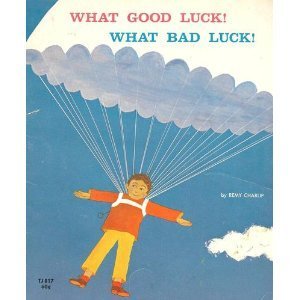
    what good luck what bad luckThe book is What Good Luck! What Bad Luck! by Remy Charlip and relates a sequence of events alternating between good and bad.

    It appears, from what I can find out, that it was first published by Ashton Scholastic in 1964 and sold for 60 cents.

    Today Amazon has used copies on offer for $34.99 or $122 and a collectible as high as $157.70.

    What good luck, I used to have a copy.

    What bad luck, it is no longer in my possession.

    I was at the stage of mentally composing my story with my fingers itching to get to the keyboard to translate it into print when I glanced at the morning paper1 and came across this headline:

    Lesson 1: Bad teachers = bad results

    As a teacher who is passionate about education but also critical of top-down force-fed schooling institutions, headlines/comments like these have me vacillating between defiant self- (and professional-) protection and agreement with the criticisms.

    Teachers come in for a lot of criticism, some of it deservedly so, other of it not so much.

    One quote I love is “Teaching is the one profession that creates all other professions”.

    On the flip-side of this is “Those who can, do. Those who can’t, teach.”

    While I take offense at this one, sometimes I am inclined to think it alludes to an important quality in a teacher. Frequently those who are expert at something, find it difficult to break a process into a series of steps that would enable an explanation to be easily understood by others. If one has struggled to master a task, the process can seem clearer and easier to explain. However there does come a point below which knowledge and experience must not fall or effective teaching cannot exist.

    In her article Bad teachers = bad results, Kylie Lang says that

    “C-grade teachers will not produce A-grade results”.

    She says,

    “Too many mediocre minds are becoming teachers. Universities usher them in, these academic underperformers who fail to qualify for courses with higher entry requirements.”

    She says that

    “A federal education department report shows a rise in the number of school leavers with poor grades being offered places on teaching courses. This year, 55 percent of Year 12 students that were allowed to undertake teaching degrees had an Australian Tertiary Admission Rank below the average . . .”

    It is a bit scary, isn’t it?

    She also says that,

    “If we are a nation that values education . . . we must attract brighter, more creative thinkers to classrooms.”

    I couldn’t agree more. However I wonder where they will get those creative thinkers if higher order thinking skills, creativity and innovation are sacrificed in the relentless quest for scores on academic tests which require students to spit back information forced upon them in hours of didactic instruction and rote learning.

    It’s no surprise that anyone who maintains the ability to think outside the square would rather not return to it!

    And so to my flash piece for this week, which comes with a warning – there’s no rhyme because there is no reason:


    What luck!

    No books, no talk were in the home.

    What luck!

    He was happy to play on his own.


    School began when he was five.

    What luck!

    Learning from flash cards, how hard he tried.


    “My boy can’t do it!” his Mum once wailed.

    What luck!

    With ‘forged’ test scores no child would fail.


    Leaving school, the options were few.

    What luck!

    Teaching was the one he could do.


    Uni years flashed by so fast.

    What luck!

    Number requirements meant he passed.


    Then into the classroom he unprepared went.

    No future joy for any student.

    What bad luck!


    I always enjoy reading your comments. I invite you to share your thoughts.


    1 Courier-Mail, Sunday May 25 2014


    If you enjoyed this post, you may enjoy others. Please click the button at the top on the right to receive future posts by email.

  • Child’s play – the science of asking questions

    Unknown source. Apologies. Happy to attribute if informed.
    Unknown source. Apologies. Happy to attribute if informed.

    I often say that children are born scientists. From the moment they are born they are actively finding ways of figuring out how the world works, and how they can get it to work for them.1

    Some people say children are sponges. But I say they are more than that. They are creators. They don’t just copy what they see. They don’t just repeat what they hear. They find new ways of working things out, new ways of expressing ideas, and new ways of thinking about things. Parents often remark, when children exhibit new behaviours or cute new phrases or ways of expressing themselves, “Where did they get that from? Where did they learn that?” Often the source cannot be identified, for the source is within the child.

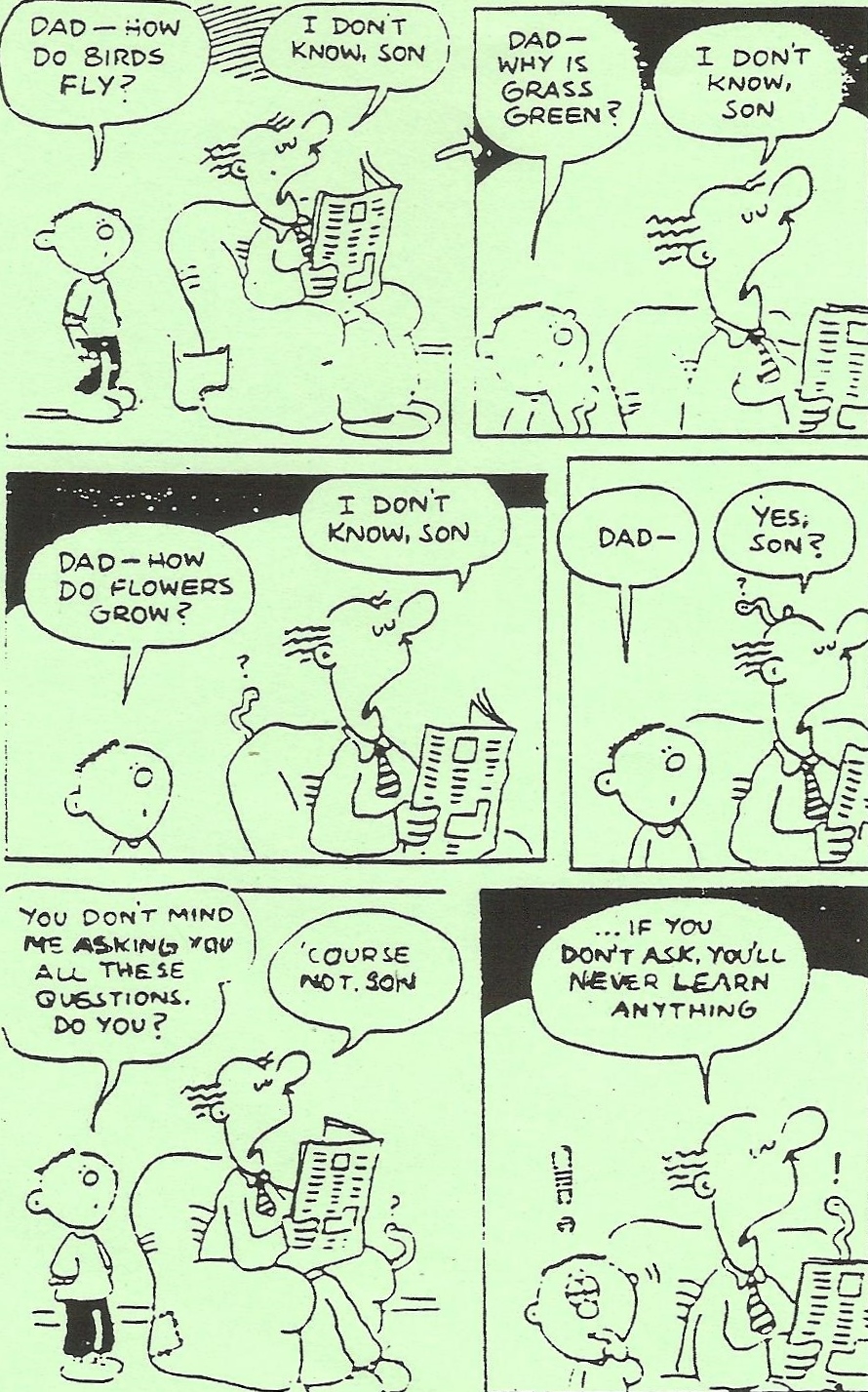
    An important way to keep children creating their own understandings and ideas is to not only allow them to ask questions, but to actively encourage them to do so, and to help them seek answers to their questions. Adults can be quick to quiet children’s questions for a number of reasons including not knowing the answer, being too busy at the time to investigate an answer, or even considering the question unimportant or “dumb”.

    Unknown source. Apologies. Happy to attribute if informed.
    Unknown source. Apologies. Happy to attribute if informed.

    Remember, many things that adults may take for granted or that they may no longer question but simply accept (possibly as a result of not receiving appropriate answers or responses to their childhood questions) are new and unfamiliar to the child.

    Sometimes it is easier to accept than to question for questioning means that something is unknown; and not knowing can lead to feelings of insecurity, doubt and instability. But it is these self-same feelings which drive innovation and progress. If everything was known, there would be no room for improvement, no need for anything new, no need for greater understanding.

    This inspiring TED talk by Beau Lotto and Amy O’Toole, Science is for everyone, kids included emphasizes the need for children to be given the opportunity of asking, and exploring answers to, questions.

    Beau explains that what we see is based upon our experience, upon our expectations. But he asks,

    “if perception is grounded in our history, . . . (and) we’re only ever responding according to what we’ve done before . . . how can we ever see differently?”

    He goes on to explain that seeing things differently begins with a question and that questions lead to uncertainty. He says that

    The-best-questions-are

    and explains that the answer to uncertainty is play. He says that play “is a way of being” and is important for five reasons:

    • Uncertainty is celebrated in play and makes play fun
    • Play is adaptable to change
    • Play is open to possibility
    • Play is cooperative
    • Play is intrinsically motivated

    “Play is its own reward.”

    Beau says that science, also, is a way of being; and that science experiments are like play.

    He describes working with a group of 8-10 year old children, encouraging them to ask questions and involving them in an investigation of a question they posed.

    Amy O’Toole, one of the children involved, joins Beau and describes the experiment which investigated the ability of bees to “adapt themselves to new situations using previously learned rules and conditions.”

    The really exciting thing about the project, Amy says, was that they “had no idea whether it would work. It was completely new, and no one had done it before, including adults.”

    The process of taking the findings of the project to publication, as Beau explains, was rather complex with a variety of complications, taking two years to achieve. The experiment itself took only four months! Publication of the paper made Amy and her friends the youngest ever published scientists.

    The response to the paper, The Blackawton Bees is amazing:

    30 000 downloads on the first day

    Editor’s Choice in Science (a top science magazine)

    the only paper forever freely accessible on Biology Letters and

    the second-most downloaded paper from Biology Letters in 2011

    Amy wraps up the talk by stating that

    “This project was really exciting for me, because it brought the process of discovery to life, and it showed me that anyone, and I mean anyone, has the potential to discover something new, and that a small question can lead into a big discovery.”

    She finishes by saying that

    “science isn’t just a boring subject … anyone can discover something new.”

    We might not all make those big scientific discoveries, but it is the questions we ask each day which lead to our own discoveries, no matter how small; it is our curiosity which keeps us learning.

    What have you learnt today?

     Changing-the-way-a

    1 This is just my opinion formed from observations, discussions and reading. I am not supporting it with research references.

  • Seeking praise – Stephen Grosz revisited

    Praise may be defined as an expression of approval or admiration.

    Who wouldn’t want that?

    If you write a blog, don’t you love it when others “like” a post, leave a positive comment, re-blog your article or link to it via theirs? I do. Aren’t these all expressions of approval or admiration?

    What about on Twitter when someone Re-tweets, favourites or replies positively to your comment, engaging you in conversation?

    Aren’t these also expressions of approval or admiration?

    I love to receive all these signs of encouragement and support that let me know that my efforts are appreciated and confirm that I am on the right track. If I did not receive any of this feedback I would feel quite isolated and consider my efforts to be fruitless and a waste of time. I would probably just give up.

    As a teacher I have always considered it of primary importance to create a happy and welcoming classroom environment in which children feel valued, affirmed and supported. Expressions of approval and admiration for behaviour, effort and achievement were generously given with the aim of encouraging the desired response, a happy child being foremost. I have written about this in previous posts, including:

    Happy being me

    Affirmations: How good are they?

    As a parent too I considered it important to affirm my children and display my approval and admiration for them. I still do, even now they are adults. The need for approval never ends. I know sometimes you just have to go out there and say what you know is right, even though others will disagree or ridicule you. I am not talking about those instances here.

    My strong belief in the power of affirmations and approval stems partly from the dearth of them in my childhood and school days. I have also mentioned this in a previous post: 

    Mouthing the words – the golem effect

    Recently I listened to a fabulous (audio)book, “The Examined Life: How We Lose and Find Ourselves” by Stephen Grosz. I wrote about it in my previous post A book worth reading: Stephen Grosz “The Examined Life” saying that

    “What appeals to a reader about a book, or what a reader takes away from a book is as individual and personal as the reader. What is of most significant to one, may be of lesser importance, or even insignificant to another. “

    For me the chapter of most significance is chapter 3 “How praise can cause a loss of competence”.

    To say I was startled by the title would be an understatement. I was puzzled, intrigued and challenged. How could praise cause a loss of competence? Surely negative feedback or a lack of encouragement altogether would be major contributors to diminishing competence. Was everything I had believed and practiced wrong? (Oh no –there’s my need for approval and affirmation!)

    Grosz says that during the past decade studies into self-esteem have found that praising a child as “clever” may not only inhibit school achievement, it may cause under performance. He suggests children may react to praise by quitting. Why would you try to improve or do something new if you have already done something really well or are the “best”?

    Studies showed that children who were praised for effort, rather than for being clever, were more willing to try new approaches and were more resilient. Children who were praised for being clever, tended to worry more about failure and chose unchallenging tasks, tasks they knew they could achieve or had already achieved. Being told they were clever led to a loss in self-esteem and motivation and to increased anxiety. Some children who had been praised for being clever (rather than working hard), when confronted with a more difficult task and asked to comment on it, were so unhappy with the results they lied about them, exaggerating their achievements to others.

    Grosz questions whether we may lavish praise on our children nowadays in order to demonstrate that we are different from our parents who possibly used criticism, rather than praise, on us. I hinted at something similar earlier in this article.

    While admiring our children with words like “Good boy” or “Good girl” may temporarily lift our self-esteem by showing others what wonderful parents we are or how wonderful our children are, Grosz says, it isn’t doing much for a child’s sense of self. He says that in trying to be different from our parents we end up doing the same thing: doling out empty praise where an earlier generation doled out thoughtless criticism.

    Grosz says that if we offer this empty praise without thinking about the child’s individuality and needs we are effectively showing the child indifference.

    So what do we do?

    I think the emphasis here is on the empty praise. I think support, encouragement and positive feedback are all essential. Sure, knowing in yourself that you have done well is fine but a little recognition certainly helps too. I think the difference is in recognizing what has been achieved, the learning or progress made, and the effort it took, the message communicated in a story or painting and the techniques used; not a hollow “Well done”, “Good work” or “Good boy” but “Tell be about . . .”, “Why do you think that?” “How did you work it out?” “I like the way you . . .”

    As Grosz says, this is being attentive to the child, to what the child has done and how it has been done.

    To read more on this topic:

    Sian Griffiths interviewed Stephen Grosz and reported on the interview in the article “Praise her . . . and see her fail” which adds even more clarity to my precis above.

    Maria Popova delves into the messages of this same chapter in her article “Presence, Not Praise: How to Cultivate a Healthy Relationship with Achievement

    Being attentive, being present, being really with someone, noticing what they have done and how they have done it – is it more precious than praise?

    In these days of constant distractions and must-dos to put all aside to be in the present with the child, friend or partner to talk, listen share and laugh, what better affirmation is there than that?

    What do you think?

    How has praise encouraged or discouraged you?   When has criticism hindered you?

    I’d love to hear your thoughts.

  • Must read: Neil Gaiman – “Reading and obligation”

    When I first stepped, rather tentatively, into the world of blogging and tweeting I had no idea of the pleasures I would find. I found a whole community of others who share my passion for education, learning, literacy and writing. I found a comfortable niche, discussion group, and a place for sharing ideas like I hadn’t for a long time. I’ve “come home” on the internet.

    In these few short months I have come across some bloggers with very powerful messages that I wish everyone could read and act upon in the ways described. What a wonderful world we would have!

    Over the coming months I will let you know about some  articles I consider  ‘must reads’.

    Please let me know of others you think I should also be reading!

    Thanks for sharing and supporting me on my learning journey thus far.

    The story has just begun!

    This first in the series is a lecture given by Neil Gaiman entitled “Reading and obligation”

    Neil Gaiman lecture in full: Reading and obligation

    Neil captivates me with his opening statement:

    “It’s important for people to tell you what side they are on and why, and whether they might be biased.”

    If you have read any other articles on my blog, you will know that I am biased; biased towards a child-centered, hands-on, creative and innovative approach to education. I believe that children are capable of far more than a structured didactic approach to schooling gives them credit for; and that big changes in the way education is delivered are necessary if we are to make best use of our most valuable resource – human potential.

    As a reader, writer and literacy educator I am biased towards approaches which foster a love of reading and writing. The pleasures to be gained from a literate existence are immeasurable. But more than that, being literate is not only personally empowering, it is a basic human right.

    Obviously the articles on my must read list will be those that share my biases.

    Please follow the link to watch the video or read the complete transcript of Neil’s lecture.

    I offer a few teasers below to incite your interest.

    “everything changes when we read”

    Wow! How powerful is that statement!

    “The simplest way to make sure that we raise literate children is to teach them to read, and to show them that reading is a pleasurable activity. And that means, at its simplest, finding books that they enjoy giving them access to those books and letting them read them.”

    “Fiction has two uses. Firstly, it’s a gateway drug to reading. . .

    And the second thing fiction does is to build empathy.”

    “Fiction can show you a different world. It can take you somewhere you’ve never been. Once you’ve visited other worlds, like those who ate fairy fruit, you can never be entirely content with the world that you grew up in. Discontent is a good thing: people can modify and improve their worlds, leave them better, leave them different.”

    Don’t you love that last statement? I do. If we are always “happy” with the way things are, why would we ever try to improve or change them? A little discontent can be a good thing!

    “We need to read and write, we need global citizens who can read comfortably, comprehend what they are reading, understand nuance, and make themselves understood.”

    Neil goes on to talk about our obligations as readers, writers and citizens of the world.

    He lists the following (read or listen for his explanation)

    • Read for pleasure
    • Support libraries
    • Read aloud to our children
    • To use the language
    • We writers – and especially writers for children, but all writers – have an obligation to our readers: it’s the obligation to write true things, especially important when we are creating tales of people who do not exist in places that never were – to understand that truth is not in what happens but what it tells us about who we are. Fiction is the lie that tells the truth (underlining is mine)
    • not to bore our readers
    • not to preach, not to lecture, not to force 
    • never, ever, under any circumstances, to write anything for children to read that we would not want to read ourselves.
    • to understand and to acknowledge that as writers for children we are doing important work,
    • to daydream We have an obligation to imagine. . . . individuals change their world over and over, individuals make the future, and they do it by imagining that things can be different.
    • to make things beautiful.
    • to tell our politicians what we want

    Neil reminds us that

    Albert Einstein was asked once how we could make our children intelligent. His reply was both simple and wise.

    If you want your children to be intelligent,” he said, “read them fairy tales. If you want them to be more intelligent, read them more fairy tales.

    I couldn’t agree more.

    What about you? What do you think of Neil’s list of obligations? Are there any you would omit, or any you would add?

  • Enhance learning potential – talk and read daily

    Reports in the media this week asserted that parents are not making the time to read to their children on a regular basis. They also stated that children are beginning school unable to talk.

    So what’s new and why does it matter?

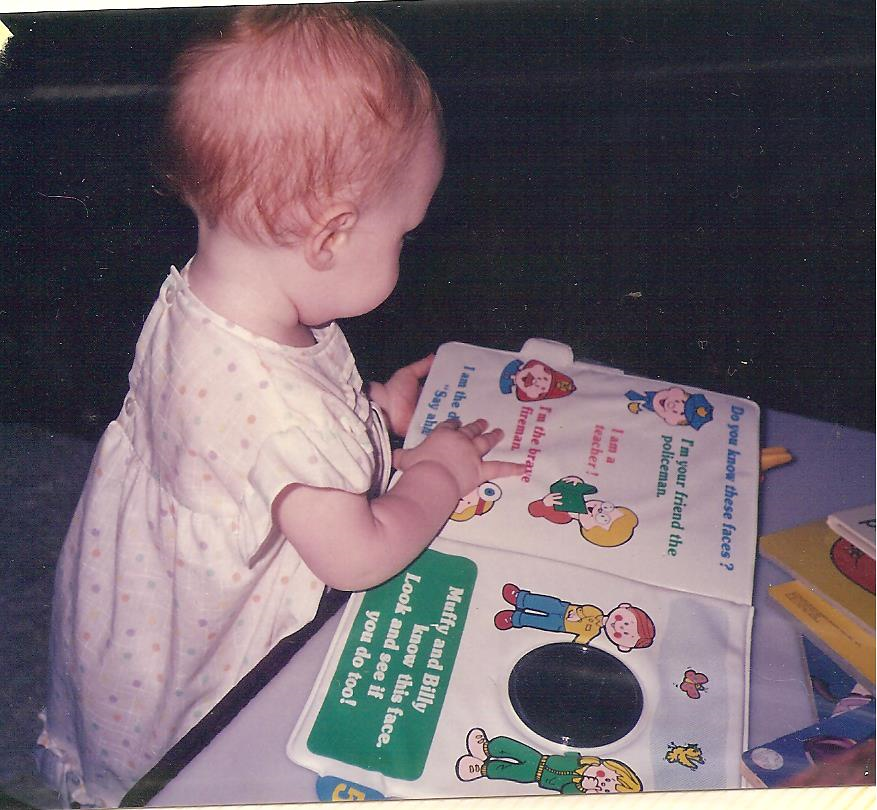
    Beckii readingSimilar allegations have been made for decades and it is saddening to see that the situation persists despite the increased volume of good quality children’s books being readily available at affordable prices and the torrent of information available in easily accessible media, including information about the importance of talking with and reading to children.

    Children who start school with a love of reading and learning have an enormous advantage over those who don’t.

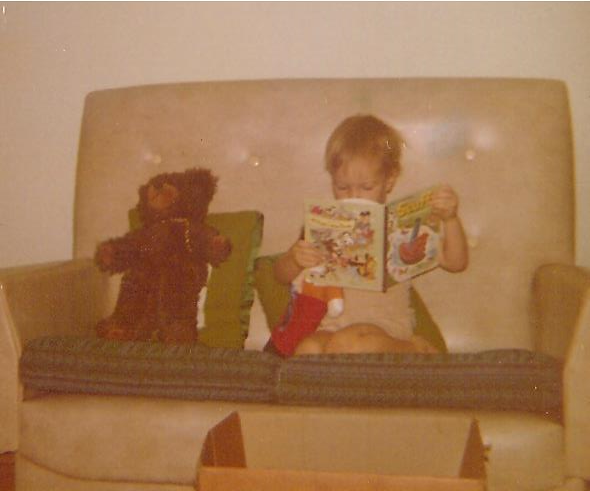
    Robert 2Teachers of children in their first years of schooling are easily able to identify the children who have been talked with and read to in their before school years. These children display a broader general knowledge, a larger vocabulary and fluency with language, a comfortable familiarity with books and an expectation of enjoyment with learning.

    Children whose before school years have been bereft of meaningful conversations with adults and lacking in regular and frequent incursions into books, generally present with limited general knowledge, restricted vocabulary, little expectation that books will provide joy and diminished interest in or incentive for learning.

    Why then are parents not making the time to talk with and read to their children?

    Busy schedules and work commitments make it seem as if there is just not enough time to fit in talking and reading to children every day. But how much time does it take to do that?

    Simple changes in routine can open up new avenues for communication without requiring an extra commitment of time.

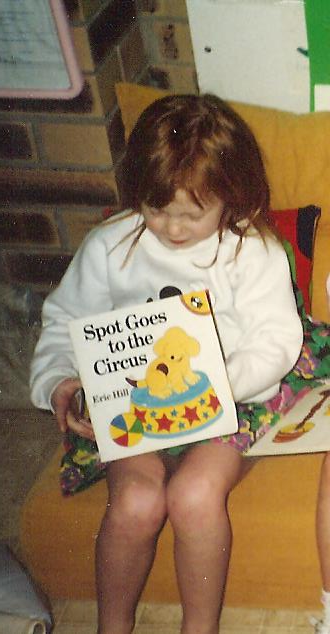
    reading Spot

    Here are just two suggestions for easily adding a talk and a book to the daily schedule without requiring any more time.

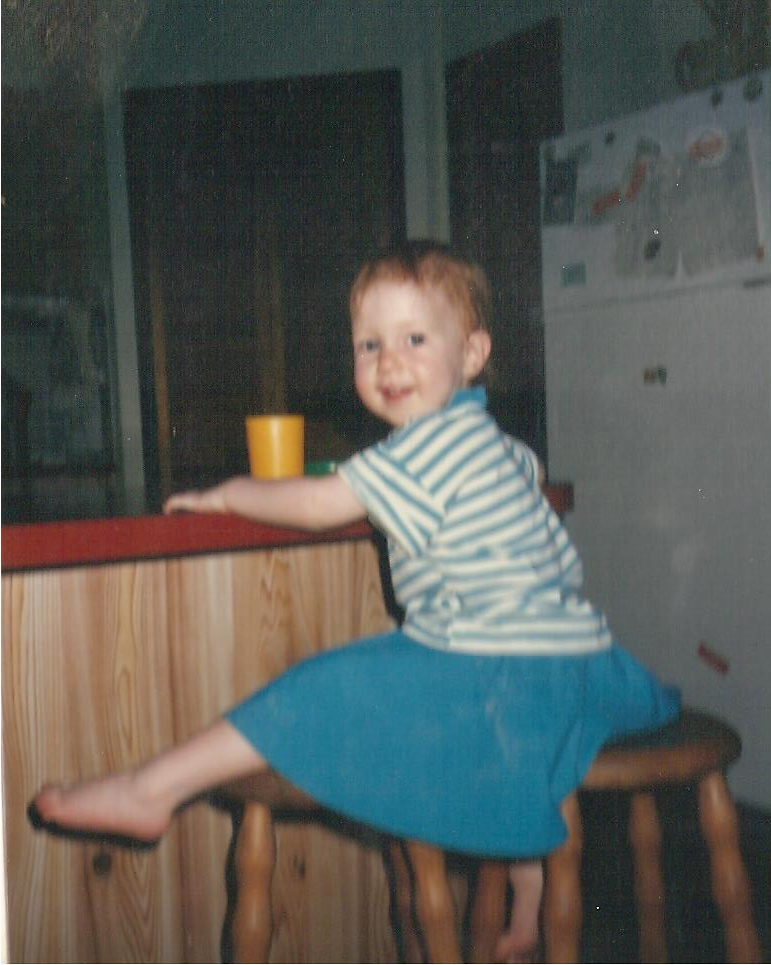
    Sit a child on a stool beside you and chat about the day’s events while preparing the evening meal.

    Beckii on stoolThis simple activity requires no further expenditure of time but greatly enhances the child’s communication skills and the parent-child relationship as well. Vocabulary is extended to include words that name and describe foods and the actions that are used in the preparation. Enlisting their help further boosts their sense of self and independence and may encourage a greater willingness to try a wider variety of foods.

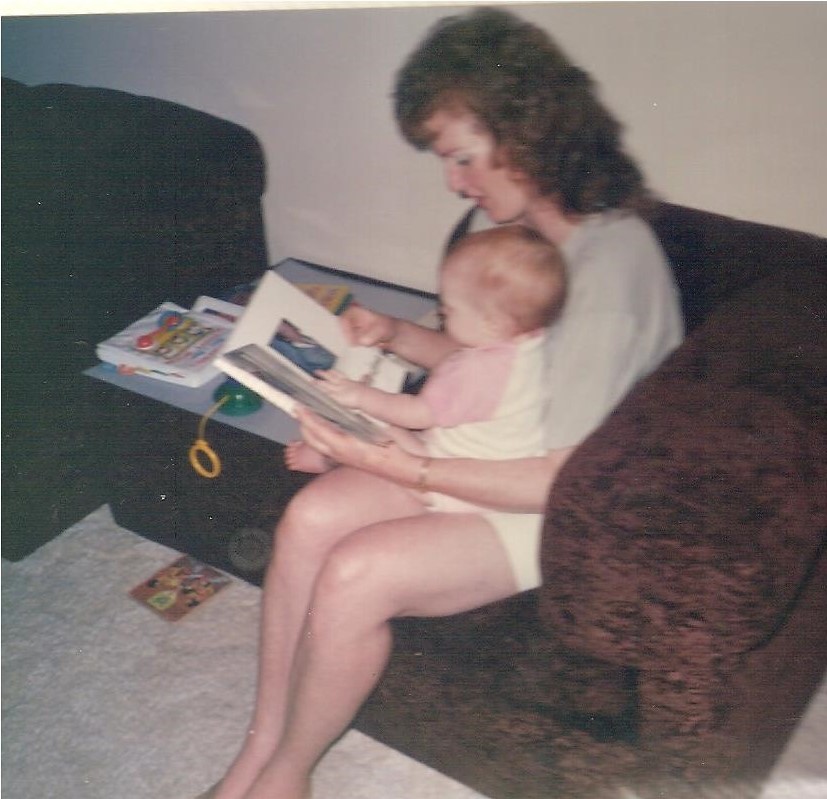
    The promise of a story at bedtime can help to make the transition from a busy day to a restful night easier and more enjoyable.

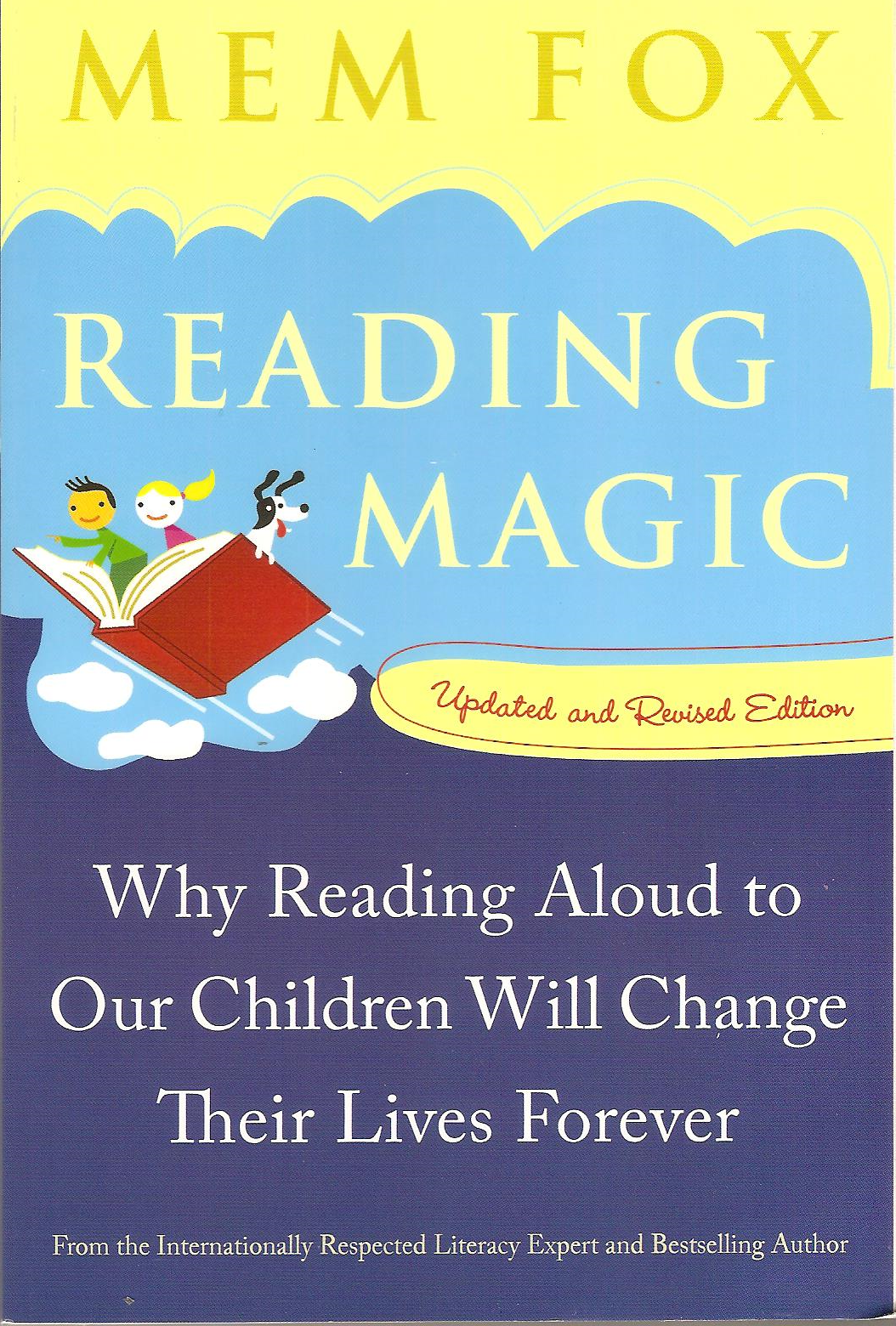
    Reading magicA short time is all it takes to share the joy of a story.  In her book Reading Magic Mem Fox recommends 10 minutes of reading to children every day. Ten minutes of story time gives far more pleasure to both child and parent than ten minutes fraught with coaxing and struggling. Snuggling up in bed for a special quiet story time with a parent eases the child into relaxation and a slowing down in preparation for sleep.

    In addition to strengthening the child-parent bond, a love of books and an enjoyment of language and story is being nurtured; a love that can be maintained throughout one’s life.

    Nor and Bec reading

    How do you fit talking and reading into your busy schedule?