Live Love Laugh Learn … Create the possibilities

Tag: schooling

  • Food for thought

    Food for thought

    Thinking is as much a part of life as is eating. Something to think about is often referred to as ‘food for thought’; and food for thought is just as important to wellbeing as is food for the body. When I’m not thinking about where I’ll partake of my next meal, or what I might eat, I’m often thinking about education.

    www.openclipart.com
    http://www.openclipart.com

    I recently read an article on Selected Reads called Teacher’s Guide to Teaching Students to Ask Their Own Questions which included a review of a book by Rothstein and Santana entitled “Make Just One Change: Teach Students to Ask Their Own Questions“.

    I will be upfront and admit that I have not read the book and am commenting on the review alone which states that the book brings together “several years of research and experience into a methodology for applying their groundbreaking thought and technique.” It goes on to say that “The basic argument … is pretty basic: for our students to achieve excellence and equity, we need to teach them the skill of question formulation.” (my emphasis)


    I really have no argument with the premise of the book. In fact, it sounds like a pretty good read to me. I have even previously blogged about the importance of asking questions in these posts: Child’s play – the science of asking questions  and What you don’t know …


    What I wonder about is: If it is so important for students to learn to ask questions, why do we spend so much time in school teaching them to stop asking questions and to learn just what is presented to them, whether they like it or not?


    Aren’t children born asking questions? Aren’t they pretty good at asking questions (verbal or otherwise) to figure out what they need to know about the world? Why then do we sit them in desks all day and force-feed them content for future on-demand regurgitation?


    I consider it to be a bit like inviting someone to a feast but feeding them pap, which is the essence of my flash fiction piece written in response to the prompt suggested by Charli Mills this week at the Carrot Ranch: In 99 words (no more, no less) include food in your story.


    Food?

    His eyes widened, flitting across the table, scanning the feast, a smorgasbord of sensory delights. His mouth moistened and tummy growled.

    Where to start? A bit of this. A little of that. A whole lot of that! Mmmm!

    He rubbed his belly and licked his lips.

    Suddenly he was marched away and slammed onto a hard wooden bench. A bowl of colourless pap was flung at him.  “Eat this!”

    He recoiled.

    “Eat it!”

    The overfilled spoon was shoved between tightened teeth.

    He gagged.

    “It’s good for you!”

    He spluttered.

    Over time he learned. “Not so bad,” he thought.


    Okay. Maybe I’m exaggerating. Maybe I’m painting the picture darker than reality. Maybe. But sometimes that is necessary for even partial recognition of the situation to occur. You know about the swinging pendulum.


    The picture painted by Scott McLeod of dangerously ! irrelevant is no brighter. In his post The declining economic value of routine cognitive work  he says that while most employees (in the U.S.) are engaged in non-routine cognitive and interpersonal work; routine cognitive work is what students are mostly engaged and assessed in, and what traditionalist parents and politicians advocate. So while work tasks may require “problem-solving, intuition, persuasion, and creativity”, school tasks involve things such as automation and repetition.


    My wish is that all parents, school administrators, education policy makers and teachers do as Rothstein and Santana suggest – let them ask questions!


    Of course I couldn’t write a post about food and questions and not mention the blog of one of my very favourite questioners, Bec, who writes about “wholefoods, vegetarianism, slow living and their existential friends” at There’s no food. There’s much food for thought there!

    And now for something a little bit different: The edible cookbook. It’s a cookbook you can read, cook and eat! I wonder what questions its designer was asking to come up with such an innovative and interesting design.

    Thank you

    Thank you for reading. I appreciate your feedback. Please join in the discussion or share your thoughts about any aspect of this post, including my flash fiction.




  • How inclusive are you?

    A few weeks ago I wrote a post called Benefits of inclusion.

    In that post I linked to this TEDx talk by Dan Habib, Disabling Segregation.

    In the talk, Dan advocates for the inclusion of students with differences in mainstream schools. He explains that there are benefits for typical children as well as for children with disabilities.

    The benefits include:

    • better communication skills
    • higher academic achievements
    • wider social networks, and
    • fewer behaviour problems.

    He also says that typical children learn to be more patient, caring, compassionate and loving.

    He decries the fact that although these benefits are known most children with differences still spend most of their day segregated.

    In that post I also referred to article on The Cool Cat Teacher’s blog in which Gary Dietz, author of Dads of Disability, shared 5 practical lessons for elementary classroom inclusion.

    His suggestions are:

    1. ‘Meet the student “where the student lives” (where they need to be, at their level of development)
    2. Presume competence
    3. Be creative in your use of ‘adaptive’ technology
    4. Listen to parents and help them listen to the child
    5. Give “overlooked” children the same chance to shine as the superstars.
    https://openclipart.org/image/800px/svg_to_png/651/ryanlerch_kids_with_hats.png
    https://openclipart.org/image/800px/svg_to_png/651/ryanlerch_kids_with_hats.png

    The post received many wonderful comments, including some by Gary, which continued the discussion. It is worth having a peek back to see what people were thinking if you are interested.

    Because your response to that post was so positive, I thought I would share with you some others that I have come across since publishing it.

    On her blog, teacher versus mum, an Adelaide teacher wrote a post called When inclusivity becomes exclusion. In the article TeacherMumWife questions whether it is the attitude of teachers towards students with disabilities that impedes the progress of inclusivity.

    TeacherMumWife describes a situation at a school in her local area as one promoting exclusion, rather than inclusion, through its lack of preparedness. She describes the aggressive and fear-inducing behaviour of one child and condemns the attitude of parents and teachers who question whether the school is the best place for the child. She asks, “isn’t it about time teacher attitudes got a kick up the bum, and teacher training programs and systemic funding be modified to reflect this need in our classrooms?

    respect

    I personally favour the idea of inclusion and believe that everyone deserves to be treated with respect and given a fair go. However in a situation such as that described by TeacherMumWife, a situation that many teachers are faced with on a regular basis, I have to admit teacher guilt in also questioning whether the regular classroom is the best place for the child.

    A child with aggressive and disruptive behaviours, who injures teachers and classmates and who disrupts the learning of other students, in my opinion, is not giving others a fair go. I do not think accepting them into the classroom is equitable. If a child with special needs is placed into a classroom that is unable to provide for those needs, then it is not any more satisfactory for that child than it is for any other participants in the classroom.

    There is already a great deal of pressure upon classroom teachers. The expectation that a general classroom teacher should be able to cater for a great diversity of special needs in addition to the range of diverse abilities and needs in a group of twenty-five to thirty or more students is, I believe, unrealistic in most current educational systems and environments. Qualifications to teach special education requires additional years of study. Teacher training, here is Queensland anyway, is already four years. How many years will it take to prepare teachers to cater for all needs that may present themselves at the classroom door?

    People_16_Teacher_Blackboard

    I agree with TeacherMumWife that more training is required so that teachers may develop a greater understanding of differences, and develop a genuine empathy for parents of and students with those differences. Additionally education must receive more funding to provide trained teachers and support personnel to work with students with special needs, and enable them to be more integrated into a situation which caters to their needs as much as to the needs of others.


    A commenter on the blog agrees, saying, “The teachers involved in any class environment, have a right and expectation not to be placed in a situation they are not trained for or feel threatened by the situation they find themselves in.” He describes the progress of his ASD daughter from early primary to high school years.

    Blake Wiggs, an instructional coach shared an article called Rethinking tolerance: Ensuring all students belong on Edutopia. He explains an exercise conducted with his students that highlights a similar situation to that noted by Dan Habib in his TEDx talk: that people form friendships with those who are similar to themselves and that perceptions of those who are different may be influenced by stereotypical thoughts. Blake’s article did not address disability specifically but the activity and attitudes are relevant just the same. He noted three necessary ingredients for creating a more tolerant environment, including:

    1. Create a culture of acceptance
    2. Address feelings of isolation
    3. Foster meaningful relationships


    https://openclipart.org/image/800px/svg_to_png/192642/Children_holding_hands.png
    https://openclipart.org/image/800px/svg_to_png/192642/Children_holding_hands.png

    I think Jamie Davis Smith would agree with those. In her post, I’m so sorry my daughter’s disability is such an inconvenience for you shared on HuffPost Parents, Jamie expresses a parent’s frustration at the lack of consideration shown to those with disabilities. However she is not talking about school inclusion, but acceptance and inclusion in society.

    Linda Petersen has a many positive suggestions on her Raising 5 Kids with Disabilities and Staying Sane Blog. Linda shares stories of her lifetime living with people with disabilities. In her recent post she says,

    Every child is a joy! Imagine yourself in the mother of a disabled child’s shoes. Have empathy for that mom. Join in her admiration of her child, and maybe you will also internalize the concept that “God don’t make junk!


    I appreciate your feedback. Please share your thoughts about any aspect of this post.


  • Imagine that!

    Imagine that!

    Recently Hope at Nanny Shecando sent me a tweet requesting some thoughts about imaginative play in a school setting. Sadly I would say that imaginative play has been just about pushed out in the ever-increasing content-driven and assessment focused curriculum. Seeing children as young as five spending much of their day sitting at desks filling in worksheets and parroting back isolated bits of information flashed at them in meaningless drill and practice sessions is about as far away from my thoughts about education as you could get. If it is difficult for early childhood teachers to squeeze time for imaginative play into their programs, imagine (there’s that word) how difficult it is for teachers of older children.

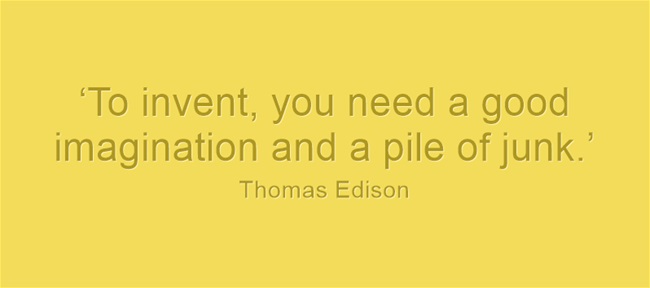
    However, whenever I hear the above quote by Thomas Edison, I am reminded of how an early childhood classroom should be: a place for imagination, exploration and discovery.  Parents may tire of the cardboard box creations that children regularly bring home, wondering where each one can be stored (or discreetly disposed of!), but the value to be had from the opportunity to create, imagine and play must not be understated.

    For imagination to flourish in an early childhood classroom, I suggest the following ingredients are essential:

    A recognition of the importance of play and imagination in the healthy development of children and the prioritisation of opportunities for imaginative play every day by providing:

    • Time – lengthy and uninterrupted, with the opportunity for created play areas to be left intact over a number of days or weeks
    • Space – both indoor and outdoor with a variety of larger and smaller spaces
    • Opportunities for self-selection of activity and self-direction
    • Books for story reading and play acting
    • Variety of props: things such as dress-up items including lengths of fabric that can be a kings robe, a princess’s dress, a magic carpet, an apron, a bed; hats and scarves; toys like cars, dolls, animal toys; building blocks and cardboard boxes; paper, cardboard scissors and pens for creating signs, posters and crowns; areas for quiet play with cushions; open spaces for creating larger ‘worlds’ . . . the items that can be used to inspire imagination are limitless.

    When children are showing interest in a particular topic, an observant teacher may gather up a variety of props and leave then in a box for children to discover and use as they decide.


    https://openclipart.org/image/800px/svg_to_png/30889/lampada_di_aladino_alad_01.png
    https://openclipart.org/image/800px/svg_to_png/30889/lampada_di_aladino_alad_01.png

    In an earlier post, Learning at its best: A classroom of magic, Hope herself described a school with an open space ‘where magic happens’. She described a friendship tree where ‘friendship and freedom of speech are fostered’; an area with a ‘magic carpet . . . plush beaded cushions and Middle Eastern style blankets . . . a place for imagination to prosper. Anything is possible when dreamed, imagined or conjured whilst on the magic carpet.’

    magic carpet

    She described an area for drama and the opportunity of being and expressing yourself. She described a creativity corner where young inventors could create anything they could imagine; and spaces to read, explore, share and dream. One could think this school was in Hope’s dreams, her imagination of what is possible. But it is a real school educating real children in very positive ways that will have a very different effect that the scenario I described above. However it is not a typical school. There is not one like it in every suburb. In Hope’s words, it is a ‘very select private school’. But don’t all children deserve learning opportunities such as these?

    After re-reading Hope’s post, I’m not entirely certain why she invited me to share my thoughts about imaginative play in a school setting. I think she has described a wonderful example of imagination in practice. The design of the school and the aspects of the program described above, show the value of imagination, not only of the students but of the school designers, administrators and teachers.

    In a recent post Just imagine . . . the power of imagination I talked about the power of imagination to drive creativity and innovation, and suggested that much of what we now accept as commonplace was once only in someone’s imagination. Einstein said that,

    ‘Imagination is more important than knowledge. For knowledge is limited to all we now know and understand, while imagination embraces the entire world, and all there ever will be to know and understand.’

    Maria Montessori is attributed with the idea that Play is child’s work’. In this article Thinking about Children’s Play David Elkind, refutes that idea citing works by both Freud and Piaget, a psychologist whose work greatly influenced thinking about child development and learning. Elkind, himself a professor of child development and of author of books such as The Hurried Child, The Power of Play  and Miseducation, says that ‘Although Montessori has made many important and lasting contributions to early childhood education, her identification of work and play in young children was unfortunate.’ He says that, in play, children are not preparing for life, they are living life.

    Early-instruction - David Elkind

    Elkind does not favour the imposition of formal learning situations upon children of increasingly younger ages.  The following excerpt from Miseducation, shared in Commentary: The ‘Miseducation’ of Young Children Elkind says, ‘When we instruct children in academic subjects, or in swimming, gymnastics, or ballet, at too early an age, we miseducate them; we put them at risk for short-term stress and long-term personality damage for no useful purpose. There is no evidence that such early instruction has lasting benefits, and considerable evidence that it can do lasting harm.’

    He continues, saying that ‘The most important thing is an excitement about and enthusiasm for learning. Skills are easily learned when the motivation is there.’ I agree wholeheartedly and have joined in with a discussion of motivation in a number of posts, most recently in Motivation – why we do the things we do.

    An-ounce-of-motivation David Elkind

    In another article Can we play? shared on The Greater Good in 2008, Elkind explains that imaginative play is important to academic as well as social and emotional development. Unbelievably, he said that ‘More than 30,000 schools in the United States have eliminated recess to make more time for academics.’ It is difficult to imagine how unwelcoming and uninspiring a school without recess would be. I wonder how much lunch time those who made these rules allow themselves.

    He says ‘Play is motivated by pleasure. It is instinctive and part of the maturational process. We cannot prevent children from self-initiated play; they will engage in it whenever they can. The problem is that we have curtailed the time and opportunities for such play.

    In the words of Cat Stevens (Yusuf Islam), ‘Where do the children play?’  I add ‘and when?’


    If you wish to read further, here are some links to get you started. I don’t agree with all the content. Some suggest a more structured approach than I would favour. However, as with everything, a broader knowledge helps one more clearly formulate one’s own position.

    Assessing and Scaffolding Make-Believe Play by Deborah J. Leong and Elena Bodrova

    Teachosaur thoughts ‘Play is the work of children’ … J. Piaget

    Tools of the Mind Supporting Make-Believe Play

    Psychology today The Need for Pretend Play in Child Development


    I value your feedback. Please join in the discussion by sharing your thoughts about any aspect of this post.

  • The best of days

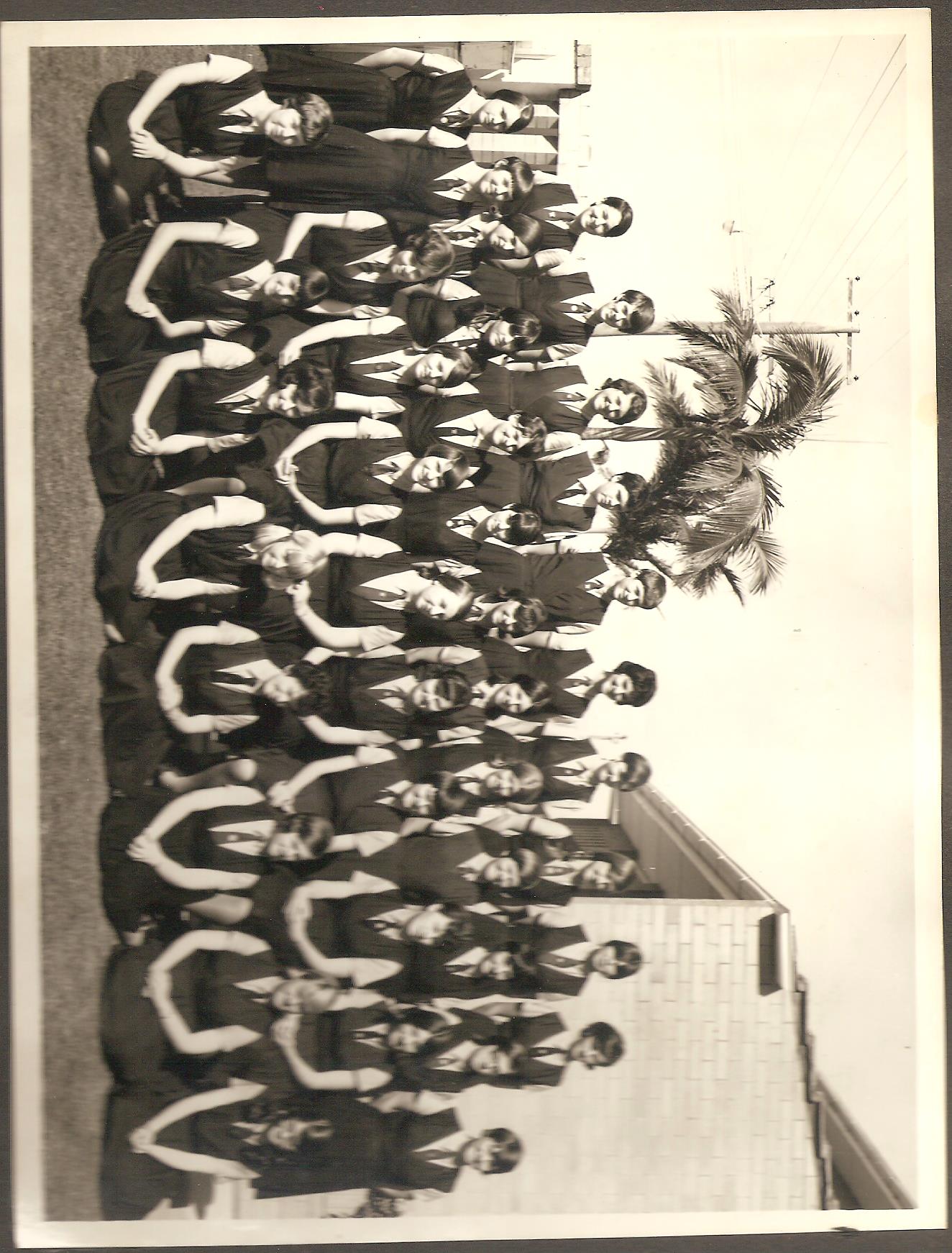
    school cropped

    It is often said that school days are the best days of our lives.

    Considering that I have had far more days at school than not (as student and teacher) then I should probably agree, else I’d be saying that most of my days haven’t been the best.

    For many adults it is not the in-class time that is most memorable or of which they have the most pleasant memories, it is the playtimes and the before and after walking to and from school times.

    For some children, the in-class time drags while they daydream of long summer holidays and activities with family and friends. Other children thrive with the structured learning, soaking up everything offered to them.

    19178-School-Building-Graphic

    In her post, School: A Suitable Place for Fiction? Anne Goodwin wrote that she is ‘always pleasantly surprised when children these days claim to enjoy school’. On the other hand, in a comment left on previous post here, Lori Schafer said that all her life she had ‘failed to understand why most children don’t like school. Why don’t they enjoy learning, and why don’t they enjoying studying, and why don’t they enjoy writing papers? Because, of course, there are a small percentage of us who do genuinely appreciate the discipline of schooling.’ She was one of them.

    In his post, School’s Out – and Education’s In, Geoff Le Pard said that ‘People confuse school with education, as if they were synonymous’. (I have written a poem to express differences I see between education and schooling. You can read it here.) He goes on to say that ‘education is a constant, not a time limited schooling experience’ and disagrees with the cliché that school days are the best. He says that ‘all those days and bits of days when learning occurs make up the best days of your life’. I agree with Geoff that learning new things, particularly things one has an intrinsic motivation to learn, gives great joy.

    Irene Waters said in her post about school that she loved her primary school days. As the end of her high school years approached, unable to see the point in continuing, Irene wanted to leave and start her nursing career. Her parents convinced her to stay and finish year twelve. While she didn’t at the time, she now appreciates the value in having done so and is grateful that her ‘parents laid down the law’.

    Talking about education and schooling is nothing new for me, that’s what my blog is about after all. However for a lot of people, once finished, school is a thing of the past and not much thought is given to it later. The reason why so many others are talking about it this week is the flash fiction prompt set by Charli Mills at the Carrot Ranch. Each week Charli challenges writers to pen a 99 word story about a particular topic. This week her topic is school.

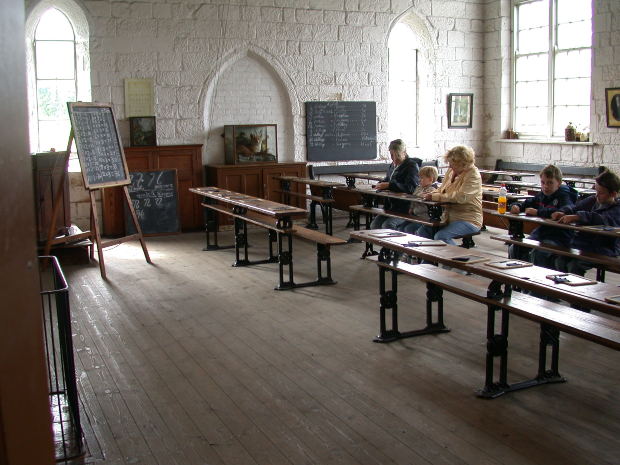
    old school room

    In her post, Charli describes an abandoned one-room schoolhouse that is close to her home. She explains that these schoolhouses ‘were often among the first structures built by pioneers’ and comments on the importance that was placed on education in those pioneering days. Indeed education has been important throughout the history of humankind. It is what sets us apart from other creatures.

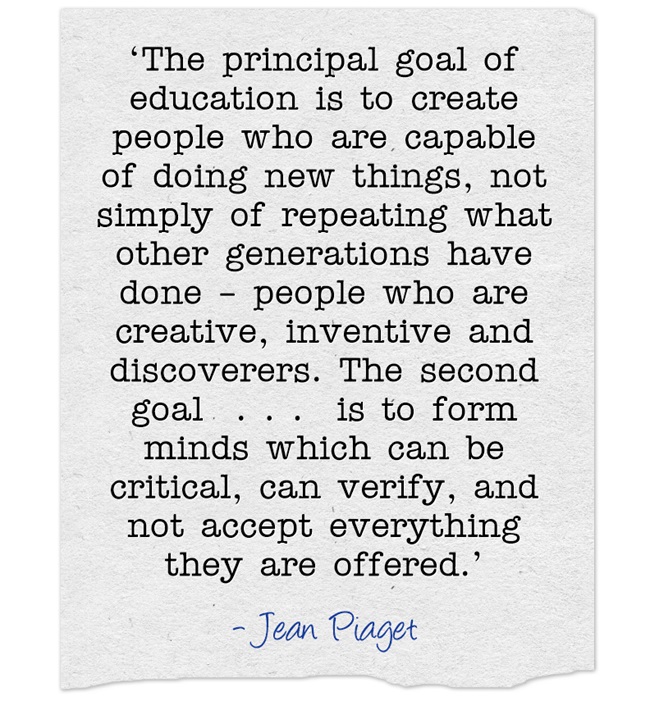
    In the words of Jean Piaget,

    The-principal-goal-of education - Piaget

    I have touched on these aspects of education in previous posts and will definitely do so again in future posts.

    In a tweet Anne Goodwin hinted that she thought I may find this post difficult to write as I have so many options to choose from. Charli Mills thought I might mention how we wrote on slates when I was at school (my children would probably have suggested I write about using dinosaur bones to scratch crude messages in the sand!)

    Instead, I thought about the strategies schools use to create uniformity, and of the many pathways that one may take through life after finishing school.  I hope the analogy makes sense to you.

     teacherbell

    Chocolate balls

    The final school bell tolled and the students erupted from the building like a burst box of chocolate balls, scattering in every direction and at varying speeds. Some stuck together along pathways safe and sure. Others crashed and bumped over roads less traveled seeking excitement, new discoveries and secrets to explore. Others stopped abruptly, their journeys foiled by stubborn obstacles. Still others, rolling upwards, failed to maintain the momentum to carry them over and beyond with those more adventurous others.  

    Who would know?

    Inside the box, they were identical, centers hidden. Outside, their uniqueness was on show.

    My year 10 class - only 20 went on to year 12.
    My year 10 class – only 20 went on to year 12.

    I value your feedback. Please share your thoughts about any aspect of this post.

  • Motivation – why we do the things we do

    Over at the Carrot Ranch this week Charli Mills is talking about motivation, specifically the motivation of fictional characters to do the things they do. She explains that ‘motivation can be external–a desire to please, to be found attractive, to be accepted’ or ‘internal–a drive to succeed, a passion to experience adventure, a fear of failure’.

    Motivation is not a new concept to this blog and I have explored it in a number of previous posts.

    stars

    In What did you do that for? Rewards and motivation I discussed the use of extrinsic rewards (such as stickers, awards and cash incentives) for school students; and questioned the authenticity of intrinsic motivation, which ‘is usually related to something of one’s own choice through interest, challenge or purpose’, in an institution at which attendance is compulsory.  I suggested some strategies that teachers may employ to stimulate an intrinsic love of learning.

    why am I doing thiswhat's the point

    Continuing the consideration of the effect of compulsory schooling on a learner’s motivation, the post Why do I have to? explored the use of philosophy as a tool for making the goals of education explicit. All three philosophers: Peter Worley, Michael Hand and Stephen Boulter agreed that if students knew why they were expected to learn certain things, they would be more motivated to do so.

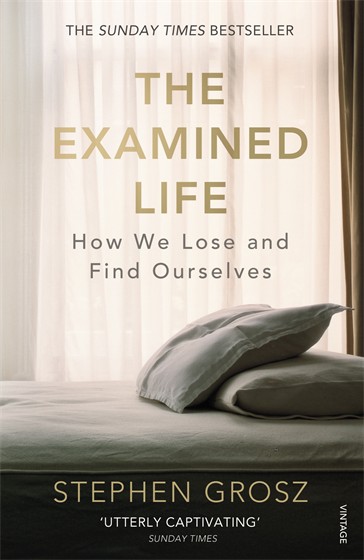
    the examined life

    A discussion of the impact of praise upon a learners’ motivation and achievement was stimulated by reading The Examined Life by Stephen Grosz, a book recommended by Anne Goodwin.  The Post Seeking praise – Stephen Grosz revisited explored Grosz’s suggestion that praise could cause a loss of competence, especially if children were being praised for being clever. Responses to the post, including a guest post by Anne Goodwin, added greater depth to the discussion.

    Other ideas about motivation abound.

    https://openclipart.org/image/800px/svg_to_png/59389/happy_sun_gm.png
    https://openclipart.org/image/800px/svg_to_png/59389/happy_sun_gm.png

    Shelley Wilson’s blog Live every day with intention,  which promises to inspire and motivate you (‘A motivational blog about living life to the full, writing, reading and feeling inspired to follow your dreams’) is the basis of her new book ‘How I changed my life’.

    In this TED talk The puzzle of motivation, Dan Pink explains that the value of intrinsic motivation is a scientific fact. While the focus of his talk is the business world, the findings are equally relevant to education. He says that external rewards may work in limited situations but that they often impede creativity. He says that ‘the secret to high performance isn’t rewards and punishments, but that unseen intrinsic drive – the drive to do things for their own sake. The drive to do things because they matter.

    Which brings me back to my motivation for writing this post and sharing these thoughts: Charli’s post, mentioned at the beginning of this article, was an introduction to her flash fiction prompt to In 99 words (no more, no less) show the underlying motivation of a character.

    My motivations for engaging with the flash fiction challenges set by Charli are both intrinsic and extrinsic:

    I enjoy:

    • the dual challenges of writing to a prompt with a clearly defined word count;
    • the opportunity of writing fiction;
    • exploring the application of Charli’s prompt, however tenuous, to education;
    • the camaraderie of the fellow writers and the opportunity to read and comment on their posts and flash fiction pieces; and

    I appreciate the feedback, support and encouragement I receive in response to my writing.

    In her prompt, Charli suggested that the character ‘may not even understand the motivation fully, but (that I should) let the reader grasp it.’ I have written two pieces in response to this prompt. I hope you enjoy them, and get an inkling of what motivates the characters.


    More than numbers

    The more he stared at the numbers the less sense they made.

    They swirled and blurred. He just didn’t get it.

    “Numbers don’t lie,” they’d admonished.

    “But they don’t tell either,” he’d thought.

    The hollowness left when all he knew had been extracted could not be filled with the smorgasbord of numbers loaded on the page.

    The richness of lives reduced to mere squiggles.

    “This is what’s important,” they’d said, fingers drumming tables of data.

    With heaviness of heart he closed the book and walked away.

    “They are not even numbers,” he thought. “If they were numbers, they’d count!”


    More than words

    “More!” they implored.

    She surveyed their eager faces then glanced at the clock.

    “Just one more?”

    “Okay. Just one more.”

    Before she could choose, a book landed in her lap.

    “This one,” he said.

    “Yes,” they chorused. “It’s a good one!”

    She smiled agreement, then started to read.

    They joined in, remembering, anticipating.

    She turned the page.

    “Wait!” he said. “Go back.”

    “Did you see that?” He pointed to the page.

    “But look what he’s doing,” someone else chimed in.

    They all laughed.

    The shared joy of a beloved book. Each time the same. Each time a little more.

    Thank_you_pinned_note

    Thank you for reading. I do appreciate your feedback. Please share your thoughts about any aspect of this post or my flash fiction pieces.

  • Benefits of inclusion

    Recently I listened to a compelling TEDx talk by Dan Habib. You can listen to it here:

    Dan opens his talk by asking the audience some questions about their school days:

    Did kids with and without disabilities study together and learn together?

    Did they have a best friend who had a disability?

    Did they have a boyfriend or girlfriend that had a significant disability?

    Very few of the approximate one hundred in the audience answered in the affirmative.

    Then Habib asked the audience to consider and answer the following question:

    Did you feel some fear or nervousness when you were a kid about talking to a kid with a disability?

    The majority of the audience affirmed they did.

    Had I been in the audience, my responses would have been similar.

    When I was a kid, there were no children with disabilities in my classes. Children with disabilities were hidden away as an embarrassment and were segregated into what where called ‘opportunity schools’.

    Thinking back, my impression is that people with disabilities were not visible in the community and their needs were not catered for. They were not expected to have any participation in society. Often they were targets of taunts and laughter, but mostly ignored and avoided.

    https://openclipart.org/image/800px/svg_to_png/183559/oldmaninwheelchair.png
    https://openclipart.org/image/800px/svg_to_png/183559/oldmaninwheelchair.png

    However, when I was a kid discrimination wasn’t restricted to people with disabilities. It was a time in which racial discrimination and segregation was more prevalent; before the emergence of women’s rights and children’s rights.

    Sometimes when we see how far humanity still has to go towards equality, tolerance and compassion it is hard to see how far we have come. But looking back on the changes that have occurred in just my life time, the progress is obvious, if still insufficient.

    Even into my college years I had little contact with people with disabilities and my teacher training made no mention (that I can remember) of catering for students with disabilities, who were still segregated into what became called ‘special’ schools. I don’t recall catering for individual differences being high on the agenda back then.

    I worked as a remedial teacher for a few years, supporting students who were achieving below the expected level, of reading mainly. These children were generally of average intelligence but experiencing a learning difficulty. Children falling below average on an intelligence test would still be shunted away to special schools.

    I cannot recall the inclusion of any students with intellectual or physical disabilities at any school at which I taught prior to the 1990s when integration and mainstreaming was introduced. Dan Habib says in his talk that, as he was growing up, ‘disability was just a blip on the radar screen’ as well. Maybe this experience was similar to yours?

    When Dan came to accept that his son Samuel had a disability and that he would have that disability for life, he realized that they had to create a vision for Samuel, and let ‘Samuel create a vision for himself“.

    https://openclipart.org/image/800px/svg_to_png/195899/EPA-clubhousekids.png
    https://openclipart.org/image/800px/svg_to_png/195899/EPA-clubhousekids.png

    Part of this was the need for a sense of belonging: to the neighbourhood, the community and the local school. It was this that got Dan thinking about inclusion. Dan goes on to describe the ways in which Samuel was included in the school and the community, and the benefits, for both Samuel and others.

    He urges everyone to advocate for inclusive education as the benefits include better communication skills, higher academic achievements, wider social networks and fewer behaviour problems. He decries the fact that, despite the benefits, most kids with disabilities still spend their day segregated.

    He explains that the benefits are just as valuable for typical kids who achieve higher academically while learning to be patient, caring, compassionate, and loving. In my more recent years of teaching, I got to see these benefits of inclusion first hand. Not only did the children learn, so did I.

    I didn’t just chance upon this TEDx talk. It was included in a great guest post by Gary Dietz on The Cool Cat Teacher’s blog. The post introduced a book, written by Gary, about dads of kids with disabilities and proposed 5 practical lessons for elementary classroom inclusion. The book Dads with Disabilities is described as inspiring and ‘a must read for any teacher working with special needs kids’.

    https://openclipart.org/image/800px/svg_to_png/651/ryanlerch_kids_with_hats.png
    https://openclipart.org/image/800px/svg_to_png/651/ryanlerch_kids_with_hats.png

    The five suggestions (which I think are based on respect and are applicable for all students) are:

    1. ‘Meet the student “where the student lives” (where they need to be, at their level of development)
    2. Presume competence
    3. Be creative in your use of ‘adaptive’ technology (e.g. use of video and Skype or Facetime)
    4. Listen to parents and help them listen to the child
    5. Give “overlooked” children the same chance to shine as the superstars


    Vicki Davis is the Cool Cat Teacher. Her blog is consistently among the top 50 education blogs worldwide. Her byline is “A real teacher helping teachers be really excellent”. I agree that she is and recommend her blog to you.

    Update from Gary Dietz (12/08/2014):

    “The book ‘Dads of Disability’ is now a FREE loan if you subscribe to Amazon Prime or Kindle Unlimited. And if not, it is on sales as an ebook for $4.99. Look it up on Amazon. (Of course the paperback is still available!)”


    How do you view inclusion? What is your experience?

    I appreciate your feedback. Please share your thoughts about any aspect of this post.


  • Reading is all it’s cracked up to be: 10 tips for an early childhood classroom!

    This post almost didn’t get published. It almost fell through a crack into the never-never. But just in time the safety net sprang into action and saved it from obscurity.

    That may matter more to me than it does to you, but as an educator I hear too often about children who ‘fall through the cracks’, who fail to thrive in the school system, who miss out on the inspiration and timely support that would empower them on their journey to life-long learning.

    Like those children, this post was an also-ran. It didn’t quite get it, didn’t quite reach the expectations. But then I read something that confirmed for me the importance of sharing my message.

    You see, the love of reading is contagious. It can be caught from anyone, anytime.

    However, it can just as easily be extinguished; and the danger of that happening seems to be lurking in school systems packed too tight with lists of must do, must learn and must achieve expectations.

    I consider it imperative that teachers prioritize time for children to develop a love of literature and reading that will expand their horizons and create a worthwhile companion on the journey of their lifetime.

    https://openclipart.org/image/800px/svg_to_png/174860/bookworm_penguin.png
    https://openclipart.org/image/800px/svg_to_png/174860/bookworm_penguin.png
    Here are 10 easy tips for keeping the love of books alive in an early childhood classroom:
    1. Read aloud to children every day, ensuring that a variety of books and genres are being read and shared.
    2. Have a great supply and variety of children’s books available: picture books, fiction and non-fiction, collections of poetry, beginning chapter books, funny books, sad books, books about animals, space, people . . .
    3. Display books with covers facing out and give them pride of place. Make a display of ‘favourite reads’.
    4. “Sell” books to children (you won’t have time to read them all) by showing the cover and some illustrations; by telling what they are about, what happens, and what the children will enjoy about them.
    5. Make a reading corner with carpet, pillows and bean bags that invites children to get comfy while they read.
    6. Provide time for children to choose and read independently.
      • This can occur during quiet times set aside on a daily basis in which everyone, including the teacher, reads for 10 – 15 minutes. e.g. D.E.A.R. (drop everything and read) or U.S.S.R. (uninterrupted silent sustained reading).
      • It can also be integrated into reading group or literacy centre activities.
    7. Share the enthusiasm for books by providing time for children to excite each other about the books they are reading in a sharing circle.
    8. Display books written by the children and allow access to them for independent choice. Include them in the sharing and ‘selling’ sessions also.
    9. Make a time to visit the school library for reading and borrowing.
    10. Invite other adults to the class to read to the children e.g. teacher-librarian, administrators, support personnel, parents and grandparents.

    Let me know in the comment box a favourite tip of yours.

    This week I have read some fabulous posts by teachers who are making sure there is time for joy and independent choice in their literacy classrooms. I will share these with you below.

    The article that convinced me to share my thoughts was one that was not so joyful.

    Written by Alexander Nazaryan, a first-year teacher, the article appeared in the Opinion Pages of the New York Times on July 6, 2014. He talked about not being able to meet the needs of his students and explained that it was not the fault of the students though, the fault was that they were mostly of poor and immigrant families.

    He felt that asking these students to write about their own experiences did not have ‘the pedagogical value of a deep dive into sentence structure or a plain old vocab quiz.’

    I was immediately struck by the similarity of a statement made to me by my son’s teacher thirty years ago. At the time I was leading an in-service workshop about teaching writing. I would have been talking about ways of engaging students in the writing process by giving them opportunities to write at length about things of interest to them; by encouraging the writing of a first draft to get the ideas down; by providing opportunities for redrafting, rewriting and editing; and opportunities for feedback by sharing their writing with peers; and by making the most of teachable moments through individual conferences with each student.

    This teacher exclaimed that there was no way the children would be able to write anything of length as not one knew what a paragraph was, or indeed what a sentence was. The students were ten years of age and in their fifth year of school. I believe the statement to be more an indictment of the teacher’s inability to appreciate what the children could do, rather than an accurate estimation of their abilities. I knew for a fact that at least one student was more than capable of writing at length with a variety of sentence structures and correct paragraphing. I was certain he wasn’t the only one.

    I am inclined to agree with Nazaryan that ‘Expecting children to independently discover the rules of written language is like expecting them to independently discover the rules of differential calculus.’

    However trying to teach the skills of literacy through a barrage of meaningless drill and practice exercises in a joyless classroom is doomed to failure, and the children, sadly, will fall through the cracks.

    What the children need, in my opinion and unlike that of Nazaryan, is a balanced approach. The skills of literacy need to be taught in a meaningful context.

    That article and others, like this one from HuffPostParents about a year one girl who had to sit on the floor for weeks while her classmates sat at desks make me want to cry.

    However it is not all bad, and there are some wonderful things happening.

    Below are links to posts by or about teachers who are being far more inspirational to their students and other teachers on a daily basis.

    very inspiring blogger

    Tracking back to my post of July 9 The Very Inspiring Blogger Award (nominated by Geoff le Pard) I hereby nominate them for A Very Inspiring Blogger Award:

    Vicki Vinton, blogging at To Make a Prairie

    Matt Renwick at Reading By Example

    This article by Brett Vogelsinger and posted on the Nerdy Book Club

    Steven Peterson at Inside the Dog

    Julianne at To Read To Write To Be

    Carrie Gelson at There’s a Book for That

    Used Books in Class

    Three Teachers Talk


    This brings me back to the reason that got me thinking about cracks, and children falling through the cracks in the first place. This week’s flash fiction prompt set by Charli Mills at Carrot Ranch Communications was to In 99 words (no more, no less) write a story that involves a crack. 

    Here’s my response:

    The Crack

    She willed the earth to open up and swallow her whole. But it didn’t. She just stood there trembling, attempting to hold back the deluge that threatened to engulf her.

    She strained to remember, knocking her head with her fist. Quick. Try. Try. What’s the rule: i? e?  

    She stammered an answer.  Wrong again!  Too many rules! Stupid rules! Broken – just like her.

    She fled, eyes stinging, mouth twitching; and as she passed, with one hand grasped the confiscated unicorn sitting askew the teacher’s desk.

    Away they flew, the assault of mocking laughter fading far below.


    Thanks for reading. I appreciate your feedback. Please share your thoughts about any aspect of this post, including my flash piece.


  • The classroom garden

    The classroom garden

    Expecting every child in a class to respond to the same stimuli, develop at the same rate and achieve the same targets is like casting a handful of mixed seeds upon the soil and expecting them all to flourish.

    Just as each seed has its own specific requirements of soil type, temperature, sunlight and water, so too does each child have its own needs, interests and learning requirements.

    Differentiation is no less important in the classroom than it is the garden and tending to the learning and development needs of each child requires understanding of individual needs, appreciation of learning styles and a program that includes both a nurturing and expectation of individual growth with a sprinkling of well-timed instruction, support and attentive praise.


    This week Charli Mills at Carrot Ranch Communications posted a flash fiction prompt that immediately conjured up an image of a classroom as a well-tended garden in which each individual is appreciated for its own value and receives whatever is appropriate to foster its development.

    Charli’s challenge is to In 99 words (no more, no less) write a story that includes fruit.

    Jeff Kubina, Apple Orchard https://www.flickr.com/photos/kubina/2058047853/
    Jeff Kubina, Apple Orchard https://www.flickr.com/photos/kubina/2058047853/

    Here is my response about a little tree whose time has come:

    A fruitful harvest

    Little Tree stood alone at the edge of the orchard thinking, “What’s wrong with me?”

    The other trees grew tall. Their branches, laden with bright green leaves and sweet-scented blossoms, seemed to whisper mockingly.

    The sun shone. Rains watered the soil.

    Their blossoms turned to fruit, a plentiful harvest.

    Confused and dejected, Little Tree avoided the celebratory festival.

    Then all grew quiet. The bigger trees rested, preparing for the next season.

    Suddenly an insect orchestra and an unfamiliar fragrance startled Little Tree.

    “What’s up?” it asked.

    “You!” they buzzed relishing the richness of its golden blooms.


    Thank you for reading. I appreciate your feedback. Please share your thoughts about any aspect of this article or flash fiction piece.


    Featured image: rjp, Bird seed https://www.flickr.com/photos/zimpenfish/437991798/


  • Are you a lemon or a grapefruit? – Ten articles about creativity

    Are you a lemon or a grapefruit? – Ten articles about creativity

    I am a great fan of creativity.

    Imagination and creative thinking are what inspire and drive improvement, innovation and progress.

    I affirm my belief in the power of creativity in my header: ‘Create the possibilities . . .’

    In this post I share articles and blog posts that discuss creativity. It is not an exhaustive list, just a few to get you started. You will notice that many, but not all, are from Edutopia, a website that is ‘dedicated to improving the K-12 learning process through innovative, replicable, and evidence-based strategies that prepare students to thrive in their studies, careers, and adult lives’; and TED, an organisation of people who ‘believe passionately in the power of ideas to change attitudes, lives and, ultimately, the world.’

    1. In this article on Creativity and education Judy O’Connell says that

    ‘Every student is creative in some way, and the job of educators is to release and support that creative talent in an appropriate manner.’

    She adds that

    ‘Teaching creatively and for creativity entails taking students on a creative journey where their responses are not predetermined.’

    In her article Judy lists some features of teaching for creativity and includes a video of a new school in New Zealand that she suggests fits the criteria. It is quite exciting and worth a look.

    1. In this article shared on Edutopia Do Standards Kill Creativity Claus von Zastrow suggests creative ways of teaching creativity while teaching standards.

    Linking of subject areas, as we used to do through ‘themes’ in the old days, or more recently ‘integrated units’, before subjects were divided and each given their own slot in the timetable, was one suggestion.  A number of varied and interesting comments accompany the article.

    1. I have previously shared this TED talk by Sir Ken Robinson on How schools kill creativity here and here. If you have not yet listened to it, please do. As well as sharing a very important message, Ken is a very entertaining speaker. I’m sure you will enjoy it.

    4. Following on from that talk is this article by Bruce Price shared on examiner.com Ken Robinson and the Factory Method of Education. The article shares an animated talk by Ken Changing Education Paradigms.

    Bruce does not agree with Ken’s views and warns readers to be sceptical of information imparted by Ken. He says that Ken’s opposition to traditional schooling is unhelpful and argues that, unlike most others referenced here, that creativity cannot be taught.

    5. In this article by Deepak Kulkarni Recreational and Educational Value of Math Puzzles shared on Edutopia the suggestion is made that creative problem solving can be taught using maths puzzles.

    6. A variety of Techniques for creative teaching are shared on the Iowa State University Center for Excellence in Learning and Teaching website which states that

    in order to teach creativity, one must teach creatively’.

    7. In yet another article shared on Edutopia, Andrew Miller states enthusiastically Yes, You Can Teach and Assess Creativity! Andrew provides suggestions for recognising creativity as well as teaching and assessing it.

    8. Also on Edutopia, Diane Darrow talks about Creativity on the Run: 18 Apps that Support the Creative Process.

    9. In this rather long TED talk on his life, authenticity vs karaoke culture Malcolm McLaren postulates that ‘we’re living in a karaoke culture, with false promises of instant success, and that messiness and failure are the key to true learning.’ He talks about his own schooling and attitude to creativity.

    10. Michael Michalki shared an article on Edutopia regarding what he considers the 7 Tenets of Creative Thinking, including:

    Believe you are creative

    ‘While creative people believe they are creative, those who don’t hold that belief are not.’

    Work at it and ‘produce an incredible number of ideas — most of which (may be) bad. He says that

    ‘more bad poems were written by major poets than by minor poets’.

    Go through the motions – ‘Every hour spent activating your mind by generating ideas increases creativity’; visualise what you want and go for it.

    On his own website Creative Thinking, Michael Michalko suggests many more ideas for getting you to think creatively.

    The header of Michael’s website states that “A grapefruit is a lemon that took a chance.”

    lemons and grapefruit

    So which are you: a lemon or a grapefruit?

    I appreciate your feedback. Please share your thoughts about any aspect of this post and let me know whether you agree or disagree with the value of creativity and if it can be taught.

    Thanks for reading.

  • Water wise

    https://openclipart.org/image/800px/svg_to_png/9353/egonpin_Paisaje_3.png
    https://openclipart.org/image/800px/svg_to_png/9353/egonpin_Paisaje_3.png

    My first thought when reading this week’s flash fiction prompt set by Charli Mills at the Carrot Ranch: in 99 words (no more, no less) write a story about water, was of the street on which I had hoped to open an alternative to school twenty years ago. I thought I could write about the property which, located on the corner of Water and Love Streets, seemed ideal. I thought I could write about the vision of our group “The Centre of Learning Opportunities” with its focus on the children’s program “Kids First” and how our centre would cater for children and families. I thought I could write about how we would implement our motto “Create the possibilities” which I have also adopted for my blog. But just like the centre itself, it didn’t eventuate.

    https://openclipart.org/image/800px/svg_to_png/169893/1336367663.png
    https://openclipart.org/image/800px/svg_to_png/169893/1336367663.png

    Instead I thought a little deeper, considering how water is the substance of life, how fortunate we are in developed countries to be able to turn on a tap and access clean water whenever we want. According to the UN almost 8 million people do not have access to clean water and more than 2 million do not have adequate sanitation. Millions of people die each year from diseases related to water. The projections of water availability and access are quite alarming.

    I thought about the use and misuse that is made of water in our rivers and streams and of a local issue that was reported quite recently.

    I decided to write a poem about the journey of a river, from its beginnings high up in the mountains down to the sea; how it starts out crystal clear but picks up toxins as it wends it was down. You can probably guess that my next thought was of education; of how children begin full of wonderment and creativity but, as they are subjected to years of schooling, collect toxic thoughts and attitudes.

    That may seem a bit harsh I know, and I have written a poem before comparing what I consider Education is to what I think schooling is.

    education-is-2

    However I thought I’d try to write a poem as an allegory of the schooling process; likening the way we are polluting our waterways to the way we are polluting and muddying the minds of our children. I’m not very happy with my first (fifth!) attempt, but I have met the word requirement and Charli’s ‘deadline’ is fast approaching.

    Let me know what you think.


    Water

    It started way up

    In the highest of hills     

    So crystal-clear pure

    With a life to fulfill


    It babbled through forests

    And danced in the streams

    Marveling  at wonders

    Before never seen


    It passed through the valleys

    Irrigated the farms

    Taking the runoff

    And doing no harm


    Down past the villages

    Watered them too

    Acquiring their discards

    Now murky like stew


    Passing by factories

    Spewing out waste

    Picked up their burden

    And left without haste


    Weaving its brown trail

    Way down to the sea

    From its mouth vomited out

    A poisonous mix

    Deceiving all living things

    Expecting a gift

    However I don’t want to leave you on a negative note. I’d rather acknowledge that there are many wonderful things happening in schools around the world. There must be, or we couldn’t be making the advancements we do.

    https://openclipart.org/image/800px/svg_to_png/59389/happy_sun_gm.png
    https://openclipart.org/image/800px/svg_to_png/59389/happy_sun_gm.png


    I have shared many great things with you before like some of these great articles on edutopia.org. Just last week I shared information about a prize for innovation in inclusive curricula being awarded for a program, Big Questions teaching philosophy to children. Listen to any TED talk to be amazed at advancements and innovations.

    I value your feedback. Please share your thoughts about any aspect of the article or my flash ‘poetic’ fiction piece.