Live Love Laugh Learn … Create the possibilities

Tag: schooling

  • The right place at the right time

    Charli Mills Serendipity

    This week at the Carrot Ranch Charli Mills is talking about serendipity and describes it this way:

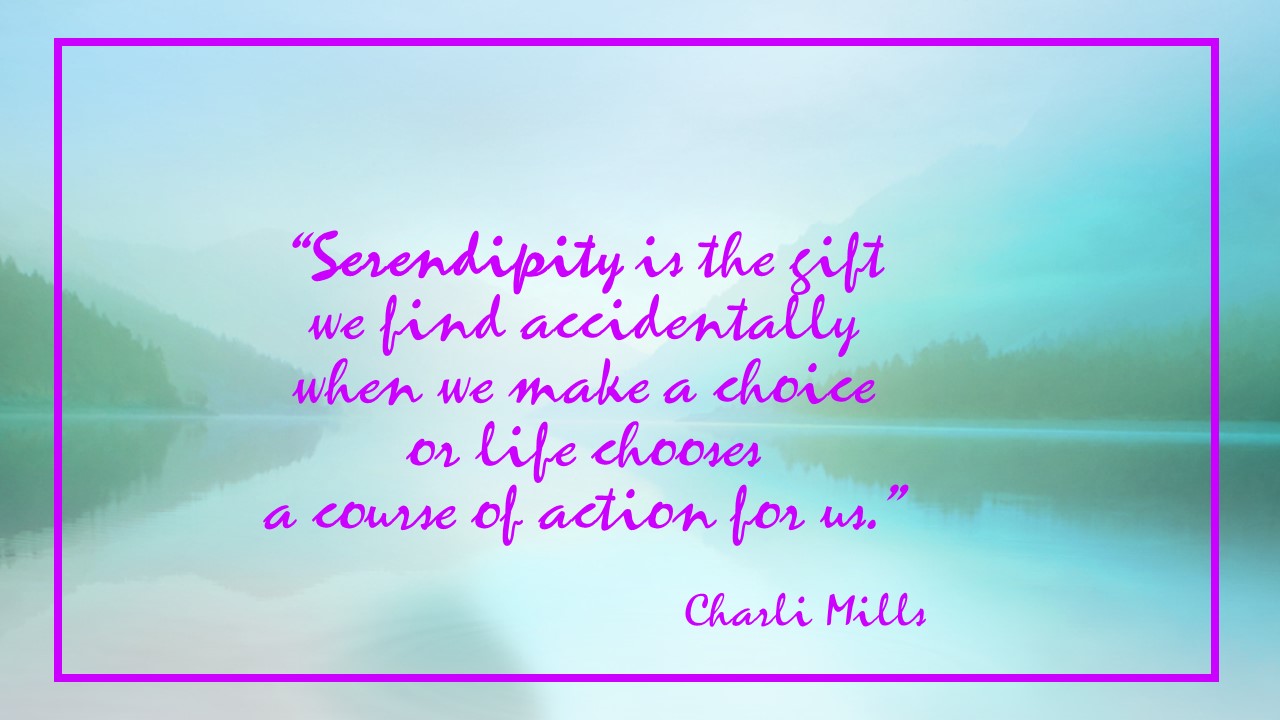
    “Serendipity is the gift we find accidentally when we make a choice or life chooses a course of action for us.”

    I often think of serendipity as being in the right place at the right time. There are many occasions in my life where that has occurred, and probably millions more when I’ve missed by a millisecond, but many of those I’ll never know.

    www.morguefile.com
    http://www.morguefile.com

    Our lives have been improved by many discoveries made through serendipity. This article on NOVA lists seven Accidental Discoveries  in medical science that have changed health outcomes people around the world:

    • Quinine
    • Smallpox vaccination
    • X-rays
    • Allergy
    • Insulin
    • Pap Smear
    • Penicillin

    Joseph Henry - seeds of discovery

    Lexi Krock, author of the article reminds us that, though some elements of serendipity, of chance, may have been involved in the discoveries, there was also a great degree of hard work, preparedness, creative thinking and an openness to possibilities. In fact Krock says that having an open mind is the most important ingredient. She quotes the words American physicist Joseph Henry:

     “The seeds of great discoveries are constantly floating around us, but they only take root in minds well prepared to receive them.”

    I came to that article through The story of serendipity on Understanding Science, which also talks about lucky coincidences, such as the story of Newton and the apple. This article states there is more than being in the right place at the right time to make a serendipitous discovery, including:

    • Background knowledge
    • An inquisitive mind
    • Creative thinking
    • The right tools, and
    • Good timing
    www.morguefile.com
    http://www.morguefile.com

    Another who attributes success in part, to serendipity, to being in the right place at the right time, is Malcolm Gladwell. Thanks to a serendipitous recommendation by Rowena, who blogs at Beyond the Flow, I have just finished listening to Gladwell read his book “The Outliers, The Story of Success”.

    Gladwell argues that there is more to success than just intelligence and hard work. Yes both are important: intelligence to a certain level and hard work to a greater degree. Through “The Outliers” Gladwell popularised the idea of 10 thousand being the “magic” number of hours to practice for success to occur, citing sporting heroes, The Beatles and Bill Gates, amongst others..

    However there is much dispute to this “rule”; and I must admit that, although I thoroughly enjoyed listening to and thinking about this book, it raised as many questions as it provided “answers” and I found myself wondering how much manipulation had gone into the figures to make them match his ideas, rather than the other way round. I am not saying there was any manipulation, I just wondered.

    www.openclipart.com
    http://www.openclipart.com

    However, one point he was making, that I think has value and fits with the theme this post, is that one’s circumstances; one’s family, environment and time, including birth year and month, play an enormous role in one’s success. These are things over which we have no control.

    According to Gladwell’s discussion of timing, I am correct in describing myself as “born too soon” in my Twitter bio. I was born just a few, but too many, years before the twelve month period that saw the births of Bill Joy, Steve Jobs and Bill Gates. I didn’t have the opportunities they had either.  Gladwell explains the importance of their timing, environment and opportunities in his book.

    In this Q and A Malcolm explains what an outlier is, what he thinks of as success, and how he thinks we should think of success. As well as the coincidence of Joy, Jobs and Gates, Gladwell says that “a surprising number of New York’s most powerful and successful corporate lawyers have almost the exact same biography: “they are Jewish men, born in the Bronx or Brooklyn in the mid-1930′s to immigrant parents who worked in the garment industry. “ He also says that “a hugely disproportionate number of professional hockey and soccer players are born in January, February and March.” Coincidence? He explains why.

    rg 1024, gift https://openclipart.org/detail/31159/gift
    rg 1024, gift https://openclipart.org/detail/31159/gift

    In her post Charli Mills states that

    “Serendipity holds no guarantees, but we can take the gifts it offers.”

    The gifts were there for the hockey and soccer players born in the first quarter of the year, but stacked against anyone born in the final months of the year. Likewise, serendipity held false promises for me when I was working towards establishing an alternative school.  Meeting the expectations of the Education Department proved no barrier. Meeting town planning requirements was much more elusive.

    The first property with any real potential we investigated was in Skew Street. Not surprisingly the odds were skewed against us and we couldn’t proceed there.

    Shortly after we located a much better property: more central, with ample indoor and outdoor space and a large playground. The arrangements seemed ideal, and the street names were much more promising. It was on the corner of Water and Love Street. Surely that had to bode better for us than Skew Street. Serendipity.

    Unfortunately, though it was definitely the right place, the timing was wrong. At the final moment, when leases were to be signed, a member of the organisation, who had been absent from previous meetings and discussions, turned up, objected and put an end to our plans.

    While some of us did continue to search for another location, it was like trying to find a needle in a haystack; there were few that met town planning requirements, and even fewer that met ours. Parents who had expected their children to start with us decided they could wait no longer and made other arrangements for their children’s education. The last minute loss of the ideal property rocked us to the core. With much heartbreak we finally admitted defeat and disbanded. Having read Gladwell’s book I am now willing to accept that it was not because I didn’t work hard enough but because there were other factors working against us.

    I decided that, in response to Charli’s flash fiction challenge to In 99 words (no more, no less) write a story that reveals or explores a moment of serendipity, this time I would provide Marnie with a positive experience, the beginning of a new phase in her life; serendipity working it’s magic.

    doors

    The wrong place at the right time

    Marnie was puzzled. The card definitely said 225; but there wasn’t any 225. There was 223, and 227, but no 225. She peered at the crack between the apartments as if willing 225 to materialise. Exhausted and confused, unsure of what to do next, she slumped on the step.

    “Can I help you?”

    The question interrupted her muddled thoughts. Seeing kindness in the eyes, Marnie explained her predicament.

    The woman read the card.

    “Street, not Avenue,” she said, pointing to the sign. “Are you Marnie? Lucky I got the wrong bus today. I’m Josephine. Come on. It’s not far.”

    Thank you

    Thank you for reading. I appreciate your feedback. Please share your thoughts about any aspect of this post or flash fiction.


  • A garden party

    www.openclipart.org
    http://www.openclipart.org

    The purposes of education are many; but perhaps one important purpose of “free” public schooling is to ensure that everyone is provided with the opportunity of being educated. While this goal is achieved to a certain extent, inequalities of opportunity still exist, many of which are related to socioeconomic status (SES).

    letter from Camus

    While there is no doubt that a teacher can have a powerful effect upon the lives of students and any teacher would love to receive a letter such as that written by Albert Camus, socioeconomic status is often considered to be the most reliable predictor of success in school and, therefore, in life. There are many reasons for this, few of which have anything to do with intelligence.

    www.openclipart.com
    http://www.openclipart.com

    According to Macquarie University the majority of students in tertiary education are of mid to high socioeconomic status. The parents of these students may have professional backgrounds and may have attended tertiary institutions themselves.  Most have an appreciation of the benefits of higher education and are able to continue supporting their students, to some extent, while they study.

    While students of lower SES are attending tertiary institutions in greater numbers they are disadvantaged in doing so by a number of factors, primarily financial in origin. Although Australia is supposedly free of class distinctions, attitudes towards those from lower SES areas are often demeaning and unsympathetic. Students from these areas may battle to develop the self-esteem that seems to be a birthright for others from more privileged backgrounds. The negativism with which they are viewed, and some come to view themselves, can become a self-fulfilling prophecy.

    Ready for school - year 2
    Ready for school – year 2

    I was a fortunate one for, while I grew up in a family with low SES background, my parents saw the value in education and sacrificed much for their children to have the opportunities it provided. The high costs of tertiary education that are now incurred could not have been afforded, but I achieved well enough in school to obtain a scholarship to teachers’ college and a three-year bond (guaranteed employment) when that was finished.

    Nowadays there is no such thing as guaranteed employment and few scholarships. Many families cannot afford to have post-secondary/adult students continue to live at home and not contribute to expenses while they undertake further study. This means that students have the additional burden of working while they are studying. Many opt out of study altogether to seek long term employment, often in low paying jobs with little opportunity for advancement. And so the cycle continues. The lack of permanent employment even for graduates makes deferring earnings less desirable again.

    caravan

    Of course the disadvantage doesn’t just begin when approaching final years of school. The impacts can be observed from the earliest age. (My suggestion for an early learning caravan addresses this in part.) Although education is provided “free” to students, there are many other associated costs that families may struggle to meet, such as books, equipment, and extra-curricular activities such as excursions and incursions.

    In most Australian schools, the wearing of uniforms helps to minimize differences that may otherwise be obvious by choices of clothing and footwear. It also helps to reduce costs. Sometimes additional activities can be a drain on family expenses, and while many schools will fund expenses for those in need, not all families are willing to ask for that help.

    DCF 1.0

    Studies have shown that many children arrive at school without having eaten breakfast. While this phenomenon can occur in any family, it is more prevalent in low SES areas. Some schools are now providing a healthy breakfast for students when they arrive at school. I think this great as hungry children tend to have difficulty concentrating and learning, are often lethargic and may suffer from mood swings and negative attitudes. I know how irritated I become when I am hungry. My family “joke” about not getting in the way of me and my food! How much worse for children who come to school with empty bellies.

    Of course these issues are compounded for children who live in dysfunctional families. As much as we may try to be inclusive and equitable in the way we treat them, these students are often the ones who notice their differences and inadequacies and become most self-critical. It can be a very difficult task to change the attitudes and habits of generations.

    This week at the Carrot Ranch Charli Mills talked about attending a garden party. The hosts and guests at this party had obviously enjoyed some of the finer things that life reserves for a few.

    lake-pend-oreile-cruise-may-21-31

    Charli shared a photo of a rather idyllic spot on an island and challenged writers to In 99 words (no more, no less) write a story, using the above photo as a prompt.

    Well the photo is beautiful, but I couldn’t get away, I was stuck at the garden party. I thought it was a wonderful analogy for the rewards that can be had from an education; rewards that may be obvious and perhaps available to many, but rewards that may be out of reach to others because of circumstances over which they have no real control. I thought of Marnie who suffers the double disadvantage of a dysfunctional family in a low SES area; but who knows there is something better out there and wants it for herself.

    Thanks to Charli for her prompt, here is another episode from Marnie’s life. I hope you enjoy it.

    The garden party

    Marnie’s face pressed into the bars of the tall white gate with amazement: white-covered tables laden with food; chairs with white bows; white streamers and balloons; and a band!

    But the ladies had her spellbound with elegant dresses and high, high heels; flowers in their hair and bright painted lips.

    A man in uniform opened the gate to guests arriving in limousines. Marnie followed.

    “Not you, Miss,” said the uniformed man.

    Marnie held out her invitation, “Jasmine . . .”

    But he’d closed the gate and turned away.

    Marnie looked down at her stained dress. What was she thinking?

    Thank you

    Thank you for reading. I appreciate your feedback. Please share your thoughts about any aspect of this post or flash fiction.

  • Are you ready or what?

    When thinking about schooling and education there is always a lot of discussion about readiness and the things that must be done to have a child ready for school, ready for the next class, ready go to college or university . . .

    While I agree that a learner must be ready to take the next step, to broaden understanding of a concept or to grasp the complexity of deeper issues; just what that readiness requires is often up for conjecture.

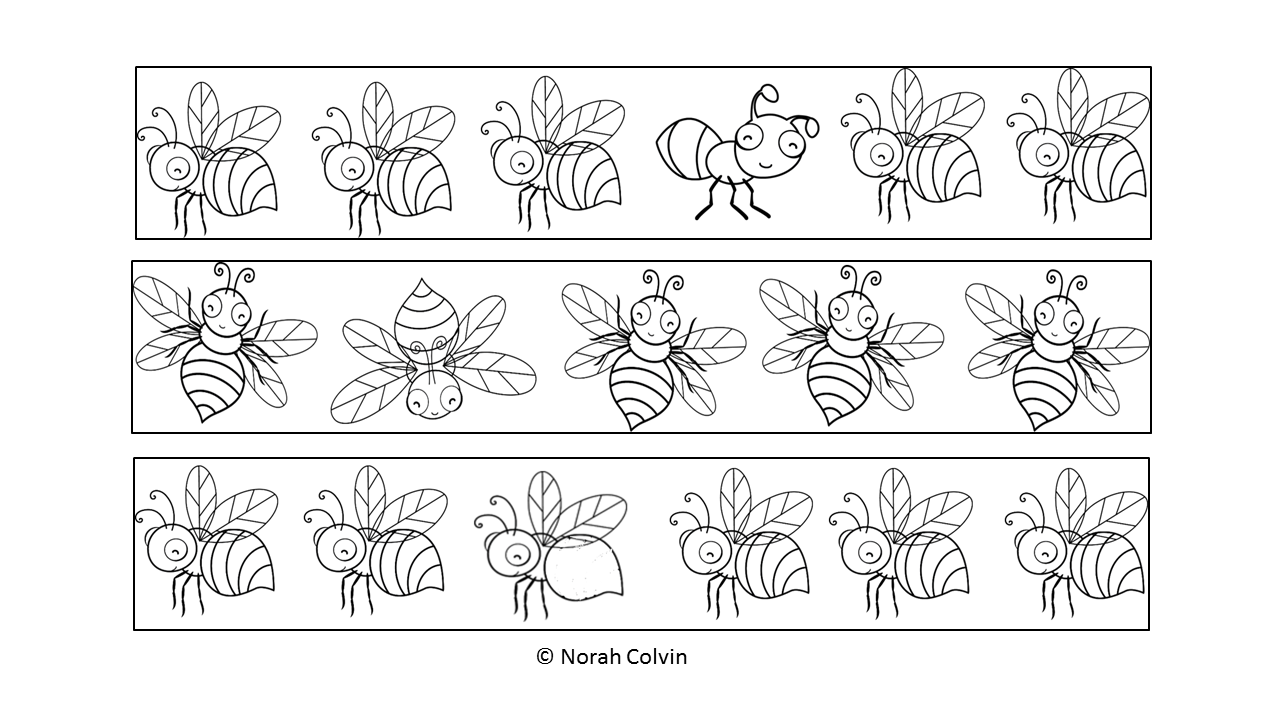
    Back in the early days of my teaching experience workbooks of ‘reading readiness’ exercises were frequently used with students in their first year of school. These activities generally required children to identify the one that was different in a group of objects. The exercises, such as those shown below, progressed through various levels of difficulty with the aim of preparing children for reading.
    reading readiness exercises

    Fortunately our understanding of how reading is learned has progressed since then and it is now recognised that exercises such as those did little to prepare children for learning to read. We now know that the best preparation for reading is to be immersed in language through conversations, with adults especially; to be read to frequently; and to develop a love of books and interest in print by sharing with others. The role of parents in preparing children for reading cannot be underestimated.

    This week I watched a video of a presentation by Yong Zhao about a type of readiness he referred to as “Out of basement readiness”. I admit I hadn’t heard the term before but the concept is definitely familiar.

    I do recommend you listen to Zhao’s talk. It is interesting, thought-provoking and humorous. I think I enjoyed listening to this talk as much as to Ken Robinson’s on How schools kill creativity which I have mentioned in previous posts here and here, amongst others. However at 55 minutes some of you may not be willing to commit the time. For me, it is 55 minutes of my life I’m very happy to not get back!

    I will not attempt to share all the content of the talk; there is too much of value, but here are just a few snippets that resonated with me:

    Zhao explains out of basement readiness this way:

    out-of-basement readiness - Yong Zhao


    Zhao says that students are being mis-educated, that they are being educated for something that doesn’t exist, and suggests that we should remove several phrases from the language we use to talk about education, especially

    • Under-performance
    • Evidence based
    • Data driven


    His description of the traditional education paradigm will be familiar to any frequent readers of my blog. He says that it is “about forcing people to do what some other people prescribe them to do” and that we reduce it to just a few subjects that can be tested.


    He talks about the “homogenisation” of schooling, and explained that homogenisation was the best way of getting rid of creative people and innovative thinkers.


    He mentioned kindergarten readiness tests, and suggests that the only test should be whether the kindergarten was ready for the children and parents.


    He recognises the uniqueness of every student, with different backgrounds, motivations and talents; and stresses the importance of effort. He says, “You cannot be born to be great. If you do not put effort into it you can never be good at it.” He explains it this way:

     “If you put ten thousand hours into something you are good at, something you are interested in you get great talent. But if I force you to spend time on something you have no interest in, you hate and something you are not good at, you at best become mediocre.”

    He says that countries that produce high test scores, score low on confidence and interest.

    He says,

    “Everyone is born to be creative, that’s a human being, that’s our gift: to be able to adapt, to learn and relearn and do new things. But school has typically tried to suppress it (with) . . . short term learning. . . Direct instruction may give the short-term gain but cause long term damages Studies show that if you teach children how to play with the toy, they lose creativity, lose curiosity and if you allow children to explore more they may not test very well but they maintain creativity and curiosity.”

    American schools _ Yong Zhao

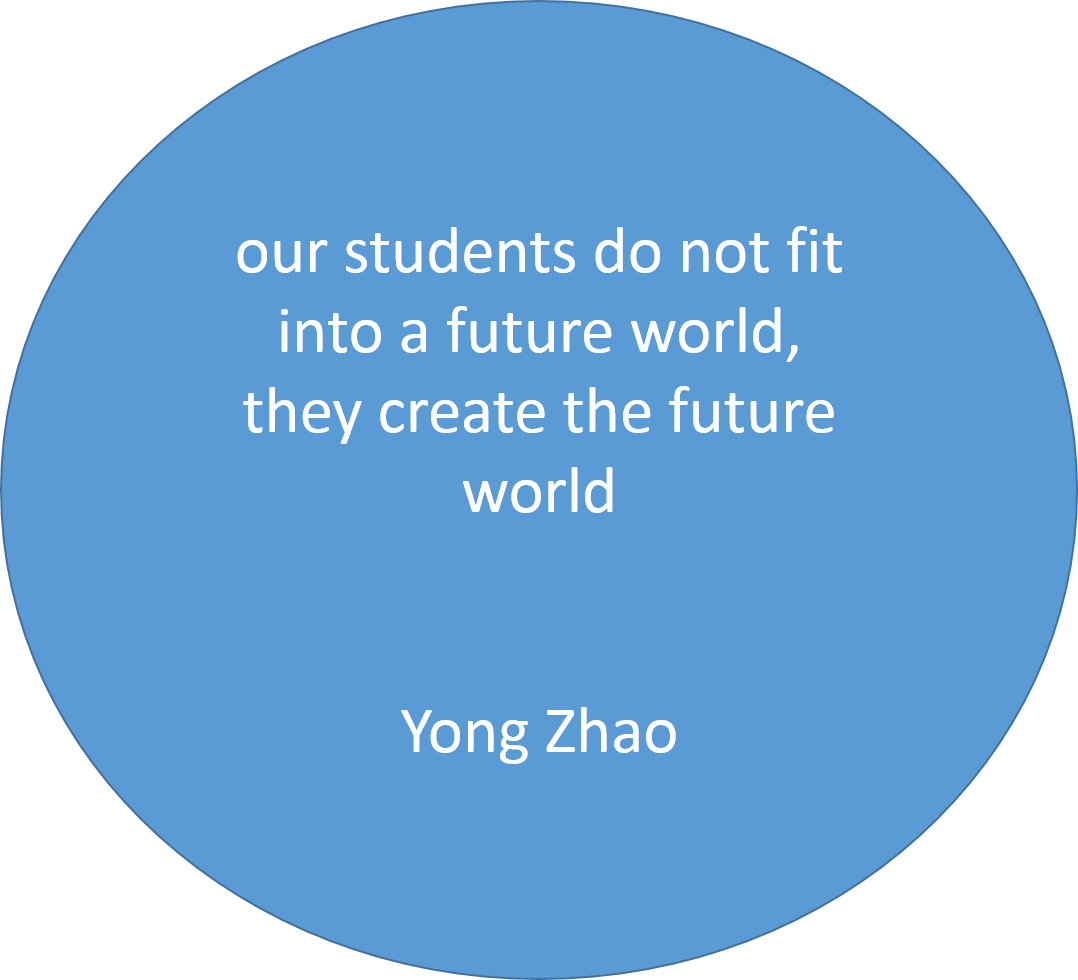
    Zhao says that “our students do not fit into a future world, they create the future world. This is why we need a different type of education.” He says that “education is to create opportunities for every individual student, they are not an average, they are not a probability, they need to be improved as individual human beings.”

    our students do not fit - Yong Zhao

    I couldn’t agree more. What do you think?


    I was led to Zhao’s talk via Diane Ravitch’s blog which is about the education system and situation in the US. Much of what she writes has applications further afield and I recommend it to anyone wishing to stay informed of current issues in education.

    Thank you

    Thank you for reading. I appreciate your feedback. Please share your thoughts on any aspect of this post.


  • All aboard the early learning caravan!

    school cropped

    This week at the Carrot Ranch Charli Mills described a century old schoolhouse which adjoins her property. She is hoping that someone will buy it and make it a meeting place for the community, recognising the role it had to play in the education of generations past as well as its contribution to the history of the area. Her thoughts about the schoolhouse led her to thinking of community engagement and neighbourly relationships which, in turn, inspired her flash fiction challenge for this week, to In 99 words (no more, no less) write a story about nurturing a neighborly relationship.

    I would have loved the little schoolhouse at Elmira Pond as the base for the alternative school I hoped to establish at the end of last century. The schoolhouse has a nice community feel to it, unlike many of the large brick, concrete jungle-type schools into which one can almost dissolve in a sea of sameness. Charli’s schoolhouse/community centre would also be a great meeting place for parents with their young children; a friendly early learning centre for both.

    8-12-2013 7-38-33 PM


    Based on my beliefs that:

    • parents are a child’s first and most important teachers;
    • the most important years of a child’s development are the years before school;
    • children who enter school with rich vocabularies, an interest in the world around them, and a love of books are primed to succeed;
    • children without those experiences are disadvantaged in their learning right from the start and face an enormous challenge in catching up;
    • waiting until children enter school is too late;
    • the best way to minimise or eliminate the disadvantage is by educating parents through programs that model effective parenting behaviours and support them in their interactions with their children;
    • parenting programs offering those types of support would be most effective if begun before birth of the children and continued at least until the child enters school, maybe beyond;
    • most parents want to do the best for their children, many just don’t know how to go about it.

    There are any number of birthing classes, but not many that aim to support parents in nurturing their child’s development. In my opinion, investing time and money into developing programs such as these would have enormous benefit, not only to individual children and their parents, but to society as a whole.

    I am not talking about programs that place children of increasingly (or should that be decreasingly) younger years into structured and formal “teaching and learning” situations. I am not talking about one-off talks or series of lectures to parents.

    Many of the parents of children who begin school with the types of disadvantage I have mentioned are themselves products of similar disadvantage. In a previous post I discussed the roles of “nature” and “nurture” in a child’s development. In these cases especially, it can be difficult to tease out the differences. Many of these parents would not have positive feelings towards schools or any other public institution and may feel threatened, or reluctant for other reasons, to attend sessions in public halls or government offices.

    What I am talking about is a program that:

    • goes to the parents and children in their neighbourhoods, meeting in a local park or community greenspace, on regular weekly occasions;
    • invites parents to talk with, read to and play with their children using provided books, games and toys;
    • models positive parenting behaviour, explaining to parents the benefits to their children of engaging with them in activities and discussions;
    • provides suggestions for inexpensive and easy activities to do at home;
    • encourages borrowing from a book and toy library.
    Guiding parents in play sessions for parents and children.
    Guiding parents in play sessions for parents and children.

    I envision the program being delivered by an early children trained educator who is sympathetic to the situations and demands of people from diverse backgrounds, who is warm and supportive with good interpersonal skills with both adults and children, who drives a mobile early learning centre fully-equipped with books, toys, games, paper, pens and craft materials, including items for borrowing and distribution for activities to be done at home.

    I see the centre as a brightly painted caravan with doors that open wide to display a colourful and engaging assortment of resources to delight the interests and eyes of young children and their parents.  As the caravan travels into each neighbourhood it would play music to signal its arrival (think of the old icecream vans!) inviting parents and children to come, investigate, and join in.

    caravan

    Thinking about the excitement that such a program may stimulate in a neighbourhood, and the sense of community and belonging it may encourage, led me to write about it for my response to Charli’s prompt.

    I hope you enjoy it.

    www.openclipart.com
    http://www.openclipart.com

    The caravan

    Children waited anxiously at windows and front garden fences.

    Mothers and fathers hurried to complete the last of their chores.

    Others, already at the park, were unable to wait.

    Ears strained, listening for music signalling, “It’s time!

    Suddenly “Girls and boys come out to play!” announced the arrival of the brightly painted caravan.

    “Come on!” urged children, tugging at skirts, trousers and hairy legs.

    “Come on!” chimed parents, downing cloths and brooms. Clasping small hands they whisked them out.

    Everyone watched as the doors of the caravan opened; ready for fun: stories, games and much to explore!

    Thank you

    Thank you for reading. I appreciate your feedback. Please share your thoughts about any aspect of this post or flash fiction.

  • Spelling tests – How well do you score?

    ABC

    Familiar to most will be the weekly spelling test held on a Friday morning after a week’s practice at learning a list of words. Some will have dreaded the test fearing they may forget the “i before e”, “silent” letter or double letter rules, for example, their inadequacies made all too obvious by the large red crosses. Others would have relished the experience, requiring little effort to learn words they already knew, seemingly by osmosis, with the expectation of large red ticks and 10/10.

    Spelling test

    I dare say that most of you reading this blog are of the 10/10 variety. Just to be sure this is so, I have set you a little spelling test to do before you read any further. Please get your pen and paper, finger and notebook, or keyboard ready, then press PLAY to take the test.

    So how did you go?

    I hope you could see from that exercise that knowing how to spell has a lot to do with meaning. In fact the spelling of many of our words in English has more to do with morphology than with sound, and although sound can be helpful there are often many different letters or letter combinations that can be used to represent the same sound, for example:

    eye

    According to the Bullock Report, published in 1975:

    “For 6092 two-syllable words among the 9000 words in the ‘comprehension vocabularies’ of a group of 6-9 year olds, 211 different spellings of the phonemes were needed – and these spellings required 166 rules to govern their use! Even at that, 10% of the words had to be left aside as ‘exceptions’; which means that ‘even if a young child memorised these rules while learning to read he would still encounter hundreds of words not governed by them.’”

    Lists of words, such as spelling lists, provide little support for learners, rarely providing context or meaning which might help them remember the words, or choose the correct meaning and therefore spelling, as shown by the spelling test exercise given above.

    Alphabetical

    In his book “Alphabetical: How Every Letter Tells a Story”, Michael Rosen explains that transmitting meaning is the reason for writing, for having an alphabet.

    Rosen describes the alphabet as “a stunningly brilliant invention. We could call it a ‘cunning code’ or a ‘system of signs’ whereby we use some symbols (letters) to indicate some of the sounds of a language. … Though it is wonderful, there are some snags for users …” including:

    • letters and letter combinations do not represent the same sound each time they are used (e.g. ‘c’ in ‘cat’ and ‘city’)
    • letters represents different sounds according to regional accents
    • a particular sound is not always represented by the same letters (see the ‘eye’ example above)

    He says that “Becoming or being a reader of English involves absorbing all these variations and then forgetting that they exist.”

    a phonic's teacher's lament

    He explains that the alphabet is more than a system of sounds and syllables and that “Our forebears devised alphabets so that they could store and retrieve meaning … over time and/or space”.

    While not speaking specifically about learning spelling words, in his book “Why Don’t Students Like School? A Cognitive Scientist Answers Questions About How The Mind Works and What It Means For Your Classroom” (referred to in a previous post here), Daniel T. Willingham consistently refers to the importance of meaning when acquiring knowledge. He says,

    “Teachers should not take the importance of knowledge to mean they should create lists of facts . . . some benefit may might accrue, but it would be small. Knowledge pays off when it is conceptual and when the facts are related to one another, and that is not true of list learning. Also … such drilling would do far more harm by making students miserable and by encouraging the belief that school is a place of boredom and drudgery, not excitement and discovery.”

    When a child scores poorly in a spelling tests and their errors are marked in red they see themselves as bad spellers, lose confidence in their ability and have a defeatist attitude before they even try.

    Why is spelling important?

    Standard spelling is essential to ensure the meaning of the message is transmitted correctly from writer to reader. While readers may very quickly notice spelling errors in text they are reading, these few errors, when embedded in meaningful text, rarely inhibit the transmission of meaning. However if the bulk of the text is in nonstandard spelling, the message would be virtually indecipherable.

    How do we learn to spell?

    The most effective way most of us use to learn to spell is reading. While reading we are exposed to a large number of correctly spelled works in context. If we read often enough, we see words frequently and learn to recognise them. We notice when they are misspelled and so recognise how they are spelled.

    The importance of spelling correctly is relevant to and a tool for our writing. The learning of particular words is best done in the context of writing.

    These are some strategies that can be used with beginning writers:

    • Model writing for them, let them see you write for real purposes, think out loud so they can see what you are doing, for example: “I going to write a . . . I’m going to start … I need to write … ”
    • Encourage them to write for self-expression, to share ideas, to tell a story . . . sustained and uninterrupted writing without the fear of a red pen anywhere.
    • Encourage them to listen to the sounds in the words and write any of the letters they know (Beginners usually start with the initial consonant, then perhaps the initial and final consonant. Vowel sounds are the most difficult to hear and differentiate and are irregular in how they are represented.)
    • Respond to their writing with written comments to their messages, modelling the correct form, for example: If the child writes “I wet to the bich on the weced” you could reply with “Did you have fun when you went to the beach on the weekend?” This enables the child to see the importance of writing for communication, demonstrates the correct spelling without being “corrected” and provides a model which can be used in future writing.
    • Encourage children to proofread their own writing by circling words they weren’t sure how to spell. Don’t always expect them to discover the correct spelling. Being able to recognise when a word is or is not spelled correctly is a first step in developing competence.
    • Notice and comment on any development that can be seen in the child’s spelling ability, for example: “You have written the word ‘kitten’. You have written the ‘k’, you know that it begins with ‘k’; you have written the ‘t’ you can hear in the middle and the ‘n’ at the end. You have listened very well to the sounds in the word.”  
    • If you want to give a child a list of words to learn, use words that have been misspelled in independent writing. Independent writing provides you with information about what the child wants to write about.
    • As they begin using technology for writing, show them how to use the tools available for checking their spelling.

    bee 5

    As a final note, in the Conversation this week was an article by Nathaniel Swain, entitled Spelling bees don’t teach kids literacy, or much else. The article discusses a soon-to-be aired television show that pits nine to thirteen year old children against each other in a spelling competition.

    Swain says,

    “How would you go spelling feuilleton, stichomythia, cymotrichous, or appoggiatura? More importantly, do you know the meaning of these words, and could you use them in a sentence?

    Challenging and insightful, or obscure and essentially pointless? Spelling bees encourage endless memorisation of complex but low-frequency words – and are a distraction from the core of literacy education.”

    Thank you

    Thank you for reading. I appreciate your feedback. Please share your thoughts about any aspect of this post.


  • A palette of colours

    Moini, Painter penguin https://openclipart.org/image/800px/svg_to_png/174634/painter_penguin.png
    Moini, Painter penguin https://openclipart.org/image/800px/svg_to_png/174634/painter_penguin.png

    I think few of us would deny that each of us is unique, or question the importance of an individual’s interests and abilities to learning. Much has been written about learning styles, multiple intelligences and differentiation of instruction.

    Most teachers try to incorporate a variety of experiences into their programs in order to maximise learning opportunities in the hope that, if students don’t “get” it one way, they will “get” it in another. The imposition of national standardised assessment makes doing this a challenge for teachers. The increased requirement for the implementation of particular approaches to teaching makes it even more so.

    To say that I hold fairly strong views about learning, and the differences I consider there to be between education and schooling is perhaps an understatement, but it wasn’t always so.

    My memory tells me that, while I probably didn’t “love” school, I probably didn’t “hate” it either. It was simply something that I had to do. I didn’t question it. I did my best to be a “good” girl, do what was expected of me, and conform. All of which I think I did pretty well.

    The questioning came later and had more impact upon my teaching and parenting than it did on my own schooling. I came to view schooling as something that is “done” to us, and education as something that we do for ourselves. That is not to say that no worthwhile learning takes place in school, for it does, but education is a whole-of-life experience and schooling is but one small part of that.

    Education is a whole of life experience

    However, if the importance of schooling, and here I mean learning of particular content by particular ages, is inflated and rated more highly than children’s natural curiosity, interests and abilities, then the consequences to individuals and the community in general can be more negative than positive. One consequence may be that children don’t enjoy school; another may be the view that only school knowledge is important; and yet another may be that children are turned off learning all together.

    My first conscious discomfort with what, for convenience, I’ll call a factory model of schooling (children go in one end, have things “done” to them, and come out the other end all the same) was as a young teacher when all five year two teachers were expected to be doing the same thing at the same time. That imposition, along with other inadequacies that were beginning to become apparent, set me on a quest to learn more about learning and education. My quest has never ceased and I am still searching for answers.

    Recently I read a book by Daniel T. Willingham entitled Why Don’t Students Like School? The title had instant appeal, of course, and I thought I’d recognise a few of the reasons at least. My initial expectation was of reading views similar to those of authors like John Holt, Ivan Illich, A.S. Neill and John Dewey whose books I had read in the 70s and 80s; but a closer look at the subtitle told me I was in for more: “A Cognitive Scientist Answers Questions About How The Mind Works and What It Means For The Classroom”.

    The book is a wonderful read and I’m certain to share many of Willingham’s ideas with you in future posts. I enjoyed it because, in almost equal measure it reinforced, challenged and extended my thinking about many aspects of learning and how best to provide for and stimulate it in a classroom setting.

    Sometimes Willingham would make a statement with which I agreed, and then go on to explain the faulty thinking behind it. Sometimes his statement would seem to completely contradict what I think but his explanation would show that we simply had different ways (mine perhaps inadequate) in explaining it.

    What I really appreciate about the book is that Willingham carefully translates what has been learned from research into practices that can be implemented in the classroom to enhance student learning. Often research seems only to tell teachers what they already know from experience and observations, or provides information in such an abstract way that nothing of practical use can be gleaned.

    The section of Willingham’s book that I refer to today is “Chapter 7 – How Should I Adjust My Teaching for Different Types of Learners?” Willingham opens the chapter with the words “All children are different.” He says that some learn visually, some auditorily; that some are linear thinkers and some holistic, for example, and that

    “It seems that tailoring instruction to each student’s cognitive style is potentially of enormous significance”.

    The important word in that sentence is “seems”. He talks about the differences in the way that hypothetical Sam and Donna might learn and says that “An enormous amount of research exploring this idea has been conducted in the last fifty years, and finding the differences between Sam and Donna that would fit this pattern has been the holy grail of educational research, but no one has found consistent evidence supporting a theory describing such a difference.”

    He states that the “cognitive principle guiding this chapter is:

    “Children are more alike than different in terms of how they think and learn.”

    That statement really made me sit up and take notice: “Children are more alike than different”. But it turns out, those words are not the most important ones in the sentence. The most important ones are: “in terms of how they think and learn.

    He goes on to say that, “the claim is not that all children are alike, nor that teachers should treat children as interchangeable. Naturally some kids like math whereas other are better at English. Some children are shy and some are outgoing. Teachers interact with each student differently, just as they interact with friends differently; but teachers should be aware that, as far as scientists have been able to determine, there are not categorically different types of learners.”

    He also talks about it in this video:

    Willingham acknowledges that students differ in their cognitive abilities and styles. What he does in the chapter is “try to reconcile the differences among students with the conclusion that these differences don’t mean much for teachers.” In reading these words one might expect that Willingham is proposing that differentiation is not an important part of classroom practice. But such is not the case, as stated in this video:

    In the book he writes, “I am not saying that teachers should not differentiate instruction. I hope and expect that they will. But when they do so, they should know that scientists cannot offer any help.” According to Willingham, scientists have not identified any types of learners or styles of learning.  He says, “I would advise teachers to treat students differently on the basis of the teacher’s experience with each student and to remain alert for what works. When differentiating among students, craft knowledge trumps science.

    What Willingham says is of most importance for a learner to learn is background knowledge. If a student does not have sufficient background knowledge to understand the content or concepts which are presented, learning will not take place. This supports the advice that I repeatedly give to parents: read to your children, talk with them, and provide them with a wide range of experiences and activities. The same is true for teachers: ensure the students have sufficient knowledge on which to build the new work you are expecting them to grasp.

    This week at the Carrot Ranch Charli Mills has thrown a prompt with which I have struggled: In 99 words (no more, no less) write about the day the earth turned brown. I always like to tie my responses to the educational focus of my blog and this one had me stumped for a while. A mind journey following various twists and turns, retracing well-worn paths, and hitting many dead ends, finally led me to an oasis in the parched brown earth: the uniqueness of each of us; the amazing potential of each new child to create possibilities beyond our imagining; and the contrasting effect of a narrow test-driven school system that attempts to reduce each to the sameness of minimum standards and age (in-)appropriate benchmarks. A paint palette seemed a suitable medium for the story.

    For those of you who have been following Marnie’s story, I apologise. She makes no appearance this time, though I have not ruled out the possibility with student M. I’d be pleased to know what you think.

    palette

    Palette potential

    She walked between the desks admiring their work. From the same small palette of primary colours, and a little black and white for shades and tones, what they produced was as individual as they: J’s fierce green dinosaur and exploding volcanoes; T’s bright blue sea with sailing boat and smiling yellow sun; B’s football match . . . At least in this they had some small opportunity for self-expression. She paused at M’s. M had mixed all the colours into one muddy brown and was using hands to smear palette, paper, desk and self . . .

    Thank you

    Thank you for reading. I appreciate your feedback. Please share your thoughts about any aspect of this post or flash fiction.


  • Who wants five-year old sheep? Bah!

    Who wants five-year old sheep? Bah!

    Recently, thanks to a recommendation by Anne Goodwin, I read a great article on the website of The Writers’ Centre at Norwich. This article is called “Fuelling Creative Minds” and was written by Meg Rosoff. The article is part of The National Conversation about writing reading, publishing and bookselling, or why books matter.

    Rosoff introduced her article by questioning what we consider to be success in life. She discussed a study of 268 men over seventy-five years conducted by George Vaillant who concluded that “warmth of relationships throughout life have the greatest positive impact on ‘life satisfaction‘”.

    Rosoff said that,

    “If you live a happy and fulfilled life, then you die successful. “

    but wondered why, then, “do we persist in measuring success in terms of salaries, job titles and assets?” if they have little real impact on one’s happiness.

    Rosoff suggested that a good place to start thinking about attitudes to success is in school.

    The next part of her article was devoted to attitudes towards success in schools. Rather than provide just an outline of her thoughts, I am quoting them in entirety, as I don’t want to misrepresent her ideas and she says it all so well. While she discusses specifically the situation in the UK, I think many readers will recognise similarities to their own locale. I have highlighted parts that I find particularly noteworthy. I do recommend, however, that you follow the link and read her article in full.

    Excerpt from: “Fuelling Creative Minds” by Meg Rosoff and published by The Writers’ Centre Norwich 1 March 2015

    “In the twenty-first century, educational success is largely determined by the government.  The government puts in place a series of goals that evaluate children as young as three against measures of socialisation, reading proficiency, an understanding of numbers, the ability to answer questions in an acceptable, established manner, and later – during GCSEs and A levels – the ability to pass exams in up to twelve subjects and write essays in a strictly approved fashion.  

    Success in school requires hard work and a competitive approach to study on the part of students – but more to the point, a successful student is one capable of achieving goals as defined by the exam graders, as defined by the government.

    A successful student is one capable of matching learning to this very specific series of goals.

    In other words, a child who reads all day is not a successful student.  A child who writes brilliantly and with a distinctive voice but can’t spell, is a failure. A child who loves history but can’t write an essay in the approved manner, is doomed.  A child who loves stories, who loves to dream, who makes unusual connections, whose brain works in unconventional, peculiar ways – but who can’t multiply 11 x12 – is not a successful student.

    Successful students must sit still and concentrate for long periods of time, temporarily memorise large amounts of information, understand and achieve received goals, think inside the box.  A desire to please and a willingness to conform are key.

    The least successful children in this sausage factory will be branded from the age of five. Children with parents or carers who don’t talk or read to them enough are most likely to fall into this category of early failures. As are dyslexic children.  Or eccentric thinkers. An irregular schedule, disorderly home life and financial instability all interfere with the attainment of ‘success’ as determined by the government.

    Less support at home, fewer books, a less regular schedule, a less orderly home life, less healthy meals, less consistent love – all these economic or emotional disadvantages further condemn the five year old to failure.  Food banks, immigration problems, substance abuse problems, unemployment, parental absence or mental illness – all of these elements interfere with the attainment of ‘success’ as determined by the government.

    I see them when I visit secondary schools – the children branded failures because they can’t get on in school. Because they’re bored, or not very verbal, or not very good at sitting still and taking information in as required in a classroom situation – or the ones who just don’t see why thirteen years of their lives should be spent taking exams they’re not good at, absorbing information in a manner that hasn’t changed much in two hundred years.  ‘Not a student’ is a label that has condemned decades of children to a diminished sense of what they’re capable of in life.  When in fact all it means is, ‘does not thrive within government parameters’.

    Do I buy into the idea that these students are without value?  Of course not.  Put them in a different sort of learning environment or teach them something that stimulates their imaginations and they’ll be fine.  But sit them in a classroom for thirteen years with a series of targets chosen by a government that knows nothing at all about education and they’re doomed.

    In contrast, the most successful children in this whole process of learning and taking exams will get all A*s and go to Oxford or Cambridge, after which they will go on to have what most people consider to be the most successful lives – the best jobs, the highest salaries, large and comfortable and expensive houses and cars.

    And yet.

    In a 2014 book, Excellent Sheep: The Miseducation of the American Elite and the Way to a Meaningful Life, award winning American essayist and educator William Deresiewicz concerned himself with what’s going at the top level of American education.

    ‘Our system of elite education manufactures young people who are smart and talented and driven, yes, but also anxious, timid, and lost, with little intellectual curiosity and a stunted sense of purpose … great at what they’re doing but with no idea why they’re doing it.’

    This was written about Harvard and Yale but applies just as well to elite British universities. Like the highest rated state primary and secondary schools, these institutions take few risks – they admit top performing, highly driven teenagers and turn out graduates with no motive to question the status quo, no motive to question the structure of society or the weight that society puts on a certain kind of success.  

    If you win a beauty contest, you don’t dedicate your life to challenging society’s perceptions of beauty.

    William Deresiewicz continues:

    ‘So extreme are the admission standards now that kids who manage to get into elite colleges have, by definition, never experienced anything but success. The prospect of not being successful terrifies them, disorients them. The cost of falling short, even temporarily, becomes not merely practical, but existential. The result is a violent aversion to risk.’

    All of this is happening at exactly the moment at which the world most needs risk takers: individuals willing and able to retell the story of society in a more positive way.  People willing to take risks with meaningful social and political change. Hardly anyone would disagree that our political system needs changing – free market capitalism has led to terrifying extremes of wealth and poverty.  The pharmaceutical industry needs meaningful change along with the system of drug patents that price simple, inexpensive drugs out of the reach of entire populations whose lives they might save. The legal system favours those with money, as does education, as does housing.  In the meantime, there is little financial motive to stem – or even acknowledge – the devastating effects of global warming.  It is difficult to think of a single aspect of life on earth today that couldn’t do with rigorous deconstruction and rethinking.

    If schools are going to train a better class of political leaders, entrepreneurs, scientists, parents, and social policy-makers, they’re going to have to ask themselves which qualities to promote.  If we require a more compassionate, more radical, less class-riven and self-centered definition of success, where does it begin?

    I would like success to be redefined.  I would like a successful man or woman to be defined as one who thinks creatively and laterally, who questions authority and accepted wisdom, who lives thoughtfully, generously and not entirely for personal gain.  To be successful, I believe, it is important to leave the world a little bit better than you found it.

    How do we do this?  By listening to the wise and enduring voices of our civilization – by encouraging each new generation to read history and philosophy and to think big thoughts – about religion, politics, ethics, love, passion, life and death and the origins of the universe.  The extraordinary imagination of our species – as expressed in poetry and fiction, music, art, dance – might someday spill over into cures for cancer and war and inequality. This will happen not by thinking about what we are, but what we might be.

    A further striving after knowledge and meaning is the proper goal for education.  Everyone doesn’t need to achieve A*s.  But everyone needs to learn how to live a good, creative, questioning life.

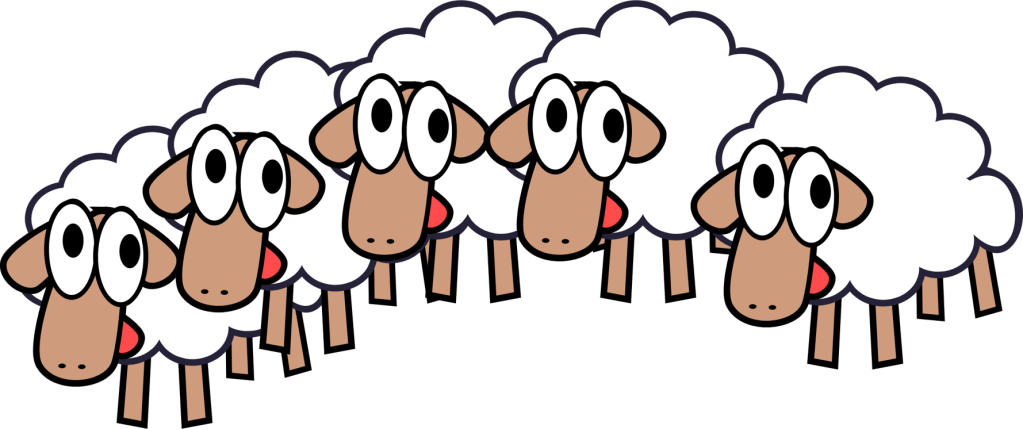
    What we don’t need are more five-year-old failures and more excellent sheep. “ 

    Thank you


    Thank you for reading. I always appreciate your thoughts and feedback but, if you have some to share about this article, I’m sure The Writers’ Centre would love to hear them too. If you have time, please copy and paste them over there as well to keep their conversation going.


  • I feel good!

    https://openclipart.org/image/800px/svg_to_png/59389/happy_sun_gm.png
    https://openclipart.org/image/800px/svg_to_png/59389/happy_sun_gm.png

    A lot of good feelings and thoughts have been passing around the blogosphere in recent weeks including the #1000Speak for Compassion project and, closer to (my blogosphere) home, the Carrot Ranch with  Charli’s Mills’ flash fiction challenge and the responses by the Congress of Rough Writers.

    Hearing these good things is good for my soul which could otherwise become burdened down by the cruelty that is experienced on a personal, local and global level.

    Areas of Queensland and the Northern Territory were, over the weekend, devastated by severe weather, other states by fires, parts of the northern hemisphere by cold and snow. Nature itself is so destructive, why do humans think we have to add to it?

    Many homes in Central Queensland were destroyed by damaging winds when the cyclone hit. In the early morning news the following day there were already reports of looting. It seems incomprehensible to me that people would do that to each other. Stealing from homes of those left vulnerable and sheltering in a community evacuation centre!

    In the same bulletin there was a report about people receiving payments from the government while training to fight overseas for terrorist groups. The list goes on. The news media are not the best places for seeking uplifting stories or developing a habit of meliorism.

    applications-internet

    I turn back to my blogger friends for their stories of compassion and inspiration, and thoughts of how we can raise children to be kind, caring and compassionate.

    My two most recent posts, Who cares anyway? and #1000Speak for Compassion, addressed the issue of compassion and received a number of comments which added more interest and value to the topic. Most of those who responded have also shared their thoughts about compassion on their own blogs, each post as individual as they. Here are a few links to get your reading started:

    Charli Mills writes about Literary Compassion

    Anne Goodwin about Compassion: Something we all need

    Geoff Le Pard: Me, me, me; You, you, you #1000Speak

    Sarah Brentyn: 1000 Voices for Compassion

    Irene Waters: 1000 Voices Speak for Compassion – mine is but 1

    Sherri Matthews: How to save a life

    Christy Birmingham: To Writers Who Struggle with Self-compassion #1000Speak

    Lori Schafer: #1000Speak about Compassion: Through the Eyes of a Rat

    I am very happy to belong to a community that values kindness and compassion. As at least one  blogger commented though, it may be difficult for someone who has not experienced compassion to express compassion for others. Compassion may be a natural feeling, but it also may need to be learned. It reminds me of those famous words, “Father forgive them for they do not know what they are doing.” and also of a story shared by Lata on Hot Cup of Kaapi as part of the #1000Speak for Compassion project. (Note to self: Remember this!)

    In my last post I shared two ways of showing compassion suggested by Daniel Goleman in his video Why aren’t we more compassionate?:

    Pay attention

    Consume ethically

    https://openclipart.org/image/800px/svg_to_png/192642/Children_holding_hands.png
    https://openclipart.org/image/800px/svg_to_png/192642/Children_holding_hands.png

    At about the same time as I was reading these posts about compassion, I also read a post on one of my favourite educational sites Edutopia about Creating More Compassionate Classrooms.

    The author of this article, Joshua Block teaches at The Science Leadership Academy in Philadelphia, which you may recall I mentioned in a post about Chris Lehmann and Visioning a better school, a better way of educating. I was certainly impressed by Chris Lehmann, so I expected to be impressed by this article and its suggestions, and I wasn’t disappointed.

    In the article Block talks about the Academy establishing an Ethics of Care as described by Nel Noddings. I am both embarrassed and disappointed to admit that I hadn’t previously heard of Noddings but I will be looking more in depth at her work in the future. So much of her work is pertinent to these discussions we have been having about compassion, including her understanding of the terms sympathy and empathy, for example. The article about Nel Noddings, the ethics of care and education states that

    “We learn first what it means to be cared-for. ‘Then, gradually, we learn both to care for and, by extension, to care about others’ (Noddings 2002: 22). This caring-about, Noddings argues, is almost certainly the foundation for our sense of justice.”

    It sounds familiar, doesn’t it?

    Block questions how he can create a more compassionate classroom without adding to the demands already placed upon him as a teacher. He wonders what a compassionate classroom would look like and suggests

    “A compassionate classroom environment is not an environment that lacks academic rigor. In this environment, students are understood to be complex people. Here, young people feel that they belong. Here, they meet challenge and encouragement while we ask them to be the best versions of themselves. Compassionate classrooms are places where student voices and student ideas are prioritized.”

    I do like the sound of that classroom environment.

    https://openclipart.org/image/800px/svg_to_png/148843/1310261210.png
    https://openclipart.org/image/800px/svg_to_png/148843/1310261210.png

    Block goes on to suggest six practices that help to develop that environment:

    1. Remembering to Check-in
    2. Informal Conferencing
    3. Increasing Personal Connections with Content
    4. Asking Better Questions
    5. Expressing Belief in Student Abilities
    6. Being Flexible and Accepting Failure When It Happens

    I think each of these practices could fit under the banner of being attentive, of really tuning in to the needs of the students. They are all great practices that should form the basis of establishing any classroom environment.

    Joshua Block has his own blog: Mr J Block: Reimaging Education and his article can also be accessed there, along with many other interesting posts and information.

    Now back to the title of this post and my flash fiction response to the challenge set by Charli Mills at the Carrot Ranch this week to: In 99 words (no more, no less) write a story about feeling good.

    I trust that somewhere in Marnie’s life she had a teacher (or more) as compassionate as Mr J Block.

    I feel good!

    She stood at the door for one final glance. Not much had changed, but it felt, oh, so different. They were gone. Gone!

    Almost twenty years had passed since she’d stood in this spot; since she’d fled their cruel ways. Twenty years of dodging shadows, double-locking doors, and fearing the phone’s ring.

    But no more. They were gone. Gone! And for more than five years! Five years to track her down! All that remained was the house. She’d sell of course.

    With the door closed behind her she almost skipped down the stairs, her heart singing, “I feel good!”

    Thank you

    Thank you for reading. I appreciate your feedback. Please share your thoughts about any aspect of this post or flash fiction.

  • Talking the way out

    https://openclipart.org/image/800px/svg_to_png/100009/Coffee-by-netalloy
    https://openclipart.org/image/800px/svg_to_png/100009/Coffee-by-netalloy

    Recently I met up with some teacher friends and, as always happens with teachers, the discussion turned to school, teaching and children. There was talk about the crowdedness and inappropriateness of many aspects of the curriculum, of resources that were ambiguous and poorly written, of time spent practising and preparing for tests, of (other) teachers who were ill-equipped to teach and not interested in professional learning.

    It made me sad. It has always made me sad. Sad and frustrated with the inappropriateness of so much that happens in schools and the effect it has on diminishing our most precious resource: the ability to think, learn, innovate and create.

    The fact that I am unable to do anything about this situation at times overwhelms me and I just want to curl up in a ball in the corner and cry. That I have spent almost my entire adult life swimming against the tide trying, through a variety of means, to make a positive difference through education with an effect as insignificant as a grain of salt in the ocean, makes my efforts seem futile and worthless. A waste of time and energy. I should just give up.

    But, foolishly maybe, I haven’t and don’t. Here I am writing a blog about education. One more way to try; with a website on the way as well. What effect will they have? Probably very little, but at least I am doing something that is important to me; something that gives my life meaning; even if it has no real value beyond that.

    I have been out of the classroom now for three years. I escaped before the introduction of new programs which I would have found philosophically and pedagogically impossible to implement. It had always been a balancing act, doing what my employer expected of me and what I believed to be best for the children and their learning. (Of course there is no saying that what I thought was better. The value of my thinking may well have been just in my head!)

    Five times before I had left the classroom, only twice for reasons unrelated to dissatisfaction (the birth of children). But I could never shake off my belief that education delivery could be improved. I read widely, seeking alternative ways of making a positive difference but, although I had vowed at each departure to never return, something always drew me back.

    Man-resigning
    https://openclipart.org/detail/211086/man-resigning.-by-doodleguy-211086

    Rather than allowing the situation to overwhelm me by accepting that there was nothing I could do; rather than throwing my hands in the air, walking away and admitting that it’s all too hard, I didn’t let go. Perhaps it was foolhardy. Maybe I should. Maybe one day I will. But not yet.

    Instead I choose to focus on the good things I see happening; the parents, teachers, nannies and child care workers who strive to make a positive difference. We know we can’t change the whole world. We can’t rid it of all the injustices, inequalities, violence and other wrongdoings against humanity and the Earth. But we can make a difference in our own little corner; and my own little corner has always been my focus. If I can make a difference with something as simple as a smile or sharing a positive thought then I will do it. If I can do more than that then I will, but I will focus on what I can rather than what I can’t.

    So for my little bit of positivity today, I am sharing some of what I think are great things that are happening, making a positive contribution to education and children’s lives; some things that make my heart sing and confirm my belief that if we want to, we can make a difference.

    marshmallow 5

    I have previously shared some thoughts that stimulated great discussion about the famous Marshmallow Test conducted by Professor Walter Mischel.

    On All Our Words I recently read a report of an address made by Mischel to the team at All Our Kin.

    In that address, Mischel is quoted as saying,

    “When a child grows up in a high-poverty, extremely unpredictable environment – in which anything can happen, in which danger is constantly present, in which chaos is always possible – it affects him at a biological level. Those experiences turn into chronic stress, or toxic stress, and they actually change his brain. They limit the potential of the cool system to make long-term plans and be patient and work for a distant goal.”

    The author of the article, Christina Nelson writes

    “Fighting against the biology of disadvantage requires a sustained effort that begins at birth, or even earlier, which is why creating high quality early care and education is so important for vulnerable children.”

    Mischel’s address further supports that view and congratulates the team at All our Kin for their work, saying

    “By providing a sense of trust, a sense that the rewards are attainable, that promises will be kept, that life doesn’t have to be chaotic and unpredictable, you folks are providing exactly the basis for the development of the cool system, and for the regulation of the hot system. The kids who have that when they are two years old are the same kids who are successful at the marshmallow test at five.”

    The praise from Mischel would not have been given lightly. I’m impressed with what I have read about All Our Kin, including this from their mission statement:

    “. . . children, regardless of where they live, their racial or ethnic background, or how much money their parents earn, will begin their lives with all the advantages, tools, and experiences that we, as a society, are capable of giving them.”

    family1

    The Talking is Teaching program, which was launched by Hillary Clinton as part of the Too Small to Fail initiative, in Oakland aims to reduce educational (and life) disadvantages by teaching parents the importance of talking to their children from birth.

    Thanks to my friend Anne Goodwin and daughter Bec I was also alerted to an article in the New Yorker The Talking Cure which described a program in Providence that also encourages low-income parents to talk more with their children.

    The author of the article, Margaret Talbot says that “The way you converse with your child is one of the most intimate aspects of parenting, shaped both by your personality and by cultural habits so deep that they can feel automatic. Changing how low-income parents interact with their children is a delicate matter”. The aim of the program is to support parents in non-threatening ways to support their children.

    I have previously mentioned a recent publication by Michael Rosen entitled Good Ideas: How to Be Your Child’s (and Your Own) Best Teacher. This book provides wonderful support for parents of children of any age. In very readable, accessible language, Rosen’s book is packed full of simple, inexpensive, fun and powerful ways for parents to support their children’s learning, effectively but unobtrusively, in their everyday lives. I think this book should be supplied to all parents on the birth of their children.

    Closer to home here in Australia are Community Hubs  and other programs such as Learning for Life run by the Smith Family and Acting Early, Changing Lives by the Benevolent Society.

    These are but a few of the good things that are happening. I have focussed on community programs rather than individuals (except for Michael Rosen’s book) in this post. I know there are many more great programs, and individual teachers doing amazing work. I’d love to hear about some that you admire.

    Thank you

    Thank you for reading. I value your feedback. Please share your thoughts about any aspect of this post.


  • I’m learnerate and loving it!

    In my previous post I can do this – one step at a time! I shared two words that I had just learned: illearnerate and learnacy*. I was excited by the power of their meaning and proudly declared myself to be learnerate.

    But it wasn’t always that way. Like the students Guy Claxton described in his article Learning to learn: a key goal in a 21st century curriculum, I had been schooled to be illearnerate. Over time, with the opportunity to take control of my learning and follow my interests, I developed a passion for learning, especially learning about learning, and became learnerate. Enthusing others about learning has been a life-long ambition and journey.

    Included in that post were two videos in which I demonstrated ways I use PowerPoint. I found out immediately after publishing that the ways I demonstrated weren’t the most efficient. I am grateful to Bec for informing me of a better way of saving PowerPoint slides as images; and also for the consideration she showed by informing me away from my blog in order to reduce the chances of my feeling  embarrassment about having  my “primitive” method pointed out (my words, not hers).

    Bec’s consideration for my feelings as a learner was in great contrast to school experiences in which humiliation and ridicule seemed the preferred way of dealing with any inadequacy, real or imagined.  Whenever a lack of knowledge or skill was revealed, rather than being perceived as an opportunity for learning, it was seen as an opportunity to be singled out, chastised and embarrassed in front of as many others as possible.

    sad

    One particular instance stands out in my memory.  I was in year eight. History tests had been marked and handed back; all except mine.  I tentatively raised my hand and told the teacher. Wrong move. The teacher made a big show of looking for my paper, finally “finding” it in a stack of papers on the desk and announcing to the class that it had been set aside as it was such poor work and I should be thoroughly ashamed of myself.

    Over the years I have come to realise that there is no shame in not knowing, or not being able to do something. It simply indicates an opportunity for learning. It is rare that someone will intentionally do less than the best they know how. If there is a better way, they need to be shown. Thank you, Bec, for showing me.

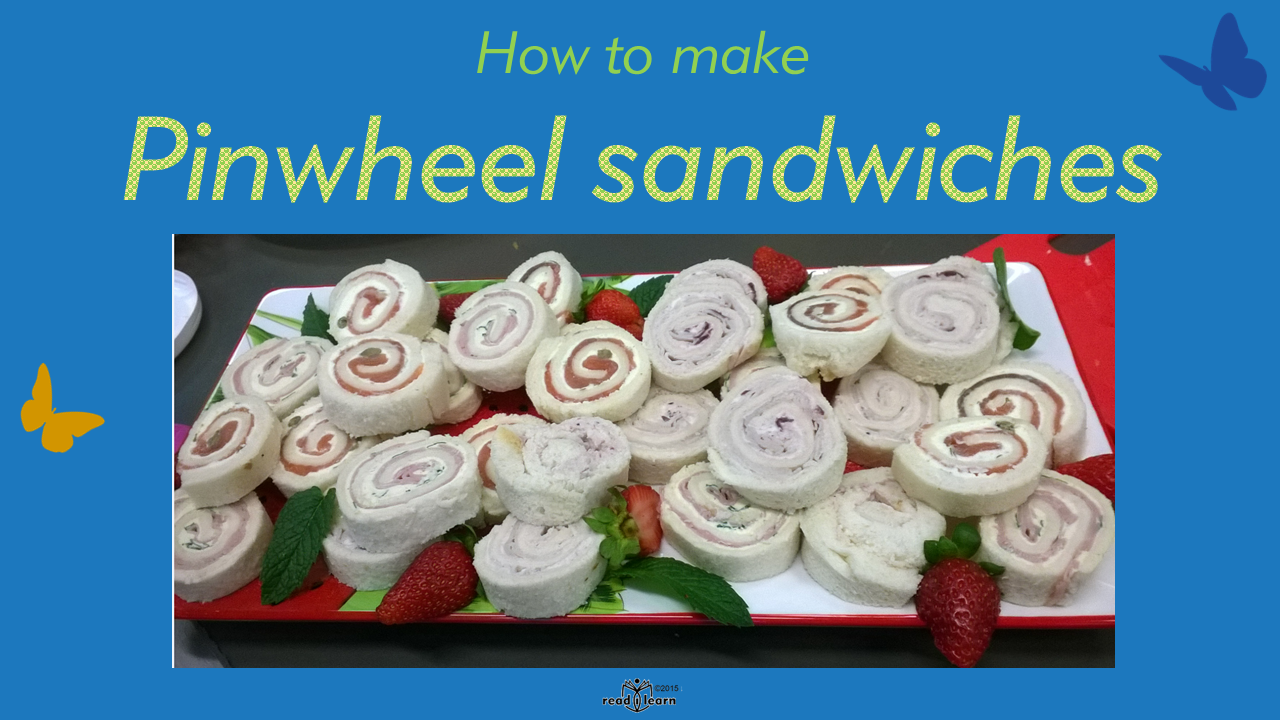
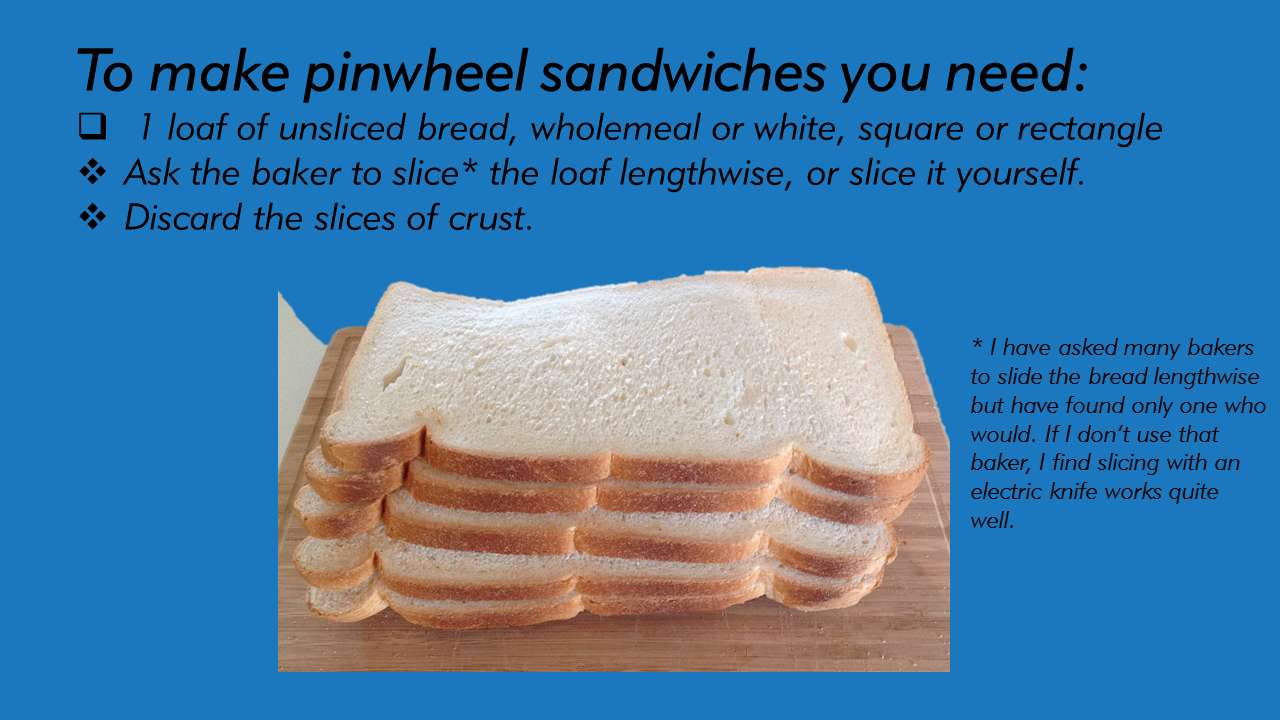
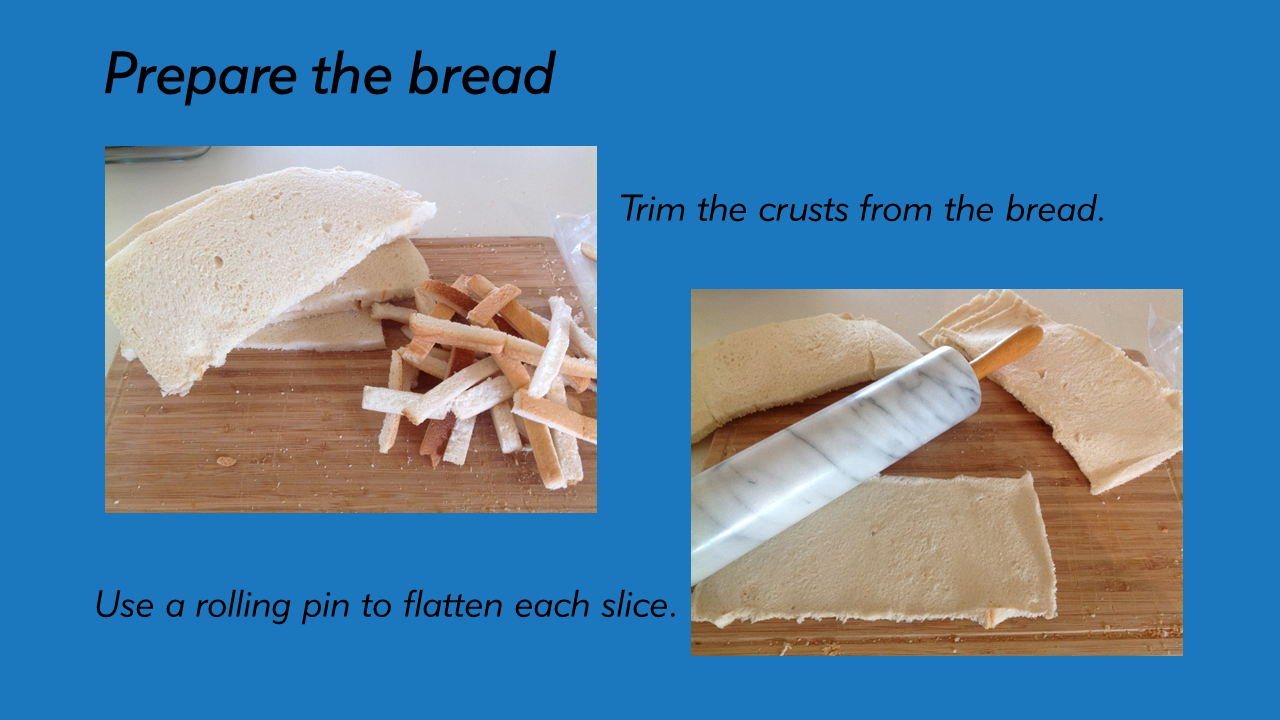
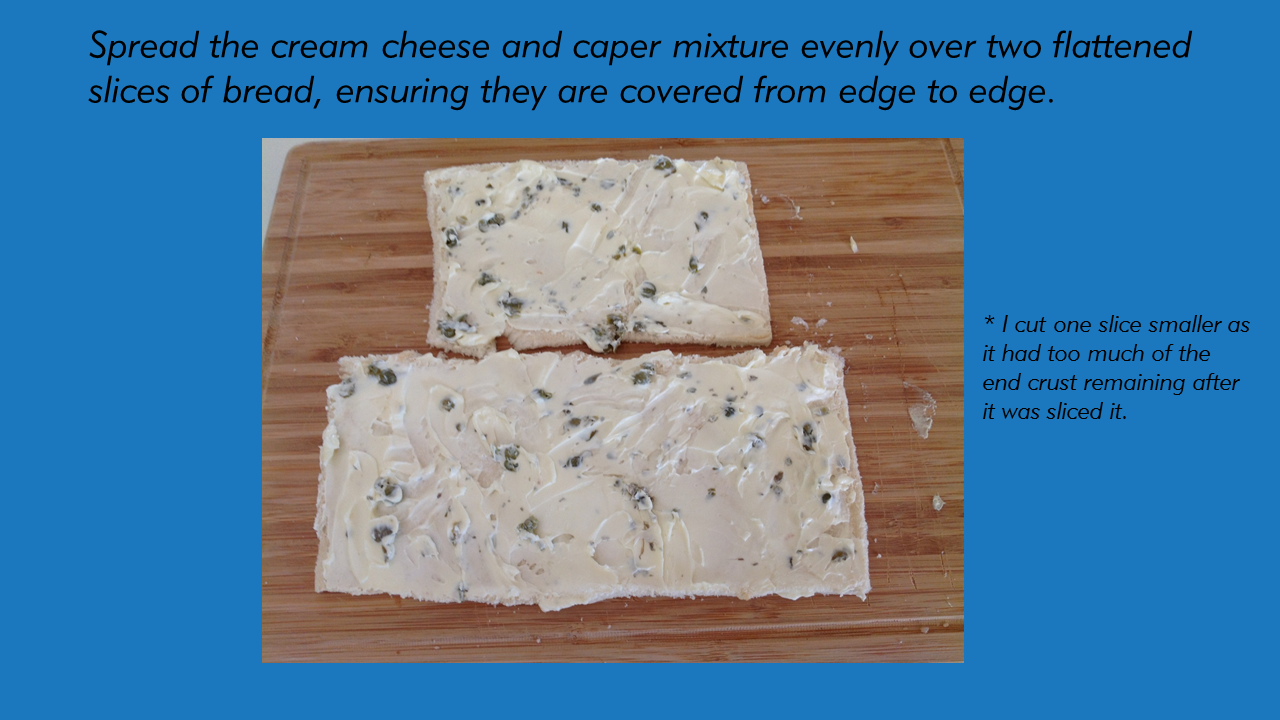
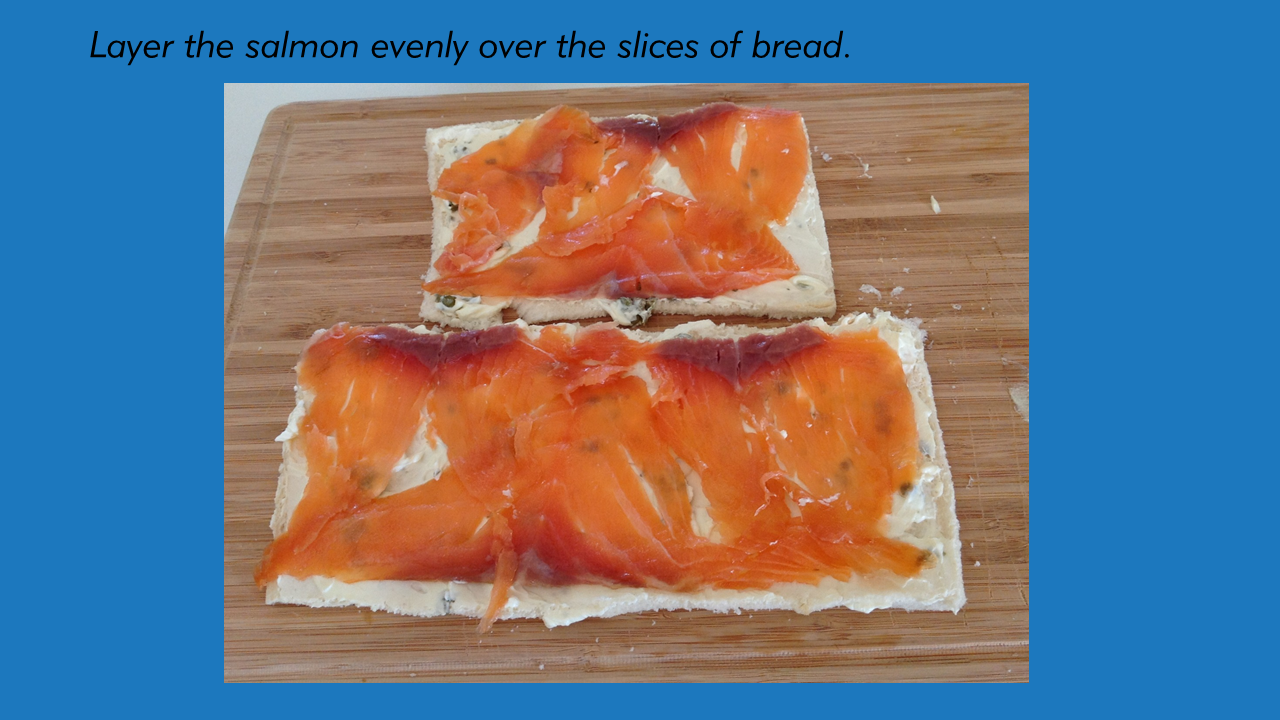
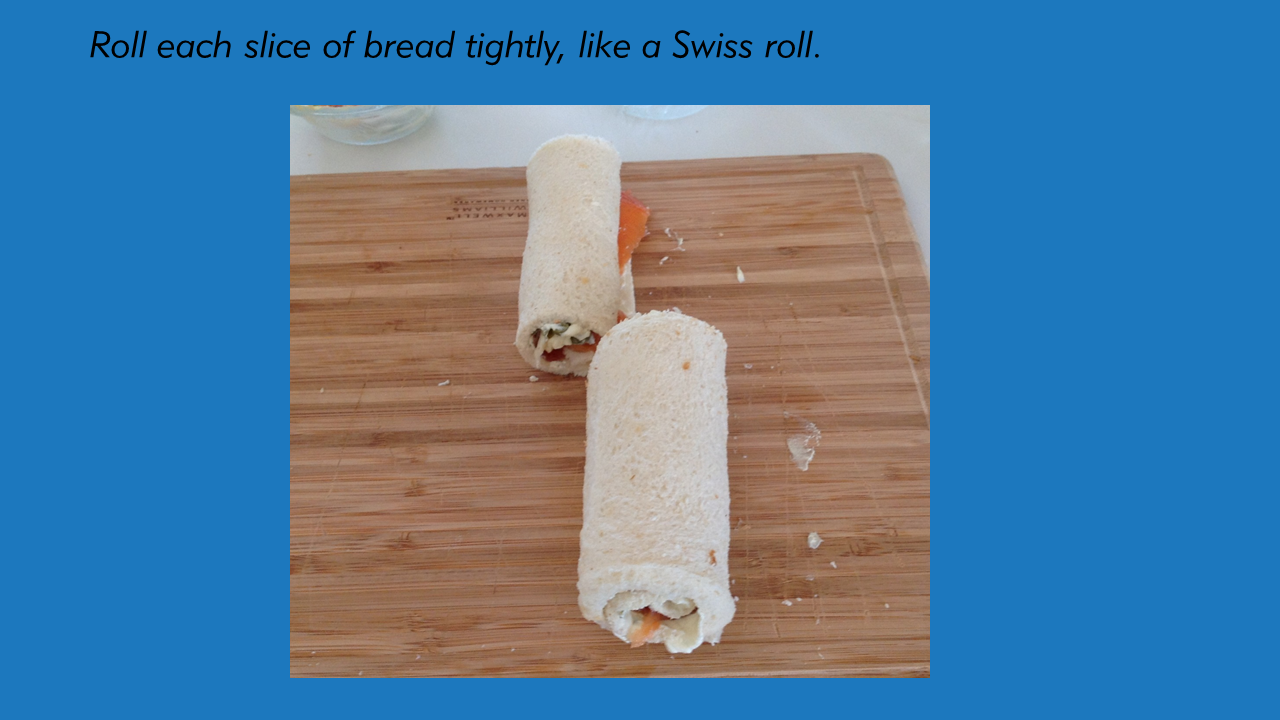
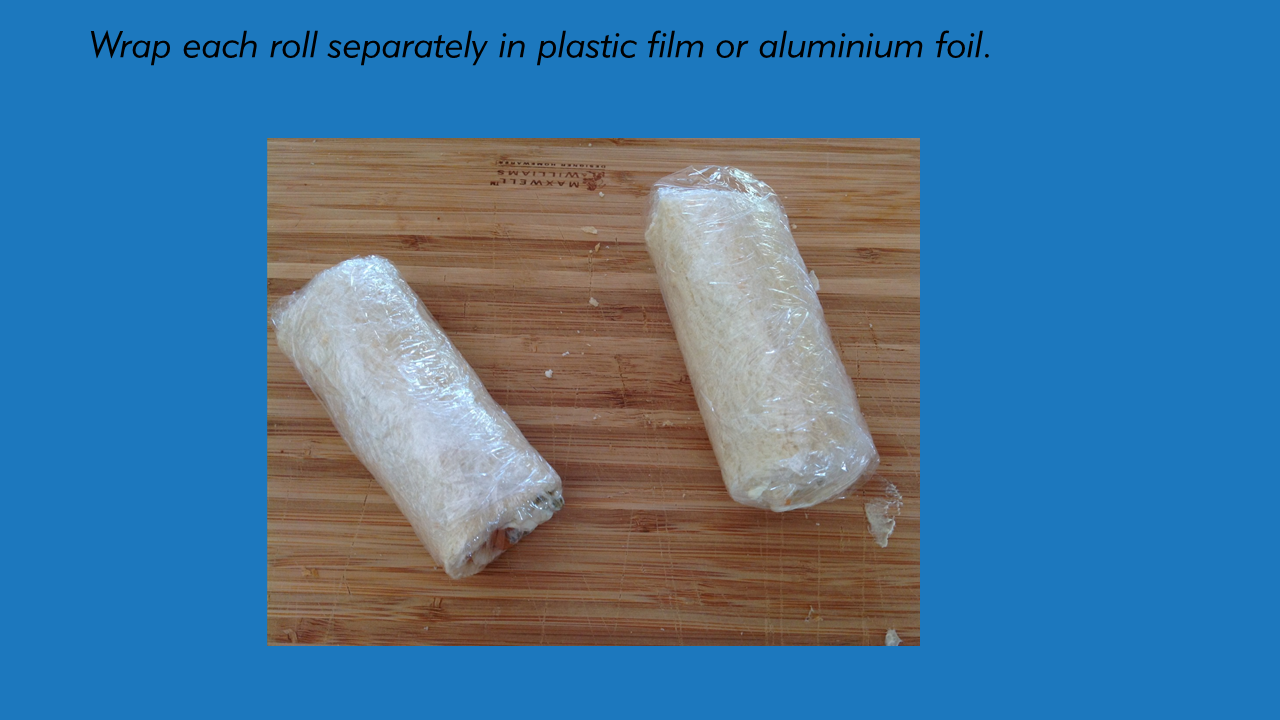
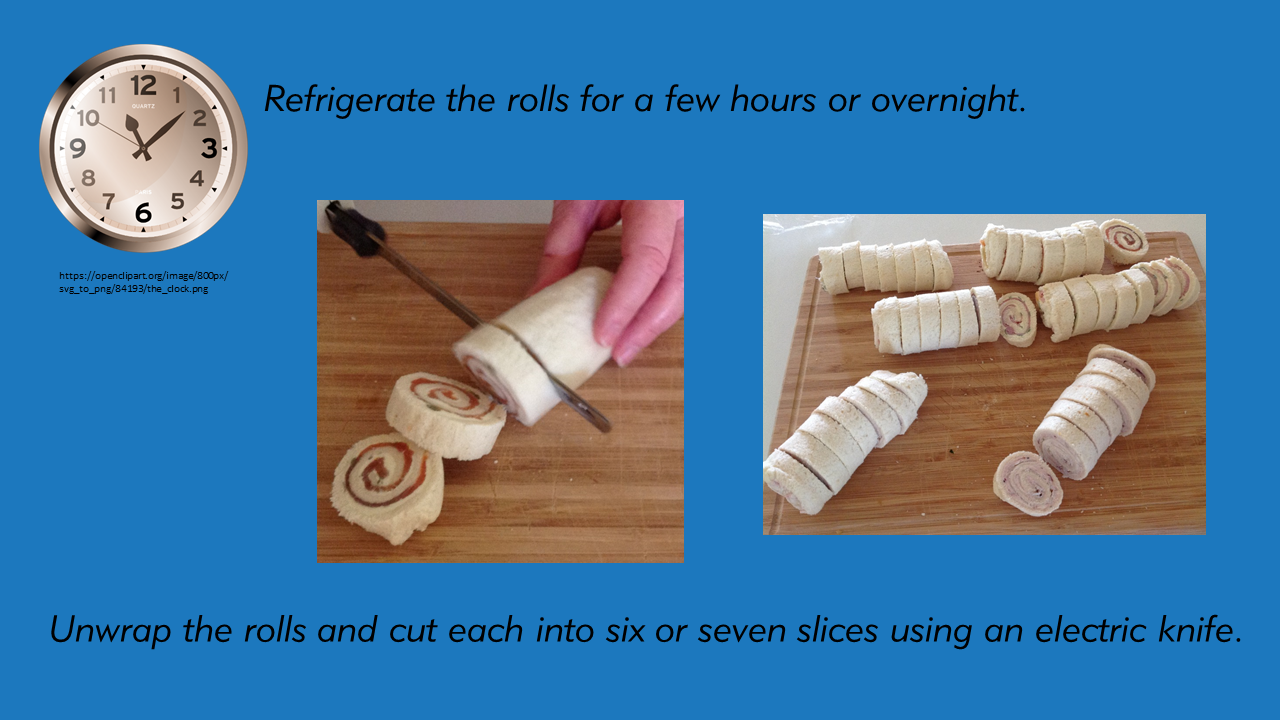
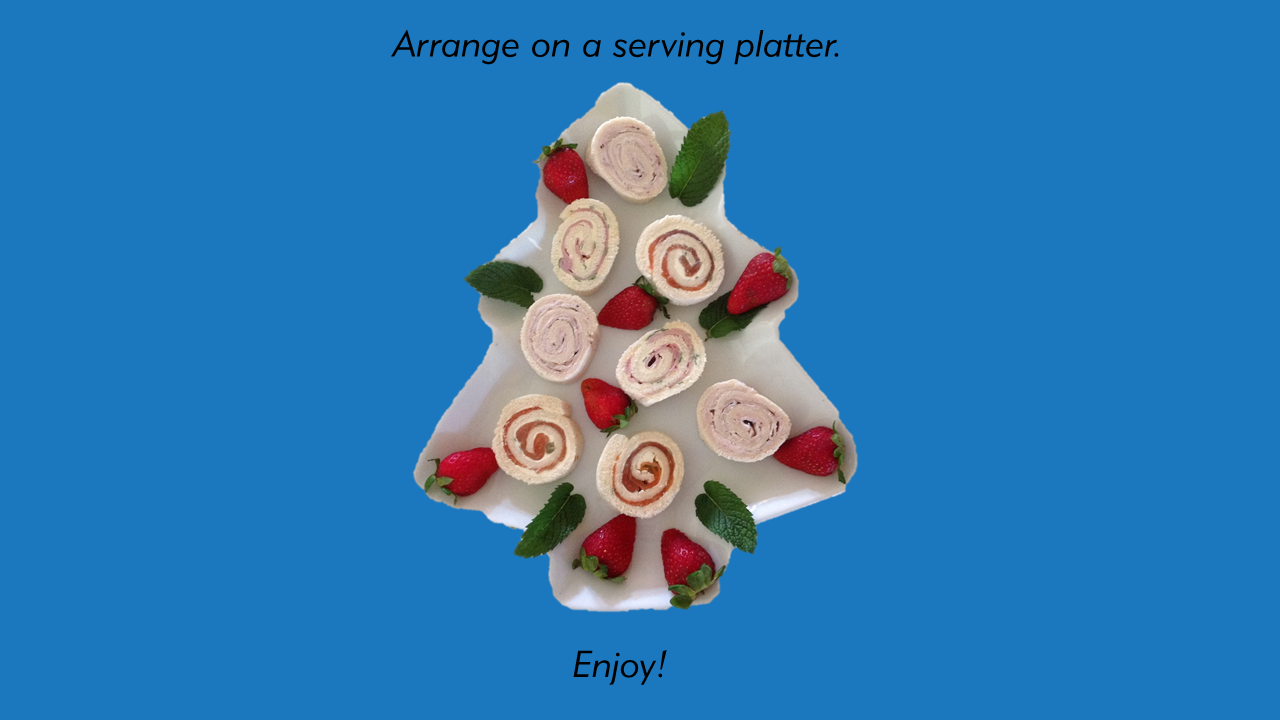
    My intention for this post was, and still is, to share my recipe for Pinwheel sandwiches. At the time of making the videos used in the previous post, I had already made the PowerPoint but had not made each slide into an image for uploading to my blog. How lucky was I that Bec told me a much more efficient way before I had done so! Instead of saving as a PDF, and then snipping and saving an image of each individual slide as I had demonstrated, all I had to do was click “Save As” and select “PNG” as the file type and every slide was saved as an individual image. Simple: very quick and easy, as I demonstrate in this 90 second video!


    And now for my pinwheel sandwiches. They also are simple, very quick and easy; very popular and just as tasty as they look!

    Slide1Slide2Slide3Slide4Slide5Slide6Slide7Slide8Slide9Slide10Slide11Slide12Slide13Slide14Slide15Slide16


    *Think of the terms illiterate and literacy and apply them to learning and you will have a good idea of the meaning.

    Thank you

    Thank you for reading. I appreciate your feedback. Please share your thoughts about any aspect of this post.