Live Love Laugh Learn … Create the possibilities

Tag: School

  • Child’s play – the science of asking questions

    Unknown source. Apologies. Happy to attribute if informed.
    Unknown source. Apologies. Happy to attribute if informed.

    I often say that children are born scientists. From the moment they are born they are actively finding ways of figuring out how the world works, and how they can get it to work for them.1

    Some people say children are sponges. But I say they are more than that. They are creators. They don’t just copy what they see. They don’t just repeat what they hear. They find new ways of working things out, new ways of expressing ideas, and new ways of thinking about things. Parents often remark, when children exhibit new behaviours or cute new phrases or ways of expressing themselves, “Where did they get that from? Where did they learn that?” Often the source cannot be identified, for the source is within the child.

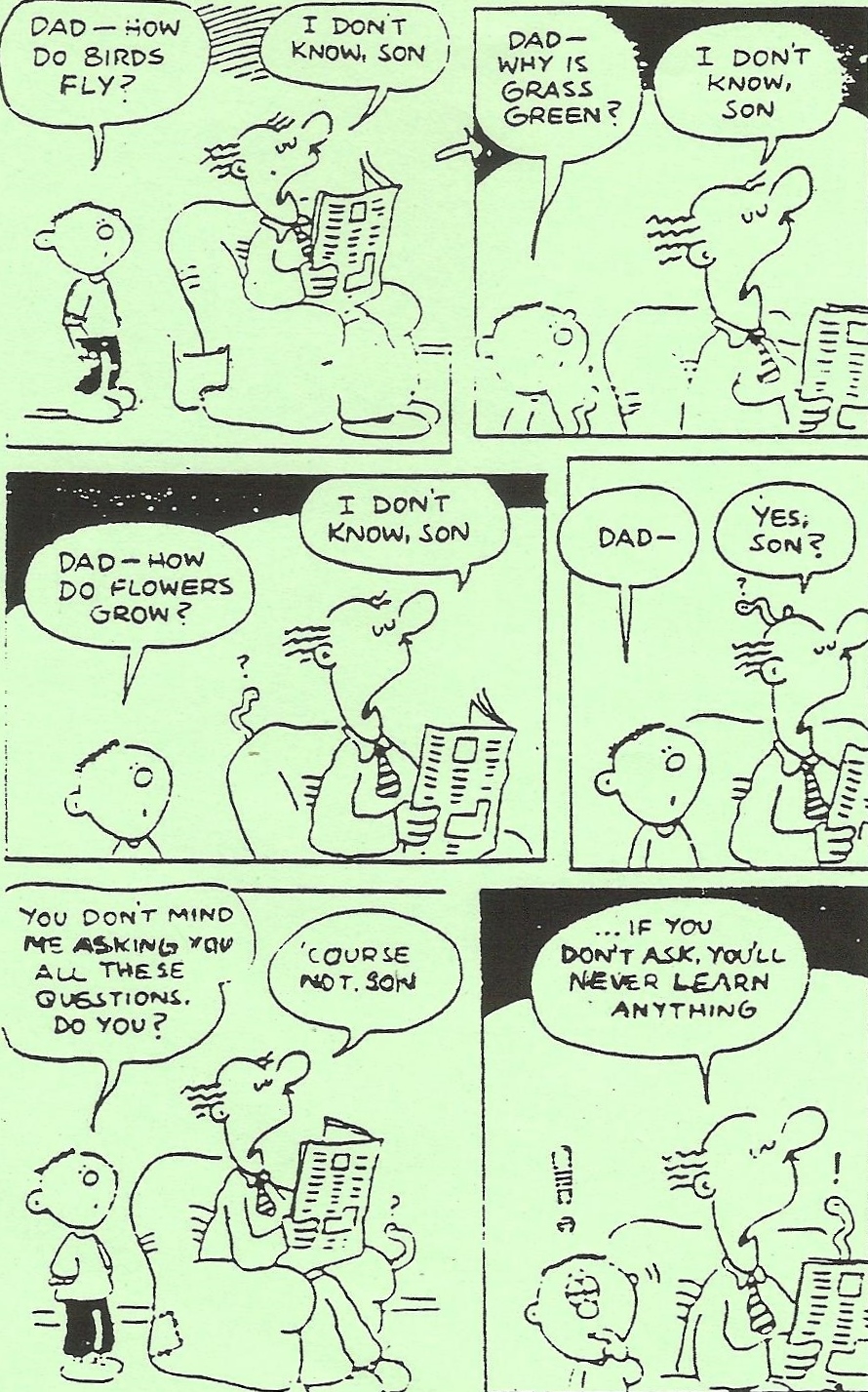
    An important way to keep children creating their own understandings and ideas is to not only allow them to ask questions, but to actively encourage them to do so, and to help them seek answers to their questions. Adults can be quick to quiet children’s questions for a number of reasons including not knowing the answer, being too busy at the time to investigate an answer, or even considering the question unimportant or “dumb”.
    Unknown source. Apologies. Happy to attribute if informed.
    Unknown source. Apologies. Happy to attribute if informed.

    Remember, many things that adults may take for granted or that they may no longer question but simply accept (possibly as a result of not receiving appropriate answers or responses to their childhood questions) are new and unfamiliar to the child.

    Sometimes it is easier to accept than to question for questioning means that something is unknown; and not knowing can lead to feelings of insecurity, doubt and instability. But it is these self-same feelings which drive innovation and progress. If everything was known, there would be no room for improvement, no need for anything new, no need for greater understanding.

    This inspiring TED talk by Beau Lotto and Amy O’Toole, Science is for everyone, kids included emphasizes the need for children to be given the opportunity of asking, and exploring answers to, questions.

    Beau explains that what we see is based upon our experience, upon our expectations. But he asks,

    “if perception is grounded in our history, . . . (and) we’re only ever responding according to what we’ve done before . . . how can we ever see differently?”

    He goes on to explain that seeing things differently begins with a question and that questions lead to uncertainty. He says that

    The-best-questions-are

    and explains that the answer to uncertainty is play. He says that play “is a way of being” and is important for five reasons:

    • Uncertainty is celebrated in play and makes play fun
    • Play is adaptable to change
    • Play is open to possibility
    • Play is cooperative
    • Play is intrinsically motivated

    “Play is its own reward.”

    Beau says that science, also, is a way of being; and that science experiments are like play.

    He describes working with a group of 8-10 year old children, encouraging them to ask questions and involving them in an investigation of a question they posed.

    Amy O’Toole, one of the children involved, joins Beau and describes the experiment which investigated the ability of bees to “adapt themselves to new situations using previously learned rules and conditions.”

    The really exciting thing about the project, Amy says, was that they “had no idea whether it would work. It was completely new, and no one had done it before, including adults.”

    The process of taking the findings of the project to publication, as Beau explains, was rather complex with a variety of complications, taking two years to achieve. The experiment itself took only four months! Publication of the paper made Amy and her friends the youngest ever published scientists.

    The response to the paper, The Blackawton Bees is amazing:

    30 000 downloads on the first day

    Editor’s Choice in Science (a top science magazine)

    the only paper forever freely accessible on Biology Letters and

    the second-most downloaded paper from Biology Letters in 2011

    Amy wraps up the talk by stating that

    “This project was really exciting for me, because it brought the process of discovery to life, and it showed me that anyone, and I mean anyone, has the potential to discover something new, and that a small question can lead into a big discovery.”

    She finishes by saying that

    “science isn’t just a boring subject … anyone can discover something new.”

    We might not all make those big scientific discoveries, but it is the questions we ask each day which lead to our own discoveries, no matter how small; it is our curiosity which keeps us learning.

    What have you learnt today?

     Changing-the-way-a

    1 This is just my opinion formed from observations, discussions and reading. I am not supporting it with research references.


  • The pretender – putting on a show!

    19178-School-Building-Graphic

    Back in the early days of my teaching career, back before many of our younger teachers were born, let alone teaching, we used to have a visit from a school inspector every year or two. The role of the inspector was to monitor and evaluate the implementation of school programs as well as to provide advice and support to teachers.

    However many teachers tended to think of them in less positive ways and these visits often engendered a sense of fear in some teachers as the inspector could appear at the classroom door at any time and ask to see current curriculum programs and mark books, test the spelling and computational ability of the class as a whole, and hear individual children read.

    Because of this, when one of these visits was imminent there was often a flurry of activity getting curriculum documents and assessment up to date, and displaying children’s work in the classrooms and foyer.

    But I wasn’t one of those teachers frantic in preparation and fear of being found out. I firmly believed that if what I was doing each day for the children in my class wasn’t good enough, then so be it. They were the ones that mattered after all and their education was my priority. I could not see what else I could do to prepare for these visits.

    My programs were well researched, up to date and innovative. They were responsive to individual needs which were well documented with anecdotal records and diagnostic assessments as well as required testing, and supported by samples of student work. My classroom had an ever-changing display of children’s current work allowing visitors to see what we had been working on as well as giving the students a sense of pride in their achievements.

    I guess also, for me back then, the school inspector was only one of the many visitors to my classroom as I was used to people coming to see what we were doing. Parents were always welcome and there were many who helped out on a regular basis and others who made the effort to come for special events and celebrations.

    The principal was very involved and supportive and often popped in to see what we were up to and to provide additional support for children’s learning. In addition, teachers from other schools would visit in order to observe and take ideas back to their own classrooms; and pre-service teachers (student teachers they were called then) were often involved.

    So, for me, the inspector’s visit was just another day, business as usual.

    I am having difficulty in summoning words to describe how I felt when I saw the teacher next door (our classrooms were open, separated only by cupboards and shelves) busily testing children and writing marks in mark books, filling in “current” curriculum programs for the preceding term’s work and covering the previously bare classroom walls with displays of children’s work completed that day.

    I guess you could say I was aghast at what I considered to be blatant dishonesty. I felt it was so wrong that I almost wanted to remove what I had on display for fear of the inspector thinking it was simply there for his benefit.

    I didn’t.

    Instead I turned to poetry, as I often do, to express my feelings; and I would like to share it with you, its first readers.

    I had forgotten all about it until I came across it unexpectedly while looking for something else. It reminded me of the attempt at deception I saw enacted. I say “attempt” because, of course, the principal would have been aware of the situation and I have no doubt that these trained inspectors would be able to see through the veneer.

    I think if I was writing the poem now, rather than 30 years ago, I would not be so generous with my analogy, nor so disrespectful to the butterfly.

    Here it is:


    ©Glenn Althor www.http://obscurepieces.com/ Used with permission.
    ©Glenn Althor www.http://obscurepieces.com/ Used with permission.

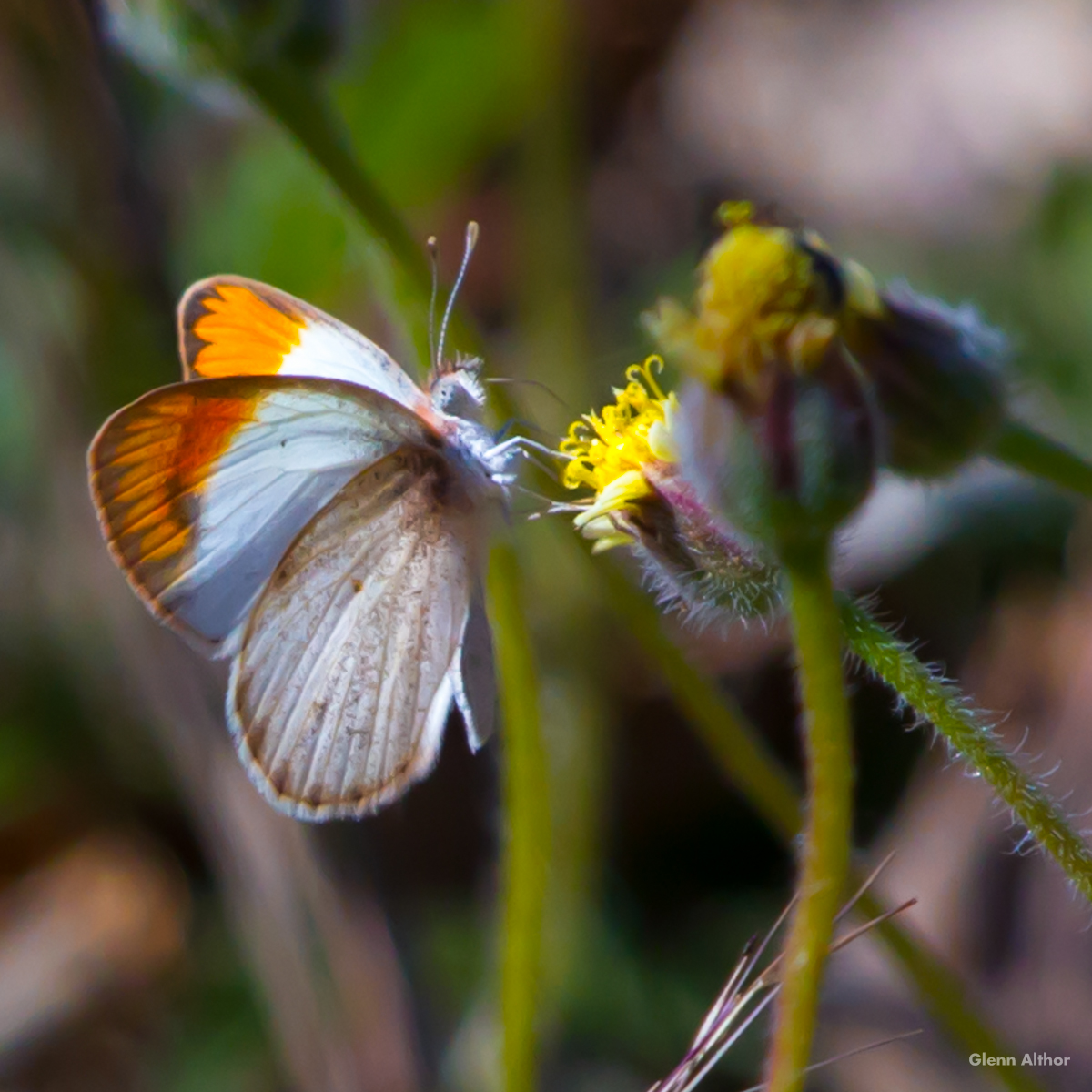
    Not really about a butterfly

    Look at you now.

    You put on your show.

    Your butterfly colours are warmly aglow.

    It’s hard to imagine

    That not long ago

    You were a mere silent pupa

    With nowhere to go.

    You flit and you flutter

    Cry, “Hey, look at me!”

    And all turn their heads

    -wondrous beauty to see.

    But where have you come from?

    And how can this be?

    Before . . .

    Not one head would have turned.

    There was nothing to see,

    –          just a little green ball,

    curled up on a tree.

    Is it dishonest

    To change rapidly?

    What do you think?

  • Learning At Its Best

    If you have been following my blog you will know that I have certain misgivings about traditional styles of education. That’s not to say that I don’t have certain misgivings about alternative styles of education as well, for I do. It was these collective misgivings that led me to home educate my daughter in her early years while attempting to establish an alternative school that met my expectations.

    In researching programs on offer in many traditional and alternative schooling environments, I read a lot of school descriptions, policy and philosophy statements. I usually find there is little to argue with in these statements, it is usually the way the beliefs are translated into practice with which I have difficulty.

    Occasionally I read something about a school that really excites me and I think “Wow, this school has really got it all together: philosophy and pedagogy. Children and their learning needs are at the centre of this organisation.”

    Recently I read a description that made me wish I was six years old again and enrolled to start my schooling there.

    According to the article it is
    “Learning at its best . . . where the MAGIC happens” and describes a “Disney World – only better”, where
    • Imagination can prosper
    • Friendship and freedom of speech is fostered
    • Conflict resolution skills are developed
    • Active and open listening is encouraged
    Among other things, it has:
    • a creativity corner
    • a nature reserve
    • a dramatic play area

    Why don’t I just let you read the article that fired my imagination, then you can let me know what you think . . .

    Hope's avatarshecando

    .. Is where the MAGIC happens.

    Given my interest in all things children, education and teaching, being lucky enough to have a tour of Miss Charlie’s classroom was like getting a private and personalized tour of Disney World – only better!

    Her class, and the rest of the Junior School (Kindy, Year 1 & 2), share newly renovated and connected federation houses in one part of the campus. Here they have their own tennis courts, play grounds, rooftop gardens, a junior library and even a secret corridor connecting them to the main gym and swimming pools and on to the rest of the school. It’s rather impressive, even if I say so myself.

    What really amazed me, and made me want to never leave (I’m not joking, I might have to apply for a teaching job there ASAP), was the open planned piazza that connects the junior school classrooms. This…

    View original post 616 more words

  • What’s the difference?

    Fifteen differences between traditional and alternative approaches to schooling

    www.openclipart.org
    http://www.openclipart.org

    This list itemises some of the differences between traditional and alternative schools. The list is meant to contrast the stereotypes rather than reflect the culture of any particular school.

    It is unlikely that a school would have all the characteristics of one approach and none of the other. Most schools will have some characteristics of both approaches to a greater or lesser degree.

    As you read the list, consider each characteristic with regard to the schools you attended, or those attended by your children.

    • teacherbellTraditional schools are authoritarian organisations in which children are expected to conform. Alternative schools are run more democratically with children involved in planning and decision making.
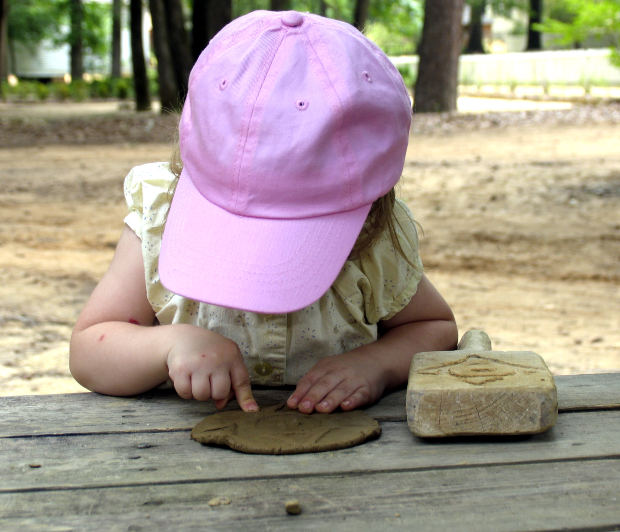
    • Teachers in traditional schools direct activitiesclay from a pre-established curriculum; while activities in alternative school are more spontaneous and child-centred, with children involved in planning and choosing their educational experiences.
    • In traditional schools, students are passive recipients of information; while in alternative schools, students are actively involved in learning, both mentally and physically.
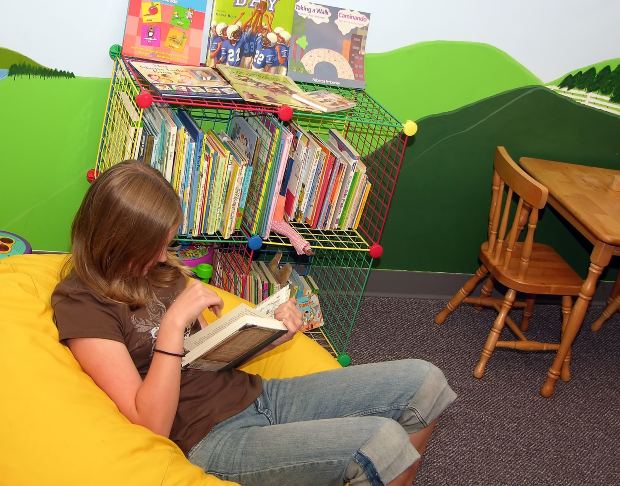
    • readingInformation taught in a traditional school has an academic orientation and is often disconnected; while students in alternative schools learn about a wide range of topics by making connections with prior knowledge, and through interaction with the environment.
    • In traditional schools, information is transmitted by someone or something else; while in alternative schools, students discover their own answers, solutions, concepts and create their own interpretations.
    • talkingMost communication in traditional schools is one way: the teacher talks and students listen. Communication between students and teachers, and among children in alternative schools is reciprocal.
    • Most questions asked by traditional teachers are closed and deal with facts; while students in alternative schools are involved in reflective thinking, problem solving, and learning how to learn.
    • gardeningStudents in traditional schools do a lot of written work while emphasis is given to hands-on-activity in alternative schools.
    • Traditional teachers provide little corrective feedback or guidance to students; while teachers in alternative schools usually provide guidance, evaluation and direction to students.
    • People_16_Teacher_BlackboardIn traditional schools, instruction is usually given to the class as a whole. A greater emphasis is placed upon individual instruction in alternative schools.
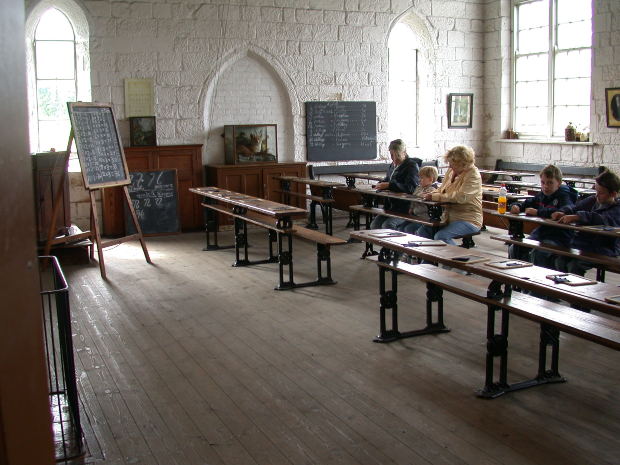
    • old school roomDesks are usually arranged to face the chalkboard or whiteboard in traditional schools; while space is used more flexibly in alternative schools.
    • The main focus in a traditional school is on imparting the existing values and roles of the society and culture. In an alternative school emphasis is placed upon the importance of the child in society and on educating the child for a responsible, thinking role.

    school cropped

    • In traditional schools students are generally grouped for work by ages, but in alternative schools children work at their own pace.
    • clockThe traditional school day is divided into sessions according to subject matter, while the organisation in an alternative school is flexible and loosely structured.
    • In traditional schools students remain dependent; while students in alternative schools are encouraged to develop independence.

    How closely do the characteristics describe the schools attended by yourself or your children?

    What do you see as the main similarities and differences?

    Where would they sit along the continuum?

    The school that I attended as a child was firmly embedded in traditional practices without any characteristics of an alternative approach.

    However some changes in pedagogical theories have occurred over the years, and the schools attended by my own children, and those in which I have recently taught, while still traditional, have moved a little along the continuum towards a less rigid and more flexible approach in some areas.

    In an earlier post “To school or not to school” I shared some thoughts I considered when making choices for the education of my children.

    I invite you to leave a comment and share your views.

    Which of the characteristics are most important to you when choosing a school for your child?

    Which characteristics would encourage you to choose against a particular school?

    All photos courtesy of http://www.morguefile.com/

    Clipart from www.openclipart.org

  • Happy being me

    Self-esteem

    One of the most precious but fragile qualities of a person is their sense of self and self-esteem.

    A positive word of encouragement can reinforce the strength of one’s self-image.

    Machovka_Happy_fish
    image courtesy of http://www.openclipart.org

    But that image can be shattered all too easily through a sigh, a grimace, an ill-chosen word or careless remark.

    image courtesy of www.openclipart.org
    image courtesy of http://www.openclipart.org

    Our self-esteem flourishes when we are happy and wilts when we are sad. It is much easier to boost someone when they are up, and to hit them when they are down. Maintaining a healthy self-image requires just the right amount of self-knowledge and confidence to be resilient when faced with negative feedback and to not adopt an inflated sense of importance when receiving false, or genuine, positive input.

    Fostering self-esteem in the classroom

    image courtesy of www.openclipart.org
    image courtesy of http://www.openclipart.org

    As a teacher I have always considered it to be equally or more important to strengthen a child’s self-image as it is to extend their thinking and learning abilities.

    My primary aim has always been to cultivate a group of happy children, with strong senses of self, confident in what they could do and willing to have a go to extend their learning. I believe that these qualities are necessary in order for children to learn efficiently.

    A child who lacks confidence and is fearful of having a go lest a mistake be made, will make slow progress, finding it difficult to move out of the “comfort zone” into the unknown.

    Because children have no choice in whether to be in school or not, despite whether they like it or not, then, I believe, it must be a happy place, a place where they want to be and look forward to coming. How powerless must they feel if they are compelled to attend every day in a situation which gives them no pleasure.

    www.openclipart.org
    image courtesy of http://www.openclipart.org

    Sometimes the response to this remark is, “It’s life. They just have to get used to it.”

    But really, when you think of it, adults, no matter how trapped they may feel in certain situations, do have a choice. The choices may be no more palatable than the one they are in, but they are able to make that choice. My point is: children don’t make this choice. The choice is made for them. We are lucky that most children accept, and most rather willingly, indeed with enjoyment, this institution of childhood.

    Start each day with a song

    image courtesy of openclipart.org
    image courtesy of openclipart.org

    Because these beliefs and values guided the choices I made as a teacher, I started every day with at least a song or two, and always one of affirmation. It is almost impossible to frown when singing, and almost as impossible to not join in when everyone around is singing too.

    There were mornings when it was just as important for me to sing the songs as it was for the children. As for them, it gave me time to forget the problem that had occurred outside the classroom, the difficulty getting something to work the required way, or the disagreement that had taken place some time earlier. As for them, it gave me a quiet time to reflect and reassure myself, “I’m okay. I can do this. Let’s get on with our day.”

    I noticed, too, that when parent volunteers or other visitors were with us for our song, they also joined in with our singing and invariably followed up with a spontaneous comment about how much they appreciated, and needed, the song as well. Many times I received comments from passers-by about how the class’s happy singing had helped them start their day.

    image courtesy of www.openclipart.org
    image courtesy of http://www.openclipart.org

    I took every possible opportunity to remind parents of how wonderful their children were and we always shared at least one of these songs with parents during end-of-term celebrations of work. I believe the songs help to model, for parents as well as teachers, a way of sharing positive feedback and affirmations with their children.

    Affirmation songs

    Some of the songs we sang regularly in the mornings were from Anne Infante’s “Special as I can be” CD, the title song of which is my favourite and always the first I introduce to the children.

    Anne Infante (image courtesy of Anne)
    Anne Infante (image courtesy of Anne)

    Image courtesy of Anne

    Click here to find out more about Anne and her songs.

    I always wrote the songs out on charts so that, from the first day of school, we could follow along with the words as Anne sang them, even before most of the children could recognise any of them. The melody and repetitive structure of each verse invited the children to join in:

    Nobody else is just like me. 

    I’m as unique as I can be.

    I am beautiful, wonderful and

    beautiful, special as I can be.”

    The following verses substituted things such as “Nobody’s face, nobody’s smile, nobody’s eyes.” I simply told them, before the verse started, the words that changed each time.

    It wasn’t long before the children were joining in with the singing and recognising some of the words repeated in the songs e.g. “I” and “beautiful”.

    If ever I was called away during the song, they took great delight in being the one to point to the words for the rest of the class to follow.

    As the children became confident with one song, I would introduce another; and as our repertoire built, we would sing a different one each day. Sometimes the children would change the chart I had selected for another of their choosing for that particular day.

    The children loved these songs, and often during the day, while they were working on another task, someone would start quietly singing a song, and before long everyone would be joining in with joyful affirmation. I loved it when they left the classroom in the afternoon singing another of Anne’s songs, “Today I’m feeling happy. I am, I am, I am.”

    image courtesy of www.openclipart.org
    image courtesy of http://www.openclipart.org

    Singing an affirmation song is a little “happiness pill” you can take every day without any side effects.

    Happy being me

    Affirmation songs provide benefits in many ways:

    • Share the joy of being alive and happiness with self
    • Put a smile on everyone’s face
    • Invite everyone to participate
    • Encourage acceptance of and respect for self and others
    • Reinforce self-esteem
    • Insulate the classroom from outside troubles
    • Quiet the mind and settle the body in preparation for the day’s work
    • Provide words to express feelings
    • Give musical pleasure
    • Are an avenue for literacy learning.

    Please feel welcome to share your thoughts.

    If you enjoyed this post please subscribe.

  • What you don’t know . . .

    One of my favourite quotes is that of Manuel in the BBC television series Fawlty Towers: “I know nothing.” I love quoting this but, just like Manuel, I too am learning. And what a wonderful gift it is to be able to learn.

    Recently I read a post This time it’s personal by Tony Burkinshaw on his blog.

    He explained unconscious incompetence in the following way: “A total ignorance of just how much you don’t yet know for the simple reason that you don’t yet know enough to recognise that you don’t yet know what you don’t yet know.”

    This got me thinking about knowledge and learning and about some of the subtle ways in which our attitude to knowledge and learning is manipulated.

    When I was a teenager, my brother wrote for me in my autograph book: “What you don’t know won’t do you any good either.”

    My father was not impressed and stated quite emphatically, “What you don’t know won’t do you any harm.

    I think he subscribed to the same philosophy as many of my teachers: “Ignorance is bliss.”

    I mentioned in my article To school or not to school, a belief that the natural curiosity and eagerness to learn I’d had as a young child had been somewhat diminished during childhood by the attitudes of others around me. That’s not to say that they didn’t want me to do well in school, for they did, and always encouraged me and supported me to do my best; but it was my best at what the teachers told me to do and what the teachers told me to learn.

    Ready for school - year 2
    Ready for school – year 2

    Knowledge is power; and one of the easiest ways to suppress and maintain power over others is to keep them ignorant.

    While I am certain that my own willingness to be manipulated and need for acceptance also contributed, an encouragement of curiosity and active inquiry would have had the opposite and more positive effect. I am sure there are others who may not have bent so willingly under pressure and whose natural love of learning flourished despite it or even in response to it. But I know there are many more who bent and failed to rebound and are now trapped by their “unconscious incompetence” in an unassailable comfort zone; not knowing what they don’t know, for “Ignorance is bliss”.

    I am one of the lucky ones for, while I know a lot about some things, I know that there are things that I don’t know, and lots of them! Rather than make me a conscious incompetent, it makes me a willing learner, and passionate about ensuring the flames of curiosity and love of learning are maintained in others.

    Throughout their childhoods, I encouraged my children to question everything, including me, for I wanted them to arrive at their own understandings and did not want their thinking to be restricted the way mine had been.

    For many of you, a love of learning and an ability to acquire knowledge may have been a constant throughout your life. I ask then, that you do not dismiss those who don’t have the advantage of your information and your education. Many do not know what they do not know and they can’t even begin to imagine the questions they could start asking to ignite their learning. If they have had their natural curiosity suppressed and their wills broken, been convinced that submission and conformity were the way to being “good”, and willingly entered the cage and threw away the key; instead of judgment, derision and laughter, what they need is to be shown the open doorway … shown what they don’t know so they too, can start asking questions and filling in the gaps in their knowledge to regain power over their own lives.

    The saying “A little knowledge is a dangerous thing” is very true.

    How many times have you heard someone bemoan, “I wish I knew then what I know now”?

    What can you do to encourage a love of learning or pique someone’s interest today?

    How has your attitude to learning been influenced by the attitudes of others?