Live Love Laugh Learn … Create the possibilities

Tag: Reading

  • Plant the seeds of literacy

    About this time last year, I shared my excitement when Jackie French was recognised for her “long and distinguished career as a beloved children’s author” as Senior Australian of the Year. At the time she was halfway through her two-year role as Australian’s Children’s Laureate with the task of promoting the importance and transformational power of reading, creativity and story in the lives of young Australians.

    If-you-want-intelligent children

    Later in the year, in a series of posts celebrating Australian picture books, I shared more of Jackie’s work.
    jackie french's books

    Now the roles of Children’s Laureate and Senior Australian of the Year have been passed to others. Jackie has obviously been asked what she is now going to do with all her “free” time. In her newsletter she says, “if one more person says ‘now you can relax’ if (sic) will bite them like a wombat, the snappish kind” because it means that work is finished, which it isn’t. I feel exactly the same way when people ask me about my retirement, though I fear Jackie and I work at a very different pace and the occupation of my time may seem like retirement in comparison to hers.

    While an author may not have received the top recognition as Australian of the Year 2016, three advocates of children’s literature each became a Member of the Order of Australia:

    Jackie French for significant service to literature as an author of children’s books, and as an advocate for improved youth literacy’.

    Ann James for ‘significant service to children’s literature as an author and illustrator and through advocacy roles with literacy and professional bodies’.

    Ann Haddon for significant services to children’s literature, as a fundraiser and supporter of Indigenous literacy, and to professional organisations’.

    It is wonderful to see the recognition given to authors, and to the importance of reading.
    lucy_goosey_cover_lowres

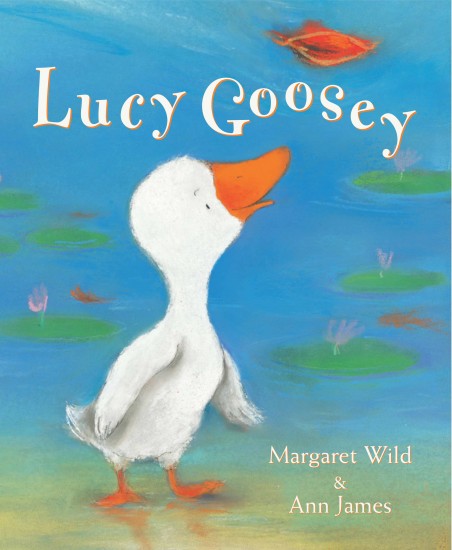
    One of my favourite books, illustrated by Ann James is Lucy Goosey. It is a beautiful story, written by Margaret Wild, about the love between mother and child. I can’t read it all the way through without crying. But in a good way. It is very touching.

    Ann talks about illustrating the story here:

    I’m also pleased to say that I have an original Ann James, done for Bec at a literary festival many years ago, hanging on my wall.

    Ann James

    In her Senior Australian of the Year Valedictory Speech, Jackie French says,

    “You never know what seeds you plant will grow; if they will keep growing; who will take them and tend them. But there is one thing I have learned in my 62 years: keep planting seeds.

    Jackie French - keep planting seeds

     Never think: I am 62 and still have not achieved world peace, universal tolerance and justice, or even an Australia where every single child is given the chance to learn to read.

    Change is never fast enough for any person of goodwill.

    A rain drop is just a rain drop. But together we are a flood.  Together we have changed the world.

    Jackie french - raindrops

    She concludes her speech with these words:

    “Let us give our children role models who do not, will not despair, no matter how long it takes to change the world. And let us never surrender, no matter how tired we are, or how long it takes. Because with these weapons we shape the future of our planet.”

    I like her words of hope. She is a meliorist. But even more than that, she is an active meliorist. She puts her words into action. She may no longer carry the title of Children’s Laureate or Australian of the Year, but her advocacy doesn’t stop.

    Thank you

    Thank you for reading. I appreciate your feedback. Please share your thoughts.

  • You’ve got the power


    Super s

    If I had the ability to bestow upon each of you a super power of your choosing, what would you choose?

    I’m sure you’d be eager to accept with a suggestion immediately. I am not an exception. I would love to be able to control time, to make it go faster or slower when I want, and basically to just have more of it.

    But the reality is that each of us reading this post, myself included, already has one of the most amazing super powers available: the ability to read. Living in a print saturated world as we do, the ability to read is essential for full participation. Not surprisingly, but perhaps also a little sadly, those of us who can, tend to take it for granted.

    The love of reading is gift

    I am a compulsive reader. I read everything everywhere. I wish I could stop myself reading the signs on the back of the toilet doors for the umpteenth time, but it’s virtually impossible. This is not my genre of choice. Many of us bemoan the fact that we do not have enough time to read all the wonderful material available to us.

    studentbooks

    Time is not my only reading frustration. As I age my eyesight is changing and even with the assistance of reading glasses I struggle (and often fail) to read the fine print on labels or in instructions. Not only that, my eyes tire more quickly now than ever before and the physical act of reading is not as pleasurable as it once was.

    However, even with these frustrations, I am one of the lucky ones.  Not everyone in the world is as fortunate as I with my lack of time and failing sight. While the literacy rates around the world are improving, there are still too many suffering the disadvantages that result from inadequate opportunities to acquire an education in general, and specifically, the ability to read. Even in our midst there are those who, for various reasons, have failed to become literate.

    The empowering effect of the ability to read and of acquiring a quality education is never far from my mind or my blog. If you were to type the word “power” into the search button at the top right of my blog you would find at least ten posts with the word “power” or “empowerment” in the title, including

    The power of reading

    The power of imagination

    The power of words, and

    Empowerment – the importance of having a voice.

    This week at the Carrot Ranch Communications Charli Mills is talking about power and has challenged writer to in 99 words (no more, no less) write a story that explores the question, “What good is power?”  What choice did I have but to discuss the empowering effect of reading, an ability that is a right of everyone.

    reading

    Super Power

    Bored with responses as repetitious as their store-bought costumes, he scanned the room of superheros, wondering how many more interviews to fulfil his quota. Spying a child sans costume, he winked at the camera crew and moved in, the opportunity to highlight another’s inadequacies all too alluring.

    “And what superhero are you?” he smirked.

    The child held out a book, drawing artefacts from within its pages. “I am a reader. I can soar on dragon wings, explore the Earth, and the farthest galaxy. I can fill my head with imaginings, or discoveries new and old. Reading: my Super Power.”

    Thank you

    Thank you for using your Super Power. I appreciate your feedback. Please share your thoughts.

  • Once upon a time … the power of story


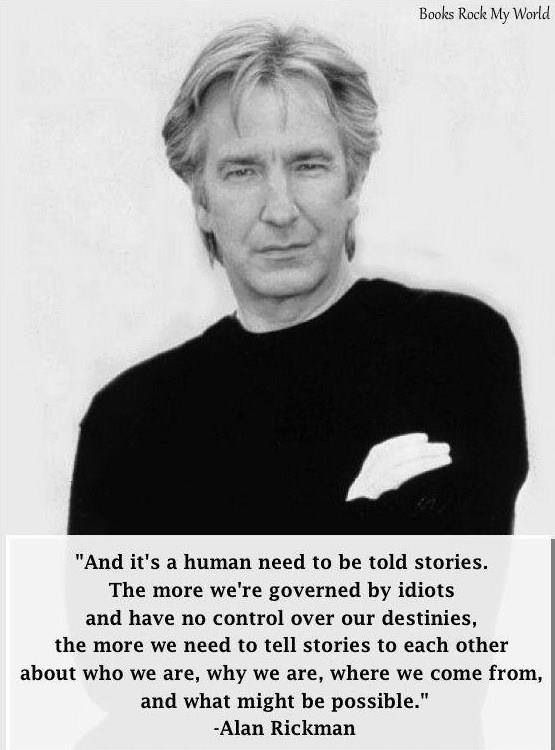
    Alan Rickman

    In stories we find our hopes, our dreams, our inspirations, and our fears.  In stories our imaginations take flight as we contemplate ideas never before encountered.  Stories help us figure out the world and our place in it. We come to understand the stories of others and develop compassion and empathy. We find ways of confronting our fears in safety. We escape the ordinariness of the everyday with dreams as much of the impossible as the possible.

    The love of reading is gift

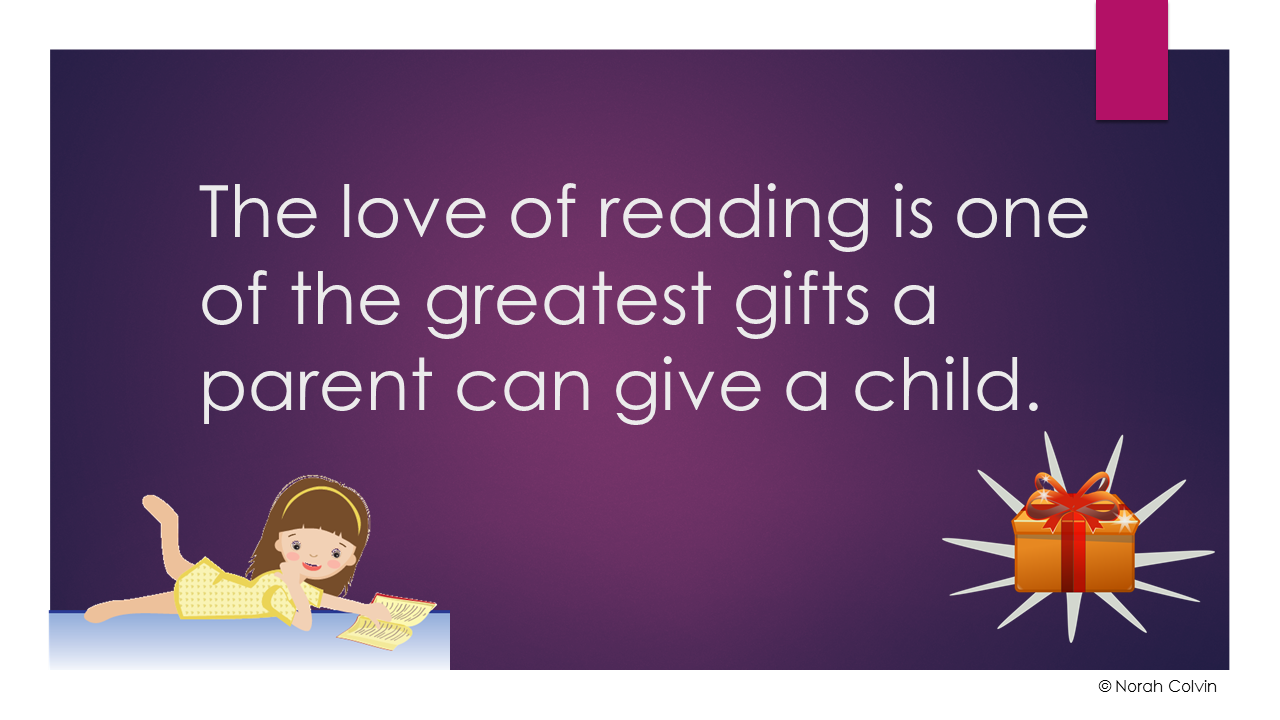
    Stories can be shared orally, in print, or through a variety of media. All are valid and valuable sources, but sharing the stories presented in books is especially important to the development of young children, and anything that can put books into the hearts and hands of children is to be encouraged. The ability to read is empowering and the love of books is one of the greatest gifts a parent can give a child. Not only can reading change the life of an individual, it can improve the lives of many through education.

    This week I read a post by Paul Thomas  on his blog the becoming radical. In this post, entitled “Please—a little less love, and a little more common decency. Paul said,

    “If we cannot change the world (and I suspect we can’t), we can provide all children the sorts of environments all children deserve in their school day—environments of kindness, compassion, safety, and challenges.”

    I think Paul meant that we can’t change the whole world, that would be a rather daunting task, but the provisions mentioned are vital and change the lives of individuals in important ways, just as reading does. I like to think of changing the world with one thought, one word, one action at a time, or as Mem Fox says, also quoted in my post The magic effect – why children need books,

    “. . . let’s get on and change the world, one page at a time.”

    malala

    Another post I read this week was by Michelle Eastman Calling all Book Lovers and Authors to make a Difference to a Child in Need on her blog Michelle Eastman’s Books. In that post Michelle explains that, last year, she initiated a project “MARCHing books to Kids”. The purpose of this project is to raise awareness of and provide books for children of incarcerated parents. Michelle goes on to say,

    “I believe that every child’s Bill of Rights should be indelibly inked with the right to have picture books read to him/her and to own their very own books. “

    I agree with her of course and consider her project to be very worthwhile. It reminds me of another very worthwhile program mentioned by Caroline Lodge, who blogs at Book Word, about providing books to prisoners. Both of these projects have the ability to change lives, to empower people and by so doing, change the world, not only their world.

    https://openclipart.org/detail/226141/princess-and-prince-illustration
    https://openclipart.org/detail/226141/princess-and-prince-illustration

    As well as changing lives, stories influence our attitudes. If they encourage feelings of kindness and compassion, as Paul Thomas says, that may be a good thing.  But what of the stereotypes that seem so pervasive? How many stories have you read about princesses in dire circumstances waiting to be rescued by handsome princes or knights in shining armour who must slay a dragon in doing so? What effect do these stories have upon the developing self-image of a young girl or boy? It is important to teach children to think critically about the stories they read, and about the portrayal of characters and their attitudes, especially stereotypes.

    © Norah Colvin
    © Norah Colvin

    But that is in reading stories. What of writing stories? Writing stories, whether factual accounts or imagined events, is also empowering. In writing stories children, and adults, can express and explore their hopes, dreams, inspirations, and fears.  In writing stories their imaginations take flight as they contemplate ideas never before encountered.  Writing stories helps us figure out the world and our place in it.

    In her post Storytelling as Personal Metaphor Anne Goodwin who blogs at Annecdotal raised the question of how much of the self is revealed in fiction.

    Paula Reed Nancarrow, whose blog tagline is Essays, Stories, Ephemera, talked about working towards an understanding of contentment: what it is and how it is experienced; in her post Enough Already: Exploring the Art of Contentment,

    Contentment is something that I too wonder about, and am especially perplexed by the need to push myself into new territory and new learning when others are content to sit back and watch the clouds pass by. Why are there so many things I feel I must do? Pretty soon I’ll be gone and it won’t matter a hoot. I have sometimes thought that if I were to write a fictionalised account of my life I would begin with the words She was an unremarkable woman”.

    I have connected these thoughts: about the power of story to change lives, the revelation of self in fiction and the quest for contentment; to write my response to the one who initiated my thinking about stories this week, Charli Mills at Carrot Ranch Communications with her flash fiction challenge to in 99 words (no more, no less) begin a story with, “Once upon a time …”  I’d love to know what you think.

    Contentment

    Once upon a time there was an ordinary girl who lived an ordinary life with her ordinary family. She did all the ordinary things that others did and dreamed of nothing else. Each day followed one after the other with little difference. There was no magic. There were no fairies, and there were no dragons to slay. She just did what she had to do and took little notice of others doing the same. Strangely enough she was content for, from somewhere deep within, she knew that this ordinary life was but preparation for the extraordinariness of the next.

    Monarch butterfly

    Thank you

    Thank you for reading. I appreciate your feedback. Please share your thoughts.

  • Storybook pirates and early childhood learning

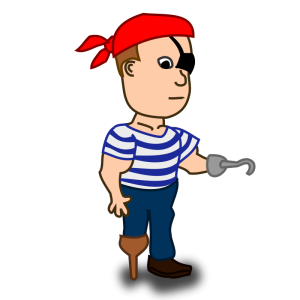
    nicubunu, Comic Characters: Pirate https://openclipart.org/detail/21919/comic-characters-pirate
    nicubunu, Comic Characters: Pirate https://openclipart.org/detail/21919/comic-characters-pirate

    Would you believe that with the hundreds of picture books I have in my possession I do not have one about pirates! That surprises me. There must be oodles of books about pirates on the market.

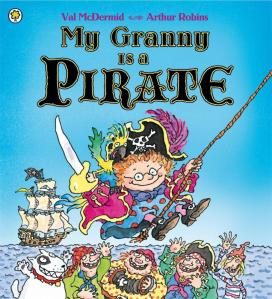
    my granny is a pirate

    When I was in London last year I did buy a delightful book for my grandchildren called My Granny is a Pirate by Val McDermid.  We had enormous fun reading it and laughing at the wonderful illustrations by Arthur Robins.

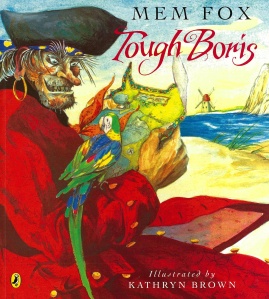
    Although I own many titles by Mem Fox, I don’t own her “all time classic and long-lasting bestselling” pirate book, Tough Boris . In the information about the story on her website, Mem explains how the story came to be and raises issues of sexism, particularly regarding the over-representation of male characters, in picture books. This is a topic that is very familiar to me.

    Tough boris

    In addition to not owning books about pirates, I can remember using a pirate theme for teaching on only one occasion. This surprises me too as pirates seems to be a perennial theme for birthday and fancy dress parties. Children and adults find the idea of pirates fun. You have only to look at the success of the Pirates of the Caribbean series to know that.

    Of course, in this post I am referring only to the pirates of picture books and movies such as these, that were no more real than other fanciful characters such as giants, fairies, elves and dragons.

    The occasion for my using a pirate theme was over twenty years ago when I was running early childhood classes as part of my home-based business Create-A-Way, and the inspiration for it was of a practical rather than literary nature. I was required to wear a patch over an eye after having a pterygium removed. A pirate day seemed like a great way to avoid upsetting the children and to have a bit of fun as well. Perfect!

    https://pixabay.com/
    https://pixabay.com/

    But why am I thinking about pirates you may wonder. Well, it’s in response to the post by Charli Mills at the Carrot Ranch and her challenge to writers to In 99 words (no more, no less) write a pirate story. As always Charli gets me thinking about different things with her prompts. She is talking about the piracy from her internet data service and drinking rum before 10 am, which is apparently something pirates do.

    As usual I take the prompt to the early childhood education setting, and I’m excited by doing so. Ever since reading Charli’s prompt I have had ideas for teaching and learning experiences based on a pirate theme swirling around in my head. I may be late coming to the party, but I’m not coming underdressed.

    https://pixabay.com/
    https://pixabay.com/

    One of the things I have always loved about teaching is the opportunity to be creative: to write and prepare fun educational resources to use with my children. What wonderful things could be done with a pirate theme. I can’t believe I have never done it. And while I am no longer in the classroom and the opportunity is not there for me to use them with my own class, I can make them for my website to share with other teachers. The fun of thinking, writing, and creating is still mine!

    I’m pleased to announce that my website is underway. I have signed with a web designer and developer. It should be ready to go live by the end of January, ready for the start of the new school year in Australia. I can’t wait. Well, I can wait. I still have so much work to do in the meantime. I have resources to finish and new ones to write. There are many “in progress”. While I won’t be rushing into making pirate themed resources, I am putting them on my list. I have lots of ideas.

    Actually now that I think about it, the mix of feelings I have now that the website is imminent may be similar to those experienced by someone walking the plank: there is no way back and the choice for the future is to either sink or swim. If I do manage to hold my head high and above water level, I hope I don’t get eaten by sharks!

    wsnaccad, shark https://openclipart.org/detail/19732/shark
    wsnaccad, shark https://openclipart.org/detail/19732/shark

    On my website subscribers will be invited to suggest or request resources to match their requirements. I love thinking of resources to suit particular topics or to teach particular skills or processes. I would love a request for pirate materials so that I could get started on making them sooner rather than later.

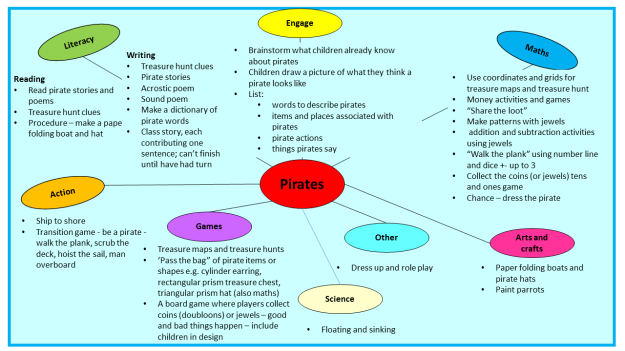
    Here are a few ideas I have to start with. I’m sure I would come up with many more given a little longer.

    © Norah Colvin 2015
    © Norah Colvin 2015

    But now here is what got me thinking about pirates in the first place: my flash fiction response to Charli’s prompt. I’m definitely sticking with my early childhood theme and a bit of fun for this one.

    https://pixabay.com/
    https://pixabay.com/

    If I was …

     If I was a pirate

    I would sail the ocean blue,

    In a boat made out of cardboard

    With my parrot Libby-Lou.


    I would wear a red bandana

    And purple polished boots.

    I would flash my pearls and silver sword

    And plunder pirate loot. 


    I would dig for buried treasure

    In the spot marked with an X,

    And all I’d find I’d stow inside

    My handy wooden chest.


    I would have no one to boss me

    I could do just as I please,

    Until my dad would call me

    “Anna, come, it’s time for tea!”

    Thank you

    Thank you for reading. I appreciate your feedback. Please share your thoughts about any aspect of this post or flash fiction.

  • A celebration of Australian picture books #6 — Jackie French

    If-you-want-intelligent children

    This post is the sixth in a series celebrating picture books by Australian authors. If you missed earlier posts, please follow these links to the introduction, Mem Fox, Kim Michelle Toft, Narelle Oliver and Jeannie Baker.

    In this post I reintroduce you to Jackie French, prolific and well-known Australian author and advocate for literacy and the environment. She is currently the Australian Children’s Laureate with the task of promoting the importance and transformational power of reading, creativity and story in the lives of young Australians. In January she received an Australian of the Year Award for her contribution to literacy. Jackie’s words from her acceptance speech “If you want intelligent children, give them a book” resonated with me.

    You can listen to Jackie’s acceptance speech in its entirety here:

    These are some of my favourite quotes from the speech:

    Failure-is-not-an-option

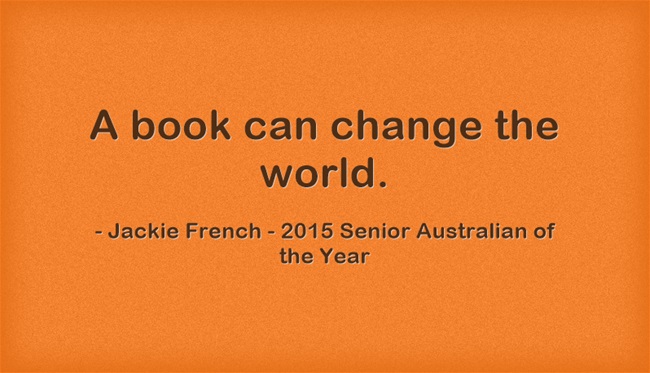
    A-book-can-change-the

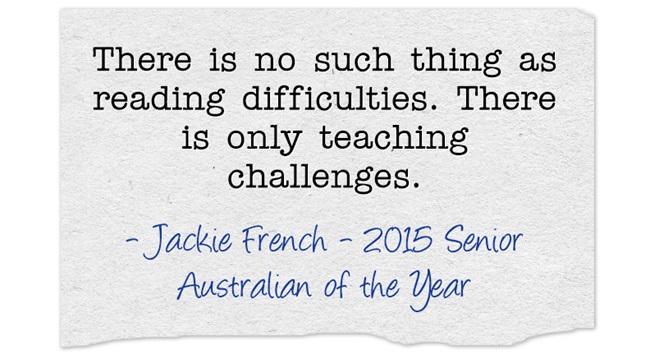
    There-is-no-such-thing

    Jackie has written over 140 books and won more than 60 awards. I am not going to share all of Jackie’s books here; just a few of her picture books that I own. This complete(ish) list of her books indicates the range of genres in which Jackie writes. Although in Standing on the Shoulders of Giants by Mark Rifidi Jackie describes it differently. She says,

    “People assume I write in different genres. From my point of view I don’t. Whether it’s history, ecology, or the fiction I’m writing about now, it’s all grounded in the way of life here and the landscape here.”

    (Jackie lives a self-sufficient life in the Araluen valley on the edge of the Deua wilderness area.)

    jackie french's books

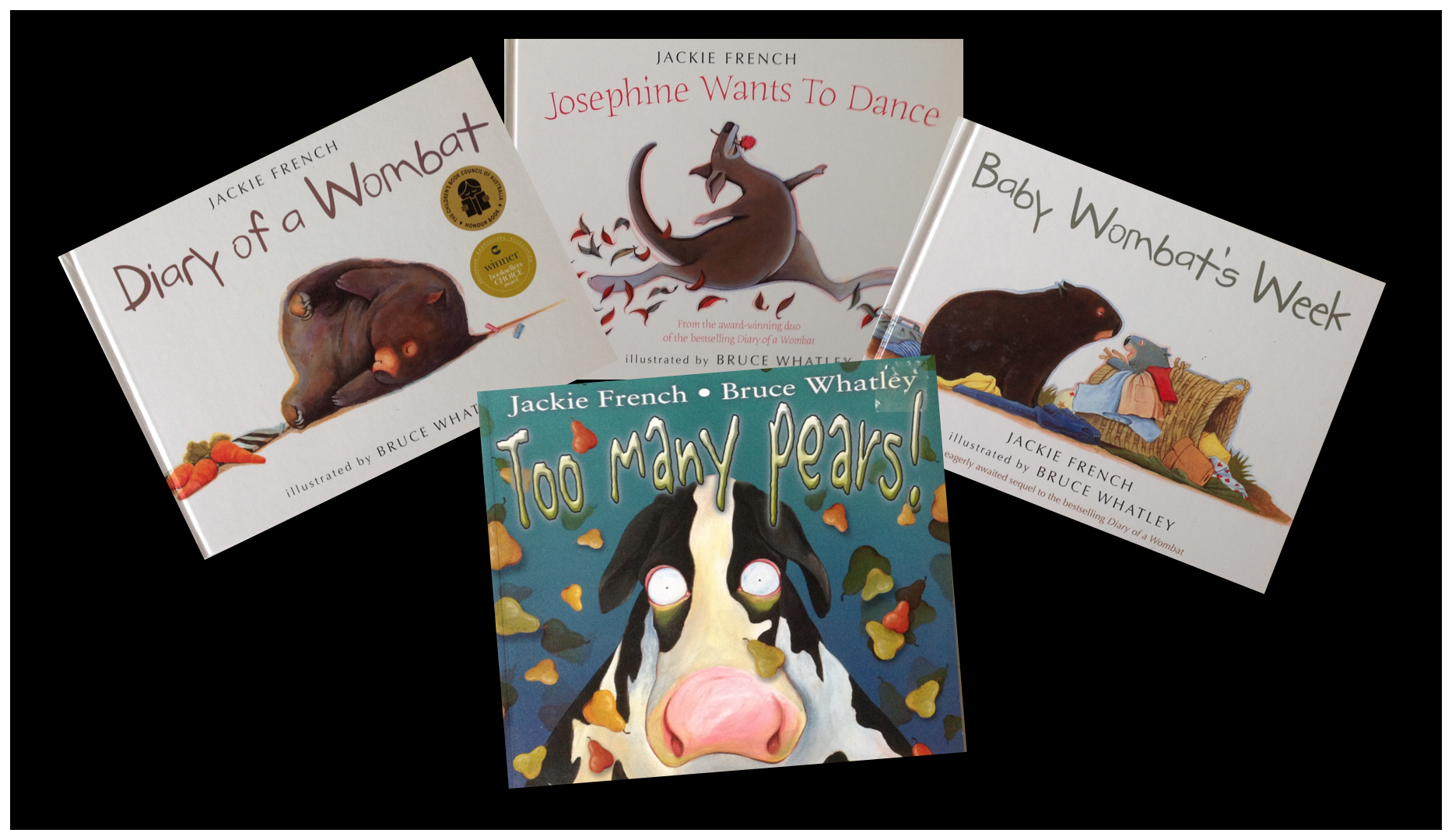
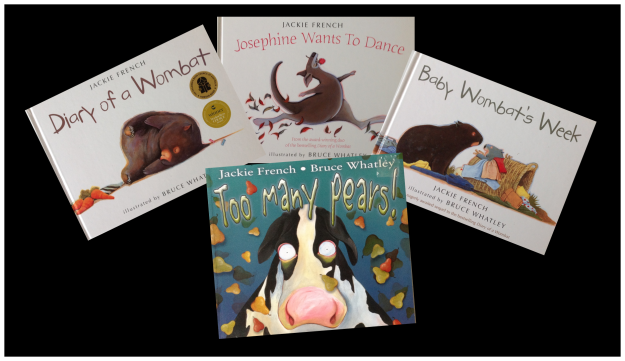
    These are the four of Jackie’s picture books that I currently own. I have read others and given others away as gifts. While these four are illustrated by Bruce Whatley, Bruce is not the only illustrator of her work.

    2015-09-19 11.19.08

    Diary of a Wombat is probably Jackie’s best known and most popular picture book. This is what Jackie says about it, as recorded in Standing on the Shoulders of Giants:

    Diary of a Wombat isn’t fiction … (it) is pretty much a week in the life of Mothball, who is one of the wombats that got fed last night” 

    The seeming simplicity of the text coupled with Bruce Whatley’s gorgeous illustrations make this book a joy to read, over and over.

    In the book Mothball sleeps, eats, scratches, eats, sleeps, and easily trains humans to be “quite good pets”.

    You can listen to Jackie read it here.

    2015-09-19 11.16.36

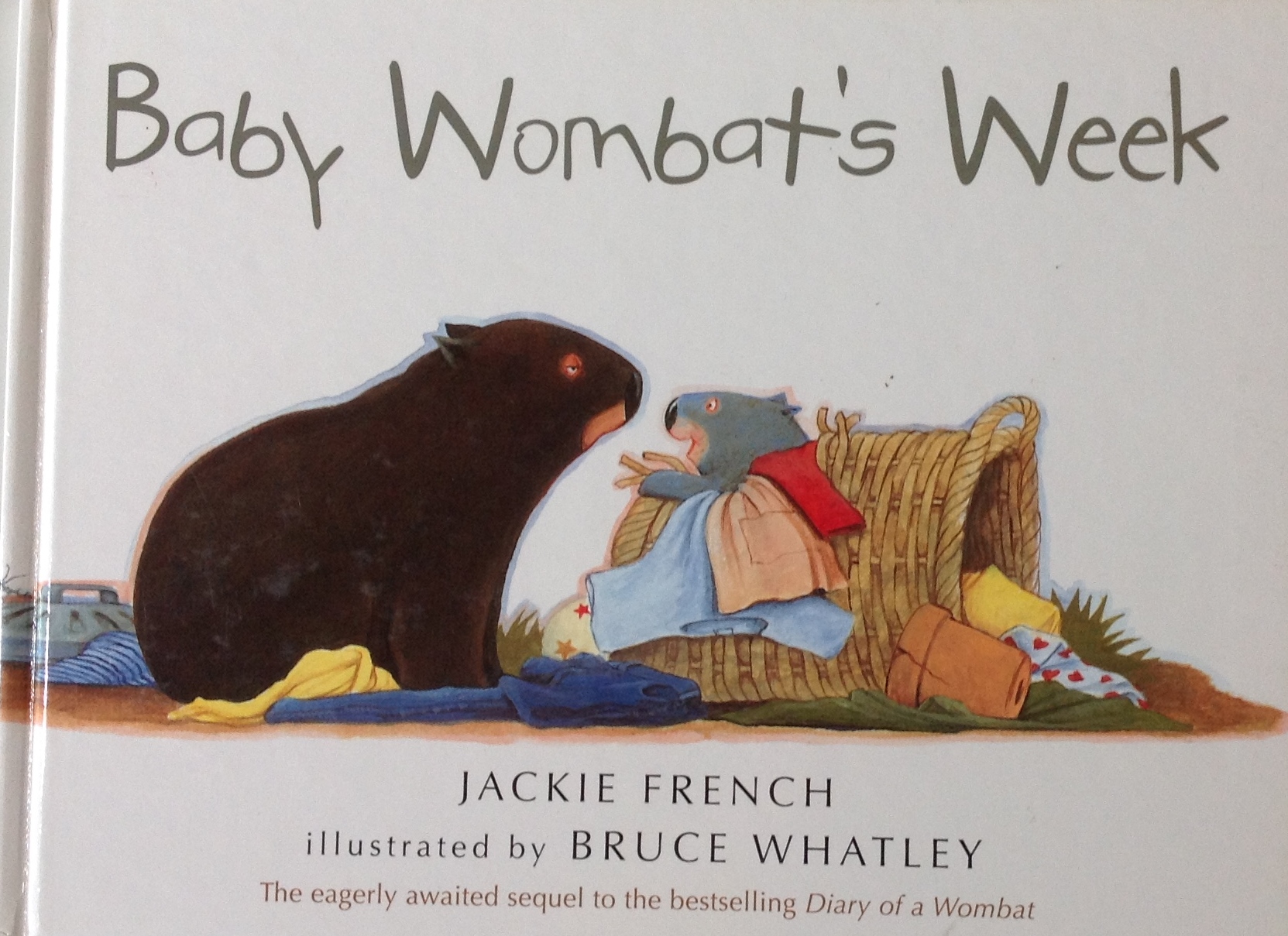
    A sequel to the Diary, Baby Wombat’s Week is pretty much a week in the life of Mothball’s baby. It is just as delightful and humorous as the original story with new adventures and escapades; but still lots of sleeping and eating.

    There are two other books in the series: Wombat Goes to School and Christmas Wombat. The Secret World of Wombats is a non-fiction text exploring “everything you ever wanted to know about wombats.”

    2015-09-19 11.15.56

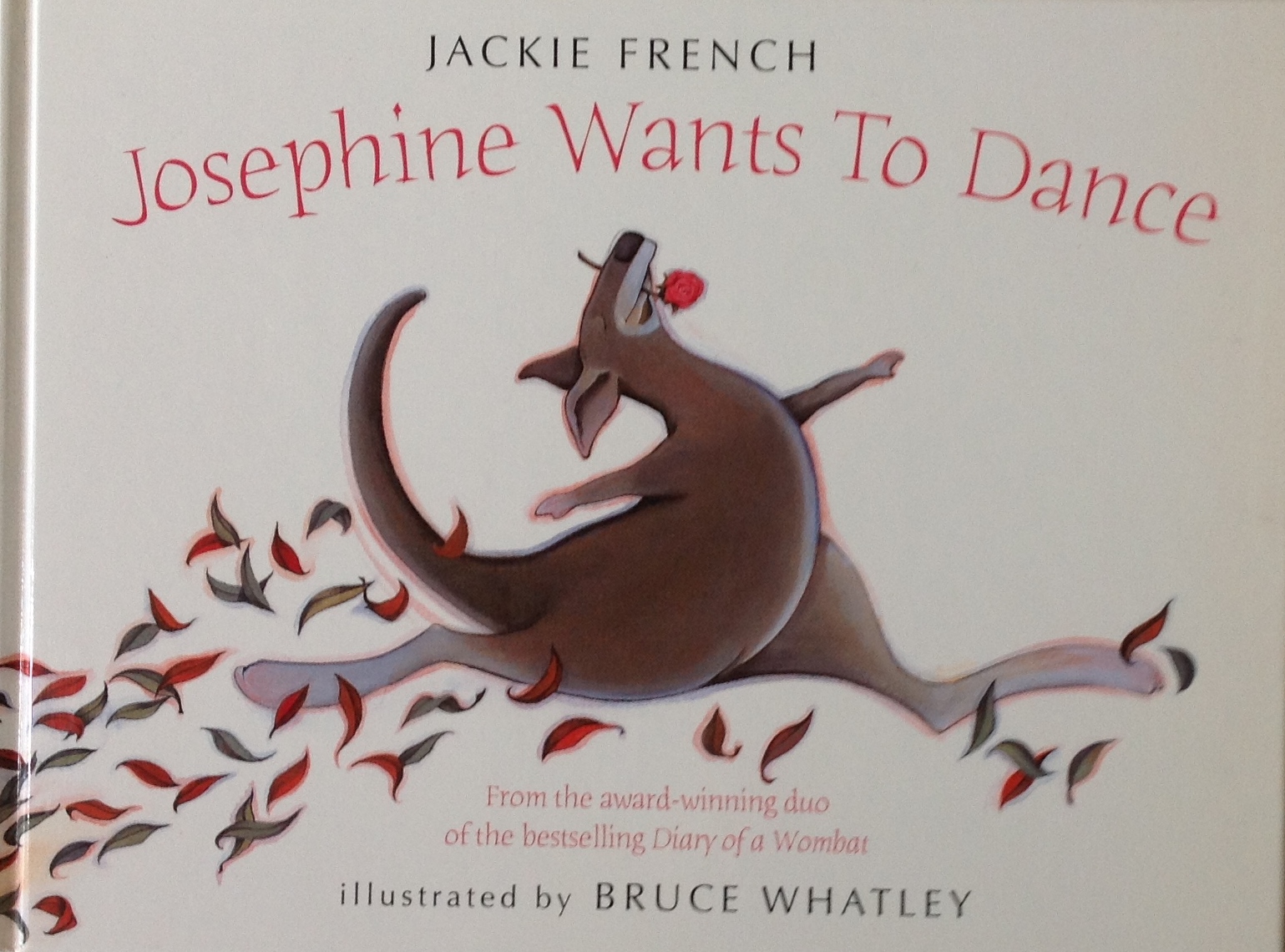
    Josephine Wants to Dance is a delightful story of a kangaroo who loved to dance but dreamed of dancing another way. One day the ballet came to town and Josephine decided that was how she wanted to dance. Though others discouraged her, Josephine was determined to give it a try. It is a lovely story of believing in yourself and following your dreams.

    2015-09-19 11.18.32

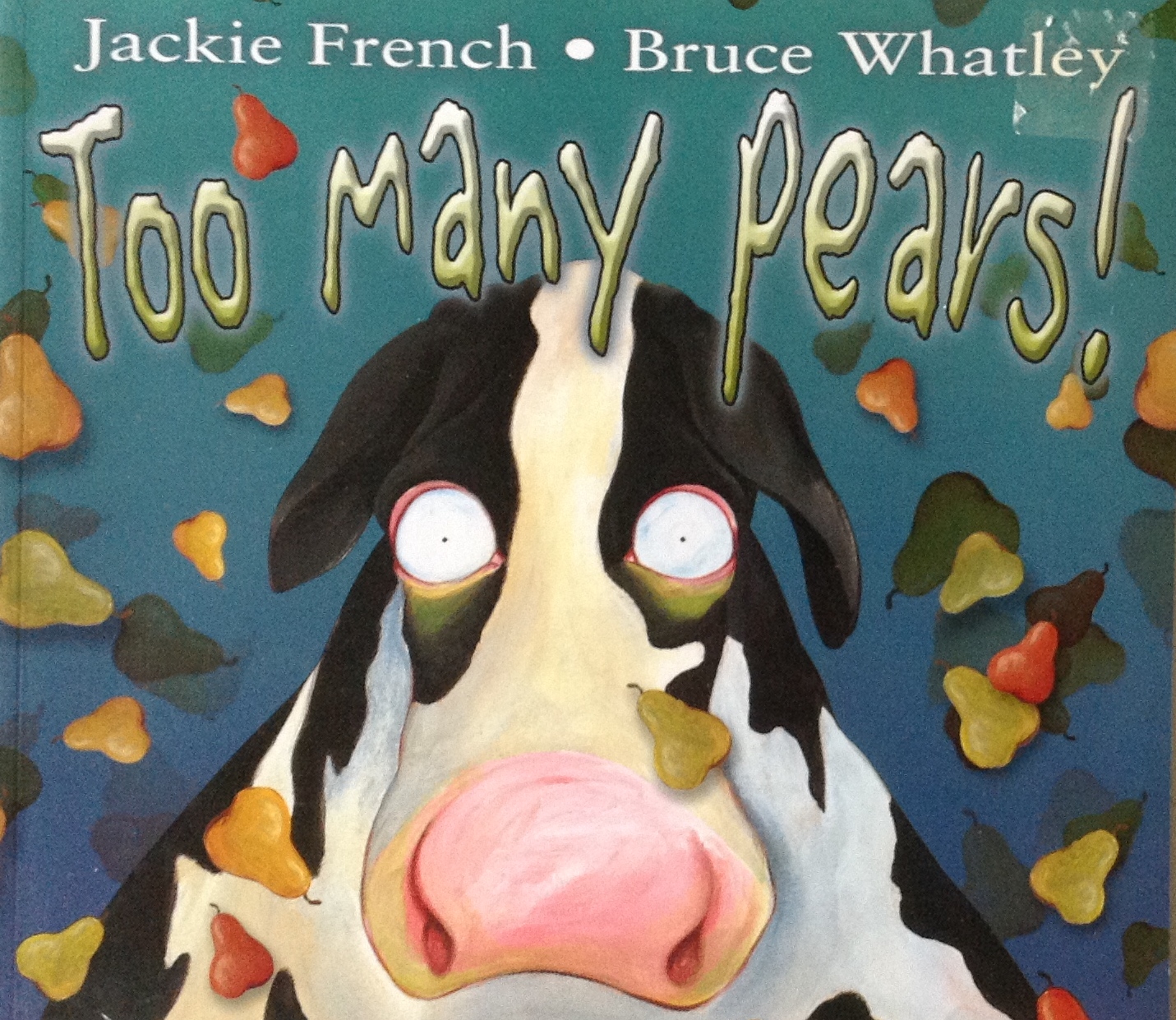
    Too Many Pears is another delightful and humorous story with illustrations that add interest and humour. (It reminds me a little of the battle Charli Mills had with gophers in her vegetable patch.)

    Pamela, a cow, loves pears. She loves them straight from the tree, in pies, with ice cream … any way she can get them. Amy and her family have to figure out a way of stopping Pamela from eating all their pears. They do. But then Pamela spies the apples!

    I am happy to recommend each of these books. They will not disappoint. Jackie’s text coupled with Bruce’s perfectly matched illustrations continue to delight during repeated readings.

    Jackie’s website too is a treasure trove of interesting stuff. On her Kids’ Facts and Info for School Projects page she shares her writing process and a lot of other information that would be of interest to writers as well as to kids. She also has a page of Writing  Tips and Advice and a page about How to Get Kids Reading, topics close to my heart.

    In addition to illustrating Jackie’s books, Bruce Whatley writes and illustrates books of his own as well as those of other authors. In a recent post I talked about drawing on the right side of your brain. In this video Bruce challenges everyone to have a go at drawing with their left hand. Is that engaging the right side of your brain?

    I am very grateful to Sarah Brentyn, who blogs at Lemon Shark, for alerting me to Standing on the Shoulders of Giants by Mark Rifidi just in time for this post. Thank you Sarah and Mark. I’m certain I will be having more to say about Mark’s book in future posts. It is a great resource celebrating the work of 20 Australian picture book authors and illustrators.

    In the final paragraph of her biography chapter in Mark’s book, Jackie says,

    “The one thing you show readers by writing about history is not to be afraid of change. Tomorrow always is going to be different from yesterday. It always has been. But human beings are extraordinarily good survivors, superb adapters. We are very good at creating a sort of world that we want. Books are perhaps the most effective tool to help us find it.”

    I like her thinking!

    Thank you

    Thank you for reading. I appreciate your feedback. Please share your thoughts about any aspect of this post.


  • A celebration of Australian picture books #4 — Narelle Oliver

    This post is the fourth in a series celebrating picture books by Australian authors. If you missed earlier posts, please follow these links to the introduction, Mem Fox and Kim Michelle Toft.

    Narelle Oliver

    In this post I introduce you to Narelle Oliver, a Brisbane-based author and illustrator. There is much to explore on Narelle’s site, including: information about her writing process and tips for would-be picture book authors; the research involved in creating her books, many of which are about nature; and illustration techniques that involve the use of linocut printing and rubbing, and other assorted media.

    Narelle conducts workshops for children and adults. She visits schools to share with children the wonder of her books and talks to them about her writing and illustrating processes. When she visited “my” school she brought along first thoughts and illustrations for, and a dummy book of, The Very Blue Thingamajig, plus a soft toy prototype – and we all wanted one! She also brought a fox from the museum and talked about illustrating Fox and fine feathers. She read to the children, involved them in activities and gave them an experience of linocut printing. It was fascinating for both children and teachers.

    Narelle talks about her workshops and sessions in this video.

    While you can find a complete list of Narelle’s books here, I will share those I have on my bookshelf (in no particular order).

    2015-09-19 11.14.10

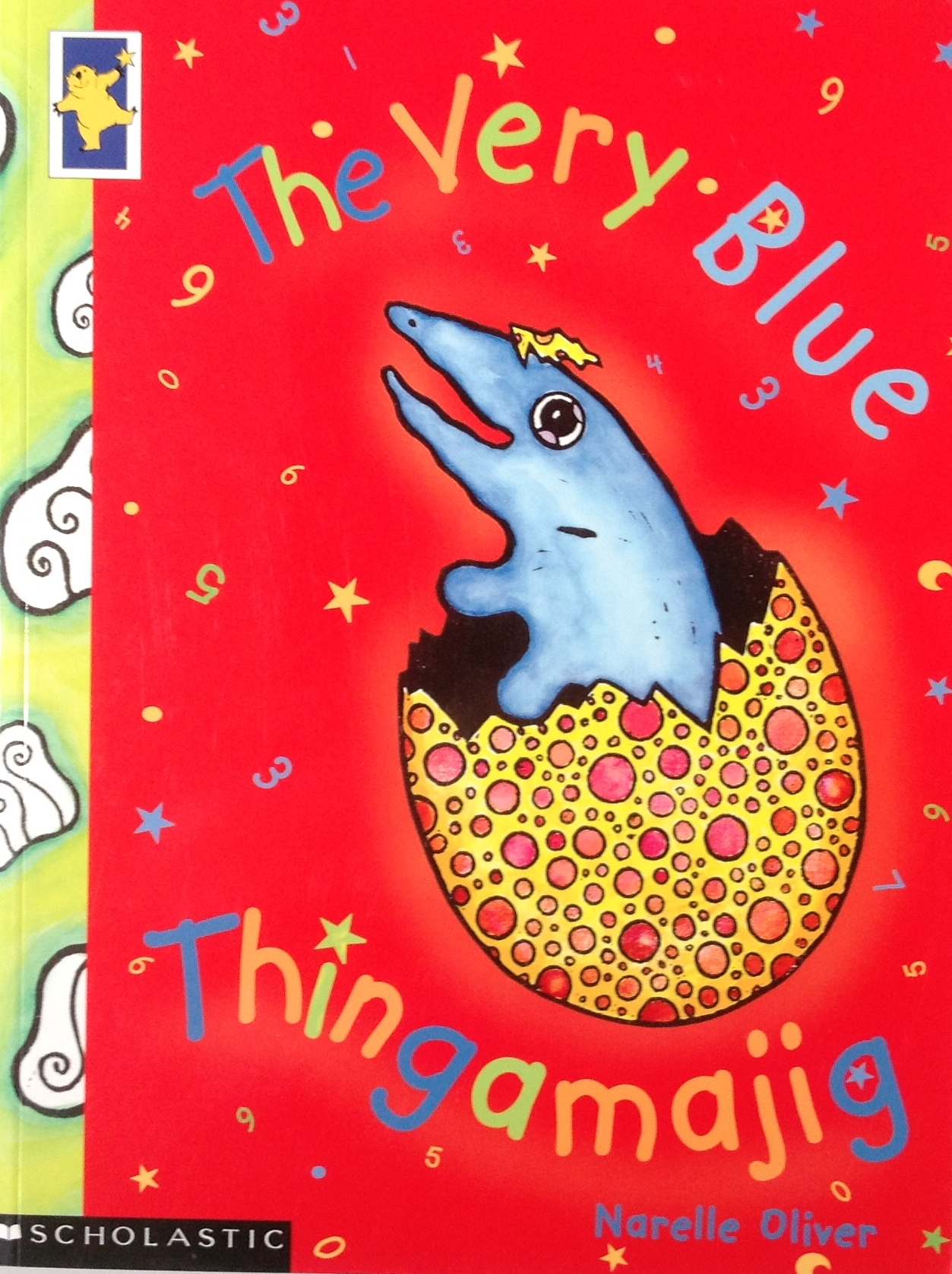
    The Very Blue Thingamajig is as story about difference and acceptance told in a fun way involving mathematical concepts of patterns, counting and days of the week. The colourful illustrations made using hand-coloured linocuts are appealing, and children love to find the little bird who provides a secondary story throughout the book. On Narelle’s fun page you can colour and decorate your own thingamajig.

    2015-09-19 11.11.44

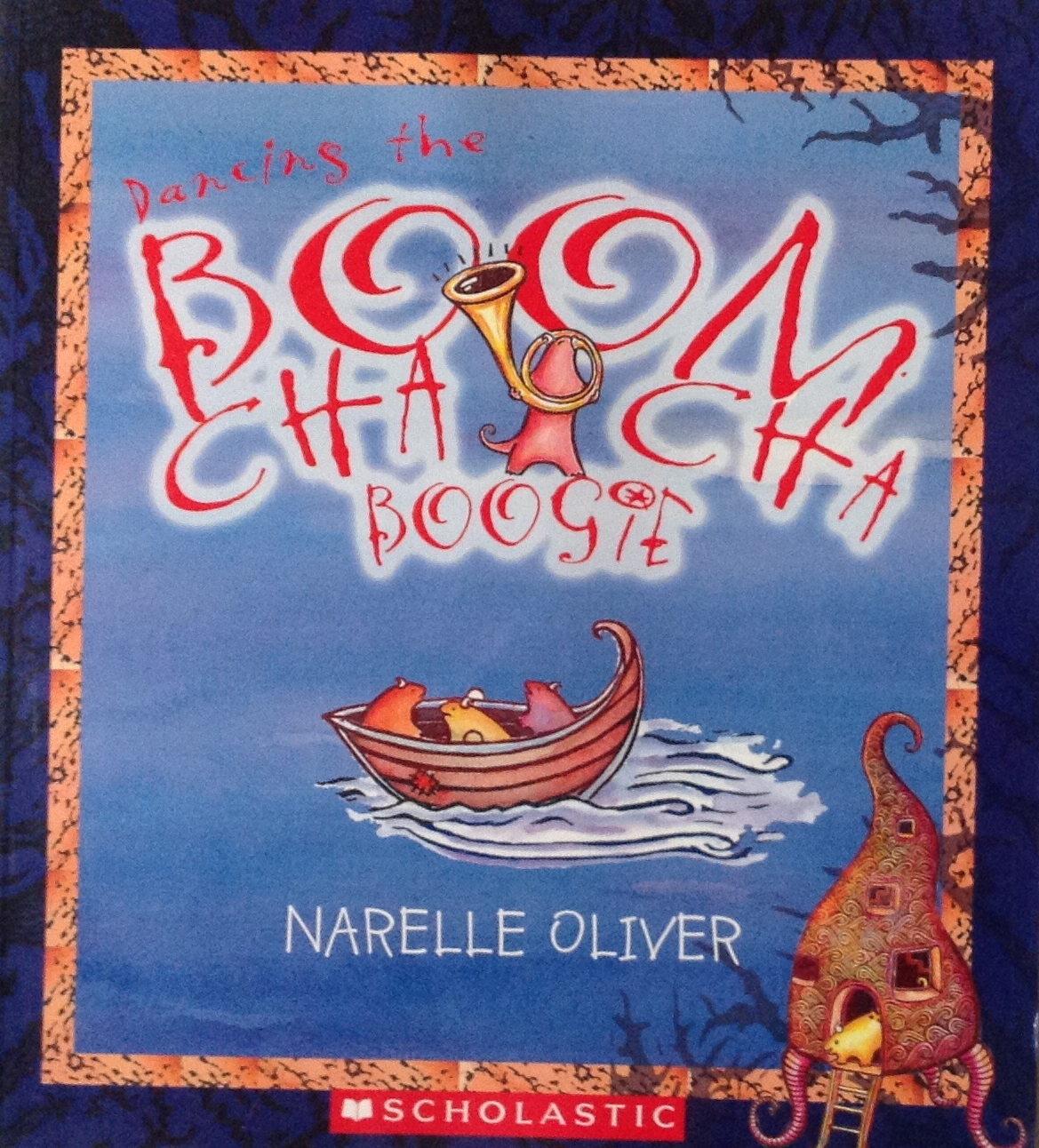
    Dancing the Boom Cha Cha Boogie is a gorgeous tale of three little murmels who are washed out to sea in an arkel and arrive on a foreign shore where they are not welcomed by the resident snigs. They are imprisoned until when, the arkel is repaired, they are to leave. At night a young snig releases the murmels who teach the snig to have fun. In the end the murmels are accepted and stay happily in Snigdom with the snigs, learning from and enjoying each other’s company. This book is illustrated with hand-coloured linocuts.

    2015-09-19 11.13.26

    Fox and fine feathers is a story of friendship, of looking out for each other and keeping each other safe. The attention to detail in these linocut illustrations coloured with pencils and pastels is amazing and accurately depicts the five creatures and the forest setting. Narelle has supported the story with information about the birds, their habitat and the dangers imposed by the feral fox, which is now a serious threat, along with other feral animals, to native species in Australia.

    2015-09-19 11.12.23

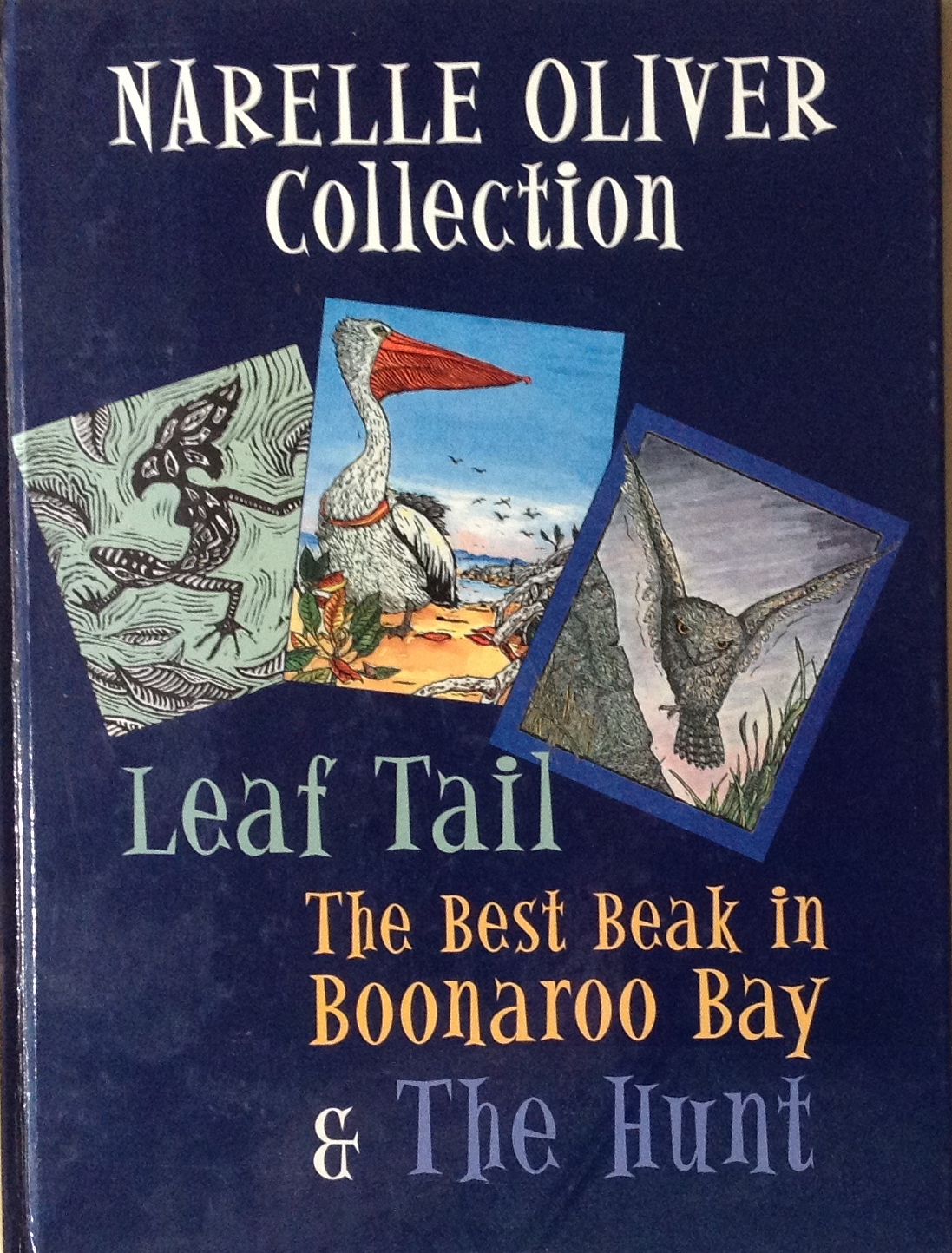
    Narelle Oliver Collection of three stories: Leaf Tail, The Best Beak in Boonaroo Bay and The Hunt.

    • Leaf Tail, Narelle’s first picture book, illustrated by beautiful linocuts, tells the story of a leaf tail gecko and the importance of camouflage to survival in the Queensland forest.
    • The Best Beak in Boonaroo Bay, also illustrated with hand-coloured linocuts, tells of a squabble between five different birds, each professing its own beak to be the best. Finally clever pelican holds a contest that enables the birds to see that each beak is best in its own way. As well as a delightful story about wildlife, it also provides a springboard into discussions about, and appreciation of, differences.
    • The Hunt is another beautifully illustrated wildlife story of camouflage and survival. The story is supported with information about its setting and the workings of animal camouflage and disguise. There are also black and white drawings showing where to find the animals camouflaged in each illustration. It is fun to see if all the animals can be found without referring to the guide.

    2015-09-19 11.15.11

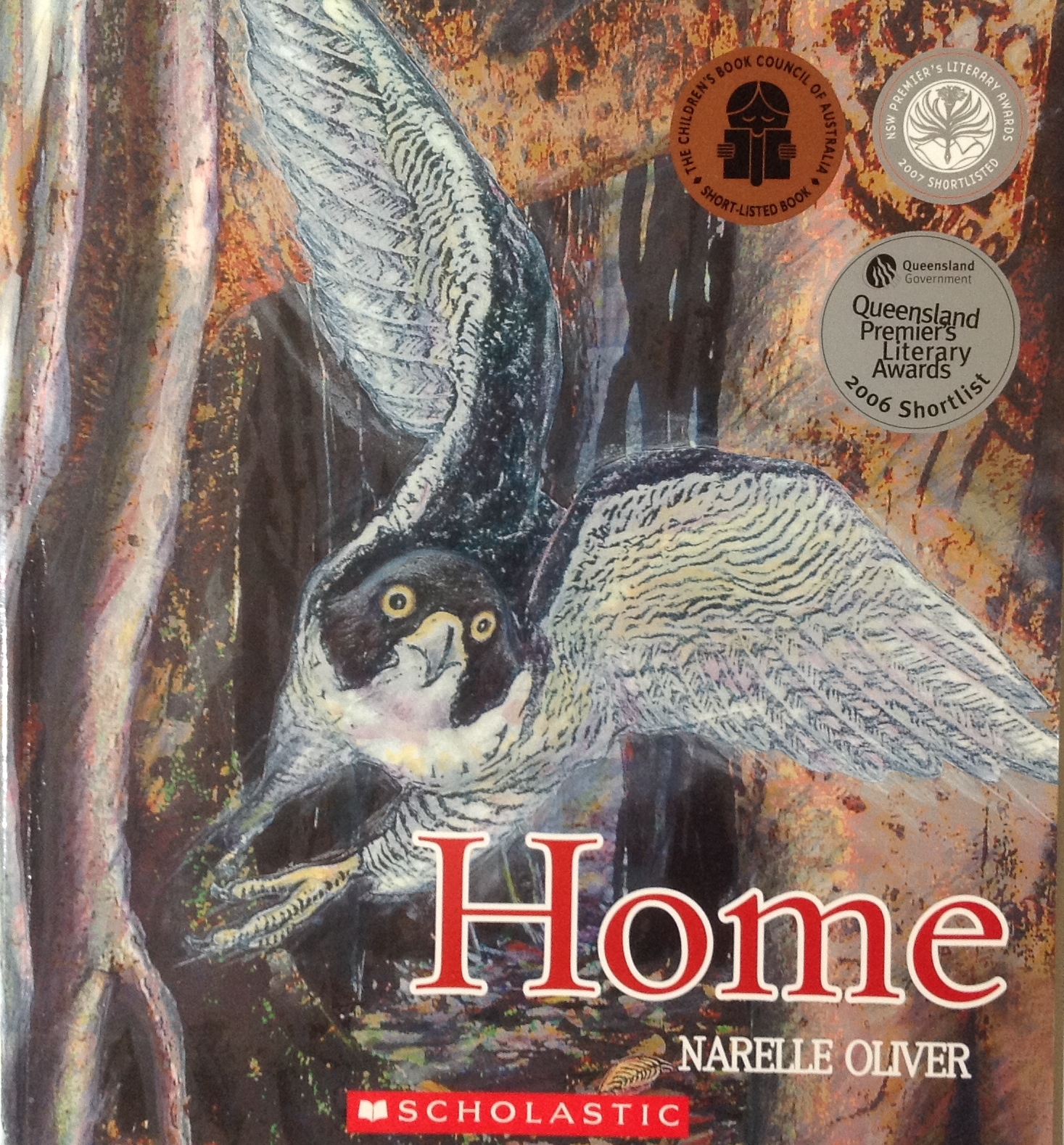
    Home, referred to in a previous post Home or away, is perhaps a favourite if only because it is based on a true story of a pair of peregrine falcons that nested at the top of a 27-storey building in the city of Brisbane. The birds, named Frodo and Frieda, fascinated a city and, for a while, had their own reality show “Frodocam”. The story, beautifully illustrated using a combination of media including linocut rubbings, collage, photographs, pencil, pastels and watercolours, tells of the adaptation of wildlife to new landscapes and environments.

    Each of these books can be appreciated for its story or used as a springboard for discussion. The illustrations appeal to adults and children alike for the attention to detail and accurate representation of wildlife. The addition of supporting information encourages an appreciation for wildlife and their habitats and develops an awareness of the need for their protection. They would be a wonderful addition to any book collection and be much appreciated as gifts.

    Thank you

    Thank you for reading. I appreciate your feedback. Please share your thoughts.

  • Well I declare

    This week at the Carrot Ranch Charli Mills is making declarations. Specifically she is declaring herself an author, making it clear what her writerly intentions are. I also have declared my writerly intentions. In previous posts, here, here and here, I shared my goal of establishing a website with early childhood teaching resources of my creation.

    In her post Charli expresses it this way: success for her is publishing books. She wants to write books for readers who want to read them. Not only that, she wants to market her books “well enough to eat more than hand-picked dandelions from (her) yard”.

    www.morguefile.com
    http://www.morguefile.com

    Change books to early childhood teaching resources and, for me it’s the same. I want to publish teaching resources that teachers want to use, that enhance their teaching and improve children’s learning. I’d also like to do well enough to not be reduced to eating dandelions from my backyard.

    Some writers consider “educational writing” less worthy and lacking in creativity. “Oh educational writing,” said one disparagingly, “that’s so prescriptive,” and quickly moved on to discuss others’ more literary pursuits.  

    I know some educational writing can be prescriptive. I have done some of that formulaic writing myself. However the resources I am creating do not conform to a formula, are not worksheets to be completed by students sitting quietly in rows.

    I am developing a variety of resource types, some with interactivity, to help develop understanding and skills in a meaningful context. Many encourage critical thinking, problem solving and purposeful applications. Many are built around my own original stories and poems as well as non-fiction texts.

    I have chosen this path in order to support teachers with ready to use teaching episodes and parents with suggestions for nurturing their child’s development. Prescriptive? Far from it. And please don’t prejudge my educational writing against the stereotype of formulaic worksheets and textbooks which are far too abundant and easily accessible on the internet and in bookstores.

    Guiding parents in play sessions for parents and children.
    Guiding parents in play sessions for parents and children.

    From the declaration of writing goals to a declaration of another kind, repeated often on my blog: my appreciation of all things early childhood, especially literacy and picture books, and the importance of reading to and with children on a daily basis.

    The years from birth to eight, especially those before formal schooling begins, are crucial to a child’s development and have an enormous impact on future happiness and success.  It is during these years that basic skills and language are developed along with attitudes to self and relationships.

    noisy nora

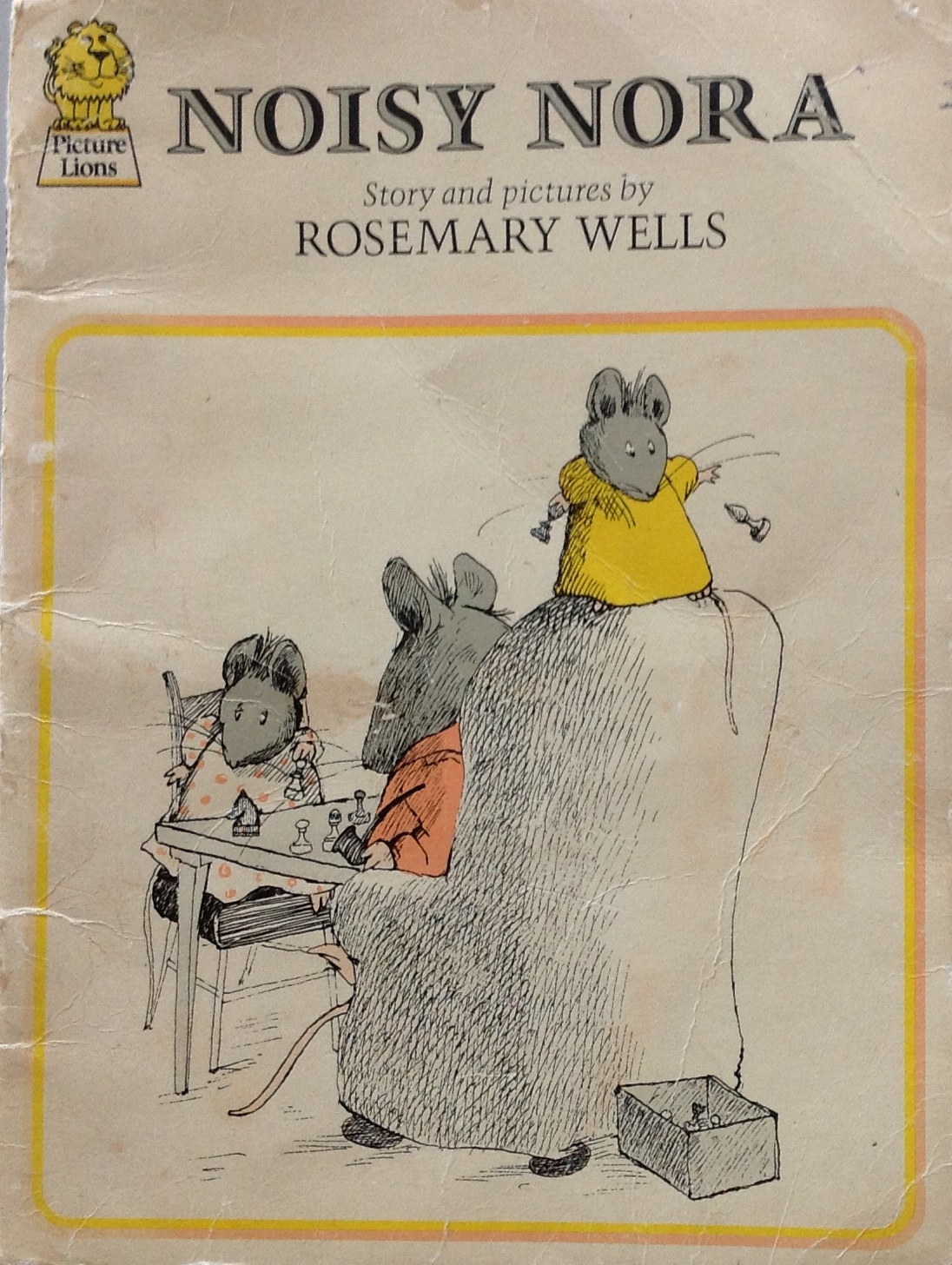
    The picture book Noisy Nora by Rosemary Wells is a delightful book about a middle child who fails to get the attention of her parents who are busy with the older and younger siblings. Finally Nora declares that she is leaving and never coming back. With Nora gone the house becomes unusually quiet and the family go looking for her. At last she declares herself back again as she clatters out of the broom closet.

    (This information from Wikipedia explains why my cover differs from the one in the Amazon store.)

    I took Nora’s declaration as the basis for my response to Charli’s flash challenge to In 99 words (no more, no less) declare an intention in a story. Is it one person, a character speaking up or speaking out? Is it a group or a nation? Create a tension before or after the declaration. It can be private or public, big or small. Does it have power to those who state it or hear? What does it change?

    While I wrote it with Marnie in mind, it could be about any number of others in oppressive situations and seems particularly appropriate to those trapped by the horrors of domestic violence which is at the forefront of our news at the moment. Unlike Nora, who declared she was leaving and never coming back but didn’t really leave, Marnie definitely won’t be coming back.

    from "Noisy Nora" by Rosemary Wells
    from “Noisy Nora” by Rosemary Wells

    Leaving

    It was time. No more would they treat her this way. No more would she accept the cruelty of their world. She was more than this, more than they made her believe. With cash from a secret job stashed in her pockets, a few clothes in a backpack, and hope in her heart, she left. No need to follow a bag through the window. No need to wait for night’s darkness. No. She navigated past their stupor of beer, smoke and flickering screens; paused at the door to declare, “I’m leaving,” then closed off that life as she left.

    Thank you

    Thank you for reading. I appreciate your feedback. Please share your thoughts about any aspect of this post or flash fiction.


  • A celebration of Australian picture books #2 – Mem Fox

    I own and have given away more picture books by Mem Fox than by any other author. To say I appreciate Mem’s work would be an understatement. I currently have on my shelves twelve of her more than thirty picture book titles and two of her eight nonfiction titles.

    2015-09-19 10.55.23

    Her first picture book Possum Magic was published in 1983. I love the story behind this book, as much as the story itself. Mem wrote the first draft in 1978 and over the next five years it was rejected by nine publishers. When it was finally picked up by Omnibus Books she was asked to reduce it in length by two-thirds and to change the characters from mice to possums. The book is now one of Australia’s most popular with more than 3 million copies sold around the world.

    You can listen to Mem read Possum Magic or some of her other books here.

    File 23-09-2015 11 32 24 am

    In the ten years after the publication of Possum Magic Mem published almost twenty other books. I read her autobiography Mem’s the Word (released in the US as Dear Mem Fox) not long after it was published. At the time I was in my late thirties and was thrilled to find that Mem had also been in her late thirties when her first book was published. I thought there was still hope for me. I’d certainly had enough rejections by that time to fill a rather large shoebox, so maybe I just needed a few more!

    Since then Mem’s output has hardly lessened and she has another new book coming out next month. In the meantime, I’m still hoping there’s time for me!

    Mem is an author, not an illustrator. The twelve picture books I own were illustrated by eight different artists. Four illustrators did two of these books each. A quick glance at the list of Mem’s books confirms the number of artists who have been engaged to illustrate her work and the variety of artistic styles used. How wonderful for the artists to have that experience, and for teachers and parents the opportunity for discussing artistic styles with children.

    My reason for raising this issue of author and illustrator is that I also am not an illustrator. A number of years ago when discussing picture book authors, an acquaintance scoffed at  my praise for Mem’s work: how could she possibly consider herself a picture book author if she didn’t do the illustrations? This acquaintance, in the process of having her first picture book published, was author and illustrator. In the intervening years Mem has gone on to publish a number of books, and this acquaintance none. Okay, neither have I. Yet!

    Reading magic

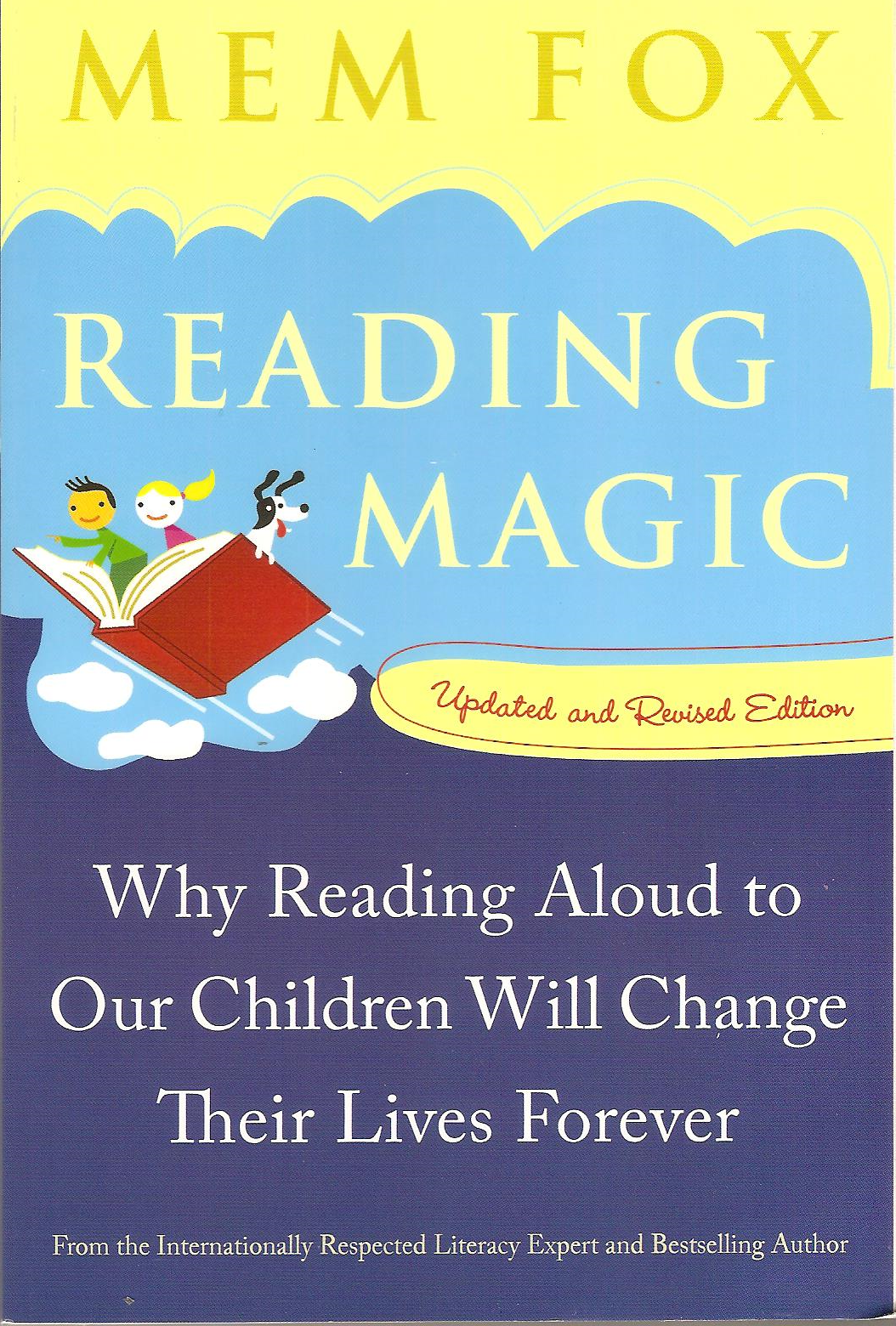
    Another thing that Mem and I have in common is our passion for literacy and our advocacy of reading to children every day. Mem’s book Reading Magic should be placed in the hands of every new parent along with a collection of picture books. I practice what I preach by giving a bundle of these as gifts to friends with newborns. I have written about that here. As well as Reading Magic, the bundle generally includes Where is the Green Sheep? and Ten Little Fingers and Ten Little Toes, among others. Nurturing a love of books and reading is one of the greatest gifts a parent can give a child.

    The love of reading is gift

    Below is a list of the Mem Fox books on my shelves at the moment (a few have mysteriously disappeared!) but the best way to check out Mem’s books is on her website here. While you are exploring her website, there is much else of value to discover, including suggestions for writers, teachers, parents, and children as well as other interesting information. Exploring Mem’s site is the best way of finding out about her wonderful books.

    Here are the ones I own, in addition to the three mentioned above (in no particular order), with links to further information about each title on Mem’s site and to information about the illustrator where possible:

    2015-09-19 11.05.48

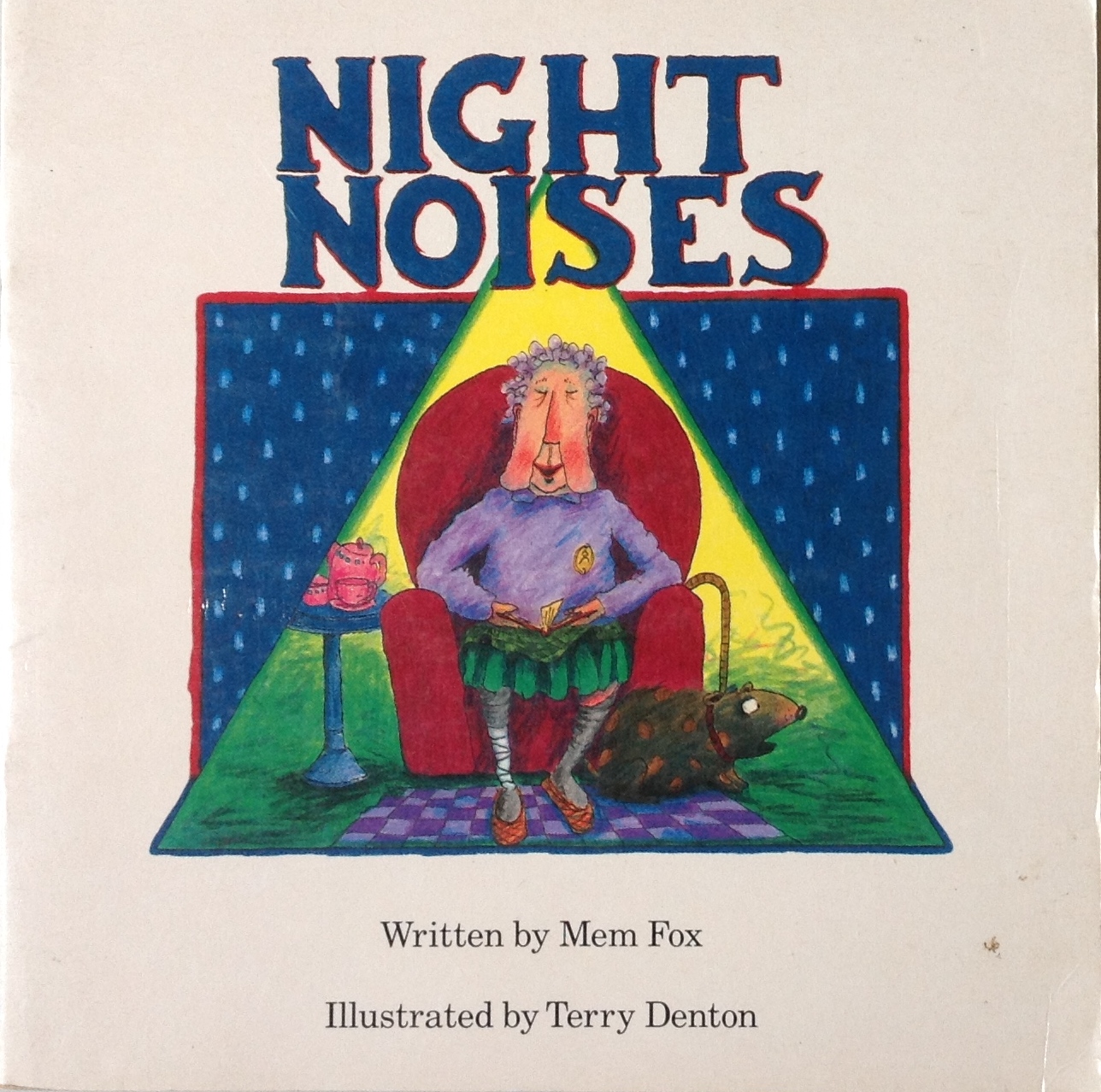
    Night Noises illustrated by Terry Denton

    2015-09-19 11.04.33

    Just like that (Now published as Harriet, You’ll Drive Me Wild!) illustrated by Kilmeny Niland

    2015-09-19 11.02.14

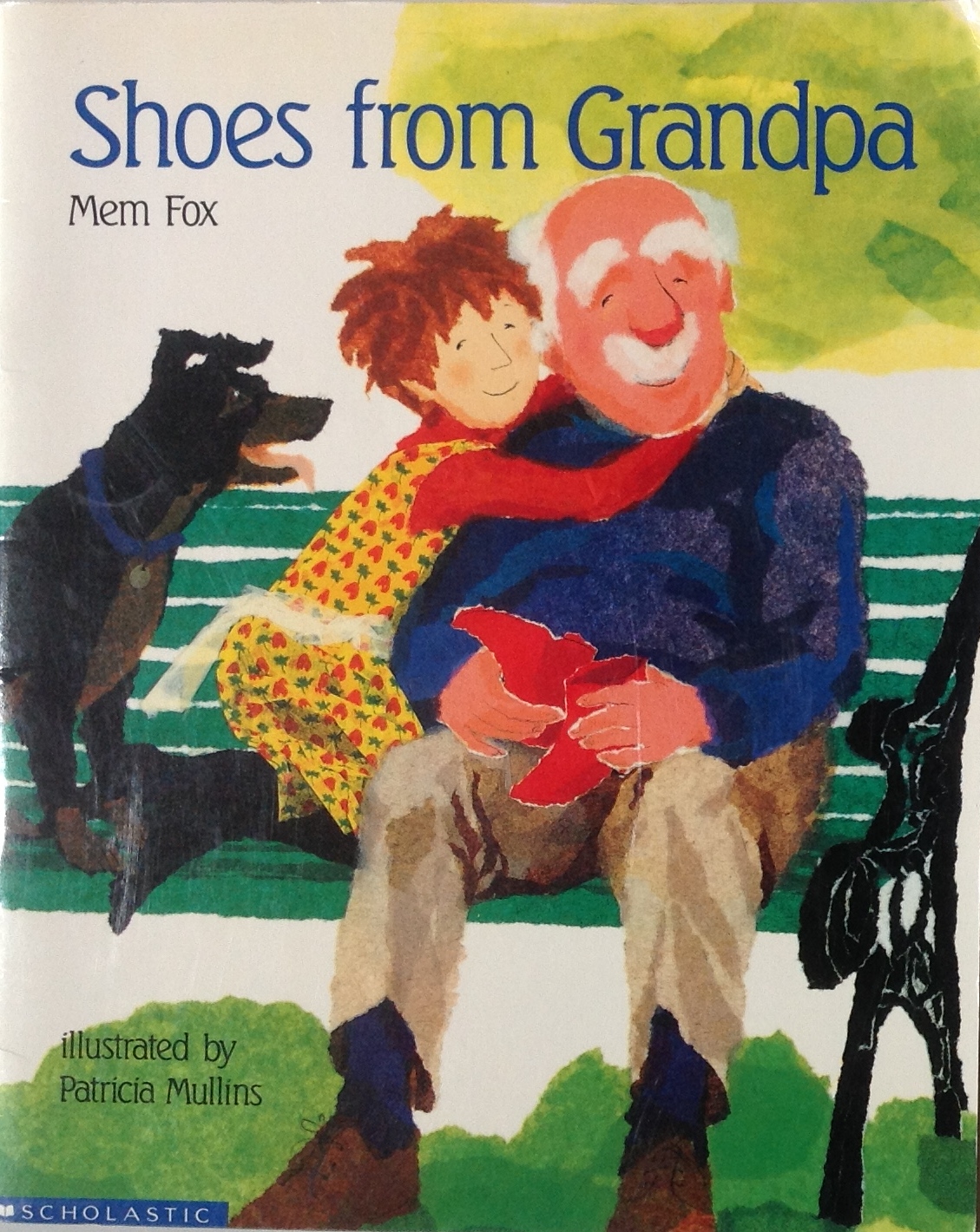
    Shoes from Grandpa illustrated by Patricia Mullins

    2015-09-19 10.56.05

    Hattie and the Fox illustrated by Patricia Mullins

    2015-09-19 11.03.31

    Guess What? illustrated by Vivienne Goodman

    Whoever you are.

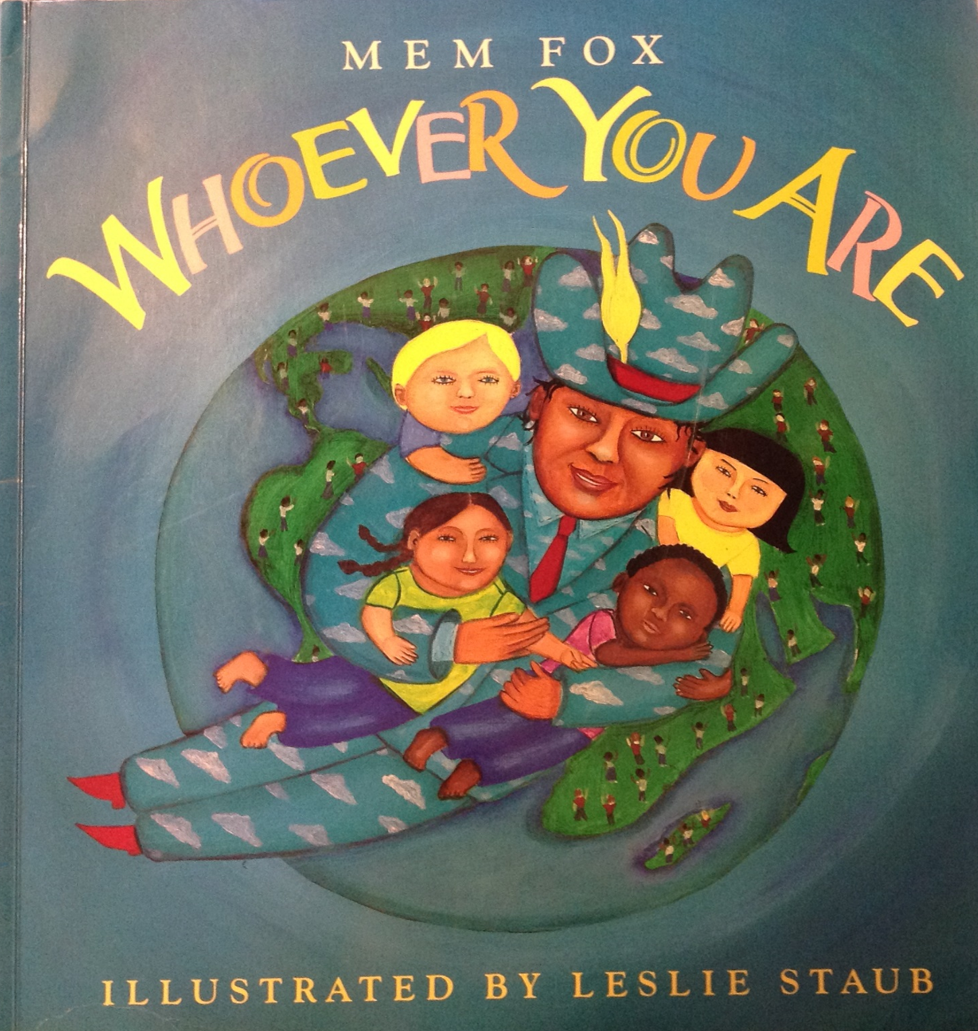
    Whoever You Are illustrated by Leslie Staub

    Wombat Divine

    Wombat Divine illustrated by Kerry Argent

    2015-09-19 11.00.26

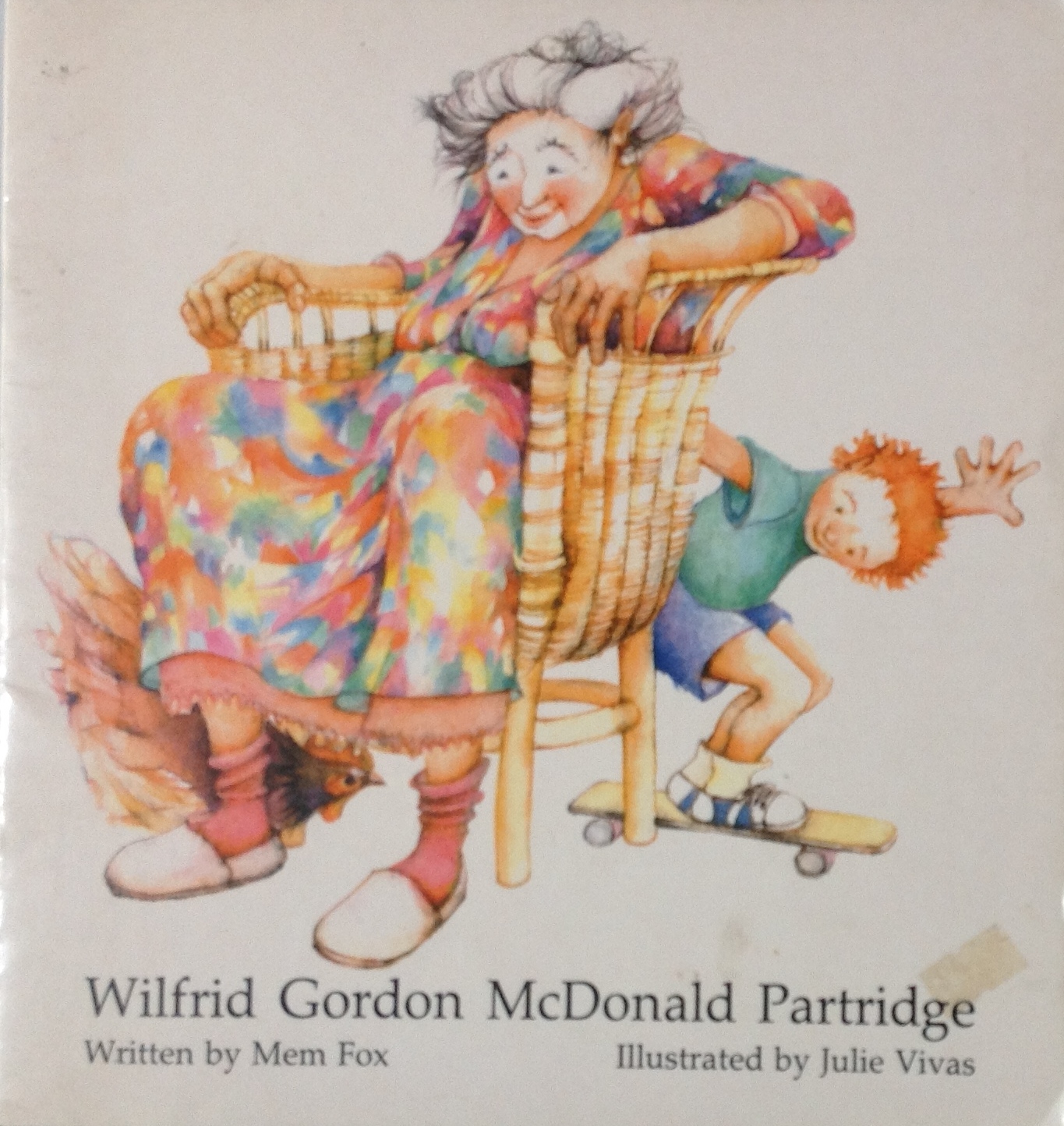
    Wilfred Gordon McDonald Partridge illustrated by Julie Vivas

    2015-09-19 10.58.22

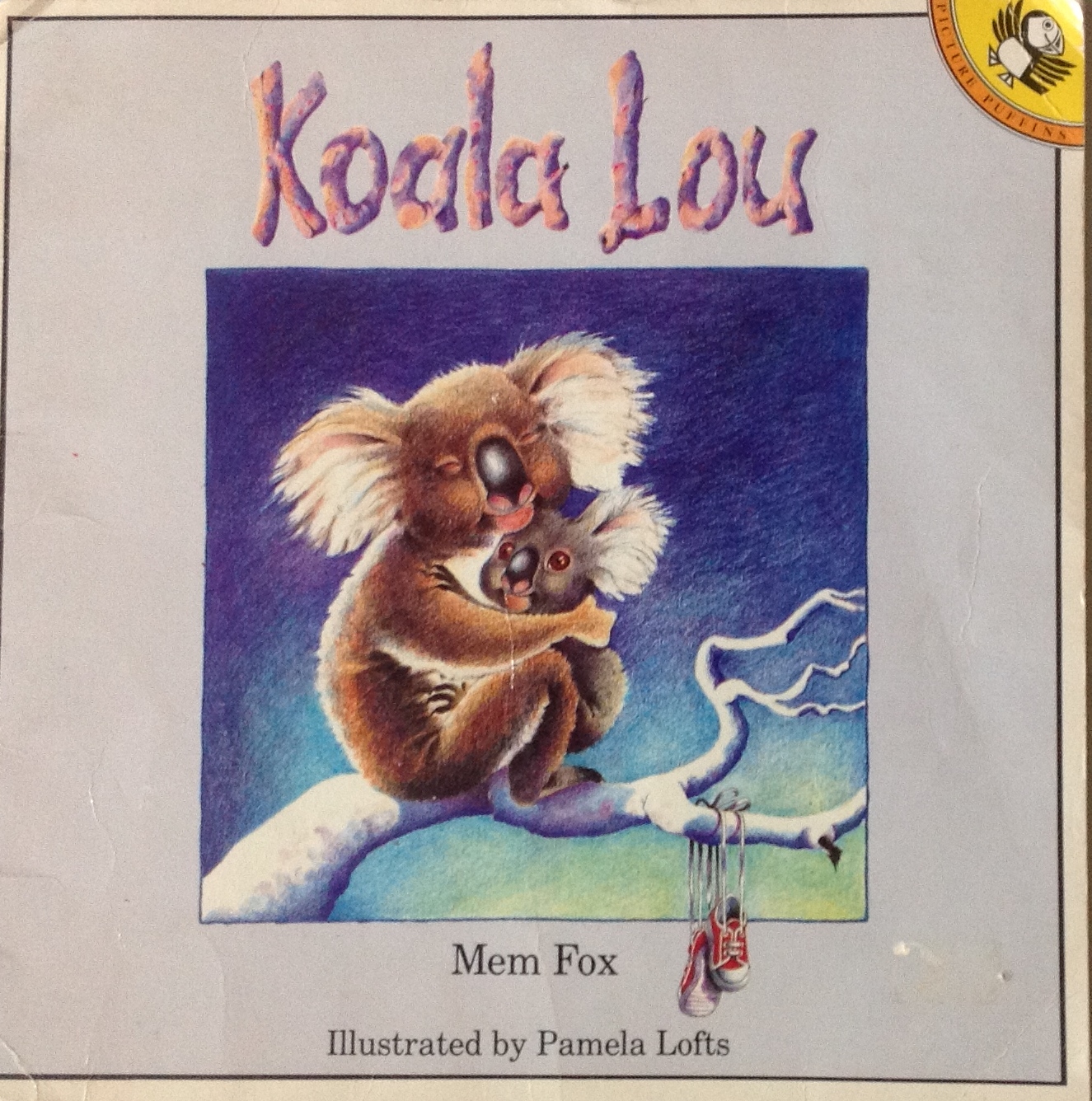
    Koala Lou illustrated by Pamela Lofts

    2015-09-19 10.59.08

    Sail Away illustrated by Pamela Lofts

    2015-09-19 11.02.52

    A Particular Cow illustrated by Terry Denton


    Thank you

    Thank you for reading. I hope you have found something of interest. I appreciate your feedback. Please share your thoughts.


  • A celebration of Australian picture books #1

    Recently my friend Sarah Brentyn, who blogs at Lemon Shark: Navigating the Unchartered Waters of Parenting and Life, shared a series of posts about first lines (paragraphs, sentences and pages). She discussed the importance of hooking the reader and shared some of her favourite first lines from a variety of genres. When she shared picture books I was inspired to share some by our many wonderful Australian authors and illustrators.

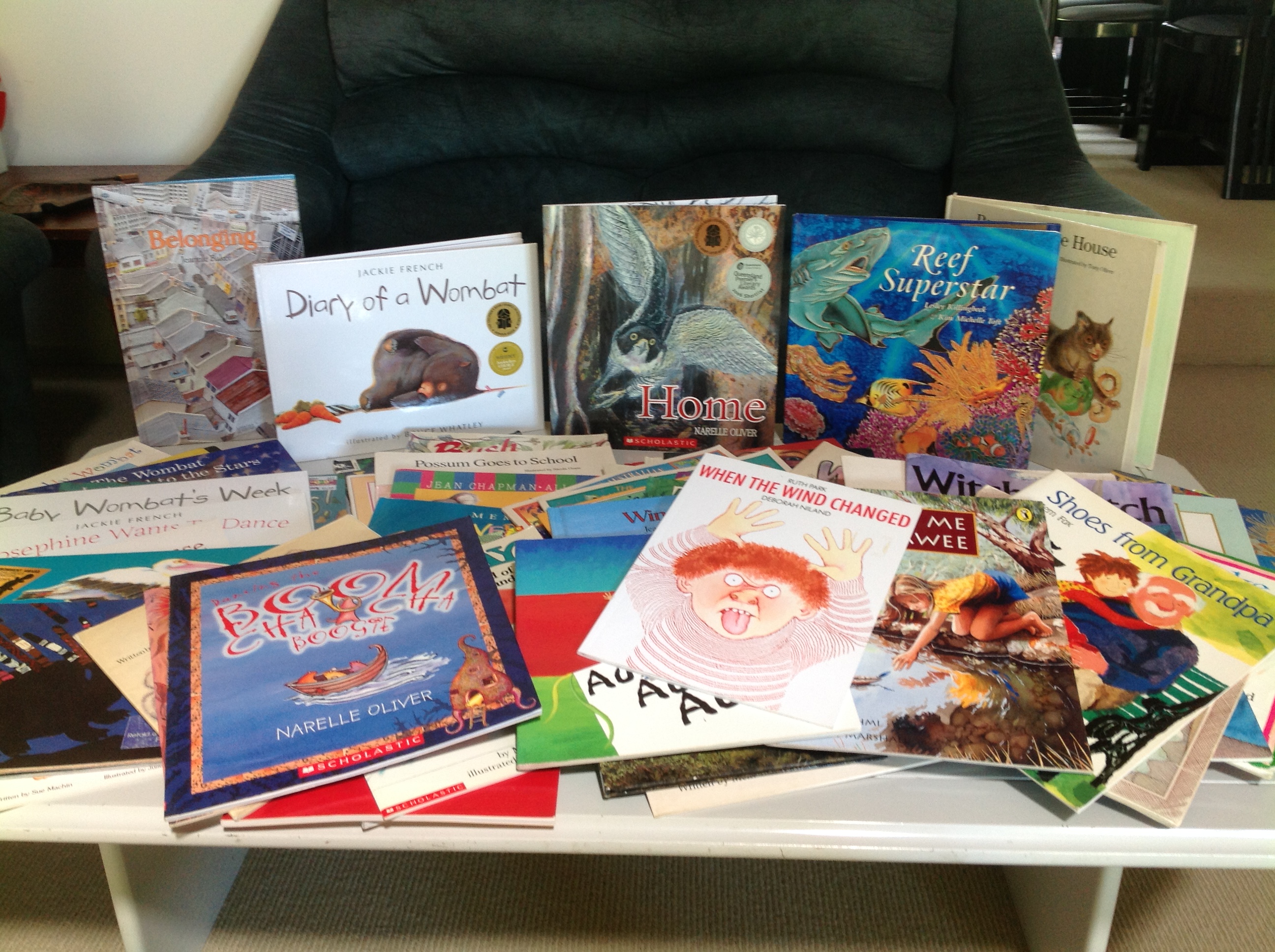
    These are just some of the Australian picture books I quickly located on my shelves:

    Australian picture books

    I own multiple titles of some authors’ work, and of others’ I own but one or two. Sadly, there are many whose work I don’t own. There are too many wonderful books to share in just one post so I have decided to write a series with a post dedicated to each author of whose work I own multiple titles, including Mem Fox, Narelle Oliver, Jeannie Baker and Kim Michelle Toft (and I might sneak in New Zealander Pamela Allen).

    In this post I share some lovely books, their first lines (according to Sarah’s definition) and tell you a little about why they are on my shelves.

    For this series I have commandeered “celebration” as a collective noun for Australian picture books so it is fitting that the first I share is A Compendium of Collective Nouns by Jennifer Skelly.

    A Compendium of Collective Nouns

    This delightful little book was a gift from my grandchildren (chosen by their mother). In the introduction Jennifer asks, “Do you remember laughing when you first learned that a group of crows is called a murder? Or a group of owls is called a parliament?” Like me, Jennifer has always been interested in collective nouns but, unlike me, she has published a collection of them. Her beautiful drawings illustrate collections such as “a crash of rhinoceroses”, “a flamboyance of flamingos” and “a wisdom of wombats”, but who ever heard of “a rabble of butterflies”?

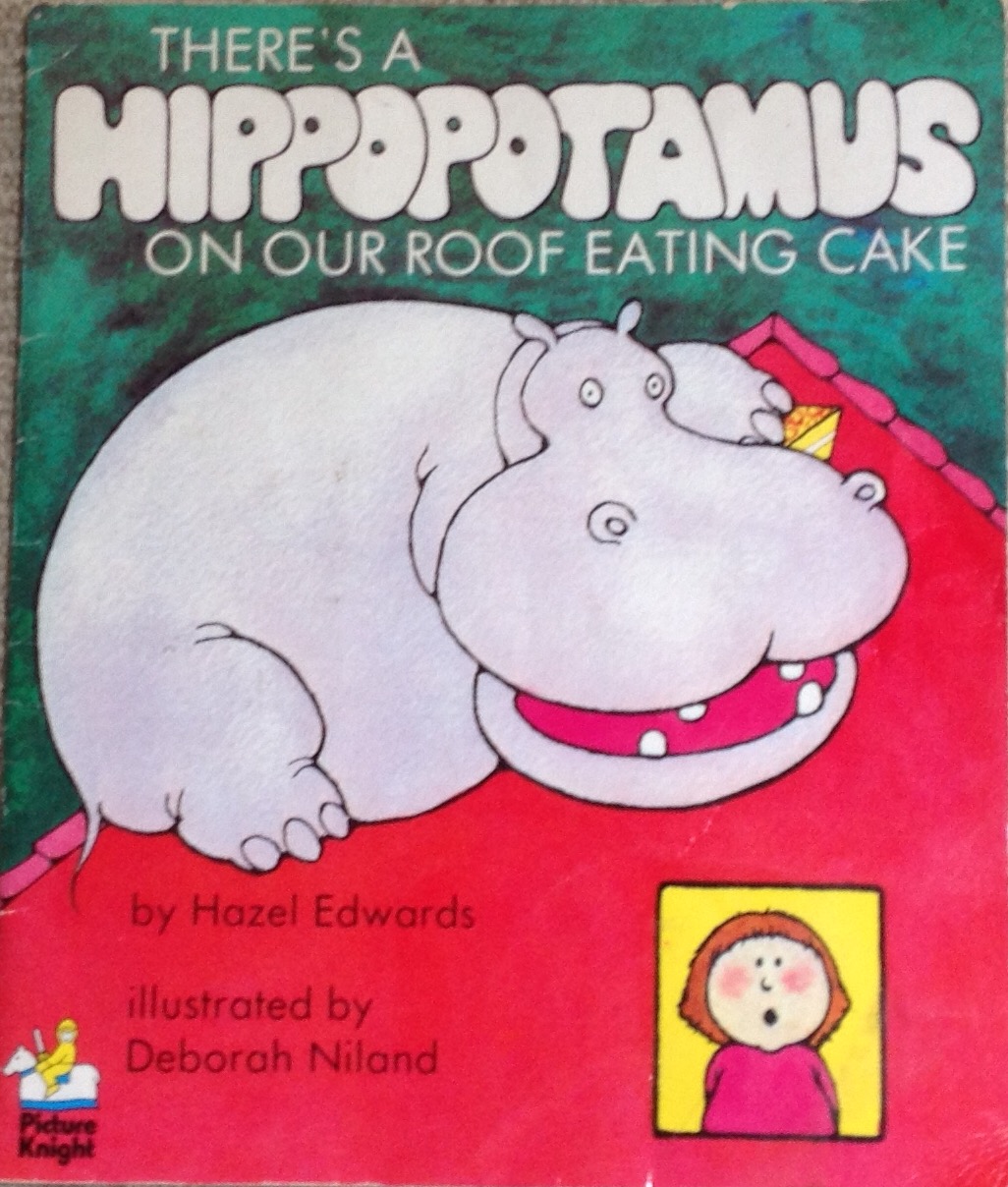
    While there are a number of Hippopotamus on the Roof books I have only the original, There’s a Hippopotamus on our Roof Eating Cake by Hazel Edwards (illustrated by Deborah Niland).

    There's a Hippopotamus on the Roof Eating Cake

    It begins,

    “Our roof leaks.

    Drip!

    Drip!

    Drip!

    My Daddy says there’s a hole in our roof.

    I know why there’s a hole.

    There’s a hippopotamus on our roof eating cake.”

    The copy on my shelf actually belongs to Bec. Her dad bought it for her on a trip back home to Belfast in 1990. He went all the way to Belfast and brought her back an Australian picture book! A good one though.

    In this video Hazel Edward talks about the original idea for the book, other contributing ideas and changes as well as the the important relationship between author and reader. She also reads the book.

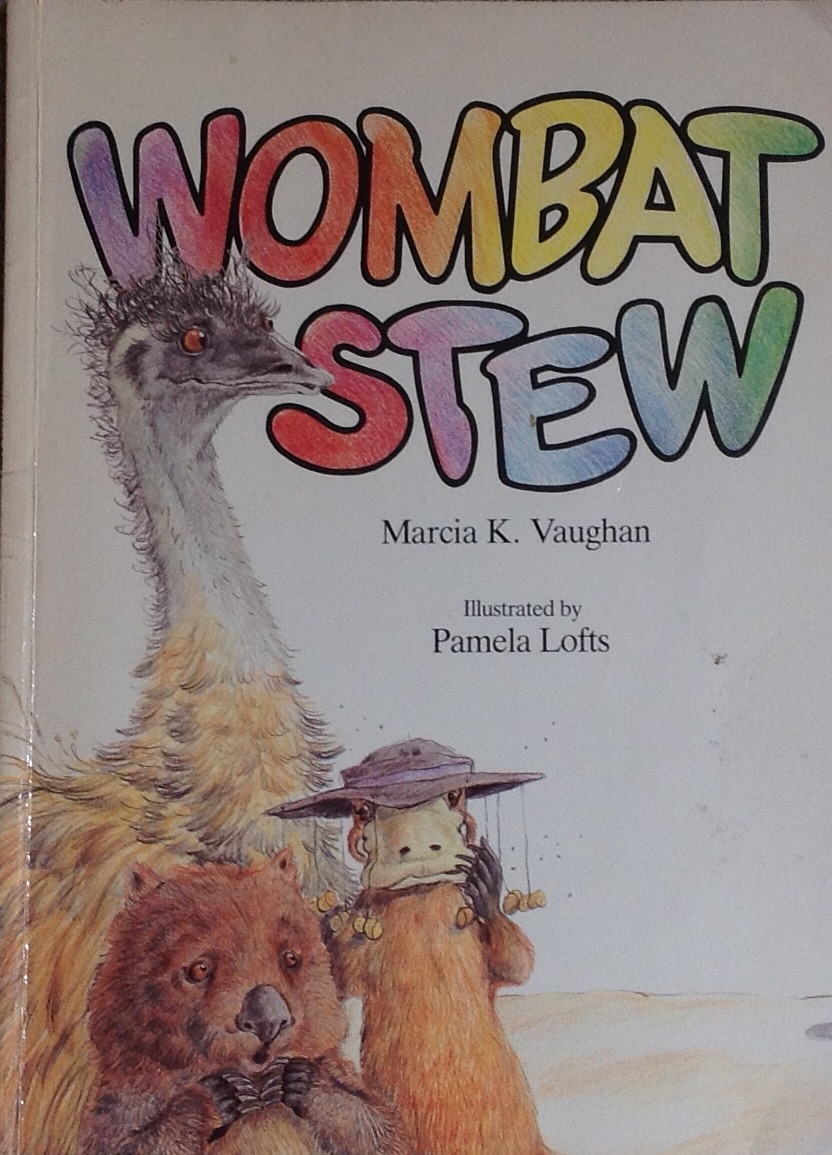
    Wombat Stew by Marcia K. Vaughan (illustrated by Pamela Lofts) is a favourite.

    Wombat Stew

    It begins,

    “One day, on the banks of a billabong, a very clever dingo caught a wombat …

    and decided to make  …

    Wombat stew,

    Wombat stew,

    Gooey, brewy,

    Yummy, chewy,

    Wombat stew!”

    The amusing story tells how the animals trick the dingo and save wombat from his fate. It is a great book to read aloud with its rhythmic language and repetition of the song “Wombat stew” with slight word changes each time. Children enthusiastically join in with the reading and love acting it out. One year I wrote a play with my year one class and they performed it for the school and their parents. It was a lot of fun.

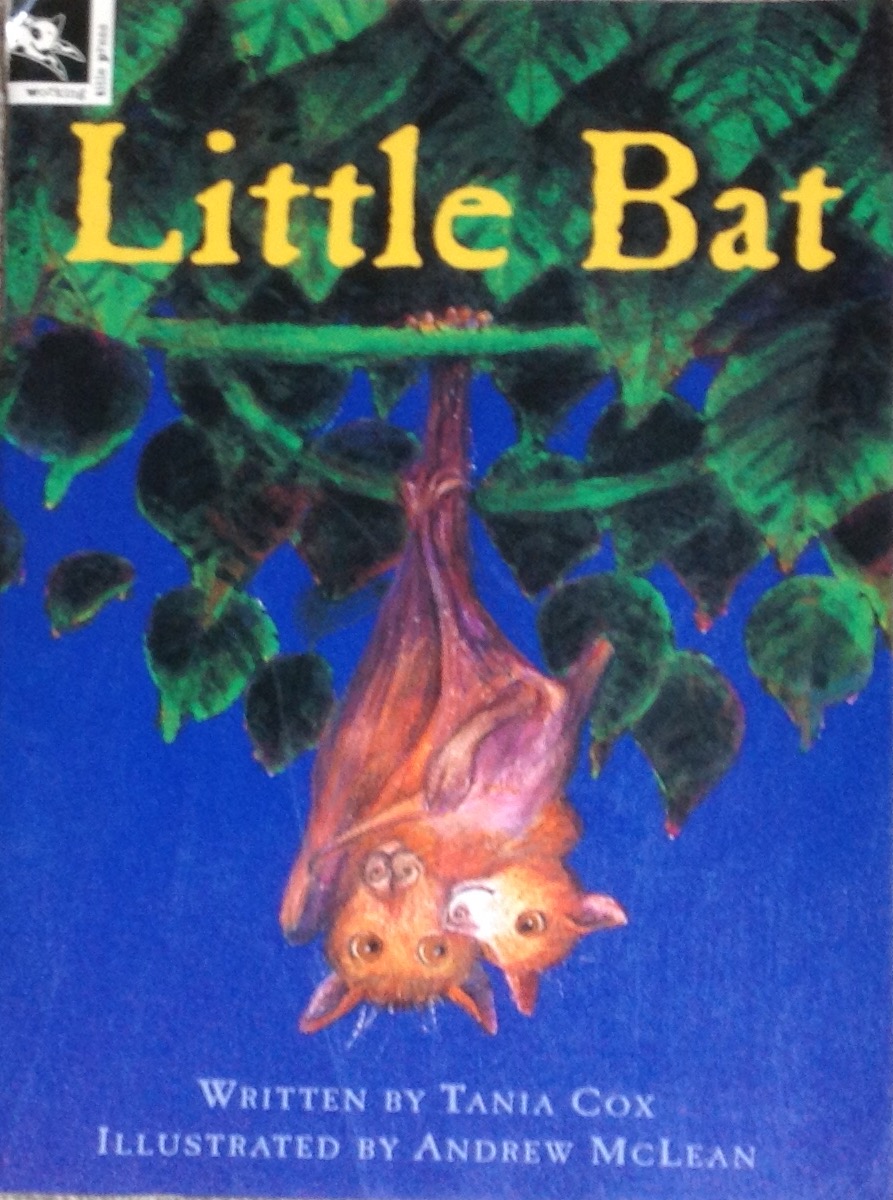
    Little Bat

    Little Bat by Tania Cox (illustrated by Andrew McLean) begins

    “Little Bat was nervous.

    She’d never done this before.”

    With the encouragement of her mother and other animal friends, Little Bat discovers that she can fly. I like the story’s positive message that if you try you can succeed. Books with this theme were always popular and inspired lots of discussion in my classroom.

    When I saw When the Wind Changed by Ruth Park (illustrated by Deborah Niland) in a bookstore, I had to have it for my bookshelf! When I was a child I, like Josh, must have been good at making faces, because my mother was always telling me that if the wind changed I’d stay like that. Well, I don’t think that happened to me, but it did to Josh! The book begins

    “There was this boy named Josh.

    He could do lots of things.

    There was one thing he could do best of all.

    He could make faces.”

    Of course one day the inevitable happens! Fortunately the story has a happy ending, for Josh anyway – I’m not so sure about Dad!

    Are you familiar with any of these books? Have you seen them in bookstores near you? What books by Australian authors have you read?

    Thank you

    Thank you for reading. I appreciate your feedback. Please share your thoughts.


  • The Power of Reading

    The love of reading is gift

    A constant thread running through posts on my blog is the importance of reading to and with young children every day. I have often said that passing on a love of reading is one of the greatest gifts a parent can give a child. The ability to read for information and for enjoyment is empowering. It allows one to take charge of one’s learning and one’s recreational pursuits.
    While my focus is specifically on early childhood, I am interested in education at all levels. I was pleased therefore to recently see a post about the importance of reading for older students. In his post The Power of Reading, Trevor Pilgrim discusses the “correlation between extensive critical reading and higher academic achievement” through the acquisition of knowledge and understanding of abstract concepts. He makes a link between reading of fiction and the development of emotional intelligence. He goes on to list the important role of reading in the academic lives of students.
    If you ever questioned why it is important for children to read, here are some of the answers:

    Trevor Pilgrim's avatareduflow

    He that loves reading has everything within his reach.”  – William Godwin.

    If anyone were to ask me what is the most effective learning tool available to students, my answer would be frequent reading.  I can speak of this from personal and professional experience.  Students can read traditional books or they can read online.  In fact, online reading is growing by leaps and bounds these days.

    Educational experts agree that there is a strong correlation between extensive critical reading and higher academic achievement.  Eclectic and targeted reading both lead to significant acquisition of knowledge.  Habitual readers develop their reading comprehension skills and derive greater meaning from the text.  They get better at doing this with practice and at the same time they develop their higher order thinking and learning skills along with their understanding of abstract concepts.  All of this helps to create a much better student in…

    View original post 369 more words