The message of this video alone provides reason enough to ensure children are provided opportunities to question, be creative and think critically.
Listen to Nikolai Begg convince you!
Enjoy!

The message of this video alone provides reason enough to ensure children are provided opportunities to question, be creative and think critically.
Listen to Nikolai Begg convince you!
Enjoy!

This post almost didn’t get published. It almost fell through a crack into the never-never. But just in time the safety net sprang into action and saved it from obscurity.
That may matter more to me than it does to you, but as an educator I hear too often about children who ‘fall through the cracks’, who fail to thrive in the school system, who miss out on the inspiration and timely support that would empower them on their journey to life-long learning.
Like those children, this post was an also-ran. It didn’t quite get it, didn’t quite reach the expectations. But then I read something that confirmed for me the importance of sharing my message.
You see, the love of reading is contagious. It can be caught from anyone, anytime.
However, it can just as easily be extinguished; and the danger of that happening seems to be lurking in school systems packed too tight with lists of must do, must learn and must achieve expectations.
I consider it imperative that teachers prioritize time for children to develop a love of literature and reading that will expand their horizons and create a worthwhile companion on the journey of their lifetime.

Let me know in the comment box a favourite tip of yours.
This week I have read some fabulous posts by teachers who are making sure there is time for joy and independent choice in their literacy classrooms. I will share these with you below.
The article that convinced me to share my thoughts was one that was not so joyful.
Written by Alexander Nazaryan, a first-year teacher, the article appeared in the Opinion Pages of the New York Times on July 6, 2014. He talked about not being able to meet the needs of his students and explained that it was not the fault of the students though, the fault was that they were mostly of poor and immigrant families.
He felt that asking these students to write about their own experiences did not have ‘the pedagogical value of a deep dive into sentence structure or a plain old vocab quiz.’
I was immediately struck by the similarity of a statement made to me by my son’s teacher thirty years ago. At the time I was leading an in-service workshop about teaching writing. I would have been talking about ways of engaging students in the writing process by giving them opportunities to write at length about things of interest to them; by encouraging the writing of a first draft to get the ideas down; by providing opportunities for redrafting, rewriting and editing; and opportunities for feedback by sharing their writing with peers; and by making the most of teachable moments through individual conferences with each student.
This teacher exclaimed that there was no way the children would be able to write anything of length as not one knew what a paragraph was, or indeed what a sentence was. The students were ten years of age and in their fifth year of school. I believe the statement to be more an indictment of the teacher’s inability to appreciate what the children could do, rather than an accurate estimation of their abilities. I knew for a fact that at least one student was more than capable of writing at length with a variety of sentence structures and correct paragraphing. I was certain he wasn’t the only one.
I am inclined to agree with Nazaryan that ‘Expecting children to independently discover the rules of written language is like expecting them to independently discover the rules of differential calculus.’
However trying to teach the skills of literacy through a barrage of meaningless drill and practice exercises in a joyless classroom is doomed to failure, and the children, sadly, will fall through the cracks.
What the children need, in my opinion and unlike that of Nazaryan, is a balanced approach. The skills of literacy need to be taught in a meaningful context.
That article and others, like this one from HuffPostParents about a year one girl who had to sit on the floor for weeks while her classmates sat at desks make me want to cry.
However it is not all bad, and there are some wonderful things happening.
Below are links to posts by or about teachers who are being far more inspirational to their students and other teachers on a daily basis.
Tracking back to my post of July 9 The Very Inspiring Blogger Award (nominated by Geoff le Pard) I hereby nominate them for A Very Inspiring Blogger Award:
Vicki Vinton, blogging at To Make a Prairie
Matt Renwick at Reading By Example
This article by Brett Vogelsinger and posted on the Nerdy Book Club
Steven Peterson at Inside the Dog
Julianne at To Read To Write To Be
Carrie Gelson at There’s a Book for That
This brings me back to the reason that got me thinking about cracks, and children falling through the cracks in the first place. This week’s flash fiction prompt set by Charli Mills at Carrot Ranch Communications was to In 99 words (no more, no less) write a story that involves a crack.
Here’s my response:
The Crack
She willed the earth to open up and swallow her whole. But it didn’t. She just stood there trembling, attempting to hold back the deluge that threatened to engulf her.
She strained to remember, knocking her head with her fist. Quick. Try. Try. What’s the rule: i? e?
She stammered an answer. Wrong again! Too many rules! Stupid rules! Broken – just like her.
She fled, eyes stinging, mouth twitching; and as she passed, with one hand grasped the confiscated unicorn sitting askew the teacher’s desk.
Away they flew, the assault of mocking laughter fading far below.
Thanks for reading. I appreciate your feedback. Please share your thoughts about any aspect of this post, including my flash piece.


For any hearing person, music is integral to our lives.
Every country has a national anthem which may be taught in schools and played or sung at many and varied ceremonies and occasions, inspiring unity and national pride. Many other organisations such as schools and colleges have their songs praising their strengths and fostering a sense of identity. Couples have their special or ‘theme’ songs.
When we enter a store we are serenaded with music chosen to make us feel comfortable and entice us to stay longer and buy more.
Joyful advertising jingles with their subliminal messages encourage us to memorize the product name and make it our next purchase. These jingles can stay in our heads for years, like this famous one about Louie the Fly:
A few bars of a song can revive memories from long ago. I have written about this previously in a flash fiction piece, Vagaries of time.
Music can call us to dance, to relax, to sing, to cry. It can be chosen to match our mood, or can help to create a mood or atmosphere. The soundtrack of a film or television show tells the audience what to expect and how to feel.
Music is also an integral part of education and learning. Learning information in a song can help one remember. Many people like to have music playing when they are reading or studying. I did when studying towards my high school exams, but now I prefer quiet when I write. Programs such as Accelerated Learning recommend using Baroque music to help learners stay relaxed and focused, increasing retention.
I have previously written about using songs in the classroom, such as I love the mountains which I learned from Bill Martin Jr. and affirmation songs such as those of Anne Infante here and here. I have also composed class songs and chants such as Busy Bees chant, and used songs to support class work, for example The Ugly Bug Ball when learning about mini-beasts.
I have used music to calm and settle after play breaks, and music for activity between seated activities. I used songs in the morning to signal to children that it was time to be ready for the day’s learning, including action songs or songs about our learning, for example a phonics song:

But of course, once we were settled, every day started with an affirmation song, or two. It got everyone into a happy expectant mood. It’s hard to be sad when singing (unless it’s a sad song).

. . . and songs in the afternoons to send the children home happy and singing with joy.
As a year level we would sing songs to settle the children when lining up to return to class after lunchtime play. The children hurried to join in and sang their way joyfully into class. This is quite different from when I was at school and we would line up in silence and then march into school in step, subdued and quietly obedient.
I composed songs as a child but did not continue the practice as an adult, except for one: a lullaby that I sang to soothe my baby girl to sleep. A few years later I decided to learn to play the keyboard from a very talented musical friend who guided my writing of the accompanying music. This remains my one real musical accomplishment!
For someone who does not consider herself at all musical I certainly enjoy, and promote the use of, music in many different ways.
On that note, I leave you with my flash fiction response to the prompt set by Charli Mills of Carrot Ranch Communications: In 99 words (no more, no less) write a story influenced by a musical score.
Final act
A collective gasp interrupted the music mid-beat.
All eyes turned synchronously, as if worked by unseen strings, towards the French doors, burst open and revealing a silhouetted figure framed by billowing gossamer-like curtains.
Out of the darkness the figure emerged: clothed in black with coat tails flapping, a top hat in one hand and a white-tipped cane held aloft in the other.
The conductor revived the orchestra as the figure glided across the floor, seized the heroine decisively and whirled her around and around.
The spell now broken, the cast joined in the dance to tumultuous applause.
I hope you can imagine the score that would be written to accompany this piece and its change of moods.
What score would you give it?
Thank you for reading. I appreciate your feedback. Please share your thoughts about any aspect of the article or my flash fiction piece.

This week Two Writing Teachers posted a wonderful article by Stacey Shubitz (one of the Two Writing Teachers) about A Picture Book that Pushes the Growth Mindset.
This post coincided beautifully with the flash fiction prompt posted by Charli Mills at Carrot Ranch Communications. Charli’s challenge is to:
In 99 words (no more, no less) write a story about getting stronger.
This is a perfect prompt for a teacher as a major focus of our work is in developing children’s strengths:
Strengths as in abilities; strength as in self-esteem and self-confidence; strength as in willingness to face setbacks and try, try again; strength as in keeping on going even when the going gets tough.
The picture book discussed in the article by Stacey Shubitz is The Most Magnificent Thing by Ashley Spires. Stacey suggests that the book is a great opener for discussions with children about the importance of a growth mindset.
According to Stacey, an understanding of ‘the power of having a growth mindset’ has been enabled by the work of Carol Dweck, a Stanford psychologist. It is grounded in a belief that
‘Someone can accomplish a lot more through hard work and dedication, rather than by relying on their smarts alone.’
I agree with Stacey that
‘Educators know the benefits of having a growth mindset, rather than having a fixed one. We learn from trial and error. There is value in failure.’
I will not quote Stacey’s article in its entirety, but suggest you pop over and read it for yourself. (If you do, and leave a comment prior to June 27th, you may win yourself a copy of The Most Magnificent Thing, if you live in the USA or Canada.)
Stacey says that “The girl in the story tries over ten times to build something and get it right. Through hard work and some help from her trust sidekick, her pug, she eventually succeeds.” As well as a starting point for discussing the growth mindset, Stacey suggests eight features of the book which are useful for teaching writing. The article also includes a brief, but informative, interview with the author/illustrator Ashley Spires.
In response to Stacey’s question about using The Most Magnificent Thing for discussing a growth mindset, Ashley responds:
‘The character is a perfectly capable girl with a great idea and the skill to make it, but she has to try, try and try again in order to succeed. Most kids (I was one of them) think that if it’s not perfect the first time, then they should move on to something that comes to them more easily. Working hard to succeed is what true success is.”
<p><a href=”http://vimeo.com/89499612″>The Most Magnificent Thing Book Trailer</a> from <a href=”http://vimeo.com/kidscanpress”>Kids Can Press</a> on <a href=”https://vimeo.com”>Vimeo</a>.</p>
My flash fiction, told through the jottings of a classroom teacher over time, shows a growth mindset emerging from one that was previously crushed.
Progress
Day one
Timid. Needed help getting things out of bag to put in drawer. Sat towards back of group. Drew knees up under chin. Hunched over. Sucked thumb. Twisted long tangled hair under nose. Rocked.
Day twenty-six
Responded in roll call! Sat with ‘friend’. Legs crossed. Back straight. Smiled – briefly. Someone looked! Screamed, “Stop looking at me!” Dissolved in tears. Again. Retreated under desk. Again.
Day fifty-two
Initiated conversation!! Hair combed!! Nose not running!! Brought toy for show and tell. Responded with one- or two-word answers. Small, dirty, pink unicorn. B laughed. Erupted, but went to desk, not under!
I welcome your feedback. Please share your thoughts about any aspect of the article or my flash fiction piece.

Do you grapple with making choices of how to use your time? Do you find that the things you want to do are often squeezed in after the things you have to do and the things you are expected to do? Or worse – squeezed out entirely? Do you ever find yourself doing one thing and wishing you were doing something else? Or worse: procrastinate, and then feel guilty for doing so?
I do; and I find it very frustrating.
I have a solution:
Live in the here and now and enjoy every moment.
I’m not saying it’s easy, and I’m not saying I’m good at it, but the more I practice the better I get and the more enjoyable my time is.
While some things do not seem like a choice, usually they are; and if they are not a choice, our attitude is.
I have been thinking about this a lot lately because the time I had intended for one thing seems to be very easily devoured by other things. I can choose to feel frustrated about the loss of time for my desired activity, wish I was doing something else and generally feel miserable. The time still passes and I am no better off.
Alternatively I could:
Procrastination you say?
Well procrastination can give you that all important time to reflect, re-energize and create new ideas.
I am not alone in thinking about the effect of choice upon our use of time. This week the flash fiction prompt posted by Charli Mills was to:
In 99 words (no more, no less) write a story about a decision between two clashing priorities.
In her post Charli talks about “muddled priorities” and being “confronted with distractions and decisions”. She suggested that the writers among us need to “prioritize our priorities so we can swath writing time as if we were farmers of words.” She talks about the need for balance, prioritizing and planning; looking after oneself as well as one’s work; which means making choices about how one’s life is lived.
If we accept that life really is a series of choices and that we have control over the choices we make, then acceptance of the choices and their results must follow.
Sometimes the choices are easy, and it’s simply a matter of going with the flow. But sometimes going with the flow can be difficult; especially when the waters are a raging torrent and you are wishing you could grab hold of the reeds on the bank and pull yourself out for a little respite, such as in the analogy I have used in this first flash piece:
Overwhelming expectations
The waters raged around her, pummeling her against the rocks, tossing her every which way, pushing her under and holding her there until she thought she must drown. She clawed at the rocks and grasped at the reeds, gasping for breath. The bank beckoned invitingly. The torrent sucked her back, playing ‘now you see her, now you don’t’ before swirling her back to bump inelegantly over the rocky shallows, dumping her battered body on the edge. She gulped the air begging respite and revival. Her choice: the safety of the sideline bank or back to navigate a journey through.
Sometimes the choices are difficult because they appear to promise equally attractive (or unattractive), if different, outcomes. We may think a crystal ball could make the decision easier, but perhaps the only way to find out what the future brings is to live it, as discovered in this next flash offering:
Future seeker
“What do you seek?”
“Knowledge of the future.”
“That knowledge comes at a price.”
“I’m willing to pay.”
The eyes as deep as the ocean and dark as coal lifted from the shiny globe, contemplating the petitioner.
The globe’s soft glow in the dimness cast eerie shadows across the youthful face accentuating his desperate need.
One eyebrow raised, questioning. “It involves . . . a sacrifice?”
“I have more money than I could spend in a thousand lifetimes. Just tell me the price.”
The dark eyes flashed.
“Your life.”
He saw it all in a moment, and was gone.
Of course, as adults, it is important for us to have developed some self-regulatory skills or nothing would ever be accomplished. But what about children. How can we help children learn to make effective choices?
In honour of your time and mine, I will leave that for a future post!
I always enjoy reading your comments. I invite you to share your thoughts.
If you enjoyed this post, you may enjoy others. Please click the button at the top on the right to receive future posts by email.

For the past couple of months, Charli Mills has been posting a flash fiction challenge on her site Carrot Ranch Communications.
I have been really enjoying the challenges as I hadn’t tried writing fiction in such brevity before. I do like having a go at various genres but the main focus of my writing is education and literacy learning. I am currently developing resources for children, parents and teachers which I plan to make available on a future website.
Having many years’ experience in writing these types of resources, I sometimes think I would be willing to develop any resource requested by an early childhood teacher. Participating in the Flash Fiction Challenge was a way of proving to myself that I could attempt any topic and genre.
However, I have not found writing a response to this week’s prompt so easy. Charli’s challenge was to In 99 words (no more, no less) write a travel horror story.
I am not a fan of horror (real or imagined) and I haven’t done enough travel to have experienced a horror story (thankfully) but I was still keen to have a go and keep up my good participation record.
The difficulty I was experiencing with this writing task made me think about writing tasks that are set for children in school. How many children have ever returned from holiday and been set the task of writing about “My Holiday”?
Maybe that’s not so bad, they have all experienced it. But what about other topics that are of little interest to them.
This week across Australia students in years 3, 5, 7 and 9 are sitting NAPLAN (National Assessment Program – Literacy and Numeracy) tests.
Students in those year levels are set the same writing task . They are given “a ‘prompt’ – an idea or topic – and asked to write a response of a particular text type”
Information on the acara (Australian Curriculum Assessment and Reporting Authority) webstite explains that
“In 2014, as in previous years, the Writing task will be a single common task for all students. The 2014 Writing test will require students to respond to either a persuasive or narrative Writing prompt. However, the genre of the prompt will not be disclosed prior to the test period.”
It goes on further to say that
“The provision of a rich and broad curriculum is the best preparation for NAPLAN, including the Writing task.”
I think I have a fairly rich and broad educational background with a reasonable level of literacy skills; but I am not convinced that, on any given day, in a restricted amount of time, under the watchful eyes of supervisors I would produce my best work in response to a prompt about which I may have little experience, knowledge or interest.
What about you? How do you think you would go?
Below is my response to Charli’s horror travel prompt. I don’t think it is my best work.
Travel woes
She willed the doors shut forever, knowing that open they must, or she’d be left behind.
She mentally checked and re-checked required items. Surely there was something she had missed?
Dread gripped her ankles, threatening her balance.
Fear squeezed her chest, constricting her breath.
Heights and enclosed spaces were not her thing.
She straightened, attempting to hide the tremble from fellow travellers.
“Don’t be crowded. I need space, air to breathe.”
The doors opened. She was swept inside.
They closed, encasing her. No escape now.
Would she make the distance, mind intact?
Ding!
Floor 35. Here already.
The NAPLAN writing tasks are marked against a rubric of 10 criteria. I wonder what the criteria for flash fiction would be and how I would score.
Please share your thoughts.

About a month ago I was honoured to receive a nomination for the Versatile Bloggers Award from Bodicia who blogs at A Woman’s Wisdom, “A place to discover fabulous storytellers plus book reviews, life and humour.” Her blog definitely lives up to its description and is worth a visit. I am very appreciative of receiving this award from someone with such experience and versatility.
Bodicia was nominated by Michelle James at Book Chat, also worth a visit, as are Bodicia’s other nominations which you can find listed on her post.
The rules of the Versatile Blogger Award are:
My 15 nominees are:
Apologies to those I have omitted, and to those I have nominated for a second award. I can offer neither excuse nor reason. So be it.
This is the more difficult part – 7 things about myself. At least they don’t have to be interesting!
Seven random things about myself!

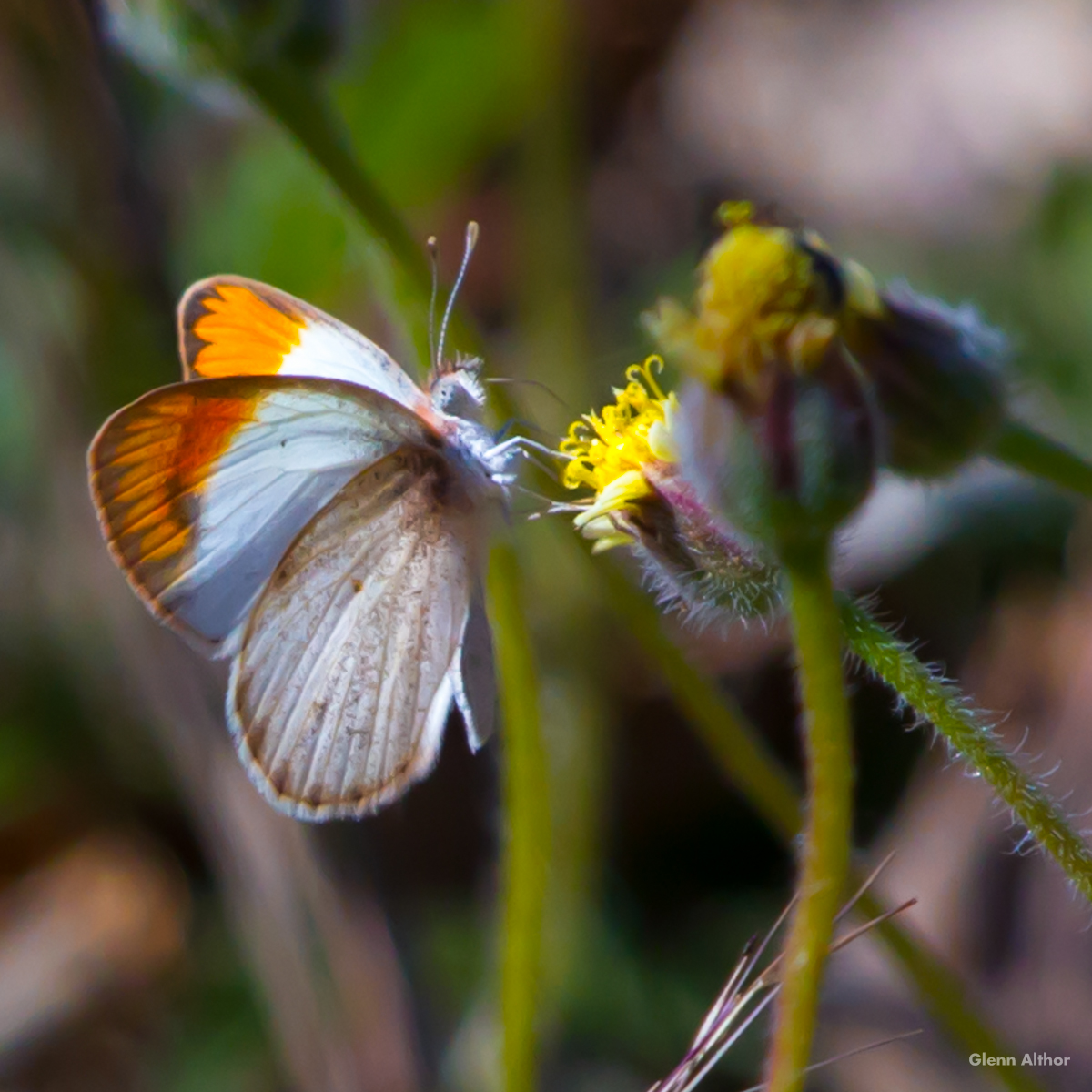
2. I love butterflies, birds and frogs: pictures, toys, stories, whatever. I used to think I’d like to be a bird with the freedom of flight, soaring above the world. The transformation from caterpillar to butterfly is amazing and inspiring but each stage has its own beauty and purpose; one could not be with the other. And frogs – well they’re just cute!

3. One of my favourite books is Jonathan Livingston Seagull by Richard Bach. I like to think I’m more like Jonathan than the other seagulls squabbling on the shore.

4. I love being a parent. Both my children are adults now and the joy at seeing them grown; happy, contributing, compassionate, productive; is immeasurable. To think that I had a little to do with the wonderful people they have become is rewarding, but to know that they are more than I could ever take credit for, is awesome.

5. I love learning and try to take an interest in most things, but am more interested in ideas than in facts. I’m not much use on a trivia team; unless it’s a nursery rhyme question – then I’m indispensable!

6. I enjoy puzzles and games, especially logic and thinking puzzles and word games. I love playing games with the family and sharing a laugh. I love computer games.
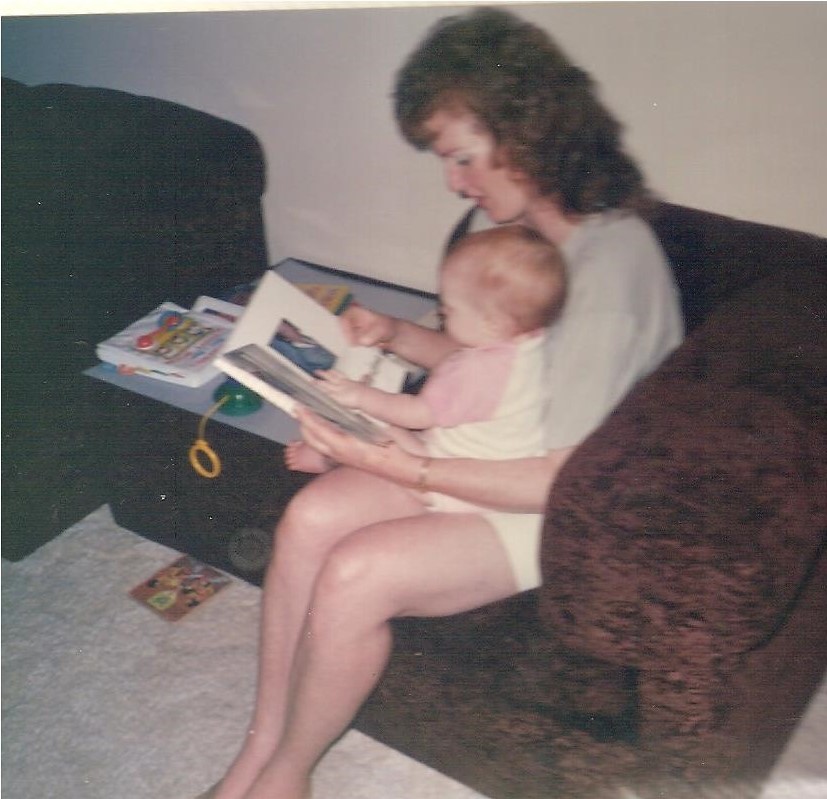
7. I love helping children begin their journey into literacy through reading to them, playing with words and language, telling and writing stories together. With my own children it was magic, with hundreds of other children it was awesome, and now with my grandchildren it is just amazing. It is a privilege to share in the process.
Congratulations to all my nominees. Check out their blogs. You may find something there of interest to you!

For the past couple of months I have been participating in a weekly flash fiction challenge set by Charli Mills of Carrot Ranch Communications.
This week’s prompt:
appeals to me because it is about stepping out to something new, moving out of the comfort zone, letting go of the past, and releasing previously held beliefs and feelings.
These are not always easy things to do, but they are a necessary part of life. Indeed, it could be said that the very act of being born is the first of such occasions.
The ability to try new things, the willingness to take risks, the determination to get up and try again after failure and the persistence to keep going are important attributes of successful people.
In my role as teacher it was important for me to encourage the development of these traits in myself, as much as in my students. Without these abilities no learning occurs, no growth takes place.
Sometimes a gentle push (read encouragement/incentive) may need to be applied to help overcome an initial reluctance for a particular activity. This reluctance may soon be replaced by an enormous excitement, energy and future love for the activity. Other times no amount of coaxing can get an unwilling participant to budge.
It is equally possible that an activity towards which one rushes (headfirst, arms flailing, bells ringing) in due course loses its lustre to disappointment.
Below is the piece I wrote in response to Charli’s challenge. I have not revealed the activity I had in mind. I’m sure that you have experienced or witnessed several similar responses throughout your life. I’d love to know which one springs to your mind!
Please share your thoughts. I hope you enjoy this piece of flash fiction!

About ___________?
I don’t want to.
I don’t feel like it.
You can’t make me.
It’s not fair.
No-oo!
Leave me alone.
Sob.
Sob, sob.
No-oo!
I don’t want to.
Alright. I’ll sit over there,
But I won’t do it.
You can’t make me.
I won’t even look.
Stomp.
Stomp, stomp.
Thump.
Humph! Stupid.
It’s not even fun.
They can do it.
I don’t care;
Don’t know why they dragged me here anyway.
Told them I wasn’t going to do it.
Haha. What happened?
That looks like fun.
Hey! Let me do it.
It’s my turn.
Boy, this is fun!

The challenge from Charli Mills at Carrot Ranch Communications on April 23, 2014 was to: In 99 words (no more, no less) describe the climate of a story as it changes to reflect a character’s mood or to create a sense of what is to come. This is my response to the challenge. I hope you enjoy it.
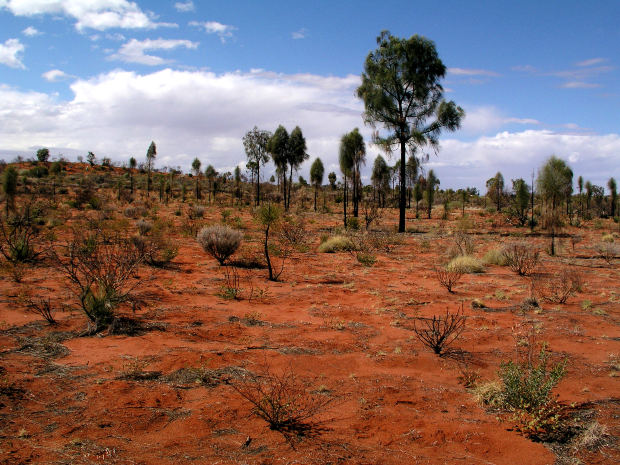
Her motivation and inspiration was as parched as the cracked red soil beneath her feet. The days were hot and lazy: nothing to do until the rains came. One long languid day followed another. With no work to be done on the land, time did not pressure creativity. Without pressure, there was no rush, no will. The bright blueness of the skies, usually joyous, now oppressive. An occasional cloud or flash on the horizon made empty promises. Finally the winds whipped the clouds into a frenzy, reigniting her creativity as the relentless soaking rains awakened the dormant earth.
Please let me know what you think.

The third flash fiction challenge from Carrot Ranch Communications:
In 99 words (no more, no less) write a hyperbolic response to a frustrating situation (an hyperbole is an exaggeration).
I hope you enjoy it.

Arms flailing like a helicopter, eyes wide like headlights on full beam, her screeches rent the quietude.
They came running.
“What’s wrong?”
“Get it off! Get if off me!” she shrieked.
“What? Where?” they asked.
“In my hair! A spider!”
“Stay still.”
They looked.
“Nothing. No spider,” they said.
“Are you sure?” she implored. “Something ran across my cheek.”
“Maybe this?” He chuckled, untangling a wizened leaf.
She scowled.
In agreement, another leaf fluttered down.
They raised their eyebrows, smirking conspiratorially.
She stormed away, tumbling over chairs and cushions, leaving them speechless with mirth in her wake.
I welcome any feedback.

 Norah Colvin
