Live Love Laugh Learn … Create the possibilities

Tag: learning

  • Empowering women – International Women’s Day

    international women's day


    Yesterday, 8th March 2015, was celebrated as International Women’s Day around the world. While the day has a history (or herstory) of over one hundred years, yesterday marked the 40th anniversary of the date being claimed for this celebration by the United Nations and the 20th anniversary of the signing of the Beijing Declaration and Platform for Action.

     “The Platform for Action covers 12 critical areas of concern that are as relevant today as 20 years ago: poverty; education and training; health; violence; armed conflict; economy; power and decision-making; institutional mechanisms; human rights; media; environment; and the girl child.”

    The Secretary-General of the United Nations concludes the foreword to the 2015 paper with these words:
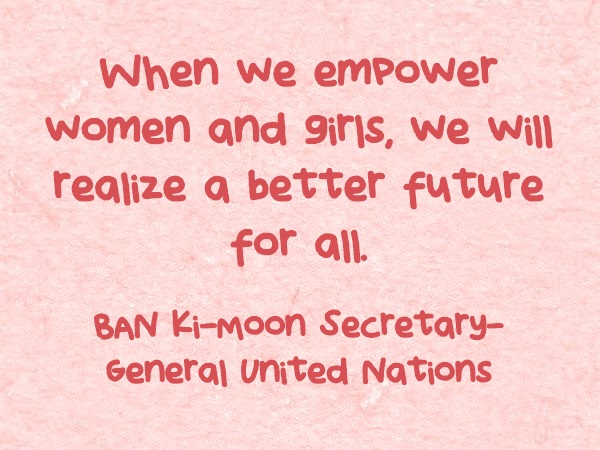
    When-we-empower-women

    The paper states that

     “Nearly 20 years after the adoption of the Platform for Action, no country has achieved equality for women and girls and significant levels of inequality between women and men persist.”

     This article in Time Magazine recognises that, while some gains have been made, there is still much more to be done to eliminate inequality. It repeats the call to action made by the UN Women Executive Director Phumzile Mlambo-Ngcuka:

    In line with the general achievements that have been made towards gender equality, and the gaps that still exist, is the situation for girls in schools, especially with regard to maths and science education. While more girls are moving into those areas than did when I was at school, there are still not enough.

    Ainissa Ramirez, who describes herself as a “Science Evangelist” says in her article Girls and Science: A Dream Deferred, that it is important to nurture girls’ interest in science and maths.

    She says that “the data . . . shows that the difference among graduates is not due to girls’ ability to do math and science; instead, the gender gap is caused by attitudes and behaviors toward girls and women, especially in the classroom.”

    This article by Claire Cain Miller in The New York Times reinforces this, saying that the attitude of elementary teachers is even more influential that attitudes in the home. Miller says that

    “Reversing bias among teachers could increase the number of women who enter fields like computer science and engineering, which are some of the fastest growing and highest paying.”

    This article by Sue Wilson cites research confirming the bias of teachers against girls showing that boys often received higher marks than did girls of equal ability. While the girls were discouraged from continuing their studies of maths and science subjects, the boys (whose teachers had over-assessed their ability) went on to be successful in those subjects.

    For the past three years during which time I have been writing science curriculum documents, I have had the extreme good fortune of working with one of Australia’s top science teachers. In fact Deb Smith has won many awards for her science teaching including the Prime Minister’s Prize for Excellence in Science Teaching in Secondary Schools in 2010. Throughout her career Deb has been an advocate for girls in science and has encouraged many girls, who otherwise would not have, to pursue careers in science.

    I haven’t yet considered whether Marnie, a character I have been developing through my flash fiction stories, would have, let alone pursue, an interest in maths and science subjects. I think it would be all she could do to survive.  You see, Marnie’s childhood had little to recommend it: a dysfunctional family in which she suffered neglect and abuse, and difficulties at school and with friendships as a result. However a teacher like Deb Smith or Ainissa Ramirez could make a difference to her engagement with those subjects. Marnie was fortunate that a teacher saw in her something special and provided support and guidance at a time that was crucial to her survival.

    This week, in response to the prompting by Charli Mills at the Carrot Ranch to In 99 words (no more, no less) color your story turquoise, I take Marnie one step closer to empowerment. Charli says that turquoise blue evokes trust and strength. I have also heard that it signifies protection, friendship and peace. What wonderful qualities to aspire to for Marnie, and for all women. Coincidentally, it is my favourite colour.

    Here is my flash fiction response to Charli’s challenge, with a Marnie who has found a new inner strength and sense of peace, and recalls the trust that was given in friendship along with a charm for protection.

    I hope you enjoy it.
    turquoie necklace

    Turquoise dreaming

    Marnie paused at the gate. The house looked the same: roses by the steps, bell by the door, windows open and curtains tied back; just as she remembered.

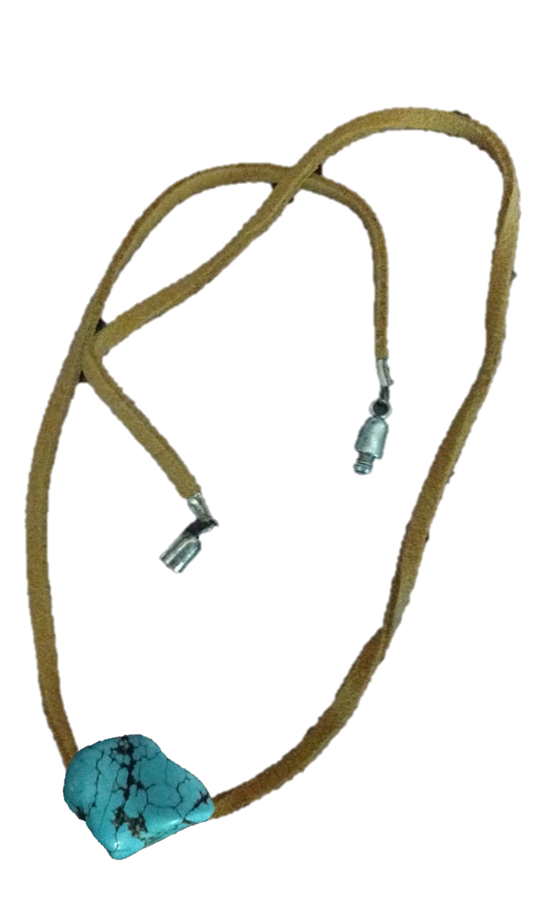
    She shuddered as the memory of her last visit flashed momentarily: she was running, almost blinded by tears, stumbling with fear, up the steps, to the open door and open heart. She rubbed the turquoise pendant Miss had given her then, for “protection and peace”. She had worn it always.

    Now, Marnie walked the path with an unfamiliar lightness. It was over. Really over!

    She knocked at the door.

    Thank you

    Thank you for reading.

    I appreciate your feedback. Please share your thoughts about any aspect of this post and flash fiction.


  • How to teach compassion – and why

    During the past few weeks I have been exploring the idea of compassion, along with many others in the blogosphere, in response to the #1000Speak for Compassion project.

    In a TED Talk I shared in a previous post Joan Halifax questioned why, if compassion was so important, didn’t we teach it to children.

    Man-resigning

    That question provided me with a challenge. Indeed I wondered if the question was really fair. The question implied that children were not being taught compassion. And while that assumption may be true for many, it is just as true that many children are being taught to be compassionate – in their homes, in their schools, and in other groups to which they belong. By recognizing the many who do, I in no way wish to indicate that enough is being done. Indeed, much more needs to be done, but let’s not make a sweeping statement that attempts to colour everyone with the same inadequacy in teaching compassion.

    I decided to investigate just what ideas were available for teaching children compassion. I had to look no further than one of my blogging friends for evidence that children are being taught compassion through their daily activities. In a number of posts on her own blog Lemon Shark, and in a number of comments on mine, Sarah Brentyn has described practices that she uses to teach her children to be compassionate by involving them in compassionate acts.

    Some practices that Sarah recommends for developing compassion include things from as simple as using common courtesies and good manners to volunteering and making personal donations to homeless shelters.

    I defy you to read her post 1000 Voices for Compassion without being moved by her generosity and compassion. It tells a beautiful story of compassion in action, a lesson for not only her children, but for all of us.

    In her following post entitled Defining Compassion vs. Compassion in Action Sarah described asking her children what the word “compassion” meant. They weren’t sure how to answer her. But when she asked them to describe something compassionate they had no difficulty coming up with examples – from their own lives. Why? Because from the moment they were born Sarah’s children have been living in a compassionate world. They have been treated compassionately and they have not only had compassionate actions modelled for them, they have been involved in those compassionate actions. I congratulate you Sarah, for inspiring us to be compassionate, and for being a role model for us to emulate.

    Sarah Brentyn = walk the walk

    Looking beyond Sarah’s examples for further suggestions, I came across a number of other articles. Each seemed to reiterate what Sarah had already shared.

    In an article for the Huffington Post Signe Whitson, author and child and adolescent therapist, says that “experts agree that fostering compassion in young people is among the best ways to prevent verbal, physical, and emotional aggression” and shares 8 Ways to Teach Compassion to Kids:

    1. Walk the walk

    “Show young people that anytime is the right time to engage in acts of service and compassion for others.”

    1. Put the Child on the Receiving End of Compassion

    “tending to a child when he is feeling down or under the weather is the best way to teach him how to show compassion to others.”

    1. Talk the Talk

    “talk explicitly about acts of compassion . . . communicate its importance as a prized family value”

    1. Volunteer Your Time

    “When children become actively involved I acts of showing compassion to others, they learn about his value in a very deep and enduring way”

    1. Care for a Pet

    “Children who care for pets learn important values such as responsibility, unconditional love, empathy, and compassion for all living things”

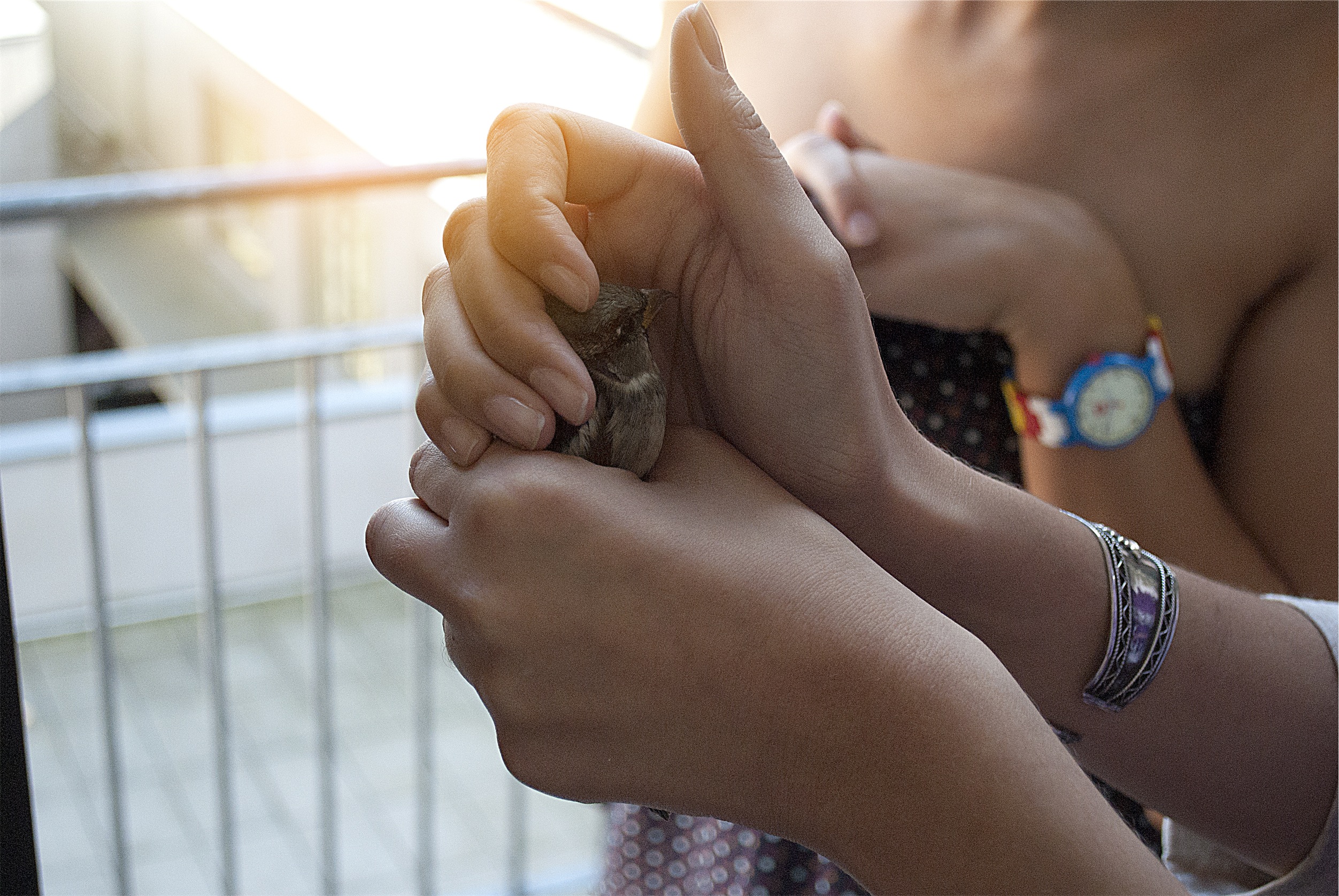
    baby bird

    1. Read All About It

    “Children’s books are great for providing a window into the experiences of others.”

    Whoever you are

    1. Compassion It TM

    Wear a Compassion It band as a daily and “personal reminder to act compassionately towards someone else”

    1. Make a Wish

    The “Make-a-Wish Foundation provides hope, strength, and joy to children with life-threatening medical conditions . . . can have a truly impactful experience of being able to provide tangible help and joy to a peer”

    https://openclipart.org/detail/30019/star-by-nefigcas
    https://openclipart.org/detail/30019/star-by-nefigcas

    Other than the references to the specific organizations, Compassion it and Make a Wish Foundation, the suggestions are things that have been discussed before in various posts about compassion, including Sarah’s.

    Like Sarah, Whitson believes that it is the accumulation of little everyday actions that make a difference. She states that, as a bullying prevention trainer, she considers “big” solutions — such as policies, procedures, and trainings are trumped each and every day by the seemingly little, yet extraordinarily powerful, acts of compassion and kindness that adults show to the young people in their lives.”

    In her article about How to Instill Compassion in Children Marilyn Price-Mitchell agreed about the importance of teaching compassion, saying that  “children who participate in programs that teach kindness, respect, empathy, and compassion and who have families that reinforce those strengths at home develop the muscles they need to become civically-engaged adolescents and adults.”

    Price-Mitchell suggested that parents could help teach their children compassion by providing opportunities to practice compassion, by helping children understand and cope with anger, and by teaching  children to self-regulate.

    https://openclipart.org/image/800px/svg_to_png/192642/Children_holding_hands.png
    https://openclipart.org/image/800px/svg_to_png/192642/Children_holding_hands.png

    Jane Meredith Adams, in her article Raising a Compassionate Child says that “children have an inborn capacity for compassion … they naturally identify with stuffed animals, other kids, pets, and underdogs. The tricky part is that their empathy must compete with other developmental forces, including limited impulse control – which makes them pull the cat’s tail – and their belief that their needs absolutely must come first – which makes it hard for them to let their cousin push the col fire truck.”

    Adams says that teaching compassion is “part of day-to-day life: how you answer your child’s questions, how you solve conflict at the park, how you nudge his or her growing capacity to understand and think about other people.” Adams suggests to Promote sweetness” every day by showing children how to be gentle to others, by speaking to them softly, by rejecting rudeness, and by saying sorry when you have made a mistake. I think Sarah would agree with all of those.

    Similar ideas are proposed by  Kim McConnell, and Leticia of techsavvymama who sums it all up nicely with these suggestions:

    • Model the kinds of behaviour we expect
    • Exercise patience
    • Listen to our kids
    • Teach resiliency by providing strategies, and
    • Use quality educational content to reinforce the concept (e.g. books, DVDs and downloadable material)

    I’m sure that many of these suggestions are familiar to you through your own personal experiences, either when growing up or as an adult. I think what my exploration of this topic shows me is that, while it may be useful to teach about compassion in schools, children really only learn to be compassionate if they are treated compassionately and have compassion modeled for them, if it is an integral part of their everyday lives.

    What do you think?

    Thank you

    Thank you for reading. I appreciate your feedback. Please share your thoughts about any aspect of this post.


  • I feel good!

    https://openclipart.org/image/800px/svg_to_png/59389/happy_sun_gm.png
    https://openclipart.org/image/800px/svg_to_png/59389/happy_sun_gm.png

    A lot of good feelings and thoughts have been passing around the blogosphere in recent weeks including the #1000Speak for Compassion project and, closer to (my blogosphere) home, the Carrot Ranch with  Charli’s Mills’ flash fiction challenge and the responses by the Congress of Rough Writers.

    Hearing these good things is good for my soul which could otherwise become burdened down by the cruelty that is experienced on a personal, local and global level.

    Areas of Queensland and the Northern Territory were, over the weekend, devastated by severe weather, other states by fires, parts of the northern hemisphere by cold and snow. Nature itself is so destructive, why do humans think we have to add to it?

    Many homes in Central Queensland were destroyed by damaging winds when the cyclone hit. In the early morning news the following day there were already reports of looting. It seems incomprehensible to me that people would do that to each other. Stealing from homes of those left vulnerable and sheltering in a community evacuation centre!

    In the same bulletin there was a report about people receiving payments from the government while training to fight overseas for terrorist groups. The list goes on. The news media are not the best places for seeking uplifting stories or developing a habit of meliorism.

    applications-internet

    I turn back to my blogger friends for their stories of compassion and inspiration, and thoughts of how we can raise children to be kind, caring and compassionate.

    My two most recent posts, Who cares anyway? and #1000Speak for Compassion, addressed the issue of compassion and received a number of comments which added more interest and value to the topic. Most of those who responded have also shared their thoughts about compassion on their own blogs, each post as individual as they. Here are a few links to get your reading started:

    Charli Mills writes about Literary Compassion

    Anne Goodwin about Compassion: Something we all need

    Geoff Le Pard: Me, me, me; You, you, you #1000Speak

    Sarah Brentyn: 1000 Voices for Compassion

    Irene Waters: 1000 Voices Speak for Compassion – mine is but 1

    Sherri Matthews: How to save a life

    Christy Birmingham: To Writers Who Struggle with Self-compassion #1000Speak

    Lori Schafer: #1000Speak about Compassion: Through the Eyes of a Rat

    I am very happy to belong to a community that values kindness and compassion. As at least one  blogger commented though, it may be difficult for someone who has not experienced compassion to express compassion for others. Compassion may be a natural feeling, but it also may need to be learned. It reminds me of those famous words, “Father forgive them for they do not know what they are doing.” and also of a story shared by Lata on Hot Cup of Kaapi as part of the #1000Speak for Compassion project. (Note to self: Remember this!)

    In my last post I shared two ways of showing compassion suggested by Daniel Goleman in his video Why aren’t we more compassionate?:

    Pay attention

    Consume ethically

    https://openclipart.org/image/800px/svg_to_png/192642/Children_holding_hands.png
    https://openclipart.org/image/800px/svg_to_png/192642/Children_holding_hands.png

    At about the same time as I was reading these posts about compassion, I also read a post on one of my favourite educational sites Edutopia about Creating More Compassionate Classrooms.

    The author of this article, Joshua Block teaches at The Science Leadership Academy in Philadelphia, which you may recall I mentioned in a post about Chris Lehmann and Visioning a better school, a better way of educating. I was certainly impressed by Chris Lehmann, so I expected to be impressed by this article and its suggestions, and I wasn’t disappointed.

    In the article Block talks about the Academy establishing an Ethics of Care as described by Nel Noddings. I am both embarrassed and disappointed to admit that I hadn’t previously heard of Noddings but I will be looking more in depth at her work in the future. So much of her work is pertinent to these discussions we have been having about compassion, including her understanding of the terms sympathy and empathy, for example. The article about Nel Noddings, the ethics of care and education states that

    “We learn first what it means to be cared-for. ‘Then, gradually, we learn both to care for and, by extension, to care about others’ (Noddings 2002: 22). This caring-about, Noddings argues, is almost certainly the foundation for our sense of justice.”

    It sounds familiar, doesn’t it?

    Block questions how he can create a more compassionate classroom without adding to the demands already placed upon him as a teacher. He wonders what a compassionate classroom would look like and suggests

    “A compassionate classroom environment is not an environment that lacks academic rigor. In this environment, students are understood to be complex people. Here, young people feel that they belong. Here, they meet challenge and encouragement while we ask them to be the best versions of themselves. Compassionate classrooms are places where student voices and student ideas are prioritized.”

    I do like the sound of that classroom environment.

    https://openclipart.org/image/800px/svg_to_png/148843/1310261210.png
    https://openclipart.org/image/800px/svg_to_png/148843/1310261210.png

    Block goes on to suggest six practices that help to develop that environment:

    1. Remembering to Check-in
    2. Informal Conferencing
    3. Increasing Personal Connections with Content
    4. Asking Better Questions
    5. Expressing Belief in Student Abilities
    6. Being Flexible and Accepting Failure When It Happens

    I think each of these practices could fit under the banner of being attentive, of really tuning in to the needs of the students. They are all great practices that should form the basis of establishing any classroom environment.

    Joshua Block has his own blog: Mr J Block: Reimaging Education and his article can also be accessed there, along with many other interesting posts and information.

    Now back to the title of this post and my flash fiction response to the challenge set by Charli Mills at the Carrot Ranch this week to: In 99 words (no more, no less) write a story about feeling good.

    I trust that somewhere in Marnie’s life she had a teacher (or more) as compassionate as Mr J Block.

    I feel good!

    She stood at the door for one final glance. Not much had changed, but it felt, oh, so different. They were gone. Gone!

    Almost twenty years had passed since she’d stood in this spot; since she’d fled their cruel ways. Twenty years of dodging shadows, double-locking doors, and fearing the phone’s ring.

    But no more. They were gone. Gone! And for more than five years! Five years to track her down! All that remained was the house. She’d sell of course.

    With the door closed behind her she almost skipped down the stairs, her heart singing, “I feel good!”

    Thank you

    Thank you for reading. I appreciate your feedback. Please share your thoughts about any aspect of this post or flash fiction.

  • Curious scientists

    Curious scientists

    In my current out-of-the-classroom position I write science curriculum materials for use in early childhood classrooms. It is an interesting and challenging role, but also lots of fun as I work with a number of other writers who are also teachers, with an added qualification in science. As many of them have studied science at tertiary level, worked in various other fields, and taught science at high school level, I am surrounded by people with a lot of knowledge and experience different from mine.
    One thing that is wonderful about working with a group of scientists is the range of topics that are raised for discussion around the table at lunch time. Scientists are naturally curious and they don’t take anything at face value. They delve into it, interrogate, investigate and explore until they have answers to questions that may have arisen. I learn a lot! Like the difference between degradable and bio-degradable; how close the asteroid came to Earth; and mitochondria, genetics and children with three parents!
    On the home front too, I am surrounded by scientists; computer scientists and environmental scientists, each with a strong sense of social responsibility and ethics. I am fortunate to be swept along in learning by their interests and enthusiasm.
    In previous posts I have shared some thoughts about the importance of curiosity and of my opinion that children are born scientists. I am always delighted when I come across something that supports my opinion. (Yes, there are others!)
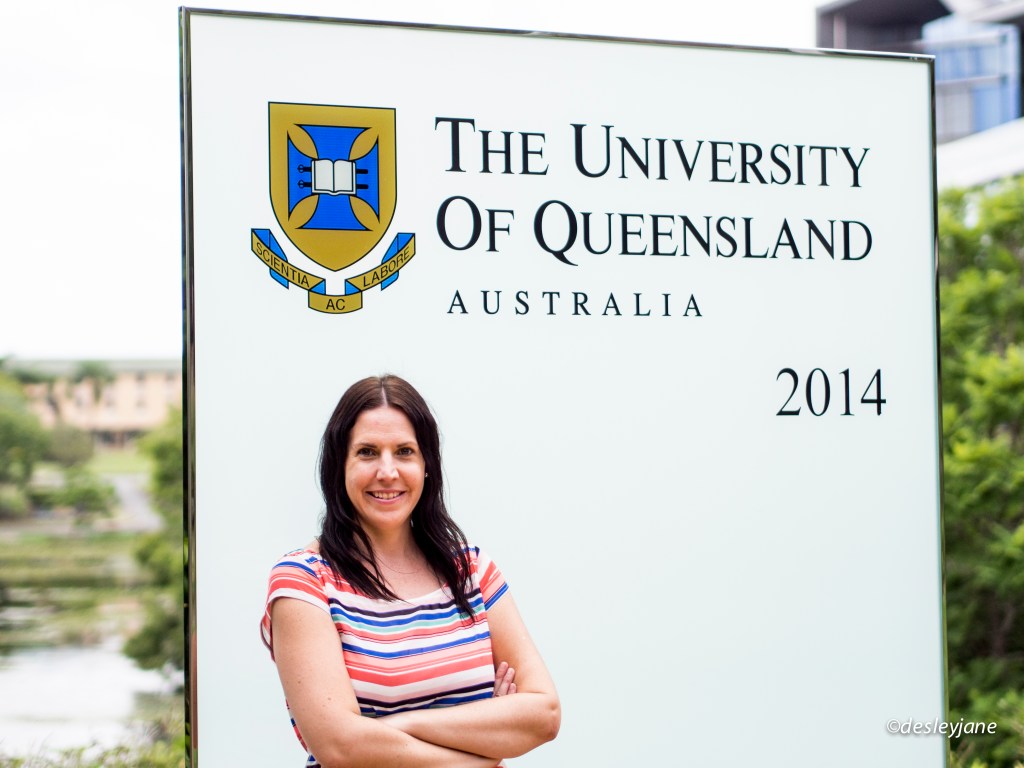
    I have recently discovered a lovely blog Musings of a Frequent Flying Scientist written by a local scientist Desley Jane. This week she shared an interview with another local scientist Julia Archbold. I enjoyed it so much I decided to share it with you.

    These are just a few of things I like about it:
    They are both young female scientists. (For too long science was seen as a male-only province.)
    The importance placed upon curiosity, asking questions and ‘quizativity’ (what a great word!)
    The excitement of learning.
    That their engagement with science makes a positive contribution ‘the world’.

    Please visit Desley’s blog to read the entire interview and explore what else she has to offer.

    Thank you

    Thanks for reading. I appreciate your feedback. Please share your thoughts about any aspect of this post.

    desleyjane's avatarMusings of a Frequent Flying Scientist

    Scientist SpotlightThis is my first interview for my Scientific Reasoning feature. The questions will be the same for each interviewee and I hope that they will give us some insight into the lives of a few of today’s scientists.

    201501_Julia-15

    Dr Julia Archbold is a good friend of mine. We have known each other for many years and have worked together in the past in our twenties (ish). I admire Julia greatly, both as a scientist and as a person. She is warm and talented, with a quick wit and a very kind soul. She is about to embark on an exciting new adventure and I caught her just in time for this interview.

    me: So I know you’re a scientist, but when did you decide to become a scientist? What were you thinking? (Not WHAT WERE YOU THINKING?!?! but what made you decide that science was going to be your future?)

    Julia: I…

    View original post 1,449 more words

  • Clearing confusion – reading and writing for the masses

    This week at the Carrot Ranch, Charli Mills is talking about disorientation and has challenged writers to In 99 words no more, no less) write a story about disorientation. She suggested exploring different ways confusion could be expressed, and the tension that could be created by that confusion.

    I decided to give myself a break from writing about the confusion that students may feel as they attempt to navigate the murky waters of expectations and inappropriate curricula that have little connection with their lives; or about how disoriented they may feel in an environment that bears little resemblance to any other they will experience.

    Instead I decided to share an interesting story I heard this week and a flash fiction which is more memoir than fiction, a reminder to self of how lucky I am to be doing what I am.

    First for the story.

    My current audiobook is Alphabetical: How Every Letter Tells a Story by Michael Rosen. In the book Rosen talks about the English alphabet, dealing with each of the 26 letters in turn. He has organised the book so that

    “Each letter in the book is linked to a topic. Each chapter takes on different aspects of how the alphabet has been used. Each chapter is preceded by the short story of how that particular letter evolved, how its name came to be pronounced that way and something on how the letter itself is spoken and played with.”

    K

    When listening to Rosen read his chapter about the letter ‘K’, “K is for Korean”, I was fascinated to find out that the alphabet of South Korea, Hangul, is “the earliest known successful example of a sudden, conscious, total transformation of a country’s writing.”

    The alphabet, described by Rosen as more of “syllabic monograms” than letters and is easy to learn, was devised in the mid-fifteenth century by the ruler of the time, King Sejong, as a way of enabling everyone to be literate.

    Prior to the introduction of this alphabet, Chinese characters were used. According to an article on Wikipediausing Chinese characters to write was so difficult for the common people that only privileged aristocrats usually male, could read and write fluently. The majority of Koreans were effectively illiterate before the invention of Hangul.

    Rosen says that what is “remarkable . . . is that there was an already existing system of writing which was, to all intents and purposes, overthrown in its entirety – not adapted. (It happened) because one part of the ruling elite decided that a total change was the only way in which everyone could read and write easily.

    Hear! Hear! I say, and express a wish that all our students of English would find learning to read and write far more easy and enjoyable than many do, that more emphasis would be placed upon helping students learn than in “teaching” particular content at particular times.

    Also included in Rosen’s chapter about ‘K’ was mention of the Voynich Manuscript which appears to be scientific in origin, but which contains fictitious plants and is written in a “language” which no one, including codebreaking experts, has been able to decipher and read. Rosen says that “With one beautifully executed volume, (the author) causes instability and doubt at the heart of the production, ownership and use of knowledge. It is a carefully constructed absurdist joke.

    Unfortunately for a small (but too large) number of our students, reading and writing for them is often as confusing as the Voynich Manuscript.

    Man-resigning


    For a little bit of reminiscing, here is a video of Michael Rosen talking about the dreaded Friday spelling test. I wonder how his experience matches yours.

    And so to my flash fiction of disorientation and confusion . . .

    Obfuscation

    The pulsing train wheels pounded in my head.

    Way off in the distance voices called instructions to each other.

    “What day is it?” I said.

    The voices were closer now. “She’s in here.”

    “Can you walk? Come with us,” they said.

    They led me to a vehicle and bade me lie down inside.

    Then came the questions:

    What’s your name? When were you born? What day is it? Why are you here? Who are you with?

    Slowly, as if from the deepest recesses, I drew each recalcitrant answer, recreating identity.

    “You’re okay. You bumped your head,” they said.

    Thank you

    Thank you for reading. I appreciate your feedback. Please share your thoughts about any aspect of this post or flash fiction.

  • “If you want intelligent children, give them a book …”

    If-you-want-intelligent children

    These words piqued* my interest as they wafted to my ears from the TV set in the other room.

    Who is that?” I called out.

    Jackie French,” he replied.

    I jumped up, eager to see and hear more.

    Jackie French is a well-known Australian author and advocate for literacy and the environment. She is currently the Australian Children’s Laureate with the task of promoting “the importance and transformational power of reading, creativity and story in the lives of young Australians”.

    I was delighted to find that Jackie’s speech was in acceptance of an Australian of the Year Award.

    The media announcement released by the Minister for Social Services explains that Jackie was recognised for her “long and distinguished career as a beloved children’s writer, earning more than 60 literary prizes for her books.”

     “Jackie embodies this commitment (to changing lives in our community) and I’d like thank her for the work she continues to do sharing the power of reading and story-telling for young Australians, and her work in conservation.” 

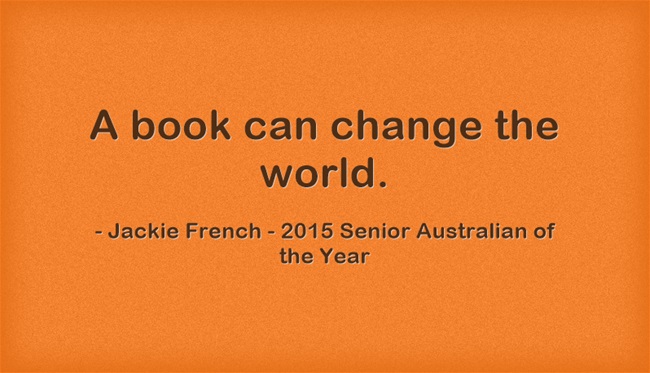
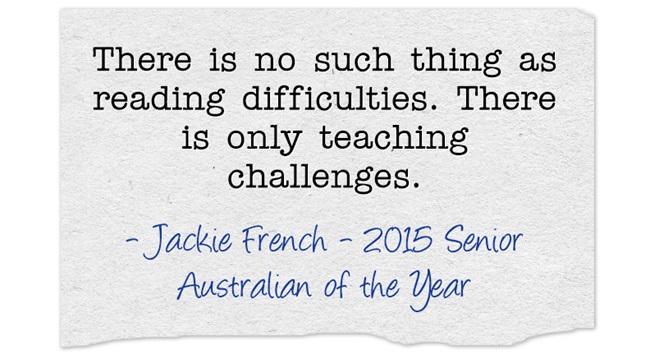
    Here is Jackie, Senior Australian of the Year 2015, accepting her award.

    Failure-is-not-an-optionA-book-can-change-theThere-is-no-such-thing


    In this next video Jackie talks about her book “Hitler’s Daughter”. You don’t have to have read the book to glean much of interest from the interview. In the discussion Jackie shares her thoughts about reading and writing. She questions how the ‘world’ in which one is, influences thoughts about good and evil and decisions that are made. She discusses how the need for evil to be resolved in a work of fiction differs between children and adults. She talks about whether it is necessary for a child to apologise for the sins of the previous generation, and how still controversial issues can be dealt with in an historical situation. It is worth listening to if you simply want something to ponder over.

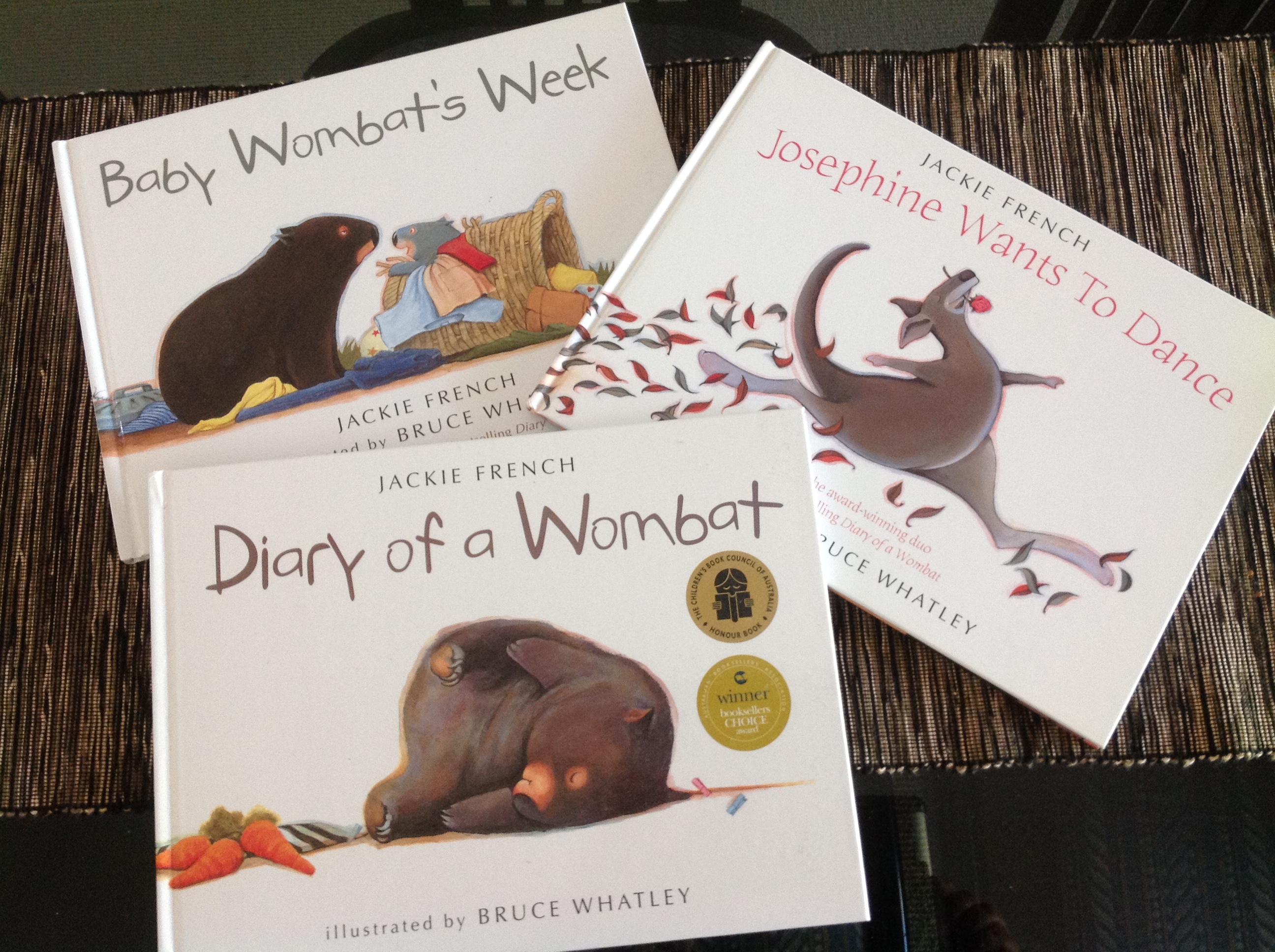
    Being an early childhood teacher I am more familiar with Jackie’s picture books such as

    Diary of a Wombat, Baby Wombat’s Week, and Josephine Wants to Dance, which are delightful.

    IMG_4302

    Here is a video of Jackie reading Diary of a Wombat.

    I have just discovered that Hitler’s Daughter is available as an audiobook, so it is going onto my list!

    https://openclipart.org/image/800px/svg_to_png/148843/1310261210.png
    https://openclipart.org/image/800px/svg_to_png/148843/1310261210.png


    I congratulate Jackie on her award and thank her for the contribution she is making to the lives of so many and the future of our planet.


    *piqued

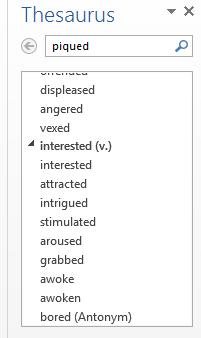
    In this sentence, I am using the word “piqued” to mean “stimulated or aroused my interest”.

    How can one word be used to express opposite meanings? I don’t know how anyone is expected to learn or understand the nuances of this language we call English!

    When I checked with my thesaurus to ensure I had chosen the correct word, this is what I found:

    piqued 1         piqued 2

    How many other words do you know that could almost be listed as its antonym?

    Thank you

    Thank you for reading. I appreciate your feedback. Please share your thoughts about any aspect of this post.

  • Magnum opus – life in a flash


    Discussions in response to my most recent posts have been in-depth and involved a bit of back and forth and exchange of ideas about optimism, pessimism, meliorism and the meaning of life, including achieving goals and the idea of ‘not yet’. I am grateful to everyone who has joined in the conversation, got me thinking and contributed to my learnacy. Please may it long continue!

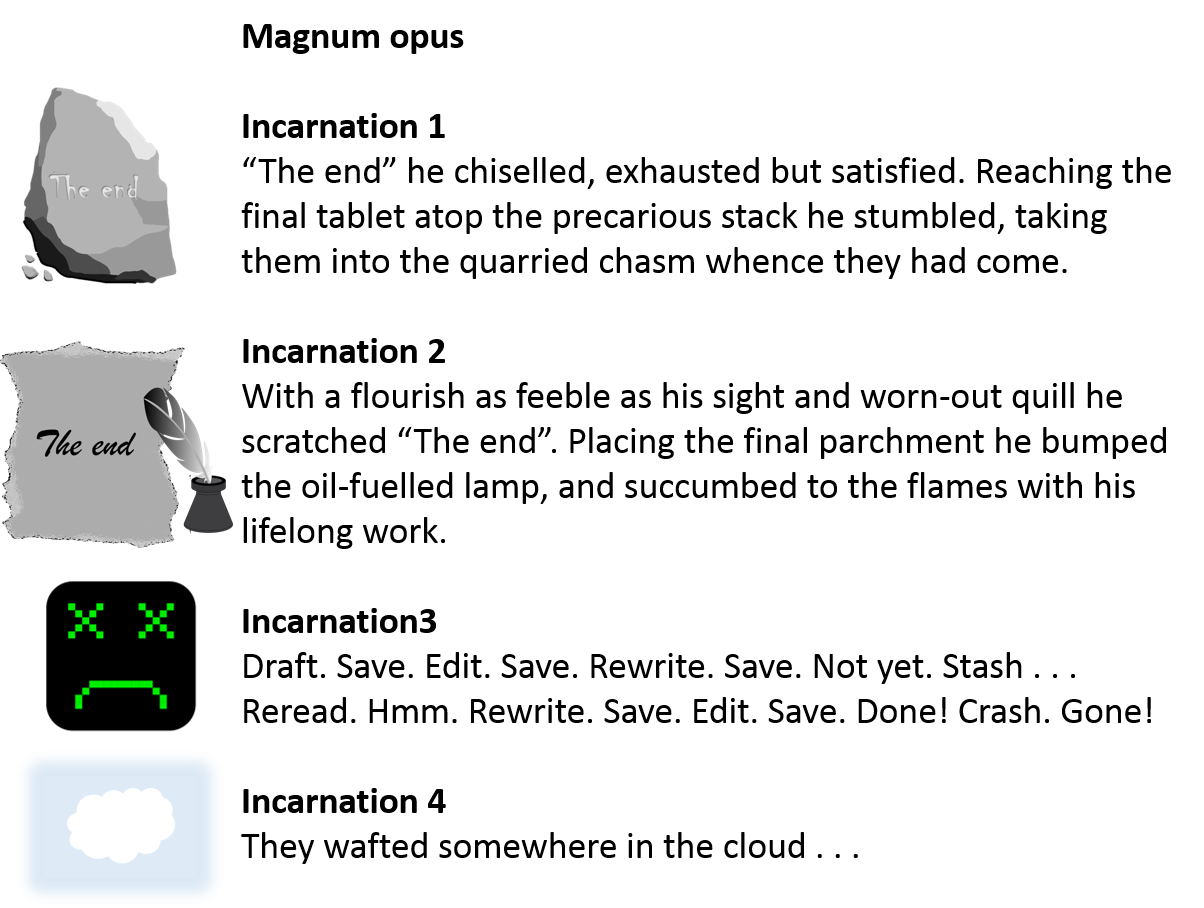
    This week at the new-look Carrot Ranch, Charli Mills continues to challenge writers with her 99 word flash prompt to In 99 words (no more, no less) write a life span.

    I decided to lighten up a bit this week, and simply respond to the challenge.

    Magnum opus

    Thank you for reading. I appreciate your feedback. Please share your thoughts.

    Thank you


  • Talking the way out

    https://openclipart.org/image/800px/svg_to_png/100009/Coffee-by-netalloy
    https://openclipart.org/image/800px/svg_to_png/100009/Coffee-by-netalloy

    Recently I met up with some teacher friends and, as always happens with teachers, the discussion turned to school, teaching and children. There was talk about the crowdedness and inappropriateness of many aspects of the curriculum, of resources that were ambiguous and poorly written, of time spent practising and preparing for tests, of (other) teachers who were ill-equipped to teach and not interested in professional learning.

    It made me sad. It has always made me sad. Sad and frustrated with the inappropriateness of so much that happens in schools and the effect it has on diminishing our most precious resource: the ability to think, learn, innovate and create.

    The fact that I am unable to do anything about this situation at times overwhelms me and I just want to curl up in a ball in the corner and cry. That I have spent almost my entire adult life swimming against the tide trying, through a variety of means, to make a positive difference through education with an effect as insignificant as a grain of salt in the ocean, makes my efforts seem futile and worthless. A waste of time and energy. I should just give up.

    But, foolishly maybe, I haven’t and don’t. Here I am writing a blog about education. One more way to try; with a website on the way as well. What effect will they have? Probably very little, but at least I am doing something that is important to me; something that gives my life meaning; even if it has no real value beyond that.

    I have been out of the classroom now for three years. I escaped before the introduction of new programs which I would have found philosophically and pedagogically impossible to implement. It had always been a balancing act, doing what my employer expected of me and what I believed to be best for the children and their learning. (Of course there is no saying that what I thought was better. The value of my thinking may well have been just in my head!)

    Five times before I had left the classroom, only twice for reasons unrelated to dissatisfaction (the birth of children). But I could never shake off my belief that education delivery could be improved. I read widely, seeking alternative ways of making a positive difference but, although I had vowed at each departure to never return, something always drew me back.

    Man-resigning
    https://openclipart.org/detail/211086/man-resigning.-by-doodleguy-211086

    Rather than allowing the situation to overwhelm me by accepting that there was nothing I could do; rather than throwing my hands in the air, walking away and admitting that it’s all too hard, I didn’t let go. Perhaps it was foolhardy. Maybe I should. Maybe one day I will. But not yet.

    Instead I choose to focus on the good things I see happening; the parents, teachers, nannies and child care workers who strive to make a positive difference. We know we can’t change the whole world. We can’t rid it of all the injustices, inequalities, violence and other wrongdoings against humanity and the Earth. But we can make a difference in our own little corner; and my own little corner has always been my focus. If I can make a difference with something as simple as a smile or sharing a positive thought then I will do it. If I can do more than that then I will, but I will focus on what I can rather than what I can’t.

    So for my little bit of positivity today, I am sharing some of what I think are great things that are happening, making a positive contribution to education and children’s lives; some things that make my heart sing and confirm my belief that if we want to, we can make a difference.

    marshmallow 5

    I have previously shared some thoughts that stimulated great discussion about the famous Marshmallow Test conducted by Professor Walter Mischel.

    On All Our Words I recently read a report of an address made by Mischel to the team at All Our Kin.

    In that address, Mischel is quoted as saying,

    “When a child grows up in a high-poverty, extremely unpredictable environment – in which anything can happen, in which danger is constantly present, in which chaos is always possible – it affects him at a biological level. Those experiences turn into chronic stress, or toxic stress, and they actually change his brain. They limit the potential of the cool system to make long-term plans and be patient and work for a distant goal.”

    The author of the article, Christina Nelson writes

    “Fighting against the biology of disadvantage requires a sustained effort that begins at birth, or even earlier, which is why creating high quality early care and education is so important for vulnerable children.”

    Mischel’s address further supports that view and congratulates the team at All our Kin for their work, saying

    “By providing a sense of trust, a sense that the rewards are attainable, that promises will be kept, that life doesn’t have to be chaotic and unpredictable, you folks are providing exactly the basis for the development of the cool system, and for the regulation of the hot system. The kids who have that when they are two years old are the same kids who are successful at the marshmallow test at five.”

    The praise from Mischel would not have been given lightly. I’m impressed with what I have read about All Our Kin, including this from their mission statement:

    “. . . children, regardless of where they live, their racial or ethnic background, or how much money their parents earn, will begin their lives with all the advantages, tools, and experiences that we, as a society, are capable of giving them.”

    family1

    The Talking is Teaching program, which was launched by Hillary Clinton as part of the Too Small to Fail initiative, in Oakland aims to reduce educational (and life) disadvantages by teaching parents the importance of talking to their children from birth.

    Thanks to my friend Anne Goodwin and daughter Bec I was also alerted to an article in the New Yorker The Talking Cure which described a program in Providence that also encourages low-income parents to talk more with their children.

    The author of the article, Margaret Talbot says that “The way you converse with your child is one of the most intimate aspects of parenting, shaped both by your personality and by cultural habits so deep that they can feel automatic. Changing how low-income parents interact with their children is a delicate matter”. The aim of the program is to support parents in non-threatening ways to support their children.

    I have previously mentioned a recent publication by Michael Rosen entitled Good Ideas: How to Be Your Child’s (and Your Own) Best Teacher. This book provides wonderful support for parents of children of any age. In very readable, accessible language, Rosen’s book is packed full of simple, inexpensive, fun and powerful ways for parents to support their children’s learning, effectively but unobtrusively, in their everyday lives. I think this book should be supplied to all parents on the birth of their children.

    Closer to home here in Australia are Community Hubs  and other programs such as Learning for Life run by the Smith Family and Acting Early, Changing Lives by the Benevolent Society.

    These are but a few of the good things that are happening. I have focussed on community programs rather than individuals (except for Michael Rosen’s book) in this post. I know there are many more great programs, and individual teachers doing amazing work. I’d love to hear about some that you admire.

    Thank you

    Thank you for reading. I value your feedback. Please share your thoughts about any aspect of this post.


  • Finding meaning

    Always look on the bright side of life’ is a philosophy to which I aspire. Many think I have achieved it but they don’t know how hard I struggle. I do try to find the good in people and situations, but it’s not always my first and instinctive reaction. When I realise I’ve reacted negatively I try to change or hide my negative thoughts and replace them with positive ones. But it’s not always easy to convince myself, regardless of whether I convince anyone else or not.

    It reminds me of a quote on a laundry bag which has stayed with me in eight different homes in three different states and for well more than thirty years. After all this support I have finally thought to seek out the source of the wisdom and found it to be UK poet and playwright Christopher Fry.

    bag

    I feel the quote represents me quite well; doing what I can to hold it all together and keeping those negative instincts in check by ‘nipping them in the bud’, all the while fearful of one day just losing it and letting it all out in one mighty swoosh. I guess the expectation of fewer years remaining in which I will need to keep myself contained makes me a little optimistic. (Always look on the bright side!)

    I like to think I’m more of a hopeful realist than either a Pollyanna or a negative realistic. A discussion about optimism and pessimism followed a previous post in which I asked How much of a meliorist are you?  But meliorism is more a belief that the world can be improved by the actions of humans than an optimistic or pessimistic expectation of the outcome.

    I believe that humans have an amazing potential for improving our world (i.e. every aspect of it). That makes me a meliorist. Recognising what is happening in the world now makes me a realist. A belief that human actions will make improvements in the future makes me an optimist, but not one without some pessimistic fears. While stories of terrorism, climate change and violence fuel the fears, stories like this TED talk by Tasso Azevedo show that improvements can be, and are being, made.

    I am an education meliorist. I believe that education is a powerful agent for change and has an enormous potential for improving lives. My optimism that education will impact positively upon individual lives as well as the collective human situation outweighs my pessimism about the outcomes I see in current systemic trends and leads me to seek out educators, like Ken Robinson, Chris Lehmann , Michael Rosen, Barbara Arrowsmith-Young and Rita Pierson who share my vision of what could be.

    A quest to improve my own life and the lives of others through education has been a long time passion. Ensuring that my own children experienced the benefits of learnacy, though I hadn’t heard of the term at the time, as well as literacy and numeracy was of great importance to me. I encouraged them to question, to create, to think critically, to read, to learn, to wonder . . .  There is so much we teach our children the list goes on. It is very rewarding for me to see that they have a love of learning and are passing that same love on to the next generation.

    Having, sharing and fostering a lifelong love of learning perhaps in some ways contributes to giving meaning to my life. But it also leads me to question life and its purpose in ways that many others don’t.  This questioning can lead to a sense of unease, of lacking fulfilment, of needing to do and achieve more. I know others who better accept the way things are, accept each day as it comes, and are content in their existence. Sometimes I envy their complacency.  Other times I want to shake them and make them realise that there is more to life than this.

    But am I wrong? Is there actually less to life than this? It is sometimes said that there is no point in accumulating wealth and possessions as you can’t take them with you when you go. But is there any point in accumulating a lot of learning and knowledge? After all, you can’t take it with you when you go either; but like wealth and possessions, you can leave it behind for future generations. If we lived only for what we could take with us, would there be a point?

    I guess what matters is what helps each of us reach that level of contentment, of being here and now in the present moment because, after all, it is all we ever have.

    I often think about life, existence, why we are here and the purpose of it all, constantly wavering between seeing a point and not. A recent discussion with a friend about her feelings of emptiness and needing to find more purpose and meaning in life disturbed my approaching, but elusive, equilibrium again. Will I ever reach that blissful and enviable state of contentment: knowing and accepting who I am, where I am, where I am going and how I am going to get there? Who knows? But I can have fun figuring it out. I am determined to enjoy the journey. I don’t think there will be much joy at the end!

    Which is all very timely with the current flash fiction prompt set by Charli Mills at the Carrot Ranch who talks about actions that we take to reach our goals and challenges writers to In 99 words (no more, no less) write a story that describes a moment of being.

    I hope you enjoy my response.

    Being, positive

    “It’s positive,” he said.

    She smiled. She knew. She only needed official confirmation.

    He wanted dates. She supplied.

    But she knew the very moment an unexpected but welcome spark enlivened her being with its playful announcement, “Surprise! I’m here!”

    She’d carried the secret joy within her for weeks, never letting on, keeping it to herself, waiting. No one would have believed her without proof. But with her whole being she knew.

    Finally, after nine inseparable months, she held the child, distinct and individual. She marvelled at the tiny creation whose existence breathed purpose and meaning into hers.

    Thank you

    Thank you for reading. I appreciate your feedback. Please share your thoughts about any aspect of this post and flash fiction.

  • I can do this – one step at a time!

    Confidence, the willingness to have a go and to get up and try again after an unsuccessful attempt, is crucial to learning.

    Attached to real confidence, as opposed to false bravado, are certain types of knowledge:

    • of the desired outcome
    • of possible steps to achieving the outcome
    • of what is needed to achieve the outcome
    • of where and how to find the knowledge or support necessary to achieve the outcome

    and an openness to possibilities.

    Knowing what one doesn’t know is just as important as knowing what one does!

    www.openclipart.com
    http://www.openclipart.com

    Caroline Lodge expressed a similar view on her blog just this week, confessing that she didn’t know how to go about revising her novel, but that she did know what to do about not knowing: she enrolled in an online editing course. She attributed the view of intelligence as “knowing what to do when you don’t know what to do to the educationalist Guy Claxton.

    I wasn’t aware of Claxton but he sounded like my sort of educationalist so I decided to investigate further.

    https://openclipart.org http://goo.gl/ZvsCFc
    https://openclipart.org
    http://goo.gl/ZvsCFc


    A Google search brought up this result:

    Claxton - Google

    Hmm – seems like, according to Claxton, that definition of intelligence is first attributed to Jean Piaget. I’d better read his article: Learning to learn: a key goal in a 21st century curriculum.

    I didn’t have to read far into the article before I knew that Caroline had sent me in the direction of another great educator (thanks Caroline).

    In the introduction Claxton says,

    “The well-rehearsed economic argument says that knowledge is changing so fast that we cannot give young people what they will need to know, because we do not know what it will be. Instead we should be helping them to develop supple and nimble minds, so that they will be able to learn whatever they need to. If we can achieve that, we will have a world-class workforce comprising people who are innovative and resourceful. The personal argument reaches the same conclusion.”

    I have expressed similar views previously on this blog, including here, here and here.

    A little further into the article Claxton introduces a new (to me) term: illearnerate. He described students not thinking of themselves as effective real-life learners. He says,

    “They think that school has not only failed to give them what they need, it has actually compounded the problem.”

    The term is new, but the thinking is not!

    He goes on to say that,

    “More fundamental even than the concern with literacy and numeracy is the need to protect and develop young people’s learnacy.”

    What great terms, illearnerate and learnacy, I have added to my vocabulary today!

    The steps I am taking are definitely enhancing my learning. I think I am learnerate.

    However, I digress. I was looking for the attribution to Piaget and, a little further into the article, there it was:

    Claxton - Piaget

    I looked further online for confirmation of the quote and found this on goodreads:

    Good Reads - Piaget

    I think there is a subtle difference in the interpretation given by Claxton and would say that intelligence is not so much defined by, but incorporatesknowing what to do when you don’t know what to do”.

    A few weeks ago I used images in my post Bring a plate that prompted Geoff Le Pard to ask,

    “How do you do the images? Adding the captions?”

    I said that I used PowerPoint and would post some instructions if he thought it could be useful. He said that it would be, and Anne Goodwin agreed.

    For some time I had been wanting to create an instructional video using a capture of what I was doing onscreen. However it hadn’t reached the top of my to-do list. This seemed the perfect opportunity to put it there and do the learning required.

    In response to Geoff’s request I made this video demonstrating how to insert pictures and text in PowerPoint, then group and save them as one image.

    For my first attempt I was fairly pleased with the result, though I fear the video may be a bit long at 10 minutes. Maybe I should have started with a simpler image – one picture and one text box may have been enough for the demonstration to be effective. I’d be pleased to know what you think.

    After I had finished the video it occurred to me that I may not have addressed Geoff’s question at all, that the combination of image and caption that Geoff was referring to may have been the image of the whole PowerPoint slide, like this one:

    Rice salad 2

    If so, then my first video would be of no use to Geoff.

    There is a saying attributed to George Bernard Shaw:

    “Those who can do, and those who can’t teach.”

    I both agree and disagree with the statement for different reasons. Teaching is an incredibly important profession and not everyone can do it. Looking beyond the profession to simply teaching someone a skill is also something that not everyone can do. Sometimes I think that the one most capable of teaching a skill is the one who struggled to learn it; not the one who was able to do it effortlessly and almost by intuition.

    The ability to teach requires knowledge of each step or each component and how they work together. This knowledge helps the teacher understand where a learner is confused or what the learner needs to know.

    So just as teachers in classrooms provide resources and strategies to cater for a range of needs and abilities, I have produced a second video demonstrating how to make an image of a PowerPoint slide. This shorter (five minute) video explains how to create images using three different methods: Snagit, Snipping Tool, and printscreen function. I hope I have explained the steps for each clearly.

    Important update: Do not do this at home. Do not follow the procedures in this video.

    Since viewing this post and videos my daughter Bec has told me of a much easier way to create an image of a PowerPoint slide, or of every slide in a presentation. Maybe you know of it too.

    Here’s how to do it:

    1. Click on the slide you wish to make an image of, or any slide if you wish to make images of all slides in the presentation
    2. Go to file, save as
    3. Choose Save as type: PNG
    4. Click Save – you will be asked which slides you wish to export: all or just this one
    5. Selecting all saves every slide as a separate image to a new folder with the file name you choose; selecting just this one saves only the slide selected.

    How easy is that? Thanks Bec. 🙂 And I don’t mind that I found out after making the video. I wanted to learn how to do that anyway, and now I have learned something else as well. Great steps in learning. I’m learnerate!

    The discussion of steps to learning tied in very nicely with the flash fiction prompt set by Charli Mills at the Carrot Ranch this week. Charli challenged writers to In 99 words (no more, no less) write a story about steps, stairs or a staircase.

    This is my response:

    If only

    She collapsed, exhausted. Stairs led up and stairs led down; some steep, some wide, some narrow, most dark. Her head spun and vision blurred. Which way now? Which way had she come? Had she been going up and down these stairs forever?  Going around in circles?  They all now looked the same. She didn’t even know if she’d been in this place before.

    “I’m trapped,” she thought. “Stuck here forever.”

    She closed her eyes, surrendering to despair.

    Outside birds heralded the rising sun. She was lost, oblivious of its promise.

    If only she had recognised the door.


    Thank you


    Thank you for reading. I appreciate your feedback. Please share your thoughts about any aspect of this post, including the videos and flash fiction.