Live Love Laugh Learn … Create the possibilities

Tag: environment

  • Interview with Anne Donnelly, author-illustrator – readilearn

    Interview with Anne Donnelly, author-illustrator – readilearn

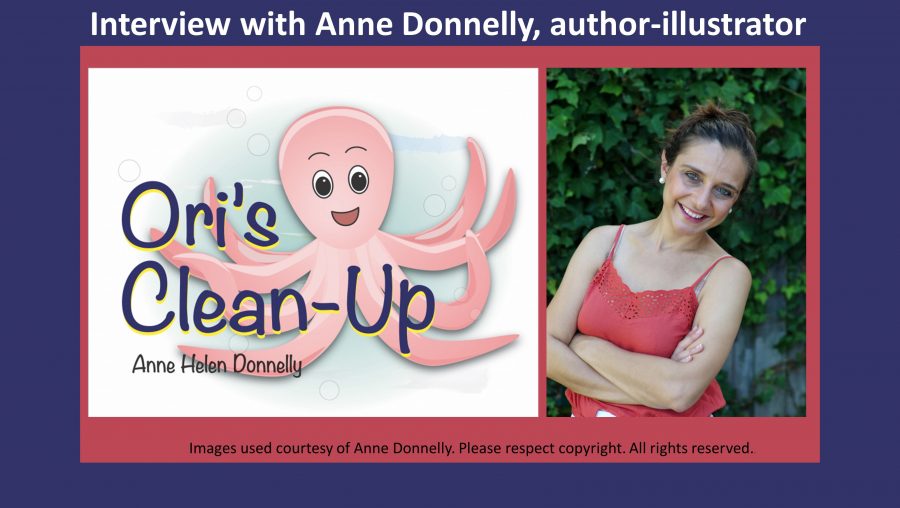
    With tomorrow 8 June World Oceans Day and World Environment Day just a few days ago on 5 June, there is no better time than now to introduce you to Anne Donnelly and her delightful picture book Ori’s Clean-up.

    The aim of World Oceans Day is to celebrate, protect and conserve the world’s oceans. The 2019 theme Together we can protect and restore our ocean focuses on preventing plastic pollution.  With its environmental theme incorporating recycling and re-using, Anne’s book is a perfect fit.

    About Anne Donnelly

    Anne lives in Sydney with her husband, her two children and their new puppy that chews everything! She loves to be creative in all sorts of ways. She loves to read, write, craft and is a very animated storyteller. As a little girl, she used to draw on the underside of the kitchen table and all the way up the stairs, on each step, much to her parent’s shock.

    She has released three books in the Ori Octopus series; Ori the Octopus and Ori’s Christmas in 2017. And now she is especially excited about her latest book Ori’s Clean-Up as it combines two of her passions; children’s literacy and care of our environment. This book has been endorsed by Clean Up Australia and is being stocked at various zoos, national parks, museums, visitor centres, aquariums and holiday destinations all over the country.

    About Ori’s Clean-Up

    Ori the Octopus and his friends have left their rubbish everywhere. They tidy up, but it doesn’t work. To keep their home clean and healthy, they need to do something different, something better.

    The Interview

     Hi, Anne. Welcome to readilearn.

     Thanks for inviting me.

    Anne, you tell your stories with words and pictures. When did you know you wanted to be a storyteller and share your stories with others?

    Continue reading: Interview with Anne Donnelly, author-illustrator – readilearn

  • Would you like strawberries with that?

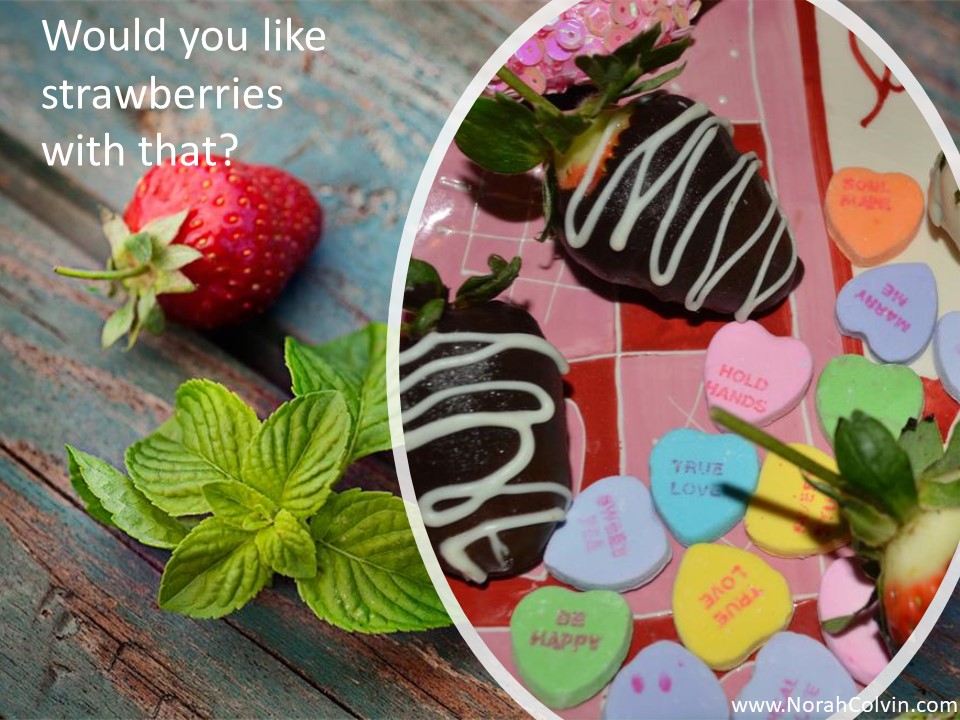
    Would you like strawberries with that?

    Tomorrow, 5 June is World Environment Day. The theme for this year is Air Pollution. According to the World Environment Day website, nine out of ten people breathe polluted air — a frightening statistic. While the most polluted cities may be far from where we live and the effect of our individual actions may seem negligible, the site recommends ways in which we can help reduce air pollution. I’m sure you already do many of these:

    • Use public transport or car sharing, cycle or walk
    • Switch to a hybrid or electric vehicle and request electric taxis
    • Turn off the car engine when stationary
    • Reduce your consumption of meat and dairy to help cut methane emissions
    • Compost organic food items and recycle non-organic trash
    • Switch to high-efficiency home heating systems and equipment
    • Save energy: turn off lights and electronics when not in use
    • Choose non-toxic paints and furnishings

    Carrot Ranch flash fiction challenge strawberries and mint

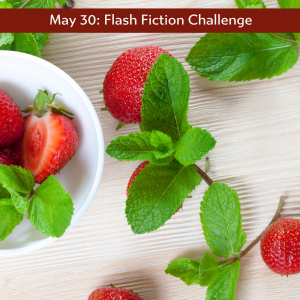
    While not specific to this year’s theme, I thought the flash fiction prompt set by Charli Mills at the Carrot Ranch this week was a perfect match for World Environment Day. Charli challenged writers to In 99 words (no more, no less) write a story that includes strawberries and mint. The combination evokes color contrast, scents, and taste. Where will the combination take you? Go where the prompt leads!

    Growing plants, particularly those that produce edible delicacies, including strawberries and mint, is a great way of introducing children to the importance of caring for the environment. Both strawberries and mint are easy to grow and require little space.

    The rewards are not only in the eating. Children can learn where their food comes from and understand that it doesn’t just appear in plastic packaging on supermarket shelves or in the fridge at home. In caring for a garden, they learn about what plants need and the importance of caring for the soil. They learn to be patient, waiting for the plants to grow and to be ready to harvest. Understandings learned from small-scale gardening, even in a pot, can be applied to caring for the environment on a larger scale. It is never too soon, or too late, to learn.

    In my response to Charli’s prompt, I have considered gardening as nourishment for the mind and spirit as well as the body. Because strawberries are a favourite with both my grandchildren who would probably eat strawberries anywhere and anytime, I settled on a story featuring a grandmother and grandchild. Any similarity to this grandmother is non-existent. I hope you enjoy it anyway.

    (I included some favourite family strawberry desserts in this post.)

    Grandma’s Garden

    Jess blew kisses to Mum, then raced Grandma into the garden. She pulled on her boots and gloves and readied her digging fork. Emulating Grandma, she soaked up explanations of magic combinations that helped plants grow. At the strawberry patch, they filled baskets with ripe red berries. On the way inside, Grandma clipped sprigs of mint.

    They dipped strawberries in chocolate and garnished them with mint.

    “For Jess?”

    “For Mum.

    “Birfday?”

    “Just —”

    Jess inspected the chocolate bowl. “All gone.”

    “Stawbwee?” said Jess, pointing to the remaining few.

    “For Jess,” smiled Grandma.

    Jess munched strawberries and Grandma chewed mint.

    Thank you blog post

    Thank you for reading. I appreciate your feedback. Please share your thoughts.


  • Multicultural Children’s Book Day: Book Review – Readilearn

    Multicultural Children’s Book Day: Book Review – Readilearn

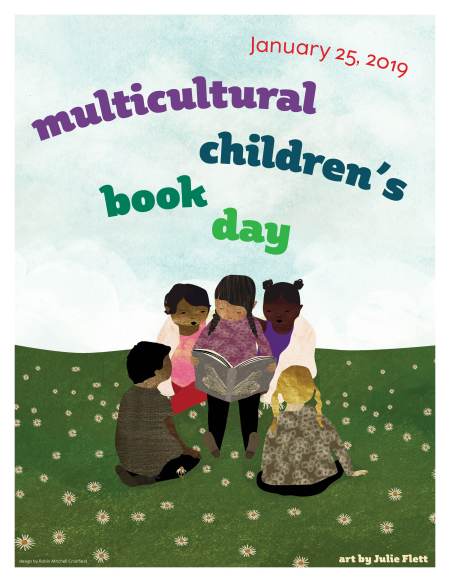
    Now in its sixth year and held on the last Friday in January, Multicultural Children’s Book Day (MCBD) celebrates books that celebrate diversity. As classrooms are increasingly filled with children from a diversity of backgrounds, it is important to provide them with books that reflect their lives, books in which they can find themselves.

    The purpose of Multicultural Children’s Book Day is to create awareness of books that celebrate diversity and to get more of them into classrooms and libraries.

    Valarie Budayr and Mia Wenjen, co-founders of MCBD, define multicultural books as:

    • Books that contain characters of color as well as main characters that represent a minority point of view.
    • Books written by an author of diversity or color from their perspective. Search #ownvoices to discover diverse books written by diverse authors.
    • Books that share ideas, stories, and information about cultures, race, religion, language, and traditions. These books can be non-fiction, but still written in a way that kids will find entertaining and informative.
    • Books that embrace special needs or even “hidden disabilities” like ADHD, ADD, and anxiety.

    Multicultural Children’s Book Day provides us with an opportunity to examine the collections of books in our classrooms and libraries to determine if they reflect the lives our children.

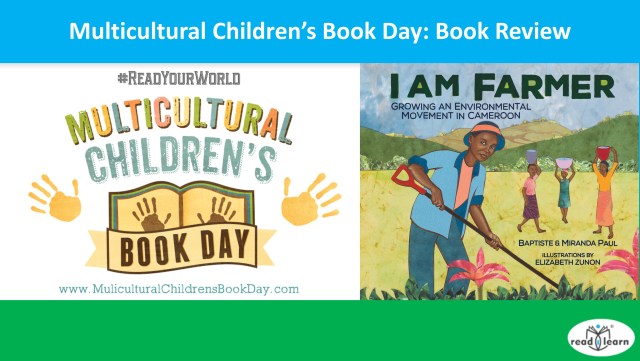
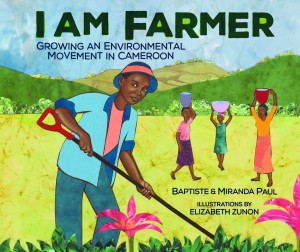
    This year, for the first time, I am participating in the MCBD celebrations with a review of I am Farmer, a picture book written by Miranda and Baptiste Paul and illustrated by Elizabeth Zunon. I am grateful to Miranda and Paul and publisher Millbrook Press for providing me with a link to access the book on NetGallery prior to its publication in early February.

    I am Farmer - the story of a farmer in Cameroon who became an environmental hero

    Continue reading: Multicultural Children’s Book Day: Book Review – Readilearn

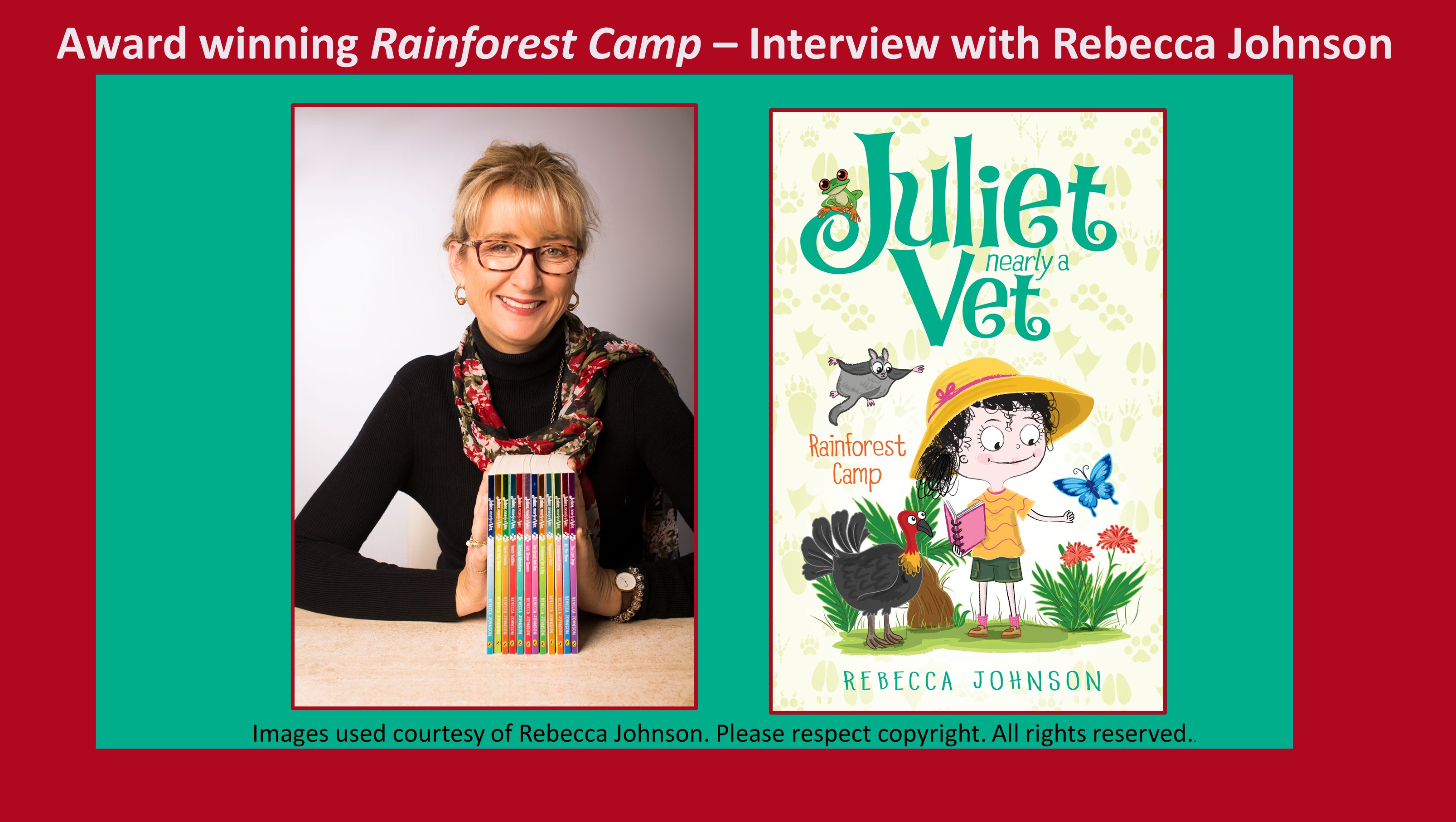
  • Award winning Rainforest Camp – interview with Rebecca Johnson – Readilearn

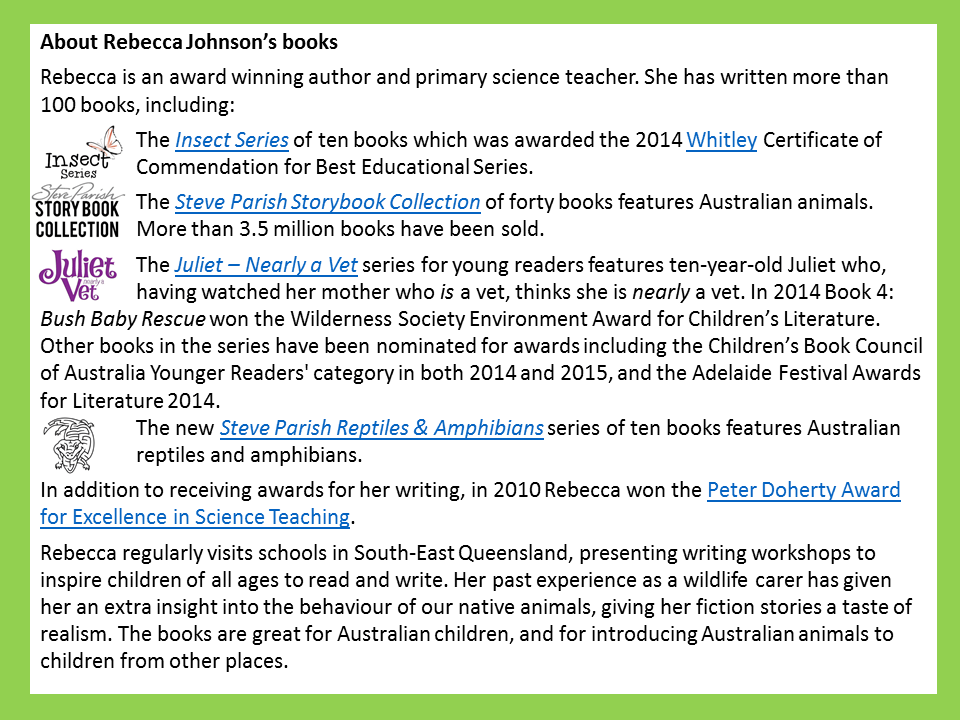
    Just over a year ago, in my very first author interview, when I introduced you to Rebecca Johnson and her award winning Insect Series, I shared the following information about her publications and awards:

    Since then, Rebecca’s list of publications has continued to grow, including two new series of books:

    Vet Cadets “an exciting new four book series for smart, animal and science-loving girls who aren’t afraid to get their hands dirty!”

    First Facts “designed to give children a clear understanding of the six main groups of animals.”

    Rebecca’s popular junior fiction series Juliet nearly a Vet, for readers from about 7 years of age, continues to attract attention. The series features ten-year-old Juliet who believes she is nearly a vet after watching her mother, who is a vet, at work.

    Rebecca’s purpose in telling these stories is to blend science with fiction in a way that engages children’s interest in wildlife and nature. She does it successfully. In 2014, the fourth in the series Bush Baby Rescue won the Wilderness Society Environment Award for Children’s Literature. This year, the most recent title Rainforest Camp received the same award.

    Continue reading at: Award winning Rainforest Camp – interview with Rebecca Johnson – Readilearn

  • A piece of pie

    This week at the Carrot Ranch Charli Mills has challenged writers to In 99 words (no more, no less) write a story that features a pie. You can make it any kind of pie, focus on filling or crust, or tell us about the pie-maker. How does pie set a tone in a story? Does it warm the hearth or bring disappointment?

    But which pie should I choose: meat, vegetable or fruit, with pastry that is short, flaky or puff? Perhaps a piece of pie for a correct answer in Trivial Pursuit?

    I considered words that rhyme with pie, and what a list I made:
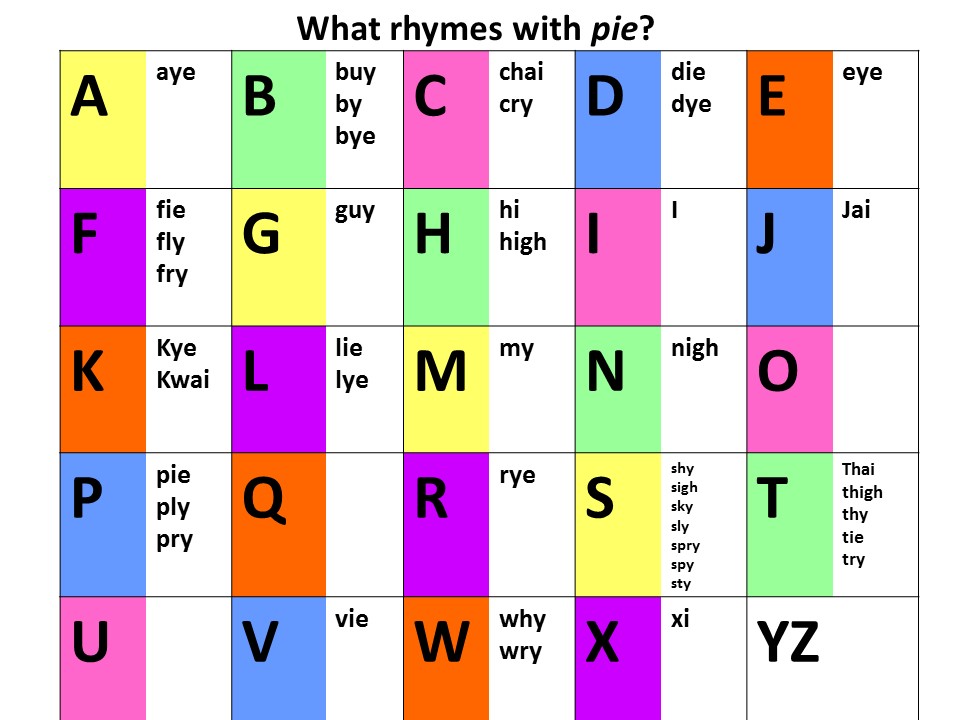
    what rhymes with pie

    Forty-three words!

    Maybe you can add even more.

    Did you notice the variety of ways we spell the long vowel ī, as in the word pie?

    There are eight:

    aye    uy    y     ye     ai     ie     igh    and     i!

    Isn’t it a wonder that any of us ever learned to read or spell.

    Did you notice there were two ‘pie’s in my title: A piece of pie?

    Did you notice that each time the three letters ‘pie’ were used, they represented different sounds?

    As mature readers and writers we have no difficulty with any of these vagaries of the English language, but for beginners, they can be a challenge.

    The challenge reminds me of “Old Lucy Lindy and the Pies” from Sounds of Laughter in the Sounds of Language Series by Bill Martin Jnr. In the story, Lucy Lindy loves to bake pies. She bakes all kinds of pies, including mince pies. Since all her pies looked the same with their delicious layer of pastry on the top, Lucy Lindy wanted to be sure she knew which pies were which when she took them out of the oven. She came up with a brilliant plan. She put the initials IM on the mince pies, for Is Mince. Then, on the pies that weren’t mince, she put the initials IM, for Isn’t Mince. Children laugh out loud when they realise it wasn’t such a clever plan after all.

    A Necklace of Raindrops

    Another lovely story for young children is “There’s some Sky in this Pie” from the collection A Necklace of Raindrops by Joan Aiken. The story has a cumulative structure similar to that of The Gingerbread Man, but with an additional sprinkle of creativity that could be used to ignite children’s own imaginative stories.

    When the old woman was making a pie for the old man, she looked outside at the snow “coming down so fast out of the white sky.

    “Then she went on rolling the pastry. But what do you think happened? A little corner of the sky that she had been looking at got caught in the pastry.”

    When the pie was cooked and the old woman opened the oven, the pie floated across the room. The woman and man and their cat jumped onto the pie to try to stop it, but they couldn’t, and they floated away on it. From time to time they met others who called out to them,

    “Old woman, old man, little puss, so high,

    Sailing along on your apple pie,

    Why are you floating across the sky?”

    They answered:

    “Because we can’t stop, that’s the reason why.”

    (Notice those different ways of spelling the long ī sound again – three spellings in that short extract.)

    Lucy Lindy and the Sky in the Pie are light-hearted and imaginative stories.

    Recipe for a Perfect Planet Pie

    Another favourite pie story is Recipe for Perfect Planet Pie by Kim Michelle Toft, an Australian author/illustrator and the only illustrator anywhere to illustrate all her stories with silk paintings.

    I have shared some of Kim’s work with you before here and here, and I’m certain to again as I attended the launch of her eleventh picture book Coral Sea Dreaming on the weekend and have scheduled a readilearn interview with her later in the year.

    Kim is passionate about conservation, especially of our marine environment and its inhabitants. In each of her books, she uses her stunning silk paintings to ignite a wonderment in the natural world and inspire a love of and caring for the environment. Recipe for Perfect Planet Pie continues these themes.

    The book reads like a recipe with a list of ingredients, a method, fourteen step-by-step instructions, and “Helpful hints” on each page. The recipe begins:

    1 To prepare the base. Sift the rich chocolate earth and crystallised minerals together. Make a well and pour in one cloud full of rain.”

    and concludes:

    “Serve pie immediately with a side of love and a slice of happiness.”

    At the end of the book, Kim includes information about the pie’s ingredients and the importance of each. She provides suggestions that we can implement to help create a happy, healthy planet and says,

    “Planet Earth is our only home and it is up to us to create change and put our knowledge into action.”

    I’m sure you’ll agree with that.

    For my response to Charli’s challenge I decided to go with a bit of nonsense and see how many of the rhyming words I could use to construct a pie story and still maintain some sort of sense. I wonder how successful you will think I’ve been. I managed to incorporate 28 and at least one from each of the spelling variants.

    A piece of pie

    Kye met Jai at the mall.

    Hi,” said Kye.

    “Nice day,” replied Jai. “Look at that sky. Wish I could fly.”

    “Time for a chai?”

    Aye. And maybe a pie. I’ll buy.”

    “What a great guy!”

    “I try!”

    “I’ll have toasted rye.”

    They sat high by the window and played “I spy.”

    “Oh my,” said Kye, rubbing his eye.

    “What? Why?

    Kye started to cry.

    “Don’t mean to pry.” Sigh.

    “It’s no lie. The end is nigh.”

    “Will we all fry? Will everyone die?”

    “No, just wish I had your piece of pie.”

    Fie! Wish I had Thai!”

    Bye.”

    Thank you for reading. I appreciate your feedback. Please share your thoughts.

  • The Battle of Bug World – Interview with Karen Tyrrell – Readilearn

    The Battle of Bug World – Interview with Karen Tyrrell – Readilearn

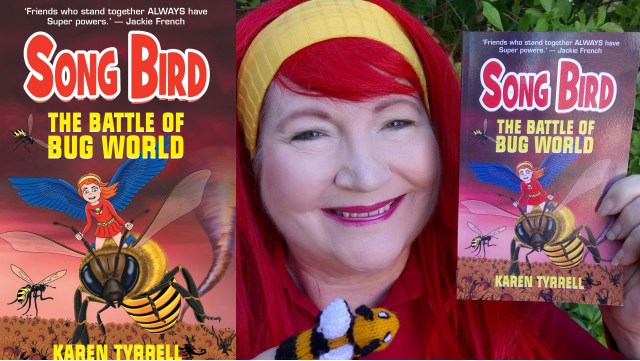
    This week I have the pleasure of welcoming Karen Tyrrell back to the blog. I previously interviewed Karen about her book Songbird Superhero for the Author Spotlight series. Karen has now published a second book in the Song Bird Series The Battle of Bug World.

    I enjoyed Songbird Superhero, so was delighted when Karen approached me to participate in her blog tour. The fact that the book is about bugs may have something to do with it. As you saw last week, I am a fan of minibeasts, including bugs.

    As soon as Karen announced the release of her book, I purchased an advance copy and was able to post a pre-review on Goodreads. This is what I wrote:

    I loved Song Bird Superhero and wondered if a sequel could possibly match it. But with The Battle of Bug World, Karen Tyrrell didn’t just match it, she surpassed it!
    This fast-paced page-turning story is packed with disasters that even Song Bird is not sure she can fix.
    What is that nasty Frank Furter up to now? And what’s with the severe thunder storm hovering above his house? What’s happened to all the bees? And why has Song Bird’s sister

    Continue reading: The Battle of Bug World – Interview with Karen Tyrrell – Readilearn

  • The Battle of Bug World – Book launch, Blog tour & Prizes!

    Karen Tyrrell announces the second in her Song Bird Superhero series, The Battle of Bug World, a children’s fun-filled eco fantasy.

    Can Song Bird STOP the bully, save her sister, the bees and the environment?Karen is an award-winning author who writes books to empower kids (and adults) and help them live strong and be resilient.  After many years of classroom teaching experience, she continues to educate through sharing her own story of resilience as a survivor of bullying, through her words on the page, and through her workshops for adults that deal with writing, marketing, and funding, in addition to empowerment.

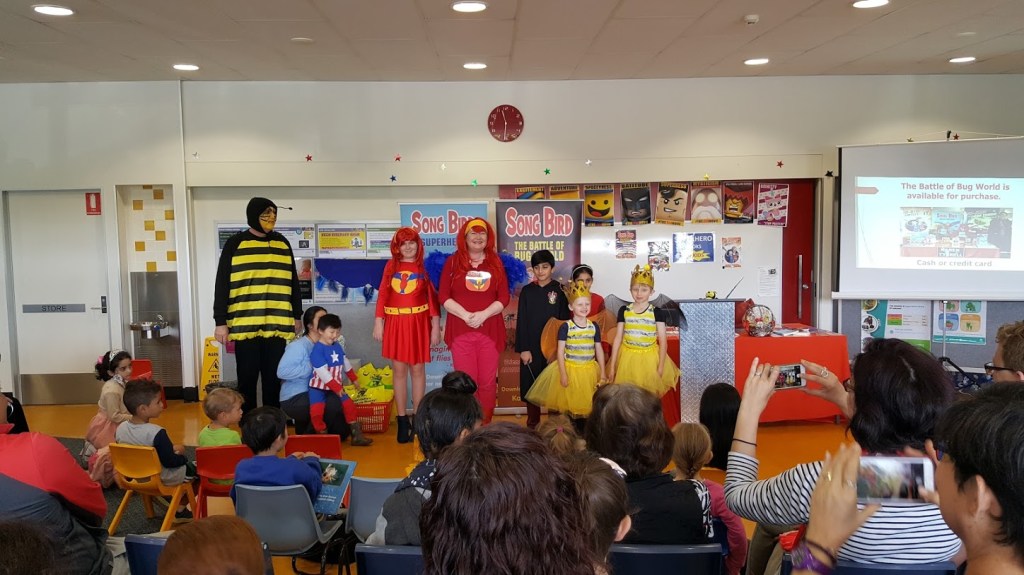
    Karen presents workshops for children in schools, libraries, and other creative spaces. With her flair for costuming and performance, she conducts entertaining sessions with a splash of fun staring in her own scripted pantomimes. As I was lucky enough to attend the launch of her latest book The Battle of Bug World on Saturday, I can testify to the enjoyment that was shared by all attendees.

    The Battle of Bug World is a fast-paced and action-packed story that children won’t want to put down until they find out if, and how, Song Bird can save her sister, her friends, and the environment from her evil neighbour Frank Furter.

    I previously had the pleasure of interviewing Karen on readilearn about her first book in the series Song Bird Superhero, and am delighted to be a part of Karen’s blog tour celebrating the launch of this sequel, which even surpasses the first.

    Please pop over to readilearn on Friday to read my post in the blog tour. Read other posts in the tour by following the links below. Leave a comment on any post for a chance to win great prizes including signed books, signed artwork, and a book critique (Comment on more posts for more chances to win!)


    The Battle of Bug World – Song Bird 2 Blog Tour!

    Look what’s happening to celebrate the Amazon release of The Battle of Bug World.

    BLOG TOUR!

    From Mon June 26 AMAZON LAUNCH KarenTyrrell.com

    From Tues June 27 CURLY Q’S Kids Book Review

    From Tues June 27 REVIEW Just Write For Kids

    From Wed June 28 REVIEW Georgina Ballantine

    From Thurs June 29 Writing Junior Novels Megan Higginson’s Blog

    From Fri June 30 REVIEW & interview readilearn blog

    BOOK GIVEWAYS!

    Just leave a comment on any of the posts in the blog tour, to win a copy of The Battle of Bug World (Song Bird 2). Add initials SB2

    FREE Children’s Book Assessment!

    Win a free children’s book assessment (up to 10 pages) by the author Karen Tyrrell. Just comment on any of the posts in the blog tour and add the initials CBA

    FREE Artwork!

    Win signed artwork by illustrator Trevor Salter. Add initials AW

    Remember the more you comment, the more chances you have to win prizes for The Battle of Bug World Blog Tour. Good luck 😊


  • The Penguin Lady responds to An Oily Problem

    Imagine my delight when The Penguin Lady read and responded to my post!

    In a recent post I shared this Ted talk The Great Penguin Rescue in which “the penguin lady” Dyan deNapoli talks about an oil spill that occurred when a ship sank off the coast of South Africa in the year 2000, oiling nearly 20,000 (almost half) of the total population of African penguins, and the efforts made to rescue them.

    The rescue was successful with 90 percent of the oiled penguins returned to the wild.

    I found Dyan’s story inspiring, not only for the penguin rescue, but for the learning she credits to the rescue, especially that one person can make a difference, and that “when we come together and work as one, we can achieve extraordinary things.”

    I was delighted when Dyan read the post and supplied additional information. Since so many of you were interested in her story, I wanted to share with you what Dyan had to say.

    This is her comment:

    Hello Norah! I just came across your great post about oil and oil spills. Thank you so much for sharing my TED talk about the Treasure oil spill rescue, and for informing your audience about these important issues. I really enjoyed your flash fiction, and listening to Cesar Harada’s TED talk as well.

    Thank you for providing information about how folks can adopt a penguin. I wanted to share the websites of a few more penguin rescue centers that are in need of support, and through which folks can adopt a penguin or fund the hand-rearing of an abandoned penguin chick. There are many organizations rescuing penguins throughout the Southern Hemisphere (there’s actually a complete list of these groups in the appendix of my book, The Great Penguin Rescue), but the following three are organizations doing great work that I regularly support and like to highlight. These are all groups that are doing direct, hands-on work to save oiled or injured penguins. (I also regularly support The Penguin Foundation in Australia, which you’ve already listed above.)

    SANCCOB (the center we worked with during the oil spill rescue in 2000): https://sanccob.co.za/

    Dyer Island Conservation Trust (DICT – also working to save Endangered African penguins): http://dict.org.za/pages/give-to-save/give-to-save.php

    Yellow-Eyed Penguin Trust (YEPT – saving Endangered Yellow-Eyed penguins in New Zealand): http://www.yellow-eyedpenguin.org.nz/passion/support-the-trusts-work/make-a-donation

    Thanks again – and keep up the great work!

    Cheers,
    Dyan deNapoli – The Penguin Lady

    These are the ones I listed:

    Seabirds. Adopt a penguin

    The Penguin Foundation

    The World Wildlife Fund

    Wildlife Adoption and Gift Centre

    I hadn’t realised that Dyan had written a book about The Great Penguin Rescue, but I immediately downloaded and started listening to the audiobook. It is a great read and I highly recommend it. I am not alone in doing so. The book has won three awards.

    In the book, Dyan tells the story of how she came to be The Penguin Lady, provides information about penguins, and explains how the great penguin rescue was carried out. (Probably other stuff too, but I haven’t finished listening yet.) I have also ordered a hardback copy as it includes colour photographs. I’m looking forward to receiving it in a week or two.

    In a subsequent comment, Dyan shares some of her story:

    And to answer your question about when and how I became interested in penguins, it was quite accidental. I had returned to college at the age of 31 to pursue my lifelong dream of working with dolphins (which I briefly did in Hawaii), and during my senior year I landed a full-time, 4-month internship in the Penguin Department at the New England Aquarium in Boston, MA. From the moment I stepped into the penguin exhibit and found myself surrounded by 65 honking, braying, cavorting penguins, I was pretty-much hooked. Their behaviors captivated me, and I was totally surprised to discover that each individual had their own unique personality and temperament – not really what I had expected in a colonial bird. And I wanted to learn more about them.

    I stayed on as a volunteer at the aquarium after graduating, and when a position finally opened up a year later, I applied for and got the position of Penguin Aquarist. I was at the aquarium for 9 years in total, and after leaving there at the end of 2004, I founded my company, The Penguin Lady, to teach kids and adults of all ages about penguin biology, behavior, and conservation. I speak in a variety of settings both locally and internationally, and donate 20% of my proceeds to penguin rescue, research, and conservation groups. One of my favorite gigs is being a guest speaker/penguin expert on nature cruises, and next February I’ll be returning to Antarctica as a guest lecturer for Lindblad Expeditions/National Geographic, which I’m VERY excited about!! My mission is to raise awareness and funding to protect penguins – 13 of the 18 penguin species are currently listed as Vulnerable, Near-Threatened, or Endangered, and that is what drives me to do the work that I do.

    Thank you, Dyan, for sharing so generously.

    There is much more to discover about The Penguin Lady and The Great Penguin Rescue. She is as passionate about education as she about penguins. Through educating us about caring for penguins, she is helping us care for the environment and make a better world. You may be surprised by some of the information in this wonderful educational video. I was.

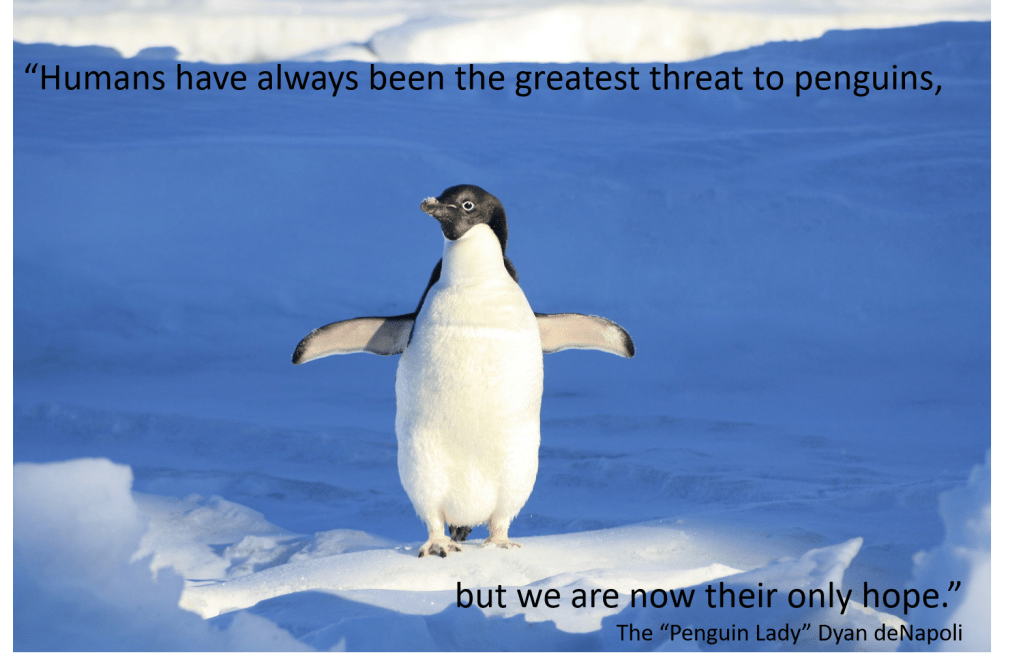
    And I’ll leave you with Dyan’s reminder:

    You can connect with Dyan on both Facebook and Twitter.

    Thank you for reading. I appreciate your feedback. Please share your thoughts.


  • Who gives a crap?

    This week at the Carrot Ranch, Charli Mills asks “Who gives a crap?” and about what. She declares some things that are important to her, things she gives a crap about, including, but not limited to:

    • the environment
    • nature
    • truth
    • principles
    • equality
    • diversity
    • jobs for all
    • literature and it’s role in society, and
    • conflict resolution.

    She says that

    “Conflict resolution is finding a peaceful solution to a disagreement. It’s drawing back my hand from the urge to smack. It’s letting go of a need to punish. It’s hearing both sides of the concerns and working toward a way to save our environment and jobs. It means acknowledging the rights or privileges of all. It means agreeing to disagree with compassion for the other. It means uplifting the lowest in our midst instead of only seeking to better our own. It also means checking our words and behavior.”

    I give a crap about education. I care about the education of our children. It is through education that we can make a difference in the world; but we can only do that if we educate our children to be thinking, caring, responsible, contributing participants in society and inhabitants of the planet.

    We need to teach children about their relationship with the environment, and the impact of their individual, and our collective, actions.

    We need to give children time to experience nature and the outdoors; to marvel at its beauty, to appreciate its diversity, and to wonder …

    We need to model for children a principled life, in which truth, equality, and diversity are valued, and in which the collective good is more important than an individual’s need for fame or fortune.

    We acknowledge that making mistakes is integral to an individual’s learning and tell children it is okay to make, and learn from, mistakes. We encourage them to think for themselves and to be innovative, to see alternative solutions to problems.

    If we were to teach them to just accept things as they are because that’s the way they’ve always been (and I query that statement!) how can we expect them to come up with solutions to issues that confront us?

    Some of the conflicts mentioned by Charli; for example, providing jobs and preserving the environment, have resulted from our learning, our development, our education.

    Maybe we should consider that making mistakes is also integral to our collective learning and development; and be prepared to accept them as such, learn from them, and devise alternative solutions.

    For example: We learned about fossil fuels. We saw how they would enhance our lifestyle, and we implemented that learning, creating many new jobs as a consequence.

    Now we see that some of those advancements are not as beneficial overall as was initially thought. We made a mistake. It is time for reassessment, for learning, and for thinking of new strategies. We need to leave behind what does not work, and embrace the next step in our development.

    Charli asks, “When did we start thinking that only our crap matters and stop giving a crap about others?”

    For a while the focus moved away from the importance of community to the importance of the individual and individual rights. Maybe now it’s time to put the focus on community and the role of the individual in it. Let’s not ask what the community/humanity/the world can do for me, but what I can do for the community/humanity/the world.

    This brings me back to Charli’s flash fiction prompt to: “In 99 words (no more, no less) write a story that expresses a strong concern, something to give a crap about. Something that brings out the feeling to stand up. How can you use it to show tension or reveal attitudes?”

    This is my response. I hope you enjoy it.

    Pulling together

    “It’s mine!” they spat at each other. With faces red and contorted, they pulled in opposite directions.

    The object finally stretched to its limit and ripped apart, catapulting the opponents backwards to land on their derrieres.

    “Now look what you’ve done!” they accused each other, and scrambled to retrieve what was salvageable.

    They contemplated the useless fragments. There were no winners, only losers. Their eyes, previously filled with hate, now brimmed with sorrow.

    “What have we done?”

    Moving together, each comforted the other, feeling as much for the other’s loss as for their own.

    “Let’s start anew,” they said.

    I’d love to know what situation you think my story might be about. I’d also love to know what it is that you give a crap about.

    Oh, and thanks to Bec’s reminder, I will mention the Who gives a crap toilet paper (that is far from crappy and great for the environment) that Charli mentioned in her post, and I previously mentioned in Around the Campfire.

    Thank you

    Thank you for reading. I appreciate your feedback. Please share your thoughts.

  • Learning environment


    gardeningIn last week’s post I shared information about research projects students could become involved in to be scientists in real life. Some of the projects such as Project BudBurst and BudBurst Buddies encourage junior scientists to observe and record changes in plants throughout the changing seasons. Many commenting on the post agreed that projects such as these would make the learning of science come alive. Pauline King the Contented Crafter even commented that she may have to reconsider her opinion of schools if children were involved in projects such as these.

    © Norah Colvin
    © Norah Colvin

    Shortly after posting I read an article on Co.Exist describing a preschool that doubles as urban farm where Kids learn among the plants and animals in this design for a radically different education environment.”  A bit like my concept of an early learning caravan, the school does not actually exist. The design was entered into and won an architecture competition. It is an interesting concept and I especially like the suggestion that children spend more time learning about nature through experiencing it in wild spaces in the outdoors rather than only through classroom activities and books, both of which do have their role.

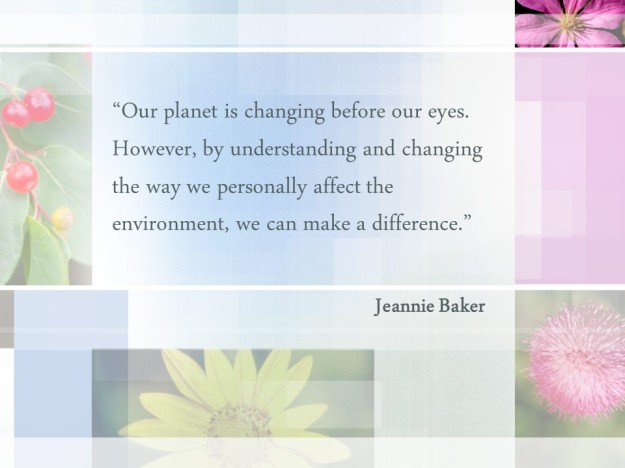
    Jeannie Baker - planet changing

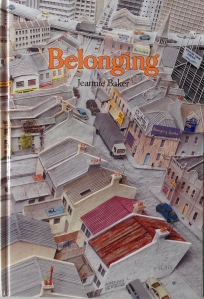
    I have previously shared the wonderful books of Jeannie Baker which have strong environmental themes encouraging children to care for nature and appreciate the natural wonders and beauty of the world around them.

    2015-09-19 11.09.45 2015-09-19 11.11.04

    This morning, thanks to a recommendation from Sarah Brentyn who blogs at Lemon Shark, I received another lovely book in the post that will sit among my favourites. The Curious Garden by Peter Brown tells the story of how a curious boy helps transform a city from a drab grey concrete jungle to a one filled with gardens and gardeners. The story affirms the belief that the actions of one person can make a difference.

    Never-doubt-that-a-small - Margaret Mead

    I am currently listening to Earth in Mind: On Education, Environment and the Human Prospect, an interesting and thought-provoking book by environmentalist David W. Orr who challenges the focus of schools and advocates for learning outdoors in the natural environment. He may approve of the preschool farm, but he’d probably be more in favour of a forest preschool.

    This, however, is only a small part of his position and I do not wish to misrepresent it. In an article, which reads like a chapter from the book, Orr describes “Six myths about the foundations of modern education, and six new principles to replace them”. The part of me that strives towards meliorism is seriously challenged by the picture Orr paints. The picture books, stories, and research projects are fine; but there’s much more to be done if we want to do more than simply wish for a greener future.

    I agree with Orr wholeheartedly that education for, with and through the environment is essential; and that many of our problems are caused by miseducation. However, I had not thought about education in the way that Orr explains. I think I’ll be sharing more of his work in future posts.

    Thank you

    Thank you for reading. I appreciate your feedback. Please share your thoughts.