Live Love Laugh Learn … Create the possibilities

Tag: early childhood

  • Classroom Christmas lessons and activities – reblogged from readilearn

    Classroom Christmas lessons and activities – reblogged from readilearn

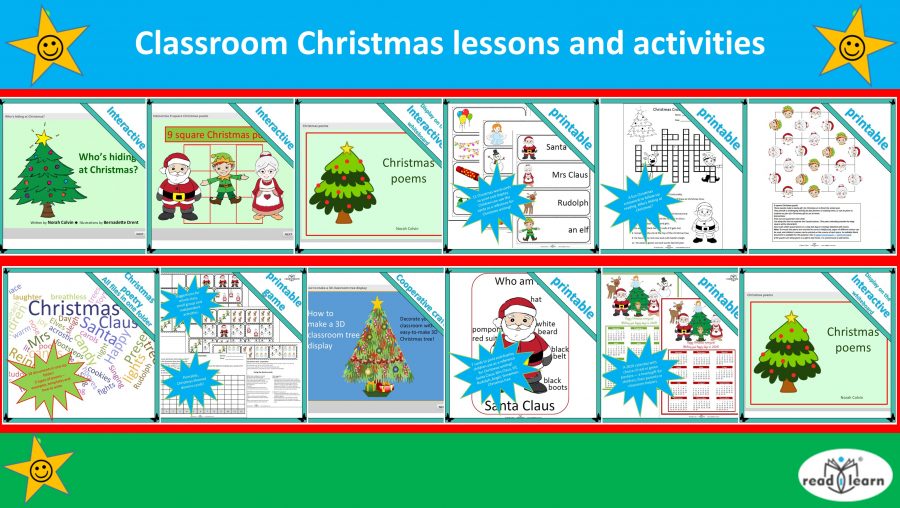
    It’s almost Christmas again and here in Australia we’re on the countdown to the end of the school year and our long summer holidays. Whether you’ll be enjoying a long break or a shorter break over the festive season, here at readilearn we’ve got many ready-to-teach lessons and activities to support your teaching in the lead-up to Christmas.

    Get an early start with these lessons and activities

    You will get most benefit from some activities if you begin them a few weeks before the finish of term.

    Friendship Trees, one of readilearn’s most popular Christmas activities is best begun three to four weeks before school closes for Christmas. Children make their own friendship trees which are then placed on display in the classroom.

    Each day children write anonymous messages of affirmation or friendship to each other and place them in the trees. At the end of term, children take their trees home and read the positive messages contained within.

    The trees help to develop self-esteem, confidence and friendship skills and are perfect for those last few weeks when temperatures soar and children can become edgy with excitement for the holidays.

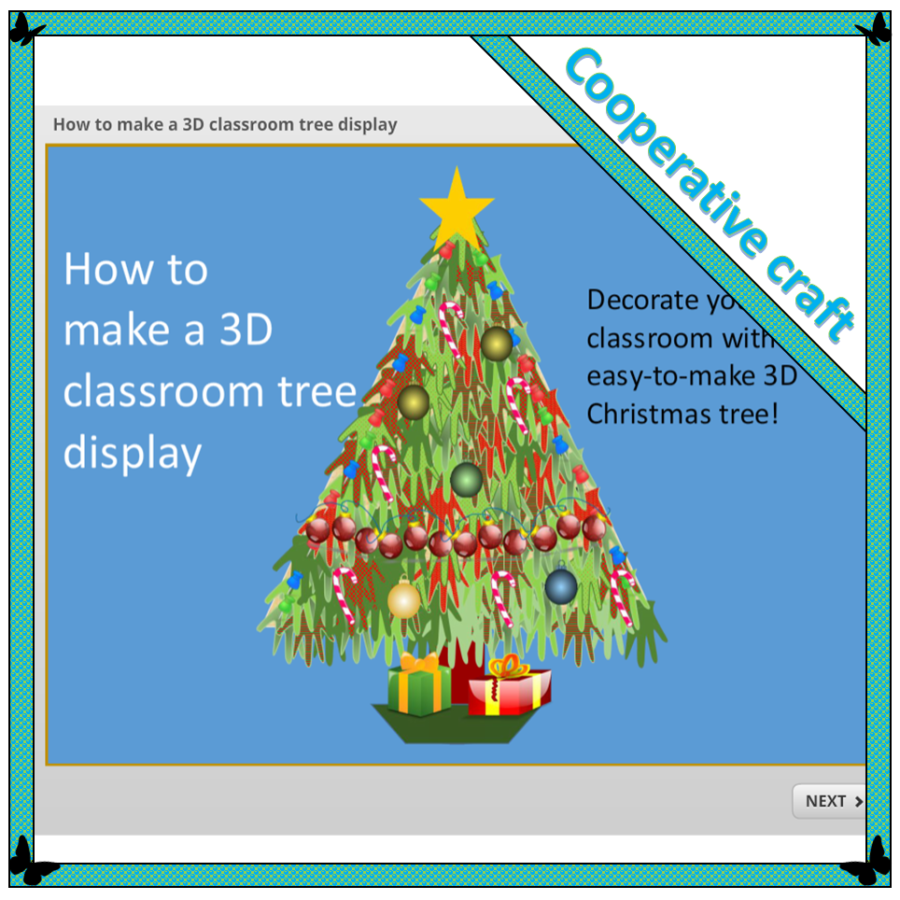
    A 3D Christmas tree makes a beautiful focal point of the classroom Christmas display. Children cooperatively construct the tree by contributing leaves made by tracing or printing their hands. It is a visible recognition of the value of teamwork and will be admired (and envied) by many. It makes a beautiful background for photographs of individual children to be given as gifts to parents or other loved ones.

    Continue reading: Classroom Christmas lessons and activities – readilearn

  • Teaching and learning with nursery rhymes – reblogged from readilearn

    Teaching and learning with nursery rhymes – reblogged from readilearn

    Nursery rhymes are often a child’s first introduction to our literary heritage. Parents sing nursery rhyme lullabies to soothe their babies to sleep and play nursery rhyme games to entertain them in their waking hours. All the while, children are learning the rhythms and tones of our language, developing vocabulary, ideas and imagination. When children learn the repetitive patterns of nursery rhymes, they are also developing their memories.

    Australian author Mem Fox is often quoted as saying that

    “Experts in literacy and child development have discovered that if children know eight nursery rhymes by heart by the time they’re four years old, they’re usually among the best readers by the time they’re eight.”

    While I am aware that others question the existence of research to back up that statement, I think most teachers would agree that children who have been spoken to, sung to (including nursery rhymes) and read to before school will find literacy learning much easier in our classrooms. Success with literacy learning often correlates with success later in life.

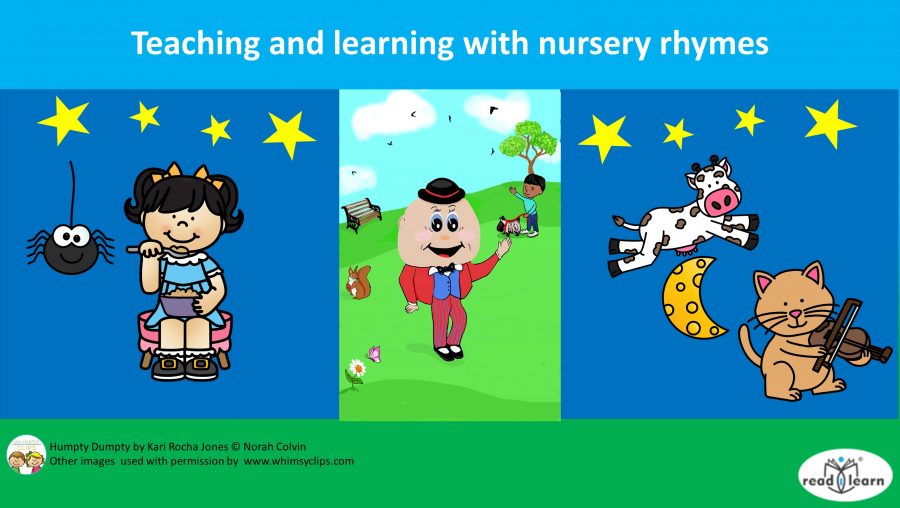
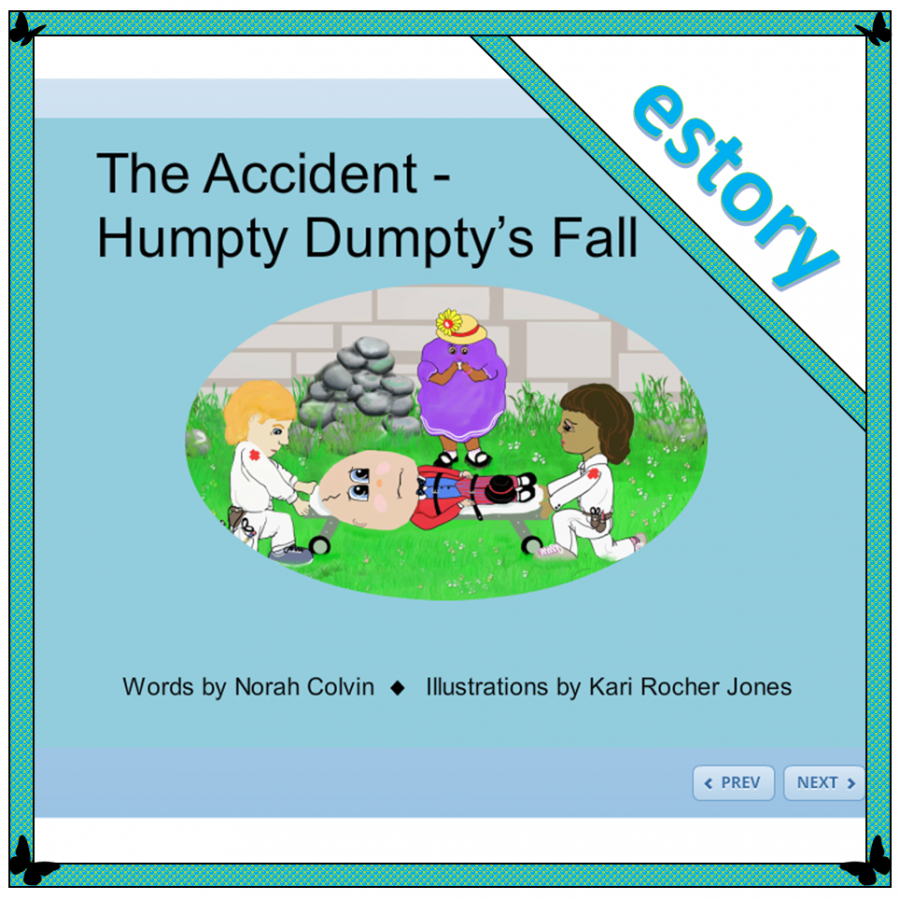
    Already on the readilearn website, there are resources to support your literacy teaching using the nursery rhymes Humpty Dumpty and Little Miss Muffet. More are in development. While some nursery rhymes may be considered to have questionable origins, those origins have no place when teaching them to children. The benefits flow from having fun with the rhythms and rhymes of language.

    Teaching literacy skills & developing creative thinking with Humpty Dumpty

    The Humpty Dumpty suite of resources includes:

    Continue reading: Teaching and learning with nursery rhymes – readilearn

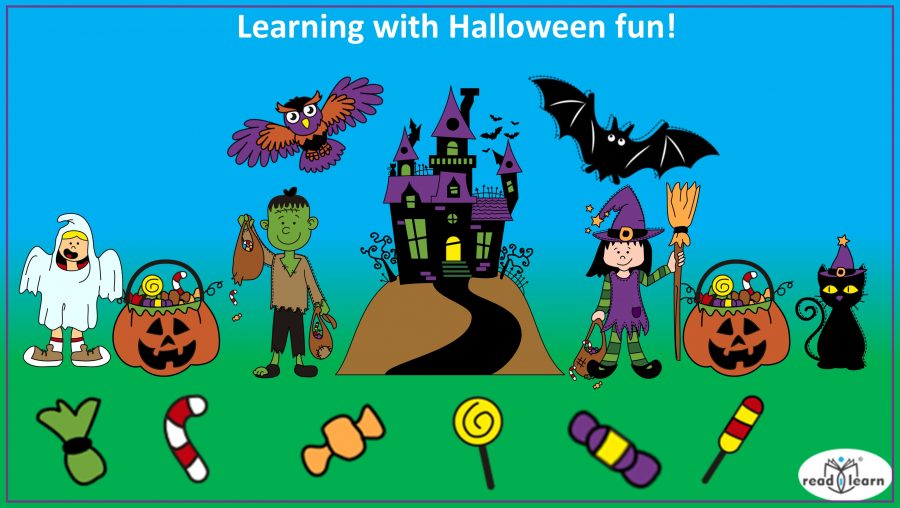
  • Learning with Halloween fun – readilearn

    Learning with Halloween fun – readilearn

    Halloween is just around the corner and many of us wonder how we can have fun with a Halloween theme while ensuring learning is not forgotten in repetitious and meaningless worksheets.

    readilearn teaching resources support teachers in keeping the learning alive while the children are having fun with Halloween-themed lessons.

    trick or treat printable game for Halloween

    The printable Trick or Treat Game for Halloween is a fun board game for two or more players of all ages, suitable for use in maths and literacy groups, with buddies or in family groups. It combines reading, mathematics, activity, and loads of fun and laughter.

    Everything required to play the game is included in the zip folder. All you’ll need to add is a dice and a sense of fun. There are treats to collect and instructions to follow. Try not to be scared by those witches and ghosts and, most of all, look out for your friends.

    The kit also includes additional ideas for lessons in maths and writing.

    Each of the game components are also available individually to use in other ways if you wish.

    Continue reading: Learning with Halloween fun – readilearn

  • Swim a Rainbow with Kim Michelle Toft – readilearn

    Swim a Rainbow with Kim Michelle Toft – readilearn

    Kim Michelle Toft is the author and illustrator of a collection of beautiful environmentally-themed picture books focussing on the conservation of marine environments. I have previously introduced you to Michelle when we spoke about her books The Underwater Twelve Days of Christmas and Coral Sea Dreaming.

    Kim illustrates all her books with unique and beautiful silk paintings. You can view Kim’s painting process in videos that show 40 hours of work in two minutes on her website here.

    In this post, to coincide with a special giveaway, we discuss her beautiful book I Can Swim a Rainbow.

    About I Can Swim a Rainbow

    I Can Swim a Rainbow adapts the lyrics of Arthur Hamilton’s song I Can Sing a Rainbow, with which most young children are familiar, to the colours of the ocean and its inhabitants. As are all Kim’s books, it is illustrated with her magnificent and unique silk paintings which highlight the beauty of the ocean’s colours. As always, the environmental message of this book is as strong as its pages are beautiful as it calls us to protect the world’s fragile reef environments.

    Continue reading to find out more about Kim’s beautiful book and a special giveaway until 18 October: Swim a Rainbow with Kim Michelle Toft – readilearn

  • Why Kindergartners Must Learn Technology – readilearn

    Why Kindergartners Must Learn Technology – readilearn

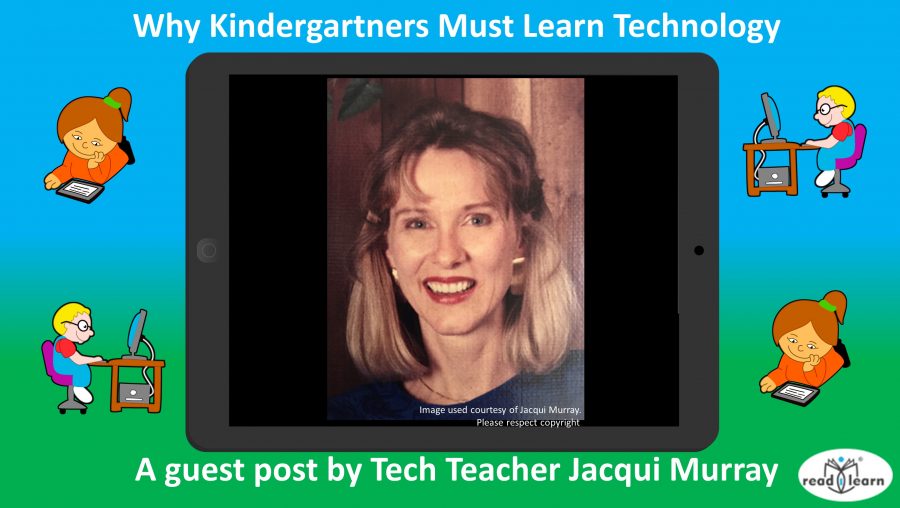
    Today I am delighted to introduce you to Jacqui Murray, the Tech Teacher, who is able to answer all your questions about using technology in schools.

    Jacqui’s blog Ask a Tech Teacher is very informative. It is packed with helpful advice for both teachers and parents on children’s use of technology and the suitability of tools and software for use in different situations and with different age groups, especially in the classroom. If I need to know anything about technology, Jacqui’s blog is an excellent resource.

    As Jacqui is often asked questions about teaching Kindergartners to Tech, a topic that is dear to her, this is the topic of discussion in this post. Please feel free to ask Jacqui any additional questions you may have in the comment section at the end!

    Note: Jacqui is based in the US and the kindergarteners she refers to are 5-to-6-year-olds.

     Welcome to readilearn, Jacqui. Over to you.

    When I started teaching technology almost twenty years ago, I taught K-8, three classes in each grade every week. I was buried under lesson plans, grades, and parent meetings. I remember suggesting to my principal that he ease my schedule by eliminating tech for kindergartners. They wouldn’t miss anything if I started them in first or second grade.

    And back then, that was true.

    Even a decade ago, technology was an extra class in student schedules where now, it is a life skill. Today, my teacher colleagues tell me kids arrive at school already comfortable in the use of iPads and smartphones, doing movements like swipe, squeeze, and flick better than most adults. Many teachers, even administrators, use that as the reason why technology training isn’t needed for them, arguing, “They’re digital natives.”

    Continue reading: Why Kindergartners Must Learn Technology – Readilearn

  • Reading the Iron Man to spark imagination, inspire writing and motivate making – Readilearn

    Reading the Iron Man to spark imagination, inspire writing and motivate making – Readilearn

    One of my favourite read-aloud books is The Iron Man by Ted Hughes. The influence of poetry is obvious in this compelling modern fairy tale that begins as it might end.

    When I introduce this book to children, I conceal it so they cannot see from which part of it I am reading. I tell them the title of the book and ask them to tell me whether I am reading from the beginning, the middle or the end of the book.

    I then read, mostly without interruption though I do explain that ‘brink’ is the very edge, the first two pages that describe the Iron Man and how he stepped off the top of a cliff into nothingness and crashed into pieces on the rocks below.

    The children listen in awe, fascinated by the size of the Iron Man, incredulous that he would step off the cliff, mesmerised by the telling of each part breaking off and crashing, bumping, clanging to lie scattered on the rocky beach.

    They invariably tell me it is the end of the story. How could it be otherwise? When I tell them it is just the beginning, they are amazed and excitedly discuss how the story might continue. This could lead to writing if the children are keen, but there are other opportunities further into the story.

    When this initial discussion has run its course, I go back to the beginning and read it again, stopping to encourage further discussion and to spark the children’s imaginations.

    allow their imaginations to contemplate possibilities

    Continue reading: Reading the Iron Man to spark imagination, inspire writing and motivate making – Readilearn

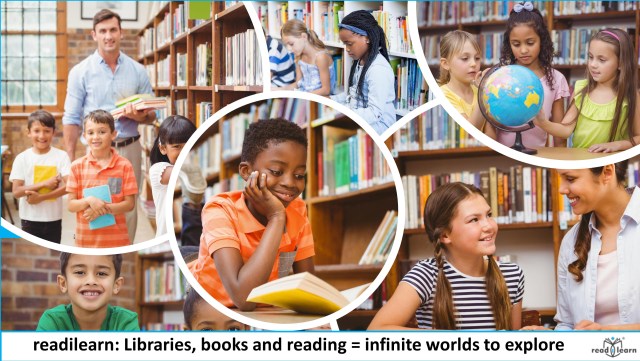
  • readilearn: Libraries, books and reading = infinite worlds to explore

    readilearn: Libraries, books and reading = infinite worlds to explore

    What is your fondest memory of a library?

    Books, books, and more books. More books than I could ever read.

    Books to inform, books to entertain, books to amuse, books to escape the everyday world.

    Libraries, books and reading

    As a child, I borrowed from the school library and the public library. I remember walking the 3.7 kilometres (2 ¼ miles in those pre-metric days of my childhood) to the public library most Saturdays and coming home with an armload of books.

    As a parent, I read to and with my children many times a day —morning, afternoon and evening. Books were always given as gifts, and we had shelves filled with books we owned, but these were always supplemented with books borrowed from the library. We could never have too many books.

    As a teacher, I shared my love of reading with the students, making the most of every opportunity to read to them, regardless of whether it be reading time, maths time, science time or whatever time.

    Many of the children I taught had not had early opportunities to fall in love with books. I believed (believe) it is imperative to foster a love of reading and learning to empower children, soon-to-be-adults, in making their own educated and informed life choices. The families of many of these children could not afford to purchase books, but with access to school and public libraries, there was never a reason for them to be without books to read.

    Nowadays, libraries are not just books, and the old library cards have been replaced with digital catalogues and borrowing systems. Not only is there more to know, but there are also more ways for information to be stored and shared, and more ways to learn.

    The role of teacher librarians


    Continue reading: readilearn: Libraries, books and reading = infinite worlds to explore

  • readilearn: freemium lower primary teaching resources with lessons ready to teach

    readilearn: freemium lower primary teaching resources with lessons ready to teach

    In this post, I explain what readilearn is and how it works. There is more to readilearn than just this blog. In fact, this blog is just one small part of it.

    readilearn is a collection of digital teaching resources designed for use with children from about five to seven years of age in their first three years of school. They are equally suited to the homeschool situation and for use with ESL students.

    A freemium website, readilearn provides free support and resources for teachers in a variety of ways. However, some resources are exclusive to subscribers. The small annual subscription of just AU$25 reduces teachers’ workloads with lessons ready to teach and recognises and adds little to the expenditure many already occur in purchasing resources for their classrooms.

    Resources are available across curriculum areas. Many provide contexts for integrating learning in fun and meaningful ways.

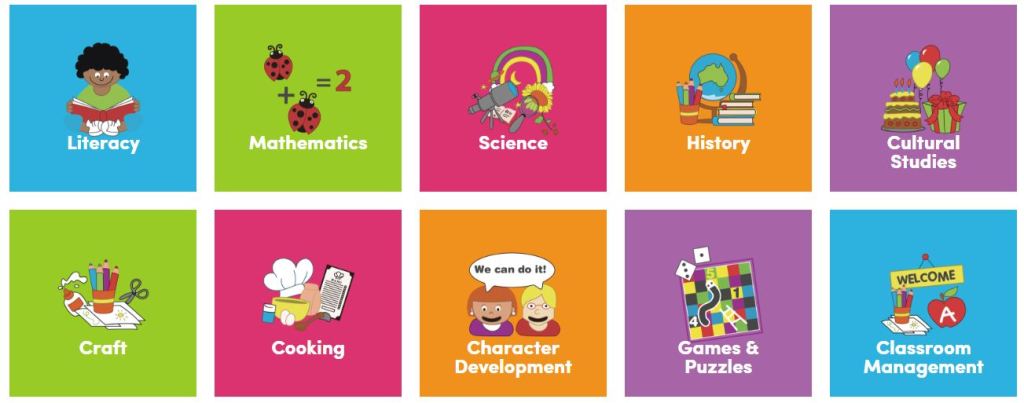
    readilearn categories and subject or curriculum areas

    readilearn resources support teachers teaching and children learning by providing opportunities for discussions that promote thinking, collaboration and learning across the curriculum. Open-ended discussions encourage children to learn from each other as well as the teacher and to participate at their own level.

    Resources include
    • original digital stories (estories)
    • interactive teaching episodes
    • open-ended problem-solving activities
    • readilessons (lessons ready to teach)
    • printable activities
    • teaching suggestions
    • notes for parents
    • and more.
    Free from readilearn

    Continue reading: readilearn: freemium lower primary teaching resources with lessons ready to teach

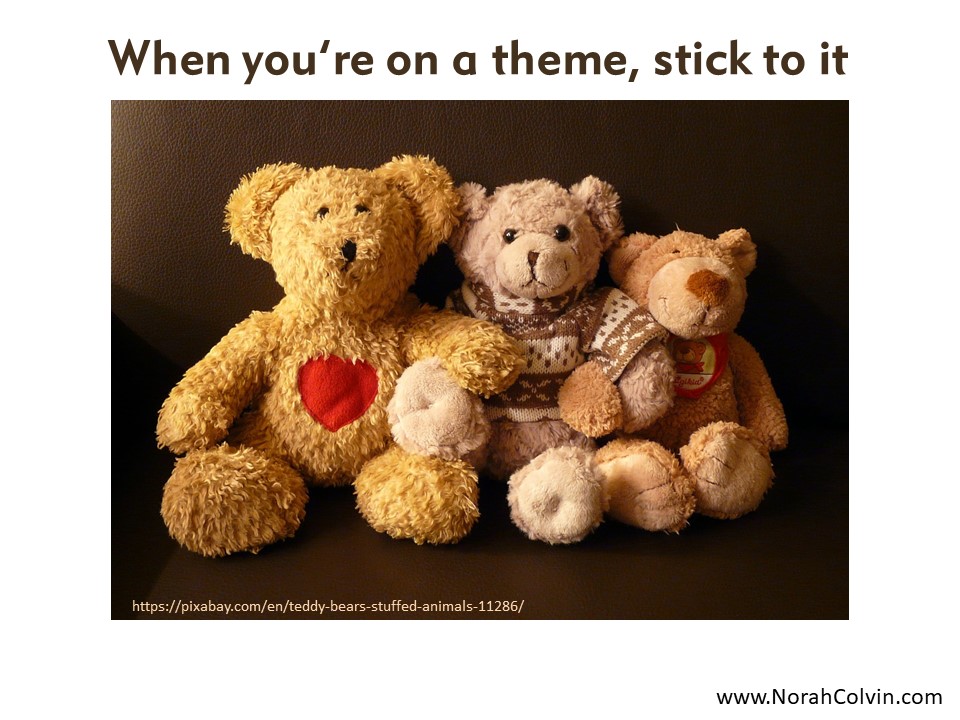
  • When you’re on a theme, stick to it

    When you’re on a theme, stick to it

    Education is my theme. It’s my passion. Sometimes I think I should get another interest, but I’m stuck with this one. Sometimes I get stuck with a theme within a theme too. That’s happening at the moment.
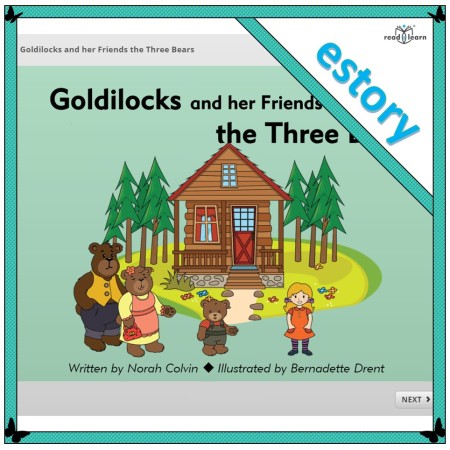
    Goldilocks and her Friends the Three Bears interactive innovation

    A couple of weeks ago, I uploaded an innovation on the traditional story of Goldilocks to readilearn, a collection of teaching resources for the first three years of school. I also added some suggestions for using the resource to teach reading and writing, including sight words in context. I have other supporting resources in progress to be added to the collection soon.

    While my story Goldilocks and her Friends the Three Bears is not really a fractured fairy tale, it’s simply a retelling with an alternative ending; I’ve also been thinking of fractured fairy tales for my Carrot Ranch Rodeo Contest coming up next month. (Look for further details to be published at the Ranch this week.)

    So stuck on this theme am I, that I wrote a 297 (3 x 99) word story as a response to Charli’s Tuff prompt “Papa’s Bar”. While this Free-Write contest is now closed (writers have only twenty-four hours to respond to the prompt), there will be four more chances to enter the TUFFest Ride event with the next one scheduled for September 19. Be sure to look out for it if you want to be in it.

    Note: I’m not sure where or what the Papa’s bar is that Charli alluded to, but I am sure that it’s not what I wrote my story about. In Australia, when we play tiggy, that you might know as tag or tig, or some other name, we might allocate a certain spot as ‘bar’. This means that you are safe and cannot be tagged when on or touching that spot. Sometimes, players will attempt to allocate a spot as bar just as they arrive at it in order to avoid being tagged.

    While I have no thoughts that I may win any of the TUFF contests, it is fun having a go. This is what I wrote in response to the Papa’s Bar prompt. I hope you enjoy it.

    bears sleeping

    Papa’s Bar

    Out in the woods lived a family of bears; Papa Bear, Mama Bear and baby bears five. All summer long, Papa Bear toiled, ensuring his family were contentedly fuelled, ready to sleep through the winter’s long dark. They filled up their bellies with berries hung low, with fish in abundance in streams flowing clear, and hives’ full bounty of gold. Mama and babies had no need to complain, every meal Papa made, a sumptuous feast.  When autumn arrived, and food became scarce, Papa Bear said, ‘Now’s time for bed. Close your eyes little ones, dream sweet dreams until spring.’

    The babies were restless, not ready for sleep.

    ‘We need a story,’ a little one said. ‘Tell us about life when you were a cub. What did you eat? Where did you play?’

    ‘Just one story — then sleep.’

    ‘We need a drink first,’ said the cubs.

    ‘Okay, but lickety-split.’

    They had just settled back when another voice said, ‘I’m hungry.’

    ‘Me too,’ chimed the others.

    ‘Can’t be,’ said Papa Bear. ‘No food until spring.’

    ‘Awh,’ they chorused.

    ‘I could make some porridge,’ yawned Mama Bear.

    ‘Yay! Porridge!’ said the baby bears.

    ‘But then you must sleep,’ said Papa Bear.

    But they didn’t. Before his story was through, Papa Bear was snoring with Mama Bear nestled beside him.

    ‘Let’s play tag,’ smirked one.

    ‘I’m It,’ said another.

    They took turns to run and catch, and through it all, the parent bears slept.

    At last, the littlest bear yawned. No more running and catching, he was ready for sleep. He scrambled over Papa Bear, escaping the tagger’s clutches with a warning, ‘Can’t get me. Papa’s bar.’

    His eyes closed and then, one by one, they snuggled into a big bear hug, murmuring ‘Papa’s bar’ as they drifted off to sleep.
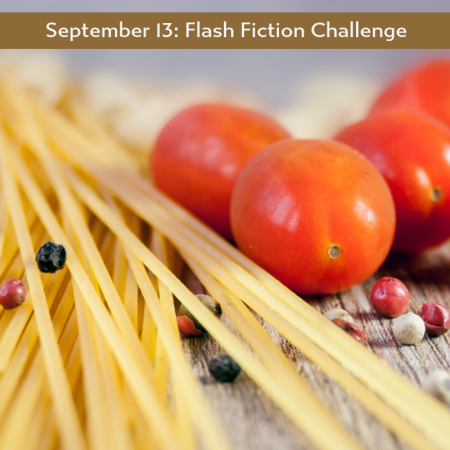
    Pasta prompt for Carrot Ranch Flash fiction prompt by Charli Mills

    When Charli Mills of the Carrot Ranch posted this week’s flash fiction prompt, challenging writers to In 99 words (no more, no less) write a story that includes pasta. It can be spaghetti, macaroni and cheese, or any variety. It can be a meal or a work of art. Go where the prompt leads, how could I not get the bears in on the act again.

    This is my response. I hope you enjoy it too.

    Pasta for Breakfast

    Papa Bear pushed back his chair. “Not this muck again.”

    Mama Bear stopped mid-ladle. “It’s Baby Bear’s favourite. I— I thought it was yours too.”

    Baby Bear’s lip quivered.

    “Pfft! Sometimes a bear needs real food.” He grabbed his hat. “I’m going for a walk.”

    “Papa!” Baby Bear went after him.

    Mama Bear dumped the porridge, pot and all, into the bin, grabbed her hat and followed.

    “Where are we going?” asked Baby Bear.

    “Somewhere nice for breakfast. It is spring after all.”

    Papa Bear paused outside BreakFasta Pasta, then went in.

    Mama Bear smiled; pasta was her favourite.

    Thank you blog post

    Thank you for reading. I appreciate your feedback. Please share your thoughts.

  • readilearn: Introducing Sonia Bestulic author of Reece Give Me Some Peace

    readilearn: Introducing Sonia Bestulic author of Reece Give Me Some Peace

    This week I have great pleasure in introducing you to Sonia Bestulic author of Reece, Give Me Some Peace. While interviews with authors and illustrators have featured regularly on the readilearn blog, this interview marks a new collaboration with Romi Sharp and the team from Books on Tour. This post is but one of several celebrating the launch of Sonia’s beautiful picture book. Please read to the end of the post for details of other posts celebrating Sonia’s work.

    About Sonia Bestulic

    Sonia grew up in Sydney Australia enjoying a childhood filled with wonderful books, a passion for writing and music entwined. She played the violin until her late teens, including performances at the Sydney Opera House. Sonia is Founder of Talking Heads Speech Pathology established in Sydney in 2006. A long-term advocate for children’s learning and literacy, Sonia continues to write and speak about all things children.

    About Reece Give Me Some Peace

    Reece Give Me Some Peace is a fun-loving book about the wonderful world of music and noisy play. Reece is a very cheeky and curious boy who loves making noise. His mother’s requests for him to be quieter only seem to make him louder. As his exuberance grows, so does his mother’s exasperation. Will she ever get any peace?

    The simple rhythmic text combined with delightful illustrations by Nancy Bevington reminds us of the power of learning through play and exploration. Children will love to join in making the sounds and adults will identify with the challenge of being able to enjoy some quiet.

    Now, let’s meet Sonia.

    The interview

    Hello, Sonia. Welcome to readilearn.

    Thank you for inviting me.

    Sonia, today we will discuss your beautiful new picture book Reece, Give Me Some Peace, but first, can you tell us what inspired you to be a writer?

    Continue reading: readilearn: Introducing Sonia Bestulic author of Reece Give Me Some Peace