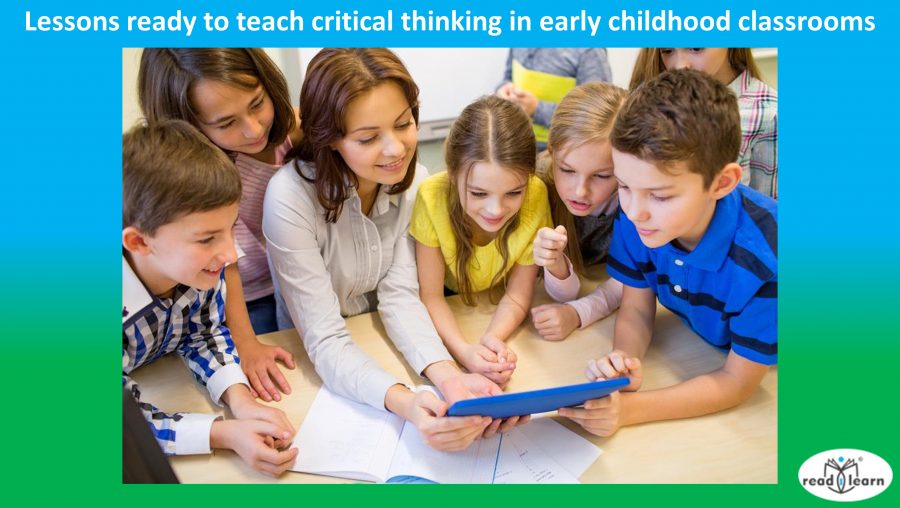
Even young children in early childhood classrooms can be taught to think critically about material that is presented to them. Being able to discern the accuracy of what they read is increasingly important in this era of fake news.
In this post, I provide some suggestions with lessons ready to teach using children’s picture books. The types of questions and ideas can be applied to other books for checking the accuracy of information.
To assist in verification of information, children can be encouraged to ask and answer questions such as:
What do we already know?
Does this match what we already know?
What do we want to find out?
How can we find out?
How can we be sure the information is true?
Is it fact or is it fiction?
Children, and adults, need to be aware that misinformation, often cleverly disguised as fact, is available everywhere, including on the internet. Being able to navigate one’s way through it all is a very important skill, regardless of age. This article by Tech Teacher Jacqui Murray has some useful advice about Fake News or Fact? How do you tell?
We don’t need to present young children with fake news stories to teach them the skills of critical thinking. We can begin with discussions of stories and information we present to them each day.
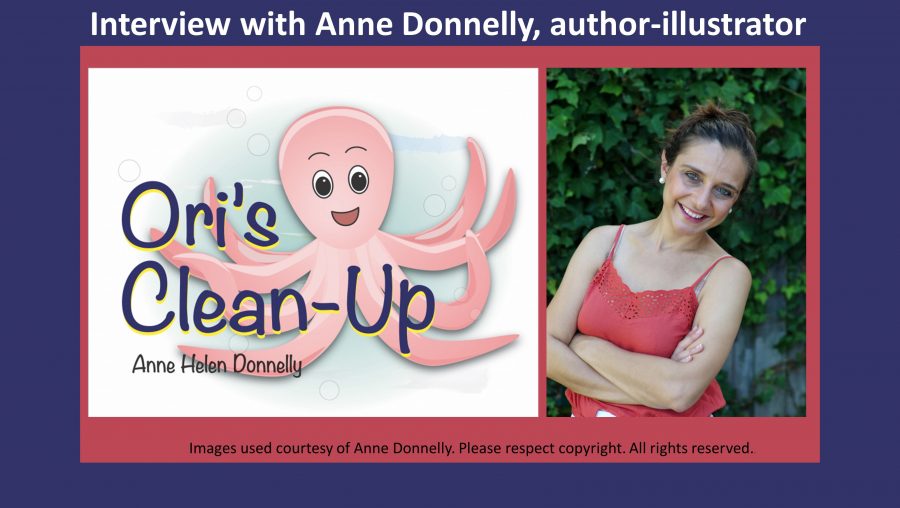
With tomorrow 8 June World Oceans Day and World Environment Day just a few days ago on 5 June, there is no better time than now to introduce you to Anne Donnelly and her delightful picture book Ori’s Clean-up.
The aim of World Oceans Day is to celebrate, protect and conserve the world’s oceans. The 2019 theme Together we can protect and restore our ocean focuses on preventing plastic pollution. With its environmental theme incorporating recycling and re-using, Anne’s book is a perfect fit.
About Anne Donnelly
Anne lives in Sydney with her husband, her two children and their new puppy that chews everything! She loves to be creative in all sorts of ways. She loves to read, write, craft and is a very animated storyteller. As a little girl, she used to draw on the underside of the kitchen table and all the way up the stairs, on each step, much to her parent’s shock.
She has released three books in the Ori Octopus series; Ori the Octopus and Ori’s Christmas in 2017. And now she is especially excited about her latest book Ori’s Clean-Up as it combines two of her passions; children’s literacy and care of our environment. This book has been endorsed by Clean Up Australia and is being stocked at various zoos, national parks, museums, visitor centres, aquariums and holiday destinations all over the country.
About Ori’s Clean-Up
Ori the Octopus and his friends have left their rubbish everywhere. They tidy up, but it doesn’t work. To keep their home clean and healthy, they need to do something different, something better.
The Interview
Hi, Anne. Welcome to readilearn.
Thanks for inviting me.
Anne, you tell your stories with words and pictures. When did you know you wanted to be a storyteller and share your stories with others?
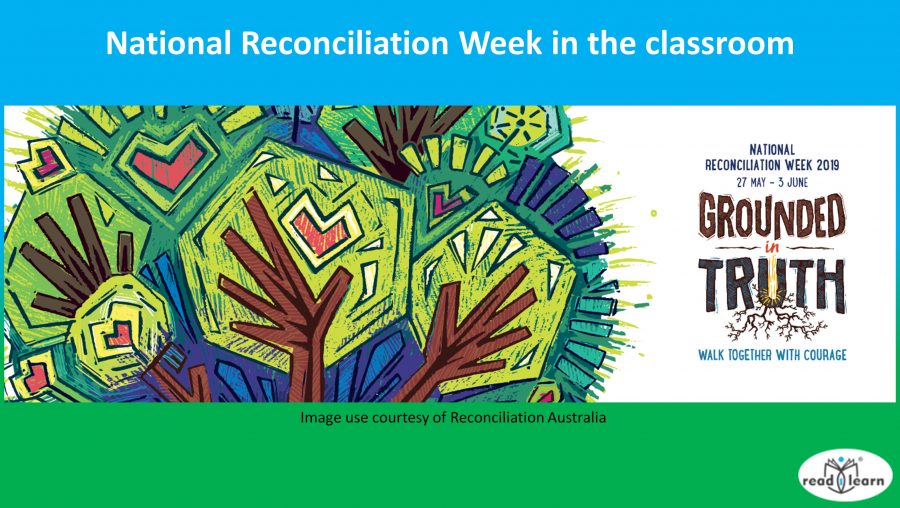
Next week, from 27 May until 3 June is National Reconciliation Week. It follows National Sorry Day which is observed on 26 May each year. The theme for National Reconciliation Week this year is “Grounded in Truth. Walk Together with Courage.”
With Aboriginal and Torres Strait Islander histories and cultures one of the cross-curricular priorities of the Australian Curriculum, this is a perfect time to ensure enough is being done to provide “the opportunity for all young Australians to gain a deeper understanding and appreciation of Aboriginal and Torres Strait Islander histories and cultures, deep knowledge traditions and holistic world views.”
Teachers are supported in delivering the curriculum with a richness of information on the National Reconciliation Week website and teaching resources on the Reconciliation Australia Narragunnawali website. Narrangunnawali is a comprehensive resource with much to explore and implement, including RAPS (Reconciliation Action Plans), Professional Learning, Curriculum Resources and Awards.
Narragunnawali: Reconciliation in Schools and Early Learning
Additional resources
Little J and Big Cuz, an animated series for early years children (K – 2). The series is about Little J, who’s five, and Big Cuz, who’s nine. They
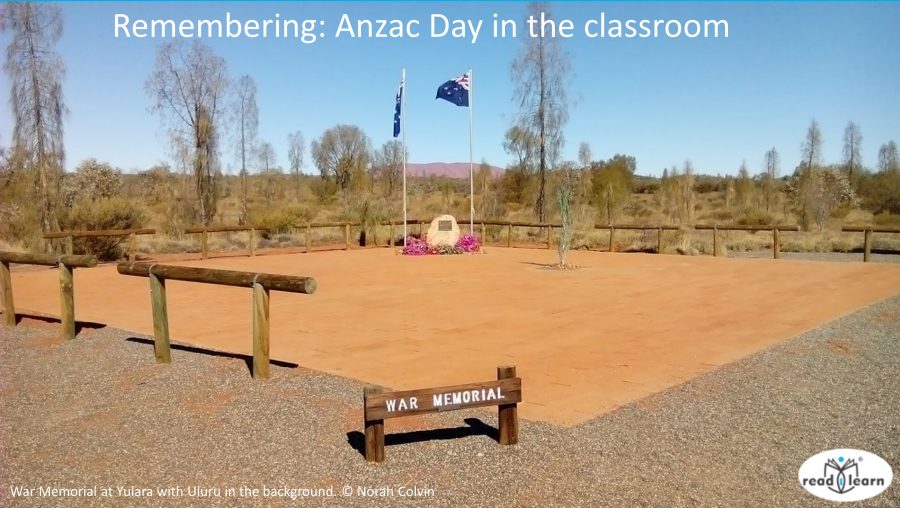
Tomorrow, 25 April is Anzac Day, a day of national significance and a public holiday in both Australia and New Zealand. The day is the anniversary of the first major military campaign fought by Australian and New Zealand forces in World War I, but now commemorates all who have served in any military campaign or operation since. The acronym stands for Australian and New Zealand Army Corps. Ceremonies are held around the country and well-attended by past and present servicemen and women, their families and friends, and the general public.
While most children and teachers in both Australia and New Zealand are still on school holidays, they will undoubtedly discuss, and conduct ceremonies in recognition of ANZAC Day when school returns.
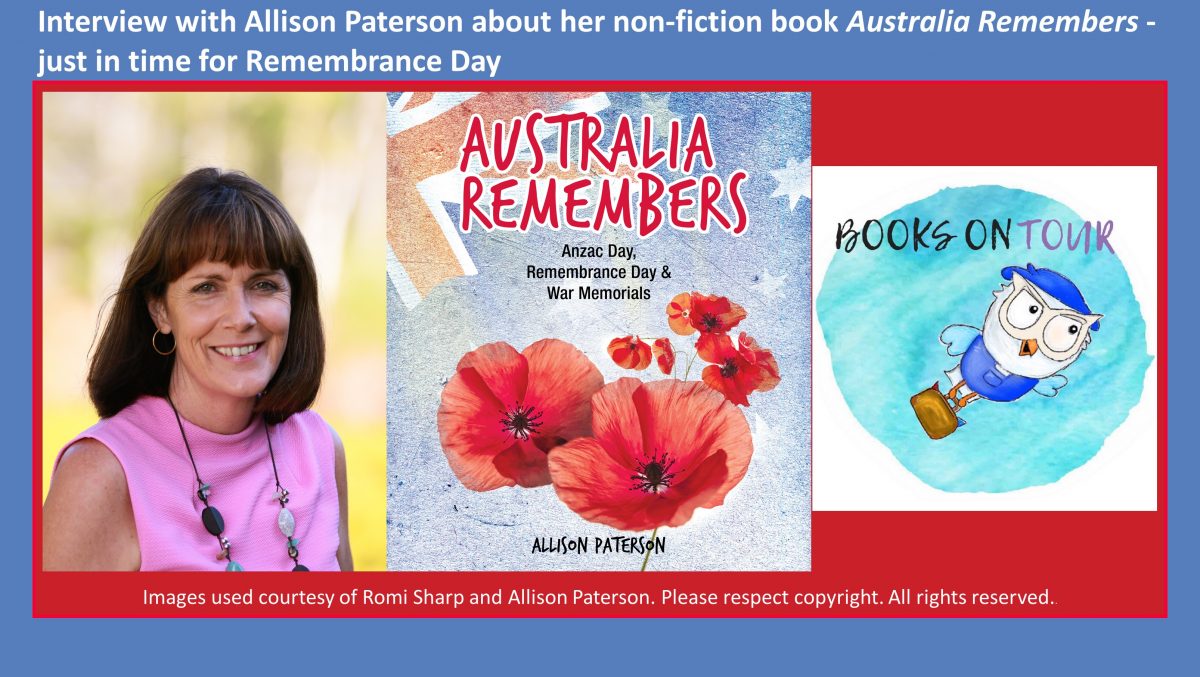
The book explains, in a way that is detailed but accessible for a young audience, the origins and significance of both Anzac Day and Remembrance Day. Explanations of the traditions and symbols ensure that children understand why it is important to observe these historical events and why we should never forget those who fought for our country and those who keep us safe today.
We use the word ‘love’ to mean care deeply about, as in people, or like a lot, as in food, objects and activities. Questions such as “Who do you love?” and “What do you love?” will elicit very different responses and we generally have little difficulty in distinguishing between the intensity of the feelings. Mostly the whos are more important to us than the whats, and it is easy to distinguish between the likes and the loves, though they can sit along a continuum.
For me, housework sits at the opposite end of the continuum from reading and writing. You won’t find me writing any posts about housework. But you will find lots of posts about reading and writing, especially encouraging a love of reading and writing in children. I find sharing a love of reading and writing to be almost equal in enjoyment as reading and writing for myself. To see children light up with enthusiasm for reading and writing is sheer joy.
I have often said that one of the greatest gifts a parent can give a child is a love of reading. A love of reading and writing, and indeed for all learning, is the best gift a teacher can give.
It is often said that a love of reading is caught, not taught. The same goes for writing. It is important for teachers to ensure that there is time every day to read aloud to children, to inspire them and excite their imaginations with wonderful literature and to provide them with time for expressing their own thoughts and imaginative ideas through writing and any other of the expressive arts.
I have written many blog posts, both here and for readilearn, with suggestions for making time for literature and literacy, but it was the prompt set by Charli Mills at the Carrot Ranch that kept me thinking that way this week.
Why wouldn’t I write about one of my loves — reading and writing? I hope you enjoy it.
Just for the love of it
The teacher closed the book, but the children were abuzz.
“Keep going,” they urged.
“Will they be alright?”
“What will happen?”
The teacher looked at the clock. The minutes had passed like seconds. Was there time?
“Pleeeease!”
The teacher opened the book.
“Yay!” cheered the children, then hushed as the words flowed.
As the story unfolded, their eyes lit up and imaginations sparked. They discussed the story’s intricacies and contemplated outcomes as they journeyed with the author through good and fearsome times. Finally, just as the dragon was about to swoop, the teacher stopped. “Now write! What happens next?”
Here are links to just five of the posts I’ve written about reading and writing:
Over the coming weeks, we are making improvements to the readilearn site.
During the changeover period, until mid-to-late March, we will not be adding new resources to the collection or publishing blog posts.
Access as usual
If you are already a readilearn subscriber or have registered to access the free teaching resources, you will still be able to log in and access resources during and after the changeover, as usual.
Changes
Individual prices
Once the changes take effect, readilearn resources will be available as individually priced items.
Note: If you are already a readilearn subscriber, your access to all readilearn resources will be uninterrupted while ever your subscription is current. The individual pricing will not affect your ability to access resources.
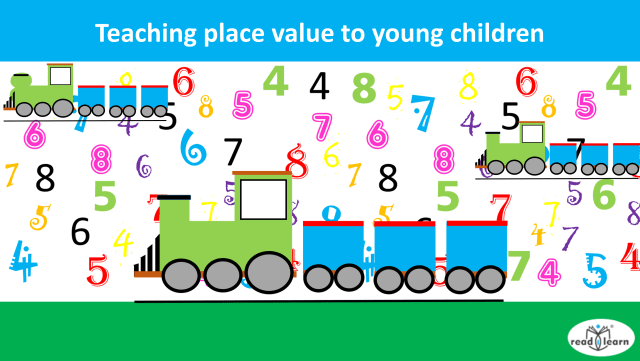
Teaching place value is a vital part of mathematics programs in lower primary classrooms. This post outlines lessons and activities to teach place value.
Teaching place value is a vital part of mathematics programs in lower primary classrooms. It is essential that children develop a firm understanding of place value right from the start to avoid later confusion and maths anxiety.
Sadly, many children and adults confess to having an aversion to mathematics. My belief is that the aversion is often learned from ineffective teaching methods. For this reason, there is a strong focus on number in readilearn resources with lessons and activities that provide opportunities to develop understanding in fun and meaningful ways.
It starts with understanding number
Before we begin to teach place value, we must ensure that children have a strong sense of number. Understanding number is more than simply being able to rote count or recognise numerals. While even very young children may learn to memorise and recite the sequence of numbers from one to ten, they don’t always understand what the words mean.
Rushing children through to abstract processes before they have developed a strong foundation creates confusion. It sets them up for frustration, fear, failure, and a dislike of maths.
This can be avoided by encouraging an “I can do it. I get this. Maths is fun” attitude.
To develop an understanding of number, children require many and varied experiences using concrete materials in many different situations.
Education has the power to enrich lives. By education, I mean all of life’s experiences that contribute to learning. Sometimes these experiences occur in school. Mostly they don’t.
Schooling is but a small part of ones’ education, and its ability to enrich varies depending on:
an individual’s circumstances and attitudes to school and learning.
the school culture and attitudes to children and learning.
and the teacher’s attitude to children and learning.
Over the years I have been aware of enrichment programs offered in some schools. The programs were available to children considered ‘brighter’, having greater potential and, possibly, even ‘gifted’. The children were those who pleased their teachers with compliant behaviour and diligent work, and whose well-to-do families contributed to school facilities. Often, the program was a reward for children who needed neither incentive nor enrichment (their lives already had both) and an easy way for schools to say they were catering for diversity and individual differences.
The model of enrichment with which I was most familiar was a selective program offered one afternoon a week. Children were withdrawn from their regular classrooms to participate. Activities included things such as problem-solving, advanced science and maths, chess, reading and writing clubs.
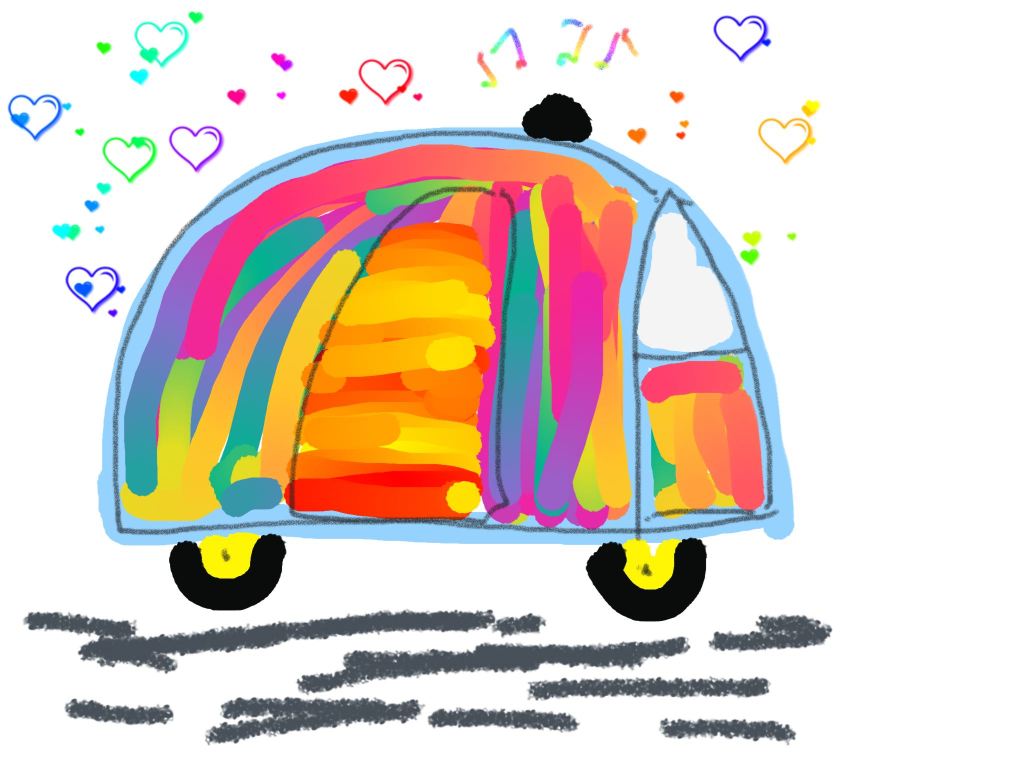
In my opinion, these are activities which would benefit all children, especially those from impoverished homes who received little encouragement for learning, either in school or out, or opportunity for enrichment. My belief is that ‘enriched’ individuals enrich their communities and society as a whole. My suggestion of an early learning caravan, if implemented, would help remedy the situation for some.
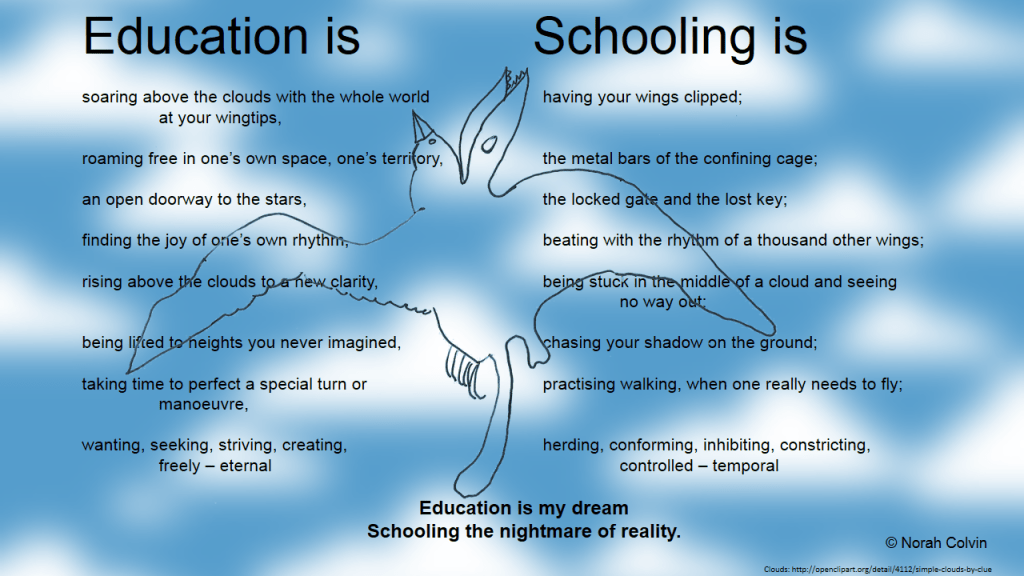
Surely education should be about enriching all lives, not just a few. It should be about asking, ‘What can I do to enrich your life, to provide opportunities for you to learn, and enhance your potential for a successful life?’ It shouldn’t just be ‘What can I cram into you for the test at the end of the week/month/term/year?’ I summed up some of these differences in my poem Education is.
Of course, not all schooling is a nightmare. Much of it is enriching. You only have to read the blogs of wonderful teachers like Jennie Fitzkee, Jacqui Murray, Marie Forst, Adam Hill and others, to realise that children’s lives are enriched by inspired teachers, every day.
My life’s work has been an attempt to enrich the lives of others through education; from my years in the classroom to my current work on readilearn where I support teachers with resources to enhance their teaching and lighten their workload.
In so doing, my own life has been enriched in many ways. You see, I consider enrichment to be something that fills one up on the inside:
with feelings of self-worth, self-respect and self-confidence,
with a sense of purpose and empowerment,
with trust, understanding and empathy,
with compassion and love for others,
and an interest in all that is.
Enrichment has little to do with external riches (though most of us wouldn’t say ‘no’ to sufficient to make our lives comfortable).
I have always seen my roles as both parent and teacher, so closely entwined, to be not only a giving back but a paying forward to the future of the universe. My children, biological and in the classroom, have enriched my life enormously, and for that I am very grateful.
The meeting dragged. After analysing data, discussing duty rosters and responsibilities, lockdown and evacuation procedures, enthusiasm flagged. Jocelyn itched. Last on the agenda; her topic was enrichment.
As she took the floor, groans and tapping pencils defied her resolve. A phone ban meant some eyes were on her, at least. Her suggestions of enrichment were met with derision.
“They don’t learn what we teach ‘em. ‘ow are we gonna’ enrich ‘em?’ Everyone laughed.
Jocelyn’s mouth opened to respond but gaped as Taya burst in bearing an enormous cake with candles ablaze.
“Now that’s my kind of enrichment.” Everyone cheered.
Thank you for reading. I appreciate your feedback. Please share your thoughts.
The importance of starting out right with classroom organisation
Starting the year out right requires preparation and the establishment of classroom organisation routines that will assist the first and subsequent days run smoothly.
An organised classroom contributes to a supportive classroom environment which, from day one, builds a strong foundation of positive relationships and attitudes to school and learning.
Beginning the year as you wish it to continue with a welcoming organised classroom helps children and families feel valued and comfortable in a warm and predictable environment.
Teaching resources support classroom organisation and management
Many existing readilearn resources assist teachers of the first three years of school organise their classrooms to be welcoming and supportive.
A new interactive resource extends the collection.
Reading and books combine to form one of life’s greatest pleasures and one of life’s best avenues for advancement and empowerment.
Giving books gifts much more than simply the words on the page. We may never know just what joy, wisdom or inspiration a reader receives when gifted a book; and, of course, the love of reading is one of the most valuable gifts a parent or teacher can give a child.
Throughout the year, I have been privileged with the opportunity of interviewing many talented authors and illustrators about their picture books. However, these books are but a few of the wonderful picture books that are available for children to read.
Books, books, books
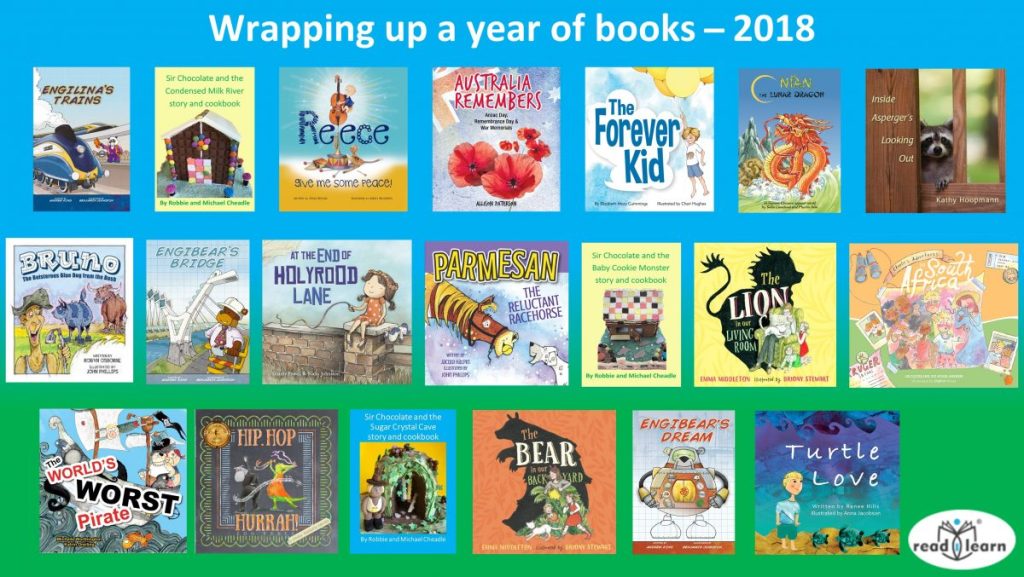
Last December, I presented you with a list of books by authors and illustrators I’d interviewed throughout 2017. In this post, I present a list of books by authors and illustrators I interviewed this year. I hope you will find the list useful when choosing books to gift your young readers. Be sure to read back over last year’s list for additional suggestions.
As with last year’s list, for each author or illustrator I interviewed, I include links to
the interview on the blog
the interview in the Author or Illustrator Spotlight



















 Norah Colvin