Live Love Laugh Learn … Create the possibilities

Tag: Early childhood education

  • Home is where the start is

    © Norah Colvin
    © Norah Colvin

    Early childhood years, from 0-8, are the formative years. It is during these years that most is learned. Children learn about the world through their explorations. They learn about themselves through the responses they receive from others, and learn about others through these responses also. Attitudes to most things begin in the home.

    Children require warm, nurturing, positive relationships that demonstrate the way life should be lived, in actions, not just words. As Anne Goodwin, former psychologist says, the interactions with significant adults will greatly influence the adult that the child becomes.

    If home is where it starts, then we can’t wait until the children are of school age. By then it’s too late. It is relatively undisputed that it is difficult for children to catch up what may have been missed in those early years. Sadly, much of the intense formal work in school does more to alienate these children further, rather than improve their opportunities for learning.

    Therefore, we must begin in the home, and I don’t mean with formal structured programs. I mean with fun activities that validate parents and children and provide them with opportunities and suggestions for participation and learning.

    Guiding parents in play sessions for parents and children.
    Guiding parents in play sessions for parents and children. © Norah Colvin

    It is these beliefs that informed my home-based business Create-a-way,
    © Norah Colvin
    © Norah Colvin

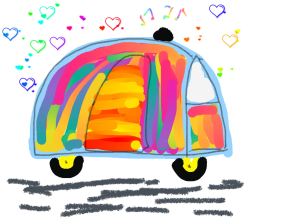
    and my idea for an early learning caravan that, staffed with an early childhood educator, would

    •  go to the parents and children in their neighbourhoods, meeting in a local park or community greenspace, on regular weekly occasions;
    • invite parents to talk with, read to and play with their children using provided books, games and toys;
    • model positive parenting behaviour, explaining to parents the benefits to their children of engaging with them in activities and discussions;
    • provide suggestions for inexpensive and easy activities to do at home;
    • encourage borrowing from a book and toy library.

    Of course, for many parents, such as those reading this post, nurturing a child’s development is almost second nature. They have the education and resources, and a belief in the benefits, to empower them to nurture their children’s development. They require little additional support.

    Requiring most support are those without the benefits of education, resources or a belief that life could be improved. If all they have experienced through school systems is failure and rejection, they will have difficulty in perceiving any purpose in trying. It is these parents and their children that we need to reach. If they feel valued, they in turn may find value in others. If we improve the lives of those marginalised by poverty or lack of education, it must contribute to improving our society, and our world, in general. This will help us to feel safe in our homes, in our localities and in the wider world.

    This week at the Carrot Ranch, Charli Mills is talking about homes and the importance of having a roof over our heads. The way we treat each other, especially those hurting, indicates there is a greater need for compassion and for those in need to receive a helping a hand.

    In my response to Charli’s flash fiction challenge to In 99 words (no more, no less) write a story about home, I attempt to show that the situation in which one is raised is not always a self-fulfilling prophecy. Out of the cruellest situations, hope can be born. We, as a society, need to do what we can to give hope to many more, to help break the cycle of despair.
    81

    The birth of Hope

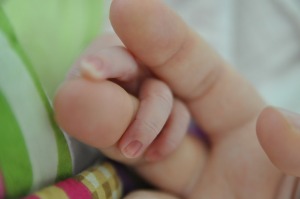
    Startled by the blueness of eyes and the intensity of unfamiliar feelings, she suddenly relaxed, as if finally, home.

    She’d not known home before: not locked in a room with hunger the only companion; not shivering through winters, barefoot and coatless; not showered with harsh words and punishments.

    She’d sought it elsewhere, mistaking attention for something more. When pregnancy ensued; he absconded. They kicked her out.

    Somehow she’d found a place to endure the inconvenience. Once it was out, she’d be gone.

    But now, feeling unexpectedly connected and purposeful, she glimpsed something different —a new start, lives entwined: home.

    Thank you

    Thank you for reading. I appreciate your feedback. Please share your thoughts.

  • 3 + 2 = 5 Let me count the ways!

    Billboards

    That we live in a print-rich environment is undisputed. Even in country areas one cannot travel far without being bombarded by print. In addition to road signs there is a plethora of billboards advertising the best places to sleep, eat, or play that can be found just ahead.

    Environmental print is the genre with which many children first engage successfully with reading.  Ask any parent who’s detoured around fast food outlets, hidden shopping catalogues, or camouflaged cheaper brand names of identical products.

    That we are immersed in mathematics in our daily lives is just as evident but doesn’t always receive the same recognition. I think this may in part be because people often think of mathematics as abstract algorithms and theorems that we (they try to get us to) learn in school; and that have no apparent application to our lives beyond the walls of the classroom.

    algebra

    However, even the examples mentioned above are just as rich in mathematics are they are in print. They include distances, and perhaps time, to the destination, cost of items, opening hours, and number of attractions. Anyone travelling a distance with young children will have answered questions such as “Are we there yet?”, “How much further?”, and “What time is it?

    As I say in my statement about mathematics on my readilearn site,

    “Mathematics is all around us. We use it every day for a huge range of purposes from deciding on the sequence in which we dress ourselves, to calculating how much time we have available for an activity.”

    mathematics readilearn

    One of the resources suggests 25 ways for parents to keep their children thinking mathematically over the school holidays. I have shared these ideas previously in Counting on the holidays.

    25 ways to think mathematically

    Recently I was at the gardens with my two grandchildren (G1 and G2, aged 6 and 4), their mother, and my Hub. The children consulted a map and signposted paths to follow the Children’s Trail which had various sculptures along the way. I am undecided about the value of distracting children from the trees and plants, as if the vegetation itself would not be interesting enough. However, the children enjoyed locating the sculptures in the sequence numbered on the map, and reading the accompanying information. They were engaged in purposeful reading and mathematical thinking in context: real life learning!

     © Norah Colvin 2016
    Pandas on the Children’s Trail © Norah Colvin 2016

    As we headed back, G2 made a comment that showed she was engaged in mathematical thinking of her own. She observed that there were two children and three adults, which made five of us all together.

    “That’s right,” I confirmed. “There are five’. I thought for a little while, then added, “And do you know what? As well as two children and three adults, there are two boys and three girls.” The children looked at the group and confirmed that I was right. They laughed – a different interpretation.

    This gave me an idea for a thinking game: how many other arrangements of three and two could there be?  I wondered if the children would like to play along. I had never attempted this before and had no idea if there’d be more, or if we had already exhausted all options.

    I looked at the group. I noticed our shoes: three had closed shoes and two had open shoes. I thought about our names: three shared one surname, two another. Then we were on. Everyone was thinking of ways we could be arranged into groups of two and three.

    Sometimes we sorted according to different characteristics, as in the previous examples. Others times we used a simple yes or no sorting, such as two have hats with brims and three don’t have hats with brims. This is the easiest sorting to do, and the first that children learn.

    G2 made many suggestions of this type of sorting for one and four.  One has the characteristic, the others don’t. This was age appropriate for her, and it was great to see her joining in confidently and contributing to the discussion. G1 was able to engage in the more complex thinking required for the groupings of three and two.

     I was amazed at the number of different combinations we came up with, and that each of us was combined with others in many different ways.

    These are some of the ways we arranged ourselves into groups of two and three (not physically, just in our discussion).

    Arranging ourselves 3 + 2

    This seemingly mundane activity has potential for developing thinking and learning by encouraging:

    • thinking about things in new and different ways
    • looking for similarities and differences
    • observing detail
    • sorting according to different characteristics – which is important to both maths and science (think animal and plant classification)
    • having fun with maths
    • having fun with family

    But wait, there’s more: When we left for home, two went in one car and three in the other!

    I think this would be a great activity to do with young children learning about number. It may be a challenge for teachers in Australia where children wear uniforms to school but I’m already thinking of how it could be done with toys or illustrations. It’s not quite the same as doing it with the children themselves, but it could be fun. What do you think?

    teddy bear sorting

    You won’t be surprised to discover that I have prepared a readilearn resource for sorting as well!

    Thank you

    Thank you for reading. I appreciate your feedback. Please share your thoughts.


  • Who teaches whom?

    GDJ, Playful stick figures https://openclipart.org/detail/230070/playful-stick-figure-kids
    GDJ, Playful stick figures https://openclipart.org/detail/230070/playful-stick-figure-kids

    The importance of play to a young child’s development and learning is a recurrent theme on my blog. Equally so is the recognition of parents as their child’s first and most important teachers. Alongside this is my acknowledgement of the contribution made by my children to my own learning, especially to my understanding of how children learn.

    Although I was often reminded that I had declared, “I’ll teach him,” when a younger brother was born, I had never given a great deal of thought to the teacher-role of siblings. How much that had to do with the reminders of my promise only coming when “naughty” things were occurring, I’m not sure.

    Whatever the reason for my lack of consideration, I was quite delighted when I came across the post Siblings are a young child’s most influential teacher by Deborah Stewart on Teach Preschool. In this lovely post Deborah provides a wonderful list of lessons learned from siblings, and supports it with beautiful photographic evidence of her three gorgeous grandchildren.

    Included in her list are things like learning to:

    • be imaginative
    • trust
    • be brave
    • try new things
    • be kind
    • laugh, and
    • love.

    I have a large number of siblings from whom I’m sure I learned many things. As my younger brother could testify, probably not all of them were good. Deborah’s post challenged me to think about what those lessons might have been.

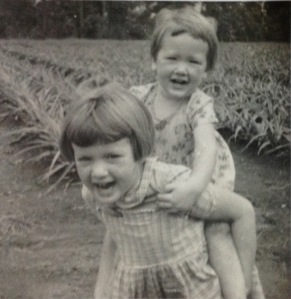
    My big sister and me © Norah Colvin
    My big sister and me © Norah Colvin


    Here are some of the (better) ones I thought of, that weren’t on Deborah’s list:

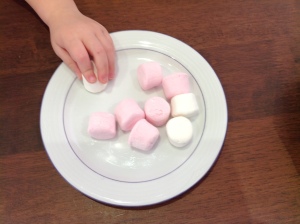
    • to share, to take turns, and to wait (unless there’s only a few more cookies or lollies on the plate, then you’d better get in quickly before someone else does!)

    marshmallow 5

    • that you can’t always be first or win, and
    • that the world doesn’t revolve around you
    • to make our own fun by creating our own games
    • to get along with children of all ages
    • to play without the constant participation or supervision of adults
    • to look out for and look after each other
    • to plan together
    • to forgive and get on with it
    • that a combined effort was more likely to get us an ice cream from the ice cream van than a succession of individual appeals.
    www.morguefile.com
    http://www.morguefile.com

    Some of these lessons weren’t easy, and some are still in progress, but important life lessons nevertheless.

    What about you? Do you have siblings, or are you an only child? If you have siblings, what have you learned from them?

    Thank you

    Thank you for reading. I appreciate your feedback. Please share your thoughts.


  • Let them play!

    GDJ, Playful stick figures https://openclipart.org/detail/230070/playful-stick-figure-kids
    GDJ, Playful stick figures https://openclipart.org/detail/230070/playful-stick-figure-kids

    Play is essential to learning, and creating an environment which allows for play while nurturing children’s learning and development is as important as creating an environment that nourishes and encourages the growth of plants in a garden. The link between the two was first recognised by Froebel in the early 19th century when he coined the term “kindergarten” which translates to “garden for children” (kinder meaning child and garten meaning garden), and created the first educational toys.

    Froebel “devoted his life to educating children and developing methods to maximize human potential”. He was the first to recognise the importance of a child’s early years (birth to three) and considered creativity to be something in all of us.

    Froebel’s kindergartens were the first “formal” education for young children and his work greatly influenced that of other educators such as Maria Montessori and Rudolf Steiner. His beliefs, for example that children have both unique needs and capabilities are still influential today. He believed in the importance of play and some of his toys were favourites of people such as Buckminster Fuller and Albert Einstein.

    I have touched on the topics of playcreativity and children’s uniqueness in previous posts. A respectful, encouraging, nurturing and stimulating environment underpins all that I value in education; as does a belief in the power of play to develop understandings of self, of others and relationships, of the world and how things work, and to inspire thoughts of what could be, to imagine possibilities never before imagined.

    johnny_automatic_playing_dress_up

    While Froebel’s beliefs, and those of his followers, are still valid, sadly they are often disregarded by those who wield the power in education, who dictate otherwise.

    In a previous post I shared an article by Paul Thomas who attributed his readiness to learn at school to the richness of his home environment. He also decried the formal tedium of school lessons which contribute much to curbing a child’s enthusiasm for learning. Paul is not alone in his views. There are many teachers who agree with him, myself included, as I have shared many times before, including here and here.

    I am not the only early childhood teacher to be saddened and appalled by the formal approach that has been enforced upon teachers, replacing play-based approaches in classrooms for children as young as four. With the administration of standardised tests and the publication of graded results, children are labelled successes or failures before they have had a chance to develop. Those children from privileged backgrounds, as described by Thomas in Formal Schooling and the Death of Literacy will be immediately successful. Those from less advantaged backgrounds will be labelled failures. Unfortunately, the labels are often reinforced with little chance of replacement.

    A+   F

    I am always gladdened when I hear another expounding the benefits of play and the importance of child-centred approaches to learning and teaching. I hope that when enough voices unite in this important message, the tide will start to turn, and those with the power to make changes will do so in favour of children.

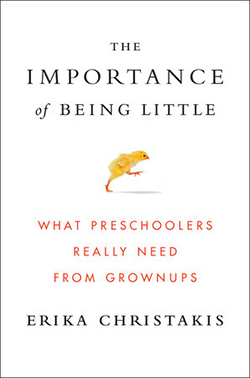
    the importance of being little

    This week I read another article stressing the importance of play for young children. The article, written by Susan Gonzalez for Yale News, introduces a recently published book by Erika Christakis The Importance of Being Little. I have not yet read the book, but I know that I will agree wholeheartedly with its content. The title itself tells me the value of its message.

    © Norah Colvin
    © Norah Colvin

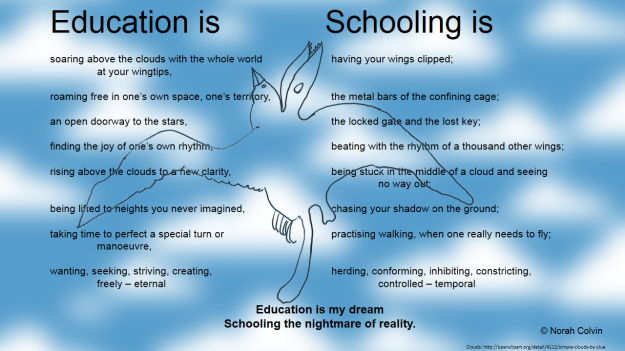
    In words reminiscent of my poem “Education is” Christakis says that “schooling and learning are often two different things.” Here is just a sprinkling of her thoughts reported in the article.

    • children are capable and powerful but our expectations are often mismatched
    • we ask too much of children pragmatically but not enough cognitively
    • there is too much teacher-direction and not enough time for play in many preschool classrooms
    • teachers need to take the time to listen to children’s stories, to laugh with them, to get down on the floor, at their eye level, and figure out what makes them tick … (through) … respectful observation
    • childhood pedagogy should be based on ideas, not on the repetition of simple skills
    • respect for early childhood as a life stage worthy in its own right and not merely as a training ground for an adult future

    These are ideas I have oft repeated here on my blog. Please read the article in full and, if you are as inspired as I am, read the recently published book The Importance of Being Little. I’d love to know what you think.

    Thank you

    Thank you for reading. I appreciate your feedback. Please share your thoughts.

  • Scary monsters

    https://openclipart.org/detail/170917/little-monsters
    https://openclipart.org/detail/170917/little-monsters

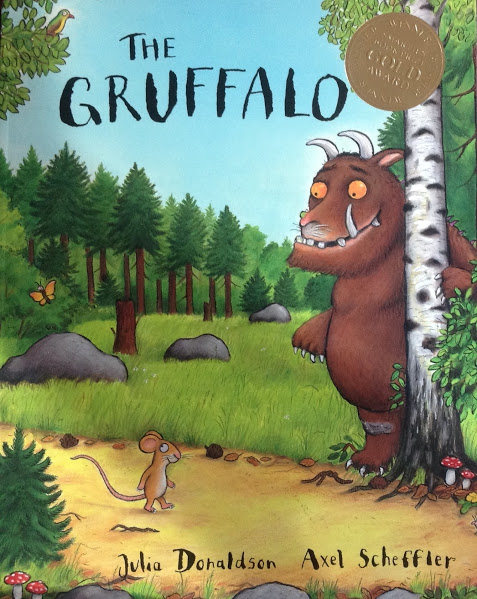
    This week at Carrot Ranch Communications Charli Mills has challenged writers to In 99 words (no more, no less) write a monster story.  Being an early childhood teacher I think immediately of picture books. Two of my favourites are The Gruffalo, written by Julia Donaldson and illustrated by Axel Scheffler, and The Monster at the End of this Book , written by Jon Stone and illustrated by Michael Smollin.

    The Gruffalo

    The Gruffalo is as fearsome as any monster you are likely to meet with its “terrible tusks, and terrible claws, And terrible teeth in his terrible jaws”; “a poisonous wart at the end of his nose” and “purple prickles all over his back”. The quick witted mouse, who imagines the Gruffalo into storybook “reality”, must find a way of ridding himself of the monster’s inherent danger and once again uses his ingenuity to escape.

    I’m not sure if it was Donaldson’s intention, but I think this is a great analogy for the monsters we create for ourselves such as self-doubt, unrealistic expectations, and (you can add your own monster here). Not that I’d be sharing that thought with young children.

    In this video Axel Scheffler explains his concept of the Gruffalo and even hints, a couple of times, that he too may be troubled by that all too common of personal monsters, self-doubt.

    Monster at the end of this book

    Throughout The Monster at the end of this Book Grover, from Sesame Street, pleads with the reader to not turn the page as there is a monster at the end of the book. You could almost say he is immobilised by this fear, or that he tries to immobilise the reader. Of course it is a lot of fun and provides much laughter. When we (reader and Grover) do get to the end of the book, he is rather embarrassed to find that he, “lovable, furry, old Grover” is the Monster. He tries to assure us that we, and not he, were the scared ones.

    Of course Grover wasn’t the monster only at the end of the book. He was always the “lovable, furry” harmless monster. It was his fear that was the real monster. How often are we immobilised by our fear, and how often when we take that jump despite it, do we find our fears to be groundless? Sometimes I think, or is it only me, we are our own worst monsters setting ourselves impossible targets with too-high expectations that lead us only to disappointment if we don’t achieve them.

    But if we view ourselves as works in progress, in the process of working out where we want to be and how to get there, we can find contentment in what we achieve along the way, in where we are and how far we have come, rather than ignoring those milestones and looking only at how much further we must (in our own minds) go.

    It is all too easy to contribute to the development of children’s personal monsters by doing to them what we do to ourselves: setting unrealistic targets, expecting too much, insisting on error-free work, measuring them against external benchmarks … To avoid this, we need to view them also as works in progress and encourage them, through a growth mindset, to reach their own milestones and goals in the time that is right for them.

    Like the mindset of the mouse in The Gruffalo who was able to think on his feet and overcome the obstacles, or that of Grover who realised there was really nothing to be worried about at all.

    We need to be not afraid of the monsters under the bed or in the cupboard, most of which we have created in our imaginations and stuffed there, sometimes with the assistance of others, allowing them to multiply like wire coat hangers until there is no room left for anything good. I have taken the theme of internal monsters for my response to Charli’s challenge.

    Open, close them, open anew

    The picture was clear. Taken with wide open shutters and long exposure, then developed in black and white for extra clarity, the result was undeniable and exactly what would be expected.

    “You’ll never amount to anything.”

    “That’s rubbish.”

    “Pathetic.”

    “You’re always the troublemaker.”

    “Because I said.”

    “Shut up!”

    “Stop asking questions.”

    An existence devoid of value was drilled with reminders hurled unrelentingly from birth. Well-schooled in self-loathing, the lessons were regurgitated without effort or question. The monsters without had created the monster within. How could one escape from what was recognised only as truth?

    And now for something a little lighter:

    The Monster Mash

    Thank you

    Thank you for reading. I appreciate your feedback. Please share your thoughts.

  • Delivering a sneak peek for Easter

    Launching soon - readilearn2

    For the past few years I have been preparing early childhood teaching resources for a website that I hoped would be up and running by now. Unfortunately, there have been some delays with the developer. In the meantime, I thought I’d share a resource with an Easter theme to give you a free taste test. This will be of interest mainly to early childhood teachers or parents of young children. Everyone else is excused.

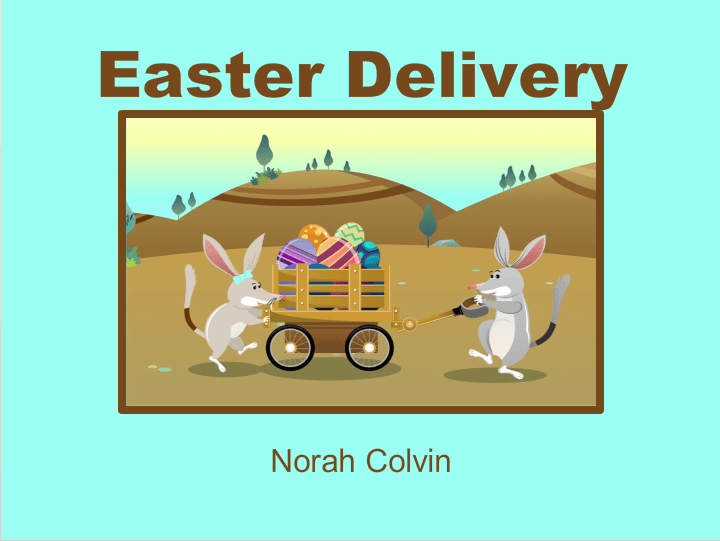
    The resource, called “Easter Delivery”, is a story about twin bilbies, Benny and Belinda, who get to deliver eggs to the families of some friends for the first time. It incorporates addition concepts and is suitable for use with the whole class on the interactive white board.

    The story involves the children in helping Benny and Belinda work out how many eggs they need to deliver to each family and the combination of packs they could choose. The maths concepts are probably most suitable to year one students but teachers may use their discretion about how much maths to include.

    Included is an information sheet about the resource and three printable follow-up activities:

    • Benny and Belinda’s Easter Activity – children record the number of people in their own family and draw and calculate the number of eggs Benny and Belinda would deliver
    • A Happy Easter Card from the Bilbies – a card with a picture to colour and blank inside for children’s own messages
    • The Bilbies’ Easter Colouring Page

    The resource is available clicking on the image until Thursday 24 March 2016. Hopefully it will be available on my website for Easter 2017!

    © Norah Colvin 2016
    © Norah Colvin 2016

    Yes. It is a bit of shameless promotion but it is also a gift for you to use if you would like to in the lead-up to Easter. The resource is not downloadable, but I am happy for the link to be shared with your early childhood teaching friends and colleagues. While it is not a requirement of use, I’d really appreciate some feedback. Please use the poll or share your thoughts in the comment box below.

    Thank you

    Thank you for reading. I do appreciate your feedback. Please share your thoughts.

  • It’s classic!

    By UnknownMarie-Lan Nguyen (Own work) [CC BY 3.0 (http://creativecommons.org/licenses/by/3.0)], via Wikimedia Commons
    By UnknownMarie-Lan Nguyen (Own work) [CC BY 3.0 (http://creativecommons.org/licenses/by/3.0)%5D, via Wikimedia Commons
    This week at the Carrot Ranch Charli Mills is talking about the classics and libraries. I was a bit intrigued by the coincidence, for my current audiobook is A Classical Education The stuff you wish you were taught in school, written by Caroline Taggart and narrated by Bill Wallis. Maybe the words would reflect my situation better if they read “The stuff you wish you retained from what you learned in school”. I did study ancient history and even retained enough of it to get a passing grade in my final year of school, but most of what I learned dissipated once the exam was done.

    http://www.morguefile.com/
    http://www.morguefile.com/

    Although I am enjoying the audiobook, I think I will be none the wiser at its conclusion and retain little more than in earlier days. It is a reflection on my retention rather than the worthiness of the book.  At the top of Taggart’s webpage is a statement from the Yorkshire Post that I think is probably no idle boast:

    Caroline Taggart…has carved out a niche for herself in user-friendly, wittily written factual books which capture the imagination and quickly find their way to the top of the bestseller lists. 

    Prior to reading this statement I had thought that it was perhaps the narration that had brought the book alive in a most entertaining way. I was surprised that the narrator was not the author for the wonderful meanings and interest he evokes. If not the author then, I thought, he must be a wonderful character actor. Indeed, I was not surprised to find, he was.

    According to the Yorkshire Post, the writing itself is worthy too, though it seems to me, in many ways to be little more than a list of names, dates and snippets of events brought to life by an expert narrator. I’m not sure that I would read it cover to cover as I have listened to it, but it would definitely make a useful resource for checking out who and when, which is more or less impossible to do with an audiobook.

    ausines headphones

    One thing I have not liked about the book is the repeated opinion that maths and science in school are boring, and that most of us would only groan when thinking of what mathematicians like Archimedes and Pythagoras have burdened us with. If you’ve read many of my posts you would probably accuse me of being inconsistent, for haven’t I often agreed with that opinion of maths at school?

    algebra

    However, learning in mathematics should not be that way. I wish that everything we learned in school would be alive with interest, purpose and meaning. Then there’d be no need to groan. We’d be amazed and inspired by these great thinkers who have enlightened our lives.

    Arthur Benjamin, Mathemagician, would agree.

    He summarises his talk with these words:

    “Mathematics is not just solving for x, it’s also figuring out why.”

    But I digress a little. Charli’s main point was about the joy to be found in libraries. In my younger years I spent many hours in libraries. And if I wasn’t in a library, I was reading a book I’d borrowed from a library. Our home was filled with books but there were never enough to read and my parents and many of my siblings were frequent library book borrowers. On many Saturday afternoons throughout my teenage years I would walk the 5½ kilometre journey to the local library and back. I can’t remember how many books I was allowed to borrow, but I borrowed as many as I could.

    So many things about libraries have changed from those days of enforced silence, carded catalogues, and microfiche readers. But I don’t feel nostalgic for it. The systems are much more efficient now, and libraries have much more to offer the changing needs of a changing society.

    library
    http://www.morguefile.com/

    What does sadden me is that many local councils and schools are doing away with their libraries, and many schools are choosing administrators over teacher librarians when organising their staffing. A teacher librarian should be first enlisted. Nobody knows books and readers better than a teacher librarian.

    While I have not frequented my local library in recent years, I would be very distressed if it were to close. Not everyone has the luxury of being able to choose ownership over borrowing as I do. Libraries are important to communities and should be accessible to everyone; and not only for their books. Libraries play a significant role in developing a sense of community by providing meeting spaces for books clubs and groups of all sorts, activities for children including storytelling and reading, craft activities, films, games and puzzles, visits by authors and illustrators …

    They are also a great place to brush up on the classics that you may have missed out on in school, or find a book about mathematics that may inspire you to ask a big question and figure out why.

    The idea for my flash in response to Charli’s challenge, to In 99 words (no more, no less) write a story that includes a library, comes from the idea of taking books to the people, in their own neighbourhoods, and connects with my thoughts for an early childhood caravan.

    © Norah Colvin
    © Norah Colvin

    Another life, another dream, another possibility …

     The Book Lady

    She pulled the trailer from the shed, cleaned off the grime, gave it a lick of paint and hitched it to its once permanent position behind her bicycle. A trial ride around the yard confirmed all, including her knees, were still in working order. She propped the bike against the stairs and trundled back to her library where books lay scattered, spewed from shelves no longer able to hold them. She bundled them lovingly, tied them with memories, and wished them new hands to hold and hearts to love. It was time to share, and she knew just where.

    Thank you

    Thank you for reading. I appreciate your feedback. Please share your thoughts.

  • Be a scientist in real life!


    Scout, Science Girl https://openclipart.org/detail/192588/science-girl
    Scout, Science Girl https://openclipart.org/detail/192588/science-girl

    I have often talked about the scientific explorations of young children and referred to children as born scientists. Their curiosity, ability to engage in their own explorations and investigations, and make their own discoveries can be encouraged by adults who welcome their questions and become co-investigators.

    I recently read a post on The School Bell, An Official Blog of Harris County Department of Education that excited me about ways of maintaining that engagement. The post, contributed by Lisa Felske, is entitled Kids Count: Let them Be Citizen Scientists. Lisa says that there of hundreds of projects children can get involved with, some for the long-term as a classroom project, and others that can be conducted independently. They are all real projects that help researchers collect and analyse data.

    Lisa says,

    “For students, participation can make them feel connected to a community or a place far from home and can give them the satisfaction of knowing they have made a small but important contribution to real science.”

    How exciting to be part of a real project, collecting data that will make a difference to our world.

    www.morguefile.com
    http://www.morguefile.com

    Lisa says that one of her favourites is “Penguin Watch, which allows students to monitor penguins in remote regions by looking at still images and counting the number of adults, chicks and eggs seen in the photos.”

    I imagine many children would be interested in that too. But when you follow the link to Penguin Watch you find it is only a small part of the Zooniverse, “a collection of web-based citizen science projects that use the efforts of volunteers to help researchers deal with the flood of data that confronts them”. With projects ranging from astronomy to zoology, you could say there is something for everyone.

    gardening

    Lisa also mentions other favourites including Project BudBurst and BudBurst Buddies (for younger students) in which junior scientists observe and record changes in plants throughout the changing seasons. While these are US based projects, the websites are rich with suggestions for adaptation in other places.

    Finding out about, appreciating and caring for everything, plant, animal or mineral, large or small, near or far is a major part of the real purpose of education. I think involvement in programs such as those described in Lisa’s article will do much to maintain a learner’s curiosity and sense of wonder. What an amazing use of the Internet. I was definitely born too soon.

    Thank you

    Thank you for reading. I appreciate your feedback. Please share your thoughts.


  • Writing poetry with children

    Horses go galloping

    This week at the Carrot Ranch Charli Mills has challenged writers to write about galloping. What keeps replaying in my head is the phrase “The horses go galloping, galloping, galloping” interspersed with the lines from “The Highwayman” by Alfred Noyes, a poem I learned at school.

    The Highwayman came riding, riding, riding,

    The Highwayman came riding, up to the old inn-door.

    tomas_arad_heart

    Learning poems at school was a joy. I love poetry and, in younger years, used to read a lot of it, less currently. Perhaps I should say I loved poetry, but that would unfair, just as it would be unfair to say that I no longer love an old friend that I haven’t seen for years, for at the moment we meet up again the connection is just as strong as ever, the ties never broken.

    Oftentimes when I read Charli’s challenges I know how I will respond immediately. Other times I need to massage the idea until I hit just the right spot. This time the horse has bolted and the paddock is left empty without a horse in sight. All I’m left with are my thoughts of poetry.

    Fortunately, as an early childhood teacher with a love of picture books, recent years haven’t been completely devoid of the poetic form. While not necessarily written in what might be considered “poetic language”, many are written in rhythmic rhyming verse. Others contain verses within the story, such as the refrain in The Gingerbread Man or the song in Love You Forever by Robert Munsch.

    The gingerbread man

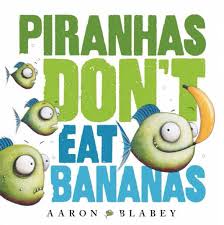
    A title recently added to my list of favourites, through repeated readings and recitations by my grandchildren, is Piranhas Don’t Eat Bananas by Australian author Aaron Blabey. Its rhythm, rhyme and sense of fun is an absolute joy. We laughed together at every reading by G1, and every recitation by G2. It begs to be read and re-read, recited and recited again. Sadly, I got to read it aloud only once, and even then not all the way through! “Hey,” I protested in vain. “I like to read picture books too!

    piranhas don't eat bananas

    Of course there are also many books of poems and rhymes written for children, including Nursery Rhymes, though many of those weren’t written with children in mind. There are also some that fit into a horsey theme such as

    In addition to reading poems and stories to my class I also enjoyed writing poems with them. At this early childhood stage the poems would be more rhythmical verse, sometimes rhyming and sometimes not, with only the hint of an introduction to poetic language.  I have previously written about writing our versions of I Love the Mountains, a traditional camping song.

    I have also written some resources for supporting teachers when Writing Christmas poems with early childhood students. These are available in my Teachers Pay Teachers store and soon to be included in readilearn resources. With easy-to-follow structures, writing these poems give children immediate boosts to their writing confidence.

    I had been thinking for a while that I should write some new versions suited to other times of the year, but hadn’t prioritised it. However, when I read Rowena Dreamer’s post Mr’s Poem: Through My Window on her blog beyondtheflow, another idea sprang to mind. Rowena discussed the writing of a poem “Through my window” that had been set as homework for her son.  I immediately thought of the sound poems that I had taught my students and wondered if the structure could be adapted for sight poems.

    The structure of a sound poem

    This is what I came up with:

    I saw as I looked through my window

    You’ll notice that I haven’t exactly maintained the structure. This is what happens, particularly when young children are writing their versions. It is to be expected and accepted. The purpose of the structure is to support, not restrict.

    I then wondered if it could be used with the other senses and, at the same time, realised that four verses, four senses, would just about reach the target of Charli’s challenge to In 99 words (no more, no less) write a story about galloping. With no other ideas galloping into view, how could I resist giving it a go?

    Disappointingly, I found the structure less accommodating for smell and taste, and had difficulty in conjuring different words to use for each. For example, I wanted to smell and taste the freshness of bread and the sweetness of apples. I had thought touch would be more difficult but have realised that’s not the case. The repetition of the word “felt” for both touch and emotion is perhaps not ideal though.

    I would love to say more here about the necessity for teachers to experiment before setting tasks for children, and of the value of learning from the process rather than the product, but I think I’ve probably said enough in this post.  I will just share what I’ve written which, though responding to Charli’s challenge, doesn’t actually fit the criteria of flash fiction. However, if you’d be kind enough, I’d still love to know what you think.

    Market Day

    I heard

    as I sat curled with a book

    the thundering of hooves

    the snorting of nostrils

    the jangle of stirrups.

    I felt anxious.

    I saw

    as I looked through the window

    the horse at the gate

    the rider on the path

    the bag in his hand.

    I felt excited.

    I smelled

    As I opened the bag

    The freshness of bread

    The sweetness of apples

    The promise of coffee.

    I felt famished.

    I felt

    As I savoured my lunch

    The crunchiness of crusts

    The crispness of apple

    The warming of coffee.

    I felt satisfied.

    Yum! Fresh produce.

    Thank you

    Thank you for reading. I appreciate your feedback. Please share your thoughts.


  • A tooth for a tooth

    lost tooth - Artie Feb 13 16

    My gorgeous grandson has just lost his first tooth, an event much anticipated and causing a great deal of excitement. In the months leading up to the event I had wondered how the family might mark the occasion and if the Tooth Fairy might visit. Though I shared the myths of Santa Claus, the Easter Bunny and the Tooth Fairy with my children when young, as adults they have debated the ethics of perpetuating these myths with their own.

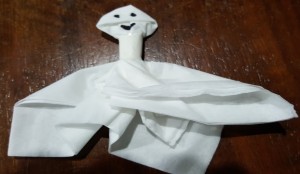
    As a teacher of 5 – 7 year olds it was not uncommon for me to encounter gappy grins and lost teeth through the course of the year. Mostly children would arrive at school proudly displaying a new gap, or a new tooth peeking through. Sometimes the tooth would dislodge at school and there would be great excitement. I would carefully place the tooth in the centre of a tissue, fold the edges down around it and sticky tape below the tooth to make a little “tooth fairy” to keep the tooth safe for the return home.

    tooth fairy

    Sometimes the children would discuss how their families marked the occasion of a lost tooth. Although there were children from diverse backgrounds in the classes I taught, I don’t remember any great divergence from the, to me, traditional tooth fairy story.

    When I was a child, I put my tooth in a glass of water and placed it on the kitchen windowsill. The following morning, if I was lucky (for sometimes she’d forget), the Tooth Fairy would have been and left me a shiny silver threepence.

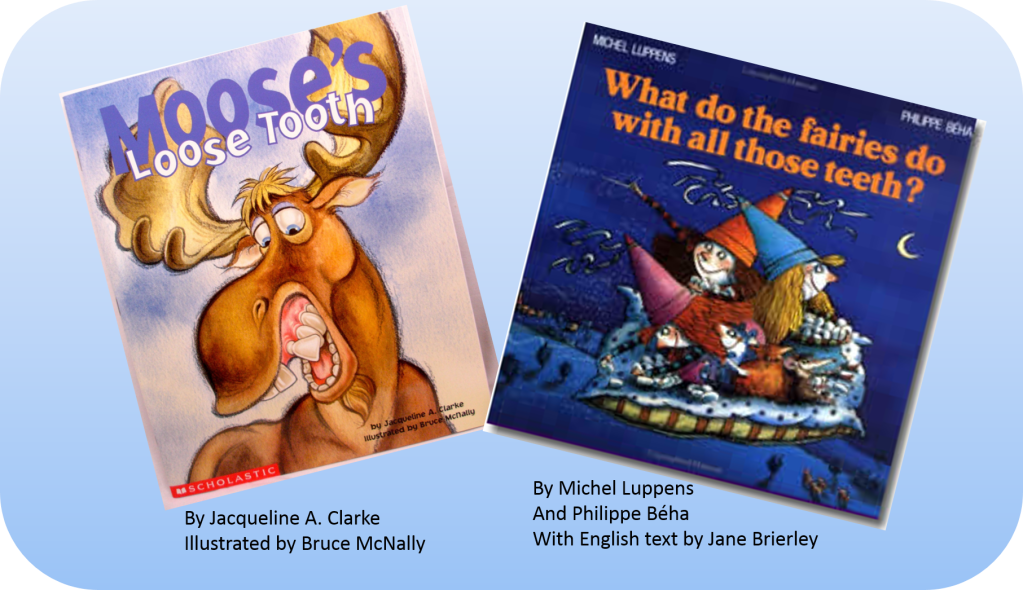
    Some children I taught put their teeth under their pillows, some in a special box by their bedside, but what most had in common was the fact that the tooth had been taken and replaced with a shiny coin. Sometimes, when a child lost a tooth, we would read a story such as What do the fairies do with all those teeth? or Moose’s Loose Tooth.

    tooth books

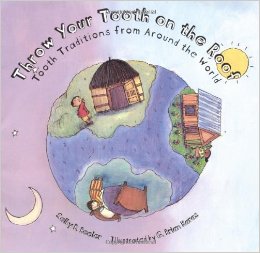
    While I was contemplating what the response might be to my grandson’s lost tooth, I read about a book called Throw Your Tooth on the Roof: Tooth Traditions from Around the World by Selby Beeler with illustrations by G. Brian Karas.

    throw your tooth on the roof

    I wondered if it would be a suitable gift to mark the occasion and went ahead and ordered it. I wasn’t disappointed. The book briefly describes traditions from many cultures and countries around the world. While the Tooth Fairy’s visit and gift of a coin is familiar to those of us living in the UK, US, Canada and Australia, it is not so familiar to all. In Mexico and Venezuela a mouse replaces the tooth with money. In El Salvador a rabbit does the same. In Guatemala it is El Ratόn.

    The title of the book comes from the tooth traditions of Botswana and the Dominican Republic. In some countries children receive coins, as described above, or a gift in exchange for the tooth. In other countries they ask for a new tooth. In Costa Rica and Chile the tooth is made into an item of jewellery. What surprised me was the great variety of traditions, of which I have mentioned only a few.

    In her Author’s Note at the end of the book Selby Beeler explains the chance discussion, with a friend from Brazil who hadn’t heard of the Tooth Fairly, that piqued her interest and lead to the writing of the book. She says,

    “I quickly discovered that the best way to learn what people do with their baby teeth is simply to ask them. While collecting customs for this book I stopped people wherever I went. I smiled, introduced myself, and asked them the question I had asked my friend, ‘What did you do with your baby teeth when you lost them?’”

    The result is fascinating. Thank you Selby for being curious and asking a question that elicited so many interesting responses. Thank you also for selecting some of the hundreds of traditions and compiling them into this lovely book that enables us to find out a little more about each other; some things that are the same and some that are different. I’d be delighted too if you, esteemed readers, shared your traditions in the comments.

    In the introduction to the book Beeler says,

    “Has this ever happened to you?

    You find a loose tooth in your mouth.

    It happens to everyone, everywhere, all over the world.”

    I am disappointed that, in all the years I was teaching children in the “loose tooth” age group I hadn’t ever thought to investigate different traditions. Although I took many opportunities to celebrate the diversity in the classroom (I’ve shared some of those here), I wonder what other opportunities I missed. If I was still working with year one children this book would be essential to my collection and sit alongside another favourite for discussing diversity and acceptance, Whoever You Are by Mem Fox. I am pleased I found it in time to gift to my grandson to mark his first missing tooth.

    Whoever you are.

    This week at the Carrot Ranch Charli Mills is also talking about diversity and has challenged writers to In 99 words (no more, no less) write a story of a character who is diverse. Who is this person? Does this character know, accept or reject being perceived as different? As writers, consider how we break stereotypes. Tell you own story of “otherness” if you feel compelled. Or, select a story of diversity, such as rainbows revealing gold. How is diversity needed? How is your character needed?

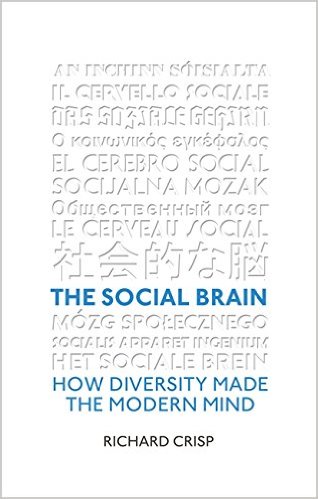
    Coincidentally I am reading a book about diversity at the moment. The book, The Social Brain: How Diversity Made the Modern Mind by Richard Crisp was reviewed by Anne Goodwin who blogs at Annecdotal. In her review Anne says,

    “I’m pleased to say that Richard Crisp’s highly accessible overview of recent research into cultural diversity has not only revitalised my interest in social psychology but is highly relevant to how we all live today. I touched on one of his papers in my recent post on Looking at difference, embracing diversityThe Social Brain develops those ideas in more depth and detail.

    social brain

    I am compelled to add my voice to Anne’s recommendation. It is a fascinating, challenging and enlightening read.

    In a comment on her post, Charli stated that diversity is in the small things, not just the big. I believe she is right. It is the attitudes and actions we incorporate into our everyday lives that can make the big difference in another’s world. I’m sticking to my tooth theme for my flash with a wish for recognition of commonality, acceptance and respect. Richard Crisp’s book goes a long way towards helping understand what drives us, and why.

    A friendship born

    The invisible wall was a fortress built of fear and prejudice. On either side a child played alone. The rules were accepted without question.

    Then they saw each other, and a challenge was born.

    At first they kept their distance, staring across the divide, until scolding adults bustled them away.

    Curiosity and loneliness won over fear as they mirrored each other in play.

    One day they drew close enough to touch, but hesitated. Simultaneously they bared their teeth, each proudly displaying a gap, in the middle on the bottom, a first. Surprised, they laughed together: more same than different.

    Thank you

    Thank you for reading. I appreciate your feedback. Please share your thoughts about any aspect of this post or flash fiction.