“Look at that,” one mother tut-tutted. “So shameful.”
“What is?”
“That. I’d be totally ashamed to send my child to school looking like that.”
“That’s a shame.”
“Unfortunately, our children have to mix with the likes of that. Have people no shame?”
“I’m not sure what you mean by the likes of that. Our world is enriched by diversity. The more the better, I say. It’s true some people have no shame. Nor should they. They should be proud of who they are. Except for the likes of you. You’re shameless. Shame on you.”
“Well, I —”
“Never. Obviously.”
Thank you for reading. I appreciate your feedback. Please share your thoughts.
Note: The collection of stories made in response to the previous prompt Floppy as Puppy Ears, including mine, can be read at the Carrot Ranch.
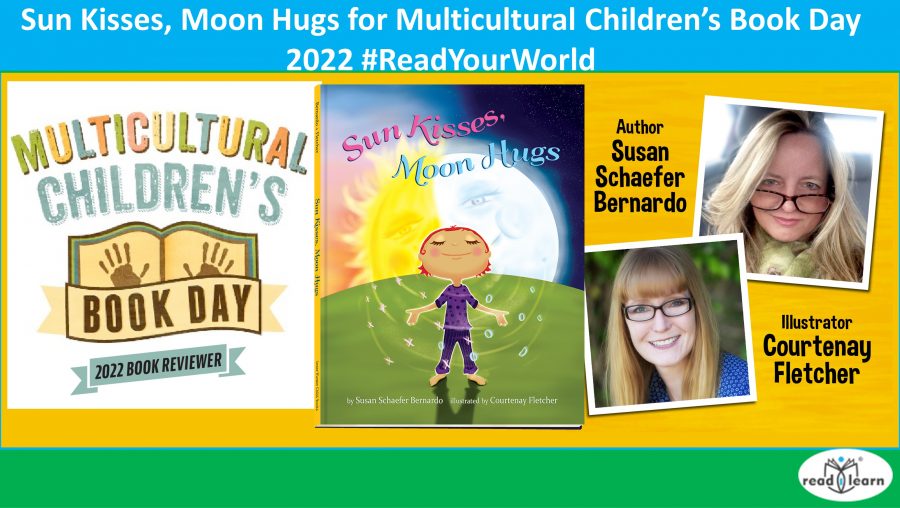
Today, Friday 28 January 2022, the last Friday in January, is Multicultural Children’s Book Day (MCBD), a day for celebrating diversity in children’s books. I am pleased to be a MCBD reviewer for the fourth time this year; and was delighted to receive a copy of Sun Kisses, Moon Hugs from author Susan Schaefer Bernardo and illustrator Courtenay Fletcher to review.
About Sun Kisses, Moon Hugs
From the website:
Sun Kisses, Moon Hugs is an award-winning picture book with a simple but powerful message: love lasts forever.
Lyrical writing and delightful illustrations provide perfect bedtime reading for any child. Kids love finding the Xs, Os and hearts hidden in the illustrations.
The book is also ideal for supporting children through grief, separation anxiety, parent deployment, foster care, divorce, illness or other traumatic situations, by wrapping them in a warm and comforting emotional security blanket and opening a dialogue on the nature of love.
Even when loved ones cannot be with us, we can feel their presence through our deep connections to the natural world.
Sun Kisses, Moon Hugs has received glowing testimonials from parents, pre-schools, Child Life specialists, librarians, social workers, teachers, hospice caregivers…and most importantly, kids.
Gold medal winner of the International Publishers Association Awards and a featured title in the LeVar Burton Kids Skybrary app.
Sun Kisses, Moon Hugs was selected as a Child’s Grief Awareness Day book-of-the-month, and also featured two years in a row for Children’s Multicultural Book Day.
Hugs by moon, kisses by sun, I’ll always love you, Little One.
From author Susan Schaefer Bernardo and illustrator Courtenay Fletcher:
Sun Kisses, Moon Hugs is a lyrical picture book created to reassure children they are always connected to the ones they love. We’re so grateful that the book is fulfilling its purpose and being used by families, schools, and organizations around the country as a soothing bedtime story and also a powerful resource to help children coping with challenges such as divorce, grief, foster care, immigration separation, deployed parents, incarcerated parents, and more.
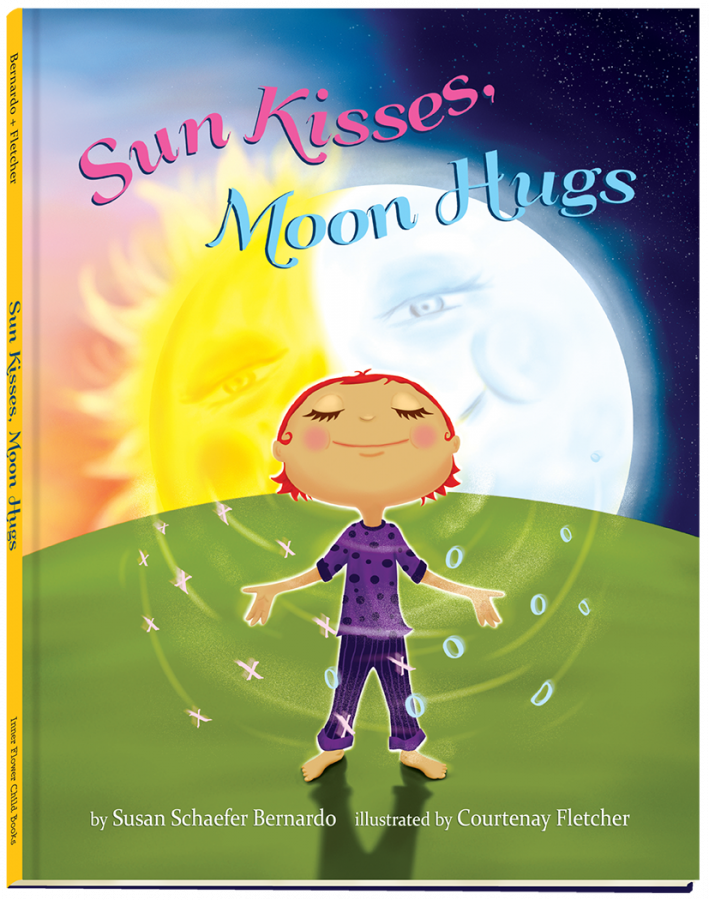
I was immediately captivated by the book’s delightful title which gave me a warm and fuzzy feeling and I knew this book was going to be special. I wasn’t disappointed. The combination of Bernardo’s lyrical rhyming text with the warmth of Fletcher’s colourful yet soothing illustrations makes Sun Kisses, Moon Hugs a very satisfying book to read aloud to and with young children.
From cover to cover, and on all the pages between, there are soothing messages in both words and images to reassure a young one that they are always loved.
The text opens with the words ‘No matter how far apart we are, I’ll always find ways to tell you I love you.’
This week I’m visiting with illustrator Helene Magisson to chat about her latest book Sarah’s Two Nativities written by Janine M Fraser and published by Black Dog Books. The book is due for release this month with a launch scheduled for the 21st.
About Helene
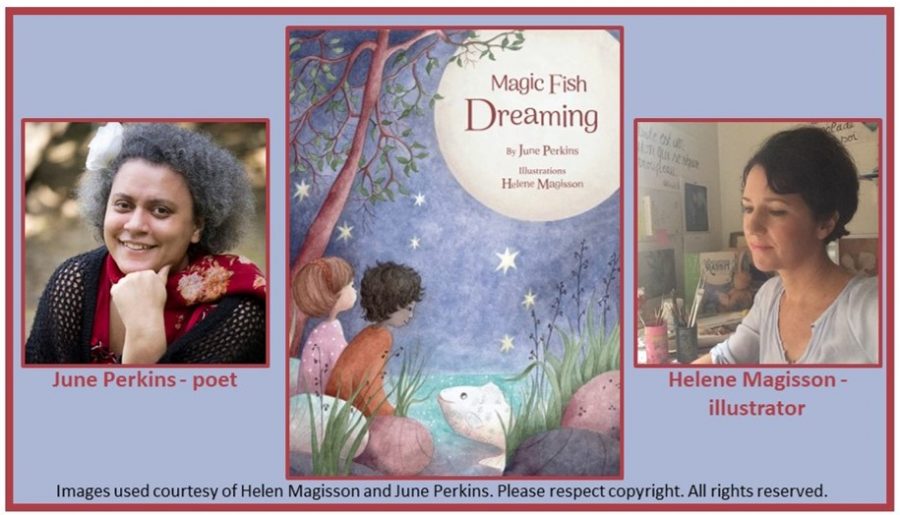
I first introduced you to Helene in 2017 when she chatted about her process of illustrating, especially as it related to the beautiful book of poetry Magic Fish Dreaming written by June Perkins. You can read that interview here.
Since the publication of Magic Fish Dreaming, Helene has illustrated a number of other books and now has eleven published books in her portfolio, with more on the way. I am not surprised that Helene is sought after as an illustrator. I think you’d have to agree that her, mainly watercolour, illustrations are exquisite and possess an almost magical quality.
Although Helene now calls Australia home, she has lived in countries all over the world, including Africa, France, and India. That her travels both inspire and enrich her work is obvious in her delightful illustrations that perfectly complement Janine Fraser’s story Sarah’s Two Nativities.
About Sarah’s Two Nativities
From the publisher:
‘Sarah loves her two grandmas – Grandmother Azar and Grandmother Maria. Grandmother Azar tells Sarah stories from the Holy Koran, while Grandmother Maria tells her stories from the Bible. At Christmas time, Sarah snuggles in each of her grandmothers’ laps and listens to two nativities stories about the birth of baby Jesus. They are the same in some ways, and different in others … but both can be Sarah’s favourite.’
The classrooms of today are filled with children from a diversity of backgrounds and with a multiplicity of perspectives. The futures of those children are filled with opportunities that were unimaginable when I was a child and possibly even now. The world’s landscape — physical, political and social — is changing rapidly. Maybe we are not too far away from finding the pot of gold at the end of the rainbow. Could our ‘wealth’ be bound up in acceptance of our diversity?
In last week’s post, Multicultural Children’s Book Day: Book Review, I suggested that the day “provides us with an opportunity to examine the collections of books in our classrooms and libraries to determine if they reflect the lives our children.”
I decided that perhaps I should examine my own personal picture book collection too. While I am happy with the collection, there are gaps and I’m sure more could be added. However, I know that a visit to my local or school library will provide me with access to many more.
readilearn’s multicultural teaching resources
As well as investigating my book collection, I had a look at readilearn teaching resources to see how they stacked up.
The establishment of a supportive classroom, one that is welcoming to all, is a recurrent theme on readilearn; as are activities for getting to know one another and establishing friendship skills.
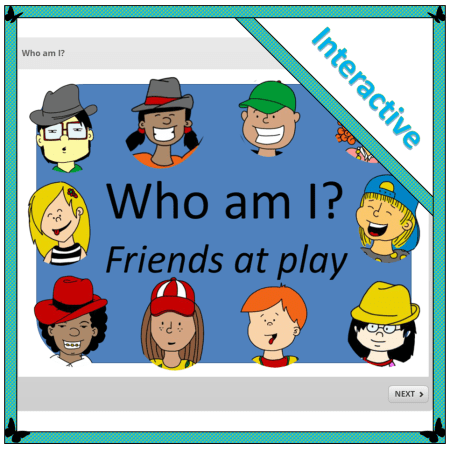
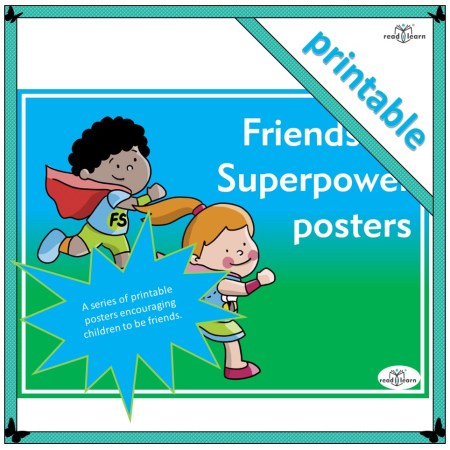
I am proud to say that, when children are included in illustrations, children from diverse backgrounds, even if not in traditional costume, are portrayed. This is intentional. You can see evidence of this on the Home page and in the Literacy and History banners as well as in teaching resources such as Friendship superpower posters and Who am I? Friends at play.
Resources that encourage children to get to know each other rank highly in the readilearn collection. The reason for this is my belief that with knowledge comes understanding, respect and friendship.
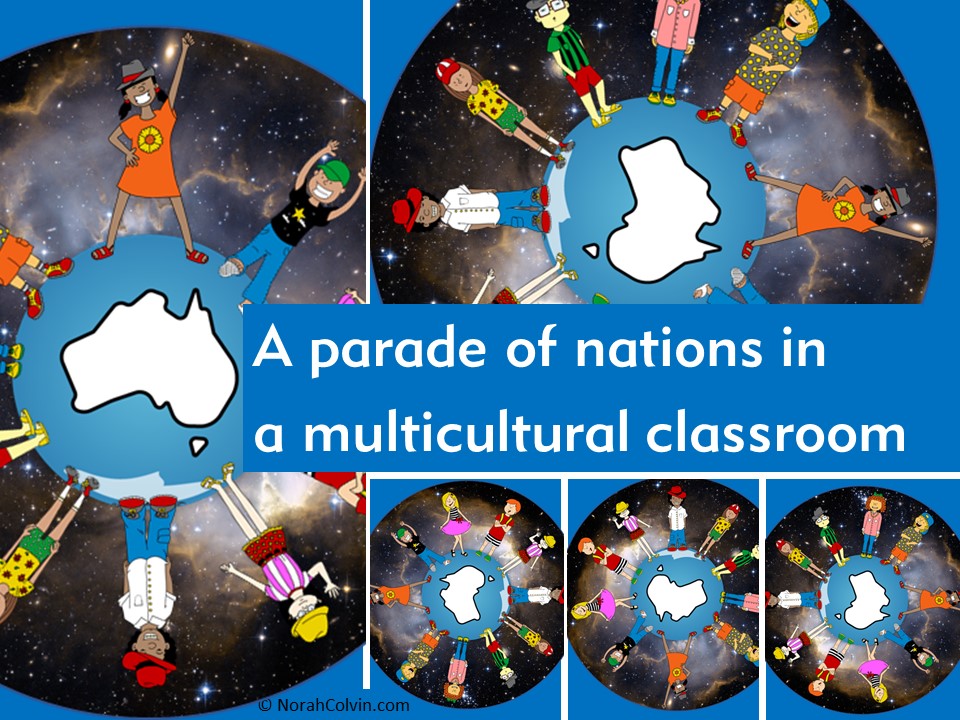
One need look no further than a classroom of children to find a parade of nations. Below is my response to Charli’s prompt, but please read on for information about Multicultural Children’s Book Day, International Day of Peace, and suggestions of books to read.
A parade of nations
The children listened intently, eager to learn. Each family’s wish was for a better life. The group was a parade of nations; with Dragos from Serbia, Duy from Vietnam, Melino from Tonga, Ervine from Scotland, Rongo from New Zealand, Jung from Korea, Sanhitha from Sri Lanka, and Jawara from Senegal; and these were only the new arrivals. Others were first and second generation with but a few who could count back further than three, except for Kinta whose ancestors were the first to arrive. The wall map, dotted with pins to show each one’s heritage, was their proudest display.
While I have taught classes with children from each of these countries, and many more, for the purpose of my story I used the Baby Name Finder at Mom Junction to locate names with friendly, peaceful meanings. It is a very helpful resource.
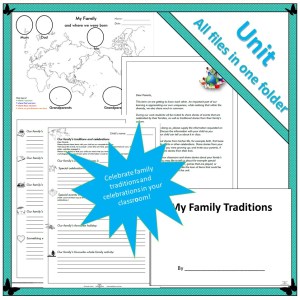
It was my experience in such multi-cultural classrooms that prompted me to make a resource to facilitate learning about our own and each other’s cultural traditions and celebrations. The resource is now available on readilearn.
Used courtesy of Multicultural Children’s Book Day
Thinking about the diversity that exists in our classrooms, our cities, our countries and our world is a perfect time to bring to your awareness Multicultural Children’s Book Day, the focus of which is on “bringing attention to all of the amazing children’s books available that celebrate diversity.”
The co-creators of the event Valarie Budayr and Mia Wenjen define multicultural books as those that
include characters of colour or that represent a minority point of view
share ideas, stories, and information about cultures, race, religion, language, and traditions
embrace our world and offer children new ways to connect to a diverse and richer world.
On the Multicultural Children’s Book Daywebsite, teachers can find a collection of helpful resources; including a classroom kindness kit and a classroom empathy kit. Authors and publishers of multicultural books are also invited to sponsor Multicultural Children’s Book Day through a range of sponsorship options already open for 2019. Interest in the day has increased in the six years since its inception and that growth can only continue. While it is wonderful to see the greater number of books with multicultural and diverse themes now available, more are still needed.
One of my long-time favourites is Whoever You Are written by Mem Fox and illustrated by Leslie Staub. I have read it to many groups of children, every one of whom has loved its powerful message: that underneath it all, we are just the same.
You can read about, listen to Mem read, or purchase the book here.
A newer favourite is another by Mem Fox —I’m Australian Too. This one is illustrated by Ronojoy Ghosh.
This book is a celebration of all cultures and heritages that are represented in the Australian population and together make our country what it is.
You can read about, listen to Mem read, or purchase the book here.
An even newer favourite is All are Welcome written by Alexandra Penfold and illustrated by Suzanne Kaufman.
I first heard about this book from the wonderful Patricia Tilton who blogs at Children’s Books Heal. Patricia’s aim with her blog is to “share books on a wide range of topics that have a healing impact on children who are facing challenges in their lives.” I have purchased many lovely books recommended by Patricia and never been disappointed.
Just as I was completing a draft of this post, I received notification of a new post by Patricia. You won’t believe it, but Patricia wrote about the book again for the International Day of Peace on 21 September. How perfect. Please pop over to Patricia’s post for more details about this beautiful book.
Once, long ago, there used to be a recording of Bill Martin Jr. singing I am Freedom’s Child on his website. I loved singing along to it with my class. The words were especially meaningful in our multicultural classes. We sang, “As I learn to like the differences in me, I learn to like the differences in you.” What a wonderful thought that, with acceptance of ourselves, comes acceptance of others. If we could just do that, we would indeed, all be freedom’s children.
Thank you for reading. I appreciate your feedback. Please share your thoughts.
While a classroom is filled with a group of unique individuals, it can be easy sometimes to get caught up in treating them as one, with one set of needs, expectations and rules. Everybody do this, everybody do that—a bit like Simon Says but not always as much fun.
It is useful to pause sometimes and celebrate the uniqueness of individuals in your class.
International Children’s Book Day and Hans Christian Andersen‘s birthday on 2 April provide excellent excuses for reading and celebrating children’s literature, as if we needed any. We can also find stories that help us celebrate individuality.
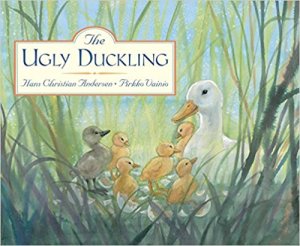
Hans Christian Andersen was a prolific writer of fairy tales, many of which are well-known and have been made into movies. One of my favourite films as a child was about Hans Christian Anderson with Danny Kaye in the lead role. I was particularly touched by the story of The Ugly Duckling which Andersen told to a sad young boy whom no one would play with. You can watch the scene here.
The story is a great starting point for discussing individual differences,
On the last Friday of each month We Are the World Blogfest invites bloggers to join together in promoting positive news. With this the first for 2018, it’s a good time to think about joining in. If you would like to do so, please check out the rules and links below.
A statement of mission from the We are the World Blogfest website:
“There are many an oasis of love and light out there, stories that show compassion and the resilience of the human spirit. Sharing these stories increases our awareness of hope in our increasingly dark world.”
This month I am sharing an inspiring story that, while it may not be “News”, was certainly news to me and maybe is news to you too. I hope it fits the criteria for sharing.
“not only raise awareness for the kid’s books that celebrate diversity, but to get more of these of books into classrooms and libraries.”
There is certainly a need for more understanding, acceptance, empathy and compassion in the world, and it is very pleasing to see projects such as this being promoted. I’m sure you’ll agree that education of our children is a great place to start.
Used courtesy of Multicultural Children’s Book Day
Multicultural Children’s Book Day was initiated by Valarie Budayr from Jump Into a Book and Mia Wenjen from Pragmatic Mom, and is celebrated for the fifth time this year on 27 January with a #ReadYourWorld Twitter party!
(Note: There is also a great way for authors and publishers to help out by donating their books with multicultural themes.)
I hope you see how both these organisations are working towards making our world a more positive place for all of us.
Here are the guidelines for #WATWB:
1. Keep your post to Below 500 words, as much as possible.
2. Link to a human news story on your blog, one that shows love, humanity, and brotherhood. Paste in an excerpt and tell us why it touched you. The Link is important, because it actually makes us look through news to find the positive ones to post.
3. No story is too big or small, as long as it Goes Beyond religion and politics, into the core of humanity.
4. Place the WE ARE THE WORLD badge or banner on your Post and your Sidebar. Some of you have already done so, this is just a gentle reminder for the others.
Help us spread the word on social media. Feel free to tweet, share using the #WATWB hashtag to help us trend!
Tweets, Facebook shares, Pins, Instagram, G+ shares using the #WATWB hashtag through the month most welcome. We’ll try and follow and share all those who post on the #WATWB hashtag, and we encourage you to do the same.
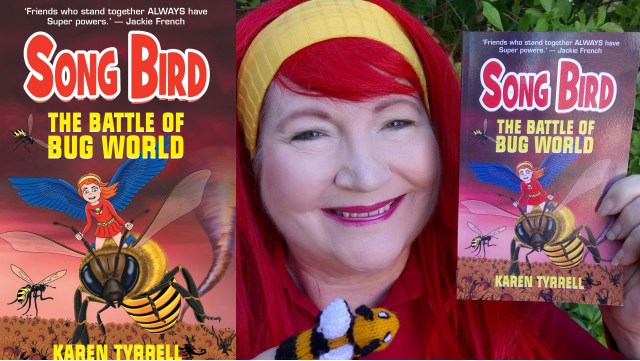
This week I have the pleasure of welcoming Karen Tyrrell back to the blog. I previously interviewed Karen about her book Songbird Superhero for the Author Spotlight series. Karen has now published a second book in the Song Bird Series The Battle of Bug World.
I enjoyed Songbird Superhero, so was delighted when Karen approached me to participate in her blog tour. The fact that the book is about bugs may have something to do with it. As you saw last week, I am a fan of minibeasts, including bugs.
As soon as Karen announced the release of her book, I purchased an advance copy and was able to post a pre-review on Goodreads. This is what I wrote:
I loved Song Bird Superhero and wondered if a sequel could possibly match it. But with The Battle of Bug World, Karen Tyrrell didn’t just match it, she surpassed it!
This fast-paced page-turning story is packed with disasters that even Song Bird is not sure she can fix.
What is that nasty Frank Furter up to now? And what’s with the severe thunder storm hovering above his house? What’s happened to all the bees? And why has Song Bird’s sister
With Australia’s National Day of Action against Bullying and Violence occurring this Friday 17 March and Harmony Daynext Tuesday 21 March, it is timely to consider what we can do to ensure our schools and communities are safe places; places where everyone is included, diversity is appreciated, and others are treated with compassion and respect.
I recently wrote about the importance of teaching children strategies for making friends and getting along with others. As for children in any class, these strategies would be very useful for Marnie and others in her class. Marnie, a girl who is abused at home and bullied at school, is a character I have been developing intermittently over the past few years in response to Charli’s flash fiction challenges at the Carrot Ranch. I haven’t written about her recently as the gaps widened and the inconsistencies grew and I felt I needed to give her more attention than time allowed.
Sometimes, when children are having difficulty settling in and making friends at school, are being bullied, or are bullying, it is easier to point the finger, allocate blame, and attempt to place the responsibility for a solution on others. Firstly, I think we, as a society, need to realise that we share responsibility. Secondly, we need to be the type of person we want others to be: compassionate, kind, accepting, welcoming, respectful. Thirdly, we need to teach the attitudes and behaviours we wish to encourage and make it very clear what is and is not acceptable; including “Bullying.No Way!”
We are not always aware of the circumstances in which children are living or the situations to which they are exposed which may impact upon their ability to learn or to fit in. I wondered why Marnie might be abused at home. Although I knew her parents were abusive, I hadn’t before considered why they might be so. Charli’s honeymoon prompt led me to thinking about young teenage parents, who “had” to get married and take on the responsibility of caring for a child when they were hardly more than children themselves. I thought about broken dreams, lost opportunities, and definitely no honeymoon. Such was life for many in years not long ago.
Blaming is easy. Mending is more difficult. Safety and respect are essential. I’d love to know what you think.
Honeymoon dreams
Marnie sat on the bed, legs drawn up, chin pressed into her knees, hands over her ears. “Stop it! Stop it!” she screamed inside. Why was it always like this? Why couldn’t they just get over it? Or leave? She’d leave; if only she had somewhere to go. She quivered as the familiar scenario played out. Hurts and accusations unleashed: “Fault”. “Tricked”. “Honeymoon”. “Bastard”. Marnie knew: she was their bastard problem. He’d storm out. She’d sob into her wine on the couch. Quiet would reign, but briefly. Marnie knew he’d be into her later, and she? She’d do nothing.
Thank you for reading. I appreciate your feedback. Please share your thoughts.
Remember to catch up with Karen Tyrrell who writes about empowerment in my interview on the readilearn blog this Friday.



















 Norah Colvin