Live Love Laugh Learn … Create the possibilities

Tag: Curiosity

  • Curious scientists

    Curious scientists

    In my current out-of-the-classroom position I write science curriculum materials for use in early childhood classrooms. It is an interesting and challenging role, but also lots of fun as I work with a number of other writers who are also teachers, with an added qualification in science. As many of them have studied science at tertiary level, worked in various other fields, and taught science at high school level, I am surrounded by people with a lot of knowledge and experience different from mine.
    One thing that is wonderful about working with a group of scientists is the range of topics that are raised for discussion around the table at lunch time. Scientists are naturally curious and they don’t take anything at face value. They delve into it, interrogate, investigate and explore until they have answers to questions that may have arisen. I learn a lot! Like the difference between degradable and bio-degradable; how close the asteroid came to Earth; and mitochondria, genetics and children with three parents!
    On the home front too, I am surrounded by scientists; computer scientists and environmental scientists, each with a strong sense of social responsibility and ethics. I am fortunate to be swept along in learning by their interests and enthusiasm.
    In previous posts I have shared some thoughts about the importance of curiosity and of my opinion that children are born scientists. I am always delighted when I come across something that supports my opinion. (Yes, there are others!)
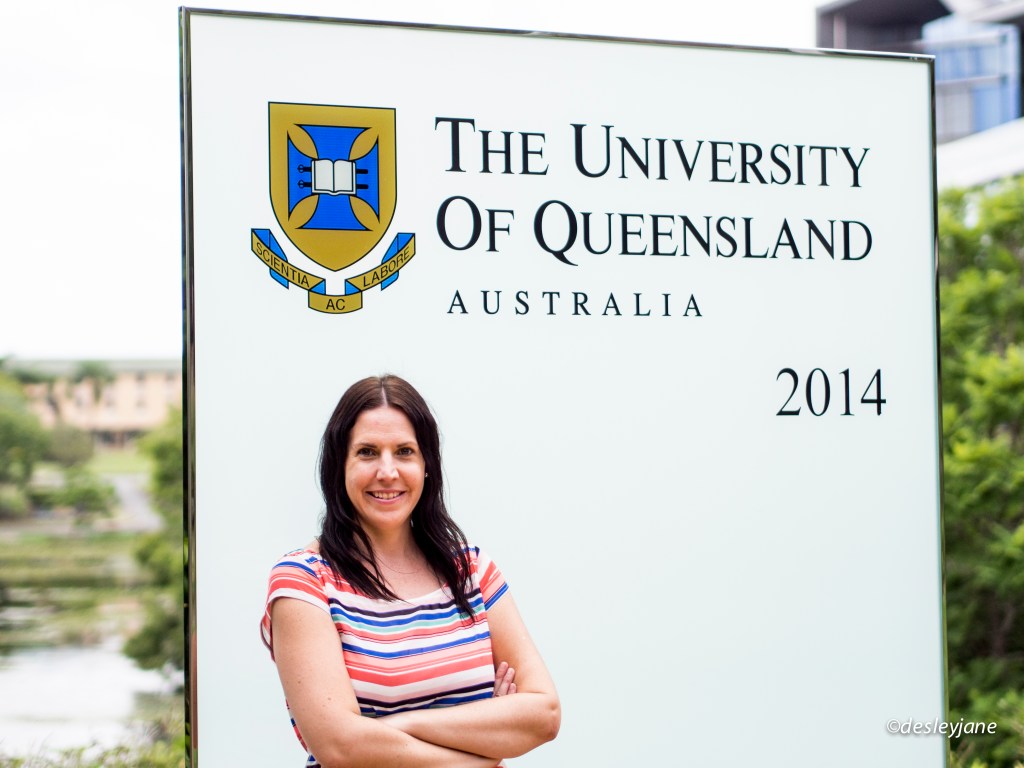
    I have recently discovered a lovely blog Musings of a Frequent Flying Scientist written by a local scientist Desley Jane. This week she shared an interview with another local scientist Julia Archbold. I enjoyed it so much I decided to share it with you.

    These are just a few of things I like about it:
    They are both young female scientists. (For too long science was seen as a male-only province.)
    The importance placed upon curiosity, asking questions and ‘quizativity’ (what a great word!)
    The excitement of learning.
    That their engagement with science makes a positive contribution ‘the world’.

    Please visit Desley’s blog to read the entire interview and explore what else she has to offer.

    Thank you

    Thanks for reading. I appreciate your feedback. Please share your thoughts about any aspect of this post.

    desleyjane's avatarMusings of a Frequent Flying Scientist

    Scientist SpotlightThis is my first interview for my Scientific Reasoning feature. The questions will be the same for each interviewee and I hope that they will give us some insight into the lives of a few of today’s scientists.

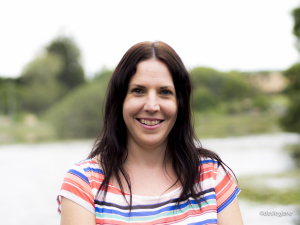
    201501_Julia-15

    Dr Julia Archbold is a good friend of mine. We have known each other for many years and have worked together in the past in our twenties (ish). I admire Julia greatly, both as a scientist and as a person. She is warm and talented, with a quick wit and a very kind soul. She is about to embark on an exciting new adventure and I caught her just in time for this interview.

    me: So I know you’re a scientist, but when did you decide to become a scientist? What were you thinking? (Not WHAT WERE YOU THINKING?!?! but what made you decide that science was going to be your future?)

    Julia: I…

    View original post 1,449 more words

  • The Question X Revisited

    Tomorrow, 20 November 2014, is UNESCO’s World Philosophy Day. Celebration of the day “underlines the enduring value of philosophy for the development of human thought, for each culture and for each individual.”
    In recognition of the day I am reblogging a recent post from The Philosophy Foundation which discusses the differences between open and closed questions and explains the greater value of The Question X.
    The importance of encouraging children to ask questions has been a recurring theme on my blog (here, here, here and here) , as has the need to encourage them to think for themselves rather than to become experts at regurgitating force-fed information (here and here).
    The discussion of The Question X gave me a lot to think about. Maybe it will do the same for you.
    Happy thoughts and thinking on World Philosophy Day 2014!

    philosophyfoundation's avatarphilosophyfoundation

    We read this blog ‘Closed Question Quizzing, Unfashionable Yet Effective‘ by Andy Tharby the other day. The virtues of closed questioning are well known to The Philosophy Foundation as they are central to our philosophical questioning approach, so we wanted to share this extract taken from a chapter entitled ‘If it, Anchor it, Open it up: A closed, guided questioning technique‘ that Peter Worley has written for the forthcoming book The Socratic Handbook ed. Michael Noah Weiss, LIT Verlag, 2015. Some of these ideas were first written about in The Question X published in Creative Teaching and Learningand available here: The Question X. In this blog Peter has developed some of the ideas written about in The Question X.

    Plato’s Socrates asks many closed questions – questions that elicit a one-word or short answer such as ‘yes’, ‘no’ or ‘Paris’. Dip in to any of the dialogues…

    View original post 2,461 more words

  • How much of a meliorist are you?

    https://openclipart.org/image/800px/svg_to_png/103549/old_man01.png
    https://openclipart.org/image/800px/svg_to_png/103549/old_man01.png

    Recently I was sent a link to an article titled Cheer up, it’s not all doom and gloom published by the Australian Broadcasting Commission’s The Drum.

    This article mentioned a book by Steven Pinker called Better Angels of Our Nature which had been recommended to me by Geoff Le Pard in a comment on my post about childhood illness. The premise of this book is that humanity, over the ages, has become less violent. After to listening to Pinker’s history of violence, I’m pleased that I live these relatively peaceful times.


    The article also introduced me to a new term ‘meliorism’ which means having a belief that the world can be improved by the actions of humans. While the term may have been unfamiliar to me, the attitude is not and I attest that I am a meliorist.

    I have a very strong belief in the power of education to improve the world. Education empowers individuals, and educated individuals empower societies to build improved futures. It becomes very difficult to sustain negative practices in the face of overwhelming evidence and information.

    What better place is there for education to begin than in the home?

    In a recent post I referred to a new book by Michael Rosen called Good Ideas: How to Be Your Child’s (And Your Own) Best Teacher. At the time I had not read the book but now I can say, with great delight, that I have listened to most of it. With messages such as those contained in Michael’s book, it is easy to be a meliorist.

    I think Rosen’s book should be available to, perhaps compulsory reading for, every parent; I consider its message to be that important. In fact, I am off to the shops today to purchase copies to give to parents of young children I know.  It will become part of my gift to new parents that also includes Reading Magic by Mem Fox and a selection of picture books. I have previously blogged about that here and here.

    The “Good Ideas” contained in Rosen’s book, if implemented, will keep alive the natural curiosity of one’s children and oneself. They will encourage the development of thought, creativity and responsiveness.

    In the next few weeks I will post a more detailed review of the book and some of Michael’s ideas for stimulating curiosity, whoever and wherever you are.

    What about you? Are you a meliorist?

    I welcome your feedback. Please share your thoughts about any aspect of this post.

    Thank you

  • Who’s the best teacher?

    Two recurring themes, amongst others on my blog, are ways of encouraging a love of literacy and of questioning in young children.

    If you read my post Going on a treasure hunt! you will know that I greatly admire the work of Michael Rosen and its contribution to literacy development. You may have followed the links and checked out the riches in store on his website.

    My post Child’s play – the science of asking questions introduces my thoughts about ensuring that children’s inborn curiosity is maintained through the encouragement of their questions.

    You can imagine my delight, then, when I read a review of new book by Michael Rosen. (Thank you, Anne Goodwin, for alerting me to it.) The review, posted by Sabine Durrant in The Guardian on 6 September 2014, discusses Rosen’s new book How to be Your Child’s (and Your Own) Best Teacher. I confess that I have not read the book but I am very excited to see that it is now available as an audiobook, so it is next on my listening list. So much about the book appeals to me.

    Rather than review the review I will simply leave with you the links to the review:

    Michael Rosen: Why curiosity is the key to life

    and Michael’s website.

    I’m sure you will find much to enjoy.

    Thanks for reading.

    Thank you

  • The best of days

    school cropped

    It is often said that school days are the best days of our lives.

    Considering that I have had far more days at school than not (as student and teacher) then I should probably agree, else I’d be saying that most of my days haven’t been the best.

    For many adults it is not the in-class time that is most memorable or of which they have the most pleasant memories, it is the playtimes and the before and after walking to and from school times.

    For some children, the in-class time drags while they daydream of long summer holidays and activities with family and friends. Other children thrive with the structured learning, soaking up everything offered to them.

    19178-School-Building-Graphic

    In her post, School: A Suitable Place for Fiction? Anne Goodwin wrote that she is ‘always pleasantly surprised when children these days claim to enjoy school’. On the other hand, in a comment left on previous post here, Lori Schafer said that all her life she had ‘failed to understand why most children don’t like school. Why don’t they enjoy learning, and why don’t they enjoying studying, and why don’t they enjoy writing papers? Because, of course, there are a small percentage of us who do genuinely appreciate the discipline of schooling.’ She was one of them.

    In his post, School’s Out – and Education’s In, Geoff Le Pard said that ‘People confuse school with education, as if they were synonymous’. (I have written a poem to express differences I see between education and schooling. You can read it here.) He goes on to say that ‘education is a constant, not a time limited schooling experience’ and disagrees with the cliché that school days are the best. He says that ‘all those days and bits of days when learning occurs make up the best days of your life’. I agree with Geoff that learning new things, particularly things one has an intrinsic motivation to learn, gives great joy.

    Irene Waters said in her post about school that she loved her primary school days. As the end of her high school years approached, unable to see the point in continuing, Irene wanted to leave and start her nursing career. Her parents convinced her to stay and finish year twelve. While she didn’t at the time, she now appreciates the value in having done so and is grateful that her ‘parents laid down the law’.

    Talking about education and schooling is nothing new for me, that’s what my blog is about after all. However for a lot of people, once finished, school is a thing of the past and not much thought is given to it later. The reason why so many others are talking about it this week is the flash fiction prompt set by Charli Mills at the Carrot Ranch. Each week Charli challenges writers to pen a 99 word story about a particular topic. This week her topic is school.

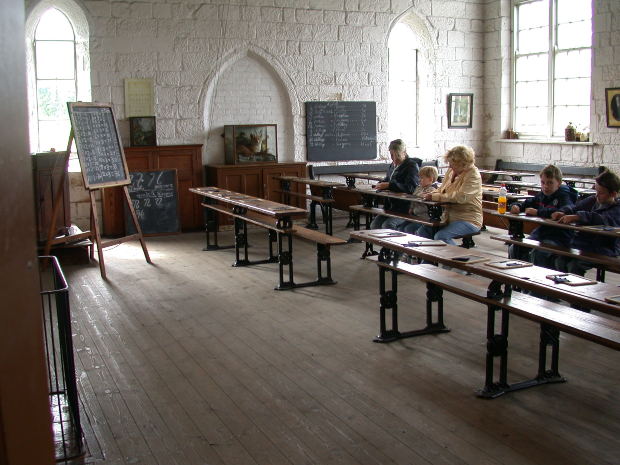
    old school room

    In her post, Charli describes an abandoned one-room schoolhouse that is close to her home. She explains that these schoolhouses ‘were often among the first structures built by pioneers’ and comments on the importance that was placed on education in those pioneering days. Indeed education has been important throughout the history of humankind. It is what sets us apart from other creatures.

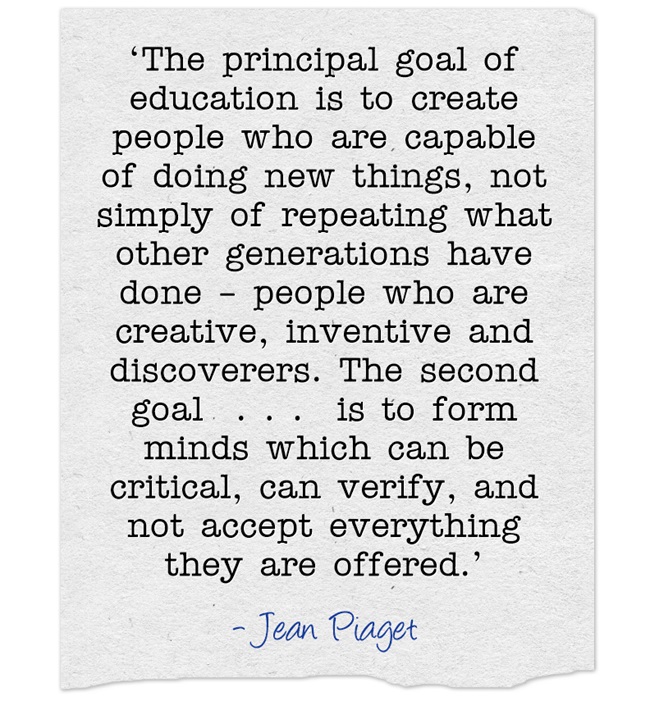
    In the words of Jean Piaget,

    The-principal-goal-of education - Piaget

    I have touched on these aspects of education in previous posts and will definitely do so again in future posts.

    In a tweet Anne Goodwin hinted that she thought I may find this post difficult to write as I have so many options to choose from. Charli Mills thought I might mention how we wrote on slates when I was at school (my children would probably have suggested I write about using dinosaur bones to scratch crude messages in the sand!)

    Instead, I thought about the strategies schools use to create uniformity, and of the many pathways that one may take through life after finishing school.  I hope the analogy makes sense to you.

     teacherbell

    Chocolate balls

    The final school bell tolled and the students erupted from the building like a burst box of chocolate balls, scattering in every direction and at varying speeds. Some stuck together along pathways safe and sure. Others crashed and bumped over roads less traveled seeking excitement, new discoveries and secrets to explore. Others stopped abruptly, their journeys foiled by stubborn obstacles. Still others, rolling upwards, failed to maintain the momentum to carry them over and beyond with those more adventurous others.  

    Who would know?

    Inside the box, they were identical, centers hidden. Outside, their uniqueness was on show.

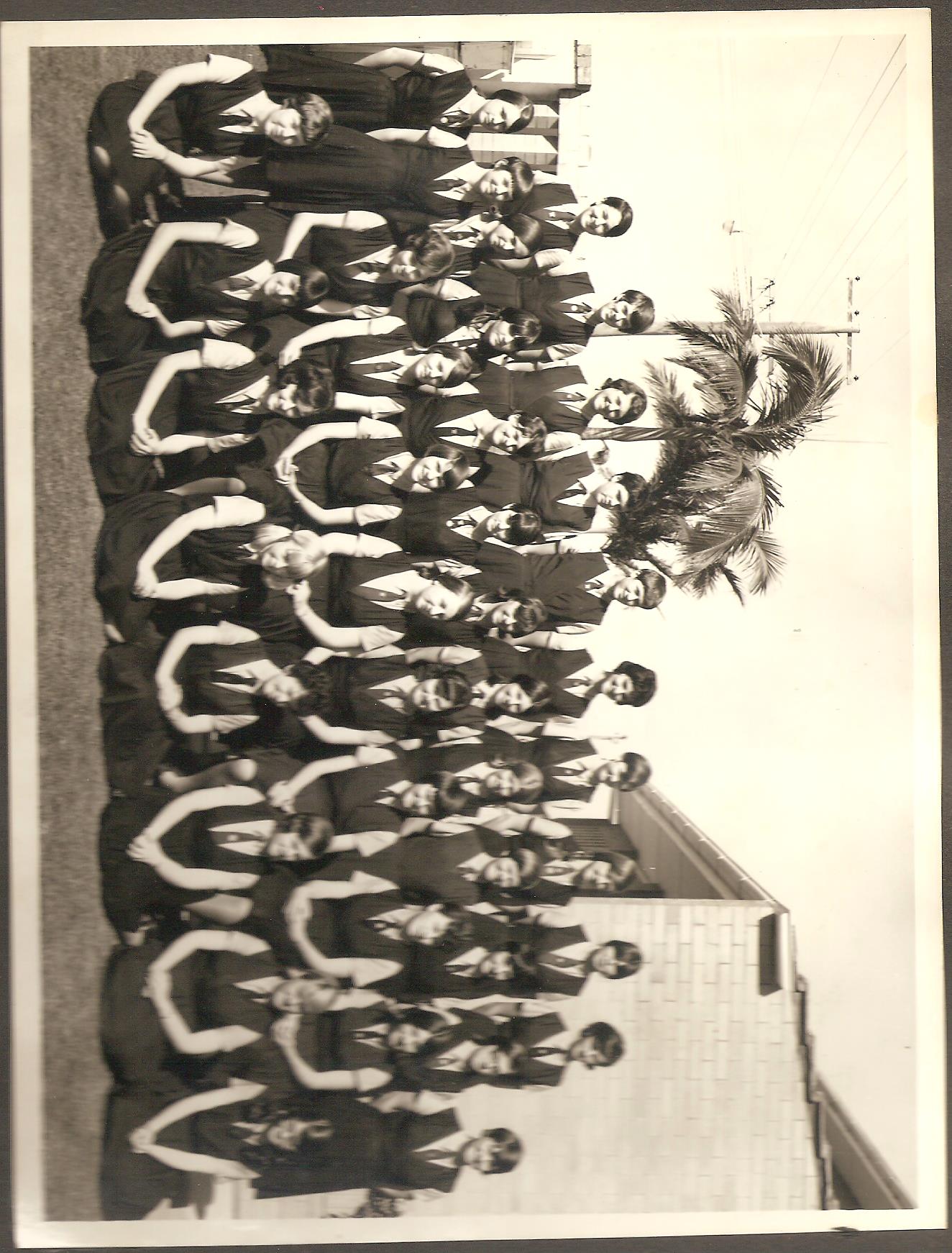
    My year 10 class - only 20 went on to year 12.
    My year 10 class – only 20 went on to year 12.

    I value your feedback. Please share your thoughts about any aspect of this post.

  • Just imagine . . . the power of imagination

    Have you ever wished you could:

    • be in two places at once?
    • clone yourself to ensure you get everything done?
    • slow time down so that you could achieve all you wanted?
    • make time stand still so you could stay in the present moment forever?
    • pop back in time to undo that embarrassing moment, or peek forward to see the result of a decision that is pending?
    • choose both options and follow each through consecutively, as in parallel universes?

    I have.

    https://openclipart.org/image/800px/svg_to_png/194578/07-Juli-goin-on-a-summer-holiday.png
    https://openclipart.org/image/800px/svg_to_png/194578/07-Juli-goin-on-a-summer-holiday.png

    Multiple invitations or engagements often occur on the same date. Deciding between desired activities is not always easy. Cloning would make choosing unnecessary. Additionally, sending a clone to an unpleasant but unavoidable engagement could also be desirable.

    penguins

    Sometimes the number of must-do tasks can be overwhelming. The ability to engage the assistance of clones, especially to complete less desirable tasks would be great.

    Time travel, wormholes and parallel universes are the stuff of science fiction; and while I am not a fan of the science fiction genre, I wouldn’t mind having access to some of its features. However, whether any, or which, of those features ever move from science fiction to science fact remains to be seen.

    The power of imagination to drive creativity and innovation cannot be overstated. Much of what we now accept as commonplace was once a part of science fiction. Imagination, the stuff of science fiction and scientific exploration and investigation, has brought them to reality.

    You are probably familiar with following quote, initially attributed to George Bernard Shaw but also made famous by Robert F. Kennedy:

     “Some men see things as they are and say why. I dream things that never were and say why not.”

    These words highlight the importance of questioning to stimulate imagination, and when paired with creative thinking, innovation can occur.

    Einstein said that,

     “Imagination is more important than knowledge. For knowledge is limited to all we now know and understand, while imagination embraces the entire world, and all there ever will be to know and understand.”

    He also said that,

     “Education is what remains after one has forgotten everything he learned in school.”

    Although I cannot be certain, from those quotes, what Einstein’s attitude to the current trends in schooling would be (he did attend school and was very advanced in maths and sciences but did not perform so well in the humanities) I think he would not favour a content-driven curriculum which excluded opportunities for imagination and creativity.

    On the other hand, Thomas Edison, the world’s most prolific inventor, was mostly educated at home by his mother who was able to encourage his experimentation and love of learning. He said,

     “To invent, you need a good imagination and a pile of junk.”

    If these significant thinkers of the 20th century, each of whom followed different educational pathways, recognise the importance of imagination, why would anyone argue against it?

    Charli Mills at Carrot Ranch Communications certainly doesn’t. As a fiction writer she embraces imagination. It is the tool of her trade, creating stories where before there were none. This week her challenge is to In 99 words (no more, no less) craft a multiverse situation, setting or character(s)

    Now the term ‘multiverse’ takes me back to the science fiction genre: wormholes, parallel universes and time travel, for example. I’m not sure how well I’ll do with this unfamiliar genre, but I will call upon my imagination and give it a try. See what you think – does my piece fit the criteria?


    Clone Magic

    Clone magic

    All night Leone had huddled in line, sleepless with excitement, waiting for the release.

    Now she had them! Clone pills!

    ‘Take one with water. Cloning occurs in 30 minutes and lasts 24 hours.’

    Leone swallowed one tablet, then another, and another; ignoring the small print: ‘Do not take multiple tablets. Effects are unpredictable.’ 

    When three clones appeared she instructed:

    “1. Clean the house. 2. Exercise. 3. Weed the garden.”

    She flopped on the couch. “Now to read.”

    But — their hands grabbed for her book, pulling her hair and clawing her eyes.

    “Me read! Me read! Me read!”


    Thanks for reading. I appreciate your feedback. Please share your thoughts about any aspect of this article or my multiverse flash.


  • 3 Inspiring educators

    3 Inspiring educators

    Like every other teacher, I want to make a difference in the world.

    The thought that I could make a positive difference to the life of another is both empowering and inspiring.

    To do so, I seek out others making a positive difference and pay it forward, hoping that the ripple effect will carry it far and wide.

    flag on twitter

    Three inspiring educators who have positively influenced me are:

    Brian Cambourne

    Brian is an amazing literacy educator from whom I had the extreme good fortune of learning many years ago. I have written about him before here and here.

    Brian’s work focused on the conditions necessary for literacy development. His influence has spread beyond the classroom with the application of the conditions to learning in the workforce demonstrated.

    Tony Ryan

    Tony is an amazing educator who does his best to be the change he wants to see in the world. He talks about future-proofing and using innovative thinking to solve problems of both local and global importance.

    Anyone who believes ‘that education is the most important profession on the planet’ and does everything in his power to support teachers to be outstanding, as does Tony; must be pretty good in my books.

    One of Tony’s books The Ripple Effect is particularly apt for mention in this post. Tony says,

    “you must believe in your personal power to create ripples that spread out and change the world. In fact, if it is not you who is going to do it, then who else do you think is likely to make the effort? Remember that every change on this planet begins with a human being somewhere, somehow. It may as well be you.”

    This year Tony has started a new project called The Earth Movers Foundation which ‘helps young teenagers to create solutions to local and global issues. And they get to choose their own project. No adults will be telling them what project to do. They decide for themselves.’ Sounds pretty good to me.

    Ken Robinson

    Ken is another amazing educator. I fell in love with his ideas when I listened to his TED talk Do schools kill creativity? which I have also shared before here.

    The statement on his website declares that

    “Imagination is the source of all human achievement”.

    I could not argue with that.

    Ken introduces this short video The writing spirit which presents quotes from artists, thinkers, writers, innovators and snippets of interviews with writers. Just incidentally, and exciting for me, Richard Bach is included. Richard is the author of Jonathan Livingston Seagull, one of my favourite books for its inspirational message.

    It is more than likely that these educators have no idea how they have influenced my life (and others as a result).

    How wonderful might it be to know of the positive influence you have had on someone, and to have the opportunity of letting others know that they have positively impacted your life?

    This is the purpose of The Butterfly Light Award which was bestowed upon me my Lisa Reiter, a lovely lady who is herself inspirational for her courage and her positive attitude which she shares with others through her blog Sharing the story. Thank you, Lisa. I am honoured and accept with pleasure.

    As with any award, it comes with conditions:

    1. You should write an acceptance post, making sure you link back to the blogger who awarded you and thank them. You MAY NOT lump this award in with a batch of other awards.

    Thank you Lisa Reiter!

    1. You must individually name and re-award to a minimum of 1 and a maximum of 9999999 bloggers. You must let them know either personally with a comment on their blog OR a pingback.

    As I have been writing about educators, I am going to stick with that theme. A quick visit to these blogs will explain why I have selected them.

    Ruth Mancini

    The Nerdy Book Club

    Two Writing Teachers

    Raising a literate human

    3.  You should link back to Belinda’s blog either to http://idiotwriting.wordpress.com/about/ or http://idiotwriting.wordpress.com/2014/03/13/i-love-charismatic-geeks/

    Done!

    1. You must write a short paragraph entitled either “How I’m Spreading Light” OR “How I’m A Positive Influence” (what Lisa calls ‘the squirmy bit’).

    Done! See beginning of article.

    5. Display Belinda’s lovely “Butterfly Light Award” badge on your blog.

    Thank you, Belinda. It’s a pleasure! We can never have too many butterflies!

    butterfly-light-award

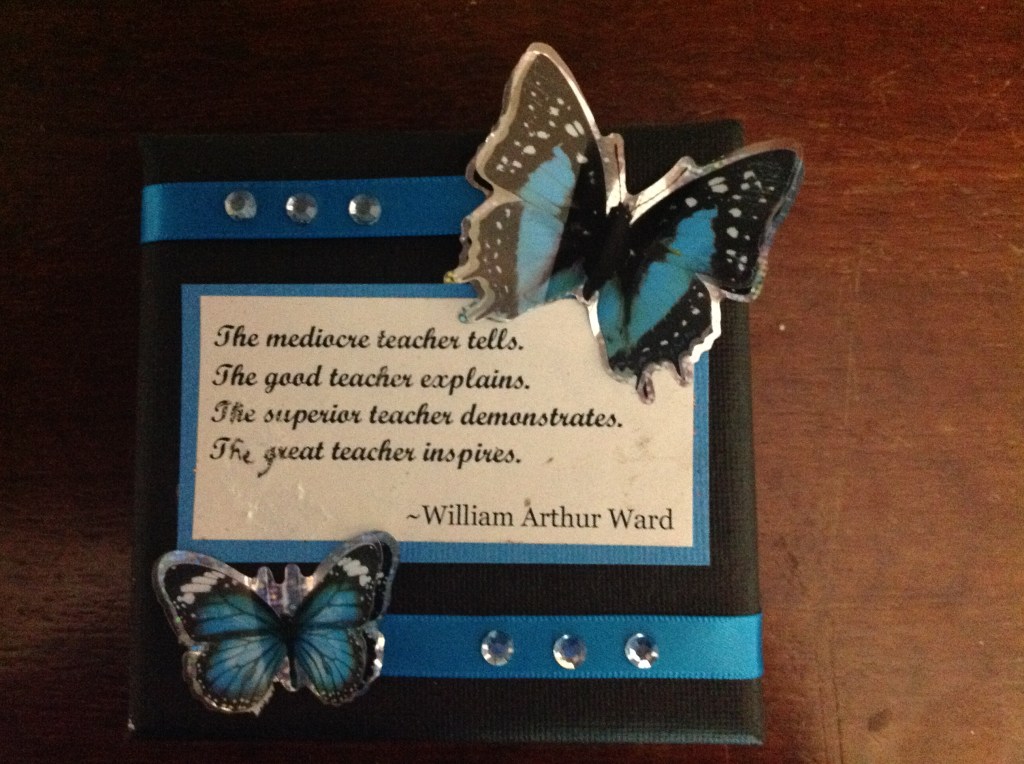
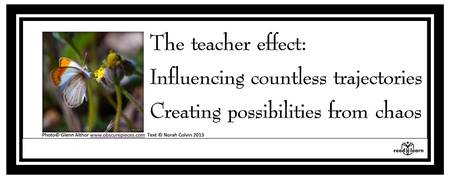
    Note: The beautiful framed quote, pictured at the top of this post, was made for me by a wonderful lady, the mother of two of my students. They all share my love of butterflies! I thank them for sharing their appreciation of my positive influence.

    I welcome your feedback. Please share your thoughts about any aspect of the article.

  • Child’s play – the science of asking questions

    Unknown source. Apologies. Happy to attribute if informed.
    Unknown source. Apologies. Happy to attribute if informed.

    I often say that children are born scientists. From the moment they are born they are actively finding ways of figuring out how the world works, and how they can get it to work for them.1

    Some people say children are sponges. But I say they are more than that. They are creators. They don’t just copy what they see. They don’t just repeat what they hear. They find new ways of working things out, new ways of expressing ideas, and new ways of thinking about things. Parents often remark, when children exhibit new behaviours or cute new phrases or ways of expressing themselves, “Where did they get that from? Where did they learn that?” Often the source cannot be identified, for the source is within the child.

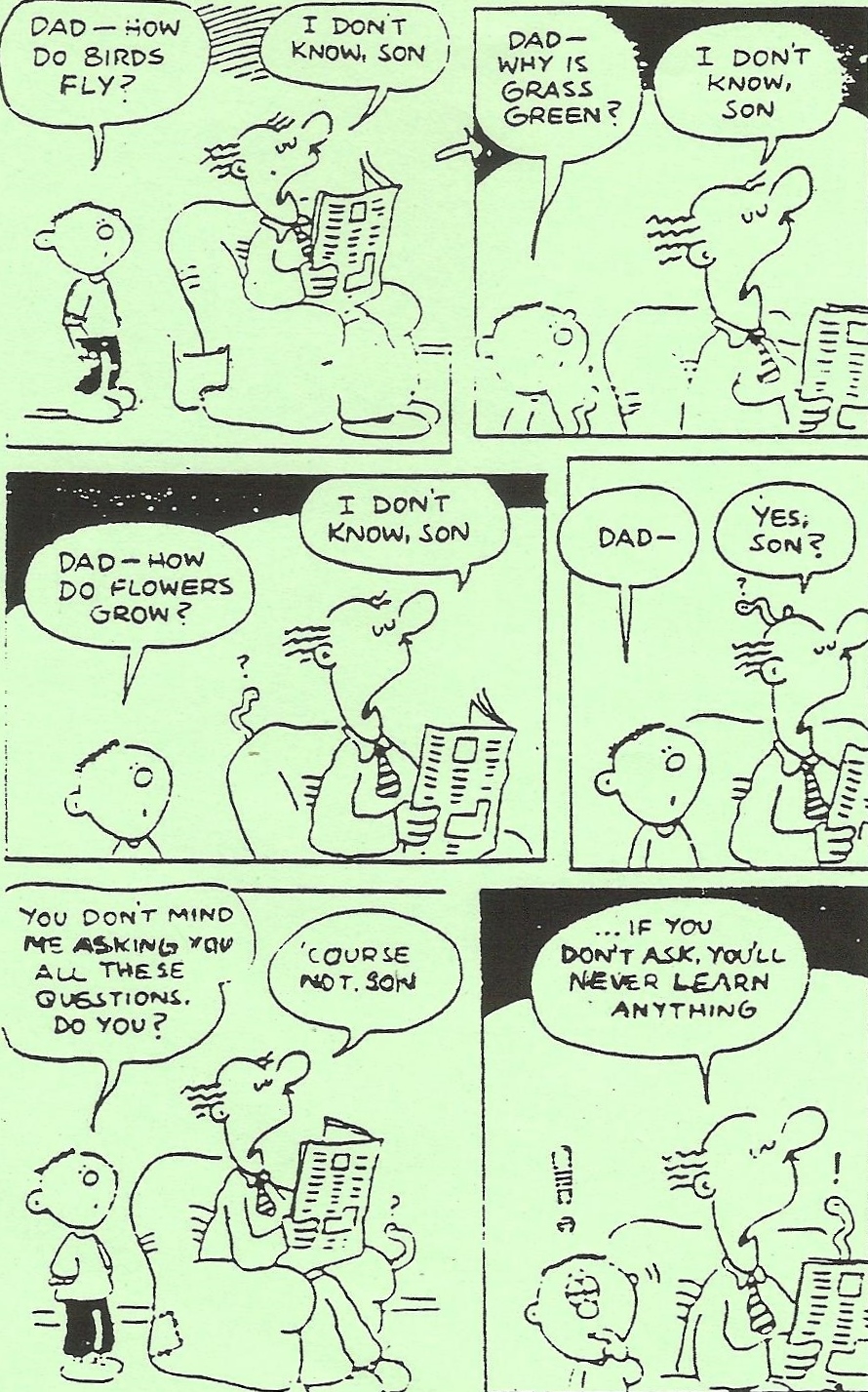
    An important way to keep children creating their own understandings and ideas is to not only allow them to ask questions, but to actively encourage them to do so, and to help them seek answers to their questions. Adults can be quick to quiet children’s questions for a number of reasons including not knowing the answer, being too busy at the time to investigate an answer, or even considering the question unimportant or “dumb”.

    Unknown source. Apologies. Happy to attribute if informed.
    Unknown source. Apologies. Happy to attribute if informed.

    Remember, many things that adults may take for granted or that they may no longer question but simply accept (possibly as a result of not receiving appropriate answers or responses to their childhood questions) are new and unfamiliar to the child.

    Sometimes it is easier to accept than to question for questioning means that something is unknown; and not knowing can lead to feelings of insecurity, doubt and instability. But it is these self-same feelings which drive innovation and progress. If everything was known, there would be no room for improvement, no need for anything new, no need for greater understanding.

    This inspiring TED talk by Beau Lotto and Amy O’Toole, Science is for everyone, kids included emphasizes the need for children to be given the opportunity of asking, and exploring answers to, questions.

    Beau explains that what we see is based upon our experience, upon our expectations. But he asks,

    “if perception is grounded in our history, . . . (and) we’re only ever responding according to what we’ve done before . . . how can we ever see differently?”

    He goes on to explain that seeing things differently begins with a question and that questions lead to uncertainty. He says that

    The-best-questions-are

    and explains that the answer to uncertainty is play. He says that play “is a way of being” and is important for five reasons:

    • Uncertainty is celebrated in play and makes play fun
    • Play is adaptable to change
    • Play is open to possibility
    • Play is cooperative
    • Play is intrinsically motivated

    “Play is its own reward.”

    Beau says that science, also, is a way of being; and that science experiments are like play.

    He describes working with a group of 8-10 year old children, encouraging them to ask questions and involving them in an investigation of a question they posed.

    Amy O’Toole, one of the children involved, joins Beau and describes the experiment which investigated the ability of bees to “adapt themselves to new situations using previously learned rules and conditions.”

    The really exciting thing about the project, Amy says, was that they “had no idea whether it would work. It was completely new, and no one had done it before, including adults.”

    The process of taking the findings of the project to publication, as Beau explains, was rather complex with a variety of complications, taking two years to achieve. The experiment itself took only four months! Publication of the paper made Amy and her friends the youngest ever published scientists.

    The response to the paper, The Blackawton Bees is amazing:

    30 000 downloads on the first day

    Editor’s Choice in Science (a top science magazine)

    the only paper forever freely accessible on Biology Letters and

    the second-most downloaded paper from Biology Letters in 2011

    Amy wraps up the talk by stating that

    “This project was really exciting for me, because it brought the process of discovery to life, and it showed me that anyone, and I mean anyone, has the potential to discover something new, and that a small question can lead into a big discovery.”

    She finishes by saying that

    “science isn’t just a boring subject … anyone can discover something new.”

    We might not all make those big scientific discoveries, but it is the questions we ask each day which lead to our own discoveries, no matter how small; it is our curiosity which keeps us learning.

    What have you learnt today?

     Changing-the-way-a

    1 This is just my opinion formed from observations, discussions and reading. I am not supporting it with research references.

  • This is nice

    If you haven’t yet visited Brain Pickings by Maria Popova, this week’s newsletter is a great place to start.

    Maria Popova describes herself as “an interestingness hunter-gatherer and curious mind at large”. She gathers up all sorts of things that you didn’t know you were interested in, until you are.

    Brain Pickings — “is a cross-disciplinary LEGO treasure chest, full of pieces spanning art, design, science, technology, philosophy, history, politics, psychology, sociology, ecology, anthropology, and more”.

    I’m sure you will find something of interest to you!

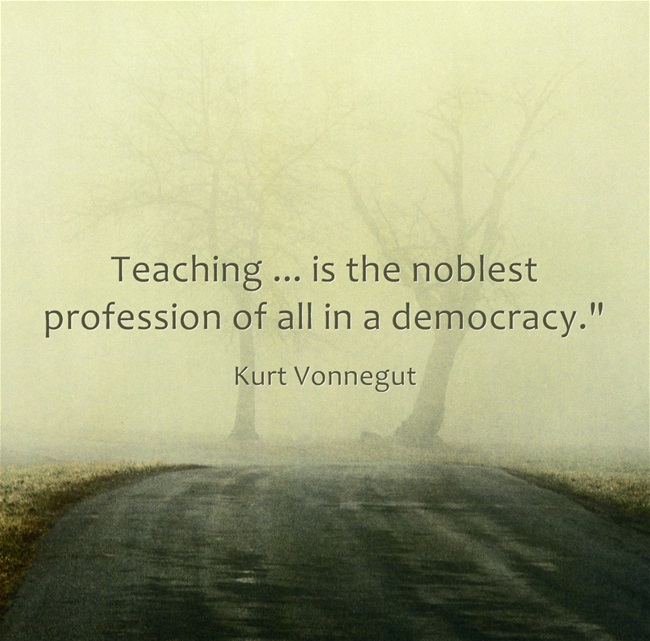
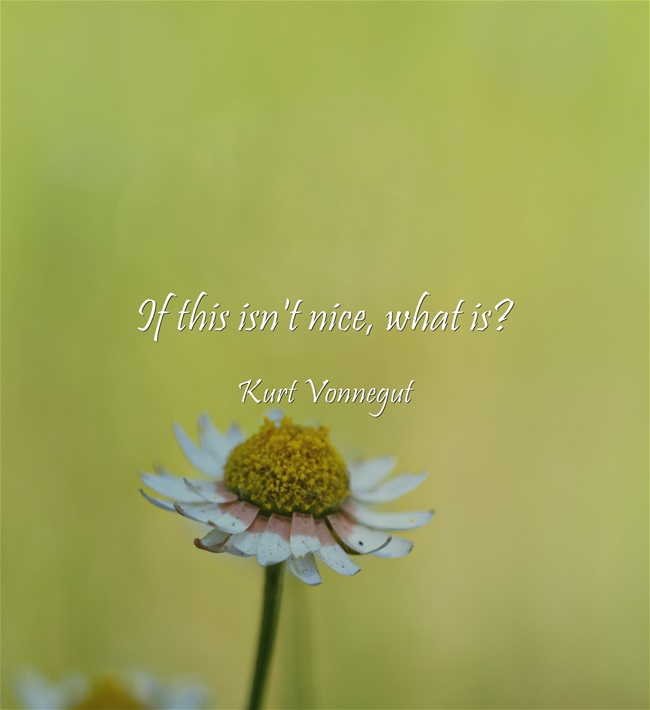
    This week’s offering If This Isn’t Nice, What Is? Kurt Vonnegut’s Advice to the Young on Kindness, Computers, Community, and the Power of Great Teachers  provides ideas, quotations and excerpts from speeches made by Kurt Vonnegut at college graduation ceremonies between 1978 and 2004.

    Here are just a few that I found particularly interesting or appealing. Please visit Brain Pickings for a more complete synopsis.

    Teaching-is-the-noblest

     “But I say with all my American ancestors, “If what Jesus said was good, and so much of it was absolutely beautiful, what does it matter if he was God or not?”

    If Christ hadn’t delivered the Sermon on the Mount, with its message of mercy and pity, I wouldn’t want to be a human being.

    I would just as soon be a rattlesnake.”

    “But in our personal lives, our inner lives, at least, we can learn to live without the sick excitement, without the kick of having scores to settle with this particular person, or that bunch of people, or that particular institution or race or nation. And we can then reasonably ask forgiveness for our trespasses, since we forgive those who trespass against us. And we can teach our children and then our grandchildren to do the same — so that they, too, can never be a threat to anyone.”

    “I recommend that everybody here join all sorts of organizations, no matter how ridiculous, simply to get more people in his or her life. It does not matter much if all the other members are morons. Quantities of relatives of any sort are what we need.”

    “By working so hard at becoming wise and reasonable and well-informed, you have made our little planet, our precious little moist, blue-green ball, a saner place than it was before you got here.”

    “When things are going sweetly and peacefully, please pause a moment, and then say out loud, “If this isn’t nice, what is?”

    If-this-isnt-nice-what-is

    Which ideas of Kurt Vonnegut do you find interesting?

    With which do you agree or disagree?

  • What is education, anyway? Pt.2

    This week I am sharing a post published on Teachling earlier this year. Teachling introduces her post with a TED talk by Sir Ken Robinson, an international advisor on Education. Like Teachling, I very much admire his work and would love to see education systems implement his recommendations. I hope you will set aside the 19 minutes it will take to listen to what Ken has to say. You will be amused, entertained and educated. I intended providing a summary of important points from his talk, but found I was recording the talk in full! Teachling has provided a few notes but I would love you to listen to the entire talk and let me know what you think. How can we join the revolution that Ken says we need?

    Teachling's avatarTeachling

    Let’s face it, children are basically all the same and should be taught in the same, tried and tested, chalk and talk, fashion. Teachers in schools should focus purely on the 3R’s – Reading, wRiting and aRithmetic – and leave that creative ‘fluff’ for kids to pursue in their own time. Children should be viewed as empty vessels and a teacher’s role is to fill them with enough knowledge to pass the test. Some kids are just lazy, hyperactive or incapable of learning, so teachers should let them be whilst focussing on the other kids that can and want to learn. Wait… What? Was there actually a time when people thought this way about education? I do hope that the opinions above are not felt by any person on this earth. My opinions are much more aligned with those articulated in Ken Robinson’s Ted Talk, “How to escape education’s death…

    View original post 447 more words