Just like scientists, children are curious, constantly asking questions, wanting to know why or how. Parents and teachers don’t always know the answers. In fact, there may not even be an answer – yet. The need to know is strong and “just because” won’t do. Coupled with creativity, thinking up new ideas and possibilities, curiosity has taken us beyond the imagination of myths and legends to knowing and understanding.
Every culture has its own creation stories, told from the beginning of time when humans first walked the earth. Through stories, people attempted to explain their own existence and that of everything observable.
With only the skies for night-time entertainment, people found stories in the stars. As Duane W. Hamacher says in Kindred skies: ancient Greeks and Aboriginal Australians saw constellations in commonin the Conversation, “What we don’t yet know is why different cultures have such similar views about constellations. Does it relate to particular ways we humans perceive the world around us? Is it due to our similar origins? Or is it something else? The quest for answers continues.”
As with stories told of the stars, there are some threads common to many creation myths, including stories of the first man and woman, stories explaining the existence of the animals and why they behave the way they do. I have read quite a few stories of floods, which I guess is understandable as these events occur worldwide.
What I love about the creation myths is that they testify to the innate curiosity and creativity of humans; the need to know and the sense of wonder combined with imagination and storytelling.
It is important to keep this sense of wonder and curiosity alive in children, and adults, also. Just a few days ago, as reported by Ray Norris in the Conversation, Exoplanet discovery by an amateur astronomer shows the power of citizen science. He says this discovery “will help us understand the formation of our own Earth. It’s also a step towards establishing whether we are alone in the universe, or whether there are other planets populated by other civilisations.”
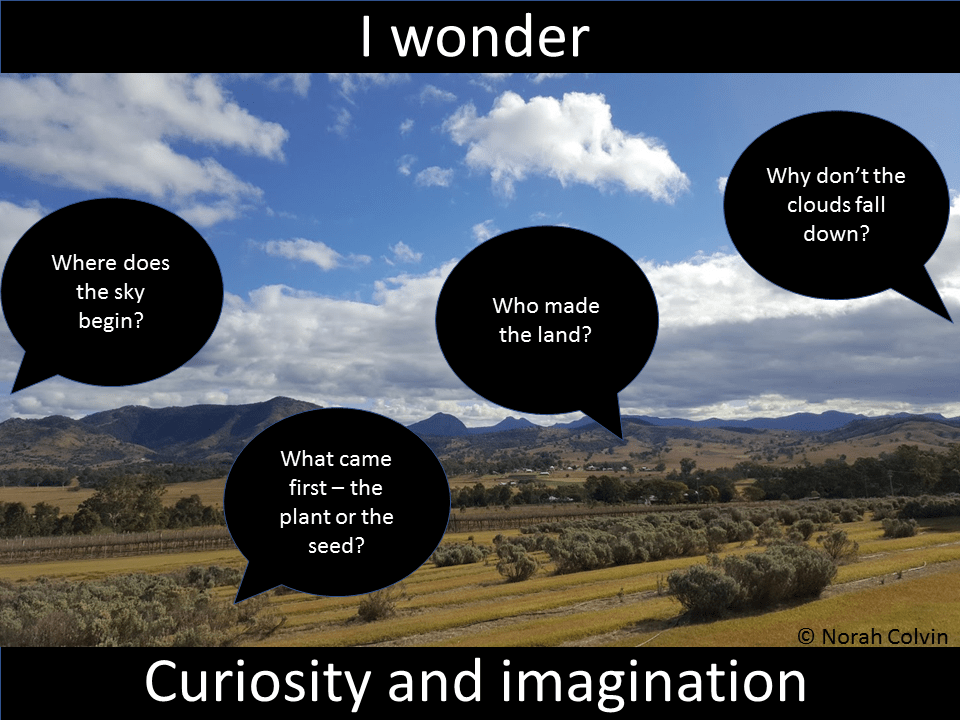
I think of questions asked by my granddaughter; for example, “Who came first, the mother or the baby?”, “If there’s gravity, why don’t the clouds fall down?” or “Where does the sky begin?”
It is interesting now in this age of technology, almost everything we want to know is just a tap of a few keys or buttons away.
The other day I visited a nature reserve with my two grandchildren. (We went especially to see three baby bilbies which had recently emerged from their mother’s pouch, but saw other things too.)
We were looking at some black swans, which are native to Western Australia. GD informed me that white swans are not native to Australia. When I admitted that I’d never thought about that, she said, “Look it up. Look it up now. You’ve got your phone in your hand. Just look it up.” She was insistent and I did as told. She was right, of course.
How different this experience is from that of the first humans. Young children expect to be given answers based upon science or collective knowledge, not stories. But we still do not have answers to everything. As Duane W. Hamacher says, “The quest for answers continues.”
In response to Charli’s challenge, I have not written a creation story. However, I have included the same ingredients that contributed to their creation: wondering, questioning, and imagination.
Unanswered questions
“What are you doing?”
“Pulling out weeds.”
“Why?”
“So the carrots have more room.”
“Why?”
“So they can grow big and juicy.”
“Why?”
“So they are good to eat for our dinner.”
“Why?”
“To keep us healthy?”
“I want to be healthy.”
“It’s good to be healthy.”
“I don’t want to die.”
“You won’t die. Not for a long time.”
“How do you know?”
Silence. How does anyone know?
“Silas died.”
“Who?”
“Silas.”
“Who is Silas?”
“Was. Silas was my friend.”
“I don’t remember Silas.”
“He was my imaginary friend.”
“Oh. How did he die?”
“I killed him.”
“Why?”
Perhaps there are some things for which we may never know the answers; for example, Can imaginary friends die?
Thank you for reading. I appreciate your feedback. Please share your thoughts.
Did you ever get up to mischief when you were a child? I believe I did. Or so I was told.
Mischief includes exploring, checking things out to see how they work, and generally doing stuff that inconveniences parents. Being a kid, in other words; and isn’t it a child’s main purpose in life: to inconvenience parents? Just kidding, but sometimes it can seem like that. Especially when parents are in a hurry or have other things to do and a child has other ideas in mind.
Although it may seem naughty, wilful, or defiant; young children really just want to find out about the world.
Sometimes they investigate things: what will happen if I turn this knob, open this door, push this button; how does this taste or smell; how does this feel?
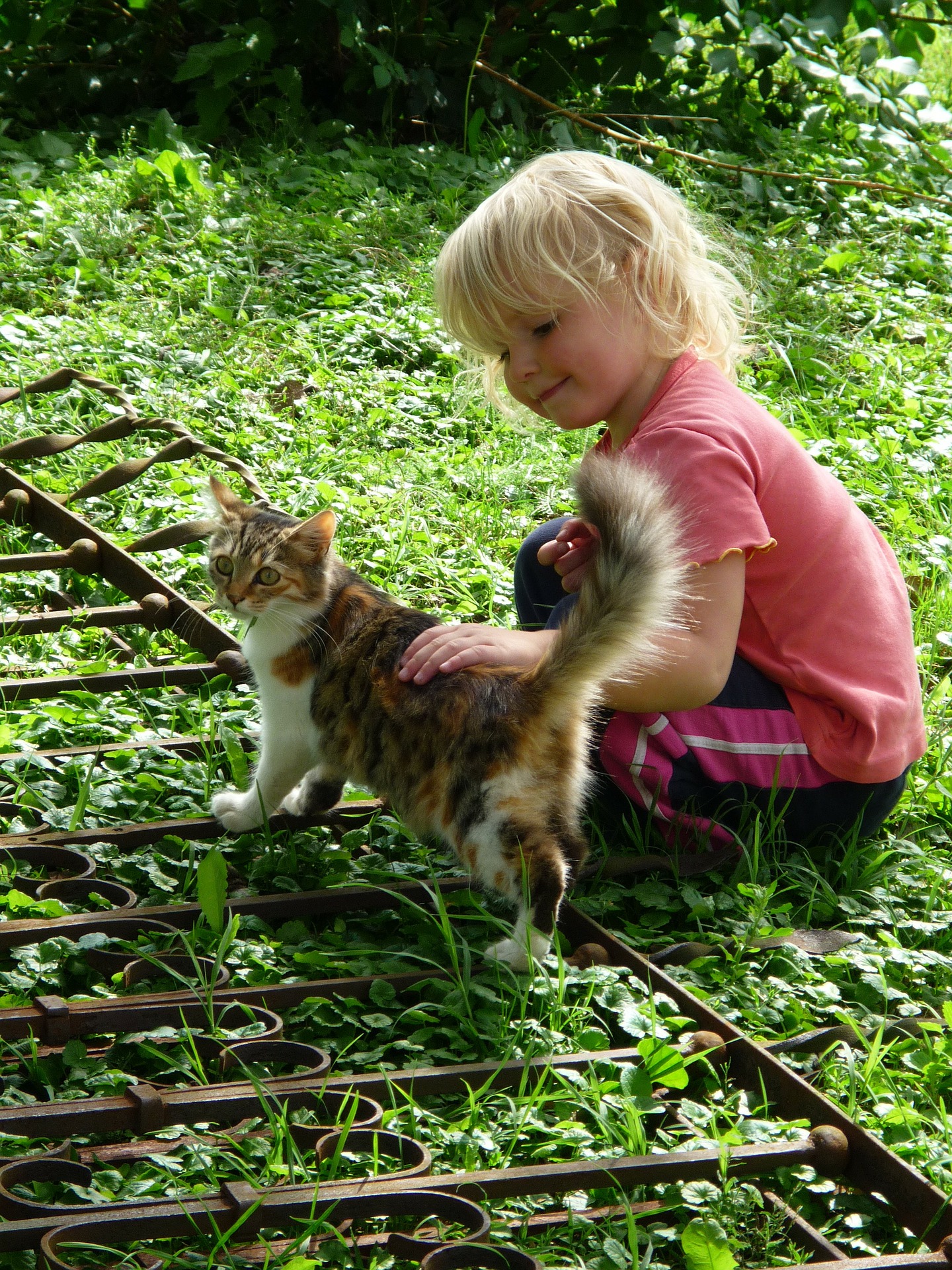
Other times they are finding out about reactions: what will the cat do if I pull its tail; what will the fish do if I tip it out?
Human reactions and relationships are also an area of intense study: how will Mum react if I take her keys; what will Dad do if I push this button; what will sister do if I take her toy?
Allowing children to explore, investigate, and experiment, while ensuring they, and no others, are in no serious physical danger, encourages their curiosity, their understanding of the world, and their innate drive to learn.
While it can be annoying to have a child repeatedly adjust the volume of the sound system, for example, it may be better to ignore it and allow the child to discover the effect of the action. Usually once a phenomenon has been explored and understood, it will no longer fascinate, and the child will move on to something else.
Unless there is a reaction from the parent. Any reaction may encourage repetition, not so much for additional learning from the action itself, but for the interaction with the parent.
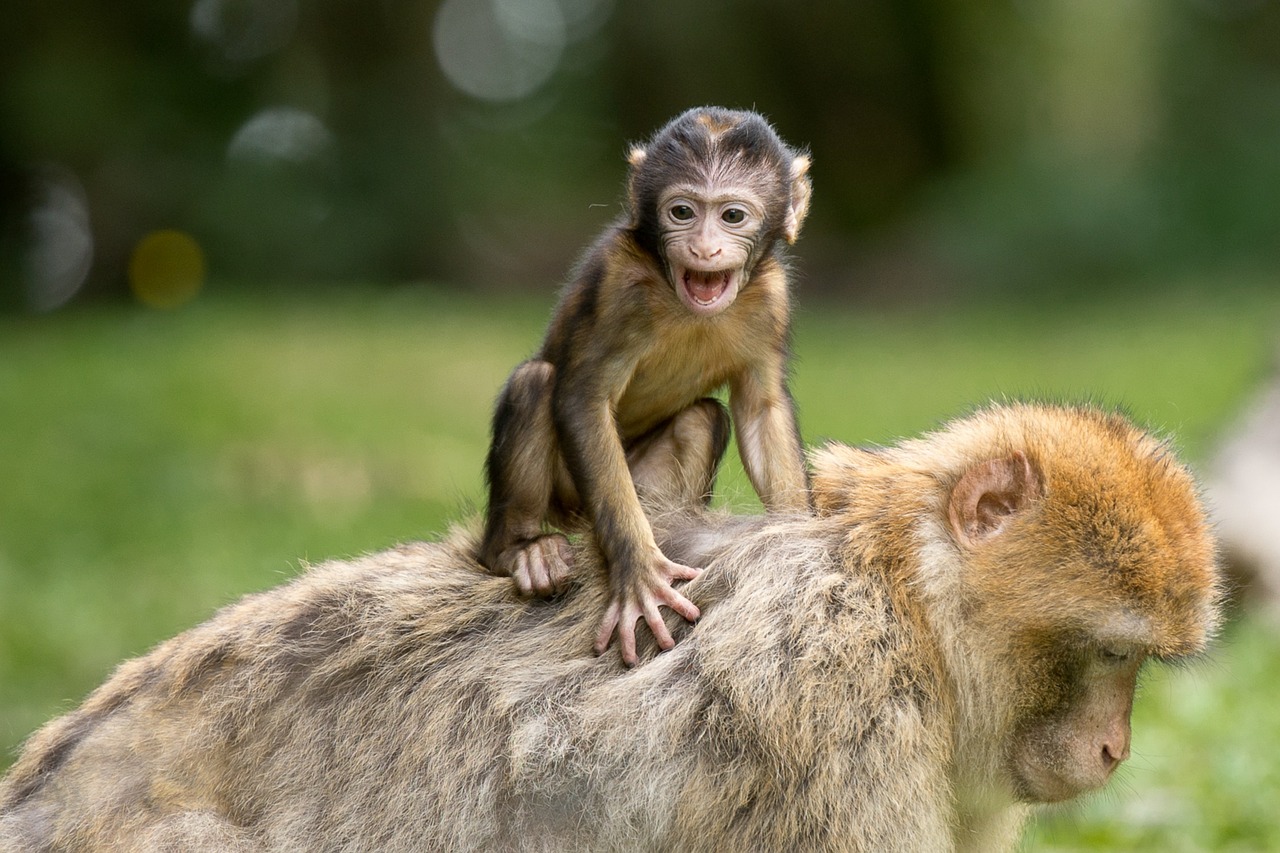
The phrase “You little monkey” is sometimes uttered when a child is engaged in some of this mischievous behaviour. It generally recognizes the harmlessness of the situation and acknowledges that the child is exploring or playing, often with the purpose of gaining attention or engaging a parent in a game.
The classic picture book Caps for Sale by Esphyr Slobodkina is a story about mischievous monkeys. A peddler carries the caps he has for sale, one on top of the other, on top of his own cap on his head. When he takes a nap under a tree, a troop of monkeys take all the caps, except his own, and refuse to give them back. Instead of following his instructions, they copy him. When, in frustration, the peddler throws his cap on the ground, the monkeys do the same and he is able to retrieve his caps and continue on his way.
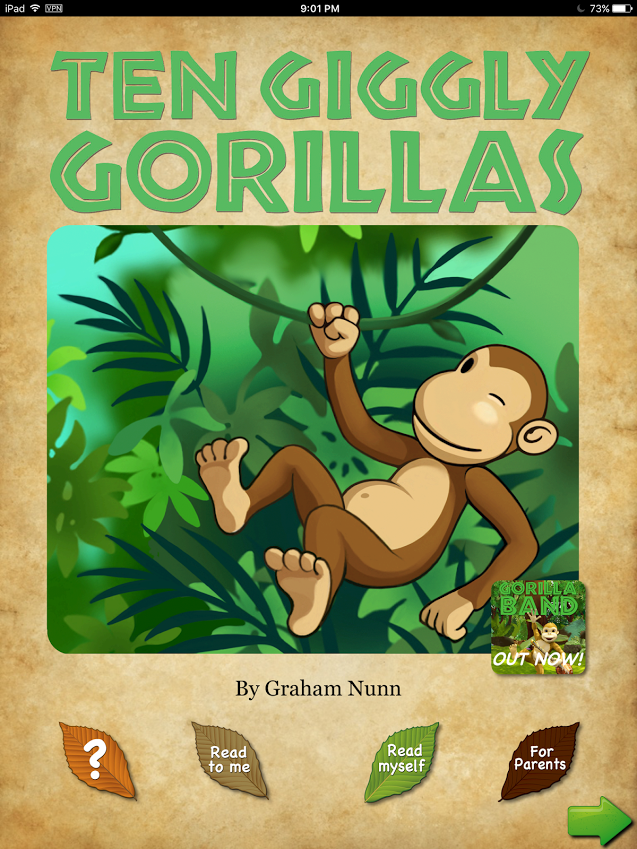
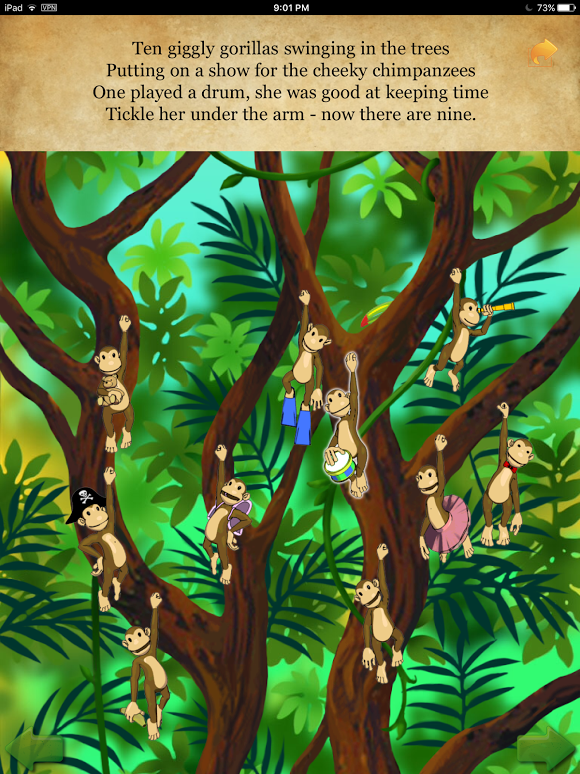
One of the first picture book apps I bought for my grandchildren was Ten Giggly Gorillasby Graham Nunn. It’s a cute counting back story that ends happily when the last little gorilla falls and is reunited with all her friends. It’s a wonderful first app for little ones with an easy swipe action to select each gorilla, and a great story to read for beginner readers. (Apologies – gorillas aren’t monkeys, but I like the app!)
This is my response. I haven’t quite got the flying monkey as a device or phrase, but I hope you like it anyway.
Monkey mischief
A no-show nanny, insistent emails, and bills to pay: the verandah seems the best solution. He can ride his trike or play with toys; with the iPad backup if necessary.
It’ll be fine, won’t take long.
Then
Incident #1: Laptop flat
Easy: Power cord
#2: Cord short, stretched high
Solution: Be watchful – won’t take long
#3: Trike stuck, wails
Extricate it
#4: Again!
Ignore attention-seeking, almost done
#5: Demands iPad monkeys
“Soon!”
#6: Snatches credit card, laughs, runs, daring
“You little monkey!”
#7 Monkey trips. Card flies, disappears between boards.
Wails.
“It’s okay, Mummy.”
Grimaces: It’ll be fine
Thank you for reading. I appreciate your feedback. Please share your thoughts.
I have often talked about the scientific explorations of young children and referred to children as born scientists. Their curiosity, ability to engage in their own explorations and investigations, and make their own discoveries can be encouraged by adults who welcome their questions and become co-investigators.
I recently read a post on The School Bell,An Official Blog of Harris County Department of Education that excited me about ways of maintaining that engagement. The post, contributed by Lisa Felske, is entitled Kids Count: Let them Be Citizen Scientists. Lisa says that there of hundreds of projects children can get involved with, some for the long-term as a classroom project, and others that can be conducted independently. They are all real projects that help researchers collect and analyse data.
Lisa says,
“For students, participation can make them feel connected to a community or a place far from home and can give them the satisfaction of knowing they have made a small but important contribution to real science.”
How exciting to be part of a real project, collecting data that will make a difference to our world.
Lisa says that one of her favourites is “Penguin Watch, which allows students to monitor penguins in remote regions by looking at still images and counting the number of adults, chicks and eggs seen in the photos.”
I imagine many children would be interested in that too. But when you follow the link to Penguin Watch you find it is only a small part of the Zooniverse, “a collection of web-based citizen science projects that use the efforts of volunteers to help researchers deal with the flood of data that confronts them”. With projects ranging from astronomy to zoology, you could say there is something for everyone.
Lisa also mentions other favourites including Project BudBurst and BudBurst Buddies (for younger students) in which junior scientists observe and record changes in plants throughout the changing seasons. While these are US based projects, the websites are rich with suggestions for adaptation in other places.
Finding out about, appreciating and caring for everything, plant, animal or mineral, large or small, near or far is a major part of the real purpose of education. I think involvement in programs such as those described in Lisa’s article will do much to maintain a learner’s curiosity and sense of wonder. What an amazing use of the Internet. I was definitely born too soon.
Thank you for reading. I appreciate your feedback. Please share your thoughts.
Most parents want to provide what is best for their children. However, they don’t always know what that best is, where it is available or how to get it. This is just as true of schooling as it is of anything else. Fortunately, most children are adequately schooled locally, be it at a state or privately run facility.
I attended a Catholic school and have taught in both the Catholic and State systems. I see little real difference between what is offered in local private and local public schools as far as philosophy, pedagogy and quality of teaching goes. The differences, as I see them, are more due to the inequities in funding for facilities and resources, the restriction to accessibility by the imposition of fees, and the ability of privately run organisations to decline students as opposed to the state’s willingness to cater for all.
While I think most schools do an excellent job of schooling, there are aspects I don’t like.
Fortunately, most children survive school and graduate adequately prepared for life in the adult world. But the scarring carried by many, whether visible or hidden, emotional or intellectual, is a cost that should not be accepted.
In this TED talk Sir Ken Robinson asks “Do Schools Kill Creativity?” He explains why he thinks they do and the manner in which they do it. He ends the talk saying,
“our task is to educate their whole being, so they can face this future. … we may not see this future, but they will. And our job is to help them make something of it. “
By the time Bec was born I had already decided that I wanted more than schooling for her. I had read voraciously about learning and education. I had observed the magic of learning as my son wondered, questioned, explored and reignited my own curiosity, during his before school years. I saw those same traits inhibited by uninspiring teachers. I have written about this before here and in an article published in a teachers’ magazine when Bec was of school starting age. At that time, it was necessary to make decisions about her ongoing education.
I had already explored local (and not-so local) alternatives. I attended information sessions, read their publications (no Google back then), and visited schools to observe their practices and speak with teachers, children and parents. Disappointingly I found none that met all of my criteria.
Some “schools” provided little stimulus or input to extend or challenge children’s thinking. Some were very structured and without flexibility in their approach. Some that claimed to be alternative appeared to be not so with uniforms and strict rules and timetables. Some that claimed to be mainstream were more child-focused with an organic curriculum matched to children’s interests, but lacked other things I sought.
When the pluses and minuses of each were considered, there wasn’t one with a compelling scoresheet. There was nothing for it but to found my own, a possibility I had been contemplating for some time and a “dream” shared by many teachers. The Centre of Learning Opportunities was born. These are some of the original documents drawn up by the team back then.
While working to establish this alternative to school, I began an MPhil research project “Educational Diversity: Why school? What school?” which, as well as exploring educational alternatives, was to record the first year of an (my) alternative school. As part of the project I conducted a survey of local alternative schools with the aim of recording the diversity of approaches available in order to demonstrate that there is more than one way to obtain a quality education.
Although the degree went down the same dead end path as the school, I was able to (self) publish and distribute the results of my research to participating schools in a document titled “Diversity in Schooling: Discovering educational alternatives in South-East Queensland.” (Surprise, surprise, I have just discovered it in a Google search. How weird is that!)
I was reminded of my research and this document by a recent discussion with Pauline King, The Contented Crafter in response to my post Life — A “choose your own” adventure. When I alluded to the wisdom of young children and “our” efforts to obliterate it, Pauline agreed and suggested that she could do a post-long comment on the topic. I jumped at the chance and immediately invited her to do so. Pauline again agreed but suggested I refine a set of questions as she could fill a book with her ideas. I”m working on it.
“Teachers need to be SO flexible in their ability to see their world, their work, their class as a whole and their individual students – it is never a one step process and different expectations and challenges can be laid down for different abilities. Almost every child will shine somewhere within the curriculum and many struggle somewhere else. After all, we all have our different talents and abilities. Schools are structured to meet the needs of a certain academic ability and those who fall above or below that parameter are, in my opinion, so often mis-educated.”
It is obvious that Pauline, Ken Robinson, and I, along with many others, are part of the same revolution.
In another comment on my post I found it first Pauline shared that she had spent many years trying to establish a school of her own but had found “an already working alternative system and never regretted it.”
I think I have questions enough for Pauline to fill a book’s worth of posts and look forward to sharing some of these in the future. If you have questions of your own, please pop them into a comment and we’ll see what we can do.
Thank you for reading. I appreciate your feedback. Please share your thoughts.
By nature, young children are explorers and discovers. Their purpose is to investigate the world around them and figure out what’s in it, how it works, and how they can get it to work for themselves. It takes little effort on the part of parents and early childhood teachers to nurture this innate curiosity and stimulate an interest in the natural world.
Sharing in the excitement of children’s discoveries is a marvellous experience and something I loved about having my own young children and working in early childhood classrooms, I now have the additional privilege of sharing in the wonder with my grandchildren. I feel very proud watching my two children, their dad and aunt, as together they explore the flora and fauna in our backyard. I know I have done something right.
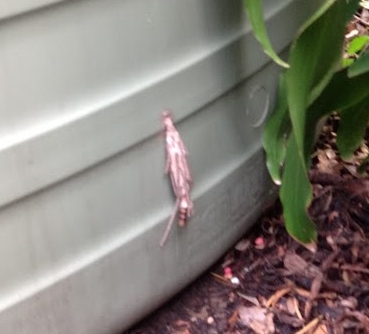
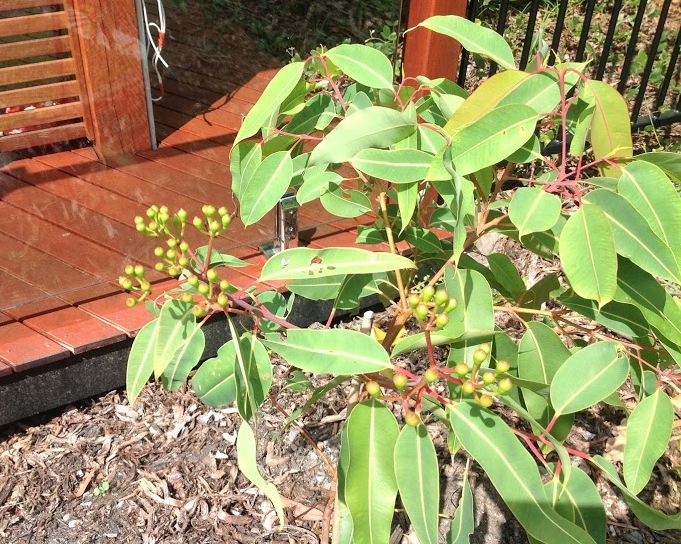
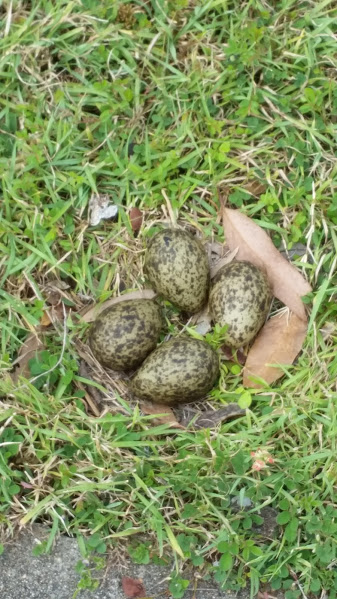
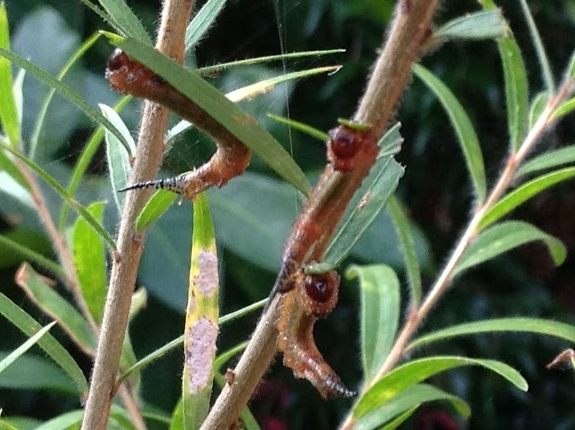
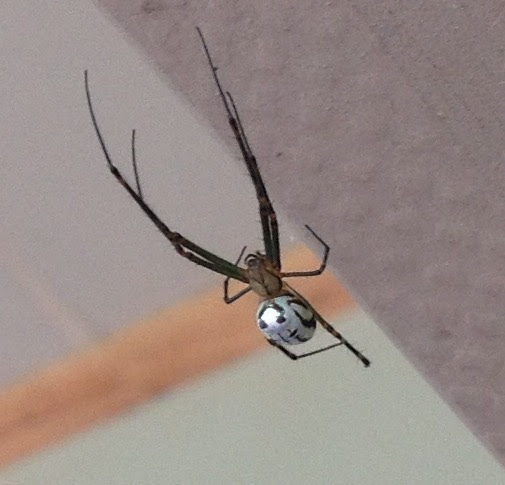
These are just a few of the wonders we found this year:
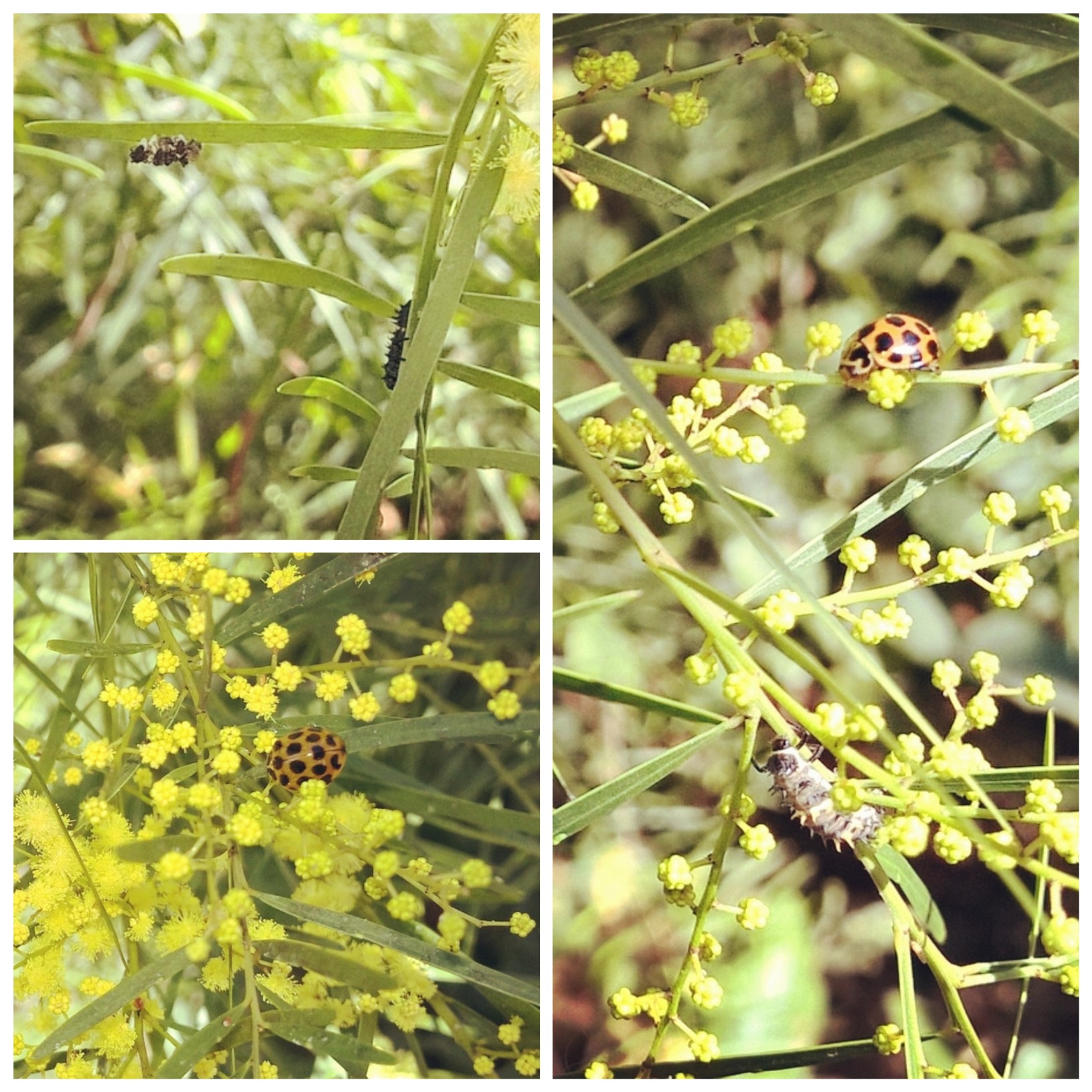
The ladybird life cycle on our beautiful wattle tree.
This week at the Carrot RanchCharli Mills was talking about having a “looky-loo”, I’d probably call it a “sticky-beak”, at the effects of a river in flood, and described the way that neighbours help each other out, even if they’ve never met before. But Charli dives deep into the analogy of a flooded river, feeling washed out and overwhelmed by the rising tide of fear fuelled by a lack of understanding and appreciation of difference. She pleads for all of us to find our common ground, to realise that, while we are complex and contradictory, we share the same needs and wants. She says that if we don’t understand we should, “Ask, don’t judge. Learn, don’t isolate.”
Charli got me thinking about these issues, as she always does. I wondered, if we value, appreciate and marvel at diversity in the natural world, why don’t we appreciate it in other humans? After all, we are merely part of the natural world. That we have done more than any other species in manipulating it doesn’t alter that fact. Why can’t we all just agree to live and let live? Why do some think otherwise?
This particular TED talk is fascinating, funny, disgusting and very informative, with a little of something for everyone. He throws in terms like “mind control”, “eaten alive”, and “bursts out of body”. Science fiction has nothing on science fact.
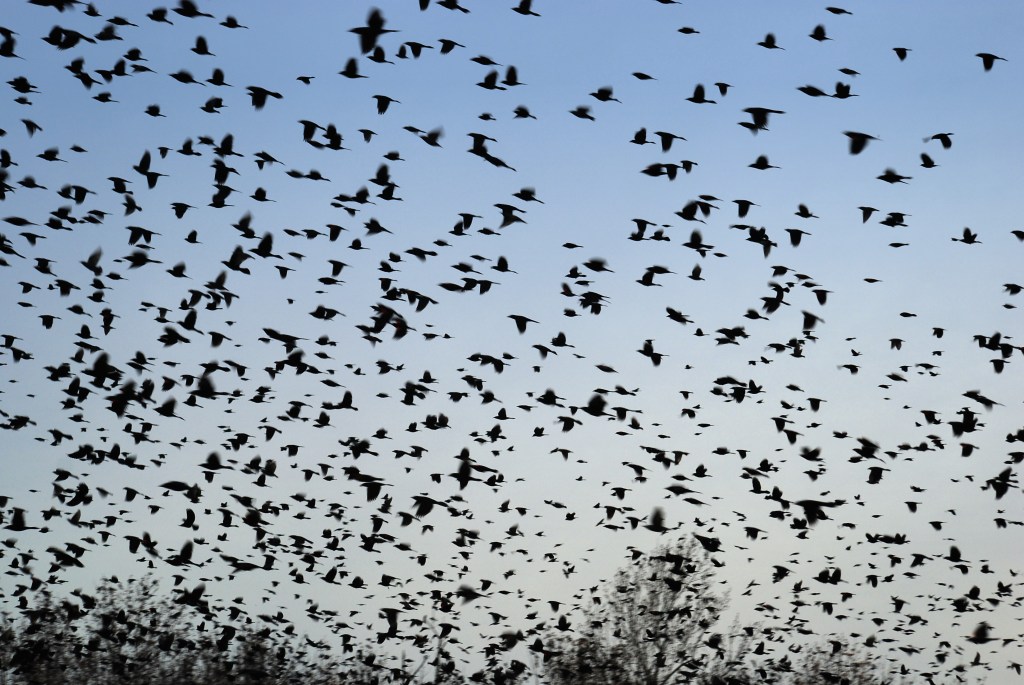
He begins the talk by questioning whether animals choose their behaviour such as gathering in large flocks or herds for safety. He then talks about the popular children’s science “pet” brine shrimp, or sea monkey, and the ways in which a parasitic tapeworm influences the shrimp’s behaviour to enable its own reproductive cycle. He says, “The tapeworm hijacks their brains and their bodies, turning them into vehicles for getting itself into a flamingo.”
But that is just the first of his stories of animals behaving in ways as a result of the mind-control of parasites. He describes others and says that “Manipulation is not an oddity. It is a critical and common part of the world around us, and scientists have now found hundreds of examples of such manipulators, and more excitingly, they’re starting to understand exactly how these creatures control their hosts.”
He describes a wasp that attacks a cockroach and “un-checks the escape-from-danger box in the roach’s operating system”. I wondered if this same box could be un-checked in humans. Not surprisingly, Ed went on to discuss humans but said that our methods of mind control were fairly primitive compared to the techniques of parasites. He said that this is what makes the study of parasites so compelling. We value our free will and fear having our minds controlled by others, but this situation occurs all the time in nature.
Yong then asks what he considers an obvious and disquieting question:
“Are there dark, sinister parasites that are influencing our behaviour without us knowing about it …?”
He talks about a parasite that manipulates cats, a parasite that many people have in their brains. While there is no conclusive evidence of parasitic manipulation of human behaviour, Yong suggests that “it would be completely implausible for humans to be the only species that weren’t similarly affected.” I urge you to have a looky-loo at the now not-so-secret behaviour of these parasites. I’m certain you will be as entertained as you are informed and challenged.
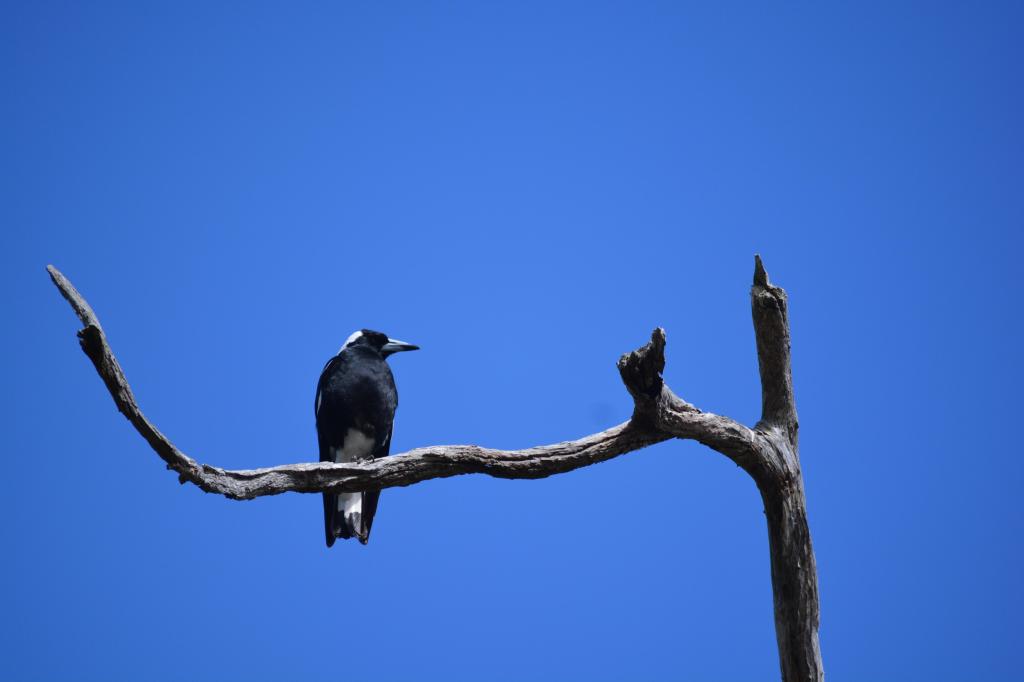
High in the branches Maggie practised her repertoire. She watched people scurrying: erecting tents and marking long white lines. She absorbed the rhythm of new songs: thump-thump, clink-clink.
She breakfasted on scarab beetles and was ready when the children arrived. But they didn’t notice her playful mimicry. Instead they flooded the field with colourful shirts and excited chatter.
Maggie watched silently. Soon she heard an unfamiliar song: “Go team, go team, go!” She flew to the top of the biggest tent and joined in. The children listened, then cheered. Maggie felt she’d almost burst. Instead she sang, and sang.
Perhaps we could learn from the magpie, one who looks, listens and learns and shows appreciation for others in the most sincere form of flattery: singing their song.
I love awakening to the beautiful songs of the magpie every morning. I chose to share this particular video, as yesterday we were also visited by a beautiful king parrot such as the one featured in this video. Awesome.
Thank you for reading. I appreciate your feedback. Please share your thoughts about any aspect of this post or flash fiction.
Over at the Carrot Ranch this week Charli Mills is talking about onions; onions and gophers, and how she planted onions to keep the gophers out of her veggie patch, only to find that gophers love onions! Who would have thought?
Just as children’s experiences differ, Charli’s experience with onions is very different from mine. Other than a few old onions sprouting in my veggie basket, I’d never grown onions until my lovely daughter Bec and son-outlaw Glenn planted some shallots in a pot for me. While the shallots have done well I rarely think to include them in my cooking as I am not used to having anything edible in my garden.
My dad was a one-time small crop farmer and, even after that, grew veggies for our home (and neighbourhood) use throughout most of my childhood. Bec loves to garden and harvests bountiful produce from her garden. Somehow the green thumb skipped me. Or maybe it didn’t, Maybe I just haven’t given it a chance to thrive.
While I have some knowledge about the source of my fruit and vegetables and how they grow, I had never given much consideration to the humble onion. I knew they grew as bulbs in the ground, with roots to hold them into the soil. I also knew they sprouted green bits at the top if left too long in the cupboard. But I had never thought about onion flowers.
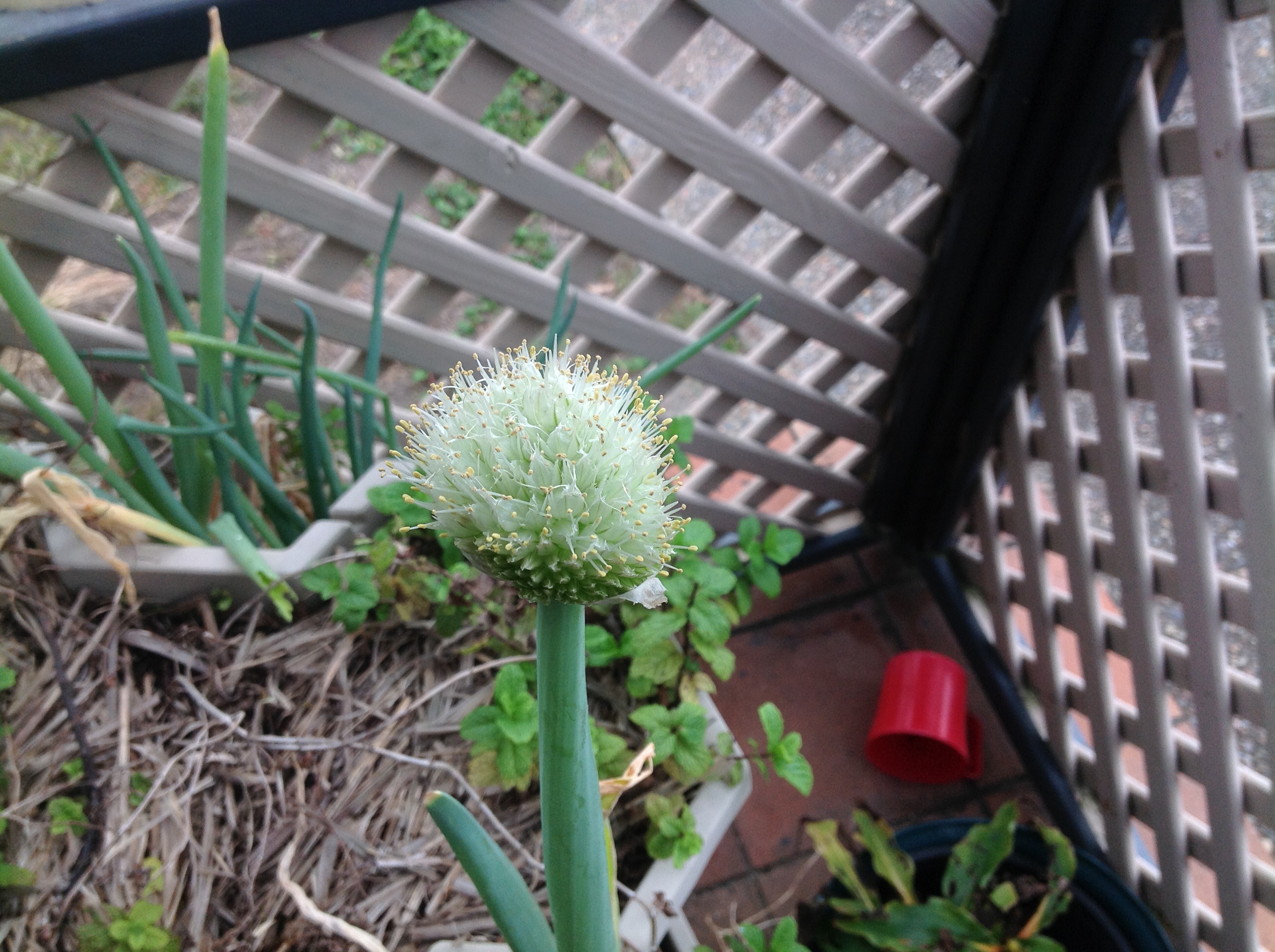
Last week I discovered a flower in my patch of shallots. I was intrigued. I suppose if I had thought about it I would have realised that onions grow from seeds. Don’t most plants grow from seeds? But I hadn’t thought about it. I just bought them in the supermarket or from the greengrocer as I needed them. I definitely hadn’t thought about onion, or shallot, flowers. But this flower is beautiful.
The discovery was a timely reminder that it is all too easy to take too much for granted, to cease to wonder about the amazing things occurring close by every day; to forget to notice and appreciate. Keeping a sense of curiosity alive, in ourselves as well as in children, is a very important thing. So how do we do that?
First of all we need to stop, notice and wonder. Would Newton have noticed the apple fall if he hadn’t stopped to notice and wonder? Would George de Mestral have invented Velcro if he hadn’t given more thought to the burrs stuck to his trousers? Our thoughts do not have to make such an impact on a global scale. They just need to keep the wonderment alive in our own lives. I have talked about the importance of a sense of wonder before here and here.
In addition to the shallot flower, I made another recent and amazing discovery in my own back yard. Over the past six weeks or so a wattle tree, planted just over a year ago, has been in bloom. We spotted the buds and eagerly awaited the sweet-smelling blossoms, making frequent inspections and eagerly predicting how long we would have to wait.
During one of these inspections I noticed a ladybird on a leaf. Soon Bec noticed a larva. Then we spotted more, many more, both ladybirds and larvae on the tree. Suddenly it occurred to us that, if there were adults and larvae, there would probably be pupae too. We looked closely and with intent and soon discovered every life stage on the tree, including pupae, eggs and mating pairs of adults. We watched larvae pupate and ladybirds emerge.
I had always enjoyed watching the butterfly’s life stages in the classroom, but to watch the ladybird’s life cycle right in my own back yard is very special. Opportunities such as this are there waiting for us to take notice, waiting for us to share it with others, to inspire curiosity and wonder.
Which brings me back again to onions and the flash fiction challenge set by Charli Mills to In 99 words (no more, no less) write a story that includes onions. I thought she had me stumped this time. Until I thought about the wonder and beauty of the onion flower; the way that delving into the complexity of a character is often referred to as peeling back the onion layers, and the shared ability of both onions and characters, including Marnie, to grow.
As Marnie reaches a sense of closure to and release from the torment of her childhood, she discovers that she no longer needs an onion to hide the real reason for her tears, and can accept that beauty, including her own inner beauty, can spring from desolation and neglect.
Onions
Before she left she was drawn back for one last look at her hiding place. There, between the garden and the wall, her tears would fall as she dreamt of better things and planned her escape.
The veggie garden was hardly recognisable, camouflaged with weeds. But wait! A flower? She stooped to look. An onion flower?
“Ha!” she thought, recalling the times she had pulled up and bitten into an onion to explain her tears should anybody ask, though they never did. Even untended a flower could bloom, as she too had blossomed despite the harshness of those days.
Thank you for reading. I appreciate your feedback. Please share your thoughts about any aspect of this post and flash fiction.
and talks about sowing compassion to make our world a “worthier place to live”.
These are wonderful ways of thinking about dirt and good reminders of the importance of the earth beneath our feet, which is often taken for granted, even ignored, unless one is a farmer, a gardener, perhaps a miner, or possibly a child.
Children are often admonished about playing in the dirt, as if washing off a little soil was the greatest difficulty. In our towns and cities we cover the soil with concrete and leave few patches of bare earth where children have an opportunity to dig.
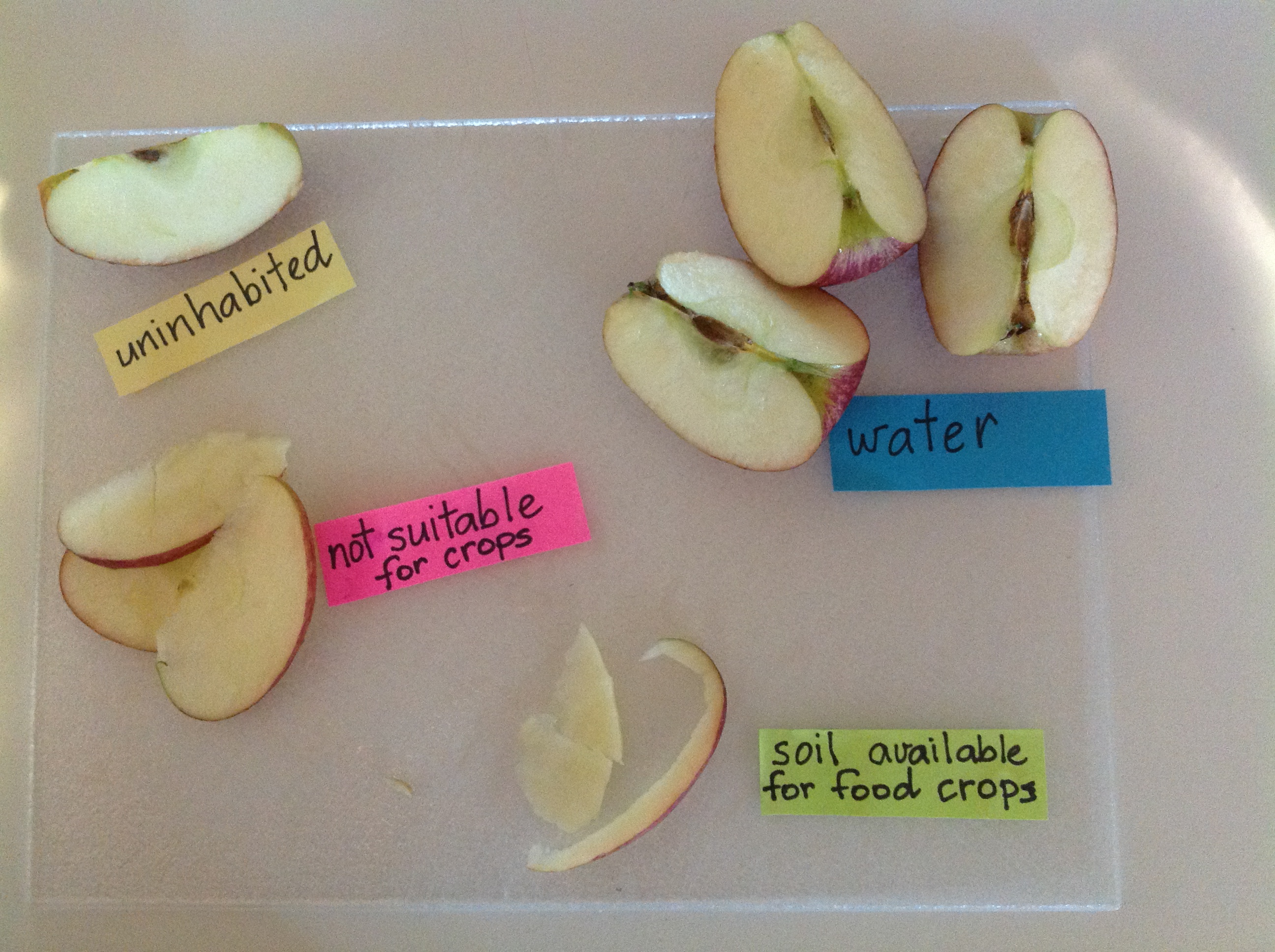
Soil, though an essential resource of our Earth, is often overlooked. Ask a young child what living things need and they may say “water, air, food, sunshine and shelter”. Soil won’t rate a mention. But without it we wouldn’t have a thing to stand on! Nor would we have our other essentials: air, food and shelter – all dependent on the soil for their production. The importance of soil and of conserving becomes even more evident with the realisation of how little of the Earth’s surface is available for producing food.
Another great gift from the soil is knowledge. Much of what we know of Earth’s history and human history has been revealed by the soil as successive layers have been exposed or excavated; uncovering secrets of the past and enabling a much richer understanding of earlier times.
Our knowledge of dinosaurs has all been revealed from the earth with the first discoveries and identifications made only a few hundred years ago. And there is still much more to be discovered. My children and grandchildren, along with many other children and adults, are fascinated by dinosaurs. How exciting it would be to make a new dinosaur discovery, find hidden treasures or unlock secrets of the past!
It is possible that many more dinosaur, and other, discoveries are yet to be made. The world’s only known evidence of a dinosaur stampede was found in Australia just a little over fifty years ago. Even more recently a gardener in the UK found a dinosaur bone in his backyard! In the US, if you find a dinosaur fossil in your backyard it’s yours to keep!
According to this video, finding dinosaur fossils is quite easy:
But his father didn’t just tell him. Wanting his son to be curious and interested in finding things out for himself, he responded, for example: “I wonder if we can work it out . . .” They would then look through books about zoology and anatomy and try to identify the bone’s origin.
Knowing that it is through the comparison of found bones with bones of familiar creatures that scientists have been able to work out much of what we now know about dinosaurs and other extinct creatures makes such an activity even more exciting and inspirational.
Rosen goes on to share an experience from his own school days. When a teacher confessed to students that he didn’t understand Comus by Milton, which had been set for study, the class and teacher spent the year together figuring out its meaning. Rosen compares the effectiveness of this approach to many others, stating that study techniques, “didn’t teach me how to find things that I really wanted to learn about. It didn’t take me down interesting side-alleys where I would find things that I didn’t know I would be interested in until I found them.” But he says what he learned from exploring Comus was “something that’s more to do with feeling than knowledge or learning: it was a confidence that I could investigate and discover things for myself. It’s ironic, isn’t it, that I got that feeling from someone who quite genuinely didn’t understand something?”
A sense of wonder and curiosity, and a desire and willingness to find out for oneself answers to one’s own questions is fundamental to learning. Digging in the dirt occasionally can’t do that much harm. You never know what new discovery you may make!
The thought of just such a discovery is what inspired my response to Charli’s challenge:
Digging for gold
Her spade crunched against the obstinate soil. Then tap, tap, tap, another thin layer loosened. She scooped up the soil and tossed it onto the pile growing steadily beside the excavation site. With expectant eyes and gentle fingertips she scanned each new surface. Then again: tap, tap, tap — toss; tap, tap, tap —toss!
She pushed back her hat to wipe her sweaty brow, leaving a smudge of dirt as evidence. She glanced skyward. The sun was high. She’d been digging for hours. She must find something soon. What would it be? Pirate’s treasure or dinosaur bones . . .?
Thank you for reading. I appreciate your feedback. Please share your thoughts about any aspect of this post or flash fiction.
At this school in Tokyo, five-year-olds cause traffic jams and windows are for Santa to climb into. Meet: the world’s cutest kindergarten, designed by architect Takaharu Tezuka. In this charming talk, he walks us through a design process that really lets kids be kids.
Some things that appeal to me about this kindergarten include:
the lack of boundaries between inside and outside, and between classrooms
the freedom of a child to choose to be in, or to leave, a space
the space and freedom for children to run
the sounds of happy children
the opportunity for children to help each other
and the attempt to use architecture to change the lives of children without controlling every waking moment
There are a few things that concern me, that make me feel uncomfortable, but maybe that’s just my urge to control being challenged.
What do you think?
Thank you for reading. I appreciate your feedback. Please share your thoughts about any aspect of this post.
Most teachers try to incorporate a variety of experiences into their programs in order to maximise learning opportunities in the hope that, if students don’t “get” it one way, they will “get” it in another. The imposition of national standardised assessment makes doing this a challenge for teachers. The increased requirement for the implementation of particular approaches to teaching makes it even more so.
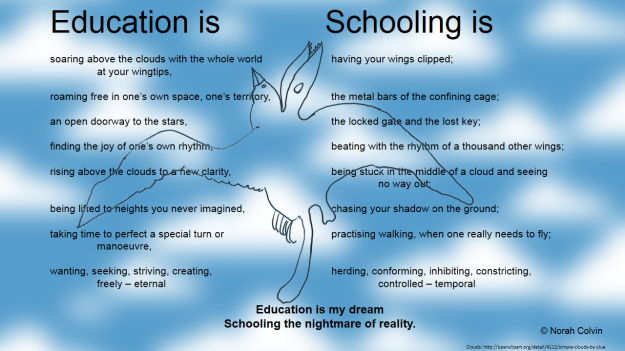
To say that I hold fairly strong views about learning, and the differences I consider there to be between education and schooling is perhaps an understatement, but it wasn’t always so.
My memory tells me that, while I probably didn’t “love” school, I probably didn’t “hate” it either. It was simply something that I had to do. I didn’t question it. I did my best to be a “good” girl, do what was expected of me, and conform. All of which I think I did pretty well.
The questioning came later and had more impact upon my teaching and parenting than it did on my own schooling. I came to view schooling as something that is “done” to us, and education as something that we do for ourselves. That is not to say that no worthwhile learning takes place in school, for it does, but education is a whole-of-life experience and schooling is but one small part of that.
However, if the importance of schooling, and here I mean learning of particular content by particular ages, is inflated and rated more highly than children’s natural curiosity, interests and abilities, then the consequences to individuals and the community in general can be more negative than positive. One consequence may be that children don’t enjoy school; another may be the view that only school knowledge is important; and yet another may be that children are turned off learning all together.
My first conscious discomfort with what, for convenience, I’ll call a factory model of schooling (children go in one end, have things “done” to them, and come out the other end all the same) was as a young teacher when all five year two teachers were expected to be doing the same thing at the same time. That imposition, along with other inadequacies that were beginning to become apparent, set me on a quest to learn more about learning and education. My quest has never ceased and I am still searching for answers.
Recently I read a book by Daniel T. Willingham entitled “Why Don’t Students Like School?” The title had instant appeal, of course, and I thought I’d recognise a few of the reasons at least. My initial expectation was of reading views similar to those of authors like John Holt, Ivan Illich, A.S. Neill and John Dewey whose books I had read in the 70s and 80s; but a closer look at the subtitle told me I was in for more: “A Cognitive Scientist Answers Questions About How The Mind Works and What It Means For The Classroom”.
The book is a wonderful read and I’m certain to share many of Willingham’s ideas with you in future posts. I enjoyed it because, in almost equal measure it reinforced, challenged and extended my thinking about many aspects of learning and how best to provide for and stimulate it in a classroom setting.
Sometimes Willingham would make a statement with which I agreed, and then go on to explain the faulty thinking behind it. Sometimes his statement would seem to completely contradict what I think but his explanation would show that we simply had different ways (mine perhaps inadequate) in explaining it.
What I really appreciate about the book is that Willingham carefully translates what has been learned from research into practices that can be implemented in the classroom to enhance student learning. Often research seems only to tell teachers what they already know from experience and observations, or provides information in such an abstract way that nothing of practical use can be gleaned.
The section of Willingham’s book that I refer to today is “Chapter 7 – How Should I Adjust My Teaching for Different Types of Learners?” Willingham opens the chapter with the words “All children are different.” He says that some learn visually, some auditorily; that some are linear thinkers and some holistic, for example, and that
“It seems that tailoring instruction to each student’s cognitive style is potentially of enormous significance”.
The important word in that sentence is “seems”. He talks about the differences in the way that hypothetical Sam and Donna might learn and says that “An enormous amount of research exploring this idea has been conducted in the last fifty years, and finding the differences between Sam and Donna that would fit this pattern has been the holy grail of educational research, but no one has found consistent evidence supporting a theory describing such a difference.”
He states that the “cognitive principle guiding this chapter is:
“Children are more alike than different in terms of how they think and learn.”
That statement really made me sit up and take notice: “Children are more alike than different”. But it turns out, those words are not the most important ones in the sentence. The most important ones are: “in terms of how they think and learn.”
He goes on to say that, “the claim is not that all children are alike, nor that teachers should treat children as interchangeable. Naturally some kids like math whereas other are better at English. Some children are shy and some are outgoing. Teachers interact with each student differently, just as they interact with friends differently; but teachers should be aware that, as far as scientists have been able to determine, there are not categorically different types of learners.”
He also talks about it in this video:
Willingham acknowledges that students differ in their cognitive abilities and styles. What he does in the chapter is “try to reconcile the differences among students with the conclusion that these differences don’t mean much for teachers.” In reading these words one might expect that Willingham is proposing that differentiation is not an important part of classroom practice. But such is not the case, as stated in this video:
In the book he writes, “I am not saying that teachers should not differentiate instruction. I hope and expect that they will. But when they do so, they should know that scientists cannot offer any help.” According to Willingham, scientists have not identified any types of learners or styles of learning. He says, “I would advise teachers to treat students differently on the basis of the teacher’s experience with each student and to remain alert for what works. When differentiating among students, craft knowledge trumps science.”
What Willingham says is of most importance for a learner to learn is background knowledge. If a student does not have sufficient background knowledge to understand the content or concepts which are presented, learning will not take place. This supports the advice that I repeatedly give to parents: read to your children, talk with them, and provide them with a wide range of experiences and activities.The same is true for teachers: ensure the students have sufficient knowledge on which to build the new work you are expecting them to grasp.
This week at the Carrot RanchCharli Mills has thrown a prompt with which I have struggled: In 99 words (no more, no less) write about the day the earth turned brown. I always like to tie my responses to the educational focus of my blog and this one had me stumped for a while. A mind journey following various twists and turns, retracing well-worn paths, and hitting many dead ends, finally led me to an oasis in the parched brown earth: the uniqueness of each of us; the amazing potential of each new child to create possibilities beyond our imagining; and the contrasting effect of a narrow test-driven school system that attempts to reduce each to the sameness of minimum standards and age (in-)appropriate benchmarks. A paint palette seemed a suitable medium for the story.
For those of you who have been following Marnie’s story, I apologise. She makes no appearance this time, though I have not ruled out the possibility with student M. I’d be pleased to know what you think.
Palette potential
She walked between the desks admiring their work. From the same small palette of primary colours, and a little black and white for shades and tones, what they produced was as individual as they: J’s fierce green dinosaur and exploding volcanoes; T’s bright blue sea with sailing boat and smiling yellow sun; B’s football match . . . At least in this they had some small opportunity for self-expression. She paused at M’s. M had mixed all the colours into one muddy brown and was using hands to smear palette, paper, desk and self . . .
Thank you for reading. I appreciate your feedback. Please share your thoughts about any aspect of this post or flash fiction.
Rosoff introduced her article by questioning what we consider to be success in life. She discussed a study of 268 men over seventy-five years conducted by George Vaillant who concluded that “warmth of relationships throughout life have the greatest positive impact on ‘life satisfaction‘”.
Rosoff said that,
“If you live a happy and fulfilled life, then you die successful. “
but wondered why, then, “do we persist in measuring success in terms of salaries, job titles and assets?” if they have little real impact on one’s happiness.
Rosoff suggested that a good place to start thinking about attitudes to success is in school.
The next part of her article was devoted to attitudes towards success in schools. Rather than provide just an outline of her thoughts, I am quoting them in entirety, as I don’t want to misrepresent her ideas and she says it all so well. While she discusses specifically the situation in the UK, I think many readers will recognise similarities to their own locale. I have highlighted parts that I find particularly noteworthy. I do recommend, however, that you follow the link and read her article in full.
“In the twenty-first century, educational success is largely determined by the government. The government puts in place a series of goals that evaluate children as young as three against measures of socialisation, reading proficiency, an understanding of numbers, the ability to answer questions in an acceptable, established manner, and later – during GCSEs and A levels – the ability to pass exams in up to twelve subjects and write essays in a strictly approved fashion.
Success in school requires hard work and a competitive approach to study on the part of students – but more to the point, a successful student is one capable of achieving goals as defined by the exam graders, as defined by the government.
A successful student is one capable of matching learning to this very specific series of goals.
In other words, a child who reads all day is not a successful student. A child who writes brilliantly and with a distinctive voice but can’t spell, is a failure. A child who loves history but can’t write an essay in the approved manner, is doomed. A child who loves stories, who loves to dream, who makes unusual connections, whose brain works in unconventional, peculiar ways – but who can’t multiply 11 x12 – is not a successful student.
Successful students must sit still and concentrate for long periods of time, temporarily memorise large amounts of information, understand and achieve received goals, think inside the box. A desire to please and a willingness to conform are key.
The least successful children in this sausage factory will be branded from the age of five. Children with parents or carers who don’t talk or read to them enough are most likely to fall into this category of early failures. As are dyslexic children. Or eccentric thinkers. An irregular schedule, disorderly home life and financial instability all interfere with the attainment of ‘success’ as determined by the government.
Less support at home, fewer books, a less regular schedule, a less orderly home life, less healthy meals, less consistent love – all these economic or emotional disadvantages further condemn the five year old to failure. Food banks, immigration problems, substance abuse problems, unemployment, parental absence or mental illness – all of these elements interfere with the attainment of ‘success’ as determined by the government.
I see them when I visit secondary schools – the children branded failures because they can’t get on in school. Because they’re bored, or not very verbal, or not very good at sitting still and taking information in as required in a classroom situation – or the ones who just don’t see why thirteen years of their lives should be spent taking exams they’re not good at, absorbing information in a manner that hasn’t changed much in two hundred years. ‘Not a student’ is a label that has condemned decades of children to a diminished sense of what they’re capable of in life. When in fact all it means is, ‘does not thrive within government parameters’.
Do I buy into the idea that these students are without value? Of course not. Put them in a different sort of learning environment or teach them something that stimulates their imaginations and they’ll be fine. But sit them in a classroom for thirteen years with a series of targets chosen by a government that knows nothing at all about education and they’re doomed.
In contrast, the most successful children in this whole process of learning and taking exams will get all A*s and go to Oxford or Cambridge, after which they will go on to have what most people consider to be the most successful lives – the best jobs, the highest salaries, large and comfortable and expensive houses and cars.
And yet.
In a 2014 book, Excellent Sheep: The Miseducation of the American Elite and the Way to a Meaningful Life, award winning American essayist and educator William Deresiewicz concerned himself with what’s going at the top level of American education.
‘Our system of elite education manufactures young people who are smart and talented and driven, yes, but also anxious, timid, and lost, with little intellectual curiosity and a stunted sense of purpose … great at what they’re doing but with no idea why they’re doing it.’
This was written about Harvard and Yale but applies just as well to elite British universities. Like the highest rated state primary and secondary schools, these institutions take few risks – they admit top performing, highly driven teenagers and turn out graduates with no motive to question the status quo, no motive to question the structure of society or the weight that society puts on a certain kind of success.
If you win a beauty contest, you don’t dedicate your life to challenging society’s perceptions of beauty.
William Deresiewicz continues:
‘So extreme are the admission standards now that kids who manage to get into elite colleges have, by definition, never experienced anything but success. The prospect of not being successful terrifies them, disorients them. The cost of falling short, even temporarily, becomes not merely practical, but existential. The result is a violent aversion to risk.’
All of this is happening at exactly the moment at which the world most needs risk takers: individuals willing and able to retell the story of society in a more positive way. People willing to take risks with meaningful social and political change. Hardly anyone would disagree that our political system needs changing – free market capitalism has led to terrifying extremes of wealth and poverty. The pharmaceutical industry needs meaningful change along with the system of drug patents that price simple, inexpensive drugs out of the reach of entire populations whose lives they might save. The legal system favours those with money, as does education, as does housing. In the meantime, there is little financial motive to stem – or even acknowledge – the devastating effects of global warming. It is difficult to think of a single aspect of life on earth today that couldn’t do with rigorous deconstruction and rethinking.
If schools are going to train a better class of political leaders, entrepreneurs, scientists, parents, and social policy-makers, they’re going to have to ask themselves which qualities to promote. If we require a more compassionate, more radical, less class-riven and self-centered definition of success, where does it begin?
I would like success to be redefined. I would like a successful man or woman to be defined as one who thinks creatively and laterally, who questions authority and accepted wisdom, who lives thoughtfully, generously and not entirely for personal gain. To be successful, I believe, it is important to leave the world a little bit better than you found it.
How do we do this? By listening to the wise and enduring voices of our civilization – by encouraging each new generation to read history and philosophy and to think big thoughts – about religion, politics, ethics, love, passion, life and death and the origins of the universe. The extraordinary imagination of our species – as expressed in poetry and fiction, music, art, dance – might someday spill over into cures for cancer and war and inequality. This will happen not by thinking about what we are, but what we might be.
A further striving after knowledge and meaning is the proper goal for education. Everyone doesn’t need to achieve A*s. But everyone needs to learn how to live a good, creative, questioning life.
What we don’t need are more five-year-old failures and more excellent sheep. “
Thank you for reading. I always appreciate your thoughts and feedback but, if you have some to share about this article, I’m sure The Writers’ Centre would love to hear them too. If you have time, please copy and paste them over there as well to keep their conversation going.





























 Norah Colvin
