Live Love Laugh Learn … Create the possibilities

Tag: critical thinking

  • It’s a steal

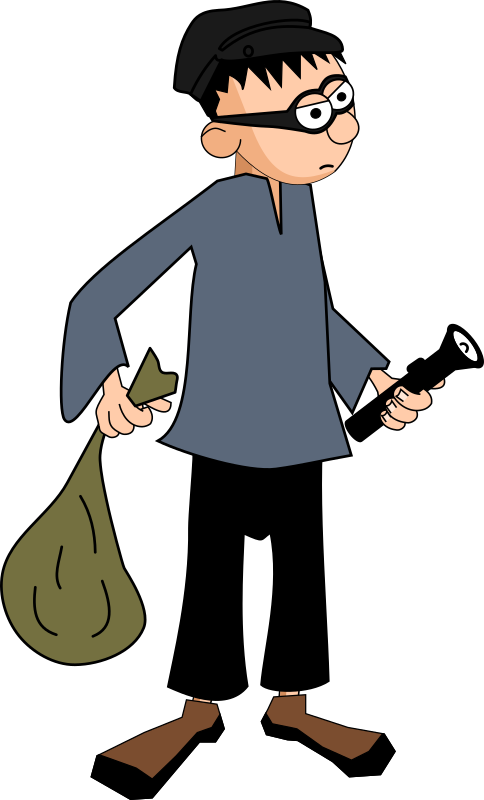
    cyberscooty, The Thief https://openclipart.org/detail/220956/the-thief
    cyberscooty, The Thief https://openclipart.org/detail/220956/the-thief

    This week at the Carrot Ranch Charli Mills is talking about theft; of family pets, of the apples from her garden, of property, and even of good name through myths and false accusations.

    I didn’t have to think for long to come up with three fairy tales that deal with the issue of theft. Why three? Because three is the fairy tale number. I’m sure most of you will be familiar with these two traditional fairy tales: Goldilocks and the Three Bears, and Jack and the Beanstalk. Some will not be familiar with Joan Aiken’s more modern (1968) fairy tale A Necklace of Raindrops.
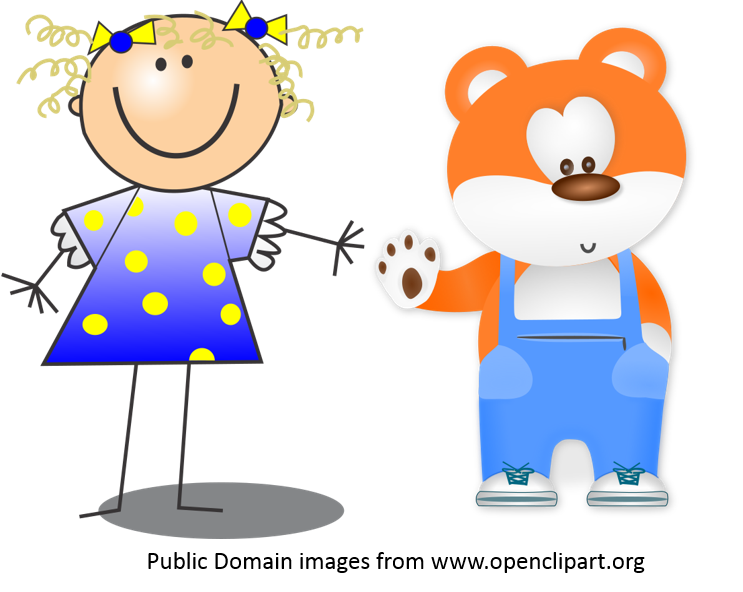
    girl and bear

    If you were to search online for teaching resources to support use of Goldilocks and the Three Bears in an early childhood classroom, you would have much from which to choose. Many of the available resources are worksheets and printables with few requiring children to think beyond the surface level of the story.
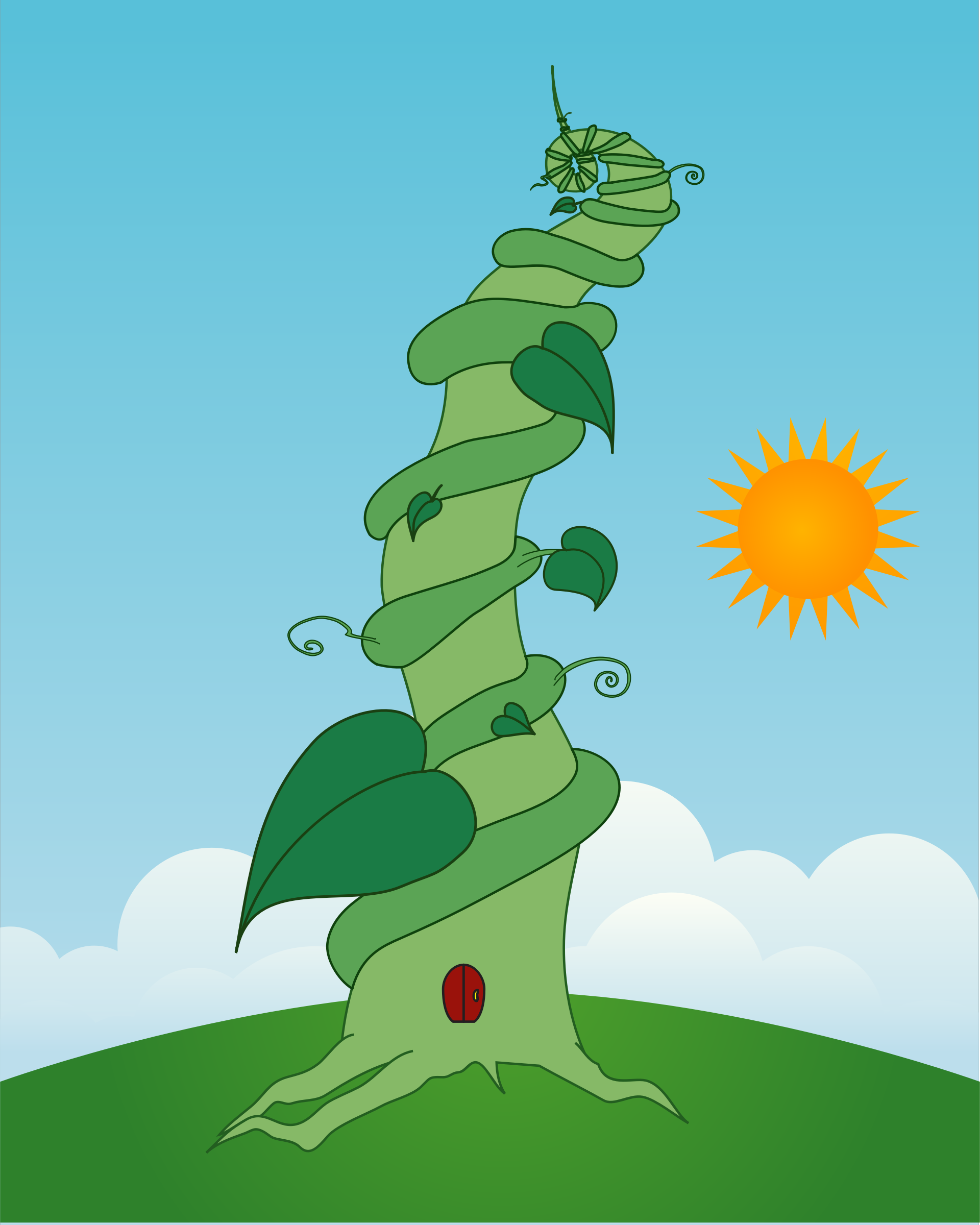
    youk_k, Beanstalk https://openclipart.org/detail/20020/beanstalk
    youk_k, Beanstalk https://openclipart.org/detail/20020/beanstalk

    The same is true for Jack and the Beanstalk. A search for supporting teaching resources also brings up a plethora of worksheets and printables for colouring, cut and paste and writing activities.

    While it’s no secret that I am not a fan of worksheets, activities such as those may have a place if they are used to stimulate language development through retell and role play, support beginning readers and writers in a meaningful context and develop basic mathematical concepts. Children might also be involved in activities associated with the story such as making porridge or growing beans.

    www.openclipart.com
    http://www.openclipart.com

    However children can be encouraged to think more deeply through discussion of the motives and feelings of the characters and the morality of their actions. After all, both Goldilocks and Jack were guilty of break and enter and theft; Jack repeatedly so. Jack didn’t follow his mother’s instructions and was “conned” by the man with the beans. Goldilocks was also guilty of vandalism.

    A strategy for encouraging thinking:

    Ask children to:

    • retell story events
    • tell about the character and character traits
    • make a judgement about  the character’s actions: Was what Goldilocks did good or bad? Was what Jack did good or bad? (Note: It is best for children to make and record this judgement independently of others before sharing their thoughts. The method of recording would be dependent upon the age and ability of the children. They could, for example, write the word “good” or “bad” in a book; or colour a picture of the character e.g. green for good, red for bad.)

    Tally and/or graph children’s responses.

    Invite individuals to explain the thinking behind the decision. A lively discussion may ensue, particularly if there are mixed responses. It would be of interest to note which children maintain their position, which waiver and which change their opinion.

    Other questions can also be asked, and children can be encouraged to ask questions of their own, for example:
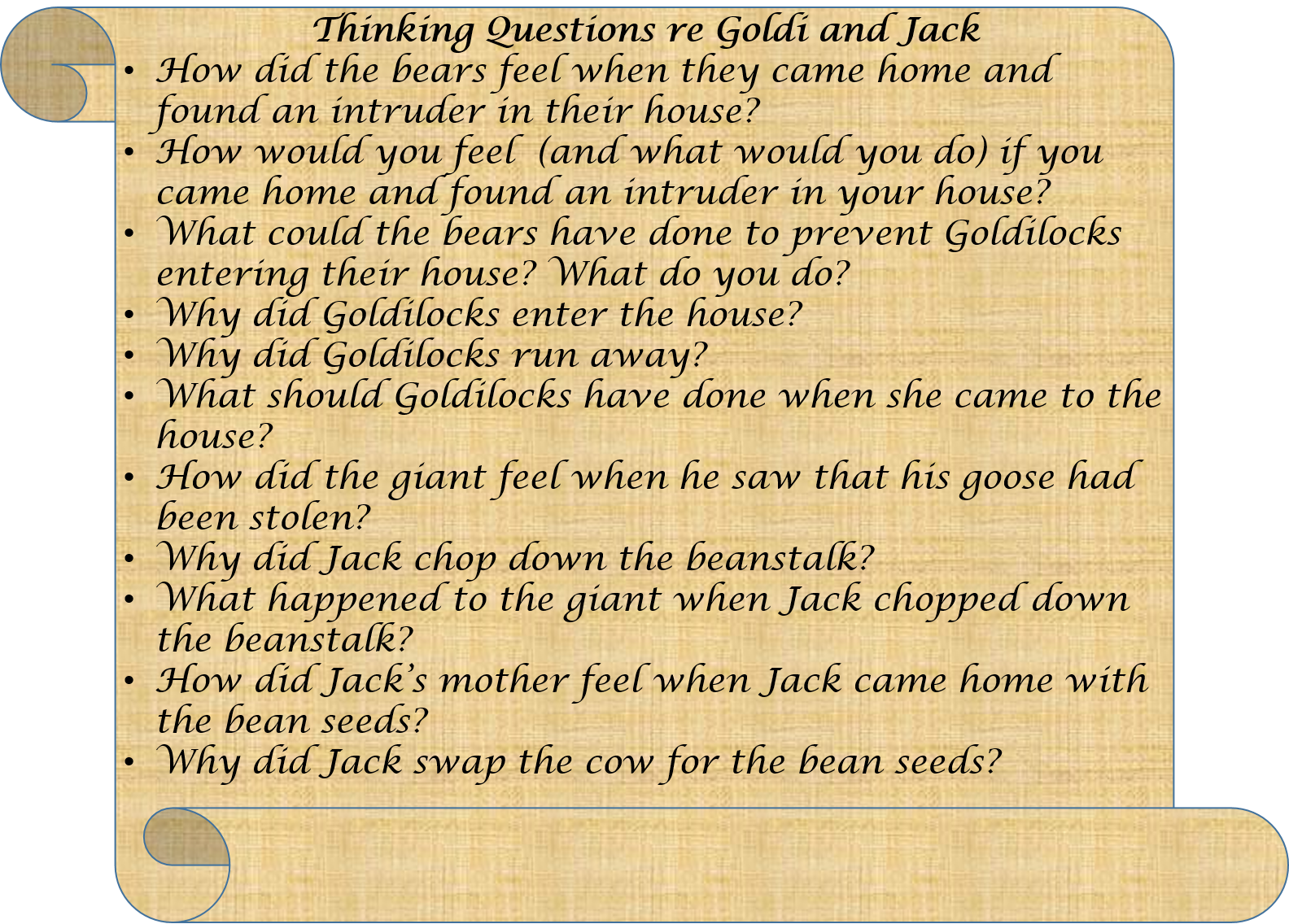
    Questions re Goldi and Jack

    Hopefully the events of these stories will be just as fanciful to the children as the settings. Most children will not have records of breaking and entering, and any incidences of petty pilfering or even vandalism will have occurred as part of their learning about property and ownership. Some appropriation of another’s toys or breakages in frustration or misuse are common and nothing to cause concern about future morality.

    a necklace of raindrops

    While the setting of A Necklace of Raindrops is equally fanciful with the personification of the North Wind, talking animals and a magic necklace, the situation, involving schoolyard jealousy and theft, may be more familiar. You will find few teaching resources to support it in an online search.
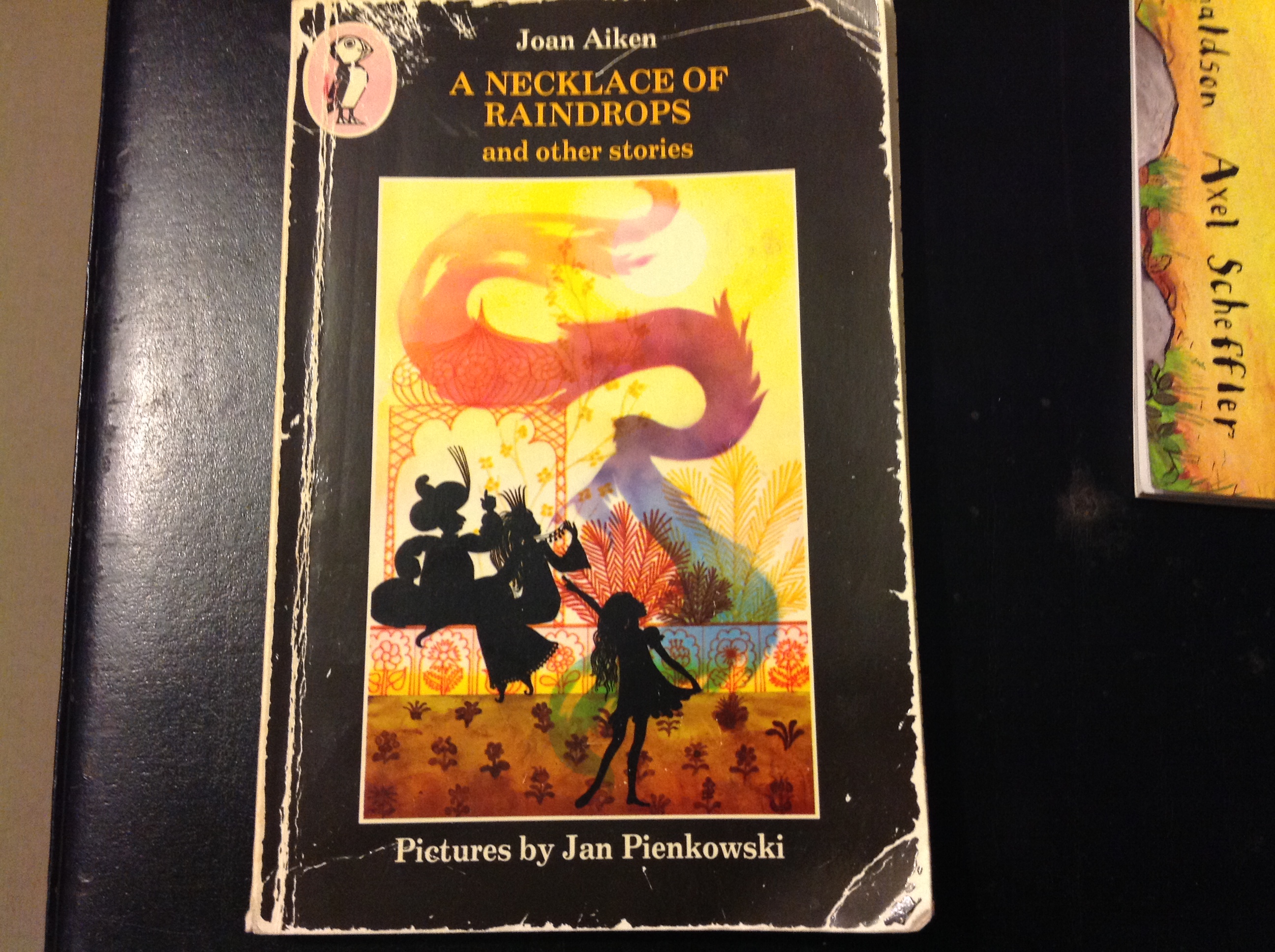
    book 3

    Here is a brief synopsis:

    A man frees the North Wind from a tree.

    The North Wind gives the man a necklace of raindrops with magical powers for his baby girl, Laura.

    Each year a new raindrop with new powers is added.

    Laura must not remove the necklace.

    At school Meg is jealous of Laura’s necklace. She tells the teacher who insists Laura remove the necklace.

    Meg steals the necklace.

    The animals help Laura get the necklace back.

    The North Wind punishes Meg.

    (Note: My few words have not done justice to Joan Aiken’s beautiful story. If you can, please read the full version.)

    The story is rich with opportunities for discussion with children, including:

    Envy and jealousy — feelings familiar to many children who may have taken, borrowed or used something that didn’t belong to them. They may have squabbled about ownership or use of an item or had someone take something of theirs. Learning a sense of ownership as well as sharing is important in early childhood.

    Telling the teacher — sometimes called “dobbing” in Australia. When is it important, when doesn’t it matter? What were Meg’s motivations?

    Honesty — Was it okay for Meg to tell her father that she had found the necklace on the road? Why did she tell him that? What would he have done if she told him the truth?

    Finders keepers” — Is it ever okay to keep something you find? When might it be okay to do so?

    Following the rules – The teacher insisted that Laura remove the necklace. What could Laura have done or said? What else could the teacher have done? Was it fair for Meg to tell the teacher?

    Stealing the necklace — Was Meg good or bad to take the necklace? Why?

    Why did the magic not work for Meg?

    Was the North Wind’s punishment of Meg appropriate? (He blew the roof off her house so she got wet.)

    Thinking of these issues familiar to many in the schoolyard and playground made me think of Marnie who has experienced some similar situations. In this episode a boy dobs on Marnie for having a unicorn at school. Toys weren’t allowed, but this boy knew it meant Marnie was troubled again and needed the teacher’s help. A teacher is also called upon in this episode when Marnie has locked herself in the toilet and won’t come out. In both those instances the children were dobbing for good reason.

    In this episode Marnie is purposefully tripped and falls into a puddle losing hold of her “security” unicorn, and in this longer episode we find that, later that day, the same boy took her paint brush, and stashed it out of reach on a high shelf. He hadn’t taken it because he wanted it, as Meg had taken the necklace. He had taken it simply to torment, be mean and bully.

    Children, like Brucie, who tease, torment and bully are often themselves victims of similar behaviour. They feel powerless, lacking control in their own lives, and probably lowest in the pecking order at home. Targeting someone more vulnerable provides an opportunity to find a sense of power; for a while at least.

    So that’s where I’m headed for my response to Charli’s challenge to In 99 words (no more, no less) write a story about a thief or a theft. 

    Motives

    The morning started badly; nothing unusual in that. He’d been woken in the night by shouting, slamming doors, and screeching car tyres. Nothing unusual there either.

    There was no milk to moisten his cereal, only a slap to the head for daring to ask. He grabbed his bag and disappeared before she used him as an ashtray, again.

    Looking for a fight, he couldn’t believe she was just sitting there clutching her stupid unicorn. He snatched it; danced a jig to her wails, then threw it onto the roof.

    “I’m telling,” said a witness.

    “Who cares?” was his response.

    Thank you

    Thank you for reading. I appreciate your feedback. Please share your thoughts about any aspect of this post or flash fiction.

  • What measure success?


    A+

    I have often expressed concern about what I consider to be an over-emphasis on standardised and national testing and the pressure it puts on students to achieve. I explained some reasons for my misgivings here and here and here, for example.

    https://openclipart.org/image/800px/svg_to_png/59389/happy_sun_gm.png
    https://openclipart.org/image/800px/svg_to_png/59389/happy_sun_gm.png

    As a parent and a teacher the most important thing I want for my children is for them to be happy. After that I wish for them to be healthy and successful. But what is success? In a recent post I referred to a seventy-five year study conducted by George Vaillant who came to the conclusion that success means leading a happy life and that “warmth of relationships throughout life have the greatest positive impact on ‘life satisfaction‘”.

    bee 5

    Last week I wrote about spelling tests and spelling bees and the effect that doing well, or not, might have upon a learner’s self-esteem as well as attitude to self as a learner, attitude to school, and to learning in general. While writing it I was not aware of an article written by Kate Taylor and published in the New York Times on April 6 2015: At Success Academy Charter Schools, High Scores and Polarizing Tactics.

    http://www.flickr.com/photos/24256351@N04/3662558333">Kids at Kubota Garden, 2003
    http://www.flickr.com/photos/24256351@N04/3662558333″>Kids at Kubota Garden, 2003

    I discovered the article via a series of stepping stones from Lloyd Lofthouse to  Diane Ravitch to The New York Times.

    Taylor opens the article by describing how the struggles of students to learn are made public, for all to see; posted on charts in hallways and reproduced in class newsletters. To see one’s name at the bottom of the list in a red zone, clearly showing that year level expectations have not been reached seems to be rather harsh, and humiliating for the child. Perhaps even more so if the teacher considered the student was just not trying. The teacher, it is reported, had difficulty watching the child take the tests for fear she would be upset by his mistakes. Months later the child scored 90% and was warmly congratulated.

    Taylor goes on to say that the school, which has mostly poor black and Hispanic students, outscores many students from more affluent areas with results much higher than average on the state wide tests. I know that everybody loves a winner and that we all want our students to succeed, but at what cost? The article describes the school as being very rigid with a competitive atmosphere that requires strict adherence to rules.

    Last week in my post A sprinkling of semicolons I shared an article by Ron Berger who talks about regular students whose “teachers have helped them develop the skills and mindsets necessary to produce work of exceptional quality, and have built classroom and school cultures in which exceptional work is the norm.” He says that most of the work comes from students in low-income urban schools.

    www.openclipart.org
    http://www.openclipart.org

    I suddenly became fearful. Were the students and schools described by Berger similar to those of the Success Academy schools as described in Taylor’s article?

    In both cases the students were from poor areas and they achieved remarkable success with most attending college. Austin, as described by Berger, made six drafts of his butterfly drawing before it was considered to be “scientific” enough. I wondered how much, if any, duress he had been under.

    The article described Berger as the Chief Program Office of Expeditionary Learning Schools. I followed the link to discover a little more about Expeditionary Schools, checked with Wikipedia and other sites that came up in a Google search, including Open World Learning which says that expeditionary learning (EL) “fosters curiosity about the world by creating learning situations that provide something important to think about, time to experiment, and time to make sense of what is observed.” It also says that EL schools “promote rigorous and engaging curriculum; active, inquiry-based pedagogy; and a school culture that demands and teaches compassion and good citizenship.  EL schools are based on the Outward Bound model, which starts with the belief that we learn best through experience.

    https://openclipart.org/image/800px/svg_to_png/59389/happy_sun_gm.png
    https://openclipart.org/image/800px/svg_to_png/59389/happy_sun_gm.png

    This all sounds wonderful and praise-worthy, and I was feeling a little happier about what I had shared. However, if there’s one thing I have realised after a lifetime involvement in education is that the written statements of any educational institution sound wonderful and praise-worthy. It’s the way the principles are applied in practice that makes the difference.

    I didn’t like what I had read about Success Academy Charter Schools in the New York Times, so I thought I’d better check out their website to discover what philosophy and principles guide them. First thing I spotted was a letter from a parent responding to the article in the New York Times! The parent, Polina Bulman, painted a very different picture of the school from that offered in the Times.

    Bulman describes the decision-making process she went through in choosing the Success Academy for her five year old daughter. She shares what had concerned her and explains how those concerns had been answered. She describes her daughter’s happiness at school and the progress she is making in all areas of her learning. She has nothing but praise for the school, and concludes her letter, which she shared on Facebook, with these words:

    “I was so touched by the warm and welcoming atmosphere. I had a chance to hang out in the hallways, listening to what teachers say to students as they pass by, and watching what teachers and staff members say to one another. I saw so much collaboration and kindness, so much teamwork. The best thing is that as a parent I feel like a part of this team and am proud of it!”

    These words are in quite strong contrast to those of the New York Times.

    The “Approach to Learning” statement of the Success Academy explains that students are engaged in only 80 minutes of direct instruction each day and that the rest of the time they are engaged in small group instruction and hands on learning.


    So what does all this mean?

    For one thing, just as you can’t judge a book by its cover, you can’t judge a school by its policy statement.

    For another, you can’t believe everything you read, even when the source seems trustworthy, you must question the author’s credentials, viewpoint and purpose in writing, “What barrow are they pushing?” (I’m upfront about my biases!)

    And mostly, question, question question.

    The Very Hungry Caterpillar

    These are important lessons for readers of any material and of all ages. I have talked about the importance of developing critical literacy in a series of posts about using “The Very Hungry Caterpillar” in the classroom. No, definitely not in science lessons, but in lessons to discuss those very points discussed above:

    Don’t believe everything you read

    Check an author’s credentials and purpose in writing

     And question everything.

    While I applaud the end result of Austin’s butterfly drawing, I question what the process may have been. We are not privy to that, though the supportive voices of students in the video do give us an inkling. I hope for the sake of all students that it was one of encouragement and support rather than pressure. Additionally I hope that the report in the New York Times got it all wrong. But if that is so, what is Taylor’s agenda and why would she attack these particular schools so fiercely?

    Note: I wrote this article a couple of days ago and upon re-reading it now I have a couple of further thoughts re my advice to check an author’s credentials and purpose in writing. I have not followed my advice. I failed to check out the author of the NY Times article. However I think it is fair to say that Lloyd Lofthouse and Diane Ravitch are both anti the emphasis on standardised testing; and the Success Academy is probably reliant on the tests to measure its “success”.

    There is no black and white truth. There are only shades of grey.

    Thank you

    Thank you for reading. I appreciate your feedback. Please share your thoughts about any aspect of this post.

  • Who wants five-year old sheep? Bah!

    Who wants five-year old sheep? Bah!

    Recently, thanks to a recommendation by Anne Goodwin, I read a great article on the website of The Writers’ Centre at Norwich. This article is called “Fuelling Creative Minds” and was written by Meg Rosoff. The article is part of The National Conversation about writing reading, publishing and bookselling, or why books matter.

    Rosoff introduced her article by questioning what we consider to be success in life. She discussed a study of 268 men over seventy-five years conducted by George Vaillant who concluded that “warmth of relationships throughout life have the greatest positive impact on ‘life satisfaction‘”.

    Rosoff said that,

    “If you live a happy and fulfilled life, then you die successful. “

    but wondered why, then, “do we persist in measuring success in terms of salaries, job titles and assets?” if they have little real impact on one’s happiness.

    Rosoff suggested that a good place to start thinking about attitudes to success is in school.

    The next part of her article was devoted to attitudes towards success in schools. Rather than provide just an outline of her thoughts, I am quoting them in entirety, as I don’t want to misrepresent her ideas and she says it all so well. While she discusses specifically the situation in the UK, I think many readers will recognise similarities to their own locale. I have highlighted parts that I find particularly noteworthy. I do recommend, however, that you follow the link and read her article in full.

    Excerpt from: “Fuelling Creative Minds” by Meg Rosoff and published by The Writers’ Centre Norwich 1 March 2015

    “In the twenty-first century, educational success is largely determined by the government.  The government puts in place a series of goals that evaluate children as young as three against measures of socialisation, reading proficiency, an understanding of numbers, the ability to answer questions in an acceptable, established manner, and later – during GCSEs and A levels – the ability to pass exams in up to twelve subjects and write essays in a strictly approved fashion.  

    Success in school requires hard work and a competitive approach to study on the part of students – but more to the point, a successful student is one capable of achieving goals as defined by the exam graders, as defined by the government.

    A successful student is one capable of matching learning to this very specific series of goals.

    In other words, a child who reads all day is not a successful student.  A child who writes brilliantly and with a distinctive voice but can’t spell, is a failure. A child who loves history but can’t write an essay in the approved manner, is doomed.  A child who loves stories, who loves to dream, who makes unusual connections, whose brain works in unconventional, peculiar ways – but who can’t multiply 11 x12 – is not a successful student.

    Successful students must sit still and concentrate for long periods of time, temporarily memorise large amounts of information, understand and achieve received goals, think inside the box.  A desire to please and a willingness to conform are key.

    The least successful children in this sausage factory will be branded from the age of five. Children with parents or carers who don’t talk or read to them enough are most likely to fall into this category of early failures. As are dyslexic children.  Or eccentric thinkers. An irregular schedule, disorderly home life and financial instability all interfere with the attainment of ‘success’ as determined by the government.

    Less support at home, fewer books, a less regular schedule, a less orderly home life, less healthy meals, less consistent love – all these economic or emotional disadvantages further condemn the five year old to failure.  Food banks, immigration problems, substance abuse problems, unemployment, parental absence or mental illness – all of these elements interfere with the attainment of ‘success’ as determined by the government.

    I see them when I visit secondary schools – the children branded failures because they can’t get on in school. Because they’re bored, or not very verbal, or not very good at sitting still and taking information in as required in a classroom situation – or the ones who just don’t see why thirteen years of their lives should be spent taking exams they’re not good at, absorbing information in a manner that hasn’t changed much in two hundred years.  ‘Not a student’ is a label that has condemned decades of children to a diminished sense of what they’re capable of in life.  When in fact all it means is, ‘does not thrive within government parameters’.

    Do I buy into the idea that these students are without value?  Of course not.  Put them in a different sort of learning environment or teach them something that stimulates their imaginations and they’ll be fine.  But sit them in a classroom for thirteen years with a series of targets chosen by a government that knows nothing at all about education and they’re doomed.

    In contrast, the most successful children in this whole process of learning and taking exams will get all A*s and go to Oxford or Cambridge, after which they will go on to have what most people consider to be the most successful lives – the best jobs, the highest salaries, large and comfortable and expensive houses and cars.

    And yet.

    In a 2014 book, Excellent Sheep: The Miseducation of the American Elite and the Way to a Meaningful Life, award winning American essayist and educator William Deresiewicz concerned himself with what’s going at the top level of American education.

    ‘Our system of elite education manufactures young people who are smart and talented and driven, yes, but also anxious, timid, and lost, with little intellectual curiosity and a stunted sense of purpose … great at what they’re doing but with no idea why they’re doing it.’

    This was written about Harvard and Yale but applies just as well to elite British universities. Like the highest rated state primary and secondary schools, these institutions take few risks – they admit top performing, highly driven teenagers and turn out graduates with no motive to question the status quo, no motive to question the structure of society or the weight that society puts on a certain kind of success.  

    If you win a beauty contest, you don’t dedicate your life to challenging society’s perceptions of beauty.

    William Deresiewicz continues:

    ‘So extreme are the admission standards now that kids who manage to get into elite colleges have, by definition, never experienced anything but success. The prospect of not being successful terrifies them, disorients them. The cost of falling short, even temporarily, becomes not merely practical, but existential. The result is a violent aversion to risk.’

    All of this is happening at exactly the moment at which the world most needs risk takers: individuals willing and able to retell the story of society in a more positive way.  People willing to take risks with meaningful social and political change. Hardly anyone would disagree that our political system needs changing – free market capitalism has led to terrifying extremes of wealth and poverty.  The pharmaceutical industry needs meaningful change along with the system of drug patents that price simple, inexpensive drugs out of the reach of entire populations whose lives they might save. The legal system favours those with money, as does education, as does housing.  In the meantime, there is little financial motive to stem – or even acknowledge – the devastating effects of global warming.  It is difficult to think of a single aspect of life on earth today that couldn’t do with rigorous deconstruction and rethinking.

    If schools are going to train a better class of political leaders, entrepreneurs, scientists, parents, and social policy-makers, they’re going to have to ask themselves which qualities to promote.  If we require a more compassionate, more radical, less class-riven and self-centered definition of success, where does it begin?

    I would like success to be redefined.  I would like a successful man or woman to be defined as one who thinks creatively and laterally, who questions authority and accepted wisdom, who lives thoughtfully, generously and not entirely for personal gain.  To be successful, I believe, it is important to leave the world a little bit better than you found it.

    How do we do this?  By listening to the wise and enduring voices of our civilization – by encouraging each new generation to read history and philosophy and to think big thoughts – about religion, politics, ethics, love, passion, life and death and the origins of the universe.  The extraordinary imagination of our species – as expressed in poetry and fiction, music, art, dance – might someday spill over into cures for cancer and war and inequality. This will happen not by thinking about what we are, but what we might be.

    A further striving after knowledge and meaning is the proper goal for education.  Everyone doesn’t need to achieve A*s.  But everyone needs to learn how to live a good, creative, questioning life.

    What we don’t need are more five-year-old failures and more excellent sheep. “ 

    Thank you


    Thank you for reading. I always appreciate your thoughts and feedback but, if you have some to share about this article, I’m sure The Writers’ Centre would love to hear them too. If you have time, please copy and paste them over there as well to keep their conversation going.


  • The Power of Not Yet by @TeacherToolkit

    The Power of Not Yet by @TeacherToolkit

    Some of my most popular posts of 2014 were those that discussed praise, growth mindset, assessment and failure.
    My final post for the year included thoughts about failure and the need to reflect and refine to move forward.
    It is fitting to begin 2015 with a post that revisits and extends those themes. I’m sharing a post about The Power of Not Yet I read on @TeacherToolkit’s blog. The post includes a video of Carol Dweck explaining that

    “if (students) didn’t pass a course, they got the grade “Not Yet.” And I thought that was fantastic, because if you get a failing grade, you think, I’m nothing, I’m nowhere. But if you get the grade “Not Yet” you understand that you’re on a learning curve. It gives you a path into the future.”

    I would much rather consider that I have not yet achieved my writing goals, than think I failed to achieve them in 2014. Not yet means I am making progress, and will continue to do so in 2015 and beyond.
    In the video Dweck shares research showing a difference that having a growth ‘not yet’ mindset can make to student effort and achievement.
    For me, her most powerful statement is that at the end of the talk:

    “Once we know that abilities are capable of such growth it becomes a basic human right for children, all children, to live in places that create that growth, to live in places filled with yet.”

    It’s a bit like learning to ride a bike. There is no failure, just stages of growth in ability.

    I hope you enjoy the article, and especially, Carol Dweck’s video.

    Thank you

    Thank you for reading. I value your feedback. Please share your thoughts about any aspect of this post.

  • How do you connect?

     Many of you may recognise this song from Sesame Street: One of these things is not like the other.

    Finding the one that doesn’t belong sounds like a simple activity, but which one did you choose? And why? Did you choose the rubber boot? I didn’t. I chose the shoe with laces. Does that make me wrong?

    The items had some obvious similarities: they were designed for wearing on the feet, and they were similar colours. Differences in size and style were also obvious.  Just what made the rubber boot “not belong” any more than any of the others, I’m not sure. Does that mean I am not as smart as a pre-schooler?

    Rather than simply providing children with an answer as happens in this video, I would prefer children were provided opportunities to explore and discuss similarities and differences and would invite children to explain why a particular shoe might be selected.  I think there are valid reasons for each to not belong, and there are also many reasons for them to be grouped together.

    The ability to make connections between new and established information, including by identifying similarities and distinguishing differences, is an important contribution to learning. Adults can aid in the learning process by making explicit the ways in which objects are similar and by discussing ways in which they are dissimilar.

    Young children very quickly learn to notice obvious similarities between e.g. different breeds of dogs, a variety of drinking glasses and cups, or construction items. However adults can assist and challenge children to think creatively and in new and innovative ways by encouraging them to make connections between seemingly disparate objects.

    Many innovations have been developed as a result of creative thinkers making links that didn’t previously exist between apparently dissimilar objects or situations. George de Mestral’s invention of Velcro, involving the application of an observed phenomena to a very different situation, is perhaps one such example.

    Playing games is a good way of encouraging children to think creatively. It is not necessary to purchase pre-packaged games. Many games can be played with items from around the house or in the toy box, or using picture cards from early childhood games like ‘snap’, printed clipart, or cut from magazines. Here are just a few suggestions around which you can construct your own ways of taking turns, playing and having fun:

    https://openclipart.org/image/800px/svg_to_png/178912/tweedles.png
    https://openclipart.org/image/800px/svg_to_png/178912/tweedles.png

     What’s the same?

    Display two pictures e.g. a duck and dog, a bus and a boat. How many ways are they the same?

     How are they different?

    Display two pictures and explain how the items are different. The differences could be obvious e.g. a duck and a dog, or more subtle e.g. two different breeds of dogs, or a male and female bird.

    Which one does not belong?

    Display three or four pictures. Discuss similarities and differences, and then decide which one doesn’t belong, providing reasons.

    Sorting

    Provide children with a larger number of items e.g. construction blocks in different sizes, styles and colours or pictures of a variety of objects or animals. In the beginning it is easiest to sort by one feature e.g. is yellow/is not yellow. Encourage children to look for similarities between particular items e.g. colour or shape and ask them to group all items with that characteristic. They will then have two groups, one with the feature and one without.

    Once children can confidently sort in this way they may be able to sort by two characteristics e.g. size and colour. They may even begin to make decision about how to deal with items that fit into two groups.

    What else?

    Show children a common everyday object and discuss its use. Encourage them to think of alternate uses for the same object e.g. a pencil could be used as a flagstick, a mast on a toy boat or to identify where seeds were planted in a garden.

    Link the story

    Display pictures of any two items e.g. a beach ball and a pencil. Ask children to create a story that involves both items. I immediately think of a family making plans for a holiday at the beach. The child wants a ball to play with at the beach and uses a pencil to add “beach ball” to the list of items to take. Your thoughts are probably very different. I’m sure someone will have the beach ball impaled on the pencil!

    Making up stories like this can be just as much fun for adults as it is for children. Charli Mills at the Carrot Ranch has challenged us to make it so this week with her flash fiction prompt to:  In 99 words (no more, no less) write a story using two objects, people or ideas that don’t go together. Charli allowed us to choose the two items. I decided to explore a little more of my tormented Marnie and her unicorn. I’d be pleased to know what you think.

    Unicorns and coffee

    People crammed in, around and in front of the small sidewalk cafe, reminding her of the fairy-tale pageant that had bypassed her radar. She couldn’t move now. Her coffee fix, too hot to sip, had just been served. So, as always, she retreated within.

    Cocooned in thoughts flittering across years and experiences, she barely noticed the cacophony of the crowd or passing parade.

    The sudden shout of “Unicorn!” penetrated, startling her.

    She was six again, cowering with her unicorn, avoiding mocking stares.

    But this time pitying and unbelieving stares watched the spreading stain of scalding coffee.

    Thank you

    Thank you for reading. I appreciate your feedback. Please share your thoughts about any aspect of this post or flash fiction.

  • How much of a meliorist are you?

    https://openclipart.org/image/800px/svg_to_png/103549/old_man01.png
    https://openclipart.org/image/800px/svg_to_png/103549/old_man01.png

    Recently I was sent a link to an article titled Cheer up, it’s not all doom and gloom published by the Australian Broadcasting Commission’s The Drum.

    This article mentioned a book by Steven Pinker called Better Angels of Our Nature which had been recommended to me by Geoff Le Pard in a comment on my post about childhood illness. The premise of this book is that humanity, over the ages, has become less violent. After to listening to Pinker’s history of violence, I’m pleased that I live these relatively peaceful times.


    The article also introduced me to a new term ‘meliorism’ which means having a belief that the world can be improved by the actions of humans. While the term may have been unfamiliar to me, the attitude is not and I attest that I am a meliorist.

    I have a very strong belief in the power of education to improve the world. Education empowers individuals, and educated individuals empower societies to build improved futures. It becomes very difficult to sustain negative practices in the face of overwhelming evidence and information.

    What better place is there for education to begin than in the home?

    In a recent post I referred to a new book by Michael Rosen called Good Ideas: How to Be Your Child’s (And Your Own) Best Teacher. At the time I had not read the book but now I can say, with great delight, that I have listened to most of it. With messages such as those contained in Michael’s book, it is easy to be a meliorist.

    I think Rosen’s book should be available to, perhaps compulsory reading for, every parent; I consider its message to be that important. In fact, I am off to the shops today to purchase copies to give to parents of young children I know.  It will become part of my gift to new parents that also includes Reading Magic by Mem Fox and a selection of picture books. I have previously blogged about that here and here.

    The “Good Ideas” contained in Rosen’s book, if implemented, will keep alive the natural curiosity of one’s children and oneself. They will encourage the development of thought, creativity and responsiveness.

    In the next few weeks I will post a more detailed review of the book and some of Michael’s ideas for stimulating curiosity, whoever and wherever you are.

    What about you? Are you a meliorist?

    I welcome your feedback. Please share your thoughts about any aspect of this post.

    Thank you

  • Fifteen blogs for inspiration!

    very inspiring blogger

    Recently Julie Stock nominated me for a Very Inspiring Blogger Award. Thank you Julie, I am totally delighted to accept. Julie blogs at ‘My Writing Life’ Julie writes about her journey towards being a published author and offering help to others who are in the same position.

    It is only a short while ago that I posted an acceptance for the same award from Geoff Le Pard. In that post I promised I would do some exploring to seek out other inspiring bloggers to add to our growing community. Since then I have also created a page listing awards for which I have been nominated and those whom I have nominated. I’m sure a quick look at that page will suggest many worthwhile bloggers to follow.

    Here are the rules of the award:

    • Thank and link to the person who nominated you.
    • List the rules and display the award.
    • Share seven facts about yourself.
    • Nominate 15 other amazing blogs and comment on their posts to let them know they have been nominated.
    • Optional: follow the blogger who nominated you, if you don’t already do so.

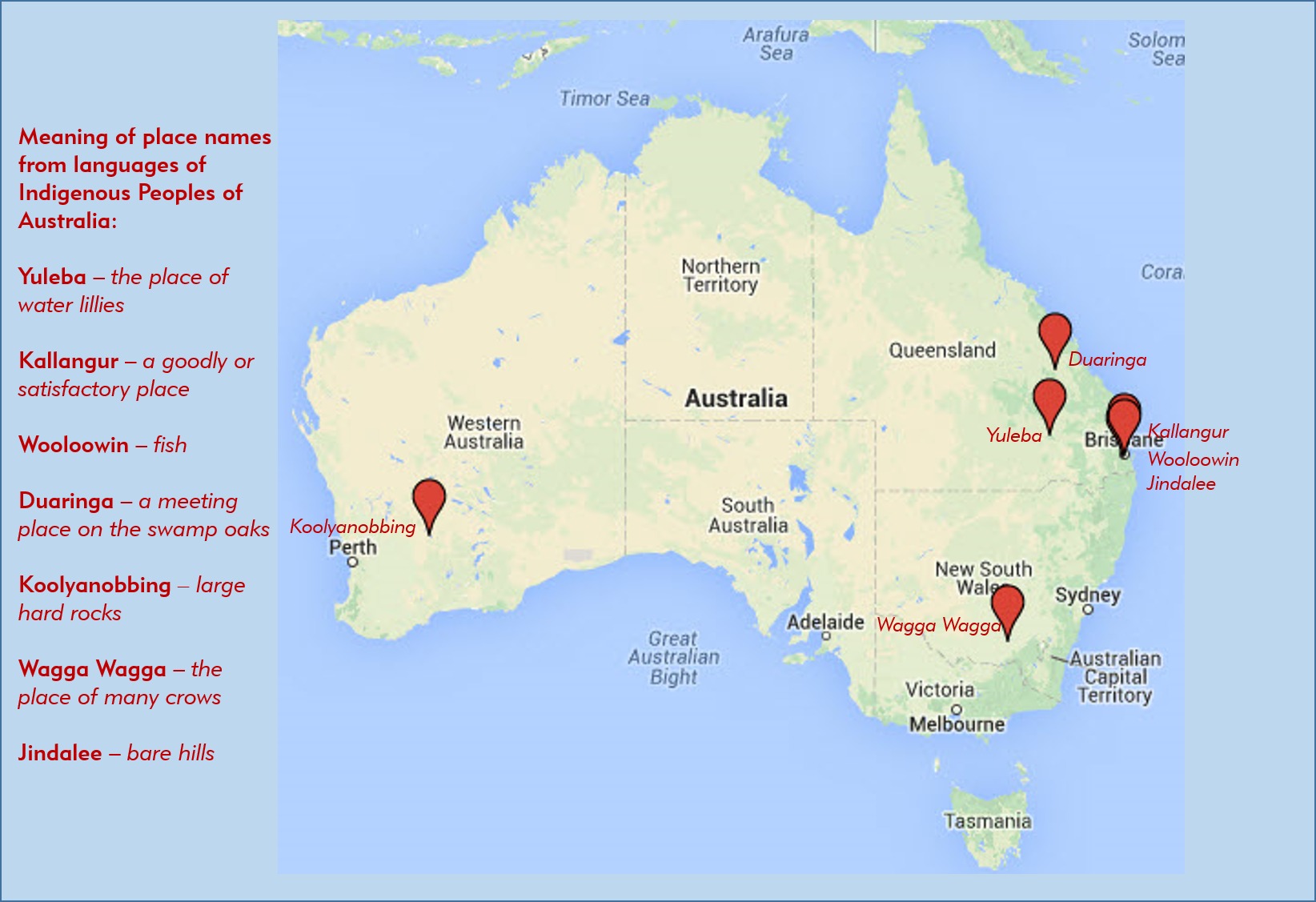
    Map with Indigenous Australian place names

    The seven facts I am sharing with you in this post are seven locations in which I have lived that are named using a word from the languages of Aboriginal peoples of Australia. Although I have lived in more than 20 homes for varying lengths of time, only seven locations have Aboriginal names.

    1. Yuleba: “the place of water lilies”, about 420km west of Brisbane: birth until about 10 months.
    2. Kallangur: “a goodly or satisfactory place”, about 20km north of Brisbane: 10 months until 61/2 years. I started school at Kallangur walking the approximately 2 miles (3.3km) to and from school with my older brother and sister.
    3. Wooloowin: “fish”, a suburb of Brisbane: 1970 – 72 (teacher training).
    4. Duaringa: “a meeting place on the swamp oaks”, about 116km west of Rockhampton: second year of teaching.
    5. Koolyanobbing: “large hard rocks”, approximately halfway between Perth and Kalgoorlie (i.e. in ‘the middle of nowhere’): about 18 months during 1977/78.
    6. Wagga Wagga: “the place of many crows”, approximately 450km south-west of Sydney: 1979 (university).
    7. Jindalee: “bare hills”, a suburb of Brisbane: 1997-2004 (though have lived in adjoining suburbs since 1981).

    In this post I am nominating fifteen blogs that I have not before nominated for an award. If I have nominated you previously, you are still on my list of wonderful blogs to follow (see page).

    It is up to each nominee whether they wish to participate by accepting the award and/or paying the compliment forward. The purpose of my nomination is simply to share with others how valuable I consider the blog to be.


    Julieanne To Read To Write To Be

    teacher versus mum

    Irene Waters Reflections and Nightmares

    Linda Petersen Raising 5 Kids with Disabilities and Staying Sane Blog

    Geoff Le Pard TanGental

    Carrie Gelson There’s a Book for That

    Matt Renwick Reading by Example

    Michael Michalko Imagineer7’s Weblog

    A.J. Juliani Teach Different

    Three Teachers Talk

    Sarah Brentyn Are you kidding me?!

    Shelley Wilson Live Every Day with Intention

    Ross Morrison McGill @TeacherToolkit

    Jean Cogdell jean’s writing

    Tara Smith A Teaching Life

    I hope you find time to visit some of those blogs. There is much to inspire!

    Thank you

    Thank you for reading. I value your feedback. Please share your thoughts on any aspect of this post.

  • The best of days

    school cropped

    It is often said that school days are the best days of our lives.

    Considering that I have had far more days at school than not (as student and teacher) then I should probably agree, else I’d be saying that most of my days haven’t been the best.

    For many adults it is not the in-class time that is most memorable or of which they have the most pleasant memories, it is the playtimes and the before and after walking to and from school times.

    For some children, the in-class time drags while they daydream of long summer holidays and activities with family and friends. Other children thrive with the structured learning, soaking up everything offered to them.

    19178-School-Building-Graphic

    In her post, School: A Suitable Place for Fiction? Anne Goodwin wrote that she is ‘always pleasantly surprised when children these days claim to enjoy school’. On the other hand, in a comment left on previous post here, Lori Schafer said that all her life she had ‘failed to understand why most children don’t like school. Why don’t they enjoy learning, and why don’t they enjoying studying, and why don’t they enjoy writing papers? Because, of course, there are a small percentage of us who do genuinely appreciate the discipline of schooling.’ She was one of them.

    In his post, School’s Out – and Education’s In, Geoff Le Pard said that ‘People confuse school with education, as if they were synonymous’. (I have written a poem to express differences I see between education and schooling. You can read it here.) He goes on to say that ‘education is a constant, not a time limited schooling experience’ and disagrees with the cliché that school days are the best. He says that ‘all those days and bits of days when learning occurs make up the best days of your life’. I agree with Geoff that learning new things, particularly things one has an intrinsic motivation to learn, gives great joy.

    Irene Waters said in her post about school that she loved her primary school days. As the end of her high school years approached, unable to see the point in continuing, Irene wanted to leave and start her nursing career. Her parents convinced her to stay and finish year twelve. While she didn’t at the time, she now appreciates the value in having done so and is grateful that her ‘parents laid down the law’.

    Talking about education and schooling is nothing new for me, that’s what my blog is about after all. However for a lot of people, once finished, school is a thing of the past and not much thought is given to it later. The reason why so many others are talking about it this week is the flash fiction prompt set by Charli Mills at the Carrot Ranch. Each week Charli challenges writers to pen a 99 word story about a particular topic. This week her topic is school.

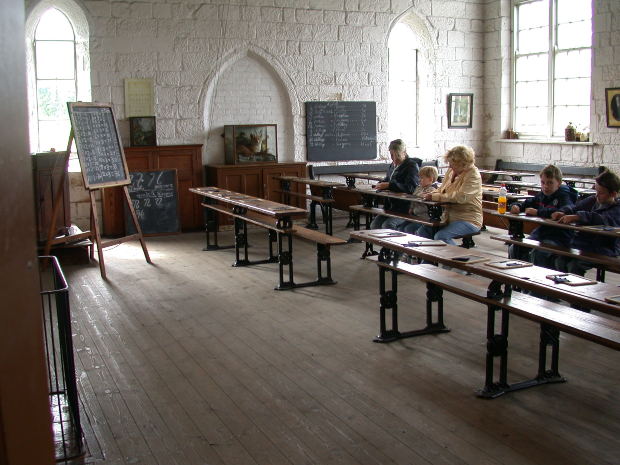
    old school room

    In her post, Charli describes an abandoned one-room schoolhouse that is close to her home. She explains that these schoolhouses ‘were often among the first structures built by pioneers’ and comments on the importance that was placed on education in those pioneering days. Indeed education has been important throughout the history of humankind. It is what sets us apart from other creatures.

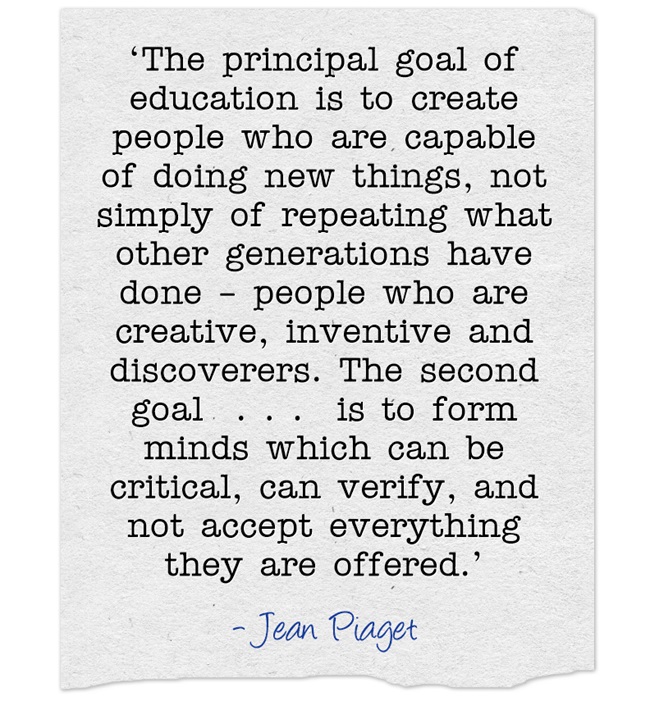
    In the words of Jean Piaget,

    The-principal-goal-of education - Piaget

    I have touched on these aspects of education in previous posts and will definitely do so again in future posts.

    In a tweet Anne Goodwin hinted that she thought I may find this post difficult to write as I have so many options to choose from. Charli Mills thought I might mention how we wrote on slates when I was at school (my children would probably have suggested I write about using dinosaur bones to scratch crude messages in the sand!)

    Instead, I thought about the strategies schools use to create uniformity, and of the many pathways that one may take through life after finishing school.  I hope the analogy makes sense to you.

     teacherbell

    Chocolate balls

    The final school bell tolled and the students erupted from the building like a burst box of chocolate balls, scattering in every direction and at varying speeds. Some stuck together along pathways safe and sure. Others crashed and bumped over roads less traveled seeking excitement, new discoveries and secrets to explore. Others stopped abruptly, their journeys foiled by stubborn obstacles. Still others, rolling upwards, failed to maintain the momentum to carry them over and beyond with those more adventurous others.  

    Who would know?

    Inside the box, they were identical, centers hidden. Outside, their uniqueness was on show.

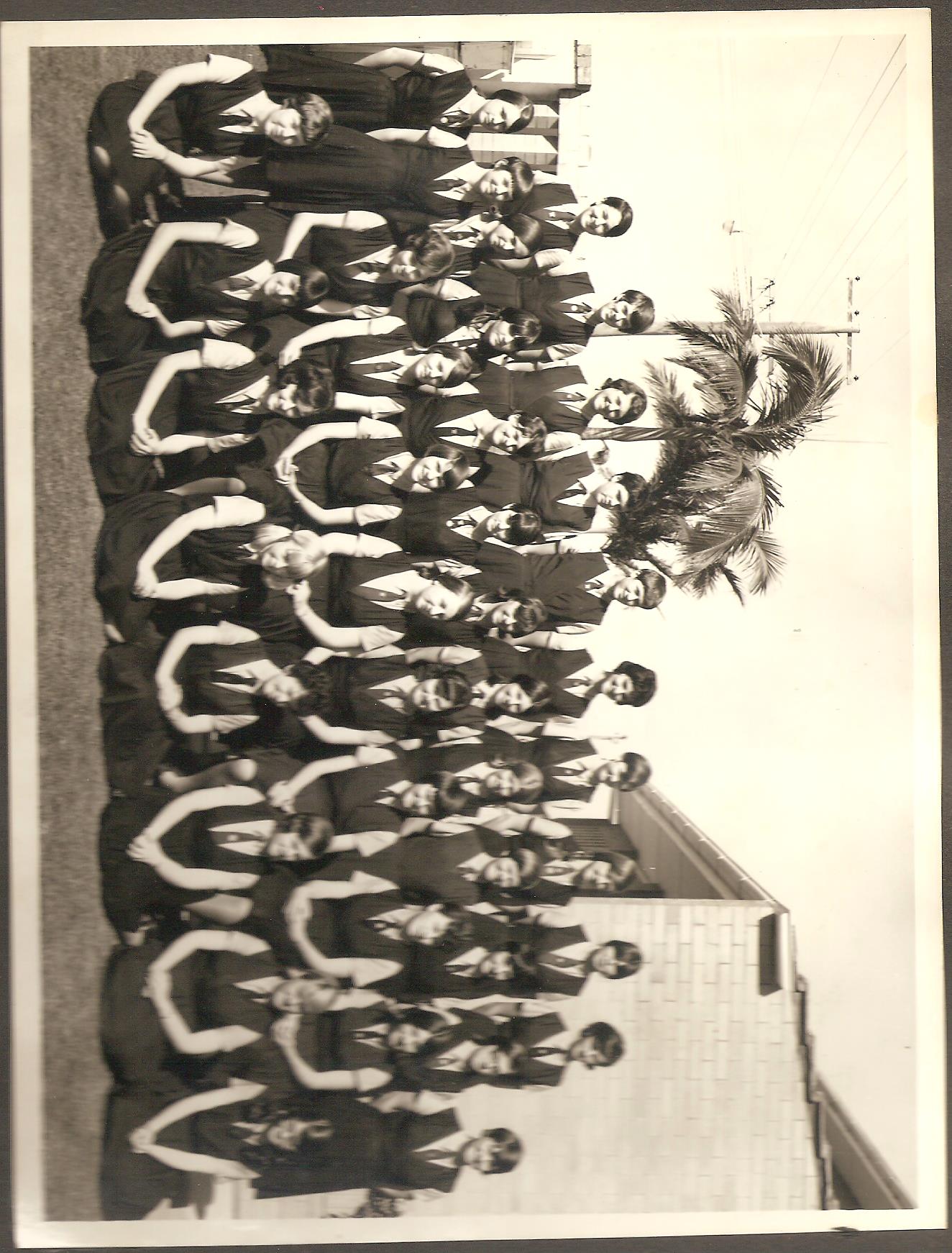
    My year 10 class - only 20 went on to year 12.
    My year 10 class – only 20 went on to year 12.

    I value your feedback. Please share your thoughts about any aspect of this post.

  • Motivation – why we do the things we do

    Over at the Carrot Ranch this week Charli Mills is talking about motivation, specifically the motivation of fictional characters to do the things they do. She explains that ‘motivation can be external–a desire to please, to be found attractive, to be accepted’ or ‘internal–a drive to succeed, a passion to experience adventure, a fear of failure’.

    Motivation is not a new concept to this blog and I have explored it in a number of previous posts.

    stars

    In What did you do that for? Rewards and motivation I discussed the use of extrinsic rewards (such as stickers, awards and cash incentives) for school students; and questioned the authenticity of intrinsic motivation, which ‘is usually related to something of one’s own choice through interest, challenge or purpose’, in an institution at which attendance is compulsory.  I suggested some strategies that teachers may employ to stimulate an intrinsic love of learning.

    why am I doing thiswhat's the point

    Continuing the consideration of the effect of compulsory schooling on a learner’s motivation, the post Why do I have to? explored the use of philosophy as a tool for making the goals of education explicit. All three philosophers: Peter Worley, Michael Hand and Stephen Boulter agreed that if students knew why they were expected to learn certain things, they would be more motivated to do so.

    the examined life

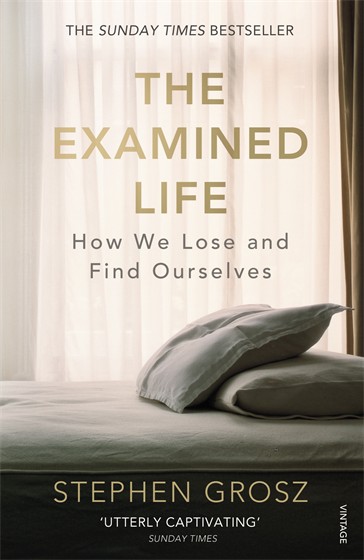
    A discussion of the impact of praise upon a learners’ motivation and achievement was stimulated by reading The Examined Life by Stephen Grosz, a book recommended by Anne Goodwin.  The Post Seeking praise – Stephen Grosz revisited explored Grosz’s suggestion that praise could cause a loss of competence, especially if children were being praised for being clever. Responses to the post, including a guest post by Anne Goodwin, added greater depth to the discussion.

    Other ideas about motivation abound.

    https://openclipart.org/image/800px/svg_to_png/59389/happy_sun_gm.png
    https://openclipart.org/image/800px/svg_to_png/59389/happy_sun_gm.png

    Shelley Wilson’s blog Live every day with intention,  which promises to inspire and motivate you (‘A motivational blog about living life to the full, writing, reading and feeling inspired to follow your dreams’) is the basis of her new book ‘How I changed my life’.

    In this TED talk The puzzle of motivation, Dan Pink explains that the value of intrinsic motivation is a scientific fact. While the focus of his talk is the business world, the findings are equally relevant to education. He says that external rewards may work in limited situations but that they often impede creativity. He says that ‘the secret to high performance isn’t rewards and punishments, but that unseen intrinsic drive – the drive to do things for their own sake. The drive to do things because they matter.

    Which brings me back to my motivation for writing this post and sharing these thoughts: Charli’s post, mentioned at the beginning of this article, was an introduction to her flash fiction prompt to In 99 words (no more, no less) show the underlying motivation of a character.

    My motivations for engaging with the flash fiction challenges set by Charli are both intrinsic and extrinsic:

    I enjoy:

    • the dual challenges of writing to a prompt with a clearly defined word count;
    • the opportunity of writing fiction;
    • exploring the application of Charli’s prompt, however tenuous, to education;
    • the camaraderie of the fellow writers and the opportunity to read and comment on their posts and flash fiction pieces; and

    I appreciate the feedback, support and encouragement I receive in response to my writing.

    In her prompt, Charli suggested that the character ‘may not even understand the motivation fully, but (that I should) let the reader grasp it.’ I have written two pieces in response to this prompt. I hope you enjoy them, and get an inkling of what motivates the characters.


    More than numbers

    The more he stared at the numbers the less sense they made.

    They swirled and blurred. He just didn’t get it.

    “Numbers don’t lie,” they’d admonished.

    “But they don’t tell either,” he’d thought.

    The hollowness left when all he knew had been extracted could not be filled with the smorgasbord of numbers loaded on the page.

    The richness of lives reduced to mere squiggles.

    “This is what’s important,” they’d said, fingers drumming tables of data.

    With heaviness of heart he closed the book and walked away.

    “They are not even numbers,” he thought. “If they were numbers, they’d count!”


    More than words

    “More!” they implored.

    She surveyed their eager faces then glanced at the clock.

    “Just one more?”

    “Okay. Just one more.”

    Before she could choose, a book landed in her lap.

    “This one,” he said.

    “Yes,” they chorused. “It’s a good one!”

    She smiled agreement, then started to read.

    They joined in, remembering, anticipating.

    She turned the page.

    “Wait!” he said. “Go back.”

    “Did you see that?” He pointed to the page.

    “But look what he’s doing,” someone else chimed in.

    They all laughed.

    The shared joy of a beloved book. Each time the same. Each time a little more.

    Thank_you_pinned_note

    Thank you for reading. I do appreciate your feedback. Please share your thoughts about any aspect of this post or my flash fiction pieces.

  • What would happen if . . . ?

    The message of this video alone provides reason enough to ensure children are provided opportunities to question, be creative and think critically.

    Listen to Nikolai Begg convince you!

    Enjoy!