Live Love Laugh Learn … Create the possibilities

Tag: Compassion

  • What the world needs now

    This week at the Carrot Ranch Charli Mills is talking about needs. She questions why necessities sometimes feel like luxuries and why basic necessities, such as drinking water and access to a bathroom, incur a fee. While she is temporarily homeless, she is seeing first hand some of the ongoing difficulties of others faced with long-term homelessness. Surely to be treated with some compassion and afforded the dignity of respect is equally a basic human need and a right.

    what do living things need

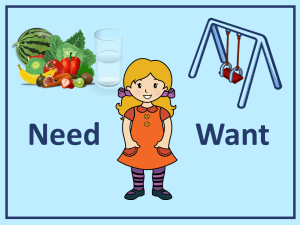
    Young children begin to learn about needs when they start caring for plants and animals. In science they learn about the needs of living things and how those needs are met. It is not long before they start to learn about the differences between a need and a want. This understanding, and acceptance, can take a long time to develop. Some never develop it.

    need want

    Perhaps if there was a greater understanding of the difference between a need and a want, the gap between those who have much and those who have little would decrease. But perhaps not. While there is little increase to basic needs over time, the wants increase exponentially; and the more one has, the more one wants.

    If it is difficult for adults to distinguish between needs, wants and must haves, imagine how much more difficult it is for young children. It is possibly even more difficult for young children in an age with frequent replacement of one model for another, one gadget and one gimmick for another; the latest is always the best.

    This difficulty is the focus of my flash fiction response to Charli’s challenge to in 99 words (no more, no less) write a story that explores human needs.

    The latest thingamajig

    “But Mum, I need it. Everyone’s got one.”

    “Who?”

    “Marco; and Christopher; and … everybody!”

    Mum pictured their big houses and flashy cars.

    “Has Yin got one?”

    “No.”

    “Amir?”

    “No.”

    “Why do you want it?”

    “They won’t play with me if I don’t have one.”

    “Who?”

    “Marco and Christopher.

    “I thought Yin and Amir were your friends.”

    “But Marco and Christopher are cool.”

    “And you want to be cool like Marco and Christopher?”

    His eyes flickered.

    “Will you still be cool when they get the next best thing? What about Yin and Amir? Will they still be your friends?”

    ####

    In a recent post Home is where the start is, I wrote about the importance of the early years to a child’s development. I suggested that it is difficult to regain what is missed in those early years. However, as Sarah Brentyn who blogs at Lemon Shark said: it may be difficult, but not impossible to make improvements. Sarah was concerned that parents may not make an effort if they thought it was too late. I agree with Sarah that it is never too late to make improvements. However, it is much more difficult to change established patterns and to make up for lost learning time. Not impossible. Difficult. It is even more difficult for those who have not had their basic needs met.

    An article in the Huffington Post on June 30 compares two boys who were born on the same day in the same town, but will have dramatically different lives. The boys are now five years old. One boy who received a diet of nutrient-rich foods is now at school, making good progress, and has many friends.

    The parents of the other boy were too poor to do the same for their child. He now suffers from chronic malnutrition, or “stunting”, which affects growth, strength of the immune system, and brain function. According to the article, 1 in 4 children worldwide suffer from chronic malnutrition. The statistics reported in the article are quite confronting, and challenge a privileged view of needs and wants.

    After reading the article, it is with some embarrassment that I now admit to a need to be away from the blogosphere for the next few weeks. I will be back intermittently to read and respond to your comments. I apologise in advance for any delay in doing so. Please know that I do enjoy our conversations and appreciate your comments. I will be back to respond to you as soon as I can.

    Thank you

    Thank you for reading. I appreciate your feedback. Please share your thoughts.

  • Home is where the start is

    © Norah Colvin
    © Norah Colvin

    Early childhood years, from 0-8, are the formative years. It is during these years that most is learned. Children learn about the world through their explorations. They learn about themselves through the responses they receive from others, and learn about others through these responses also. Attitudes to most things begin in the home.

    Children require warm, nurturing, positive relationships that demonstrate the way life should be lived, in actions, not just words. As Anne Goodwin, former psychologist says, the interactions with significant adults will greatly influence the adult that the child becomes.

    If home is where it starts, then we can’t wait until the children are of school age. By then it’s too late. It is relatively undisputed that it is difficult for children to catch up what may have been missed in those early years. Sadly, much of the intense formal work in school does more to alienate these children further, rather than improve their opportunities for learning.

    Therefore, we must begin in the home, and I don’t mean with formal structured programs. I mean with fun activities that validate parents and children and provide them with opportunities and suggestions for participation and learning.

    Guiding parents in play sessions for parents and children.
    Guiding parents in play sessions for parents and children. © Norah Colvin

    It is these beliefs that informed my home-based business Create-a-way,

    © Norah Colvin
    © Norah Colvin

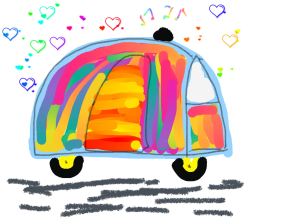
    and my idea for an early learning caravan that, staffed with an early childhood educator, would

    •  go to the parents and children in their neighbourhoods, meeting in a local park or community greenspace, on regular weekly occasions;
    • invite parents to talk with, read to and play with their children using provided books, games and toys;
    • model positive parenting behaviour, explaining to parents the benefits to their children of engaging with them in activities and discussions;
    • provide suggestions for inexpensive and easy activities to do at home;
    • encourage borrowing from a book and toy library.

    Of course, for many parents, such as those reading this post, nurturing a child’s development is almost second nature. They have the education and resources, and a belief in the benefits, to empower them to nurture their children’s development. They require little additional support.

    Requiring most support are those without the benefits of education, resources or a belief that life could be improved. If all they have experienced through school systems is failure and rejection, they will have difficulty in perceiving any purpose in trying. It is these parents and their children that we need to reach. If they feel valued, they in turn may find value in others. If we improve the lives of those marginalised by poverty or lack of education, it must contribute to improving our society, and our world, in general. This will help us to feel safe in our homes, in our localities and in the wider world.

    This week at the Carrot Ranch, Charli Mills is talking about homes and the importance of having a roof over our heads. The way we treat each other, especially those hurting, indicates there is a greater need for compassion and for those in need to receive a helping a hand.

    In my response to Charli’s flash fiction challenge to In 99 words (no more, no less) write a story about home, I attempt to show that the situation in which one is raised is not always a self-fulfilling prophecy. Out of the cruellest situations, hope can be born. We, as a society, need to do what we can to give hope to many more, to help break the cycle of despair.

    81

    The birth of Hope

    Startled by the blueness of eyes and the intensity of unfamiliar feelings, she suddenly relaxed, as if finally, home.

    She’d not known home before: not locked in a room with hunger the only companion; not shivering through winters, barefoot and coatless; not showered with harsh words and punishments.

    She’d sought it elsewhere, mistaking attention for something more. When pregnancy ensued; he absconded. They kicked her out.

    Somehow she’d found a place to endure the inconvenience. Once it was out, she’d be gone.

    But now, feeling unexpectedly connected and purposeful, she glimpsed something different —a new start, lives entwined: home.

    Thank you

    Thank you for reading. I appreciate your feedback. Please share your thoughts.

  • You’d have to be mad!

    That is, as in M.A.D. — Making a Difference.

    I love to hear of children being involved in projects that help others, that aim to make a difference to the world. I have previously written about some of those projects here, here, and here.  Sarah Brentyn, who blogs at Lemon Shark, often shares about the wonderful ways in which she and her boys are making a positive difference in their community.

    This week I read about the M.A.D. projects of Canadian teacher Peter Cameron (a.k.a. Mr. C) and his students. At the beginning of the school year Mr. C challenged his students with the question, What will you do to make a difference? The projects, which were selected, organised, and conducted by the students, were recently completed. They included things such as:

    • Helping others on snowy days by shovelling driveways
    • Helping parents, grandparents, and great grandparents
    • Giving compliments
    • Supporting Doctors Without Borders
    • Helping the elderly
    • Helping at the Humane Society
    • Keeping their school tidy
    • Assisting the homeless by collecting socks, making supper, and hot chocolate
    • Encouraging kids to eat healthy, and to spend more time outdoors.
    • You can see a celebration of their projects in this video.

    Mr. C. said that it was one of the most rewarding aspects of his 20+ years teaching career. The acknowledgement received from their member of parliament in the Canadian House of Commons, and his encouragement for others to join in, further affirmed the merit of the project.

    Now Mr C. is reaching out to other classes around the world to join in with their M.A.D. projects and form a Global Make a Difference Team in which participants complete a M.A.D Project to help make our world an even better, happier, healthier place to live”.  Their goal is to have 100+ classes join in. Will yours be one of them?

    To make it easy, Mr. C is making available to teachers all of his resources which may be modified to suit individual classes and situations. He says,

    “The goal is simple: challenge your school, class, clubs and individual or groups of students to make a difference and see where it takes them! Be sure to let us know that your school/class will be participating and fill in the form to add your class to our M.A.D map!”

    Places on the map are so far confined to North America. How wonderful it would be for locations to be added from all around the world. Children would see not only the differences they are making in their own communities, but also the positive actions of others around the world, which may in turn, inspire further projects.

    Be sure to let us know of other projects that involve children in making a difference. I know there are many, some conducted by organisations, and others by individuals and families. They are what give us hope for the future.

    Thank you

    Thank you for reading. I appreciate your feedback. Please share your thoughts.


  • Carrot Ranch in Crisis

    For more than two years now I have been participating in the weekly flash fiction challenge set by Charli Mills at the Carrot Ranch. As well as the challenge, I enjoy the camaraderie and support from other writers, especially Charli who ropes us in with her prompts and encouragement.
    For the last little while I have been posting my flash fiction responses on Tuesday evenings, just scraping in before Charli’s deadline. But not tonight. Tonight I am sharing Charli’s post, the post that would normally include a flash fiction prompt, but instead this time included a plea for help. Charli is in crisis mode, kicked out of home and in transit.
    Often when friends are in need we can lend a hand by cooking a meal, offering a bed for the night, assisting with chores, and listening. But when that friend is over 12,000 kilometres away, helping out is not such an easy thing. For that reason, this evening I am sharing Charli’s post. Maybe one of you is able to help her out in her time of need.
    Thank you for reading. As always, I appreciate your feedback.

  • A garden party

    www.openclipart.org
    http://www.openclipart.org

    The purposes of education are many; but perhaps one important purpose of “free” public schooling is to ensure that everyone is provided with the opportunity of being educated. While this goal is achieved to a certain extent, inequalities of opportunity still exist, many of which are related to socioeconomic status (SES).

    letter from Camus

    While there is no doubt that a teacher can have a powerful effect upon the lives of students and any teacher would love to receive a letter such as that written by Albert Camus, socioeconomic status is often considered to be the most reliable predictor of success in school and, therefore, in life. There are many reasons for this, few of which have anything to do with intelligence.

    www.openclipart.com
    http://www.openclipart.com

    According to Macquarie University the majority of students in tertiary education are of mid to high socioeconomic status. The parents of these students may have professional backgrounds and may have attended tertiary institutions themselves.  Most have an appreciation of the benefits of higher education and are able to continue supporting their students, to some extent, while they study.

    While students of lower SES are attending tertiary institutions in greater numbers they are disadvantaged in doing so by a number of factors, primarily financial in origin. Although Australia is supposedly free of class distinctions, attitudes towards those from lower SES areas are often demeaning and unsympathetic. Students from these areas may battle to develop the self-esteem that seems to be a birthright for others from more privileged backgrounds. The negativism with which they are viewed, and some come to view themselves, can become a self-fulfilling prophecy.

    Ready for school - year 2
    Ready for school – year 2

    I was a fortunate one for, while I grew up in a family with low SES background, my parents saw the value in education and sacrificed much for their children to have the opportunities it provided. The high costs of tertiary education that are now incurred could not have been afforded, but I achieved well enough in school to obtain a scholarship to teachers’ college and a three-year bond (guaranteed employment) when that was finished.

    Nowadays there is no such thing as guaranteed employment and few scholarships. Many families cannot afford to have post-secondary/adult students continue to live at home and not contribute to expenses while they undertake further study. This means that students have the additional burden of working while they are studying. Many opt out of study altogether to seek long term employment, often in low paying jobs with little opportunity for advancement. And so the cycle continues. The lack of permanent employment even for graduates makes deferring earnings less desirable again.

    caravan

    Of course the disadvantage doesn’t just begin when approaching final years of school. The impacts can be observed from the earliest age. (My suggestion for an early learning caravan addresses this in part.) Although education is provided “free” to students, there are many other associated costs that families may struggle to meet, such as books, equipment, and extra-curricular activities such as excursions and incursions.

    In most Australian schools, the wearing of uniforms helps to minimize differences that may otherwise be obvious by choices of clothing and footwear. It also helps to reduce costs. Sometimes additional activities can be a drain on family expenses, and while many schools will fund expenses for those in need, not all families are willing to ask for that help.

    DCF 1.0

    Studies have shown that many children arrive at school without having eaten breakfast. While this phenomenon can occur in any family, it is more prevalent in low SES areas. Some schools are now providing a healthy breakfast for students when they arrive at school. I think this great as hungry children tend to have difficulty concentrating and learning, are often lethargic and may suffer from mood swings and negative attitudes. I know how irritated I become when I am hungry. My family “joke” about not getting in the way of me and my food! How much worse for children who come to school with empty bellies.

    Of course these issues are compounded for children who live in dysfunctional families. As much as we may try to be inclusive and equitable in the way we treat them, these students are often the ones who notice their differences and inadequacies and become most self-critical. It can be a very difficult task to change the attitudes and habits of generations.

    This week at the Carrot Ranch Charli Mills talked about attending a garden party. The hosts and guests at this party had obviously enjoyed some of the finer things that life reserves for a few.

    lake-pend-oreile-cruise-may-21-31

    Charli shared a photo of a rather idyllic spot on an island and challenged writers to In 99 words (no more, no less) write a story, using the above photo as a prompt.

    Well the photo is beautiful, but I couldn’t get away, I was stuck at the garden party. I thought it was a wonderful analogy for the rewards that can be had from an education; rewards that may be obvious and perhaps available to many, but rewards that may be out of reach to others because of circumstances over which they have no real control. I thought of Marnie who suffers the double disadvantage of a dysfunctional family in a low SES area; but who knows there is something better out there and wants it for herself.

    Thanks to Charli for her prompt, here is another episode from Marnie’s life. I hope you enjoy it.

    The garden party

    Marnie’s face pressed into the bars of the tall white gate with amazement: white-covered tables laden with food; chairs with white bows; white streamers and balloons; and a band!

    But the ladies had her spellbound with elegant dresses and high, high heels; flowers in their hair and bright painted lips.

    A man in uniform opened the gate to guests arriving in limousines. Marnie followed.

    “Not you, Miss,” said the uniformed man.

    Marnie held out her invitation, “Jasmine . . .”

    But he’d closed the gate and turned away.

    Marnie looked down at her stained dress. What was she thinking?

    Thank you

    Thank you for reading. I appreciate your feedback. Please share your thoughts about any aspect of this post or flash fiction.

  • Stop bullying now!

    No bullies allowed2

    Today all across Australia children, teachers and other school personnel are dressing in orange to mark the National Day of Action against Bullying and Violence. The Bullying No Way! Program aims to

    “create learning environments where every student and school community member is safe, supported, respected and valued”

    A very worthwhile goal, I’m sure you’ll agree.

    The Bullying No Way website has resources for parents, teachers and students, including this video for young children:

    The Prime Minister Tony Abbott delivered a message to children telling them that there is no place for bullying in Australia, that bullying is wrong.  I definitely agree!

    Picture1

    Last month Yvonne Spence organized a very successful #1000 Speak for Compassion campaign. This month she has placed the focus on bullying and requested bloggers to unite their voices against bullying. You can join in by visiting the Facebook page. I have already linked my most recent post Bully for you! as well as this one. There are many others there to read.

    Last week Charli Mills extended a challenge to write a flash fiction story about bullies. She has compiled the wonderful stories in her post Circling the Bullies.

    My previous post, Bully for you! received many comments, some sharing experiences of bullying, either of themselves or someone close to them. One comment was from a new visitor to my blog Sherrill S Cannon who shared information about her books dealing with bullying for children, and also explained her involvement with I’m bully free.org to which she donates 50% of the revenue from her books purchased through that page.

    There are many other organizations that promote information about and actions against bullying worldwide.  Hopefully as more voices unite in making others aware of, and in speaking out against bullying, we can come close to eradicating it from our society.

    As Michelle James commented on my previous post

    “More needs to be done to prevent bullying. I really believe that there should be more intensive courses for teachers and administrators to learn to deal with the bully issue. We will never eradicate bullying completely. It is a tactic used by despots and terrorists, and sadly, they seem to thrive.”

    Many of the comments on the post last week were in relation to the bullying incident involving Marnie. I share her story again here in case you missed it:

    Not funny at all!

    Jasmine and Georgie rushed towards the cluster of children who were laughing hysterically at something unseen. They expected to see an entertainer performing magic tricks. Instead they saw Marnie, face down in a puddle, reaching for her unicorn; sobbing.

    “Good one, Brucie!” Two boys high-5ed. Another called, “Way to go!”

    The children stood transfixed by the spectacle. Jasmine pushed through. She picked up the muddied unicorn, stretched out a hand to help Marnie up, then put an arm around her waist,

    As she led Marnie away Jasmine glared at the group of disbelieving faces.

    “Shame on you,” she said*.

    *Thanks to Donna Marie for suggesting I change “mouthed” to “said”.

    In this piece I tried to show that there may be many participants in bullying, not just the obvious “victim” and “bully”.

    Marnie is the obvious victim. But there were many onlookers. None, except Jasmine, spoke up against the bully. By their silence were they condoning it? Or were they fearful that they would be the next targets if they said anything? Does that also make them victims? How does that affect their confidence and self-image?

    Brucie was the obvious bully, causing Marnie’s embarrassment. But what of the boys who applauded with their high-5s and words of encouragement? Were they joining in because they too were mean; part of a gang of bullies? Or like the other onlookers, did they feel threatened about what may happen to them if they didn’t join in?

    But is Brucie also a victim? What makes a bully a bully? Why did he pick on the vulnerable? What in his life caused him to act this way?

    And what of Georgie who stood back in the crowd and did nothing while her friend Jasmine went to Marnie’s rescue? Why was she reticent to support her friend?

    I wonder, too, what they all said when they turned away. Did they speak out in private about the bullies? Geoff Le Pard commented on a similar lack of support for him when he was bullied at school.

    Jasmine was the only one who came to her rescue? Why did she? How was she feeling? Had she been the victim of bullying and so felt empathy with Marnie? Did she just know it was wrong and that it was important for someone to take a stand? What had happened in her life to make her so strong?

    Donna Marie of Writer’s Side Up commented how being bullied had ruined her boyfriend’s life and suggested that more needs to be done to change the bully’s behaviour. Perhaps some bullies need protection from bullies themselves. Did they need to learn the behaviour somewhere?

    https://openclipart.org/detail/205654/Angry%20Smiley
    https://openclipart.org/detail/205654/Angry%20Smiley
    https://openclipart.org/detail/213515/Emoticon%20-%20tongue
    https://openclipart.org/detail/213515/Emoticon%20-%20tongue

    The word bullying is sometimes used to describe a one-off unpleasant incident, like poking out a tongue or showing the “rude” finger. However bullying usually refers to something more ongoing, where there is an imbalance of power, the “stronger” picking on the “weaker”.

    To avoid becoming the weaker, I think children need to develop resilience. They need to realise that just because somebody says it doesn’t make it true. They need to learn to take responsibility for their feelings, realise that they can choose to feel upset or choose to ignore it. I am in no way saying they should ignore aggressive, violent, intimidating behaviour, but learning to be resilient about the little things helps to develop strength of character.

    I think we would probably all agree that bullying is a complex issue with many facets. That education is required to reduce its incidence is a given. What do you think?

    Thank you

    Thank you for reading. I appreciate your feedback. Please share your thoughts about any aspect of this post.


  • Bully for you!

    No bullies allowed

    Everybody knows what a bully is. If you have never experienced bullying of some kind on a personal level, then you are probably pretty lucky. But you have possibly witnessed, or were at least aware of, bullying at school, in the community, or in the workplace, maybe even at home.

    https://openclipart.org/detail/27915/Thug
    https://openclipart.org/detail/27915/Thug

    Bullies feature strongly in traditional fairy tales such as the stepmother and stepsisters in Cinderella and the mean Rumpelstiltskin in the story of the same name. Roald Dahl also introduced us to bullies through Veruca Salt in Charlie and the Chocolate Factory and Mr and Mrs Twit in The Twits.

    The first picture books I think of when the topic of bullying is raised are Anthony Browne’s Willy the Wimp and Willy and Hugh. They are great to read and use to stimulate discussion of bullying with young children. In this video author Anthony Browne explains that most children recognize a little of themselves in Willy. The transformation from timidity to self-confidence appears achievable and encouraging to all.

    The opposite of being a bully is being kind. This article by Kari Kubiszyn Kampakis, Raising a Kind Daughter tells a heart-warming story of selfless kindness shown by a daughter and her mother. As was commented on in many posts about compassion, including this one, modelling is the best way of teaching children attitudes and behaviours we wish them to learn.

    This week at the Carrot Ranch, Charli Mills has challenged writers to In 99 words (no more, no less) write a story that shows the bully mentality countered with a different, unexpected or kind action.

    Over the past year while I have been engaging with Charli’s flash fiction challenges, I have been developing a character, Marnie, who is definitely no stranger to bullying. Each of Charli’s prompts encourages me to think a little more about Marnie, what may have occurred in her life, and what her responses would be. While I sometimes write about other things, I could not ignore Marnie with this prompt.

    This is what we already know about Marnie,

    as a child:

    • she has a dysfunctional family
    • she suffers physical and emotional abuse, including neglect, from both parents
    • she has a toy unicorn as a comforter
    • she finds the expectations of school challenging
    • she feels alone and excluded at school with few friends
    • she gains the support of one teacher who helps her to develop more self-confidence

    as a teenager:

    • the teacher continues to support her
    • she leaves home and breaks contact with her family

    as an adult:

    • when both her parents have passed she is contacted and returns to the family home, which she sells, relieved that there is no longer any chance of abuse such as occurred in her childhood

    There are still many gaps and unknowns which I am hoping to explore in more detail in the future. In a recent discussion with Charli, I commented that each time I write about Marnie she reveals a little more, in much the same way as she would reveal herself to a new friend or a therapist. I’m thinking she may need to talk to a therapist at some stage. I might need to see who, and what, Anne Goodwin would recommend!

    I hope that somewhere in her life, Marnie has a friend like Annie, described in the article by Kari Kubiszyn Kampakis. Maybe it is Jasmine who we have already met in a previous episode, which also touched on a situation which may have involved bullying. Please let me know what you think.


    https://openclipart.org/detail/117199/Friendship
    https://openclipart.org/detail/117199/Friendship

    Not funny at all!

    Jasmine and Georgie rushed towards the cluster of children who were laughing hysterically at something unseen. They expected to see an entertainer performing magic tricks. Instead they saw Marnie, face down in a puddle, reaching for her unicorn; sobbing.

    “Good one, Brucie!” Two boys high-5ed. Another called, “Way to go!”

    The children stood transfixed by the spectacle. Jasmine pushed through. She picked up the muddied unicorn, stretched out a hand to help Marnie up, then put an arm around her waist,

    As she led Marnie away Jasmine glared at the group of disbelieving faces.

    “Shame on you,” she mouthed.


    Thank you

    Thank you for reading. I appreciate your feedback. Please share your thoughts about any aspect of this post or flash fiction.


  • Who wants five-year old sheep? Bah!

    Who wants five-year old sheep? Bah!

    Recently, thanks to a recommendation by Anne Goodwin, I read a great article on the website of The Writers’ Centre at Norwich. This article is called “Fuelling Creative Minds” and was written by Meg Rosoff. The article is part of The National Conversation about writing reading, publishing and bookselling, or why books matter.

    Rosoff introduced her article by questioning what we consider to be success in life. She discussed a study of 268 men over seventy-five years conducted by George Vaillant who concluded that “warmth of relationships throughout life have the greatest positive impact on ‘life satisfaction‘”.

    Rosoff said that,

    “If you live a happy and fulfilled life, then you die successful. “

    but wondered why, then, “do we persist in measuring success in terms of salaries, job titles and assets?” if they have little real impact on one’s happiness.

    Rosoff suggested that a good place to start thinking about attitudes to success is in school.

    The next part of her article was devoted to attitudes towards success in schools. Rather than provide just an outline of her thoughts, I am quoting them in entirety, as I don’t want to misrepresent her ideas and she says it all so well. While she discusses specifically the situation in the UK, I think many readers will recognise similarities to their own locale. I have highlighted parts that I find particularly noteworthy. I do recommend, however, that you follow the link and read her article in full.

    Excerpt from: “Fuelling Creative Minds” by Meg Rosoff and published by The Writers’ Centre Norwich 1 March 2015

    “In the twenty-first century, educational success is largely determined by the government.  The government puts in place a series of goals that evaluate children as young as three against measures of socialisation, reading proficiency, an understanding of numbers, the ability to answer questions in an acceptable, established manner, and later – during GCSEs and A levels – the ability to pass exams in up to twelve subjects and write essays in a strictly approved fashion.  

    Success in school requires hard work and a competitive approach to study on the part of students – but more to the point, a successful student is one capable of achieving goals as defined by the exam graders, as defined by the government.

    A successful student is one capable of matching learning to this very specific series of goals.

    In other words, a child who reads all day is not a successful student.  A child who writes brilliantly and with a distinctive voice but can’t spell, is a failure. A child who loves history but can’t write an essay in the approved manner, is doomed.  A child who loves stories, who loves to dream, who makes unusual connections, whose brain works in unconventional, peculiar ways – but who can’t multiply 11 x12 – is not a successful student.

    Successful students must sit still and concentrate for long periods of time, temporarily memorise large amounts of information, understand and achieve received goals, think inside the box.  A desire to please and a willingness to conform are key.

    The least successful children in this sausage factory will be branded from the age of five. Children with parents or carers who don’t talk or read to them enough are most likely to fall into this category of early failures. As are dyslexic children.  Or eccentric thinkers. An irregular schedule, disorderly home life and financial instability all interfere with the attainment of ‘success’ as determined by the government.

    Less support at home, fewer books, a less regular schedule, a less orderly home life, less healthy meals, less consistent love – all these economic or emotional disadvantages further condemn the five year old to failure.  Food banks, immigration problems, substance abuse problems, unemployment, parental absence or mental illness – all of these elements interfere with the attainment of ‘success’ as determined by the government.

    I see them when I visit secondary schools – the children branded failures because they can’t get on in school. Because they’re bored, or not very verbal, or not very good at sitting still and taking information in as required in a classroom situation – or the ones who just don’t see why thirteen years of their lives should be spent taking exams they’re not good at, absorbing information in a manner that hasn’t changed much in two hundred years.  ‘Not a student’ is a label that has condemned decades of children to a diminished sense of what they’re capable of in life.  When in fact all it means is, ‘does not thrive within government parameters’.

    Do I buy into the idea that these students are without value?  Of course not.  Put them in a different sort of learning environment or teach them something that stimulates their imaginations and they’ll be fine.  But sit them in a classroom for thirteen years with a series of targets chosen by a government that knows nothing at all about education and they’re doomed.

    In contrast, the most successful children in this whole process of learning and taking exams will get all A*s and go to Oxford or Cambridge, after which they will go on to have what most people consider to be the most successful lives – the best jobs, the highest salaries, large and comfortable and expensive houses and cars.

    And yet.

    In a 2014 book, Excellent Sheep: The Miseducation of the American Elite and the Way to a Meaningful Life, award winning American essayist and educator William Deresiewicz concerned himself with what’s going at the top level of American education.

    ‘Our system of elite education manufactures young people who are smart and talented and driven, yes, but also anxious, timid, and lost, with little intellectual curiosity and a stunted sense of purpose … great at what they’re doing but with no idea why they’re doing it.’

    This was written about Harvard and Yale but applies just as well to elite British universities. Like the highest rated state primary and secondary schools, these institutions take few risks – they admit top performing, highly driven teenagers and turn out graduates with no motive to question the status quo, no motive to question the structure of society or the weight that society puts on a certain kind of success.  

    If you win a beauty contest, you don’t dedicate your life to challenging society’s perceptions of beauty.

    William Deresiewicz continues:

    ‘So extreme are the admission standards now that kids who manage to get into elite colleges have, by definition, never experienced anything but success. The prospect of not being successful terrifies them, disorients them. The cost of falling short, even temporarily, becomes not merely practical, but existential. The result is a violent aversion to risk.’

    All of this is happening at exactly the moment at which the world most needs risk takers: individuals willing and able to retell the story of society in a more positive way.  People willing to take risks with meaningful social and political change. Hardly anyone would disagree that our political system needs changing – free market capitalism has led to terrifying extremes of wealth and poverty.  The pharmaceutical industry needs meaningful change along with the system of drug patents that price simple, inexpensive drugs out of the reach of entire populations whose lives they might save. The legal system favours those with money, as does education, as does housing.  In the meantime, there is little financial motive to stem – or even acknowledge – the devastating effects of global warming.  It is difficult to think of a single aspect of life on earth today that couldn’t do with rigorous deconstruction and rethinking.

    If schools are going to train a better class of political leaders, entrepreneurs, scientists, parents, and social policy-makers, they’re going to have to ask themselves which qualities to promote.  If we require a more compassionate, more radical, less class-riven and self-centered definition of success, where does it begin?

    I would like success to be redefined.  I would like a successful man or woman to be defined as one who thinks creatively and laterally, who questions authority and accepted wisdom, who lives thoughtfully, generously and not entirely for personal gain.  To be successful, I believe, it is important to leave the world a little bit better than you found it.

    How do we do this?  By listening to the wise and enduring voices of our civilization – by encouraging each new generation to read history and philosophy and to think big thoughts – about religion, politics, ethics, love, passion, life and death and the origins of the universe.  The extraordinary imagination of our species – as expressed in poetry and fiction, music, art, dance – might someday spill over into cures for cancer and war and inequality. This will happen not by thinking about what we are, but what we might be.

    A further striving after knowledge and meaning is the proper goal for education.  Everyone doesn’t need to achieve A*s.  But everyone needs to learn how to live a good, creative, questioning life.

    What we don’t need are more five-year-old failures and more excellent sheep. “ 

    Thank you


    Thank you for reading. I always appreciate your thoughts and feedback but, if you have some to share about this article, I’m sure The Writers’ Centre would love to hear them too. If you have time, please copy and paste them over there as well to keep their conversation going.

     

  • #SOL15: Day 5, Reflecting Back

    The themes of emotional intelligence, empathy and compassion have featured frequently on my blog, especially the need for them to be incorporated into classroom practice and taught, particularly through modelling, to children.
    My most recent series of posts about compassion, starting with Who cares anyway? and concluding with Ripples through time, with three more in between, were prompted by the #1000Speak for Compassion Project.
    I thought I was done with that theme for a little while at least, but last night I read a very moving post by Julieanne Harmatz on her blog To Read To Write To Be.
    Julieanne wrote with much emotion and compassion about a child in her class; a child who tears at your heartstrings, (and sometimes makes you want to tear out your hair), a child most teachers will recognise from their practice, a child you wish to be everything to but know that at least if you can be someone who really sees the child within, for a little while, you have done something worthwhile.
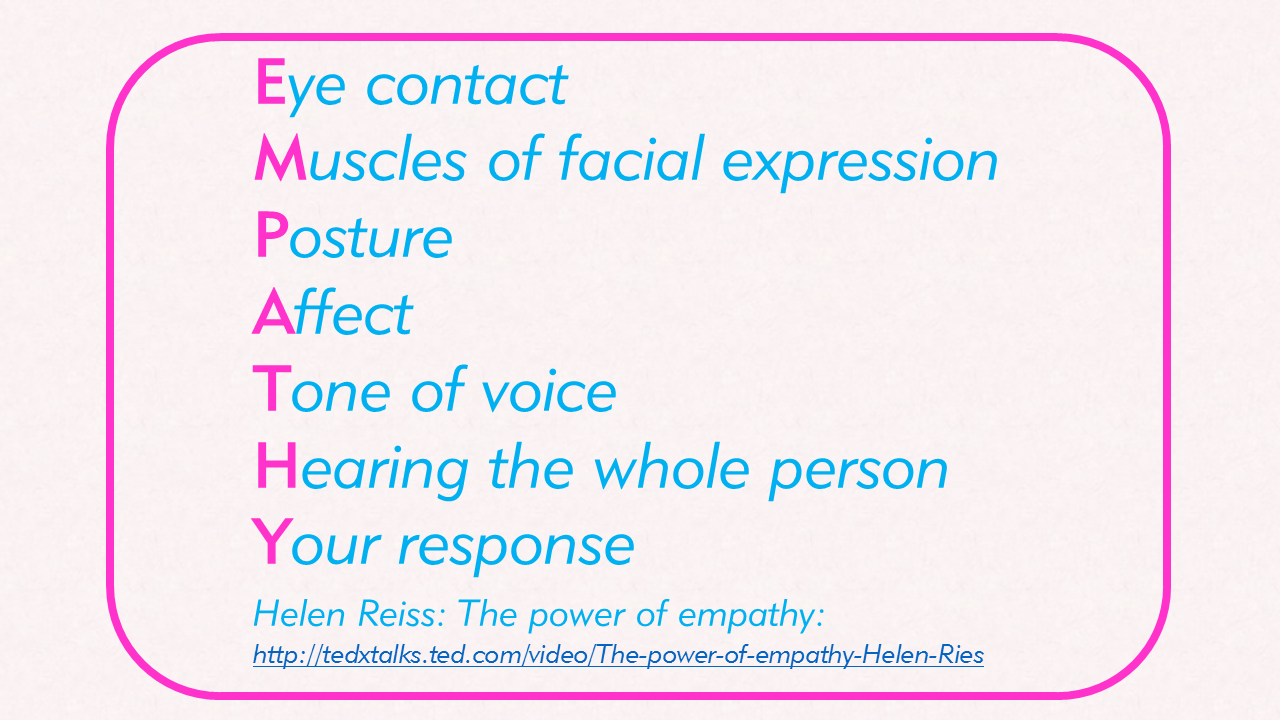
    I urge you to read Julieanne’s story, and watch the TEDxtalk by Helen Riess that Julieanne has embedded in her post. Riess explains what empathy means through this acronym:

    Empathy

    Thank you

    Thank you for reading. Please share your thought about any aspect of this post.

    jarhartz's avatarTo Read To Write To Be

    Magic moments happen in teaching, and they make our hearts soar.

    But, there are moments that can break. Us and our hearts.

    Z is struggling. He lies down on the picnic table outside the room. When we’re all inside, he enters saying, “I don’t want to sit there.” He paces. We look for a place. He settles beside N. Then moves. Again and again. Searching for a spot.

    Sitting is painful. School doesn’t fit, and the discomfort emanates from his being.
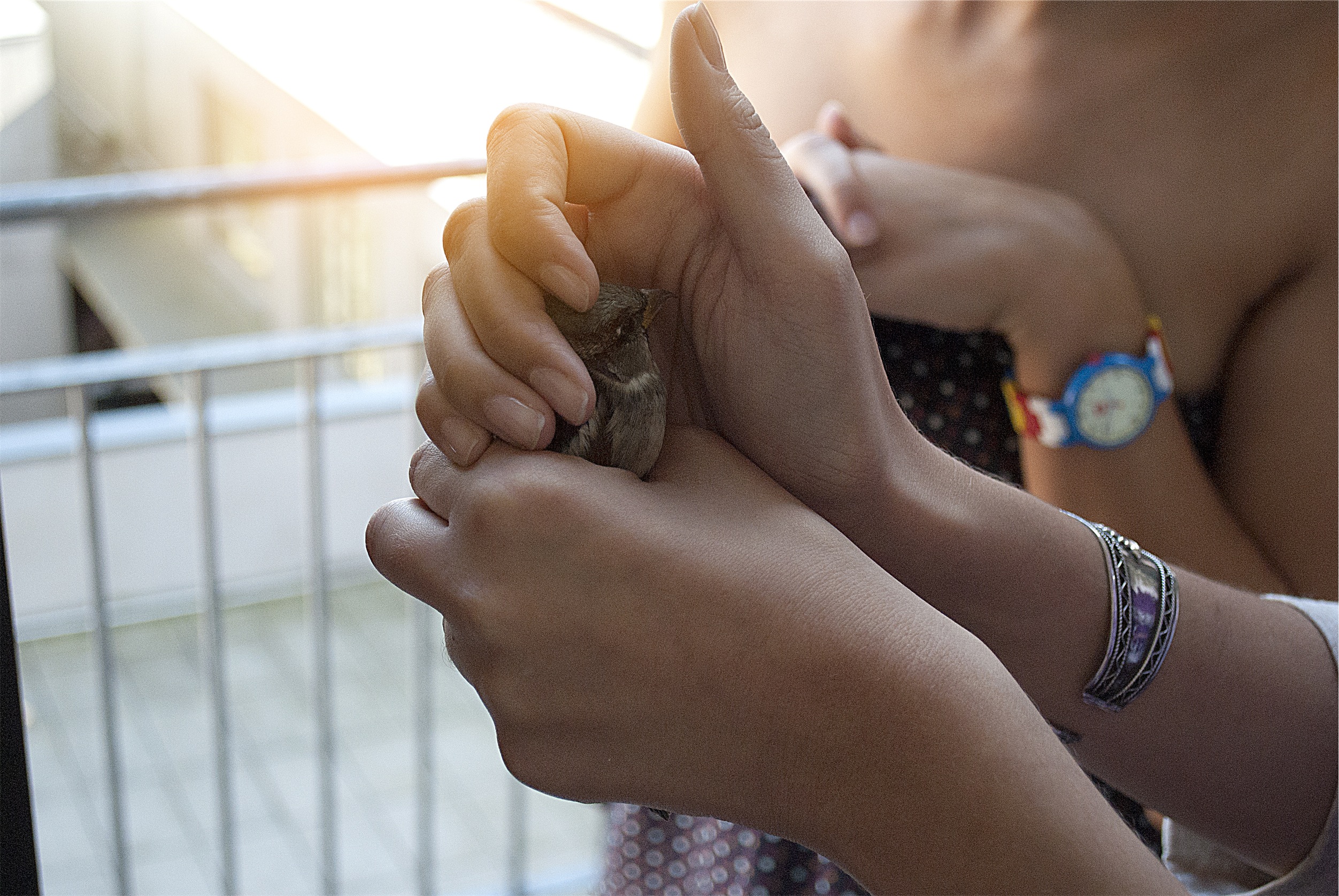
    Someone says something about dads. He blurts, “My dad doesn’t come home no more.”

    Gulp.

    Enter Reading Workshop. Z gets together with his book group they are planning. Z says, “I don’t read at home. I read here, not at home.”

    Later, Z paces in the corner, reading his book, Reading and walking, in circles. This is his way.

    Lunch happens. Z doesn’t eat. He doesn’t want to. Can’t. He just…

    View original post 333 more words

  • How to teach compassion – and why

    During the past few weeks I have been exploring the idea of compassion, along with many others in the blogosphere, in response to the #1000Speak for Compassion project.

    In a TED Talk I shared in a previous post Joan Halifax questioned why, if compassion was so important, didn’t we teach it to children.

    Man-resigning

    That question provided me with a challenge. Indeed I wondered if the question was really fair. The question implied that children were not being taught compassion. And while that assumption may be true for many, it is just as true that many children are being taught to be compassionate – in their homes, in their schools, and in other groups to which they belong. By recognizing the many who do, I in no way wish to indicate that enough is being done. Indeed, much more needs to be done, but let’s not make a sweeping statement that attempts to colour everyone with the same inadequacy in teaching compassion.

    I decided to investigate just what ideas were available for teaching children compassion. I had to look no further than one of my blogging friends for evidence that children are being taught compassion through their daily activities. In a number of posts on her own blog Lemon Shark, and in a number of comments on mine, Sarah Brentyn has described practices that she uses to teach her children to be compassionate by involving them in compassionate acts.

    Some practices that Sarah recommends for developing compassion include things from as simple as using common courtesies and good manners to volunteering and making personal donations to homeless shelters.

    I defy you to read her post 1000 Voices for Compassion without being moved by her generosity and compassion. It tells a beautiful story of compassion in action, a lesson for not only her children, but for all of us.

    In her following post entitled Defining Compassion vs. Compassion in Action Sarah described asking her children what the word “compassion” meant. They weren’t sure how to answer her. But when she asked them to describe something compassionate they had no difficulty coming up with examples – from their own lives. Why? Because from the moment they were born Sarah’s children have been living in a compassionate world. They have been treated compassionately and they have not only had compassionate actions modelled for them, they have been involved in those compassionate actions. I congratulate you Sarah, for inspiring us to be compassionate, and for being a role model for us to emulate.

    Sarah Brentyn = walk the walk

    Looking beyond Sarah’s examples for further suggestions, I came across a number of other articles. Each seemed to reiterate what Sarah had already shared.

    In an article for the Huffington Post Signe Whitson, author and child and adolescent therapist, says that “experts agree that fostering compassion in young people is among the best ways to prevent verbal, physical, and emotional aggression” and shares 8 Ways to Teach Compassion to Kids:

    1. Walk the walk

    “Show young people that anytime is the right time to engage in acts of service and compassion for others.”

    1. Put the Child on the Receiving End of Compassion

    “tending to a child when he is feeling down or under the weather is the best way to teach him how to show compassion to others.”

    1. Talk the Talk

    “talk explicitly about acts of compassion . . . communicate its importance as a prized family value”

    1. Volunteer Your Time

    “When children become actively involved I acts of showing compassion to others, they learn about his value in a very deep and enduring way”

    1. Care for a Pet

    “Children who care for pets learn important values such as responsibility, unconditional love, empathy, and compassion for all living things”

    baby bird

    1. Read All About It

    “Children’s books are great for providing a window into the experiences of others.”

    Whoever you are

    1. Compassion It TM

    Wear a Compassion It band as a daily and “personal reminder to act compassionately towards someone else”

    1. Make a Wish

    The “Make-a-Wish Foundation provides hope, strength, and joy to children with life-threatening medical conditions . . . can have a truly impactful experience of being able to provide tangible help and joy to a peer”

    https://openclipart.org/detail/30019/star-by-nefigcas
    https://openclipart.org/detail/30019/star-by-nefigcas

    Other than the references to the specific organizations, Compassion it and Make a Wish Foundation, the suggestions are things that have been discussed before in various posts about compassion, including Sarah’s.

    Like Sarah, Whitson believes that it is the accumulation of little everyday actions that make a difference. She states that, as a bullying prevention trainer, she considers “big” solutions — such as policies, procedures, and trainings are trumped each and every day by the seemingly little, yet extraordinarily powerful, acts of compassion and kindness that adults show to the young people in their lives.”

    In her article about How to Instill Compassion in Children Marilyn Price-Mitchell agreed about the importance of teaching compassion, saying that  “children who participate in programs that teach kindness, respect, empathy, and compassion and who have families that reinforce those strengths at home develop the muscles they need to become civically-engaged adolescents and adults.”

    Price-Mitchell suggested that parents could help teach their children compassion by providing opportunities to practice compassion, by helping children understand and cope with anger, and by teaching  children to self-regulate.

    https://openclipart.org/image/800px/svg_to_png/192642/Children_holding_hands.png
    https://openclipart.org/image/800px/svg_to_png/192642/Children_holding_hands.png

    Jane Meredith Adams, in her article Raising a Compassionate Child says that “children have an inborn capacity for compassion … they naturally identify with stuffed animals, other kids, pets, and underdogs. The tricky part is that their empathy must compete with other developmental forces, including limited impulse control – which makes them pull the cat’s tail – and their belief that their needs absolutely must come first – which makes it hard for them to let their cousin push the col fire truck.”

    Adams says that teaching compassion is “part of day-to-day life: how you answer your child’s questions, how you solve conflict at the park, how you nudge his or her growing capacity to understand and think about other people.” Adams suggests to Promote sweetness” every day by showing children how to be gentle to others, by speaking to them softly, by rejecting rudeness, and by saying sorry when you have made a mistake. I think Sarah would agree with all of those.

    Similar ideas are proposed by  Kim McConnell, and Leticia of techsavvymama who sums it all up nicely with these suggestions:

    • Model the kinds of behaviour we expect
    • Exercise patience
    • Listen to our kids
    • Teach resiliency by providing strategies, and
    • Use quality educational content to reinforce the concept (e.g. books, DVDs and downloadable material)

    I’m sure that many of these suggestions are familiar to you through your own personal experiences, either when growing up or as an adult. I think what my exploration of this topic shows me is that, while it may be useful to teach about compassion in schools, children really only learn to be compassionate if they are treated compassionately and have compassion modeled for them, if it is an integral part of their everyday lives.

    What do you think?

    Thank you

    Thank you for reading. I appreciate your feedback. Please share your thoughts about any aspect of this post.