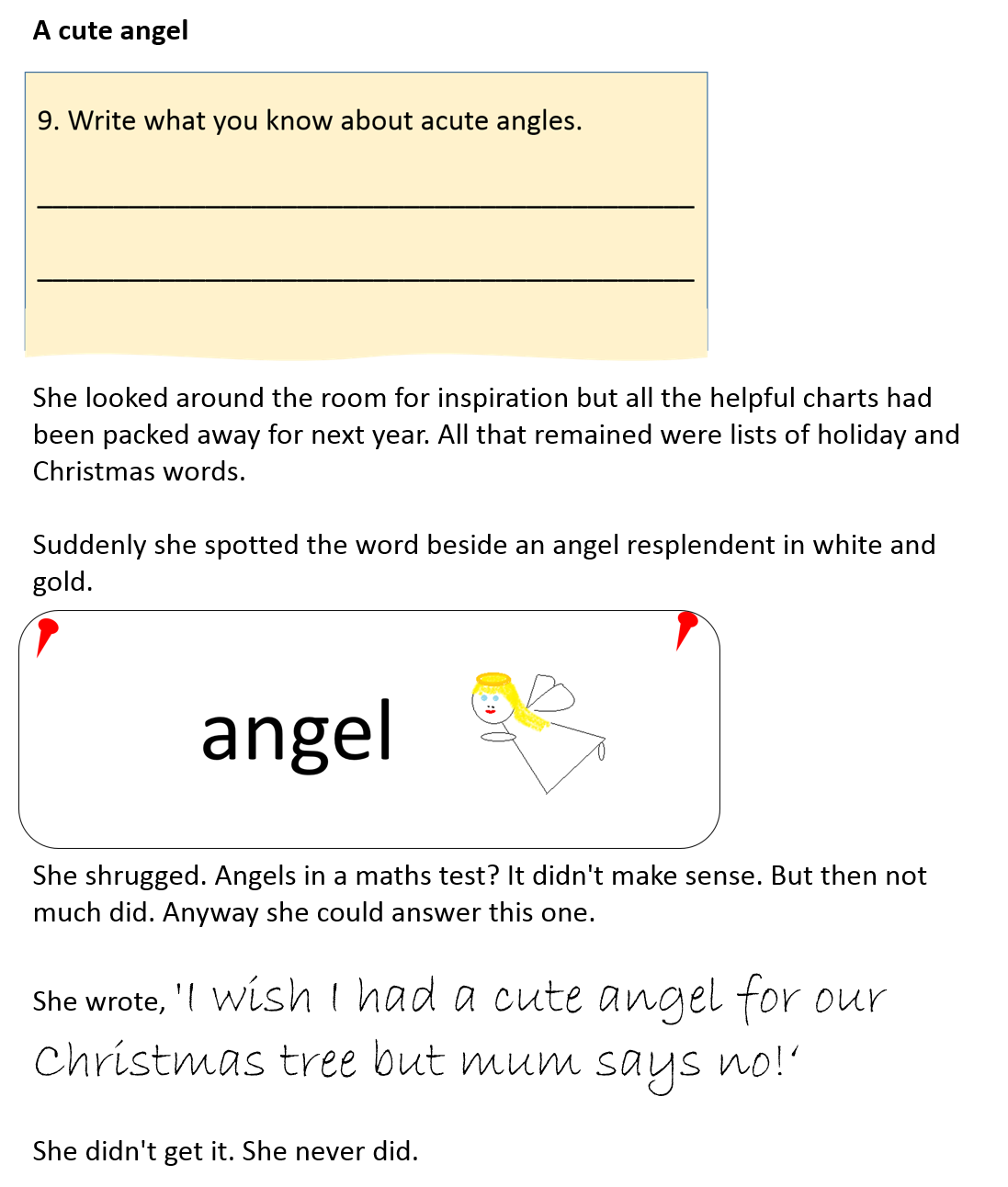
Usually I include my responses to Charli’s prompts in longer posts sharing some thoughts about education.
This week I’m going to leave it as a stand-alone, without the padding I usually provide. I am hopeful that the educational issues I have alluded to will be as obvious to you as they are to me. I’d love to know what you think.
Thanks for reading. I appreciate your feedback. Please share your thoughts about this flash and what you consider its message to be.
But it is summertime in Australia and Christmas is just around the corner.
While we enjoy warm days at the beach and in the pool, picnics in the park and barbecues in the back yard, hoping the big storm doesn’t get us this time (like the one that hit Brisbane on 27 November); those from whom we have inherited our Christmas traditions are cooling down in the Northern Hemisphere, many looking forward to a (not too) white Christmas.
Shops here are playing traditional (northern) carols with snow, sleighbells and mistletoe; decorations are tinged with fake snow and cards show snowy scenes with families huddled around the fireplace.
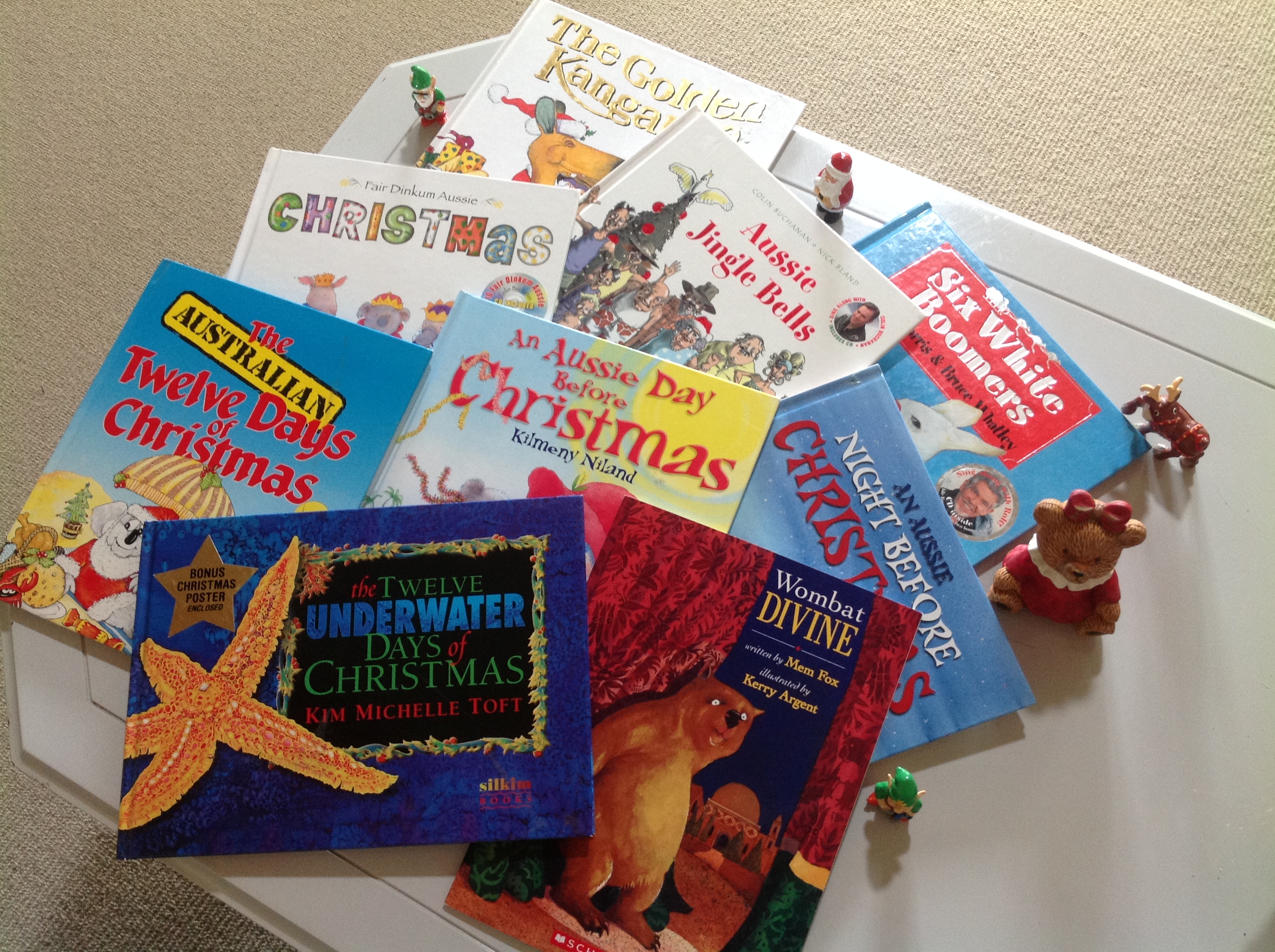
While there is an increasing number of songs and books with an Australian flavour many are merely innovations on the traditional such, as “The Australian Twelve Days of Christmas”, “Aussie Jingle Bells” or “An Aussie Night before Christmas”.
Some Australian Christmas picture books
One innovation that I particularly like is “The Twelve Underwater Days of Christmas” by Kim Michelle Toft. Kim is an Australian who uses her talents as author and illustrator to educate children about the things she feels passionate about: ocean life and coastal habitats. Her illustrations, hand-painted on silk, are absolutely stunning.
In addition to the visual beauty of the book there is great value in the supporting information through which Kim explains the importance of conserving each of the creatures included in the book. While written by an Australian, the application of the book is not limited to our shores. Creatures from all over the world adorn the pages. If you ever wished to own a book simply for the beauty of its illustrations, this is a great choice.
One original song I enjoyed listening to on the radio as a child is “Six White Boomers”. Despite the reasons that make me reluctant to mention it this year, it is a delightful tale of a joey who rides on Santa’s sleigh, pulled by six huge white kangaroos, to be reunited with his mother on Christmas Day.
Peter Combe has written two albums of original, but with a traditional rather than specifically Australian flavour, Christmas songs for children, including this one:
Some Christmas traditions popular with Australian communities are Nativity plays, carols by candlelight and Christmas parades. Many classes and schools perform their own end-of-year “break-up” concerts to which parents and the wider community are invited.
Using the traditional Nativity play as the setting, Mem Fox created an original and fresh story in “Wombat Divine”. It is a delightful tale of Wombat who loved everything Christmas. When finally he was old enough to be in the Nativity Play he rushed along to the auditions. Unfortunately it was difficult to find a part that was just right for Wombat. Can you guess which part he got? You’ll have to read the book to find out! Children all over the world will identify with Wombat and his predicament and enjoy the heart-warming tale.
Books are wonderful gifts to give or receive at any time. The titles I have mentioned here are perfect for giving, reading and sharing at this time of year. When I was growing up there was always a book for Christmas and birthdays, a tradition that I have continued with my extended family and friends. You can almost, but not always, guarantee that if it is a gift from Norah, it is a book.
After my siblings and I had grown up and swelled the family numbers with partners and children of our own, my Mum used to say, “There’ll be no presents this year.” It wasn’t that she wasn’t a giving person, for she was. It was just that there were so many of us! When she passed away this year she had about fifteen grandchildren and eight grandchildren, in addition to her remaining nine children and their partners. (I’m saying ‘about’ for grandchildren and great-grandchildren in case I’ve missed some in the count!) You can imagine how daunting a task it would be to go shopping for all these people ranging in age from six months to sixty! However it was always surprising how frequently she did not follow her own rules and had a small something wrapped up to present to many of us.
This year there will be no presents from Mum, and more sadly, we will be without her presence.
Although I have borrowed my Mum’s words, “No presents” for both flash fiction pieces included in this post, the stories do not cast aspersions on her generosity. I have simply explored how the oddness of no presents or presence at Christmas time may have impacted Marnie, a character I have been developing in my flash fiction pieces, at different times in her life. At this stage of my writing I am still investigating her character, discovering a little more with each flash piece as her once indistinct figure begins to step out of the shadows and take shape.
This first piece is written about a difficult time for teenager Marnie and a situation that may be the catalyst for her leaving home.
No presents
Marnie jerked backwards avoiding the predictable grope. In so doing she collided with her mother, sending her sprawling onto the tattered sofa.
“Aargh!” her mother screamed. “Look what you’ve done!”
Marnie watched the liquid from the upturned glass merge with the patchwork of stains collected in the carpet. If it was her blood it would not have mattered more.
“I … I’m sorry,” she stammered. But her sorry was for all the years it had been like this.
He smirked, raising his hand to strike, “No presents for you this year!”
“That’s right!” She ducked. “No presence!”
So as to not be too dismal at this time of year, I have written a second piece about a younger Marnie for whom there still seems a glimmer of hope.
No presence
With faces as bright as their Christmas wear, the children bubbled into the room, each carrying gifts for the Kindness tree, “for those less fortunate”.
Parents fussed, removing smudges and replacing wayward hair before blowing kisses and hurrying off for the parade.
And there was Marnie: no parent, no Christmas dress, no gift, no smoothed-down hair; no smile.
One last chance.
“Marnie!” I beckoned, and held out my Christmas cape and crown. “Will you be my special helper?”
Our eyes locked communicating more than any words. Her smile was my reward.
“I’m proud of you,” I whispered.
Thank you for reading. I appreciate your feedback. Please share your thoughts about any aspect of this post or flash fiction pieces.
Lisa Reiter is writing her memoir and sharing her stories on her blog. She also invites others to join in and share their memories through her Bite Size Memoir prompt. Her prompt of the moment is “Interviews”.
In my role of teacher over the years, I have conducted many parent-teacher interviews, each with varying degrees of pleasure and stress. And that’s just for me! I have also sat on the other side of the desk attending interviews to find out about the progress of my own two children.
I mostly worked with children in their first year of school.
When conducting interviews with parents, particularly at the beginning of the year but at any time, I always invited them to talk first; to tell me their impression of how their child was going, to raise any concerns they had and to ask any questions they wanted answered.
There are a variety of purposes for beginning an interview in this way:
It gives the parents a voice and acknowledges their importance in the child’s life and education.
It ensures that any concerns parents have are raised and discussed first, and not left until the end or even missed out in the short time allocated to each interview scheduled on a parent-teacher night.
It provides an insight into the child’s life and how the attitudes of the parents may affect, or be reflected in, the child’s attitude to school and learning.
Often times I have found that parents share my concerns, and discussing them is easier when raised by the parent. One of the most difficult things is raising and discussing an issue of which the parent is unaware.
Over the years I have found that what parents most want to know is:
Is my child happy?
Is my child well-behaved?
Does my child have friends?
How does my child’s progress compare to that of others?
Prior to the interviews I would make a checklist of things I wished to discuss with each parent, including responses to the queries listed above and any other issues I wished to raise or anecdotes I wished to share, ensuring the positives always outweighed the concerns. I would gather samples of the child’s work to show and have at hand suggestions for ways the parents could continue to help with their children’s learning at home, which generally meant reading to them, talking with them, playing games together and possibly involving them in daily activities such as setting the table, writing shopping lists etc.
But I digress. My purpose in writing this post wasn’t really to talk about parent-teacher interviews, it was to list 10 memories about interviews in response to Lisa’s prompt. Like the parent-teacher interviews, many of them have a link to education.
I remember brushing up on my conversational French for an interview as part of my final exam. I remember the interviewer laughing at something “funny” I said. I’m not really sure if he was laughing at what I meant to say, or at what I did say!
Employment
I remember not having an interview for my first teaching position. I was awarded a three-year teaching scholarship which, in return for my training and a small living allowance, “bonded” me to the Education Department for three years.
I remember agonising for hours over written responses to selection criteria but being unsuccessful in the interviews; and going without preparation to other interviews and scoring the job!
Would you employ this woman? Bad taste fundraising function at school.
Police
I remember being interviewed by a policeman after hitting a pedestrian on my way to work one morning. I was horrified to see the teenage girl bounce off the bonnet of my car. Fortunately she wasn’t hurt as I had only just pulled away from traffic lights, but we were both rather shaken up. She was only a few metres from a pedestrian crossing (also with lights) and the policeman said if anyone was to be charged it would be her. I wish she hadn’t been so impatient. I still worry about the unpredictability of pedestrians on the side of the road.
I remember being interviewed by police after our car was stolen. I was so upset I couldn’t remember the registration number. After it was stolen a second time, we got rid of it!
Our beautiful car – stripped!
I remember being interviewed by the police after our house was burgled and giving them a list of items that had been stolen. The most surprising one was a big screen TV. Big in 1999 is not the same as big in 2014. It went as far out the back as it did across and weighed a ton. How they got it out of the house and down the steep driveway without being seen I’ll never know; or even why they did, as newer technology was on its way and it wouldn’t have been worth much to resell.
The media (Note: You are neither expected nor required to watch any of the videos included in this section. They are simply for my amusement and learning.)
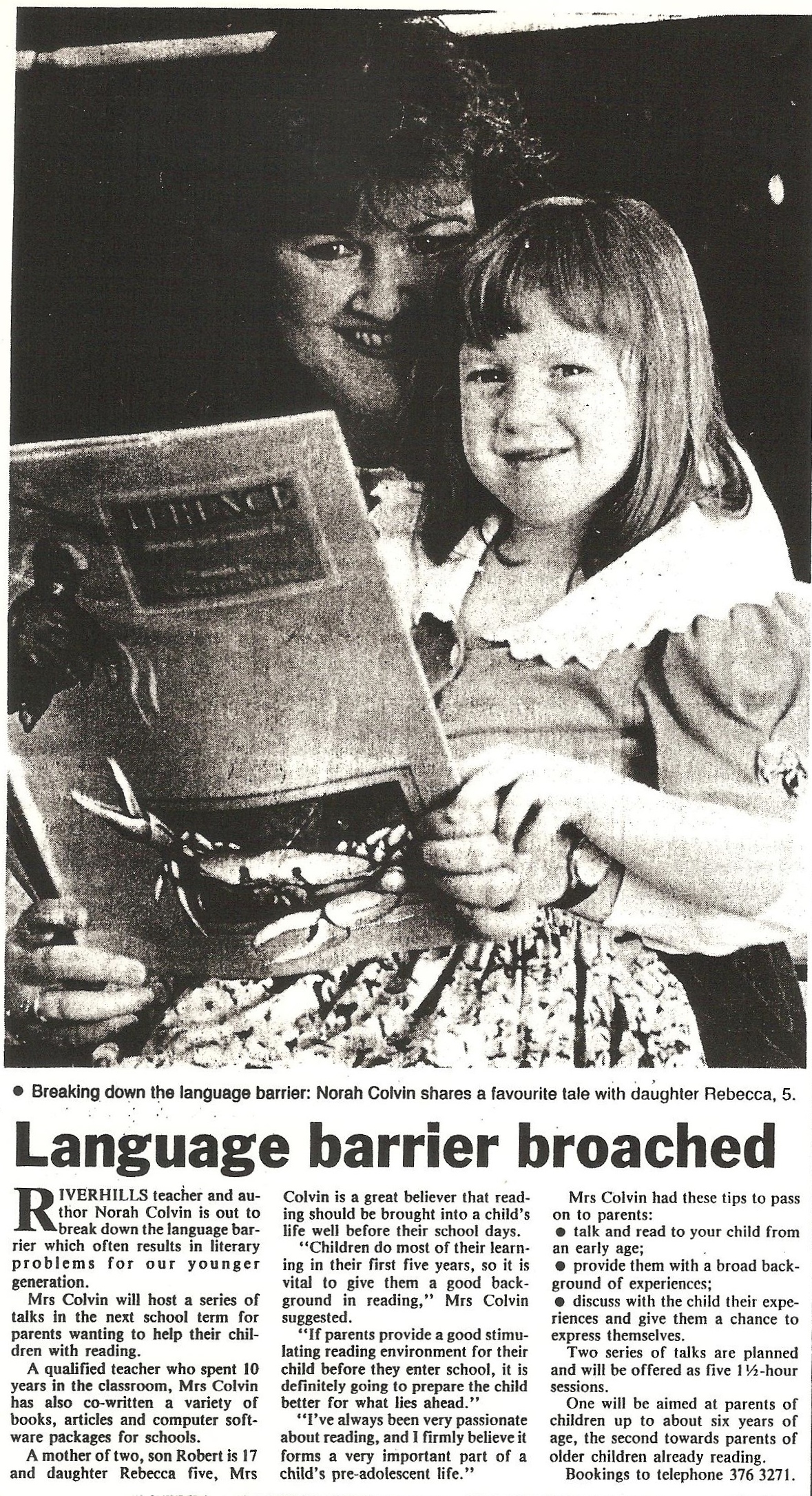
I remember being interviewed by the local paper when offering sessions to assist parents help their children read.
I remember being interviewed on Radio on the morning of the Family Day Picnic for the year of the family in 1994.
I remember being interviewed on a local community television station. I was invited to talk about the alternative school I was setting up. (I haven’t found the footage yet, but below is a response given to a question about self-esteem at a publicity meeting. Apologies for the amateur quality.)
I remember being interviewed at school about keeping butterflies in the classroom, twice: each time for different programs and different television studios.
Just as an aside, at about the same time that I was being interviewed about butterflies for the program “Totally Wild”, Bec was also being interviewed at school for the same program. She is proud to say that the times she appeared on that program numbered three to my one! Not long afterwards she appeared on the news a couple of in anti-war rallies!
Bec and friend Elise talking about heating on “Totally Wild”
Of course, not all interviews occur face-to-face. Interviews can take place online too. During the 15 months that I have been blogging I have passed on a number of awards asking people to answer questions. This post is a compilation of the answers given to my interview questions by my first nominees.
Thanks, Lisa, for this opportunity to take a walk down memory lane.
Thank you readers. I appreciate your feedback. Please share your thoughts about any aspect of this post.
Tomorrow, 20 November 2014, is UNESCO’s World Philosophy Day. Celebration of the day “underlines the enduring value of philosophy for the development of human thought, for each culture and for each individual.”
In recognition of the day I am reblogging a recent post from The Philosophy Foundation which discusses the differences between open and closed questions and explains the greater value of The Question X.
The importance of encouraging children to ask questions has been a recurring theme on my blog (here, here, here and here) , as has the need to encourage them to think for themselves rather than to become experts at regurgitating force-fed information (here and here).
The discussion of The Question X gave me a lot to think about. Maybe it will do the same for you.
Happy thoughts and thinking on World Philosophy Day 2014!
We read this blog ‘Closed Question Quizzing, Unfashionable Yet Effective‘ by Andy Tharby the other day. The virtues of closed questioning are well known to The Philosophy Foundation as they are central to our philosophical questioning approach, so we wanted to share this extract taken from a chapter entitled ‘If it, Anchor it, Open it up: A closed, guided questioning technique‘ that Peter Worley has written for the forthcoming book The Socratic Handbook ed. Michael Noah Weiss, LIT Verlag, 2015. Some of these ideas were first written about in The Question X published in Creative Teaching and Learningand available here: The Question X. In this blog Peter has developed some of the ideas written about in The Question X.
Plato’s Socrates asks many closed questions – questions that elicit a one-word or short answer such as ‘yes’, ‘no’ or ‘Paris’. Dip in to any of the dialogues…
A recurring theme on this blog has been the inappropriateness of, and the difficulty faced by children sitting, large-scale external exams which require an immediate response to a stimulus that may have little relevance or interest to them. I have written about it here and here.
Making a judgment about student progress or achievement from one piece of writing, particularly one completed under conditions not necessarily conducive to encouraging one’s best work, is problematic.
It would be unrealistic of me to expect that everyone would agree with me, (though who wouldn’t want everyone to agree with them?) but it is always affirming to find that others share similar views. Maybe if enough people voice their concerns, change may occur.
Recently I read an article in our local newspaper that had me nodding in agreement. The article NAPLAN writers have trouble writing a writing testby Mary-Rose MacColl explained that a good part of the reason students didn’t do well on the NAPLAN writing task this year, is that the task itself wasn’t well written!
MacColl said that the task was wordy and the standards themselves (the criteria against which the writing is marked) poorly written. She pointed out how ludicrous it was for the ACARA CEO to write a letter explaining to parents that students should not view the test as ‘pass or fail’ when many children were experiencing extreme anxiety in the lead up to the test and parents were withdrawing their children from the tests in increasing numbers.
In addition to writing newspaper columns, MacColl is also a writer of fiction. She is pleased that the focus of NAPLAN is on persuasive rather than narrative writing, and goes on to describe some wonderful writing that is going on her son’s class.
Many teachers are doing wonderful things helping students develop a love of writing. Unfortunately, those setting external assessment tasks aren’t listening to the professionals.
I have given only a brief indication of what Mary-Rose MacColl had to say. Please read her article to fully understand her views.
Thank you for reading. I value your feedback. Please share your thoughts about any aspect of this post.
Thinking is as much a part of life as is eating. Something to think about is often referred to as ‘food for thought’; and food for thought is just as important to wellbeing as is food for the body. When I’m not thinking about where I’ll partake of my next meal, or what I might eat, I’m often thinking about education.
I will be upfront and admit that I have not read the book and am commenting on the review alone which states that the book brings together “several years of research and experience into a methodology for applying their groundbreaking thought and technique.” It goes on to say that “The basic argument … is pretty basic: for our students to achieve excellence and equity, we need to teach them the skill of question formulation.” (my emphasis)
What I wonder about is: If it is so important for students to learn to ask questions, why do we spend so much time in school teaching them to stop asking questions and to learn just what is presented to them, whether they like it or not?
Aren’t children born asking questions? Aren’t they pretty good at asking questions (verbal or otherwise) to figure out what they need to know about the world? Why then do we sit them in desks all day and force-feed them content for future on-demand regurgitation?
His eyes widened, flitting across the table, scanning the feast, a smorgasbord of sensory delights. His mouth moistened and tummy growled.
Where to start? A bit of this. A little of that. A whole lot of that! Mmmm!
He rubbed his belly and licked his lips.
Suddenly he was marched away and slammed onto a hard wooden bench. A bowl of colourless pap was flung at him. “Eat this!”
He recoiled.
“Eat it!”
The overfilled spoon was shoved between tightened teeth.
He gagged.
“It’s good for you!”
He spluttered.
Over time he learned. “Not so bad,” he thought.
Okay. Maybe I’m exaggerating. Maybe I’m painting the picture darker than reality. Maybe. But sometimes that is necessary for even partial recognition of the situation to occur. You know about the swinging pendulum.
The picture painted by Scott McLeodof dangerously ! irrelevant is no brighter. In his post The declining economic value of routine cognitive work he says that while most employees (in the U.S.) are engaged in non-routine cognitive and interpersonal work; routine cognitive work is what students are mostly engaged and assessed in, and what traditionalist parents and politicians advocate. So while work tasks may require “problem-solving, intuition, persuasion, and creativity”, school tasks involve things such as automation and repetition.
My wish is that all parents, school administrators, education policy makers and teachers do as Rothstein and Santana suggest – let them ask questions!
Of course I couldn’t write a post about food and questions and not mention the blog of one of my very favourite questioners, Bec, who writes about “wholefoods, vegetarianism, slow living and their existential friends” at There’s no food. There’s much food for thought there!
And now for something a little bit different: The edible cookbook. It’s a cookbook you can read, cook and eat! I wonder what questions its designer was asking to come up with such an innovative and interesting design.
Thank you for reading. I appreciate your feedback. Please join in the discussion or share your thoughts about any aspect of this post, including my flash fiction.
In that post I linked to this TEDx talk by Dan Habib, Disabling Segregation.
In the talk, Dan advocates for the inclusion of students with differences in mainstream schools. He explains that there are benefits for typical children as well as for children with disabilities.
The benefits include:
better communication skills
higher academic achievements
wider social networks, and
fewer behaviour problems.
He also says that typical children learn to be more patient, caring, compassionate and loving.
He decries the fact that although these benefits are known most children with differences still spend most of their day segregated.
The post received many wonderful comments, including some by Gary, which continued the discussion. It is worth having a peek back to see what people were thinking if you are interested.
Because your response to that post was so positive, I thought I would share with you some others that I have come across since publishing it.
On her blog, teacher versus mum, an Adelaide teacher wrote a post called When inclusivity becomes exclusion. In the article TeacherMumWife questions whether it is the attitude of teachers towards students with disabilities that impedes the progress of inclusivity.
TeacherMumWife describes a situation at a school in her local area as one promoting exclusion, rather than inclusion, through its lack of preparedness. She describes the aggressive and fear-inducing behaviour of one child and condemns the attitude of parents and teachers who question whether the school is the best place for the child. She asks, “isn’t it about time teacher attitudes got a kick up the bum, and teacher training programs and systemic funding be modified to reflect this need in our classrooms?”
I personally favour the idea of inclusion and believe that everyone deserves to be treated with respect and given a fair go. However in a situation such as that described by TeacherMumWife, a situation that many teachers are faced with on a regular basis, I have to admit teacher guilt in also questioning whether the regular classroom is the best place for the child.
A child with aggressive and disruptive behaviours, who injures teachers and classmates and who disrupts the learning of other students, in my opinion, is not giving others a fair go. I do not think accepting them into the classroom is equitable. If a child with special needs is placed into a classroom that is unable to provide for those needs, then it is not any more satisfactory for that child than it is for any other participants in the classroom.
There is already a great deal of pressure upon classroom teachers. The expectation that a general classroom teacher should be able to cater for a great diversity of special needs in addition to the range of diverse abilities and needs in a group of twenty-five to thirty or more students is, I believe, unrealistic in most current educational systems and environments. Qualifications to teach special education requires additional years of study. Teacher training, here is Queensland anyway, is already four years. How many years will it take to prepare teachers to cater for all needs that may present themselves at the classroom door?
I agree with TeacherMumWife that more training is required so that teachers may develop a greater understanding of differences, and develop a genuine empathy for parents of and students with those differences. Additionally education must receive more funding to provide trained teachers and support personnel to work with students with special needs, and enable them to be more integrated into a situation which caters to their needs as much as to the needs of others.
A commenter on the blog agrees, saying, “The teachers involved in any class environment, have a right and expectation not to be placed in a situation they are not trained for or feel threatened by the situation they find themselves in.” He describes the progress of his ASD daughter from early primary to high school years.
Blake Wiggs, an instructional coach shared an article called Rethinking tolerance: Ensuring all students belongon Edutopia. He explains an exercise conducted with his students that highlights a similar situation to that noted by Dan Habib in his TEDx talk: that people form friendships with those who are similar to themselves and that perceptions of those who are different may be influenced by stereotypical thoughts. Blake’s article did not address disability specifically but the activity and attitudes are relevant just the same. He noted three necessary ingredients for creating a more tolerant environment, including:
I think Jamie Davis Smithwould agree with those. In her post, I’m so sorry my daughter’s disability is such an inconvenience for you shared on HuffPost Parents, Jamie expresses a parent’s frustration at the lack of consideration shown to those with disabilities. However she is not talking about school inclusion, but acceptance and inclusion in society.
‘Every child is a joy! Imagine yourself in the mother of a disabled child’s shoes. Have empathy for that mom. Join in her admiration of her child, and maybe you will also internalize the concept that “God don’t make junk!”
I appreciate your feedback. Please share your thoughts about any aspect of this post.
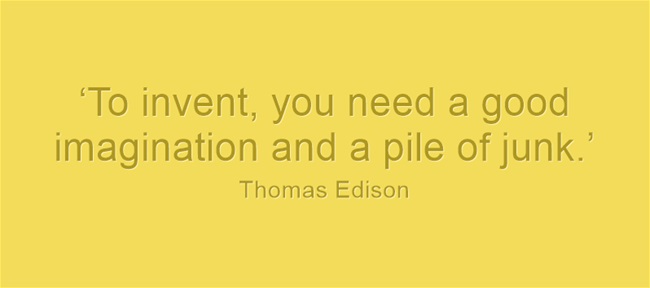
Recently Hope at Nanny Shecando sent me a tweet requesting some thoughts about imaginative play in a school setting. Sadly I would say that imaginative play has been just about pushed out in the ever-increasing content-driven and assessment focused curriculum. Seeing children as young as five spending much of their day sitting at desks filling in worksheets and parroting back isolated bits of information flashed at them in meaningless drill and practice sessions is about as far away from my thoughts about education as you could get. If it is difficult for early childhood teachers to squeeze time for imaginative play into their programs, imagine (there’s that word) how difficult it is for teachers of older children.
However, whenever I hear the above quote by Thomas Edison, I am reminded of how an early childhood classroom should be: a place for imagination, exploration and discovery. Parents may tire of the cardboard box creations that children regularly bring home, wondering where each one can be stored (or discreetly disposed of!), but the value to be had from the opportunity to create, imagine and play must not be understated.
For imagination to flourish in an early childhood classroom, I suggest the following ingredients are essential:
A recognition of the importance of play and imagination in the healthy development of children and the prioritisation of opportunities for imaginative play every day by providing:
Time – lengthy and uninterrupted, with the opportunity for created play areas to be left intact over a number of days or weeks
Space – both indoor and outdoor with a variety of larger and smaller spaces
Opportunities for self-selection of activity and self-direction
Books for story reading and play acting
Variety of props: things such as dress-up items including lengths of fabric that can be a kings robe, a princess’s dress, a magic carpet, an apron, a bed; hats and scarves; toys like cars, dolls, animal toys; building blocks and cardboard boxes; paper, cardboard scissors and pens for creating signs, posters and crowns; areas for quiet play with cushions; open spaces for creating larger ‘worlds’ . . . the items that can be used to inspire imagination are limitless.
When children are showing interest in a particular topic, an observant teacher may gather up a variety of props and leave then in a box for children to discover and use as they decide.
In an earlier post, Learning at its best: A classroom of magic, Hope herself described a school with an open space ‘where magic happens’. She described a friendship tree where ‘friendship and freedom of speech are fostered’; an area with a ‘magic carpet . . . plush beaded cushions and Middle Eastern style blankets . . . a place for imagination to prosper. Anything is possible when dreamed, imagined or conjured whilst on the magic carpet.’
She described an area for drama and the opportunity of being and expressing yourself. She described a creativity corner where young inventors could create anything they could imagine; and spaces to read, explore, share and dream. One could think this school was in Hope’s dreams, her imagination of what is possible. But it is a real school educating real children in very positive ways that will have a very different effect that the scenario I described above. However it is not a typical school. There is not one like it in every suburb. In Hope’s words, it is a ‘very select private school’. But don’t all children deserve learning opportunities such as these?
After re-reading Hope’s post, I’m not entirely certain why she invited me to share my thoughts about imaginative play in a school setting. I think she has described a wonderful example of imagination in practice. The design of the school and the aspects of the program described above, show the value of imagination, not only of the students but of the school designers, administrators and teachers.
In a recent post Just imagine . . . the power of imagination I talked about the power of imagination to drive creativity and innovation, and suggested that much of what we now accept as commonplace was once only in someone’s imagination. Einstein said that,
‘Imagination is more important than knowledge. For knowledge is limited to all we now know and understand, while imagination embraces the entire world, and all there ever will be to know and understand.’
Maria Montessori is attributed with the idea that ‘Play is child’s work’. In this article Thinking about Children’s PlayDavid Elkind, refutes that idea citing works by both Freudand Piaget, a psychologist whose work greatly influenced thinking about child development and learning. Elkind, himself a professor of child development and of author of books such as The Hurried Child, The Power of Play and Miseducation, says that ‘Although Montessori has made many important and lasting contributions to early childhood education, her identification of work and play in young children was unfortunate.’ He says that, in play, children are not preparing for life, they are living life.
Elkind does not favour the imposition of formal learning situations upon children of increasingly younger ages. The following excerpt from Miseducation, shared in Commentary: The ‘Miseducation’ of Young Children Elkind says, ‘When we instruct children in academic subjects, or in swimming, gymnastics, or ballet, at too early an age, we miseducate them; we put them at risk for short-term stress and long-term personality damage for no useful purpose. There is no evidence that such early instruction has lasting benefits, and considerable evidence that itcan do lasting harm.’
He continues, saying that ‘The most important thing is an excitement about and enthusiasm for learning. Skills are easily learned when the motivation is there.’ I agree wholeheartedly and have joined in with a discussion of motivation in a number of posts, most recently in Motivation – why we do the things we do.
In another article Can we play? shared on The Greater Good in 2008, Elkind explains that imaginative play is important to academic as well as social and emotional development. Unbelievably, he said that ‘More than 30,000 schools in the United States have eliminated recess to make more time for academics.’ It is difficult to imagine how unwelcoming and uninspiring a school without recess would be. I wonder how much lunch time those who made these rules allow themselves.
He says ‘Play is motivated by pleasure. It is instinctive and part of the maturational process. We cannot prevent children from self-initiated play; they will engage in it whenever they can. The problem is that we have curtailed the time and opportunities for such play.’
In the words of Cat Stevens (Yusuf Islam), ‘Where do the children play?’ I add ‘and when?’
If you wish to read further, here are some links to get you started. I don’t agree with all the content. Some suggest a more structured approach than I would favour. However, as with everything, a broader knowledge helps one more clearly formulate one’s own position.
It is often said that school days are the best days of our lives.
Considering that I have had far more days at school than not (as student and teacher) then I should probably agree, else I’d be saying that most of my days haven’t been the best.
For many adults it is not the in-class time that is most memorable or of which they have the most pleasant memories, it is the playtimes and the before and after walking to and from school times.
For some children, the in-class time drags while they daydream of long summer holidays and activities with family and friends. Other children thrive with the structured learning, soaking up everything offered to them.
In her post, School: A Suitable Place for Fiction?Anne Goodwin wrote that she is ‘always pleasantly surprised when children these days claim to enjoy school’. On the other hand, in a comment left on previous post here, Lori Schafer said that all her life she had ‘failed to understand why most children don’t like school. Why don’t they enjoy learning, and why don’t they enjoying studying, and why don’t they enjoy writing papers? Because, of course, there are a small percentage of us who do genuinely appreciate the discipline of schooling.’ She was one of them.
In his post, School’s Out – and Education’s In, Geoff Le Pard said that ‘People confuse school with education, as if they were synonymous’. (I have written a poem to express differences I see between education and schooling. You can read it here.) He goes on to say that ‘education is a constant, not a time limited schooling experience’ and disagrees with the cliché that school days are the best. He says that ‘all those days and bits of days when learning occurs make up the best days of your life’. I agree with Geoff that learning new things, particularly things one has an intrinsic motivation to learn, gives great joy.
Irene Waters said in her post about school that she loved her primary school days. As the end of her high school years approached, unable to see the point in continuing, Irene wanted to leave and start her nursing career. Her parents convinced her to stay and finish year twelve. While she didn’t at the time, she now appreciates the value in having done so and is grateful that her ‘parents laid down the law’.
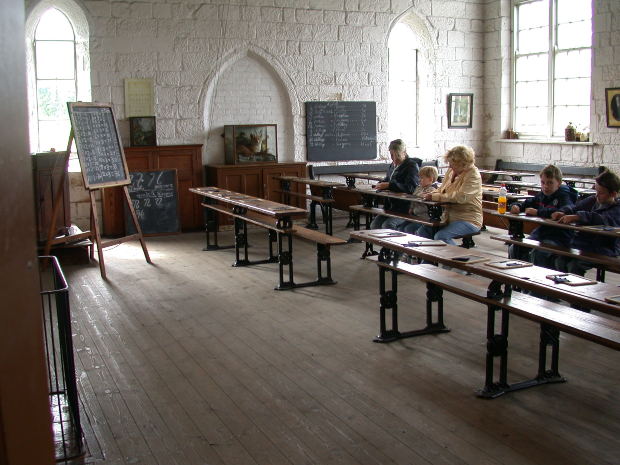
Talking about education and schooling is nothing new for me, that’s what my blog is about after all. However for a lot of people, once finished, school is a thing of the past and not much thought is given to it later. The reason why so many others are talking about it this week is the flash fiction prompt set by Charli Mills at the Carrot Ranch. Each week Charli challenges writers to pen a 99 word story about a particular topic. This week her topic is school.
In her post, Charli describes an abandoned one-room schoolhouse that is close to her home. She explains that these schoolhouses ‘were often among the first structures built by pioneers’ and comments on the importance that was placed on education in those pioneering days. Indeed education has been important throughout the history of humankind. It is what sets us apart from other creatures.
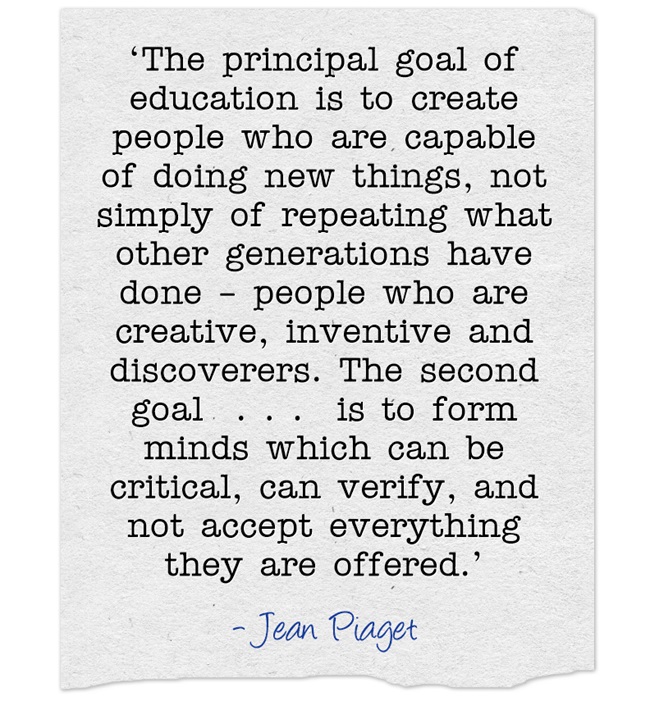
In the words of Jean Piaget,
I have touched on these aspects of education in previous posts and will definitely do so again in future posts.
In a tweet Anne Goodwin hinted that she thought I may find this post difficult to write as I have so many options to choose from. Charli Mills thought I might mention how we wrote on slates when I was at school (my children would probably have suggested I write about using dinosaur bones to scratch crude messages in the sand!)
Instead, I thought about the strategies schools use to create uniformity, and of the many pathways that one may take through life after finishing school. I hope the analogy makes sense to you.
Chocolate balls
The final school bell tolled and the students erupted from the building like a burst box of chocolate balls, scattering in every direction and at varying speeds. Some stuck together along pathways safe and sure. Others crashed and bumped over roads less traveled seeking excitement, new discoveries and secrets to explore. Others stopped abruptly, their journeys foiled by stubborn obstacles. Still others, rolling upwards, failed to maintain the momentum to carry them over and beyond with those more adventurous others.
Who would know?
Inside the box, they were identical, centers hidden. Outside, their uniqueness was on show.
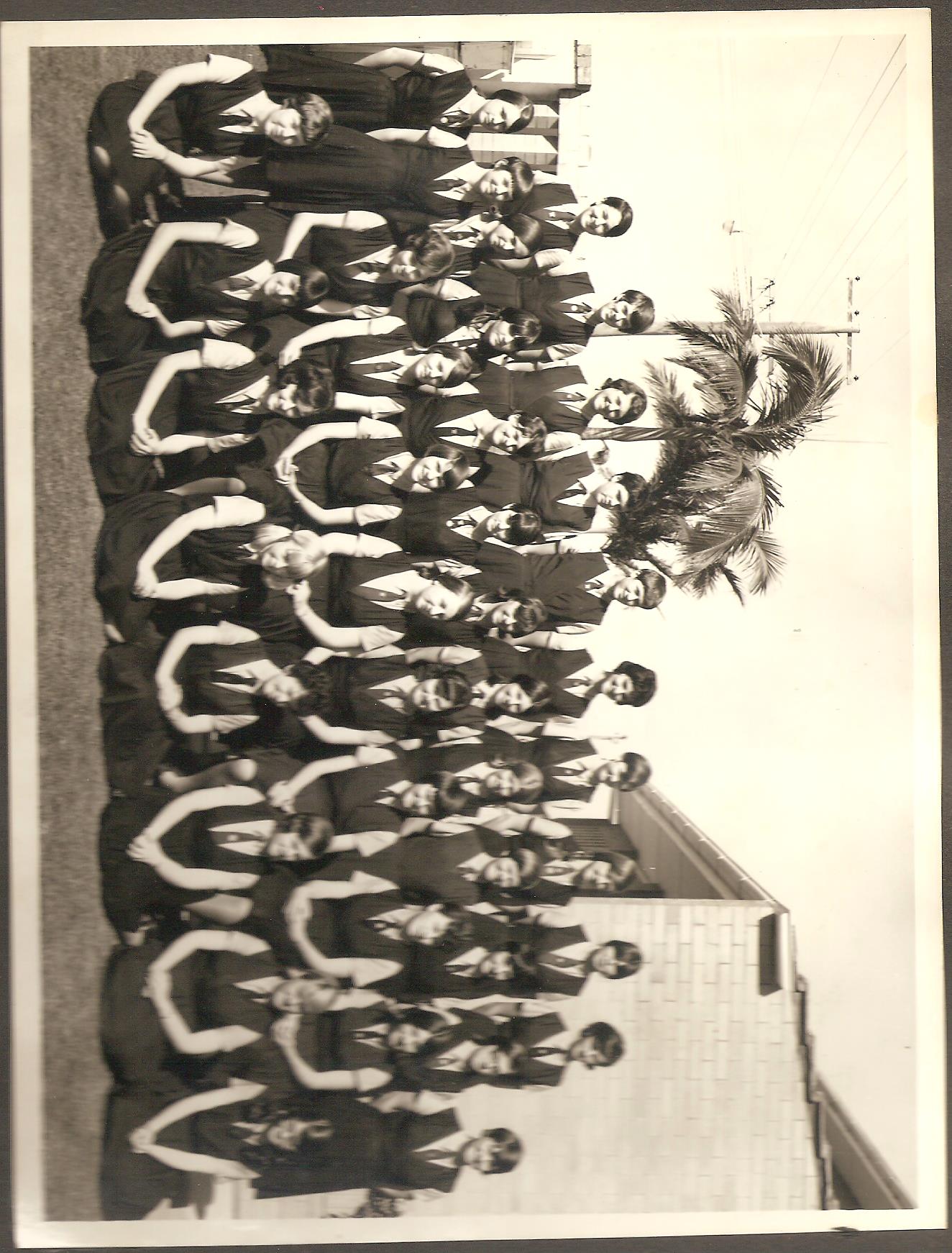
My year 10 class – only 20 went on to year 12.
I value your feedback. Please share your thoughts about any aspect of this post.
Over at the Carrot Ranch this week Charli Mills is talking about motivation, specifically the motivation of fictional characters to do the things they do. She explains that ‘motivation can be external–a desire to please, to be found attractive, to be accepted’ or ‘internal–a drive to succeed, a passion to experience adventure, a fear of failure’.
Motivation is not a new concept to this blog and I have explored it in a number of previous posts.
In What did you do that for? Rewards and motivation I discussed the use of extrinsic rewards (such as stickers, awards and cash incentives) for school students; and questioned the authenticity of intrinsic motivation, which ‘is usually related to something of one’s own choice through interest, challenge or purpose’, in an institution at which attendance is compulsory. I suggested some strategies that teachers may employ to stimulate an intrinsic love of learning.
Continuing the consideration of the effect of compulsory schooling on a learner’s motivation, the post Why do I have to? explored the use of philosophy as a tool for making the goals of education explicit. All three philosophers: Peter Worley, Michael Hand and Stephen Boulter agreed that if students knew why they were expected to learn certain things, they would be more motivated to do so.
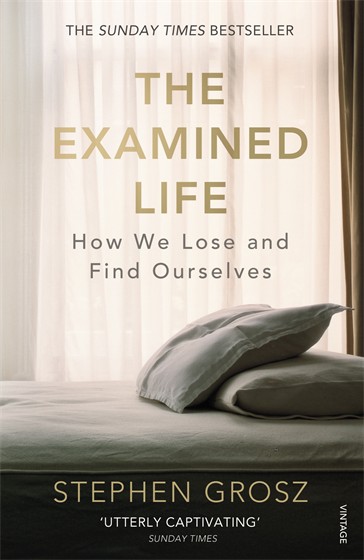
A discussion of the impact of praise upon a learners’ motivation and achievement was stimulated by reading The Examined Life by Stephen Grosz, a book recommended by Anne Goodwin. The Post Seeking praise – Stephen Grosz revisited explored Grosz’s suggestion that praise could cause a loss of competence, especially if children were being praised for being clever. Responses to the post, including a guest post by Anne Goodwin, added greater depth to the discussion.
Shelley Wilson’s blog Live every day with intention, which promises to inspire and motivate you (‘A motivational blog about living life to the full, writing, reading and feeling inspired to follow your dreams’) is the basis of her new book ‘How I changed my life’.
In this TED talk The puzzle of motivation, Dan Pink explains that the value of intrinsic motivation is a scientific fact. While the focus of his talk is the business world, the findings are equally relevant to education. He says that external rewards may work in limited situations but that they often impede creativity. He says that ‘the secret to high performance isn’t rewards and punishments, but that unseen intrinsic drive – the drive to do things for their own sake. The drive to do things because they matter.’
My motivations for engaging with the flash fiction challenges set by Charli are both intrinsic and extrinsic:
I enjoy:
the dual challenges of writing to a prompt with a clearly defined word count;
the opportunity of writing fiction;
exploring the application of Charli’s prompt, however tenuous, to education;
the camaraderie of the fellow writers and the opportunity to read and comment on their posts and flash fiction pieces; and
I appreciate the feedback, support and encouragement I receive in response to my writing.
In her prompt, Charli suggested that the character ‘may not even understand the motivation fully, but (that I should) let the reader grasp it.’ I have written two pieces in response to this prompt. I hope you enjoy them, and get an inkling of what motivates the characters.
More than numbers
The more he stared at the numbers the less sense they made.
They swirled and blurred. He just didn’t get it.
“Numbers don’t lie,” they’d admonished.
“But they don’t tell either,” he’d thought.
The hollowness left when all he knew had been extracted could not be filled with the smorgasbord of numbers loaded on the page.
The richness of lives reduced to mere squiggles.
“This is what’s important,” they’d said, fingers drumming tables of data.
With heaviness of heart he closed the book and walked away.
“They are not even numbers,” he thought. “If they were numbers, they’d count!”
More than words
“More!” they implored.
She surveyed their eager faces then glanced at the clock.
“Just one more?”
“Okay. Just one more.”
Before she could choose, a book landed in her lap.
“This one,” he said.
“Yes,” they chorused. “It’s a good one!”
She smiled agreement, then started to read.
They joined in, remembering, anticipating.
She turned the page.
“Wait!” he said. “Go back.”
“Did you see that?” He pointed to the page.
“But look what he’s doing,” someone else chimed in.
They all laughed.
The shared joy of a beloved book. Each time the same. Each time a little more.
Thank you for reading. I do appreciate your feedback. Please share your thoughts about any aspect of this post or my flash fiction pieces.




























 Norah Colvin