Live Love Laugh Learn … Create the possibilities

Tag: Children

  • All aboard the early learning caravan!

    school cropped

    This week at the Carrot Ranch Charli Mills described a century old schoolhouse which adjoins her property. She is hoping that someone will buy it and make it a meeting place for the community, recognising the role it had to play in the education of generations past as well as its contribution to the history of the area. Her thoughts about the schoolhouse led her to thinking of community engagement and neighbourly relationships which, in turn, inspired her flash fiction challenge for this week, to In 99 words (no more, no less) write a story about nurturing a neighborly relationship.

    I would have loved the little schoolhouse at Elmira Pond as the base for the alternative school I hoped to establish at the end of last century. The schoolhouse has a nice community feel to it, unlike many of the large brick, concrete jungle-type schools into which one can almost dissolve in a sea of sameness. Charli’s schoolhouse/community centre would also be a great meeting place for parents with their young children; a friendly early learning centre for both.

    8-12-2013 7-38-33 PM


    Based on my beliefs that:

    • parents are a child’s first and most important teachers;
    • the most important years of a child’s development are the years before school;
    • children who enter school with rich vocabularies, an interest in the world around them, and a love of books are primed to succeed;
    • children without those experiences are disadvantaged in their learning right from the start and face an enormous challenge in catching up;
    • waiting until children enter school is too late;
    • the best way to minimise or eliminate the disadvantage is by educating parents through programs that model effective parenting behaviours and support them in their interactions with their children;
    • parenting programs offering those types of support would be most effective if begun before birth of the children and continued at least until the child enters school, maybe beyond;
    • most parents want to do the best for their children, many just don’t know how to go about it.

    There are any number of birthing classes, but not many that aim to support parents in nurturing their child’s development. In my opinion, investing time and money into developing programs such as these would have enormous benefit, not only to individual children and their parents, but to society as a whole.

    I am not talking about programs that place children of increasingly (or should that be decreasingly) younger years into structured and formal “teaching and learning” situations. I am not talking about one-off talks or series of lectures to parents.

    Many of the parents of children who begin school with the types of disadvantage I have mentioned are themselves products of similar disadvantage. In a previous post I discussed the roles of “nature” and “nurture” in a child’s development. In these cases especially, it can be difficult to tease out the differences. Many of these parents would not have positive feelings towards schools or any other public institution and may feel threatened, or reluctant for other reasons, to attend sessions in public halls or government offices.

    What I am talking about is a program that:

    • goes to the parents and children in their neighbourhoods, meeting in a local park or community greenspace, on regular weekly occasions;
    • invites parents to talk with, read to and play with their children using provided books, games and toys;
    • models positive parenting behaviour, explaining to parents the benefits to their children of engaging with them in activities and discussions;
    • provides suggestions for inexpensive and easy activities to do at home;
    • encourages borrowing from a book and toy library.
    Guiding parents in play sessions for parents and children.
    Guiding parents in play sessions for parents and children.

    I envision the program being delivered by an early children trained educator who is sympathetic to the situations and demands of people from diverse backgrounds, who is warm and supportive with good interpersonal skills with both adults and children, who drives a mobile early learning centre fully-equipped with books, toys, games, paper, pens and craft materials, including items for borrowing and distribution for activities to be done at home.

    I see the centre as a brightly painted caravan with doors that open wide to display a colourful and engaging assortment of resources to delight the interests and eyes of young children and their parents.  As the caravan travels into each neighbourhood it would play music to signal its arrival (think of the old icecream vans!) inviting parents and children to come, investigate, and join in.

    caravan

    Thinking about the excitement that such a program may stimulate in a neighbourhood, and the sense of community and belonging it may encourage, led me to write about it for my response to Charli’s prompt.

    I hope you enjoy it.

    www.openclipart.com
    http://www.openclipart.com

    The caravan

    Children waited anxiously at windows and front garden fences.

    Mothers and fathers hurried to complete the last of their chores.

    Others, already at the park, were unable to wait.

    Ears strained, listening for music signalling, “It’s time!

    Suddenly “Girls and boys come out to play!” announced the arrival of the brightly painted caravan.

    “Come on!” urged children, tugging at skirts, trousers and hairy legs.

    “Come on!” chimed parents, downing cloths and brooms. Clasping small hands they whisked them out.

    Everyone watched as the doors of the caravan opened; ready for fun: stories, games and much to explore!

    Thank you

    Thank you for reading. I appreciate your feedback. Please share your thoughts about any aspect of this post or flash fiction.

  • A palette of colours

    Moini, Painter penguin https://openclipart.org/image/800px/svg_to_png/174634/painter_penguin.png
    Moini, Painter penguin https://openclipart.org/image/800px/svg_to_png/174634/painter_penguin.png

    I think few of us would deny that each of us is unique, or question the importance of an individual’s interests and abilities to learning. Much has been written about learning styles, multiple intelligences and differentiation of instruction.

    Most teachers try to incorporate a variety of experiences into their programs in order to maximise learning opportunities in the hope that, if students don’t “get” it one way, they will “get” it in another. The imposition of national standardised assessment makes doing this a challenge for teachers. The increased requirement for the implementation of particular approaches to teaching makes it even more so.

    To say that I hold fairly strong views about learning, and the differences I consider there to be between education and schooling is perhaps an understatement, but it wasn’t always so.

    My memory tells me that, while I probably didn’t “love” school, I probably didn’t “hate” it either. It was simply something that I had to do. I didn’t question it. I did my best to be a “good” girl, do what was expected of me, and conform. All of which I think I did pretty well.

    The questioning came later and had more impact upon my teaching and parenting than it did on my own schooling. I came to view schooling as something that is “done” to us, and education as something that we do for ourselves. That is not to say that no worthwhile learning takes place in school, for it does, but education is a whole-of-life experience and schooling is but one small part of that.

    Education is a whole of life experience

    However, if the importance of schooling, and here I mean learning of particular content by particular ages, is inflated and rated more highly than children’s natural curiosity, interests and abilities, then the consequences to individuals and the community in general can be more negative than positive. One consequence may be that children don’t enjoy school; another may be the view that only school knowledge is important; and yet another may be that children are turned off learning all together.

    My first conscious discomfort with what, for convenience, I’ll call a factory model of schooling (children go in one end, have things “done” to them, and come out the other end all the same) was as a young teacher when all five year two teachers were expected to be doing the same thing at the same time. That imposition, along with other inadequacies that were beginning to become apparent, set me on a quest to learn more about learning and education. My quest has never ceased and I am still searching for answers.

    Recently I read a book by Daniel T. Willingham entitled Why Don’t Students Like School? The title had instant appeal, of course, and I thought I’d recognise a few of the reasons at least. My initial expectation was of reading views similar to those of authors like John Holt, Ivan Illich, A.S. Neill and John Dewey whose books I had read in the 70s and 80s; but a closer look at the subtitle told me I was in for more: “A Cognitive Scientist Answers Questions About How The Mind Works and What It Means For The Classroom”.

    The book is a wonderful read and I’m certain to share many of Willingham’s ideas with you in future posts. I enjoyed it because, in almost equal measure it reinforced, challenged and extended my thinking about many aspects of learning and how best to provide for and stimulate it in a classroom setting.

    Sometimes Willingham would make a statement with which I agreed, and then go on to explain the faulty thinking behind it. Sometimes his statement would seem to completely contradict what I think but his explanation would show that we simply had different ways (mine perhaps inadequate) in explaining it.

    What I really appreciate about the book is that Willingham carefully translates what has been learned from research into practices that can be implemented in the classroom to enhance student learning. Often research seems only to tell teachers what they already know from experience and observations, or provides information in such an abstract way that nothing of practical use can be gleaned.

    The section of Willingham’s book that I refer to today is “Chapter 7 – How Should I Adjust My Teaching for Different Types of Learners?” Willingham opens the chapter with the words “All children are different.” He says that some learn visually, some auditorily; that some are linear thinkers and some holistic, for example, and that

    “It seems that tailoring instruction to each student’s cognitive style is potentially of enormous significance”.

    The important word in that sentence is “seems”. He talks about the differences in the way that hypothetical Sam and Donna might learn and says that “An enormous amount of research exploring this idea has been conducted in the last fifty years, and finding the differences between Sam and Donna that would fit this pattern has been the holy grail of educational research, but no one has found consistent evidence supporting a theory describing such a difference.”

    He states that the “cognitive principle guiding this chapter is:

    “Children are more alike than different in terms of how they think and learn.”

    That statement really made me sit up and take notice: “Children are more alike than different”. But it turns out, those words are not the most important ones in the sentence. The most important ones are: “in terms of how they think and learn.

    He goes on to say that, “the claim is not that all children are alike, nor that teachers should treat children as interchangeable. Naturally some kids like math whereas other are better at English. Some children are shy and some are outgoing. Teachers interact with each student differently, just as they interact with friends differently; but teachers should be aware that, as far as scientists have been able to determine, there are not categorically different types of learners.”

    He also talks about it in this video:

    Willingham acknowledges that students differ in their cognitive abilities and styles. What he does in the chapter is “try to reconcile the differences among students with the conclusion that these differences don’t mean much for teachers.” In reading these words one might expect that Willingham is proposing that differentiation is not an important part of classroom practice. But such is not the case, as stated in this video:

    In the book he writes, “I am not saying that teachers should not differentiate instruction. I hope and expect that they will. But when they do so, they should know that scientists cannot offer any help.” According to Willingham, scientists have not identified any types of learners or styles of learning.  He says, “I would advise teachers to treat students differently on the basis of the teacher’s experience with each student and to remain alert for what works. When differentiating among students, craft knowledge trumps science.

    What Willingham says is of most importance for a learner to learn is background knowledge. If a student does not have sufficient background knowledge to understand the content or concepts which are presented, learning will not take place. This supports the advice that I repeatedly give to parents: read to your children, talk with them, and provide them with a wide range of experiences and activities. The same is true for teachers: ensure the students have sufficient knowledge on which to build the new work you are expecting them to grasp.

    This week at the Carrot Ranch Charli Mills has thrown a prompt with which I have struggled: In 99 words (no more, no less) write about the day the earth turned brown. I always like to tie my responses to the educational focus of my blog and this one had me stumped for a while. A mind journey following various twists and turns, retracing well-worn paths, and hitting many dead ends, finally led me to an oasis in the parched brown earth: the uniqueness of each of us; the amazing potential of each new child to create possibilities beyond our imagining; and the contrasting effect of a narrow test-driven school system that attempts to reduce each to the sameness of minimum standards and age (in-)appropriate benchmarks. A paint palette seemed a suitable medium for the story.

    For those of you who have been following Marnie’s story, I apologise. She makes no appearance this time, though I have not ruled out the possibility with student M. I’d be pleased to know what you think.

    palette

    Palette potential

    She walked between the desks admiring their work. From the same small palette of primary colours, and a little black and white for shades and tones, what they produced was as individual as they: J’s fierce green dinosaur and exploding volcanoes; T’s bright blue sea with sailing boat and smiling yellow sun; B’s football match . . . At least in this they had some small opportunity for self-expression. She paused at M’s. M had mixed all the colours into one muddy brown and was using hands to smear palette, paper, desk and self . . .

    Thank you

    Thank you for reading. I appreciate your feedback. Please share your thoughts about any aspect of this post or flash fiction.


  • Learning without knowledge

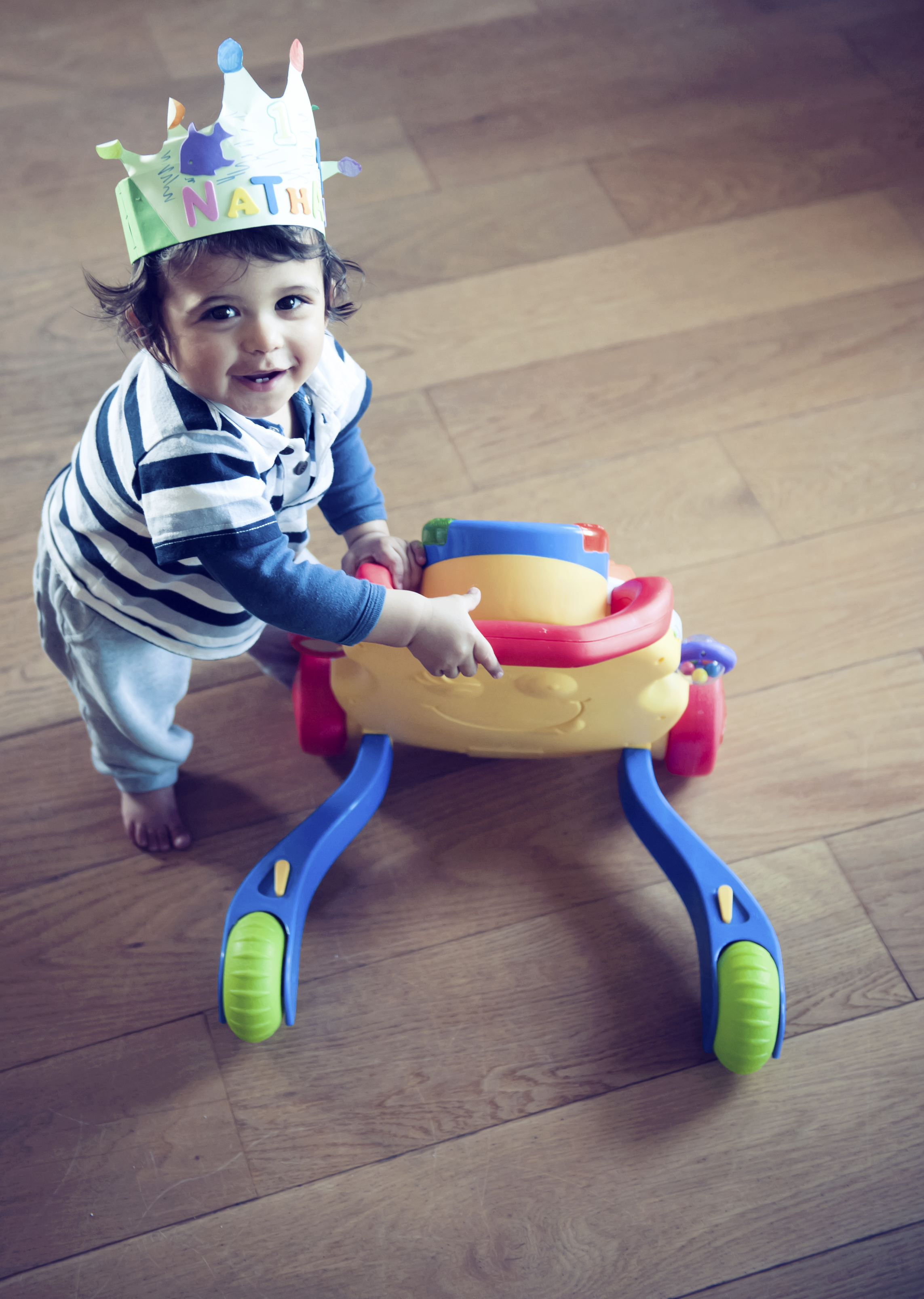
    First birthday
    First birthday

    Earlier this week the television was on as I was getting ready for work. I wasn’t taking much notice as the voices droned on. I was lost in my thoughts of what needed to be done, what I’d be doing at work, which illustrator I’d choose to win my design contest, what I’d write about next, what I needed to get at the shops on the way home from work . . . the usual clutter.

    Suddenly the words “they don’t even know they are learning” drew my attention to the television. I paused to see what they were talking about. The image showed children of about three years of age in a child care centre. The children were counting as they walked along stepping stones laid out in a path!

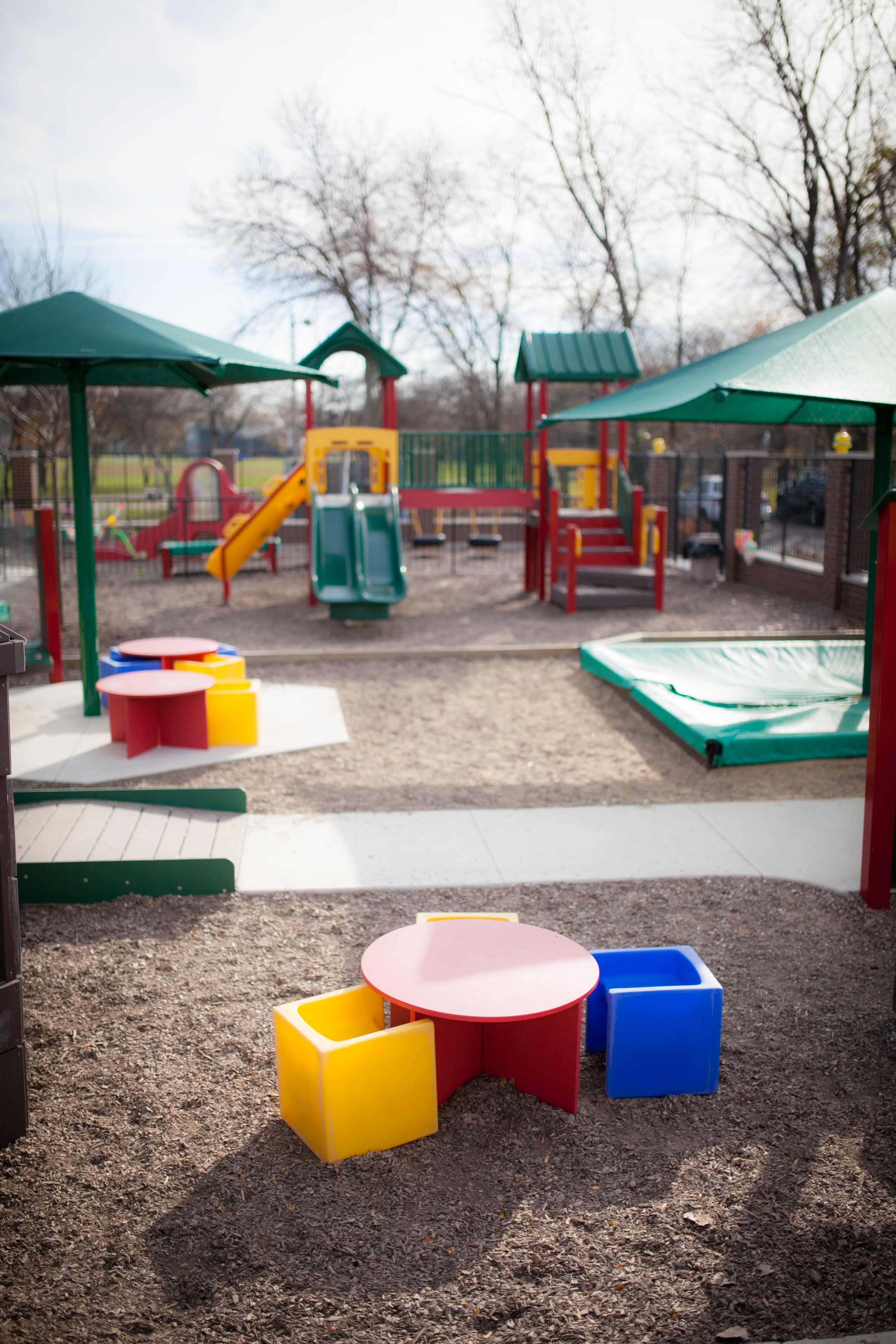
    Kids' Work Chicago Day Care
    Kids’ Work Chicago Day Care

    Remarkable? I didn’t think so.  Children were happily engaged doing what comes naturally to them: playing, having fun, making sense of the world around them. Pre-school children will naturally join in the fun of counting and learn to do so without structured lessons, with just an attentive adult who encourages it incidentally in daily activities. I have made a few suggestions here and here.

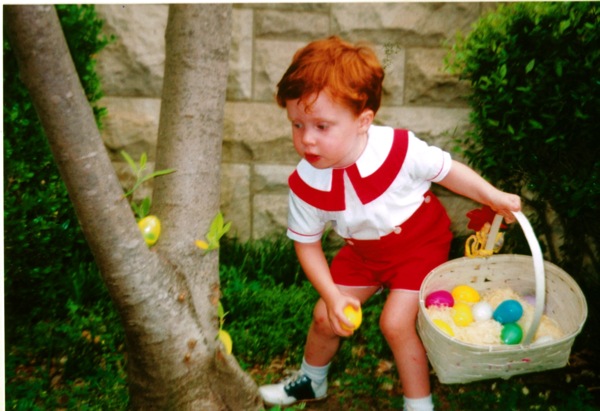
    Easter Egg Patrol
    Easter Egg Patrol

    What I think is far more remarkable (worthy of discussion) about those words is the insidiousness of the thinking that underlies them and what that thinking implies.

    “They don’t even know they are learning!”

    This to me implies that learning is something that:

    • children don’t want to do but “we” expect of them,
    • children won’t do unless it is “hidden” in sugar-coating,
    • must be planned for in a structured program and done to children by adults,
    • fits into a narrow band of skills and abilities with easily identifiable criteria that can be measured, and
    • is definitely NOT fun!

    Perhaps more insidious is the implication that it occurs only in those situations.

    CoD_fsfe_Checklist_icon

    Children are born to learn. Their every waking moment is spent figuring out how the world works and what they can do to have their needs met. They are born scientists. They have an innate desire to know. Why one should think it remarkable that children are learning, but they don’t even know they are doing so, boggles my mind.

    Anyone who has spent any time with young children know that learning is what they do. They can spend hours absorbed in a particular activity figuring out how something works, how things fit together, what happens when and if …

    As soon as an adult intervenes in an attempt to “teach” something that seems appropriate and important to the adult, the child switches off, disengages and chooses another activity.

    That’s not to say that the adult shouldn’t intervene to support a child’s learning, but the adult needs to be sensitive to the child’s needs and responses and to not force the situation to one in which the learning may be more important to the adult than the child at that moment, when the child is doing very well on its own, thank you very much.

    https://openclipart.org/image/800px/svg_to_png/190148/White-Stupid-Cute-Cartoon-Sheep.png
    https://openclipart.org/image/800px/svg_to_png/190148/White-Stupid-Cute-Cartoon-Sheep.png

    The article I refer to was broadcast on April 1st. An April Fool’s Day joke? Sadly, not. But if we fail to honour children’s natural curiosity and desire to learn and continue to value only that which can scored on a test, I fear we will develop a multitude of fools.

    Thank you

    Thank you for reading. I appreciate your feedback. Please share your thoughts about any aspect of this post.

    First birthday: http://www.flickr.com/photos/34547181@N00/6979867095; http://photopin.comhttps://creativecommons.org/licenses/by/2.0/

    Kids’ Work Chicago Daycare: http://www.flickr.com/photos/130419557@N06/16158455502; http://photopin.comhttps://creativecommons.org/licenses/by/2.0/

    Easter Egg Patrol: http://www.flickr.com/photos/98856605@N00/250708277; http://photopin.comhttps://creativecommons.org/licenses/by/2.0/

  • Displaying symptoms or true colours

    For just over a year now I have been participating in the weekly flash fiction challenge set by Charli Mills of the Carrot Ranch. I enjoy participating for a variety of reasons, including:

    Challenge: I enjoy the challenge of

    • thinking of something to write
    • telling in story or scene in the 99 word total
    • applying it in some way to my blog’s focus on education

    Variety: I enjoy writing in various forms and genres and the fiction is a pleasant change from the informational writing that I am primarily engaged with at the moment

    Practice: The requirement to tell a story in just 99 words means that I need to:

    • choose my words carefully to make my meaning explicit
    • decide what can be told, what can be implied, and what can be omitted
    • think of alternate ways of expressing an idea or describing a situation or character

    rough-writers-web-compCommunity: The Congress of Rough Writers: I have made connections and online friendships with a wonderfully supportive and encouraging group of bloggers, whose numbers are constantly growing.


    Feedback: The feedback that I receive in response to my flash fiction pieces and the posts in which I embed them gives meaning and purpose to the writing. I enjoy the in-depth discussions which quite often occur in response to the blog’s content and the additional thinking that I often need to do as a result. While it does distract me somewhat from my longer-term writing goals, the immediacy of the feedback is encouragement to continue and I am always appreciative of it.

    There are many other reasons and benefits of participating in the challenges. The above are just a few. If you have not yet considered joining in the fun, now might be the time to do so.

    www.openclipart.org
    http://www.openclipart.org

    This week Charli Mills wrote about a vivid dream that compelled her from her bed in order to capture it on paper before it escaped. She says that

    “Characters sneak into our dreams, our waking moments and tease us. We write to find out who they are.”

    Thinking about the character from her dream led her to consider symptoms, and the way that symptoms reveal more of who they are.  She challenged the Rough Writers to In 99 words (no more, no less) write a story to reveal a character’s symptoms. 

    Many of my responses to Charli’s challenges have been written to find out more about Marnie, who reveals snippets of her life, as if in flashbacks or dreams, at various ages. You can read what we already know about Marnie here.

    “Symptoms” seemed perfect for revealing a little more about Marnie. A child such as she would display a great variety, an important one of which would be her attempt to hide those symptoms from others.

    Here then is the next part of Marnie’s story, which follows on from the bullying episode shared last week.


     Symptoms

    The children suddenly appeared: one bedraggled and muddied, the other exuding authority.

    “Brucie tripped her. On purpose!” declared Jasmine.

    “Come on, Marnie. Let’s get you cleaned up,” said Mrs Tomkins. ”Then we’ll see about Brucie.  Is your mum home today?”

    Marnie looked down and shook her head.

    “Will I help you with that jumper?”

    A jumper? It’s too warm . . .” Her thoughts raced.

    Marnie turned away. As she pulled up her jumper, her shirt lifted revealing large discolorations on her back.

    Over the years Mrs Tomkins had seen too many Marnies; too many Brucies; never enough Jasmines.


    Sadly, children like Marnie and Brucie are very real and very familiar to many teachers.

    A few weeks ago I shared a post by Julieanne Harmatz on her blog To Read To Write To Be. I always enjoy reading Julieanne’s blog because it helps me walk right back into the classroom, in my mind. The Student Z she described in that post has many “symptoms” in common with other students I have worked with over the years.

    This week Julieanne shares ways she provides authentic opportunities for using digital technologies in her classroom. One of the ways is student blogging, and Julieanne linked to a post written by one of her students, Zoe. I was very impressed. I’m sure you will be too.

    In the post Zoe shares information about, and links to, her favourite song and singer. She says it is her “favorite song because it teaches you why not to bully.”

    The song is a rap version of “True Colours” with additional original anti-bullying content written by 12 year old MattyB to support his younger sister who is excluded and bullied because of her “symptoms”. I have not linked to the song here because I would like you to read Zoe’s blog and listen to the song there.

    I was so impressed by Zoe and MattyB, both showing traits of strength and of being an “upstander”, as described by Mrs Varsalona in the comments on Zoe’s post,  that I decided to find out a bit more about MattyB.

    Here is the story of how MattyB and his family wrote the song to support MattyB’s sister Sarah.

    I love to hear positive stories like this, don’t you?

    Thank you

    Thank you for reading. I appreciate your feedback. Please share your thoughts about any aspect of this post or flash fiction.

  • Who wants five-year old sheep? Bah!

    Who wants five-year old sheep? Bah!

    Recently, thanks to a recommendation by Anne Goodwin, I read a great article on the website of The Writers’ Centre at Norwich. This article is called “Fuelling Creative Minds” and was written by Meg Rosoff. The article is part of The National Conversation about writing reading, publishing and bookselling, or why books matter.

    Rosoff introduced her article by questioning what we consider to be success in life. She discussed a study of 268 men over seventy-five years conducted by George Vaillant who concluded that “warmth of relationships throughout life have the greatest positive impact on ‘life satisfaction‘”.

    Rosoff said that,

    “If you live a happy and fulfilled life, then you die successful. “

    but wondered why, then, “do we persist in measuring success in terms of salaries, job titles and assets?” if they have little real impact on one’s happiness.

    Rosoff suggested that a good place to start thinking about attitudes to success is in school.

    The next part of her article was devoted to attitudes towards success in schools. Rather than provide just an outline of her thoughts, I am quoting them in entirety, as I don’t want to misrepresent her ideas and she says it all so well. While she discusses specifically the situation in the UK, I think many readers will recognise similarities to their own locale. I have highlighted parts that I find particularly noteworthy. I do recommend, however, that you follow the link and read her article in full.

    Excerpt from: “Fuelling Creative Minds” by Meg Rosoff and published by The Writers’ Centre Norwich 1 March 2015

    “In the twenty-first century, educational success is largely determined by the government.  The government puts in place a series of goals that evaluate children as young as three against measures of socialisation, reading proficiency, an understanding of numbers, the ability to answer questions in an acceptable, established manner, and later – during GCSEs and A levels – the ability to pass exams in up to twelve subjects and write essays in a strictly approved fashion.  

    Success in school requires hard work and a competitive approach to study on the part of students – but more to the point, a successful student is one capable of achieving goals as defined by the exam graders, as defined by the government.

    A successful student is one capable of matching learning to this very specific series of goals.

    In other words, a child who reads all day is not a successful student.  A child who writes brilliantly and with a distinctive voice but can’t spell, is a failure. A child who loves history but can’t write an essay in the approved manner, is doomed.  A child who loves stories, who loves to dream, who makes unusual connections, whose brain works in unconventional, peculiar ways – but who can’t multiply 11 x12 – is not a successful student.

    Successful students must sit still and concentrate for long periods of time, temporarily memorise large amounts of information, understand and achieve received goals, think inside the box.  A desire to please and a willingness to conform are key.

    The least successful children in this sausage factory will be branded from the age of five. Children with parents or carers who don’t talk or read to them enough are most likely to fall into this category of early failures. As are dyslexic children.  Or eccentric thinkers. An irregular schedule, disorderly home life and financial instability all interfere with the attainment of ‘success’ as determined by the government.

    Less support at home, fewer books, a less regular schedule, a less orderly home life, less healthy meals, less consistent love – all these economic or emotional disadvantages further condemn the five year old to failure.  Food banks, immigration problems, substance abuse problems, unemployment, parental absence or mental illness – all of these elements interfere with the attainment of ‘success’ as determined by the government.

    I see them when I visit secondary schools – the children branded failures because they can’t get on in school. Because they’re bored, or not very verbal, or not very good at sitting still and taking information in as required in a classroom situation – or the ones who just don’t see why thirteen years of their lives should be spent taking exams they’re not good at, absorbing information in a manner that hasn’t changed much in two hundred years.  ‘Not a student’ is a label that has condemned decades of children to a diminished sense of what they’re capable of in life.  When in fact all it means is, ‘does not thrive within government parameters’.

    Do I buy into the idea that these students are without value?  Of course not.  Put them in a different sort of learning environment or teach them something that stimulates their imaginations and they’ll be fine.  But sit them in a classroom for thirteen years with a series of targets chosen by a government that knows nothing at all about education and they’re doomed.

    In contrast, the most successful children in this whole process of learning and taking exams will get all A*s and go to Oxford or Cambridge, after which they will go on to have what most people consider to be the most successful lives – the best jobs, the highest salaries, large and comfortable and expensive houses and cars.

    And yet.

    In a 2014 book, Excellent Sheep: The Miseducation of the American Elite and the Way to a Meaningful Life, award winning American essayist and educator William Deresiewicz concerned himself with what’s going at the top level of American education.

    ‘Our system of elite education manufactures young people who are smart and talented and driven, yes, but also anxious, timid, and lost, with little intellectual curiosity and a stunted sense of purpose … great at what they’re doing but with no idea why they’re doing it.’

    This was written about Harvard and Yale but applies just as well to elite British universities. Like the highest rated state primary and secondary schools, these institutions take few risks – they admit top performing, highly driven teenagers and turn out graduates with no motive to question the status quo, no motive to question the structure of society or the weight that society puts on a certain kind of success.  

    If you win a beauty contest, you don’t dedicate your life to challenging society’s perceptions of beauty.

    William Deresiewicz continues:

    ‘So extreme are the admission standards now that kids who manage to get into elite colleges have, by definition, never experienced anything but success. The prospect of not being successful terrifies them, disorients them. The cost of falling short, even temporarily, becomes not merely practical, but existential. The result is a violent aversion to risk.’

    All of this is happening at exactly the moment at which the world most needs risk takers: individuals willing and able to retell the story of society in a more positive way.  People willing to take risks with meaningful social and political change. Hardly anyone would disagree that our political system needs changing – free market capitalism has led to terrifying extremes of wealth and poverty.  The pharmaceutical industry needs meaningful change along with the system of drug patents that price simple, inexpensive drugs out of the reach of entire populations whose lives they might save. The legal system favours those with money, as does education, as does housing.  In the meantime, there is little financial motive to stem – or even acknowledge – the devastating effects of global warming.  It is difficult to think of a single aspect of life on earth today that couldn’t do with rigorous deconstruction and rethinking.

    If schools are going to train a better class of political leaders, entrepreneurs, scientists, parents, and social policy-makers, they’re going to have to ask themselves which qualities to promote.  If we require a more compassionate, more radical, less class-riven and self-centered definition of success, where does it begin?

    I would like success to be redefined.  I would like a successful man or woman to be defined as one who thinks creatively and laterally, who questions authority and accepted wisdom, who lives thoughtfully, generously and not entirely for personal gain.  To be successful, I believe, it is important to leave the world a little bit better than you found it.

    How do we do this?  By listening to the wise and enduring voices of our civilization – by encouraging each new generation to read history and philosophy and to think big thoughts – about religion, politics, ethics, love, passion, life and death and the origins of the universe.  The extraordinary imagination of our species – as expressed in poetry and fiction, music, art, dance – might someday spill over into cures for cancer and war and inequality. This will happen not by thinking about what we are, but what we might be.

    A further striving after knowledge and meaning is the proper goal for education.  Everyone doesn’t need to achieve A*s.  But everyone needs to learn how to live a good, creative, questioning life.

    What we don’t need are more five-year-old failures and more excellent sheep. “ 

    Thank you


    Thank you for reading. I always appreciate your thoughts and feedback but, if you have some to share about this article, I’m sure The Writers’ Centre would love to hear them too. If you have time, please copy and paste them over there as well to keep their conversation going.


  • #SOL15: Day 5, Reflecting Back

    The themes of emotional intelligence, empathy and compassion have featured frequently on my blog, especially the need for them to be incorporated into classroom practice and taught, particularly through modelling, to children.
    My most recent series of posts about compassion, starting with Who cares anyway? and concluding with Ripples through time, with three more in between, were prompted by the #1000Speak for Compassion Project.
    I thought I was done with that theme for a little while at least, but last night I read a very moving post by Julieanne Harmatz on her blog To Read To Write To Be.
    Julieanne wrote with much emotion and compassion about a child in her class; a child who tears at your heartstrings, (and sometimes makes you want to tear out your hair), a child most teachers will recognise from their practice, a child you wish to be everything to but know that at least if you can be someone who really sees the child within, for a little while, you have done something worthwhile.
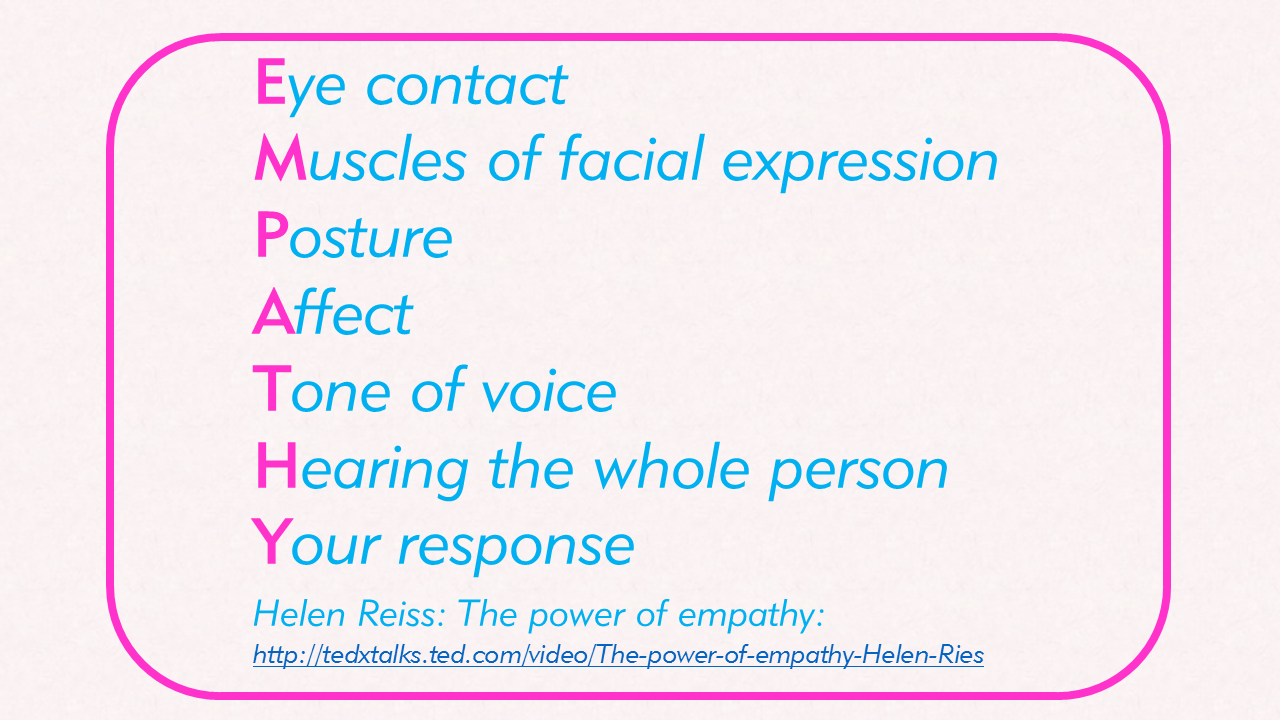
    I urge you to read Julieanne’s story, and watch the TEDxtalk by Helen Riess that Julieanne has embedded in her post. Riess explains what empathy means through this acronym:

    Empathy

    Thank you

    Thank you for reading. Please share your thought about any aspect of this post.

    jarhartz's avatarTo Read To Write To Be

    Magic moments happen in teaching, and they make our hearts soar.

    But, there are moments that can break. Us and our hearts.

    Z is struggling. He lies down on the picnic table outside the room. When we’re all inside, he enters saying, “I don’t want to sit there.” He paces. We look for a place. He settles beside N. Then moves. Again and again. Searching for a spot.

    Sitting is painful. School doesn’t fit, and the discomfort emanates from his being.

    Someone says something about dads. He blurts, “My dad doesn’t come home no more.”

    Gulp.

    Enter Reading Workshop. Z gets together with his book group they are planning. Z says, “I don’t read at home. I read here, not at home.”

    Later, Z paces in the corner, reading his book, Reading and walking, in circles. This is his way.

    Lunch happens. Z doesn’t eat. He doesn’t want to. Can’t. He just…

    View original post 333 more words

  • Ripples through time

    http://www.morguefile.com/archive/display/219606
    http://www.morguefile.com/archive/display/219606


    This week at The Carrot Ranch Charli Mills has challenged writers to in 99 words (no more, no less) write a story that includes a river and a person (or people). 

    A river? That brought to mind two ideas:

    ripples, and

    that you never step into the same river twice (from the Heraclitus quote).

    You are probably familiar with the terms “the ripple effect” and “the butterfly effect”. Both terms refer to the effects, which can be far-reaching and unintended, of small changes or events which may seem insignificant or even go unnoticed at the time.

    In his book The Ripple Effect Tony Ryan shares many stories about small actions having a positive effect on the lives of others. He has a firm belief that each of us makes a difference with our everyday actions be it through a smile, a kind word or a helping hand. He says,

    “you must believe in your personal power to create ripples that spread out and change the world. In fact, if it is not you who is going to do it, then who else do you think is likely to make the effort? Remember that every change on this planet begins with a human being somewhere, somehow. It may as well be you.”

    None of us can ever know the full impact of words and actions.  The potential for teachers to create ripples is powerful and this knowledge, for them, can induce as much anxiety as it does joy. While I am always the first to acknowledge my shortcomings, I hope that positive effects far outweigh the negative.

    Readilearn bookmark

    Sometimes expressing an opinion that differs from the status quo can be considered ‘making ripples’ or even ‘making waves’. On his blog Theory and Practice, Matt Renwick is making waves this week talking about assessment and standardised testing. (I have expressed my thoughts on the subject here and here, for example.) I wish Matt’s waves a long journey with school-changing effects.

    Matt summarises five articles about testing, including one by Noam Chomsky from which he quotes,

    “All of the mechanisms – testing, assessing, evaluating, measuring – that force people to develop those characteristics… These ideas and concepts have consequences…”

    The consequences, the ripples, are not always the ones we want: stressed and anxious students afraid of trying and of failure are just part of it. The effects reach further: inappropriateness of tasks, reduced equity, mis-placed funding, teacher dissatisfaction . . .

    Matt’s voice is not alone. He expresses what most teachers know. Unfortunately teachers are not the ones writing policies and setting procedures about what happens in schools. Often they are not even consulted. The companies who have most to gain by sales of their testing programs can be very influential.

    Matt concludes his article saying,

    “I think this information needs to be shared over and over again.  . . . To not advocate is to concede our authority as the experts in our profession. We are in the right on this one. There is nothing to be afraid of.”

    I agree with Matt. We must advocate for the children, the students, their education and their teachers. So many administrators are talking about data, proclaiming that data is what is important. Now there is even “data mining”, big data mining, as explained in this article by the Australian Council for Educational Research. Check out this great new tool for use in mining data! Don’t they realise the children, their curiosity, wonder and creativity, are the treasure!

    http://www.morguefile.com/archive/display/941659
    http://www.morguefile.com/archive/display/941659

    And as for the quote that you can never step into the same river twice because you will have changed and the river will have changed. Well I think it’s possible that that situation doesn’t apply to schools. What happens in many schools probably doesn’t look all that different from what has happened for at least the last two hundred years: children sitting in rows chanting meaningless lists. Harsh? Maybe. Reality? Pretty much.

    http://www.morguefile.com/archive/display/902642
    http://www.morguefile.com/archive/display/902642

    And now to finish in a more positive way with my flash which combines both ideas: the life-changing consequences of a seemingly insignificant event at precisely the appropriate moment, and the difference in the person and the river on two separate occasions. And the person? None else but Marnie.

    Richmond Bridge 1825

    Ripples in the river

    Marnie paused on the bridge and gazed into river.

    “My life began here,” she thought.

    . . .

    More than twenty years before she’d stood there, begging for release from torments she could no longer endure; when a gentle voice beside her said, “Beautiful, isn’t it?” and stood there with her in silence a while before asking, “Care to walk a little?”

    . . .

    Marnie flicked the agent’s card into the water and watched momentarily as it carried away the last remnants of that other existence.

    “I wonder if Miss still lives there,” she smiled. “Must say hello.”


    Thank you

    Thank you for reading. I value your feedback. Please share your thoughts about any aspect of this post or flash fiction.

  • How to teach compassion – and why

    During the past few weeks I have been exploring the idea of compassion, along with many others in the blogosphere, in response to the #1000Speak for Compassion project.

    In a TED Talk I shared in a previous post Joan Halifax questioned why, if compassion was so important, didn’t we teach it to children.

    Man-resigning

    That question provided me with a challenge. Indeed I wondered if the question was really fair. The question implied that children were not being taught compassion. And while that assumption may be true for many, it is just as true that many children are being taught to be compassionate – in their homes, in their schools, and in other groups to which they belong. By recognizing the many who do, I in no way wish to indicate that enough is being done. Indeed, much more needs to be done, but let’s not make a sweeping statement that attempts to colour everyone with the same inadequacy in teaching compassion.

    I decided to investigate just what ideas were available for teaching children compassion. I had to look no further than one of my blogging friends for evidence that children are being taught compassion through their daily activities. In a number of posts on her own blog Lemon Shark, and in a number of comments on mine, Sarah Brentyn has described practices that she uses to teach her children to be compassionate by involving them in compassionate acts.

    Some practices that Sarah recommends for developing compassion include things from as simple as using common courtesies and good manners to volunteering and making personal donations to homeless shelters.

    I defy you to read her post 1000 Voices for Compassion without being moved by her generosity and compassion. It tells a beautiful story of compassion in action, a lesson for not only her children, but for all of us.

    In her following post entitled Defining Compassion vs. Compassion in Action Sarah described asking her children what the word “compassion” meant. They weren’t sure how to answer her. But when she asked them to describe something compassionate they had no difficulty coming up with examples – from their own lives. Why? Because from the moment they were born Sarah’s children have been living in a compassionate world. They have been treated compassionately and they have not only had compassionate actions modelled for them, they have been involved in those compassionate actions. I congratulate you Sarah, for inspiring us to be compassionate, and for being a role model for us to emulate.

    Sarah Brentyn = walk the walk

    Looking beyond Sarah’s examples for further suggestions, I came across a number of other articles. Each seemed to reiterate what Sarah had already shared.

    In an article for the Huffington Post Signe Whitson, author and child and adolescent therapist, says that “experts agree that fostering compassion in young people is among the best ways to prevent verbal, physical, and emotional aggression” and shares 8 Ways to Teach Compassion to Kids:

    1. Walk the walk

    “Show young people that anytime is the right time to engage in acts of service and compassion for others.”

    1. Put the Child on the Receiving End of Compassion

    “tending to a child when he is feeling down or under the weather is the best way to teach him how to show compassion to others.”

    1. Talk the Talk

    “talk explicitly about acts of compassion . . . communicate its importance as a prized family value”

    1. Volunteer Your Time

    “When children become actively involved I acts of showing compassion to others, they learn about his value in a very deep and enduring way”

    1. Care for a Pet

    “Children who care for pets learn important values such as responsibility, unconditional love, empathy, and compassion for all living things”

    baby bird

    1. Read All About It

    “Children’s books are great for providing a window into the experiences of others.”

    Whoever you are

    1. Compassion It TM

    Wear a Compassion It band as a daily and “personal reminder to act compassionately towards someone else”

    1. Make a Wish

    The “Make-a-Wish Foundation provides hope, strength, and joy to children with life-threatening medical conditions . . . can have a truly impactful experience of being able to provide tangible help and joy to a peer”

    https://openclipart.org/detail/30019/star-by-nefigcas
    https://openclipart.org/detail/30019/star-by-nefigcas

    Other than the references to the specific organizations, Compassion it and Make a Wish Foundation, the suggestions are things that have been discussed before in various posts about compassion, including Sarah’s.

    Like Sarah, Whitson believes that it is the accumulation of little everyday actions that make a difference. She states that, as a bullying prevention trainer, she considers “big” solutions — such as policies, procedures, and trainings are trumped each and every day by the seemingly little, yet extraordinarily powerful, acts of compassion and kindness that adults show to the young people in their lives.”

    In her article about How to Instill Compassion in Children Marilyn Price-Mitchell agreed about the importance of teaching compassion, saying that  “children who participate in programs that teach kindness, respect, empathy, and compassion and who have families that reinforce those strengths at home develop the muscles they need to become civically-engaged adolescents and adults.”

    Price-Mitchell suggested that parents could help teach their children compassion by providing opportunities to practice compassion, by helping children understand and cope with anger, and by teaching  children to self-regulate.

    https://openclipart.org/image/800px/svg_to_png/192642/Children_holding_hands.png
    https://openclipart.org/image/800px/svg_to_png/192642/Children_holding_hands.png

    Jane Meredith Adams, in her article Raising a Compassionate Child says that “children have an inborn capacity for compassion … they naturally identify with stuffed animals, other kids, pets, and underdogs. The tricky part is that their empathy must compete with other developmental forces, including limited impulse control – which makes them pull the cat’s tail – and their belief that their needs absolutely must come first – which makes it hard for them to let their cousin push the col fire truck.”

    Adams says that teaching compassion is “part of day-to-day life: how you answer your child’s questions, how you solve conflict at the park, how you nudge his or her growing capacity to understand and think about other people.” Adams suggests to Promote sweetness” every day by showing children how to be gentle to others, by speaking to them softly, by rejecting rudeness, and by saying sorry when you have made a mistake. I think Sarah would agree with all of those.

    Similar ideas are proposed by  Kim McConnell, and Leticia of techsavvymama who sums it all up nicely with these suggestions:

    • Model the kinds of behaviour we expect
    • Exercise patience
    • Listen to our kids
    • Teach resiliency by providing strategies, and
    • Use quality educational content to reinforce the concept (e.g. books, DVDs and downloadable material)

    I’m sure that many of these suggestions are familiar to you through your own personal experiences, either when growing up or as an adult. I think what my exploration of this topic shows me is that, while it may be useful to teach about compassion in schools, children really only learn to be compassionate if they are treated compassionately and have compassion modeled for them, if it is an integral part of their everyday lives.

    What do you think?

    Thank you

    Thank you for reading. I appreciate your feedback. Please share your thoughts about any aspect of this post.


  • The Power of Not Yet by @TeacherToolkit

    The Power of Not Yet by @TeacherToolkit

    Some of my most popular posts of 2014 were those that discussed praise, growth mindset, assessment and failure.
    My final post for the year included thoughts about failure and the need to reflect and refine to move forward.
    It is fitting to begin 2015 with a post that revisits and extends those themes. I’m sharing a post about The Power of Not Yet I read on @TeacherToolkit’s blog. The post includes a video of Carol Dweck explaining that

    “if (students) didn’t pass a course, they got the grade “Not Yet.” And I thought that was fantastic, because if you get a failing grade, you think, I’m nothing, I’m nowhere. But if you get the grade “Not Yet” you understand that you’re on a learning curve. It gives you a path into the future.”

    I would much rather consider that I have not yet achieved my writing goals, than think I failed to achieve them in 2014. Not yet means I am making progress, and will continue to do so in 2015 and beyond.
    In the video Dweck shares research showing a difference that having a growth ‘not yet’ mindset can make to student effort and achievement.
    For me, her most powerful statement is that at the end of the talk:

    “Once we know that abilities are capable of such growth it becomes a basic human right for children, all children, to live in places that create that growth, to live in places filled with yet.”

    It’s a bit like learning to ride a bike. There is no failure, just stages of growth in ability.

    I hope you enjoy the article, and especially, Carol Dweck’s video.

    Thank you

    Thank you for reading. I value your feedback. Please share your thoughts about any aspect of this post.

  • It’s not fiction

    Most of my current writing is non-fiction with a strong focus on education. The two blog posts I publish each week generally address educational issues or share my thoughts about learning.

    In my ongoing work-for-self I develop educational materials and resources for parents, teachers and children. Some of these are available in my Teachers Pay Teachers store, and are listed on the Teaching and learning resources page of this blog.  My goal is to set up my own website on which all the resources I produce will be available.

    During my work-for-pay hours I am also involved in writing resources for teachers. Most of my published material, listed on the Writing – interest and publications page, is also educational.

    That is not to say that I am not interested in writing fiction. Over the years I have enjoyed writing in a variety of other genres including stories for children, short stories and poetry; and still do. They are just not my main focus at the moment. That may change in the future. Or it may not.

    One opportunity for writing fiction that I am very much enjoying at the moment is the weekly 99 word flash fiction challenge  set by Charli Mills at the Carrot Ranch.

    Initially my responses to Charli’s prompts were unsystematic. However it was not long before I was incorporating them into longer posts which maintained the educational focus of my blog. A recurrent theme is the importance for schooling to target the particular needs of individual children.

    Soon a character emerged: Marnie — a young girl, from a dysfunctional family, for whom school would be a threatening and meaningless experience without the support of a passionate and caring teacher. Sometimes, as with this week’s, the prompt inspires immediately and I write a story in which I hope that the message is strong enough for it to stand alone, without the support of a lengthier post explaining my thinking background.

    Here is this week’s response to Charlie’s prompt: In 99 words (no more, no less) write a story about rare gems. I’d love to know how successful you think I have been.


    glitch, trophy gem http://goo.gl/VEQVxM
    glitch, trophy gem http://goo.gl/VEQVxM

    Uncut gem

    She examined the new arrival, assessing the possible effects of integration into the existing collective. Would the group be enhanced or would this newcomer disrupt the established harmony?

    From every angle the edges were rough and uneven. The years of obvious neglect obscured the potential from any but a trained eye.

    Fortunately her eyes were keen. A bit of encouragement here, a little adjustment there, an opportunity to sparkle and display unique and positive attributes.

    She smiled. Experience had shown what could be achieved with a little polish and care.

    “Welcome to our class, Marnie,” she said.


    Thank you

    Thank you for reading. I value your feedback. Please share your thoughts about this post and flash fiction story.