Charli, of course wrote about writer’s tools and provided a multitude of links to great resources for learning about them. She also wrote about tools for dealing with snow, but I can only imagine using them. My experience with snow is very limited.
I drew upon my memories of childhood for my response. I hope you like it.
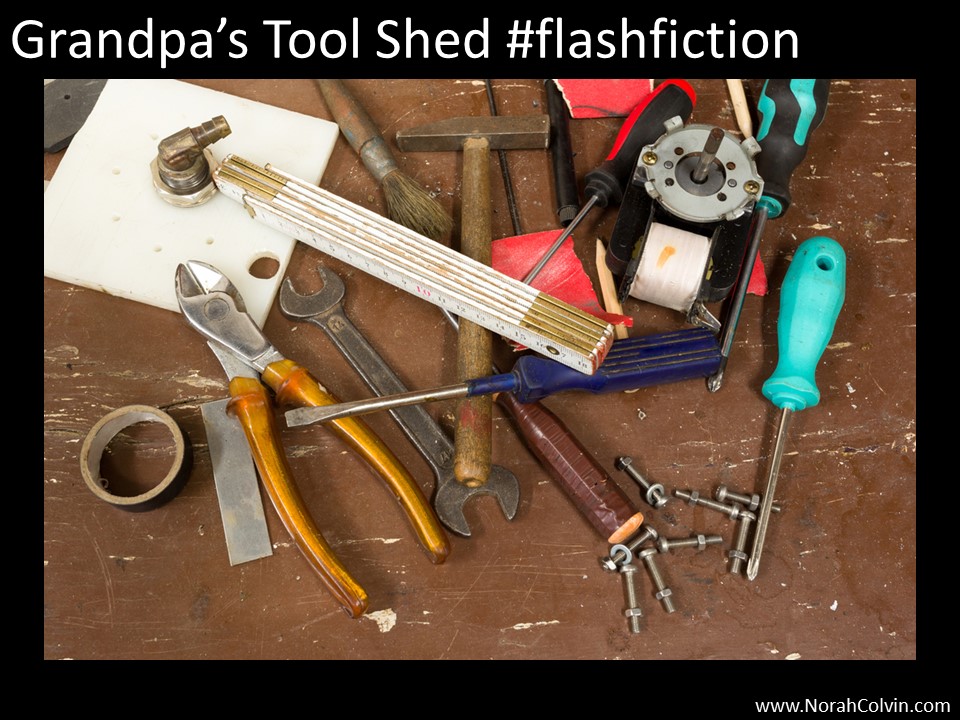
Grandpa’s Tool Shed
Jacob worked tirelessly alongside Grandpa. He loved the sweet scent of sawdust curls and the heady smell of fresh paint. He loved that ash from Grandpa’s cigarette fell unchecked into the shavings. He especially liked using Grandpa’s real tools. The plastic bench at Kindy was only a toy.
Jacob’s visits decreased but Grandpa never forgot. He left the house, the shed and all his tools to Jacob. Standing in the dark empty shed, Jacob tried to conjure the smells of Grandpa. There was nothing else to do. He rolled up his sleeves and started planing sawdust curls — in memory.
Thank you for reading. I appreciate your feedback. Please share your thoughts.
My thoughts about a candy kitchen went straight to Roald Dahl’s book Willy Wonka and the Chocolate Factory. What an incredible candy kitchen that was. And then there was the song The Candy Man performed by Sammy Davis Jr.
Who wouldn’t want to be a kid in a candy store, or better yet, a kid in a candy kitchen?
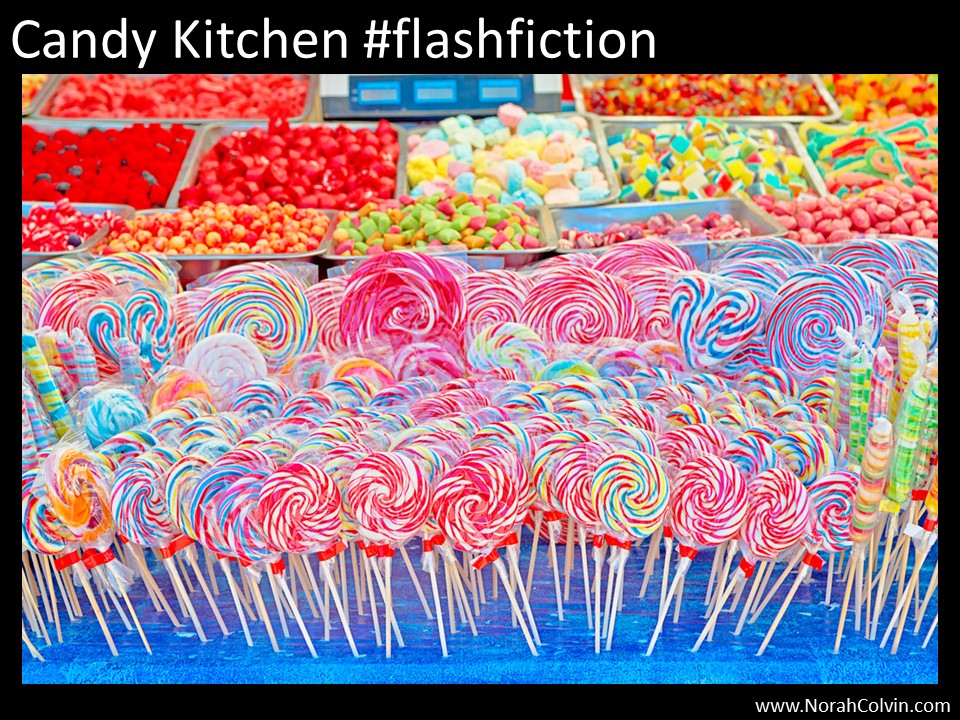
I thought of the busy kitchen of my childhood, with my mother making sweets for Christmas treats. There were rum balls and peanut brittle, chocolate bark and caramel fudge, coconut ice and marshmallow, and who knows what other sweet delights. I don’t remember them all. But I do remember one more recent Christmas when the choice of sweets became a philosophical rather than taste decision.
This is a fictionalised version of the incident. I hope you enjoy it.
Marshmallow Waves
The cooks bustled about my kitchen making sweets to gift.
“I love homemade gifts,” she said.
“Especially when we get to share,” he said, sampling largish crumbs of fudge and coconut ice.
“Marshmallow is amazing,” she said. It mixes up so light and fluffy,”
“What’s in it?”
“Sugar, water and gelatine.”
“What’s gelatine?” he asked.
I dared not tell the vegetarians, but he searched for information on his phone.
“We can’t eat that,” he spluttered. “Gelatine’s made from animal bones!”
The marshmallow mix, so light and fluffy, was binned. Not even a taste for me, although I’m not vegetarian.
Thank you for reading. I appreciate your feedback. Please share your thoughts.
Although Charli gave an extended time in which to respond, I wrote my story Mud Cake Recipe in the usually one-week allocation. Some of your lovely comments encouraged me to continue the story a little further, which I have done here.
I hope you like it.
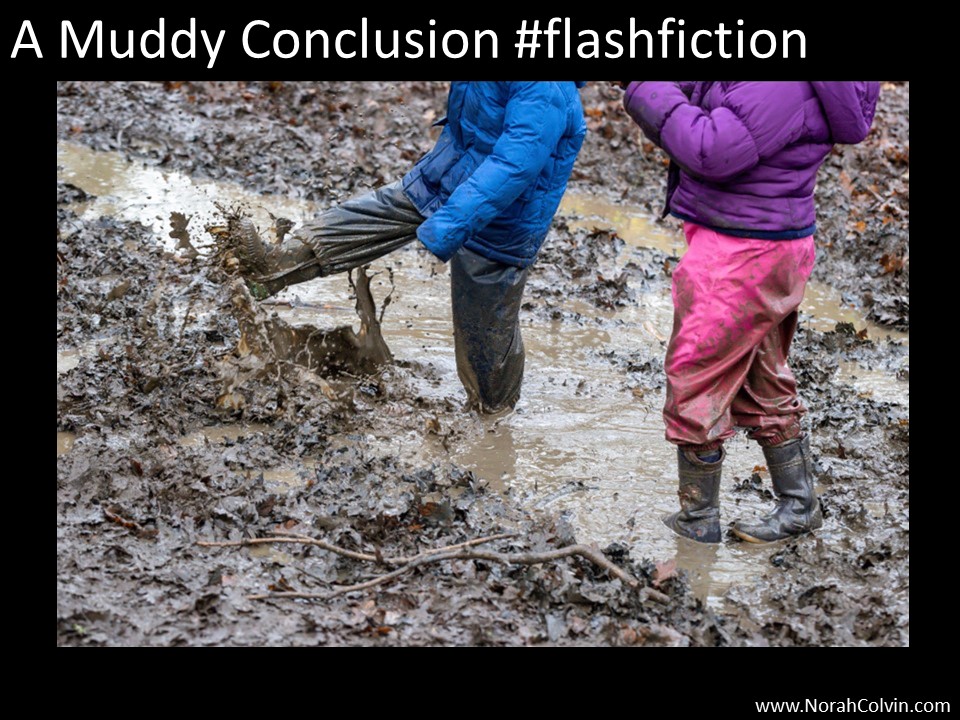
A Muddy Conclusion
“It’s just mud. It’ll wash off.”
“But it’s everywhere. Those children are unruly. My children would never —”
“And where are your children now?”
“Hmpff!” said the neighbour, stomping home, muttering about impudence, inconsideration and downright rudeness. “You haven’t heard the last of this.”
“Come on,” said the mother. “Let’s get you and the fence cleaned up.”
With buckets, brushes and rags, the children washed the fence. When it was done, they turned on each other. “Bullseye! Got you!” They tussled and tumbled. Laughter filled the air.
The neighbour glowered at the mud-covered children. “Well, I never,” she said.
Thank you for reading. I appreciate your feedback. Please share your thoughts.
As you probably already know, as an educator, I primarily write for and about children. Mud is perfect for young children. It has such a great texture for play and responds in so many ways when we squish it, splatter it, stomp it, throw it, roll in it. There is something enticing about getting wet and dirty, and children seem to find puddles and mud totally irresistible. I hope I’ve captured a little of that excitement in my flash.
Mud Cake Recipe
How to Make Mud Cake
Ingredients
A patch of loose soil
A generous supply of water from the sky, hose or bucket
Rays of sunlight
A sprinkle of imagination
A torrent of laughter
Utensils
Gumboots
Method
Add enough water to soak the soil. It must be wet, not moist.
Stomp until well-mixed with no visible remnants of dry soil.
Squish the mush by hand until the hands are completely encased.
Spread by hand the gooey mixture over face, hair and clothing until well covered.
Terrorise the neighbourhood.
Leave in place until dry in the sun and the mud cakes.
Thank you for reading. I appreciate your feedback. Please share your thoughts.
She watched from the side, longing to join in, fearing being ignored. Or worse, banished. Determined to beat her shyness, she’d shuffle one step forward, then the old insecurities would immobilise her, reminding her she didn’t belong. One foot forward. Stop. Another foot forward. Stop. She was almost there when the game paused, and they looked directly at her. She froze. They feigned whispers hidden behind hands. She didn’t need to guess. She ran and hid behind a tree, wishing for invisibility. “I’ll never belong!” Soon one face appeared, then others. “Please come and play with us,” they chorused.
Thank you for reading. I appreciate your feedback. Please share your thoughts.
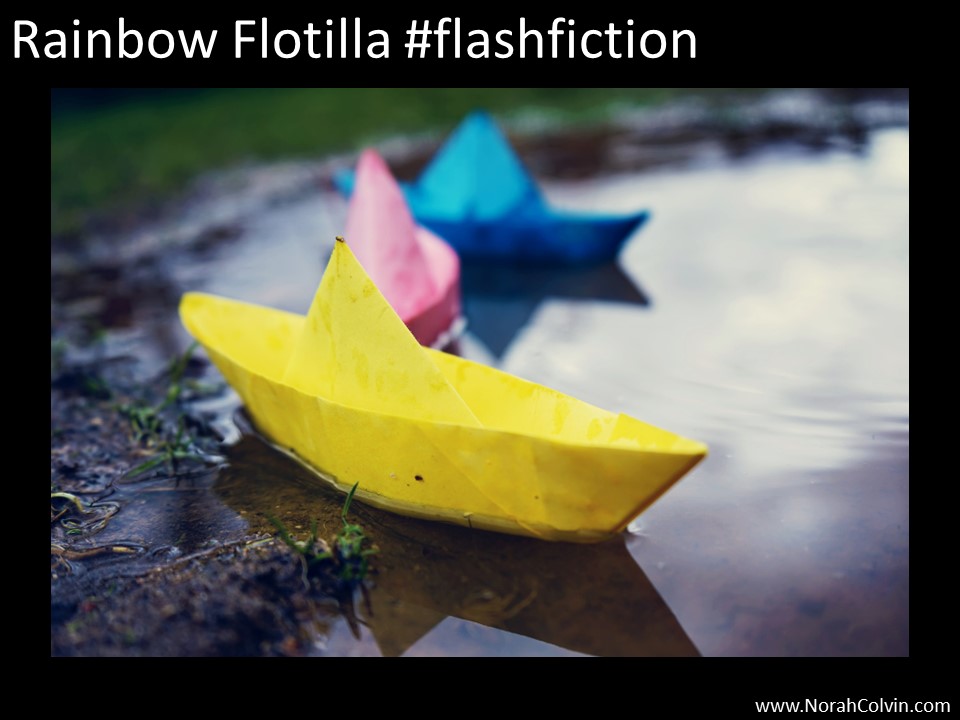
She wrote a message on each piece of paper and folded them into tiny boats. At the lake, she launched them from the bank, then watched the rainbow flotilla sail across the water. Curious ducks investigated, capsizing one or two, but the rest sailed on. A turtle popped up, knocking one off-course. It smashed on the rocks, but the rest sailed on. A dragonfly alighted on one, enjoying the free ride as the rest sailed on, finally reaching the other side. A child fished one out and opened it to dry. He read the message, then smiled and waved.
Thank you for reading. I appreciate your feedback. Please share your thoughts.
I always loved writing with my children at school. It was such a buzz as they put their stories and ideas on paper. They loved making books of their stories and reading them to their classmates and other classes. In fact, to anyone who would listen. I always provided them with as many audiences as I could as, isn’t that the purpose of writing — to be read? They would take their books home to read to their family and pets. Sometimes I would type up their stories and compile them into an anthology for them to take home and share.
In my class, we were all writers, all authors. Sometimes, older siblings felt they had to share their ‘superior’ worldly knowledge and burst their happy balloons. My story is about that and about the fact that sometimes a belief in oneself is more important than what anyone else thinks. I hope you like it.
Imposter Syndrome
When Dave revisited his junior school, he smiled to see the chair in its usual spot.
“Get down,” his big sister had said. “You’re not allowed on there. It’s only for authors.”
“I am an author,” Dave said, holding up the book he’d made in class.
“Not a real author. Real authors have real books published by real publishers, and their feet touch the floor. Anyway, it’s time to go.”
This time, when Dave sat in the chair, his feet touched the floor. The audience hushed as he opened his real book and began to read. Imposter no more.
Thank you for reading. I appreciate your comments. Please share your thoughts.
This is my response. It is based on a picture book manuscript I am working on at the moment, hoping to submit to a publisher soon. Fingers crossed. That story is based upon another 214-word story I wrote earlier in the year, which you can read here. All three are the same but different. I hope you like it.
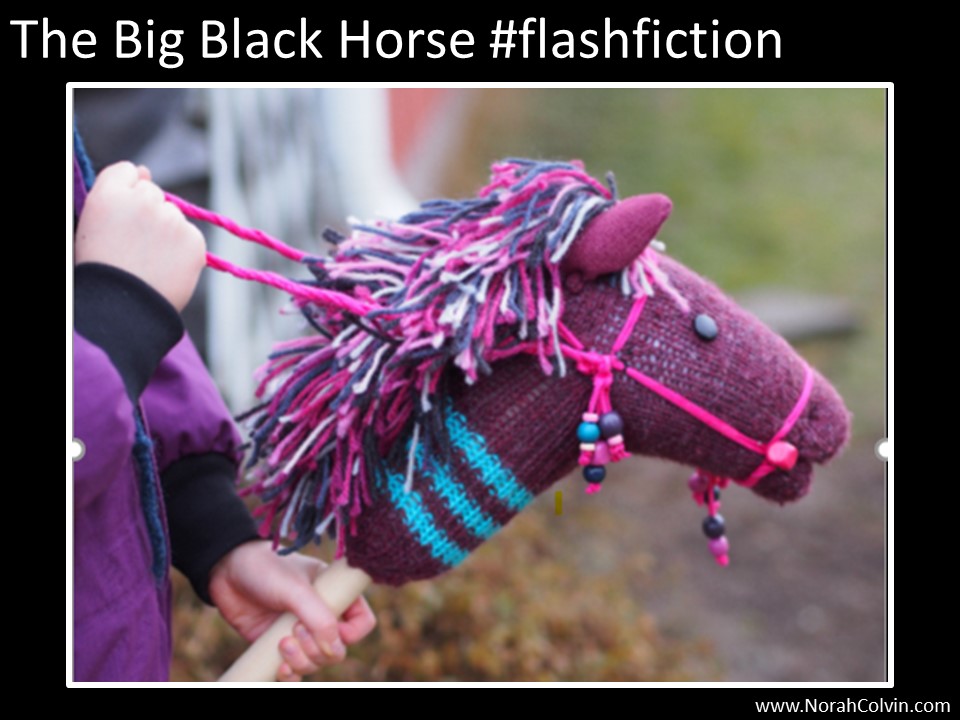
The Big Black Horse
The riders considered the available horses. Fergal chose the big black, Valentina the silver. They mounted their steeds and entered the arena. Fergal cantered to one end and Valentina the other. They steadied their mounts and faced each other.
“Let the contest begin! Charge!”
The contestants galloped towards each other.
Nearing the centre of the arena, Fergal’s black steed balked, tossing him off. Valentina wheeled her horse around, dismounted and raced to Fergal’s side.
“You okay, Fergal?”
“It’s only a scratch.”
“I’ll get a plaster from Miss.”
“It’s okay. Let’s go again. Can I have silver this time?”
“Okay.”
Thank you for reading. I appreciate your feedback. Please share your thoughts.
Deidre laughed, sang and clapped on cue at her first-ever real live Christmas pantomime, until … the clowns prepared the cake. Deidre knew how to make cakes — she’d made them with her mum. The clowns obviously didn’t — tipping more flour over each other than into the pan, splashing the milk, and cracking in eggs, shells and all. The audience roared as the clowns placed a lid on the pan, shook it vigorously, then tipped out a magnificent cake. When offered a slice, Deidre folded her arms and clamped her lips. A cake made like that could never taste good.
👩🍳
This story is inspired by a true event. However, the only thing I remember is being horrified at the way the clowns put everything into the pan, including the egg shells, and turned out a cake. In writing, I tried to get back to what an expanded memory may have included. I hope it has worked.
The thought of being horrified at everything going into the pan in which the cake is to be cooked is now quite funny, as I know there are quite a few recipes made that way; including one of my favourites to make with children. If I was to ever be in a cooking show, this is what I’d make. And there’s not even an egg in sight.
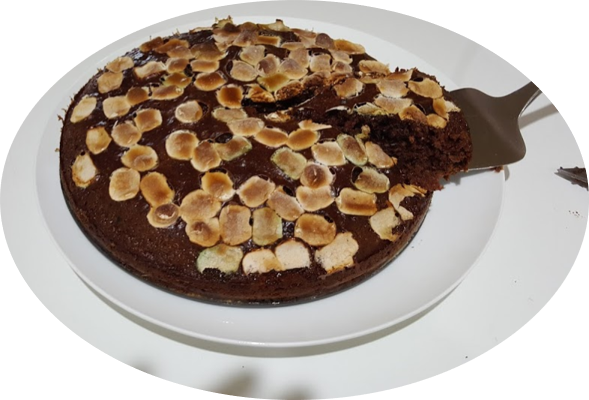
Moon Cake
Ingredients
1 1/2 cups plain flour
1/2 cup sugar
1/2 cup brown sugar
4 tablespoons cocoa powder
5 tablespoons butter, melted
1 teaspoon vanilla
1 teaspoon bi-carbonate of soda (baking soda)
1 tablespoon white vinegar
1 cup milk
2/3 cup miniature marshmallows
Utensils
A cake pan
A cup measure
A mixing spoon
A tablespoon
A teaspoon
Method
1. Preheat the oven to 180° (350⁰F, Gas mark #4)
2. Put the flour, sugars, salt and cocoa in the cake pan. Mix them carefully. You will have the light brown moon sand.
3. Use the mixing spoon to make a big crater in the middle so the bottom of the pan shows through. Make another medium-sized crater and a little crater.
4. Put the baking soda in the medium-sized crater.
5. Pour the melted butter into the big crater.
6. Pour the vanilla into the little crater.
7. Pour the vinegar onto the bi-carb soda in the medium-sized crater. Watch it become a bubbling, foaming volcano.
8. When the volcano stops foaming, pour the milk over the moon sand and carefully mix it all together until it looks like smooth moon mud.
9. Scatter marshmallow rocks over the surface.
10. Bake it for around 35 minutes, or until a toothpick stuck in the centre comes out dry. Let the cake cool in the pan.
The phrase ‘when pigs fly’ means that something is impossible, it will never happen. The phrase is an adynaton — don’t you love that word? I just learned it — an exaggeration, hyperbole. I seem to think I heard the term many times growing up, though I can’t recall about what in particular. Maybe it was life in general.
The first thing I thought about when reading Charli’s prompt is a hilariously delightful picture book by the fabulous author-illustrator Mo Willems: An Elephant and Piggie Book Today I Will Fly!
If you don’t already know the story, I suggest you acquaint yourself with it with this video. It will only take a couple of minutes.
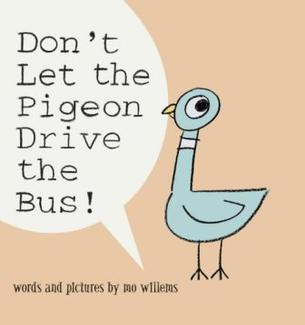
I remember when I was first introduced to Mo Willem’s work. A colleague came rushing into my room one morning and pushed Don’t Let the Pigeon Drive the Bus! at me, saying, “You’ve got to read this!’
I would have to say, the book didn’t have instant cover appeal, but she left it with me, and I continued with my preparations for the day. Later, when I sat down to read, I knew this book was something special. I loved it and the children loved it. We read it and read and read it. It had us in stitches. Unsurprisingly, it was a Caldecott Honor book.
After that, we read all the Mo Willems books we could get our hands on. The children brought in those they’d purchased or borrowed from the local library, and I couldn’t resist buying additional titles whenever I saw a new one in a book store I just happened to be passing.
When I visited New York in 2016, I was delighted to find an exhibition of the Art and Whimsy of Mo Willems at a museum not far from my accommodation. I couldn’t go through the exhibition shop without purchasing a book or two or more and also came home with a pigeon and a duckie soft toy. I am, unreservedly, a Mo Willems fan and I have the enthusiasm of my colleague to thank for that. If you would like to find out more, please visit the Mo Willems website.
And Mo is not just for little kids. He is for big kids (like us) and writers too. He has wonderful advice for teachers and writers alike when he discusses creativity, the need to play and the ever-present failure. If you haven’t yet had the pleasure of meeting Mo, please watch his video on The Joy of Creation. It will inspire you.
In another video on his website, Mo explains how to draw a piggie from the Elephant and Piggie books. The inspiration for my flash came from this video. The flash is also a nod to my favourite ever principal Peter Kidston who not only valued my work as a teacher, he respected it enough to provide me the freedom to teach how I wanted, knowing that the children and their learning was at the centre of all I did. I wrote about Peter in this post.
I hope you enjoy my story.
Flying Pigs
Children’s squeals drew the principal to the window. Ms Irena’s children were running about the yard tossing bits of paper in the air. What were they up to this time?
“We read a book about a flying pig,” explained Ms Irena. “The children decided to make their own pigs and see if they could fly. Then they wanted to see whose would fly the farthest or highest. After, we’ll write stories about our pigs. So, it’s literacy, art, maths and science rolled into one — STEAM!”
The principal smiled. “A flight of pigs. With Irena, even the impossible seems possible.”
Thank you for reading. I appreciate your feedback. Please share your thoughts.

















 Norah Colvin