Live Love Laugh Learn … Create the possibilities

Tag: Carrot Ranch flash fiction

  • When you’re on a theme, stick to it

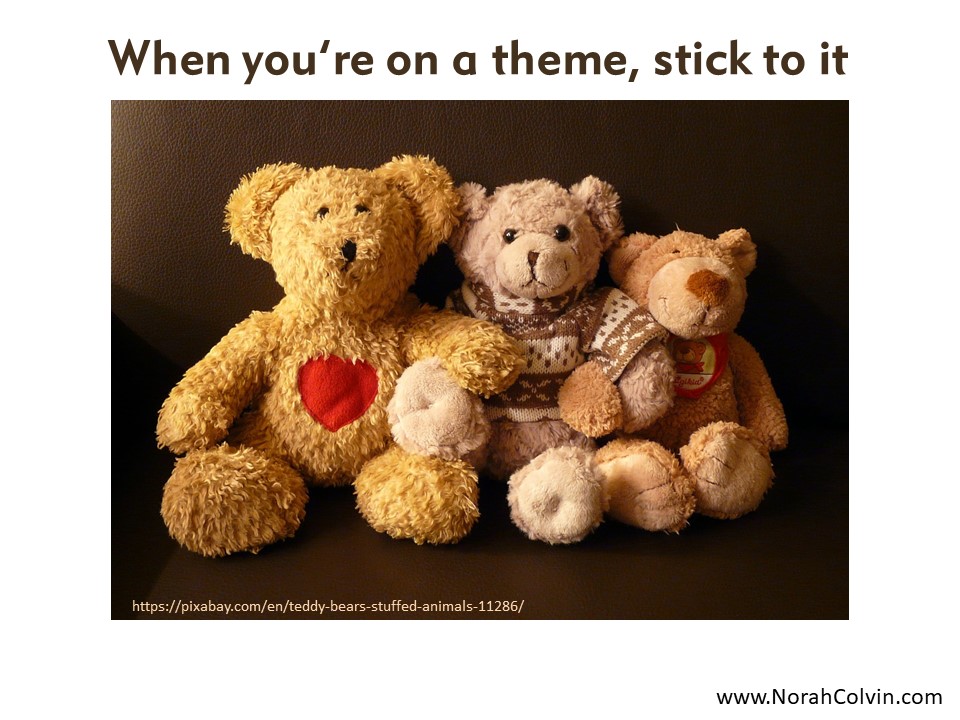
    When you’re on a theme, stick to it

    Education is my theme. It’s my passion. Sometimes I think I should get another interest, but I’m stuck with this one. Sometimes I get stuck with a theme within a theme too. That’s happening at the moment.
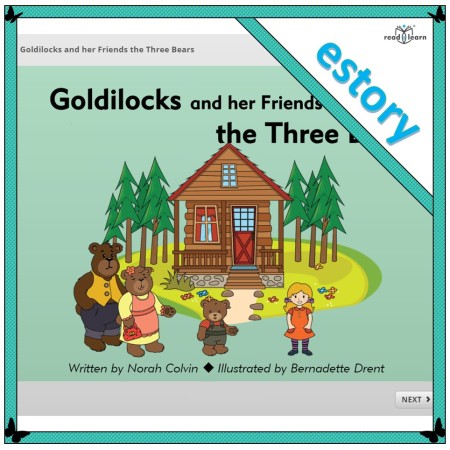
    Goldilocks and her Friends the Three Bears interactive innovation

    A couple of weeks ago, I uploaded an innovation on the traditional story of Goldilocks to readilearn, a collection of teaching resources for the first three years of school. I also added some suggestions for using the resource to teach reading and writing, including sight words in context. I have other supporting resources in progress to be added to the collection soon.

    While my story Goldilocks and her Friends the Three Bears is not really a fractured fairy tale, it’s simply a retelling with an alternative ending; I’ve also been thinking of fractured fairy tales for my Carrot Ranch Rodeo Contest coming up next month. (Look for further details to be published at the Ranch this week.)

    So stuck on this theme am I, that I wrote a 297 (3 x 99) word story as a response to Charli’s Tuff prompt “Papa’s Bar”. While this Free-Write contest is now closed (writers have only twenty-four hours to respond to the prompt), there will be four more chances to enter the TUFFest Ride event with the next one scheduled for September 19. Be sure to look out for it if you want to be in it.

    Note: I’m not sure where or what the Papa’s bar is that Charli alluded to, but I am sure that it’s not what I wrote my story about. In Australia, when we play tiggy, that you might know as tag or tig, or some other name, we might allocate a certain spot as ‘bar’. This means that you are safe and cannot be tagged when on or touching that spot. Sometimes, players will attempt to allocate a spot as bar just as they arrive at it in order to avoid being tagged.

    While I have no thoughts that I may win any of the TUFF contests, it is fun having a go. This is what I wrote in response to the Papa’s Bar prompt. I hope you enjoy it.

    bears sleeping

    Papa’s Bar

    Out in the woods lived a family of bears; Papa Bear, Mama Bear and baby bears five. All summer long, Papa Bear toiled, ensuring his family were contentedly fuelled, ready to sleep through the winter’s long dark. They filled up their bellies with berries hung low, with fish in abundance in streams flowing clear, and hives’ full bounty of gold. Mama and babies had no need to complain, every meal Papa made, a sumptuous feast.  When autumn arrived, and food became scarce, Papa Bear said, ‘Now’s time for bed. Close your eyes little ones, dream sweet dreams until spring.’

    The babies were restless, not ready for sleep.

    ‘We need a story,’ a little one said. ‘Tell us about life when you were a cub. What did you eat? Where did you play?’

    ‘Just one story — then sleep.’

    ‘We need a drink first,’ said the cubs.

    ‘Okay, but lickety-split.’

    They had just settled back when another voice said, ‘I’m hungry.’

    ‘Me too,’ chimed the others.

    ‘Can’t be,’ said Papa Bear. ‘No food until spring.’

    ‘Awh,’ they chorused.

    ‘I could make some porridge,’ yawned Mama Bear.

    ‘Yay! Porridge!’ said the baby bears.

    ‘But then you must sleep,’ said Papa Bear.

    But they didn’t. Before his story was through, Papa Bear was snoring with Mama Bear nestled beside him.

    ‘Let’s play tag,’ smirked one.

    ‘I’m It,’ said another.

    They took turns to run and catch, and through it all, the parent bears slept.

    At last, the littlest bear yawned. No more running and catching, he was ready for sleep. He scrambled over Papa Bear, escaping the tagger’s clutches with a warning, ‘Can’t get me. Papa’s bar.’

    His eyes closed and then, one by one, they snuggled into a big bear hug, murmuring ‘Papa’s bar’ as they drifted off to sleep.
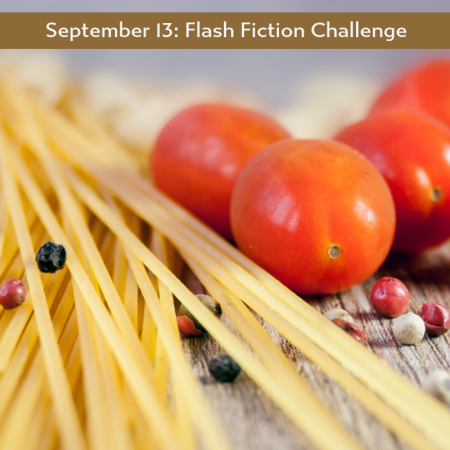
    Pasta prompt for Carrot Ranch Flash fiction prompt by Charli Mills

    When Charli Mills of the Carrot Ranch posted this week’s flash fiction prompt, challenging writers to In 99 words (no more, no less) write a story that includes pasta. It can be spaghetti, macaroni and cheese, or any variety. It can be a meal or a work of art. Go where the prompt leads, how could I not get the bears in on the act again.

    This is my response. I hope you enjoy it too.

    Pasta for Breakfast

    Papa Bear pushed back his chair. “Not this muck again.”

    Mama Bear stopped mid-ladle. “It’s Baby Bear’s favourite. I— I thought it was yours too.”

    Baby Bear’s lip quivered.

    “Pfft! Sometimes a bear needs real food.” He grabbed his hat. “I’m going for a walk.”

    “Papa!” Baby Bear went after him.

    Mama Bear dumped the porridge, pot and all, into the bin, grabbed her hat and followed.

    “Where are we going?” asked Baby Bear.

    “Somewhere nice for breakfast. It is spring after all.”

    Papa Bear paused outside BreakFasta Pasta, then went in.

    Mama Bear smiled; pasta was her favourite.
    Thank you blog post

    Thank you for reading. I appreciate your feedback. Please share your thoughts.

  • How important is classroom decoration?

    How important is classroom decoration?

    For a relative newcomer, in my terms anyway, Pinterest has made quite an impact on the world, particularly on the world of the classroom.

    If you’re in doubt, just Google ‘Pinterest classroom’. Your search will bring up hundreds, indeed thousands, of ‘best’ classroom décor ideas.

    Decorating classrooms seems to be the thing of the moment. It would be easy to believe that an elaborately decorated classroom is of greatest importance to teachers today. While we always did it (decorated our classrooms), we didn’t share and compare on social media. How could we? Social media didn’t exist. Oh, horrors! Really? Really. Pinterest is not only new to this century. It’s new to this decade, and the sharing phenomenon isn’t exclusive to Pinterest.

    Concerns about harmful effects of social media messages on young, and not-so-young, people’s body image are often expressed. I wonder if there may be similar harmful effects of these classroom images. If teachers compare their classroom décor with that of others, perhaps in very different situations, will they constantly come up short? If they spend copious amounts of time, and money, on decorating their room, how much will they have left for professional reading and planning? As with body image, are these images sending the wrong message?

    While I agree with the importance of setting up a bright, welcoming classroom, I also believe that space must be left for the display of children’s work. While I don’t believe in the bare wall theory as proposed by some, if there is too much on the walls, and particularly if they didn’t contribute to it, children may either ignore it or simply find it distracting.

    What do you think? Do you remember the walls of your childhood classroom? Mine were mostly bare. I don’t remember anything other than a Crucifix (I went to a Catholic school), a photo of the Queen, and a flip book of large cloth charts.

    What about your children’s classrooms, or your own (if you are a teacher)? How are they decorated? I’d love to know your thoughts.

    flash fiction prompt to write about an epic workplace

    While I had been contemplating a post about Pinterest classrooms for a while, this week seemed the perfect time, even if this isn’t the post I had been planning. You see, Charli Mills at the Carrot Ranch challenged writers to In 99 words (no more, no less) write about an epic workplace. It can be real or imagined. Go where the prompt leads.

    Most of my working life (and all of my school days, which together equate to most of my life 😊) has taken place in a classroom. I had brief tilts at other minor roles, but overall, the classroom has been my workplace. With a career spanning five decades (but not fifty years – yet), I think it could be categorised as epic.

    However, rather than tackle my career, I realised that Pinterest-Inspired Classrooms fitted neatly into the EPIC acronym. as long as I could find that exceptional ‘e’ word. This is my response. I’d love to know what you think.

    It’s EPIC

    Roll up! Roll up! Come one, come all. This new attraction will have you enthralled. Bring parents, bring partners, siblings and friends. No one’s excluded. It’s Earth’s latest trend. Your eyes won’t believe. Your ears won’t deceive. It’s a sensory explosion, for all to explore. It’s entertaining, electrifying, edifying too. It’s a universe first, and it happened on Earth. It’s empowering, engrossing. There’s so much to see. With no space left empty, it’s elaborate, exciting, extols energy. With exquisite exhibits and enlightening exposures, it’s the most, enticing, enriching, educational environment, established on Earth. It’s EPIC, the Exceptional Pinterest-Inspired Classroom.

    Thank you blog post

    Thank you for reading. I appreciate your feedback. Please share your thoughts.

  • Lemons, Limes and Other Mysteries

    Lemons, Limes and Other Mysteries

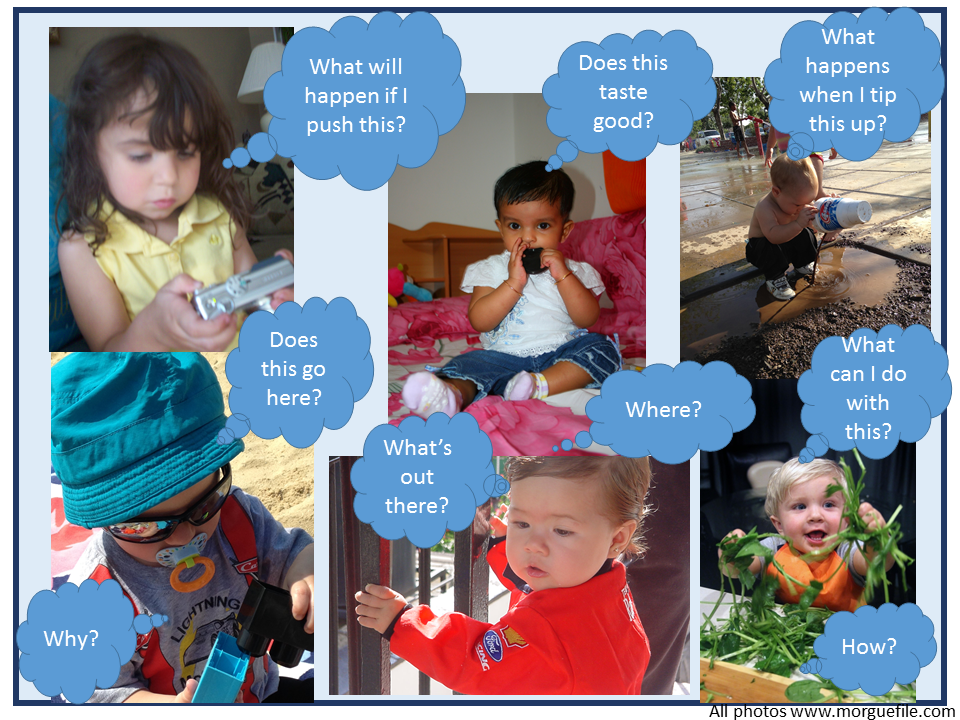
    Children are question machines, churning out question after question: why is it? how does it? Their mission is to find out about the world and everything in it, not to drive their parents crazy, as many believe.

    Of course, the best response to children’s questions is to help them find the answers, unlike in this scenario.

    Unknown source. Apologies. Happy to attribute if informed.

    I always love the story of David Attenborough shared by Michael Rosen in his wonderful book Good Ideas: How to Be Your Child’s (and Your Own) Best Teacher. Rosen says that, as a child, David took an interest in bones and if he was out walking and found some he would take them home and ask his father (a GP so would probably know) about them.

    But his father didn’t just tell him. Wanting his son to be curious and interested in finding things out for himself, he responded, for example: “I wonder if we can work it out . . .” They would then look through books about zoology and anatomy and try to identify the bone’s origin.

    I would like to have been a parent like David Attenborough’s father, perhaps more often than I was. But sometimes the situation is not conducive to an immediate quest for answers, and oftentimes we don’t have a satisfactory one to give.

    Our language, with multiple meanings for the same word, and an abundance of phrases that can’t only be taken literally, is not the easiest to learn. I often marvel at how well our children learn it and wonder even more about the complexity our language has for learners of English as another language.

    Charli Mills flash fiction challenge bottleneck

    This week at the Carrot Ranch, Charli Mills challenged writers to In 99 words (no more, no less) write a story about a bottleneck. You can be literal or use the term to describe congestion. Go where the prompt leads.

    Bottleneck is one of those words that can’t always be taken literally. I’ve used my response to Charli’s prompt to honour parents who are under constant scrutiny and bombardment with questions from their little ones. Sometimes it feels more like a battleground and they do well to maintain a peaceful composure. I hope you enjoy it.

    Lemons, Limes and Other Mysteries

    She hit the brakes and thumped the steering wheel.

    “Mummy swore.”

    “Didn’t.”

    “I heard.”

    “Why we stopped, Mummy?”

    “There’s a traffic jam.”

    “Jam? I love stawbrey jam sammich.”

    “Not that jam — must be a bottleneck up ahead.” Please be a merge, not an accident.

    “We learned ‘bout bottlenecks today.”

    “What?”

    “Live in the ocean. Maminals, like us. Where’s bottleneck, Mummy?”

    “Not bottleneck, Jamie, bottlenose.”

    “You said bottleneck.”

    “I meant — aargh!”

    Finally, they were home.

    “You look frazzled, hon.”

    She rolled her eyes and took the beer.

    “Why lemon is in your bottle neck?” asked Jamie.

    “Because it’s not lime.”

    Photo via Good Free Photos

    Why do they put that lemon or lime in a Corona? Do you know?

    Thank you blog post

    Thank you for reading. I appreciate your feedback. Please share your thoughts.


  • Wishing on a comet

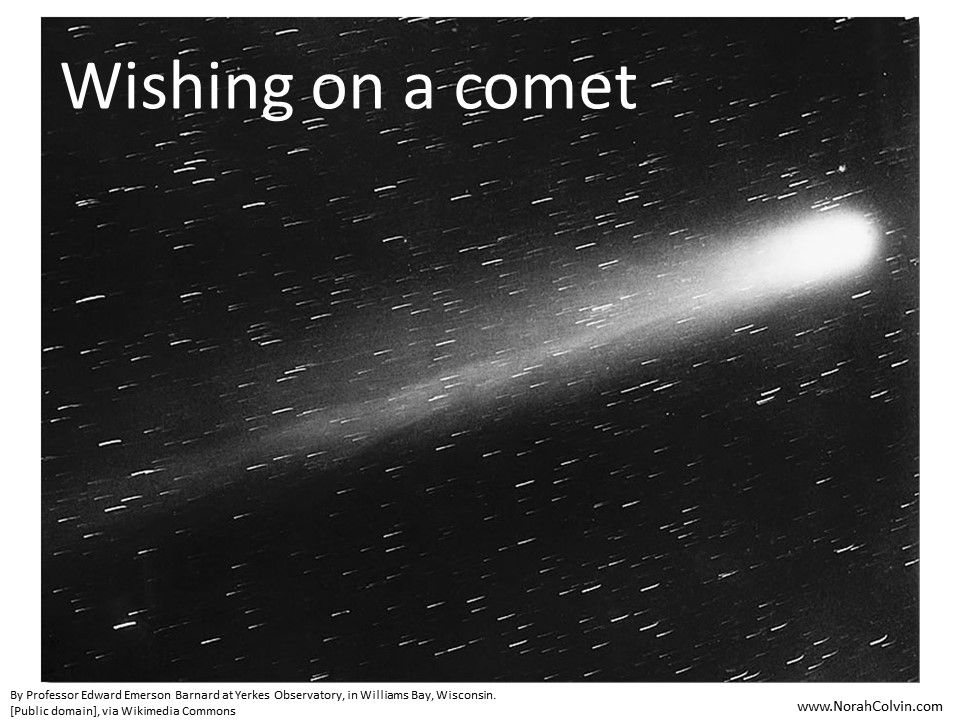
    Wishing on a comet

    Comet flash fiction prompt by Charli Mills at the Carrot Ranch

    This week at the Carrot Ranch, Charli Mills challenged writers to In 99 words (no more, no less) write a story about a comet. You can consider how it features into a story, influences a character, or creates a mood. Go where the prompt leads.

    When I think of comets, I think of Halley’s Comet which passed by in 1986. At the time my son was twelve, my daughter was not yet born, and I was teaching a class of seven to nine-year-olds. My son and the children I taught may be lucky enough to see the comet for a second time when it returns in 2061. I wonder how many will still have the time capsule we made that year, and if they have it, think to open it. They will all be in their eighties.

    It wasn’t an elaborate time capsule; really just a large envelope with stories and information about us, and I’m not sure what else. I was recently in contact with one of the girls from that class and she remembers the night we had a sleepover at school to look at the comet, and she still has the time capsule she made. I think that’s pretty cool. How special to create these shared memories that last.

    My response to Charli’s prompt is about creating shared memories.

    You may recall my previous two flash stories, the first of which was my first attempt at writing romance. He invited her to go camping. She was reluctant but gave in when she ran out of excuses. When she arrived at the campgrounds she saw the words “Marry me” spelled out with solar fairy lights. But he was nowhere to be seen.

    It got such a good response that I continued the story the following week, leaving the conclusion open-ended. This too received a great response, thank you, and encouragement for me to continue the story along with lots of suggestions and ideas of how to do so. You were undecided about his intentions – were they honourable or not? At the end of the episode, she pushes back the tent flap and screams. But at what? It’s at this moment that I pick up the story, guided by Charli’s prompt. I hope you enjoy it.

    flash fiction story about a comet and a marriage proposal

    An Imperfect Proposal

    “What the…?”

    He scrambled through bushes, slipping and sliding on twigs and gravel in haste to his love. When he reached her, she was doubled over holding her belly.

    “What happened?”

    She shook her head.

    “What’s wrong?”

    “I thought…” Her body shook.

    “What?” he soothed, wiping away tears.

    “Snake… I thought…” She pointed.

    On the bed lay the strap of his telescope bag coiled neatly.

    “You’re laughing?”

    She nodded.

    ——

    Camping became their family tradition, but their children’s favourite story was of the “snake” that frightened Mum, not of the comet that graced the sky the night that he proposed.

    Thank you blog post

    Thank you for reading. I appreciate your feedback. Please share your thoughts.

  • Peering from the bushes

    Peering from the bushes

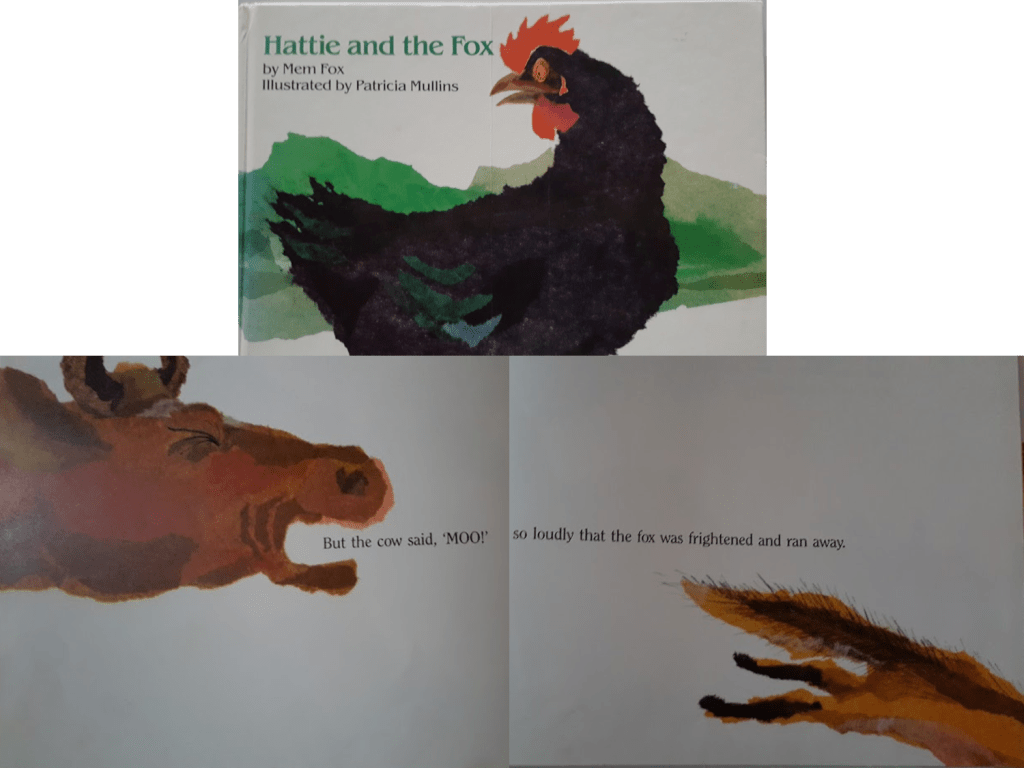
    Hattie and the Fox by Mem Fox

    One of the multitude of my favourite picture books is Hattie and the Fox, written by Mem Fox and illustrated by Patricia Mullins.

    I am allowed a multitude of favourites, aren’t I?

    Like children, it’s too hard to choose just one. I don’t mean just biological children, I mean the children I teach. They all become ‘my’ children the moment they enter my classroom and remain that way forevermore. How could I choose a favourite?

    Hattie and the Fox is a fun story for reading aloud. The children love to join in, especially with the dialogue, and even enjoy acting it out. The cumulative and repetitive features of the story, along with the rhythmic text, support beginning readers who beg to read the story again and again.

    While my daughter never liked it when I ‘put on voices’ to read, the children in my class did. Somehow they didn’t think it was me putting on voices. They became involved in the story and thought it was the characters speaking. I used to smile to myself when they’d say things like, “That cow, she’s so funny.” And mimic my reading. Although I am no Mem Fox (you can listen to her read the story here), they enjoyed it anyway.

    In the story, Hattie the hen announces that she can see a nose in the bushes. The other animals show little interest. Even when Hattie announces that she can see two eyes, two legs, a body, four legs and a tail, they are not concerned. Only when she realises and announces that it’s a fox peering from the bushes, do the others respond.

    Peering from the woods, Charli Mills flash fiction Carrot Ranch

    I couldn’t help but think of Hattie and the eyes peering at her from the bushes when Charli Mills challenged writers to In 99 words (no more, no less) write a story that includes  an act of “peering from the woods.” Go where the prompt leads.

    We don’t have “the woods” in Australia. We have “the bush”. There could be any number of things peering at us from the bushes such as possums, koalas, kangaroos, drop bears, bunyips, or a great variety of birds. Most are fairly harmless. It was deer peering from the woods in Charli’s story.

    While deer are not native to Australia, some were imported for hunting and farming purposes. Many of those escaped to freedom. Some roam the suburbs destroying vegetation and creating hazards for unsuspecting motorists. We’ve occasionally come across a group of them in the middle of the road when we come home late at night. At Christmas time the road signs warning of deer are decorated with tinsel and red pompom noses to add to the festive mood.

    two flash fiction pieces about yellow tents

    Last week, in response to Charli’s ‘yellow tent’ prompt, I attempted a romantic story which was rather well received. I decided to continue the story. You may remember that a reluctant camper, unable to find any further excuses, finally agreed to join her boyfriend. When she arrived, the campsite was deserted except for one yellow tent lit by solar fairy lights spelling the words, “Marry me,” and her fears melted. But should she have dropped her guard?

    Surprise!

    She parked her car beside his and grabbed her bag. As she locked the car, she looked around. Where was he? He said he’d be watching for her. Cicadas buzzed louder than her footsteps crunched the gravel. A bird startled as it squawked and flapped overhead. Where was he? He must know she’d arrived. Even with the fairy lights, it was darker than she liked.  Peering from the bushes, he willed her to be brave, to open the tent, to find what he’d made for her. Finally, tentatively, she pushed aside the flap. Her screams silenced the night chorus.

    Is that what he expected? What do you think was in the tent? Why was he peering from the bushes? What happens now?

    Thank you blog post

    Thank you for reading. I appreciate your feedback. Please share your thoughts.
  • Intent on yellow tents

    Intent on yellow tents

    yellow tent flash fiction prompt Carrot Ranch

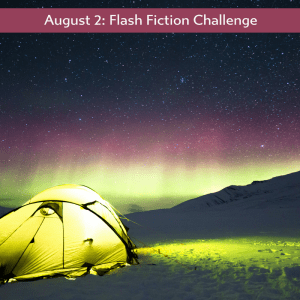
    This week at the Carrot Ranch, Charli Mills has challenged writers to In 99 words (no more, no less) write a story that includes a yellow tent. Where is it and who does it belong to? Think of how the color adds to the story. Go where the prompt leads.

    I am not a camper. I had no experience of camping as a child and only two as an adult. The first, I finally succumbed to pressure from friends who assured me I’d love it. How could I not? They did. I didn’t.

    The second I only vaguely recall though I am assured it did really happen. I think I’ve obliterated it from my memory. Sadly for my children, they also missed out on the camping experience though they did attend school camps (not in tents) and occasionally go camping now that they make their own choices.

    My best experience of camping was at school with my year ones. One of the families was keen on camping and the father was a wonderful volunteer in the classroom. His shift work as a firefighter meant that he was often available to help us out. When we were reading books about camping, we had a ‘camping day’. This wonderful dad came in and set up a tent in the playground, made a little campfire, and cooked us all a camp lunch. We spent the day in the playground getting the full camping experience. It was great fun, especially for the children who didn’t get those experiences with their families, and a good way to build background knowledge and vocabulary. I enjoyed it because I got to go home to my nice comfy bed to sleep in. 😊

    Of course, children love to play camping too, building tents over furniture in bedrooms and living rooms and with whatever they can find in the back yard. It is a wonderful activity for imagination.  The construction itself can take a bit of working out and involves spatial thinking, collaboration, persistence, resilience and the ability to try new methods. I believe setting up a real tent may require some of those skills as well.

    For my response to Charli’s prompt, I couldn’t resist writing about children and their imaginative play, but I also thought I’d try my hand at a romantic piece, which is almost as rare for me as camping, so I have done two. I’d love to know which you prefer.

    With Intent I

    They dragged the upended chairs into position, stacked boxes in the middle and positioned the quoits hob on top.

    “Now a cover,” said one.

    “I know,” said the other. They raced inside.

    “What are you doing?” asked Mum.

    “Nothin’,” said one.

    “Just playin’,” said the other.

    “Don’t make a mess,” said Mum.

    “We won’t.”

    The yellow sheet refused to hide as they returned outdoors. Mum smiled.

    After some realignment of chairs and adjustments to boxes and sheet, they stood back to admire their work.

    “Lunchtime,” said Mum.

    “Can we eat in the tent?”

    “Only if I can join you.”


    With Intent II

    “I have to work.” She feigned disappointment.

    “That’s okay. Come after work.”

    “But I’m working late. It’ll be dark.”

    “It’s well-lit all the way.”

    “But I don’t know the way.”

    “That’s okay.” He punched the address into her navigation device. “Just follow the directions.”

    “How will I find you when I get there?”

    “I’ll be watching for you.”

    Conjuring no more excuses, she wasn’t yet ready to explain her attraction to him didn’t include camping.

    Later, when entering the campgrounds, deserted but for one yellow tent lit by solar fairy lights spelling the words, “Marry me,” her fears melted.

    Thank you blog post

    Thank you for reading. I appreciate your feedback. Please share your thoughts.


  • A case of the unexpected

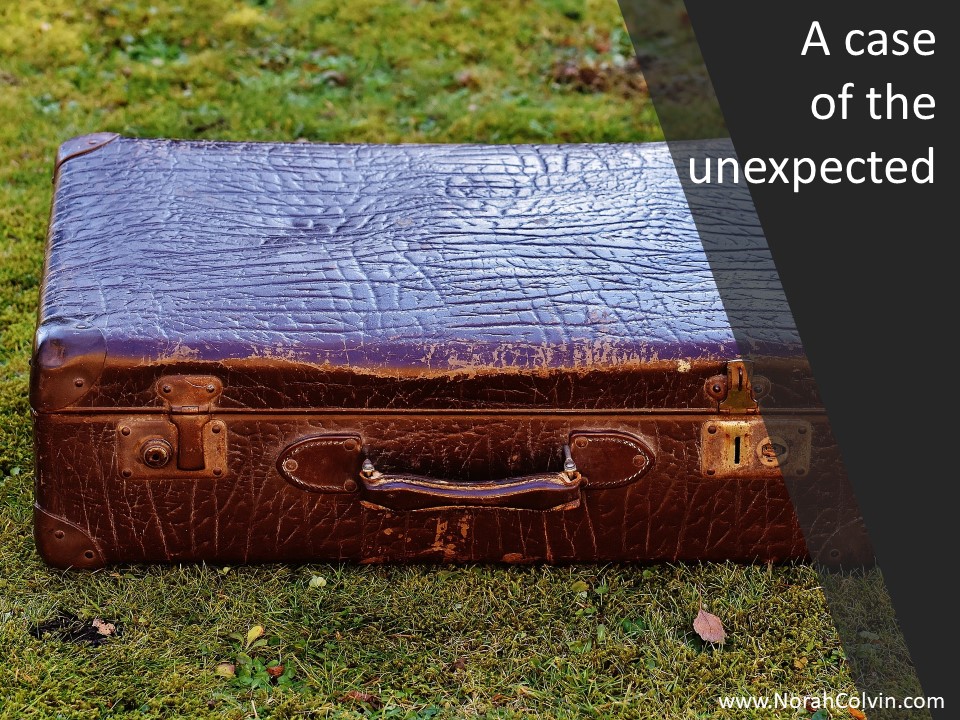
    A case of the unexpected

    Do they still do Greek myths in school? I know I read some in my primary school days, but I never read any to my students when teaching.

    The two stories I remember most from school were of King Midas and Pandora’s Box. Both carry strong cautionary messages which had a big impact on me.

    King Midas was greedy and when offered a wish, wished that all he touched turned to gold. He was saddened and regretted his wish when even his beloved daughter turned to gold. Lesson: Don’t be greedy. However, I was more horrified at the thought of that young girl trapped in a body of gold. Surely that would be worse than a straitjacket, the thought of which is terrifying enough.

    Pandora was presented with a box which she was instructed to not open. What more effective an invitation could there be to a curious soul? Of course, Pandora opened the box. Who wouldn’t? Unfortunately, in doing so, she released all the ills of the world. It is her, so the story goes, we have to thank for illness, plagues, wars, famines and so the list goes on. Lesson: Do what you’re told and don’t be curious. I’m not sure that I learned the lesson from the tale. I’d already had the message firmly installed prior to encountering it.

    As I matured I realised that the lessons from stories such as these didn’t always apply and I am now an advocate for curiosity if not for greed. Where would we humans be without curiosity, wonder, and imagination?

    flash fiction prompt stranded suitcase

    This week at the Carrot Ranch, Charli Mills challenged writers to In 99 words (no more, no less) write a story about what happens next to a stranded suitcase. Go where the prompt leads you, but consider the different perspectives you can take to tell the tale.

    The five W questions that we often teach children to use when interrogating a text or preparing to write spring to mind: Who, What, Where, When and Why.

    • Who abandoned the suitcase?
    • What is in the suitcase?
    • Where was the suitcase abandoned?
    • When was it abandoned?
    • Why was it abandoned?
    • Who found the suitcase?
    • What did they do?
    • Why?

    In bygone days, had I come across an abandoned suitcase, I may have investigated it to discover:

    • Did it have any value?
    • Was it discarded or lost?
    • Was there anything of value in it?
    • Could I find the owner and return it?

    I remember as a child going along with my older brother’s suggestion to create a fake package, tie some fishing line to it, place it in the middle of the road and wait for a curious and unsuspecting pedestrian to come along. (Traffic was infrequent back in those days.) When the pedestrian bent to investigate the package, my brother would pull on the line and the package would move out of reach. We found the response of the pedestrians hilarious and our laughter soon gave away the plot from the bush or fence behind which we lay in wait. Fortunately, they all laughed too when they realised what we were up to.

    Nowadays, with warnings about the possibilities of abandoned bags and packages containing terrorist bombs, people may be less inclined to investigate, concerned that the result may be more similar to what Pandora discovered.

    For my response to Charli’s prompt, I’ve decided to go with a more innocent age when two children playing in the bush find an abandoned suitcase.

    A Case of the Unexpected

    “I wonder what’s inside,” said Jamie.

    “D’ya think we should open it?” Nicky asked.

    They looked around. No one anywhere.

    Jamie shrugged. “I guess.”

    “Looks old,” said Nicky.

    “Probably been here for years.”

    “So dirty.”

    The rusty catches were unyielding.

    “Might be locked,” said Nicky, hopefully.

    “Let’s see,” said Jamie.

    They pried with sticks, battered with stones and willed with all their might. When the catches finally snapped open, they hesitated.

    “Go on,” said Nicky.

    “No, you.”

    “Both.”

    “Okay. One, two, three … open!”

    The children’s eyes widened.

    “What is it?” asked Nicky.

    “Dunno,” said Jamie. “Looks like …”

    What do you think was inside?

    Thank you blog post

    Thank you for reading. I appreciate your feedback. Please share your thoughts.

  • Fiction: History that might have been

    Fiction: History that might have been

    I have just listened to When Nietzsche Wept by Irvin D. Yalom and was intrigued by the thought that fiction, perhaps more so historical fiction about real characters, tells a story that might have been, of situations that are equally as plausible as the real events. The only difference is, they didn’t happen. The author explains how the events he wrote about, a fictional meeting between the doctor Josef Breuer and the philosopher Friedrich Nietzsche, could almost have happened, were but a hair’s breadth away from happening.

    (Note: The book was a recommendation by author Anne Goodwin. Read her review here.)

    I often wonder about coincidences, those chance events and meetings that influence our futures, those things that may not have occurred had we been even one second earlier or one second later. It can be fun to contemplate the possibilities of our current situation had an alternate major decision been made. But what of the little events that slip by us every moment. How could a difference in any one fraction of time change our lives?

    Memoirist Irene Waters asked a related question in her article Life is a Memoir: What is Fiction? shared at the Carrot Ranch a few weeks ago. Irene begins by saying that Truth is considered fundamental in writing memoir” but then tells us that memory is not exact, and that it is “a construct and will vary at different times and places”. She asks, As our remembering creates our identity, then, is our self a fiction?”

    Knowing that each witness or participant may tell a different version of an event adds layers to that question. Which versions are fact and which are fiction? Are all enhanced with the fiction of our own perspectives?

    Any teacher of young children, or perhaps anyone involved in jury duty, or any viewer of news stories knows, there can be many alternate histories of an event. Deciding where most truth lies can be the difficult part.

    “He did it.”

    “She started it.”

    “It’s mine.”

    “He punched me first.”

    Carrot Ranch flash fiction challenge Fannie Hooe

    When Charli Mills of the Carrot Ranch challenged writers to In 99 words (no more, no less) write a story about Fannie Hooe. Although she is a legend in the Kewenaw, feel free to go where the prompt leads, I wondered what I could possibly write. I know nothing of the Keweenaw or of Fannie Hooe.

    However, in her post, Charli explains that much of what is known about Fannie Hooe is from snippets of things “They say”, alternate histories perhaps, with either some or little resemblance to the “truth”.

    Charli wrote, “legend has it, Fannie was a little girl, perhaps the daughter of an officer, who went missing. As they circled the lake they called, “Fannie…! Fannie, hooe! They say, they never found her body.”

    Further in her article, Charli goes on to say, “Two historians … knew a great deal about the real Fannie. She was from Virginia and came as a single woman to Fort Wilkins to help her pregnant sister. She was not a girl, but a young lady. They say she went missing, mauled by a bear or murdered by a spurned lover.

    Truth is, she returned to Virginia, married and lived a long life.”

    This disparity between truth and fiction reminded me of a television program from years ago. As I recall it: three contestants professed to be the person described by the host. Each presented information about “themselves” to panellists whose role it was to judge who was telling the truth. The real person had to be truthful but the imposters could lie. After votes had been cast the ‘real’ person was asked to stand up.

    This is my response to Charli’s challenge. I hope you enjoy it.

    Truth or Fiction: Will the Real Fannie Hooe Please Stand Up

    Contestant 1: I am Fannie Hooe. My pregnant sister was an excuse to escape my abusive husband. After the baby’s birth, I ‘disappeared’, started a new life in Canada, and never remarried.

    Contestant 2: I am Fannie Hooe. While visiting my sister, I was abducted by miners and forced to be their slave. When I escaped, I was so disfigured, I wanted no one to see.

    Contestant 3: I am Fannie Hooe. I was pregnant, unmarried, and begged my sister to hide me. She refused and banished me. I started a new life in Virginia as a widowed mother.

    Thank you blog post

    Thank you for reading. I appreciate your feedback. Please share your thoughts.



  • Cute as buttons

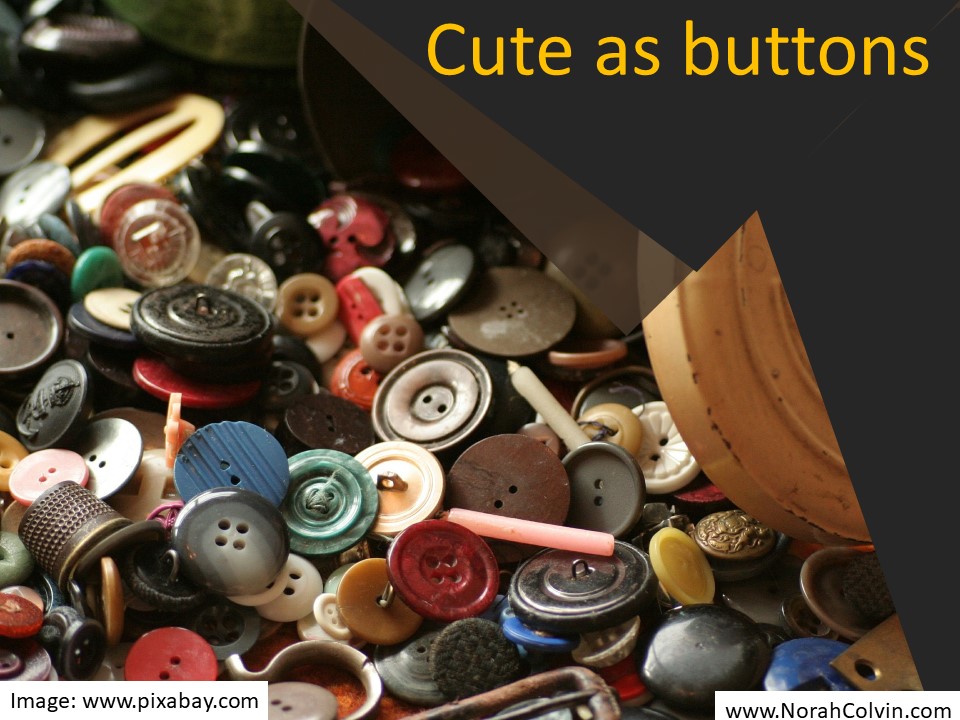
    Cute as buttons

    This week at the Carrot Ranch, Charli Mills challenged writers to In 99 words (no more, no less) write a story that includes buttons. You can use the word plural or singular in different expressions, or focus on how buttons relate to a story. Go where the prompt leads.

    This is my response. I hope you enjoy it.

    Precious as Gold

    Too lads, reviewing the previous evening’s campfire conversation, dug stones from the bank, inspected each and competed to land one further in the creek.

    “D’ya reckon there’s still gold here?”

    “Dad says. Reckons someone found one this big.”

    “But that’s ages ago.”

    “So. Might be more.”

    “What’d you do if you found some?”

    “Easy. Buy a car, a yacht and a jet. How ‘bout you?”

    He contemplated silently—a house of their own first, then for other homeless people too.

    “Whoa. Look!”

    “Gold!”

    They sprinted back to camp.

    “You struck gold all right—a gold button,” the adults laughed.

    Thank you blog post

    Thank you for reading. I appreciate your feedback. Please share your thoughts.

  • Sketchy Perceptions

    Sketchy Perceptions

    Carrot Ranch Flash Fiction prompt sketches

    This week at the Carrot Ranch, Charli Mills challenged writers to In 99 words (no more, no less) write a story that is a sketch or about a sketch. It can be “A Sketch of a Romance” or “The Sketch of Aunt Tillie.” Go where the prompt leads you to scribble.

    My thoughts were a bit sketchy. This is what I came up with. I’d be interested to know your perception.

    Sketchy Perceptions

    He sketched the outline with chalk then filled in the details, outside-in. Curious passers-by gathered as the image emerged. Was the artist a paid entertainer or busker earning a buck? Some pushed coins into children’s hands to add to the chalk-drawn cap. When satisfied with his work, the artist stood in its centre and tossed the cap and contents high. As they fell, he spread his arms and disappeared into the painting. Perplexed on-lookers reported different perceptions. Many said he plummeted into darkness. Some said he flew on gold-tipped wings. Others described him simply as absorbed by his art.

    It is easy to make snap judgements about others and situations from sketchy information, even at first sight. We do it all the time as we try to make sense of what we perceive, evaluating it against our existing knowledge and beliefs.

    I have strong beliefs about education and how children learn so can quickly judge whether I will agree with the content of articles or not. However, I don’t confine my reading to articles that I know will support my beliefs. I read articles from a variety of viewpoints to gain some understanding of others’ positions. If I don’t know what they think, how can I interrogate those thoughts and evaluate them against my own, perhaps even reassess my beliefs? I would rather be informed than base my ideas upon sketchy information.

    This week, I had the pleasure of reading two articles in popular media which reiterate things I have written about a number of times previously.

    The title of an article by Angela Mollard in my local Courier-Mail intrigued me: We should be ashamed of how we treat teachers. The media is often quick to criticise teachers, blaming them for almost all of society’s ills, it sometimes seems. I wondered at the intent of this article. Mollard wrote that, although she is the daughter of a teacher, sister-in-law of a teacher, and friends with many teachers, she had no idea of a teacher’s life until she read the book Teacher by Gabbie Stroud. I am yet to read this memoir, but it is now high on my TBR list.

    Mollard says, “She (Stroud) writes of the sacred bond between teacher and pupil, of advocating exhaustively for their needs, of loving them even when they were abusive and damaged and victims of the most heartbreaking of family circumstances.”

    Mollard follows this by telling us that “Ultimately, Stroud gives up being a teacher. She’s broken by the profession but she maintains that she didn’t leave teaching, it left her”, and describes her book as “a clarion call to educators to change a system that values standardisation over creativity, curiosity, progress, self-belief and autonomy.”

    Oh, yes! I applaud. I know many teachers who feel the same way.

    Mollard then goes on to say that if parents want inspirational teachers for their children, they must be inspirational too, that they must stand beside and support teachers and do what they can to lighten their workload so more help can be given where it is truly needed. If you are a parent, please read the article for her suggestions. I have sketched out just a few of her ideas here.

    If you can do only one thing for your children, it should be shared reading is the title of an article by Ameneh Shahaeian and Cen Wang in The Conversation. To any regular readers of my blog, the idea behind the title will be very familiar. It gladdens me when I see others promoting such good advice for parents.

    However, in the article Shahaeian and Wang surprised me with the question, “is it really book reading that’s beneficial or is it because parents who read more to their children also provide a lot of other resources, and engage in a range of other activities with their children?

    Does the question intrigue you as much as it did me? Shahaeian and Wang share the results of a longitudinal study they carried out to find an answer. Please read the article for their conclusions and suggestions for parents.

    I’ve provided you with just the sketchy outlines of both these articles. If you are interested enough to read them, I’d love to know what you think.

    Thank you blog post

    Thank you for reading. I appreciate your feedback. Please share your thoughts.