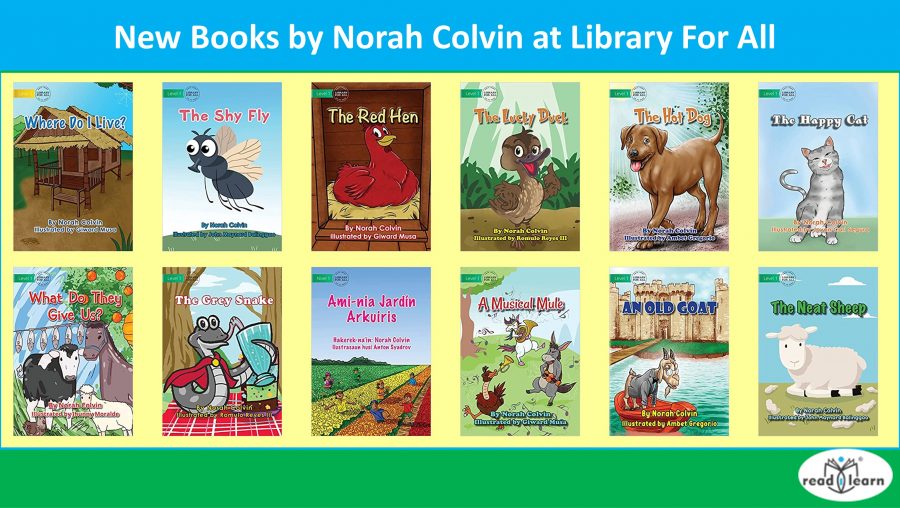
This week I received a surprise in the post that I just had to share with you. I received printed copies of 8 beginner readers, all written by me, that have recently been added to the Library For All collection. One of them has even been translated into Tetum, an Austronesian language spoken on the island of Timor that is an official language of East Timor.
While I knew the books were in production, I didn’t realise they were published, so receiving the package was a wonderful surprise. I am absolutely delighted to be able to support the work of Library For All by donating these stories to them. In addition to these eight, two other titles were published in 2019, and there are an additional four titles recently published for which I have not yet received printed copies.
While the entire collection of digital books is available to download free from Library For All through a free Android app, the purchase of printed books from the collection helps to support the work of Library For All.
I first introduced you to the wonderful work of Library For All in the post Library For All — A Force for Equality through Literacy. You are welcome to find out more by heading back to the post or exploring their website.
Briefly, Library For All is an Australian not for profit organisation with a mission to “make knowledge accessible to all, equally” through a digital library of books that is available free to anyone anywhere in the world. The focus is on providing high quality, engaging, age appropriate and culturally relevant books to children in developing countries and remote areas.
Printed copies are also available and catalogues of titles can be browsed in the shop.
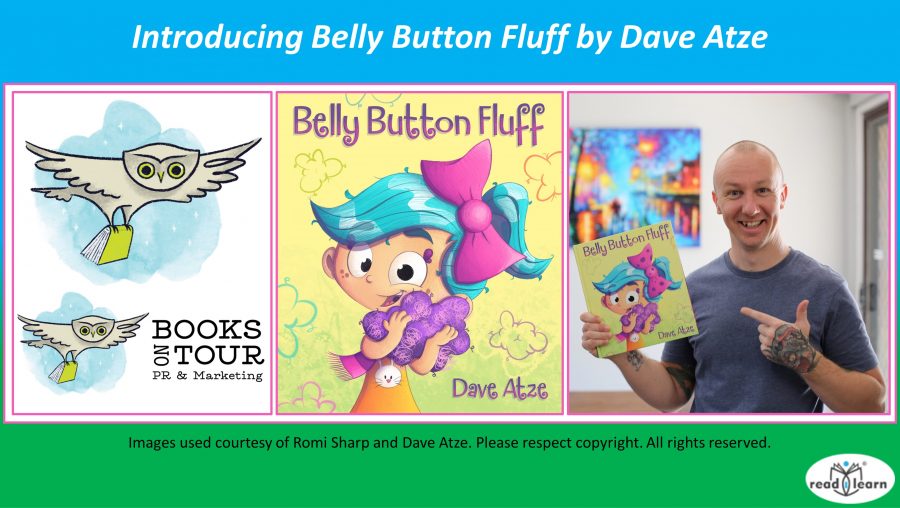
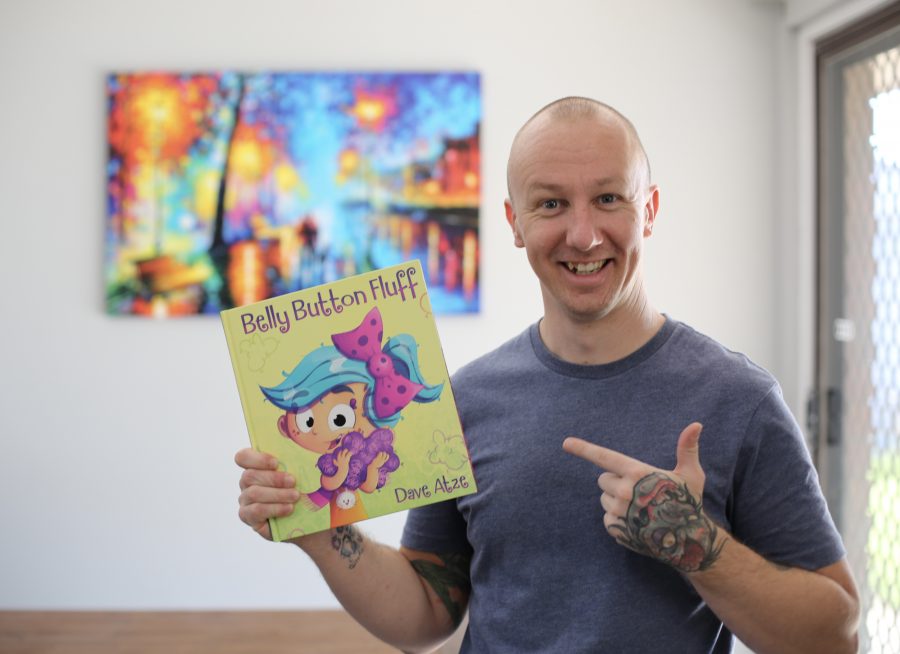
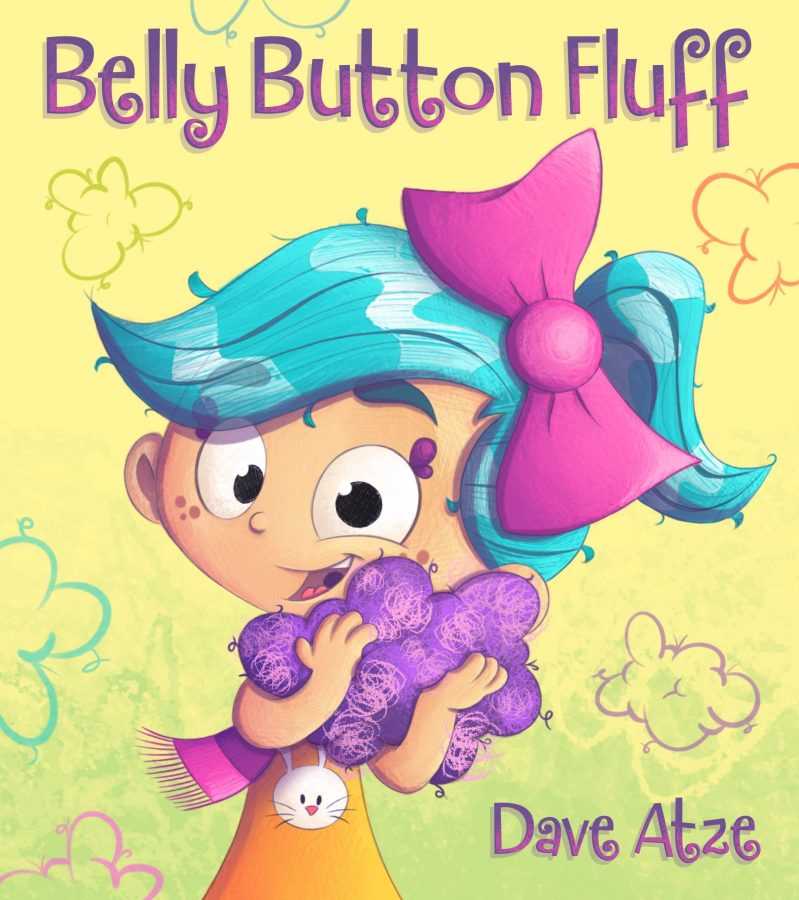
Today it is my pleasure to introduce you to Dave Atze and his hilariously delightful new picture book Belly Button Fluff which he both wrote and illustrated. The book is published by Big Sky Publishing. This post is part of a Books On Tour promotion.
About Dave Atze
Dave Atze illustrates amazing books for kids that sell all over the world, including Cat Spies Mouse, the Max Booth series, the Nursery Crimes series and books about a kangaroo from Uluru! During his time as an illustrator, he has worked for some amazing clients. Some of which include Scholastic, Moose Toys, Zuru Toys, Natures Organics, Ford St Publishing, Redgum Book Club, Big Sky Publishing, EB Games and Silver Sun Pictures.
When he’s not busy drawing up a storm you can find Dave spending time with his wife Ashleigh and daughter Ella, watching movies, running, renovating and taking photos out in the wild.
About Belly Button Fluff
A super-cute, icky adventure brimming with curiosity and fun.
Scarlett Von Scruff is a little girl who loves to collect weird stuff. Now she’s discovered something fluffy, soft and a little bit smelly in Dad’s belly button and she wants to find more.
No belly is safe as Scarlett goes on a fun-filled fluff gathering adventure.
So, kick off your shoes and lay on the couch, let’s have a look in your tummy pouch.
This is my response. It is based on a picture book manuscript I am working on at the moment, hoping to submit to a publisher soon. Fingers crossed. That story is based upon another 214-word story I wrote earlier in the year, which you can read here. All three are the same but different. I hope you like it.
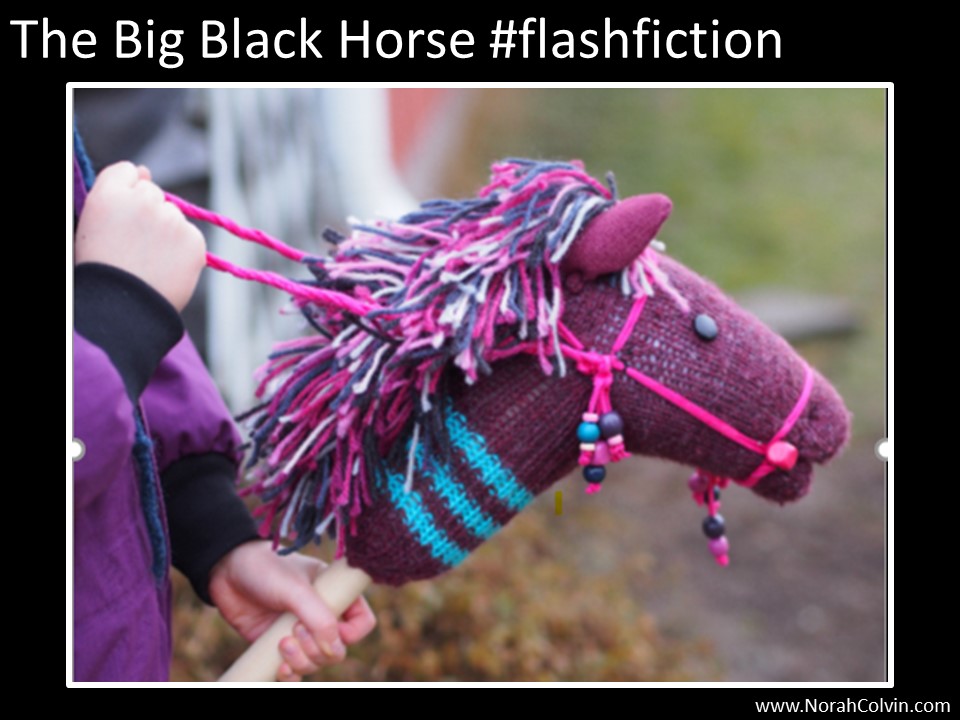
The Big Black Horse
The riders considered the available horses. Fergal chose the big black, Valentina the silver. They mounted their steeds and entered the arena. Fergal cantered to one end and Valentina the other. They steadied their mounts and faced each other.
“Let the contest begin! Charge!”
The contestants galloped towards each other.
Nearing the centre of the arena, Fergal’s black steed balked, tossing him off. Valentina wheeled her horse around, dismounted and raced to Fergal’s side.
“You okay, Fergal?”
“It’s only a scratch.”
“I’ll get a plaster from Miss.”
“It’s okay. Let’s go again. Can I have silver this time?”
“Okay.”
Thank you for reading. I appreciate your feedback. Please share your thoughts.
Last month, I was invited by the Science Teachers Association of Queensland (STAQ) to present a talk about using picture books in science lessons as part of their Growing Science webinars in the lead up to Science Week. What a great opportunity — picture books and science. What’s to not like? Picture books are one of the best ways I know of turning young children onto two of my favourite things — reading and learning.
You can find out more about the webinar series and access recordings and free resources on the STAQ website here.
Below is a brief version of the article I wrote as the basis of my presentation.
You can access the entire article in the zip folder Using Picture Books in Science Lessons, which also includes other handouts I provided to support my talk.
You can listen to the talk via this link or watch it below.
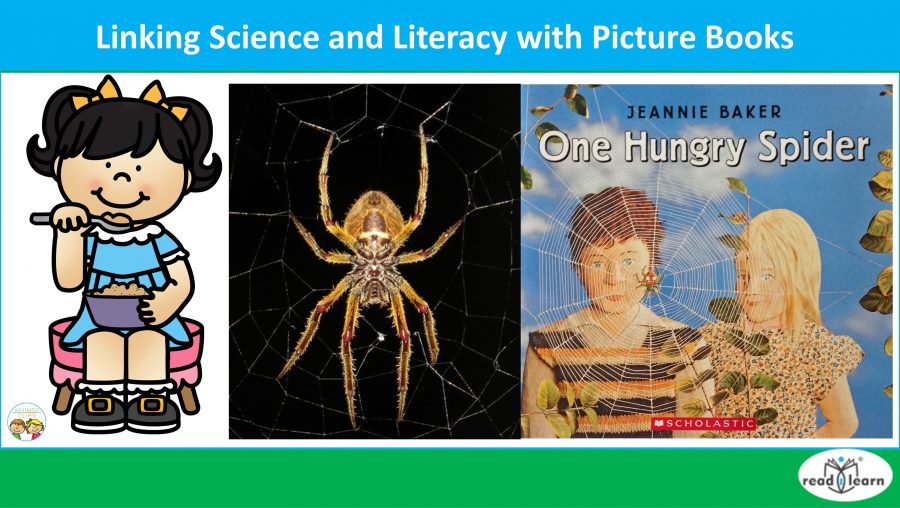
Linking science and literacy
Language is as important to the science curriculum as it is to the English curriculum. Science is another context in which language is used and must be learned.
In this article I’m going to show you some ways of including picture books in your science lessons.
Many of the skills required by science are also literacy skills; skills such as:
Deidre laughed, sang and clapped on cue at her first-ever real live Christmas pantomime, until … the clowns prepared the cake. Deidre knew how to make cakes — she’d made them with her mum. The clowns obviously didn’t — tipping more flour over each other than into the pan, splashing the milk, and cracking in eggs, shells and all. The audience roared as the clowns placed a lid on the pan, shook it vigorously, then tipped out a magnificent cake. When offered a slice, Deidre folded her arms and clamped her lips. A cake made like that could never taste good.
👩🍳
This story is inspired by a true event. However, the only thing I remember is being horrified at the way the clowns put everything into the pan, including the egg shells, and turned out a cake. In writing, I tried to get back to what an expanded memory may have included. I hope it has worked.
The thought of being horrified at everything going into the pan in which the cake is to be cooked is now quite funny, as I know there are quite a few recipes made that way; including one of my favourites to make with children. If I was to ever be in a cooking show, this is what I’d make. And there’s not even an egg in sight.
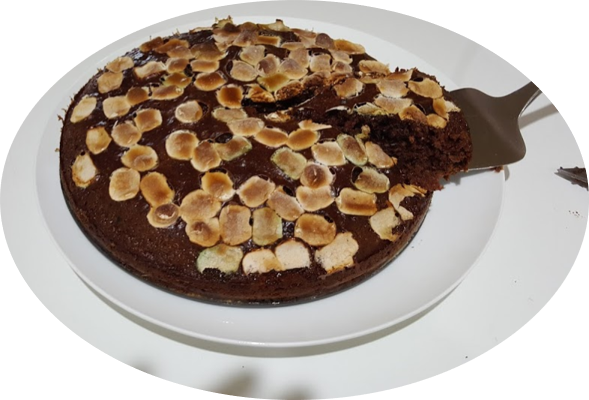
Moon Cake
Ingredients
1 1/2 cups plain flour
1/2 cup sugar
1/2 cup brown sugar
4 tablespoons cocoa powder
5 tablespoons butter, melted
1 teaspoon vanilla
1 teaspoon bi-carbonate of soda (baking soda)
1 tablespoon white vinegar
1 cup milk
2/3 cup miniature marshmallows
Utensils
A cake pan
A cup measure
A mixing spoon
A tablespoon
A teaspoon
Method
1. Preheat the oven to 180° (350⁰F, Gas mark #4)
2. Put the flour, sugars, salt and cocoa in the cake pan. Mix them carefully. You will have the light brown moon sand.
3. Use the mixing spoon to make a big crater in the middle so the bottom of the pan shows through. Make another medium-sized crater and a little crater.
4. Put the baking soda in the medium-sized crater.
5. Pour the melted butter into the big crater.
6. Pour the vanilla into the little crater.
7. Pour the vinegar onto the bi-carb soda in the medium-sized crater. Watch it become a bubbling, foaming volcano.
8. When the volcano stops foaming, pour the milk over the moon sand and carefully mix it all together until it looks like smooth moon mud.
9. Scatter marshmallow rocks over the surface.
10. Bake it for around 35 minutes, or until a toothpick stuck in the centre comes out dry. Let the cake cool in the pan.
Over to the Wilderness Society for their announcement:
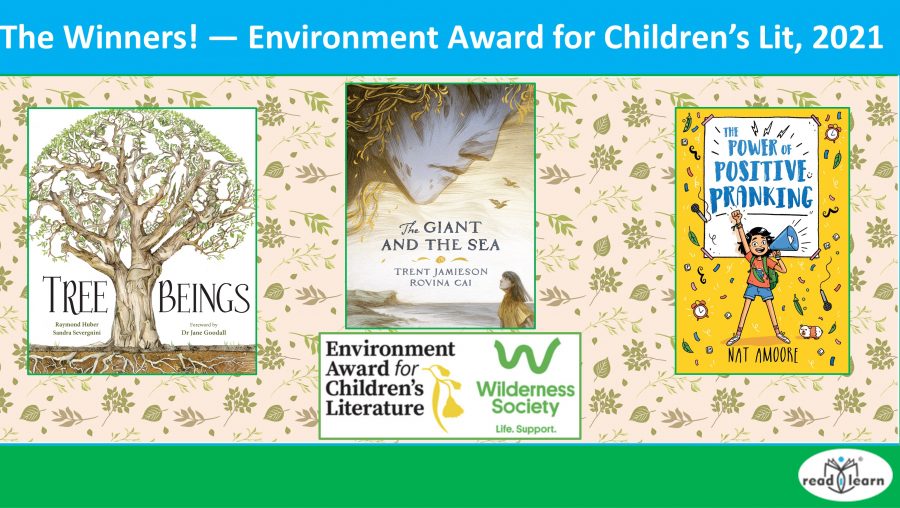
The winners for this year’s Environment Award for Children’s Literature have been announced by the Wilderness Society during Nature Book Week, which runs between 6 – 12 September.
Now in its 27th year, the Wilderness Society shortlists the best children’s nature books before a panel of judges crowns a winner for three categories: Fiction, Non-Fiction, and Picture Fiction. The award showcases and celebrates some of the best writers and illustrators working in children’s literature.
Note: This article was first written for and published at the Carrot Ranch Literary Community as part of a series supporting parents with children learning at home. The focus of the article is early childhood development and contains information and ideas that teachers and schools may find suitable for sharing with parents.
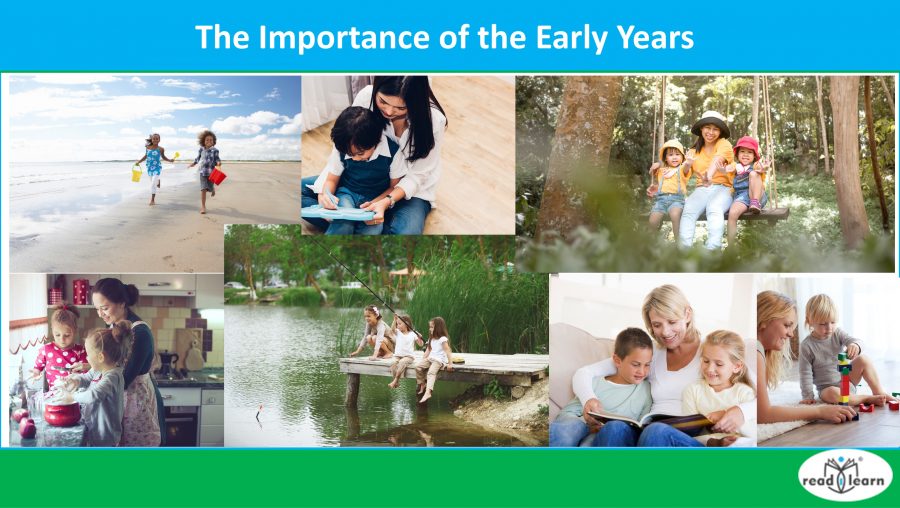
The early years are crucial to child development and what happens in those years can be used to predict, to some extent, what will happen in that’s child’s future.
I had already intended sharing videos about early childhood development in this post, and still will. But when my sister told me about this Ted Talk by Molly Wright, a pretty amazing 7-year-old, I just knew I had to share it first. She does a great job of summing up the importance of the early years. I’m not going to summarise her talk for you as it’s only 7 ½ minutes long and I’m sure you will enjoy it more coming from Molly.
For me, the only thing she leaves out that I wish she had included is reading stories. Although it’s probably understood, I would like to have heard it mentioned.
Now back to my original plan of sharing two Ted Talks.
(Tip: I understand that watching talks can be time consuming. I find I can often follow them just as well, or better, when I watch them at increased speed. In case you don’t know, to do this is easy. Click on the Settings cogwheel, select Playback speed and choose the speed that suits you. I often try 1.75 first and adjust down if necessary.)
The first talk is Lessons from the longest study on human development by Helen Pearson.
While prom is not ‘a thing’ here in Australia, our graduating students have formals and semi-formals, we all know what it is from television shows and movies.
Dressed for the Prom
She surprised them when she emerged, resplendent in formal gown, announcing, “I’m going to the prom.” With a smile as wide as a rainbow after rain, she twirled for them to admire her from every angle. Gorgeous, they agreed, though it was a little wide in the shoulders and a little long in the hem. The neckline would be revealing without underclothes. Someone suggested the beads were overdone, that one or two strands would suffice, but the decision was made. As soon as Billy arrived in the limo for big sister Maud, she was ready. What was keeping him?
Thank you for reading. I appreciate your feedback. Please share your thought.
When I was recently approached by the Wilderness Society to Share information about this year’s Environment Award for Children’s Literature, I didn’t hesitate. I have previously interviewed two authors whose books have won Environment Awards: Rebecca Johnson and Aleesah Darlison. I have also published a list of picture books with environmental themes and am keen to promote the environment and what we can do to preserve and protect it. Picture books and the environment — what’s not to love?
Now, over to the Wilderness Society — the following information was provided by them.
Every year, the Wilderness Society celebrates Australia’s finest children’s nature authors through their “The Environment Award for Children’s Literature.”
2021 shortlist is now out, with 13 books ranging from the fiction, non-fiction and picture fiction genres.
These books tell stories that encourage children to appreciate nature, take action and feel proud in understanding the great movement they all are a part of. Each author in this shortlist has crafted unique stories that celebrate their love for children, the environment, country, space, wildlife, and story-telling!
The phrase ‘when pigs fly’ means that something is impossible, it will never happen. The phrase is an adynaton — don’t you love that word? I just learned it — an exaggeration, hyperbole. I seem to think I heard the term many times growing up, though I can’t recall about what in particular. Maybe it was life in general.
The first thing I thought about when reading Charli’s prompt is a hilariously delightful picture book by the fabulous author-illustrator Mo Willems: An Elephant and Piggie Book Today I Will Fly!
If you don’t already know the story, I suggest you acquaint yourself with it with this video. It will only take a couple of minutes.
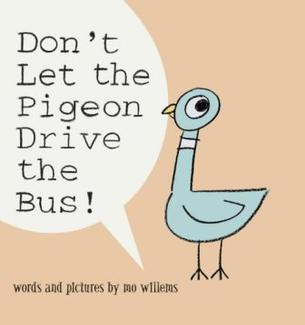
I remember when I was first introduced to Mo Willem’s work. A colleague came rushing into my room one morning and pushed Don’t Let the Pigeon Drive the Bus! at me, saying, “You’ve got to read this!’
I would have to say, the book didn’t have instant cover appeal, but she left it with me, and I continued with my preparations for the day. Later, when I sat down to read, I knew this book was something special. I loved it and the children loved it. We read it and read and read it. It had us in stitches. Unsurprisingly, it was a Caldecott Honor book.
After that, we read all the Mo Willems books we could get our hands on. The children brought in those they’d purchased or borrowed from the local library, and I couldn’t resist buying additional titles whenever I saw a new one in a book store I just happened to be passing.
When I visited New York in 2016, I was delighted to find an exhibition of the Art and Whimsy of Mo Willems at a museum not far from my accommodation. I couldn’t go through the exhibition shop without purchasing a book or two or more and also came home with a pigeon and a duckie soft toy. I am, unreservedly, a Mo Willems fan and I have the enthusiasm of my colleague to thank for that. If you would like to find out more, please visit the Mo Willems website.
And Mo is not just for little kids. He is for big kids (like us) and writers too. He has wonderful advice for teachers and writers alike when he discusses creativity, the need to play and the ever-present failure. If you haven’t yet had the pleasure of meeting Mo, please watch his video on The Joy of Creation. It will inspire you.
In another video on his website, Mo explains how to draw a piggie from the Elephant and Piggie books. The inspiration for my flash came from this video. The flash is also a nod to my favourite ever principal Peter Kidston who not only valued my work as a teacher, he respected it enough to provide me the freedom to teach how I wanted, knowing that the children and their learning was at the centre of all I did. I wrote about Peter in this post.
I hope you enjoy my story.
Flying Pigs
Children’s squeals drew the principal to the window. Ms Irena’s children were running about the yard tossing bits of paper in the air. What were they up to this time?
“We read a book about a flying pig,” explained Ms Irena. “The children decided to make their own pigs and see if they could fly. Then they wanted to see whose would fly the farthest or highest. After, we’ll write stories about our pigs. So, it’s literacy, art, maths and science rolled into one — STEAM!”
The principal smiled. “A flight of pigs. With Irena, even the impossible seems possible.”
Thank you for reading. I appreciate your feedback. Please share your thoughts.













 Norah Colvin