I take this opportunity of wishing you all a very happy and safe Easter long weekend however you enjoy it.
In this video, I read one of our stories called Easter Delivery which is about Bilby twins Benny and Belinda who are excited to be old enough to make their first Easter delivery on their own. Before they are allowed to go out, they must prove to Mother and Father Bilby that they are capable of following instructions and delivering just the right number of Easter eggs for each family.
My first thought was of the oft-quoted excuse for failing to complete homework: the dog ate my homework, but I decided to go with a more plausible situation with excited children feeding ducks at the park. I hope you enjoy it.
Baby Ducks Ate My Lunch
A wail fractured the picture-perfect ‘Freedom Day’, the first outing since lockdown began aeons ago.
Father’s mind wandered like the lonely cloud contrasted against the vivid sky, contemplating nothing—no lessons, no video calls, no demands for something to eat or do. Mother absentmindedly stroked his hair as she inhaled the freshness of the sunshine and the scent of nearby gardenias. The children entertained themselves—what luxury—feeding ducks with days-old bread.
The wail amplified, like an approaching train, finally demanding Father’s and Mother’s attention. “What’s wrong?”
“Baby ducks ate my lunch,” wailed the younger. The older one shrugged.
Thank you for reading. I appreciate your feedback. Please share your thoughts.
Note: The collection of stories made in response to the previous prompt Disappearance, including mine,can be read at the Carrot Ranchhere.
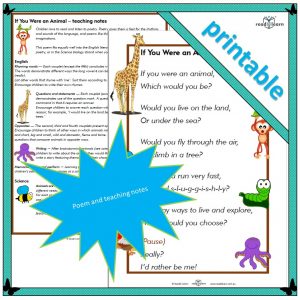
With this month being National Poetry Month in the US and 17 April being International Haiku Day, I thought it was timely to share some of our poetry resources. Here in Australia, we celebrate poetry month in August, but I don’t think we need wait until then. We can celebrate again in August or make every month poetry month. No month should go by without enjoying some poetry anyway.
Poetry is a great introduction to the rhythms and sounds of our language. Children are introduced to it from a young age through nursery rhymes and picture books. Some of children’s favourite picture books are those that read like poems with rhythm, rhyme and repetition. The books of Dr Seuss and Julia Donaldson come immediately to mind. But, of course, there are many others too.
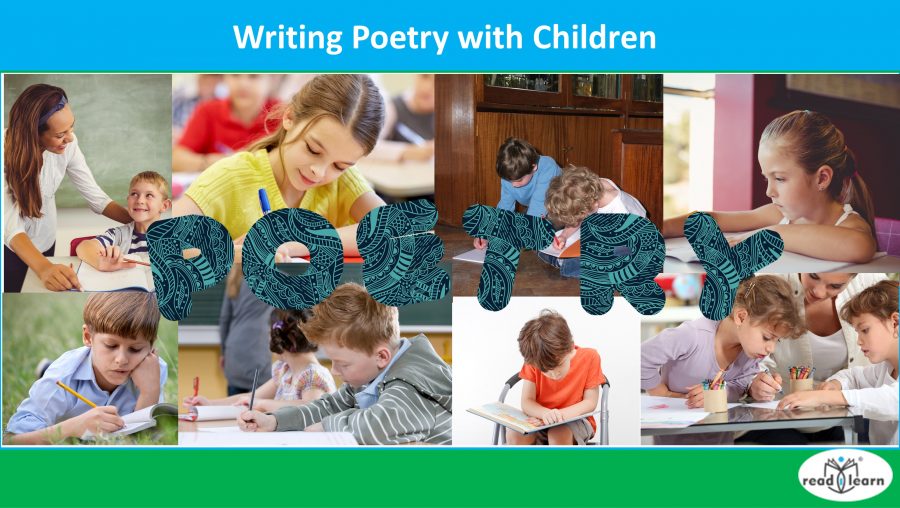
When they enter school, children love listening to poetry and experimenting with writing poems of their own. Here at readilearn we have some resources to help you help them get started on their poetry writing journey. All poetry resources are found in their own section of the literacy collection.
Writing poetry
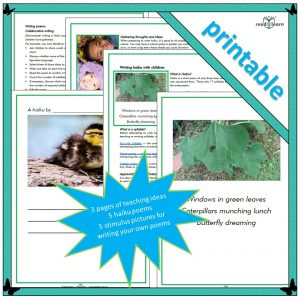
Writing Haiku with Children — This collection includes five haiku poems for reading and five stimulus photos for writing. It can be used to introduce children to the structure of haiku poetry and to encourage them to write haiku poems of their own. The resource includes information about the structure of haiku poetry as well as teaching suggestions.
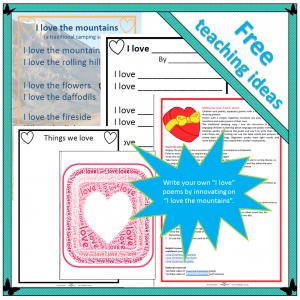
Write your own “I love” poem — This resource encourages children to write their own poems by innovating on the traditional camping song ‘I love the Mountains’. Great for even beginning writers.
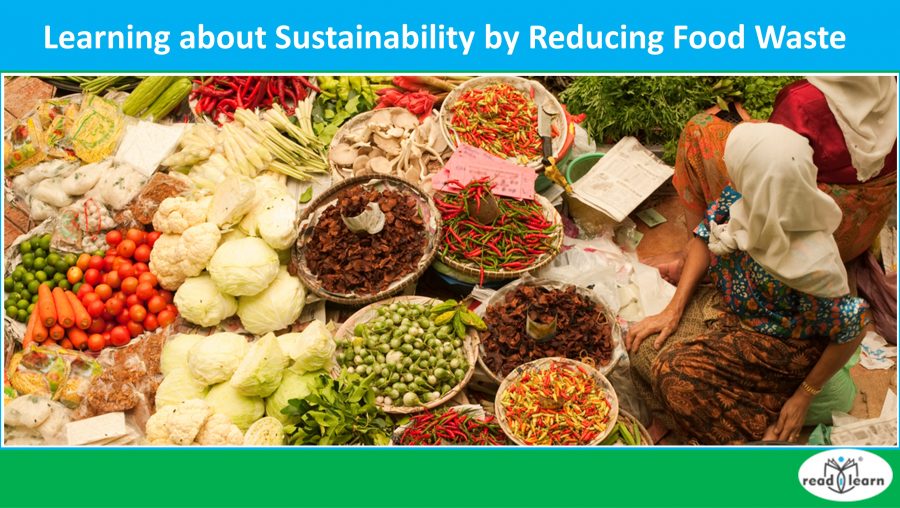
This post is a little different from my usual post in that I am not sharing teaching resources for the first three years of school. Instead, I am sharing information about a food rescue organisation and a sustainability program for Years 5 and 6. While I don’t usually share resources for older classes, I thought this may be useful information to have and to share with your colleagues who teach upper primary classes.
OzHarvest
OzHarvest is an Australian food rescue organisation founded in 2004 by Ronni Kahn. I’m embarrassed to say that I wasn’t aware of it until I read Kahn’s book A Repurposed Life in 2020 and was blown away by her dedication to helping feed people in need by saving surplus food from going to landfill. (A Repurposed Life is a fascinating and inspiring memoir, and I am happy to recommend it.)
After reading her book, I began noticing bins for accepting donations of food in the local shopping centres. I was surprised that I’d never seen them before and wondered how many times I’d walked past them, oblivious.
A quote from the website explains the OzHarvest mission:
“We are committed to halving food waste by 2030, inspiring and influencing others to do the same, and transforming lives through education.”
You can read more about the OzHarvest story and Ronni Kahn on the website here.
This video gives a very brief introduction to Ronni.
Feast
What I really wanted to share with you, though, is the OzHarvest education program called Feast with the goal of ‘Inspiring kids to eat healthy, waste less and be change-makers in their local community.’
As I said earlier, the program is for Years 5 and 6. According to the website, it is a STEM project-based learning program that runs for 7-10 weeks. The program focuses on food and fibre and the cross-curriculum priority of Sustainability.
This video gives a quick introduction to the program.
As a young adult, I loved Cat Stevens’s songs and their messages of hope for better days. As an older adult, I still do. We could certainly do with some changes around the world at the moment.
I was lucky to see Cat Stevens in concert in 1972, which must have been about the same time as this video was recorded. It was amazing. So much wisdom. Sadly, we don’t seem to be any closer to the vision of these lyrics 50 years later.
‘Don’t you feel the day is coming
And it won’t be too soon
When the people of the world
Can all live in one room’
It took me a while to get past the Cat Stevens musical memory lane, but this is where I ended up. I hope you like it.
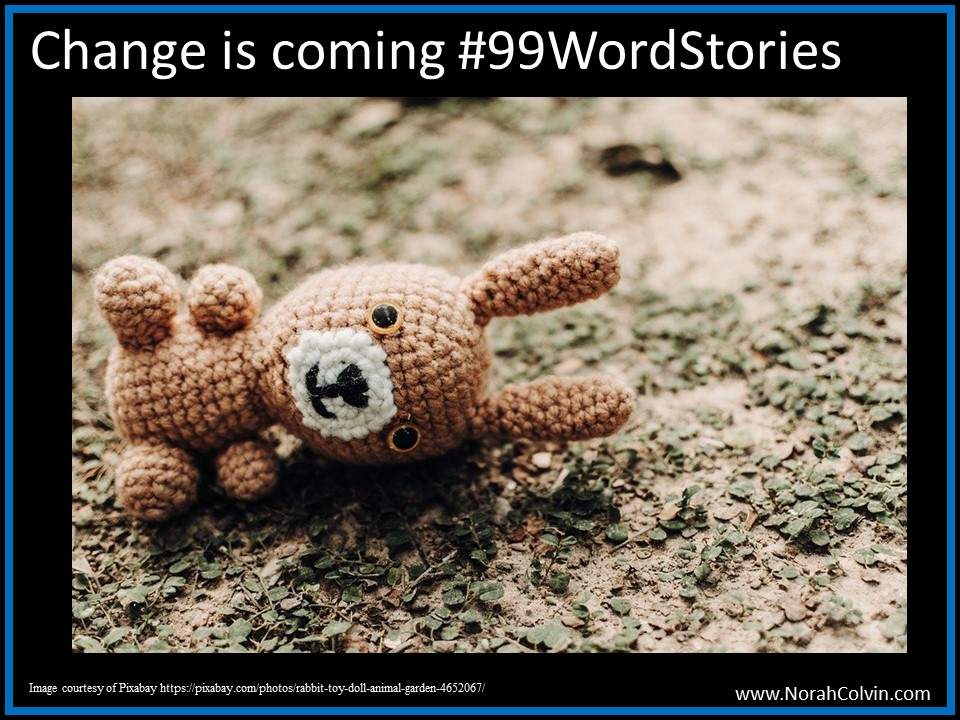
Change is coming
‘Get up,’ Pauline whispered.
He rubbed his eyes. ‘Why?’
‘Shh! He’s here.’
He trembled. ‘Take Rabbit?’
Out they crept, sliding against the wall to the door. A shout from downstairs. They froze. Pauline turned the knob. Quietly. Quietly. She pushed the door. Gently. Gently. Then cool air. Silent toes pattered down the stairs. Across the grass they ran and ran. All three, hand-in-hand. Pauline in front. Rabbit behind.
Finally, they banged on a door. ‘Grandpa! Grandpa! He’s come.’
Grandpa was in the doorway, ushering them into Grandma’s arms, picking up the phone.
‘Hush,’ said Grandma. ‘Everything will be alright.’
Thank you for reading. I appreciate your feedback. Please share your thoughts.
Note: The collection of stories made in response to the previous prompt Free Pie can be read at the Carrot Ranchhere.
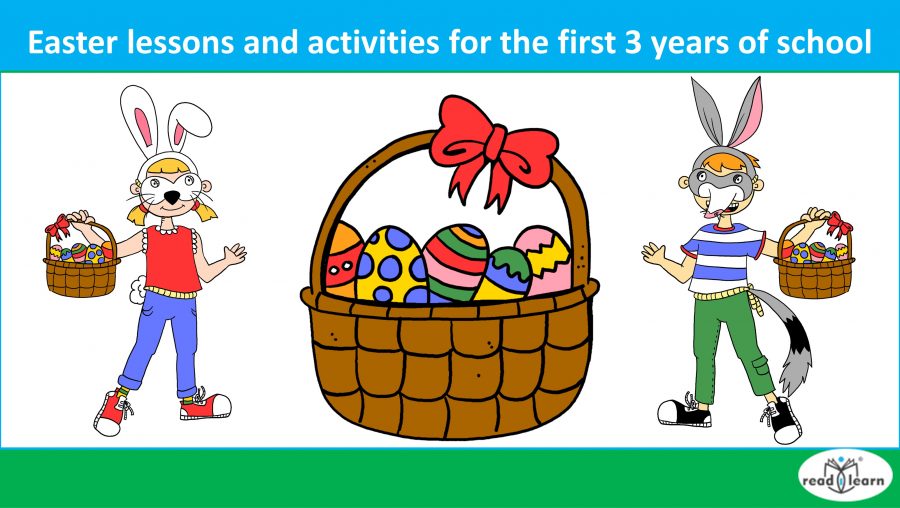
Easter is almost upon us. It has snuck up on me this year and I’m a bit late sharing our Easter resources since most of you will be on holidays at the end of next week. However, there is still one week before the holidays, so you may still have time to use some of these lessons and activities. Enjoy!
All our Easter resources can be found in the Cultural Studies collection here. They include:
Interactive lessons ready to teach on the interactive whiteboard
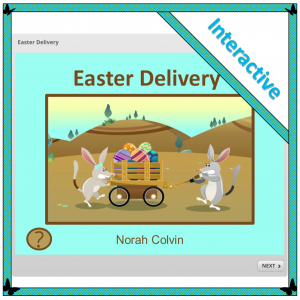
Easter Delivery — a story that gives children practice in finding combinations of numbers to ten.
The Bilby twins, Benny and Belinda, are excited to be making their first deliveries for Easter. Before they do, they must prove to Dad that they are capable of leaving the correct number of eggs for each friend’s family. Children help Benny and Belinda by working out what combinations of eggs could be delivered to the families.
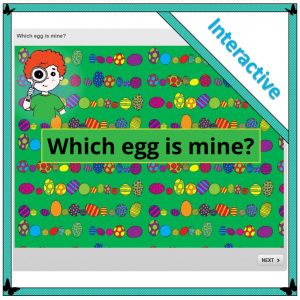
Dragona’s Lost Egg — a story that encourages the development of logical thinking and problem solving.
Dragona has lost her egg and turns to her friend Artie, owner of a Lost and Found store, for help. Artie is confident of helping her as he has many eggs on his shelves. He asks Dragona to describe features of her egg, including size, shape, pattern, and colour. He uses a process of elimination to identify which egg might be Dragona’s. Children join in the process by choosing eggs with the characteristic described.
Charli wrote about free edible pie that was available at College in honour of Pi Day. Of course, my mind went somewhere else.
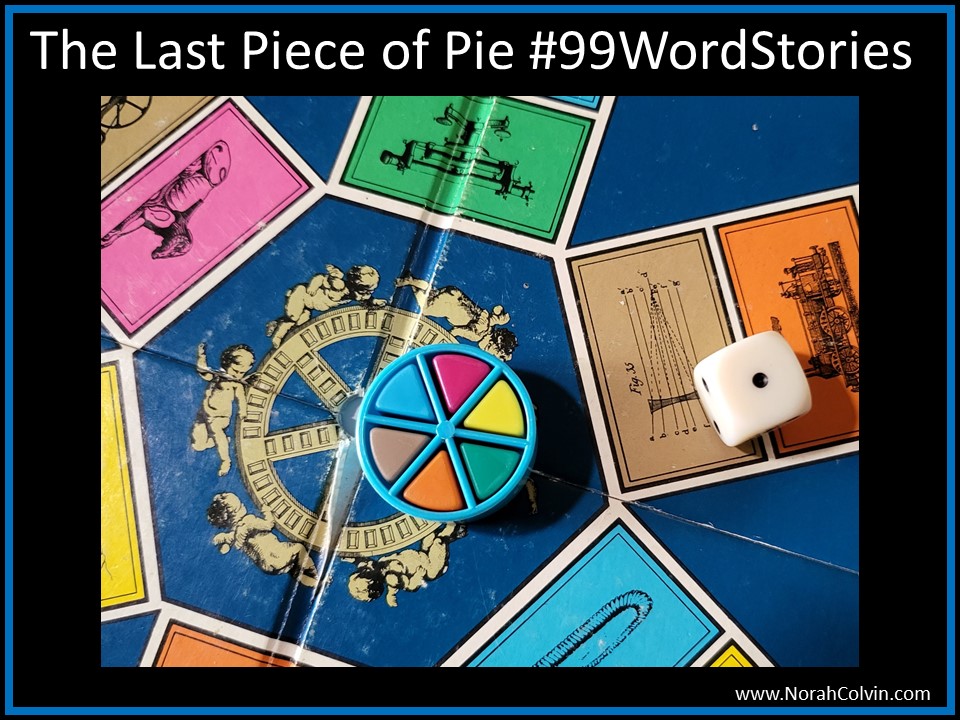
I thought about the pieces of pie we try our best to collect as we travel around and around the Trivial Pursuit board, hoping that when we get a question for a piece of pie, we’ll get one we can answer correctly.
The most difficult is the final question, when the tray is filled with every flavour of pie and the other players decide which question will be the most difficult to answer. This family allowed each player to choose one free piece of pie at the beginning of the game in order to speed it along. I hope you enjoy the story.
The Last Piece of Pie
Josie wished they’d hurry. It was past her bedtime.
“Blue’s the hardest,” said Adam.
“Maybe for you, but she got it before,” said Bridget.
“She got them all, dur.”
“What was her free one? Anyone notice?” said Dirk.
“Yellow,” said Ellen. “Definitely.”
“Here’s your question, Grandma,” said Dirk.
Josie’s eyes were closed. Her mouth was open. A gentle snore rumbled out.
“Is the right answer,” said Adam. Everyone giggled.
Josie snorted awake. “What did you decide?”
“It’s okay, Grandma. We declared you the winner.”
Win or lose didn’t matter in the pursuit of happiness. It was all rather trivial.
Thank you for reading. I appreciate your feedback. Please share your thoughts.
Note: The collection of stories made in response to the previous prompt Robotic Writers can be read at the Carrot Ranchhere.
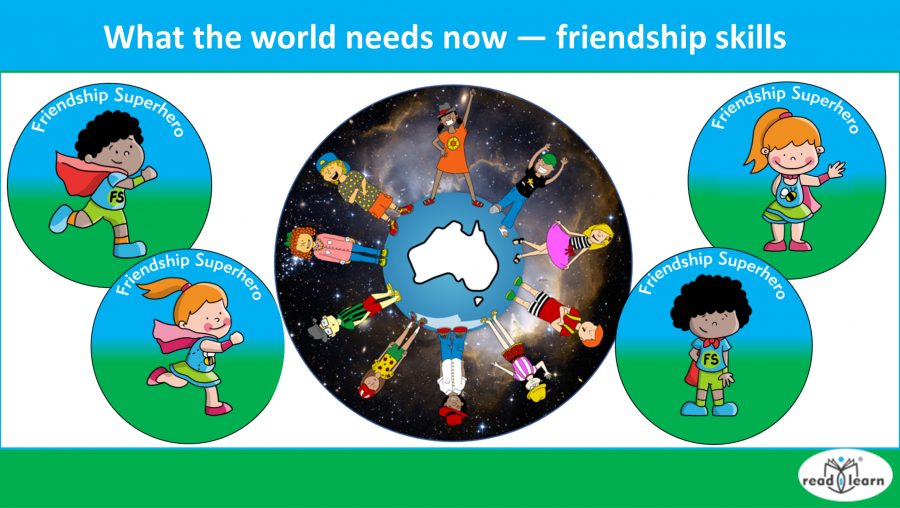
While none of these events have ‘friendship’ in their title, that to me is what it all comes down to: acceptance, kindness and friendship. It is sad to see how difficult it can be to attain on a personal, local, national and international level. We must all do what we can to make the world a happier place through inclusion and respect.
Here at readilearn, friendship skills have always been a focus. We have over twenty resources to support the teaching of friendship skills. They can all be found under the heading ‘Friendship Skills’ in the resources for Character Development.
These are just a few of the readilearn friendship skills lessons and resources:
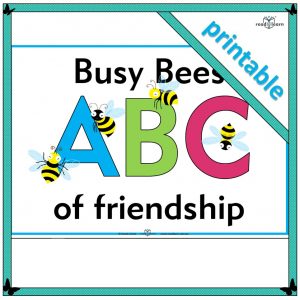
Busy Bees ABC of friendship is an alphabet of words that can be used to stimulate discussion about what a friend is and what friends do.Each letter has a word and accompanying explanatory statement on its own chart. The entire alphabet is also available on one printable chart. It could be used for a bingo-type card on which children colour the box for each letter as they do something appropriate to the word.
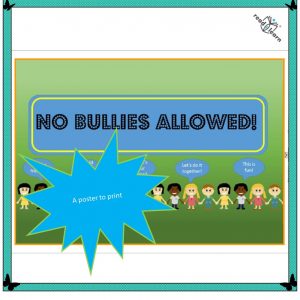
Be friends not bullies provides suggestions for teaching children friendship skills. It teaches them to identify the differences between friendly and unfriendly behaviour, to recognise bullying and to provide strategies for dealing with bullying that they may encounter personally or as an onlooker.
The resource includes:
a story stimulus with suggestions for presentation and discussion
This is where the prompt took me — a whole lot of mashed-up similes trying to express the various moods of my writing process. I hope it makes some kind of sense and isn’t all gibberish.
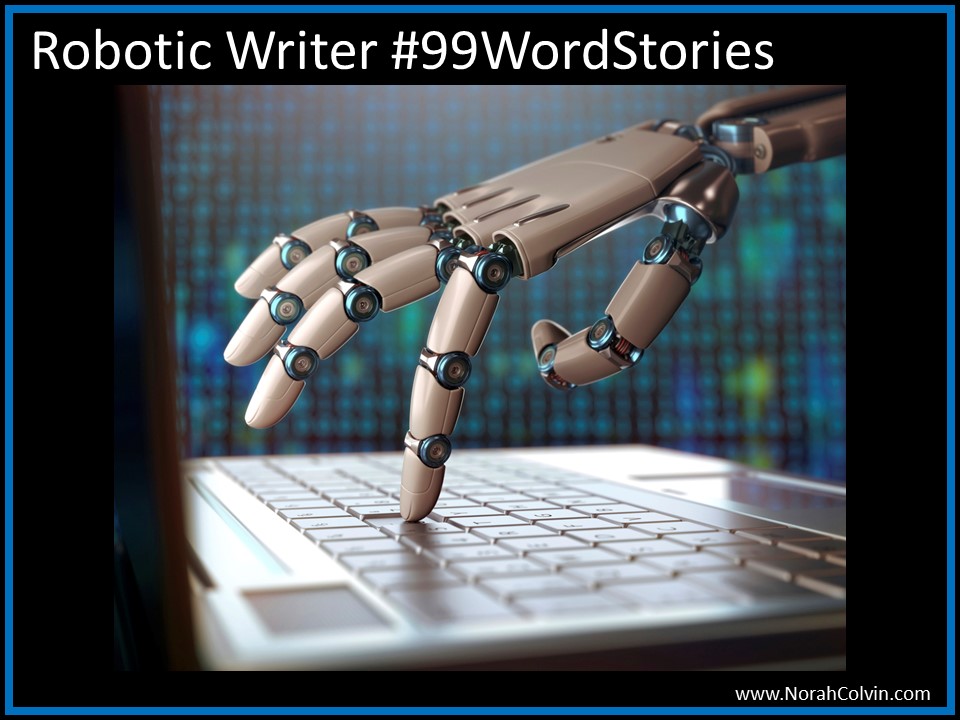
Robotic Writer
When ideas stalled and deadlines loomed, her determined digits thumped the keys, pausing after each stroke, like a robotic writer waiting for the next line of code.
When ideas jostled like unruly children vying for attention, never still enough to focus, she pummelled keys like lightning strikes then backspaced like rowboats in the storm.
When ideas flowed as if channelled from another source, her fingers tap-danced like spring raindrops in a puddle with a magpie chorus joining in.
When the final key was pressed and words were read, with scrunched-up nose, she hit delete and binned the robotic gobbledygook.
Thank you for reading. I appreciate your feedback. Please share your thoughts.
Note: The collection of stories made in response to the previous prompt Farm Life can be read at the Carrot Ranchhere.

















 Norah Colvin