Live Love Laugh Learn … Create the possibilities

Category: Writing

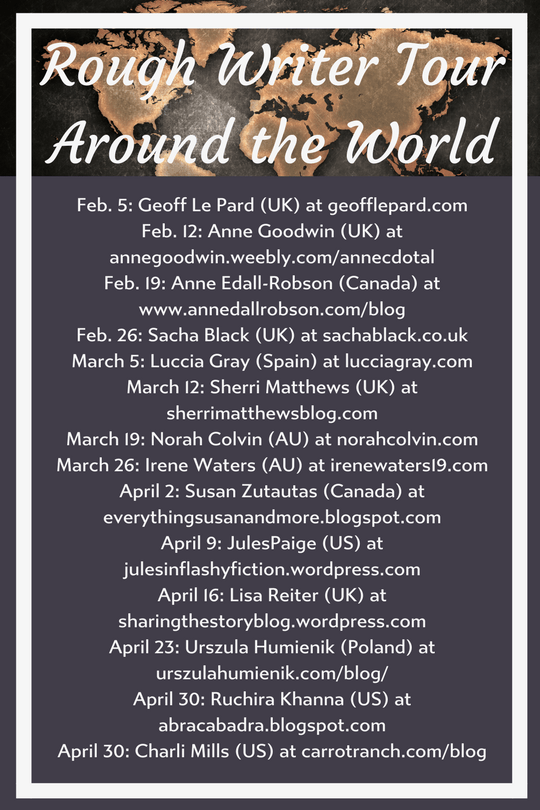
  • Rough Writer Tour stops in Canada with Ann Edall-Robson

    This week the Carrot Ranch Round the World Tour stops at Alberta in Canada with Ann Edall-Robson, celebrating Family Day, no less.

    Read how Ann became one of the Rough Writers and how writing flash fiction adds to her writing process.

    Find out what she writes about this beautiful little cottage.

    Thanks, Ann. It’s a pleasure to ride the Ranch with you.

    Salute to the Congress of Rough Writers Flash Fiction Anthology Vol 1

    Source: Ann Edall-Robson’s – Ann Edall-Robson

  • readilearn: Introducing Jacqui Halpin – picture book author – Readilearn

    readilearn: Introducing Jacqui Halpin – picture book author – Readilearn

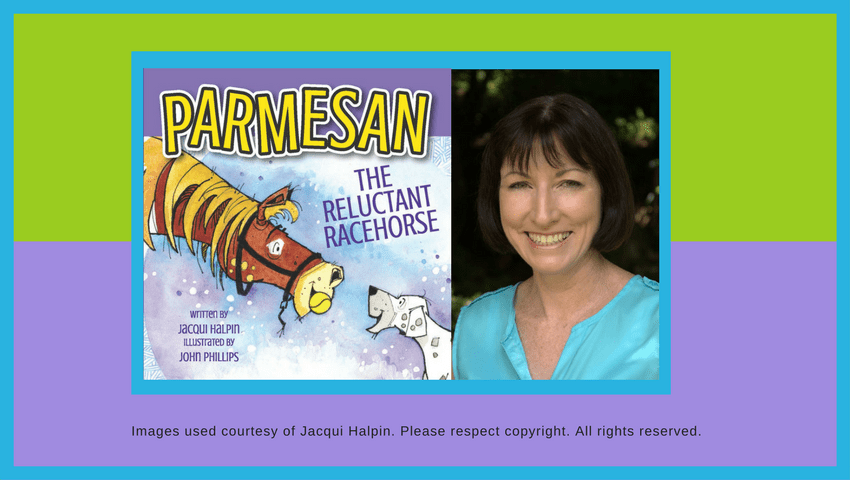
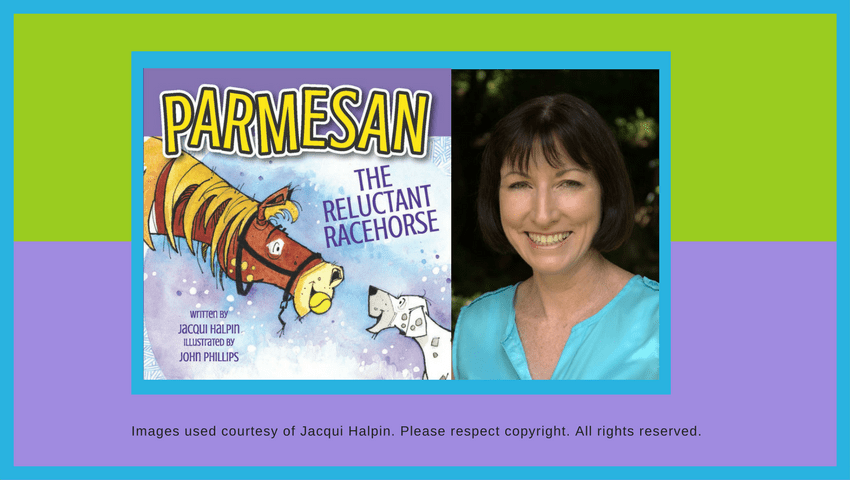
    This week, it is my pleasure to introduce you to Jacqui Halpin – author, founding member of Write Links (a local group of published and unpublished authors and illustrators of children’s books), a former nurse and tuckshop convenor.

    Jacqui grew up in Brisbane where she still lives with her husband, one of her three adult children, and a cat called Loki. While writing and editing, Jacqui likes to sip tea from fine china and eat copious amounts of chocolate. She says she should never be allowed in a bookshop with a credit card in her possession.

    Jacqui writes picture books and short stories, some of which appear in anthologies by Stringybark Publishing and Creative Kids’ Tales. She co-wrote and independently published her elderly father’s memoir, A Long Way from Misery.

    Today Jacqui is talking with us about her first picture book Parmesan The Reluctant Racehorse, humorously illustrated by John Phillips and published by Little Pink Dog Books in October 2017. Jacqui’s second picture book, Where’s Lucky?, based on an orphaned swamp wallaby joey at a wildlife shelter, will be published in mid-2019.

    Parmesan is a delightful story of a thoroughbred racehorse who should be winning races and earning lots of money for his owner. However, Parmesan thinks he’s a dog. Instead of training with the other horses, he’s off with his doggy friends doing doggy things like playing fetch. His owner is not happy. If Parmesan isn’t ready to run in the Spring Carnival, he’s getting rid of him. Parmesan’s trainer is worried. He knows Parmesan won’t be ready, but as they arrive at the Spring Carnival, he thinks of a brilliant way to get Parmesan to run around the track. Parmesan’s triumph proves you can be a winner and stay true to who you are.

    Welcome to readilearn, Jacqui, we are looking forward to getting to know you better.

    Thanks for inviting me.

    Jacqui, when did you know you wanted to be a writer?

    I always liked writing stories and poems at school, but it wasn’t until I read picture books to my own children  Continue reading: readilearn: Introducing Jacqui Halpin – picture book author – Readilearn

  • Every word counts #roughwriters #blogtour via @Annecdotist – annethology

    The Congress of Rough Writers Anthology 1

    Today my very own printed copy of the Congress of Rough writers’ Flash Fiction Anthology Vol 1, edited by Charli Mills, arrived in the post. How exciting! Have you got yours yet?

    Anne Goodwin gives you all the details for purchasing in her contribution to the Rough Writer Tour Around the World.

    Carrot ranch tour

    Read Anne’s post to find out how she came to be one of the Rough Writers.: Every word counts #roughwriters #blogtour via @Annecdotist – annethology

  • The Congress of Rough Writers Flash Fiction Anthology Vol. 1 or Flash Fiction: My (Small) Part In Its The Journey. #Carrotranch #congressofroughwriters #anthology

    Carrot ranch tour

    I am so excited to be in the company of many wonderful writers in this first anthology of flash fiction by Rough Writers at the Carrot Ranch. Geoff Le Pard is one of those writers and kicks off the promotional Around the World Blog tour. Hop on board to meet others of the talented writers and find out to purchase your own copy of the book.

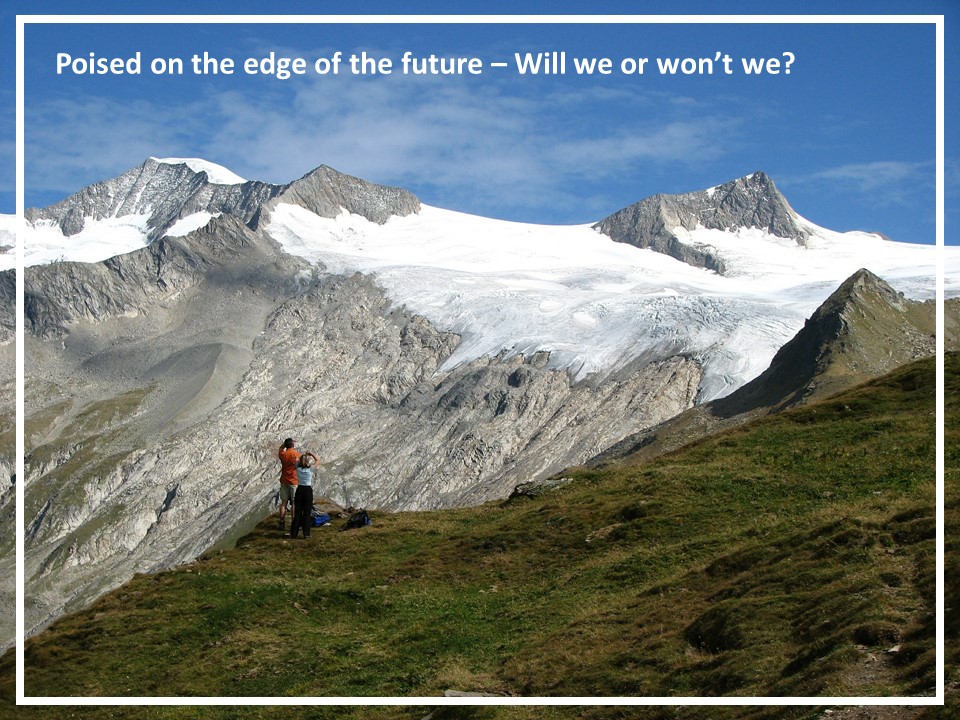
  • Poised on the edge of the future

    Poised on the edge of the future

    Every morning we wake up to a new day and step into the future. The past is gone, in memories of yesterday and soon to be forgotten. How we approach each day–with excitement, fear, anticipation, dread, joy or boredom, lulled by repetitious acceptance devoid of creativity–is our choice. We can accept the mundane or jump into the unknown, feet first.

    This week Charli Mills of the Carrot Ranch challenged writers to In 99 words (no more, no less) write a story that goes to the edge. Consider what the edge might be and how it informs the story. Go where the prompt leads.

    I jumped straight in and wrote my 99-word response in one go. Normally I mull it over for days, struggling to find threads of meaning to tie together post and story.

    Last week in response to Charli’s “boots” prompt, I wrote about Grandma’s sparkly storytelling boots. I was pleased so many of you confirmed it was a great idea for a story. I had already decided to work on it and submit it to my critique group this week. You could say, I jumped into that abyss–boots first. Wearing grandma’s sparkly boots, I’m sure to fly.

    It’s funny when you write a post that connects with people in unexpected ways. I was surprised, delighted, honoured and extremely grateful this week when three of my favourite bloggers, whose work I admire shared my post on their blogs:

    Jennie Fitzkee–an inspiring early childhood teacher who, like me, expounds the benefits of respect for children, story reading and telling–blogs at A Teacher’s Reflections. If you haven’t visited her blog yet, I recommend you do. Every post delights.

    Dayne Sislen–an illustrator of children’s picture books who shares information about illustrating books and also writes about the importance of reading to children–blogs at Dayne Sislen Illustration. Her love of children’s picture books and illustration is obvious. In her post last week How to extend the attention span of your children, Dayne discussed the importance of reading to children. It was a wonderful match for mine about storytelling. You can find out more about Dayne on her blog or website.

    Charles French–who I came to know through Jennie reposting his series of inspiring quotes–blogs at Charles French Words Reading and Writing. How delightful to know that he also enjoyed my post enough to share with his readers. This is just one of his posts of quotations that spoke to me: Quotations on teaching. 😊 I suggest you pop over to visit Charles as well to share in his words of wisdom.

    children hold hands going into the future

    Those of you who write YA or adults novels, memoir or non-fiction, may wonder what we early childhood teachers and writers and illustrators of children’s picture books have that could be of interest to you. Let me tell you, we have everything. We have the key. We are the ones who create the readers of tomorrow, the future readers of your books. We turn the children onto reading as we take their hands and lead them to the edge of tomorrow when they leap into the unknown worlds of books.

    In case you haven’t yet read my response to Charli’s “edge” prompt, this is it. It doesn’t necessarily have anything to do with my previous statement but starting anything new can push us to the edge and we don’t really know just what will happen until we give it a try. I wish you all many joyous flights.

    The edge

    She stood at the edge of the abyss and wondered what would happen should she jump – would she fly, or would she plummet to the bottom and rest, fractured and alone, forgotten and abandoned, with all the others who dared to try but failed. It was fear that held her back, chained her to the ledge. But there was nowhere else to go. She’d tried all other paths. This was all that remained. Could she stay there forever. Would there be a point? What if she fell? But what if she flew? She inhaled, closed her eyes, and jumped…

    Thank you blog post

    Thank you for reading. I appreciate your feedback. Please share your thoughts.

  • readilearn: Meet Sofia Goodsoul author of Nian the Lunar Dragon – Readilearn

    readilearn: Meet Sofia Goodsoul author of Nian the Lunar Dragon – Readilearn

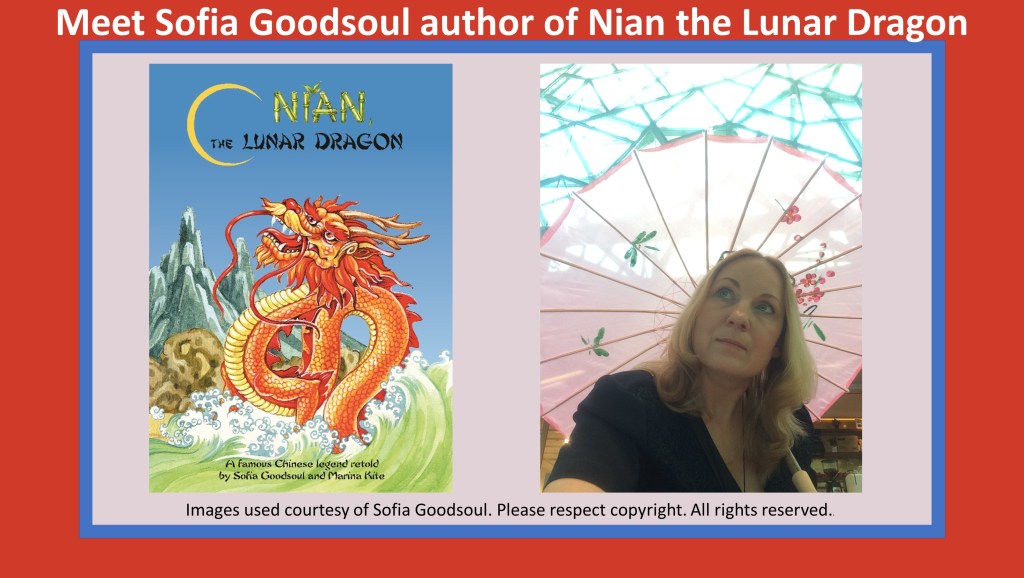
    This week I am very excited to be interviewing Australian author Sofia Goodsoul about her picture book Nian the Lunar Dragon, illustrated by Marina Kite. With Multicultural Children’s Book Day coming up on 27 January (see previous post I am Australian) and Chinese New Year on 16 February, the time is just right.

    Before we begin the interview, let me provide you with a little information about Sofia.

     Sofia Goodsoul is an author, emergency kindergarten teacher and indie-publisher. Her poetry writing has grown from a hobby into a great passion. Now she can’t live a day without writing poems, riddles and stories for young children. The children give themes and inspiration for her books.

     Sofia lives in Melbourne with her family and pets. She loves going to Zumba classes and taking long walks with her husband and family dog Mack.  Sofia dedicates all her spare time to her writing and publishing career.

    multicultural children's book diversity Chinese New Year

    Nian the Lunar Dragon, an entertaining and beautifully illustrated rhyming narrative for young readers, is Sofia’s second picture book in collaboration with Marina Kite. The book is about the legend behind the traditions and celebrations of Chinese New Year, sometimes called Lunar New Year. According to the lunar calendar, Chinese New Year commences with the new moon at the beginning of spring.

    A long time ago, the dragon named Nian lived in the deep ocean to the east of China. Nian was a strong and ferocious dragon, which no creature could defeat. Once a year, Nian climbed ashore to hunt for cattle and human prey. The people of the nearby villages and towns lived in terror, and each New Year’s Eve they had to leave their homes to save themselves. One day, a monk came to the village. He knew a well-kept secret about how to scare Nian away and free the Chinese people from the danger and their fear.

    Welcome to readilearn, Sofia. We are looking forward to getting to know you a little better.

    Thanks for inviting me!

    Sofia, when did you know you wanted to be a writer?

    I don’t remember capturing that specific moment, but my grandmother was a children’s book illustrator and I often stayed with her

    Continue reading: readilearn: Meet Sofia Goodsoul author of Nian the Lunar Dragon – Readilearn

    Thank you blog post

    Thank you for reading. I appreciate your feedback. Please share your thoughts.

  • Watching ink dry

    Watching ink dry

    Sometimes we think change occurs at an incredible pace. Other times it’s too slow–like watching paint dry. But what about watching ink dry?

    This week at the Carrot Ranch, Charli Mills challenged writers to In 99 words (no more, no less) write a story about wet ink. It can be artistic, writerly or something completely off-the-wall. Go where the prompt leads.

    Where would I go? To school–where else?

    In my first year of school we wrote on slates (no, not on stone tablets as my children may tease).

    In subsequent years, we wrote in exercise books and special handwriting books with lead pencils (which contain graphite rather than lead).

    As we moved up through the grades, we still used pencils for most work, but were also introduced to pens with nibs which we dipped into inkwells recessed in our desks for handwriting or “copybook” lessons. It was important to get just the right amount of ink on the nib–too little and the nib would scratch but not sufficiently to make a readable mark–too much and the ink would run, blot and smudge.

    In upper primary, we graduated to fountain pens for our copybook work. It was just as difficult to get the right amount of ink, even with the cartridge variety. Should we err and make a blot on our copybook, it was treated as a most serious offence. Luckily, our trusty blotting paper was at the ready to soak up any excess. We always had to begin writing at the top and continue down the page. There was no going back and inserting or altering something at the top, unless we were absolutely certain the ink was dry, lest we smudge the writing with our hand.

    Although ball point pens, commonly called biros in my circles, had been invented–as early as 1888 according to this history, would you believe–we were not allowed to use them in school for fear our handwriting skills would deteriorate. They had their own set of ink issues too–some would fail to write, other would supply too much thick ink. Others would leave ink all over hands, or leak in pockets or bags.

    Over the years, ballpoint pens improved in quality and have now replaced dip nib pens except for specialist writing, and fountain pens are considered more a luxury item. Now the concern is that the use of digital devices; such as, computers, tablets and phones will have a harmful effect upon children’s handwriting skills. I wonder were there similar concerns when papyrus replaced stone tablets; and what those concerns will be in the future, should handwriting have a future.

    I didn’t wish to “blot my copybook” by responding to Charli’s prompt with a story unrelated to education or children. I hope you enjoy it.

    A blot on whose copybook?

    Ever so carefully, she dipped the nib in and out of the inkwell. Her tongue protruded, guiding the pen as she copied the black squiggly lines dancing across the page.

    “Start at the top. Go across; then down. Lift, dip…,“ the teacher droned.

    “Start at the top!” The cane stung her knuckles, sending the nib skidding across the page.

    “Now look what you’ve done!” The teacher grasped the book and held it aloft, sending ink in rivulets down the page. Her thumb intercepted one, smearing another opportunity for humiliation across the page.

    “Girls, this is what not to do!”
    Thank you blog post

    Thank you for reading. I appreciate your feedback. Please share your thoughts.

  • Spend a copper penny

    Spend a copper penny

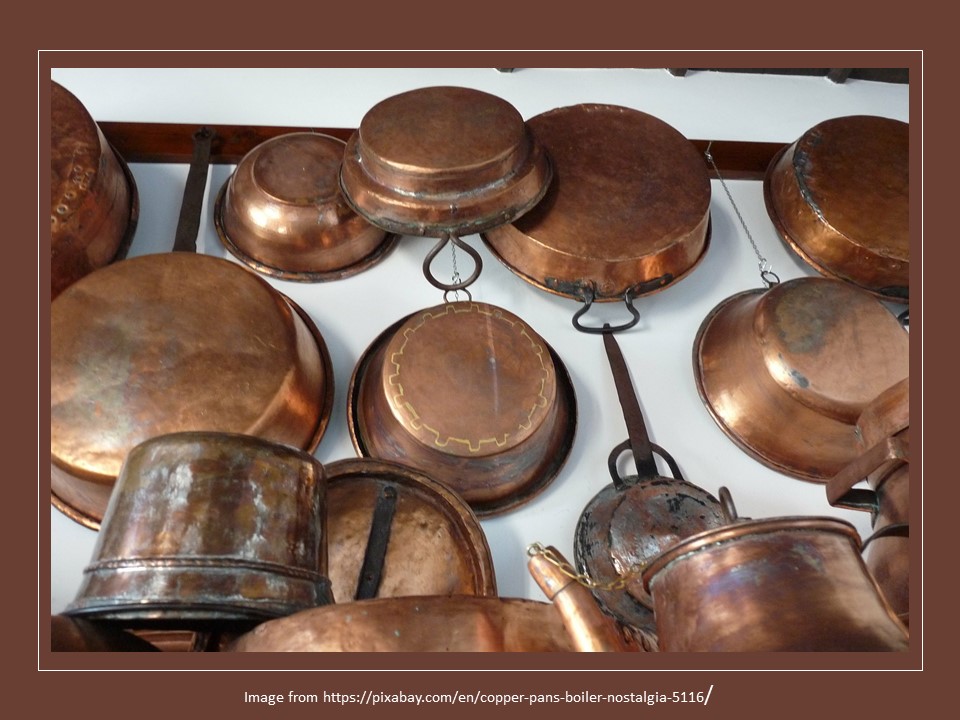
    This week at the Carrot Ranch, Charli Millis challenged writers to In 99 words (no more, no less) write a story about Copper Country. It can be any place, fictional, historical, or on another planet. Go where the copper leads.

    It may not be a country, but it seems as far away and foreign as any country might be–the country of my childhood, when:

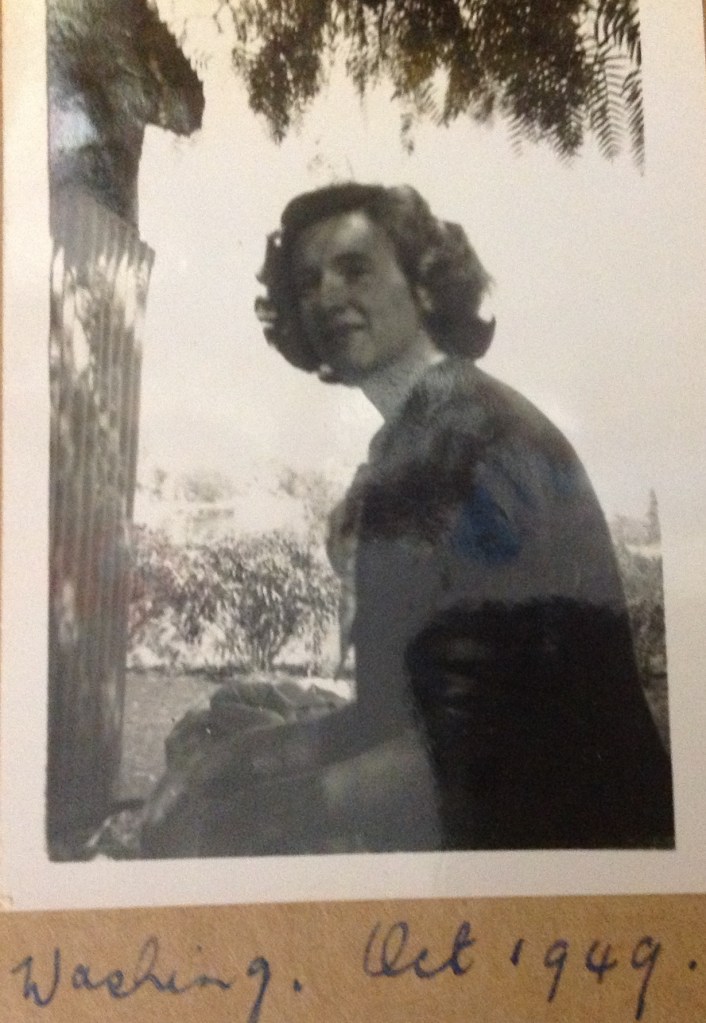
    Mum washing in copper

    • My mum did the laundry in a big copper pot heated over burning logs. She’d fill the pot and heat the water then use a long wooden stick to swirl around the sheets or clothes before hanging them over the line to dry in the sun. I wrote about this in a previous flash (nearly four years ago!): Washing Day.

    general store Australia

    • Items were bought from a general store in exchange for coins or notes. There were no supermarkets, credit cards, pay pass or online shopping. Storekeepers were friendly and knew each member of the family by name.

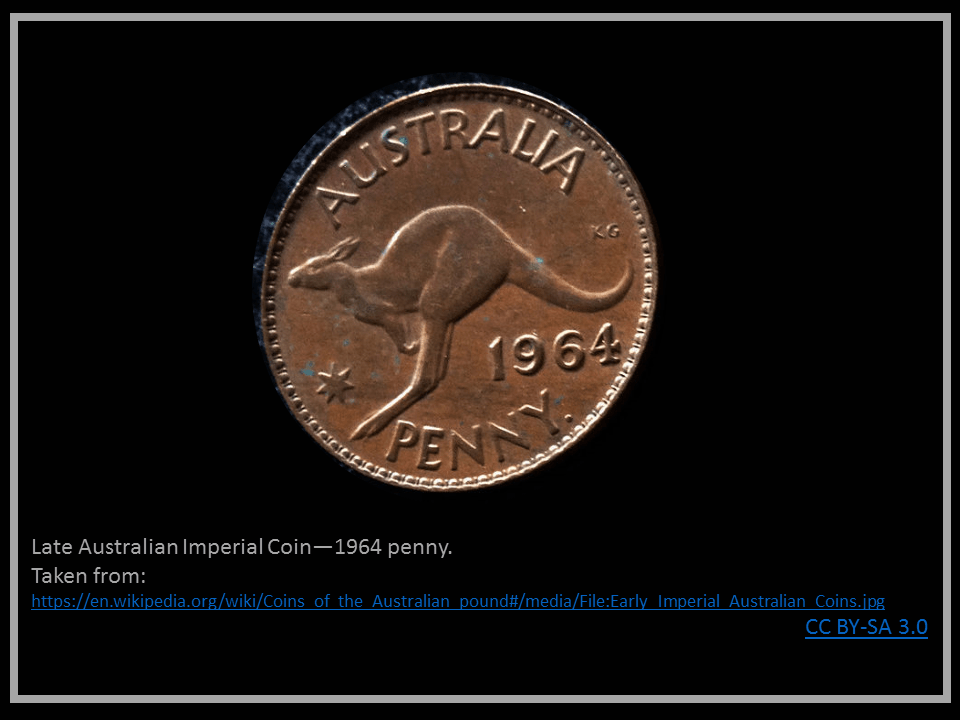
    My favourite coin was the penny with the Queen on the head, and a kangaroo on the tail. Though made from a bronze alloy and only 97% copper, we called it copper nonetheless.

    • Almost all water pipes, hot and cold, were made of copper. Most still are, but some have been replaced by plastic which is initially cheaper but not as long-lasting. I remember the colourful pipes leading to the concrete wash tubs when we moved to suburbia and Mum got a real washing machine. The hot water pipes were wrapped in asbestos.

    police and robber

    • Policemen (I don’t recall too many policewomen back then) were respected, and we had fun playing cops and robbers. There was always a debate over who was going to be the copper and who was going to be the robber, but it went without saying that the copper always won.

    Coppertone girl

    • I was a (naturally) copper-haired child, one of four in a family of ten. With our very fair skin, the sun wasn’t kind to us and our skin had no resemblance to that of the Coppertone girl who started to appear on billboards a little later.
    • We would “spend a penny” to use public facilities, sometimes handing our coin to an attendant, or even putting it into a slot in the door!
    • Days were long, and time and possibilities were infinite. Life was black and white, and we children had not a care in the world as parents knew everything and took care of everything.

    It’s to this childhood country of laid back times, when the whole world was open to us and copper pennies could buy happiness, that I have returned–it may not be the real world of my childhood, but rather one of my dreams.  I hope you like it.

    Spend a penny or two

    Coins jingled in his pocket as bare feet squeaked out every step along the sandy road. Every so often, he’d finger them–such big coins. In his mind, he spent and re-spent them: a dress for Mum, a hat for Dad, a pull-a-long toy for Baby–nothing for himself.

    He watched the boy place the copper on the counter. He followed the hopeful gaze, shook his head and pointed to lolly jars. The boy held up four fingers; he held up one. The boy hesitated, then shoved the coins back in his pocket–to spend another day.

    “Hold on…”

    Thank you blog post

    Thank you for reading. I appreciate your feedback. Please share your thoughts.

  • When you wish upon a star

    When you wish upon a star

    This week Charli Mills from the Carrot Ranch challenged writers to In 99 words (no more, no less) write a story about a wishing star. It can be central to the story or used in a different way. You can have a character interact or not. Go where the prompt leads.

    My mind skipped immediately to a song from my childhood, remembering Sunday evenings when we huddled around the television set to watch The Wonderful World of Disney:

    “When you wish upon a star

    Makes no difference who you are”

    What a wonderful thought – all success stories have to start somewhere – why not with us?

    But there is another saying too, Be careful what you wish for.

    This is my response. I hope you enjoy it.

    The wish

    The words replayed continuously as he sat on the step searching the sky for a wishing star: “When you wish upon a star …”

    Inside, the adults’ voices grew louder and harsher. He covered his ears and sang through his tears.

    A crash followed a thump, then all went quiet. He held his breath.

    He crept to the door and peeked in. Mum, slumped on the floor, cradled Dad’s head in her lap. Blood was everywhere.

    “Call triple zero.”

    Huddled together they watched paramedics try to revive him.

    “I didn’t mean …” each whispered to themselves, but weren’t convinced.

    Thank you blog post

    Thank you for reading. I appreciate your feedback. Please share your thoughts.

  • All-Around Best of Show

    Congratulations D. Wallace Peach for being the All Around Best of the Show in the inaugural Carrot Ranch #FFRODEO! What a feat!