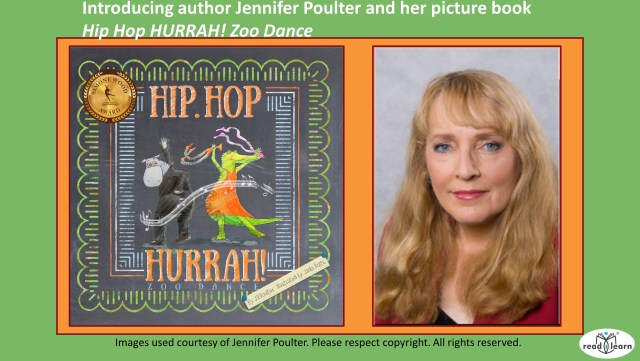
Meet Australian author J.R. Poulter as she discusses her beautiful picture book Hip Hop Hurrah Zoo Dance which is great for reading and getting kids moving.
This week I am delighted to introduce you to prolific Australian author Jennifer Poulter. Jennifer writes fiction and poetry for children, education and the literary market. She has had over 50 traditional books and thirteen digital picture books published. She writes under the names J.R. Poulter and J.R. McRae and has received numerous awards for both fiction and poetry writing.
Throughout her career, Jennifer has been employed in numerous roles including Senior Education Officer with the Queensland Studies Authority and Senior Librarian with the State Library of Queensland. She even once worked in a circus. In addition to writing, Jennifer is also an editor and artist. Now, under the banner of Word Wings, Jennifer collaborates with other creatives from over 20 countries.
Today I am talking with Jennifer about her picture book Hip Hop HURRAH! Zoo Dance.
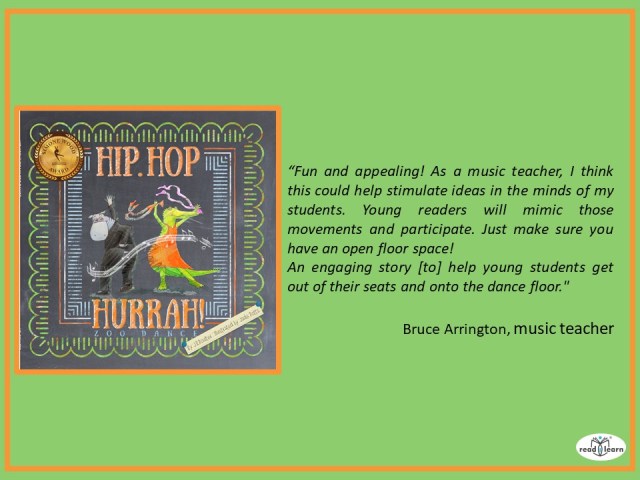
What initially attracted me to this book is its ability to get children moving. What a great way to incorporate fun with movement and reading into any day.
The book also fits perfectly with a dance curriculum that encourages children to become aware of their bodies and how they move in space, to explore and improvise dance movements. Children can be encouraged to move like the zoo animals in the book or improvise movements for other animals and objects that move.
But Hip Hop HURRAH! Zoo Dance can also find its place in the literacy curriculum. Written in rhythmic verse, it encourages children to join in with the reading. It has a treasure of words to delight and extend vocabularies and add sparkle to writing; words like ‘limber, fandangle, prance and shimmies’. Children will laugh at the hippos with the backside wobbles and be intrigued by the combination of illustrations by Jade Potts and the variety of media used by designer Takara Beech in creating the double page spreads.
If you throw in some counting of animals and legs, needs and features of living things, and places they live, you can cover almost the entire curriculum with this one little book. But enough from me, let’s find out what Jennifer has to say.
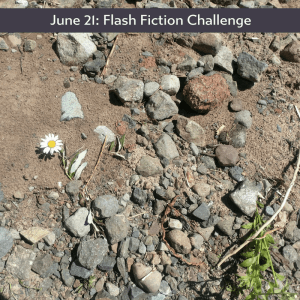
Too lads, reviewing the previous evening’s campfire conversation, dug stones from the bank, inspected each and competed to land one further in the creek.
“D’ya reckon there’s still gold here?”
“Dad says. Reckons someone found one this big.”
“But that’s ages ago.”
“So. Might be more.”
“What’d you do if you found some?”
“Easy. Buy a car, a yacht and a jet. How ‘bout you?”
He contemplated silently—a house of their own first, then for other homeless people too.
“Whoa. Look!”
“Gold!”
They sprinted back to camp.
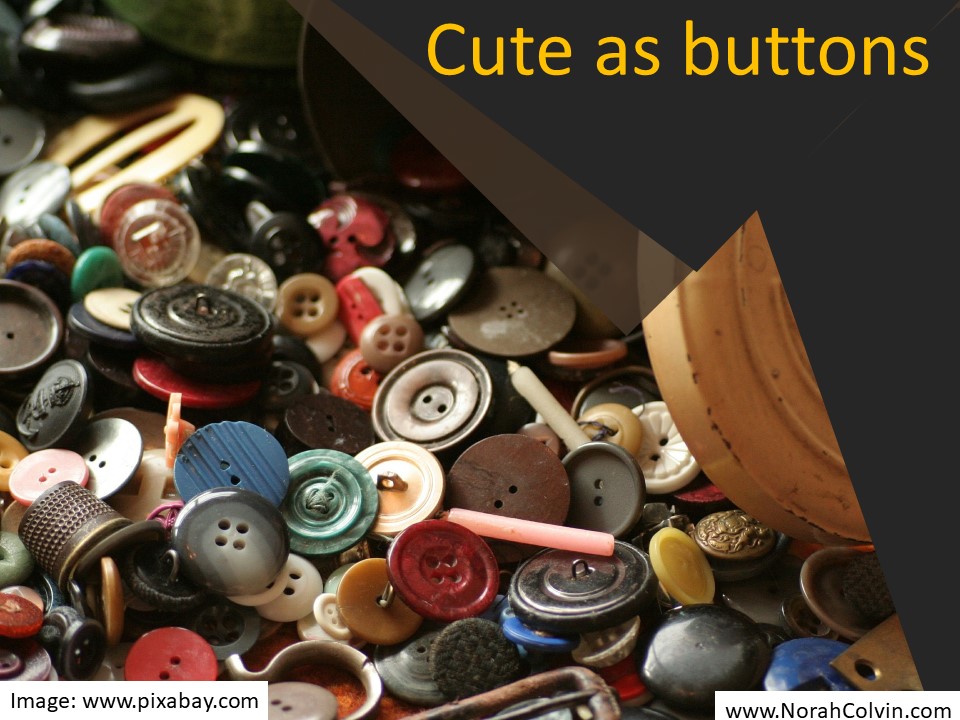
“You struck gold all right—a gold button,” the adults laughed.
Thank you for reading. I appreciate your feedback. Please share your thoughts.
Ever have one of those days? You know—it seems the world is against you, and everything you do goes wrong. Maybe you oversleep and in your rush, you fumble, make mistakes and get even later. You hurry to the stop as your bus pulls away. You flop down reviewing life’s punishments, and some jackass walks by telling you to “Smile, it’s not the end of the world.” What would he know? You open your phone and scroll: trivial drivel. Then this one story blows your insignificancies away. You phone your appointment, apologise and reschedule. All is not lost.
In her post, Charli tells of her friend Cynthia who normally sleeps outside in a tent, even in the snow, but not on the night of June 16. As Charli explains, “In a few hours, the thunderstorm stalled over the lower Keweenaw and dumped 7 inches of rain. Cynthia, who usually sleeps where a mountain slammed into her house, slept inside that night. She and her daughter woke up when her refrigerator tumbled over. Water filled her stairwell to the bedrooms on the second floor and pushed against their doors in a torrent, preventing escape.”
Though much was lost during that storm and its aftermath, Cynthia did not lose her spirit or her optimism. As she looked around at the devastation, she had thoughts other than loss (as quoted in Charli’s post):
“This is what I saw: beloved neighbors talking with selfless helpers and eating something finally as they gazed over tge work of some long days, people still digging and puzzling in the waterway, laughter ringing, dogs barking, a moon rising… and I was so pleased, so happy, so fulfilled. This is life, this is who we are capable of being. This is who we are. It was such a beautiful scene. It is our new reality. Blessed be.”
All around the world, there are tragedies of enormous proportion: wars, floods, fires, droughts, volcanic eruptions, illness. The list goes on.
What I attempted to show through my flash is that it can be easy to get caught up in the trivialities of our daily lives and forget to look from afar and see how small they are. When our problems seem overwhelming, we don’t need to look too far to see someone in a worse position. For those of you who are truly suffering, I apologise, I in no way intend to trivialise your concerns.
I also intended it as a reminder that we don’t always know what someone else is going through and an off-hand remark to tell them to “cheer up” may not helpful.
It is the same for children in our schools, in our classes. We don’t know what bumps they may be experiencing to make them withdrawn, moody, hostile or aggressive.
To truly understand another’s position we need to listen, put ourselves in their shoes and consider how we would feel. We need to accept that the world doesn’t always work in the way or timeframe we wish.
If we could lend a helping hand, a listening ear, kind words, and an open heart what a more beautiful world it would be.
Just as Cynthia chose to see beauty in the scene around her, it is important to remember there’ll be days like this, that all is not lost.
Thank you for reading. I appreciate your feedback. Please share your thoughts.
Children love to create artworks using pencils, crayons, paints and anything they can stick to a surface using glue. With access to a variety of materials, they can be absorbed for hours creating their masterpieces.
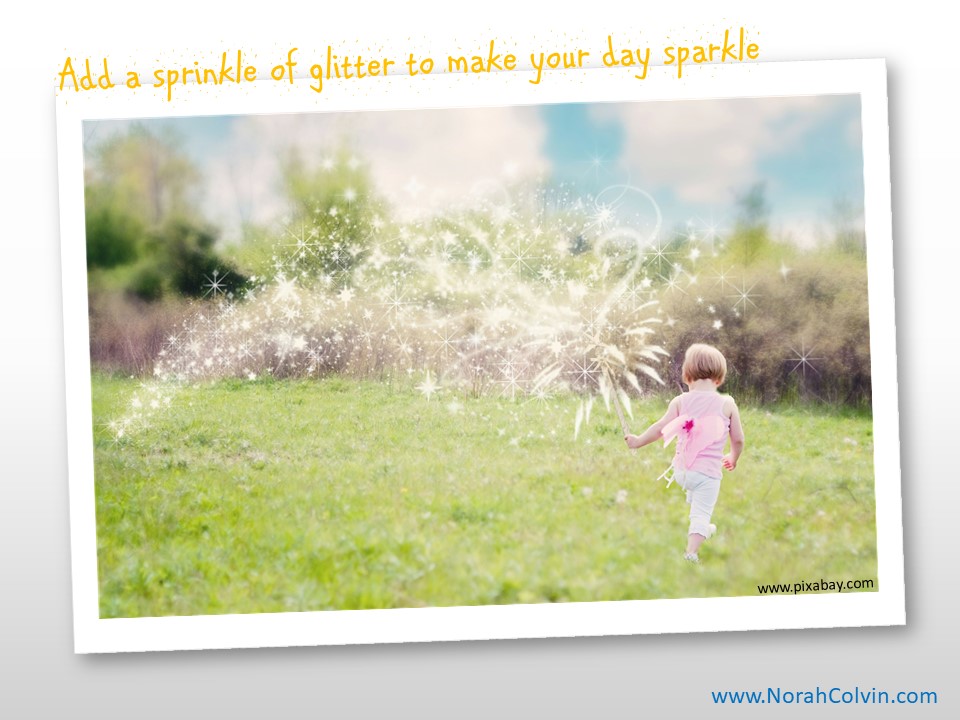
While they might select from the materials offered, I found the one thing that few children could resist was glitter—and the more of it, the better.
There is nothing like glitter to add a bit of sparkle to the day. The only trouble is, glitter is so light and so small, that it goes everywhere—on the artwork, on the table, on the chair and on the floor. It sticks to the hands and is smeared on the face and takes forever to remove from the hair. But everyone loves it nonetheless, and it adds a little brightness to the day.
Smiles are like glitter in that they also spread easily and brighten the day. However, they are not nearly so messy, cost nothing, and require no cleaning up at all.
I think smiles are the glitter we should add to the artwork that is everyday life. And if there’s one thing about smiles, the more you give, the more you receive. Smiles come from a bottomless well, from a source that never dries up. A sprinkle of smiles will make anyone’s day sparkle, and who knows what difference a smile can make to another’s life.
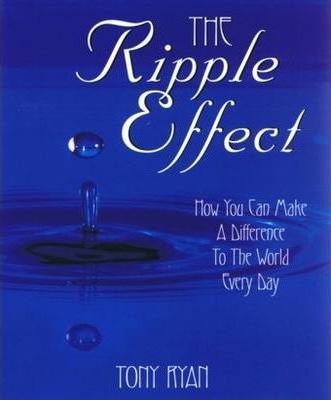
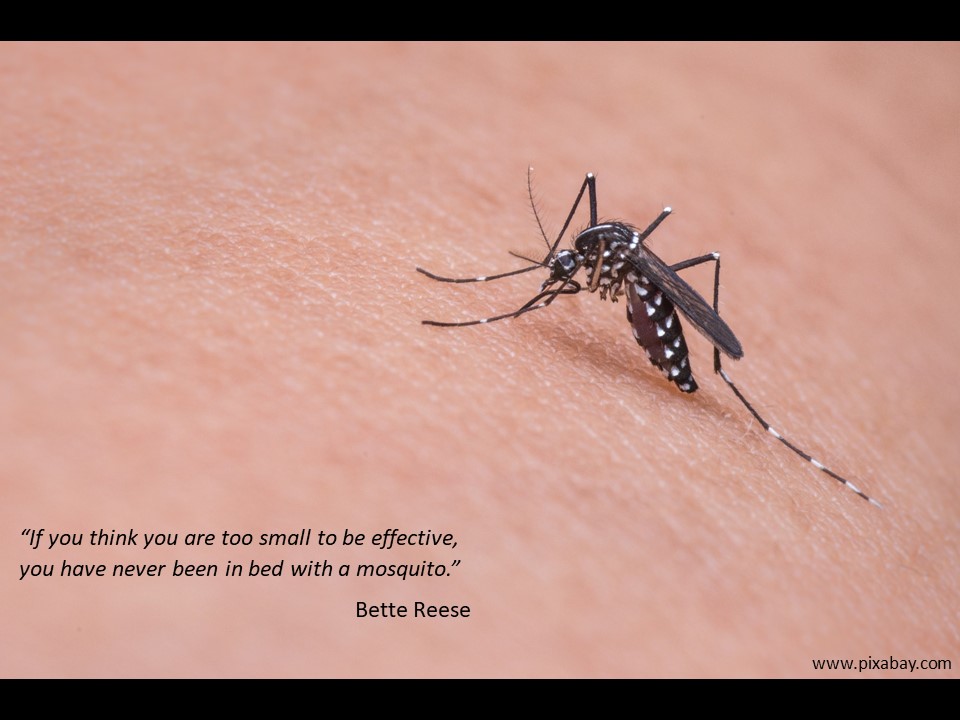
I often think of The Ripple Effect, written by Tony Ryan, and its inspirational stories. I especially enjoy this quote by Bette Reese included in the book: “If you think you are too small to be effective, you have never been in bed with a mosquito.”
One of Tony’s stories describes the following scenario:
“As you enter the freeway, you discover that the traffic is heavier than usual, and is moving quite slowly. You then notice that the young driver in the car beside you is trying to enter your lane, because her exit is coming up. No-one is letting her in, and she is becoming tense and upset.”
Tony then describes the turning point in her day:
“You stop, and wave her in front of you with a flourish and a smile.”
and the ripple effect:
“she returns your smile, acknowledges your thoughtful action, and drives on
her tension dissipates, and she arrives at her company office feeling buoyed by your little effort
as the main receptionist, she is the first to greet the hundreds of people who enter the office each day
with her positive greeting, she decides to brighten up the life of every person she meets throughout that day
because of her efforts, many others in the business district are inspired to focus on their own positive efforts.”
Like glitter, we can never know how far the effects of our smiles might travel. There can never be too many smiles in any one day, especially in a classroom filled with children.
I’d only come across the word “glisten” before in the Christmas carol, Walking in a Winter Wonderland.
But Charli’s prompt reminded me of an incident in my childhood that had absolutely nothing to do with glitter or glisten (I don’t even remember glitter in my childhood) but loads to do with smiles. I’ve rewritten the incident to include glitter and other alternative facts. I hope it gives you a smile.
Glitter smiles glisten
Relentless rain meant no beach for the country cousins. They spent eternity on the verandah, making artworks, playing games, and bickering.
On the last day, when Mum said to clear space for their mattresses, they fought over who’d do what. Toys and games ended up in a haphazard tower with the glitter bucket balanced on top.
When Dad bent for goodnight kisses, he stumbled and demolished the tower. Glitter went everywhere—including all over Dad. The children gasped.
“Your hair glistens, Dad,” smiled the littlest.
Dad smiled too, then everybody laughed.
Dad wore a hat to work that week.
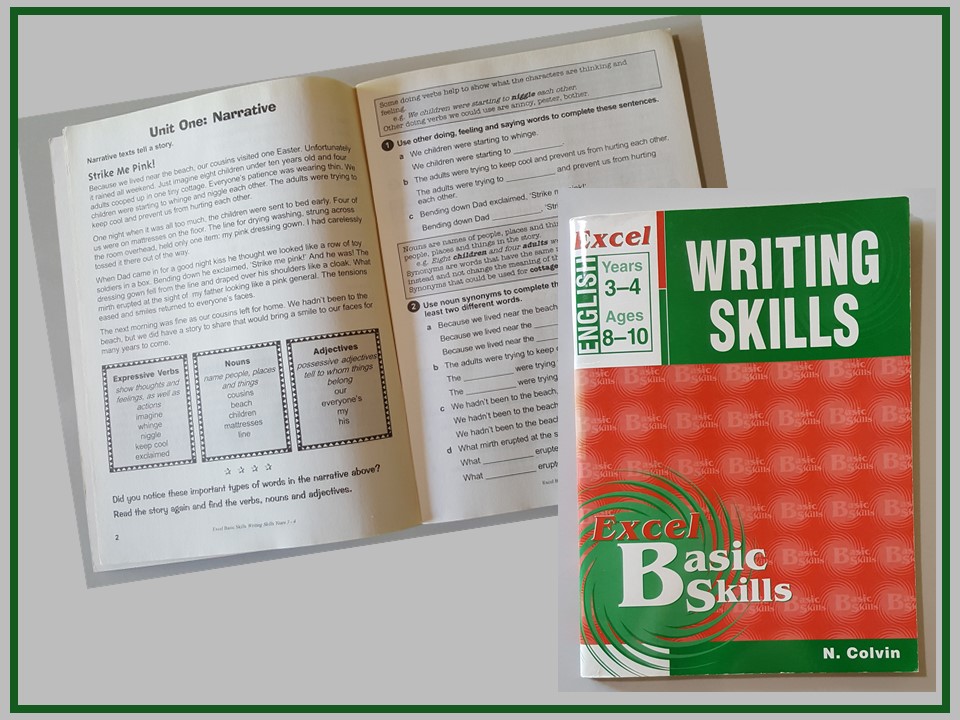
I previously wrote about this incident for inclusion in a Writing Skills Homework Book published by Pascal Press. Workbooks such as this are very different from the teaching resources I now share on readilearn, but: it was paid work.
This version is closer to the truth.
Strike Me Pink!
Because we lived near the beach, our cousins visited one Easter. Unfortunately, it rained all weekend. Just imagine eight children under ten years old and four adults cooped up in one tiny cottage. Everyone’s patience was wearing thin. We children were starting to whinge and niggle each other. The adults were trying to keep cool and prevent us from hurting each other.
One night when it was all too much, the children were sent to bed early. Four of us were on mattresses on the floor. The line for drying washing, strung across the room overhead, held only one item: my pink dressing gown. I had carelessly tossed it there out of the way.
When Dad came in for a goodnight kiss he thought we looked like a row of toy soldiers in a box. Bending down he exclaimed, “Strike me pink!” And he was! The dressing gown fell from the line and draped over his shoulders like a cloak. What mirth erupted at the sight of my father looking like a pink general. The tensions eased and smiles returned to everyone’s faces.
The next morning was fine as our cousins left for home. We hadn’t been to the beach, but we did have a story to share that would bring a smile to our faces for many years to come.
Note: I don’t know how many others used the term, but my Dad often said, “Strike me pink” to express surprise.
Thank you for reading. I appreciate your feedback. Please share your thoughts.
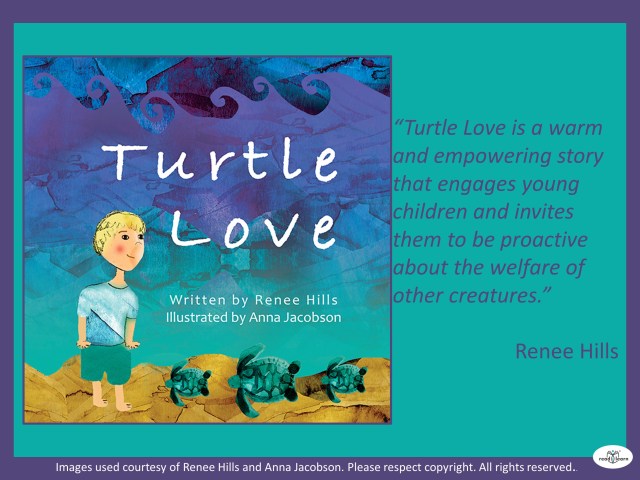
Do you love turtles? I find these magnificent creatures of the sea fascinating. Although I already owned a collection of picture books about turtles, I couldn’t resist supporting local author Renee Hills publish her first picture book Turtle Love, illustrated by Anna Jacobson, through Pozible at the end of last year. I was delighted when I received my very own copy of this beautiful picture book with its “warm and empowering story that engages young children and invites them to be proactive about the welfare of other creatures.”
Synopsis
Turtle Love is about Jacob Gordon Lachlan Brown who lives on perhaps the most interesting and beautiful beach in the world. The flatback turtles agree. They come every summer to lay their eggs. But life is becoming more difficult for the turtles because the big ships that load coal are stirring up sediment and this affects the seagrass that the turtles eat. And this beautiful beach is where they MUST come to nest. Why don’t the flatback turtles go somewhere else? What can Jacob do to help them?
The text explores themes including the impact of man-made coastal developments on the habitat of other species; how to advocate for threatened creatures and the right of all living beings to have a safe place to nest and live. As a bonus, the book contains a story within a story, a mythical explanation for the beautiful coloured rock landform on the beach where the turtles nest.
About the author
Renee Hills has been writing ever since she won a prize for an essay about the future when she was a country North Queensland kid. After graduating and working briefly as a teacher, Renee honed her writing skills as a print journalist, editor, and self- publisher.
And so, the Rough Writers Tour Around the World is over. We’re back at the ranch with the lead Buckaroo Charli Mills, wrapping up the first adventure. This tour might be over, but the journey has just begun. Charli says, “Through writing together on projects of creative expression, we are on the trail to happiness. We ride the trail of peace.”
I respond, “The pen is mightier than the sword. Together our voices are stronger than one, but we don’t speak as one, we speak as a collective of individuals, supporting, and receiving the support of, an amazing leader. Doubters may have considered your vision a puff of cloud easily erased. But it is a rainbow of inspiration under which unicorns dance, writers write and readers read. How delighted I am to have shared in the journey.
If you haven’t yet, come and join us at the Carrot Ranch. There’s always room for more in the posse on the trail to happiness and peace.
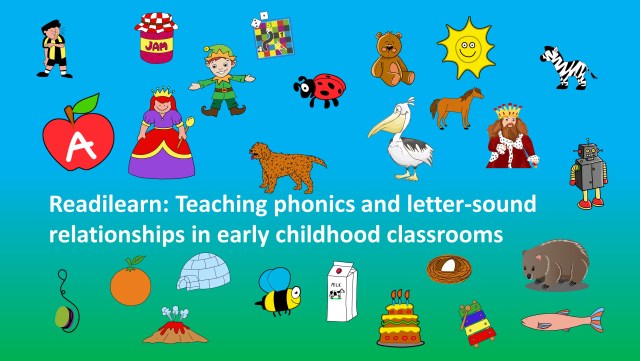
Teaching phonics and letter-sound relationships is an important part of literacy education in early childhood classrooms. To be fluent readers and writers we need to understand the relationship that exists between the letters and sounds of our language. This knowledge is what enables us to extract meaning from texts we read and ensure that others can interpret the intended meaning in words we write.
The process of expressing thoughts in writing can be laboured for young children as they stretch out words to identify individual sounds and the letters we use to represent them. From the initial stages of making arbitrary marks upon the page, children develop into proficient writers through recognisable stages of approximation. Readable writing is dependent upon the effective use of letters to represent sound.
Reading is not so dependent as there are other cues and strategies that readers can employ to interpret a writer’s message. Young children garner information about texts they read from supporting illustrations, prior knowledge of the subject matter and text type (for example, narrative or non-fiction) and understanding of how language works. This information supports their reading which is guided by words they recognise by sight as well as their knowledge of letter-sound relationships.
When teaching children to read, it is important to ensure children learn to use effective strategies that access all available cues. Over-dependence on any one cuing system leads to a break-down in the process. While the teaching of phonics has an important place in early childhood classrooms, I have resisted making resources for teaching phonics in isolation for two main reasons.
Two reasons against making resources to teach phonics in isolation
#1
I believe reading is best learned and taught by reading. Knowledge of letters and sounds can be learned while reading meaningful and enjoyable texts. Teaching and learning can occur in literacy lessons, lessons in any subject, or whenever an opportunity to interact with print exists, which is frequent in our print-rich environment.
I have previously written about some strategies I consider beneficial for teaching reading and will no doubt write more in the future. You can read some of those posts here:
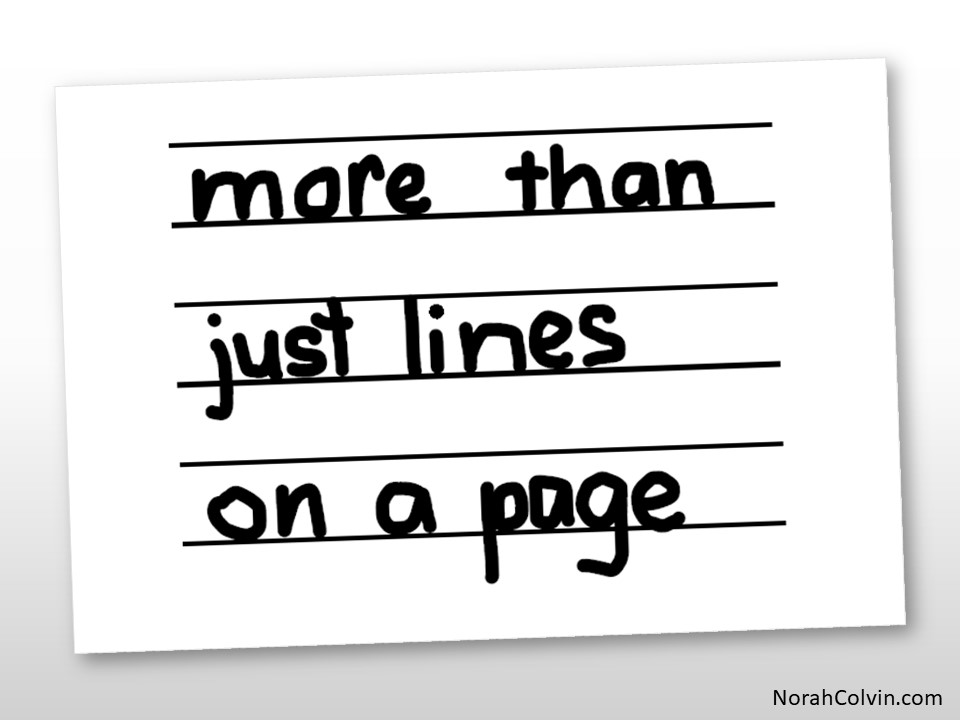
As an educator of young children, with a special interest in literacy development, I shouldn’t have needed to think for long. Although, there being so many possible ways of interpreting the prompt, I did. I finally decided on the lines that we as writers and artists make on the page, the meaning we assign to them, and the meaning others extract from them.
Children begin their journey into literacy by assigning meaning to marks they make upon the page and by realising that marks made by others also carry meaning. As their ability to both express and decipher develops, they come to realise that a text or image is more than the sum of the individual lines of which it consists. Communication deepens by interpreting and understanding the meaning conveyed below and between the marks.
The ability to both imply and infer meaning extends to the interpretation of facial expressions, body language and changes in the environment. We can accept what we see at face value or make a judgement about what may be implied or intended. While the messages are often considered obvious, misinterpretation is possible.
In response to Charli’s prompt, I’ve played with interpreting other lines. I hope you like it.
Reading between the lines
Four lines of footprints stretched along the shore. A line, mostly unbroken, edged one side; the other, a sequence of dots. The smaller prints danced lightly. The larger dragged heavily with one foot sideways. Criss-crosses of triple-pronged seagulls’ prints failed to obscure, unlike the smudge of ocean’s wet kisses. Tiny crabs scuttled their own story tracks through weeds, shells and stones coughed up by the sea. Beyond a collapsed castle, the footprints continued. In the distance—rocks. So far? He accelerated. Didn’t they know the tide had turned? Caught in the moment, they’d missed the signs. Lucky he didn’t.
Thank you for reading. I appreciate your feedback. Please share your thoughts.
The final stop on the Rough Writers Tour Around the World before we head back to the Ranch next week is with Ruchira Khanna from California. Ruchira writes about her experiences of life in India and America in books that are best sellers.
Read on to find out more about Ruchira.
When I was a child, my father fished a lot in his spare time. As well as being a cheap way of feeding his large family, he probably enjoyed getting out on the water in his rowboat for some peace. When the fishing was good, it could be on the menu twice a day, seven days a week. Exaggerations, maybe, but sometimes it seemed that way.
I did accompany him once. Neither of us caught anything edible. I caught a knotty eel, a tiny trumpeter and a desire to never go fishing again. I never have. Catching words is much more to my taste.
For my response to Charli’s prompt, I have gone with a story from my childhood. It incorporates some of the ideas that got caught in the net. I hope you like it.
Reeling in the fishermen
She sat by the window watching as the invisible painter coloured the morning sky. These moments lost in waking dreams, with the youngest of her brood suckling quietly, were precious. Slamming car doors and laughter interrupted the silence but not her thoughts. An occasional word invaded her consciousness…haul, fishing, catch. Wait—her man, a fisherman, was home. The night was not conducive to fishing. She leaned forward. Two dark figures unloaded a ute. They had neither lines nor nets, and it sure wasn’t fish in those boxes. “Fisherman, eh?” she thought as she dialled the local police. “You’re hooked.”
Thank you for reading. I appreciate your feedback. Please share your thoughts.

















 Norah Colvin