Congratulations to everyone who entered Contest #5 Twitter Flash Fiction, but huge congratulations to D. Avery winner! What a challenge! Check out her entry and others over at the Carrot Ranch.
Category: Twitter
-
Have you got a handle on it? Tweet!

Each week I read and comment on more than 50 blog posts. If I read a post I enjoy, and I rarely read one I don’t, I like to share it on Twitter. I usually share it immediately and then use Hootsuite to schedule future shares for hashtag days. It is quick, easy, and allows me to assist others to build a wider audience. I am happy to do it and have no expectation or need of “Thank you” tweets in return.
Some blogs and posts are not easy to share as they have no sharing buttons, or their sharing buttons are difficult to find. While it is possible to copy the URL and paste it into Twitter or Hootsuite, it takes a little more effort to do so and is not something a reader should, in my opinion, be expected to do.
If bloggers wish others to share their posts on any of the Social Media Platforms, I believe they should make doing it as easy as possible.
I am familiar with WordPress only so am not sure how it works with others. However I do know that when I visit non-WordPress blogs, sharing doesn’t seem to be as straightforward.
This next section is for WordPress users only.
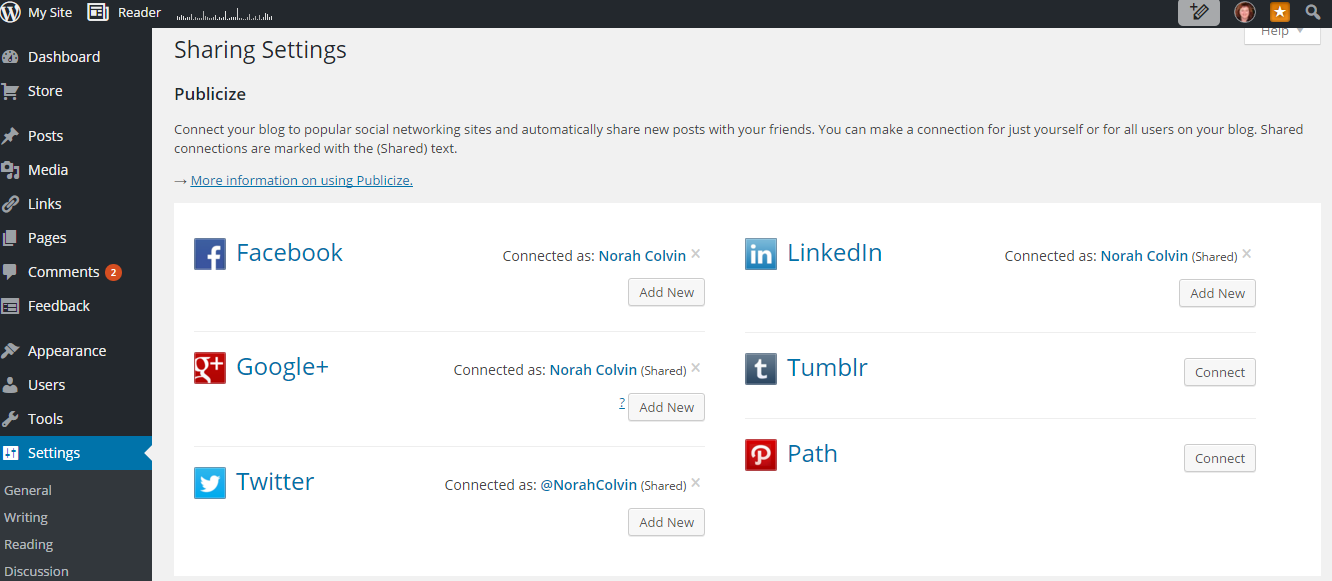
To add sharing buttons in WordPress, go to
Dashboard — Settings — Sharing — Publicize
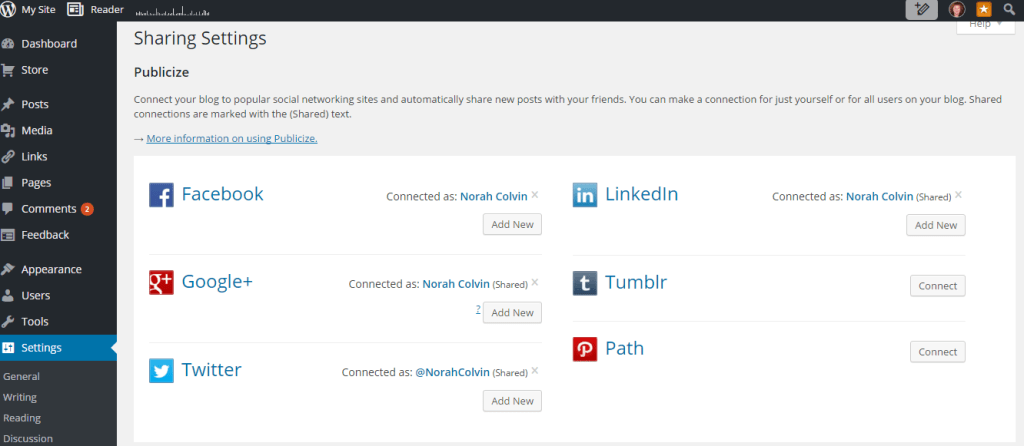
- Select in turn each of the social networking sites to which you belong and add your “address” to each. This is important. It means that people will be able to find you on those sites. It means that when your post is shared on Twitter you will know because the tweet will include your “handle”, your Twitter username.
For example, when my posts are shared the tweet includes my username @NorahColvin and I know it has been shared; like this:
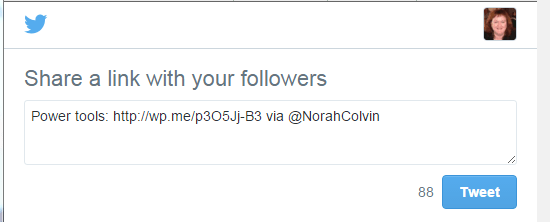
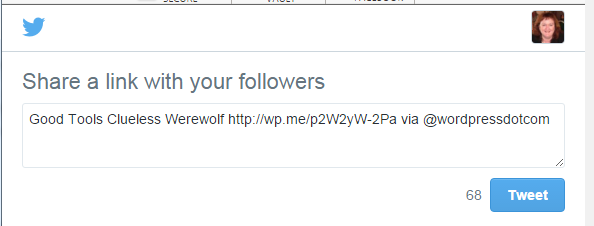
If the username is not included the tweet will have @wordpressdotcom; like this:

That’s not very exciting and you will never know that your post has been shared.
Sometimes, if I know the blogger’s Twitter handle I will change the tweet to include it, but as I said before
If bloggers wish others to share their posts on any of the Social Media Platforms, I believe they should make doing it as easy as possible.
More often, if the handle is not included, I am less inclined to share more than once.
2. Choose the buttons for each platform on which you wish to share your blog.

I think it is a good idea to have the buttons appear on every post and page. Remember to save any changes you make!

I assume there are similar ways of adding sharing buttons on other sites. I know it is possible in Weebly as Anne Goodwin added her username after I alerted her to its absence. If there are ways, I recommend you use them. If you have chosen to not add your handle to your sharing buttons, I’d be interested to know your reasons.
Earlier I expressed that I have no requirement for “Thank you” tweets in return for my sharing of a post. I consider the best way of saying “Thank you” to be sharing a post of mine in return. If you have shared one of my posts in a tweet, it is extremely likely that very soon I will sharing one of yours. I’m not talking about retweeting someone else’s shares here. I treat those differently.
I mentioned scheduling tweets in advance. There are a number of hashtag days on Twitter. These are the ones I use most frequently. Not all posts are suitable for every hashtag. I generally share a post on each of the next 2-4 suitable days.
Hashtags
#SundayBlogShare
#Mondayblogs
#TuesdayShares
#TuesdayBookBlog
#wwwblogs (Wednesday – Women Writers)
#BeWOW (Wednesday – all)
#ThankfulThursdays
#TBT (Throwback Thursday)
#LinkYourLife (Friday)
#BluSkyFriday
#ArchiveDay (Saturday)
Nothing says that I am right of course. What I have shared here is what works for me, at the moment. I’d love to know what works for you. How do you share on Twitter? Do you think it’s important to include the username in tweets? How often to you share the posts of other bloggers?

Thank you for reading. I appreciate your feedback. Please share your thoughts.
Share this:
-
S.M.A.G. is here!

In just a couple of months it will be two years since I started blogging. Writing a blog had never been a goal of mine. In fact it would be fair to say that until I started blogging I didn’t have much of an idea of what it was; or of any social media platforms for that matter. I was a latecomer to the party considering, according to Wikipedia, blogging began in the 1990s!
My goal at the time of beginning blogging was, and still is, to set up a website of educational resources for use in early childhood classrooms or homes. The main message I received when attending a writers’ seminar about digital publishing was the importance of having an “online presence”. I took the advice and started tweeting and blogging. Here I am now, a semi-experienced tweeter and blogger, still a bit unsure about the online presence.

I started blogging with a goal of posting twice a week, which I have pretty much maintained since then. Initially I had just few readers, all of whom were “real” people, family and friends, I already knew. As much as I was, and am, very grateful for their continued support and encouragement, it was very exciting to receive my first “outside” comment two months later.
It was over four months before any new readers visited and commented regularly. Some of those first readers are still with me (Anne and Caroline), others have moved on, and others have since joined. Now I have a wonderful group of online friends. As with offline friendships we interact when we can, exchanging comments and ideas with each other, mostly on our blogs and Twitter.

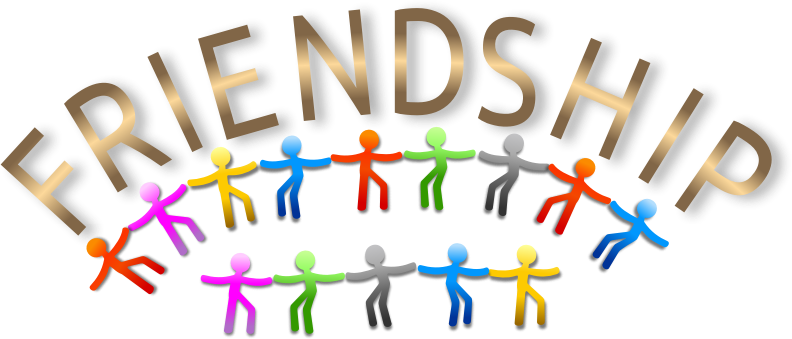
https://openclipart.org/detail/117199/Friendship I have been as fortunate with my online friendships as I have with my offline friendships. (I was tempted to use the word “real” instead of “offline”, but I consider my online friendships no less real.) We don’t have to see each other every day, every week, or even every month, for the friendships to flourish. Wherever the friendships form, they require certain ingredients to keep them strong, including:
respect, acceptance, attention, appreciation, gratitude, and open communication that goes both ways.
I really appreciate people who challenge and extend my thinking as much as those who are happy to jump on my bandwagon with me, or just come along for the ride.
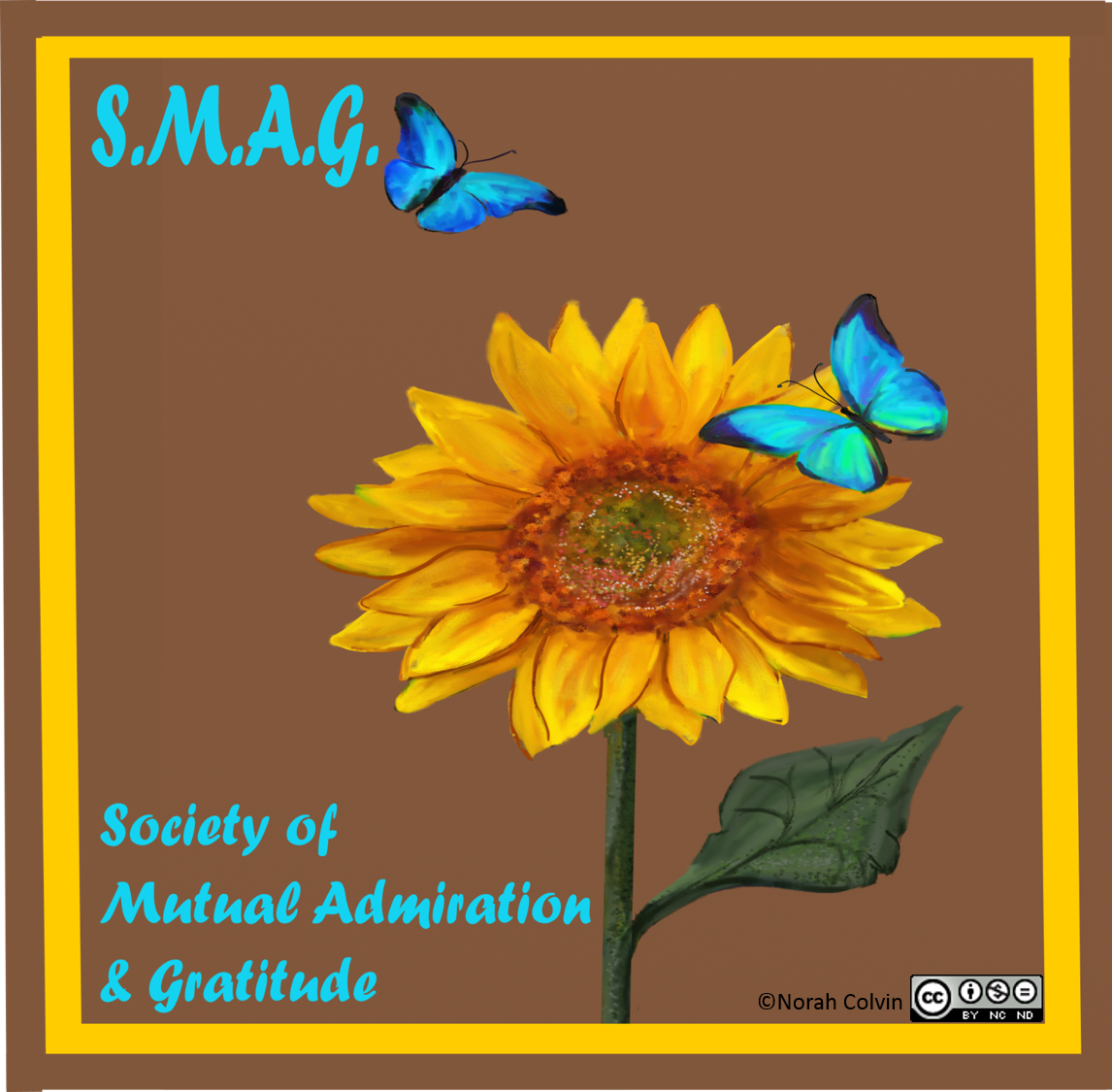
Gerald_G, Kids wagon https://openclipart.org/image/800px/svg_to_png/40459/Kids-Wagon.png During the past few months when some of my blogging friends and I have been sharing appreciation for each other and our comments, I have suggested that we belong to S.M.A.G.: The Society of Mutual Appreciation and Gratitude.
It started off in a light-hearted way (yes, I coined it) but others seemed to appreciate the thought and welcomed the idea of belonging to a group that required of them no extra effort. I decided that a S.M.A.G. badge to be displayed by anyone who wished was in order.
In a previous post, I discussed the need for Making choices in how I allocate my use of time while working towards achieving my goals (including posting twice weekly). I shared thoughts about using a contest on 99designs to obtain illustrations for some of my work. While I was very happy with the illustrations, I was a bit uncomfortable with the contest process. However I decided that engaging each of the three runner-up finalists to do other illustrations in a guaranteed one-on-one project would (in my mind) help, in a little way, to make up for all the work they had done without reward. I have since done this and feel much happier about the process and am pleased with the results.
One of the designers, Kari Jones (ArtbyJonz), is now illustrating a second book for me and I approached her for the S.M.A.G. badge. This is what she produced. I love it. I hope you do to.

If you would like to display it on your blog, and share it with your blogging friends, I would be honoured for you to do so, but please attribute it to me and link back to this page.
I have found Kari wonderful to work with. She has been very helpful and accommodating and I am delighted with the artwork she has produced for me. If you are looking for illustrations I am happy to recommend Kari. You can check out some of her other work on her ArtPal page and contact her on Facebook if you have any queries.
So thank you, all my friends, for your continued support and readership. Whether or not you choose to post the badge, you are still part of S.M.A.G. and it is a pleasure knowing you.
Thank you for reading. I appreciate your feedback. Please share your thoughts about any aspect of this post.
Share this:
-
Assessing the impact of blogging on writing goals

cyberscooty, a basketball about to enter a basketball hoop https://openclipart.org/detail/205569/basketball I love writing. Always have. I usually confess that I am a better writer than a speaker.
I like the time that I can take to choose a word or phrase and combine them to mean just what I intend.
I like the opportunity to check a word’s appropriateness before using it. Often when speaking I leave my sentence hanging embarrassingly in mid-air while I grope around in the murkiness of my mind for the “correct” word. Why can my fingertips find the right word, without any thought, and the tongue cannot?
And of course there are all the opportunities that writing provides for self-expression, creativity and sharing ideas with a wider audience.
I started out writing stories, poems and songs, as most children, do and tried my hand at short stories, children’s stories and poetry as I got older. As I became more involved with my career in education, and in raising my children, I had (or made) less time for those creative pursuits.
There are many reasons I loved being a teacher and one of those was the opportunity it provided for me to be creative: creative and innovative in the way I worked with children to encourage their learning; and creative in writing resources to assist my teaching and the children’s learning.
I was fortunate in having a variety of opportunities to write materials for educational publishers at different times during my career, and I am currently writing documents to support curriculum implementation for my state educational authority. But I really wanted to be in control of my own writing.
At the back of my mind there was always the thought of sharing my teaching and learning resources with a wider audience. (Just a little bit further back, or maybe even close to equal footing, is the thought of publishing children’s stories, short stories, and maybe even a novel . . . one day.) I had had no success with submitting unsolicited manuscripts before and couldn’t think what publisher might be interested in the variety of educational resources I had made, many specifically for use on a computer.
So a couple of years ago I decided that a website of my own was the ideal platform for sharing my resources. Getting that website up and running is my primary goal. However, observers could be mistaken in thinking that writing a blog is my primary goal. The path to establishing a website has taken a side-track via blogging.

venkatrao, A butterfly flying with a dotted path over a hill background https://openclipart.org/detail/69967/1278212857 Blogging, Twitter, Facebook and other forms of social media were recommended me to right from the beginning as a way of targeting and establishing an audience. At the time I was familiar with none of these and set off learning how to become involved. It has been an exciting journey. I have learned lots and made many wonderful online friends.
However I am not sure how far it has moved me towards achieving my website goal. In fact, I think very little progress has been made.
- I have not found and established my “target” audience and am really none the wiser about doing that.
- The time that I am spending writing, reading and commenting on blogs is time that I am not spending on preparing materials for my website.
- I need to be more proactive in finding illustrators for my work.
- When I discovered the Teachers Pay Teachers site and established my Teachers Pay Teachers Store I had thought this may be an alternative avenue for sharing my work. But I haven’t been as successful there as I would like either. This may be telling me something about my website goal. What is it telling me? Should I listen?
So my dilemma comes down to these questions”
To blog or not to blog?
How to blog?
How much time for blogging?
The answer to the first one is easy:
Yes! I very much enjoy writing my post and receiving the almost immediate feedback from the wonderful community of writers I engage with.
Yes! I love reading and commenting on others’ blogs and joining in the discussions that ensue. We are a S.M.A.G. group: Society of Mutual Appreciation and Gratitude. What’s to not like?
The second two questions are a little more difficult.
The focus of my blog is education, but my audience consists of writers. Educators have shown little interest in developing a relationship with me online. I haven’t been able to figure that one out, but I have a few hazy ideas, none of which I think I want to address at this stage. If I change the way I blog I would quite likely fall out with the community I have become part of; and there is no guarantee I would pick up a teacher audience. So I’ll have to keep mulling this one over for a while.
The third question is the one I have been “researching” for close on five months. As time is limited and I need to devote more time to achieving my primary goal, it is important that time spent on blogging activities is worthwhile.
I decided to find out who is keen to engage with me and who isn’t.
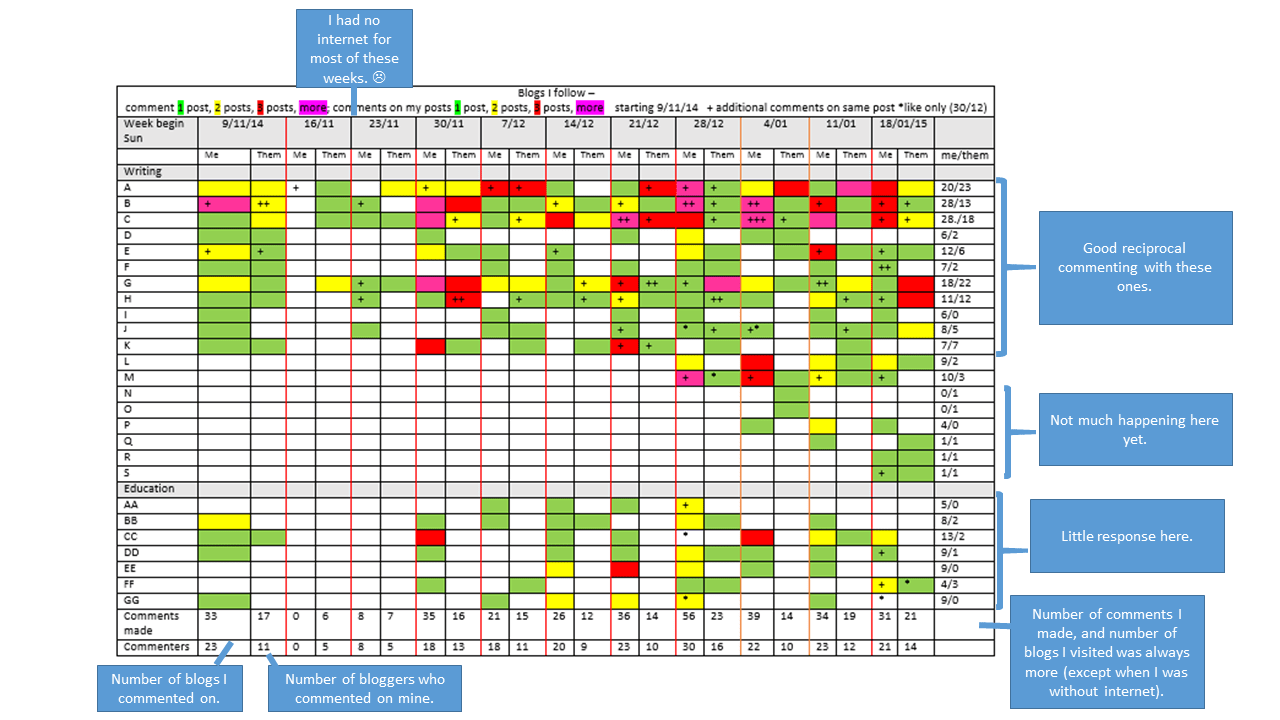
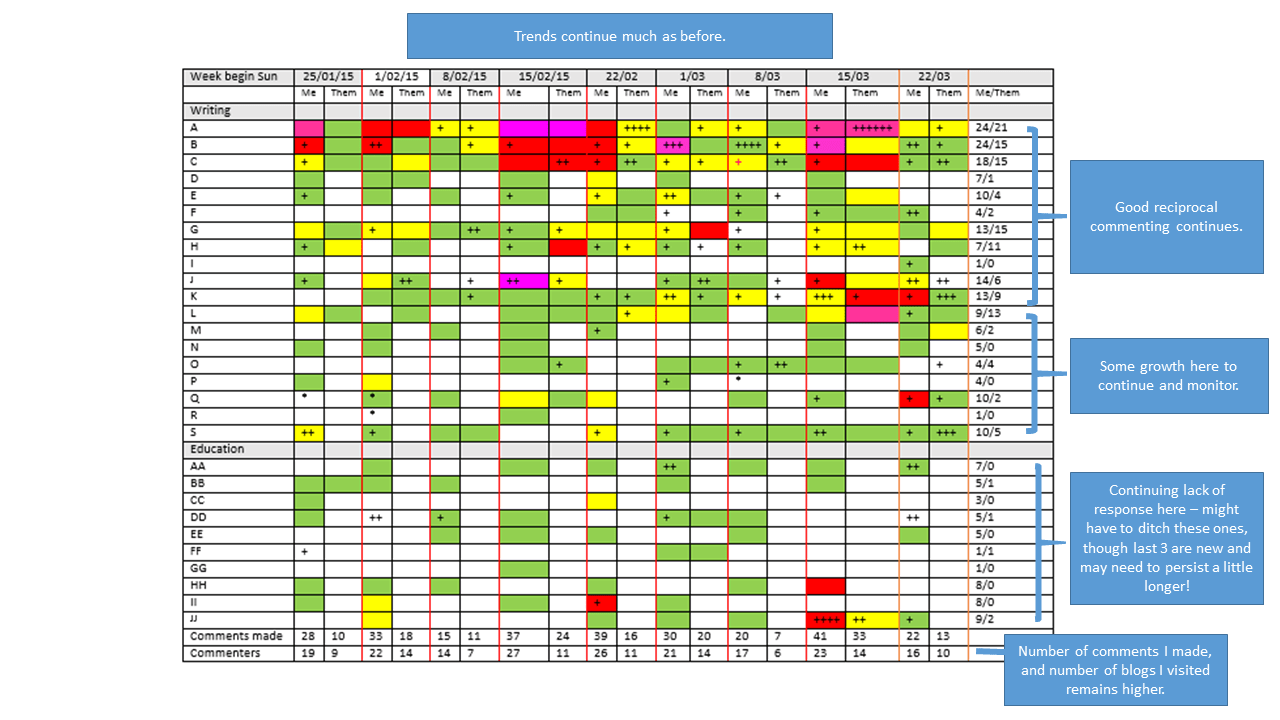
I began keeping a record of the number of comments I made on others’ blogs, and of those they made on mine. It wasn’t always as I expected, and highlighted some interesting trends; the main one of which I have noted above:
Writers have a wonderful sense of community.
The record helped me ensure that, if someone visited and commented on my blog, I would visit and comment on theirs, maintaining a balance as much as possible.
This key explains how to interpret the information on the tables below.
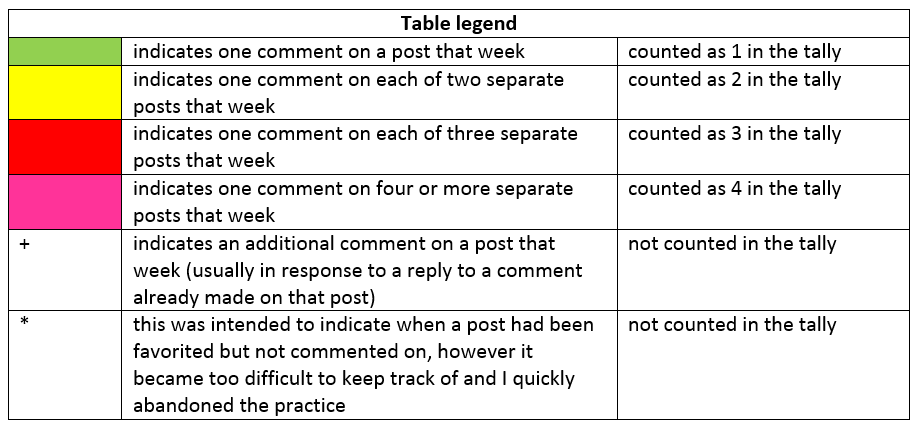
I have removed names from the tables to respect privacy. (I don’t really expect you to look too hard at the tables. You have better things to do. But they do look pretty!)
November 9 2014 – Jan 24 2015
Jan 25 2015 – March 26 2015
I have not included all blogs I “follow”, or even all the ones I have ever commented on. Only the ones on which there has been some consistency in connecting.
I have also not included the comments of those who follow and comment on my posts but do not have a blog of their own on which I could reciprocate.
I generally post twice a week.
Others post more often.
Sometimes the number of comments I make on their posts in relation to their comments on mine is affected by the greater number of times they post. If someone chooses to post more often than twice a week, I will not necessarily read all their posts, regardless of how much I enjoy reading them, as there are other ways I must use my time, including a reading greater variety of writer’s work, and getting more done on my own. I’m sure they have enough other readers to not miss me!
Sometimes when a blogger posts less frequently than I do, their comments on my posts may tip the scales in my favour. I can’t do much about that either, but I do try to catch up when next they post.
I have found that it can take a few weeks of commenting on a blog I like to get a return visit and comment on my blog. Frequently I don’t even get a response to a comment I’ve made on theirs. I guess that’s how it goes. Some bloggers blog to develop community. Others blog to broadcast. I just need to decide how best to use my time.
If you have walked with me to the end of this post, thank you. It is rather longer than I intended. I had intended to respond to Anne Goodwin’s invitation to join in a writing process blog hop , Sherri Matthews’ invitation to join a workspace blog hop, and Sarah Brentyn’s questions for writers, as well as explain my writing goals to Sacha Black, thank Julie stock for her Sisterhood of the World bloggers award and draw on Paula Reed Nancarrow’s wonderful survey about Twitter #hashtag days and blogging. But they will have to wait. We all have others things to do.
Contributing partly to my procrastination with responding to these wonderful invitations, which I do very much appreciate, is that I have already nominated the majority of bloggers I follow, or if I haven’t someone else has. And the remaining ones don’t wish to be nominated. What is a girl to do? I’d appreciate your suggestions.
Thank you for reading.
I appreciate your feedback. Please share your thoughts and advice, especially about how to increase time. If anyone knows a good time alchemist, I’d love to meet her!
Share this:
-
Online friends – real or imaginary?

https://openclipart.org/image/800px/svg_to_png/192458/friends-icon.png In a previous post Will you be my friend? I asked the question
“Should one maintain separation from one’s online friends, or take the risk of meeting in person should the opportunity arise?”
The reason for my asking the question, although I didn’t state it openly at the time, was that I was planning a quick visit to the UK to visit family and wondered if there may have been some of my online ‘friends’ who would like to meet up while I was there.

In the short time that I had been blogging I had become part of a friendly little circle of writers who frequently visited and commented on my blog, and whose blogs I visited and commented on. Sometimes we would have quite in-depth discussions about a range of topics, and these discussions would often spill over onto Twitter. Few days would go by when we weren’t communicating with each other in some way and we were developing a certain amount of comfort with each other and our discussions.
Since some members of this group lived in the UK, I wondered if it might be fun to meet up with them in person but was concerned about what might happen to our online relationship if I didn’t live up to their expectations or we didn’t get along in face-to-face conversation.
I decided to ask the question via my blog to see what responses I would receive, and indeed to see if any of those I was thinking about contacting would respond and give me an inkling about their thoughts on the matter.
The responses I received were encouraging.

https://openclipart.org/image/800px/svg_to_png/148843/1310261210.png Joanne, who blogs at Writeaway, said that she had met one of her online friends in person. It obviously went well because she said that she wouldn’t be averse to meeting others though she considered geography to be a restriction. I had thought about that too, for although it’s a long way from Australia to the UK, travel distances within the UK could still be great and, while I was going to be based in London, I didn’t know where my friends lived.
Bec, who blogs at There’s no food said she believed there was a lot of value in online friendships. I knew she would because she and her partner of almost ten years met online! I wasn’t looking for a partner though. I already had one of those!
Gina Stoneheart, who blogs at Walking in the Write Direction, one Story at a Time, shared her story of meeting a friend on Twitter through following the same favourite children’s book author. They live close enough to meet up in person. She also met her partner online.
However she did have some words of caution. She said,
“Make sure you have spoken with them on the phone and have had quite a few emails exchanged. Also, see lots of pictures of them! You never know… there are some crazy people out there!”

Although, like Joanne citing geography as a restriction, Gina’s strong recommendation was to ‘go for it’.
Terry Tyler, blogging at Terry Tyler, said that she had met a few online friends in real life and had even “ended up marrying one!” Although Terry said that meeting online friends wasn’t something she would go out of her way to do, when she does meet them she really enjoys it.
Kimmie, who blogs at Stuckinscared, said that she had met some online friends and, although she had felt close to them online, she was still nervous about meeting them face-to-face but is glad that she did; and would meet others if “courage and circumstances” allowed it.
Hope of Nanny SheCanDo has met quite a few of her online friends and is glad she did; and Donna Marie from Writer Side UP! said that she has many online friends she would love to meet up with if she had the chance.

https://openclipart.org/image/800px/svg_to_png/192642/Children_holding_hands.png The only one (from the little group that I was thinking about contacting) to respond to my question was Geoff Le Pard who blogs at TanGental. He was enthusiastic because, he said, he loves meeting people and talking. He suggested there would be risks such as people not being as articulate in person and jeopardizing the relationship that had already formed. But he also said there would be the benefit of not being constrained by the ‘blog and comment structure’ so the conversation could be more organic, flowing from one topic to another.
The eight responses to my question were overwhelmingly encouraging so I decided to go for it.
I was delighted to receive an enthusiastic response to my rather tentative request from all four friends that I contacted: Anne Goodwin, Lisa Reiter, Geoff Le Pard, and Caroline Lodge. Unfortunately I wasn’t able to arrange a suitable time or place with Caroline, but Anne, Lisa, Geoff and I exchanged a flurry of Tweets and emails and were able to arrange a time and place that suited us all.

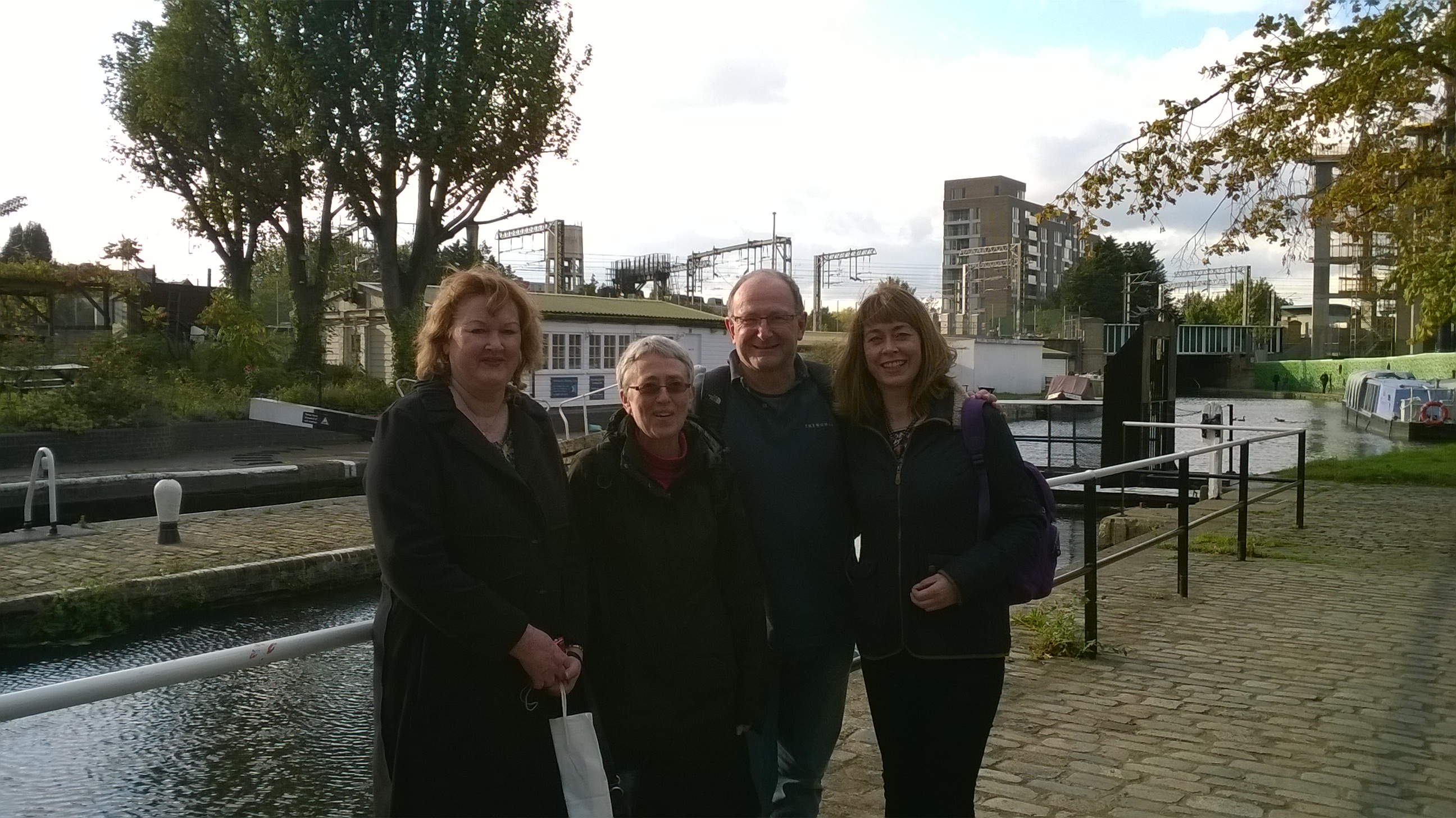
Norah, Anne, Geoff, Lisa beside the lock We had a wonderful afternoon and evening together, meeting at the British Library for lunch and doing a little sightseeing afterwards. I even “took” them somewhere that none of them had been before (and probably won’t again!) I got to see a canal lock in action for the first time! (We don’t have those in Australia.)

https://openclipart.org/image/800px/svg_to_png/2759/johnny_automatic_angry_guy_with_axe.png It was great: more like catching up with old friends than a meeting of strangers. There was not an axe murderer among us, and no one made an excuse for a hurried retreat until after a tube ride to Covent Garden and dinner, when it was time to catch the late trains back home.
For me, meeting up with this group of online friends, was a memorable experience which I am very pleased I took a risk in initiating. I think the reason it worked is that we already knew each other quite well through our lengthy online discussions, and we were all keen to meet. The friendship moved out of the imagination and into reality.

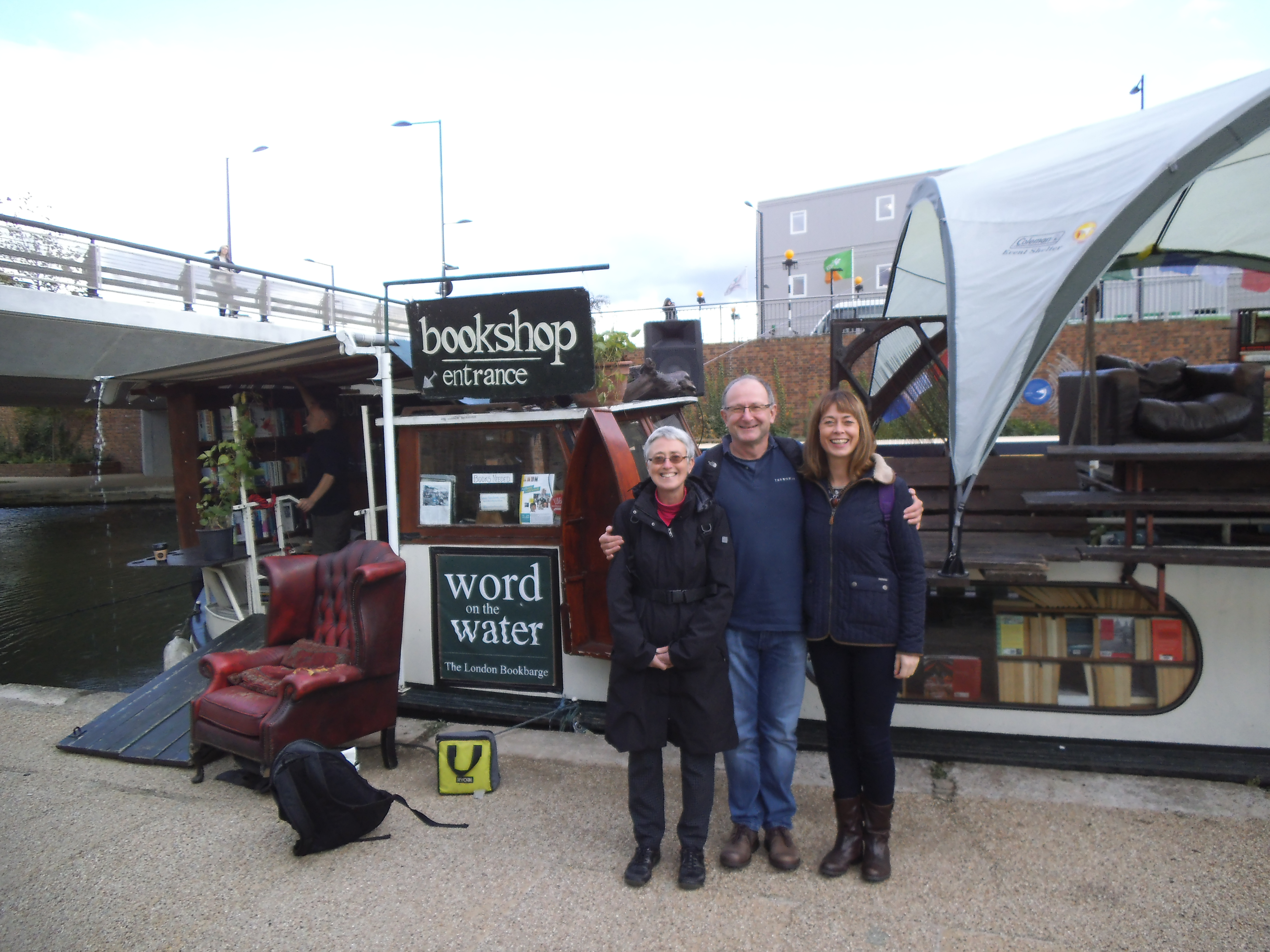
Anne, Geoff and Lisa and a floating bookshop These positive feelings gave me the confidence to arrange a meeting with another online friend when I travelled to Tasmania shortly after arriving home from the UK. I met up with Sue Wyatt who hosts a Student Blogging Challenge. Although Sue and I hadn’t had a great number of in-depth conversations, we had exchanged a few Tweets and comments and had a lovely morning together discussing two of our shared interests: education and blogging!
So, combining the recommendations in the responses to my questions with the results of my action research, I would agree strongly with Geoff who finished his comment with the words:
“Depends on your attitude to taking risks. Personally I’d welcome the chance of the upside.
It was definitely an upside for me, and I’m pleased I took the chance.
I welcome your feedback. Please share your thoughts. It’s not too late to tell us about meeting your online friends!
Share this:
-
Would you believe?
When I was growing up “Get Smart” was a popular show with my family and friends. The question “Would you believe . . .?” was often asked humorously, in Max-style, starting off with an exaggerated and unbelievable suggestion, then moving through a series of diminishing magnitude to the, often insignificant, reality.
I am not going to start with an exaggeration for I am rather pleased with what I have achieved. I wish to make no comparison with anyone else who may have achieved a whole lot more, or even those who may have done less. I just know that I have learned a lot, and in fact, have learned so much that I now know what future learning I need to do.
If you know nothing, you don’t know what you need to know. It is only when you know something that you get an inkling of what there is to learn.
If, this time last year, you had said to me:
“One year from now you will be writing a blog and publishing your fiftieth blog post; you will have over 800 followers on Twitter and you will engage in conversations with people from all over the world.”
I would have laughed and said you were crazy. I had no thought of writing a blog and thought Twitter was just for twits.

http://www.openclipart.org 
http://www.openclipart.org I had followed only one or two blogs posted by family and friends on holidays so knew nothing of the pleasure or potential of writing or following blogs.

http://www.openclipart.org What I “knew” of Twitter was minimal and misinformed. I thought it was people sending messages about eating breakfast, going to the bathroom and other mundane events. I couldn’t see the point in that.
How wrong were my misconceptions how they have changed!
How I have changed.
What I would have considered a Max-style exaggeration a year ago is now a reality. And it didn’t take a year. It has all happened in just six months.

http://www.openclipart.org Six months ago I published my first blog post and tweeted for the first time.
I was both nervous and excited and had no expectations other than to see what would happen.
I am delighted with the result: the learning I have done, the people I have met and the way my writing has grown. One of the greatest pleasures is having control over what I write; another is meeting so many interesting people, some like-minded and others with differing views, but all supportive and willing to share their knowledge, ideas and thoughts.
I wouldn’t have started upon this journey without the Queensland Writers’ Centre (QWC).

http://www.morguefile.com In late 2012 I did a couple of sessions about digital publishing with Simon Groth (Manager of if:book Australia), and another at the beginning of 2013. While the talks were fascinating and I learned a lot, I was such a N00b that it was all still a forest to me and I couldn’t see the path to take me in and didn’t have the tools to clear a path. I needed more time to absorb the information I had heard and work out what to do with it. I still wasn’t convinced that blogging and social media were for me.
Belinda Pollard of Small Blue Dog Publishing changed all that at another QWC session in June. I am very grateful to her for convincing me that this was the way to go and that I just needed to get started. She described Twitter as the “water cooler for writers” and a great way to meet other writers.
Less than two months after hearing Belinda speak I was on my way, hacking a path through the undergrowth, searching for the warmth of sunlight through the canopy. My quest for information started with her website and crawled its way out and around other websites and blogs, some of which I return to often for reassurance, reminders and more information.
Now in answer to the question, “Are you experienced?” I can reply with a very definitive: ”Yes, I am experienced!”
I have lost my nervousness, but not my excitement. I have grown in confidence and knowledge but know that there is so much more to learn. In my Twitter profile I say that I was born too soon, but maybe I just started late. Considering that there were no computers and no internet for more than half my life and the only “mobile” phone I knew in my younger days was Maxwell Smart’s shoe, I think I’m doing okay in the catch-up.
In addition to all the generous bloggers and twitter users who have helped me along the way, many without knowing it, I am also very grateful to you, my readers and followers, who have visited, commented, liked, favourited and otherwise shared my posts and tweets, but more especially your knowledge, support and ideas. While I had no expectation that any of you would drop by to read or engage me in conversation, I’m so glad you did. Thank you. Please stay with me as my journey continues.

http://www.openclipart.org Share this:
-
Seeking praise – Stephen Grosz revisited
Praise may be defined as an expression of approval or admiration.
Who wouldn’t want that?
If you write a blog, don’t you love it when others “like” a post, leave a positive comment, re-blog your article or link to it via theirs? I do. Aren’t these all expressions of approval or admiration?
What about on Twitter when someone Re-tweets, favourites or replies positively to your comment, engaging you in conversation?
Aren’t these also expressions of approval or admiration?
I love to receive all these signs of encouragement and support that let me know that my efforts are appreciated and confirm that I am on the right track. If I did not receive any of this feedback I would feel quite isolated and consider my efforts to be fruitless and a waste of time. I would probably just give up.
As a teacher I have always considered it of primary importance to create a happy and welcoming classroom environment in which children feel valued, affirmed and supported. Expressions of approval and admiration for behaviour, effort and achievement were generously given with the aim of encouraging the desired response, a happy child being foremost. I have written about this in previous posts, including:
Affirmations: How good are they?
As a parent too I considered it important to affirm my children and display my approval and admiration for them. I still do, even now they are adults. The need for approval never ends. I know sometimes you just have to go out there and say what you know is right, even though others will disagree or ridicule you. I am not talking about those instances here.
My strong belief in the power of affirmations and approval stems partly from the dearth of them in my childhood and school days. I have also mentioned this in a previous post:
Mouthing the words – the golem effect
Recently I listened to a fabulous (audio)book, “The Examined Life: How We Lose and Find Ourselves” by Stephen Grosz. I wrote about it in my previous post A book worth reading: Stephen Grosz “The Examined Life” saying that
“What appeals to a reader about a book, or what a reader takes away from a book is as individual and personal as the reader. What is of most significant to one, may be of lesser importance, or even insignificant to another. “
For me the chapter of most significance is chapter 3 “How praise can cause a loss of competence”.
To say I was startled by the title would be an understatement. I was puzzled, intrigued and challenged. How could praise cause a loss of competence? Surely negative feedback or a lack of encouragement altogether would be major contributors to diminishing competence. Was everything I had believed and practiced wrong? (Oh no –there’s my need for approval and affirmation!)
Grosz says that during the past decade studies into self-esteem have found that praising a child as “clever” may not only inhibit school achievement, it may cause under performance. He suggests children may react to praise by quitting. Why would you try to improve or do something new if you have already done something really well or are the “best”?
Studies showed that children who were praised for effort, rather than for being clever, were more willing to try new approaches and were more resilient. Children who were praised for being clever, tended to worry more about failure and chose unchallenging tasks, tasks they knew they could achieve or had already achieved. Being told they were clever led to a loss in self-esteem and motivation and to increased anxiety. Some children who had been praised for being clever (rather than working hard), when confronted with a more difficult task and asked to comment on it, were so unhappy with the results they lied about them, exaggerating their achievements to others.
Grosz questions whether we may lavish praise on our children nowadays in order to demonstrate that we are different from our parents who possibly used criticism, rather than praise, on us. I hinted at something similar earlier in this article.
While admiring our children with words like “Good boy” or “Good girl” may temporarily lift our self-esteem by showing others what wonderful parents we are or how wonderful our children are, Grosz says, it isn’t doing much for a child’s sense of self. He says that in trying to be different from our parents we end up doing the same thing: doling out empty praise where an earlier generation doled out thoughtless criticism.
Grosz says that if we offer this empty praise without thinking about the child’s individuality and needs we are effectively showing the child indifference.
So what do we do?
I think the emphasis here is on the empty praise. I think support, encouragement and positive feedback are all essential. Sure, knowing in yourself that you have done well is fine but a little recognition certainly helps too. I think the difference is in recognizing what has been achieved, the learning or progress made, and the effort it took, the message communicated in a story or painting and the techniques used; not a hollow “Well done”, “Good work” or “Good boy” but “Tell be about . . .”, “Why do you think that?” “How did you work it out?” “I like the way you . . .”
As Grosz says, this is being attentive to the child, to what the child has done and how it has been done.
To read more on this topic:
Sian Griffiths interviewed Stephen Grosz and reported on the interview in the article “Praise her . . . and see her fail” which adds even more clarity to my precis above.
Maria Popova delves into the messages of this same chapter in her article “Presence, Not Praise: How to Cultivate a Healthy Relationship with Achievement”
Being attentive, being present, being really with someone, noticing what they have done and how they have done it – is it more precious than praise?
In these days of constant distractions and must-dos to put all aside to be in the present with the child, friend or partner to talk, listen share and laugh, what better affirmation is there than that?
What do you think?
How has praise encouraged or discouraged you? When has criticism hindered you?
I’d love to hear your thoughts.
Share this:
-

Mouthing the words – the golem effect
Singing is a wonderful gift. To be able to entertain oneself and others with no instrument other than one’s voice must give enormous pleasure.
But I can only imagine the joy it must bring, for I am no singer.
When I was at school and we were all lined up and squished in on the stairs performing for parents in our end-of-year concerts, I was told to mouth the words.

http://www.openclipart.org Unlike the recommendation in the song written by Joe Raposo for Sesame Street and made famous by the Carpenters “Sing a Song”
“Don´t worry that it´s not good enough for anyone else to hear.
Just sing.
Sing a song.”I was told to not sing, for it was not good enough for anyone else to hear. I accepted the verdict without question, as was expected of us at school, and mouthed the words.
Of course, my school days were long over before Joe wrote his wonderful song, and maybe no one since then has been subjected to the same humiliation.
Over the years various family members and friends have tried to be encouraging but their words have seemed hollow, for I “knew” the truth to be otherwise. One family member even told me that, when I “sang” nursery rhymes, I sounded just like Patsy Biscoe. But that’s not true. Patsy has a beautiful voice. You can listen to her here.
Sometimes it is difficult to not sing along for music is so inviting, often almost demanding that one join in.
In an early childhood classroom, music is a very important part of the day; and as an early childhood teacher, I incorporate music and singing into the program, always at the beginning and end of the day, and many times in between. I have blogged about this before here and here.
Fortunately for me, and the students, music is so readily available on CD or the internet, that finding songs for the children to sing along with is no longer a problem. I apologise here to all the students who have had to suffer my joining in and “singing” along with them though, when I couldn’t resist the temptation. I must admit that none of them ever complained when I joined in. But I have no idea what they went home and told their parents either!
I believe strongly in the power of positive encouragement to improve children’s self-esteem, confidence, willingness to have a go, and learning outcomes.
I also know that a negative attitude encourages children to have a negative attitude towards themselves and their abilities, decreases self-esteem, erodes confidence and creates anxiety and a fear of trying new things or of having a go.
According to Wikipedia
“The Pygmalion effect, or Rosenthal effect, is the phenomenon in which the greater the expectation placed upon people, the better they perform. The effect is named after the greek myth of Pygmalion.
A corollary of the Pygmalion effect is the golem effect, in which low expectations lead to a decrease in performance. The Pygmalion effect and the golem effect are forms of self-fulfilling prophecy. People will take the belief they have of themselves (negative in this case) and attribute traits of the belief with themselves and their work. This will lead them to perform closer to these expectations that they set for themselves. Within sociology, the effect is often cited with regard to education and social class.”
Surprisingly I had never thought of this in relation to my singing disability, until recently.
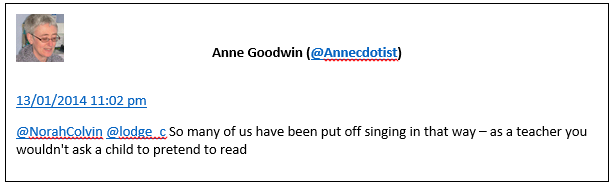
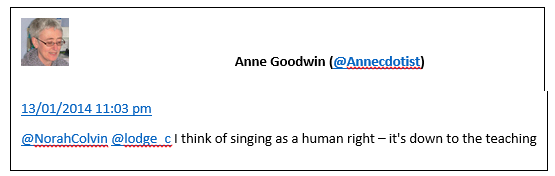
Engaged in a Twitter discussion with Anne Goodwin (@Annecdotist) and Caroline Lodge (@lodge_c) I mentioned that I listen to audiobooks on my drive to work. Anne replied that she listens to music on long journeys, trying to “fix choral music in my head”.
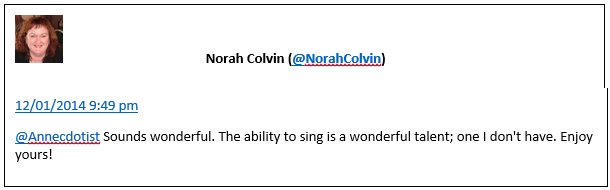
I replied, innocently enough, I thought:

To which they both responded with the type of “encouragement” I had heard many times before “Give it a go. Everyone can sing.”
So I told them about being told to mouth the words, and I was both surprised and challenged by their responses:
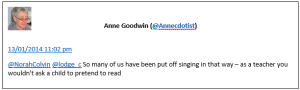


I had never thought of my singing disability as a learned disability. I had always thought of it being a physiology issue and, later, perhaps a hearing issue.
I am not very good at mimicking vocal (other than speech) sounds, or at identifying which note, of two given notes, is the higher or lower. I did enrol in a brain training program which included aural exercises involving recognition of higher or lower pitch. While I did make some improvement, my scores weren’t high (I could tell that high/low difference).
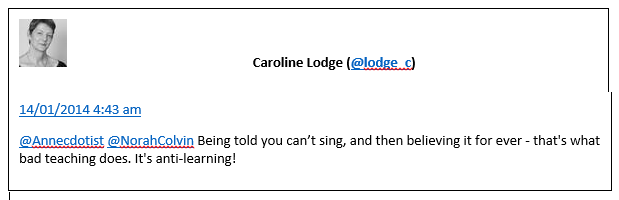
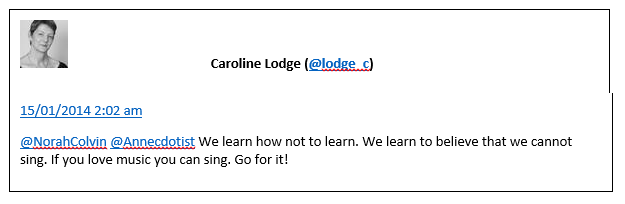
The comments of Anne and Caroline made me think about this:
What came first: the singing disability or the disability teaching?
Could I have learned, if given the opportunity, to sing a least a few bars in tune? Could I still be taught?
It has sometimes crossed my mind that singing lessons could be an interesting experiment.
Anne and Caroline are both encouraging, and Caroline commented:

I do love music and perhaps, one day, I will go for it and find out the truth about my singing ability.
Perhaps I will learn to sing and fulfill the dream “to teach the world to sing in perfect harmony”.
But for now, the experiment will have to wait, I have other things to learn.
What do you think?
Do you consider yourself a singer?
Can everyone learn to sing?
Is it a human right?
Could my singing ability really be a “golem effect”?
What disability have you learned, if any?
As a parent or teacher, how do you ensure your children do not suffer from a learned disability?
You can read more from Anne or Caroline by clicking on their names.
Share this:


























 Norah Colvin