Live Love Laugh Learn … Create the possibilities

Category: Traditional schooling

  • Which school? I found one!

    school cropped

    Most parents want to provide what is best for their children. However, they don’t always know what that best is, where it is available or how to get it. This is just as true of schooling as it is of anything else. Fortunately, most children are adequately schooled locally, be it at a state or privately run facility.

    I attended a Catholic school and have taught in both the Catholic and State systems. I see little real difference between what is offered in local private and local public schools as far as philosophy, pedagogy and quality of teaching goes. The differences, as I see them, are more due to the inequities in funding for facilities and resources, the restriction to accessibility by the imposition of fees, and the ability of privately run organisations to decline students as opposed to the state’s willingness to cater for all.

    While I think most schools do an excellent job of schooling, there are aspects I don’t like.
    © Norah Colvin
    © Norah Colvin

    Fortunately, most children survive school and graduate adequately prepared for life in the adult world. But the scarring carried by many, whether visible or hidden, emotional or intellectual, is a cost that should not be accepted.

    In this TED talk Sir Ken Robinson asks “Do Schools Kill Creativity? He explains why he thinks they do and the manner in which they do it. He ends the talk saying,

    “our task is to educate their whole being, so they can face this future. … we may not see this future, but they will. And our job is to help them make something of it. “

    By the time Bec was born I had already decided that I wanted more than schooling for her. I had read voraciously about learning and education. I had observed the magic of learning as my son wondered, questioned, explored and reignited my own curiosity, during his before school years. I saw those same traits inhibited by uninspiring teachers. I have written about this before here and in an article published in a teachers’ magazine when Bec was of school starting age. At that time, it was necessary to make decisions about her ongoing education.

    To school or not to school

    www.openclipart.org
    http://www.openclipart.org

    I had already explored local (and not-so local) alternatives. I attended information sessions, read their publications (no Google back then), and visited schools to observe their practices and speak with teachers, children and parents. Disappointingly I found none that met all of my criteria.

    Some “schools” provided little stimulus or input to extend or challenge children’s thinking. Some were very structured and without flexibility in their approach. Some that claimed to be alternative appeared to be not so with uniforms and strict rules and timetables. Some that claimed to be mainstream were more child-focused with an organic curriculum matched to children’s interests, but lacked other things I sought.

    When the pluses and minuses of each were considered, there wasn’t one with a compelling scoresheet. There was nothing for it but to found my own, a possibility I had been contemplating for some time and a “dream” shared by many teachers. The Centre of Learning Opportunities was born. These are some of the original documents drawn up by the team back then.

    Vision

    Symbol

    outside

    COLO brochure inside

    While working to establish this alternative to school, I began an MPhil research project “Educational Diversity: Why school? What school?” which, as well as exploring educational alternatives, was to record the first year of an (my) alternative school. As part of the project I conducted a survey of local alternative schools with the aim of recording the diversity of approaches available in order to demonstrate that there is more than one way to obtain a quality education.

    Although the degree went down the same dead end path as the school, I was able to (self) publish and distribute the results of my research to participating schools in a document titled “Diversity in Schooling: Discovering educational alternatives in South-East Queensland.” (Surprise, surprise, I have just discovered it in a Google search. How weird is that!)

    Diversity

    I was reminded of my research and this document by a recent discussion with Pauline King, The Contented Crafter in response to my post Life — A “choose your own” adventure. When I alluded to the wisdom of young children and “our” efforts to obliterate it, Pauline agreed and suggested that she could do a post-long comment on the topic.  I jumped at the chance and immediately invited her to do so. Pauline again agreed but suggested I refine a set of questions as she could fill a book with her ideas. I”m working on it.

    Responding to The Industrious Child Pauline wrote,

    “Teachers need to be SO flexible in their ability to see their world, their work, their class as a whole and their individual students – it is never a one step process and different expectations and challenges can be laid down for different abilities. Almost every child will shine somewhere within the curriculum and many struggle somewhere else. After all, we all have our different talents and abilities. Schools are structured to meet the needs of a certain academic ability and those who fall above or below that parameter are, in my opinion, so often mis-educated.”

    It is obvious that Pauline, Ken Robinson, and I, along with many others, are part of the same revolution.

    In another comment on my post I found it first Pauline shared that she had spent many years trying to establish a school of her own but had found “an already working alternative system and never regretted it.”

    I think I have questions enough for Pauline to fill a book’s worth of posts and look forward to sharing some of these in the future. If you have questions of your own, please pop them into a comment and we’ll see what we can do.

    Thank you

    Thank you for reading. I appreciate your feedback. Please share your thoughts.

  • I found it first!

    Launching soon - readilearn2

    In my previous post Not lost but found I discussed the notion of adopting the title “Founder” when describing my relationship to readilearn my soon-to-launch website of early childhood teaching resources. The title both bemused and amused me at first but I have now accepted its appropriateness. In fact, I realise that readilearn is not the first thing I have founded.

    © Norah Colvin
    © Norah Colvin

    Create-a-Way was perhaps the first that I founded. It was a home-based business offering educational sessions for children of before school-age and their parents. The impetuses for founding Create-a-Way included:

    • The decision, made before Bec was born, that I would parent and educate her (The alternative to keep teaching the children of others while entrusting her education to another didn’t make sense to me.)
    • A dissatisfaction with playgroups that were simply bitch and coffee mornings for mums and squabble sessions for children left to their own devices
    • A realisation that parents didn’t stimulate or foster their children’s intellectual growth because they didn’t know how, not because they didn’t care

    I saw a niche that would honour:

    • My passion for education and need to be doing something in that area
    • My firm belief in the importance of early years learning
    • My appreciation of children’s innate curiosity and need to learn coupled with the joy of sharing their sense of wonder and creativity
    • My certainty in the power of reading and education to improve the lives of individuals and society
    • A conviction that there are better ways of educating than simply accepting the status quo.

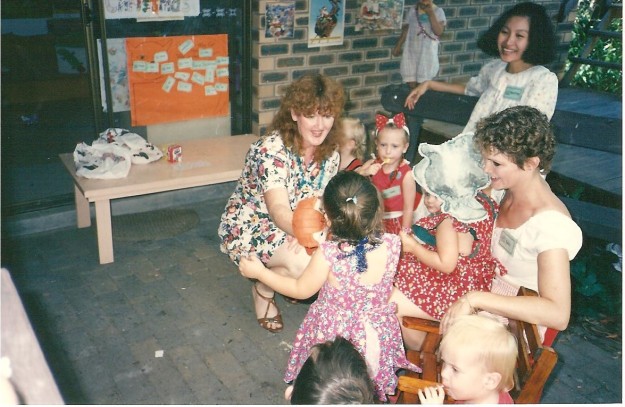
    And best of all, I could do it with Bec! (Although she is not in this photo.)

    Guiding parents in play sessions for parents and children.
    Guiding parents in play sessions for parents and children.

    I express this passion and these basic beliefs repeatedly. They are what make me. They are my driving force; the threads that weave their way through everything I do, holding them and me together. They were the basis for my attempt at founding an alternative school; they guided my classroom pedagogy and now the preparation of resources for readilearn.

    © Norah Colvin
    © Norah Colvin
    © Norah Colvin
    © Norah Colvin

    It’s funny looking back now at the documents I wrote, it seems almost a lifetime ago (well almost all of Bec’s lifetime and more than half of mine), on an Apple IIE computer. I’m still proud of what I offered and truly believe in the value of sessions such as these. However, I can see that, while there has been little change to my passion and beliefs over the years, if I were to do the same thing now I may update some statements to more closely match my current understanding of a growth mindset.

    The thought of doing the same again now is not far from my imaginings. The format of Create-A-Way sessions forms the model of another project I would love to found The Early Learning Caravan. Maybe Steven’s suggestion of crowdfunding would be appropriate for getting it started, but that’s not a project for the immediate future.

    © Norah Colvin
    © Norah Colvin

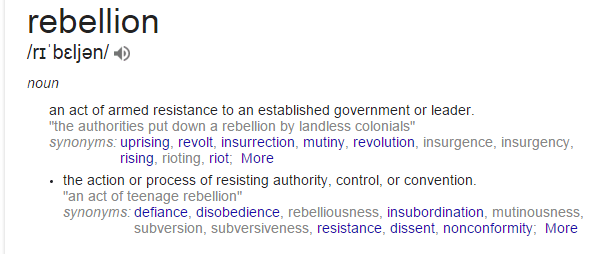
    I wonder if my inability to simply accept what is could be considered rebellion? What is a rebellion? I’m thinking of these terms as this week at the Carrot Ranch Charli Mills has challenged writers to In 99 words (no more, no less) write a rebellion.

    rebellion definition

    The rebellions of which Charli writes are of a larger scale, more in keeping with the first definition.

    In this TED Talk Ken Robinson urges us to Bring on the Learning Revolution making “the case for a radical shift from standardized schools to personalized learning — creating conditions where kids’ natural talents can flourish. I’m proud to be a rebel fighting in the same revolution as Sir Ken.

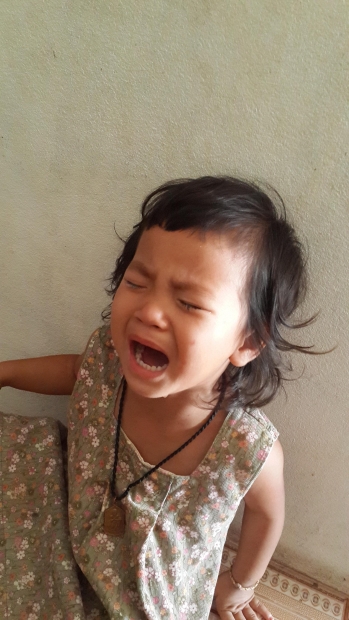
    In addition to these larger scale rebellions and revolutions there are many that take place on an individual and daily basis in our families and classrooms, and on our streets. Some of the battles, such as  teenage rebellion are fought for justice, independence and identity, a natural and necessary part of growing up. But the need to establish one’s individuality, one’s separateness as a person begins years before that, as anyone who has ever had anything to do with a two-year old can testify.

    Sometimes the same battles are played out over and over and parents wonder why the children just don’t accept that they need to clean their teeth, wash their hands, put on their shoes or whatever, rather than battle over it each and every time. It is this early childhood rebellion that has inspired my flash fiction response to Charli’s challenge this week. I hope you enjoy it.

    crying

    You’re not the boss of me!

    Eyes blazed defiance, daring a struggle which could end only in tears and frustration, or a standoff with no real winner. She was ready to flee the moment there was a hint of movement. Our eyes met. I contemplated my options. Did we have to do this now?

    Again the challenge: “You’re not the boss of me!

    I pretended to read.

    Another volley, quieter: “You’re not the boss of me.

    No response.

    Soon she was snuggling beside, pointing to pictures.

    I read aloud.

    We laughed at the antics.

    As I closed the book I said, “Ready? Let’s do this.”

    Thank you

    Thank you for reading. I appreciate your feedback. Please share your thoughts.

  • The industrious child

    http://www.morguefile.com/archive/display/902642
    http://www.morguefile.com/archive/display/902642

    The advice to go to school, work hard, get a good job seems to be often repeated, as if it is advice given to all young people as they are growing up. Funnily enough, I don’t remember receiving it when I was in school, though I may have been given it. With or without it, I think I was fairly industrious, for the final year anyway, studying six hours long into the evening each day after school. I devoted one hour to each of my six subjects. I needed to work hard to get the job of my dreams: all I wanted to be was a teacher.

    SnipsandClips, Teacher and Child https://openclipart.org/detail/205589/teacher-and-child
    SnipsandClips, Teacher and Child https://openclipart.org/detail/205589/teacher-and-child

    I think I have probably always worked fairly hard, even when I wasn’t ‘working’. Maybe I should rephrase that, and say that I consistently put in a good effort, as long as low marks for exercise and housework are not put into the aggregate.  Effort doesn’t always produce the hoped-for results, and sometimes the results can be achieved without any apparent effort. I have not yet found that in relation to exercise or housework, though. I’ll let you know when I do.

    This week at the Carrot Ranch Charli Mills is talking about being industrious. She says that

    “Making a living as a writer is not exactly the career path any school counselor would promote, but any industrious writer can make it work.”

    Tony Wagner - iterations

    I hope she’s right. In the current iteration, of which there have been a few, of my teaching career, I am combining my passion for education with my love of writing.

    Charli says that

    “You have to find a niche … an outlet and fair payment.”

    I’m working on those and I’m hoping that this time my effort will produce the desired result.

    My niche: early childhood educational resources with a point of difference being interactivity in some

    My outlet: a website readilearn, soon to be launched

    Fair payment: while some resources will be available free of charge, others, including the interactive resources will be available only to subscribers

    The relationship between effort and result is relevant when thinking about growth mindset and praise, both of which have previously been discussed on this blog, here and here for example.

    fixed - growth mindset

    Growth mindset is a way of thinking about learning proposed by Carol Dweck; of viewing learning as occurring on a continuum of possibilities that may not yet be, but have the potential to be, achieved. It differs from thinking about the ability to learn as being fixed or limited in various unalterable ways.

    Much of the discussion about praise, see here, here, and here, referred to how the effect of praising for effort, “I can see you worked hard on this” differed from that of praising achievement ‘Great job!”. Personally, I’m hoping for a bit of both once my website launches. I’d like some praise for the product, but also recognition of the effort. I just have to hope others find it worthy. I definitely don’t want to receive any hollow praise, which I think is a major criticism of the comment “Good job!”.

    ryanlerch_thinkingboy_outline

    Needless to say my interest was piqued by a statement in the opening paragraph of the post Mindset, abundance by Mary Dooms on Curiouser and Curiouser this week:

    “a colleague … and I continue to commiserate on the implementation of Carol Dweck’s growth mindset research.”

    Dooms goes on to say that “nurturing a growth mindset is a daunting task” and explains that their fear “that growth mindset has been reduced to the grit mentality of telling the students to work harder” is shared by Dweck.

    I followed the link provided to an article published in September 2015 in which Carol Dweck revisits the ‘Growth Mindset’. In this article Dweck says that one of the biggest misconceptions about a growth mindset is equating it with effort. She says there is more to achievement than just effort and reminds us that effort has a goal: learning, improvement or achievement. Effort is not made simply for effort’s sake and there is no point if it is not achieving something. She cautioned that we need to be aware of when effort is not productive and to provide students with a range of strategies to use when they get stuck.

    She says

    “Too often nowadays, praise is given to students who are putting forth effort, but not learning, in order to make them feel good in the moment: “Great effort! You tried your best!” It’s good that the students tried, but it’s not good that they’re not learning.”

    She explains that

    “The growth-mindset approach helps children feel good in the short and long terms, by helping them thrive on challenges and setbacks on their way to learning. When they’re stuck, teachers can appreciate their work so far, but add: ‘Let’s talk about what you’ve tried, and what you can try next.’”

    She goes on to say that having a growth mindset is not a destination, it is a journey. We all have some thoughts and responses that are more akin to a growth mindset and some akin to a fixed mindset. It is important to recognise both and continue to grow in growth mindset thinking. I know I still have a lot of learning and growing to do, but with Dweck’s acknowledgment of the same, I know I am in good company.

    Dooms also links to an article by Peter DeWitt published in Education Week Why a ‘Growth Mindset’ Won’t Work. DeWitt states that according to John Hattie, whose work I have previously mentioned here, a growth mindset has little effect on classroom results. Now that’s putting the cat among the pigeons.

    www.morguefile.com
    http://www.morguefile.com

    However, DeWitt explains that the reason for the low effect is that most adults have fixed mindsets which they transfer to students. He says that, for the growth mindset to be more effective, we need to do things differently.

    First of all, he says, ditch the fixed mentality. Don’t see the problem as being with the student, see it in how or what is being taught. Adjust the teaching. (I’ve also mentioned this before here.)

    • Test less for grades and more to inform teaching
    • Provide feedback that supports student learning
    • Avoid grouping students by ability
    • Ask questions that require deep thinking
    • Stop talking!

    In fact, what he is saying is that we need to practice the growth mindset, not just preach it.

    Teachers with a growth mindset appreciate the incremental

    Which brings me back to being industrious, putting in the effort, and responding to Charli’s flash fiction challenge to “In 99 words (no more, no less) write an industrious story.

    I’m thinking of putting in the effort as being industrious. I’m thinking of our impression of it and responses to it in others, particularly of the need to recognise where difficulties lie for students and how to praise to assist learning.

    “Could do better”

    The words blared from the page.

    “Needs to try harder.”

    Down through the years the judgement repeated.

    “More effort required.”

    No one tried to understand his unique way of seeing, his particular point of view.

    “Doesn’t apply himself.”

    He struggled to repeat their pointless words and perform their meaningless tasks.

    “Needs to concentrate in class.”

    Inside his head the images danced in brilliant choreography.

    “He’ll never amount to anything.”

    Outside their white noise words crackled a cacophony of dissonance.

    Finally, school days done, they clamoured for the inspired works of the overnight success.

    “Brilliant!” “Talented” “Exceptional!”

    Thank you

    Thank you for reading. I appreciate your feedback. Please share your thoughts.


  • The intrigue of nature 

    By nature, young children are explorers and discovers. Their purpose is to investigate the world around them and figure out what’s in it, how it works, and how they can get it to work for themselves. It takes little effort on the part of parents and early childhood teachers to nurture this innate curiosity and stimulate an interest in the natural world.

    Sharing in the excitement of children’s discoveries is a marvellous experience and something I loved about having my own young children and working in early childhood classrooms, I now have the additional privilege of sharing in the wonder with my grandchildren. I feel very proud watching my two children, their dad and aunt, as together they explore the flora and fauna in our backyard. I know I have done something right.

    These are just a few of the wonders we found this year:

    The ladybird life cycle on our beautiful wattle tree.

    © Bec Colvin
    © Bec Colvin

    A bee on the same wattle tree.

    © Norah Colvin
    © Norah Colvin

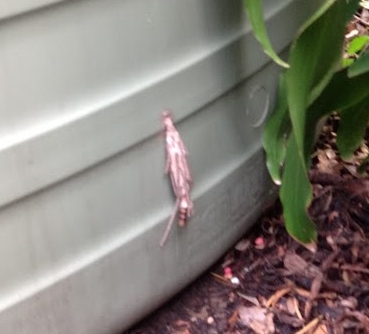
    A case moth attached to the rainwater tank.

    © Norah Colvin
    © Norah Colvin

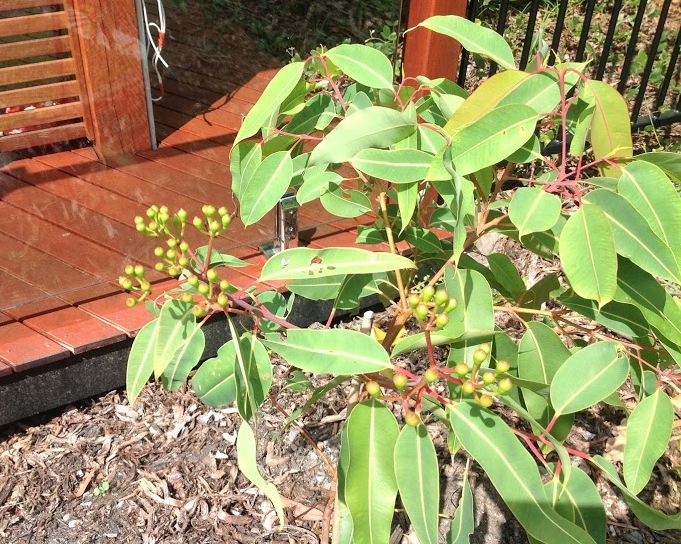
    Nuts already forming on my little gum tree.

    © Norah Colvin
    © Norah Colvin

    Flowers on the native ginger.

    © Norah Colvin
    © Norah Colvin

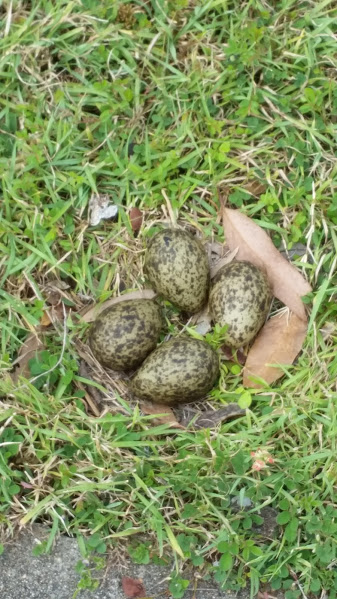
    Plover eggs in a nest.

    © Norah Colvin
    © Norah Colvin

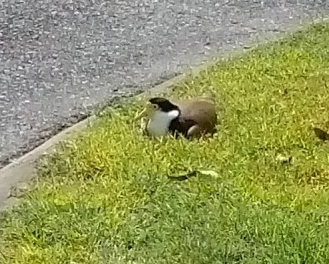
    The plover sitting on the eggs.

    © Norah Colvin
    © Norah Colvin

    Fruit on the sandpaper fig.

    © Norah Colvin
    © Norah Colvin

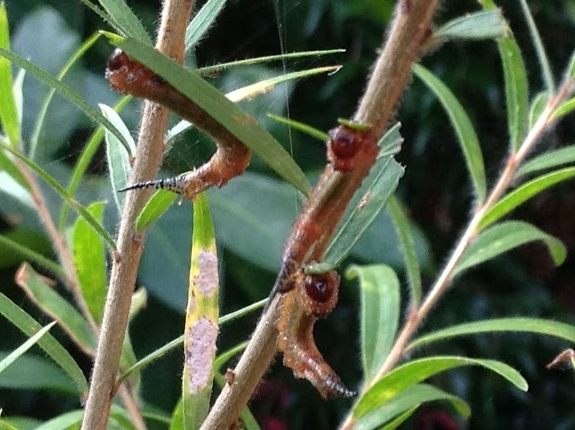
    Bottlebrush sawfly larvae.

    © Norah Colvin
    © Norah Colvin

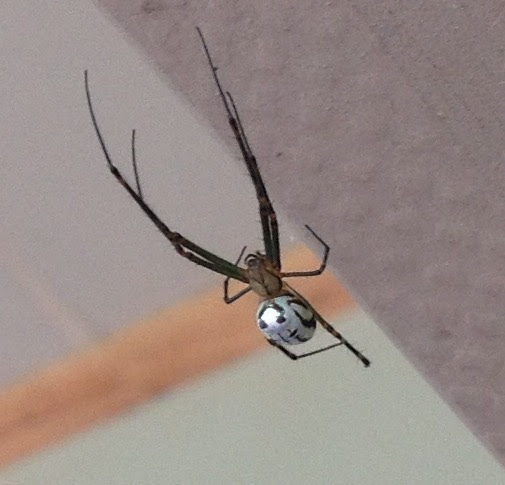
    A silver orb spider.

    © Norah Colvin
    © Norah Colvin

    Flowers on my wattle tree.

    © Norah Colvin
    © Norah Colvin

    This week at the Carrot Ranch Charli Mills was talking about having a “looky-loo”, I’d probably call it a “sticky-beak”, at the effects of a river in flood, and described the way that neighbours help each other out, even if they’ve never met before. But Charli dives deep into the analogy of a flooded river, feeling washed out and overwhelmed by the rising tide of fear fuelled by a lack of understanding and appreciation of difference. She pleads for all of us to find our common ground, to realise that, while we are complex and contradictory, we share the same needs and wants. She says that if we don’t understand we should, “Ask, don’t judge. Learn, don’t isolate.”

    Charli got me thinking about these issues, as she always does. I wondered, if we value, appreciate and marvel at diversity in the natural world, why don’t we appreciate it in other humans? After all, we are merely part of the natural world. That we have done more than any other species in manipulating it doesn’t alter that fact. Why can’t we all just agree to live and let live? Why do some think otherwise?
    These thoughts reminded me of something I had heard in a fascinating TED talk by Ed Yong, called Zombie roaches and other parasite tales. Ed Yong is a science journalist on a mission to “ignite excitement for science in everyone”. He blogs at Not Exactly Rocket Science for National Geographic.

    This particular TED talk is fascinating, funny, disgusting and very informative, with a little of something for everyone. He throws in terms like “mind control”, “eaten alive”, and “bursts out of body”. Science fiction has nothing on science fact.

    www.morguefile.com
    http://www.morguefile.com

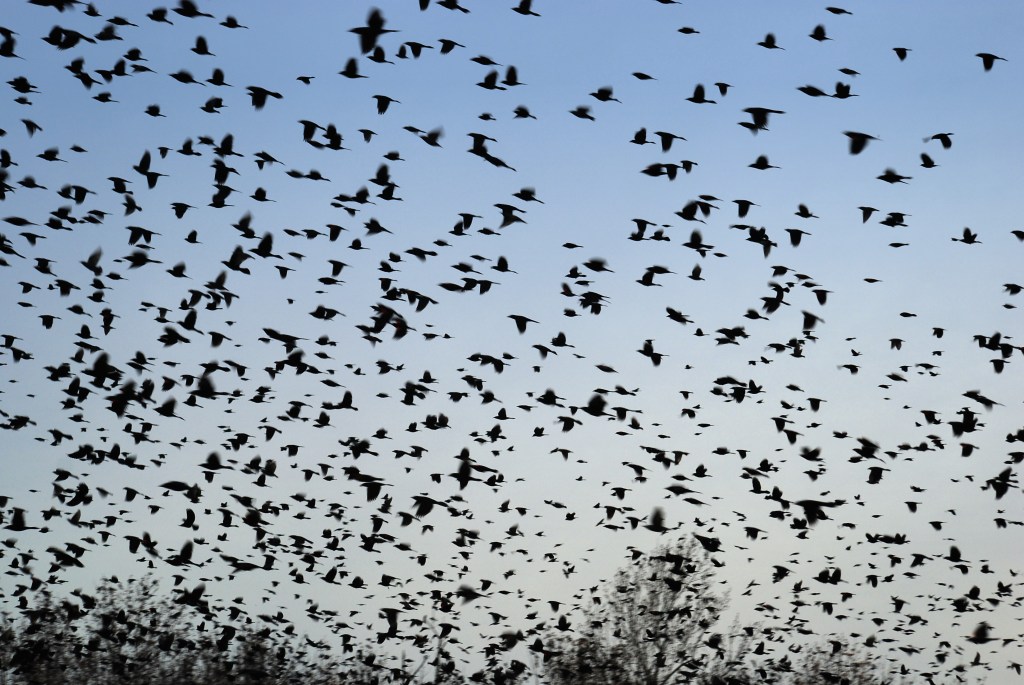
    He begins the talk by questioning whether animals choose their behaviour such as gathering in large flocks or herds for safety. He then talks about the popular children’s science “pet” brine shrimp, or sea monkey, and the ways in which a parasitic tapeworm influences the shrimp’s behaviour to enable its own reproductive cycle. He says, “The tapeworm hijacks their brains and their bodies, turning them into vehicles for getting itself into a flamingo.”

    But that is just the first of his stories of animals behaving in ways as a result of the mind-control of parasites. He describes others and says that “Manipulation is not an oddity. It is a critical and common part of the world around us, and scientists have now found hundreds of examples of such manipulators, and more excitingly, they’re starting to understand exactly how these creatures control their hosts.

    He describes a wasp that attacks a cockroach and “un-checks the escape-from-danger box in the roach’s operating system”. I wondered if this same box could be un-checked in humans. Not surprisingly, Ed went on to discuss humans but said that our methods of mind control were fairly primitive compared to the techniques of parasites. He said that this is what makes the study of parasites so compelling. We value our free will and fear having our minds controlled by others, but this situation occurs all the time in nature.

    Yong then asks what he considers an obvious and disquieting question:

    “Are there dark, sinister parasites that are influencing our behaviour without us knowing about it …?

    He talks about a parasite that manipulates cats, a parasite that many people have in their brains. While there is no conclusive evidence of parasitic manipulation of human behaviour, Yong suggests that “it would be completely implausible for humans to be the only species that weren’t similarly affected.” I urge you to have a looky-loo at the now not-so-secret behaviour of these parasites. I’m certain you will be as entertained as you are informed and challenged.

    So from a looky-loo in my backyard to a looky-loo at the world of parasites we come to my response to Charli’s flash fiction challenge to In 99 words (no more, no less) write about a looky-loo.

    www.morguefile.com
    http://www.morguefile.com

    Copy-cat Sticky-beak

    High in the branches Maggie practised her repertoire.  She watched people scurrying: erecting tents and marking long white lines.  She absorbed the rhythm of new songs: thump-thump, clink-clink.

    She breakfasted on scarab beetles and was ready when the children arrived. But they didn’t notice her playful mimicry. Instead they flooded the field with colourful shirts and excited chatter.

    Maggie watched silently. Soon she heard an unfamiliar song: “Go team, go team, go!” She flew to the top of the biggest tent and joined in. The children listened, then cheered. Maggie felt she’d almost burst. Instead she sang, and sang.

    Perhaps we could learn from the magpie, one who looks, listens and learns and shows appreciation for others in the most sincere form of flattery: singing their song.

    I love awakening to the beautiful songs of the magpie every morning. I chose to share this particular video, as yesterday we were also visited by a beautiful king parrot such as the one featured in this video. Awesome.

    Thank you

    Thank you for reading. I appreciate your feedback. Please share your thoughts about any aspect of this post or flash fiction.

  •  A celebration of Australian picture books #7 — celebrating Christmas


    With Christmas just around the corner it is appropriate to continue my series in Celebration of Australian Picture Books with some Australian Christmas picture books. This post is the seventh in a series celebrating picture books by Australian authors. If you missed earlier posts, please follow these links to the introductionMem FoxKim Michelle ToftNarelle OliverJeannie Baker and Jackie French.

    www.openclipart.org
    http://www.openclipart.org

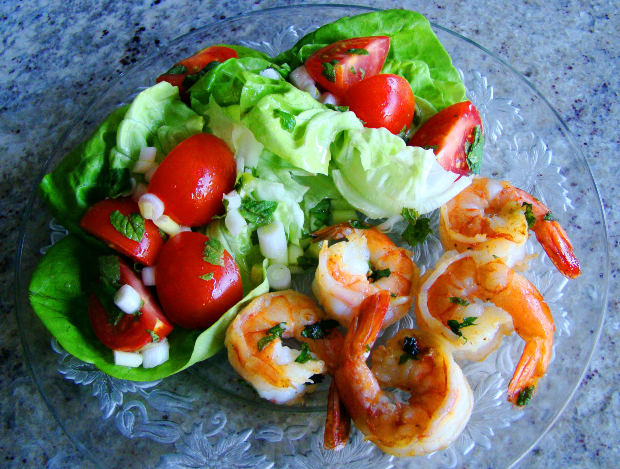
    Christmas in Australia is unlike that in most other parts of the world that celebrate the holiday. In Australia, Christmas falls in summer and people generally head for the beach or somewhere with air conditioning to cool down. While many still follow the traditions of the Northern Hemisphere with baked dinner and plum puddings, many opt for seafood  and salad, and outdoor barbecues and picnics. Whatever the weather Christmas is a great time for catching up with family and friends (or not, depending on your family!)

    www.morguefile.com
    http://www.morguefile.com

    I shared some thoughts about Christmas in Australia last year when I posted I’m (not) dreaming of a white Christmas. This year the post is specific to picture books.

    Some Australian Christmas picture books
    Some Australian Christmas picture books

    Because our climate is so different and we have such a small population down here, most of what is available for us to read, sing or view deals with situations very different from our warm sunny days. I’m pleased to say, though, that there is an increasing number of songs and books with an Australian flavour available. However, many are merely innovations on the traditional such, as The Australian Twelve Days of ChristmasAussie Jingle Bells or An Aussie Night before Christmas.

    12 underwater days of Christmas

    One innovation I particularly like is The Twelve Underwater Days of Christmas by Kim Michelle Toft. I celebrated Kim’s work previously in this series. Kim is an Australian who uses her talents as author and illustrator to educate children about things for which she is passionate: ocean life and coastal habitats. The stunning illustrations in this book, as in others, are hand-painted on silk; providing a richness of information through visual as well as textual features. In addition to the information about the animals, Kim includes a stunning six-page foldout poster, and information about the original carol.

    Christmas Wombat

    Jackie French, another whose work I have previously shared in this series, also has a Christmas picture book in the Wombat series, Christmas Wombat. It is just as delightful as the other wombat stories and tells of Wombat’s Christmas Day with sleep, adventure, sleep, and treats.

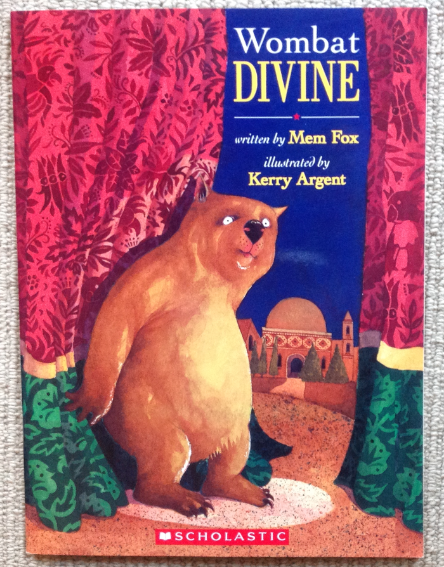
    Wombat Divine

    Using the traditional Nativity play as the setting, Mem Fox, another whose work I shared in this series created an original and fresh story in Wombat Divine. It is a delightful tale of Wombat who loved everything Christmas. When finally he was old enough to be in the Nativity Play he rushed along to the auditions. Unfortunately, it was difficult to find a role that was just right for Wombat. Can you guess which one he got? You’ll have to read the book to find out! Children all over the world will identify with Wombat and his predicament, and enjoy the heart-warming tale.

    PS who stole santa's mail

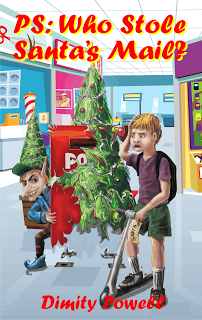
    For slightly older children there is the first chapter book PS: Who Stole Santa’s Mail by Dimity Powell, who is very active in the local SCBWI group. She blogs at  Dim’s Write Stuff. This is a fun story filled with mystery, magic and humour and a great first step into chapter books. I thoroughly enjoyed reading it.

    We do have a few original Christmas songs to listen to as well. One that I enjoyed listening to on the radio as a child, and delight in now hearing my grandchildren sing, is Six White Boomers. It is a lovely tale of a joey kangaroo who is lost and alone in a zoo. Santa rescues Joey and reunites him with his mother on Christmas Day. Of course to get there, Joey is treated to a ride on Santa’s sleigh pulled by six huge white kangaroos.

    Peter Combe has written two albums of original, but with a traditional rather than specifically Australian flavour, Christmas songs for children, including this one:

    Children around Australia are finishing their last few days of the school year within the next week. They will then have five to six weeks of holidays before starting back for a new school year. I have shared previously about the importance of keeping children’s love of learning alive and described easy ways of incorporating learning into everyday family activities. If you know of any families in need of suggestions, please give them a copy of:

    20 suggestions for maintaining reading momentum during the school holidays

    Let the children write! 20 suggestions to get children writing during the school holidays

    Counting on the holidays!

    These are available free download in my Teachers Pay Teachers and Teach in a Box stores. Soon they will also available free on my website.

    rg 1024, gift https://openclipart.org/detail/31159/gift
    rg 1024, gift https://openclipart.org/detail/31159/gift

    Of course books always make wonderful gifts and any of the books mentioned here would be a great addition to anyone’s collection.

    Thank you

    Thank you for reading. I appreciate your feedback. Please share your thoughts about any aspect of this post.


  • Storybook pirates and early childhood learning

    nicubunu, Comic Characters: Pirate https://openclipart.org/detail/21919/comic-characters-pirate
    nicubunu, Comic Characters: Pirate https://openclipart.org/detail/21919/comic-characters-pirate

    Would you believe that with the hundreds of picture books I have in my possession I do not have one about pirates! That surprises me. There must be oodles of books about pirates on the market.

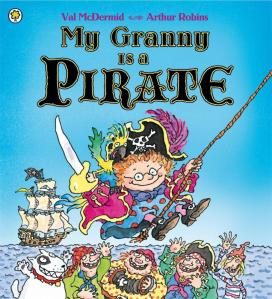
    my granny is a pirate

    When I was in London last year I did buy a delightful book for my grandchildren called My Granny is a Pirate by Val McDermid.  We had enormous fun reading it and laughing at the wonderful illustrations by Arthur Robins.

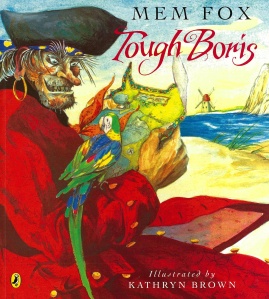
    Although I own many titles by Mem Fox, I don’t own her “all time classic and long-lasting bestselling” pirate book, Tough Boris . In the information about the story on her website, Mem explains how the story came to be and raises issues of sexism, particularly regarding the over-representation of male characters, in picture books. This is a topic that is very familiar to me.

    Tough boris

    In addition to not owning books about pirates, I can remember using a pirate theme for teaching on only one occasion. This surprises me too as pirates seems to be a perennial theme for birthday and fancy dress parties. Children and adults find the idea of pirates fun. You have only to look at the success of the Pirates of the Caribbean series to know that.

    Of course, in this post I am referring only to the pirates of picture books and movies such as these, that were no more real than other fanciful characters such as giants, fairies, elves and dragons.

    The occasion for my using a pirate theme was over twenty years ago when I was running early childhood classes as part of my home-based business Create-A-Way, and the inspiration for it was of a practical rather than literary nature. I was required to wear a patch over an eye after having a pterygium removed. A pirate day seemed like a great way to avoid upsetting the children and to have a bit of fun as well. Perfect!

    https://pixabay.com/
    https://pixabay.com/

    But why am I thinking about pirates you may wonder. Well, it’s in response to the post by Charli Mills at the Carrot Ranch and her challenge to writers to In 99 words (no more, no less) write a pirate story. As always Charli gets me thinking about different things with her prompts. She is talking about the piracy from her internet data service and drinking rum before 10 am, which is apparently something pirates do.

    As usual I take the prompt to the early childhood education setting, and I’m excited by doing so. Ever since reading Charli’s prompt I have had ideas for teaching and learning experiences based on a pirate theme swirling around in my head. I may be late coming to the party, but I’m not coming underdressed.

    https://pixabay.com/
    https://pixabay.com/

    One of the things I have always loved about teaching is the opportunity to be creative: to write and prepare fun educational resources to use with my children. What wonderful things could be done with a pirate theme. I can’t believe I have never done it. And while I am no longer in the classroom and the opportunity is not there for me to use them with my own class, I can make them for my website to share with other teachers. The fun of thinking, writing, and creating is still mine!

    I’m pleased to announce that my website is underway. I have signed with a web designer and developer. It should be ready to go live by the end of January, ready for the start of the new school year in Australia. I can’t wait. Well, I can wait. I still have so much work to do in the meantime. I have resources to finish and new ones to write. There are many “in progress”. While I won’t be rushing into making pirate themed resources, I am putting them on my list. I have lots of ideas.

    Actually now that I think about it, the mix of feelings I have now that the website is imminent may be similar to those experienced by someone walking the plank: there is no way back and the choice for the future is to either sink or swim. If I do manage to hold my head high and above water level, I hope I don’t get eaten by sharks!

    wsnaccad, shark https://openclipart.org/detail/19732/shark
    wsnaccad, shark https://openclipart.org/detail/19732/shark

    On my website subscribers will be invited to suggest or request resources to match their requirements. I love thinking of resources to suit particular topics or to teach particular skills or processes. I would love a request for pirate materials so that I could get started on making them sooner rather than later.

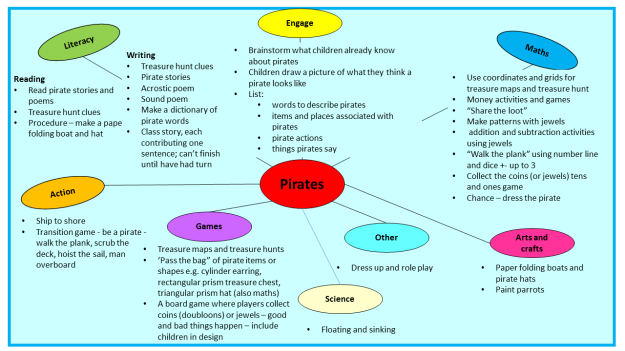
    Here are a few ideas I have to start with. I’m sure I would come up with many more given a little longer.

    © Norah Colvin 2015
    © Norah Colvin 2015

    But now here is what got me thinking about pirates in the first place: my flash fiction response to Charli’s prompt. I’m definitely sticking with my early childhood theme and a bit of fun for this one.

    https://pixabay.com/
    https://pixabay.com/

    If I was …

     If I was a pirate

    I would sail the ocean blue,

    In a boat made out of cardboard

    With my parrot Libby-Lou.


    I would wear a red bandana

    And purple polished boots.

    I would flash my pearls and silver sword

    And plunder pirate loot. 


    I would dig for buried treasure

    In the spot marked with an X,

    And all I’d find I’d stow inside

    My handy wooden chest.


    I would have no one to boss me

    I could do just as I please,

    Until my dad would call me

    “Anna, come, it’s time for tea!”

    Thank you

    Thank you for reading. I appreciate your feedback. Please share your thoughts about any aspect of this post or flash fiction.

  • School’s out for another year!

    Teaching is forever in my heart

    It is almost the end of another school year in Australia. I can’t believe that it is now four years since I left the classroom, both sadly and probably, to never return. I often hear advice given to never say “never”, but although a large part of my heart remains in the classroom, I’m fairly certain that I’ll not physically return; not full-time anyway.

    It is also the end of the first year of formal education for Gorgeous 1 (first-born grandchild). I’m pleased to say that he has had a wonderful year and very much enjoyed attending school. His parents are happy too and relate many positive things about the teacher and the ways in which she has nurtured the children. That makes grandma happy too.

    https://openclipart.org/image/800px/svg_to_png/59389/happy_sun_gm.png
    https://openclipart.org/image/800px/svg_to_png/59389/happy_sun_gm.png

    However a few queries have been raised in recent discussions. One of these is with regard to class allocations for next year. The parents commented that Gorgeous 1 won’t know what class he is in, including teacher, classmates or classroom, until he turns up for school on the first day. They wondered if this was common practice and about its purpose.

    Sadly, I think it is a fairly common practice for which a variety of reasons may be given. However I’m not convinced that any of the stated reasons are justified or have any real validity.

    I very much liked the way my most recent school dealt with class allocations. I thought it worked well for everyone: children, parents and teachers.

    Towards the middle of October children were asked to identify three friends they would like to be in the same class with the following year, and any they wouldn’t. I never emphasised the “not like” part but made sure that children knew it was there if they wished to use it. Few did.

    friendship choices


    At the same time parents were invited to submit in writing things they wished included for consideration when class allocations were made. Requests were to be specific to their child’s needs; for example friendship issues or the type of teacher thought best suited to the temperament,  learning style or needs of the child. Identifying a teacher by name would invalidate the request.

    SnipsandClips, Teacher and Child https://openclipart.org/detail/205589/teacher-and-child
    SnipsandClips, Teacher and Child https://openclipart.org/detail/205589/teacher-and-child

    The process of allocating children to classes was time consuming with many things to be considered; including, for example, the distribution of children of high, mid and low achievement levels; boys and girls; children from non-English speaking backgrounds; children with disabilities or requiring support with learning or behaviour.

    Current class teachers collaborated to draw up lists which were checked by an administrator to ensure even spreads and that parent requests (not revealed to the teachers) were complied with. It was no small feat. We would go into the meetings armed with lists of children’s friendship groups on sticky notes, scissors, coloured pencils, erasers, and more sticky notes. It was always amazing to see the classes come together.

    https://openclipart.org/image/800px/svg_to_png/651/ryanlerch_kids_with_hats.png
    https://openclipart.org/image/800px/svg_to_png/651/ryanlerch_kids_with_hats.png

    The best part of this process occurred in the second-last week of term when teachers and children met their new classes for the following year. Another feat of organisation. Class teachers told children which class they would be in and distributed to each their portfolio of work to be given to the new teacher.

    All year levels met in their respective assembly areas, divided into their new classes, met their new teachers and went off to their new classrooms for about 45 minutes. The new teacher would explain class expectations and topics the children would learn about. Sometimes the teacher would read a story or engage the students in discussions about what they had learned in the current year and what they were hoping to learn in the following year. Oftentimes children returned with a small gift from their new teacher; for example a book mark, pencil or eraser. They always returned excited.

    In addition to stories and discussions, I would always ask my new students to draw a picture of themselves, write their name and anything else they would like to tell me about themselves or their picture. I would also take their photograph and attach it to their drawing. In addition to the portfolio of information coming from the previous teacher, this would provide me with valuable information that I could use when preparing for the new year.

    Michael likes dogs

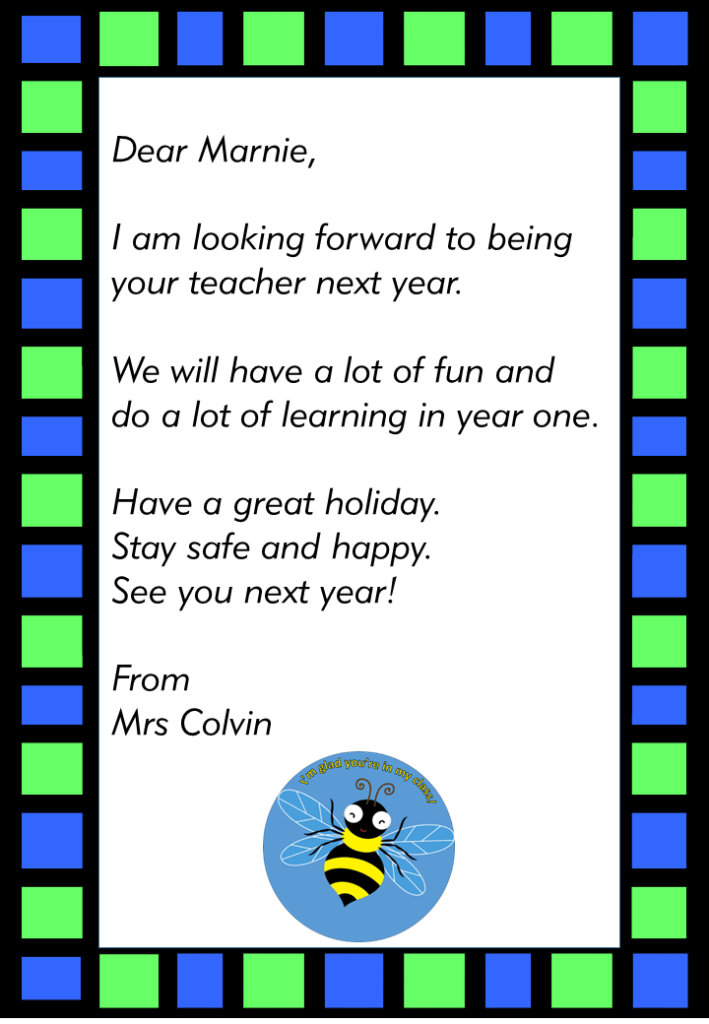
    In addition I would have a letter and a small gift ready for my new students. The letter helps to create a positive connection, makes them feel special and helps to ease the transition back to school after the holidays. It also ensures they remember what class they are in and who their teacher is. It lets their parents know as well.

    end of year letter


    I think this is a wonderful process and one that should be adopted in all schools. It has many benefits; including:

    • helping teachers get to know important information about students before the year begins and aiding preparation.
    • reducing the anxieties of children and parents over the holidays, wondering about which class they would be in and which teacher, even whether they would be in the same class as their friends.

    Once children knew their new classes I arranged their seating and named their groups to match. This provided opportunities for children to bond with future class mates as well as identify their class for the following year. There would be no unnecessary confusion or anxiety on the first day of school.

    https://openclipart.org/image/800px/svg_to_png/192642/Children_holding_hands.png
    https://openclipart.org/image/800px/svg_to_png/192642/Children_holding_hands.png

    I’d love to know what you think of this process or of other processes with which you are familiar.

    With the holidays just around the corner I provide links back to previous posts which provide suggestions for maintaining children’s learning in informal and fun situations.

    Learning fun for the holidays, without a slide in sight!

    Counting on the holidays!

    Let the children write! 20 suggestions to get children writing during the school holidays

    20 suggestions for maintaining reading momentum during the school holidays

    The lists are all available for free download and distribution to parents from my Teachers Pay Teachers or Teach in a Box stores.


    Thank you

    Thank you for reading. I appreciate your feedback. Please share your thoughts about any aspect of this post.

  • Let’s dance!

    www.morguefile.com
    http://www.morguefile.com

    I have always enjoyed working in early childhood classrooms. Being able to share and assist children’s pathways into literacy is as much a privilege as it is exciting. To keep alive their innate curiosity, wonder and joy of learning is an aspiration that rewards me as much as it does them.

    However the role can be rather daunting at times. It requires that one be a generalist, able to move comfortably through and teach effectively in the full range of subjects: English, mathematics, sciences, the humanities and social sciences, technology, health and physical education, and the arts. But the diversity can also provide opportunities for fun.

    Take dance, for example.  Dance can fit into both the arts and physical education programs. While the formal subject areas require some progression of learning in skills and understanding, some form of movement or dance can be incorporated into daily routines such as transition times. I touched on this briefly in a recent post about using the game Freeze, which involves moving to music.

    Moini, Dancing Penguins https://openclipart.org/detail/124759/dancing-penguins
    Moini, Dancing Penguins https://openclipart.org/detail/124759/dancing-penguins

    These are some other ways I incorporated movement and dance into daily routines:

    • At the beginning of each day, after giving the children a few minutes to organise their belongings, I would play a video of music and dance moves. This would signify to the children that it was time to join in and be ready for our day’s work together. By the end of the dance everyone was ready.
    • During our morning sessions children shared items related to their interests or our units of work. Sometimes I asked them to bring in a favourite piece of music to share, with the proviso that they teach us some dance moves to it. The children enjoyed showing their moves as much as they enjoyed following the moves of others.

    In addition to using the game Freeze, I had other CDs of music with patterns of moves that could be used to transition from a noisy to quiet activity, to regain children’s attention after independent or group work, or to complete the tidying of the room at the end of the day.

    • Sometimes I used music that had set dance routines.
    • Other times we moved to the music freely, or responded to the tempo, pitch or volume with large, small, high, low, fast, slow, loud or quiet movements.
    • Sometimes dance routines were performed independently but in unison such as The Hokey Pokey. The Chicken Dance and The Macarena.
    • Sometimes they required participation as a group, for example learning simple square dances.

    Whichever way we did it was always fun and the children loved to participate. They had no need of being told to “Dance like there is nobody watching.”

    Dance like there's nobody watching

    I wonder at what age that becomes a necessity. Perhaps the phrase,and if they are watching, dance anyway” needs to be added.

    My thoughts turned to dance this week in response to the flash fiction prompt set by Charli Mills of The Carrot Ranch to In 99 words (no more, no less) write dance into your story. Charli is talking about writing as her dancing partner.

    Of course my thoughts turn to the classroom (as explained above) and to books about dance.

    2015-09-19 11.15.56

    In a previous post about Australian picture books by Jackie French I wrote about Josephine Wants to Dance. This book, illustrated by Bruce Whatley, is a delightful story of a kangaroo who loved to dance but dreamed of dancing another way. One day the ballet came to town and Josephine decided that was how she wanted to dance. Though others discouraged her, Josephine was determined to give it a try. It is a lovely story of believing in yourself and following your dreams.

    giraffes can't dance

    Another delightful picture book about dance is Giraffe’s Can’t Dance by Giles Andreae, illustrated by Guy Parker-Rees. While I have read this book many times, it took the recent reading of a post To Thine Own Self Be True by Sarah Brentyn on her blog Lemon Shark to remind me of it. The title of Sarah’s post beautifully sums up the theme which is expressed in the book this way: “We all can dance when we find music that we love.”

    We can all dance

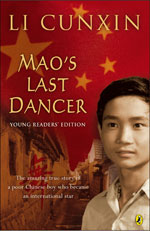
    For adults there is the story of Mao’s Last Dancer, the inspirational story of Li Cunxin, who is now the artistic director of the Queensland Ballet, based in my home city. He was Queensland’s Australian of the year in 2014.

    Mao's_Last_Dancer_book_cover

    This leads me to my flash fiction response:

    A Night at the Ballet

    The audience hushed as the lights dimmed. Marnie shuffled. Darkness was not to her liking. Josephine patted her hand reassuringly. The girls on her other side twittered with anticipation. They’d been to theatre before. Observing their confidence earlier had Marnie feeling even more conspicuous as she balanced on unfamiliar heels and clutched a borrowed evening bag so tightly it left imprints on her hand. At least now the darkness hid her from view.

    Soon the darkness was banished by a brightly lit stage and enormous Christmas tree surrounded by happy children dancing. Marnie was mesmerised. So this was ballet!

    Thank you

    Thank you for reading. I appreciate your feedback. Please share your thoughts about any aspect of this post or flash fiction.

  • The comfort zone

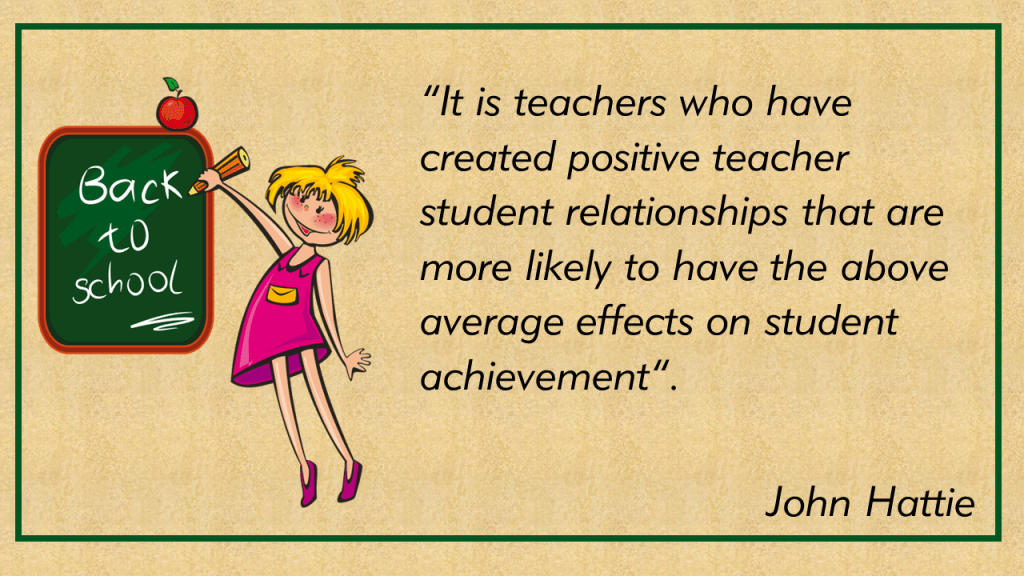
    John Hattie

    Creating a positive classroom environment in which students feel welcome, accepted and respected is probably high on the agenda for most teachers. It certainly was for me during all my years of classroom practice.

    Students require an environment in which they feel comfortable and supported, as well as encouraged and challenged to stretch beyond current levels of skills and knowledge, to step beyond their current comfort zones with confidence in the knowledge that, while learning anything new can be a risky business, they will be supported in the process.

    But this does not just come from a “feel good” place in teachers’ dreams and imaginations. Research provides evidence that it is true. Professor John Hattie, a researcher in education, undertook a very ambitious project, synthesising data from over 800 studies involving more than 80 million students. He published his findings in two books called Visible Learning and Visible Learning for Teachers.

    Hattie says that

    “It is teachers who have created positive teacher student relationships that are more likely to have the above average effects on student achievement”.

    Thank you to my wonderful students, and their lovely Mum who made this for me!
    Thank you to my wonderful students, and their lovely Mum who made this for me!

    This article, which summaries some of Hattie’s findings about teacher-student relationships, states that

    “the quality and nature of the relationships you have with your students has a larger effect on their results than socio-economic status, professional development or Reading Recovery programs. It is not that these things don’t matter, but rather that your relationships with students matter more.”

    It is wonderful to find that what I have always believed and practiced is now firmly backed up with research.

    I have written before about my use of affirmation songs and of connecting literacy learning to children’s lives and interests. In this post I will share just a few of the physical attributes of the classroom that contributed to that overall positive and supportive environment I worked so hard to establish.

    Readilearn bookmark

    From the very first day of any school year I ensured that children not only felt welcome in the classroom but knew that it was their classroom, that they had part ownership of the space and its environment.

    I would prepare a large welcome chart for the door with my name and photograph and the words: “Welcome to grade one.” Children’s names and photographs would be added by the close of the day.

    Welcome to year one

    In our school each child was allocated an individual desk with a tidy tray underneath for storing belongings. I would arrange the initial seating of children in groups based on what I knew of their friendship groups from the previous year. For each child I would place on the allocated desk:

    • A desk name (to identify the desk, to use as a model for writing, to assist children in learning to read each other’s names)
    • A welcome letter
    • A name badge (to identify them and their class at break time)
    • A small gift e.g. a pencil or keyring
    Welcome pack
    Welcome pack

    During the day I would photograph each child and print two of each.

    One of each child’s photographs would be added to the welcome chart  with the child’s name. (see above)

    The other would be added to a self-portrait and displayed on a classroom wall.

    I am Michael

    I usually asked the children to complete these during the first session so that I could have them on display when the children returned to class after first break.

    This was just the start. Throughout the year my classroom was a constantly changing display of children’s work. Children love to see their work displayed. It gives them an immediate sense of belonging, of being valued, and of ownership. Parents love to see it too, as this (unsolicited) letter written by a parent to the principal at the end of a school year testifies.

    Marianne's letter

    This week at the Carrot Ranch Charli Mills has challenged writers to In 99 words (no more, no less) write about a place of comfort that is a refuge.

    My classroom welcomed everyone: children, parents, volunteers, aides and administrators. It was a comfortable place to be. Fortunately it was not often required to be a refuge in the true sense of the word, though allowing me to experience over and over the joys of being six certainly shielded me from many less pleasant situations that may have been met elsewhere.

    While Marnie of my stories is a fictional character, sadly there are many children suffering as much as or more than I portray for her. It is for children like her that a warm, caring relationship with a special teacher can be empowering and life-changing, the one bright spot in an otherwise difficult life. I wish for all children a loving place of safety, acceptance, trust and respect. Marnie found it in a special teacher, Miss R.

    Safety

    Marnie loved art classes with Miss R. She loved art, but she loved Miss R. more. The days when art class was last were best; had been ever since that first time when she’d dallied, nervously, reluctant to leave, and Miss suggested she stay and “help”.

    Miss R. understood Marnie and Marnie trusted Miss R. Sometimes they would tidy in silence. Other times they’d chatter lightly about distracting things like television, music or books. But sometimes, when dark clouds loomed, Miss R. would gently ask, “What would you like to tell me?” Today the clouds looked about to burst.

    Thank you

    Thank you for reading. I appreciate your feedback. Please share your thoughts about any aspect of this post or flash fiction.

  • @cesarharada, Encouraging innovation and problem solving through science

    Cesar Harada

    I found this TED talk by Cesar Harada totally engaging. Cesar, who describes himself as half Japanese half French, teaches science and invention to students from aged 6 to 15 at the Harbour School in Hong Kong.

    Cesar opens his talk by explaining that, when a child, he was allowed to make a mess, but only if he cleaned up after himself. As he grew up he realised that he had been lied to: adults make messes too but they are not very good at cleaning up after themselves.

    He closes his talk by suggesting that children should not be lied to. He says,

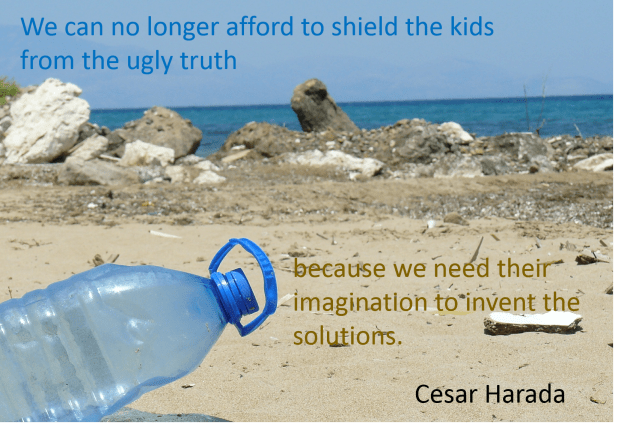
    “We can no longer afford to shield the kids from the ugly truth because we need their imagination to invent the solutions.”

    He then adds,

    ” we must prepare the next generation that cares about the environment and people, and that can actually do something about it.”

    In between he describes some scientific thinking and inventions made by his students to solve local problems initially, then problems that affected other kids remotely, and finally problems that have a global impact.

    I’m sure that you too can only be impressed by the learning and the positive actions that are being undertaken by these innovative students and their inspirational teacher. When I hear (true) stories like this, it certainly gives me hope for a better future.

    I hope you enjoy Cesar’s talk as much as I did.

    You can also find Cesar on Twitter.

    Thank you

    Thank you for reading. I appreciate your feedback. Please share your thoughts.