For the past few years I have been preparing early childhood teaching resources for a website that I hoped would be up and running by now. Unfortunately, there have been some delays with the developer. In the meantime, I thought I’d share a resource with an Easter theme to give you a free taste test. This will be of interest mainly to early childhood teachers or parents of young children. Everyone else is excused.
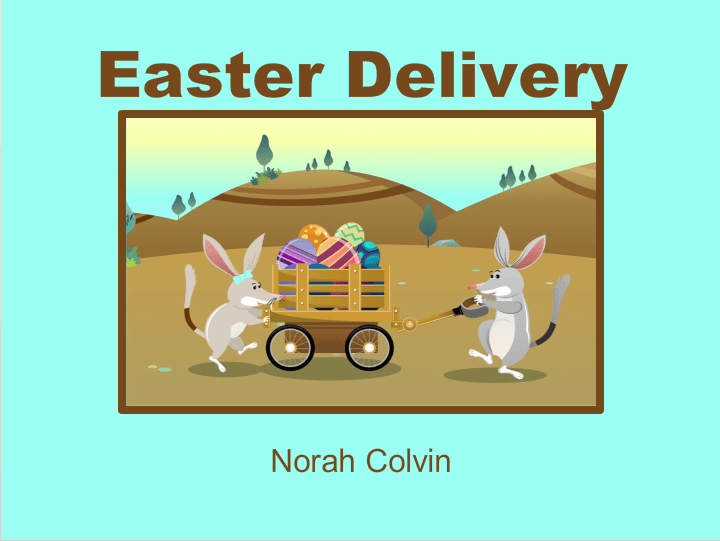
The resource, called “Easter Delivery”, is a story about twin bilbies, Benny and Belinda, who get to deliver eggs to the families of some friends for the first time. It incorporates addition conceptsand is suitable for use with the whole class on the interactive white board.
The story involves the children in helping Benny and Belinda work out how many eggs they need to deliver to each family and the combination of packs they could choose. The maths concepts are probably most suitable to year one students but teachers may use their discretion about how much maths to include.
Included is an information sheet about the resource and three printable follow-up activities:
Benny and Belinda’s Easter Activity – children record the number of people in their own family and draw and calculate the number of eggs Benny and Belinda would deliver
A Happy Easter Card from the Bilbies– a card with a picture to colour and blank inside for children’s own messages
The Bilbies’ Easter Colouring Page
The resource is available clicking on the image until Thursday 24 March 2016. Hopefully it will be available on my website for Easter 2017!
Yes. It is a bit of shameless promotion but it is also a gift for you to use if you would like to in the lead-up to Easter. The resource is not downloadable, but I am happy for the link to be shared with your early childhood teaching friends and colleagues. While it is not a requirement of use, I’d really appreciate some feedback. Please use the poll or share your thoughts in the comment box below.
Thank you for reading. I do appreciate your feedback. Please share your thoughts.
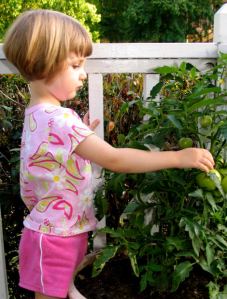
In last week’s post I shared information about research projects students could become involved in to be scientists in real life. Some of the projects such as Project BudBurst and BudBurst Buddies encourage junior scientists to observe and record changes in plants throughout the changing seasons. Many commenting on the post agreed that projects such as these would make the learning of science come alive. Pauline King the Contented Crafter even commented that she may have to reconsider her opinion of schools if children were involved in projects such as these.
Shortly after posting I read an article on Co.Exist describing a preschool that doubles as urban farm where “Kids learn among the plants and animals in this design for a radically different education environment.” A bit like my concept of an early learning caravan, the school does not actually exist. The design was entered into and won an architecture competition. It is an interesting concept and I especially like the suggestion that children spend more time learning about nature through experiencing it in wild spaces in the outdoors rather than only through classroom activities and books, both of which do have their role.
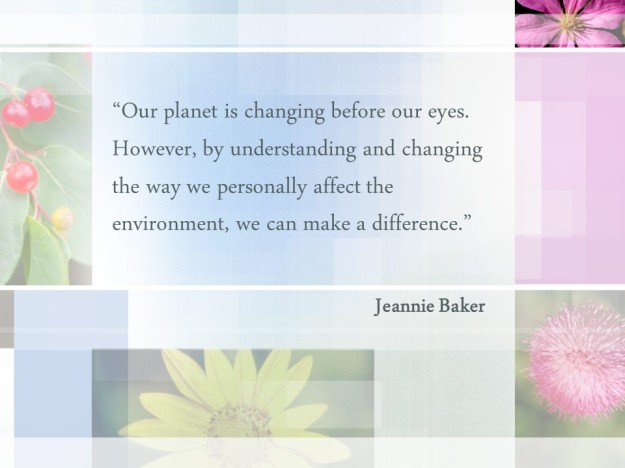
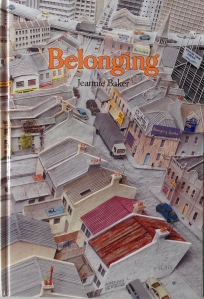
I have previously shared the wonderful books of Jeannie Baker which have strong environmental themes encouraging children to care for nature and appreciate the natural wonders and beauty of the world around them.
This morning, thanks to a recommendation from Sarah Brentyn who blogs at Lemon Shark,I received another lovely book in the post that will sit among my favourites. The Curious Gardenby Peter Brown tells the story of how a curious boy helps transform a city from a drab grey concrete jungle to a one filled with gardens and gardeners. The story affirms the belief that the actions of one person can make a difference.
I am currently listening to Earth in Mind: On Education, Environment and the Human Prospect, an interesting and thought-provoking book by environmentalist David W. Orrwho challenges the focus of schools and advocates for learning outdoors in the natural environment. He may approve of the preschool farm, but he’d probably be more in favour of a forest preschool.
This, however, is only a small part of his position and I do not wish to misrepresent it. In an article, which reads like a chapter from the book, Orr describes “Six myths about the foundations of modern education, and six new principles to replace them”. The part of me that strives towards meliorism is seriously challenged by the picture Orr paints. The picture books, stories, and research projects are fine; but there’s much more to be done if we want to do more than simply wish for a greener future.
I agree with Orr wholeheartedly that education for, with and through the environment is essential; and that many of our problems are caused by miseducation. However, I had not thought about education in the way that Orr explains. I think I’ll be sharing more of his work in future posts.
Thank you for reading. I appreciate your feedback. Please share your thoughts.
Although I am enjoying the audiobook, I think I will be none the wiser at its conclusion and retain little more than in earlier days. It is a reflection on my retention rather than the worthiness of the book. At the top of Taggart’s webpage is a statement from the Yorkshire Post that I think is probably no idle boast:
Caroline Taggart…has carved out a niche for herself in user-friendly, wittily written factual books which capture the imagination and quickly find their way to the top of the bestseller lists.
Prior to reading this statement I had thought that it was perhaps the narration that had brought the book alive in a most entertaining way. I was surprised that the narrator was not the author for the wonderful meanings and interest he evokes. If not the author then, I thought, he must be a wonderful character actor. Indeed, I was not surprised to find, he was.
According to the Yorkshire Post, the writing itself is worthy too, though it seems to me, in many ways to be little more than a list of names, dates and snippets of events brought to life by an expert narrator. I’m not sure that I would read it cover to cover as I have listened to it, but it would definitely make a useful resource for checking out who and when, which is more or less impossible to do with an audiobook.
One thing I have not liked about the book is the repeated opinion that maths and science in school are boring, and that most of us would only groan when thinking of what mathematicians like Archimedes and Pythagoras have burdened us with. If you’ve read many of my posts you would probably accuse me of being inconsistent, for haven’t I often agreed with that opinion of maths at school?
However, learning in mathematics should not be that way. I wish that everything we learned in school would be alive with interest, purpose and meaning. Then there’d be no need to groan. We’d be amazed and inspired by these great thinkers who have enlightened our lives.
“Mathematics is not just solving for x, it’s also figuring out why.”
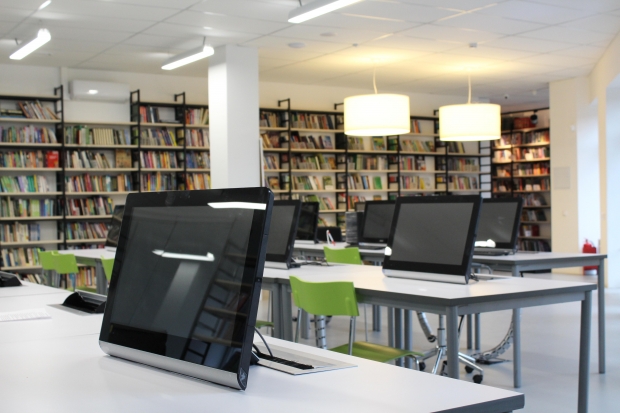
But I digress a little. Charli’s main point was about the joy to be found in libraries. In my younger years I spent many hours in libraries. And if I wasn’t in a library, I was reading a book I’d borrowed from a library. Our home was filled with books but there were never enough to read and my parents and many of my siblings were frequent library book borrowers. On many Saturday afternoons throughout my teenage years I would walk the 5½ kilometre journey to the local library and back. I can’t remember how many books I was allowed to borrow, but I borrowed as many as I could.
So many things about libraries have changed from those days of enforced silence, carded catalogues, and microfiche readers. But I don’t feel nostalgic for it. The systems are much more efficient now, and libraries have much more to offer the changing needs of a changing society.
What does sadden me is that many local councils and schools are doing away with their libraries, and many schools are choosing administrators over teacher librarians when organising their staffing. A teacher librarian should be first enlisted. Nobody knows books and readers better than a teacher librarian.
While I have not frequented my local library in recent years, I would be very distressed if it were to close. Not everyone has the luxury of being able to choose ownership over borrowing as I do. Libraries are important to communities and should be accessible to everyone; and not only for their books. Libraries play a significant role in developing a sense of community by providing meeting spaces for books clubs and groups of all sorts, activities for children including storytelling and reading, craft activities, films, games and puzzles, visits by authors and illustrators …
They are also a great place to brush up on the classics that you may have missed out on in school, or find a book about mathematics that may inspire you to ask a big question and figure out why.
Another life, another dream, another possibility …
The Book Lady
She pulled the trailer from the shed, cleaned off the grime, gave it a lick of paint and hitched it to its once permanent position behind her bicycle. A trial ride around the yard confirmed all, including her knees, were still in working order. She propped the bike against the stairs and trundled back to her library where books lay scattered, spewed from shelves no longer able to hold them. She bundled them lovingly, tied them with memories, and wished them new hands to hold and hearts to love. It was time to share, and she knew just where.
Thank you for reading. I appreciate your feedback. Please share your thoughts.
I have often talked about the scientific explorations of young children and referred to children as born scientists. Their curiosity, ability to engage in their own explorations and investigations, and make their own discoveries can be encouraged by adults who welcome their questions and become co-investigators.
I recently read a post on The School Bell,An Official Blog of Harris County Department of Education that excited me about ways of maintaining that engagement. The post, contributed by Lisa Felske, is entitled Kids Count: Let them Be Citizen Scientists. Lisa says that there of hundreds of projects children can get involved with, some for the long-term as a classroom project, and others that can be conducted independently. They are all real projects that help researchers collect and analyse data.
Lisa says,
“For students, participation can make them feel connected to a community or a place far from home and can give them the satisfaction of knowing they have made a small but important contribution to real science.”
How exciting to be part of a real project, collecting data that will make a difference to our world.
Lisa says that one of her favourites is “Penguin Watch, which allows students to monitor penguins in remote regions by looking at still images and counting the number of adults, chicks and eggs seen in the photos.”
I imagine many children would be interested in that too. But when you follow the link to Penguin Watch you find it is only a small part of the Zooniverse, “a collection of web-based citizen science projects that use the efforts of volunteers to help researchers deal with the flood of data that confronts them”. With projects ranging from astronomy to zoology, you could say there is something for everyone.
Lisa also mentions other favourites including Project BudBurst and BudBurst Buddies (for younger students) in which junior scientists observe and record changes in plants throughout the changing seasons. While these are US based projects, the websites are rich with suggestions for adaptation in other places.
Finding out about, appreciating and caring for everything, plant, animal or mineral, large or small, near or far is a major part of the real purpose of education. I think involvement in programs such as those described in Lisa’s article will do much to maintain a learner’s curiosity and sense of wonder. What an amazing use of the Internet. I was definitely born too soon.
Thank you for reading. I appreciate your feedback. Please share your thoughts.
If I had the ability to bestow upon each of you a super power of your choosing, what would you choose?
I’m sure you’d be eager to accept with a suggestion immediately. I am not an exception. I would love to be able to control time, to make it go faster or slower when I want, and basically to just have more of it.
But the reality is that each of us reading this post, myself included, already has one of the most amazing super powers available: the ability to read. Living in a print saturated world as we do, the ability to read is essential for full participation. Not surprisingly, but perhaps also a little sadly, those of us who can, tend to take it for granted.
I am a compulsive reader. I read everything everywhere. I wish I could stop myself reading the signs on the back of the toilet doors for the umpteenth time, but it’s virtually impossible. This is not my genre of choice. Many of us bemoan the fact that we do not have enough time to read all the wonderful material available to us.
Time is not my only reading frustration. As I age my eyesight is changing and even with the assistance of reading glasses I struggle (and often fail) to read the fine print on labels or in instructions. Not only that, my eyes tire more quickly now than ever before and the physical act of reading is not as pleasurable as it once was.
However, even with these frustrations, I am one of the lucky ones. Not everyone in the world is as fortunate as I with my lack of time and failing sight. While the literacy rates around the world are improving, there are still too many suffering the disadvantages that result from inadequate opportunities to acquire an education in general, and specifically, the ability to read. Even in our midst there are those who, for various reasons, have failed to become literate.
The empowering effect of the ability to read and of acquiring a quality education is never far from my mind or my blog. If you were to type the word “power” into the search button at the top right of my blog you would find at least ten posts with the word “power” or “empowerment” in the title, including
Bored with responses as repetitious as their store-bought costumes, he scanned the room of superheros, wondering how many more interviews to fulfil his quota. Spying a child sans costume, he winked at the camera crew and moved in, the opportunity to highlight another’s inadequacies all too alluring.
“And what superhero are you?” he smirked.
The child held out a book, drawing artefacts from within its pages. “I am a reader. I can soar on dragon wings, explore the Earth, and the farthest galaxy. I can fill my head with imaginings, or discoveries new and old. Reading: my Super Power.”
Thank you for using your Super Power. I appreciate your feedback. Please share your thoughts.
In recent posts there was some discussion about the importance of education, the value of schools and the role of teachers. I thought it timely to re-share this post, first published in July 2015.
Earlier this week I read a post by Kimmie of Stuck In Scared about Ten Things of Thankful. I have also read many other posts about things to be thankful for. These posts prompted me to share something for which I am thankful: schools and education.
I know that I often write about what I consider the shortcomings of traditional schooling and make suggestions of how schools could be improved. However I live in a country that values education and in which every child has a right to a free education. For that I am thankful. Those of us who have access to schools and education are the lucky ones.
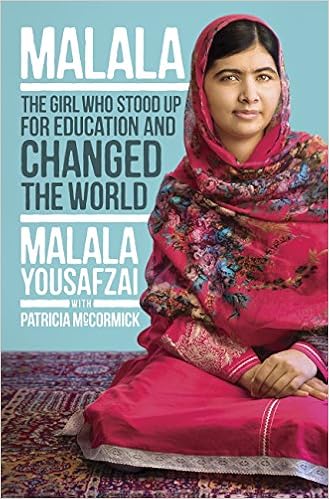
Malala’s is an inspirational story of courage, and how one person can change the world. In this trailer for the movie of her story to be released later this year, she says,
“One child, one teacher, one book and one pen can change the world.”
(Note: I haven’t seen the movie yet. I’d love to know if any readers have.)
In her speech accepting the Nobel Peace Prize in 2014, Malala says,
“I am just a committed and even stubborn person who wants to see every child getting quality education, who wants to see women having equal rights and who wants peace in every corner of the world.”
The Malala Fund, of which she and her father are co-founders and to which she donated her prize, “empowers girls through quality secondary education to achieve their potential and inspire positive change in their communities.”
She calls world leaders and people everywhere to take action and make education their top priority, for all the children of the world, not just their own children.
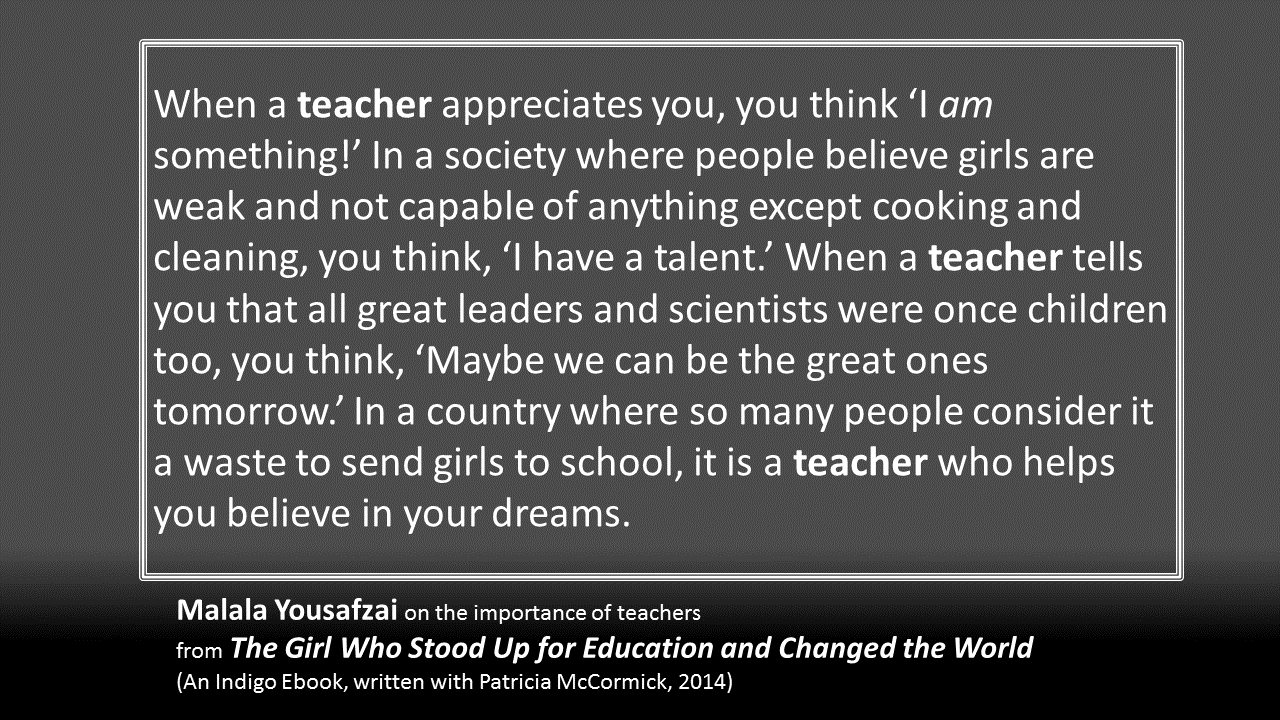
This is one of my favourite quotes from the book:
I think one of her most influential teachers must be her father.
Thank you for reading. I’m sure you have found Malala’s story just as inspirational as I have.
I appreciate your feedback. Please share your thoughts.
This week at the Carrot RanchCharli Mills is talking about the importance of belonging to and having the support of a community. Charli is talking about the supportive rural community where she lives and describes the way everyone rallies around to help in times of need. No asking is required. Everyone responds and pitches in, like spokes on a well-oiled wheel.
Charli also talks about the importance of the online community, reminding writers that spending time on social media is not a bad thing but an essential part of building community. For many of us introverted writers it is the easiest way of linking up with like-minded people. We gravitate like moths to the flame for our weekly meet-ups around the Carrot Ranch camp fire where Charli stokes the flames to inspire writers and build community.
Charli says that,
“Community is my foundation. All else pushes out from that hub like spokes on a wagon wheel.
Community is the hub; it’s our core. From the community, spokes of opportunity open up to reach the wheel that drives us in the writing market — readers.
An organic community is one that occurs naturally. It’s the kindred-spirits, the shared-values bloggers, the like-minded who gather to write, read and discuss. We might be from varied backgrounds, genres and experiences, but we find common ground in our process, ideas and words.”
People are social creatures, and that sense of belonging to a community, whether large or small, is something most desire. The type of community in which I have spent most of my life is the classroom community, typically an early childhood classroom. As with any other, it is essential that all members of a classroom community have a sense of belonging and feel valued and respected.
Creating a welcoming classroom with those essential ingredients: having a sense of belonging and feeling valued and respected were always high on my list of priorities as a teacher. I tend to mention this frequently and have done so here, here and here, to list just a few.
That these ingredients, along with the other essentials, learning and fun, were thoroughly mixed through everything I did is what characterised my classroom. In my classroom, the community knew that everyone, whether child, parent, support staff, or volunteer, was welcomed and valued for the contribution each made.
Routines and expectations enabled the classroom to function effectively and I tried to add a little fun to lighten up even the dullest of routines expected of us. One routine that will be familiar to many is the daily roll call. The teacher sits or stands at the front of the room calling, in a repetitive monotone and in alphabetical order, the name of each child who responds with a half-hearted, “Present, Miss”. Meanwhile the other children wriggle and fidget waiting for the tedium to finish.
But not in my classroom. Within a matter of days my children knew their position, and probably that of many others, in the roll. While I marked attendance on the roll each day as required, I didn’t call the children’s names. Each child in turn stood and greeted the class warmly, “Good morning, everyone!” The class and I responded by returning the greeting to the child. Everyone was involved all of the time, a community in action.
This five minutes of the day was always fun and filled with smiles and laughter. Some children jumped up with arms outstretched and called out loudly. Some popped up quickly and back down with a quick greeting. Some did a little dance and sang the greeting. Others greeted us with a new language they were learning, or their own first language.
When the children were confident with the order, we would sometimes do it in reverse order. This gave them a little more to think about, but it didn’t take them long to get the hang of it. The children who were usually last on the list enjoyed being first for a change.
When new children joined our class, their names weren’t always immediately added to the roll in their permanent alphabetical location as the rolls were printed fortnightly. This gave us a great opportunity to discuss where in the roll the child’s name would be. Sometimes we had to discuss more than the first letter in family names to determine the correct placement. Oftentimes this would be one of the first things children would insist upon. They wanted everyone to feel welcome and fit in to our warm classroom community.
Adding a little bit of fun to an otherwise tedious task had other benefits:
Building community,
Recognising individuals.
Being engaged,
An opportunity for activity
Learning alphabetical order
Developing memory
We could also have a bit of fun seeing how quickly we could line up in alphabetical order, each time improving on the last. It was a quick way of making sure everyone was there after an activity or break.
He waited quietly as yet another teacher heard his life story; a story without hope of redemption or the expectation of a happy ending. With each familiar incriminating snippet, “more schools than years”, “single parent”, “transient”, “neglect and abuse”, he’d instinctively glance towards the teacher. Instead of the usual furrowed brow and flat-mouthed grimace, he found sparkling eyes and a turned-up smile. He peered into the room. When the children saw him looking, they waved him in. He hesitated. Then the teacher said, “Welcome to our class, David. We’ve been waiting to meet you. Come and join us.”
Thank you for reading. I appreciate your feedback. Please share your thoughts.
In a previous guest post Pauline King, The Contented Crafter shared her Reflections on living a contented life, teaching and school. The richness of the discussion that ensued, including additional clarifying comments from Pauline, made for interesting reading. One thing I have found consistent throughout life is that everyone has an opinion about education and schools. However, there is great diversity in the opinions held. I love to hear them all for the opportunity they provide for clarifying my own thinking.
In this second guest post Pauline shares some of her wisdom about children and parenting. Pauline and I share much of the same philosophy and background knowledge and are aware that some statements may require clarification out of that shared context. We therefore welcome your responses and look forward to the discussion that these thoughts may instigate.
What do you think is the most important thing for parents to understand about their children? What advice would you love to give every new parent?
I seriously think every parent should read and study Khalil Gibran’s chapter about Children in his poem ‘The Prophet’. Children are not just short adults; they are not there to fulfil a parents dreams [though they may].
(Note: This is just a short extract of Gibran’s words about children. You can read them in full here)
Children need to be allowed to enjoy their childhood, let them play, let them dream, let them imagine. Very little ones learn through imitation and play so be careful what you model for them.
Send them into formal learning when they reach their seventh year. But let that learning proceed through imagination, through practical practise and first-hand experience. Let the education content grow and deepen as the child matures. Don’t just stuff stuff into their heads because you think it’s a good idea or something awful has happened in the world.
Don’t discuss adult issues with young children. Keep them safe and secure while their bodies and brains mature. Give them time to grow up.
Parents study your child and all other children. Raising children is not a competition. It is not a case of keeping your child safe and clean and out of your way while you are busy. Think more of ‘The Waltons’ and let each child have a task to perform to help the family. Teach them all how to help prepare meals, set tables, make beds and other chores that need to be done.
Start to think less about how clever [or not] your child is, but what talents and attributes your child is exhibiting. Don’t stream, let them all do everything and let everyone have something they are good at and see there is something that someone else is better at – because that is the way of the world and we all have contribution to make and our lessons to learn. Understand that just as your child is special, all children are special. Understanding this is the first step in making a wholesome community.
Don’t be fearful of your child hurting themselves. As a wise man recently said ‘the purpose of our lives is not to arrive safely at our death!’
My personal opinion is that the increase in a society that reveres ‘health and safety’ has been responsible for the rise of lost teenagers, those aimless, disinterested kids who suffer from low self-esteem, drinking and drug taking and mindless vandalism. Take your older kids camping, hiking, abseiling. Do it with them and have lots of fun. Give them physical challenges and the ability and skills to succeed in them. It really is true that the family who plays together, stays together.
But mostly love and respect your child. Keep them safe when they are small and slowly teach and release them as they grow older. Feed them good food, positivity and encouragement and watch them blossom into the people they were born to be.
Give them time and lots of your time. They don’t need stuff and they don’t need to keep up with the Joneses. They just need you.
In responding to a previous post you said that you could write a post-length comment about the wisdom of children. Could you share a few ideas about that here. We might come back to that longer post in the future, if you are willing.
Observe your children, listen to them, know they are their own little being and as such bring their own personality and gifts into the world. Watch how they approach life and activities and you will see they have come with a wisdom about themselves and their purpose that we, the adults, may not be privy to. This is the wisdom of childhood and we, as parents and teachers, are really beholden to respect this and not try to ‘change’ the child to suit us, society or anything else.
Most teachers know that most children reach similar developmental points at around the same time. There is a great wisdom in this and when we become aware of it, it can help us understand what they are ready for in terms of learning, activities and life in general.
All of this Norah, is part and parcel of the training of a Steiner Teacher – understanding child development is the open secret that drives the curriculum.
Wow! Thank you, Pauline, for sharing your wisdom. Kahlil Gibran’s The Prophet is one of my favourite books and his passage about children is never far from my mind. Your words in this post reflect very much the words and intent of his. You have given us much to think upon, and I appreciate it, as I’m sure the readers do too.
In a previous post I introduced you to Pauline King, The Contented Crafter. In comments on my blog, Pauline revealed that she was a teacher so passionate about education that she had attempted to establish an alternative school. I was excited to discover that we have these things in common and I immediately invited her to share some additional thoughts about children, learning, schools and education.
I am honoured that she has agreed, and delighted to welcome her here. In this post Pauline shares a little of her life journey, and her reflections on teaching and school. In a future post she will share her some of her wisdom about children and parenting.
Pauline, please tell us a little about yourself. What things are most important to you? What do you hope to achieve through blogging?
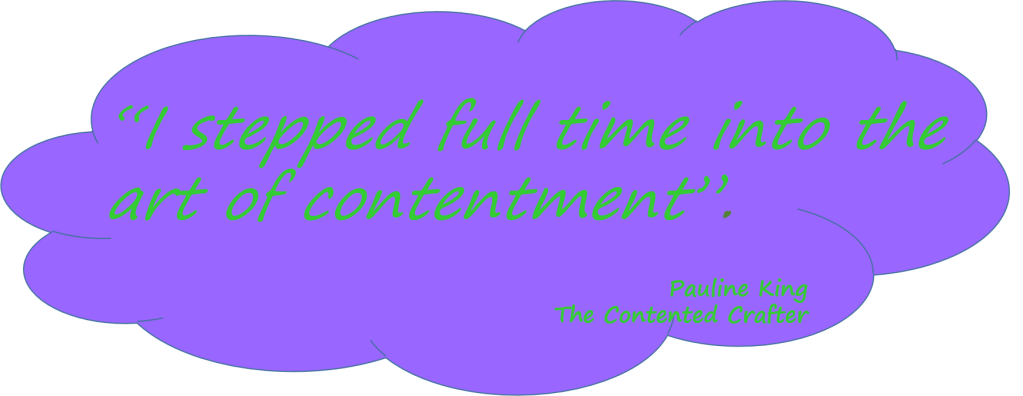
I was a Steiner School Teacher for some twenty years, here in NZ and in the UK briefly. It was a demanding vocation that taught me more than I ever imparted to the students in my care. I left teaching in 2003, spent a year or so recovering my health and eventually took up life coaching – a kind of a natural segue as I had spent a lot of my time in the school system mentoring young parents and teachers. I retired in 2014 and stepped full time into the art of contentment. It’s what I think I spent my life looking for and in these later years what I taught to the women who came to me for life guidance.
In my personal life I have always been a creator – hand work, interior design and decorating, gardening and various crafting and artistic outlets that changed over the years. I took up blogging almost three years ago simply to keep track of my creative work as I was notorious for making stuff, giving it away and not being able to remember what I made or the processes around it. I soon started using my blog as an on-line diary, documenting the things that amused or dismayed me along with whatever I was playing around with at the time. I don’t think I really expected anyone to read my blog and was quite surprised when I got comments and returned visitors and followers. In a surprisingly short time I discovered a new world that was peopled by like-minded souls and fun people and I kept blogging for the joy found in the community that built up around my little blog.
I live alone in a tiny house with a Maine Coon called Olando and a Shi-Tzu X named Siddhartha [Siddy for short].
I live simply and contentedly, paying close attention to my own personal development and take responsibility for the events in my life. I am not religious but view life and the planet from a spiritual outlook. I study quantum physics, enjoy nature and believe in spreading positivity wherever I can.
I don’t write about education in my blog – even though it is an area I am passionate [and opinionated] about – I simply don’t want it to impinge into the simple creative life I lead nowadays.
Pauline, you were a teacher? What was it that attracted you to teaching in the first place?
I always wanted to be a teacher, from a very young age. School was a safe place for me in a family that was damaged and dysfunctional, so I guess that may have been the genesis. However, I was not allowed to stay in school and was put to work in a factory at the age of 14 [my mother lied about my age]. When I gained my freedom I set about continuing my education and have kept on learning formally and informally ever since. I was 33, a wife and mother, before I finally achieved the goal I had as a child.
What things did you love about teaching?
I loved being in the classroom – working with the students and the Steiner curriculum [which is a wise and clever thing]. Later when I side-stepped into too much administration and other non-teaching roles I simply dried up and eventually became ill. That made me really conscious that it was the art of teaching that I really loved.
You said that you spent many years attempting to establish an alternative school for your eldest daughter. Why was this important to you? What was lacking in schools available to you? How would your school differ?
My feeble attempts to start a school were short lived, I did not go as far as you did as there was little support or enthusiasm for my initiative. Within two years I had discovered Steiner Education and serendipitously fallen head first into that with my two daughters. Both began to bloom and blossom in ways they never had in the state system they were so briefly in and I soon transferred my interest and passion to that form of education. I began an informal study under the auspices of a venerable old retired teacher and soon went on to study full time. I think I was incredibly fortunate for throughout this time I was mentored and supported by several practising teachers, and one wonderful head lecturer who went out of his way to keep pouring his wisdom into my listening ears.
How wonderful to have the support and encouragement of a community so passionate about children and education. Do you have anything else to add?
Only that, from this vantage point I find I have become a person who would like schools scrapped and to see education in the true meaning of the word be given back to parents and the community. My new mantra is ‘It takes a village to raise a child – and educate one too.’
I totally agree with your new mantra, Pauline! Thank you for your openness in responding to my questions. I could hear the passion in your words as you answered them. I appreciate the time you took out of your contented creative schedule to share your thoughts with us. I think there are many of us who could do with some contentment mentoring. I look forward to welcoming you back next week to share in your wisdom about children and parenting. I’d also love to know more about the Steiner curriculum. Another conversation …
Addendum: Since this post was published, in an attempt to add clarity to her statement referring to the scrapping of schools, Pauline has expressed some of her reasons for wishing to see changes to schools and the way children are educated. She has done so in a response to an observation made and query posed by Anne Goodwin which you can read here, and a little more clarification here. I apologise, Pauline, if the inclusion of that statement misrepresented your position and caused you concern. It made perfect sense to me! The differences I see between education and schooling feature regularly in my posts.
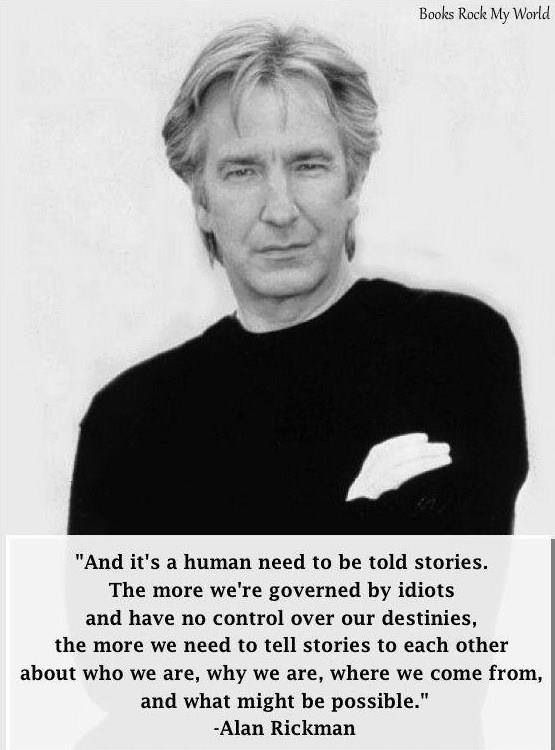
In stories we find our hopes, our dreams, our inspirations, and our fears. In stories our imaginations take flight as we contemplate ideas never before encountered. Stories help us figure out the world and our place in it. We come to understand the stories of others and develop compassion and empathy. We find ways of confronting our fears in safety. We escape the ordinariness of the everyday with dreams as much of the impossible as the possible.
Stories can be shared orally, in print, or through a variety of media. All are valid and valuable sources, but sharing the stories presented in books is especially important to the development of young children, and anything that can put books into the hearts and hands of children is to be encouraged. The ability to read is empowering and the love of books is one of the greatest gifts a parent can give a child. Not only can reading change the life of an individual, it can improve the lives of many through education.
“If we cannot change the world (and I suspect we can’t), we can provide all children the sorts of environments all children deserve in their school day—environments of kindness, compassion, safety, and challenges.”
I think Paul meant that we can’t change the whole world, that would be a rather daunting task, but the provisions mentioned are vital and change the lives of individuals in important ways, just as reading does. I like to think of changing the world with one thought, one word, one action at a time, or as Mem Fox says, also quoted in my post The magic effect – why children need books,
“. . . let’s get on and change the world, one page at a time.”
“I believe that every child’s Bill of Rights should be indelibly inked with the right to have picture books read to him/her and to own their very own books. “
I agree with her of course and consider her project to be very worthwhile. It reminds me of another very worthwhile program mentioned by Caroline Lodge, who blogs at Book Word, about providing books to prisoners. Both of these projects have the ability to change lives, to empower people and by so doing, change the world, not only their world.
As well as changing lives, stories influence our attitudes. If they encourage feelings of kindness and compassion, as Paul Thomas says, that may be a good thing. But what of the stereotypes that seem so pervasive? How many stories have you read about princesses in dire circumstances waiting to be rescued by handsome princes or knights in shining armour who must slay a dragon in doing so? What effect do these stories have upon the developing self-image of a young girl or boy? It is important to teach children to think critically about the stories they read, and about the portrayal of characters and their attitudes, especially stereotypes.
But that is in reading stories. What of writing stories? Writing stories, whether factual accounts or imagined events, is also empowering. In writing stories children, and adults, can express and explore their hopes, dreams, inspirations, and fears. In writing stories their imaginations take flight as they contemplate ideas never before encountered. Writing stories helps us figure out the world and our place in it.
Contentment is something that I too wonder about, and am especially perplexed by the need to push myself into new territory and new learning when others are content to sit back and watch the clouds pass by. Why are there so many things I feel I must do? Pretty soon I’ll be gone and it won’t matter a hoot. I have sometimes thought that if I were to write a fictionalised account of my life I would begin with the words “She was an unremarkable woman”.
Once upon a time there was an ordinary girl who lived an ordinary life with her ordinary family. She did all the ordinary things that others did and dreamed of nothing else. Each day followed one after the other with little difference. There was no magic. There were no fairies, and there were no dragons to slay. She just did what she had to do and took little notice of others doing the same. Strangely enough she was content for, from somewhere deep within, she knew that this ordinary life was but preparation for the extraordinariness of the next.
Thank you for reading. I appreciate your feedback. Please share your thoughts.




 In last week’s post I shared information about



![By UnknownMarie-Lan Nguyen (Own work) [CC BY 3.0 (http://creativecommons.org/licenses/by/3.0)], via Wikimedia Commons](https://norahcolvin.com/wp-content/uploads/2016/03/330px-homeros_caetani_louvre_ma440_n2-must-be-attributed.jpg?w=330&h=480)








 (Note: This is just a short extract of Gibran’s words about children. You can read them in full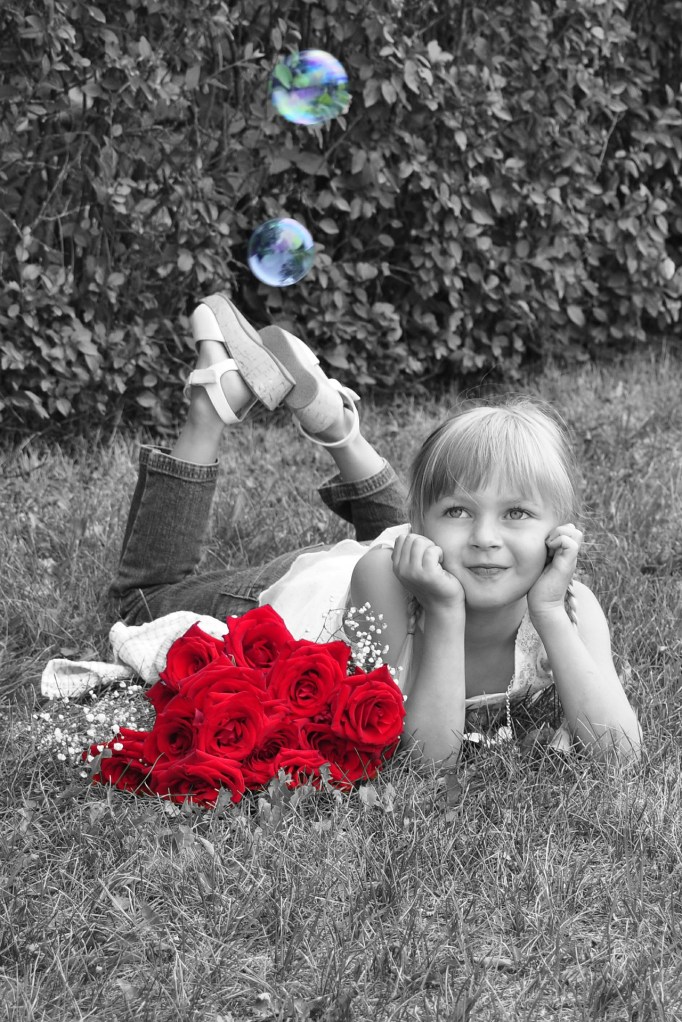










 Norah Colvin