Live Love Laugh Learn … Create the possibilities

Category: Traditional schooling

  • School Days, Reminiscences of D. Avery

    School Days, Reminiscences of D. Avery

    Welcome to the School Days, Reminiscences series in which my champion bloggers and authors share reminiscences of their school days. It’s my small way of thanking them for their support and of letting you know about their services and publications.

    This week, I am delighted to introduce D. Avery, poet, writer, blogger. I met D. when she rode up to the Carrot Ranch, dismounted and took a lead role around the campfire with her humorous tales and witty conversation. I also try not to miss her posts on ShiftnShake where she shares poetry, flash fiction and short stories sprinkled with philosophical pearls of wisdom and creates characters as like and unlike any you may chance to meet. Whatever the topic, there’s sure to be beauty in her words, wisdom in her ideas and smiles to lighten your day.

    Books by D. Avery

    I have read and enjoyed all three of D.’s books and was both honoured and delighted when she quoted me on the back cover of After Ever. This is what I wrote:

    An interesting and eclectic collection of short stories and even shorter flash stories, this collection has something for everyone. Whether the situation be mundane or mystical, tragic or cheerful, D. Avery records events matter-of-factly, telling how it is or was, and leaves it to the reader to choose how to respond. After Ever is great for reading in bites or as an entire feast.

    I thought I’d reviewed all three of D.’s books on Amazon, but all I could find was my review of For the Girls:

    After receiving her own pre-Christmas un-gift of a cancer diagnosis, D. Avery unwrapped how the diagnosis affected her personal journey and view on life. Written from her own need and for others facing similar situations, D. Avery explores through poetry, the emotions that fluctuate in intensity from the moment of diagnosis until, hopefully, remission is declared. Anyone who has endured the pain of diagnosis or suffered alongside another who has, will find something with which to identify. None of us are ever free of the fear, but hope has a stronger pull. These poems are food for the soul.

    Before we begin the interview, I’ll allow D. Avery to tell you a little of herself:
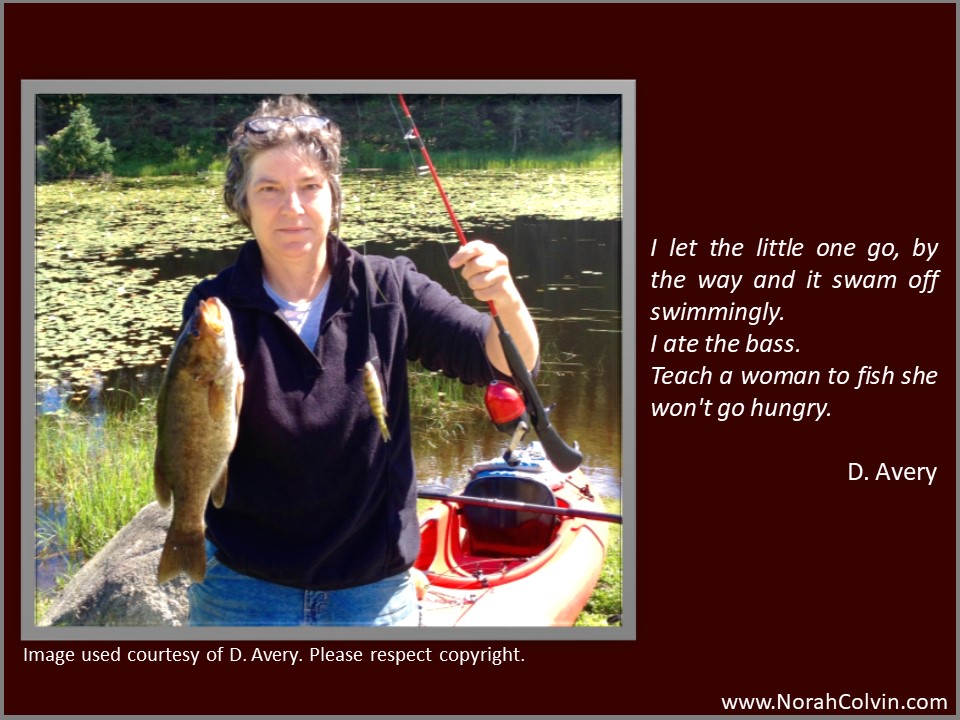
    D. Avery, writer, fisherwoman

    Born and raised in rural New England, D. Avery is never quite out of the woods, though she has been in other fields. She has been a veggie vendor, landscape gardener, and a teacher.

    Cursed with a compulsion for wordplay and a growing addiction to writing, D. Avery blogs at Shiftnshake, where she pours flash fiction and shots of poetry for online sampling. D. Avery tweets ‪‪@daveryshiftn‪‪ and is a Rough Writer at Carrot Ranch. She is the author of two books of poems, Chicken Shift and For the Girls. Her latest release,  After Ever; Little Stories for Grown Children,  is a collection of flash and short fiction.

    Welcome, D. Now let’s talk school. First of all, could you tell us where you attended school?

    I attended public school, my first three years at a K-12 school in Skagway, Alaska, then third through sixth grade in a four room graded school in Vermont, before attending a 7-12 regional school that serves a number of small towns.

    What is the highest level of education you achieved? What work or profession did you choose after school and was there anything in school that influenced this choice?

    I experienced a year of small private liberal arts college in Ohio and that was enough of that. After a year off from school I completed a two-year program at the Stockbridge School of Agriculture at UMass Amherst, earning an Associate’s Degree in Science, Commercial Floriculture. This course of study had practical and immediate application for me, and served me well. I spent the off season from greenhouse work and landscape gardening subbing and volunteering in the elementary school and after a few years I decided to answer the call and get my teaching certificate. I got my Masters of Education at Antioch New England Graduate School and switched careers, becoming a fourth grade classroom teacher and more recently a sixth grade math teacher.

    What is your earliest memory of school?

    I have lots of early memories. I do think back on how cool it was to be in a small K-12 school that was the center of a small (and isolated) community. The entire school, K-12, took part in a Christmas pageant every year for the town to see. Likewise Field Day had everyone involved and the high school kids might be on the team of a kindergartner or would somehow be helping out.

    What memories do you have of learning to read?

    I was reading before attending school, something I picked up at home. We were read to, and there was plenty of print around. One day while looking through a comic I realized I knew the words. It was pretty exciting. I went through the stack of comics and numerous picture books. By second grade I had read all my brothers’ Hardy Boys books. And we had quite a stack of Classics Illustrated, classic novels condensed into comic book form; I started in on those at this time. When we moved back to VT I read every Vermont heroes and histories books on those dusty shelves of that old graded school. There was a collection of William O’Steele books too, historical fiction for kids, pioneers headed west. Of course there were the Little House books. Then they instituted the Dorothy Canfield Fisher program and our school library got built up with more modern young adult novels. I still enjoyed the historical fiction the most though.

    What memories do you have of learning to write?
    D. Avery was always confident as a writer

    Norah, you might remember when I gave some detail about being taught to form my letters in school. It was kind of fun so here’s a LINK. But school did get better after that. My second grade teacher did a great job of integrating reading and writing. I became a writer the day that my writing was hanging in the hall and some of those high school kids were reading it and even complimented me for it. Throughout my school years some of my writing got some attention and publication. I had encouraging teachers and still remember the Poets in Schools program. I was always fairly confident as a writer, using it to baffle them with bullshit if I couldn’t dazzle them with brilliance.

    What do you remember about math classes?

    D. Avery: maths should be accessible and meaningful

    I could neither baffle nor dazzle with math. Math was never taught very well, I realize now, and I did not like it. It was a lot of rote drill-and-kill work.

    Fortunately, my great grandmother got me straightened out with times tables in one briefing so that helped.

    I managed, barely, but never “got” math until a course at ANE Graduate School. Since then I have taken a number of courses. Now I truly enjoy math and have enjoyed demystifying the subject for students third through sixth grades.

    I don’t remember ever having fun in math class, but my own math students have had fun. Math students need to see patterns and to make connections, to keep math accessible and meaningful.

    I also realize that the best math practice I ever had, and what really built number sense, was not from school at any level but from my summer work as a teenager on a truck farm where there was no cash register or calculator. My mental math got quite good. Working there and earlier helping my dad out with different projects also built my math skills.

    What was your favourite subject?
    D. Avery: it's the people who make a subject more interesting and more accessible

    I have always enjoyed history and social studies, and those were probably my favorite subjects in high school. But I also enjoyed Latin and English (reading and writing). I also was very fortunate to have had some remarkable people as my teachers. That’s what one remembers as much as anything; it’s the people who make a subject more interesting and accessible.

    What did you like best about school? 
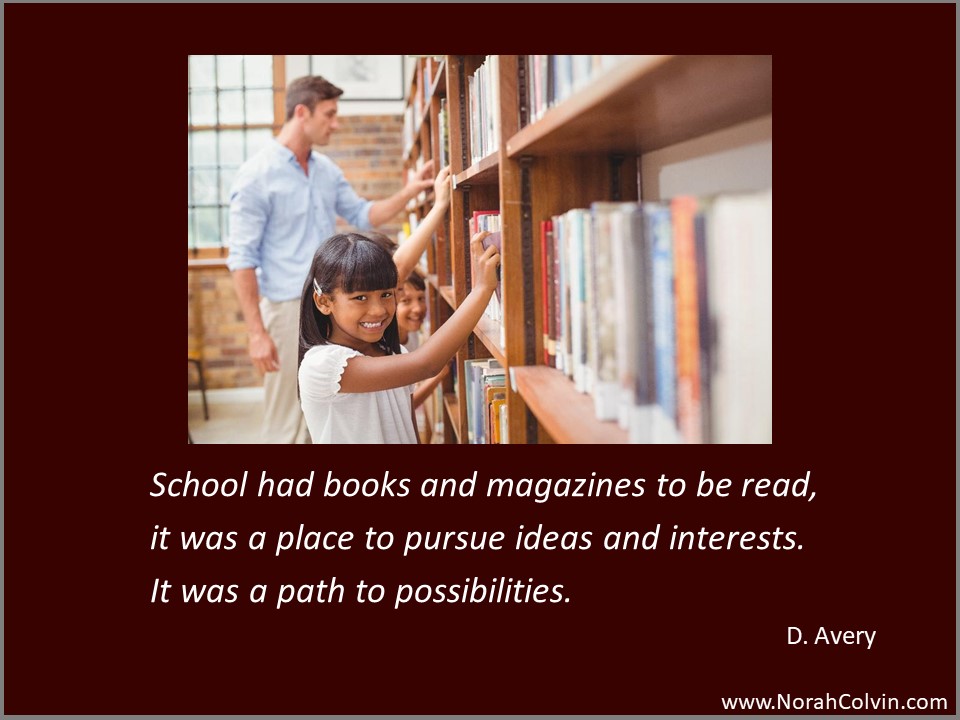
    D. Avery, what did you like best about school

    I liked learning. I found most of my subjects interesting. There were some excellent teachers and also an excellent library. School had books and magazines to be read, it was a place to pursue ideas and interests. It was a path to possibilities. And school was where my audience was, it’s where I performed and entertained. But I did manage to learn in spite of myself.

    What did you like least about school?

    I liked being with friends at school, but people are also what I liked least in school. Kids are always having to navigate the social waters and to find their own balance between conformity and individuality. It’s stressful. I was always grateful and glad to be home at the end of the day, where I could have quiet alone time in the woods.

    I feel bad for the kids today who, because of their devices, are never able to be alone and to decompress. I feel bad for people who do not have the outside time and space. I know it was vital for my time in school to have good work and play experiences out of school and time to get re-centered. People now are never alone and never lonelier. I still require lots of alone time.

    How do you think schools have changed since your school days?
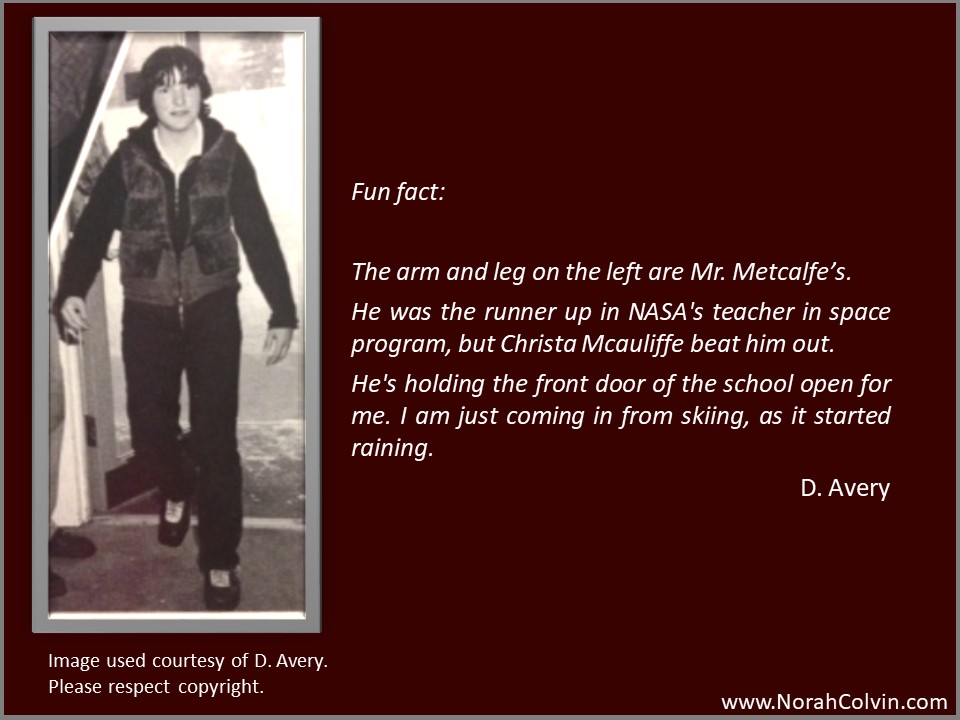
    School girl D. Avery coming in from skiing

    With the pervasiveness of computers and social media parents have an extra responsibility, an extra worry now, and most don’t fully comprehend the depths of that. Technology has made teaching and learning more difficult; it has distanced people from nature, from each other, from generational wisdom- from their selves. “Knowledge” at our fingertips is not lasting; internet access in many ways erodes curiosity and problem solving skills, critical reading and thinking skills, and the stamina required for meaningful learning.

    I know arguments could be made in defence of technology, but I rarely see a healthy balance. Gaming addictions, cyber-bullying, plagiarism and general distractions are some of the issues that impact teaching and learning nowadays. That maybe didn’t really speak about schools, but these phones are a huge change in our society and so our schools.

    What do you think schools (in general) do well?

    Schools have changed, but they are still staffed with people, most often good caring people who are educated in their subject area and also in pedagogy and in best practices based on research. Educators take into account how students best learn, and how to engage them in that enterprise.

    More than ever before, schools look out for and provide services for a student’s mental health, their social/emotional wellbeing. A person with trauma or health issues is not the best learner, and schools are learning to take a more holistic approach to all students.

    How do you think schools could be improved?
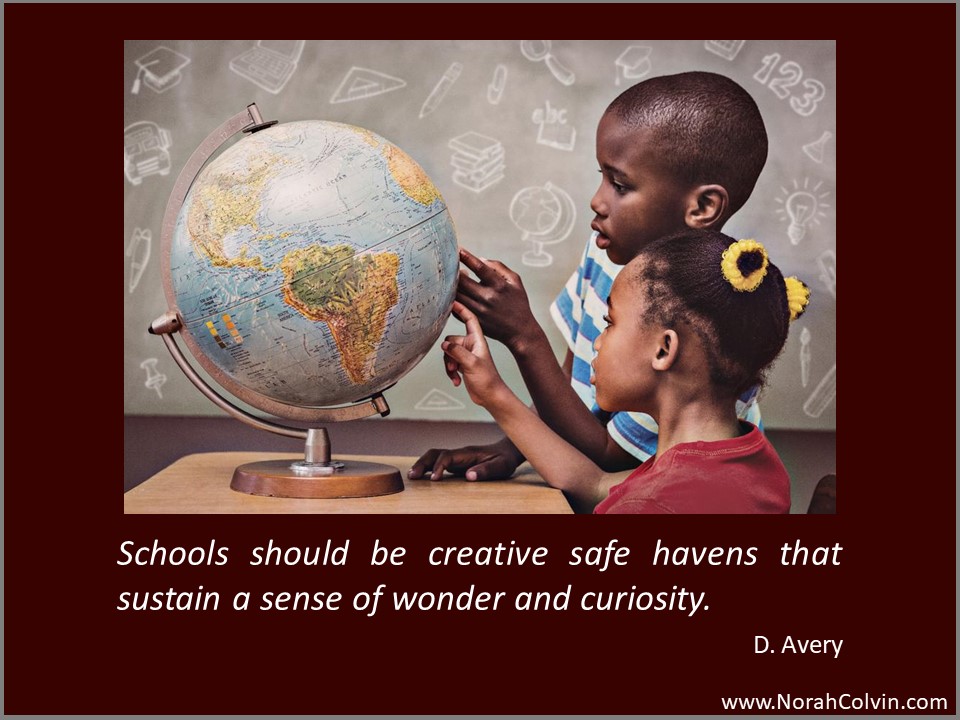
    D. Avery "Schools should be creative safe havens"

    Our schools don’t always seem to measure up, but what is the measure? Not everyone is measuring up to standardized tests, but if we really want to close achievement gaps, if we really want to leave no children behind then we need to reform much more than our schools.

    While I think we should first focus on out of school factors, within school we have to do more than give lip service to Gardner’s Multiple Intelligences. Which means schools need to not succumb to the testing culture; schools need to be less programmatic and prescriptive. Curricula should encourage empathy and build flexible and adaptive skills and strategies required for individuals to pursue their own interests and inclinations. Schools should be creative safe havens that sustain a sense of wonder and curiosity.
    thank you for your participation

    D., thank you for sharing your reminiscences of school and thoughts about education in general. I would have liked to take your responses to the last three questions and make them all quotes. You express it all so perfectly.  It’s been a delight to have you here. I learned so much from and about you. I enjoyed learning about your own school days and totally agree with what you have to say about education in general.


    Find out more about D. Avery

    from her website ShiftnShake

    Connect with her on social media

    Twitter: @daveryshiftn

    Purchase your own copy of her books from

    Amazon

    If you missed previous reminiscences, check them out here:

    Charli Mills

    Sally Cronin

    Anne Goodwin

    Geoff Le Pard

    Hugh Roberts

    Debby Gies

    Pauline King

    JulesPaige

    Look for future interviews in this series to be posted on Sunday evenings AEST.

    Coming soon:

    Christy Birmingham

    Miriam Hurdle

    Susan Scott

    with more to follow.

    Thank you blog post

    Thank you for reading. I appreciate your comments. Please share your thoughts.

  • School Days, Reminiscences of Pauline King

    School Days, Reminiscences of Pauline King

    Welcome to the School Days, Reminiscences series in which my champion bloggers and authors share reminiscences of their school days. It’s my small way of thanking them for their support and of letting you know about their services and publications.

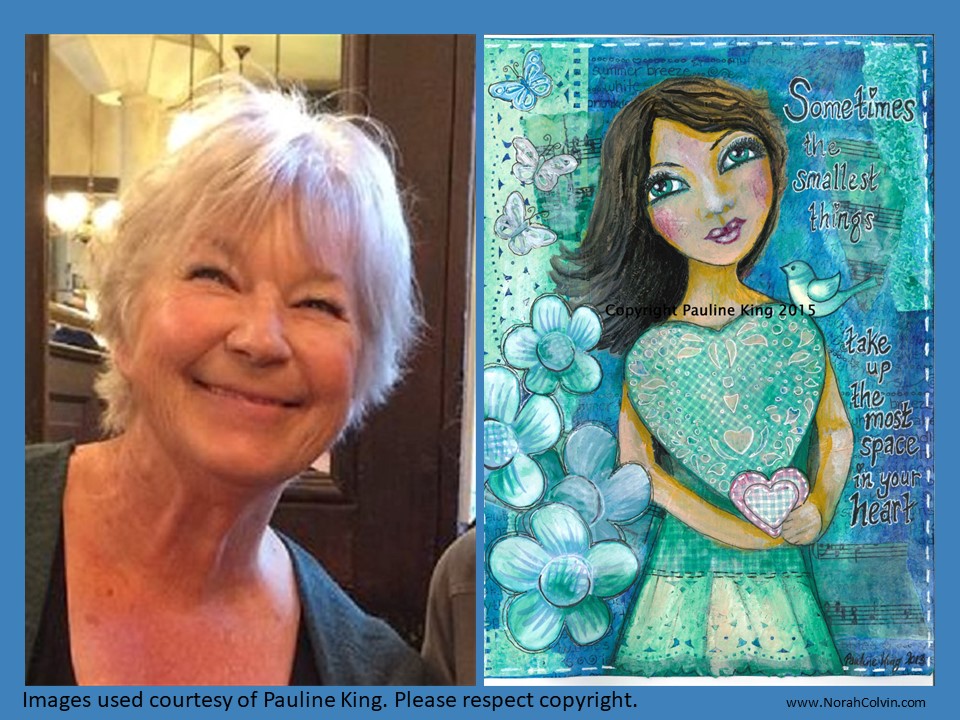
    This week, I am pleased to introduce Pauline King, The Contented Crafter. Pauline and I have been online friends for a long time. I can’t quite remember where we met, but I think it may have been through Geoff Le Pard.

    Pauline and I clicked straight away as we have a lot in common and share many similar views about education. At one time, each of us even contemplated starting our own school.

    I wish I’d known Pauline and had the opportunity of working alongside and learning from her while I was still working in the classroom. Although Pauline says that she has left that part (teaching) of her life behind, it doesn’t stop her sharing the value of her experience and words of wisdom when prompted. We shared so many in-depth conversations in response to posts, that I decided to give more space to her views in posts of their own. Follow these links to share in Pauline’s wisdom.

    Which school? I found one!

    Reflections on living a contented life, teaching and school

    On children and parents —more from the Contented Crafter

    Pauline King the Contented Crafter

    Before we begin the interview, I’ll let Pauline tell you a little about herself.

    I’ve had many incarnations as wife, mother, student, teacher, teacher trainer and mentor, curriculum writer and advisor, community hub developer, new worker trainer, and [whew!] life coach.  In between I painted, crafted, hand worked, gardened and generally tried to create beauty around me where ever I went.  Oh, I forgot to mention ‘world traveller’!

    These days I’m [mostly] a very contented crafter and pursuer of serenity.  And of course, I live with Orlando, a now elderly Maine Coon cat of great distinction and forbearance and a most delightfully joyful pup who goes by the name of Sid-Arthur [yes, a play on Siddhartha for those of you who picked it up].  They feature prominently throughout this blog.

    I’m retired now and happily spend my days doing whatever it pleases me to do.  Sometimes, in between my crafting projects, I still coach now and again, gratis, as a thank you for this blessed life I’ve been given.

    Welcome, Pauline. Now let’s talk school.

     First, could you tell us where you attended school?

    Porirua, then a village, now a city.  In the Wellington area.  NZ

    Did you attend a government, private or independent school?

    State school

    What is the highest level of education you achieved?

    Originally nothing. I was pulled from school by my mother before I turned 15.  I later gained School Cert and UE via correspondence as a young adult and at the age of 33, I trained as a Waldorf teacher.

    What work or profession did you choose after school and was there anything in school that influenced this choice? 

    It seems I always wanted to be a teacher, but the circumstances of my life dictated otherwise.  In my 30s I was finally enabled to follow that dream through the initial support of friends  buoying up my low confidence and a series of fortuitous events that allowed me to enter the Waldorf training despite not having a state teacher training  which was then a requirement of any Waldorf trainee teacher.  (It was here I heard for the first time that I was seen as a graduate of the University of Life — a designation that delighted me.)  I believe that meeting kindness and being encouraged in my early school years ignited the wish to be a teacher.

    What is your earliest memory of school?

    The first day of school, I was 5 years old and terrified.  My mother pushed me into the room and shut the door on me and I was crying as the teacher came to get me.  But the thing that caught my eye was the book display.  You know those shelves that hold books with the full cover showing. There were so many books and they all looked so beautiful and enticing.  I stopped crying and the teacher let me stay there looking at the books.  I still remember the first book I looked at, ‘Orlando the Marmalade Cat’.  I don’t remember anything else, but it was clearly a very important moment in my life.  That teacher went on to become a champion of mine and I never forgot her many kindnesses and through her my love of reading flowered.

    What memories do you have of learning to read and write?

    I don’t remember learning to read. It came very easily.  Writing too.  At age 10 my essays were entered into inter-school competitions by the headmaster.  Later he asked me to not write fantasy, but to write about ‘what you know, your life’.  That was the end of my writing career.  🙂

    What do you remember about math classes?

    I have no recall of maths classes.

    What was your favourite subject?

    I loved all the humanities classes – reading, writing, history, geography, social studies.  I loved music too, until I was pulled from a combined class practising choral singing and told to stand at the front of the room and listen as I was singing off key.  That was the end of my musical career too.  I never sang in front of anyone except for my babies for many years.

    What did you like best about school?

    Pauline King the Contented Crafter tells what she liked best about school

    For me in those first years, school was a safe place to be and I was fortunate to have in the early years women who took an interest in my welfare and some who even tried to help intervene in my home life. Their kindness made a huge impression on me and was probably partially responsible for the longing I felt to become a teacher.  They also had made me feel so safe that when the harsher teachers entered my world and humiliation and failure became the norm, I still liked school.  It was better than home, I guess.  I know I was, from a very young age, gathering information and evidence about what made a good teacher and what made a bad teacher.  It would all eventually come in handy when I parented and later became an actual teacher.

    How do you think schools have changed since your school days?

    My initial experience of state education is my own and the first two years of my children’s education.  (In the final six years of my working life I came up against the failures of the state system when I developed programmes for youth at risk in job training.)

    When I had children, I looked for something else outside the state system for them but had the resistance of my husband to work through.  Later after my daughters both had bad experiences with teachers he agreed, and we transferred them to the local Steiner School.  There I watched my children bloom and blossom and there I too found my place. It’s a wonderful thing when you find your tribe and I had finally found mine.

    What do you think schools (in general) do well?

    I think in general schools provide an adequate education for students who have an academic leaning.  But, as you know Norah, I believe that true education is sadly lacking.  It seems to me the role of education is to awaken the mind, to develop the skill of learning, to prepare people for a life of learning and enough of an interest in the world to want to learn about it.

    The reality is we spend all our lives learning, yet so many think they go to school to learn the skills needed to get a job.  I don’t know how many times I’ve heard a young person (or even a parent) complain that reading a certain book will be of no use to them after school and science or maths adds nothing to the skill-set they need for getting a job.

    It seems nobody talks to them about the joy of learning, of widening horizons, of deepening understanding or even of exercising their thinking capacities and developing their brains.  I’ve met many 15- and 16-years olds who can’t write their own addresses down.  They have no self-esteem, are angry and confused and turned off from society.  They don’t have the skills to hold down any kind of job because they also haven’t learnt about taking personal responsibility at school or at home.

    How do you think schools could be improved?

    Pauline King the Contented Crafter tells how schools could be improved

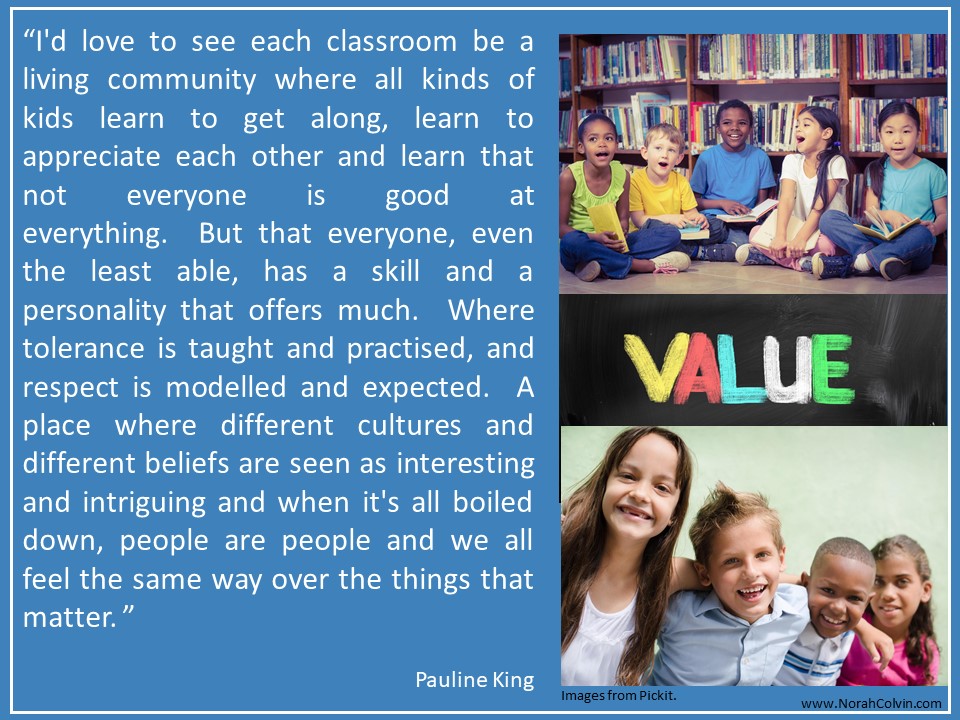
    I’d love to see a return to a balanced education that includes academia and the arts and life skills.  I’d love to see each classroom be a living community where all kinds of kids learn to get along, learn to appreciate each other and learn that not everyone is good at everything.  But that everyone, even the least able, has a skill and a personality that offers much.  Where tolerance is taught and practised, and respect is modelled and expected.  A place where different cultures and different beliefs are seen as interesting and intriguing and when it’s all boiled down, people are people and we all feel the same way over the things that matter.

    I’d like to see geography and social studies and all kinds of real arts and crafts come back to life in the classroom, I’d like to see kids singing and dancing and playing together in between learning the Three R’s.  I’d like to see the slow expansion of a planned curriculum that ensures a deepening understanding of the natural sciences — again attached to the developmental stages and understanding of the students.  Never bring hard facts too soon to young people — they kill childhood!

    I’d like everyone to understand that we live in a world that is changing so quickly that it is highly likely the jobs their kids will do haven’t yet been invented.  The only way to ensure their children will succeed as adults is that they will have a healthily developed sense of themselves, their interests and their abilities and be able to think, to assess, to understand the needs of the world and to have the entrepreneurial spirit to meet them.  It’s less about passing exams and more about an ability to learn; less about gaining the skills for a job, more about gaining an ability to learn new skills.

    Thank you for inviting me to join with your esteemed guests Norah, it is very kind of you.

    thank you for your participation

    Thank you for sharing your reminiscences of school and thoughts about education in general, Pauline. As always, it’s a pleasure to discuss education with you and, while it was great to hear of your early experiences and the influence of kind teachers, I am in total agreement with you about how schools could be improved. If only we could get those who make the decisions to listen to and enact your wisdom.


    Find out more about Pauline King

    on her website: The Contented Crafter

    Connect with her on social media

    Facebook: https://www.facebook.com/paulinekingnz

    Twitter: https://twitter.com/contentedP

    Browse her gift shop to purchase your own special piece of Pauline’s art or craft.

    If you missed previous reminiscences, check them out here:

    Charli Mills

    Sally Cronin

    Anne Goodwin

    Geoff Le Pard

    Hugh Roberts

    Debby Gies

    Look for future interviews in this series to be posted on Sunday evenings AEST.

    Coming soon:

    Jules Paige

    D. Avery

    Christy Birmingham

    Miriam Hurdle

    Susan Scott

    with more to follow.

    Thank you blog post

    Thank you for reading. I appreciate your comments. Please share your thoughts.


  • Why Kindergartners Must Learn Technology – readilearn

    Why Kindergartners Must Learn Technology – readilearn

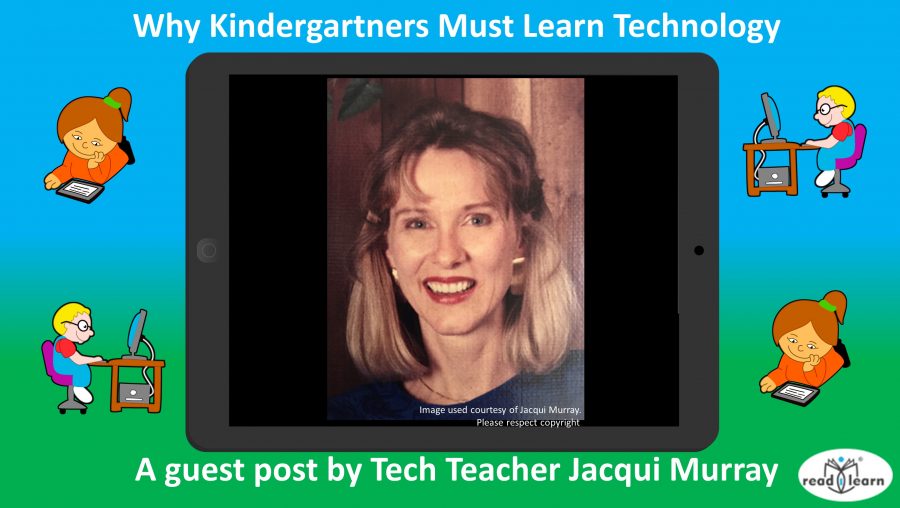
    Today I am delighted to introduce you to Jacqui Murray, the Tech Teacher, who is able to answer all your questions about using technology in schools.

    Jacqui’s blog Ask a Tech Teacher is very informative. It is packed with helpful advice for both teachers and parents on children’s use of technology and the suitability of tools and software for use in different situations and with different age groups, especially in the classroom. If I need to know anything about technology, Jacqui’s blog is an excellent resource.

    As Jacqui is often asked questions about teaching Kindergartners to Tech, a topic that is dear to her, this is the topic of discussion in this post. Please feel free to ask Jacqui any additional questions you may have in the comment section at the end!

    Note: Jacqui is based in the US and the kindergarteners she refers to are 5-to-6-year-olds.

     Welcome to readilearn, Jacqui. Over to you.

    When I started teaching technology almost twenty years ago, I taught K-8, three classes in each grade every week. I was buried under lesson plans, grades, and parent meetings. I remember suggesting to my principal that he ease my schedule by eliminating tech for kindergartners. They wouldn’t miss anything if I started them in first or second grade.

    And back then, that was true.

    Even a decade ago, technology was an extra class in student schedules where now, it is a life skill. Today, my teacher colleagues tell me kids arrive at school already comfortable in the use of iPads and smartphones, doing movements like swipe, squeeze, and flick better than most adults. Many teachers, even administrators, use that as the reason why technology training isn’t needed for them, arguing, “They’re digital natives.”

    Continue reading: Why Kindergartners Must Learn Technology – Readilearn

  • Keep the teacher fires burning

    Keep the teacher fires burning

    Teacher burnout is a huge problem. Fading are the days of veteran teachers staying in the job and sharing the wisdom of their experience with the younger generation of teachers. Many articles tell of teachers leaving the profession after five or fewer years.

    Teachers start out with fire in their hearts, with an ambition to change lives and improve outcomes for all the children in their care. Many leave after just a few years when that fire has not only burnt out but has burnt them out too.

    For others, who contemplate no alternative, the fire smoulders for years until they become cynical with a system that is ever-changing but rarely improving, and expectations that increase exponentially with little recognition of their efforts or the value they add to lives or society.

    I recently listened to a book on the topic written by a passionate educator whose fire was extinguished by overwhelming expectations and an inability to reconcile unrealistic demands with a desire to teach children.

    In a job interview, when asked what she taught, it was her response ‘I teach children’ that landed her the position. As the years passed, her employer’s focus turned from teaching children to teaching content and collecting data. As for many, her challenge was to continue educating the whole child while fulfilling the requirements of her employer. It’s a challenge that defeats many.

    Teacher: One woman’s struggle to keep the heart in teaching by Gabrielle J. Stroud is a personal record of one’s teacher’s journey and how she faced the challenge. But it is more than that. It is the story of a journey travelled by many teachers. The names and places may change, but the story stays the same.

    It is a book I wish I’d written. I laughed with Gabbie and cried with Gabbie. I’d walked in her shoes and she in mine. While our times and schools were different, our responses to the changing education landscape were very similar. She wrote from my heart as much as from hers.

    If something doesn’t happen soon to support teachers, there’ll be no heart left in education and it will be a wasteland of useless data, lost potential and unhappy futures. Of course, I’ve written about that before, describing differences between education and schooling in a poem I called Education is.

    If you are interested in reading more about teacher burnout and considering how teachers may be better supported, here are some articles to get you started:

    The Causes of Teacher Burnout: What Everyone Needs to Know on The Chalk Blog. (US)

    Burned out: why are so many teachers quitting or off sick with stress? In The Guardian. (UK)

    Stressed-out teacher? Try these self-care tips on ABC Life. (Australia)

    The hardest, most underestimated part of a teacher’s job on News.com.au. (Australia)

    Heartbreak becomes burnout for teachers when work is turbulent on The Conversation. (Australia)

    The Truth About Teacher Burnout: It’s Work Induced Depression on The American Psychology Association’s Psych Learning Curve. (US)

    Teacher Workload in the Spotlight from my own Queensland College of Teachers. (Australia)

    These are but a few of the many describing conditions that contribute to teacher burnout. However, for a truly entertaining but heartbreaking read that provides an accurate understanding of what happens to the heart of many a passionate teacher, you can’t go past Teacher: One woman’s struggle to keep the heart in teaching by Gabrielle J. Stroud. Gabbie summed it all up sadly by saying that she didn’t leave teaching, teaching left her.

    Carrot Ranch flash fiction challenge - fire

    It’s about the teacher fire that I’ve decided to respond to the flash fiction prompt set by Charli Mills this week at the Carrot Ranch. Charli challenged writers to In 99 words (no more, no less) write a story about fire. It can be a flame that burns or a light that inspires. Follow the flames and go where the prompt leads!

    99 no more no less fire words

    The heart of a teacher

    “It’s storytime, children.”

    They gathered at her feet, bright-eyed, transfixed.

    Jane read, instructed and encouraged. They never tired.

    Later, all snuggled up in bed, Mum asked, “What will you be when you grow up?”

    “A teacher.”


    “Storytime, children.”

    They gathered at her feet, bright-eyed, hearts open, minds buzzing.

    Miss Jane read. They hung on every word, contemplating obstacles and possible resolutions, following the heroes’ journey into the cave and out.


    “Ple-ease!”

    “No time for stories. It’s test time.”

    They slumped at desks, eyes glazed, minds dulled, hearts heavy.

    The cave was cold and dark. Were they ever coming out?

    Thank you blog post

    Thank you for reading. I appreciate your feedback. Please share your thoughts.


  • School Days, Reminiscences of Hugh Roberts

    School Days, Reminiscences of Hugh Roberts

    Welcome to the School Days, Reminiscences series in which my champion bloggers and authors share reminiscences of their school days. It’s my small way of thanking them for their support and of letting you know about their services and publications.

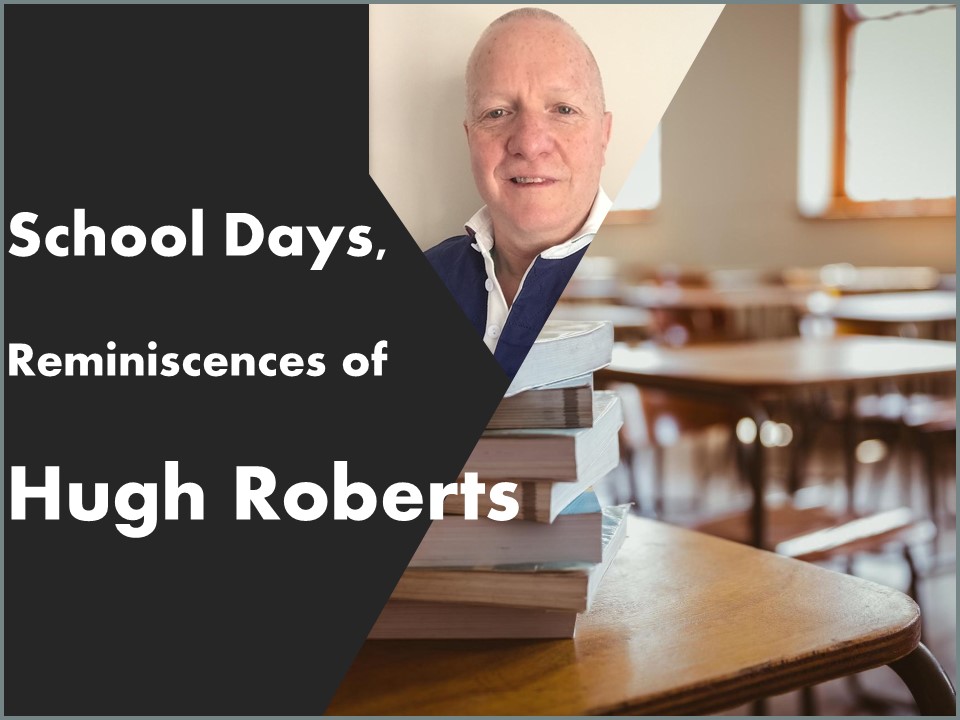
    This week, I am pleased to introduce Hugh Roberts, author, blogger and WordPress Whiz who generously shares his knowledge and advice to assist others along their blogging journey.

    I’m not quite sure when or how Hugh and I met, but it was probably over at Geoff Le Pard’s blog some years ago. They are both now involved in the organisation of the Annual Bloggers’ Bash celebrating its fifth anniversary in London later this year (find out more on Hugh’s blog here).

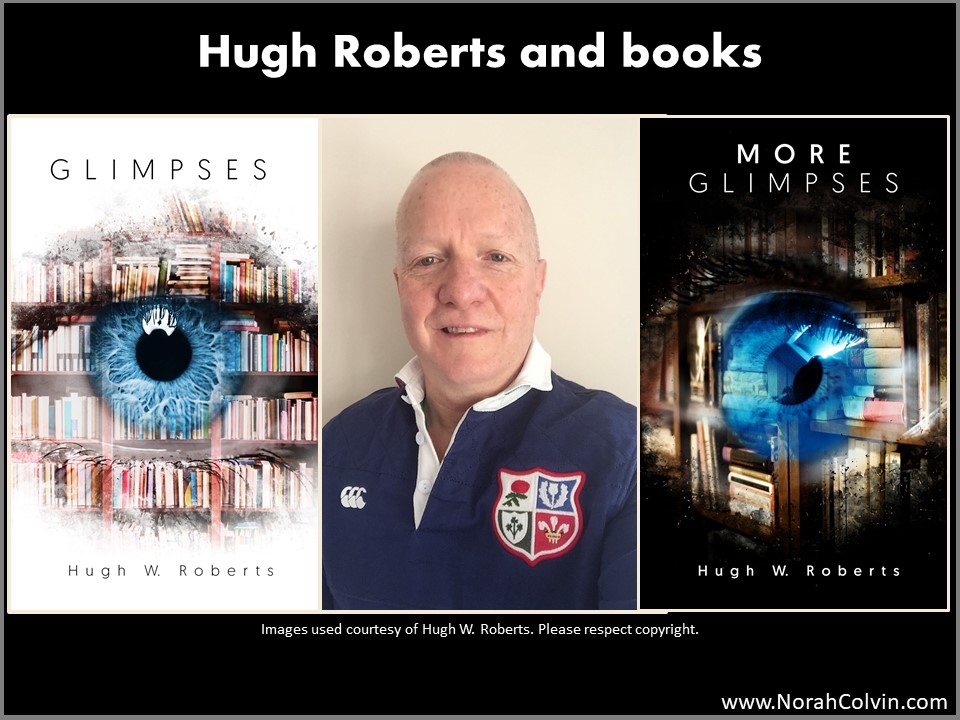
    Hugh Roberts and Books

    Hugh features many interesting series on his blog and always welcomes new readers and often contributors. I read and enjoyed Hugh’s first book of short stories Glimpses. The second volume More Glimpses has recently been released, and I am looking forward to seeing what twists and delights Hugh has in store for me now.

    Hugh also entered both Carrot Ranch Rodeo Contests that I hosted. Although they are judged blind, Hugh won the first competition and came second in the second. That’s a fair indication of what I think of his story telling. 😊

    Before we begin the interview, I’ll allow Hugh to tell you a little of himself:

    Hugh W. Roberts lives in Swansea, South Wales, in the United Kingdom.

    Hugh gets his inspiration for writing from various avenues including writing prompts, photos, eavesdropping and while out walking his dogs, Toby and Austin. Although he was born in Wales, he has lived around various parts of the United Kingdom, including London where he lived and worked for 27 years.

    Hugh suffers from a mild form of dyslexia but, after discovering blogging, decided not to allow the condition to stop his passion for writing. Since creating his blog ‘Hugh’s Views & News’ in February 2014, he has built up a strong following and now writes every day. Always keen to promote other bloggers, authors and writers, Hugh enjoys the interaction blogging brings and has built up a group of on-line friends he considers as an ‘everyday essential’.

    His short stories have become well known for the unexpected twists they contain in taking the reader up a completely different path to one they think they are on. One of the best complements a reader can give Hugh is “I never saw that ending coming.”

    Having published his first book of short stories, Glimpses, in December 2016, his second collection of short stories, More Glimpses, was published in March 2019. Hugh is already working on the next volume.  

    A keen photographer, he also enjoys cycling, walking, reading, watching television, and enjoys relaxing most evenings with a glass of red wine.

    Hugh shares his life with John, his civil-partner, and Toby and Austin, their Cardigan Welsh Corgis.  

    Welcome, Hugh. Now let’s talk school.

    First, could you tell us where you attended school?

    I spent my whole school life in the town of Chepstow; a town on the south-east border of Wales and England in the UK.

    Did you attend a government, private or independent school?

    They were government-run schools.

    What is the highest level of education you achieved?

    I left school at the age of 16 with five ‘O’ Levels and three GSCEs.  I then did a brief stint in college on a hotel and catering management course. A job offer meant I left the class before it finished.

    What work or profession did you choose after school and was there anything in school that influenced this choice?

    My first job was as an office junior before I went into retail.  I enjoyed an office environment, but it wasn’t customer facing (which is what I wanted). I told my careers teacher at school that I wanted to join the police force or fire brigade. Unfortunately, I didn’t qualify to join either because you had to be above a certain height. I was a couple of inches too short!

    What is your earliest memory of school?

    I was the only one standing up in class crying my eyes out while I watched all the mums and dads walking away. It was my first day at school, and I didn’t want my mum to leave me there. I was very emotional and felt she had abandoned me and was not coming back. Of course, she did.

    What memories do you have of learning to read?

    I remember the ‘Peter and Jane’ books which started at 1a, 1b and 1c and went up to 12c (which was the last book in the series). They got harder as you moved up to each one, and you were only allowed to move on to the next book when your teacher was satisfied that you could read the current book satisfactorily.

    What memories do you have of learning to write?

    I remember the first ink pens given to us to practice writing. They were very thin and had to be filled with ink from a bottle, which we had to fill ourselves. It could sometimes get very messy.

    While many of the children around me were doing ‘joined-up’ writing, I was doing all mine in block letters. I can remember being taken aside and told that I had to join the letters together. It took me a long time to gets to grips with joining the letters together, and it wasn’t long before I was left behind.

    What do you remember about math classes?

    I was not too fond of maths. Numbers did not interest me. All I wanted to do was make up stories. All my maths teachers were rigorous, which didn’t help in me gaining any confidence in numbers. I saw them as nasty, uncaring people, who didn’t seem to care about the children around them. I’m sure they did, but I didn’t see it that way.

    What was your favourite subject?

    Geography. I enjoyed learning about other countries and the people who lived in them. I was fascinated by maps and the names of towns and cities and the roads that connected them. Even the positions of countries intrigued me, and when I discovered time zones and realised that it wasn’t ‘lunchtime’ everywhere at the same time, ‘time-travel’ entered my life.  I remember wishing that it would become part of the Geography education module before I left school.

    School Photo - Hugh Roberts

    What did you like best about school?

    Drama class. In primary school, I could run around being who or what I wanted to be. Whether it was a tree, an animal or somebody driving a vehicle, I enjoyed the fun, laughter and enjoyment of the class.

    As I grew up, Drama got more serious, but I enjoyed playing different parts in the school play.

    What did you like least about school?

    Playing sport. I had no liking for playing any physical games, especially on cold, wet days on muddy fields. After Easter, we would do athletics which I enjoyed a lot more. The long jump was my speciality!

    How do you think schools have changed since your school days?

    Unfortunately, I think there are now more children who have no respect for their teachers than there were in my school days. Not only that, but some of the parents also have little regard for the teachers.

    It also saddens me to hear about schools not being able to afford to buy the basics like pens, pencils, books and even toilet rolls, because their budgets have been cut so much. Many now turn to the parents asking them to help fund children’s education when it really should be the government which funds it. I was so lucky to have ‘free’ education but, these days, ‘free education’ is something that is disappearing fast.

    What do you think schools (in general) do well?

    I hear more and more about schools inviting authors, writers and experts to come in and talk to the pupils about a particular subject. Whether it be about self-publishing, how to be safe on social media, or help and advice on careers or money matters, it gives those who want to help a chance to pass on their knowledge to new generations to come. I think it’s fantastic that they also ask people to come in and talk about their memories about specific events. It helps keeps memories and ‘past ways of lives’, alive.

    How do you think schools could be improved?

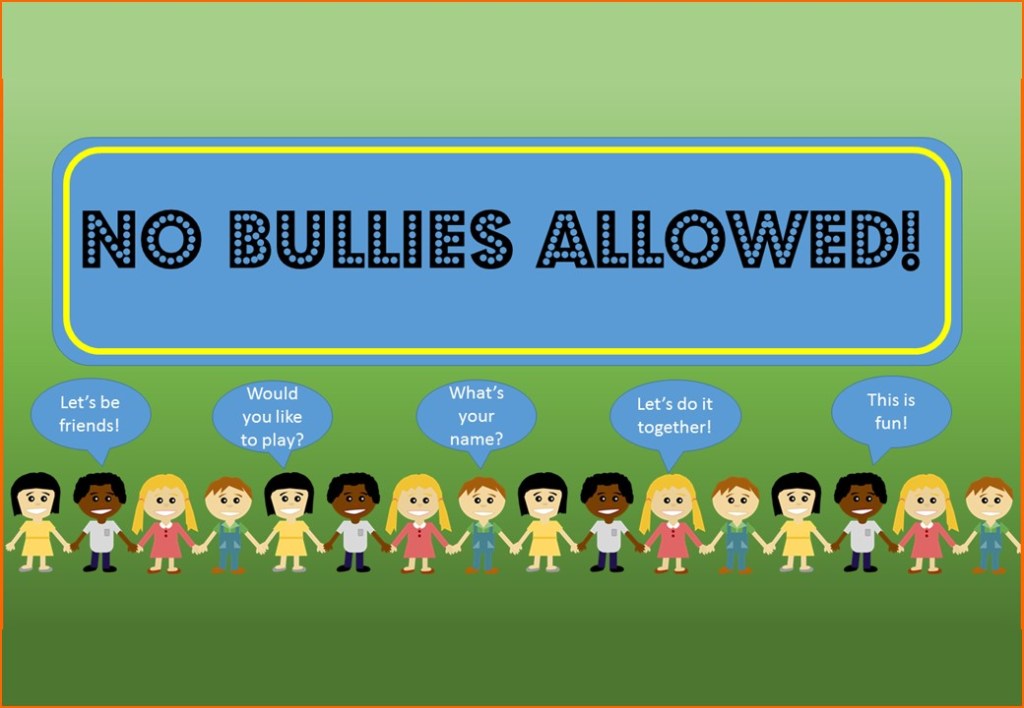
    More needs to be done in educating children about diversity and the hate crimes we hear so much about nowadays. Nobody should feel afraid to go to school because they are bullied or just because they’re told they are different and don’t fit in. Children should be encouraged to read about different ways of lives and to speak out about bullying. As a child who was bullied at school, my life was made much worse because I was afraid to tell an adult what was happening. These were the days before social media where bullying and hate crimes have now taken up residence. Children, these days, have a lot more to put up with, but I think there are also more bullies these days than there were when I was at school.

    thank you for your participation

    That’s an interesting observation with which to conclude, Hugh. Thank you for sharing your reminiscences of school and thoughts about education in general. It’s been wonderful to have you here. I’m sorry you were bullied in school and wish bullying was something we could eradicate.  


    Find out more about Hugh Roberts

    on his blog: Hugh’s Views and News

    Amazon Author Page

    Goodreads

    Connect with him on Social Media

    Twitter: @HughRoberts05

    Flipboard

    Mix.com

    Purchase Hugh’s books here:

    Glimpses by Hugh Roberts

    Universal Link for buying Glimpses

    More Glimpses by Hugh Roberts

    Universal Link for buying More Glimpses


    If you missed previous reminiscences, check them out here:

    Charli Mills

    Sally Cronin

    Anne Goodwin

    Geoff Le Pard

    Look for future interviews in this series to be posted on Sunday evenings AEST.

    Coming soon:

    Debby Gies

    Pauline King

    Jules Paige

    D. Avery

    with more to follow.

    Thank you blog post

    Thank you for reading. I appreciate your comments. Please share your thoughts.
     

  • The Insidiousness of Online Bullying

    The Insidiousness of Online Bullying

    This is an important post about cyberbullying for all parents and educators to read. It contains many useful links. Thanks Jacqui Murray.

    Jacqui Murray's avatar

    cyberbullyIn October 2006, thirteen-year-old Megan Meier hung herself in her bedroom closet after suffering months of cyberbullying. She believed her tormentors’ horrid insults, never thought she could find a way to stop them, and killed herself. She’s not the only one. In fact, according to the anti-bullying website NoBullying.com, 52 percent of young people report being cyberbullied and over half of them don’t report it to their parents.

    October is National Bullying Prevention Month, a great time to think about how you can be part of the solution to this insidious destructive problem.

    What is cyberbullying?

    The image of bullying is the big kid pushing the little kid on the playground. Today, that taunting and pushing is more likely to happen online than in person:

    Cyberbullying is any online post, blog, article, or even a show of support for writing that insults one person (or a group) who thinks/acts differently than what…

    View original post 1,189 more words

  • readilearn: Be prepared – a casual teacher’s motto

    readilearn: Be prepared – a casual teacher’s motto

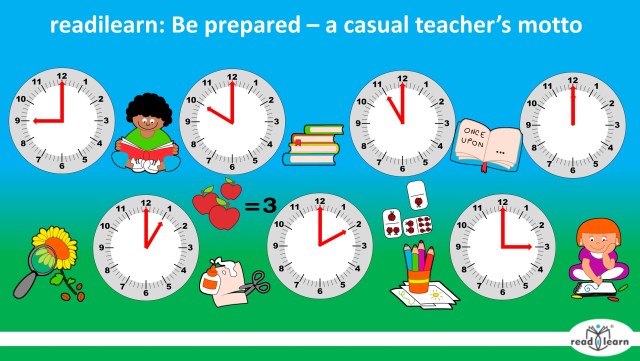
    It’s not always easy being a casual teacher, taking over another teacher’s class for the day. You might be in a different class at a different school, working with a different age group and a different set of expectations, and probably playground duty, every day of the week.

    But it does have its advantages too. You can arrive just before school begins and leave when it finishes. You don’t have to do assessment, write reports or be involved in parent meetings.

    But it is important to be prepared.

    Familiarise yourself with the class timetable and program

    Many teachers leave a program for relief teachers to follow and, if one is available, it is important to follow it to maintain continuity for the children and to avoid interrupting the teaching and learning schedule. However, there may be days when a program is not available, and a casual teacher needs to be prepared for these.

    Whether a day’s program is available or not, it is important to remember that it’s not your class. There will be established class expectations, procedures and timetables. The day will work best if these can be followed as closely as possible, particularly if teacher aides, support personnel and specialist teachers are involved.

    Introduce yourself and your expectations

    Continue reading: readilearn: Be prepared – a casual teacher’s motto

  • readilearn: Teaching children with ASD — ideas for the classroom- with guest author Kathy Hoopmann

    readilearn: Teaching children with ASD — ideas for the classroom- with guest author Kathy Hoopmann

    Do you have children with Asperger Syndrome in your classroom and wonder how best to cater to their needs? Do you have friends with Asperger Syndrome, or maybe have it yourself? This week’s guest Kathy Hoopmann has a wealth of suggestions to help you understand, appreciate and enjoy the complex syndrome that is known as ASD.

    Combining her knowledge of Asperger Syndrome with her teaching background, Kathy has written over twenty books for children and adults.  She is best known for her photo-illustrated books that deal with Asperger Syndrome, ADHD and anxiety.  The simplicity, charm and insight of these books has made them must-haves for children and adults around the world.

    Kathy has won and been shortlisted for many literary awards including the Children’s Book Council of Australia Award, and she has four times been awarded a silver Nautilus Award (US).  Her books have been translated into thirteen languages and sell widely in Australia, the UK, the US and the Middle East.

    The books help children and adults with ASD recognise that they are not alone and provide support to carers, teachers and other professionals working with people with ASD.  In any home, school or classroom library Kathy’s books would help everyone learn to understand and support each other.

    Welcome to readilearn, Kathy. Over to you.

    The boy crawled under a table, his cap pulled low.  All eyes were on me to watch what I would do.  I was the relief teacher, or ‘light relief’ and the class was eager for a good show.  But I had been a relief teacher for too long to take the bait.  Besides, I recognised the behavior.  The boy displayed many characteristics of Autism Spectrum Disorder and frankly under the table was the very best place he could be, for his sake and mine. 

    ‘Miss?’ a child ventured, ‘Billy’s under the table and he’s wearing a hat indoors.’

    Continue reading: readilearn: Teaching children with ASD — ideas for the classroom- with guest author Kathy Hoopmann – Readilearn

    and be sure to check out the generous discount offered to readers during the month of July.

  • Out of respect, not fear

    Out of respect, not fear

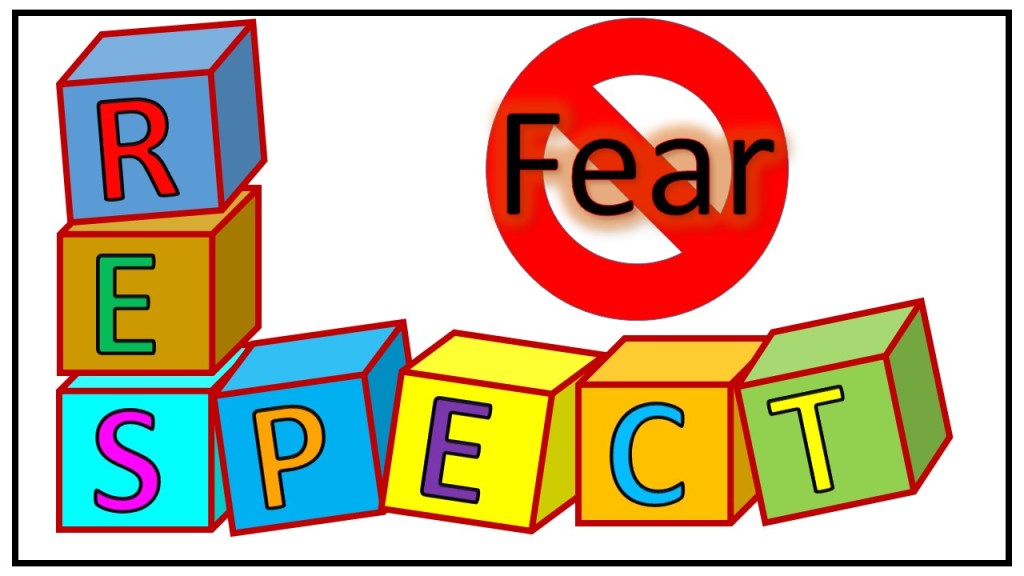
    As an early childhood educator, I believe that children need to be respected. It is only through being shown respect, that children learn to respect. It is not learned through fear. Sure, fear may generate what appears to be respect – compliance, conformity, obedience. But inside, feelings of discontent may simmer until, at some future time they manifest in a variety of unpleasant ways.

    https://openclipart.org/image/800px/svg_to_png/192642/Children_holding_hands.png

    Children also need to respect, and not fear, each other. I frequently write about the need to develop a welcoming and supportive classroom in which children feel valued and respected. They need to understand the diversity that exists in our world and learn to accept, appreciate, respect and embrace it. Fear is often the result of the unknown, so by getting to know each other better, that opportunity for fear, at least, can be erased.

    In a previous post Watching ink dry, I wrote a story about a child being singled out and humiliated for an inability to keep between the lines in a handwriting lesson. An interesting discussion developed in the comments about nuns–teaching nuns, which surprised me. You see, although that particular situation wasn’t one I personally experienced, I did have in mind one of my teachers, who happened to be a nun, as I wrote, but I made no mention of it. I really didn’t think the attitude I portrayed was reserved for nuns during my childhood.

    Within a few days of publishing the post, I visited the optometrist where the assistant, without prompting of any kind, (I have no idea how we got onto the subject) told me about nuns who repeatedly humiliated her at school. I then told her about my story, but not my real experiences which were quite similar to hers. I added this to the discussion, and so the conversation grew, prompting Charli Mills from the Carrot Ranch to entertain the thought of “Nun” as a flash fiction prompt.

    black and white flash fiction challenge

    She did shy away from it in the end, fearing, I think stereotyping nuns unfairly. Instead, she challenged writers to In 99 words (no more, no less) write a story that features something black and white. It could be a nun in a zebra monster truck, a rigid way of thinking, a bird in a tuxedo — be imaginative and go where the prompt leads.

    But it was too late for me to consider the fear, or perhaps to feel the fear and resist doing it anyway. I’d already started recording my black and white view, coloured from years under the rule of those nuns in their black and white habits (literally and figuratively).

    One memorable event occurred when, handing out history test results, the teacher (a nun) distributed everyone’s but mine. She then made a big show of trying to find it while telling the class what a dreadful result it was, and that she must have put it aside out of disappointment. Though I am quite tall, she did her best to make me feel small.

    Funnily enough, when I experienced a similar situation at a writers’ critique session over the weekend–one of the writers had everyone’s story but mine–I was able to accept his apology and not relive the earlier trauma, even though it was brought to mind.

    Perhaps I’m more like the nuns of my childhood than I’d like to acknowledge. Perhaps I find forgiveness no easier than they. So, apologies to all the lovely nuns, whom I am sure must exist, this poem is not for you. It is a reflection of my black and white reflections on my black and white experiences. I’m not sure that I expect you to enjoy this one.

    nun praying

    The nun’s prayer

    Now I lay me down to sleep,

    I pray the Lord my soul to keep.

    I have no need for counting sheep,

    I count the girls that I made weep.


    Lord, I ask Thee, help me please

    To do my job with greater ease–

    Bless them even when they sneeze,

    And keep their skirts below their knees.


    I know the task should be not hard

    And I should never drop my guard

    But if they’re ever marred or scarred,

    It puts a mark upon my card.


    And while she dreamed her cunning schemes,

    Her girls were strangling silent screams.


    Circle picture book by Jeannie Baker

    To finish on a more positive note, which is more my way, on her Big Sister Blogs this week, Maria Parenti-Baldey shared a post of wishes creatives have for children. Those wishes are opposite to those of the nun in my disrespectful poem. One of my favourite quotes is that by Jeannie Baker whose books I have previously written about here and here and here.

    According to Maria,

    Jeannie Baker wished for every ‘single’ child ‘to love and be loved’. For children to have a supportive home, a peaceful environment and ‘to be creative and not be criticised’. To go to school with time to ‘exercise their curiosity… use their imagination’ and find and make things. Jeannie wanted children to think for themselves, play outside and engage with nature with feelings of awe and wonder. Some children experience a fear of nature – ‘Nature deficit syndrome’. ‘What one fears, one destroys. What one loves, one defends.’

    I thought it was a perfect quote to round out my post. I wholeheartedly agree with her wishes–they match my dream.

    Please pop over to Maria’s post to read what other creatives; including, Leigh Hobbs, Gus Gordan, Mark Wilson, Anna Fienberg, Kyle Hughes-Odgers and Deborah Abela, wish for children. Great wishes, every one.

    Thank you blog post

    Thank you for reading, I appreciate your feedback. Please share your thoughts.


  • Watching ink dry

    Watching ink dry

    Sometimes we think change occurs at an incredible pace. Other times it’s too slow–like watching paint dry. But what about watching ink dry?

    This week at the Carrot Ranch, Charli Mills challenged writers to In 99 words (no more, no less) write a story about wet ink. It can be artistic, writerly or something completely off-the-wall. Go where the prompt leads.

    Where would I go? To school–where else?

    In my first year of school we wrote on slates (no, not on stone tablets as my children may tease).

    In subsequent years, we wrote in exercise books and special handwriting books with lead pencils (which contain graphite rather than lead).

    As we moved up through the grades, we still used pencils for most work, but were also introduced to pens with nibs which we dipped into inkwells recessed in our desks for handwriting or “copybook” lessons. It was important to get just the right amount of ink on the nib–too little and the nib would scratch but not sufficiently to make a readable mark–too much and the ink would run, blot and smudge.

    In upper primary, we graduated to fountain pens for our copybook work. It was just as difficult to get the right amount of ink, even with the cartridge variety. Should we err and make a blot on our copybook, it was treated as a most serious offence. Luckily, our trusty blotting paper was at the ready to soak up any excess. We always had to begin writing at the top and continue down the page. There was no going back and inserting or altering something at the top, unless we were absolutely certain the ink was dry, lest we smudge the writing with our hand.

    Although ball point pens, commonly called biros in my circles, had been invented–as early as 1888 according to this history, would you believe–we were not allowed to use them in school for fear our handwriting skills would deteriorate. They had their own set of ink issues too–some would fail to write, other would supply too much thick ink. Others would leave ink all over hands, or leak in pockets or bags.

    Over the years, ballpoint pens improved in quality and have now replaced dip nib pens except for specialist writing, and fountain pens are considered more a luxury item. Now the concern is that the use of digital devices; such as, computers, tablets and phones will have a harmful effect upon children’s handwriting skills. I wonder were there similar concerns when papyrus replaced stone tablets; and what those concerns will be in the future, should handwriting have a future.

    I didn’t wish to “blot my copybook” by responding to Charli’s prompt with a story unrelated to education or children. I hope you enjoy it.

    A blot on whose copybook?

    Ever so carefully, she dipped the nib in and out of the inkwell. Her tongue protruded, guiding the pen as she copied the black squiggly lines dancing across the page.

    “Start at the top. Go across; then down. Lift, dip…,“ the teacher droned.

    “Start at the top!” The cane stung her knuckles, sending the nib skidding across the page.

    “Now look what you’ve done!” The teacher grasped the book and held it aloft, sending ink in rivulets down the page. Her thumb intercepted one, smearing another opportunity for humiliation across the page.

    “Girls, this is what not to do!”

    Thank you blog post

    Thank you for reading. I appreciate your feedback. Please share your thoughts.