At this time of the year, people around the world are preparing to celebrate a variety of holidays. Christmas, celebrated by almost half of the world’s population, is perhaps the biggest holiday of the year. While traditionally a Christian celebration, its focus for many is now more secular than religious and is celebrated by both Christians and non-Christians. Even within the Christian community, there are many ways in which the festival is observed.
In addition to Christmas, children in Australia are preparing for the end of the school year and their long summer holidays from approximately mid-December to late January. While not as long as that of some of our northern cousins, the six-week break challenges parents in thinking of ways to keep the children occupied, while ensuring that the achievements of the year are not lost before the new school year begins.
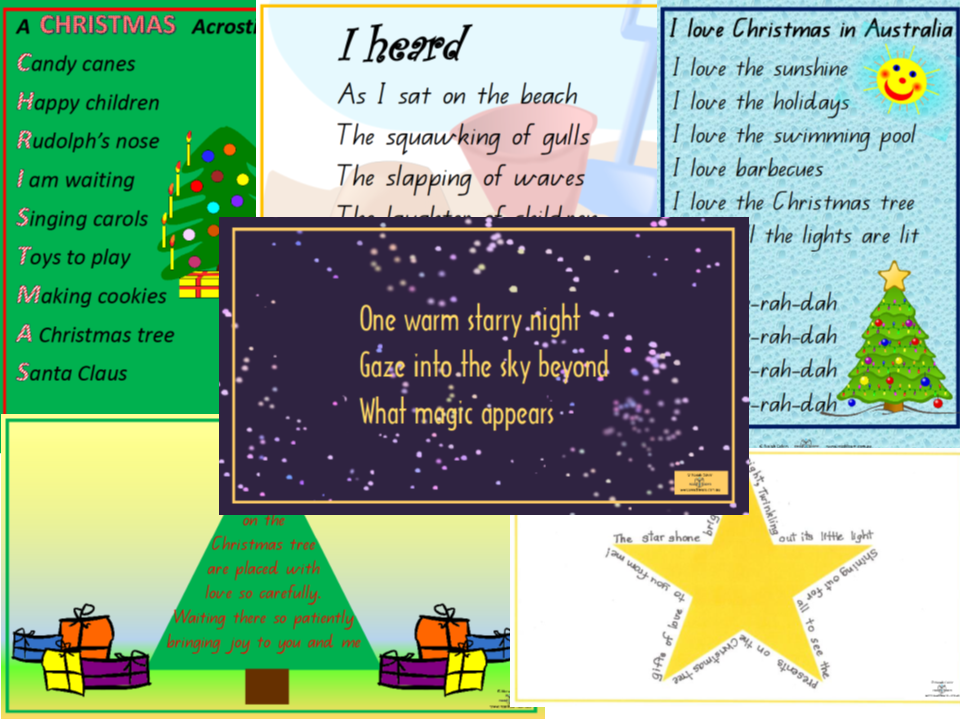
In this post, I share some suggestions and readilearn resources to assist in preparation for both.
You could count the number of times I have been camping on one hand with a few fingers chopped off. And those times, in the main, could not even be considered real camping. They involved cabins, water on tap, and flushing loos. Only once was I required to sleep in a tent, and the experience wasn’t one I wished to repeat: as much to do with other campers as with facilities.
I am not into roughing it. I like the convenience of warm showers, flushable toilets, and power at the touch of a button. I acknowledge my privilege in being able to take these things for granted and, when I holiday, to choose accommodation at which they are available. I recognise that for much of the world’s population, that privilege is as unattainable as a dream.
So, for this week, in which the flash fiction prompt by Charli Mills coincides with World Toilet Day, it is fitting to combine the two.
Anne Goodwin who blogs at Annecdotal has also combined Charli’s flash fiction prompt in her post about Fictional Toilets for World Toilet Day. Anne has included snippets of toileting issues from novelists whose characters, unlike most “fictional characters, (who) like royalty, don’t have to suffer the indignity of urinating or opening their bowels”, deal with the inconveniences of life. Her own novel Sugar and Snails is among those quoted. You can read the post here.
For a while now I have been supporting Who Gives a Crap, a company that takes toileting seriously. In its production of toilet paper, tissues, and paper towels it uses only 100% recycled paper, bamboo, or sugarcane. It also donates 50% of its profits to providing toilets for those in need. I am in favour of both those practices.
I am also in favour of helping children recognise their privilege and to understand that not everyone in the world can take for granted what they can. With Christmas celebrations just around the corner, a picture book that encourages children to think of others, rather than just what they can get, is useful in starting the discussion.
Dear Santa: Please Don’t Come This Year written by Michael Twinn and illustrated by Patricia D. Ludlow explains that Santa has tired of children’s requests, of their always wanting more, and of their lack of gratitude. He considers making this Christmas delivery his last; until he receives one final letter that turns his thinking around.
The letter is from a group of children who write:
“Dear Santa,
Please don’t come this year … we have almost everything we want.
So, we don’t want presents for ourselves this year …
We want to help other children, instead.
And old people and animals in need …”
Santa feels heartened by the children’s selflessness, and he spends the year travelling the world, sharing the gifts suggested by the children:
“The gift of food
The gift of health
The gift of sight
The gift of water
The gift of technology
The gift of hard work
The gift of peace
The gift of learning
The gift of survival”
At the end of the year, Santa realises that “The greatest gift is yourself.”
(Note: I’m not sure if it is still so, but at the time of its publication, sales of the book helped raise funds for UNICEF.)
Now, I seem to have strayed a little, but I’m thinking that’s probably what happens when a group is sitting around the campfire discussing life. I’m sure no subject is taboo, Blazing Saddles proved that, and that the conversation would flow from one topic to another with just a few meagre threads to hold it together.
Song, too, would be a big part of the campfire tradition. I learned a campfire song from Bill Martin Jr. at a reading conference years ago. (I’ve written about that previously here.)
The song “I love the mountains” is perfect for teaching to children and as a structure that children can use to write poems of their own. Sample innovations; for example, “Christmas in Australia” have been included just for that purpose in readilearn resources.
Writing “I love” poems is also a good way for children to express gratitude in their everyday lives, which fits perfectly with Thanksgiving celebrations in the United States, also this week.
Even if you don’t intend joining in the challenge, and there is an extra week with this prompt if you are tempted, please pop over to the Carrot Ranch to read Charli’s fascinating report of her explorations of The Zion Valley area and of the historical artefacts and remnants she found there. You’re sure to find a gem or two, as she did.
Here is my response to her challenge.
Around the campfire
“Smile,” they said. “It could be worse.”
Than what: a compulsory “adventure”? navigating scrub lugging a loaded rucksack? avoiding plant and animal nasties? digging a toilet? erecting a recalcitrant tent? enduring inane chatter and laughter roaring as insanely as the campfire flames?
“You’ll learn something,” they’d said.
Fat chance.
Darkness hung low like her spirits.
Along with the dying flames, the mood quietened and, one by one, each told a story of horrors beyond her imaginings: of fleeing famine, war, abuse, hate …
Along with the sky, her heart softened with the light of a new day, and gratitude.
Thank you for reading. I appreciate your feedback. Please share your thoughts.
This week on the readilearn blog I am talking to June Perkins about her wonderful collection of poems for children Magic Fish Dreaming. With the beautiful illustrations by Helene Magisson, this collection is a delight for the ears, the eyes, and the spirit. Read about June’s inspiration for the poems, and use them as inspiration for poems of your own, or use them to inspire poetry writing in your students.
In this post I suggest ways of helping children develop friendship skills, and describe some readilearn resources for celebrating friendship.
Developing a welcoming, happy, supportive classroom environment, a place where children want to be, is essential for learners of all ages, but especially so in early childhood. These classrooms are the first that children experience and influence lifelong attitudes to school and learning. It is important to establish strong foundations with positive attitudes, respect, and friendship.
Making friends doesn’t come easily to everyone. Simply being put with a whole bunch of other children of similar ages doesn’t ensure friendships will be established, or that children will be accepting of, and respectful to, others.
Strategies for helping children develop effective social skills need to be interwoven throughout the curriculum. Respect, kindness, and empathy need to be modelled and taught. It is especially important for children who have had limited experience mixing with others, or for those who respond to others in inappropriate or unkind ways.
Some useful strategies include:
Develop a vocabulary of words used to describe feelings. Words
Giving young children a simple structure or a repetitive pattern to start from gets them thinking about words, how they sound, what they mean, the number of syllables and letters. All the while they are having fun, playing with words and sounds, and learning about language.
Five easy poems to write with children are:
Acrostic poems
Sound poems
Haiku
“I love” poems, and
Shape poems
Acrostic poems are one of the easiest. They don’t need to rhyme or follow a set rhythmic pattern.
Sorting is a very important skill. We sort things every day without even thinking about it. We sort items in cutlery drawers, sort and arrange dishes in the dishwasher, even our socks and undies. While we might not physically sort them, while we are walking down the street we might sort familiar from the unfamiliar, friends from strangers, and safe from unsafe.
From a very young age, children learn to sort. They can spend a lot of time organising things that go together. By the time they arrive at school most children are able to sort objects according to their properties; such as shape, colour, texture, smell, and size. This prepares them for use of a dichotomous key in identifying natural and manufactured objects.
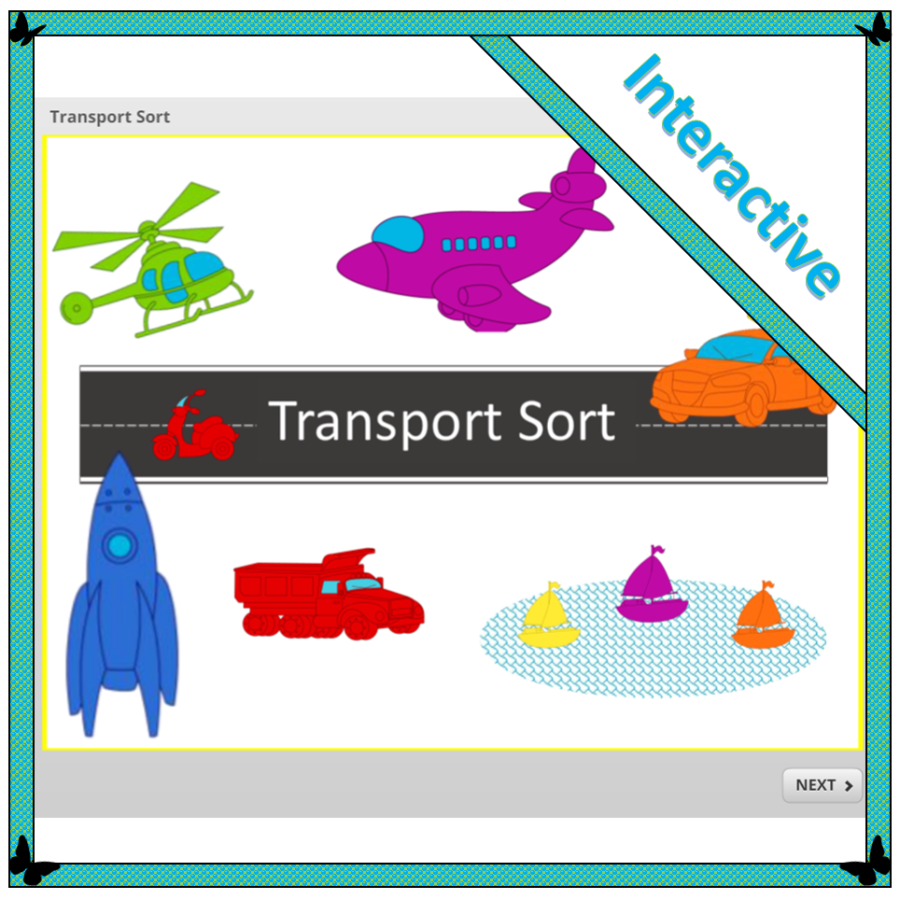
The interactive resource Transport Sort helps children develop sort
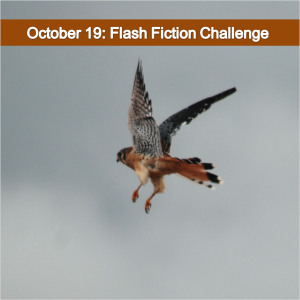
This week at the Carrot RanchCharli Mills expresses her admiration for the raptors that “wheel on currents of air high above the La Verkin Overlook” near her new home in Utah. She marvels in their flight and challenges writers to let their imaginations take wing and soar.
Narelle Oliver’s beautiful picture book Home, which I wrote about in this post, celebrates one of these Australian raptors, the peregrine falcon. The book is based on a true story of a pair of peregrine falcons that nested at the top of a 27-storey building in Brisbane city. The birds, named Frodo and Frieda, fascinated a city and, for a while, had their own reality show “Frodocam”.
As often occurs, my thoughts head off in a different direction when thinking of Charli’s prompt. Rather than the beauty and magnificence of these amazing birds, it was the word “prey” that grabbed me and wouldn’t let go. It pummelled me into submission, like a bully that seeks out the vulnerable when targeting prey.
It is probably a good thing that these dates don’t align, as there is no time that is not a good time to eradicate bullying.
I have previously written about bullying in posts and flash fiction stories, especially those concerning Marnie, about whom I wrote several stories, collected here. Stories about bullying specifically include these:
In this post, I shared information about a rap version of “True Colours” with additional original anti-bullying content written by 12-year-oldMattyB to support his younger sister who is excluded and bullied because of her “symptoms”. Here is the song. Check back to the post for more information.
In this post, I suggested that children who tease, torment and bully are often themselves victims of similar behaviour. They may feel powerless and lack control in their own lives. They are possibly lowest in the pecking order at home, and targeting someone more vulnerable provides an opportunity to find a sense of power; for a while at least.
One of the most effective ways of reducing the incidence of bullying is through the development of social-emotional skills; including helping children develop
self-esteem
confidence
resilience
friendship skills and
empathy;
in an environment in which they feel welcome, valued, and supported.
We need to model the behaviour we want children to develop, provide them with alternatives to inappropriate behaviour, and teach them how to respond when the behaviour of others upsets them.
It is also important to teach children to recognise bullying and to seek help if they see it occurring. Observing and doing nothing is a way of condoning the behaviour, and the bullying may escalate if an audience gathers. Ignoring bullying in a way also condones it. It is important to take action to prevent or stop it.
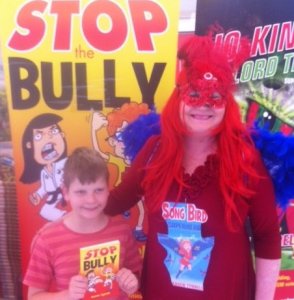
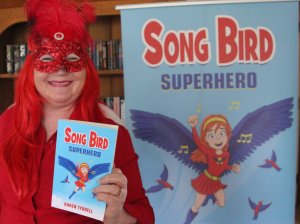
Karen Tyrrell, “an award winning Brisbane resilience author who empowers you and your children to live strong”, has written books for both adults and children about bullying. Having been on the receiving end of bullying herself, Karen understands what it is like to be targeted.
Karen’s books STOP the Bully, for 9 to 12-year-olds and Song Bird for children of 7+ years, both explore issues related to bullying.
Karen told me that “The little boy in the photo read STOP the Bully 6 months earlier after my first book shop visit. Then found me again 6 months later to say thank you when Song Bird came out.”
If you are looking for resources to initiate the discussion about bullying, Karen’s are a good place to start. You may also like to access the free teacher resources and free kids activities Karen has available on her website.
With apologies to the magnificent birds, I offer my response about a child in need of understanding, and of learning friendship skills such as getting along, caring for others, and empathy.
Prey time
Children chattered like birdsong – not a ruffled feather in sight. If only all playtimes were as peaceful. Sudden realisation. She scanned the children. Anxiety stirred.
“Has anyone seen Zane?”
Thomas pointed to a distant figure flitting and swooping, arms outstretched.
“Zane!”
She couldn’t leave him there. Could she?
“I’ll get him, Miss.”
As Thomas approached, Zane screeched and rushed towards him. Thomas fled, missed his footing, and fell. Zane, still screeching, pounced, pinning him down.
“Zane! Let him go!”
“I’m a raptor. He’s my prey.”
Thomas cried. “I’m not playing.”
If he was, it would be more fun.
Thank you for reading. I appreciate your feedback. Please share your thoughts.
The author in the spotlight this month is the wonderful Lauri Fortino, author of The Peddler’s Bed, illustrated by Bong Redila, published by Ripple Grove Press.
Please pop over to the readilearn blog to read all about Lauri’s writing process and her delightful picture book.
The latest post from readilearn explains resources for a new board game to play at Halloween.
The game is great for literacy and maths groups, to play with buddies or in family groups. It links literacy, maths and physical activity. Players collect treats and perform actions as they move
Next Tuesday 11 October is International Day of the Girl Child. It is a day for recognising the need to empower all girls, for it “is good not only for girls, but also for families, communities and society at large”.
This post honours International Day of the Girl Child on 11 October. The day was established to “to recognize girls’ rights and the unique challenges girls face around the world.” The empowerment of girls is seen as “fundamental to breaking the intergenerational transmission of poverty, violence, exclusion and discrimination and to achieving equitable and sustainable development outcomes.”
This year theme is Girls’ Progress = Goals’ Progress: A Global Girl Data Movement.“While …recognize how girls’ progress is good not only for girls, but also for families, communities and society at large, we must also take this opportunity to consider how existing gaps in data on girls and young women, lack of systematic analysis, and limited use of existing data significantly constrain our ability to monitor and communicate the wellbeing and progress of nearly half of humanity.”
While recognising the gravity of situations faced by girls around the world, the focus of this post pales, but is significant nonetheless. Sometimes the changes we need to make start at home. Empowering our girls will enable them to empower others.
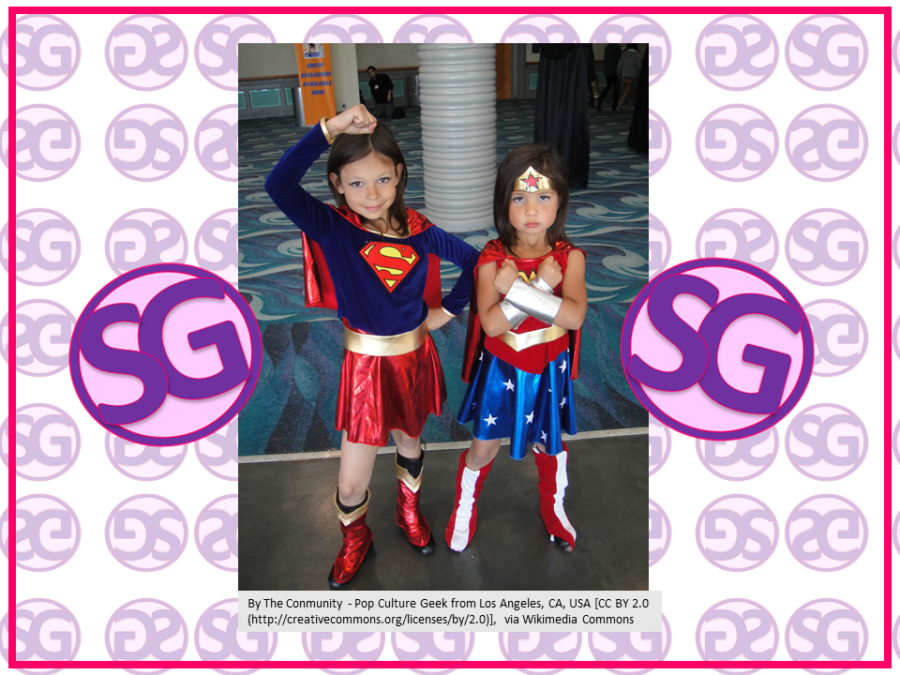
I recently listened to a TED talk Bring on the female superheroes by Christopher Bell, a media studies scholar and father to a 9-year-old daughter obsessed with Star Wars. If you have any concerns about gender stereotyping and gender equality, particularly with regards to toys and merchandising, have a listen. In less than the 16 minutes to view the video, Bell packs a powerful punch and takes a swipe at media corporations and merchandising for girls.

 At this time of the year, people around the world are preparing to celebrate a variety of holidays. Christmas, celebrated by almost half of the world’s population, is perhaps the biggest holiday of the year. While traditionally a Christian celebration, its focus for many is now more secular than religious and is celebrated by both Christians and non-Christians. Even within the Christian community, there are many ways in which the festival is observed.












 Norah Colvin