The ability to read is one of the most valuable skills we can acquire. It is a tool for thinking, learning and entertainment. Reading opens doors and minds; it gives us the ability to unlock the secrets of the universe and release our imaginations. It is a skill that many of us take for granted, but without it the world would seem a more unfriendly place.
No wonder learning to read is a vital part of each and every school day!
Like everything else —the more you read, the better you get!
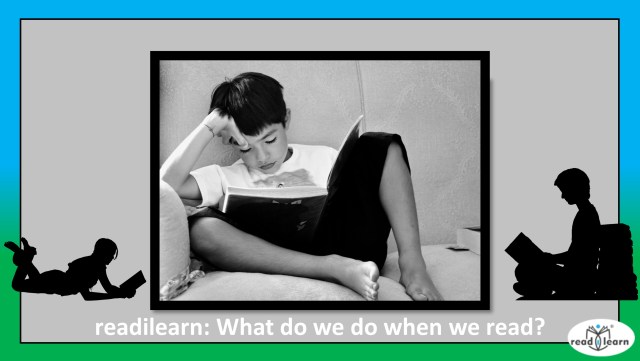
Reading is more than just saying all the words on the page in order. Reading is a process of getting meaning from print. Effective readers use their knowledge of the world and of language in their quest to make meaning from the words on the page. Reading takes place when the reader understands the message of the writer.
Strategies used by effective readers
Effective readers use a combination of three cuing systems to predict and check what the author has written. The use of these systems is obvious in the miscues (rather than “mistakes”) that readers make.
The most important cuing system is knowledge of the topic. If you know lots about dinosaurs, you can read those big difficult-looking words and understand what they mean. If you know nothing of legal jargon then even sounding out those big difficult-looking words won’t help you understand.
The second system is knowledge of language and grammar. We expect the words to flow with meaning and not be a jumble of nonsense.
The first two systems combine to predict the words on the page. We then check with the print to ensure our expectations were correct.
For example, if the story is about a cowboy you may expect that he would jump on his pony, but when you look at the print, you find he actually jumped on his horse.
Effective readers may say ‘pony’ instead of horse, but they definitely wouldn’t say ‘house’ (which looks similar) as it just wouldn’t make sense!
Children love to create artworks using pencils, crayons, paints and anything they can stick to a surface using glue. With access to a variety of materials, they can be absorbed for hours creating their masterpieces.
While they might select from the materials offered, I found the one thing that few children could resist was glitter—and the more of it, the better.
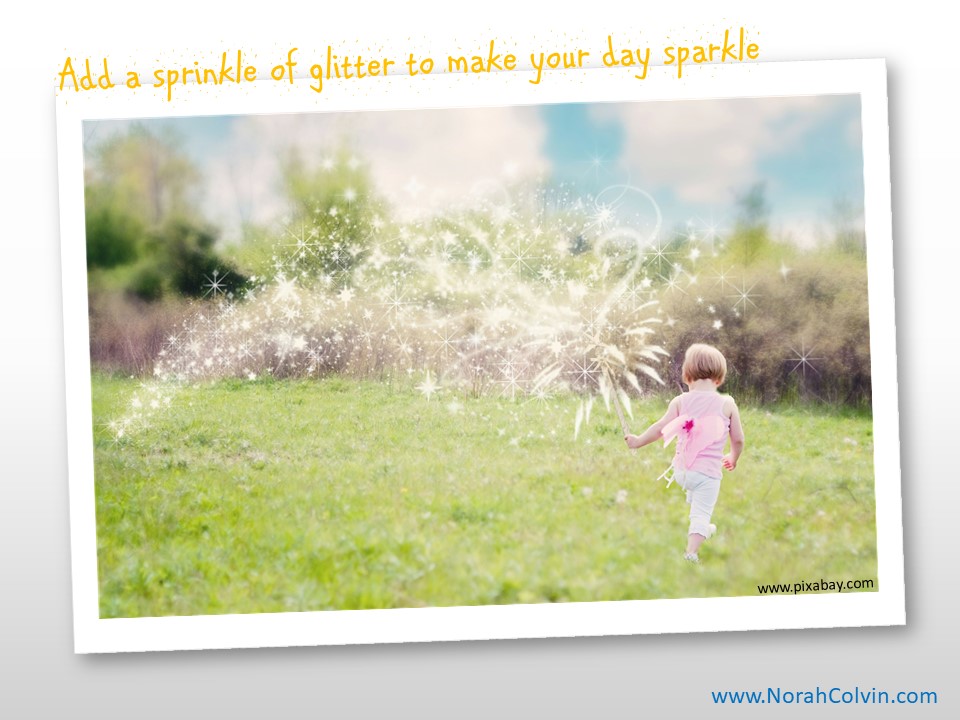
There is nothing like glitter to add a bit of sparkle to the day. The only trouble is, glitter is so light and so small, that it goes everywhere—on the artwork, on the table, on the chair and on the floor. It sticks to the hands and is smeared on the face and takes forever to remove from the hair. But everyone loves it nonetheless, and it adds a little brightness to the day.
Smiles are like glitter in that they also spread easily and brighten the day. However, they are not nearly so messy, cost nothing, and require no cleaning up at all.
I think smiles are the glitter we should add to the artwork that is everyday life. And if there’s one thing about smiles, the more you give, the more you receive. Smiles come from a bottomless well, from a source that never dries up. A sprinkle of smiles will make anyone’s day sparkle, and who knows what difference a smile can make to another’s life.
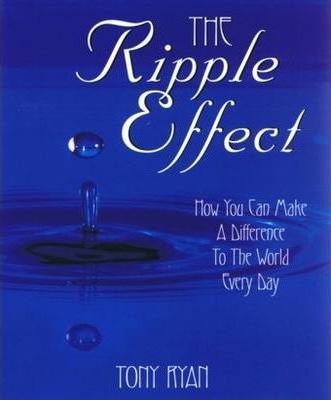
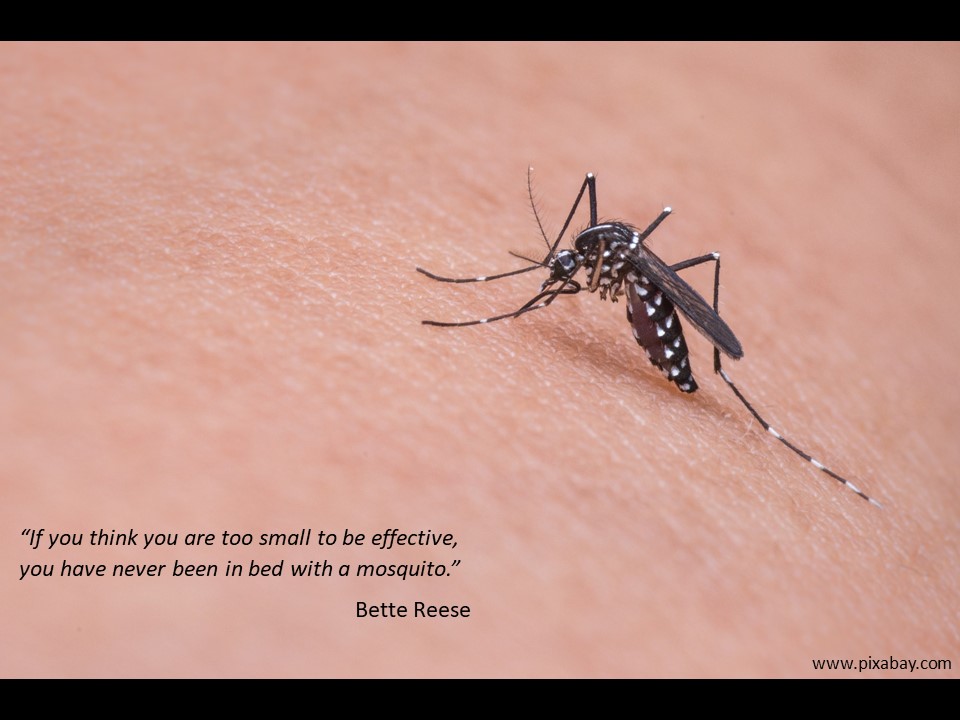
I often think of The Ripple Effect, written by Tony Ryan, and its inspirational stories. I especially enjoy this quote by Bette Reese included in the book: “If you think you are too small to be effective, you have never been in bed with a mosquito.”
One of Tony’s stories describes the following scenario:
“As you enter the freeway, you discover that the traffic is heavier than usual, and is moving quite slowly. You then notice that the young driver in the car beside you is trying to enter your lane, because her exit is coming up. No-one is letting her in, and she is becoming tense and upset.”
Tony then describes the turning point in her day:
“You stop, and wave her in front of you with a flourish and a smile.”
and the ripple effect:
“she returns your smile, acknowledges your thoughtful action, and drives on
her tension dissipates, and she arrives at her company office feeling buoyed by your little effort
as the main receptionist, she is the first to greet the hundreds of people who enter the office each day
with her positive greeting, she decides to brighten up the life of every person she meets throughout that day
because of her efforts, many others in the business district are inspired to focus on their own positive efforts.”
Like glitter, we can never know how far the effects of our smiles might travel. There can never be too many smiles in any one day, especially in a classroom filled with children.
I’d only come across the word “glisten” before in the Christmas carol, Walking in a Winter Wonderland.
But Charli’s prompt reminded me of an incident in my childhood that had absolutely nothing to do with glitter or glisten (I don’t even remember glitter in my childhood) but loads to do with smiles. I’ve rewritten the incident to include glitter and other alternative facts. I hope it gives you a smile.
Glitter smiles glisten
Relentless rain meant no beach for the country cousins. They spent eternity on the verandah, making artworks, playing games, and bickering.
On the last day, when Mum said to clear space for their mattresses, they fought over who’d do what. Toys and games ended up in a haphazard tower with the glitter bucket balanced on top.
When Dad bent for goodnight kisses, he stumbled and demolished the tower. Glitter went everywhere—including all over Dad. The children gasped.
“Your hair glistens, Dad,” smiled the littlest.
Dad smiled too, then everybody laughed.
Dad wore a hat to work that week.
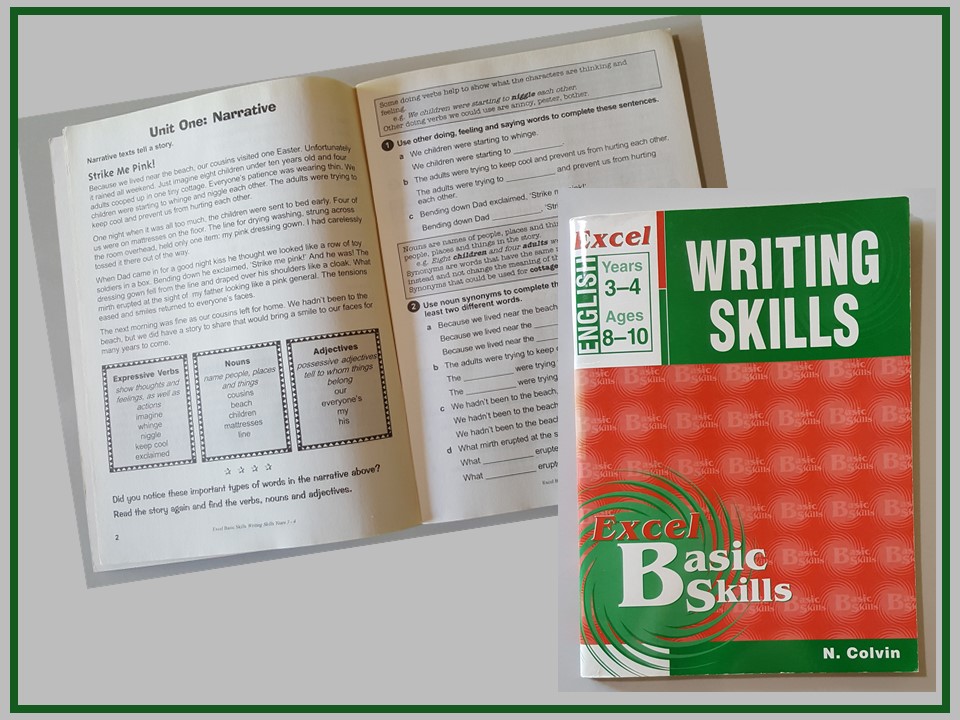
I previously wrote about this incident for inclusion in a Writing Skills Homework Book published by Pascal Press. Workbooks such as this are very different from the teaching resources I now share on readilearn, but: it was paid work.
This version is closer to the truth.
Strike Me Pink!
Because we lived near the beach, our cousins visited one Easter. Unfortunately, it rained all weekend. Just imagine eight children under ten years old and four adults cooped up in one tiny cottage. Everyone’s patience was wearing thin. We children were starting to whinge and niggle each other. The adults were trying to keep cool and prevent us from hurting each other.
One night when it was all too much, the children were sent to bed early. Four of us were on mattresses on the floor. The line for drying washing, strung across the room overhead, held only one item: my pink dressing gown. I had carelessly tossed it there out of the way.
When Dad came in for a goodnight kiss he thought we looked like a row of toy soldiers in a box. Bending down he exclaimed, “Strike me pink!” And he was! The dressing gown fell from the line and draped over his shoulders like a cloak. What mirth erupted at the sight of my father looking like a pink general. The tensions eased and smiles returned to everyone’s faces.
The next morning was fine as our cousins left for home. We hadn’t been to the beach, but we did have a story to share that would bring a smile to our faces for many years to come.
Note: I don’t know how many others used the term, but my Dad often said, “Strike me pink” to express surprise.
Thank you for reading. I appreciate your feedback. Please share your thoughts.
For many of us, reading has become such a natural and intuitive process that we rarely stop to marvel at the way we are able to make meaning from print or to question how one learns to read.
Although we know that we once weren’t readers, few can remember how we actually made the transition from being a non-reader to being able to read and have been doing it for so long now that it seems we always could.
Some adult readers have recollections of various instructional methods that were used in school and attempt to engage their own learner readers in similar tasks.
The recognition that some of the instructional methods did, and still do, equip readers with some tools for reading, does not imply that the use of these methods was the catalyst for learning to read. While they may have contributed to the development of reading, there are other influencing factors.
Many children learn to read despite the instructional methods, and many others don’t read using them and, in fact, remain non-readers because of them.
What is reading?
Reading is more than simply translating letters and words to sound. Reading involves thinking. It is a process of getting meaning from print.
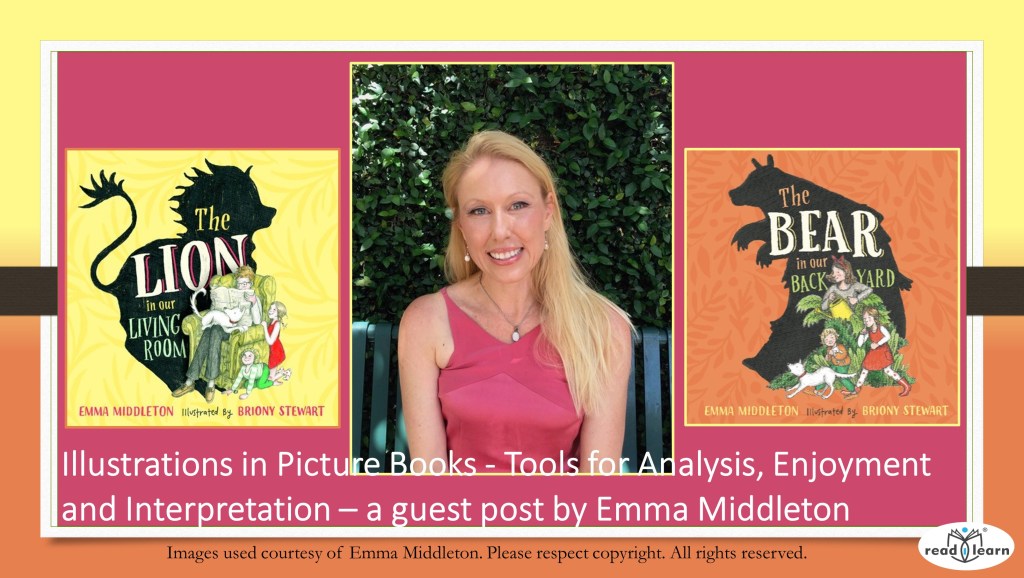
This week I have great pleasure in introducing you to Emma Middleton who is here to discuss illustrations in picture books as tools for analysis, enjoyment and interpretation.
Emma is a picture book author, illustrator, children’s performer and former ballerina who lives near Noosa, Queensland. After a career in performing arts, during which time she danced for the Vienna Ballet, she returned to Australia to direct and teach at The Brighton Dance Academy.
Emma retired from teaching dance to follow her passion for picture books by creating stories that will enhance a child’s sense of wonder, delight and unlimited possibility. Emma is the author of companion picture books The Lion in our Living Room and The Bear in our Backyard.
Welcome to readilearn, Emma. Over to you.
Illustrations in picture books can be an excellent tool for developing children’s analytical and interpretative skills, as well as enhancing their enjoyment of art. Picture book advocate Megan Daley says, ‘Picture books are works of art which should adorn the walls of art galleries and libraries.’
For young children, illustrated books open the door to understanding story. Illustrations provide young readers with an immediate vision of the characters, setting, and mood of the story. Children instantly respond to characters from their visual appeal. We all know and love many picture book characters from their image alone.
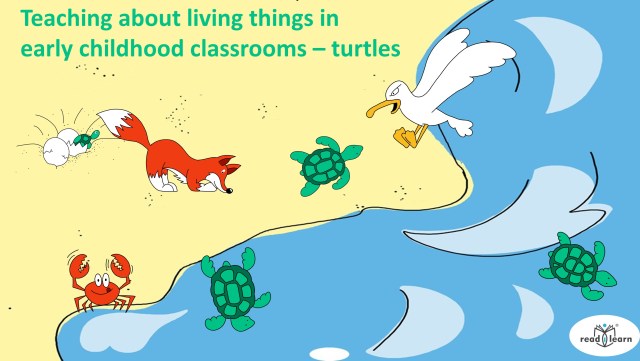
Teaching about living things has an important place in early childhood classrooms. In the science curriculum in their first few years of school, children learn
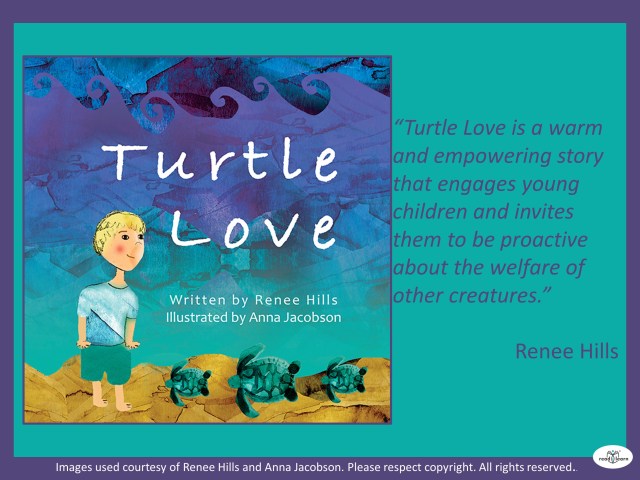
Do you love turtles? I find these magnificent creatures of the sea fascinating. Although I already owned a collection of picture books about turtles, I couldn’t resist supporting local author Renee Hills publish her first picture book Turtle Love, illustrated by Anna Jacobson, through Pozible at the end of last year. I was delighted when I received my very own copy of this beautiful picture book with its “warm and empowering story that engages young children and invites them to be proactive about the welfare of other creatures.”
Synopsis
Turtle Love is about Jacob Gordon Lachlan Brown who lives on perhaps the most interesting and beautiful beach in the world. The flatback turtles agree. They come every summer to lay their eggs. But life is becoming more difficult for the turtles because the big ships that load coal are stirring up sediment and this affects the seagrass that the turtles eat. And this beautiful beach is where they MUST come to nest. Why don’t the flatback turtles go somewhere else? What can Jacob do to help them?
The text explores themes including the impact of man-made coastal developments on the habitat of other species; how to advocate for threatened creatures and the right of all living beings to have a safe place to nest and live. As a bonus, the book contains a story within a story, a mythical explanation for the beautiful coloured rock landform on the beach where the turtles nest.
About the author
Renee Hills has been writing ever since she won a prize for an essay about the future when she was a country North Queensland kid. After graduating and working briefly as a teacher, Renee honed her writing skills as a print journalist, editor, and self- publisher.
Teaching phonics and letter-sound relationships is an important part of literacy education in early childhood classrooms. To be fluent readers and writers we need to understand the relationship that exists between the letters and sounds of our language. This knowledge is what enables us to extract meaning from texts we read and ensure that others can interpret the intended meaning in words we write.
The process of expressing thoughts in writing can be laboured for young children as they stretch out words to identify individual sounds and the letters we use to represent them. From the initial stages of making arbitrary marks upon the page, children develop into proficient writers through recognisable stages of approximation. Readable writing is dependent upon the effective use of letters to represent sound.
Reading is not so dependent as there are other cues and strategies that readers can employ to interpret a writer’s message. Young children garner information about texts they read from supporting illustrations, prior knowledge of the subject matter and text type (for example, narrative or non-fiction) and understanding of how language works. This information supports their reading which is guided by words they recognise by sight as well as their knowledge of letter-sound relationships.
When teaching children to read, it is important to ensure children learn to use effective strategies that access all available cues. Over-dependence on any one cuing system leads to a break-down in the process. While the teaching of phonics has an important place in early childhood classrooms, I have resisted making resources for teaching phonics in isolation for two main reasons.
Two reasons against making resources to teach phonics in isolation
#1
I believe reading is best learned and taught by reading. Knowledge of letters and sounds can be learned while reading meaningful and enjoyable texts. Teaching and learning can occur in literacy lessons, lessons in any subject, or whenever an opportunity to interact with print exists, which is frequent in our print-rich environment.
I have previously written about some strategies I consider beneficial for teaching reading and will no doubt write more in the future. You can read some of those posts here:
Mother’s Day is celebrated on the second Sunday in May in many countries, including Australia, the United States, and Canada. As the day approaches, teachers often look for easy-to-make gifts for children to give to mothers or other carers. In this post, I share inexpensive suggestions that are easily incorporated into your class literacy and art programs.
Before beginning to work on gifts for mothers, it is important to have some knowledge of children’s backgrounds so you can treat with sensitivity the diversity of family situations that may be represented in your classroom and adjust the program accordingly. For example, when you are already part-way through an activity, it is no good finding out from an upset child that his mother has passed.
It is best to find out this information at least a few weeks before commencing the activities to allow time for consultation with families if necessary. An easy way of doing this is to ask the children to draw a picture of the people who live at their house. Children can then show and discuss their pictures and their families, including those who have two homes and two families.
Your school librarian will be able to suggest picture books to read about diverse families, or you can find some on this list.
You could introduce the activity by saying something like, “Mother’s Day is a day on which
Today, I have great pleasure in introducing you to Dr Andrew King from Brisbane Australia. Andrew is an engineer, teacher, and writer of the popular Engibears series of picture books, designed to introduce children to engineering through friendly characters and story. Each book focusses on a particular aspect of engineering and, through examples and accompanying activities, is designed to encourage children to try engineering — to “Dream, Design and Develop”.
Dream, Design and Develop
Engibears have been part of Andrew’s family for many years. They were created while Andrew played and shared stories with his children.
Andrew thinks he is very lucky to be working with Benjamin Johnston, a Sydney-based architect and illustrator. Ben’s fantastic illustrations have brought Engibears and Munnagong, the city in which they live, to life.
Andrew is passionate about the role that Science, Technology, Engineering and Maths (the STEM subjects) will play in our sustainable future and equally passionate about the importance of STEM education. He regularly talks to students about engineering, and facilitates student-centred engineering activities and programs.
His kids think he enjoys building shelves in his spare time. However, Andrew really enjoys spending time with his family, playing bass guitar, walking his dogs and trying to play golf.
The Engibear series includes three books; Engibear’s Dream, Engibear’s Bridge and Engilina’s Trains. In the most recent, Engilina’s Trains, Engilina, Engibear and Bearbot are back to build transport for the future – a new maglev train that will run from Munnagong to Billaburra as fast as a plane. During the project, they discover an old steam engine which leads them on an interesting journey and creates an unexpected link to the past. It’s an interesting story of trains, teamwork, technology and time.
Now let’s meet Andrew. Welcome to readilearn, Andrew. We are looking forward to getting to know a little more about you and your books.
Thanks for inviting me.
Andrew, when did you know you wanted to be a writer?














 Norah Colvin