Most of us have fears that can become monsters if we allow them to get out of control. Learning how to manage them and put them in perspective is essential for mental health.
In this post, I introduce you to Megan Higginson, author of the newly released picture book Raymund and the Fear Monster.
About Megan Higginson
Megan Higginson loves to write and illustrate stories of monsters, aliens, and mind-blowing places and asking questions like, ‘What if?’. Megan Higginson is also an artist, speaker, street library ambassador, a Books in Homes Role Model, dyslexic book worm, a mother, a qualified youth worker and education support worker, and a retired horse whisper. Megan believes in living an amazing life even with a chronic illness and encouraging kids and adults not to give up. She hopes her stories and illustrations will help readers to look at their life and the world around them with new eyes.
Megan is the author of, The Sock Thief which was included in The Creative Kids Tales Story Collection Vol. 1 in 2017, and An Angel to Watch Over Them (shortlisted) in the anthology Three Dummies in a Dinghy and Other Stories of Life in 2018. Her stories, Freya and the Fear Monster and Super Moon and Fairy Dust in The Creative Kids Tales Story Collection Vol. 2 in 2019. Three Seconds, Truck Stops and Log Trucks (shortlisted) in Papa’s Shoes and Other Stories of Life 2019. She loves to write stories of monsters, aliens, and mind-blowing places.
About Raymund and the Fear Monster
A tale of courage and overcoming fears when the odds seem to be stacked against you.
At the top of an enormous mountain is a dark and gloomy forest. In the dark and gloomy forest lives a monster who roars and growls and makes terrible noises. Raymund lives in a small village at the bottom of the enormous mountain. Raymund is scared of many things. But, most of all he is afraid of the night, and the monster that sends him running to hide under his bed. How will Raymund face his fear, discover what it means to have courage, and defeat the huge and hideous monster that smells like fish guts, rotten eggs and smelly feet?
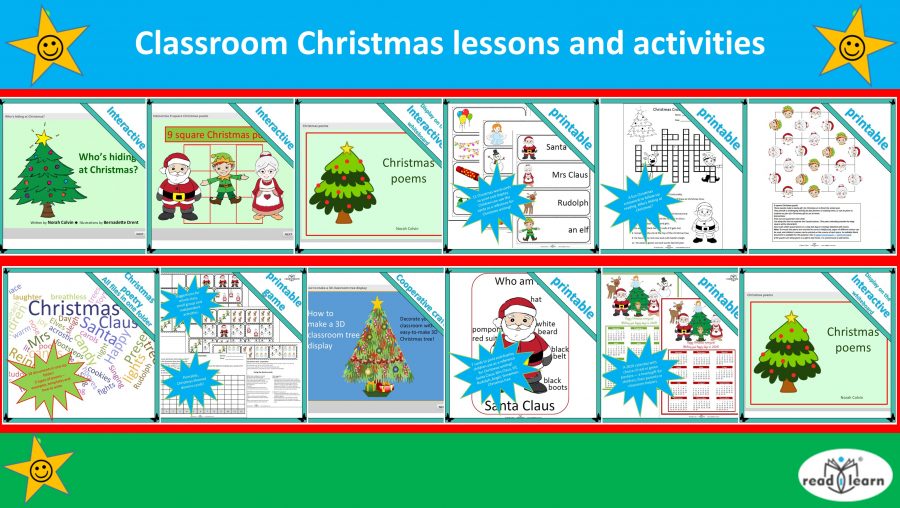
It’s almost Christmas again and here in Australia we’re on the countdown to the end of the school year and our long summer holidays. Whether you’ll be enjoying a long break or a shorter break over the festive season, here at readilearn we’ve got many ready-to-teach lessons and activities to support your teaching in the lead-up to Christmas.
Get an early start with these lessons and activities
You will get most benefit from some activities if you begin them a few weeks before the finish of term.
Friendship Trees, one of readilearn’s most popular Christmas activities is best begun three to four weeks before school closes for Christmas. Children make their own friendship trees which are then placed on display in the classroom.
Each day children write anonymous messages of affirmation or friendship to each other and place them in the trees. At the end of term, children take their trees home and read the positive messages contained within.
The trees help to develop self-esteem, confidence and friendship skills and are perfect for those last few weeks when temperatures soar and children can become edgy with excitement for the holidays.
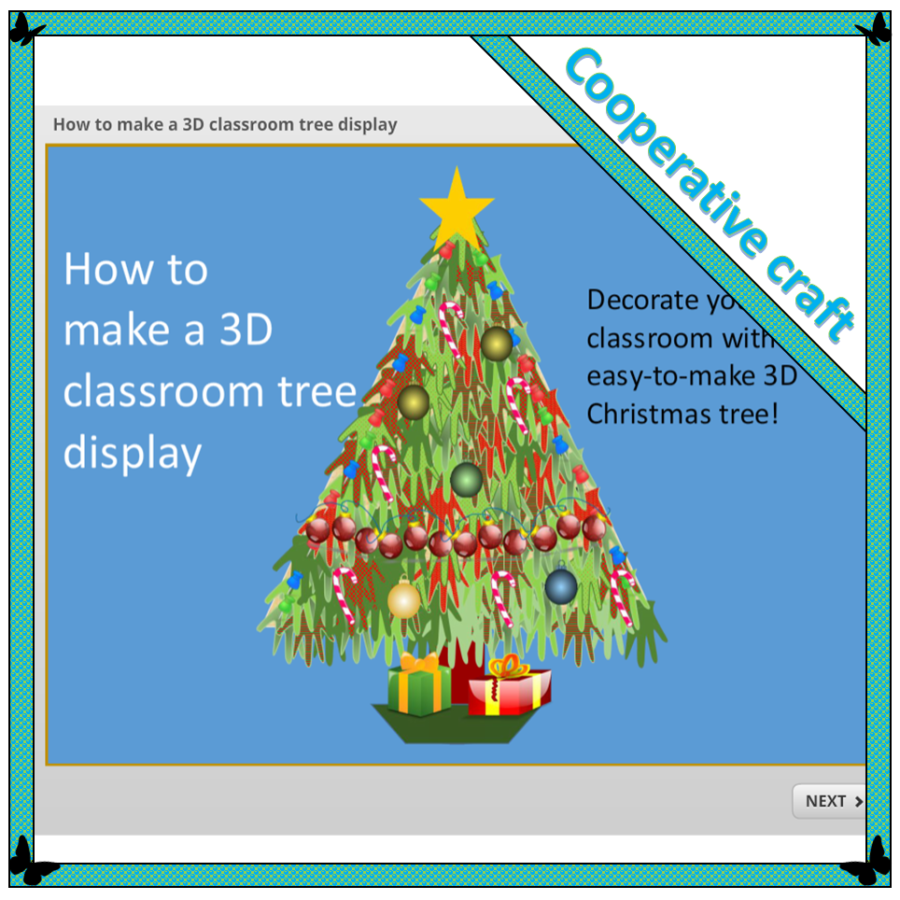
A 3D Christmas tree makes a beautiful focal point of the classroom Christmas display. Children cooperatively construct the tree by contributing leaves made by tracing or printing their hands. It is a visible recognition of the value of teamwork and will be admired (and envied) by many. It makes a beautiful background for photographs of individual children to be given as gifts to parents or other loved ones.
Nursery rhymes are often a child’s first introduction to our literary heritage. Parents sing nursery rhyme lullabies to soothe their babies to sleep and play nursery rhyme games to entertain them in their waking hours. All the while, children are learning the rhythms and tones of our language, developing vocabulary, ideas and imagination. When children learn the repetitive patterns of nursery rhymes, they are also developing their memories.
Australian author Mem Fox is often quoted as saying that
“Experts in literacy and child development have discovered that if children know eight nursery rhymes by heart by the time they’re four years old, they’re usually among the best readers by the time they’re eight.”
While I am aware that others question the existence of research to back up that statement, I think most teachers would agree that children who have been spoken to, sung to (including nursery rhymes) and read to before school will find literacy learning much easier in our classrooms. Success with literacy learning often correlates with success later in life.
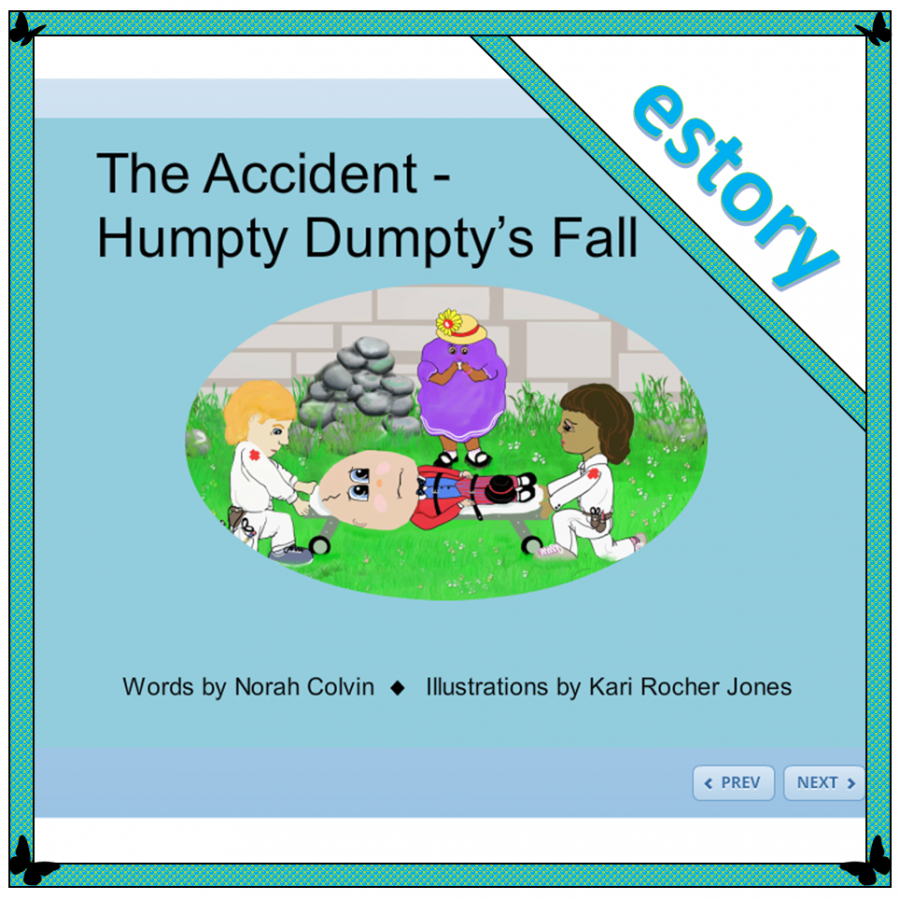
Already on the readilearn website, there are resources to support your literacy teaching using the nursery rhymes Humpty Dumpty and Little Miss Muffet. More are in development. While some nursery rhymes may be considered to have questionable origins, those origins have no place when teaching them to children. The benefits flow from having fun with the rhythms and rhymes of language.
Teaching literacy skills & developing creative thinking with Humpty Dumpty
Poetry is a wonderful tool for learning language. When children listen to or recite poetry, they are learning the rhythms and sounds of language, exploring ideas and how to express them, expanding vocabularies, deepening understanding in nuances of meaning, and having fun with thoughts and their expression.
Children are exposed to rhythm and rhyme from their earliest days through nursery rhymes, chants and songs as well as the text of picture books. It is important for children to have opportunities for appreciating and exploring poetry into and throughout their school years. The Australian Curriculum places poetry firmly into the literature strand of English teaching each year. But it is not necessary to relegate poetry just to a poetry unit of work when stipulated by the curriculum. Poetry, rhymes, chants and songs can be easily incorporated into the daily class program.
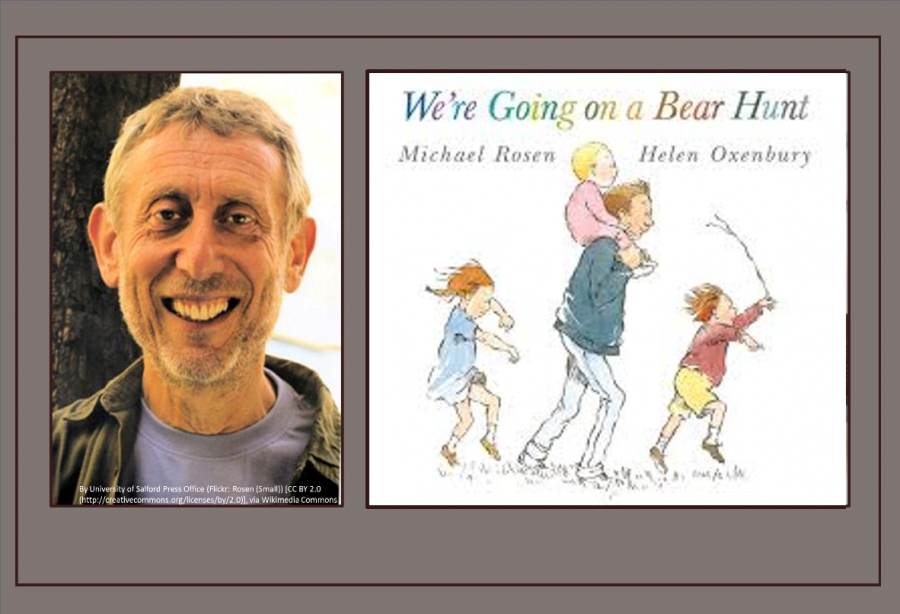
Michael Rosen, who you may know as the author of Going on a Bear Hunt and who I previously introduced to you in this post, shares some recommendations for teaching poetry on his blog. Although the suggestions were written for a year one teacher, I think the suggestions could be extended out to other years. Following his recommendations would more than cover the expectations of the Australian Curriculum, and what a wonderful way to turn children (and yourself) onto poetry.
I’m only sharing a few of his recommendations here. Please visit his website to read the others.
Michael Rosen’s suggestions for teaching poetry
Get as many poetry books into your classroom as possible. Encourage the children in pairs to browse, choose and read.
Read poems to them every day, use vids of poets (check out Michael Rosen’s YouTube channel) , use national poetry archive. Writing poems with no poems in your head is too big an ask. Fill their heads with ‘What poetry can do’ ie loads of poems.
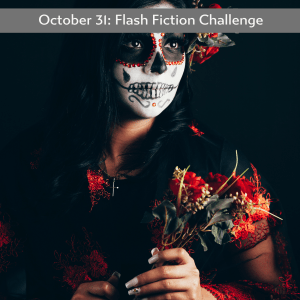
I would have to say that, here in Australia, we have been rather insulated from the Halloween phenomena until recent years and it was only very recently that I became aware of the Mexican holiday Dia De Los Muertos, which celebrates the dead, remembering them and celebrating with them as if they were alive. What a wonderful way of keeping the memory of loved ones who have passed, alive.
We are not very good about discussing death in our culture, especially with children. Rather than accepted as a normal stage of life, it is kept secret as if to be feared. Yes, none of us want to go before we’re ready, but there isn’t one of us, as far as I know, who has found the secret of living (in this Earthly lifetime) forever.
The Tiny Star
Last week I had the absolute joy of attending the launch of a lovely new picture book The Tiny Star, written by Mem Fox and beautifully illustrated by Freya Blackwood. The book is a joyous celebration of life’s journey from the beginning when ‘a tiny star fell to earth and turned into a baby’ until its return to the night sky where it would be ‘loving them from afar and watching over them … forever.’ The book provides a beautiful opportunity for discussing, even with very young children, the passage of time and the passing of loved ones in a way that is sensitive, respectful and meaningful. It is a book, just like each ‘star’, to be treasured. You can hear Mem read the book by following the link in the book’s title above and listen to her discussing the book with illustrator Freya Blackwood in this video.
The Fix-It Man
Another lovely picture book that deals well with the topic of death for young children is The Fix-It Man, written by Dimity Powell and illustrated by Nicky Johnston. The book deals, sensitively and honestly, with a child’s grief at the loss of a parent. The child discovers that her father, who is usually able to fix any broken thing, is unable to fix her sick mother. Together the child and father find a way to support and strengthen each other through their grief and come to terms with their loss.
The Forever Kid
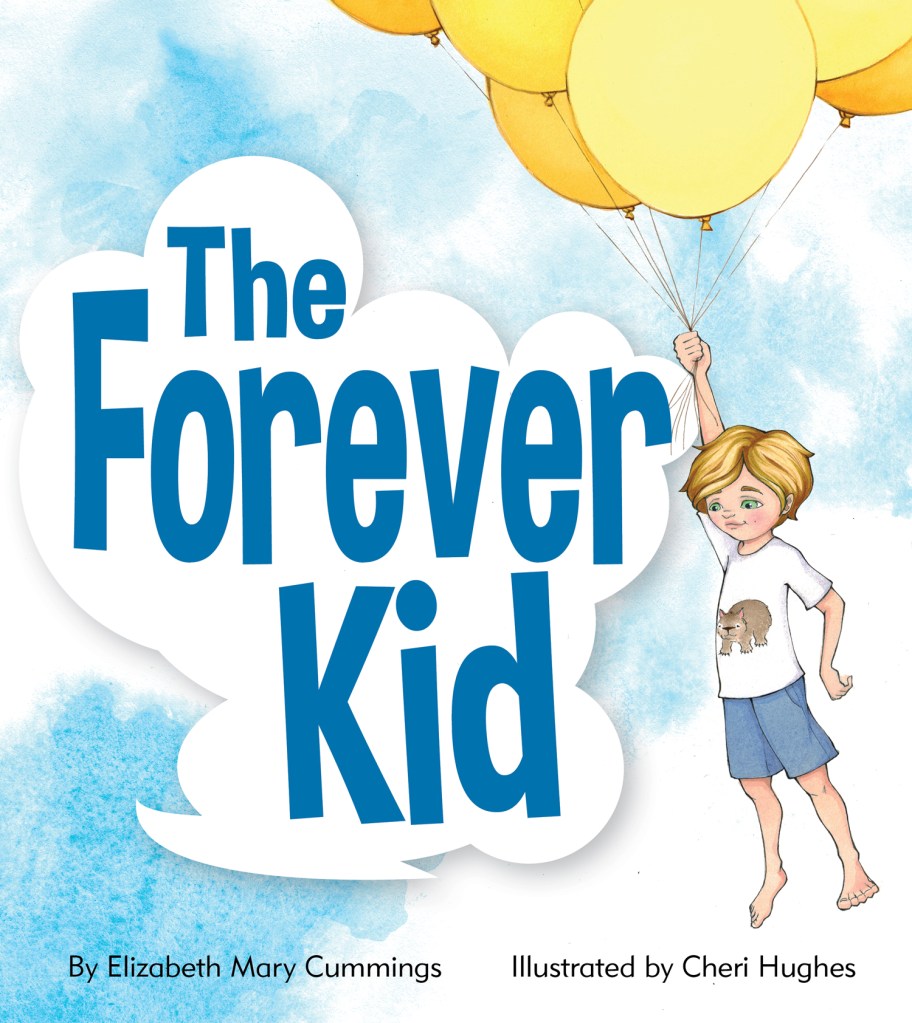
The Forever Kid, written by Elizabeth Cummings and illustrated by Cheri Hughes, is another lovely picture book that sensitively tackles the topic of death, this time with the loss of a sibling. Each day, on the ‘forever’ child’s birthday, the family keeps his memory alive by celebrating with his favourite activity—lying on their backs on the grass telling cloud stories. Families who have experienced the loss of a child may be moved to find their own ways of remembering and celebrating the life that was. (I interviewed Elizabeth about The Forever Kid for readilearnhere.)
Flash fiction challenge
So, back to Charli’s challenge to write about the Day of the Dead. While Halloween and the Day of the Dead have similarities (perhaps more to the uninitiated than to those in the know), they are not the same thing. However, my story is probably more like Halloween than the Day of the Dead. Oh well, that’s where the prompt took me, maybe because of the discussion about Halloween not being an Australian tradition that arises at this time every year, and perhaps because, in the 80s (anyone else remember that far back?) we teachers were instructed to not do anything involving Halloween or witches in our classrooms. That has now been revoked and many teachers work a little fun into their program with Halloween-themed activities. (As I suggested on readilearn recently.)
Anyway, here goes.
Full Bags, Dying Heart
From his room, Johnny watched the parade of monsters and ghouls wending from door to door. They laughed and giggled, whooped and cheered, clutching bags bulging with candy.
“Get inside,” she’d admonished.
“Why?”
“It’s the devil’s work. Dressing up like dead people. It’s not our way.”
She’d dragged him inside, shut the door and turned off the lights.
“We don’t want those nasty children knocking on our door.”
“But, Mum. It’s Graham and Gerard and even sweet Sue …”
“Enough! Get to your room!”
He watched, puzzled—How could it be devil’s work? They were his friends having fun.
Thank you for reading.
Note: I would have liked to write a sequel to this where Johnny sneaks out and joins his friends, but I ran out of time. Maybe another time.
I appreciate your comments. Please share your thoughts.
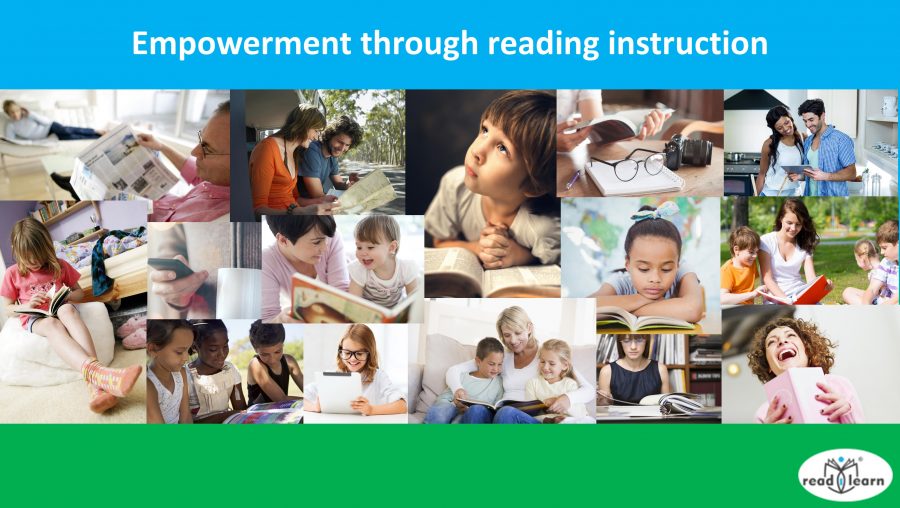
The importance of reading to children every day is never far from my mind. It comes from a passion for all things literacy as well as the knowledge that reading means empowerment. Reading is the key that unlocks so much that is meaningful in today’s world.
Whether at home or in the classroom, children need to listen to stories read aloud to them every day. It should be non-negotiable and prioritised. I would also add time for independent reading of self-selected material to that non-negotiable list and, in the classroom, time for independent writing on self-chosen topics.
Listening to stories benefits children in many ways; including, but not limited to:
Sheer enjoyment
Connection with others and other ideas which leads to understanding, respect and empathy
Exposure to language and vocabulary which in turns develops language and vocabulary
Positive feelings for books as a source of pleasure and information and a stimulus for imagination and creativity
A model of fluent and expressive reading behaviour that can be aspired to and emulate
A desire to read for oneself.
Keeping in mind that reading aloud to children and making time for their independent reading are non-negotiable and occur in the classroom every day, children also require purposeful instruction in the process of reading.
While some children appear to learn easily and without effort before starting school, as my own two children did, others struggle to understand the marks on the page. Most children fall somewhere on a continuum between, benefitting from instruction along the way.
The readilearn collection of teaching resources for teachers of the first three years of school includes many to support your teaching of reading. Many resources are free, others are available for no more than a few dollars, or you can access all the resources for one low annual subscription of just A$25. (That’s about £13, €15, US$17 or CAN$22) I’m sure you’ll agree that’s great value.
As part of our support for reading aloud, on the readilearn blog we regularly conduct interviews with authors and illustrators about their new books. Many of these interviews are available to download free from the Author and Illustrator Spotlight resources. We also publish free lists of books on different topics for you to download; for example,
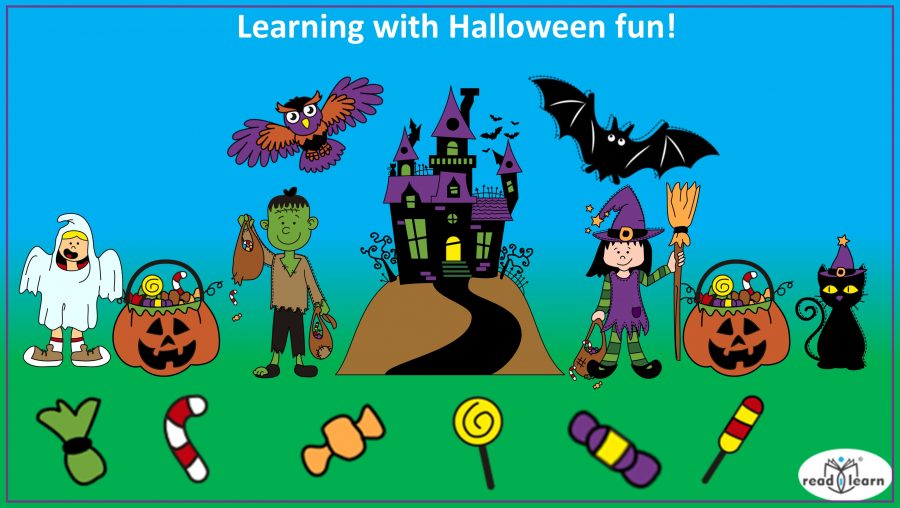
Halloween is just around the corner and many of us wonder how we can have fun with a Halloween theme while ensuring learning is not forgotten in repetitious and meaningless worksheets.
readilearn teaching resources support teachers in keeping the learning alive while the children are having fun with Halloween-themed lessons.
The printable Trick or Treat Game for Halloween is a fun board game for two or more players of all ages, suitable for use in maths and literacy groups, with buddies or in family groups. It combines reading, mathematics, activity, and loads of fun and laughter.
Everything required to play the game is included in the zip folder. All you’ll need to add is a dice and a sense of fun. There are treats to collect and instructions to follow. Try not to be scared by those witches and ghosts and, most of all, look out for your friends.
The kit also includes additional ideas for lessons in maths and writing.
Each of the game components are also available individually to use in other ways if you wish.
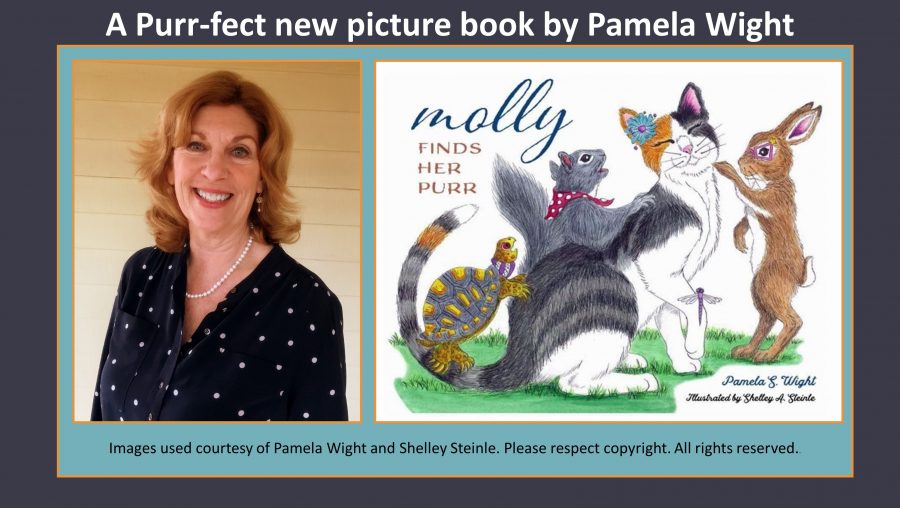
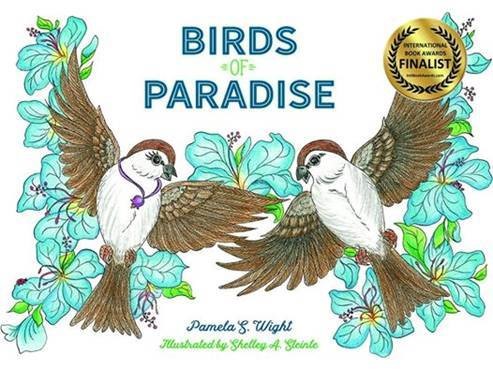
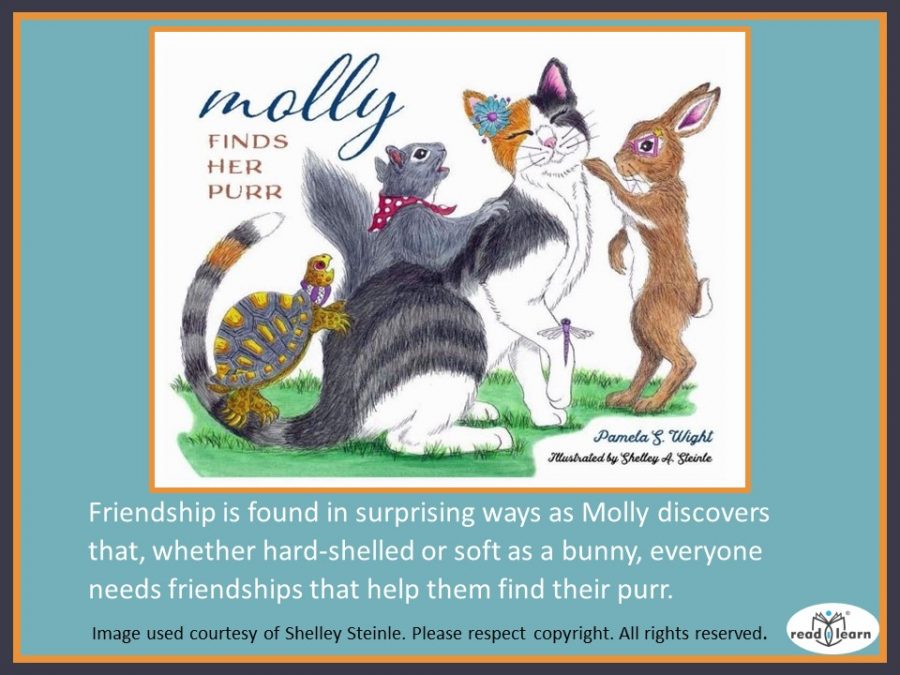
Today, I am talking with author Pamela Wight about her new picture book Molly Finds Her Purr. I previously introduced you to Pamela when her first picture book Birds of Paradise was released in 2017. You can read that interview here.
The importance of being true to yourself and the acknowledgment of the strength of friendship, even when differences exist, are strong themes in Pamela’s books.
Birds of Paradise is a delightful story of two sparrows Bert and Bessie who discover that friendship can unite even for two with very different attitudes to life.
In Molly Finds Her Purr, Molly the cat discovers that a purr comes from finding a circle of friends, and that friendship can be strong despite their outward differences.
Both books are beautifully illustrated by Shelley Steinle who has added a secret character for children to find on every page.
I am delighted that some of my words of praise for Birds of Paradise were used on the back cover of Molly Finds Her Purr. I wrote, “Shelly Steinle’s illustrations are gorgeous and perfectly complement Pamela Wight’s lovely story.” I could say exactly the same in praise of Molly Finds Her Purr.
A little about Pamela Wight
Pamela S. Wight writes fiction for children and adults. She is the published author of The Right Wrong Man and Twin Desires, and pens a popular weekly blog called Roughwighting (roughwighting.net). She teaches creative writing classes in the Boston and San Francisco areas. Her first picture book, Birds of Paradise, published in 2017, was a finalist in the 2018 International Book Awards.
Need ideas for teaching critical and creative thinking and cooperative learning in the classroom? Find out how thinkdrive can support your teaching.
We are all aware of the importance of teaching critical and creative thinking and of providing opportunities for cooperative learning in the classroom. We know that critical and creative thinking are considered essential for life in the 21st century and, for this reason, form one of the general capabilities embedded in the Australian Curriculum. The ability to contribute productively to a team effort is also considered a highly desirable skill. These abilities are often more highly regarded by employers than academic achievement.
However, in a busy classroom with content to be taught and tests to be administered, timetables to be followed and schedules to be kept, and with ever-increasing standards to be achieved, planning for lessons developing critical and creative thinking that engage children in cooperative learning can be the item on the list that rolls over from week to week.
I’m here to tell you that it doesn’t have to be that way. Help is close at hand with thinkdrive. If you are not already familiar with itc thinkdrive, I recommend you take a look.
Kim Michelle Toft is the author and illustrator of a collection of beautiful environmentally-themed picture books focussing on the conservation of marine environments. I have previously introduced you to Michelle when we spoke about her books The Underwater Twelve Days of Christmasand Coral Sea Dreaming.
Kim illustrates all her books with unique and beautiful silk paintings. You can view Kim’s painting process in videos that show 40 hours of work in two minutes on her website here.
In this post, to coincide with a special giveaway, we discuss her beautiful book I Can Swim a Rainbow.
About I Can Swim a Rainbow
I Can Swim a Rainbow adapts the lyrics of Arthur Hamilton’s song I Can Sing a Rainbow, with which most young children are familiar, to the colours of the ocean and its inhabitants. As are all Kim’s books, it is illustrated with her magnificent and unique silk paintings which highlight the beauty of the ocean’s colours. As always, the environmental message of this book is as strong as its pages are beautiful as it calls us to protect the world’s fragile reef environments.

















 Norah Colvin