These words piqued* my interest as they wafted to my ears from the TV set in the other room.
“Who is that?” I called out.
“Jackie French,” he replied.
I jumped up, eager to see and hear more.
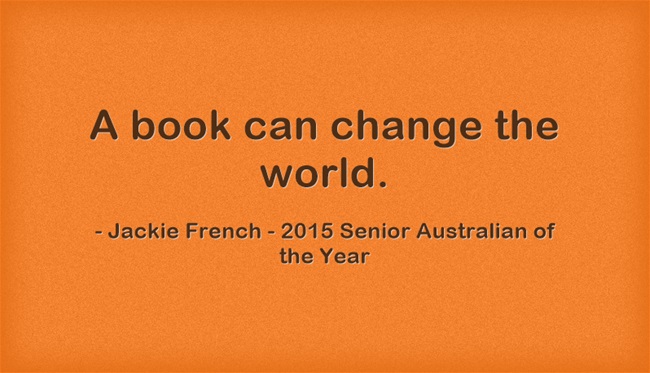
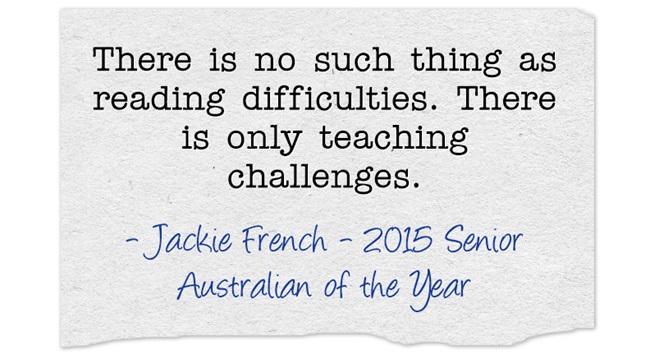
Jackie French is a well-known Australian author and advocate for literacy and the environment. She is currently the Australian Children’s Laureate with the task of promoting “the importance and transformational power of reading, creativity and story in the lives of young Australians”.
The media announcement released by the Minister for Social Services explains that Jackie was recognised for her “long and distinguished career as a beloved children’s writer, earning more than 60 literary prizes for her books.”
“Jackie embodies this commitment (to changing lives in our community) and I’d like thank her for the work she continues to do sharing the power of reading and story-telling for young Australians, and her work in conservation.”
Here is Jackie, Senior Australian of the Year 2015, accepting her award.
In this next video Jackie talks about her book “Hitler’s Daughter”. You don’t have to have read the book to glean much of interest from the interview. In the discussion Jackie shares her thoughts about reading and writing. She questions how the ‘world’ in which one is, influences thoughts about good and evil and decisions that are made. She discusses how the need for evil to be resolved in a work of fiction differs between children and adults. She talks about whether it is necessary for a child to apologise for the sins of the previous generation, and how still controversial issues can be dealt with in an historical situation. It is worth listening to if you simply want something to ponder over.
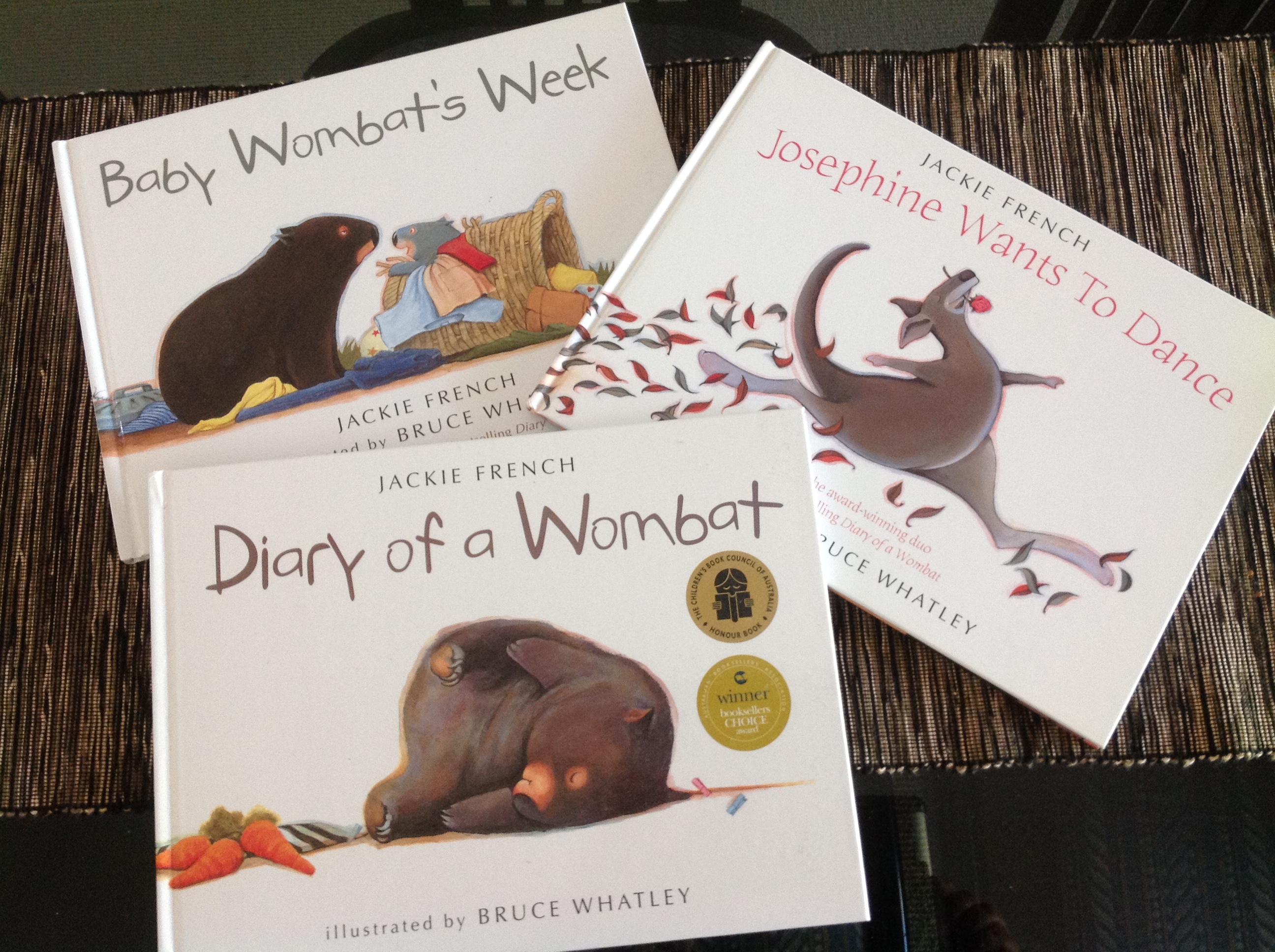
Being an early childhood teacher I am more familiar with Jackie’s picture books such as
I congratulate Jackie on her award and thank her for the contribution she is making to the lives of so many and the future of our planet.
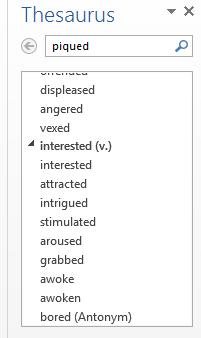
*piqued
In this sentence, I am using the word “piqued” to mean “stimulated or aroused my interest”.
How can one word be used to express opposite meanings? I don’t know how anyone is expected to learn or understand the nuances of this language we call English!
When I checked with my thesaurus to ensure I had chosen the correct word, this is what I found:
How many other words do you know that could almost be listed as its antonym?
Thank you for reading. I appreciate your feedback. Please share your thoughts about any aspect of this post.
Caroline Lodge expressed a similar view on her blog just this week, confessing that she didn’t know how to go about revising her novel, but that she did know what to do about not knowing: she enrolled in an online editing course. She attributed the view of intelligence as “knowing what to do when you don’t know what to do” to the educationalist Guy Claxton.
I wasn’t aware of Claxton but he sounded like my sort of educationalist so I decided to investigate further.
I didn’t have to read far into the article before I knew that Caroline had sent me in the direction of another great educator (thanks Caroline).
In the introduction Claxton says,
“The well-rehearsed economic argument says that knowledge is changing so fast that we cannot give young people what they will need to know, because we do not know what it will be. Instead we should be helping them to develop supple and nimble minds, so that they will be able to learn whatever they need to. If we can achieve that, we will have a world-class workforce comprising people who are innovative and resourceful. The personal argument reaches the same conclusion.”
I have expressed similar views previously on this blog, including here, here and here.
A little further into the article Claxton introduces a new (to me) term: illearnerate. He described students not thinking of themselves as effective real-life learners. He says,
“They think that school has not only failed to give them what they need, it has actually compounded the problem.”
The term is new, but the thinking is not!
He goes on to say that,
“More fundamental even than the concern with literacy and numeracy is the need to protect and develop young people’s learnacy.”
What great terms, illearnerate and learnacy, I have added to my vocabulary today!
The steps I am taking are definitely enhancing my learning. I think I am learnerate.
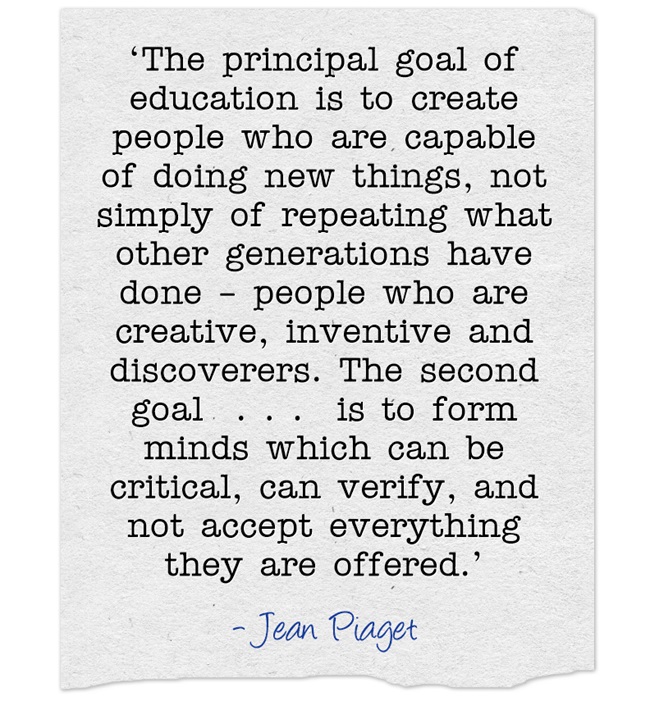
However, I digress. I was looking for the attribution to Piaget and, a little further into the article, there it was:
I looked further online for confirmation of the quote and found this on goodreads:
I think there is a subtle difference in the interpretation given by Claxton and would say that intelligence is not so much defined by, but incorporates “knowing what to do when you don’t know what to do”.
I said that I used PowerPoint and would post some instructions if he thought it could be useful. He said that it would be, and Anne Goodwinagreed.
For some time I had been wanting to create an instructional video using a capture of what I was doing onscreen. However it hadn’t reached the top of my to-do list. This seemed the perfect opportunity to put it there and do the learning required.
In response to Geoff’s request I made this video demonstrating how to insert pictures and text in PowerPoint, then group and save them as one image.
For my first attempt I was fairly pleased with the result, though I fear the video may be a bit long at 10 minutes. Maybe I should have started with a simpler image – one picture and one text box may have been enough for the demonstration to be effective. I’d be pleased to know what you think.
After I had finished the video it occurred to me that I may not have addressed Geoff’s question at all, that the combination of image and caption that Geoff was referring to may have been the image of the whole PowerPoint slide, like this one:
If so, then my first video would be of no use to Geoff.
There is a saying attributed to George Bernard Shaw:
“Those who can do, and those who can’t teach.”
I both agree and disagree with the statement for different reasons. Teaching is an incredibly important profession and not everyone can do it. Looking beyond the profession to simply teaching someone a skill is also something that not everyone can do. Sometimes I think that the one most capable of teaching a skill is the one who struggled to learn it; not the one who was able to do it effortlessly and almost by intuition.
The ability to teach requires knowledge of each step or each component and how they work together. This knowledge helps the teacher understand where a learner is confused or what the learner needs to know.
So just as teachers in classrooms provide resources and strategies to cater for a range of needs and abilities, I have produced a second video demonstrating how to make an image of a PowerPoint slide. This shorter (five minute) video explains how to create images using three different methods: Snagit, Snipping Tool, and printscreen function. I hope I have explained the steps for each clearly.
Important update: Do notdo this at home. Do notfollow the procedures in this video.
Since viewing this post and videos my daughter Bec has told me of a much easier way to create an image of a PowerPoint slide, or of every slide in a presentation. Maybe you know of it too.
Here’s how to do it:
Click on the slide you wish to make an image of, or any slide if you wish to make images of all slides in the presentation
Go to file, save as
Choose Save as type: PNG
Click Save – you will be asked which slides you wish to export: all or just this one
Selecting all saves every slide as a separate image to a new folder with the file name you choose; selecting just this one saves only the slide selected.
How easy is that? Thanks Bec. 🙂 And I don’t mind that I found out after making the video. I wanted to learn how to do that anyway, and now I have learned something else as well. Great steps in learning. I’m learnerate!
She collapsed, exhausted. Stairs led up and stairs led down; some steep, some wide, some narrow, most dark. Her head spun and vision blurred. Which way now? Which way had she come? Had she been going up and down these stairs forever? Going around in circles? They all now looked the same. She didn’t even know if she’d been in this place before.
“I’m trapped,” she thought. “Stuck here forever.”
She closed her eyes, surrendering to despair.
Outside birds heralded the rising sun. She was lost, oblivious of its promise.
If only she had recognised the door.
Thank you for reading. I appreciate your feedback. Please share your thoughts about any aspect of this post, including the videos and flash fiction.
The end of a year is often used as a time for reflection, reassessment, and redefining goals. This week at the Carrot RanchCharli Mills is talking just that: reflecting on the year that was, assessing her achievements and failures and redefining her goals for the next part of her journey. Charli admits that she didn’t achieve all she had hoped but acknowledges that those shortcomings were more opportunities for learning than failure as such. While she learned more about herself and her abilities she was able to recalculate her goals and redefine her vision.
In education, failure is recognised as integral to learning.
Willingness to
have a go
try something new
seek alternate solutions and ways of finding solutions
persist and not give up
recognise that success does not always come with a first attempt;
these are effective characteristics of learners, innovators and creative people.
Thomas Edison, after many unsuccessful attempts said,
“I have not failed. I’ve just found 10,000 ways that won’t work.”
There is no failure in a failed attempt; there is only failure in giving up.
Again, to quote from Edison,
“Many of life’s failures are people who did not realize how close they were to success when they gave up.”
C.S. Lewis is also quoted as saying,
“Failures, repeated failures, are finger posts on the road to achievement.”
He says,
“One fails forward toward success.”
What helps that ability to rise again is a sense of where we are going, of what we are aiming for and what we want to achieve. This is often referred to as a vision, and it is a vision that Charli Mills has challenged writers to include in a flash fiction piece this week: In 99 words (no more, no less) write a story that includes a vision.
Having a vision of the future and working towards that future is essential to effective teaching.
Through learning from a mentor teacher Jackie Catcher was able to refine her vision for effective teaching, which she shared on Three Teachers Talk :
“I learned that to lead students into our subject, we must make them feel valued within our community. We must work to acknowledge their strengths and show them that we are all equals when it comes to developing as readers and writers. We must praise their hard work and determination far more than their failures, and we must make ourselves available both in and outside of class to have meaningful conversations and connections. In the end, we are never too old to change our outlook and education. After all, one teacher can make the difference.”
I constantly share my own, and others’, views about and vision for education on this blog.
I have also referred to an alternative to traditional schooling that I “failed” to establish in the 1990s. The vision for that alternative was:
“A dynamic centre of learning opportunities
for children, families and communities
which focuses upon the development
of self-esteem and positive attitudes
in a nurturing environment
in which individuals are appreciated
for their uniqueness and diversity
while fostering the commonality of their human essence.”
Which brings me to my flash fiction piece for this week. In it I attempt to draw together many threads from views expressed over the year and finish with an optimism for the future.
The power of “No”
It was grey.
For as long as anyone could remember.
They moved about, comfortable in the familiar, avoiding the unknown.
Shadowy shapes beyond incited fear: a threat to all they knew?
Lives lacked definition, blending to sameness, conforming to rules.
“But why?” The tiny voice shattered the stillness.
All eyes turned. Bodies stiffened.
Whose was this unruly child?
“Shhh!” the hapless parents failed to hide their offensive produce.
“Why?”
Again! No one moved.
“Because!” was the parents’ definitive reply.
They breathed. “Because!” they confirmed in unison.
Defiantly the child pressed the dust-covered switch and flooded the world with light.
Thank you for reading. I appreciate your feedback. Please share your thoughts about any aspect of this post or flash fiction.
I wish you success as your vision takes shape in 2015.
I spent a good part of the 1990s working towards creating an alternative to traditional schooling for my own daughter and the children of similarly-minded parents. For an assortment of reasons, none of which had anything to do with education, we didn’t get the school operational. There is a big part of me that still longs for that alternative and I am always interested to hear of situations which espouse similar beliefs and attitudes to mine. When I do, my heart starts to race and I want to holler and jump for joy, shouting from the rooftops, “See it can be done! This is how it should be! This is what children need!” I want to be in there with them, a part of it all, learning from and with them, and perhaps even adding a little to their learning, should I be that impudent to suggest it possible.
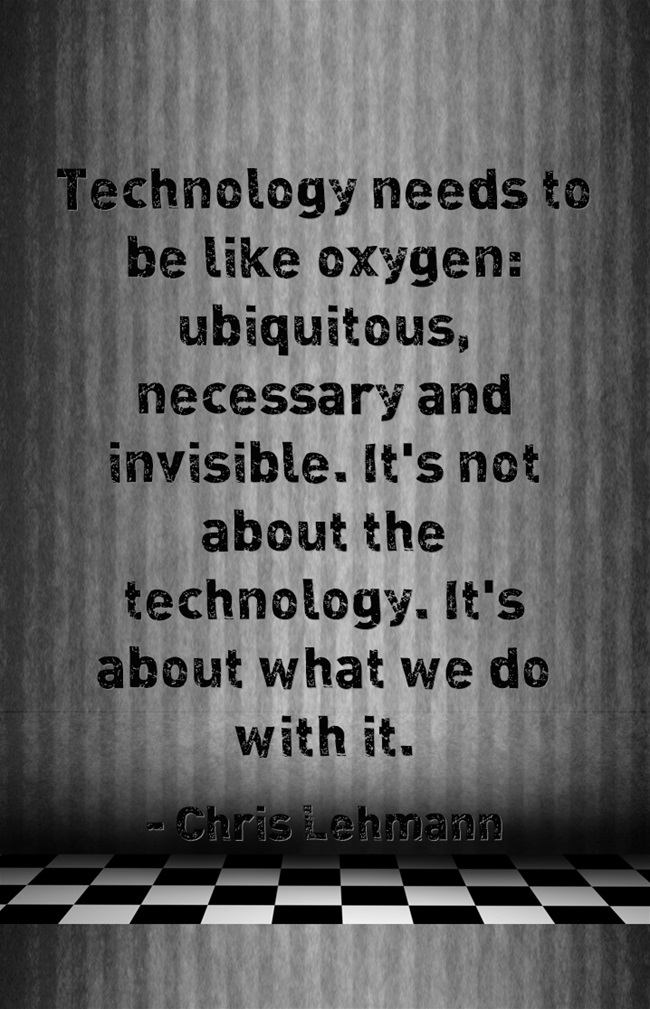
Yesterday was one such occasion. I popped over to Tara Smith’s A Teaching Life blog and read her post “Preparing for a student teacher”. I always enjoy reading Tara’s blog and could identify with much of what she was feeling while preparing to welcome a student teacher into her classroom. But what got me most excited was a video of a talk given by Chris Lehmann at the 2013 MassCue (Massachusetts Computer Using Educators) conference.
Chris Lehmann is the founding principal of the inquiry-driven Science Leadership Academy (SLA) in Philadelphia. The achievements of both Chris and the SLA are rather impressive. You can read about them here, here and here. Chris is one excited, enthusiastic and inspiring educator.
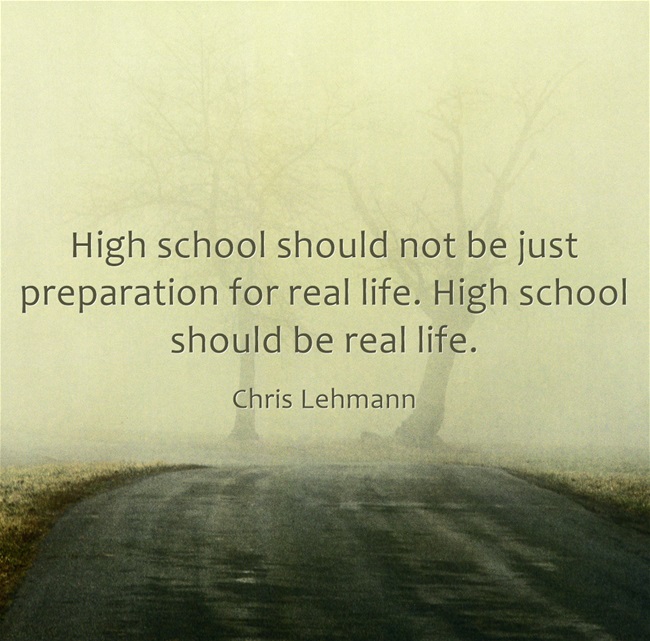
The video of Chris’s keynote address to the conference is rather long at almost 1 hour and 8 minutes (in comparison the mostly 15-minute TED talks that I often watch). I admit that when I saw how long it was I baulked, wondering if I had that amount of time to “spare”. Fortunately something in Tara’s words induced me to do so. After all I didn’t have to watch it all, did I? But watch it all I did. How could I not? His dream was my dream:
And then Chris added:
‘all these people showed up and breathed life into that dream’
Here is his talk. If you don’t have time to listen to it all, I give you a few of my favourite quotes. (You may have already encountered some of these ideas before on my blog!) But who knows, he may have other thoughts that resonate with you.
Chris says that many people often ask why schools can have so many problems when there are so many passionate, dedicated teachers. He answer is simple: ‘We have a systemically screwed up system and if you put a good person in a bad system the system wins way too often.’ He says that ‘the factory model of education . . . no longer works for our children if it ever did.’
Chris says that one of the biggest problems with many schools is that students are being repeatedly told to do stuff that they may never need or even care about. He says, ‘If we were to write a students’ bill of rights the first statement on it should be this question:
He then goes on to say that ‘They shouldn’t even need to ask it because the reason should be so apparent through the work that they are doing that is meaningful and relevant to their life right now.’
He says that kids can do amazing things but that the sad thing is that unless it can answer a question on a state-wide test, no one will care! He says that using data from standardised tests is dangerous and that the best data comes from the work students are doing in class every day.
He says that better questions to ask of schools would be:
‘What is your college persistence rate?
How many of your graduates five years out are either in school or in a job where they are over the poverty level?
What does a student survey of your school tell you about whether or not the students feel valued and feel that their education is valuable?’
These are just some of the things that Chris Lehmannsays schools should be:
Inquiry driven
Student centred
Teacher mentored
Community based
Places of collaboration and incredible passion with
Integrated learning
Project based
In traditional classrooms the assessment tool is a test. Chris talks not about tests but about projects. He says,
“If you really want to see what a kid has learned it’s about the project, it’s about what they can do, what they can create, what they can transfer, what they can make, what they can do with their own head, heart and hands. A true project is when kids get to own it.’
His goal is to educate people to be ‘thoughtful, wise, passionate and kind’ and says that
‘ what were really trying to do is nothing less than trying to change the world.’
This brings me back to my two previous posts How much of a meliorist are you? and Can you make a difference? which drew quite a debate (unintended) about whether we believe we can, or should, try to change (i.e. improve) the ‘world’. I think Caroline Lodge who blogs at book word sums it up quite nicely for educators, saying
‘ I am a meliorist. How can someone in education stay there if they are not? The kids improve their skills and understanding, the world turns, and sometimes (like this summer) seems on the way to hell in the proverbial handcart. But there are SO MANY people working to improve the world. Educators as special people in this.’
For Chris,
‘The link between an inquiry-driven education and a care-driven education are three simple questions:
What do you think?
How do you feel?
What do you need?’
He says, ‘Everything you do should empower children.’ Thanks Chris. My words exactly!
He says,
‘Kids can do real work. We have to dare them to do that, we’ve got to help them, we’ve got to facilitate the work and we’ve got to get out of the way.’
The Science Leadership Academy is not the only ‘school’ of note. In response to previous posts, including Food for thought and Are you ready to embrace the futureCharli Mills of the Carrot Ranch left comments and links to information about a school attended by her children, the Minneapolis’s School of Environmental Studies(SES). Charli linked to this article about the school and another on Edutopia that includes a 10-minute video that she says aptly describes what makes SES a learner-based school. She also provided a link to a very impressive student project developed by two of her daughter’s classmates, and a link to a video produced by students explaining the school. Overall, if I represent her views correctly, Charli was very happy with the education her children received at SES and the impact that project-based learning had on their lives.
These are just two of the many wonderful schools out there empowering learners. If you know of others, I’d love to hear about them.
I value your feedback. Please share your thoughts about any aspect of this post. I’m happy to follow the discussion wherever you lead.
Recently Hope at Nanny Shecando sent me a tweet requesting some thoughts about imaginative play in a school setting. Sadly I would say that imaginative play has been just about pushed out in the ever-increasing content-driven and assessment focused curriculum. Seeing children as young as five spending much of their day sitting at desks filling in worksheets and parroting back isolated bits of information flashed at them in meaningless drill and practice sessions is about as far away from my thoughts about education as you could get. If it is difficult for early childhood teachers to squeeze time for imaginative play into their programs, imagine (there’s that word) how difficult it is for teachers of older children.
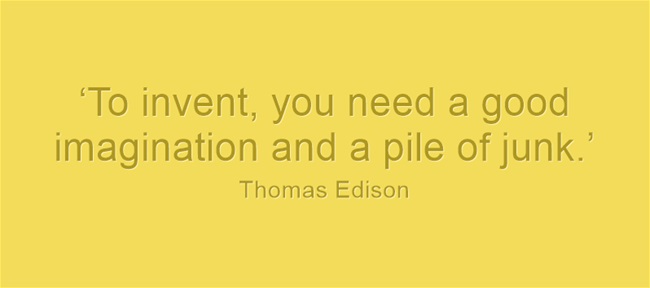
However, whenever I hear the above quote by Thomas Edison, I am reminded of how an early childhood classroom should be: a place for imagination, exploration and discovery. Parents may tire of the cardboard box creations that children regularly bring home, wondering where each one can be stored (or discreetly disposed of!), but the value to be had from the opportunity to create, imagine and play must not be understated.
For imagination to flourish in an early childhood classroom, I suggest the following ingredients are essential:
A recognition of the importance of play and imagination in the healthy development of children and the prioritisation of opportunities for imaginative play every day by providing:
Time – lengthy and uninterrupted, with the opportunity for created play areas to be left intact over a number of days or weeks
Space – both indoor and outdoor with a variety of larger and smaller spaces
Opportunities for self-selection of activity and self-direction
Books for story reading and play acting
Variety of props: things such as dress-up items including lengths of fabric that can be a kings robe, a princess’s dress, a magic carpet, an apron, a bed; hats and scarves; toys like cars, dolls, animal toys; building blocks and cardboard boxes; paper, cardboard scissors and pens for creating signs, posters and crowns; areas for quiet play with cushions; open spaces for creating larger ‘worlds’ . . . the items that can be used to inspire imagination are limitless.
When children are showing interest in a particular topic, an observant teacher may gather up a variety of props and leave then in a box for children to discover and use as they decide.
In an earlier post, Learning at its best: A classroom of magic, Hope herself described a school with an open space ‘where magic happens’. She described a friendship tree where ‘friendship and freedom of speech are fostered’; an area with a ‘magic carpet . . . plush beaded cushions and Middle Eastern style blankets . . . a place for imagination to prosper. Anything is possible when dreamed, imagined or conjured whilst on the magic carpet.’
She described an area for drama and the opportunity of being and expressing yourself. She described a creativity corner where young inventors could create anything they could imagine; and spaces to read, explore, share and dream. One could think this school was in Hope’s dreams, her imagination of what is possible. But it is a real school educating real children in very positive ways that will have a very different effect that the scenario I described above. However it is not a typical school. There is not one like it in every suburb. In Hope’s words, it is a ‘very select private school’. But don’t all children deserve learning opportunities such as these?
After re-reading Hope’s post, I’m not entirely certain why she invited me to share my thoughts about imaginative play in a school setting. I think she has described a wonderful example of imagination in practice. The design of the school and the aspects of the program described above, show the value of imagination, not only of the students but of the school designers, administrators and teachers.
In a recent post Just imagine . . . the power of imagination I talked about the power of imagination to drive creativity and innovation, and suggested that much of what we now accept as commonplace was once only in someone’s imagination. Einstein said that,
‘Imagination is more important than knowledge. For knowledge is limited to all we now know and understand, while imagination embraces the entire world, and all there ever will be to know and understand.’
Maria Montessori is attributed with the idea that ‘Play is child’s work’. In this article Thinking about Children’s PlayDavid Elkind, refutes that idea citing works by both Freudand Piaget, a psychologist whose work greatly influenced thinking about child development and learning. Elkind, himself a professor of child development and of author of books such as The Hurried Child, The Power of Play and Miseducation, says that ‘Although Montessori has made many important and lasting contributions to early childhood education, her identification of work and play in young children was unfortunate.’ He says that, in play, children are not preparing for life, they are living life.
Elkind does not favour the imposition of formal learning situations upon children of increasingly younger ages. The following excerpt from Miseducation, shared in Commentary: The ‘Miseducation’ of Young Children Elkind says, ‘When we instruct children in academic subjects, or in swimming, gymnastics, or ballet, at too early an age, we miseducate them; we put them at risk for short-term stress and long-term personality damage for no useful purpose. There is no evidence that such early instruction has lasting benefits, and considerable evidence that itcan do lasting harm.’
He continues, saying that ‘The most important thing is an excitement about and enthusiasm for learning. Skills are easily learned when the motivation is there.’ I agree wholeheartedly and have joined in with a discussion of motivation in a number of posts, most recently in Motivation – why we do the things we do.
In another article Can we play? shared on The Greater Good in 2008, Elkind explains that imaginative play is important to academic as well as social and emotional development. Unbelievably, he said that ‘More than 30,000 schools in the United States have eliminated recess to make more time for academics.’ It is difficult to imagine how unwelcoming and uninspiring a school without recess would be. I wonder how much lunch time those who made these rules allow themselves.
He says ‘Play is motivated by pleasure. It is instinctive and part of the maturational process. We cannot prevent children from self-initiated play; they will engage in it whenever they can. The problem is that we have curtailed the time and opportunities for such play.’
In the words of Cat Stevens (Yusuf Islam), ‘Where do the children play?’ I add ‘and when?’
If you wish to read further, here are some links to get you started. I don’t agree with all the content. Some suggest a more structured approach than I would favour. However, as with everything, a broader knowledge helps one more clearly formulate one’s own position.
It is often said that school days are the best days of our lives.
Considering that I have had far more days at school than not (as student and teacher) then I should probably agree, else I’d be saying that most of my days haven’t been the best.
For many adults it is not the in-class time that is most memorable or of which they have the most pleasant memories, it is the playtimes and the before and after walking to and from school times.
For some children, the in-class time drags while they daydream of long summer holidays and activities with family and friends. Other children thrive with the structured learning, soaking up everything offered to them.
In her post, School: A Suitable Place for Fiction?Anne Goodwin wrote that she is ‘always pleasantly surprised when children these days claim to enjoy school’. On the other hand, in a comment left on previous post here, Lori Schafer said that all her life she had ‘failed to understand why most children don’t like school. Why don’t they enjoy learning, and why don’t they enjoying studying, and why don’t they enjoy writing papers? Because, of course, there are a small percentage of us who do genuinely appreciate the discipline of schooling.’ She was one of them.
In his post, School’s Out – and Education’s In, Geoff Le Pard said that ‘People confuse school with education, as if they were synonymous’. (I have written a poem to express differences I see between education and schooling. You can read it here.) He goes on to say that ‘education is a constant, not a time limited schooling experience’ and disagrees with the cliché that school days are the best. He says that ‘all those days and bits of days when learning occurs make up the best days of your life’. I agree with Geoff that learning new things, particularly things one has an intrinsic motivation to learn, gives great joy.
Irene Waters said in her post about school that she loved her primary school days. As the end of her high school years approached, unable to see the point in continuing, Irene wanted to leave and start her nursing career. Her parents convinced her to stay and finish year twelve. While she didn’t at the time, she now appreciates the value in having done so and is grateful that her ‘parents laid down the law’.
Talking about education and schooling is nothing new for me, that’s what my blog is about after all. However for a lot of people, once finished, school is a thing of the past and not much thought is given to it later. The reason why so many others are talking about it this week is the flash fiction prompt set by Charli Mills at the Carrot Ranch. Each week Charli challenges writers to pen a 99 word story about a particular topic. This week her topic is school.
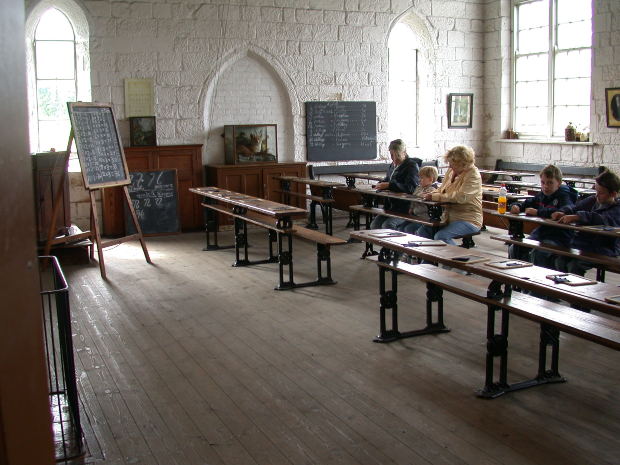
In her post, Charli describes an abandoned one-room schoolhouse that is close to her home. She explains that these schoolhouses ‘were often among the first structures built by pioneers’ and comments on the importance that was placed on education in those pioneering days. Indeed education has been important throughout the history of humankind. It is what sets us apart from other creatures.
In the words of Jean Piaget,
I have touched on these aspects of education in previous posts and will definitely do so again in future posts.
In a tweet Anne Goodwin hinted that she thought I may find this post difficult to write as I have so many options to choose from. Charli Mills thought I might mention how we wrote on slates when I was at school (my children would probably have suggested I write about using dinosaur bones to scratch crude messages in the sand!)
Instead, I thought about the strategies schools use to create uniformity, and of the many pathways that one may take through life after finishing school. I hope the analogy makes sense to you.
Chocolate balls
The final school bell tolled and the students erupted from the building like a burst box of chocolate balls, scattering in every direction and at varying speeds. Some stuck together along pathways safe and sure. Others crashed and bumped over roads less traveled seeking excitement, new discoveries and secrets to explore. Others stopped abruptly, their journeys foiled by stubborn obstacles. Still others, rolling upwards, failed to maintain the momentum to carry them over and beyond with those more adventurous others.
Who would know?
Inside the box, they were identical, centers hidden. Outside, their uniqueness was on show.
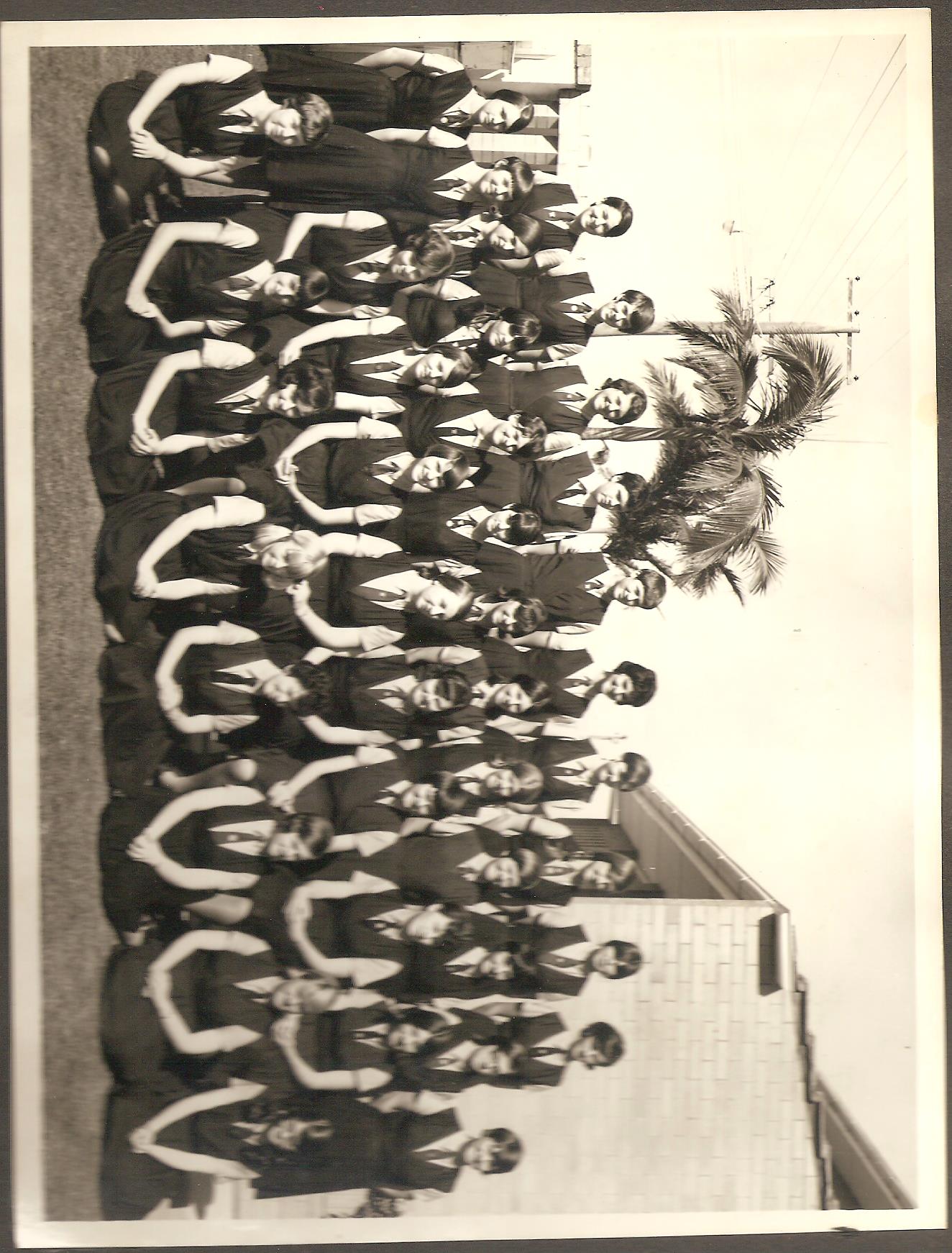
My year 10 class – only 20 went on to year 12.
I value your feedback. Please share your thoughts about any aspect of this post.
Multiple invitations or engagements often occur on the same date. Deciding between desired activities is not always easy. Cloning would make choosing unnecessary. Additionally, sending a clone to an unpleasant but unavoidable engagement could also be desirable.
Sometimes the number of must-do tasks can be overwhelming. The ability to engage the assistance of clones, especially to complete less desirable tasks would be great.
Time travel, wormholes and parallel universes are the stuff of science fiction; and while I am not a fan of the science fiction genre, I wouldn’t mind having access to some of its features. However, whether any, or which, of those features ever move from science fiction to science fact remains to be seen.
The power of imagination to drive creativity and innovation cannot be overstated. Much of what we now accept as commonplace was once a part of science fiction. Imagination, the stuff of science fiction and scientific exploration and investigation, has brought them to reality.
You are probably familiar with following quote, initially attributed to George Bernard Shaw but also made famous by Robert F. Kennedy:
“Some men see things as they are and say why. I dream things that never were and say why not.”
These words highlight the importance of questioning to stimulate imagination, and when paired with creative thinking, innovation can occur.
Einstein said that,
“Imagination is more important than knowledge. For knowledge is limited to all we now know and understand, while imagination embraces the entire world, and all there ever will be to know and understand.”
He also said that,
“Education is what remains after one has forgotten everything he learned in school.”
Although I cannot be certain, from those quotes, what Einstein’s attitude to the current trends in schooling would be (he did attend school and was very advanced in maths and sciences but did not perform so well in the humanities) I think he would not favour a content-driven curriculum which excluded opportunities for imagination and creativity.
On the other hand, Thomas Edison, the world’s most prolific inventor, was mostly educated at home by his mother who was able to encourage his experimentation and love of learning. He said,
“To invent, you need a good imagination and a pile of junk.”
If these significant thinkers of the 20th century, each of whom followed different educational pathways, recognise the importance of imagination, why would anyone argue against it?
Now the term ‘multiverse’ takes me back to the science fiction genre: wormholes, parallel universes and time travel, for example. I’m not sure how well I’ll do with this unfamiliar genre, but I will call upon my imagination and give it a try. See what you think – does my piece fit the criteria?
Clone Magic
All night Leone had huddled in line, sleepless with excitement, waiting for the release.
Now she had them! Clone pills!
‘Take one with water. Cloning occurs in 30 minutes and lasts 24 hours.’
Leone swallowed one tablet, then another, and another; ignoring the small print: ‘Do not take multiple tablets. Effects are unpredictable.’
When three clones appeared she instructed:
“1. Clean the house. 2. Exercise. 3. Weed the garden.”
She flopped on the couch. “Now to read.”
But — their hands grabbed for her book, pulling her hair and clawing her eyes.
“Me read! Me read! Me read!”
Thanks for reading. I appreciate your feedback. Please share your thoughts about any aspect of this article or my multiverse flash.
Brian is an amazing literacy educator from whom I had the extreme good fortune of learning many years ago. I have written about him before here and here.
Brian’s work focused on the conditions necessary for literacy development. His influence has spread beyond the classroom with the application of the conditions to learning in the workforce demonstrated.
Tony is an amazing educator who does his best to be the change he wants to see in the world. He talks about future-proofing and using innovative thinking to solve problems of both local and global importance.
Anyone who believes ‘that education is the most important profession on the planet’ and does everything in his power to support teachers to be outstanding, as does Tony; must be pretty good in my books.
One of Tony’s books The Ripple Effect is particularly apt for mention in this post. Tony says,
“you must believe in your personal power to create ripples that spread out and change the world. In fact, if it is not you who is going to do it, then who else do you think is likely to make the effort? Remember that every change on this planet begins with a human being somewhere, somehow. It may as well be you.”
This year Tony has started a new project called The Earth Movers Foundationwhich ‘helps young teenagers to create solutions to local and global issues. And they get to choose their own project. No adults will be telling them what project to do. They decide for themselves.’ Sounds pretty good to me.
Ken is another amazing educator. I fell in love with his ideas when I listened to his TED talk Do schools kill creativity? which I have also shared before here.
The statement on his website declares that
“Imagination is the source of all human achievement”.
I could not argue with that.
Ken introduces this short video The writing spirit which presents quotes from artists, thinkers, writers, innovators and snippets of interviews with writers. Just incidentally, and exciting for me, Richard Bach is included. Richard is the author of Jonathan Livingston Seagull, one of my favourite books for its inspirational message.
It is more than likely that these educators have no idea how they have influenced my life (and others as a result).
How wonderful might it be to know of the positive influence you have had on someone, and to have the opportunity of letting others know that they have positively impacted your life?
This is the purpose of The Butterfly Light Award which was bestowed upon me my Lisa Reiter, a lovely lady who is herself inspirational for her courage and her positive attitude which she shares with others through her blog Sharing the story. Thank you, Lisa. I am honoured and accept with pleasure.
As with any award, it comes with conditions:
You should write an acceptance post, making sure you link back to the blogger who awarded you and thank them. You MAY NOT lump this award in with a batch of other awards.
You must individually name and re-award to a minimum of 1 and a maximum of 9999999 bloggers. You must let them know either personally with a comment on their blog OR a pingback.
As I have been writing about educators, I am going to stick with that theme. A quick visit to these blogs will explain why I have selected them.
You must write a short paragraph entitled either “How I’m Spreading Light” OR “How I’m A Positive Influence” (what Lisa calls ‘the squirmy bit’).
Done! See beginning of article.
5. Display Belinda’s lovely “Butterfly Light Award” badge on your blog.
Thank you, Belinda. It’s a pleasure! We can never have too many butterflies!
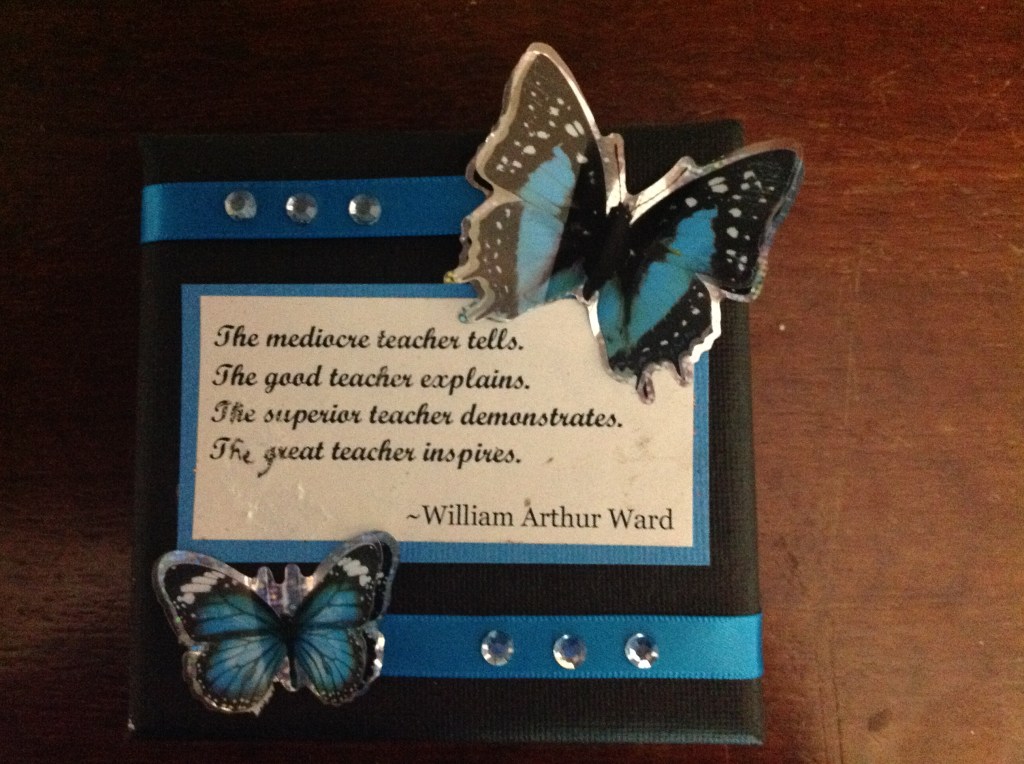
Note: The beautiful framed quote, pictured at the top of this post, was made for me by a wonderful lady, the mother of two of my students. They all share my love of butterflies! I thank them for sharing their appreciation of my positive influence.
I welcome your feedback. Please share your thoughts about any aspect of the article.
I have many discussions with parents about whether they should read fairy tales and stories with magical elements to their children. These parents raise a number of issues, for example:
Horrible things happen – Hansel and Gretel are abandoned in the woods (by their parents) and are captured by a wicked witch – the wolf tries to trick the seven little kids left at home alone
Parents are often dead or absent – Cinderella, Beauty and the Beast, Rapunzel, Red Riding Hood, Jack and the Beanstalk
Stepmothers are mean – Cinderella, Snow White
Sexism, especially the need for a female to be rescued by a handsome prince – Cinderella, Sleeping Beauty
They contain “magical” creatures such as fairy godmothers (Cinderella, Sleeping Beauty), witches (Snow White), giants (Jack and the Beanstalk), trolls (Three Billy Goats)
Myth of happily ever after
Stereotypes – beauty is good, ugly is bad
The presence of magic – good magic of fairies and bad magic of witches – Sleeping Beauty; magical bean seeds and geese (Jack and the Beanstalk)
“many of the older tales incorporated rather dark themes devoted to death, suffering and children being murdered. But then there is also a second incorporation that has to do with later Disney movies of these fairy tales and them being too happy and can result in parents thinking their child will be deluded with ideas that the world will just work for them and things will be good.”
While I acknowledge these elements occur, I am not prepared to abandon fairy tales because of it.
While I may consider a diet of only fairy tales problematic, I think something would be lacking if a child was refused access to the richness of their stories and tradition. Like most fiction, they offer an avenue for escapism. In addition, the stories can be used as a tool for initiating non-threatening discussions of the issues listed above.
“Stories are just one way that we are able to sharpen our own character in order to prepare for the narratives we will one day find ourselves in as the story of our life unfolds before, around and within us.”
Following a comment by Richard Dawkins, a recent discussion on The Guardian considered whether fairy tales are harmful to children. So far the consensus seems to be that they are not.
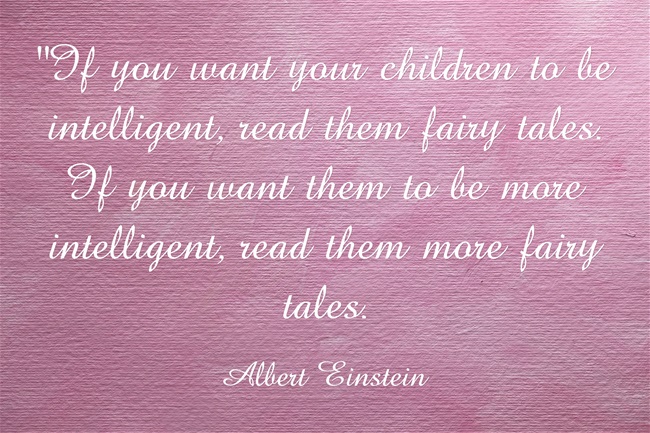
Albert Einstein was a supporter of fairy tales and is often attributed with the following quote, discussed in more detail by Maria Popova on brain pickings.
“In an increasingly complicated world, we more than ever want our children to be able to think with clarity, rather than lead lives hampered or derailed by all those false assumptions and unexamined prejudices that seem as easily inherited as freckles or brown eyes.
How can we go about teaching them to peel back the surface of their first thoughts on a matter, or even their strongest beliefs, and look at them with more care? . . . fiction has always fostered the moral, intellectual and emotional development of the growing child. (‘Should she have done that?’ ‘Would I?’ ‘What else could have been done?’ ‘How would it feel?’) Good stories highlight the sheer complexity of things. They furnish a far greater understanding of the world and everyone in it. For most of us, fiction has always been the earliest – and many would argue the best – instrument we have had for ethical enquiry.”
Think of the ethical inquiry that could occur when discussing Goldilocks and her break and enter, Jack’s theft of the giant’s belongings and the constant portrayal of the wolf as the bad guy; just to get you started.
Do you grapple with making choices of how to use your time? Do you find that the things you want to do are often squeezed in after the things you have to do and the things you are expected to do? Or worse – squeezed out entirely? Do you ever find yourself doing one thing and wishing you were doing something else? Or worse: procrastinate, and then feel guilty for doing so?
I do; and I find it very frustrating.
I have a solution:
Live in the here and now and enjoy every moment.
I’m not saying it’s easy, and I’m not saying I’m good at it, but the more I practice the better I get and the more enjoyable my time is.
While some things do not seem like a choice, usually they are; and if they are not a choice, our attitude is.
I have been thinking about this a lot lately because the time I had intended for one thing seems to be very easily devoured by other things. I can choose to feel frustrated about the loss of time for my desired activity, wish I was doing something else and generally feel miserable. The time still passes and I am no better off.
Alternatively I could:
view these activities as a choice (e.g. I could leave the house dirty, go without food, let my teeth rot, ostracize myself from family and friends)
appreciate that I am able to do them (e.g. I have a house to live in, I am fit and able to clean it and have all the things I need)
focus on what I am doing and quieten those wishes to be somewhere else, doing something else (e.g. a lengthy wait for the doctor can provide thinking time that may have been difficult to schedule otherwise)
banish feeling guilty about choosing time with people, pleasure (fun), or procrastination, all of which are essential to a happy life.
Procrastination you say?
Well procrastination can give you that all important time to reflect, re-energize and create new ideas.
I am not alone in thinking about the effect of choice upon our use of time. This week the flash fiction prompt posted by Charli Mills was to:
In her post Charli talks about “muddled priorities” and being “confronted with distractions and decisions”. She suggested that the writers among us need to “prioritize our priorities so we can swath writing time as if we were farmers of words.” She talks about the need for balance, prioritizing and planning; looking after oneself as well as one’s work; which means making choices about how one’s life is lived.
If we accept that life really is a series of choices and that we have control over the choices we make, then acceptance of the choices and their results must follow.
Sometimes the choices are easy, and it’s simply a matter of going with the flow. But sometimes going with the flow can be difficult; especially when the waters are a raging torrent and you are wishing you could grab hold of the reeds on the bank and pull yourself out for a little respite, such as in the analogy I have used in this first flash piece:
Overwhelming expectations
The waters raged around her, pummeling her against the rocks, tossing her every which way, pushing her under and holding her there until she thought she must drown. She clawed at the rocks and grasped at the reeds, gasping for breath. The bank beckoned invitingly. The torrent sucked her back, playing ‘now you see her, now you don’t’ before swirling her back to bump inelegantly over the rocky shallows, dumping her battered body on the edge. She gulped the air begging respite and revival. Her choice: the safety of the sideline bank or back to navigate a journey through.
Sometimes the choices are difficult because they appear to promise equally attractive (or unattractive), if different, outcomes. We may think a crystal ball could make the decision easier, but perhaps the only way to find out what the future brings is to live it, as discovered in this next flash offering:
Future seeker
“What do you seek?”
“Knowledge of the future.”
“That knowledge comes at a price.”
“I’m willing to pay.”
The eyes as deep as the ocean and dark as coal lifted from the shiny globe, contemplating the petitioner.
The globe’s soft glow in the dimness cast eerie shadows across the youthful face accentuating his desperate need.
One eyebrow raised, questioning. “It involves . . . a sacrifice?”
“I have more money than I could spend in a thousand lifetimes. Just tell me the price.”
The dark eyes flashed.
“Your life.”
He saw it all in a moment, and was gone.
Of course, as adults, it is important for us to have developed some self-regulatory skills or nothing would ever be accomplished. But what about children. How can we help children learn to make effective choices?
In honour of your time and mine, I will leave that for a future post!
I always enjoy reading your comments. I invite you to share your thoughts.
If you enjoyed this post, you may enjoy others. Please click the button at the top on the right to receive future posts by email.




























 Norah Colvin