Live Love Laugh Learn … Create the possibilities

Category: Poems

  • Time for rhyme – Readilearn

    Yesterday, 2 March was Dr Seuss’s birthday. How did you celebrate? Did you read a favourite Dr Seuss story – maybe even more than just one or two? Which is your favourite?

    Children love the rhythmic, rhyming stories written by Theodor Seuss Geisel who was born in 1904. (A question for your children – how old would he be if he was still alive today?)

    Having fun with rhyme is a great way for children to learn about the sounds of language.

    In the beginning, the rhymes can be real or nonsense words, as are many employed by Dr Seuss, training the ear to hear. Children are delighted when they discover pairs of words that rhyme. It is great when parents and teachers share their excitement of discovery too.

    Like those of Dr Seuss, many stories and poems for young children are written in rhyme. The rhyme is pleasant to the ear, and encourages children to join in with the reading or telling, using meaning and sound to predict the next rhyming word.

    When children are ready, familiar rhyming texts are often the first they read independently, using a combination of memory and print. How many children do you know who first started reading with a Dr Seuss book; such as The Cat in the Hat, Fox in Socks, One Fish Two Fish, Ten Apples Up On Top, or any other favourite.

    For my part in the celebration, I joined in with a challenge extended by Vivian Kirkfield to write a story in 50 words. The reason behind the 50 word challenge is that, although the total word count of Green Eggs and Ham is over 700, only 50 unique words were used. (Some of your children may like to check if that is so. How could they do it?)

    I decided to write a rhyming nonsense story in exactly 50 words (title not included). I hope you and your children enjoy it.

    Lucky Duck

    Duck.

    Old Duck.

    Couldn’t see –

    Lost his glasses by the tree.

    Continue reading at: Time for rhyme – Readilearn

  • Storytelling with author Michael Rosen – Readilearn


    In this post I introduce you to Michael Rosen, the storyteller.  Michael’s story Going on a Bear Hunt many be more familiar to you than his name. But Michael Rosen is a storyteller extraordinaire and his website is a treasure trove to explore*.

    *Note: Not all of Michael’s stories and videos are suitable for early childhood. Please preview them before presenting them to students.

    One of my favourites of Michael’s stories is Chocolate Cake. Please follow the link to view it on his website.

    In the story from when he was a boy, Michael sneaks downstairs in the middle of the night and eats all of the remaining chocolate cake, leaving not a skerrick for a lunchtime treat. If only he’d been able to restrain himself, then he would have had a treat as well.

    Michael tells the humorous story with expressive voice and face. Children laugh out loud as they recognise themselves in the story, if only they dared (or did they?); and beg for it to be retold, often spontaneously joining in with the telling.

    After a few repetitions, children are confident enough to retell the story independently, imitating many of Michael’s humorous gestures and intonations.

    Listening to Michael tell stories is a great way to encourage the development of expression, in both telling and reading stories.

    Suggestions for using the story:

    Continue reading at: Storytelling with author Michael Rosen – Readilearn

  • I love poems – Readilearn

    I love poems. Children do too. Poetry is a great way of introducing children to the joy of language, as well as to features such as rhythm, rhyme, alliteration, similes and metaphors. What is taught through poetry can be as simple or as complex as required by the ages of the children or your teaching purpose.

    One of the great benefits of teaching young children through poetry is the fun aspect. It’s enjoyable for teachers and students alike and, when children innovate on poems to create poems of their own, very motivating.

    With St Valentine’s Day not far away it is timely to read and write love poems. One of my favourite poems for writing with young children is based on the traditional camping song I love the mountains. I was taught the poem by the amazing literacy educator Bill Martin Jr at a reading conference in the 1980s, and used it with every group of children I taught thereafter. I have previously written about that on my other blog here.

    The repetitive structure and easy melody invites children to join in and is easy for children to use in writing poems of their own, whether they are emergent, beginning, or advanced writers.  The poems can be completed using pictures or words.

    This is one of my favourite versions of the song.

    Continue reading: I love poems – Readilearn

  • Introducing Illustrator – Helene Magisson – Readilearn

    This week I am very excited to be interviewing the wonderful illustrator Helene Magisson, my first guest for the Illustrator Spotlight series.

    Before we begin the interview, let me provide you with a little information about Helene.

    Helene began her artistic career as a painting restorer in Paris, where she also trained in the art of medieval illumination*.

    Helene has lived in countries all over the world, including Africa, France, and India. Her travels both inspire and enrich her work. She now calls Australia home, and it was when she settled in Australia, that Helene began a new career illustrating children’s books.

    Helene has illustrated four books for New Frontier Publishing including The Velveteen Rabbit by Margery Williams Bianco, and The Night before Christmas by Clement C. Moore. She is now working on her seventh book for Wombat Books.

    In this interview, Helene and I are discussing her work illustrating Magic Fish Dreaming, a beautiful book of magical poems by June Perkins who featured in the Author Spotlight in November 2016.

    Continue reading at: Introducing Illustrator – Helene Magisson – Readilearn

  • Books make the #1 best gifts!

    The love of reading is gift

    I am notorious for gifting books. I’ve written about this before in Guess what you’re getting for Christmas and other posts. It would not surprise me if you are also a notorious gifter of books. Perhaps that could be our super power: The Book Gifters!

    Reading is empowering. A book is a gift that continues to give, long after the occasion has past. It’s effects cannot always be measured.

    books-life-memories

    In this post, I suggest some books you may like to purchase for special people in your life. And why not treat yourself with one or two as well?

    Most, but not all, are fairly recent releases. A few are long-time favourites.

    Most, but not all, are written by people I know personally or through blogging. You might recognise their names from comments on other of my blog posts. A few are long-time favourites written by people who inspire me.

    I have read most. The only two not read (the books of short stories) are very, very recent. However I am happy to recommend them as I am already familiar with some of the stories, and the writers’ work  from their blogs.

    Disclaimer: These are books that appeal to me. They may not appeal to you. The important thing in choosing books for others is in finding something that they will like.

    The list is not exhaustive. It is just a beginning to provide a few ideas that you may not have considered. There are many other wonderful books that could just as easily have been included.

    I have arranged my list in this way:

    For children:

    Picture books (including fiction, non-fiction, and poetry)

    Early chapter books (for readers of about 7 to 12 years)

    For adults:

    Books of short stories

    Novels

    Memoirs

    Books for teachers and parents

    If you follow the links you will be able to discover more about the writers and their other work.

    For children:

    Picture books – Fiction

    picture-books

    Lauri Fortino The Peddler’s Bed This heart-warming story demonstrates that a kindness given can encourage kindness in others. You can read a lovely interview with Lauri on the readilearn blog here.

    Tara Lazar Little Red Gliding Hood In this fun fractured fairy tale, Little Red Riding Hood needs a new pair of skates. The only way she can acquire them is by winning a skating competition. But which fairy tale character will be her partner?

    Galvin Scott Davis Daisy Chain This is a beautifully illustrated, animated and interactive, anti-bullying book app, narrated by Kate Winslet.

    Non-fiction

    non-fiction-picture

    Rebecca Johnson The Insect Series This series of ten little books, each about a different insect, combines both fact and fiction with stunning close-up photographs. You can read a lovely interview with Rebecca on the readilearn blog here.

    Sue Fliess The Bug Book This book about bugs is beautifully illustrated with stunning photographs. Written in rhyme, it introduces children to many tiny creatures.

    Poetry
    book-cover

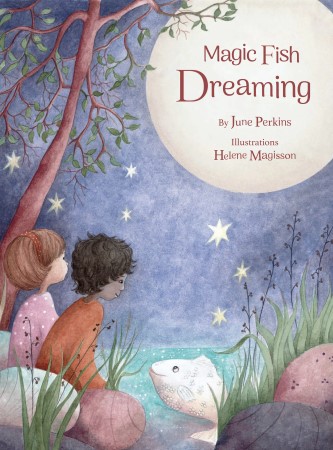
    June Perkins Magic Fish Dreaming This gorgeous book of poems with its focus on nature will uplift and inspire you and your children. You can read a lovely interview with June on the readilearn blog here.

    Early chapter books (about 7 to 12 years)
    early-chapter-books

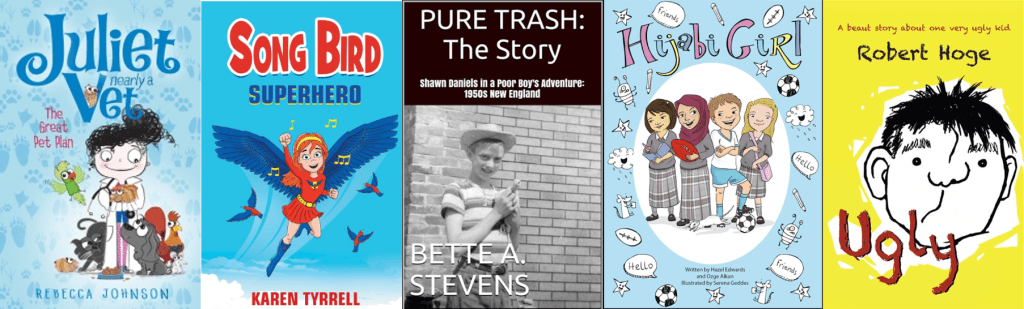
    Rebecca Johnson Juliet nearly a Vet This lovely series of books tells of the adventures of ten-year-old Juliet who aspires to be a vet, just like her mother.

    Karen Tyrrell Song Bird Superhero This story tells of Rosella Bird and her quest to fly. While she battles the bully at school and at home, she is empowered and discovers the joy of flight when she finds her voice.

    Bette A. Stevens Pure Trash: The Story Set in New England in the 1950s, this story tells of a Saturday afternoon adventure of two young boys. The Kindle version is free on Amazon until 29 November (today – be quick!). 

    Hazel Edwards & Ozge Alkan Hijabi Girl In this story, when eight-year-old Melek is deciding what to wear to the book parade, she is unable to find a super-hero who wears a hijab, so she creates her own.

    Robert Hoge Ugly (a memoir) Robert’s story is one of resilience, of survival against the odds, and of making hard decisions. While coping with difference and bullying, Robert shows that strength of character is a trait of survivors. I have introduced you to Robert previously here and here.

    Books of short stories

    short-stories

    Sarah Brentyn Hinting at Shadows This book is a collection of very short stories, each 100 words or less. While each may be a quick read, they will give insight, inspiration, and a greater understanding of what it means to be human.

    Hugh Roberts Glimpses Launching on 2 December, available for pre-order “28 short stories that will take your mind on a rollercoaster of a ride into worlds that conceal unexpected twists and turns.”

    Novels
    novels

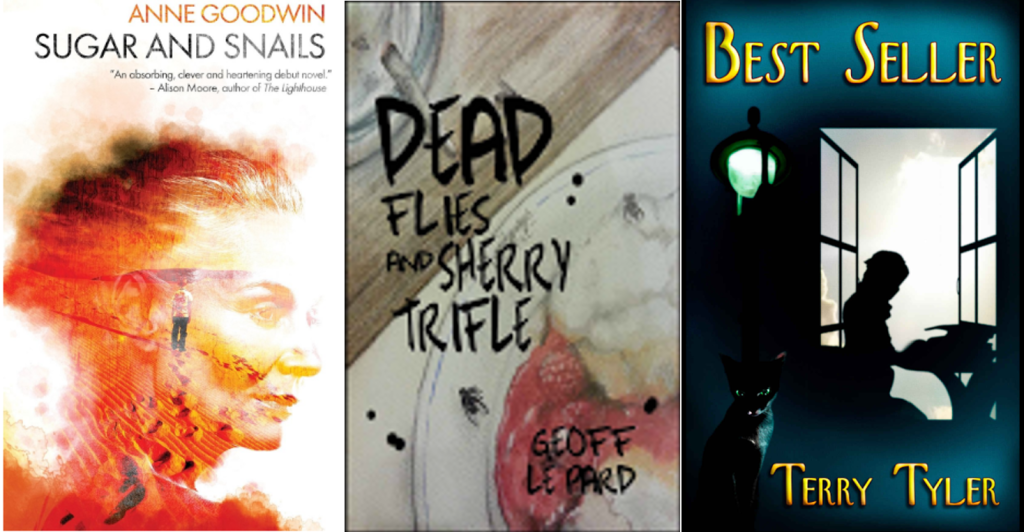
    Anne Goodwin Sugar and Snails In this mid-life coming-of-age story, Diana Dodsworth has some tough decisions to make as she comes to terms with who she really is. Anne has previously talked about her book on my blog here and here.

    Geoff Le Pard Dead Flies and Sherry Trifle This story about nineteen-year-old Harry Spittle, who is home from university for the hottest of hot holidays, will have you laughing out loud at his misadventures.

    Terry Tyler Best Seller This intriguing novella is about three writers, all of whom wish to write a best seller. One does; but which one?

    Memoirs

    memoir

    Robert Hoge Ugly (a biography) Robert’s inspirational story is one of resilience, of survival against the odds, and of making hard decisions. While coping with difference and bullying, Robert shows that strength of character is a trait of survivors. I have introduced you to Robert previously here and here.

    Lesley and Tammy Williams Not Just Black and White Told as a conversation between mother and daughter, this inspirational story tells of the importance of family, of difficulties experienced by many Indigenous Australians in relatively current times, with a drive to ensure that history is neither forgotten nor repeated.

    Malala Yousafzai Malala The Girl Who Stood up for Education and Changed the World The story of Malala, winner of the Nobel Peace Prize, is one of courage and of the difference that one person can make in the world. I have previously written about Malala here.

    Magda Szubanski Reckoning: A Memoir With a Polish father, a Scottish mother and an Australian childhood, Magda’s story is complex, courageous, compassionate, and inspirational.

    Books for teachers and parents

    for-teachers-and-parents

    Mem Fox Reading Magic This book provides lots of practical advice and support for parents in developing a love of reading in their children. I have introduced you to Mem many times previously, including here and here.

    Michael Rosen Good Ideas: How to be Your Child’s (and Your Own) Best Teacher This very readable book is packed full of suggestions for encouraging curiosity and learning in children (and you!) I have previously introduced you to Michael here and here.

    Vivian Kirkfield Show Me How Vivian passion’s for picture books and her understanding of the importance of literacy are obvious in this book that provides great ideas for reading and extending the learning experience associated with many picture books.

    Or, for a special early childhood educator, gift a subscription to readilearn, a collection of teaching resources that can be used throughout the year.

    special-gift-for-special-teacher-ad

    It’s easy. Simply send an email to hello@readilearn.com.au, arrange payment for the currently discounted subscription, and you will be emailed a voucher with a coupon code, unique to your special teacher. Print the voucher and personalise it with your own message before presenting your gift.

    Note: The subscription is for 12 months from date of activation, not purchase: a gift that will go on giving all year long.

    2

    I hope there is something in this list that you can add to your gift list.
    Thank you

    Thank you for reading. I appreciate your feedback. Please share your thoughts.


  • Introducing author and poet – June Perkins – Readilearn

    This week on the readilearn blog I am talking to June Perkins about her wonderful collection of poems for children Magic Fish Dreaming. With the beautiful illustrations by Helene Magisson, this collection is a delight for the ears, the eyes, and the spirit. Read about June’s inspiration for the poems, and use them as inspiration for poems of your own, or use them to inspire poetry writing in your students.

    Read June’s story at readilearn: Introducing author and poet – June Perkins – Readilearn

  • 5 forms of poetry to write with children – Readilearn

    I love to write poems. Children do too.

    Giving young children a simple structure or a repetitive pattern to start from gets them thinking about words, how they sound, what they mean, the number of syllables and letters. All the while they are having fun, playing with words and sounds, and learning about language.

    Five easy poems to write with children are:

    • Acrostic poems
    • Sound poems
    • Haiku
    • “I love” poems, and
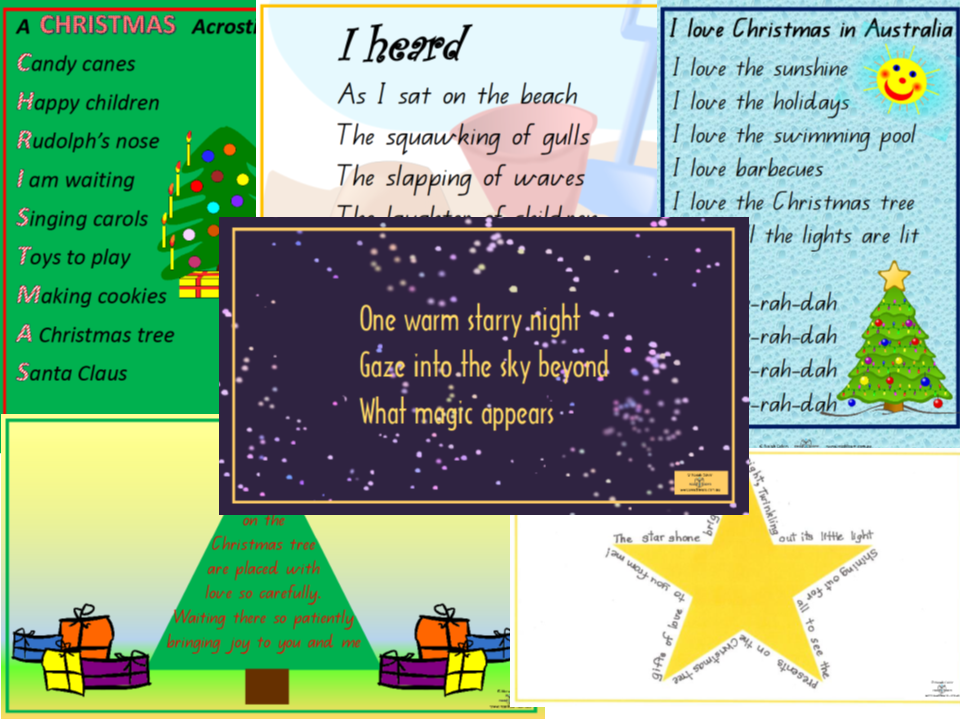
    • Shape poems

    Acrostic poems are one of the easiest. They don’t need to rhyme or follow a set rhythmic pattern.

    Click to continue reading: 5 forms of poetry to write with children – Readilearn


    Thank you for reading. I appreciate your feedback. Please share your thoughts.

  • Writing poetry with children

    Horses go galloping

    This week at the Carrot Ranch Charli Mills has challenged writers to write about galloping. What keeps replaying in my head is the phrase “The horses go galloping, galloping, galloping” interspersed with the lines from “The Highwayman” by Alfred Noyes, a poem I learned at school.

    The Highwayman came riding, riding, riding,

    The Highwayman came riding, up to the old inn-door.

    tomas_arad_heart

    Learning poems at school was a joy. I love poetry and, in younger years, used to read a lot of it, less currently. Perhaps I should say I loved poetry, but that would unfair, just as it would be unfair to say that I no longer love an old friend that I haven’t seen for years, for at the moment we meet up again the connection is just as strong as ever, the ties never broken.

    Oftentimes when I read Charli’s challenges I know how I will respond immediately. Other times I need to massage the idea until I hit just the right spot. This time the horse has bolted and the paddock is left empty without a horse in sight. All I’m left with are my thoughts of poetry.

    Fortunately, as an early childhood teacher with a love of picture books, recent years haven’t been completely devoid of the poetic form. While not necessarily written in what might be considered “poetic language”, many are written in rhythmic rhyming verse. Others contain verses within the story, such as the refrain in The Gingerbread Man or the song in Love You Forever by Robert Munsch.

    The gingerbread man

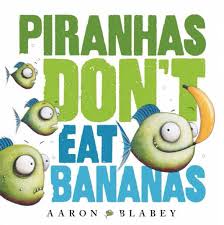
    A title recently added to my list of favourites, through repeated readings and recitations by my grandchildren, is Piranhas Don’t Eat Bananas by Australian author Aaron Blabey. Its rhythm, rhyme and sense of fun is an absolute joy. We laughed together at every reading by G1, and every recitation by G2. It begs to be read and re-read, recited and recited again. Sadly, I got to read it aloud only once, and even then not all the way through! “Hey,” I protested in vain. “I like to read picture books too!

    piranhas don't eat bananas

    Of course there are also many books of poems and rhymes written for children, including Nursery Rhymes, though many of those weren’t written with children in mind. There are also some that fit into a horsey theme such as

    In addition to reading poems and stories to my class I also enjoyed writing poems with them. At this early childhood stage the poems would be more rhythmical verse, sometimes rhyming and sometimes not, with only the hint of an introduction to poetic language.  I have previously written about writing our versions of I Love the Mountains, a traditional camping song.

    I have also written some resources for supporting teachers when Writing Christmas poems with early childhood students. These are available in my Teachers Pay Teachers store and soon to be included in readilearn resources. With easy-to-follow structures, writing these poems give children immediate boosts to their writing confidence.

    I had been thinking for a while that I should write some new versions suited to other times of the year, but hadn’t prioritised it. However, when I read Rowena Dreamer’s post Mr’s Poem: Through My Window on her blog beyondtheflow, another idea sprang to mind. Rowena discussed the writing of a poem “Through my window” that had been set as homework for her son.  I immediately thought of the sound poems that I had taught my students and wondered if the structure could be adapted for sight poems.

    The structure of a sound poem

    This is what I came up with:

    I saw as I looked through my window

    You’ll notice that I haven’t exactly maintained the structure. This is what happens, particularly when young children are writing their versions. It is to be expected and accepted. The purpose of the structure is to support, not restrict.

    I then wondered if it could be used with the other senses and, at the same time, realised that four verses, four senses, would just about reach the target of Charli’s challenge to In 99 words (no more, no less) write a story about galloping. With no other ideas galloping into view, how could I resist giving it a go?

    Disappointingly, I found the structure less accommodating for smell and taste, and had difficulty in conjuring different words to use for each. For example, I wanted to smell and taste the freshness of bread and the sweetness of apples. I had thought touch would be more difficult but have realised that’s not the case. The repetition of the word “felt” for both touch and emotion is perhaps not ideal though.

    I would love to say more here about the necessity for teachers to experiment before setting tasks for children, and of the value of learning from the process rather than the product, but I think I’ve probably said enough in this post.  I will just share what I’ve written which, though responding to Charli’s challenge, doesn’t actually fit the criteria of flash fiction. However, if you’d be kind enough, I’d still love to know what you think.

    Market Day

    I heard

    as I sat curled with a book

    the thundering of hooves

    the snorting of nostrils

    the jangle of stirrups.

    I felt anxious.

    I saw

    as I looked through the window

    the horse at the gate

    the rider on the path

    the bag in his hand.

    I felt excited.

    I smelled

    As I opened the bag

    The freshness of bread

    The sweetness of apples

    The promise of coffee.

    I felt famished.

    I felt

    As I savoured my lunch

    The crunchiness of crusts

    The crispness of apple

    The warming of coffee.

    I felt satisfied.

    Yum! Fresh produce.

    Thank you

    Thank you for reading. I appreciate your feedback. Please share your thoughts.
     

  • Which school? I found one!

    school cropped

    Most parents want to provide what is best for their children. However, they don’t always know what that best is, where it is available or how to get it. This is just as true of schooling as it is of anything else. Fortunately, most children are adequately schooled locally, be it at a state or privately run facility.

    I attended a Catholic school and have taught in both the Catholic and State systems. I see little real difference between what is offered in local private and local public schools as far as philosophy, pedagogy and quality of teaching goes. The differences, as I see them, are more due to the inequities in funding for facilities and resources, the restriction to accessibility by the imposition of fees, and the ability of privately run organisations to decline students as opposed to the state’s willingness to cater for all.

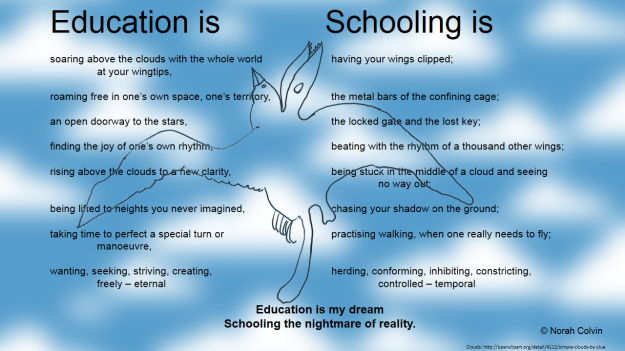
    While I think most schools do an excellent job of schooling, there are aspects I don’t like.

    © Norah Colvin
    © Norah Colvin

    Fortunately, most children survive school and graduate adequately prepared for life in the adult world. But the scarring carried by many, whether visible or hidden, emotional or intellectual, is a cost that should not be accepted.

    In this TED talk Sir Ken Robinson asks “Do Schools Kill Creativity? He explains why he thinks they do and the manner in which they do it. He ends the talk saying,

    “our task is to educate their whole being, so they can face this future. … we may not see this future, but they will. And our job is to help them make something of it. “

    By the time Bec was born I had already decided that I wanted more than schooling for her. I had read voraciously about learning and education. I had observed the magic of learning as my son wondered, questioned, explored and reignited my own curiosity, during his before school years. I saw those same traits inhibited by uninspiring teachers. I have written about this before here and in an article published in a teachers’ magazine when Bec was of school starting age. At that time, it was necessary to make decisions about her ongoing education.

    To school or not to school

    www.openclipart.org
    http://www.openclipart.org

    I had already explored local (and not-so local) alternatives. I attended information sessions, read their publications (no Google back then), and visited schools to observe their practices and speak with teachers, children and parents. Disappointingly I found none that met all of my criteria.

    Some “schools” provided little stimulus or input to extend or challenge children’s thinking. Some were very structured and without flexibility in their approach. Some that claimed to be alternative appeared to be not so with uniforms and strict rules and timetables. Some that claimed to be mainstream were more child-focused with an organic curriculum matched to children’s interests, but lacked other things I sought.

    When the pluses and minuses of each were considered, there wasn’t one with a compelling scoresheet. There was nothing for it but to found my own, a possibility I had been contemplating for some time and a “dream” shared by many teachers. The Centre of Learning Opportunities was born. These are some of the original documents drawn up by the team back then.

    Vision

    Symbol

    outside

    COLO brochure inside

    While working to establish this alternative to school, I began an MPhil research project “Educational Diversity: Why school? What school?” which, as well as exploring educational alternatives, was to record the first year of an (my) alternative school. As part of the project I conducted a survey of local alternative schools with the aim of recording the diversity of approaches available in order to demonstrate that there is more than one way to obtain a quality education.

    Although the degree went down the same dead end path as the school, I was able to (self) publish and distribute the results of my research to participating schools in a document titled “Diversity in Schooling: Discovering educational alternatives in South-East Queensland.” (Surprise, surprise, I have just discovered it in a Google search. How weird is that!)

    Diversity

    I was reminded of my research and this document by a recent discussion with Pauline King, The Contented Crafter in response to my post Life — A “choose your own” adventure. When I alluded to the wisdom of young children and “our” efforts to obliterate it, Pauline agreed and suggested that she could do a post-long comment on the topic.  I jumped at the chance and immediately invited her to do so. Pauline again agreed but suggested I refine a set of questions as she could fill a book with her ideas. I”m working on it.

    Responding to The Industrious Child Pauline wrote,

    “Teachers need to be SO flexible in their ability to see their world, their work, their class as a whole and their individual students – it is never a one step process and different expectations and challenges can be laid down for different abilities. Almost every child will shine somewhere within the curriculum and many struggle somewhere else. After all, we all have our different talents and abilities. Schools are structured to meet the needs of a certain academic ability and those who fall above or below that parameter are, in my opinion, so often mis-educated.”

    It is obvious that Pauline, Ken Robinson, and I, along with many others, are part of the same revolution.

    In another comment on my post I found it first Pauline shared that she had spent many years trying to establish a school of her own but had found “an already working alternative system and never regretted it.”

    I think I have questions enough for Pauline to fill a book’s worth of posts and look forward to sharing some of these in the future. If you have questions of your own, please pop them into a comment and we’ll see what we can do.

    Thank you

    Thank you for reading. I appreciate your feedback. Please share your thoughts.

  • Better than a trail of breadcrumbs

    ©Glenn Althor www.http://obscurepieces.com/ Used with permission.
    ©Glenn Althor  Used with permission.

    When I think of children’s stories about being lost, Hansel and Gretel is one of the first that comes to mind. Whether or not this gruesome story is suitable for children, I’ll leave for another discussion. The children were correct in thinking it was important to mark their way into the forest in order to find their way out. They were incorrect in their choice of markers.

    Encouraging children to identify features of their environment has benefits beyond encouraging them to question and wonder. It is important for children to learn, from a young age, to identify markers on routes around the neighbourhood, shopping mall and school, as well as strategies to implement if lost or separated. Taking note of seasonal and other changes, both temporary and permanent, in addition to permanent features helps to build knowledge of one’s environment. This knowledge can be developing long before the need to find one’s way alone arises.

    http://www.morguefile.com/
    http://www.morguefile.com/

    One day there will be a need to navigate independently, whether it be to walk to school, go to the shop, visit a friend, catch a bus or drive a car. All of these will be far less daunting for the child, and much less worrisome for the parents, if the ability to find one’s way around has already been demonstrated through discussions or deciding which route will be taken for a journey.

    Often the first time children are required to navigate independently is when commencing school. They may need to find their way to the classroom in the morning, or to the gate in the afternoon. They will have to find the way to the playground, the office, the library, and the toilets and back to the classroom. Just as parents show children around the neighbourhood by pointing out landmarks, it is important for teachers to orient children in the school grounds and ensure they know how to find their way around confidently.

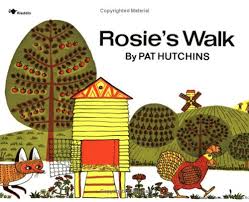
    A delightful book that can be used by both teachers and parents to discuss the importance of knowing one’s way around and of staying safe is the beautiful Pat Hutchins’ book Rosie’s Walk which tells the story of a hen who goes for a walk around the farmyard and gets back home safely in time for dinner. The story also introduces many positional words.

    Rosie's walk

    Understanding of positional terms and describing the location of neighbourhood and school landmarks in relation to each other  helps to develop spatial awareness along with language; for example:

    • past the shop
    • across the bridge
    • over the road
    • through the park
    • in the middle
    • beside the lake
    • along the road
    • next to the bakery
    • around the corner
    • behind the fence
    • as well as left and right.

    Discussing the placement of landmarks on a mud map of the neighbourhood or school and discussing different paths that could be taken encourages divergent thinking about ways of getting from one place to another. Sometimes it helps children to think of these maps as being from a birds’eye view, or from a plane. Other maps, for example Google Maps and street directories are also useful and children can learn to point out or mark places they have visited.

    mud map

    There are many opportunities, whether in the car or on foot, to take note of landmarks; for example:

    • house numbers,
    • types of fences
    • the number of streets to cross
    • large trees
    • the shopping centre entry
    • carpark space row and number
    • bridges crossed

    While the flash fiction challenge set by Charli Mills at the Carrot Ranch this week was to In 99 words (no more, no less) write a story about someone or something that’s lost, I have taken the theme of lost and used it to provide strategies that may help children avoid becoming lost. My flash is a rhyme for young children, and an example of the types of things that children can be encouraged to observe in their neighbourhood.

    To Grandma’s House

    Bub’s buckled in, away we go.

    Mum’s going to work, we can’t be slow.

    Down the street past the green painted door.

    Past the house with big number four.

    Stop at the curb and look each way.

    Off to Grandma’s, hip-hip-hooray!

    Quiet past here so the dogs don’t bark.

    Left at the corner and cut through the park.

    Up the hill, past the posting box.

    Open the gate, give three big knocks.

    Hugs for Grandma waiting for us.

    Wave to Mum as she boards the bus.

    Go inside for milk and toast.

    Days with Grandma we like the most.

    Thank you

    Thank you for reading. I appreciate your feedback. Please share your thoughts about any aspect of this post or flash fiction.