Live Love Laugh Learn … Create the possibilities

Category: Mathematics

  • Motivation – why we do the things we do

    Over at the Carrot Ranch this week Charli Mills is talking about motivation, specifically the motivation of fictional characters to do the things they do. She explains that ‘motivation can be external–a desire to please, to be found attractive, to be accepted’ or ‘internal–a drive to succeed, a passion to experience adventure, a fear of failure’.

    Motivation is not a new concept to this blog and I have explored it in a number of previous posts.

    stars

    In What did you do that for? Rewards and motivation I discussed the use of extrinsic rewards (such as stickers, awards and cash incentives) for school students; and questioned the authenticity of intrinsic motivation, which ‘is usually related to something of one’s own choice through interest, challenge or purpose’, in an institution at which attendance is compulsory.  I suggested some strategies that teachers may employ to stimulate an intrinsic love of learning.
    why am I doing thiswhat's the point

    Continuing the consideration of the effect of compulsory schooling on a learner’s motivation, the post Why do I have to? explored the use of philosophy as a tool for making the goals of education explicit. All three philosophers: Peter Worley, Michael Hand and Stephen Boulter agreed that if students knew why they were expected to learn certain things, they would be more motivated to do so.
    the examined life

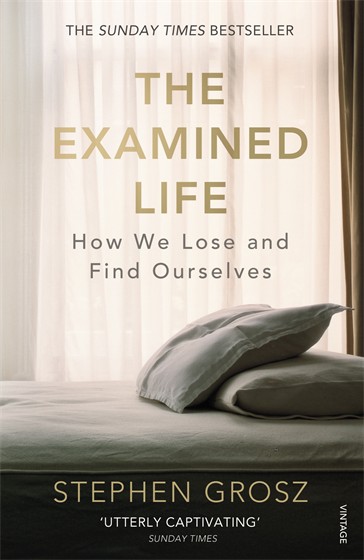
    A discussion of the impact of praise upon a learners’ motivation and achievement was stimulated by reading The Examined Life by Stephen Grosz, a book recommended by Anne Goodwin.  The Post Seeking praise – Stephen Grosz revisited explored Grosz’s suggestion that praise could cause a loss of competence, especially if children were being praised for being clever. Responses to the post, including a guest post by Anne Goodwin, added greater depth to the discussion.

    Other ideas about motivation abound.

    https://openclipart.org/image/800px/svg_to_png/59389/happy_sun_gm.png
    https://openclipart.org/image/800px/svg_to_png/59389/happy_sun_gm.png

    Shelley Wilson’s blog Live every day with intention,  which promises to inspire and motivate you (‘A motivational blog about living life to the full, writing, reading and feeling inspired to follow your dreams’) is the basis of her new book ‘How I changed my life’.

    In this TED talk The puzzle of motivation, Dan Pink explains that the value of intrinsic motivation is a scientific fact. While the focus of his talk is the business world, the findings are equally relevant to education. He says that external rewards may work in limited situations but that they often impede creativity. He says that ‘the secret to high performance isn’t rewards and punishments, but that unseen intrinsic drive – the drive to do things for their own sake. The drive to do things because they matter.

    Which brings me back to my motivation for writing this post and sharing these thoughts: Charli’s post, mentioned at the beginning of this article, was an introduction to her flash fiction prompt to In 99 words (no more, no less) show the underlying motivation of a character.

    My motivations for engaging with the flash fiction challenges set by Charli are both intrinsic and extrinsic:

    I enjoy:

    • the dual challenges of writing to a prompt with a clearly defined word count;
    • the opportunity of writing fiction;
    • exploring the application of Charli’s prompt, however tenuous, to education;
    • the camaraderie of the fellow writers and the opportunity to read and comment on their posts and flash fiction pieces; and

    I appreciate the feedback, support and encouragement I receive in response to my writing.

    In her prompt, Charli suggested that the character ‘may not even understand the motivation fully, but (that I should) let the reader grasp it.’ I have written two pieces in response to this prompt. I hope you enjoy them, and get an inkling of what motivates the characters.


    More than numbers

    The more he stared at the numbers the less sense they made.

    They swirled and blurred. He just didn’t get it.

    “Numbers don’t lie,” they’d admonished.

    “But they don’t tell either,” he’d thought.

    The hollowness left when all he knew had been extracted could not be filled with the smorgasbord of numbers loaded on the page.

    The richness of lives reduced to mere squiggles.

    “This is what’s important,” they’d said, fingers drumming tables of data.

    With heaviness of heart he closed the book and walked away.

    “They are not even numbers,” he thought. “If they were numbers, they’d count!”


    More than words

    “More!” they implored.

    She surveyed their eager faces then glanced at the clock.

    “Just one more?”

    “Okay. Just one more.”

    Before she could choose, a book landed in her lap.

    “This one,” he said.

    “Yes,” they chorused. “It’s a good one!”

    She smiled agreement, then started to read.

    They joined in, remembering, anticipating.

    She turned the page.

    “Wait!” he said. “Go back.”

    “Did you see that?” He pointed to the page.

    “But look what he’s doing,” someone else chimed in.

    They all laughed.

    The shared joy of a beloved book. Each time the same. Each time a little more.

    Thank_you_pinned_note

    Thank you for reading. I do appreciate your feedback. Please share your thoughts about any aspect of this post or my flash fiction pieces.

  • Celebrating 100!

    Celebrating 100!

    Welcome to my 100th post!

    I’m excited!

    When I started this blog just under a year ago (I published my first post on August 15 2013) I set myself the goal of writing two posts a week. I am pleased that I have maintained that output, with only an occasional variance.

    Thank_you_pinned_noteI thank you all, my readers, whether you have been with me from the beginning, joined in along the way, or pop in occasionally to see what I am up to. I really appreciate your support and encouragement. If it wasn’t for your interest I may not have achieved my goal.

    One of the most rewarding things about blogging is belonging to a very special online community of readers and bloggers from whom I have learned a lot, and from whose encouragement I have developed the confidence to share my ideas.

    Celebrating 100 anything is a milestone.

    In Australia if you live to celebrate your 100th birthday you can receive a letter from the Prime Minister, the Governor-General and the Queen.

    In my year one classroom we would celebrate 100 days of school. In the ‘old’ days, when pre-school was part-time and not compulsory, before prep became the first year of formal schooling, year one was the first year of ‘real’ school, and the celebration really was of the first 100 days of school. After the advent of prep it simply became a celebration of the first 100 days of year one.

    Many valuable learning opportunities accompany the celebration.

    Preparation for the celebration would begin on the first day of school. We would count off each day on the number board, counting up the days we had been at school and how many more days there would be until we reached 100.

    Closer to the day we would explore what 100 items ‘looked like’ and count 100 children lined up for class, a tower built of 100 blocks, or 100 paperclips arranged around the edge of a piece of paper. We would count and collage 100 different items, and play games that involved counting to 100.

    celebratory cake

    One of the things that I enjoyed most was discussing with the children what they thought they would be like at 100 years of age. We would read A. A. Milne’s poem Now I am Six and talk about them being six or seven – what they looked like, things they could do, and their favourite things and activities. They would draw a self-portrait and write a description of themselves to accompany it.

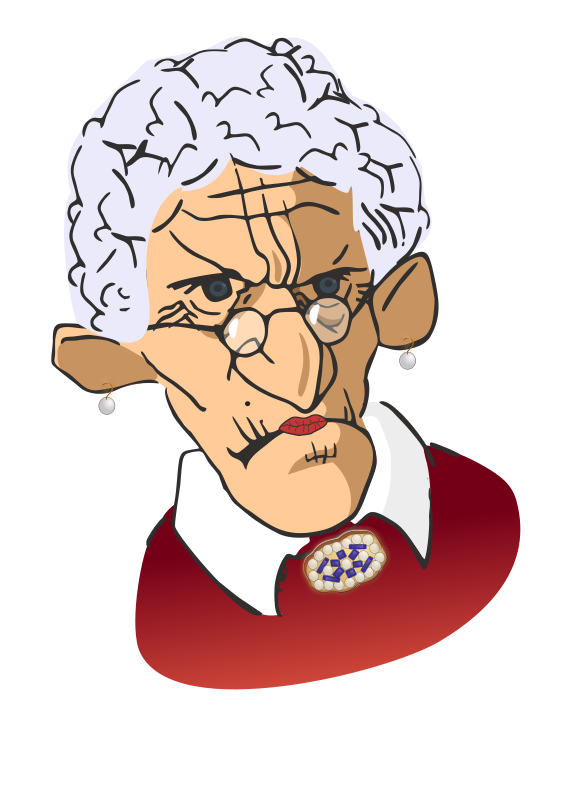
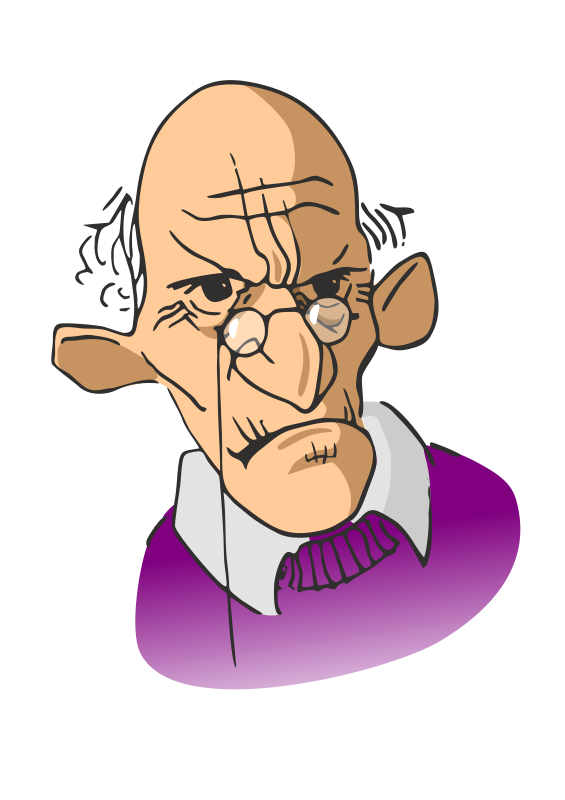
    Then we would read books about growing older and discuss what it might be like to be 100 years old. They would do a self-portrait to show what they thought they would look like and write about what they would be able to do and activities they would enjoy.

    https://openclipart.org/image/800px/svg_to_png/154735/faltige_frau.png
    https://openclipart.org/image/800px/svg_to_png/154735/faltige_frau.png
    https://openclipart.org/image/800px/svg_to_png/103549/old_man01.png
    https://openclipart.org/image/800px/svg_to_png/103549/old_man01.png


    I wish I had some of their portraits and descriptions to share with you. They wrote about having grey hair, wrinkly skin and wearing glasses. They wrote about using walking sticks, living in nursing homes and having a lot of grandchildren. Overwhelmingly, they were happy.

    The last group of year one children I taught were born this century. They turned seven in year one in 2011. They will not celebrate their 100th birthdays until 2105! Chances are, with improvements to health and the increasing length of life expectancy, many of these children will get to celebrate that milestone.

    While the children had no difficulty imagining themselves as 100 years of age, I can’t imagine what life will be like for them in the next century; or even fifty years ahead. One hundred posts ago, I couldn’t even be sure if I would still be here writing this blog; but I am, and I thank you very much for reading and participating.

    To mark my 100th post, I have placed a new item in my Teachers Pay Teachers store with suggestions for celebrating 100 days of school. This also coincides with a storewide sale on Teachers Pay Teachers; so, for any teachers out there, it may be worth taking a look.

    sale_160_200

    Thank you for reading. I appreciate your feedback. Please share your thoughts about any aspect of this post or my blog in general.


  • Counting on the holidays!

    algebra

    When the topic “Maths” is mentioned in conversation among adults, including teachers, many of them moan, “I hate maths. It’s too abstract. I could never understand it. I can’t see the point in it.”

    I think it is a sad situation that many such adults were turned off maths in school by teachers who didn’t introduce them to the beauty of maths, who didn’t teach maths in the context of real-life purposes and whose pedagogical kit bag was entirely filled with worksheets of meaningless and endless algorithms to complete.

    I am one of those adults too. In my final years of high school I had a “teacher” who could do the math but couldn’t teach the math; couldn’t explain the why or the how, or any of the steps required to achieve understanding. Maths became an impenetrable forest of meaningless algorithms, formulae and theorems.

    As both a parent and teacher of young children, I was determined to not be an instrument of math torture. Granted this may be easier with young children than it is with older students, but I’m sure there are still ways of making maths fun and meaningful in high school classrooms.

    The suggestions in this article provide parents of young children with ways of finding maths in everyday contexts and incorporating mathematical learning effortlessly into holiday activities. Of course, the activities are of benefit at any time, not just during the holidays!

    If you don’t have young children to inspire, or inspire you, please move on to the end of the article for some suggestions to excite your own interest in maths!

    Although the word “counting” appears in the title, it is important to remember that maths is not just counting.

    The strands of maths as described by The Australian Curriculum include:

    • Number and place value
    • Patterns and algebra
    • Measurement and geometry
    • Probability and statistics

    My list includes just a few suggestions for each of those strands to get you started. Need I say there is an infinite number of possibilities?

    25 ways to keep children thinking mathematically during the holidays:

    Number and place value

    1. Count items e.g. birds in the sky, shells collected from the beach, people for lunch, steps in a staircase, windows on a house, seats in a bus . . .
    2. Count out the cutlery required for each person at dinner
    3. Include your child in shopping activities by helping them to:
      • Recognise the coins and notes
      • Count the value of coins and notes
      • Predict whether they have enough money to purchase an item, and whether there will be change
      • Tender the money in payment for an item
    4. When your child is sharing e.g. the biscuits, balloons or slices of fruit, ask them to:
      • Predict if there will be enough for everyone to have one, or more than one each
      • Share out the items, allocating the same number to each
      • Determine if there are any left over and what to do with them
    5. Use terms like half and quarter correctly, e.g. when cutting apples, oranges, sandwiches, pizza, to indicate pieces of equal size
    6. Play games that involve counting, e.g. counting the number of skips, balls in hoops, pins knocked down or dice games like snakes and ladders that require adding as well as number recognition and counting
    7. Make up number stories e.g. “We had five apples in the bowl. I ate one, and you ate one, how many are left?” “
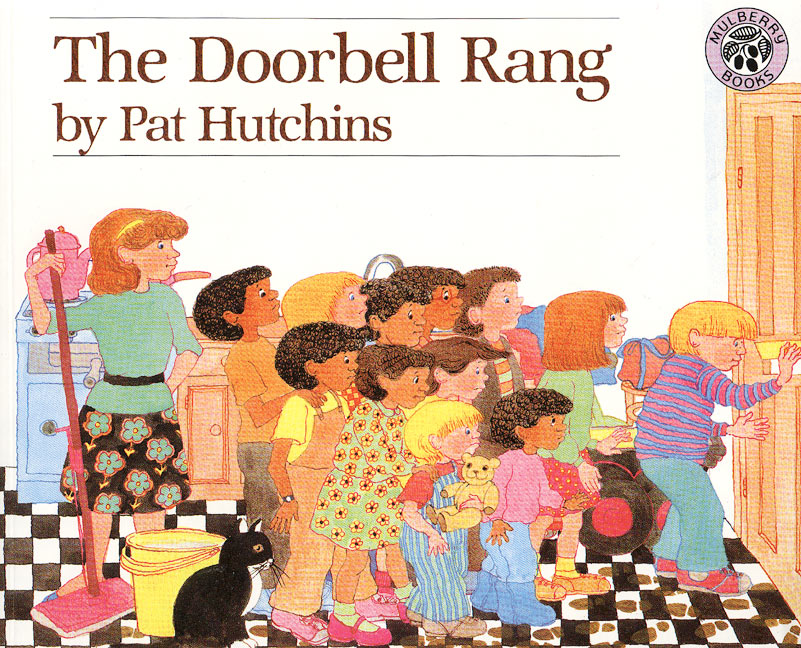
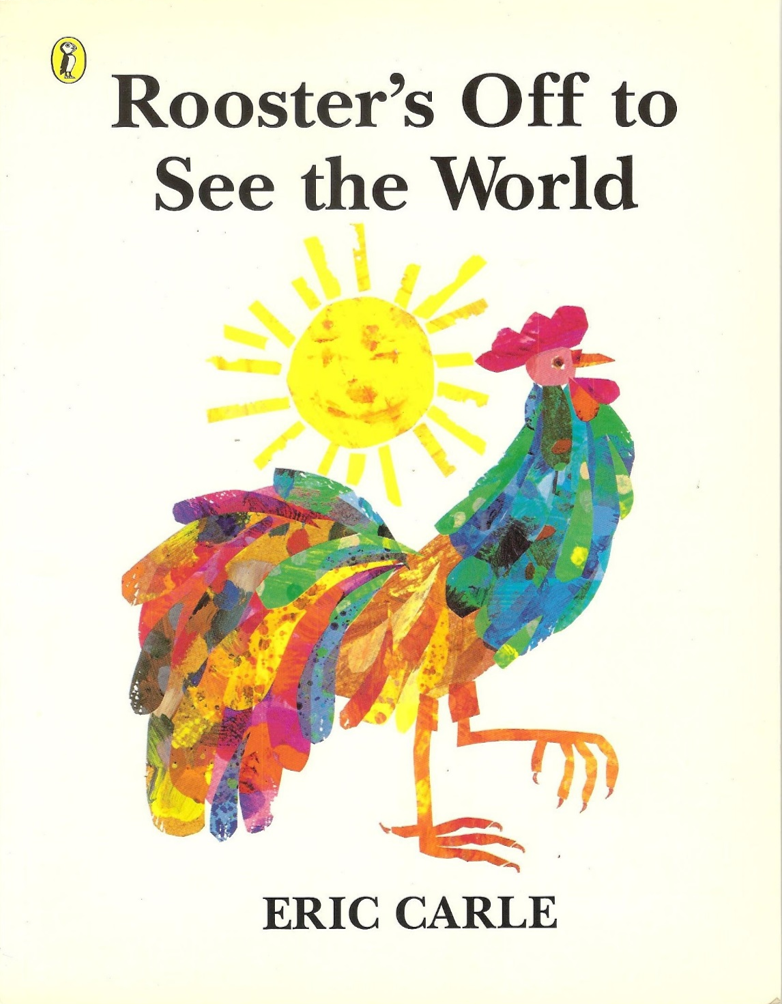
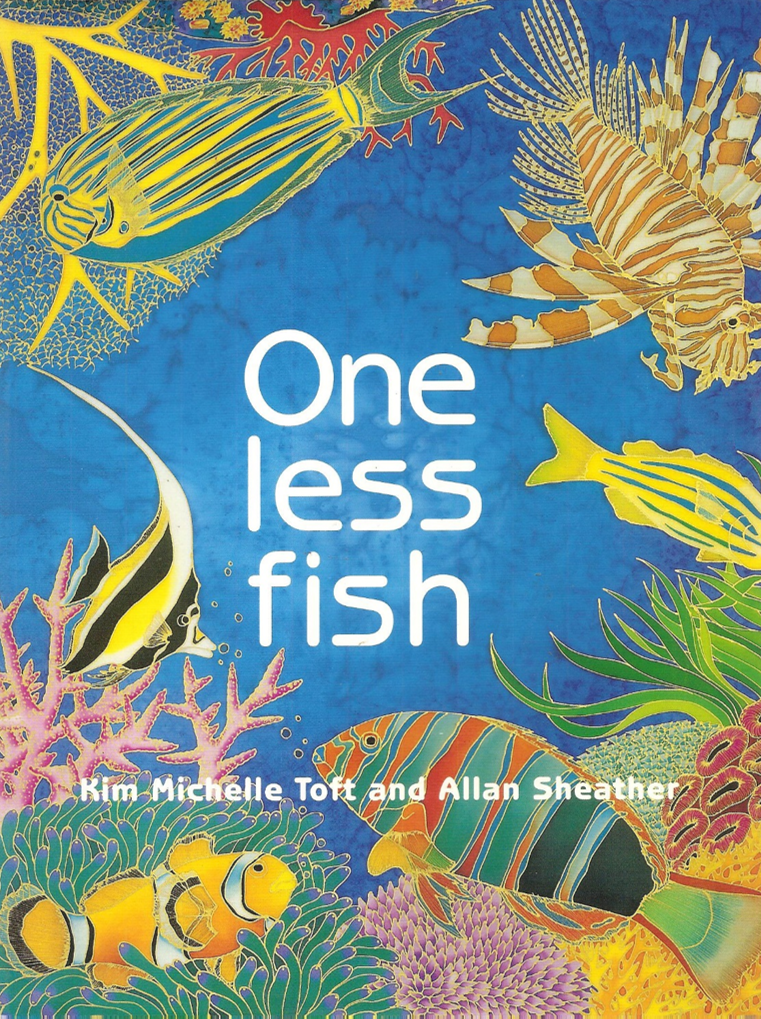
    8. Read books with number concepts e.g. Pat Hutchins The Doorbell Rang, Eric Carle Rooster’s off to see the world  or Kim Michelle Toft One Less Fish

    doorbell rang

    Rooster's off to see world

    One less fish

    Patterns and algebra

    1. Use items to make patterns e.g. sort and create a pattern from shells collected at the beach, building blocks or toy cars
    2. Look for patterns in the environment e.g. fences, tiles, walls and window, zebra crossings
    3. Decorate cards and drawings with a patterned frame
    4. Make gift wrapping paper by decorating with potato prints or stamp patterns

    Measurement and geometry

    1. Include your child in cooking activities and allow or support them to:
    • measure the ingredientscooking-man
    • set the temperature on the oven
    • work out the cooking finish time

    2.  A child’s understanding of volume and capacity can be developed when they:

    • pour glasses of water from the jug and discuss terms such as enough, full, empty, half or part full, more, less
    • pour from one container into another of a different shape to compare which holds more and which holds less

    3.  Scales can be used to compare the mass of different items or quantities e.g. compare an apple and an orange, measure the mass of butter required for a recipe

    4.  Measuring length can be included by:

    • measuring and comparing height
    • cutting a length of string to tie a package
    • measuring who is closest to the jack in a backyard game of lawn bowls

    5.  Use the calendar to

    • Learn the names and sequence of days in the week or months in the year
    • count the passing days or the number of days until an event

    6.  Identify shapes in the home and environment e.g.

    • 2D shapes: tiles on floor and walls, shapes of windows, sections of footpath
    • 3D shapes: cereal boxes (rectangular prism), balls (sphere), bottles or cans (cylinder), dice (cube)

    7.  Play games that involve shapes e.g. jigsaw puzzles, tangrams

    8.  Talk about directions e.g. left, right, forwards, backwards and follow directions on a grid

    9.  Play games that involve directions and movement in space e.g. battleship, Hokey Pokey, Simon Says, snakes and ladders, ludo

    10.  Read and discuss books that include measurement concepts e.g. Pamela Allen: Who Sank the Boat? (volume); Eric Carle: The Very Hungry Caterpillar (days of the week) and The Bad Tempered Ladybird (time); Penny Matthews and Andrew McLean A Year on our Farm (months and seasons); and for looking at places on a map Mem Fox Sail Away The ballad of Skip and Nell or Annette Langen & Constanza Droop Letters from Felix

    who sank the boat

    The Very Hungry Caterpillar

    A year on our farm

    sail awayLetters from Felix

    Probability and statistics

    spite_sun_rain

    1. When discussing the weather or desired activities include the language of probability e.g. possible, certain, likely, unlikely, impossible
    2. Encourage children to collect data about family or friends by asking yes/no questions e.g. do you like swimming, or making a graph of the family’s favourite colour or meal.
    3. Play games with spinners and dice and talk about the likelihood of spinning or throwing a particular number

    This list is really just a beginning. I’m sure you will add many more suggestions of your own.

    For your convenience, the list is available to download FREE in my TEACHERSpayTEACHERS store.

    As promised I will leave you with a few suggestions to spark your own interest in and love of maths. Be sure to check them out:

    These are must listen TED talks by Arthur Benjamin:

    The magic of Fibonacci numbers

    and A performance of “Mathemagic”

     And a fascinating one for the Christmas season “The 12 days of Pascal’s triangular Christmas” by Michael Rose on The Conversation.

    If you want to delve a bit deeper, here are some interesting reads to get you started:

    Charles Seife Zero: The Biography of a Dangerous Idea

    Mario Livio The Golden Ratio: The Story of PHI, The World’s Most Astonishing Number

    Rozsa Peter Playing with Infinity: Mathematical Explorations and Excursions

    I listened to the biography of zero on audiobooks this year. It was a fascinating listen.

    What do you think of maths? Do you love it or hate it?

    I hope you enjoy your adventures in maths! A world of possibilities awaits!