Live Love Laugh Learn … Create the possibilities

Category: Lower Primary education

  • Leap into learning with leap year fun – #readilearn

    Leap into learning with leap year fun – #readilearn

    Next Saturday 29 February is a leap day. A leap day is an extra day added to every fourth year to keep the calendar in line with the solar year. Since we only have one 29 February every four years, it is a day worthy of celebration. Here are some ideas to get you started.

    20 Fun facts about leap years

    1. A leap year occurs once every four years.
    2. A leap year has 366 days instead of the 365 days of other years.
    3. The extra day added to a leap year is 29 February.
    4. The extra day is added to keep the calendar year in line with the seasons and astronomical calendar.
    5. The number of leap years are all divisible by 4; for example, 2000, 2004, 2008, 2012, 2016, 2020, 2024, 2028.
    6. However, although all hundred years are divisible by 4, not all hundred years are leap years. Hundred years are only leap years if they are divisible by 400. So, while 2000 was a leap year, the next hundred year to be a leap year will be 2400.
    7. Leap years were first introduced by Julius Caesar over 2000 years ago with the Julian calendar. His rule was to add a leap day to every year that was divisible by 4.
    8. The leap year as we now know it, with the hundred year rule, was introduced by Pope Gregory VIII in 1582. In that year, Pope Gregory had to remove ten days from calendar to keep it in sync with the solar year. The calendar we still use, the Gregorian Calendar, is named after him.

    Continue reading: Leap into learning with leap year fun – readilearn

  • Learning about living things in lower primary classrooms – #readilearn

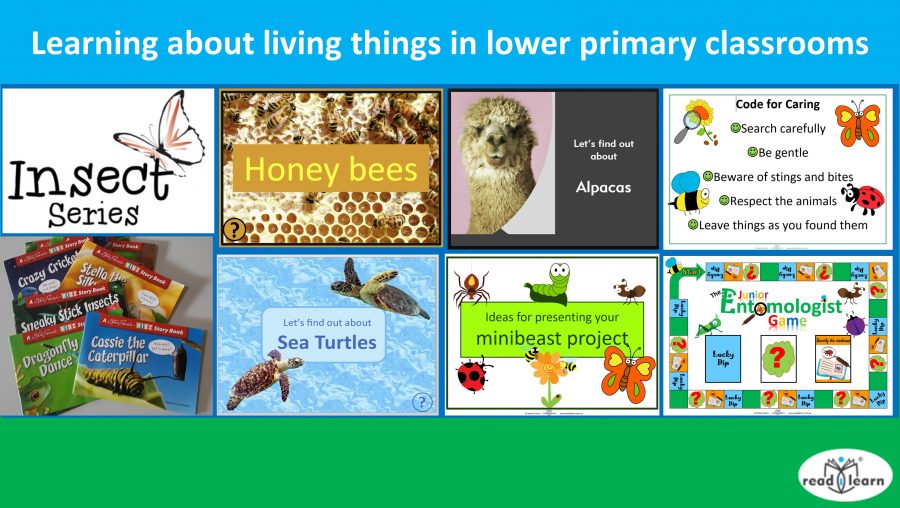
    Learning about living things in lower primary classrooms – #readilearn

    Learning about living things is an important part of education for young children. This post suggests ways of teaching biological science in lower primary classrooms with lessons ready-to-teach and activities that make learning memorable and fun.

    Concepts include:

    • the needs of living things
    • external features of living things
    • where living things live
    • how living things grow

    and relate specifically to insects and other minibeasts.

    Continue reading: Learning about living things in lower primary classrooms – readilearn

  • Special Days and Events for Classroom Celebrations — February – #readilearn

    Special Days and Events for Classroom Celebrations — February – #readilearn

    It is during the final weeks of January and the first weeks of February that most teachers and children in the Southern Hemisphere begin their school year. Parents breathe a sigh of relief as the long holidays come to an end and teachers and children look forward to the year ahead with mixed feelings ranging from the excitement of a new adventure to anxiety or even dread. Perhaps it is no coincidence that Children’s Mental Health Week falls in the first week of February.

    Children’s Mental Health Week

    Children’s Mental Health Week runs from 3 – 9 February this year. The purpose of the week is to encourage children to look after their bodies and their minds. A positive classroom environment that is both welcoming and supportive helps to ensure children stay happy with healthy mental attitudes. It supports the development of self-esteem, self-confidence and the development of social skills, including getting along with others.

    Here at readilearn, we can help you establish a supportive classroom environment and provide you with teaching resources that focus on developing social-emotional skills. While these are appropriate for any time of the year, a special focus during mental health week provides opportunities for reading books and engaging children in activities that are conducive to positive attitudes.

    Of special note this year is that many children in Australia may begin the school year distressed by what they have personally experienced or may have seen or heard about the bushfires that have caused so much damage to our country.

    While I am unable to give specialised support for dealing with trauma, this article in the Conversation has suggestions to help teachers support students, and includes links to other information. It is pleasing to see that extra funds have been made available to assist teachers and students who have been affected by the fires. If you have been affected and I can support you with a free subscription to readilearn, just let me know.

    Resources for a supportive classroom environment

    You can find suggestions for establishing a supportive classroom in these previous posts:

    Continue reading: Special Days and Events for Classroom Celebrations — February – readilearn