Live Love Laugh Learn … Create the possibilities

Category: Literacy education

  • Strategies for parents to support their children’s reading – #readilearn

    Strategies for parents to support their children’s reading – #readilearn

    I was recently approached by some parents who had been informed by teachers that their children were not achieving the expected level in reading for the class and that, although they were only in year one, were not on target for success in NAPLAN eighteen months later.

    The parents were anxious and wanted to know how they could support their children at home. Tutoring was out of the question due to distance and, while it is always best to tailor strategies to a child’s individual needs, there are some basics which are applicable to most.

    My first recommendation to the parents was to reduce the pressure — on all of them, parents and children, and to be as relaxed as possible about their learning. I explained that learning doesn’t occur in a stressful situation and that parents need to support their children by working with and not against them.

    4 easy ways for parents to support children’s interest in reading

    I consider these to be the main non-negotiables.

    1. Unrelated to anything school, read stories to your children every day. Make it part of the routine. Bedtime is often recommended, but it can be anytime. Let them choose the book. Discuss it with them: What do you think is going to happen? Why did he do that? I think that’s (funny, clever, wise…) what do you think? I didn’t expect that to happen, did you? Did you like the ending? How else could it end? You need to remember that your role is not one of testing; you are sharing ideas. You don’t need to restrict the reading to picture books. Read chapter books too – a chapter or two a night. Same deal. Discuss the book with the children and encourage them to think about the characters and events.
    2. Talk with your children — about your day, their day, their friends, things they like, what they want to do, their ideas. Discuss what you watch together on TV or the iPad, what they watch on her own. Documentaries are great to develop curiosity, knowledge and language. The larger the vocabulary, the easier reading becomes. Background knowledge is essential to reading.

    Continue reading: Strategies for parents to support their children’s reading – readilearn

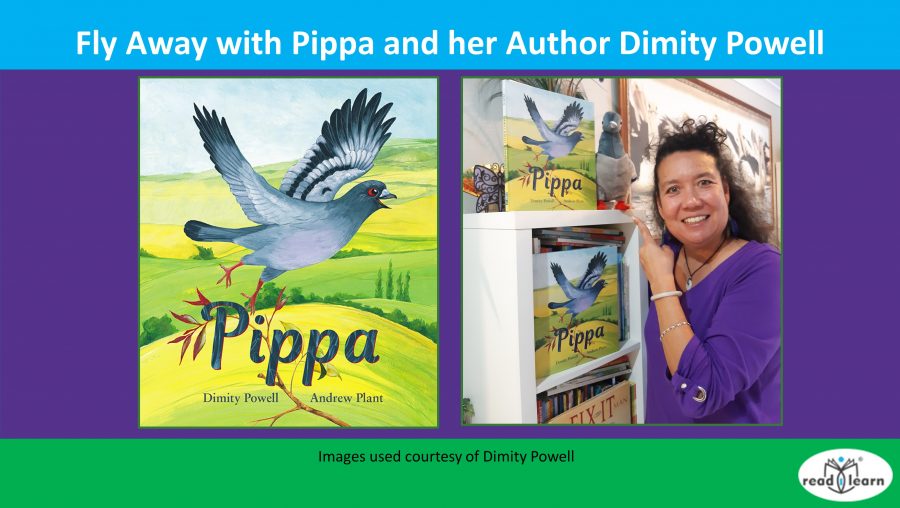
  • Fly away with Pippa and her author Dimity Powell – reblogged from readilearn

    Fly away with Pippa and her author Dimity Powell – reblogged from readilearn

    Have you ever wished you could fly? Or perhaps wished for a chance to explore but were held back by rules and restrictions?

    I always thought it would be marvellous to be a bird, soaring above the earth, looking down upon its beauty. Oh, the freedom it would bring. Looking out at the world from a plane’s window is, for me, the nearest thing. But for Dimity Powell’s latest endearing character Pippa, flight is a reality.

    About Pippa

    You see, Pippa is a pigeon, and, like all pigeons, Pippa was born to fly. She wants nothing more than to spread her wings and go exploring. However, her parents aren’t sure she’s ready and fill her head with fears and days with restrictions to keep her close at home. It works for a while. But, one day when her parents are otherwise occupied, Pippa discovers she can fly, and that’s where her adventures, explorations and discoveries begin.

    Pippa is a delightful new picture book that is bound to win hearts and spread joy. Award-winning author Dimity Powell describes her book thus:

    Pippa is a light-hearted adventure tale about striking out alone, following your dreams and desires and experiencing what it’s like when you get there. It is a tale that acknowledges the sometimes-suffocating affection parents have for their offspring, which can temper and frustrate a child’s sense of freedom and adventure, and suggests that it’s okay to take risks from time to time. Although the adventure may be perilous, it is still worth experiencing for you never know what glorious discoveries lie ahead.

    Pippa is small, determined, stubborn, and wilful, just like many other six-year-olds. And, like many youngsters who’ve wanted more than they can handle, when she finally does return to her flock, she realises that when it comes to true security and contentment, it’s family that matter most.”

    About Dimity Powell

    I previously introduced Dimity to you in her popular guest post Libraries: A wonderous universe to explore and in an interview about her  picture book At the End of Holyrood Lane for which she was recently awarded the Society of Children’s Book Writers and Illustrators’ Crystal Kite Members’ Choice 2019 Award, Australia and New Zealand region.

    Dimity likes to fill every spare moment with words. She writes and reviews stories exclusively for kids and is the Managing Editor for Kids’ Book Review. Her word webs appear in anthologies, school magazines, junior novels, as creative digital content, and picture books including The Fix-It Man (2017), At The End of Holyrood Lane (2018) and Pippa (2019) with more to follow in 2020 and beyond.

    She is a seasoned presenter both in Australia and overseas, an accredited Write Like An Author facilitator and a Books in Homes Role Model Volunteer in Australia.

    Dimity believes picture books are soul food, to be consumed at least 10 times a week. If these aren’t available, she’ll settle for ice-cream. She lives just around the corner from Bat Man on the Gold Coast although she still prefers hanging out in libraries than with superheroes.

    Dimity’s inspiration for writing about Pippa

    Continue reading: Fly away with Pippa and her author Dimity Powell – readilearn

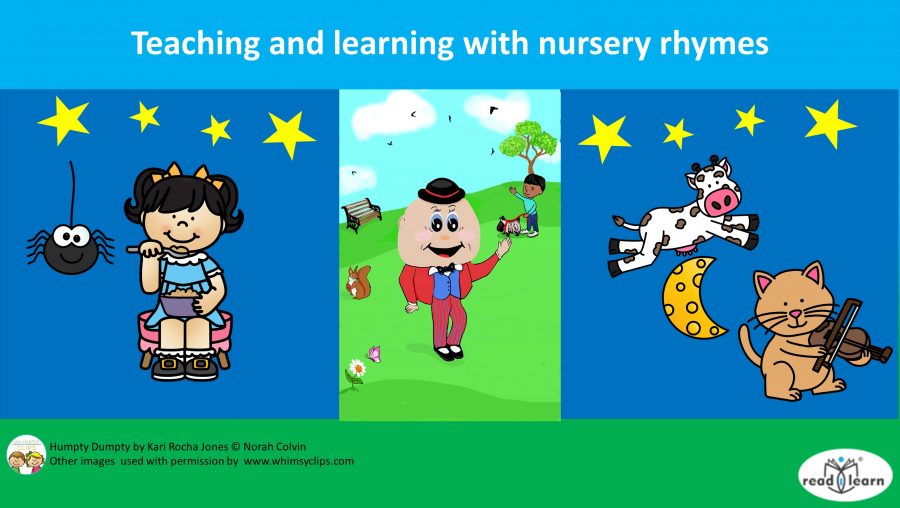
  • Teaching and learning with nursery rhymes – reblogged from readilearn

    Teaching and learning with nursery rhymes – reblogged from readilearn

    Nursery rhymes are often a child’s first introduction to our literary heritage. Parents sing nursery rhyme lullabies to soothe their babies to sleep and play nursery rhyme games to entertain them in their waking hours. All the while, children are learning the rhythms and tones of our language, developing vocabulary, ideas and imagination. When children learn the repetitive patterns of nursery rhymes, they are also developing their memories.

    Australian author Mem Fox is often quoted as saying that

    “Experts in literacy and child development have discovered that if children know eight nursery rhymes by heart by the time they’re four years old, they’re usually among the best readers by the time they’re eight.”

    While I am aware that others question the existence of research to back up that statement, I think most teachers would agree that children who have been spoken to, sung to (including nursery rhymes) and read to before school will find literacy learning much easier in our classrooms. Success with literacy learning often correlates with success later in life.

    Already on the readilearn website, there are resources to support your literacy teaching using the nursery rhymes Humpty Dumpty and Little Miss Muffet. More are in development. While some nursery rhymes may be considered to have questionable origins, those origins have no place when teaching them to children. The benefits flow from having fun with the rhythms and rhymes of language.

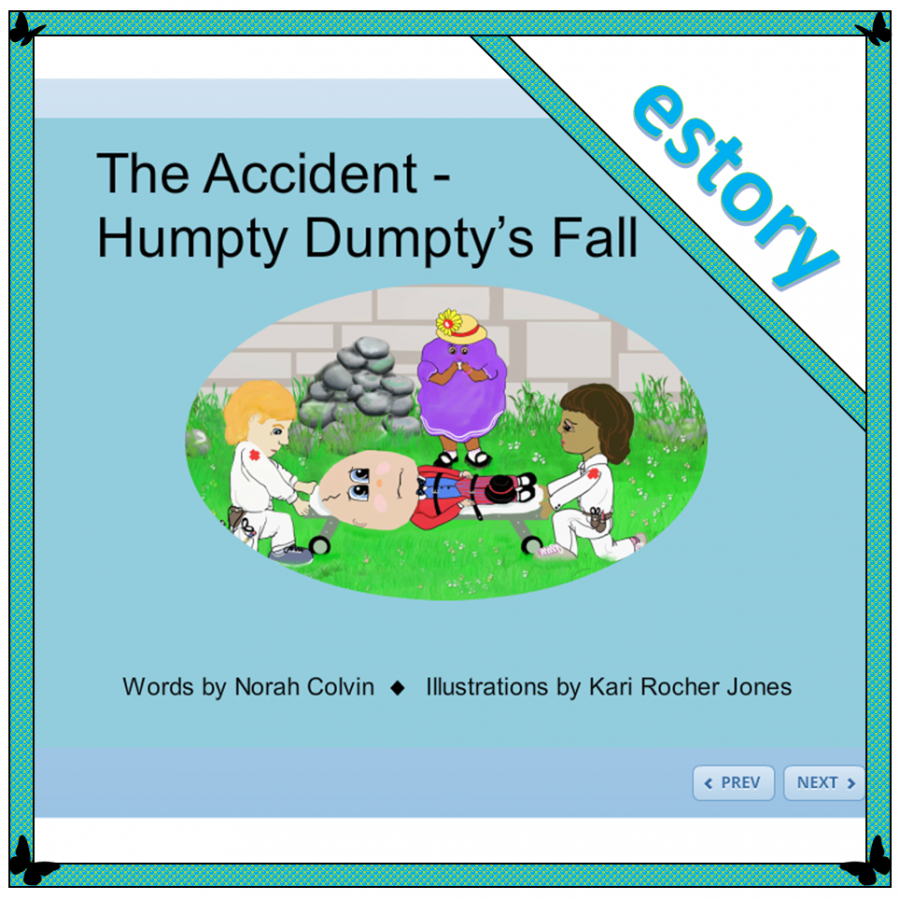
    Teaching literacy skills & developing creative thinking with Humpty Dumpty

    The Humpty Dumpty suite of resources includes:

    Continue reading: Teaching and learning with nursery rhymes – readilearn

  • Appreciating and exploring poetry in lower primary classrooms – reblogged from readilearn

    Appreciating and exploring poetry in lower primary classrooms – reblogged from readilearn

    Poetry is a wonderful tool for learning language. When children listen to or recite poetry, they are learning the rhythms and sounds of language, exploring ideas and how to express them, expanding vocabularies, deepening understanding in nuances of meaning, and having fun with thoughts and their expression.

    Children are exposed to rhythm and rhyme from their earliest days through nursery rhymes, chants and songs as well as the text of picture books. It is important for children to have opportunities for appreciating and exploring poetry into and throughout their school years. The Australian Curriculum places poetry firmly into the literature strand of English teaching each year. But it is not necessary to relegate poetry just to a poetry unit of work when stipulated by the curriculum. Poetry, rhymes, chants and songs can be easily incorporated into the daily class program.

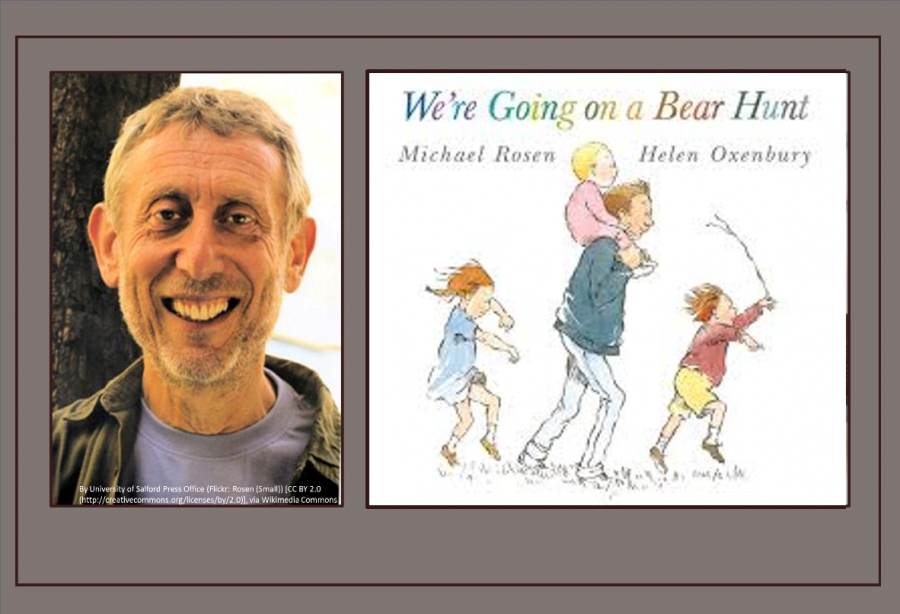
    Michael Rosen, who you may know as the author of Going on a Bear Hunt and who I previously introduced to you in this post, shares some recommendations for teaching poetry on his blog. Although the suggestions were written for a year one teacher, I think the suggestions could be extended out to other years. Following his recommendations would more than cover the expectations of the Australian Curriculum, and what a wonderful way to turn children (and yourself) onto poetry.

    I’m only sharing a few of his recommendations here. Please visit his website to read the others.

    Michael Rosen’s suggestions for teaching poetry

    • Get as many poetry books into your classroom as possible. Encourage the children in pairs to browse, choose and read.
    • Read poems to them every day, use vids of poets (check out Michael Rosen’s YouTube channel) , use national poetry archive. Writing poems with no poems in your head is too big an ask. Fill their heads with ‘What poetry can do’ ie loads of poems.

    Continue reading: Appreciating and exploring poetry in lower primary classrooms – readilearn

  • Empowerment through reading instruction – reblogged from readilearn

    Empowerment through reading instruction – reblogged from readilearn

    The importance of reading to children every day is never far from my mind. It comes from a passion for all things literacy as well as the knowledge that reading means empowerment. Reading is the key that unlocks so much that is meaningful in today’s world.

    Whether at home or in the classroom, children need to listen to stories read aloud to them every day. It should be non-negotiable and prioritised. I would also add time for independent reading of self-selected material to that non-negotiable list and, in the classroom, time for independent writing on self-chosen topics.

    Listening to stories benefits children in many ways; including, but not limited to:

    • Sheer enjoyment
    • Connection with others and other ideas which leads to understanding, respect and empathy
    • Exposure to language and vocabulary which in turns develops language and vocabulary
    • Positive feelings for books as a source of pleasure and information and a stimulus for imagination and creativity
    • A model of fluent and expressive reading behaviour that can be aspired to and emulate
    • A desire to read for oneself.

    Keeping in mind that reading aloud to children and making time for their independent reading are non-negotiable and occur in the classroom every day, children also require purposeful instruction in the process of reading.

    While some children appear to learn easily and without effort before starting school, as my own two children did, others struggle to understand the marks on the page. Most children fall somewhere on a continuum between, benefitting from instruction along the way.

    The readilearn collection of teaching resources for teachers of the first three years of school includes many to support your teaching of reading. Many resources are free, others are available for no more than a few dollars, or you can access all the resources for one low annual subscription of just A$25. (That’s about £13, €15, US$17 or CAN$22) I’m sure you’ll agree that’s great value.

    Browse resources now

    readilearn supports teachers teaching reading

    Reading aloud

    As part of our support for reading aloud, on the readilearn blog we regularly conduct interviews with authors and illustrators about their new books. Many of these interviews are available to download free from the Author and Illustrator Spotlight resources.  We also publish free lists of books on different topics for you to download; for example,

    multicultural picture book

    Continue reading: Empowerment through reading instruction – readilearn

  • Learning with Halloween fun – readilearn

    Learning with Halloween fun – readilearn

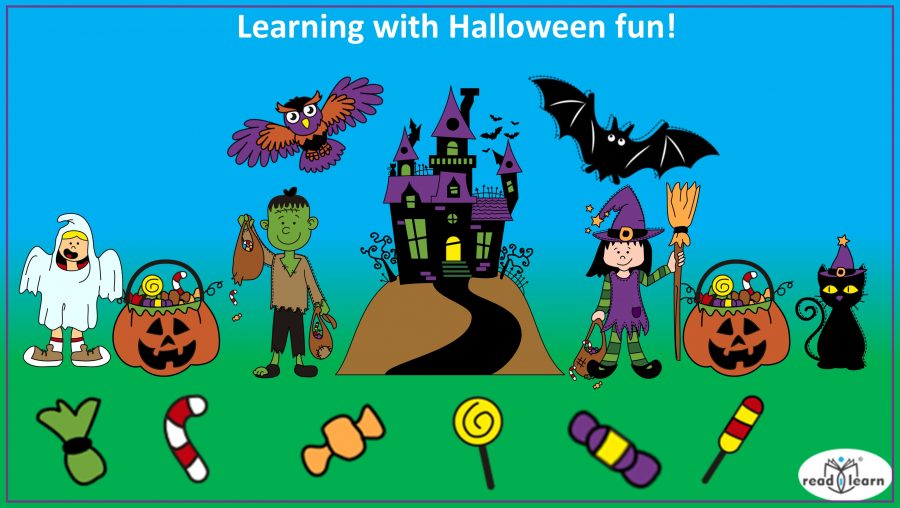
    Halloween is just around the corner and many of us wonder how we can have fun with a Halloween theme while ensuring learning is not forgotten in repetitious and meaningless worksheets.

    readilearn teaching resources support teachers in keeping the learning alive while the children are having fun with Halloween-themed lessons.

    trick or treat printable game for Halloween

    The printable Trick or Treat Game for Halloween is a fun board game for two or more players of all ages, suitable for use in maths and literacy groups, with buddies or in family groups. It combines reading, mathematics, activity, and loads of fun and laughter.

    Everything required to play the game is included in the zip folder. All you’ll need to add is a dice and a sense of fun. There are treats to collect and instructions to follow. Try not to be scared by those witches and ghosts and, most of all, look out for your friends.

    The kit also includes additional ideas for lessons in maths and writing.

    Each of the game components are also available individually to use in other ways if you wish.

    Continue reading: Learning with Halloween fun – readilearn

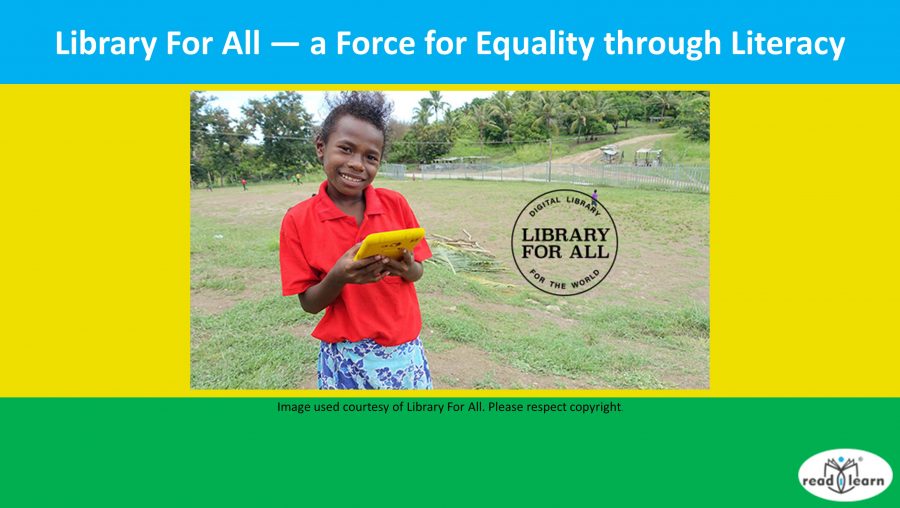
  • Library For All — a Force for Equality through Literacy – readilearn

    Library For All — a Force for Equality through Literacy – readilearn

    What is Library For All?

    Library For All is an Australian not for profit organisation with a mission to “make knowledge accessible to all, equally” through a digital library of books that is available free to anyone anywhere in the world. The focus is on providing high quality, engaging, age appropriate and culturally relevant books to children in developing countries and remote areas.

    Who can access Library For All?

    Library For All found that, even in “communities where history, poverty or remoteness are everyday barriers to accessing knowledge”, many children have access to mobile phones, e-tablets and readers. Recognising this, the digital library was created which allows children anywhere to freely access reading material through the app, available in the Google Play Store on any Android device.

    Teachers can also use the app with children in their classrooms. What a great way of accessing a range of culturally diverse books from simple beginning stories to chapter books.

    In addition to their availability on locally owned smart phones and tablets, through the support of development organisations around the world, the books are available to many schools and communities in developing countries and remote areas through the Spark Digital Library Kits.

    Continue reading: Library For All — a Force for Equality through Literacy – readilearn

  • The Student Blogging Challenge — How you can be involved – readilearn

    The Student Blogging Challenge — How you can be involved – readilearn

    The Student Blogging Challenge is a project that encourages students around the world to create a blog and experience the benefits of publishing online including:

    • developing digital writing skills
    • becoming aware of the possibilities and responsibilities of digital citizenship
    • writing for and developing an authentic audience
    • making connections with others around the world.

    Founded in 2008 by Sue Wyatt, who I had the pleasure of meeting up with in Hobart a few years ago, the challenge has been held twice a year since then in March and October. The next Challenge, hosted by Kathleen Morris and Sue Waters, begins on 6 October and runs for eight weeks. A different blogging task is to be completed each week. Students can join in as part of a class group or individually. Participation is free.

    Who can be involved?

    The challenge is open to students from K–12 around the world. However, organisers suggest that it is most suited to students from 8–16 years.

    There are three ways to participate:

    As a teacher, you can register your class.

    Students can register individually.

    As an adult, you can register as a commenter on the student blogs.

    I joined in as a commenter for the first time in the March Challenge this year and have this lovely certificate to prove it.

    Continue reading: The Student Blogging Challenge — How you can be involved – readilearn

  • School Days Reminiscences — Some Data

    School Days Reminiscences — Some Data

    School days and their impact on our lives has been a major topic of discussion here over the past six months when authors and bloggers have shared their reminiscences. (You can catch up on any reminiscences you missed here.)With no one else quite ready to share just yet, I thought it would be interesting to have a look over some aspects of the reviews.

    The first questions I asked were related to where schools had been attended and whether the schools were government, private or independent.

    Where did the interviewees attend school?

    A total of twelve countries were listed:

    • USA (8)
    • England (7)
    • Canada (3)
    • South Africa (3)
    • India (1)
    • Wales (1)
    • Australia (1)
    • Malaysia (1)
    • Singapore (1)
    • New Zealand (1)
    • Malta (1)
    • Zimbabwe (1)
    • And the British Colony of Hong Kong (1)

    Three interviewees attended schools in two or more countries (two attended in three).

    This gives us quite an international flavour to the interviews.

    Were the schools government, private or independent?

    This one is a little more difficult to summarise as the systems seem to be classed differently from country to country. However, the majority of interviewees appear to have attended government schools, with a smattering attending private or independent schools, and some a mixture of both.

    Was there an overall favourite subject?

    graph - what was your favourite subject

    Discussions on the posts indicated that there might have been a trend towards a liking for English and a dislike of physical education and maths. I think the trend away from PE and maths especially may have emerged through the discussions themselves, as when I went back through the posts, it wasn’t so obvious. However, I didn’t specifically ask which subject was most disliked.

    English with its related subjects like reading and writing was definitely the overall favourite with eleven listing it as such.

    The list of favourites includes:

    • English (11)
    • History (4)
    • Music (2)
    • Geography (2)
    • Social Studies (2)
    • French (1)
    • PE (1)
    • Art (1)
    • Humanities (1)
    • Maths (1)
    • Drama (1)

    (Note: If people listed more than one, I may have included it.)

    What aspect of school was most disliked?

    As I didn’t ask the question about subjects that were disliked, but what was most disliked about school, I received a variety of responses.

    PE did figure in the responses of six respondents, but the social aspect of fitting in and making friends, including when changing schools was listed by seven. Subjects such as maths, physics, geography, biology and geometry rated only one mention each. Other dislikes included disruption due to war, rules, long distances to and from school, and being picked out to answer questions. Others said that there was nothing they had disliked about school.

    It is interesting that the social aspect of school and physical education ranked so highly. I wonder how much of the dislike for physical education was related to the social aspect of it.

    Thank you blog post

    Thank you for reading. I appreciate your comments. Please share your thoughts.


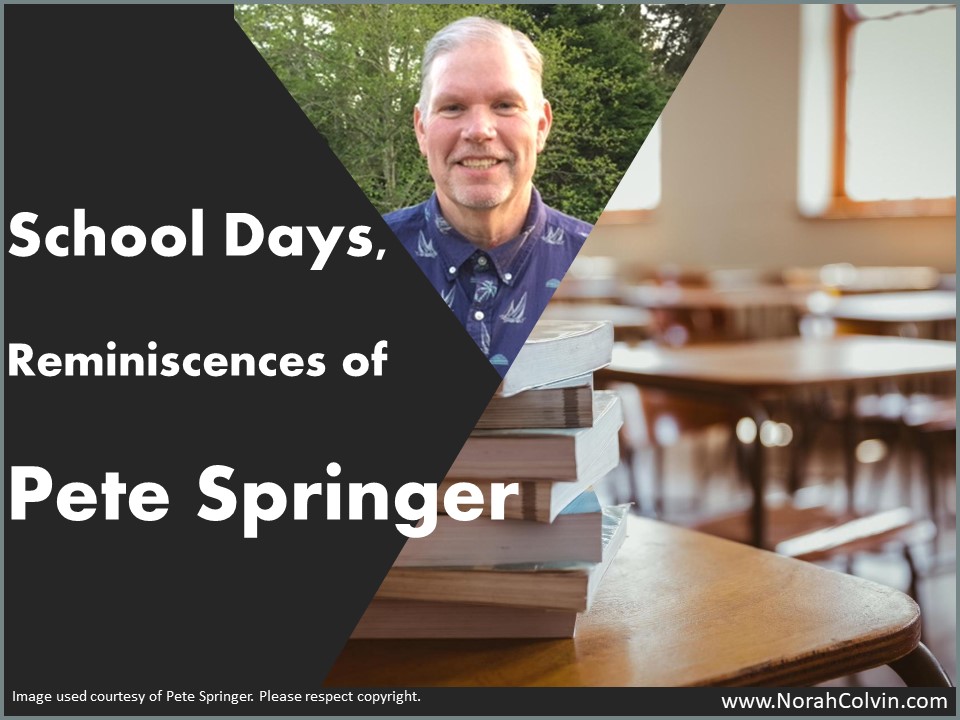
  • School Days, Reminiscences of Pete Springer

    School Days, Reminiscences of Pete Springer

    Welcome to the School Days, Reminiscences series in which my champion bloggers and authors share reminiscences of their school days. It’s my small way of thanking them for their support and of letting you know about their services and publications.

    This week, I am pleased to introduce Pete Springer, teacher, author and blogger. Pete joined in these conversations about school days right from the beginning. Like me, he is a passionate educator and has spent many years in the classroom changing lives.

    Although he is no longer in the classroom, his passion for education remains strong. He has established a Facebook page to support teachers and has written a book sharing his experience as a teacher with the intention of supporting other teachers, especially those just starting their journey.

    He titled his book They Call Me Mom. What a fabulous title. As a teacher, I was called Mum (or even Dad, sometimes) many times. I always considered it a lovely testimony to our respectful relationship. As a parent, I was also sometimes called Mrs x and was just as honoured. I’m sure that, as you read through Pete’s bio and interview, you will be impressed by his ongoing contribution to education and our world.

    But, before we get into Pete’s interview, I’ll allow him to tell you a little of himself:

    I taught elementary school (grades 2-6) for thirty-one years in California.  I loved everything about being a teacher.  I loved my students as if they were my own, and I follow their progress today even though I’ve been retired for three years. I’ve been invited to many extracurricular events (I tried to attend one each for all of my students during the year), birthday, graduations, weddings, and even a housewarming party.  One of my funniest memories was being invited (I obviously didn’t go) to a sleepover party thrown by one of my second graders.

    I don’t like to make a big deal about it, but I was chosen for the Excellence in Teaching Award in 2006. This award is presented annually to ten of the top teachers in the County each year.

    My favorite thing to do in school on a daily basis was to read to kids, and I decided that if I ever got the opportunity that I would try writing books for children when I retired.  I got sidetracked by another project first.  I decided to write a combination memoir/advice book, They Call Me Mom for future teachers.  The title of the book was inspired by the fact that elementary children consistently refer to their teachers as mom (by accident).  I took this as the ultimate compliment because moms are pretty great! I have spoken to college students at my alma mater, Humboldt St. who are studying to become teachers.  I was most touched when one of my former Superintendents purchased my book for all of the new teachers in his district. 

    I am now following my dream and attempting to write books for middle grades that deal with the issues that kids deal with at home and at school.  I’ve joined a critique group (one of the members is my former principal, Nancy Wheeler, who is one of my biggest role models in education serving as one of my master teachers and then as my principal.  (She is 81 and still volunteers in schools, and I couldn’t have a better role model.) My wife, Debbie, was also a career educator, serving as a preschool teacher and then Director.

    In addition, as an advocate for literacy, I joined the Humboldt County Author’s Festival Committee which brings twenty-five children’s authors from across the country to our local schools biennially.  (I someday would love to be one of the presenters.)  I also volunteer for an organization called the Society for the Blind.  This organization helps people who are visually impaired. Once a week I read our local newspaper and send in the articles (using voice memos on my cellphone) where they can be accessed by those who are blind or have low vision. 

    Having been a master teacher for four student teachers, I try to always be an advocate for education, children, and teachers.  I started a Facebook group about eighteen months ago called Supporters of Teachers to highlight positive things that are happening in education. 

    They Call Me Mom by Pete Springer

    Welcome, Pete.

    Let’s talk about school. First, could you tell us where you attended school?

    I attended school for thirteen years (K-12) in the United States.  I then attended Humboldt St. (California) where I graduated and went on to earn my teaching credential.

    Did you attend a government, private or independent school?

    All of the school I attended were government (public) schools.

    What is the highest level of education you achieved?

    The highest level of education I achieved was a Bachelor’s Degree from Humboldt St.

    What work or profession did you choose after school and was there anything in school that influenced this choice?

    I come from a family of teachers, but I think school also influenced my career path because I was inspired by some of the teachers I had. I never planned on becoming a teacher, but I fell into an education job as a one on one aid to a boy who had muscular dystrophy.  I fell in love with working with children from that moment on.

    What is your earliest memory of school?

    My earliest memory of school was attending preschool.  One of the other kids in the class ate a purple crayon and threw it up a few minutes later.  The poor teacher had to deal with the mess.

    What memories do you have of learning to read?

    What do you remember of learning to read, Pete Springer

    I remember loving to read from an early age.  I was read to a lot when I was a child, and I developed an appreciation for books then. I remember reading all of the books in the Hardy Boys series when I was in elementary school.  One of my favorite things to do as a dad was to read with my own son who has gone on to earn his Master’s Degree in education. I still read every night before I go to bed.  John Grisham is my favorite author.

    What memories do you have of learning to write?

    I recall writing stories at a young age.  When I got to high school I became much more self-conscious about having my work read aloud.  When I became a teacher, I often wrote plays that my class and I performed.

    What do you remember about math classes?

    Math came easy to me.  I was always good with numbers and teachers were very impressed with my mental math abilities.  Math was such an intuitive concept to me—I loved it until geometry reared its ugly head.

    What was your favourite subject?

    What was your favourite subject, Pete Springer

    I liked pretty much all subjects, but I would say math because It made me feel smart.

    What did you like best about school?

    I liked the elementary and middle school years because I had a lot of friends.  High school was my least favorite time. I would say that college was my happiest time because I could be myself, and I liked the opportunity for free thinking.

    What did you like least about school?

    My least favorite thing about school was my high school years because it was so cliquish.  We moved to a new place when I was starting high school, and I didn’t have the self-confidence that I possess today.  I tended to withdraw instead of putting myself out there. If I could have one do-over in my life, it would be those years because it was the one time in my life that I wasn’t happy.

    How do you think schools have changed since your school days?

    Pete Springer on how schools have changed

    I think I’m very qualified to answer questions about schools.  One way that schools have changed today is the greater emphasis on technology.  I certainly am a proponent of the basics, but you have to play to your audience as well.  Kids love technology, and we live in a technological society.  Another change is the great emphasis that schools put on state testing.  That is quite unfortunate because it takes the joy out of learning for students and teachers.  While there are always going to be great kids in a school, there is a higher percentage of students with anger and mental health issues.  It makes the job harder to be a teacher and a student in a hostile environment.

    What do you think schools (in general) do well?

    I think schools generally give kids a well-rounded education.  One of the things schools are getting better at recognizing is that not every student is bound for college.  They are providing a path for students who will learn a trade.  There are still plenty of educators who recognize how important it is to keep the arts alive in schools, but I worry about cuts in this area.

    How do you think schools could be improved?

    Pete Springer on how schools could be improved

    Besides de-emphasizing state testing, schools have an increasingly challenging job of dealing with bullying.  Violence is prevalent in our culture, and schools have increasing numbers of violent students who are dealing with mental health issues. The school has to be a safe place for kids; a place that they can learn in a nonthreatening environment with role models who inspire them.  Teaching educators how to equip themselves with firearms is not the answer!

     

    thank you for your participation

    Thank you for sharing your reminiscences of school and thoughts about education in general, Pete. It’s been wonderful to have you here. I always love meeting other educators, especially those who are as passionate about children and learning as I am. I don’t think anyone who hasn’t been a teacher can ever understand the passion and dedication we have for our roles as life changers.

    Find out more about Pete Springer

    on his blog:  Pete Springer Author

    Connect with him on social media

    Facebook: Pete Springer Author

    Twitter: Pete Springer

    They Call Me Mom by Pete Springer

    Purchase your own copy of They Call Me Mom

    from Amazon

    If you missed previous reminiscences, check them out here:

    Charli Mills

    Sally Cronin

    Anne Goodwin

    Geoff Le Pard

    Hugh Roberts

    Debby Gies

    Pauline King

    JulesPaige

    D. Avery

    Christy Birmingham

    Miriam Hurdle

    Robbie Cheadle

    Marsha Ingrao

    Ritu Bhathal

    Joy Lennick

    Darlene Foster

    Susan Scott

    Barbara Vitelli

    Sherri Matthews

    Mabel Kwong

    Chelsea Owens

    Carol Taylor

    Pamela Wight

    Look for future interviews in this series to be posted on Sunday evenings AEST.
    Coming soon:

    Yvette Prior

    Colleen Chesebro

    Balroop Singh
    Thank you blog post

    Thank you for reading. I appreciate your comments. Please share your thoughts.